Category Archives: Records, All

Four Kodagu students selected for state-level science competition

In the recently held district-level Inter-Collegiate Science lecture competition in Kannada, four students from Kodagu got selected for the state level.

The competition was organised by the Department of Collegiate Education.

The district-level competition meant for Science degree students was held at Field Marshal K M Cariappa College.

Winners

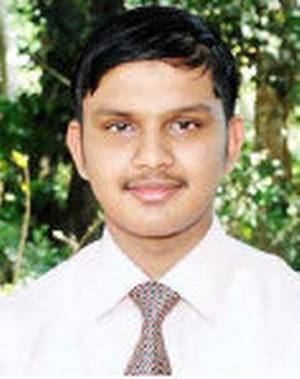
The events were held in various Science subjects of Physics, Chemistry, Biology and Mathematics. Students of Field Marshal K M Cariappa College, T V Prithvish, G Shimla, Sherol Ammanna and M N Ben Bopaiah won in the district-level competition and will represent the college in the state-level competition to be held in Bidar in the second week of October.

Giving away prizes to the winning students, Cariappa College Principal Dr Parvathi Appaiah called upon degree students to take interest in the research of basic sciences.

source: http://www.deccanherald.com / Deccan Herald / Home> District / Madikeri – DH News Service / October 06th, 2017

Cariappa for Kashmir

The field marshal’s military philosophy is a useful pointer and guide at this critical juncture in the Valley.

He knew that they were warm and hospitable if treated with respect and as equals. (Illustration: C R Sasikumar)

An interesting anecdote about a great Indian soldier, Field Marshal K.M. Cariappa, is lodged in my memory since childhood. As a habit, I keep asking questions. I had asked a question about Cariappa Park during my school days. Nobody had an answer till the senior political leader from Baramulla, Sheikh Mohammad Akbar, told me a fascinating story of how he had fulfilled the desire of the people of Baramulla, as chairman of the Town Area Committee, to commemorate Cariappa.

Once, after chasing the raiders beyond Uri, Cariappa was stopped by a group of people at Baramulla and told that they had suffered a lot due to the absence of food supplies, including salt. It was a puzzling question for the general, as no stocks were available with the army. But he fulfilled his assurance the next day when he visited the old town and distributed flour, rice and salt to the most needy families. He followed this gesture in many ways in various parts of Kashmir. K.S. Thimayya, whom he had put in command of the 19th Infantry Division at Baramulla, followed Cariappa in this regard. Grateful Baramullians named a park after Cariappa and the park exists even today.

My quest to learn more about Cariappa was deepened when I heard some commanders in Kashmir asserting during the recent turmoil that “yes”, stones would be answered through bullets and pellets. The people of Kashmir feel this attitude has been encouraged after Major Nitin Leetul Gogoi was awarded for using a civilian as a “human shield” in Budgam.

The Indian army’s history tells us that Cariappa showed great valour as a commander and the success he obtained was squarely his own. But many people in India may not know that apart from his military valour, he employed another natural tool as a workable mechanism to deal with the people all around including the enemy. Reading authors like B.C. Khanduri, J.S. Bindra, S.K. Sinha, L.P. Sen, K.C. Cariappa and others, I came to know of many interesting stories woven around the personality of that great soldier. When I came to know of Cariappa’s Waziristan experience, I was flabbergasted.

In June 1939, Cariappa was transferred to the 1st Battalion of the Rajput Regiment which became his parent unit. The battalion moved to Waziristan and he had to spend three years there. He was posted Waziristan in 1922 as well.

In November 1945, Cariappa was finally given command of a brigade. He was posted as commander of the Bannu Frontier Brigade in Waziristan.

Having served in the NWFP as a young officer, Cariappa was conversant with the terrain as well as the habits of the Pathan tribesmen who lived in the area. He had seen that the British policy of trying to keep them under control by force had not succeeded and he resolved to try a different method. He decided to win the hearts and minds of the tribesmen by extending a hand of friendship. He knew that they were warm and hospitable if treated with respect and as equals.

One day, while passing through a village, he saw a group of Pathan women carrying pitchers of water. When he found out that they had to fetch water daily from another village, four miles away, he immediately ordered a well to be dug near their own village. He followed this gesture with many similar deeds. The Pathans were overwhelmed and started calling him “Khalifa”. Later, when the region was torn by communal strife, Bannu remained a haven of peace thanks to the goodwill generated by Cariappa. When Jawaharlal Nehru visited Bannu in 1945 as head of the Interim Government, Cariappa organised a public meeting which was attended by all tribal leaders. The next day, when he visited Razmak where another brigade was stationed, Nehru was fired upon by the tribesmen and the visit had to be called off. Nehru was impressed by Cariappa’s leadership qualities and rapport with the tribesmen.

Veekay’s History Book (Victory of Knowledge Global Publications) tells us an interesting story about Cariappa. “In February 1946, he was appointed Presiding Officer of one of the General Court Martials constituted to try members of the Indian National Army (INA). Before the trial, he visited some of the detention camps, where the prisoners were lodged. He found them full of rancour and hatred against the British for treating them badly and holding them without trial. Cariappa was pained by their plight and wrote to the Adjutant General, requesting him to expedite the trials. He also recommended that some of them such as Shah Nawaz Khan, G.S. Dhillon and P.K. Sehgal should be pardoned. But, when as Chief of the Armed Forces he was to consider the recommendation to accommodate Indian National Army (INA) personnel including Shahnawaz, Dhillon and Sehgal and he refused to take them into the Indian Army, particularly for the reason that they would bring politics into the Army. There was a lot of pressure on him for this and Nehru relented only after Cariappa threatened to resign on this issue.”

I invested some more time to understand both sides of Cariappa’s character. He was a very tough general when it came to leading the armed forces, as was required by military ethics, and he never compromised his principles.

B.C. Khanduri, who worked with him as operations staff officer, says in his book Field Marshal K.M. Cariappa; His life and Times that, “Once between Mahura and Uri, he was snipped at from close quarters. He showed no signs of fear while his staff officers perspired.”

Lt. Col. J.S. Bindra, as intelligence and liaison officer with Cariappa recalls in his book an incident at Srinagar. He says: “The 268 Infantry Brigade was without a commander for a few days. Cariappa informed Army Headquarters to post Brigadier Bikram Singh. He (Bikram Singh) represented to the army that his relations with Bakshi Ghulam Mohammad, the then Deputy PM of J&K, were not too friendly and that Bakshi might create problems for him in his command.Cariappa asked him what else? Then, he told Bikram to put his ego in his pocket and do what he desired him to do. Bikram was in Tithwal by the same night and on the job”.

The other side of his character is described in Veekay’s History Book: “While Cariappa admonished Thimayya for lighting a cigarette while travelling in an Army vehicle, he asked the driver to stop to allow Thimayya to smoke.”

Lt. General Sen in his book, Slender was the Thread: Kashmir Confrontation 1947-48, describes another quality which Cariappa possessed and it was his broad-mindedness. He says, “He treated all troops the same and was utterly free of any parochial feelings.” He was best known for his love for the Indian soldier. Troops not only loved him, they worshipped him. But then, he never pardoned if anybody indulged in a crime.

Cariappa is no more but his philosophy of military leadership is available to us. Many retired and serving generals have emphasised again and again that there is no military solution to the Kashmir dispute. It has to be resolved through methods other than force. I am confident that the spirit of Cariappa’s soldiery would be a better guide at this critical juncture of the Union’s relationship with Kashmir.

The writer is a senior Congress leader and former Union minister.

source: http://www.indianexpress.com / The Indian Express / Home> Opinion> Columns / by Saifuddin Soz / October 05th, 2017

India’s best coffee growers announced

The best coffee growers of the country were awarded at the India Coffee Awards ceremony organised by the Coffee Board of India on Wednesday.

The awards were divided into national and regional categories.

The best coffee growers for Arabica and Robusta types of coffee and their specialities were awarded the ‘Flavour of India Fine Cup Award for the years 2016 and 2017. The award ceremony also witnessed the recognition of small coffee growers for the first time.

The winners were selected by a national and international jury of expert cuppers or coffee tasters as part of the ‘Favour of India Fine Cup Award – Cupping Competition’.

“We faced difficulties with regard to lack of water availability but we did our best to maintain our quality by using dedicated good practices that helped us achieve a good quality yield,” said Gowri Pandyanathan, a coffee grower from Yercaud and owner of Gowri Estate who won the national award for the best robusta coffee.

“The coffee growers are facing a tough time with lack of water, change in policies and non-assured income. In spite of this, they are doing their best to continue the practice. The coffee awards are an effort to recognise the same,” said Dr M M Chengappa, chairman of Karnataka Planters Association.

source: http://www.deccanherald.com / Deccan Herald / Home> State / DH News Service / Bengaluru – October 05th, 2017

An ode to local heritage

Standing tall: Government Archaeology Museum in Madikeri.

Two doormen, embellished with silver jewellery and adorning red dhotis welcome visitors while standing guard at the entrance of the Government Archaeology Museum in Madikeri. The museum has been set-up inside a 150-year-old intrinsic church, which is located at the southeast entrance of Madikeri Fort. With Roman Gothic architecture, the 19th century church invites the art connoisseurs into the world of forepassed artefacts. As one crosses the glass-painted windows, sky-reaching arch, limestoned blue walls, and the dwarapalakas at the entrance, one is introduced to Kubera, the Lord of Wealth, revived from the ruins of a temple in Bettageri.

Artefacts from every era

While statues of folk deities stand firm on wooden stands, two horns pop out from behind the 18th century Ganesha statue. And they are the horns of a 1922 aurochs, which is now preserved to perfection. Adjacent to the aurochs stands a stuffed life-size leopard, “given to the museum by Mysore Archaeological Society,” explains, Renuka, the curator.

Inscriptions from the Ganga dynasty, seals from the Lingayat kingdom of Haleri, statues of Jain tirthankaras, 3D paintings of the kings and queens of Kodagu, terracotta and brass kitchenware from 12 century, and beautiful lintel that has been carved from limestone are a few objects that decorate the inner linings of the museum. However, it is the cultural folk deities and the traditional weapons that steal the show here. “People want to see and learn more about the uniqueness of the culture of Kodagu. And they ask for cultural, tale-telling artefacts of the district,” explains Renuka.

The 18th century swords and daggers from the historical reminiscence of British rule are arranged neatly in a glass case. “The collection also includes the swords used by King Veera Rajendra,” she explains. The cult weapons — odi kathi, peechakathi — synonymous with dagger and sheath knives, tell the tales of the warrior clans of Kodagu. There is also a section of armouries that bring light to the heroic deeds of Kodavas in the army. One of the highlights among these armouries is a heavy bronze cannon of the 17th century.

The Kodavas also hold special reverence to cult deities that were worshipped in the then extensive, now diminishing, devara kadus or the sacred groves. And the museum is home for many such cult deities revived from 11th and 12th century. Naga idols, masks of boar headed folk gods, idols of the Sun God, Goddess Kali, Shiva-Parvathi idol and Uma Maheshwari idol are just a few to mention among the immense bronze idol collection.

“Most of them are harake shilpas (ex-voto offerings), which were recovered from the ruins of many temples, and some gifted by the temples for preservation,” she confirms. The museum sheds light on the Jain heritage in the region too. Stone and pot inscriptions and intricately carved statues of Jain tirthankaras — they take one back to between the 11th and 14th century, when the Kongalvas (subordinates of Cholas) were the prominent rulers in the district.

There is also a section in the museum dedicated to Field Marshall KM Cariappa, who donated many worthy artefacts of the past. While an ornamental chair of the Field Marshall sits at the centre of this section, it is surrounded by various mementos won by him and a few other age-old statues collected by him as an art connoisseur. “They have been exhibited in the gallery in memory of his parents,” Renuka explains.

The art of preserving

While the staff of the museum is actively involved in reviving historical artefacts, they have also faced hurdles in preserving some historical objects. Renuka explains, “We make sure that none of the ruins of historical idols are immersed in the rivers and immediately fall into action in collecting them. However, sometimes the beliefs of people work against our actions. One such incident took place in Bhagamandala, where the locals refused to hand over the ruins of elephant sculptures in the area due to religious beliefs. However, learning its importance, they are now preserving the sculptures.” Renuka, as a curator of this museum, has revived over 250 artefacts; the recent one being the painting of King Chikka Veera Rajendra, the last ruler of the kingdom of Kodagu.

A State-funded museum, the museum attracts a lot tourists during the weekends who also tour the historic fort located in the area. “We are looking at further improving the museum by including a detailed story of the heritage value and revival process of these historical objects,” concludes Renuka. The museum is open to visitors from 09.00 am to 5.00 pm except on Mondays and general holidays.

source: http://www.deccanherald.com / Deccan Herald / Home> Supplements> Spectrum / by Prajna G R / October 03rd, 2017

Captain who made Chepauk sing ‘Belli-Appa’

CHENNAI:

At a recent get-together hosted by the 1983 World Cup winning Team India manager Man Singh in the city for former state cricketers, P K Belliappa was undoubtedly the soul of whole meet. The sheer camaraderie and warmth they shared at the do showed ample proof of the respect Belliappa commanded from his former teammates.

Belliappa, the former Tamil Nadu skipper, had come from Coorg, where he lives, just to meet his old teammates. “I shuttle between Coorg and Canada. But, I wouldn’t have missed a chance of meeting my former teammates for anything. More than the runs or catches I took on the field, earning the respect and love of teammates remains my biggest asset,” said the 74-year-old wicketkeeper-batsman who played 94 first-class matches for the state.

The Loyola College alumnus was a born leader. “Belliappa was a shrewd captain, and was adept at analysing our opposition’s weaknesses. He would study the opposition in detail, and draw plans for each of their players,” recalled his former teammate AG Milkha Singh.

Milkha recounted an incident which showed the crowd’s love for Belliappa. During a league match at Chepauk, the home ground of Madras Cricket Club (MCC), the Kishore Kumar number ‘Yeh Jawaani Hai Deewani’ was being played. “Kishore sings ‘Giligili Appa-Giligili Appa’ but the entire crowd replaced it in the chorus with ‘Belli Appa-Belli Appa’. This happened numerous times and we were all in splits,” said Milkha.

Belliappa said, “It was a pleasure playing those days, and the crowd support was unmatched. Even for league matches at Chepauk, we would have 7,000 to 8,000 people coming and cheering us. I don’t see that happening for first-class matches anymore.”

B Kalyanasundaram, another teammate, said Belliappa was blessed with a good cricketing acumen. “Being a wicketkeeper himself, Belliappa had a good idea of what the bowler was up to, and would accordingly set the field. He would make everyone feel at ease, and that according to me is the hallmark of a great leader,” said Kalyanasundaram.

The ex-skipper regrets not winning the 1967-68 Ranji Trophy. “We played the final against Bombay. We made 258 batting first, and should have got the prized wicket of Ashok Mankad. We had him caught at mid-on but the umpire thought otherwise. Ashok went on to score his maiden hundred and Bombay never looked back,” said Belliappa.

While Belliappa regrets not winning the most prized trophy in domestic circuit, he isn’t too perturbed about not having played for India. “I led Madras for some time, and was fortunate enough to have played for long,” said Belliappa, who has 4,061 runs to his name in first-class cricket.

source: http://www.timesofindia.indiatimes.com / The Times of India / News Home> City> Chennai / by Prasad RS / TNN / November 15th, 2014

Good show by 12 schools in Kodagu in SSLC examination

UthappaKF30sept2017
Uthappa of General Thimayya school emerges first in the district

Madikeri:

K.S. Uthappa of General K.S. Thimayya Public School here emerged first in the SSLC examination in Kodagu, securing 96.96 per cent marks. Kodagu is ninth among the districts in the State in the SSLC examination results. Kodagu has improved its performance compared to last year where it secured 18th position in the State.

Uthappa scored 606 out of 625 marks. Nivedita Shenoy from Lions School, Gonicoppa, emerged second with 604 marks (96.64 per cent), while Numan J.A. from Jnanajyoti School in Murnad secured third place with 603 marks (96.48 per cent).

In Kodagu, 7,259 students, including repeaters, appeared for the examination and 5,656 of them passed. Among the freshers, 5,629 passed. Of the 7,259 students who had appeared for the examination, 2,682 were boys. As many as 258 students achieved distinctions, 2,094 first class, 1,520 second class and 1,777 pass. Kodagu also achieved another distinction of no case of examination malpractice.

According to information from the office of the Deputy Director of Public Instruction here, 12 schools in the district achieved cent per cent results. They are Lions School in Gonicoppa, Lourdes High School in Polibetta, St. Thomas School in Gonicoppa, Sarvadaivata English Medium School at Aruvatoklu in Gonicoppa, Rotary English Medium School in Bittangala, St. Mary’s English Medium School in Sunticoppa, Sacred Heart English Medium School in Shanivarasante, Shantiniketan High School in Kodagaralli, Morarji Desai Model Residential School in Basavanahalli, Anglo Vernacular High School in Nelliahudikeri, and Sri Shivakumaraswamy Girls’ High School in Kirikodlimath in Somwarpet taluk and Jyoti High School at Peraje in Madikeri taluk.

Virajpet taluk in Kodagu emerged first in pass percentage among freshers with 83.03. Of the 2,051 students, who had appeared for the examination, 1,703 passed. Nivedita Shenoy (604 marks), Dixit (602) and M.D. Somanna (598), all from Lions School, Gonicoppa, finished first, second and third, respectively.

Madikeri taluk is second where 2,086 students appeared for the examination and 1,703 of them passed (81.64 per cent). K.S. Uthappa (606) from General K.S. Thimayya School here emerged first, followed by Numan J.A. (603) of Jnanajyoti School in Murnad and Shreyas Bangera (600) of St. Michael’s School here.

In Somwarpet taluk, of the 2,816 students, 2,223 passed (78.94 per cent).

Pavana P.S. (587) from St. Mary’s School in Sunticoppa emerged first in the taluk, followed by Yatin (586) of Sacred Hearts High School in Shanivarasante, and Shishira (578) of St. Joseph’s School in Somwarpet.

source: http://www.thehindu.com / The Hindu / Home> National> Karnataka / May 03rd, 2009

Subsistence coffee farmers in India unite to transform lives

Speciality coffee products, support and shared value are key to success

Ten years ago, the residents of Kabada Boddaput — in southeastern India’s remote Araku valley — were impoverished subsistence farmers, living in mud huts and getting by on the millet, yams, pumpkin and greens they grew on their one- to five-acre plots.

Cash was scarce and emergencies meant borrowing from friends and family — debts that might take years to repay. “It was a very terrible situation,” recalls Sanyasi Gullela, a farmer. “There were not enough clothes and no money for cattle.”

But life has changed dramatically for Kabada Boddaput’s tribal farmers — along with around 13,000 others in the Araku valley — since they began cultivating coffee, encouraged by the Naandi Foundation, a Hyderabad-based philanthropic organisation.

Last year, Mr Gullela earned Rs105,000 ($1,640) from coffee, which he grows on 1.3 of his three acres of land, and additional funds from the pepper vines coiling around the surrounding shade trees. In recent years, these earnings have financed four cattle for ploughing and an auto-rickshaw for his son. His neighbour has purchased a second-hand tractor.

Daily life has improved, with the newfound cash used to buy more nutritious food, such as lentils, and new clothes. Some locals have upgraded their mud homes with cement and tiles. “Nowadays, I have a lot of choices,” says G. Tirupati Rao, who grows coffee on two of his 3.5 acres. “What we want we can easily buy from the market. Earlier, we had to compromise.”

While around the world coffee has developed a reputation for bringing few tangible benefits to those toiling to grow it, the view in the Araku valley is different. The crop — grown bio-dynamically without costly fertilisers or agrochemicals — has become an unlikely stepping stone to socio-economic progress for some of India’s most neglected and marginalised peoples. “Coffee has given dignity to farmers,” says Chiranjeevi Naidu, a board member for the Small and Marginal Tribal Farmers Mutually-Aided Co-operative Society, set up in 2006 to process the coffee grown through the Naandi project.

The Araku valley has a history of coffee production dating back to the colonial era, when British planters grew thousands of acres. After independence, India’s government-run Coffee Board took over the plantations, employing local people. And the board gave coffee seeds to farmers, although few flourished in the absence of other support.

But many Araku farmers were eager to keep trying. “They said: ‘Anything that was valuable in India, the British took control of, so coffee must be valuable’,” says Manoj Kumar, Naandi’s chief executive officer.

Naandi’s corporate donors were less enthusiastic, he recalls. “I’ve never heard of anyone coming out of poverty through coffee,” one told him. But Mr Kumar — who had rather stumbled into the coffee business when he was asked in 2004 to develop “livelihood projects” to help Araku farmers — was undeterred. Naandi promised technical support with cultivation and offered to market the farmers’ produce overseas.

Since then, Naandi’s agricultural experts have taught Araku’s novice growers to produce top-quality organic coffee, some of which is being sold as “speciality” coffee to select roasters and traders from Japan, Korea, and Europe. These high-end buyers — who taste and rate each lot before purchasing — are willing to pay up to Rs700 per kg for the best of the beans. The bio-dynamic agriculture practised by the Araku farmers is labour intensive but requires no costly cash inputs. Farmers enrich the soil through mulching, using leaves, fallen fruits and other freely available organic matter. They use inexpensive, herbal soil additives to enhance soil fertility and fight pests.

They have learnt the discipline of harvesting beans only when they are bright red and fully ripe. For these efforts, co-op members last year received a guaranteed price of Rs375 per kg of top quality, fully-ripened beans.

From that, the co-op — where the beans are processed within 12 hours of being harvested — deducts Rs90 per kg for transport and processing, with Rs280 per kg profit left for the farmer.

This compares with Rs90-Rs110 per kg that Indian farmers typically receive for bulk coffee to be sold on the New York Commodity Exchange.

“If you want to do sustainable coffee at scale, it has to be speciality coffee,” says Mr Kumar. “When they buy, they pay more than anyone else will pay.”

Problems remain, especially in finding enough buyers willing to pay a premium for all the high-quality coffee the Araku farmers can produce. Last year, co-op members grew 100 tonnes of coffee, but Naandi is working with another 7,000 farmers whose saplings will mature soon, and other villages are pleading to join the initiative.

Mr Kumar believes Araku’s coffee output could easily rise to 500 tonnes or more. But the total world market for speciality coffee was just 10m tonnes in 2011 — although it is said to be growing fast — and speciality coffee buyers tend to buy in small lots from diverse regions around the world. “I don’t have enough high-quality buyers,” Mr Kumar admits.

To expand the market for its own speciality coffee, Naandi recently raised $5m from its Indian philanthropists for Araku Originals — its dedicated, for-profit, coffee marketing arm — to market its wares in Europe.

Araku Originals has opened a flagship store in Paris and is also selling its coffee though 34 other gourmet food shops and other upmarket retail outlets across France. The coffee that does not make the grade as speciality coffee is sold as organic, fair trade coffee elsewhere in Europe. “We are a benevolent link to the international market,” Mr Kumar says. “It can’t just be procured and dumped.”

Despite the challenges, Mr Kumar is convinced that coffee can be made a sustainable cash crop for farmers — but only if those involved across the industry are willing to share the profits more generously.

“You need a very clear-cut, shared-value business model with the farmer,” he adds. “Otherwise, it won’t work.”

source: http://www.ft.com / Financial Times / Home> Agricultural Production / by Amy Kazmin / September 24th, 2017

Karnataka is now biggest pepper producer in the country

For the second year running, Karnataka has been named the country's largest pepper producer, accounting for 45% of the spice produced in India
For the second year running, Karnataka has been named the country’s largest pepper producer, accounting for 45% of the spice produced in India

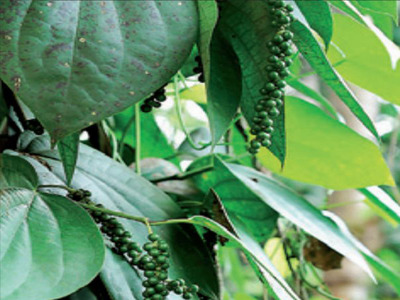
Karnataka has overtaken Kerala and become the country’s leading pepper producer, accounting for 45% of the total production.The Centre’s Spices Board data puts Karnataka ahead of Kerala for the second year running. While Karnataka produced 33,000 metric tonnes of pepper in 2014-15, against Kerala’s 28,000MT, the margin widened in 2015-16 as Karnataka’s yield remained 33,000MT and Kerala’s fell to 26,000MT.

Kerala’s decline, to a great extent, has been because of its black pepper vines falling to quick wilt, a disease that causes sudden wilting, drying and death of the vines. In Wayanad district in Kerala, farmers lost almost 90% of their vines to the disease. The Spices Board has taken up extensive research to contain the pest. The sudden scourge, however, has turned the focus on pepper production in south Karnataka districts.

Pepper is grown in several parts of Karnataka, mainly in Chikkamagaluru, Shivamogga, Madikeri and Kodagu.

Alternative to areca, rubber

The state’s plantation growers have adopted the spice as an economically profitable alternative to areca (palm), coffee, rubber and coconut. The spice crop is grown in the middle of coffee plants, said Bose Mandanna, former vice-president of Coffee Board and a leading planter in Suntikoppa in Kodagu. At least 40 pepper vines are planted in an acre of robusta coffee plantation. This goes up to 80 vines if it is an arabica plantation, because these are grown at lower heights and produce less coffee per hectare.The harvest is done during February-March.

“Kodagu accounts for 25% of the pepper production in the country,” Mandanna said. An acre fetches 100kg to 150kg of pepper but with intensive cultivation, some growers get up to 500kg.

There is some difference in the production data of the government’s Spices Board and the National Commodity & Derivatives Exchange (NCDEX), but both sources indicate that Karnataka is beginning to unseat Kerala from the No.1 spot. NCDEX data shows Karnataka having a big lead over Kerala in 2014-15, marginally losing out to Kerala the following year, but regaining the lead in 2016-17.

NCDEX says India accounts for 17% of the world’s production of pepper, and is the second largest producer after Vietnam. The exchange relaunched its pepper contract on the platform in July, after about five years. In just three days, it saw a total volume of 807 tonnes of pepper, valued at Rs 38 crore, being traded.

Sarat Mulukutla, chief (commercial segment) of NCDEX, said considering the rise in pepper production in Karnataka, the exchange is launching a third delivery centre in Hassan. The other two are in Kochi and Kozhikode in Kerala.

Attractive price

Anish Madappa of T Shettigeri in south Kodagu said pepper production had grown in Karnataka for a decade due to the good price it fetches. Ten years ago, a kilo of pepper fetched Rs 260, now it is about Rs 680. Coffee planters have started growing pepper on poles with the help of biomass, leading to a jump in production. Drip and sprinkler irrigation have helped minimise water loss and increased the yield per acre. “Once a high rising (pepper) creeper is planted, it will provide yields for 35 to 50 years with little or no investment,” said Kannagi Sheshadri, a farmer cultivating plantation crops in Theerthhahalli taluk. “The plants need to be carefully treated to achieve maximum yield. I reaped 12 tonnes last year and hope to double it this year,” said Joney Mathew, a farmer with crops in Shivamogga and Chikkamagaluru districts.

“Pepper produced in Kodagu is of the best quality,” said Madappa. “This is because we normally use only Bordeaux spray, which contains lime and copper sulphate.” The spray helps protect the pepper vines from fungal problems and resists quick wilt disease.

source: http://www.timesofindia.indiatimes.com / The Times of India / News> City News> Bangalore News / by Shalina Pillai & G. Rajendra & CV Raghavendra Rao / TNN / September 26th, 2017

With output rising, India is now a hub for instant coffee

Coffee Board to finalise estimates after consulting stakeholders
GenericCoffeeKF21sept2017

Coonoor :

India is becoming a manufacturing hub for instant coffee after Brazil and Peru, said Y Raghuramulu, Director of Research, Coffee Board.

In his presentation on coffee at the 124th UPASI annual conference here, he said the country is doing extremely well on the export front

The total volume of export between April and August this year stood at 1.78-lakh tonnes, up from 1.63-lakh tonnes in the corresponding period the previous year.

The country has moved from bulk exports to value-added coffee exports, he said. “We are consistently importing more for re-export. Imports are mainly for value-addition and re-exports by EOUs with duty free under FTP.”

Import volumes during 2015-16 stood at 65,618 tonnes and the re-export volume at 67,283 tonnes. This surged to 78,042 tonnes and 79,254 tonnes the following year. Value-wise, the imports were estimated at ₹927 crore (₹802 crore) in 2016-17 and re-export at ₹ 1,346 crore against ₹1,147 crore in the previous year.

Green coffee exports account for 70 per cent of the total export volume, with specialty green coffee exports inching its way from 3.20 per cent between April and August last year to 3.80 per cent during the corresponding months of this year. Value-added coffee exports have stagnated at around 25 per cent.

Reverting to production, Raghuramulu said: “USDA has forecast India’s production at 3.3-lakh tonnes, but the Coffee Board is yet to release the estimate for 2017-18. The board is in consultation with various associations for finalising the estimates. We do not want to release as in earlier years and come out with a revision.”

The board has undertaken a couple of fresh initiatives, such as the revamping of India Coffee House, brand ambassadors to promote Indian coffee and organising outreach programmes.

“We are looking to franchise at least 10,000 vending machines in the medium-term. Our initiatives will indirectly benefit small coffee growers. We have also initiated discussions with small growers to form producer organisations to help them achieve better returns.”

source: http://www.thehindubusinessline.com / Business Line / Home> AgriBusiness / by L N Revathy / September 13th, 2017

Joshna Chinappa moves up to 12th in squash world rankings

Chinappa made the main draw of the China Open earlier this week. (TOI Photo)

New Delhi :

India’s highest ranked squash player, Joshna Chinappa, has gained two places to be 12th in the latest PSA rankings.

Chinappa made the main draw of the China Open earlier this week before losing in the opening round.

Her teammate Dipika Pallikal moved up a place to be 21st. Pallikal had lost to Chinappa in the China Open qualifiers.

Both Pallikal and Chinappa will be seen in action at the HKFC International in Hong Kong next week.

Among the male players, Saurav Ghosal dropped a place to be 28th while Vikram Malhotra was on 62, Harinder Pal Sandhu on 66 and Mahesh Mangaonkar on 67.

source: http://www.timesofindia.indiatimes.com / The Times of India / Home> Sports> News / PTI / September 01st, 2017