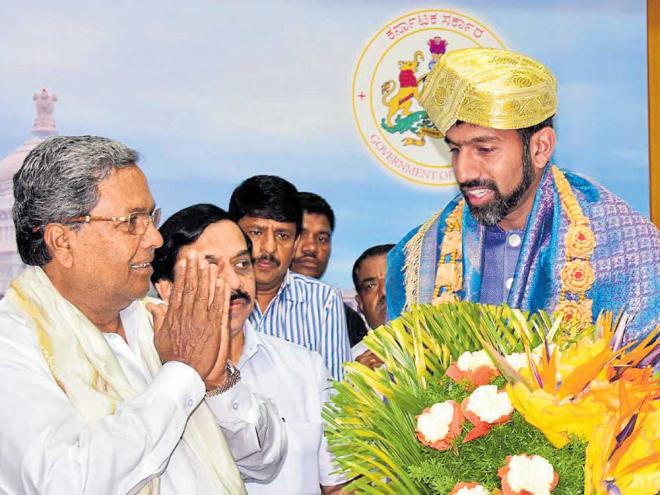
honoured: Chief Minister Siddaramaiah (left) felicitates Rohan Bopanna in Bengaluru on Tuesday. dh photot partner this season, especially in the men’s doubles. Fortunately, I have played alongside good partners so far and managed to win tournaments. I started with Jeevan Nedunchezhiyan to win the Chennai Open and then reached the semifinals with Martin Matkowski at the Dubai Open. In April, I won the Monte Carlo Masters with Pablo Cuevas. Now I am continuing with Cuevas. It’s ideal to have one fixed partner. I have managed to adapt well with different partners and that is the main reason behind my good run this season,” Bopanna told DH on Tuesday.
The state government felicitated Bopanna for his maiden Grand Slam here on Tuesday and announced a prize money of Rs 10 lakh.
“I thank the support and encouragement from the government. The response post my win at the French Open has been overwhelming. I received congratulatory calls from our Davis Cup captain Mahesh (Bhupathi), Sania (Mirza) and many other athletes of the country and I am humbled by their support,” he expressed. It’s been a year since he started the Rohan Bopanna Tennis Academy and the Indian ace has chalked out big plans for the coming years.
“We have around 65 players at the academy and we will be bringing two foreign coaches very soon. One of the coaches will be from Serbia and both of them will stay in Bengaluru to train the kids. This is just a start and we are hoping to build on this and offer training facilities of international standards,” he explained.
The Kodava is confident of repeating his French Open performance at the Wimbledon with Dabrowski. “She is an aggressive player and that works in the doubles format. We started off with the US Open and her style worked well in the Australian Open as well. Our camaraderie was good going into French Open,” he noted.
source: http://www.deccanherald.com / Deccan Herald / Home> Sports / DH News Service / Bengaluru – June 14th, 2017
Ace Indian tennis player Rohan Bopanna, who recently became the fourth Indian to win a grand slam after clinching the mixed doubles title at the French Open, on Wednesday, met Union Minister of Sports Vijay Goel to discuss the promotion of tennis among youth in the country.
Bopanna, playing alongside Canada’s Gabriela Dabrowski, clinched his maiden Grand Slam title at the Roland Garros last Thursday.
The seventh-seeded Indo-Canadian pair staged a comeback after losing the opening set and defeated Lena Groenefeld and Farah 6-2, 2-6, 12-10 in a summit clash that lasted for one hour and six minutes at Court Philippe Chatrier.
The Sports Minister shared the pictures of him meeting the 37-year-old tennis star on his official Twitter handle.
?Delighted to meet #FrenchOpen Mixed Doubles ’17 winner @rohanbopanna; discussed promotion of #tennis among #youth. Keep inspiring all Rohan!? wrote Goel.
Speaking to reporters after the meet, Goel said, ?I discussed about the promotion of tennis with Bopanna. He told me about his academy and I am happy that already there are around 70 students there? The government always encourages such private academies.?
?I wish he open his academies in the other parts of the country as well,? he added.
Meanwhile, Bopanna thanked Goel for taking out his time and said, ?It was really nice that he took out some time to meet me?I am really happy that he is encouraging sports a lot.?
?I think this is what is required in India for every aspect in our field, no matter what sport it is,? he added.
Bopanna became only the fourth Indian to win a Grand Slam title after Leander Paes, Mahesh Bhupathi and Sania Mirza.
The All India Tennis Association has also declared that they will recommend the tennis player from Bangalore for this year?s Arjuna Award.
Speaking about the same, Bopanna told ANI, ?We will know in a few months if I receive the award or not, if I do, I would be very grateful and very honoured.?
(This article has not been edited by DNA’s editorial team and is auto-generated from an agency feed.)
source: http://www.dnaindia.com / DNA / Home> India> News> Sports News / ANI / Wednesday – June 14th, 2017
Rohan Bopanna clinched his maiden Grand Slam title when he won the French Open mixed doubles final with Canada’s Gabriela Dabrowski in Paris on Thursday.Canada’s Gabriela Dabrowski and India’s Rohan Bopanna hold aloft the trophy after winning the French Open mixed doubles title in Paris on Thursday. The pair defeated Germany’s Anna-Lena Groenefeld and Colombian Robert Farah 2-6, 6-2 (12-10). (AP)
Indian tennis ace Rohan Bopanna and Canadian partner Gabriela Dabrowski produced a fighting performance to beat their German-Colombian opponents Anna-Lena Groenefeld and Robert Farah in the final to clinch their maiden French Open mixed doubles title in Paris on Thursday.
Seeded seventh, Bopanna and Dabrowski took an hour and six minutes to win, saving two match points, as they overcame the unseeded Groenefeld and Farah 2-6, 6-2, 12-10 on Philippe-Chatrier Court.
Bopanna has become only the fourth Indian to win a Grand Slam crown, after Leander Paes, Mahesh Bhupathi and Sania Mirza. Indians have accounted for 20 Grand Slam mixed doubles titles. Two of those victories belong solely to India with Sania Mirza partnering Mahesh Bhupathi.
Bopanna entered the final of a Grand Slam tournament after a gap of seven years. He had also qualified for a Major final in 2010 when he and Pakistan partner Aisam-ul-haq Qureshi entered the title clash of the US Open.
The 16th seeds had then lost to American twins Bob and Mike Bryan in the final.
Bopanna is the also the fourth Indian to win a mixed doubles crown at the world’s premier clay court tournament. Bhupathi won India’s first Grand Slam title in 1997 when he partnered Japan’s Rika Hiraki to claim the French Open.
Bhupathi again won in 2012, this time with compatriot Sania Mirza.
Paes too had savoured glory on the red clay when he won in 2016 with Martina Hingis.
Bopanna and Dabrowski did not start well, losing the first set 2-6. The seventh seeds gave away as many as four breakpoint chances and Groenefeld and Farah converted two to take the lead in the match.
However, the Indian-Canadian combine fought back well to clinch the second set with the same scoreline.
Though they were broken once, Bopanna and Dabrowski converted three of the five breakpoint opportunities they got to push the match into a match tie-break (earlier known as Super Tie-Break).
The German-Colombian pair led throughout the tie-break, and held two match points at 9-7. However, Bopanna and Dabrowski somehow managed to save both.
Bopanna and Dabrowski had their first chance when they took the lead at 10-9. They lost the opportunity as scores were levelled at 10-all but the pair grabbed the next two points to seal victory at Roland Garros.
source: http://www.hindustantimes.com / Hindustan Times / Home> Tennis / HT Correspondent, Hindustan Times / June 08th, 2017
No new hotels or resorts can take shape in the Talacauvery sanctuary
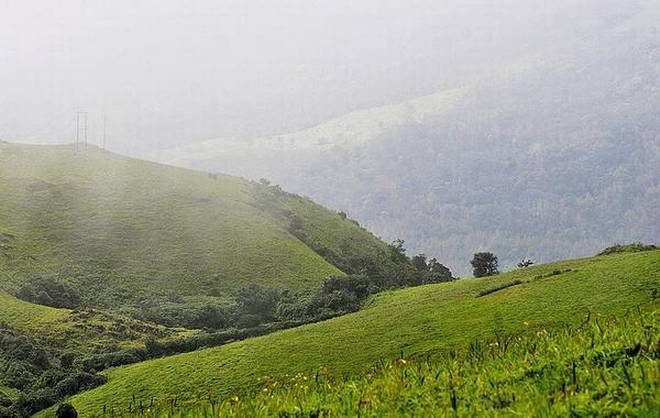
The government has declared the Talacauvery Wild Life Sanctuary spread across 105.59 sq km as an eco-sensitive zone. This comes after the Environment Ministry notification on the proposed ecologically sensitive areas (ESAs) in the Western Ghats. The state has about five national parks and 27 sanctuaries, seven conservation reserve and one community reserve. The draft notification was issued on May 25 last year and the final notification was issued on May 15.
Kodagu Chief Conservator of Forest Manoj Kumar told BM this is an eco-sensitive zone under the Environment Protection Act. As per the Act, the area around the protected area could be heritage sites and others and there has been a provision to declare them as sensitive zones. But this was not being done and the National Wildlife Board based on the Supreme Court direction had stated that it is about 10 km, if not declared. Hence, so far it used to be 10 km. “But we started rationalising the area and had sent a proposal. Each proposal is now being approved and the rest of the sanctuaries in the area around will soon be declared as sensitive zones. It is not the Kasturirangan report. It is a statutory requirement and the state government after discussion with the district administration and representatives had sent a proposal,” he said.
As per the notification the region around the sanctuary from 1-16 km has been declared as the eco-sensitive zone. No commercial activity such as mining can be conducted and no new industries can be set up here. It also prohibits extension of industries that cause pollution, major hydel power plants, saw mills as well as rearing of animals. This declaration is also likely to hamper the union government highway project from Bhagamandala to Kerala’s Panathoor.
source: http://www.bangaloremirror.indiatimes.com / Bangalore Mirror / Home> News> State / Bangalore Mirror Bureau / June 06th, 2017
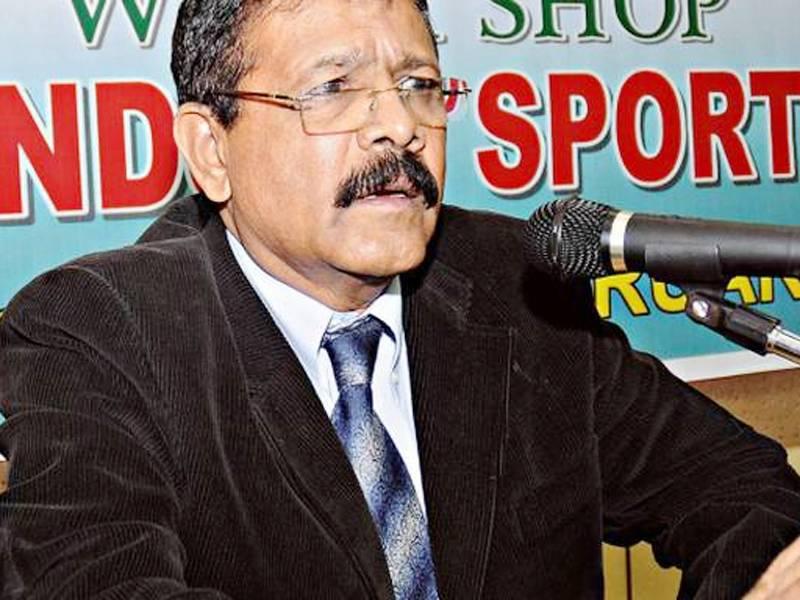
Former captain and coach of the national team MP Ganesh on Thursday took charge as the High Performance Director and CEO of the National Hockey Academy to be based at the Major Dhyan Chand Stadium.
“Hockey Olympian MP Ganesh takes over as the High Performance Director & CEO of National Hockey Academy in New Delhi,” Hockey India confirmed the news on its official twitter handle.
Till now Ganesh was serving as the CEO of Karnataka State Cricket Association.
The National Hockey Academy in New Delhi is a joint venture of the Sports Authority of India and the sports ministry aimed at identifying junior hockey talent and facilitating their holistic development.
The National Hockey Academy, which took two years to be set up, will be a residential project for 40 boys and an equal number of girls below the age of 18.
About 70 players from each category have been shortlisted by Hockey India selectors from the sub-junior Nationals held recently. After a few weeks of trials, the numbers will be brought down to 40. There will be three coaches each for the boys and girls.
The 70-year-old Ganesh hails from the famous hockey belt of Kodagu, earlier known as Coorg, district of Karnataka.
An Arjuna awardee, Ganesh played for India at the 1972 Olympic Games in Munich, finishing third. He was one of the coaches of the Indian team that won a gold medal at the 1980 Olympic Games in Moscow.
He represented India in the Asian Games twice, first in 1970 in Bangkok and then in 1974 in Tehran. Both the times India returned home with a silver medal. He was also a part of the Indian team that won bronze at the first World Cup at Barcelona in 1971 and captained the team that won silver at the next World Cup in Amsterdam.
An Arjuna awardee, Ganesh played for India at the 1972 Olympic Games in Munich, finishing third. He was one of the coaches of the Indian team that won a gold medal at the 1980 Olympic Games in Moscow.
He represented India in the Asian Games twice, first in 1970 in Bangkok and then in 1974 in Tehran. Both the times India returned home with a silver medal. He was also a part of the Indian team that won bronze at the first World Cup at Barcelona in 1971 and captained the team that won silver at the next World Cup in Amsterdam.
source: http://www.timesofindia.indiatimes.com / The Times of India / News> Sports> Hockey / PTI / June 01st, 2017
Wild Kaapi, your morning coffee comes from certified estates that support gaurs, elephants and monkeys, along with Arabica beans
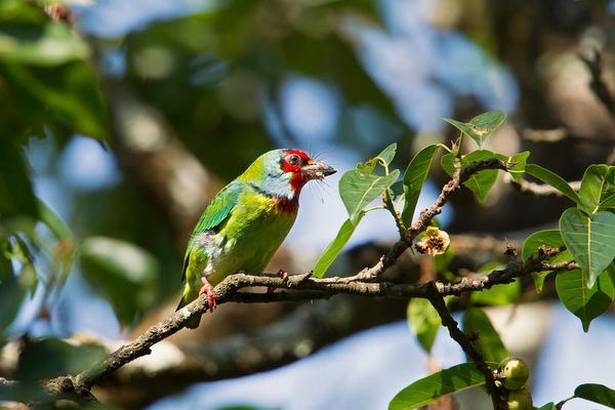
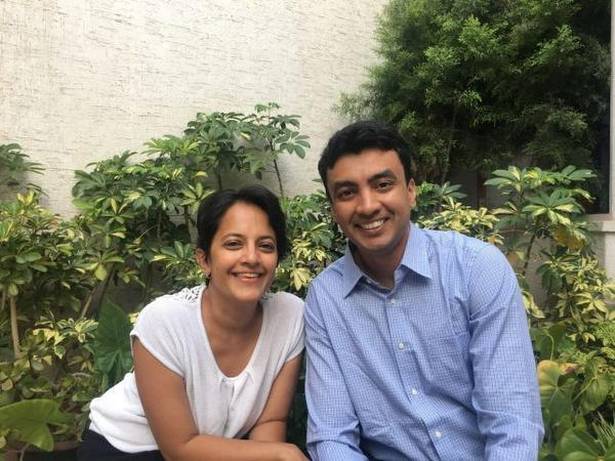
Under the cool canopy of native trees in the Western Ghats, coffee bushes spread out, gleaming with red berries. In the early morning hours, if you are lucky, you may spot rare species like the Malabar grey hornbill, water snow flat butterfly or the Asian fairy bluebird among these shade-loving plants. And now, thanks to the efforts of Wild Kaapi — the world’s first ‘certified wildlife-friendly’ coffee brand — you can ensure your morning brew comes from plantations that foster fauna on their lands. Started by wildlife conservationist, Krithi K Karanth — who has has been working in the Western Ghats, a biodiversity hotspot, for the last 19 years — and her husband, Avinash Sosale, the coffee brand got its certification this April and opened its doors to buyers last month.
(photo credit: Ramki Sreenivasan)
Live and let live
Wild Kaapi started as an offshoot of a three-year research project (part of a grant by the National Science Foundation to study coffee, areca and rubber plantations in the Western Ghats). Karanth, of the Centre for Wildlife Studies — with Paul Robbins of the University of Wisconsin-Madison and Dr Ashwini Chhatre of University of Illinois — measured biodiversity, and studied labour practices and market dynamics of the farming areas.
During the project, she interacted with over 1,000 planters in the three coffee growing areas of Karnataka — Kodagu, Chikmagalur, and Hassan — and realised how frustrated they were “because they weren’t getting value for their coffee due to the middlemen involved”. That’s when the idea for Wild Kaapi originated, and the duo is now exploring new ways to get a premium price for products that support wildlife. “This includes social enterprises that can contribute to conservation action. (After all) traditional wildlife conservation relies heavily on donors,” says Sosale, who quit a career in automotive business to be a part of the venture. “At this stage we have two commitments: we have told coffee growers we will pay them the highest price, and, with the profit we generate, we will build a conservation fund to award grants to young conservationists,” he adds.
Animal tales
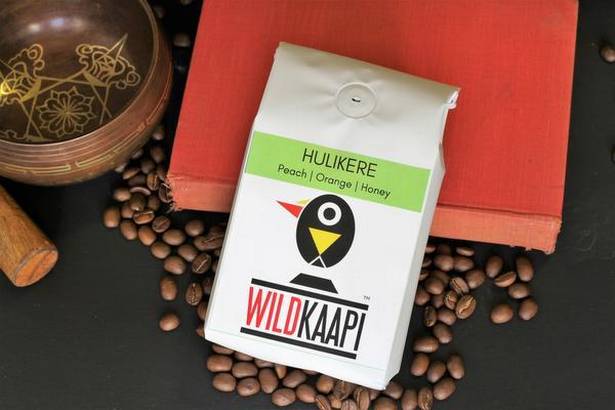
Millennials are more discerning towards coffee, observes Sosale. “Today’s consumer is informed. Ethical and conscious consumption is what we want to tap into.” To qualify for certification, the coffee not only had to have a good cupping (tasting) score, but the plantation had to support a vast biodiversity. Of the more than 187 farms they audited (recording the species of birds, butterflies, mammals, amphibians and trees), only four made the cut: Agora (with 124 species), Bindiga (137), Hulikere (119) and Cornerstone (120). Wild Kaapi has named their single-origin Arabicas after the plantations they are sourced from.
Shreedev Hulikere, a third-generation coffee grower with 60 acres in Chikmagalur, who is partnering with Wild Kaapi, says he wasn’t aware of the numerous wildlife species on their estate till now. “While my ancestors traditionally hunted, I’m a conservationist. I tell my labourers not to destroy any bird nests. I know that barbets nest here and they eat the borer worms that destroy coffee. Similarly, I’m not going to chase away the monkeys and civets that eat my coffee because I’m being compensated elsewhere. Just because a porcupine destroys a pepper creeper, I’m not going to hunt it down,” he says.
Love thy neighbour
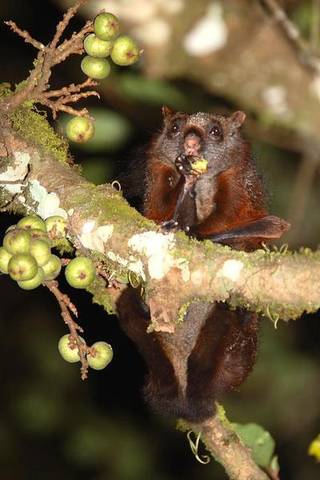
The audit also revealed a few surprises. “We found frogs listed as endangered or threatened in the IUCN Red List (the world’s most comprehensive inventory of global conservation status) at these plantations,” says Karanth. The certification not only places their coffee in a premium space, but also paves the way for a new movement. “If you have wildlife-friendly practices, you can promote sustainable agriculture. We are trying to establish a new model — a profitable enterprise that also enables better livelihoods. This hasn’t been tried before; it’s a new way of thinking,” says Karanth.
(photo credit: Ramki Sreenivasan)
While their immediate goal is to prove that such a model is sustainable, Sosale is also mulling introducing coffee scrubs, soaps, candles and flavourings — all huge product lines in the international space. Moving into pepper and cardamom, which grow hand-in-hand with coffee, also holds much promise.
Prices start at ₹390 for 250 gms.
To know more, and buy the coffee, check out wildkaapi.com.
source: http://www.thehindu.com / The Hindu / Home> Life & Style> Homes and Gardens / by Bhumika K / June 02nd, 2017
Nammaradio starts services in dialects of Karnataka
Among the unique characteristics of Karnataka are the distinctness of its regions and the tongues spoken within the State. Yet, for long, what people heard on the radio were Kannada, Hindi and English. In contrast, one radio channel — Nammaradio, the state’s first Kannada radio station on the internet launched in February 2016 — has started airing programmes in eight languages and dialects of the State. It’s likely the only web radio in India to air programmes in Kodava, Konkani and Tulu, and some of the lesser known dialects of Karnataka. These include Byari and Nawayathi, spoken by sub-sects of the Muslim community bearing the same names in coastal Karnataka, and Sankethi and Havyaka, spoken by Brahmin subsects.
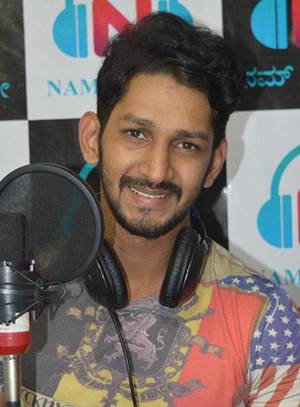
Making waves: Pavan Bhat anchors programmes in Tulu
Avnidhar Hawaldar, CEO, Nammradio.com, said that the target audience are Kannadigas living outside the state, and extensive interaction with them revealed that while there were avenues for Kannada content, there was nothing for people speaking the dialects. “It’s a true embracing of Kannada in all its diversity,” said Mr. Hawaldar.
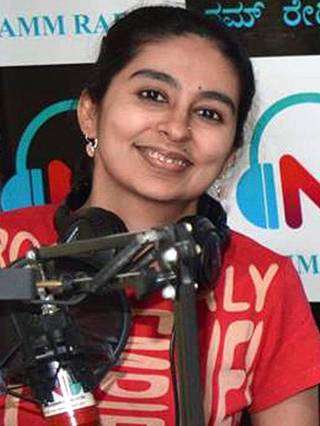
Making waves: Varsha anchors programmes in Havyaka .
In February 2017, at the Nammaradio studios in Bengaluru, in-house radio jockey Varsha started the first such show in Havyaka, a dialect spoken by Havyaka Brahmins. “The response was huge, and our listeners were elated when they heard a show in their mother tongue. That set the tone for the rest,” said Raj Malleswaram, programming head of the channel.
Since there is no history of radio programming in these languages and dialects, trained jockeys are hard to come by. So housewives, students and working professionals fill the need. Ashutosh Dikshit who works as senior innovations manager with a leading firm in the UK has a second career now, hosting a weekly radio show in Sankethi language from his house in London. “Our community may be less than 30,000 across the world and we are very concerned about our language, which is a large part of our heritage. The radio show has been welcomed widely in our community,” Mr. Dikshit said. He added that the channel viewed dialects like Sankethi or Nawayathi as not community linked, but as a linguistic heritage to be preserved.
When it comes to film songs, however, the one-hour radio shows through the weekend play Kannada songs. Except for Tulu, no films have been made in the other tongues. The Tulu show will soon start playing Tulu film songs.
source: http://www.thehindu.com / The Hindu / Home> News> Cities> Bangalore / by K.V.Aditya Bharadwaj / Bengaluru – May 29th, 2017
Women will be drawn from local villages and tribal hamlets as they know the terrain better. The women are being identified and shortlisted by local forest officials and panchayat members. dh file photo
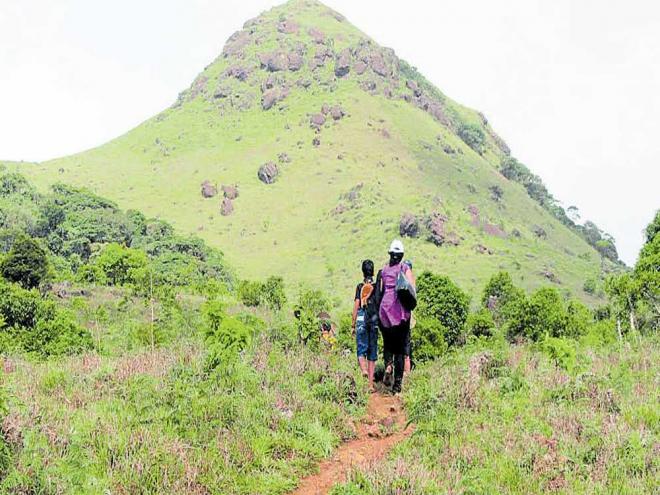
The Forest department is planning to set up an all-women trekking guides group. Said to be the first such initiative in India, these women groups will help trekkers on the dedicated trekking trails identified by the Forest department. To start with, women guides will be introduced on three eco-trails of Kodagu district. Women will be drawn from local villages and tribal hamlets as they know the terrain better. Such women will be trained and recruited by Karnataka Eco-Tourism Development Board (KETDB).
Vinay Lutra, Chairman of KETDB told DH that they had received a special request from Kodagu CEO and Chief Conservator of Forests to have all-women trained trek guides.
“The demand for trekking trails is very high and so is the demand for women guides. Based on the response and success rate, more such teams will be formed in the coming days,” he said.
The idea of involving them is to make the women of this section and region employed and independent. The women are being identified and shortlisted by the local forest officials and panchayat members. The KETDB is only training the women.
Vijay Mohan Raj, Chief Conservator of Forests, Chikkamagalur, and member of KETDB, said that earlier 70 women were trained to be a part of the certified women volunteer programme.
These are women from various civil societies. But, this will be for the first time where 30 women will be trained to be trekking guides.
“The difference is that the volunteers are not paid, but these guides will be given permanent employment and a monthly salary. Guides will be trained professionals,” Raj said.
Though dates of the training and their recruitment is not yet decided, board members hinted that it is most likely to start from June. Guides will undergo a week-long training on the trekking routes, the dos and dont’s in the forest, identification of the birds, plants, insects and animals and health safety.
After this, KETDB is also planning to introduce a mixed group of trained guides in Dakshina Kannada and Hassan districts.
source: http://www.deccanherald.com / Deccan Herald / Home> State / by Bosky Khanna / DH News Service / Bengaluru – May 26th, 2017
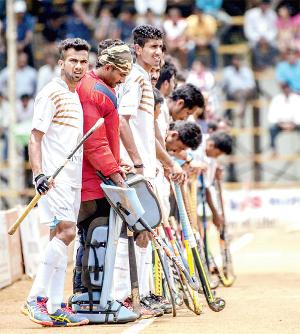
Hotbed for hockey. Nikkin Thimmaiah with his Chendanda team at the Kodava Hockey Festival final.
The Kodava Hockey Festival is testimony that the game is still thriving in Kodagu, feels internationals Nikkin Thimmaiah and SK Uthappa
A crowd of 30,000 people turned out to watch the Kodava Hockey Festival final between Chendanda and Pardanda on May 14, an eye brow-raising statistic to the uninitiated. This wasn’t an international event, not even a national championship. The average spectator turnout for an Indian Premier League game at the M Chinnaswamy Stadium was 25,000 but this hockey contest — played between families in Kodagu district — beat even the IPL. Cricket, they say is religion in the country. In Kodagu district, it’s hockey that gets the adrenaline pumping.
“Every player from Kodagu begins his career in this tournament, including me,” Nikkin Thimmaiah, India forward and a member of the Chendanda winning team, said.
“I watched my father play in this tournament as a six-year-old. That was one of the catalysts that spurred me to take up the sport.”
The tournament is unique in many ways. A team comprises members of a family and there is no distinction between either age or gender. The festival itself has been conducted annually since 1996. The game, though, goes on through the year as youngsters are encouraged to make it a career. “It’s the most talked about sport in Kodagu and even now, kids are still enthusiastic about the game,” Thimmaiah added. “Kids generally place hockey on a priority.”
Over the years though, the number of players from Kodagu making it to the international level has fallen. Currently, there are only three — Thimmaiah, SK Uthappa and SV Sunil — in the Indian squad. There’s no player from Karnataka in the junior team, but Uthappa insists hockey is not dead. The sport is now alive, more than ever, and tournaments like the Kodava Hockey Festival keep it ticking. “I began playing hockey seriously after watching my brother play,” Uthappa said. “I played badminton first, but in Coorg, everything is about hockey. Hockey is in our blood and that’s why we start playing. The next influential factor is your family. It depends on how they support and encourage you to play hockey as a child. Thanks to that tournament, it’s a tradition that everyone participates in it.
“Even now, that culture of developing the sport remains. You often hear that gadgets have taken the fun out of outdoor games. There are kids who use iPads in Coorg but they know how to balance it with the game. I think that love for the sport is influential in getting everyone to play it. Imagine you have to play this sport in every school. You will naturally be inclined to it.”
But it’s not just this tournament which gets Kodavas hooked to the sport. Uthappa says everyone is interested in playing some sport, but what cricket is to the entire country, hockey is to a Kodava. “We Kodavas follow, discuss and dissect hockey just as other people in the country do with cricket,” Uthappa said. “Families here are aware of everything that we do. Over the years, they have become more educated about hockey, thanks to the promotion and media exposure hockey is getting. Now, everyone’s involved in an educated discussion. For example, they tell me I played well in the first quarter, but my dribbling went awry in the third quarter and so on. Earlier, it was only the basic question of whether you won or lost and by what score.”
source: http://www.bangaloremirror.indiatimes.com / Bangalore Mirror / Home> Sports> Others / by Aravind Suchindran / Bangalore Mirror Bureau / May 23rd, 2017
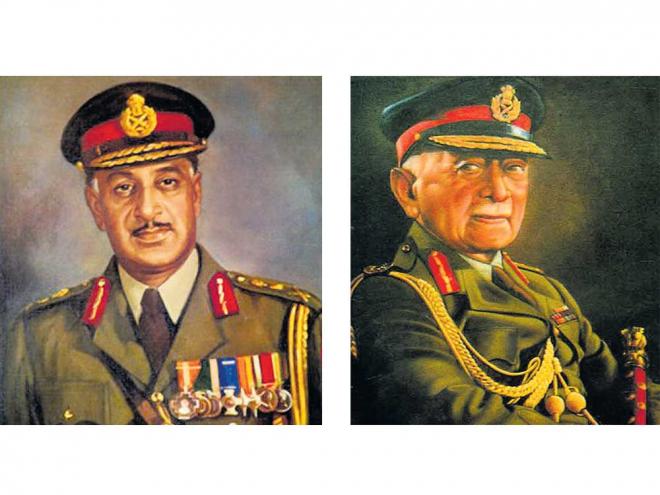
Role Models: Paintings of General K S Thimayya, Field Marshal K M Cariappa.
Kodagu is not just known for its serene landscape and picturesque surroundings, but also for the valour of its people. Rightly, the district boasts of several military heroes. The statues of such brave men can be seen in Madikeri. The Sudarshan Circle in Madikeri is flanked by the statue of Field Marshal K M Cariappa and the equestrian statue of Subedar Guddemane Appayya Gowda.
One of the earliest revolutionaries from Kodagu, Appayya Gowda, was hanged by the British in 1837. His contemporary revolutionaries from Kodagu included Subedar Naalnaad Mandira Uthayya, Chetty Kudiya and Shanthalli Mallayya who were imprisoned for many years by the British. Further along the main road, you can see a circle with the statue of General K S Thimayya. If you take the deviation to the right, you will find Major M C Muthanna Circle near the town hall and Squadron Leader A B Devaiah Circle near the private bus stand.
The first family
In Kunda, near Gonikoppal, lived the Kodandera family, hereditary chieftains of a group of villages. I M Muthanna’s Coorg Memoirs mentions that Naad Parupatyagar (native village official) Kodandera Kuttayya was the grandson of Diwan Mandepanda Thimmaiah. Between 1901 and 1909, he was the assistant commissioner and highest ranked native official in the then Coorg province. When his wife Dechy, or Dechamma, passed away, a locality in Madikeri was named as Dechur in her memory.
Two members of this family, Field Marshal Kodandera Madappa Cariappa and General Kodandera Subayya Thimayya, rose to become the chiefs of the Indian Army. Hence, the Kodandera family came to be considered as the first family of Kodagu’s military heroes. Field Marshal Cariappa was the son of Kuttayya’s younger brother Madappa, who worked in the revenue department. General Thimayya was the grandson of Kuttayya.
Born in 1899, Field Marshal Cariappa, ‘the Grand Old Man of the Indian Army’, studied in the Madikeri Government Central High School and then in the Madras Presidency College. He gained admission at Daly Cadet College, Indore, in 1919 and was commissioned as a second lieutenant in Bombay’s 88th Carnatic Infantry, during World War I. The following year, he served in Mesopotamia (Iraq) and was promoted as a lieutenant.
He became the first Indian army officer to attend the Staff College in Quetta. He married Muthu Machia, a forest officer’s daughter, had a son K C Nanda Cariappa, who later rose to the rank of air marshal, and a daughter, Nalini. During World War II, Cariappa was awarded the Officer of the Most Excellent Order of the British Empire (OBE). He became the first Indian to become a brigadier.
Cariappa also served as India’s first commander-in-chief (C-in-C) between 1949 and 1953. Now this position rests with the President of India. He represented India as its high commissioner in Australia and New Zealand from 1953 to 1956. In 1986, he was made a field marshal. Thus, he became one of the two Indian army officers to hold this rank. He died in 1993.
General Thimayya’s actual name was Subayya, while Thimayya was his father’s name. He was born in Madikeri in 1906. Admitted to the then Prince of Wales Military College in Dehradun, he was one of the six Indian cadets who underwent training in Royal Military College, Sandhurst, England. In 1926, he was commissioned into the Indian army. In 1935, he married Codanda Nina and the couple went to Quetta. During the Quetta earthquake that year the couple rendered outstanding humanitarian service.
During World War II, Thimayya was awarded Distinguished Service Order (DSO). He represented India during the Japanese surrender. Between 1953 and 1955, Thimayya was the chairman of the Neutral Nations Repatriation Commission. He gained international fame for the way he handled the exchange of the prisoners of war (POWs) held during the Korean War. In 1954, he was awarded the Padma Bhushan. Between 1957 and 1961, he was the chief of the Indian army.
In 1964, he was appointed Commander of the United Nations Forces in Cyprus, where he passed away. Cyprus released a stamp in his memory, and later, his wax statue was displayed in Singapore. Both Cariappa and Thimayya are iconic figures in India.
Fond memories
According to Major General Arjun Muthanna, a great grandson of Kuttayya, Cariappa and Thimayya belonged to a generation of Indian officers who stormed the bastion of India’s colonial masters and deftly navigated unchartered situations. Both had huge responsibilities thrust upon them at a relatively young age and rose to the challenge. Cariappa, commissioned as a lieutenant when Indians were just being permitted to become British Indian Army officers, would ‘Outbritish the British’, probably to be accepted and treated as an equal by the British officers.
A strict disciplinarian, he demanded punctuality and proper dress code. He was fiercely nationalistic and moulded the Indian Army into its current apolitical position.
In 1948, the Kashmir situation grew tense and war was imminent. Lieutenant General Cariappa became the head of the Western Command and led Lieutenant General S M Shrinagesh and Major General Thimayya. It was during this war that Thimayya helped India secure Ladakh.
Cariappa’s contemporary and friend, Lieutenant General Nathu Singh, was first offered the post of C-in-C but he declined and stated that his senior Cariappa, who won the 1948 war for India, was more eligible for the post. It was on January 15, 1949 that the three centuries old colonial army became a national army. That was the first time an Indian, General Cariappa, was made chief of the Indian armed forces.
Every morning, Cariappa paid his respects to the portrait of his parents and the statue of a jawan. He was ever thankful to the soldiers for protecting the country. Hence, he was called the soldiers’ general. Cariappa would go to the war front, even after retirement, in order to motivate the troops.
Muthanna narrates a personal anecdote about the Field Marshal, “When I called on him at his residence, in Madikeri, in May 1986, to invite him for my wedding, I was wearing a half sleeve shirt and trousers as appropriate for the hot summer day. After accepting the invitation, he commented on my attire saying ‘You’re an officer in the army aren’t you? In which case, you should be wearing a coat and tie.’ I had no response and thought in my mind I’m calling on my family elder. Pat came his next comment, as if he’d read my mind, ‘In case you’re calling on me as a relative you should be wearing our traditional dress of kupya.’ He walked the talk. He was always dressed formally as a respect to the person who was visiting him.”
Thimayya was charismatic, approachable and had great interpersonal skills. When Thimayya visited his Dehradun alma mater as an alumni, one of the cadets there wanted to know how to address the general. Thimayya simply replied ‘Call me Timmy’, referring to his nickname!
Some of the other military heroes of Kodagu are: Major Mangerira Chinnappa Muthanna, who was awarded the Shaurya Chakra posthumously, and Squadron Leader Ajjamada Bopayya Devaiah, nicknamed ‘Wings of Fire’, the only Air Force personnel to be awarded the Maha Vir Chakra posthumously so far.