Famous for its coffee plantations, South India didn’t grow the crop naturally. Now a major producer with several hill tracts growing unique flavours of coffee, it is where the story begins… well, not exactly.
The southern Indian state of Karnataka is strewn with coffee plantations. The state is, in fact, one of the major producers of coffee in India. ‘Arabica’ and ‘Robusta’ are the kinds of coffee that are grown here under methods which are unique to this part of the country, rather, to the world.
The coffee here is grown under the shade of tress and is often inter-cropped with spices like cardamom, cinnamon, nutmeg and clove, giving it a unique flavour and aroma.
Interestingly, growth of coffee here is so dense that it might come across as shocking when someone tells you that it all started with the seeding of mere seven coffee beans, which were smuggled to the hills of Karnataka.
The story that goes around in the coffee plantations down south is that an Indian saint, named Baba Budan, once went on a pilgrimage to Mecca and from there to Mocha – a port city in Yemen and a major coffee hub.
It was here, in the 18th century, that Baba Budan first discovered coffee, when he tasted it in form of a dark and sweet liquid called Qahwa. It is said that he found the drink so refreshing that despite it being a protected Arabic beverage and industry, he sneaked out seven coffee beans by strapping them to his chest and brought them to India.
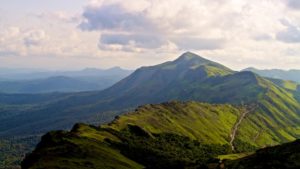
The Baba Budan Hills in Karnataka
These seven beans, Baba Budan planted in the courtyard of his home, in Chikmagalur, Karnataka – the place now synonymous to the origins of coffee in India. It is from this small patch of land that coffee began to spread over an entire hill – now called the Baba Budan hill – and then gradually to rest of Karnataka and South India.
Coffee cultivation further boosted in India under various colonies. First, the Dutch began to grow coffee in the Malabar region of south India and then the British steered its movement all over the peninsula, where they found the conditions to be apt for the growth of the crop.
In fact, coffee plantations in India were made commercial under the management of JH Jolly of Parry & Co, a trading company. Jolly saw the potential of coffee beans growing in the plantations of Chandragiri in Andhra Pradesh and had a petition sent to the Mysore government in the adjoining state of Karnataka, for 40 acres of land to grow coffee.
This not just boosted the growth of coffee but, post this, the plantations flourished with their production turning into the sole business of many from the region and coffee becoming a major commercial product. Eventually, a coffee board was also set up, which took care of the marketing of Indian coffee. It is this board that we know as the Coffee Board of India, the Indian government’s body taking care of coffee commerce in India.
Today, the coffee industry in India continues to be a flourishing one with the hill tracts of South Indian states dominating its production and the states of Kerala and Tamil Nadu following Karnataka in the list of traditional coffee growing regions. Coffee routes have further elongated to non-traditional areas, including Andhra Pradesh and Odisha on the eastern coast of the country and Assam, Manipur, Meghalaya, Mizoram, Tripura, Nagaland and Arunachal Pradesh of North-Eastern India.
The production of the crop that started on an ambiguous note has prospered into a full fledged industry, supporting the livelihood of many, especially, in the remote hilly areas of South India.
source: http://www.mediaindia.eu / Media India Group (MIG) / Home / posted in Freestyle / by Surbhi Kapila / New Delhi – March 30th, 2017
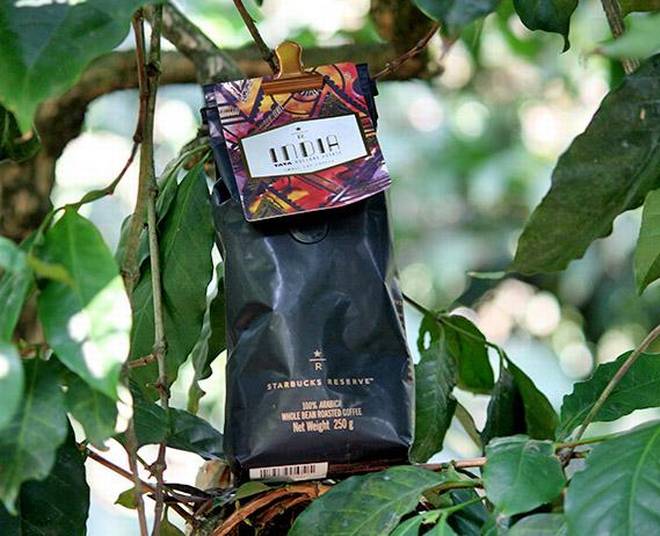
Coffee grown in the hills of Karnataka is making its way to the Starbucks Reserve store in Seattle
Coffee is undergoing something of a transformation in India. Local beans, grown in the country, are finally making it onto store shelves, where provenance and growing techniques are emphasised. Meanwhile, a certain section of savvy consumers trawls the Internet, searching for new ways to brew their daily cuppa using a range of different home-grown beans, each of which comes packaged with tasting notes that emphasise subtle flavours.
Meanwhile, an ocean away, India’s coffee prowess was given a different stamp of approval, when last October, Starbucks sold Indian coffee for the first time at its flagship Starbucks Reserve store in Seattle, the city in which the brand was founded. The coffee came from Tata’s Nullore estate in Kodagu, Karnataka, and was the company’s first microlot coffee. While Tata has 19 plantations in Kodagu (spread over 7,300 hectares), this was the first time that the company’s arabica beans made it to international shelves.
Microlot coffee refers to beans that are generally the best of the estate, and are those that imbibe flavours of the terroir. Arabica is one of two types of coffee beans, and is prized for its flavour, lower caffeine content and almost twice the concentration of sugar than is found in robusta. As a result, arabica is more expensive, and harder to grow.
Place of origin
Walking around the Nullore plantation’s block 19 (where the beans grew), what strikes you is the sense of calm that comes with standing in the midst of a 505-acre estate.
The microlot that was ultimately produced got its flavours from plants and trees that fruit bats propagate, while they make their homes in the silver oak trees above that provide shade to the arabica plants below. This two-tier system allows the coffee to grow under a canopy of trees, which includes jackfruit, pepper vines and fruits such as orange and lychee. On a tour of the block, Mandana, plantation manager, says, “We collected the coffee berries separately from eight hectares of this [block], where the fruit bat population is high.”
Changing trends
The story of the coffee though, goes beyond its growth, and rather is the story of how Tata Coffee is responding to changing customer demands, especially at the high-end, where international coffee drinkers are willing to spend between $10-30 to buy beans with unique tasting notes. Sunalini Menon, a well-known coffee cupper, who is also an independent member of the Tata Coffee board, has been instrumental in galvanising the plantation managers to experiment with microlot coffee. Chacko Thomas, the deputy CEO and executive director, says, “As a result of Nullore, we have 150 [microlot] experiments in progress.” Processing aside, the recognition has showed employees, that the beans grown in Kodagu can be cupped alongside the best in the world.
source: http://www.thehindu.com / The Hindu / Home> Life & Style> Food / by Aatish Nath / March 30th, 2017
by : Mandepanda B Appaya was a founder and a former chairman of the KPA
I am perhaps one of the lucky planters to have participated at the inauguration of the KPA and still living. The function held at the Sports Club, Mysore was inaugurated by the late Maharaja.
Late Mr. CL Machia who was my boss, as managing director of Coffee Lands Ltd, had invited me to the function. He read a long report emphasizing the need for the association [KPA].
The late Mr. M. Appaya was seated beside the Maharaja.
As I was the then manager of the Hunsur Coffee Curing Works owned by Coffee Lands, Mr. Machia had asked me to attend the function. Here I was introduced to Mr. Lakshmana Gowda and a few other planters. My association with the KPA began when I had to leave the Hunsur Coffee Works after its sale to its present owners. I then started taking an interest in the KPA and was elected from Kodagu as member very soon, I became the vice chairman when the Late Mr. AC Shivegowda was the chairman. We had a lot of problems at the KPA Level. The Land Ceiling Act was published. Although alI agricultural lands, including coffee, tea and rubber were exempt, if anyone had any other Land, both together could not exceed 48 acres. In other words, our paddy, arecanut plantations got a severe blow. Both, Late Shivegowda and I had to toil and we stayed in Bangalore for 27 days at a stretch to solve the issue.
We met almost all members of the Assembly pleading for exemption for one ceiling area of crops excluding coffee. We had an uphill task.
Fortunately, D Devaraj Urs, the then chief minister of Karnataka, who was a good friend from my days at Hunsur, helped us a lot by convincing the Congress party our case. Thus, we were allowed one ceiling area of other crops much against the will of the then revenue minister.
Mr. UK Lakshmana Gowda, being an MP was helpful from the beginning. He helped us not only for getting the ceiling area, but also with wealth tax.
It cannot be emphasized less that he had a big hand in helping us. He was friendly with all MPs, which helped us in securing wealth tax exemptions on plantations. Mr. FM Khan, MP, has also helped us get wealth tax exemption.
I was the chairman of the KPA in 1973.
My association with the Coffee Board began in 1971. I was a member of the Coffee Board for four terms, though not at one stretch. During 1971 there was a shortage of curing works as the business was not attractive. A committee was formed to visit all the curing works and know of their expansion plans. Mr. PG Gurger and myself visited all the curing works in the state and submitted a report to the chairman. We were both traveling from Hassan to Mangalore. Enroute we heard of the surrender of Pakistan after the Bangladesh war. GeneraI Manekshaw was then made Field Marshal for the success.
Mr. UK Lakshmana Gowda who I used to call Bhishma Pitama, was of great help in the Coffee Board. When we used to have heated arguments on certain issues with the intelligent Kerala members, it was Mr. UK Lakshmana Gowda who used his knowledge and experience to solve the issues. Late Narasimha Rao, IAS, once sent me to Delhi to negotiate with Russian representatives regarding discount on coffee sold to them.
During 1988-89′ both Mr. Lakshmana Gowda and l went to Moscow for that year’s sale to the erstwhile USSR. We had to go during December and stayed for eight days. Finally we agreed to allow 38 percent discount on international prices. The then chairman of the board, Late SK Warrier had come with us.
Normally, we sold 50,000 tones to the USSR. But every year the discount went up. At New Delhi we decided to allow 37 percent discount on the International prices.
We had no choice as we had to sell one-third to the quota countries and one-third for internal consumption and one-third for non-quota countries. For sales in the internal market, the government fixed the minimum price. Thus planters suffered.
To add to their woes we had to pay 102 percent purchase tax since we had lost the case in the Supreme Court. lt was kept pending for 10 years before the retiring chief justice gave the decision on the last day of his sitting. Karnataka government, in addition to this, levied a 15 percent sales tax on every bean sold by the growers.
We met even Rajiv Gandhi in Bangalore and made representations to him. He asked us to meet the adviser to the governor as there was no government then. Mr.Rangarajan heard us patiently for 45 minutes but gave no decision. Finally there was an agitation for the abolition of pooled marketing by the growers and they succeeded and now free trade of coffee is allowed.
I became chairman of UPASI in 1983. Mr. Tika Bedi insisted l should take this position since l did not accept it due to certain physical constraints. Anyway, I served the UPASI in the committees from 1972 to 1983.
So my career in the KPA, Coffee Board ended in 1983. I served the Mysore Race Club for over 15 years which celebrated the centenary in 1992 with an eye hospital for the poor and the needy as a centenary project. I was the chairman of the Race Club from 1988-92.
I am now over 87 years old, yet take keen interest in many of the activities I used to participate in.
source: http://www.kpa.org.in / Karnataka Planters’ Association / Home> About Us> History / by Mandepanda B. Appaya
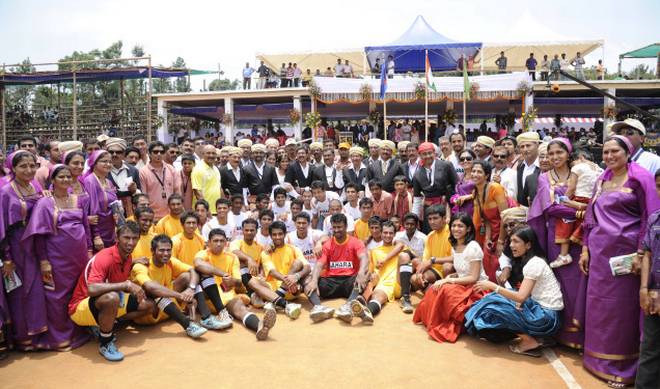
Uproarious: Kodava families with the India XI and Kodagu XI teams. Photo: K. Murali Kumar.
Once a year, Kodava families from around the world come together to participate in a unique hockey tournament in a sleepy town. Shreedutta Chidananda on the 16th edition of the festival, hosted by the Iychettira family this year, and its place in Coorg’s culture.
An hour northeast out of Gonikoppal, along one of the narrow, undulating roads typical of the region, Ammathi almost springs out of the country; an oversized clearing after endless acres of coffee plantation. Down here, in Coorg’s south, it is a searing 34° during the day; nothing like the popular postcard images of mountains and mist. Yet, ask locals and they will say their part of Coorg is just as beautiful as Madikeri or Kushalnagar, lacking only the tourists and the hype about the north.
Ammathi, the venue of this year’s Kodava hockey festival, is an unremarkable town. A dozen small stores share premium space around the bus stop with the Cauvery Recreation Club and the Titanic Hotel and Bar.
Preparations galore
On the eve of the Iychettira Hockey Cup, the 16th edition of Coorg’s annual hockey competition among its Kodava families (there are close to 800), there is no hint of the extraordinary influx that is to follow. Overseeing preparations at the Ammathi Government High School ground, Chairman of the Tournament Committee, Iychettira K. Anil is a fiendishly busy man. “I’ve had to charge my phone thrice today,” he says. “It just won’t stop ringing.”
Temporary bleachers are coming up on all sides while a few workers tend to the pitch.
“Organising a tournament of so many teams is a logistical headache,” Anil says as he stands inside the under-construction pavilion and surveys the ground. “Sending the draws out to all 217 teams is hard enough. Then you have to conduct 12 matches a day across two venues.”
Sixty-two families signed up for the inaugural edition in 1997. The numbers have since swollen, reaching a high of 281 in 2003, prompting claims of being the world’s largest hockey tournament. Lasting three weeks, it is a single-elimination tournament and concludes on May 13. “A Coorg has to hold a hockey stick,” says Anil. “Show me another tournament in India where so many teams turn up.”
In the weeks leading up to the competition, practice was held at the Middle and High School grounds but with work on the playing surface now on in full swing, the venues are off limits. Action has shifted, instead, to the Good Shepherd Convent on the town’s south-eastern fringes, just off the highway. It is an uproarious affair with boys, youth and men battering a tired ball about. A viewing gallery rises up sharply on one side of the field — above which the groundskeeper occasionally materialises as dusk falls to see if the gates can finally be locked — while the road falls away on the other.
The Uddapanda family’s U.S. Jagath, a genial, moustachioed middle-aged man, says that his team has been training for close to 20 days. “We take it seriously. Maybe not very seriously but we definitely don’t want to lose in the first round.” A centre-half on the Mysore University team in his youth, Jagath says most sides have three or four players of similar, if not better, pedigree. “The stronger ones even have former India internationals. The semi-finals and final can get quite feisty. If someone can’t play hockey here, he’s deemed a useless fellow. Our standards are pretty high.”
Ordinarily only the festival’s later stages draw significant crowds — the semi-finals and the final have been known to attract sometimes 30,000 spectators — but this time, there is a gushing anticipation about the inaugural day.
Those that have missed the billboards and the flyers will, perhaps, have noticed the rear ends of the district’s KSRTC buses. The Indian team will be in town, they proclaim, to play a “Coorg XI” in an exhibition game.
Gathering crowds
Anil predicts a traffic nightmare and he is not too far off the mark. On Saturday morning, the line of parked cars stretches over a kilometre from the ground; this after two prescribed lots run out of space. The local police are out in force, attempting to direct recalcitrant drivers elsewhere.
Local newspapers, meanwhile, dedicate large chunks of space to the Hockey Nammé. Andolana, a Kannada daily, offers up three pages. “Broken hearts, warring brothers, families rent by strife; they have all been united by the Nammé,” a piece by-lined “Hockey Lover” exults on the front page.
The ground is chockfull when the India team arrives. Men and women from the host Iychettira family line the grandstand in traditional Kodava attire; the purple of the saris an arresting sight. On the other sides, families clamber up the tiers in search of a vantage point. Boys and girls — in hats, shades, soft drink in one hand, cell-phone in the other — mill about casually. Kids flood the walkways below making their way around on the narrow planks with little difficulty. Every seat is taken, every inch of space occupied.
Head Coach Michael Nobbs is visibly stunned by the several thousands strong attendance. “I had some idea of what to expect but this is miles ahead of anything I’ve seen,” he confesses, capturing the crowds on his iPhone. “There’s just so many kids here. It blows me away.” Every goal is met with frenzied applause; the home side loses 3-1 but there’s no hint of disappointment.
Although the India XI is without most of its high-profile players, Nobbs has been careful to bring with him the ones hailing from Coorg. S.V. Sunil and V.R. Raghunath — though not Kodavas — draw the loudest cheers. “I cannot tell you enough how good a concept this is,” the latter says. “I wish I were a Coorg; I could have played too.”
The tournament proper begins after lunch that afternoon; the Codanda and Cheranda families feature in the first game. Although the crowds have largely melted away, both teams find vocal support in their women. “Trap the ball”… “Pass it to the left”…”He’s open”, they cry lustily applauding every interception, forward run, or shot.
All together
The match is an opportunity for the Codandas’ C.M. Somanna to share the pitch with his nine-year-old daughter who comes on with a few minutes to spare. The shorts may reach down to her shins and the stick resembles a spear in her hands, but Nila is visibly thrilled. The final whistle eventually blows and the Codandas manage to sneak a nervy one-nil win.
“We have only 100 members yet, earlier, we hardly met once a year,” says Swati Bopanna, a Codanda elder and President of the Women’s Hockey Association of Coorg. “People didn’t know each other’s names. Now we all are here.”
Somanna concurs. “This tournament is a blessing,” he says. “Someone is in Venezuela, someone in north India, someone is studying in Bengaluru or Mysore, someone running his plantation in a different part of the district. It has brought us all together. The concept has worked wonders within the families.”
After the victory, the Codanda family congregates in the car park. Sandwiches are handed out as players — father and daughter, uncle and nephew, far-flung cousins — joke and swap stories. Fifteen minutes spent observing their potential opponents in the second round and they’re all off, vowing to meet for practice during the coming week. The team has never progressed beyond the third round but results, Somanna insists, are secondary.
Although the euphoria of the neutral has largely dissipated since the opening day, the families themselves are champing at the bit. They arrive in buses, hired vans, bikes or plush cars, each with their own team jerseys.
The Mukkatiras of Devanageri (for there are other Mukkatira families, albeit unrelated) have designed a rather smart yellow and white kit, “DM” monogrammed on the front. Manager Nanda Pemmaya watches from one side as his team warms up. “We’ve been training together for three days; we’ll see how far we can go,” he says. “But, win or lose, we’re all meeting at the end of the game. We have lunch and then we split.”
From a freak goal down, the Mukkatiras recover strongly, hammering four past the Paruvangada goalkeeper. Their young outside-right scores two fine goals, while their 72-year-old forward nets one. Post the hugs and the congratulations, the Mukkatiras get into their cars and head for their wondrously well-maintained iyn mané (ancestral home), an undisturbed quarter hour’s drive away, a right turn off the road to Virajpet.
Hearty laughter rings out from the pyol as the assembly celebrates the triumph with a few beers. A tough second round fixture awaits his men in eight days’ time, but Pemmaya is not unduly concerned. “The hockey festival is all about bonding, you know,” he says as platefuls of pork are passed around. “It is literally a festival.”
How it began
The Kodava hockey festival was conceptualised by Pandanda Kuttappa, a former State league referee, in 1997 and is today run by the Kodava Hockey Academy. Concerned by what he saw as falling standards in hockey in the district, Kuttappa hit upon the idea of a tournament among the families that would encourage more youngsters to take up the sport.
Though the first edition had only 62 participants, with hockey’s popularity in Coorg and its past there, it was never going to be difficult to draw more families. The numbers grew, with a high of 281 teams in 2003. The 2012 edition has received 217 entries.
The Kootanda family remains the most successful team, having won four titles (one shared with Kullettira), while the Kullettira, Nellamakkada and Palanganda families have all triumphed thrice. The Kaliyanda, Mandepanda and Anjaparavanda families have won the competition once
.The Palanganda family, led by star forward Amar Aiyamma, has won the event in 2010 and 2011. The same names are expected to be frontrunners for the title again.
There is no permanent venue, something organisers are striving to achieve, and the festival has been held across the district in previous years. Ammathi, the site of the 2012 festival, is playing host for the third time
Beyond numbers or tangible benefits, though, the Kodava hockey festival has accomplished what perhaps nothing else could have: uniting distant families.
The hosts
The Kodava Hockey Nammé (festival) is hosted by a different family each year and named after it. A family may not host the event more than once. Families apply to the Kodava Hockey Academy expressing interest and are allotted the tournament after evaluation.
The Iychettira family, host of the current edition, was offered the chance eight years ago, says I.K. Anil. “But we weren’t ready then. This time, I told the family that we should conduct it. We requested to be allowed to be hosts. It is a matter of great pride and honour. There are over 750 Kodava families and we are the 16th family to be chosen.”
Anil estimates expenditure to cross a crore; the Government of Karnataka has promised Rs.30 lakh, with the Iychettira family and the event’s sponsors funding the rest.
source: http://www.thehindu.com / The Hindu / Home> Society / April 28th, 2012
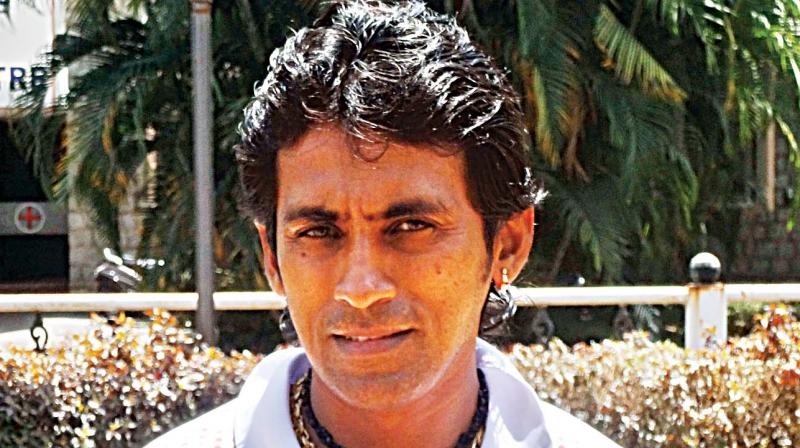
Arjun Halappa backed the junior members of the 33-man squad to step up to the big-time in world hockey.
Arjun Halappa
Bengaluru:
With a bustling hockey schedule starting with the Sultan Azlan Shah Cup around the corner for Team India, former national team captain and local favourite Arjun Halappa backed the junior members of the 33-man squad to step up to the big-time in world hockey. Speaking to media personnel at the ongoing training camp at the Sports Authority of India’s Southern Centre in the city on Friday, Halappa, who joined head coach Roelant Oltman’s support staff last week, recognised the challenges that lay ahead regardless of the depth of talent available in the Indian ranks.
“We’ve done really well at the junior level. The most important thing is for things to fall in to place at the senior level. Major tournaments like the World Cup, the Olympics and the Champions Trophy are a different ball game. To get the feeling of being a part of big matches and tournaments and to win these games is very important,” he quipped.
At a time of transition for the men’s side, Halappa believes the combination of experienced heads, former players behind the scenes and youthful exuberance can be a force in the future. “It’s very nice to get 11 juniors into one bunch for the senior group. I just hope that they can transition the result of winning the junior World Cup to the senior group. I can’t expect this to happen overnight. We’re hosting the 2018 World Cup and 2020 Olympics will also serve as good exposure,” the 36-year-old noted.
‘Thrilled with new role’
Halappa was evidently thrilled about his new role. “We’re building a new team and I had to take a call on the job as Roelant has (been) behind me to coach for a while. I really want to give back something to hockey. The learning aspect is crucial for Indian coaches, especially from experienced figures like Oltmans. I am very grateful to him and Hockey India for giving me this opportunity.”
The former attacking midfielder was optimistic about the dressing room chemistry and was quick to point out its effectiveness. “A lot of guys in the support staff started together. We hope that helps to contribute towards the success of this team. “At the end of the day, the players matter. The staff can lend feedback but execution holds key. The seniors have been pushing hard, and juniors are in turn pushing them for positions,” he surmised.
source: http://www.deccanchronicle.com / Deccan Chronicle / Home> Sports> In Other News / by Utkarsh Krishnan, Deccan Chronicle / March 25th, 2017
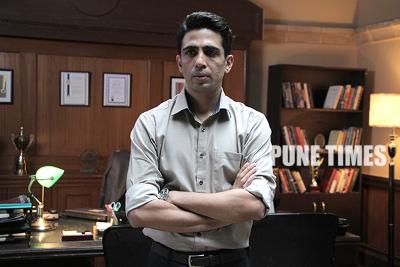
After winning accolades for his portrayal in ‘Shaitan’ and ‘Hunterrr’, actor Gulshan Devaiah has turned his eyes towards the Marathi industry.
With the upcoming film ‘Daav’, Gulshan will make a foray into Marathi films, adding to the ever-growing list of Bollywood actors associating with the industry. Gulshan will be seen playing an investigative officer in this bilingual crime thriller (renamed ‘Haadsa’ in Hindi) directed by Kanishk Varma. And to get the portrayal right, he went the extra mile. “Although I played a Maharashtrian character in ‘Hunterrr’ and even had a couple of Marathi dialogues, I wasn’t fluent at the language,” says Gulshan.
For ‘Daav’, the actor underwent a month-long Marathi training programme. He adds, “The story of the film is so gripping that I didn’t want to let this role go to anyone else just because I didn’t know the language. So the month-long training was a great option for me.
Having stayed in Mumbai, I didn’t find it hard to pick up the language and I can converse in Marathi now.”
source: http://www.timesofindia.indiatimes.com / The Times of India / News> Entertainment> Marathi> Movies> News / by Mihir Bhanage / TNN / March 14th, 2017
The budget by Chief Minister Siddaramaiah on Wednesday presented a few goodies to Kodagu district. Though the budget has not fulfilled major expectations of the people, it has not disappointed the people as well.
Though the budget announced formation of 49 new taluks, the people of the region have been disappointed that Kushalnagar in Somwarpet taluk and Ponnampet in Virajpet taluk haven’t made it to the list.
As Kodagu experiences heavy rainfall, the roads get damaged often. A total of Rs 50 crore has been earmarked as a special package for the development and widening of roads. The budget has announced development of airstrip at Madikeri. As a large number of VIPs arrive in Kodagu district for relaxation and to tour, they have to come to Kodagu via the road from Mysuru airport. The development of airstrip will boost tourism in the region. A 3D mini planetarium at a cost of Rs 5.75 crore has been announced for Madikeri. The budget has also promised to set up a prison at Virajpet.
In addition, a blood seperation unit has been sanctioned to district hospital in Madikeri, which was one of the long-pending demands of the region. Without a separation unit in Kodagu, the patients would travel to Mangaluru and Mysuru hospitals for treatment. The setting up of the unit will help the patients suffering from anaemia, said DHO Dr O R Srirangappa told DH.
In addition, the budget has set aside fund for the modernisation of canals of Harangi Reservoir in Kushalnagar. A sum of Rs 200 crore has been set aside for the development of Jenukuruba, Koraga, Soliga, Kadukuruba, Erava community members. The budget has announced framing of special rules for appointment of tribal communities living in forests and on the periphery of forest, to the posts of guard, watcher and other ‘D’ group posts, which is a welcome move, felt tribal leaders.
‘Disappointing’
The coffee planters who had availed loans from co-operative societies were expecting the chief minister to announce loan waiver. However, failure to announce loan waiver has disappointed the growers. No special package was announced to check human-elephant conflict in the region. The proposal on coffee museum and package for conserving river Cauvery has not found their place in the budget.
What they say
District JD(S) unit president M Sanketh Poovaiah termed the budget disappointing. There was no proposal on loan waiver. At a time when farmers have been ending their lives due to debts, the government should have announced loan waiver. No measures have been announced to arrest elephant menace in the district, he said.
DCC president T P Ramesh said the budget has announced welfare programmes for farmers, women and deprived class. Special emphasis has been given for the welfare of women. In addition, the honorarium for Asha workers have been hiked.
Stating that the budget is anti-farmer, district BJP unit president B B Bharathish said the state government should have announced loan waiver. “Though we were demanding an airport, the government has announced only a airstrip to Madikeri, which will benefit only the rich,” he said.
MLC Sunil Subramani said no special package was announced for the district. The burning issues in Kodagu did not find any place in the budget. He said the budget is disappointing.
Avinash, a software engineer in Madikeri, said there is a recognition at the national-level for coffee from Coorg. However, the demand for a coffee museum in Madikeri has not been materialised so far.
source: http://www.deccanherald.com / Deccan Herald / Home> District / by Aditya K A / DHNS- Madikeri, March 17th, 2017
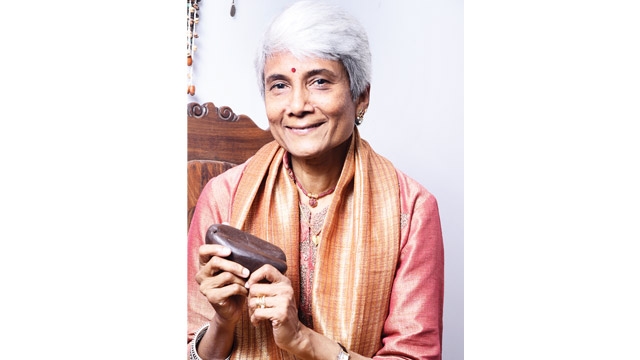
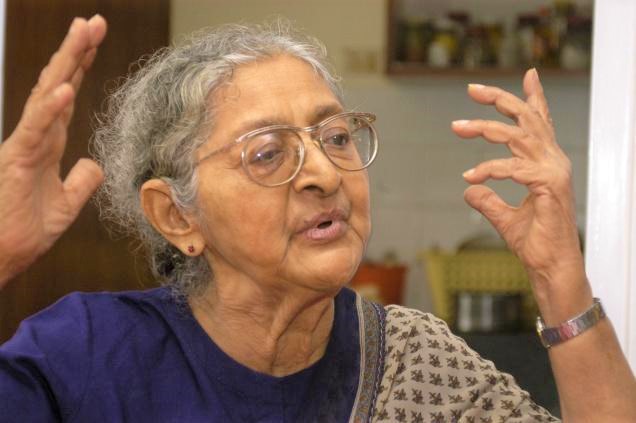
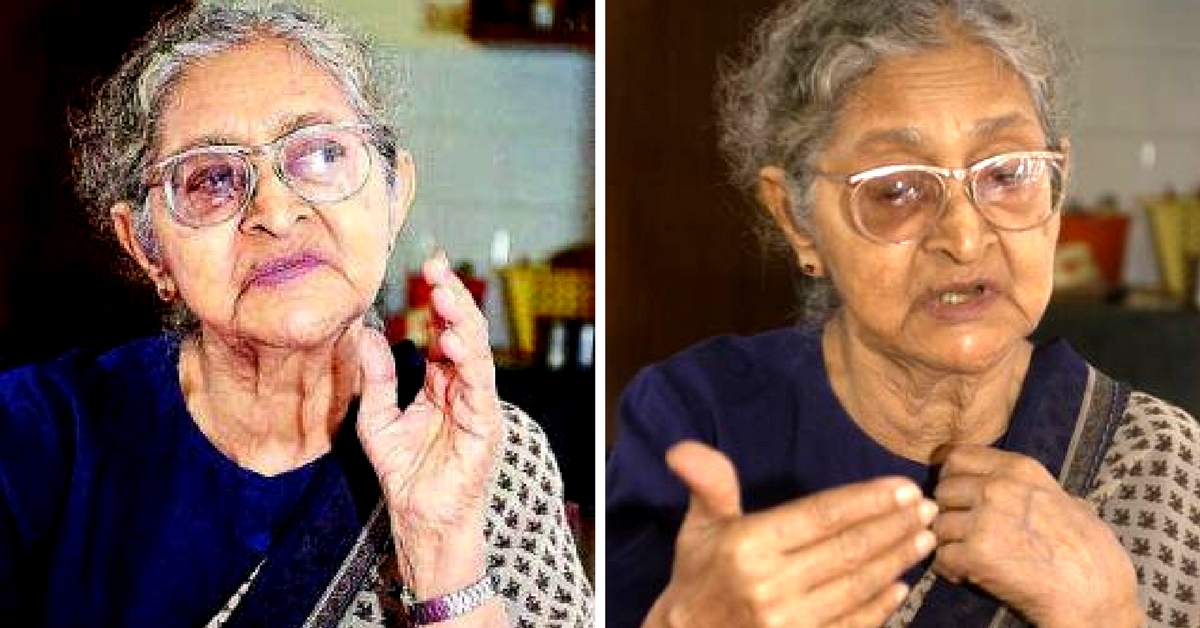
Sunalini Menon started out as an assistant cup taster for the Coffee Board of India in 1971
The journey of Asia’s first female coffee expert, Sunalini Menon, is one of beating the odds while consuming copious amounts of coffee, says Phorum Dalal
“But she is a woman, and will be married off soon,” a panel argued.
The year was 1971, and the dilemma was whether to give the candidate a job of an assistant cup taster on the Coffee Board of India.
She had topped the written examination and oral tests, competing with PhDs and coffee experts, but the hesitation was due to her gender.
The person in question was Sunalini Menon, who spent the next 25 years, sipping, slurping and spitting coffee, identifying flavour notes, and determining the quality of the drink for coffee growers in India.
“The slurping is to expose the sip to oxygen and open its flavours, and spitting is to avoid consuming so much coffee,” the tiny figured lady explains with a broad smile when we meet her in Coorg.
Her melodious voice has us in rapt attention, as she excitedly spoke of Block no. 19, Tata Coffee’s micro lot from the Nullore estate, selected last year by Starbucks for sale under the Reserve Brand in USA.
Menon, who consults several traditional coffee growers, has carved a niche for herself. She closely worked on the micro lot (cream of the crop with artisanal properties, usually sold in small quantities for a higher price) that put Indian coffee on the global map.
The seed was sown in childhood. “In the summers, we would go to Polachi in Coimbatore and visit the tea plantation my uncle was posted at. Labourers picked tea and put it through steaming, drying and rolling processes. During tastings, the tea master would use a penny to weigh the tea. Tasters would slurp, sip and spit out the liquid,” says Menon.
Imitating them, the kids would take the leftover tea “gargle and make horrendous noises,” laughs Menon.
After a degree in dietetics, while applying for scholarships in New York Institute of Dietetics, Menon saw Coffee Board of India’s job ad for an assistant cup taster, and “memories of sipping, slurping and spitting came flooding back.” As no woman had ever held the post, she was sure she wouldn’t make it, but soon she completed the board’s two-member team.
The board sent her to Witnerthone near Zurich for a year-long intensive course in coffee tasting in 1976, followed by a six-month review training in 1982.
“My hosts exposed me to a lot of international coffees from Peru and Costa Rica, and also sent me to Germany. This was an eye opener, and palate too, because at the time, India didn’t have such exotic coffees. I learnt to identify characters and use my palate to decipher coffee”. When she returned, her boss had retired and she took over to become India’s first cup taster.
Friends and family would tease her, “Your job is to take coffee breaks. What fun’.
The sensorial method, though, involved a lot: focusing on fragrance, aroma, flavour, aftertaste, acidity, mouthful, sweetness, balance, uniformity, overall taste and cleanliness of the cup to determine the coffee’s quality.
“One that secures 80 or above is considered a speciality coffee,” explains Menon, adding that the science and chemistry behind the cup can also be evaluated individually to provide accurate results. “But so far, a holistic scientific value hasn’t been arrived at to conclude on the cup rating. Till it does, I guess we tasters will have a job,” says Menon.
After the market liberalised in 1996 and growers could sell their own coffee, the board shifted focus to research and training. Menon moved to Japan, where her husband was posted, but coffee growers coaxed her to return and continue independent quality checks and research on their plantation.
“Coffee has come a long way in India, primarily a tea growing country. The British introduced the coffee plant from Ethiopia. A drink for the elderly and usually consumed at home, it didn’t have a special aura. But the vision of grandmothers using the dabba filter to brew their cup has become a fad after Café Coffee Day (CCD) launched in Bengaluru in 1996,” recalls Menon.
That’s why, Block No 19 is special. Indian coffee being selected for a limited edition sale by an international company will encourage more plantations to work on micro lots. This milestone has opened a door to make artisanal Indian coffee a stand out,” says the woman who has paved way for women tasters in India. As for her poison, it’s “a blend of robusta and Arabica beans. Black please,” she signs off.
source: http://www.dnaindia.com / DNA India / Home> Lifestyle / DNA Sunday Team / Sunday – March 05th, 2017
Over the years, India has had several woman diplomats, ambassadors and high commissioners who have done stints in countries like the USA, China, Spain, Sri Lanka, Australia, Lebanon, Bangladesh, Qatar, Switzerland, Serbia, Russia, Slovakia and Ghana. We’ve also had two women Foreign Secretaries – Chokila Iyer and Nirupama Rao – who were highly respected for their tough stance and unflappable poise during their years of distinguished service.
It’s a far cry from what India’s first IFS woman officer, Chonira Belliappa Muthamma, had to face when she joined service in 1949.
In an age when most Indian women didn’t even try getting into foreign service, this gutsy Kodava woman didn’t just choose IFS when she qualified UPSC, she fought gender bias, stood her ground and went on to become India’s first female ambassador.
photo source: mea.gov
Born in Virajpet in Karnataka’s Kodagu (then Coorg) district in 1924, Muthamma lost her father, who was a forest officer, when she was nine. Raised singlehandedly by her mother, Muthamma completed her schooling in St Joseph’s Girls School in Madikeri before graduating from the Women’s Christian College in Chennai (then Madras) with a triple gold medal.
Muthamma completed her post-graduation in English Literature from Presidency College in Chennai before deciding to appear for the UPSC examinations. She performed brilliantly, becoming the first Indian woman to clear the UPSC examinations in 1948. She wanted to join the Indian Foreign Service but the board that interviewed her discouraged her from joining this ‘not suitable for women’ service.
However, Muthamma was determined to get her choice of service. She convincingly argued her case, stood her ground and joined the foreign services in 1949, becoming India’s first IFS woman officer. Incredibly, she had to sign an undertaking which stated that she would resign if she got married. However, after a couple of years, the rules were changed.
For the next few decades, Muthamma served with distinction in many capacities in Europe, Asia and Africa. However, she had to fight against gender bias all through her diplomatic career. Despite serving in the foreign service for long, her case was overlooked when it came to posting her as an ambassador.
photo source: inmemoryglobal.com
Not the one to accept any injustice lying down, Muthamma filed a petition against the Indian government in the Supreme Court on the ground that she had been unjustly overlooked for promotion. The determined and stubbornly honest officer argued that the rules governing the employment of women in the service were discriminatory.
The government of India, represented by Solicitor General Soli Sorabjee, argued that that the chances of leakage of confidential information of strategic significance was a dangerous risk, should women ambassadors marry. Realising that this was flagrant prejudice against women, the court asked the Solicitor General how leakage of information was not a possibility if a male ambassador married.
Finally, in 1979, a three-member Supreme Court Bench headed by Justice V.R. Krishna Iyer quashed the government’s argument, struck down the discriminatory provisions governing foreign service personnel and upheld Muthamma’s case.
The nation’s apex court also impressed upon the government of India “the need to overhaul all service rules to remove the stains of sex discrimination, without waiting for ad-hoc inspiration from writ petitions or gender charity.” A landmark judgement for women’s rights in India, it was distributed at many a women’s meeting in support of their struggle for equality.
Consequent to this ruling, Muthamma was posted as India’s Ambassador to Hungary, the first woman from within the service to be appointed to this prestigious post. Later, she served in Ghana and her last posting was as Indian Ambassador to the Netherlands.
After 32 years of exemplary service, she retired from the IFS in 1982 but only after breaking the South Block’s glass ceiling for the women who joined the IFS after her.
photo source: alchetron.com
Even after retirement, Muthamma remained active in various fields. She was nominated as the Indian member of the Independent Commission on Disarmament and Security Issues set up by the then Swedish Prime Minister Olaf Palme. She was also a prolific writer, and during her retirement authored several works on a range of interests, from a cookbook on Kodava cuisine to a collection of scholarly articles titled “Slain by the System: India’s Real Crisis.”
People like Chonira Belliappa Muthamma come along very rarely. Civil servants like her are rarer. The courageous lady lived a life only a handful of other women of her time lived, fighting a lonely battle against the sexist principles – a few written, many more unwritten – that governed the Indian civil services of her time. A woman who broke barriers and set examples, she inspired many other Indian women to take up the challenge of civil service in the coming years.
source: http://www.thebetterindia.com / The Better India / Home> Civil Services / by Sanchari Pal / March 01st, 2017
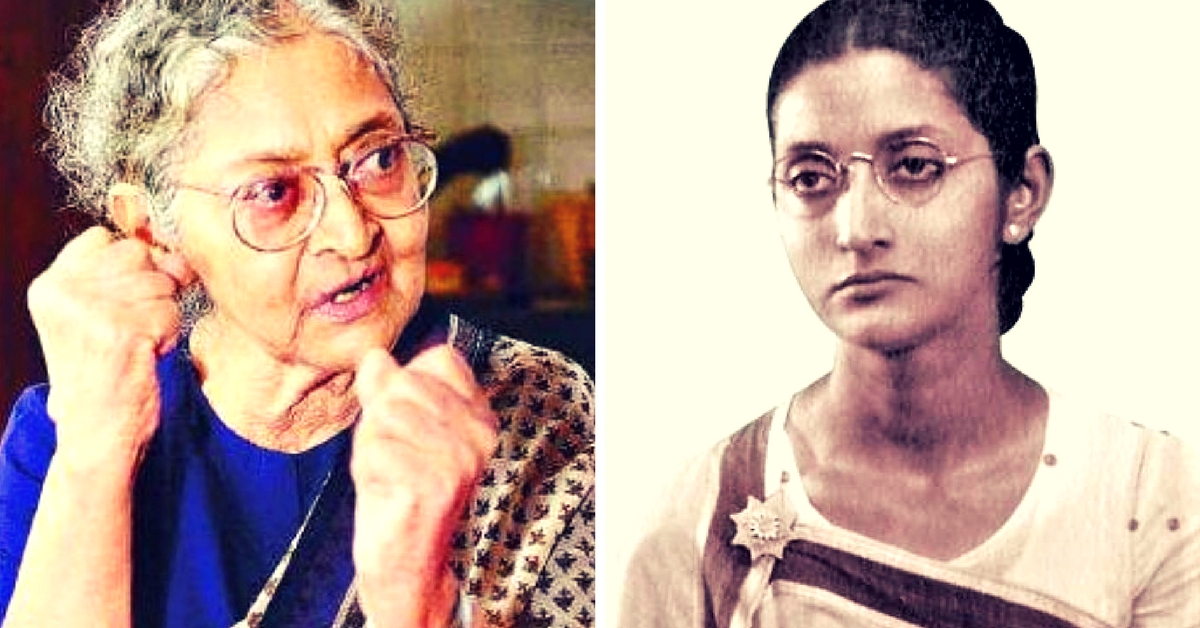
Kodagina Gowramma has made significant contributions to the Kannada literary world, said Asha Hegde, secretary of Karnataka Lekhakhiyara Sangha.
Speaking after conferring Gauramma Datti Nidhi award for 2016-17 instituted by the district Kannada Sahitya Parishat on Shanthi K Appanna here on Saturday, she said “Though Gowramma lived only for 27 years, she made her mark with her works, which are relevant even to this day. A feminist and a freedom fighter, she had invited Mahatma Gandhi to her house, during his visit to Coorg.”
She said, “Gowramma inspired women writers with her feminist ideology and strove to create an awareness about the atrocities on women through her works.”
Speaking after accepting the award, Shanthi K Appanna said “Though she has been living away from Kodagu for the last 15 years, her love for the land has not diminished. Gowramma is an inspiration for my works. I started writing poems and stories when I was in Class IV. It was my mother who encouraged me to write,” she said.
Kannada Sahitya Parishat district president B S Lokesh Sagar, Fisheries department assistant director Milan Bharath and others were present.
source: http://www.deccanherald.com / Deccan Herald / Home> District / DHNS – Madikeri, February 05th, 2017
WELCOME. If you like what you see "SUBSCRIBE via EMAIL" to receive FREE regular UPDATES.
Read More »