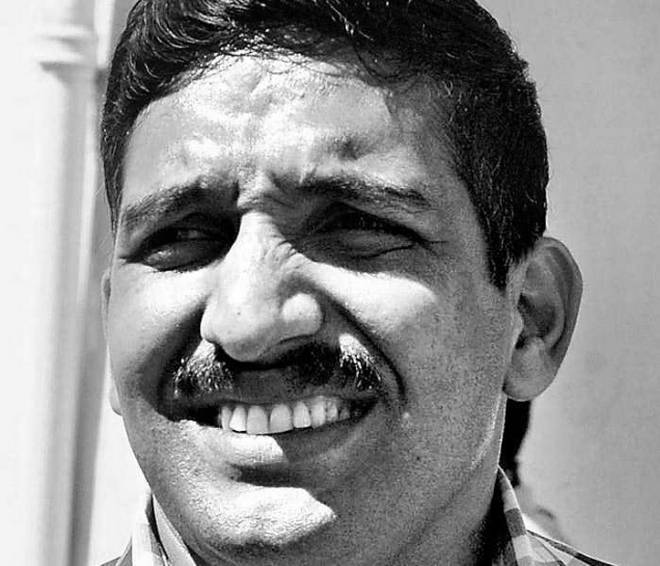
Renowned cartoonist Nala Ponnappa, known for his off-beat tongue-in-cheek humour, is the Coorg Person of the Year 2016.
Ponnappa was selected for the honour in a poll conducted by www.coorgtourisminfo.com, Kodagu’s first news portal, promoted by senior journalist P T Bopanna.
Ponnappa’s first cartoons appeared in Chicago in 1972 where he was studying for a Master’s degree in Architecture. He began cartooning as a hobby by contributing his cartoons to college magazines.
The cartoons of the Coorg-born Pune-based cartoonist, also appears in The Sunday Mid-Day, The Economic and Political Weekly and the Economic Times. His works have also appeared in the International Business Times.
Born in 1948, his early education was in Mangaluru and Pune. He graduated in architecture from the Madras University with a first class. He had an 11-year stint from 1970 to 1981 as an architect in Chennai, Delhi, and Lagos, before he turned into a cartoonist. He settled down in Bengaluru in 1982 and began his career as a freelance cartoonist.
His works have also been published in the Penguin Book of Indian Cartoonists and The Third World Book of Cartoonists from Germany. He was awarded the first prize by the epd- Entwicklungspolitik publication, in a competition held at Frankfurt to commemorate the 50th year of India’s Independence.
Ponnappa was a member on the world jury of an international cartoon competition on Humankind and Energy held in Hanover, Germany, in September 2000.
At a competition held in Germany, one of Ponnappa’s cartoons, which depicted the German language being deeply influenced by the English language, was selected to be put up as a poster by the German Cartoonist Association.
He has also won prizes of excellence at cartooning competitions held in Korea and Romania. He was the only Indian to be invited to attend the Kyoto International Cartoonist Conference in 2002, where he was also presented the jury award for his cartoon on ‘Remembering 9/11’.
Among the many awards he has received is also the Karnataka State Rajyotsava Award in 2007.
In the past, the winners of the ‘Coorg Person of the Year’ title include, Dr Kaveri Nambisan, novelist (2005), Dr Boverianda Nanjamma Chinnappa, researcher and writer (2006), Moodera Jagadeesh, scientist (2007), Air Marshal K C Cariappa, environmentalist (2008), cricketer Robin Uthappa (2009), tennis player Rohan Bopanna (2010), retired Tamil Nadu IAS officer P M Belliappa (2011), technology innovator Vineet Devaiah (2012), birdman Dr S V Narasimhan (2013), squash champion Joshna Chinappa (2014), and athlete M R Poovamma (2015).
source: http://www.deccanherald.com / Deccan Herald / Home> District / DHNS-Madikeri, December 31st, 2016
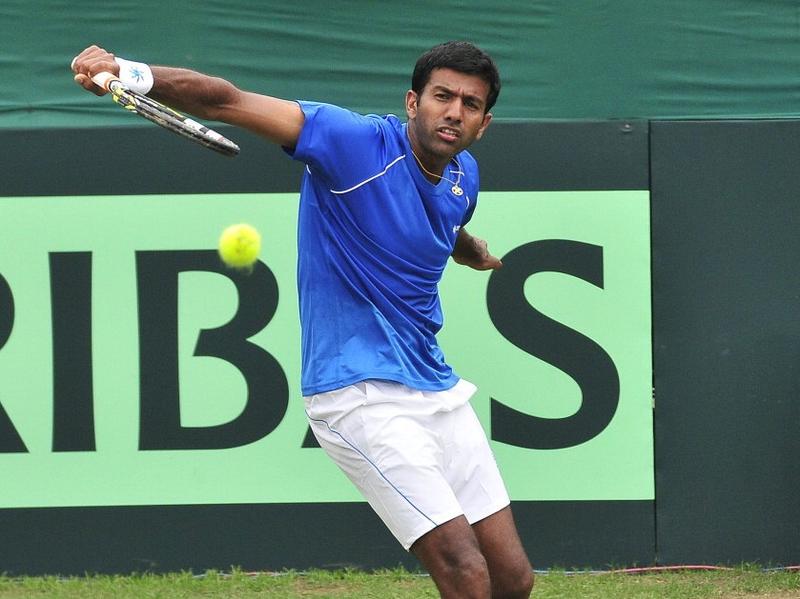
At No 28, Rohan Bopanna is the highest ranked Indian doubles player.
Name: Rohan Bopanna
Age: 36
Country: India
World Ranking (doubles): 28
Record in Chennai Open: 2002: Round of 16 ( partnered Carlos Cuadrado); 2006: Finals ( with Prakash Amritraj); 2009: Round of 16 ( Flavio Cipolia); 2010: Quarterfinals ( Mahesh Bhupathi); 2011: Quarterfinals (Aisam-Ul-Haq Qureshi); 2012: Semifinals ( Bhupathi); 2013: Quarterfinals (Rajeev Ram); 2014: Quarterfinals ( Qureshi);
Form Book:
Rohan Bopanna began the year 2016 by reaching the final of Sydney International ATP 250 tournament with Florin Mergea and followed it up with another entry to the final at the Madrid Masters with the same partner. He reached the quarterfinal of Rio Olympics in the mixed doubles event with Sania Mirza and also has three semifinal appearance in ATP tour events including one in the Masters.
At No 28, Rohan Bopanna is the highest ranked Indian doubles player. He will partner local lad Jeevan Nedunchezhiyan in the doubles in what will be his ninth appearance in the ATP tournament. The duo played the Chengdu Open in September and had reached the quarterfinals.
source: http://www.sportstarlive.com / SportStar / Home> Chennai Open / December 31st, 2016
As Karnataka roils over the Kaveri water dispute, the underlying cause is lowered climate resilience of the agro-forestry ecosystem in Kodagu’s coffee plantations
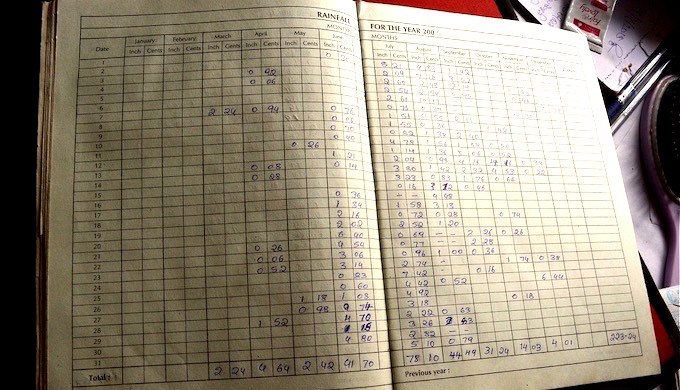
Coffee farmer B. B. Thammaiah’s rainfall record (Photo by S. Gopikrishna Warrier)
Coffee planters in the hill district of Kodagu in Karnataka are meticulous in keeping rainfall records in their estates. For some, the data goes back for decades. Their numbers tell the story of changing rainfall patterns, an indicator of climate change. The changing patterns also have an impact on the way they grow coffee, which has an effect on climate resilience in the hills and the plains.
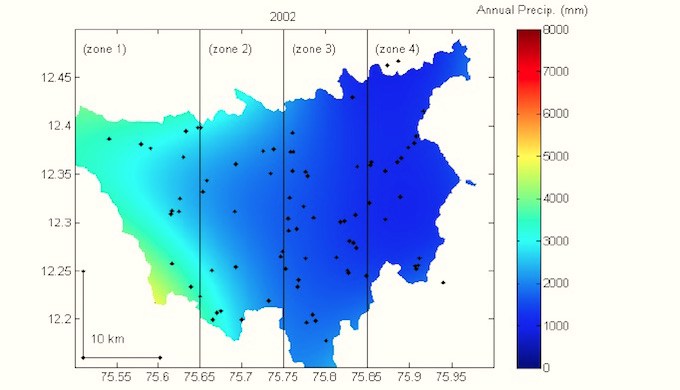
Due to the presence of this decentralised network of rainfall measuring stations, it is easier to obtain a nuanced picture of the precipitation trends for Kodagu, earlier known as Coorg, than in other parts of India. The average annual rainfall varies from above 5,000 mm in the western edge of the district to 1,200 mm in the east.
This data was used as part of the baseline survey by an international collaborative project to study the unique coffee agro-forestry system of Kodagu district. The College of Forestry at Ponnampet in Kodagu, as a participant in the Coffee Agro-forestry Network (CAFNET) project, has analysed the rainfall data of over 60 years from 116 coffee farms.
“Keeping meticulous rainfall data is part of the culture we inherited from the British,” said C.G. Kushalappa, university head for forestry and environment sciences at the College of Forestry.
The CAFNET report noted that the length of the rainy season had decreased by 14 days over the past 35 years. It also noticed a strong fluctuation in annual rainfall with an apparent cycle of 12 to 14 years.
Low rainfall in coffee land
Whether it is due to being the lowest point in this cycle or an El Nino changing rainfall patterns, 2015 and 2016 have been years of low rainfall in Kodagu. This is the second year of deficit rainfall in Kodagu. During 2015, it was deficient by 19%. As a result, the storage in the Krishna Raja Sagara dam reservoir, built across the Kaveri River immediately downstream of Kodagu district, has a 31% deficit this year.
On the ground measurements by coffee grower K.K. Naren in Kunda village near Ponnampet confirms this. “Our normal rainfall is 90 to 100 inches (2,200 to 2,500 mm). This year we have got 38 inches, whereas by this time we should have received 70% of the year’s rain.”
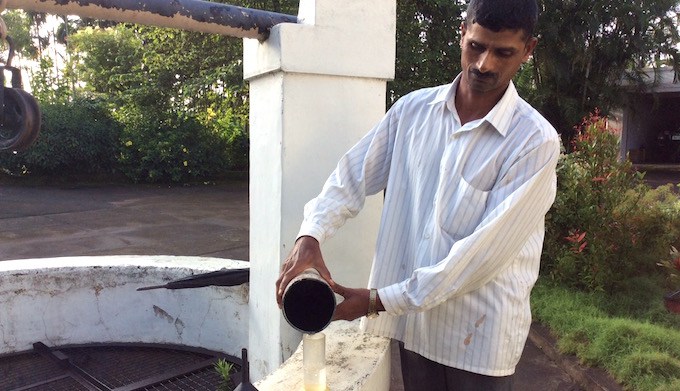
A farm worker measures rainfall in K. K. Naren’s coffee farm. (Photo by K. K. Naren)
Coffee planters are confused by the erratic rainfall of recent years. “Rain and weather patterns have become increasingly unpredictable in recent years,” said M.B. Ganapathy, head of plantations for Tata Coffee. “Even though the quantum does not seem to have changed, the rainfall is not well distributed any longer. There are long dry periods followed by heavy rain and high-velocity winds. This has made farm management difficult for us.”
Blossom showers affected
According to coffee farmer B.B. Thammaiah of Kolagadalu village, the erratic rainfall has meant that blossom showers, which usually take place between February and April, are missing in some years. This has an impact on coffee production, since this helps coffee flowers to blossom, ensuring good yields later in the year.
There is an ecological impact of this, according to Kushalappa. When the blossom showers became erratic, coffee farmers started irrigating during these months. For traditional coffee cultivation, it was a combination of mixed-shade trees plus blossom showers that gave a good yield. When the blossom showers were replaced by irrigation, the shade from the trees did not matter. The farmers’ dependence on the native trees decreased, resulting in their proclivity for letting the native trees die. These trees are being replaced by silver oak.
See: Bringing coffee back into the shade
There is also an issue of ownership that is leading to the clearing of forests. Thammaiah’s farm is in Kolagadalu village, not far from the western crest of the plateau deep in a forested valley. His farm receives more than 5,000 mm of rainfall every year. While in the valley floor he continues to grow rice as his forefathers did, he cultivates coffee in the shade of the forest trees. Though the forest may not be as thick as it was during his grandfather’s time, he plans to conserve it.
The landscape of Thammaiah’s farm is typical of what the people of Kodagu inherited. While historically joint families cultivated the rice paddies where they owned the land, they used the forest for collecting mulch and firewood and grazing cattle. The families do not have property rights over the trees, which belong to the government.
Economics of silver oak
Silver oak, on the other hand, can be planted, cut and sold. M.C. Cushalappa, a coffee farmer from Siddhapura, said that silver oak yields a two-fold benefit to coffee farmers. One, it can supplement the family’s income in times of need. Two, its straight trunk can be used as a support for pepper vines, which bring more additional income. With no ownership and no economic stake on the native trees, farmers do not have an incentive to keep them alive.
Cushalappa’s family has paid the price of the native trees to the government and obtained ownership over them. “This encourages me to maintain the native tree species in my farm, unlike most of the other farmers in Kodagu.”
The coffee agro-forestry system of Kodagu is of immense importance ecologically; not only does it provide climate resilience to the hill communities but provides water to millions downstream through the Kaveri. The current acrimony over the waters of the Kaveri between Karnataka and Tamil Nadu have led to violent protests.
There is a problem though. Unlike in other parts of the country where the forests are fully under the control of the forest department, in Kodagu they are under the combined control of the department and thousands of coffee farmers. It means that it is difficult to give them a protected status. It is not as if the forest department it always the best protector; but uniformity in control has the potential to improve conservation practices.
Geographical location of coffee farms where rainfall data has been collected for 70 years and a map of rainfall distribution generated with these data points as an exmple for the year 2002. ( Image by College of Forestry, Ponnampet)
“The majority of forests in Kodagu are not notified and hence for their upkeep thousands of coffee farmers have to be incentivised,” a forest department official said, speaking on condition of anonymity. “About 90% of the catchment of the Kaveri river before the Krishna Raja Sagara reservoir is in Kodagu. There is need for a mindset change so that the farmers conserve the native trees and biodiversity.”
Through the CAFNET study, the ecosystem services could be quantified. “We looked at the role of native trees and silver oak to study their hydrological impact. Our team studied how much of the rain was intercepted, how much came through the stem, how much got run off, and how much got recharged,” noted Kushalappa.
The magic of native trees
The study found that increasing the proportion of exotic species such as silver oak in the shade cover composition had little impact on rainfall interception since trees intercept less (1% to 6%) than coffee plants (9% to 22%). Although there are lower quantities of water from native tree plots going to rivers than from the exotic tree plots, the higher contribution of evaporated and transpired water from native trees have a positive impact on the microclimate. Further, large canopy and deep-rooted systems of the native species help in the percolation of water to deeper aquifers, mainly during the monsoon.
Thus, native trees held the rainwater as it fell torrentially, and released it gradually into the rivers. At the same time they created a climate-resilient environment in the farms.
The mixed agro-forestry systems also helped in sequestering carbon. The CAFNET studies showed that Arabica coffee grown under the shade of mixed species sequestered more than the reference forests. Arabica coffee grown under silver oak sequesters marginally less than Robusta grown under native trees. Robusta grown under silver oak sequesters substantially less than the other combinations.
The missing blossom showers could be adding to the reasons for coffee farmers opening their canopies. On the flip side, the farmers’ actions could result in more carbon in the atmosphere, making rainfall more erratic in Kodagu.
source: http://www.indiaclimatedialogue.net / India Climate Dialogue / Home> Impacts / by S. Gopikrishna Warrier / December 27th, 2016
Sprinter HM Jyothi and golfer S Chikkarangappa are in the list of 16 sportspersons who will receive the Karnataka Olympic Association (KOA) awards this year.
Other notable winners include young table tennis star Archana Kamath, swimmer Damini K Gowda, top-ranked girls’ badminton player Shikha Gautam and Indian hockey team midfielder SK Uthappa.
Press photographer G Mohan and sports promoter Vinaya Hegde will also receive the honour while in the veteran category, B J Kariappa will be the recipient, KOA President K Govindaraj told a press conference.
Sharana Gouda Beleri (wrestling) will receive the award in the coach’s category.
The awards will be presented on Monday by Chief Minister Siddaramaiah in a ceremony to be held at Yavanika, State Youth Centre.
Mahindra is on the verge of converting Goa into the next off-roading destination, as they conclude the 2nd edition of the Thar Club Challenge on August 5-6, at Dona Paula, Goa. Alongside the Club Challenge, Mahindra Adventure also kicked off the 1st edition of the Thar Fest, which aimed at bringing together the off-roading and the 4×4 community at one place.
Now what is the point of having a Thar and not making full use of its off-roading credibility? Mahindra had something similar in mind when they started with the Thar Club Challenge in 2015, which saw Bangalore Off-road Development Authority (B.O.D.A) take the glory. This year was no different, as 10 well-reputed off-road clubs battled it out to lift the coveted cup. However, the only thing that changed was the difficulty level and of course the winning team. Let’s talk about the five gruelling challenges first.
Day 1 kicked off with the Thar Fest, which included the scrutiny of the vehicles. After the scrutiny, all the Thars rallied to the track venue. After reaching the site, the 10 teams were briefed about the tasks before them. With each team consisting of three vehicle entries in the Stock, Modified and Pro-Modified category, the Club Challenge was about to begin.
Club Challenge 1
The first challenge was called ‘Pass the Baton’ which was a night event. In this, the teams had to sync all three Thars to pull a bundle of logs tied together with chains through rutted trenches and slush-pit, uphill climb negotiating sharp corners.
Now, as simple as this may sound, with the constant down-pour from the rain-gods, the muddy ground made sure that the participants had to really work their way to start the competition on a winning note. The Gerrari Off-roaders emerged victorious as the other teams were left tasting the mud behind.
Club Challenge 2
‘Trench Trouble’ was the second obstacle which was highly technical in terms of team involvement in dismantling all four wheels and putting the vehicle on stands. Carrying the tyre to the top of the trench in four different direction with the second team collecting it and putting it back on the vehicle and recovering themselves from the trench. With a second win in their pocket, the Gerrari Off-Roaders took a commendable lead in the front. But there was more to come and the others had not given up as yet.
Club Challenge 3
Day 2 began with an event that was my personal favourite. Why you ask? Because the 3rd challenge involved Thars and a ball. Yes, You read it right. The third obstacle was Goalll!!!, where the competitors were put in a slushy field with a ball with the aim to play football with his Thar and score a goal using his vehicle tyres and bumpers in the minimum time. This time, it were the defending champs, B.O.D.A who got the most points.
Club Challenge 4
The fourth challenge was unique as well and called Trench Trouble 2. The teams had to negotiate cones and various other obstacles and collect flags en-route. The more the number of flags the more the points. Surely this technical stage was challenging and the experienced V5 Coorg Off-Roaders took top trumps.
Club Challenge 5
The last and most interesting obstacle was the ‘Bus Stop’. In this obstacle the teams had to work together with props like ladder and spare tyres to negotiate a laid vehicle carnage which including climbing over a bus, water tanker and other vehicle debris.
Being the most difficult of all the obstacles, the teams showed unspoiled teamwork and devotion. There was a lot of screaming, pressure, fretting and energy, but it was only to win the title of the best off-roading club in the country.
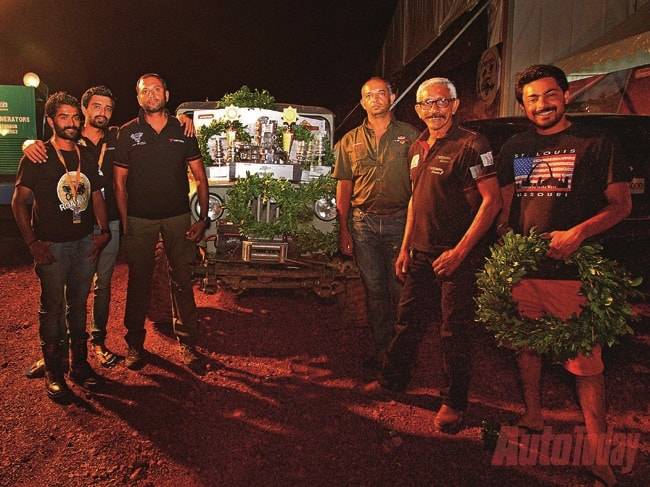
Although, the Gerrari Off-roaders took a flying start to the event, it were the V5 Off-Roaders from Coorg who won the title in the end.
After a gruelling battle of over two days and 5 challenges, the defending champs B.O.D.A passed on the winning trophy to V5 Off-Roaders from Coorg, closely followed by Gerrari Off-Roaders from Chandigarh. The 2nd runner up title was won by Team Flywheel from Kerala, thus ending the Mahindra Thar Club Challenge on a high note.
source: http://www.indiatoday.intoday.in / Auto Today / IndiaToday.in / Auto> From the Magazine / by Pratik Rakshit / New Delhi, December 08th, 2016
As the martial Kodava race gets together to celebrate the annual harvest festival, Puthari, on Tuesday in their homeland Kodagu, they have reason to feel optimistic about their future.
The Karnataka government has initiated an ethnographic and socio-economic survey to see whether the community qualifies for the tribal status. It’s the second time the survey has been taken up, a response to the alarming decline in population.
“Our department has been doing the survey for the past two weeks. Apparently, the culture and traditions of the Kodavas are akin to tribals but the government cannot grant them the status unless the survey establishes it,” said P Manivannan, secretary, social welfare department.
The Centre has also considered a long-pending demand to include Kodava thakk, the Kodava language without a script, in the Eighth Schedule of the Constitution and a notification has been issued to initiate the process.
In 2011, the UPA government directed the then BJP government to take up the survey following petitions by the Codava National Council (CNC), which has been spearheading the community’s cause. It was put on the backburner for political reasons.
AICC general secretary Oscar Fernandes, along with Brijesh Kalappa, legal adviser to the Karnataka state government, recently impressed upon chief minister Siddaramaiah to order the survey to protect the race.
“Our community is dwindling in numbers very fast for many economic and sociological reasons. The population of Kodagu district is around 5 lakhs, of which Kodavas are not more than 65,000. There is an urgent need to sustain the Kodava genus constitutionally under Articles 340 and 342 of the Constitution that provide for recognizing ethno-linguistic tribal minority nationality,” CNC president N U Nachappa said.
Kalappa said: “When the last survey was taken up around two decades ago, many Kodava leaders, including prominent political leaders, had opposed it because they felt it was demeaning for the race, renowned for gallantry and sportsmanship. But now there is a sense of awareness among the community because they’ve realized it’s inevitable.”
The survey report will be given to the government by early next year and the Centre will take a final call based on the recommendations.
Earlier Kodavas were seen in large numbers in civil services, police and other government jobs but their numbers have dwindled owing to lack of reservation. Though they have been granted Other Backward Classes (OBC) status in the reservation schedule of the state government for jobs and higher education, Kalappa said his community has not gained much since they have to compete with the politically powerful Vokkaliga community that they share under 3A category.
Will Kodavas qualify?
Some anthropologists said Kodavas, as a race, are progressive and different from other tribes. “They cannot be compared to tribes like Bedar, Hakki-Pikki and Kadu Kuruba, among others,” said A K Ravesh, a researcher studying socio-cultural anthropology in Kodagu. The Kodava marriage and funeral rituals, among other things, portray a distinctive culture. A former minister also felt that Kodavas will not gain much if they are granted tribal status since the combined reservation for all STs is just 3% compared to 4% under OBC offered by the state government.
Scheduled Tribe tag
The Constitution does not provide a definition of a Scheduled Tribe. Artice 366 (25) mentions “such tribes or tribal communities or parts of or groups within such tribes or tribal communities as are deemed under Article 342 to be Scheduled Tribes…” According to the website of the Union ministry of tribal affairs: “The criterion followed for specification of a community as Scheduled Tribes are indications of primitive traits, distinctive culture, geographical isolation, shyness of contact with the community at large, and backwardness”.
source: http://www.timesofindia.indiatimes.com / The Times of India / Home> City News> Bangalore News / TNN / December 13th, 2016
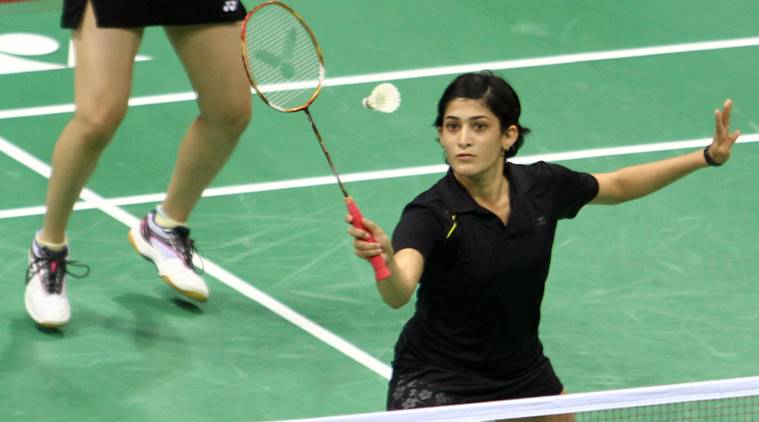
Ashwini Ponnappa and N Sikki Reddy went down to top-seeded Russian combination of Olga Morozova and Anastasia Chervyakov 21-16 21-11.
Ashwini Ponnappa and N Sikki Reddy had comfortably beaten England’s Lauren Smith and Sophie Brown 21-16 21-18 in the semis.
India’s women’s doubles pair of Ashwini Ponnappa and N Sikki Reddy finished runners-up at the Welsh International Challenge badminton tournament after losing in straight games in the final.
The unseeded Indian duo went down to top-seeded Russian combination of Olga Morozova and Anastasia Chervyakov 21-16 21-11 in a contest that lasted just 37 minutes.
Earlier, Ashwini and Sikki had comfortably beaten England’s Lauren Smith and Sophie Brown 21-16 21-18 in their semifinal match. The Indians took 39 minutes to get the better of the English team.
Meanwhile, the men’s doubles combo of Jishnu Sanyal and Shivam Sharma lost in the semifinals against Liao Kuan Hao and Lu Chia Pin of Chinese Taipei.
The third-seeded Chinese Taipei pair needed half-an-hour to make it to the finals by beating sixth seeded Indians 21-17 21-15.
Indians bowed out in the semifinals of the mixed doubles event also as second seeded N Sikki Reddy and Pranaav Jerry Chopra lost to Malaysians Goh Soon Huat and Shevon Jemie Lai 16-21 14-21 in 39 minutes.
source: http://www.indianexpress.com / Indian Express / Home> Sports> Badminton / by PTI / Cardiff – December 04th, 2016
Coorg, as the British called Kodagu, was annexed by the East India Company in 1834, after dethroning the last Raja of Coorg, Veerarajendra. Coorg was administered as a separate province under a commissioner who was also in charge of Mysore. A British officer designated as superintendent was stationed in Madikeri and reported to the commissioner posted in Bangalore.
In March 1865, William Hobart Kerr, the superintendent of Coorg, fell ill and had to go on sick leave.
In his place, a young army officer, Captain Robert Andrews Cole, was appointed as the superintendent. Captain Robert was instantly attracted to the place, the climate, people and the invigorating environment. His duties involved meeting local people in remote villages, checking and updating land records, known as jamabandhi, which certified ownership and simplified revenue collection.
For fluent conversations…
Captain Cole was born in Madras in 1835, to an army doctor, Major General Robert Cole Sr. Having been educated in Madras, he was conversant with Tamil and Telugu. He had familiarised himself with Kannada on being posted in Bangalore. One of the problems Captain Cole encountered in Coorg was communicating with the Coorgis who spoke a dialect, which had many common words with Kannada, Tamil and other South Indian languages.
Surprisingly, according to Captain Cole, the Kodavas who lived in remote villages could not understand Kannada. This prompted him to learn the Kodava language so that he could effectively communicate with the people. Captain Cole soon started learning Kodava language. His knowledge of other South Indian languages helped. He began documenting the words, grammar and pronunciation. In order to help him communicate, he made extensive tables — known as Travel Talk — translating English sentences to Kannada (Canarese), Telugu, Tamil and Kodava language.
However, by October the same year, William Kerr returned, and assumed charge as the superintendent of Coorg. Captain Robert, who had taken a liking for Coorg, went back rather reluctantly to his posting in Bangalore. However, he continued his work on Kodava language. He learnt Kannada script for better conveyance of ‘peculiarities of pronunciation’, and started using this to transliterate Kodava language.
Captain Robert once again took charge from William Kerr, as superintendent of Coorg, in February 1866. He was happy to be back in this mountainous land and had come to enjoy the bracing weather. He particularly enjoyed his outings during the monsoon. This can be evidently seen in his book, Elementary Grammar of the Coorg Language, where he writes, “The thunderstorms during this season are often magnificent. The war of the elements is carried on here in a grander style than in the low country. Banks and mountains of clouds move against each other with the order of armies. The sound of heavy cannon is heard from a distance, solitary discharges of the electric fluid shoot through the gloom.”
Captain Cole served as the superintendent until December 1869. During this period, he compiled a comprehensive book on Kodava language. In 1867, with ample support from Lewin Bentham Bowring, who was the commissioner of Mysore and Coorg, he published his 136-page-book, Elementary Grammar of the Coorg Language. This was printed at the Wesleyan Mission Press. The book also contains a fragment of English-Coorg dictionary.
Captain Cole endeared himself to the people of Coorg. He also wrote another book titled A Manual of Coorg Civil Law. In appreciation of his contributions, an emerging town at the time was named after him as — Colepet. However, over the years, Colepet got merged with present day Ammathi. On promotion as a Major, he was appointed superintendent, Inam Settlement, Mysore. As a Colonel, he was with the Madras Staff Corps. He rose to the rank of Major General by the time he retired and returned to England.
He died in 1907. Major General Robert Andrews Cole ranks amongst other Europeans, who contributed to South Indian languages, such as Rev Hermann Mogling and Rev Ferdinand Kittel.
source: http://www.deccanherald.com / Deccan Herald / Home> Supplements> Spectrum / by C.P.Belliappa / July 26th, 2016
Tennis doubles player Rohan Bopanna today said that wheelchair tennis was already a big sport in the world, which is reflected in top players like Roger Federer and Novak Djokovic sharing the same locker-rooms with top wheelchair players.
“Roger Federer, Djokovic and top wheelchair players – all of them share the same locker-rooms. There is no difference between wheelchair tennis players and the straight players,” he said.
“That’s where it shows, how big the sport already is, and million and millions of people are already watching it and supporting it,” he added.
Bopanna said holding the All India Tennis Association ranking wheelchair tennis tournament shows interest in this sport.
“Holding the wheelchair tennis tournament is a fantastic initiative and big step, which shows the interest people have in it,” he said.
Asked what sort of support he would give to promote wheelchair tennis, Bopanna said he would share details of wheelchair tournaments held in different parts of the world.
“I am always with them, no matter what support they need. As I am travelling a lot, it will be easier for me to share the details which will be of great help for improving the sport in India,” he said.
Earlier, Bopanna announced India’s first AITA ranking Wheelchair Tennis Tournament – tabebuia – which will be played from December 2 to 4 at Karnataka State Lawn Tennis Association.
The cash prize is Rs 2.5 lakh and the organisers have raised Rs 14 lakh from various sources including the corporate and individual donors, Sunil Jain, Founder Trustee of Astha, a part of Wheelchair Tennis, said.
As many as 40 wheelchair tennis players will participate in the tournament, he said.
Jain said the organisers would love to hold an International Tennis Federation tournament with the cooperation of AITA and KSLTA.
BDN PDS PDS
source: http://www.timesofindia.indiatimes.com / The Times of India / News> Sports> Tennis> Top Stories / PTI / November 29th, 2016
Havaldar Manesh also saw action during the Kargil conflict.
Manesh, a young National Security Guard (NSG) commando, was incapacitated in the 26/11 attack in Mumbai. But he has no regrets. He has lost control over the right portion of his body and uses a crutch to walk. “I have the satisfaction of having served my motherland,” the young and handsome former soldier told The Hindu. He was conferred the Shaurya Chakra for his act of bravery.
During an interview on the sidelines of the unveiling of the statue of Major Mangerira Muthanna here on Thursday, Havaldar Manesh recalled the horror of 26/11. He was part of the 250 NSG commandos airlifted from Delhi to fight the Pakistani attackers and positioned at Nariman Point, one of the spots targeted by the terrorists.
“I killed two of them,” he said proudly. While proceeding further, a terrorist lobbed a hand grenade, which landed on his helmet and exploded, blowing it to smithereens. He does not remember what happened afterwards, but he was shifted to a hospital by a rescue team. Three splinters of the grenade entered his head. “I still have one inside my skull,” he said. Doctors saved his life after a highly complicated surgery. “I was in coma for two months,” Havaldar Manesh said.
His heroics are not just limited to 26/11. He saw action in the Kargil conflict while serving with the 27 Madras Regiment and took a bullet in the hip. He was in hospital for two months, but it took him almost a year to fully recover. Later, he joined the NSG in Delhi and underwent rigorous training for six months before being drafted into service.
He recounts his Kodagu connection where his parents, Mukundan and Saraswati, lived in Jodubeeti near Ponnampet for several years. He is their third son. However, he now lives in Kannur in Kerala.
Havaldar Manesh killed two terrorists during the 26/11 Mumbai attack
source: http://www.thehindu.com / The Hindu / Home> National / by Jeevan Chinnappa / Madikeri – December 11th, 2010
WELCOME. If you like what you see "SUBSCRIBE via EMAIL" to receive FREE regular UPDATES.
Read More »