Category Archives: Records, All

India’s biggest IPO in 3 years fully subscribed

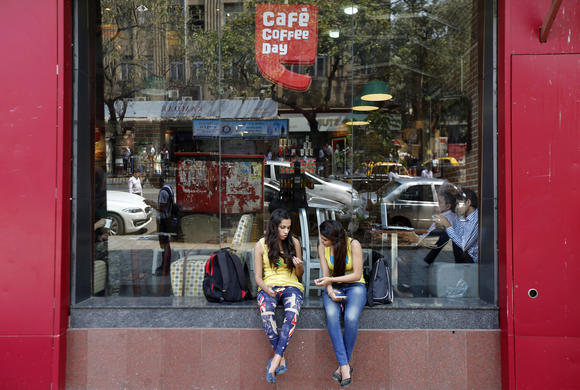
Girls sit at the window of a Cafe Coffee Day outlet in Mumbai, February 25, 2015. The firm behind Cafe Coffee Day, India's biggest homegrown coffee chain, is set for a market debut that could value it at almost $1 billion, even as the country's burgeoning cafe culture draws global giants Starbucks and McDonald's. Cafe Coffee Day, a cafe pioneer in India, aims to list a 20 percent stake, raising roughly $200 million, within the next quarter, sources with direct knowledge of the plans said. Picture taken February 25, 2015. REUTERS/Shailesh Andrade  / @ Reuters Girls sit at the window of a Cafe Coffee Day outlet in Mumbai, February 25, 2015. The firm behind Cafe Coffee Day, India’s biggest homegrown coffee chain, is set for a market debut that could value it at almost $1 billion, even as the country’s burgeoning cafe culture draws global giants Starbucks and McDonald’s. Cafe Coffee Day, a cafe pioneer in India, aims to list a 20 percent stake, raising roughly $200 million, within the next quarter, sources with direct knowledge of the plans said. Picture taken February 25, 2015. REUTERS/Shailesh Andrade / @ Reuters

New Delhi (NewsRise):

The owner of India’s largest coffee chain received bids for 1.2 times the shares it offered in the nation’s biggest initial public offering in three years, indicating that investors remain bullish on Prime Minister Narendra Modi’s efforts to revive economic growth.

Coffee Day Enterprises, which runs the Cafe Coffee Day outlets, received 31.3 million bids for the 25.8 million shares it offered, according to provisional data on the National Stock Exchange. The company aims to raise as much $176 million via the IPO.

A slew of companies, including India’s largest discount airline, have filed for IPOs this year, betting that Modi’s reforms and easing interest rates will revive growth in Asia’s third-largest economy. As many as 16 companies filed their draft prospectus with markets regulator the Securities and Exchange Board of India between July and September, the highest quarterly filing in four years, Business Standard newspaper reported.

“Improvement in the economic situation means that the appetite will pick up,” said Deven Choksey, managing director at K.R. Choksey Shares and Securities. “If quality papers come at a reasonable price, investors will be more than happy to purchase.”

Until Thursday, Coffee Day Enterprises had received bids for 75% of its shares on offer. Demand picked up after a lukewarm response on Wednesday, the opening day for subscription, led by bids from the so-called Qualified Institutional Buyers that included local banks and insurance companies.

Discount carrier IndiGo’s parent InterGlobe Aviation is likely to open the 25 billion rupee ($385 million) initial public offer on Oct. 26, Economic Times reported. Mumbai-based L&T plans to sell 17.5 million shares, or nearly 11% of outstanding stock of unit Larsen & Toubro Infotech. L&T, which currently holds 161.25 million shares in the unit, plans to raise around 15 billion rupees via the share sale.

Coffee Day Enterprises has been expanding outlets in recent years, betting that rising disposable incomes and increasing coffee consumption in the world’s second-most populous nation will boost revenues.

Analysts had largely advised investors to be cautious about the company’s financials and its complex structure, which includes a range of businesses from real estate to software services. Coffee Day’s other businesses have a history of weak returns on capital, they said.

From January to September this year, 15 companies had raised $992 million through IPOs in India, compared with $197 million last year and $235 million in 2013. The market is still a fraction of what it was in 2010, when 64 firms raised $8.34 billion, according to Prime Database.

source: http://www.asia.nikkei.com / Nikkei Asia Review / Home> Markets> Equities / October 16th, 2015

Reminiscence of 1965 Indo-Pak War (OP RIDDLE)

 C.K. Karumbaya
C.K. Karumbaya

by Maj. Gen. C. K. Karumbaya, SM (Retd).

Prelude: In 1965, Pak under Field Marshal Ayub Khan having acquired modern aircrafts, tanks and other armament from USA, as a member of SEATO, planned to wrest J&K from India militarily. They imagined that the Indian Armed Forces were a demoralised lot after the drubbing we got from China in 1962 and political leadership had gone weak after Nehru’s death. Pakistan thought that it was a historic opportunity for them to use force against India to attain their objective.

Pak started off with a diversionary attack in Rann of Kutch and followed it up with ‘Op Gibralter’ to infiltrate a large force, led by officers into Kashmir Valley to disrupt communication, cause panic and take over the administration. Both these were not only defeated by Indian Armed Forces but they captured strategic Haji Pir Pass which was used by them for infiltration. Undaunted, they on 1st Sept. 1965, launched ‘Op Grand Slam’ with two major offensives along Chamb – Jurian and in Punjab along R. Beas to cut off J&K from the rest of India.

Mobilisation and Concentration

India lost no time in declaring Emergency and countering with ‘Op Riddle.’ My Battalion (Bn), 5 MARATHA LI had arrived in Baroda (Vadadora) a few days earlier after a long tenure in North East and was in the process of settling down, when at night on 1st Sept., we got orders to mobilise and move to Ahmedabad for further orders. As we were short of transport, we requisitioned some civil vehicles and moved out before the people of Baroda woke up.

At Ahmedabad, the GOC of 11 Inf Div. Maj. Gen. Naveen Rawlly, MC told us that our 30 Inf Bde was to carry out an offensive into Sind as a diversionary attack, in order to attract Pak reserve Division in W. Punjab and that we should move post-haste to our Concentration Area between Barmer and Gadra Road (Rajasthan). Thanks to the patriotism of the way side civil petrol stations, who supplied fuel to us merely by accepting written receipts, we were able to move non-stop and reach our destination the very next day — a distance of about 400 km; but we had to wait two more days for other units of the Bde to fetch up and prepare for the battles ahead. With just 7 years service, I was the senior most Coy Commander (C Coy) in my Bn and was the only officer in the Bde, trained in commando operations. Much was expected of me and I was confident of living up to the expectations.

Offensive commences

On 6th Sept., Brig Buppy Guha gave his orders for the capture of Gadra City, a medium sized town 5 kms inside Sind by the Bde. As per the intelligence provided by Muslim smugglers operating in the area, only Pak Rangers were operating against us and there were no regular Army in the area. The attack was to be launched next morning and my Coy was to infiltrate behind the enemy as a preliminary operation and establish a block behind Gadra City, before the attack.

My Coy was the first to cross the Sind border soon after sun set. We moved in single file with myself in front with compass in hand for navigation. We moved fast for about 14 kms to find a suitable place and by 4 am, I selected a place on track Gadra City — Kokrapara which was their nearest Railway Station close to the border. At dawn, I heard firing in Gadra City signifying that our Bde attack had started as planned. The escaping enemy could use any route in the open desert; but luckily 7 Pak soldiers walked into our ambush, unaware of our presence. We could have killed them; but they capitulated without any resistance. They were regular soldiers from Baluch Regiment and they had been in that area training in desert warfare for quite some time. This was contrary to the earlier information given by the smugglers, who were obviously pro-Pak. These were the first batch of PsOW captured by our Bde, who gave us valuable information. We treated them humanely as per Geneva Convention.

Advance towards Kokrapara and Air Attack

After the capture of Gadra City by the Bde, my Bn linked up with me and we were ordered to advance towards Kokrapara. As the track was unfit for heavy vehicles, we took only few 1 tonners to carry essential ammunition and water. As we were advancing, our column was attacked by two Pak Sabre 86 aircrafts due to which one our ammunition vehicle was blown up. From then on till the end of the war these aircrafts kept attacking us with impunity as our own IAF could not spare a single aircraft to our Sector!

By last light we reached a village called Sakarbu, with a biggish sand dune feature next to it where we firmed in. Next day, except my Coy, the rest of the Bn was withdrawn to Gadra City for its defence. Seeing us, the poor villagers of Sakarbu wanted to flee but I advised them that we were not a threat to their safety and they could lock up their houses, take their valuables and in an organised manner go towards Pak leaving behind few guards. I assured them that we had come there to meet the aggression of the Pak Army on our sacred land and we have no enmity but only goodwill towards them. I can never forget their expression of gratitude and their blessings “Kuda ap sab ko bala kare” (May God bless you all).

Aborted raid on Dali

A day later, my Coy too was pulled back to Gadra City to carry out a raid on Dali, which was a known enemy position in the interior. I was allotted trained camels from Rajasthan Armed Constabulary (RAC later converted into BSF) to carry 3 inch mortars and MMGs with ammunition and water. We moved cross-country away from the track to avoid air attacks. Enemy aircrafts did overfly, but could not notice us as our camels just sat down and froze like well-trained soldiers! This was my first experience with camels — they could move on the desert in the scorching heat without water for days. When we were in the striking distance of Dali and planning the raid at night, I had an urgent message to call off the raid and rush back to Gadra City to deal with a serious situation !

Clearing of Pak Road Block at Khadin

When I returned to Gadra City, I was told that an enemy motorised column was successful in entering Indian territory and capturing a RAC Post at Khadin which was half-way between Gadra Road, our nearest Indian Railway Station and Munabao, where the old defunct Railway line entered Pak territory. They had effectively cut off 3 GUARDS and B Coy from my Bn which were operating in Munabao. A squadron-less two troops of tanks from Skinners Horse (Sherman Tanks) under Maj. Chopra was to join us, to clear the enemy block at Khadin. We moved piggy back on the tanks. It was agreed between us that when we contact the enemy, we would jump off from the tanks, move on a flank to assault, while the tanks would take hull down position to give us covering fire. Unfortunately, four of the tanks got bogged down in the sand and we had to march on foot.

Only late in the evening, we contacted the enemy, who fired their mortars, 106 RCL (Anti tank) and MMGs at us from a high ground astride the track behind the Khadin village. A few thatched huts in the village were burning due to Pak fire and in the dark their tracer bullets were flying all over our heads. It was a spectacular sight to behold as though we were witnessing a Diwali extravaganza, even though the situation was grim with one of my jawan lying wounded due to the shelling. Due to darkness, the three tanks which managed to reach the area were useless, as they did not have night fighting capability. However, their mere presence could have scared the enemy.

We carried out aggressive patrolling on the flanks at night due to which the enemy got panicky and fled in the cover of darkness with their vehicles. Their vehicles had balloon tyres to move on the desert unlike ours. My company occupied the post without opposition by midnight. In the morning, Maj. Chopra without my knowledge, informed the Brigade from his wireless set that we had succeeded in clearing the road block and he was getting back to retrieve his tanks.

As for me, we had not yet accomplished the mission fully as the enemy had withdrawn only up to Sakarbu height, which was previously held by us and directing artillery fire on us. We had to evict them from there to ensure that route to Munabao was safe. So, I requested my Bn to send me mortars and MMGs for attack on them next night and myself took a small patrol towards Sakarbu using sand dunes as cover, to plan attack. Strangely, I saw and heard them scooting from there too during mid-day. After ensuring the position was abandoned by them, I used my initiative, in the absence of communication failure with the Bde, to handover Khadin Post to RAC personnel who were in hiding not far away during Pak occupation and had rejoined us after it was recaptured by us.

Thereafter, I moved my Company to occupy Sakarbu, which was tactically more important for us. The route to Munabao was thus opened and it was now safer. Next day, the Bde sent a coy of 1 Garh Rif to relieve my Coy at Sakarbu and was called back to Gadra City. I thought it was to give us time to rest and recoup but alas it was not to be!

My last Mission: When I reached Gadra City, our new Bde Cdr, Brig. Summanwar complimented me for my Coy’s action at Khadin and Sakarbu but said that he had sent composite force with 17 MADRAS, a part of my Bn under my CO and a Coy of 1 Garh Rifs, inland towards Dali to capture more areas. They had captured Jasse ke Par, Dali and Pirani ki Par; but as there was a complete breakdown of communication with them, he was anxious to know about the situation on that front. He, therefore, wanted me to take a strong patrol mounted on 1 ton vehicles with mors and MMGs to bring back correct information, so that he could plan further operation.

I had Capt. Sardesai from my Bn to assist me as my second in command. It took the whole night to get the ASC vehicles and patrol ready. We could set out only in the morning with me in the lead vehicle and Capt. Desai in the last. We had to move dispersed due to the threat of air attack. As I was nearing Dali, I could hear a lot of firing there which made me move faster than the speed of my convoy behind. From a higher ground, I descended on a flatter area which was being overlooked by a high sand dune short of Dali.

On the skyline I noticed some figures. I saw through my binoculars to find that they were wearing Khaki uniform — they were unmistakably Pakistanis! The best I could do was to halt my convoy at higher ground left behind and take up a defence. So, I instructed the driver to reverse the vehicle and I got down to have a better look at the enemy. Just then, they fired artillery at us and unfortunately one shell fragment hit my right leg and it started bleeding. Nk Shinde, who was with me while helping me back into the vehicle, saw an enemy jeep mounted with 106 RCL less than 70 yds away and he fired at it with his rifle. The enemy crew, obviously scared, reversed into a depression, fortunately never to raise their heads again.

As I got back into my vehicle, we saw another enemy MMG mounted jeep trying to encircle us from a flank; but we managed to escape by driving fast back to the higher ground, where Capt. Sardesai was waiting for me. Fortunately, my wound was not life-threatening. While my wound was being bandaged to stop the bleeding, I could discuss the situation with Capt. Sardesai. We decided to deploy the patrol into a defensive position. I planned to get back to Gadra City to personally brief the Bde Cdr and attend to my wound.

After thanking Nk Shinde (without whose help, unmindful of his own safety, I would not have been alive today!) and dictating a situation report to be sent to the Bde, I left for Gadra City and reached there at night. Brig. Summanwar personally met me in the vehicle. After explaining what had happened, I recommended that a stronger reinforcement should be sent to help our beleaguered force at Dali and beyond. He discussed this with the Div. Cdr. and instructed 2IC of my Bn, Col. Sable to take the balance of my Bn with additional troops to stabilise the situation. It was nice of the Bde Cdr to take personal interest to arrange a hot dinner for me and evacuate me in an ambulance.

Cease Fire and After

While being evacuated, I was informed that night on 23rd Sept., India had declared unilateral cease fire. After two weeks of hospitalisation at Ahmedabad MH to tend to my wound, I was given a month’s sick leave to go home to Madikeri, where my parents were anxiously waiting for me. However, with the permission of my father, who had served in Burma as an Army Doctor during World War II, I voluntarily got back to my Bn at Gadra City, 15 days before my leave was to expire.

Taking advantage of the unilateral declaration of cease fire, Pak wilfully had tried to grab some unoccupied area of ours in Rajasthan, which led to skirmishes and casualties on both sides. By the time I returned, the situation had stabilised. Our Bde had achieved its objective, against heavy odds by capturing large area in Sind, which came in handy during the negotiation which followed after Tashkent Agreement. My CO, Col. Rattan Singh was designated to attend a flag meeting with Pak to finalise the plan for vacating the captured areas by us. He took me with him and he was pleasantly surprised to find that his counterpart, the Pak Col. was an old course-mate of his at the Indian Military Academy, Dehradun! After recognising, they hugged each other and the meeting ended amicably!

By a coincidence, my Coy which was to enter first into Pak territory was also the last to vacate it. In this senseless war, where there were no winners or losers, the loss of Lt. Ronald Serrao, our Intelligence Officer, who was killed at Dali after the Cease Fire and our gallant JCOs and men, was too overwhelming.

After the war, my Bn moved to Jodhpur where our Bde became a part of newly raised 12 Inf Div, which was to specialise in Desert Warfare. Under the new GOC, Maj. Gen. Satinder Singh, we trained hard and developed concepts peculiar to desert warfare, which paid us handsome dividends during the 1971 War with Pak.

Conclusion

In this war, we learnt how not to wage a war! My Bde was launched into battle poorly equipped and trained in desert warfare without any air support. Battalions are meant to fight as a homogeneous whole; but we were frequently split into coys and pls columns and mixed up with other bns deep into the desert without administrative backing. This was a major flaw in the conduct of war at Bde level. Yet, we achieved more than what was expected of us.

In sum, the 1965 War, which Pak imposed on us ended in a stalemate but taught secular India never to trust our religiously indoctrinated neighbour. In 1971, we did better mainly because of the powerful personality of our then Army Chief, Field Marshal SHFJ Manekshaw, who had a direct access to the Prime Minister bypassing bureaucrats in the Ministry of Defence but emerging India can no longer depend upon such personalities. We should take institutional measures backed by appropriate allotment of finances to safeguard our internal and external security.

It is high time that the unbroken legacies set by our first Prime Minister, to appoint Defence Ministers who lack basic knowledge of Military, have a Ministry of Defence wholly staffed by bureaucrats who enjoy all authority without responsibility and not integrating the three Services, namely, the Army, the Navy and the Air Force under one Chief of Defence Staff to fight future wars should be ended. I do sincerely hope that our politicians and influential sections of our people, who as a rule never send their sons into the Armed Forces, realise their responsibility towards the Nation and take positive steps.

Jai Hind.

source: http://www.starofmysore.com / Star of Mysore / Home> Feature Articles / Saturday – October 10th, 2015

ZP passes resolution on firearm rights of Kodavas

Decides to submit memorandum to the Centre to retain the status.

A resolution was passed to submit a memorandum to the Centre, seeking to maintain the existing status on firearm rights enjoyed by Kodavas and Jamma land holders at the zilla panchayat general meeting convened by Zilla Panchayat president Chodumada Sharine Subbaiah at Old Fort Hall in Madikeri on Thursday.

Raising the issue, member Shanteyanda Ravi Kushalappa said that the Kodavas and Jamma land holders have been using rifles from generations. But, an appeal filed in the court, against the exemption rights has hurt the sentiments of people, she said.

Zilla Pancahayat president said that a report will be submitted to the Union Home Ministry, seeking the retention.

ZP former president B Shivappa said, the ration cards are being cancelled in many villages in Somvarpet expressing discontent over the move.

World Food Day
Sharine Subbaiah said that all department officials strive towards the meaningful observation of ‘World Food Day’ and towards creating awareness against the wastage of food, especially in the hostels in the districts.

Member Kaddi Sundar pointed out that the roofs of anganwadi buildings in Moornadu are leaking and demanded that the buildings A child has succumbed to death recently , due to a road accident and road widening is the need of the hour in the area, he said.

Zilla Pancahyat vice president Beena Bollamma said that the protective walls along Madikeri-Bhagamandala road are on the verge of collapse and directed the Public Works Department officials to take immediate measures, in the wake of upcoming Tula Sankramana at Talacauvery.

DCF Yedakundulu said that the government has released Rs 5.5 crore towards the control of wild elephant menace and elephant trenches have been dug and solar fences have been erected in the reserve forest.

The meet decided to form three teams in three taluks to inspect the afforestation work by the Forest Department. Meanwhile, Kodandera Bond Ganapathy urged the Forest Department to provide the names of the locations where saplings have been planted.

The DCF replied that the information will be provided according to the New Forest Act.

Bond Ganapathu also told the members to provide information on the work of drinking water projects worth Rs 25 lakh in each ZP limits. The list of works should be submitted by the respective zilla panchayat members, towards the action plan.

Members Biddanda Usha Devamma, Indira, Babbira Saraswathi, M S Venkatesh, Boppanda Bollamma Nanaiah, Venkappa Poojary, Geeta and Mani Nanjappa were present.

source: http://www.deccanherald.com / Deccan Herald / Home> District / Madikeri – DHNS, October 09th, 2015

Deep in the land of Kodavas

KakotParambuKF29sept2015

One morning, I came to a place, known as Kakot Parambu, near the town of Virajpet. Parambu, meaning a holy meadow in the Kodava language, is known for its scenic beauty.

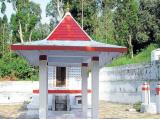
The green landscape stretches over a hillock within a gateway and is visible from the road. Before it stands a school ground and a ceremony hall. At one side within the precincts is a small shrine dedicated to Chavundi (Chamundi), while on the other side is the Kakot Achchayya Temple.

Legend has it that Kakot Achchayya and his sister Kakot Akkavva walked to this place in the ancient times. Kakot Achchayya, also known as Kombu Meeshe (horn moustache) Achchayya, had a manservant called Kari Kotta to attend to them.

They settled down here and a Mahadeva Temple was built for them. Over the years, the Kakot Achchayya Temple came to be known as the Kala Bhairaveshwara Temple.

The Kala Bhairaveshwara Temple has a horse figure representing the kshetrapala, guardian of the region, overlooking it. Behind this temple is the shrine of the kodi beera (war hero). This smaller shrine is dedicated to an ancestor of the Mandetira family who had died a violent death. He is represented by a rock placed upon a platform. To the side of the main shrine is a large tree upon a platform called the Kariyappa Sthana.

Beyond that is the shrine of Akkavva, known as Akkavva Sthana, which has a well near it. Before the Akkavva shrine is a tree with the small figure of a crane under it. Beside this tree is a temple pond which also has a similar crane figurine by its steps.

The Mandetira family is the Deva Takka of the temple. Deva Takka family members are responsible for the management of the temple. According to their family tree, the earliest known Mandetira ancestor is one Bogayya. His son Achchunna was the brother-in-law of Utta Nayaka of Kadnur, a very powerful chieftain in the 1780s. Achchunna went to Tulunad (Dakshina Kannada) and sent an archak (priest) called Sankana from that land.

Sankana and his descendants, the Kukkemane family, thereafter served as the priests of the Kakot Temple. Achchunna never returned. A memorial was built for him there at Kodapada village in Dakshina Kannada. During times of strife and conflict, Achchunna’s son Medayya was beheaded by a king. A memorial, called the Kodi Bira Sthana, was built for him at the place behind the temple where his head fell. Medayya’s young son Subbayya was the last remaining member of his family.

His widowed mother, who was from the Iychettira family, raised him. Upon coming of age, Subbayya joined the Raja’s government and was given his family property. A painting, which shows him paying the Raja his respects, was commissioned in 1805.

Subbayya remained in the government of the Kodagu Rajas for a long while, serving under Dodda Vira Rajendra, Devammaji, Linga Rajendra and Chikka Vira Rajendra. When the British took over the administration of Kodagu in 1834, the native officers were all retained. Unlike his father Medayya who had antagonised the ruling power of his times, Subbayya had remained loyal to the Rajas and later to the British, under whom he came to earn a medallion and pension for three generations. He later retired as parupatyagara, a senior government official.

Much of the family history has been documented by the clan members. The Mandetira, the Kukkemane, the Nellamakkada and a number of other families have helped renovate the temple over generations. Every year, ceremonial dances are held in the Kakot Parambu mand. In 2007, the Mandetira family organised the annual Kodava Hockey tournament.

The Ainmane, the ancestral home of the clan, has a wooden portico and entrance wall. A family tree of the Mandetiras is displayed by the entrance. The beautiful but small and old painting depicting the Kodagu Raja Dodda Vira Rajendra and Mandetira Subbayya is within a wooden frame placed on the wall behind the hanging prayer lamp. The kaimada, a private shrine built in remembrance of clan ancestors, and a sanctuary for el koot murthy (seven spirit-deities) are located nearby.

source: http://www.deccanherald.com / Deccan Herald / Home> Supplements / by M P Nitin Kushalappa / September 29th, 2015

New team for United Planters’ Association of Southern India

N. Dharmaraj, President and D.Vinod Sivappa, Vice - President
N. Dharmaraj, President and D.Vinod Sivappa, Vice – President

Mysuru :

N. Dharmaraj was elected as the President and D.Vinod Sivappa as Vice- President of United Planters’ Association of Southern India (UPASI) for the year 2015-16 at the Annual General Meeting of UPASI held on Sept.24 at Coonoor, Tamil Nadu.

Dharmaraj has over 41 years of experience in plantation business, working with companies like Brooke Bond, Unilever etc. He is currently the Chief Executive and Whole-time Director of Harrisons Malayalam Ltd.

Dharmaraj was Chairman of the UPASI Tea Committee and Chairman of the UPASI Commodities Exchange Limited. He was a member of the Tea Board of India and Founder-Convener of the Golden Leaf India Awards (TGLIA). He is currently a Member of Tea Council of South India constituted by the Tea Board as also a Member of the Core Committee of the Tea Board of India.

Vinod Sivappa, son of former President of UPASI (late) D. Sivappa in the year 1970-71, hails from a coffee growing family for more than 160 years. Vinod Sivappa was on the Committees of Codagu Planters’ Association and also was the Chairman of the Karnataka Planters’ Association. He is involved in many sporting activities. He is a Director of many organisations and various companies, according to a press release from Ullas Menon, Secretary General, UPASI.

source: http://www.starofmysore.com / Star of Mysore / Home> General News / September 27th, 2015

New Light on Kodavas of Kodagu – 1, 2 & 3

Review of Kaveri Ponnapa’s book “The Vanishing Kodavas”
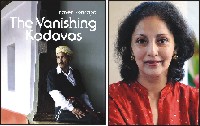
KaveriPonappaKF26sept2015

Title : The Vanishing Kodavas / Author : Kaveri Ponnapa / Pages : 360 / Price : Rs. 7,500 / Publisher: Eminence Designs Pvt. Ltd. [Order from www.thevanishingkodavas.com]

New Light on Kodavas of Kodagu – 1

People are interested in history because they want to know their roots; they want to know who they are; they want to know their progenitor. And with their physical features, colour and gait being different from their immediate neighbours, they want to know the why and how of it. The desire to know their ancestry becomes even more strong if their customs, costumes, culture, cuisine, language, songs of oral tradition and even Gods are different from those of others. The question arises if they could be of the land where they have been living from time immemorial or did they come from another part of this country or from another country traversing thousands of miles by land or sea due to historical reasons? War, pestilence or famine?

The Kodavas of Kodagu district in Karnataka belong to this class of unique people who want to know. Hence, there is an abiding interest among the successive generations of Kodavas, even scholars, to know their ancestry, history of their land of hills and valleys with thick rain forests, criss-crossing rivers and streams, having very high rainfall for over four months in a year. They are the high-landers and hardy people — physically strong and daring at any task and in war.

In retrospect, I myself being the son of that clan and soil, it can be said that these Kodavas lived on this land from the dim past to this day fighting all the time for survival with the nature and wild animals like tigers, elephants and vermins that destroyed their paddy fields and other crops; fighting the local chieftains of their own clans and the invaders from the neighbouring kingdoms till the geographical unity and political stability was attained when Kodagu (with Sulya and Puttur) became a kingdom under the Haleri Dynasty from 1600 to 1834 — 234 years.

In between, there was an interregnum when Hyder Ali and his son Tipu Sultan ruled Kodagu uneasily, under constant armed resistance from Kodava chieftains, for 11 years from 1780 to 1791 when Madikeri was renamed as Zaferabad.

In a classic example of the saying, “My enemy’s enemy is my friend,” the Kodagu Rajahs cultivated British of the East India Company, who were engaged in fighting Tipu Sultan, a sworn enemy of Kodagu Rajahs. So Tipu’s enemy, the British, became the friend of Kodagu Rajahs. But alas, in a tragic play of history, the British were able to de-throne and deport Chikkaveera Rajendra Wodeyar in 1834 after being betrayed by the Rajah’s trusted Dewans Cheppudira Ponnappa and Apparanda Bopu. Despite the Rajah’s army successfully resisting the British at the other two fronts, at the Eastern stockade it was a meek, humiliating surrender by Dewan Apparanda Bopu with a party of 400 Kodavas at the present Kushalnagar to Col. Frazer (hence Kushalnagar was known as Frazer Town).

The Dewan then “led the British troops back to Madikeri where the Union Jack was hoisted on 6th April 1834. The last battle for Kodagu was a sad betrayal,” writes Kaveri Ponnapa in her magnum opus of a book on Kodagu and Kodavas titled “The Vanishing Kodavas,” the book under review.

However, let me submit a caveat here. The records indicate the young King Chikkaveera Rajendra was more into outdoor activity, ironically with visiting Englishmen, of hunting and camping leaving the matters of State in the hands of trusted and able Kodava Dewans and also a Dewan from his own caste Kunta Basava, an evil genius no doubt, and another Muslim Dewan, probably to neutralise the power of Kodava Dewans mentioned above. When the relation between the Rajah and the East India Company got strained on the question of extradition of fugitives and the Kodava Dewans realised the end result of an inevitable war, they counselled the King to negotiate peace. But, the King was adamant. The Kodava Dewans, in the circumstances, decided that ‘discretion was better part of the valour.’ The British had already defeated a more powerful Tipu Sultan than the Kodagu King and as for weapons of war, the Britishers had cannons which the Kodagu Rajah did not have. If only Chikkaveera Rajendra had negotiated peace, he could have continued in the throne like the Mysuru dynasty under the suzerainty of the British Company.

Curiously, a large number of scholars and people, who have read the history of Kodagu written by many, are fed with information that shows the Haleri Kings, specially Doddaveera Rajah, Linga Rajah and the last Rajah, Chikkaveera Rajendra Wodeyar in poor light, as tyrants and mentally deranged towards the end of each one’s rule.

The history of Kodagu commissioned by Doddaveera Rajah in 1807 known as “Rajendranama” and another by Linga Rajah known as “Hukumnama,” the land laws of 1812, can be verified to find out its veracity and the good administration delivered by these rulers. The secret, if the word can be used, of the Haleri Rajahs ruling Kodagu for so long, 234 years, is no doubt because they never interfered with the land holdings of Kodavas, their customs, culture and, in short, Kodavas’ way of life. And Kodavas in return served their Kings loyally till the ‘betrayal,’ for self-preservation of Kodagu and Kodavas, came in 1834.

The proof of the Haleri Kings being good rulers is in the representation made to the British Government on 13th April 1834, just 7 days after the surrender, signed by 400 senior officials of Rajah’s Government, expressing their entire satisfaction with the Rajah’s rule and with grief requesting that the Rajah be allowed to remain in Kodagu.

Kaveri Ponnapa writes, “Despite the fact that he had an infant son, Prince Chitra Shekara, when he was conducted out of his kingdom, no attempt was made by the British to restore Haleri rule by placing a Regent over Kodagu, as had been done in some States, including nearby Mysore.” One would wish the author had given more information on Prince Chitra Shekara. Pray whatever happened to him? Interestingly, the Rajah begot more children in exile — in captivity at Varanasi ! To jest, what else could he have done with nothing else to do !

This book by Kaveri Ponnapa, based on 15 years of research, nearly 200 visits to Ainemanes (ancestral houses), historical locations, sacred places and interviews with elders in Kodagu, debunks many tendentious works on history and culture of Kodavas. The wealth of information, not so much on political history but on other aspects of Kodava life and culture, contained in the book The Vanishing Kodavas astonished me no end.

The book is a treasure trove of many informations hitherto presented in a distorted manner or suppressed from us to justify British occupation of Kodagu. I am reminded of a great Nigerian proverb which says that until the lions have their own historians, the history of the hunt will always glorify the hunter. Let it be.

It is, therefore, necessary for us to question the description of Chikkaveera Rajendra as a bad King in the eponymous novel by Masti Venkatesha Iyengar. No wonder there were protests and criticisms when Masti Venkatesha Iyengar was given Jnanpith Award for this book and when an attempt was made to produce a film-based on the book. ______________________________________

New light on Kodavas of Kodagu – 2

The book, The Vanishing Kodavas, however, does not answer the fundamental question: If not the natives of the land, where did the Kodavas come from? Many have ventured to address this question without any answer, leaving us in a sea of absurd speculations. One had tried to trace Kodavas’ origin to Rajasthan and parts of North India by drawing similarities between names of some clans there to the family (Okka) names of Kodavas. They also link the similarity in the distinct individual Kodava names like Muddappa, Muthappa, Machiah, Ponnappa, Somaiah, etc.

Some have speculated that a breakaway army unit of Alexander-the-Great had trekked to Kodagu from North India looking for a safe haven. Some others speculate Arab descent finding strong similarities between the Arab cultures and social life and that of Kodavas — the headgears (red-check vastra, head scarf) worn while at work and on special occasions, the ornate gold or silver dagger held by the sash (chale) tied around the waist, the white one-piece knee-length upper garment etc., complete with other artifacts.

Yet, some researchers on the origin of Kodavas opine Kodavas are Scythians, Eurasian nomads who landed in Kodagu. A 1398 Kannada dictionary says Kodavas are Mlenchas come from outside the country. Others have told us that Kodavas are Kurds, a hill-tribe of Arabia come here after a long journey by the sea, landing in Malabar coast of Kerala, then making an arduous journey to a safe hilly place inhabited sparsely by the local tribals — Kodagu. Well, if this is so, I doubt, the name Kodagu could not have been derived from the Tamil word ‘Kodimalenad’ — Hill Forest Land, an eponymous name as speculated in the book under review.

Extending this kind of speculation a bit further to Kurds, one can say the name Kodagu might have come after these Kurds (pronounced Koords) occupied this land, suggesting it is the land of Kurds which name, in its corrupt form or with minor distortion in pronunciation, must have become Kodagu the land of Kurds, Kodavas. The English called Kodava as Coorg and in early Church records it is Kurg.

To add to the confusion, of late, we have a Greek come to Kodagu making similar speculation — Mr. Antonios Vasileiadis. He says the customs of the people of Kodagu bear a striking resemblance to those of Ancient Greece. Can we connect this to the earlier speculation of Kodavas being the breakaway warriors of Alexander’s Army? 300 BC!

The book also does not address two other important questions. One, the origin of Kodava language which is a dialect and the other, the origin of the name of each okka clan or family — like Ajjikuttira, Apparanda, Biddanda, Chowrira, Kambiranda, Nadikeriyanda etc. And so far, no one has answered these enigmatic questions including that of our origin. I guess these questions will remain riddles wrapped in mystery inside an enigma even as Kodavas may vanish in the next 100 or so years from their ancient land Kodagu, perhaps, leaving behind their land, language, okka names, personal names, traditional dress, customs etc., in short, the treasure chest of their hoary past. Thereafter, they can be seen or heard only in the digital library or in books like “The Vanishing Kodavas.” Which is why, this book is a wonderful Collector’s Item, specially for Kodavas.

Is the title of the book prophetic? Time alone can say! UNESCO has already sounded the warning saying Kodava language is among the disappearing languages of the world. If so the people who speak the language may also disappear lost in a diaspora. And even as one reflects on the dismal future of this unique race under the sun, one will wonder how was it that these Kodavas whose number is 2.3 lakh (with 1.5 lakh living in Kodagu) survived for centuries as an ethnic people, practising a distinctive life found nowhere else in India or in the world. In a sense, it is providential that Kodavas survived so long in Kodagu in the absence of a religious or temporal head from their own blood-line to hold the flock together and bind them under a singular culture common to all Kodavas.

The book bears the stamp of not only the scholarship of the author, the love of labour of a patriotic Kodavathi but also the tremendous research and leg-work that have gone into its making. It has between its 360 pages, 12 chapters devoted to specific subjects, 300 colour and sepia photographs of superb quality and of archival value, most helpful guide to a reader of this kind of a researched book. The glossary of Kodava words is exhaustive and descriptive to leave no doubt in the mind of a serious reader about the import of those Kodava words and names; the select bibliography authenticates what is researched and will help those who wish to write on Kodavas and Kodagu in future.

Kaveri Ponnapa is beholden to so many who co-operated and helped her in writing this book. A grateful author recognises each one of them and also okkas acknowledging their help — proof of her deep sense of gratitude. I am sure in the next edition some more names will appear should she learn there are omissions! Index to a book of this kind can never be understated but here it is done with such meticulous care one is left wondering at the hard work by the team that put the book through production. Photo credits too are there which is as it should be.

I must mention here the depth and sweep of her work of extraordinary research with just one example. It is about least of an item used by Kodavas to deserve a research. It is about a ceremonial walking stick, made of black wood, known as gejje thand, a waist high staff. Her research finds out that it is made from the male kari mara (botanical name Diospyros ebenum) decorated with strips of beaten silver and tiny bells. She writes in detail about its significance and power as spirit medium and more. I guess Kaveri Ponnapa does not seem to have left a single stone unturned in her research that concerned Kodava life and culture.

At one point she mentions of the precepts delivered by an elder at the time of solemnising the marriage. Readers would wish a sample text of it was published. May be the next edition will find a place for it.

_________________________________________

New light on Kodavas of Kodagu – 3

For those Kodavas, who have been opposing the Jamma tenure of land holding in Kodagu, an act which is self-defeating in the context of the need to keep their land for themselves and thereby their identity as a unique people, here is some food for thought from the book:

“Since time immemorial the ownership of land has been the foundation of Kodava identity, and the thakkas and Haleri Rajahs, in their wisdom, made the Jamma lands inalienable, with reason.”

Lewis Rice, writing in 1878, summed it up best, his words proving to be prophetic in today’s Kodagu: Hence the Coorgs who hold lands on Jamma tenure are prohibited from alienating them, a restriction which was in force in the time of Rajahs, and which is absolutely necessary in order to prevent all the land in the province from gradually falling under the ownership of settlers from the low country. And should the ownership of the soil, which rightly belongs to them as a nation, pass away from the Coorgs… the independence and self-respect of a fine race will be sacrificed…

No wonder Britishers did not interfere with the land holdings in Kodagu. British did not also interfere with the law prohibiting slaughter of cattle and sale of beef that existed during the rule of Haleri Rajahs in Kodagu. I am one of the irrelevant majority of Jamma holding Kodavas, Gowdas, Mapillahs and others in Kodagu who agree with Rice and his warning.

The beginning of the end of Kodagu and Kodavas was when Kodavas felt betrayed by their elected leaders. The book says, Cheppudira M. Poonacha, the then Chief Minister of Kodagu, a Kodava himself, went down in Kodava history as the man responsible for the merger of Kodagu with Karnataka in 1956.

The fate of Kodagu and Kodavas was hermetically sealed by this unholy, sinister merger once and for all accelerating the ‘vanishing’ of Kodavas and Kodagu. According to Kaveri Ponnapa, this political move of merger “cost them (Kodavas) their independence, wrested the control of their land from their hands, severely depleted the natural resources and eroded the Kodava identity.”

Now, after Kodava political leaders gave away Kodagu on a platter to Karnataka for their own selfish political ambitions, the Kodavas and Jamma land owners became victims of the new Land Revenue Act of Karnataka that is often used to keep them under constant threat of eviction from their land — Jamma, Bane, Paisari. Kodagu’s development suffered under Karnataka. The Revenue Department practically rubbished the land records under all pervasive corruption and favouritism. The roads were neglected. For example, Hunsur-Gonikoppa road had remained unmotorable for six years. Many private bus operators stopped service and car owners avoided this road. The high-tension power-line was drawn across Kodagu forests, paddy fields and coffee estates despite objections and agitations. There are more trees in coffee estates today than in the forests. The latest threat to their land holding comes from the UNESCO plan to declare major parts of Kodagu as Eco-Sensitive Zone and the controversial Dr. Kasturi Rangan report that will adversely impact 55 villages. That probably will be the last nail to the Kodagu coffin.

A feeble effort is being made to overcome these dangers by Codava National Council (CNC), led by Nandineravanda Uthappa Nachappa demanding creation of a Kodava Autonomous Region, but there seems to be little hope as Kodavas are divided among themselves.

Now, before I vanish from these columns, a few words about the author Kaveri Ponnapa whom I had the privilege of meeting along with her husband Kambeeranda Naresh Ponnapa, a big-time software industrialist in Bengaluru, at their house of unique architecture in Whitefield. There was very little about her in the book which says that she studied English Literature at Lady Shri Ram College, Delhi and took a Master’s Degree in Social Anthropology in London. Like nature, she wants to remain half-revealed. Let us respect her sentiment but let me reveal that she is the daughter of Lt. Gen. B.C. Nanda, now settled in Kodagu.

The book is too heavy to handle. It is more like a Coffee-Table Book in its style of page layout. The font size needs to be increased. Such small type is harsh on eyes. It is best to have this book in two volumes with photographs compatible only to the text, not to please individuals who might have assisted the author. The next edition needs to take these changes, nay the challenge, seriously to make it reader-friendly. Should the expensive art paper be of that thickness merely adding to the weight of the book?

And finally, my most sincere thanks to Kaveri Ponnapa for giving us this pictorial book which will preserve for posterity the religious, social practices and agricultural activities, with keepsake photographs of Kodavas who are likely to join the ranks of Lost Tribes of the world.

e-mail: kbg@starofmysore.com

source : http://www.starofmysore.com / Star of Mysore / Home> Abracadabra…..Abracadabra / by K.B.Ganapathy / September 26th, 2015
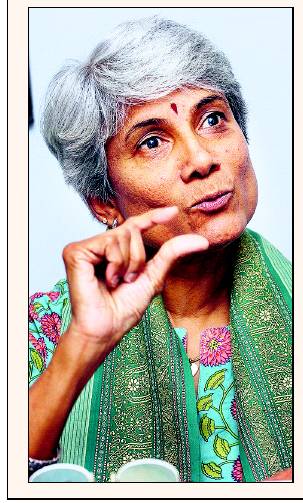
She sips, swirls and spits: Meet Asia’s only woman coffee taster

What would life be without spicy food, ice-creams, perfumes, fragrant flowers, late-night parties and alcohol? Ask Sunalini Menon, who swears by this regimen.

No, she’s not a health freak or someone prone to allergies. She’s been practising abstinence for the sake of her passion, which is also her profession.

Asia’s first and only woman professional in the field of coffee cupping (tasting), Sunalini has experienced the aroma of several thousands of coffee types and spent a considerable time in the fields. “I love ice-creams and soft drinks but they affect my taste buds. My profession requires them to be extremely sensitive. So, I steer clear of cold food items or beverages,” she said. The chief executive of Coffeelab, one of India’s largest coffee exporters, Sunalini spoke to TOI on the ocassion of Coffee Santhe, a three-day carnival hosted by Karnataka Chitrakala Parishath.

Restraint and discipline are core attributes of a good coffee cupper. “It is essential to preserve the palate, the instrument vital for coffee tasting. We’re advised to avoid spicy food. Alcohol and smoking are a strict no no. Late nights and poor health can be a hindrance to the job,” she explained.

Coffee cuppers have to perform regular tongue exercises not only to keep their taste buds active but also to pick up foreign flavours. “Cupping with experts from other parts of the world helps calibrate one’s potential and understand the coffee produce of other countries. One also needs to perceive through the eyes, nose and palate of other cuppers,” she said.

SunaliniMenonKF26sept2015

Habituated to taking a sip and playfully swirling the liquid in her mouth before spitting, Sunalini said her job doesn’t allow her to swallow the coffee, however aromatic and delicious it be. “Coffee can have the distinct enzymatic flavours of apples, apricots, peaches and berries; sugar-browning flavours of chocolate, caramel, honey or those of spices like clove and pepper. It is an inborn acuity of taste, knowledge, experience, memory and good communication skills which help the cupper differentiate one flavour from another,” she said.

Sunalini, who entered the male bastion decades ago, said her journey hasn’t been easy. “I wasn’t lucky enough to be handheld when learning the tricks of the trade. I had to learn on my own, especially the chemistry of the coffee bean. It took a long time for me to be accepted into the fold, but once there, you are in,” she said.

Cupping as a Career

There are certifications for coffee tasters issued by the Specialty Coffee Association of America (SCAA) and Specialty Coffee Association of Europe (SCAE). The SCAA issues two types of certificates. One is called the Licensed ‘Q’ grader and the other, the Licensed ‘R’ grader. The ‘Q’ grader licence is a certificate for proficiency in evaluating arabica coffees and the ‘R’ grader for proficiency in evaluating robusta coffees,” said Sunalini.

She admitted that coffee tasting as a career could have some limitations.

“To overcome them, one needs to perhaps complement tasting with other jobs such growing, roasting or marketing coffee,” she said.Coffee tasting is more of a passion; it may not help you financially, especially in the first 10 or 12 years. Credibility comes only through knowledge and experience,” Sunalini signed off.

source: http://www.timesofindia.indiatimes.com / The Times of India / News Home> City> Bengaluru / by Sreemoyee Chatterjee, TNN / September 26th, 2015

A memorial in honour of Appaiah Gowda

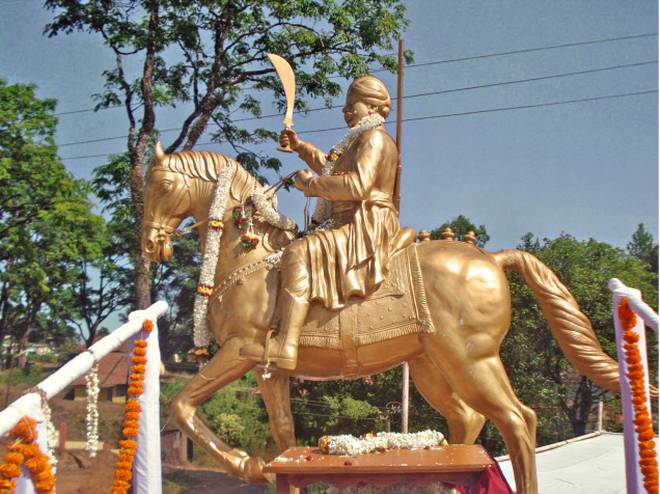
The bronze statue of freedom fighter Guddemane Appaiah Gowda, which was unveiled in Madikeri on Monday.

He was hanged by the British in Madikeri on October 31, 1837

Chief Minister D.V. Sadananda Gowda said on Monday that his government would take steps to initiate the process of development in Kodagu, a land known for its warriors, freedom fighters and natural landscape.

He was addressing a gathering at the Gandhi Maidan here after unveiling a bronze statue of Guddemane Appaiah Gowda at Field Marshal K.M. Cariappa Circle.

Appaiah Gowda was a freedom fighter, who was hanged by the British on charges of sedition on the fort premises here on October 31, 1837.

Mr. Sadananda Gowda’s wife Dotty hailed from Guddemane family. She was also present.

The Chief Minister said that he had taken nearly six months to visit Kodagu as he was being pressured by Madikeri MLA M.P. Appachu Ranjan and Speaker of the Legislative Assembly K.G. Bopaiah to take steps to solve the vexed Jamma Bane issue in Kodagu before the visit.

Responding to the demands made by Mr. Ranjan and M.C. Nanaiah, MLC, Mr. Gowda said that he would take steps to include a proposal to set up a medical college in Kodagu in the next budget.

A sum of Rs. 322 crore had been spent on various development projects such as roads, bridges, and buildings in Kodagu in the past few years. A sum of Rs. 115 crore would be sanctioned to the district in 2011-12, he said.

On considering Mr. Ranjan for inclusion in the next Cabinet expansion, Mr. Gowda said how could he deny it when he himself was the Chief Minister and he was versed with the requirements of Kodagu. All 122 MLAs from the BJP were capable of becoming Ministers, but it was not possible owing to restrictions.

Mr. Gowda, who conducted a progress review meeting involving officers of various departments at the Sudarshan Guesthouse, took exception to the tardy progress in the execution of projects under the Mahatma Gandhi National Rural Employment Guarantee Act (MGNREGA) in Kodagu. He instructed the officials to speed up work on the projects.

Of the 3,850 projects planned under the scheme in Kodagu, only 508 had been completed, according to officials.

Expressing dissatisfaction over the implementation of drinking water projects in the district, Mr. Gowda directed the officials to complete them in a month.

Of the 235 projects, only 22 had been completed in the current year, the officials stated.

Of the Rs. 8.5 crore earmarked for drinking water schemes in Kodagu in the current year, only Rs. 3.75 crore had been spent. Mr. Gowda announced that he would take the issue of lack of progress in the execution of projects in six departments seriously.

Mr. Gowda and Air Marshal K.C. Cariappa (retd.), son of Field Marshal K.M. Cariappa, paid respects to Field Marshal Cariappa’s statue.

source: http://www.thehindu.com / The Hindu / Home> National> Karnataka / by Jeevan Chinnappa / Madikeri – January 03rd, 2012 (updated July 25th, 2016)

It flattered to deceive

Cauvery — which is the lifeline of the people in south Karnataka and people living along the downstream in Tamil Nadu — has its origins in Kodagu which is the key catchment area of the river.

Kodagu received 33 per cent excess rains when the monsoon set in during June this year. It recorded a rainfall of 826.2 as against the normal of 622.4 mm. But the monsoon slackened during July and August.

In July, Kodagu received 360.2 mm of rains as against the normal of 904.7 mm, which is 60 per cent below normal whereas in August the district as a whole received only 289.4 mm of rains as against the normal of 597.7 mm which is 48 per cent below normal.

The cumulative rainfall deficiency for the period June 1 to September 6 is minus 31 per cent and against the normal of 2181.2 mm of rains, Kodagu received only 1,504 mm rainfall. The deficient rain was uniform across the district, resulting in depleting inflow into the KRS.

Likewise, the adjoining districts of Mysuru and Mandya through which the Cauvery flows, also received deficient rains during July and August, adding to the reduction in the inflow into the reservoirs.

source: http://www.thehindu.com / The Hindu / Home> National> Karnataka / by R. Krishna Kumar / Mysuru – September 07th, 2015

Joshna battles past Habiba for title

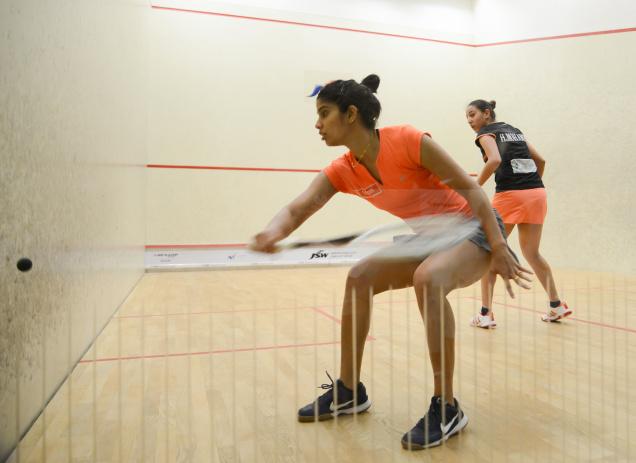
FIGHTING TITLE: Joshna Chinappa faced down a physically aggressive Habiba Mohammed to clinch the women's crown.
FIGHTING TITLE: Joshna Chinappa faced down a physically aggressive Habiba Mohammed to clinch the women’s crown.

England’s Adrian Waller makes it a no-contest against Mahesh Mangaonkar

Joshna Chinappa smashed her way past Habiba Mohammed 11-8, 11-9, 11-6 to lift the women’s title while England’s Adrian Waller backed his reputation as the men’s top seed at the NSCI Open, a $15,000 PSA event here on Sunday. Waller’s controlled play carved out a 3-1 victory over Mumbai lad Mahesh Mangaonkar.

Joshna, seeded third and facing the top-seeded Egyptian, kept her composure even after she got hurt in bizarre circumstances. With the first game in her pocket and up 3-1 in the second, Joshna’s face come in contact with Habiba’s racquet hand on the latter’s follow-through. The Indian crumpled on court holding the side of her face, went out for medical assistance and returned to the court more alert and determined to slog for victory.

The contest between the aggressive Egyptian, ranked 19th, against the experienced Indian, ranked 28th and working the angles, kept the chair umpire busy due to frequent body checks. Habiba was warned twice, first after the follow-through into the face, then for coaching assistance in game three.

Joshna, relieved to have pulled through in the face of ferocity, said: “On the circuit, she is known to be aggressive. The trick is to play your game without thinking too much about it. I went for my shots and left it to the umpire to take charge of the match.”

Wincing from memory of that blow, she added: “Habiba has a powerful follow-through and I almost walked into it. I almost felt like getting punched in the face, luckily I could return to the court after treatment. My victory had to do with experience. I have been on the tour more than her.”

Talking about squash rivalry getting physical on court, the champion said: “I have been involved in physical finals before, but girls play clean and fair. I enjoy those contests, matches are hard but you know rivals play fair. Unlike her they do not try to block so much. I tried not to get in her way.”

In the men’s final Mahesh clawed back in the third game, 14-12, after being kept at bay in the first two by his left-handed opponent. Waller then cut out the errors in the fourth to pick up the title.

“I could not convert openings into points, he did not allow me to fight back. Adrian showed what a huge talent he is,” said the third-seeded Indian later.

The results: Final: Women: Joshana Chinappa bt Habiba Mohammed (Egy) 11-8, 11-9, 11-6.

Men: Adrian Waller (Eng) bt Mahesh Mangaonkar (Ind) 11-9, 11-2, 12-14, 11-6.

source: http://www.thehindu.com / The Hindu / Home> Sport> Other Sports / by Special Correspondent / Mumbai – September 07th, 2015