Pavan Thimmaiah & PMT Dance Company have been asked to choreograph the world’s largest street dance to be performed live on national TV. They need dancers to help them to make Guinness World Records history. Here is all the information you need to participate:
Performance Date: Wednesday, September 9th, 2015
Time: 5:00-9:00 a.m.
Location: 30 Rockefeller Plaza
Requirements: Be able to learn and perform a 5 minute Hip Hop/Street Dance choreography.
Commit to one 4-hour rehearsal day; it is required. The various options available are between September 3-September 6.
Participants can NOT be minors.
Participants can NOT be in a guild or union.
To sign up or for more info, email: pmthouseofdance@aol.com by September 2nd.
source: http://www.today.com / Today / Home> Today Pop Culture / September 03rd, 2015
The world has a dark fascination about war and particularly the Second World War. The last of the war action may have ended in 1945, but our imagination never seems to stop wondering about the large scale hostilities and the repercussions that wars have come to represent.
Every new book or movie about the Second World War opens us to some aspect of that war not known to people.
Raghu Karnad’s book, Farthest Field – An Indian Story of the Second World War, is what the title suggests and much more. It not only takes us through a journey of three men lost to war, but talks about India’s role in the Second World War and throws in snatches from the country’s nationalist movement that ran concurrently with the war.
Death, we have often believed, has an element of finality. But Karnad says people have two deaths. The first death occurs when they die, and the second when all those who remember them also die. Beautifully put.
The second death is the farthest field from which no one returns, says Karnad, and so the name of his book.
But war, says Karnad, brings the two deaths close, because it “chooses young people most deliberately to die”. A life barely lived, most of these young people lost in wars often end up as photographs.
And it was photographs of three young men that stood on table tops in his grandmother’s house that prompted him to prise open a history unknown not only to him, but to a whole generation of Indians.
These youngsters who stood in the photographs — Bobby Mugaseth, Manek Dadabhoy and Ganny or Kodandera Ganapathy — had their lives intertwined with each other through marriage and through their involvement in World War II. Bobby’s sisters had married Ganny and Manek. Ganny was Karnad’s maternal grandfather, while Manek and Bobby his grand-uncles (his mother’s uncles). Bobby’s sister Nugs (the author’s grandmother) was married to Ganny.
The book opens in Calicut, at the residence of Mugaseths, and follows the personal stories of these three men, a story recreated by the author with the help of research, conversations, chronicles and his own creative mind’s eye.
In the process of recreating the story that started unfolding 80 years ago, Karnad also had to understand the role of Indian Army in the Second World War and the country’s own nationalist movement that was playing out at the same time.
India’s broader role in the Second World War is that it had the largest volunteer army fighting the war for the British Empire. As per Karnad’s estimates, more than two million men and women served in it.
“As a part of the British Empire, India had won its war. Then, ceasing to be a part of the Empire, it won its independence,” says Karnad in his book. To a large extent, one was born of the other and yet India’s part in the world war is absent from its own history, he says.
Bobby’s journey took him to Roorkee training camp and then to Iraq and later to the Burmese frontier to defend India against Japanese forces. Bobby’s life was hell during the last few months with death staring at him daily, but he died of a shot from his own revolver. The gun went off in error was the explanation given. The truth was that nobody would know what caused that death. That was 1944.
By the time Bobby was gone, his brothers-in-law Manek and Ganny were already lost to war. Manek joined the Indian Air Force as a fighter pilot and died in 1943 when he crashed into a mountainside in Manipur. Ganny became an army doctor in North-West Frontier and died in 1942 of bronchitis, at the frontier. “The farthest field is not just a conceit about Bobby’s death but one that applies to all those Indians who were lost to the Second World War,” says Karnad in his afterword to the book.
Undoubtedly, Farthest Field opens up India’s forgotten role in the Second World War and at the same time helps the reader to refurbish memories about the war itself and the events unfolding at home in the country that led to its independence from Britain. The author’s brilliance is evident in the fact that the reader is not only transported to that era, but helps to stay connected with the book until the end.
Delving into the effortless storytelling ability of the book, one can fathom the kind of work the author has put in to bring out this book, probably prompting readers to say that Karnad is a writer to watch out for in the years to come.
source: http://www.deccanherald.com / Deccan Herald / Home> Supplements> Sunday Herald Books / by Latha Venkatraman / August 30th, 2015
Kushalnagar, which is popularly known as the commercial centre of Kodagu district, has many historical monuments which are in a deplorable condition and crying for attention.
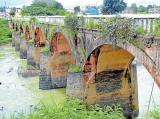
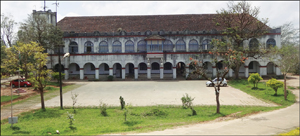
One such structure is the Praserpett Bridge built across River Cauvery, 167 years ago. The bridge, situated near the Kushalnagar Tollgate is 200 metre long and rests upon eight stone pillars of 40 feet wide each. Every pillar is 30 feet far from each other. The specialty of the pillars is that they have been plastered with a ground mixture of sand, eggshell and lime. The pillars from the ground level, are built in the shape of towers.
Every pillar contains valves so as to release the excess water during floods. When River Cauvery is in full spate, people drop by to watch the splendorous scene at the bridge.
The protective walls built on either side of the bridge are built to resemble the constructions in palaces and are intact to this day. The bridge dates back to the regime of Madras Presidency. The then Superintendent of Kodagu W C Hanslow, laid the foundation for the bridge on January 1, 1846. The construction of the bridge was completed in 1848.
The then Madras Governor George Markawis of Twidel and the then Mysore Commissioner Major General Mark Cubbon left the bridge open for public on May 12, 1848. The name of the bridge has been inscribed in English as well as Kannada on marble stone slabs, on either sides of the bridge.
But, after the new bridge was built, the old Praserpett Bridge was completely neglected.
Peepul trees have grown on the protective wall and pillars of the bridge. The people have urged to protect the historical monuments such as Praserpett bridge, Tippu’s Fort and the Old Inspection Bunglow.
Bar Association, Kushalnagar, president R K Nagendrababu urged that the Archeological Dept take an initiative and protect the bridge.
source: http://www.deccanherald.com / Deccan Herald / Home> District / Khushalnagar – DHNS, August 25th, 2015
The 69th Independence Day was observed with patriotic spirit on the Fort premises in Madikeri on Saturday.
The marchpast by police, Scouts and Guides, NCC, NSS, and students and cultural programmes by the schoolchildren added colours to the celebrations.
Speaking on the occasion, District In-charge Minister K J George said the State government is ready to respond to the woes of the farmers. The farmers should not take extreme steps to end lives. Freedom should not be misused. It should be used for the welfare of all, he added.
St Joseph High School student Sreeja and Dechamma were felicitated for securing highest marks in SSLC examination. The highest scorers in second PUC examination — Ahalya Appacchu, B M Neelamma, Amrita Girish, Preethi Riya Pinto and Uthappa — were also felicitated.
The schoolchildren danced to patriotic songs on the occasion. In the cultural programmes, General Thimmaiah Public School team won first place while St Michael High School and Rajarajeshwari School teams stood second and third.
Guides team of St Joseph High School, Sevadala of St Michael School and Scouts of Rajarajeswari School won first, second and third place respectively in the marchpast category. Hoovaiah Gowda, who had entered into the Ginnessh Book of World Records for growing 41-feet tall sugarcane, was also felicitated. Valley Dew team presented traditional Kodava dance. Rajesh and team from Mandya presented Dollu Kunitha on the occasion.
source: http://www.deccanherald.com / Deccan Herald / Home> District / Madikeri / DHNS – August 15th, 2015
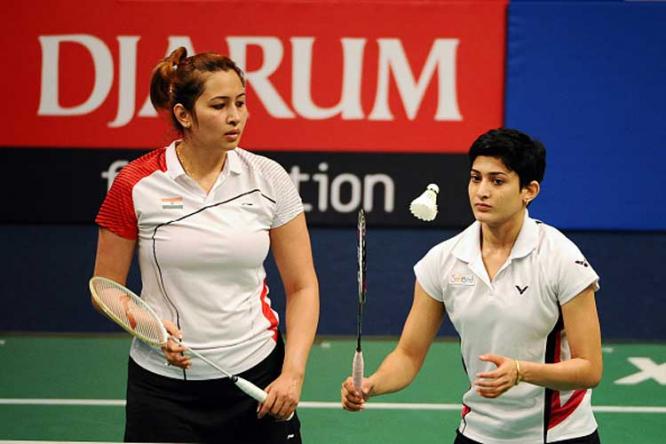
The Chief Minister of Karnataka, Siddaramaiah, has requested Prime Minister Narendra Modi to include India’s women’s badminton doubles pair of Jwala Gutta and Ashwini Ponnappa in the ambitious Target Olympics Podium (TOP) scheme under the National Sports Development Fund for providing necessary support to the potential medal winners for the Rio Olympics to be held in August 2016 in Brazil.
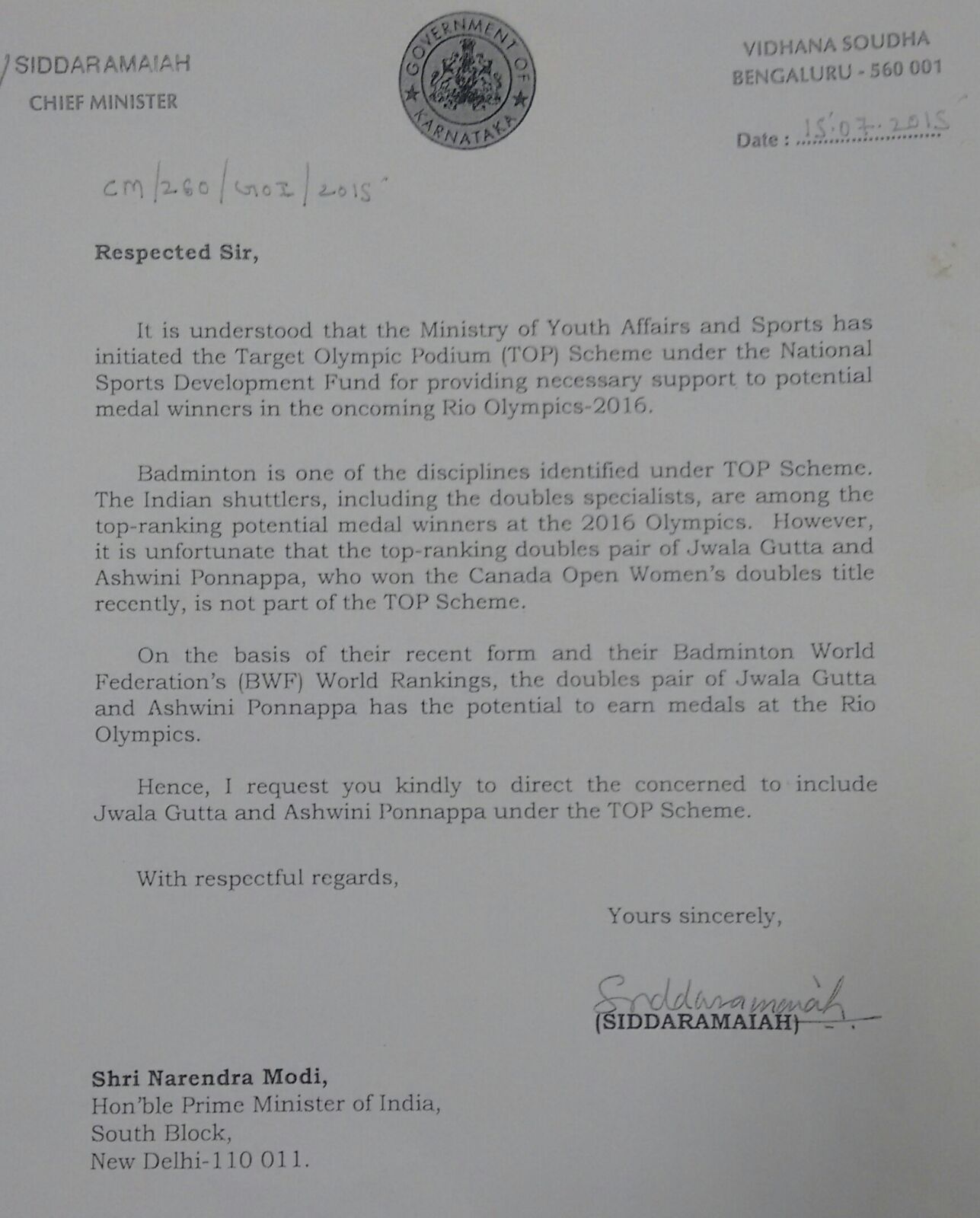
In a letter addressed to the Prime Minister, Siddaramaiah said, “Badminton is one of the disciplines identified under TOP Scheme.
The Indian shuttlers, including the doubles specialists, are among the top–ranked potential medal winners at the 2016 Olympics.
However, it is unfortunate that the top-ranked doubles pair of Jwala Gutta and Ashwini Ponnappa, who won the Canada Open Women’s Doubles title recently, is not part of the TOP Scheme.
“It’s unfortunate that the doubles pair of Jwala Gutta and Ashwini Ponnappa, who won the Canada Open title recently, is not part of the TOP Scheme,” the CM wrote.
“On the basis of their recent form and their Badminton World Federation (BWF) Rankings, the doubles pair of Jwala Gutta and Ashwini Ponnappa has the potential to earn medals at the Rio Olympics. Hence, I request you to direct the concerned to include Jwala Gutta and Ashwini Ponnappa under the TOP scheme”.
Telangana Chief Minister K Chandrashekhara Rao has also written a similar letter to the Prime Minister Modi requesting him to include both Gutta and Ponnappa in TOP scheme.
TRS MP from Nizamabad and KCR’s daughter K Kavitha has initiated the demand for inclusion of the doubles pair. Speaking to media, she said, “Jwala and Ashwini are capable of earning a medal for India at the Rio Olympics and I want the PM to personally intervene in this matter.”
Karnataka chief minister’s staff member KV Prabhakara said that Siddaramaiah is personally following it up with the Prime Minister.
Here’s the letter sent by the Karnataka CM to the Prime Minister’s Office:
source: http://www.ibnlive.com /IBN Live / Home> Sports / by IBN Live Sports / July 17th, 2015
‘Classical languages are embedded with culture, literature and tradition of the people’
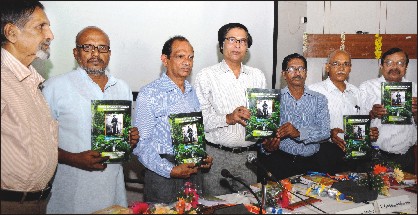
‘Hindi-English-Kodava,’ trilingual dictionary compiled by Dr. C.V. Sivaramakrishna, was released during a symposium on ‘Kannada Classical Language and other Classical Languages of India’ held at Central Institute of Indian Languages (CIIL) in city this morning. Seen in the picture are (from left) CIIL Academic Secretary (retd) Prof. Kikkeri Narayana; Head of Linguistics, Malayalam University, Thiroor, Kerala, Prof. M. Sreenatham; Former Kuvempu Institute of Kannada Studies Director Prof. R. V. S. Sundaram; CIIL Director Prof. Awadesh Kumar Mishra; former CIIL Mysuru Deputy Director Prof. V. Gnanasundaram; Deccan College, Pune, retired Prof. K.S. Nagaraja and KSOU retired Prof. Radha Krishna Bhat.
Mysuru :
The Classical Language Studies Centre will be shifted from the Central Institute of Indian Languages (CIIL) premises in Mysuru to Bengaluru University campus soon, said CIIL Director Awadesh Kumar Mishra, here today.
Inaugurating a symposium on ‘Kannada Classical Language and other Classical Languages of India’ at CIIL premises, he said the Classical Language Studies Centre was being shifted to the State capital as it will have necessary infrastructure such as library and other required facilities.
Mishra pointed out that preservation of classical languages is important as they were embedded with culture, literature and tradition of the people and added that language and script were interlinked. “A language undergoes changes due to change in geographical location.”
Four years ago, the Tamil Classical Language Studies Centre was shifted to Chennai and the Telugu Classical Language Studies Centre may also be shifted in due course of time, once the location is confirmed, said Mishra. Since 2008-09, CIIL is facing staff crunch due to retirement of personnel, he added.
On the occasion, ‘Udaya Adityalanakar,’ translated from Sanskrit to English by Dr. R.V.S. Sundaram and Gill Ben-Heruth; ‘Mahakavya Lakshana,’ of T.V. Venkatachala Shastry translated into English by Dr. H.V. Nagaraja Rao; ‘Moulya Nirdharana Parabashika Padapraveshike,’ edited by Dr. M. Balakumar; ‘Hindi-English-Kodava,’ trilingual dictionary by Dr. C.V. Sivaramakrishna and ‘The Nihali Language,’ by Dr. K.S. Nagaraja were released.
source: http://www.starofmysore.com / Star of Mysore / Home> General News / Friday – July 17th, 2015
To represent India at World Skills-2015 competitions at Brazil in August
Mysuru :
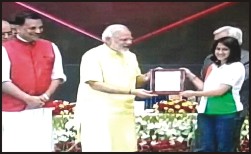
Tulsi Ponnappa (Biddatanda), a student of Bachelor of Culinary Arts, WGSHA, Manipal, was felicitated by Prime Minister Narendra Modi at the World Youth Skills Day ceremony at Vigyan Bhavan, Delhi on July 15, for receiving Silver medal at Oceana- 2015, New Zealand.
Tulsi was selected by the National Skills Development Corporation (NSDC) in the course of taking part and winning Inter-college, Zonal and National competitions and is being monitored and trained under the aegis of NSDC. She was a part of the contingent that represented India at Oceana-2015 at New Zealand in the Patisserie and Confectionary Category.
She now will continue to train under one of the top Patisserie Chefs at Oberoi Trident, Mumbai and will head to Sao Paulo, Brazil, in August for the World Skills 2015 competitions to represent India again. Tulsi did her schooling at Delhi Public School, Doha and undergraduate studies at St. Aloysious, Mangaluru, before joining WGSHA Manipal, to obtain her Culinary Arts Degree.
She is the daughter of Biddatanda Ashok and Bhavya Ponnappa and grand-daughter of retired Principal Biddatanda Ponnappa and Kamalu Ponnappa of Napoklu, Kodagu and late Machianda Thammayya and Shashi Thammaya.
source: http://www.starofmysore.com / Star of Mysore / Home> General News / Friday – July 17th, 2015
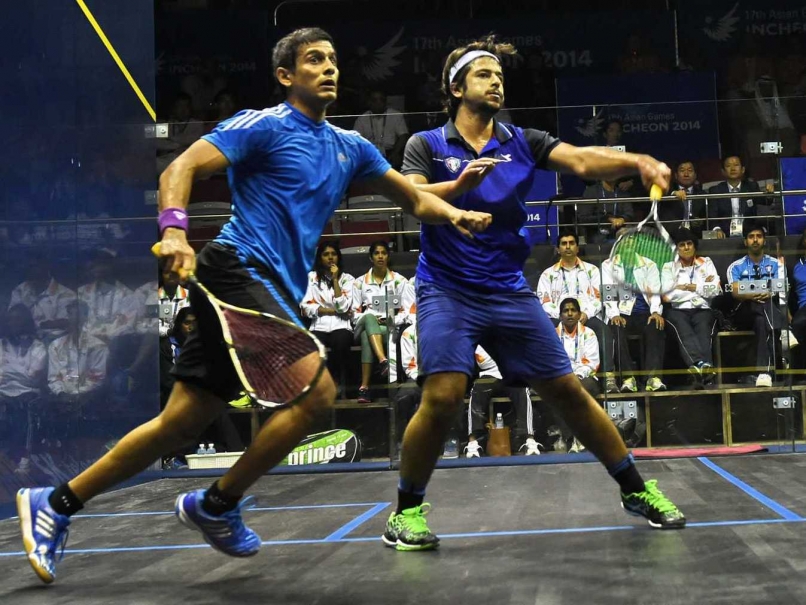
Two games up and again 6-2 in the fourth game, defending champion Harinder Pal Singh Sandhu seemed to have got into the groove for another tilt at the title, but the wily Ghosal came up with an outstanding fight back and pushed the match into the decisive fifth which he won comfortably for his 10th national title.
Saurav Ghosal regained the men’s title while Joshna Chinappa took the women’s crown in the 63rd Senior National Squash Championship here on Sunday.
Two games up and again 6-2 in the fourth game, defending champion Harinder Pal Singh Sandhu seemed to have got into the groove for another tilt at the title, but the wily Ghosal came up with an outstanding fight back and pushed the match into the decisive fifth which he won comfortably for his 10th national title.
The women’s final too was well contested though the score line would not suggest that. Chinappa showed experience mattered while dousing the challenge of national junior champion Harshit Kaur Jawanda in three games.
It was Chinappa’s 14th national title as she is well on way to reach that magical number of 16, which is the number of titles that Bhuveneswari Kumari had won for a record total.
The then Deputy Commissioner of Kodagu, A. Bharath, had convened a meeting to discuss the revision of various privileges granted to the people of Kodagu.
This important meeting was chaired by the then Revenue Minister B. Basavalingappa. The meeting was at the highly ornate meeting hall that was earlier a Palace, inside Madikeri Fort.
The Palace and the Fort were constructed by King Mudduraja in 1681 and renovated by King Lingarajendra Wadiyar II in 1813.
Myself and all the District Officers, political leaders and elite public were present at the meeting. As the subject was highly contested, people had assembled in large numbers and the hall was jam-packed.
The meeting started and DC Bharath introduced the subject and highlighted the objective of the meeting. He explained the need for the revision, as many of the privileges were outdated and were out of context. Afterwards, Revenue Minister Basavalingappa expressed the thinking of the Government and wanted the opinion of the public to facilitate issuing a revised order.
As the public were preparing to put forth their arguments, suddenly the Minister shot a question: “Who is the Divisional Forest Officer, Hunsur?”
I got up and after wishing him good morning Sir, introduced myself, ‘Sir, I am A.C. Lakshmana DFO Hunsur.’
Where is the land for rehabilitation of farmers from Nagarahole Wildlife Sanctuary? Where is the money for compensation? came the thundering questions from Basavalingappa.
I was surprised by the unexpected change in the topic of the meeting. By observing his anger, I could fathom his anger, at our proposal. We had proposed rehabilitation of nearly 1,000 people from Nagarahole, which he had rejected outright and ordered for eviction of farmers.
Most of these farmers were welcomed and settled under the “Grow more food campaign” of 1950s. They were granted suitable marshy wetlands in the forest for cultivation of paddy. At that time, there was an acute shortage of food in the country.
When I tried to support my proposals for rehabilitating the farmers in alternate lands and giving some incentives, he shot back: “Where is the land I say?”
I was stung by his pungent remarks but controlled myself. I explained that my predecessor Yellappa Reddy and Conservator of Forests B. Baliah had already earmarked 400 acres of forest land at a Northern corner of Thithimathi forest.
Not satisfied with my explanation, he put a stinging question: “Where is the money? You have asked for nearly Rs. 10 lakh as compensation.”
As government servants, we were never grilled in the public like this earlier by any Minister, and this was a strange situation I was facing.
He continued, “Do you pluck Rs.10 lakh from leaves of forest trees and distribute?”
I felt I am losing a good cause by being polite and submissive and if I do not defend now, the struggle for rehabilitation that was going on for the last six years will be lost forever.
I mustered all my courage and loudly blurted, “Sir, by rejecting our proposal, you are bringing discredit to Government of Karnataka.”
The packed assembly fell into pin-drop silence at this unexpected development. My heart started pounding hard.
Basavalingappa’s voice came piercing like a bullet, “Are you in your right senses while replying to a Minister?” he shouted in a thundering tone.
Me, a trusted blue-eyed boy of the forest department, felt being humiliated in the presence of public. I was defending the voiceless innocent animals and plants and supporting needy farmers. Suddenly, I felt that I should be vociferous and blurted back: “Sir, Karnataka government that was kind enough to release over 3000 acres to rehabilitate Tibetans nearby, if they say no to the local need for 400 acres, how can the Government get a good name?”
I paused for a moment and could see the Minister in a dilemma. I shot off a remedial answer, “Sir if I sell two rosewood trees from my division I can get Rs. 10 lakh. This investment is sufficient to keep all my animals, plants and the concerned farmers happy and at peace.”
The Minister was quick to order me to sit down. He added that we will discuss this matter in the DC’s chambers after this meeting. I felt he wanted to silence me.
I stood my ground firmly and said that as the matter is introduced here in public, it must be resolved here itself.
The Minister ordered in a raised tone, “Sit down.”
I politely disobeyed him and insisted, “Sir, you should solve the problem here and now.”
After seeing my stubbornness, he asked the DC to advise me. Bharath used his goodwill and friendship and cajoled me to sit. Reluctantly, I sat down and the regular meeting started.
After this meeting, we met at the DC’s chambers. The Minister shot another question, “How much of compensation have you recommended per family?”
I replied, “Rs. 5000, Sir.”
“Why have you asked only Rs. 5,000 per family?” asked the Minister; it was an awkward question to me.
I gave an awkward answer, “Sir, for asking Rs. 5,000 you scolded me that much, if I had asked for Rs.10,000 by mistake, you would have thrashed me in the meeting.”
Suppressing his anger and smile, he asked my name again. I replied, A.C. Lakshmana Sir.
Suddenly my stars and luck appeared to have changed, the Minister became cool and suggested that myself and the DC should meet him at Bangalore with a revised proposal.
The Minister could understand my strong support for wildlife sanctuary and the compulsion for supporting the farmers. It is the labour and sacrifice of such farmers that had made this country self-sufficient in food front during the “Grow more food” campaign of 1950s. [PS: Even now I have continued my relationship with these farmers rehabilitated at Channangi-Gudlur area of Thithimathi. Their suggestion is, we should have given 2.5 acres to each family.]
Now the farmers were sacrificing their three decades of hard work in favour of forest and wildlife conservation. The government was bound to support the farmers. After finishing the discussions, he shook hands with us and left for Bangalore.
Next day myself and the DC revised our recommendations increasing the compensation to Rs. 10,000 per family and took it to the Minster at Vidhana Soudha. We gave the letter to him at 11 am. A government order was issued and handed over to us by the Minister promptly by 4pm along with a cup of coffee. The coffee and the government order were both sweet and remained green with us.
Retrospectively, it is an interesting study. The Minister was close-fisted and conservative and hence might have rejected the recommendations for releasing the land and paying compensation. He was aggressive in expressing his displeasure openly at me, feeling that I am liberal or laxative in dolling out favours.
Once he was convinced that I was judicious, he had the conviction and greatness to revise his judgement. What is outstanding here is his statesmanship. The file went from Revenue to Forest and Finance and then back to Revenue and a government order issued in five hours.
I have the experience of working in the Secretariat as Secretary. I know the difficulties in taking quick decisions in an atmosphere where acts, rules, precedents, court orders, government orders bind the Secretariat staff and slows down the speed of disposal. In this backdrop, the administrative skill of Basavalingappa wins the admiration of every person.
After this memorable Madikeri incident, every time Basavalingappa passed through Hunsur, he used to send words for me and shared a cup of coffee at the PWD guest house. It was an everlasting friendly gesture on the part of Basavalingappa.
Basavalingappa left an indelible mark in whatever capacity he worked. Once when he was allotted a less known Environment and Ecology portfolio, as Minister he brought it to the forefront. He awakened the staff, officers, municipalities and industrialists about the need for a clean and green environment. He was a Minister five times and was always in an urgency to deliver.
Earlier, he was instrumental in bringing a legislation bringing dignity and hygiene to the pourakarmikas in Karnataka. It is a landmark legislation that other States and Government of India are struggling to copy. His vision and efficiency should be a model for everyone, particularly the politicians who are tending to be sloppy and lack vision. Basavalingappa fought aggressively for the upliftment of the deprived, downtrodden and socially backward people. He is called the ‘Ambedkar of Karnataka.’ This is the contribution of that firebrand Basavalingappa.
Good administration heaps plenty of benefits to society. The administration is a complex subject and is the result of good co-ordination and understanding between people involved in administration. Here the law of physics ‘Light travels in a straight line holds good.’ If anyone in the line has a dissent, the light will not pass through. This ends up in more correspondence, suspicion, delays and disappointments.
Here it is worth recalling the observation of a British officer who remarked as follows: The process of taking decisions in the Mysore Representatives during the rule of Rajarishi Nalwadi Krishnaraja Wadiyar, was summed “that the administration in Mysore is very good and can match the best administered States in the world. They discussed one subject yesterday at the Representative Assembly and orders are issued today.”
This efficiency is our heritage, let us revive the old glory and take Karnataka to be a model State not just in India but anywhere in the world. We should remember B. Basavalingappa and his valuable contributions to society.
[aclakshmana@yahoo.com]
Camp: New York
source: http://www.starofmysore.com / Star of Mysore / Home> Feature Articles / Sunday – July 05th, 2015
A few readers have written about General K.S. Thimayya in these columns with reference to your Abracadabra dated May 28. May I add further to some already written.
In 1957, Gen. Thimayya became COAS (Chief of Army Staff) superseding two of his seniors. V.K. Krishna Menon was the Defence Minister, had made a name in UN and other international forums, with high calibre and intelligence. Thimayya’s tiff with Menon was not personal. Whenever Menon visited Army units and interacted with Jawans (soldiers), he used to ask pointed questions on their grouse against any of their officers. It is something not liked by the senior officers who were accompanying the Defence Minister.
It was a question of discipline in the Army. Gen. Thimayya sent his resignation letter to Prime Minister; the rumour was that the other Chiefs were to follow if the resignation was accepted. Prime Minister Nehru tactfully handled the situation; General withdrew the resignation.
Gen. Thimayya wanted to write a book about his experiences in war fronts but the Government did not permit as he was in the service. Thimayya happened to meet one American writer Humpry Evans, who stayed with the General for sometime, made notes and got it published in US. The book “Thimayya of India” having a glossy wrapper on the cover with an impressive photograph of the General reviewing a Guard of Honour presented to him at West Point ( US Academy to train Defence officers).
Though he retired in 1961, his services were requisitioned directly by UN, to head a Peace Keeping Force at Cyprus — a small Island in Mediterranean, off the coast of Turkey and Greek, which had won Independence under Archbishop Makarios from Britain. However, it had to face a civil war between Greek Cypriot and Turkish Cypriot (mostly Muslims). Gen. Thimayya as head of the Peace Keeping Force did very well in separating the warring factions and brought peace.
Gen. Thimayya died in Nicosia (Cyprus) in Dec.1965. His body was brought to Bangalore; his wife and only daughter were there. Last rites were performed and the body was buried with all military honours and 17 gun salute. The Government of Cyprus honoured him by issuing a commemorative stamp and naming a street after him.
Gen. Thimayya was an alumnus of the Bishop Cotton Boys School, Bangalore. The alumni of the school celebrate “Gen. Thimayya Day” every year by arranging lectures by senior Army Officers and other dignitaries.
— Capt. (Retd.) A.K.Char / V.V.Mohalla, 28.6.2015
source: http://www.starofmysore.com / Star of Mysore / Home> Voice of the Reader / Sunday – July 05th, 2015
WELCOME. If you like what you see "SUBSCRIBE via EMAIL" to receive FREE regular UPDATES.
Read More »