Category Archives: Records, All

‘Ancient War Trench Not Public Property’

Bangalore :

The High Court has refused to allow public access to the Kadanga, an ancient war trench, which is part of a private property.

A petition was filed by Iynanda K Chinnappa of Yadoor village in Kodagu district claiming exclusive right over the trench, located adjacent to the land he owns.

It is said one Balachanda Thammaiah, a villager, had appealed against Chinnappa and his sons for obstructing free passage through the trench. Thammaiah claimed that the trench belonged to the government due to its ancient origin.

The revenue officials and the Assistant Commissioner dismissed Thammaiah’s application stating that the trench is now private property. The district court, however, ordered for removal of the obstacles. Challenging the said order, Chinnappa moved the High Court.

Hearing the appeal, Justice Anand Byrareddy said the Kadanga is not public property and that over time, it has merged with the land of the petitioners and been in the exclusive possession of the petitioners for more than 50 years.

He also observed that under the Coorg Land Revenue Regulations, the Karnataka Revenue Survey Manual and the Mysore Land Revenue Code, do not define Kadanga in proper terms. Since there is no practical use of these trenches today, the government has not thought it fit to exercise any exclusive right over it, said the judge. The High Court set aside the order of the district court and said the Kadanga was not meant for public use.

source: http://www.newindianexpress.com / The New Indian Express / Home> Cities> Bangalore / by Express News Service / October 05th, 2014

India wins gold in 4x400m women relay

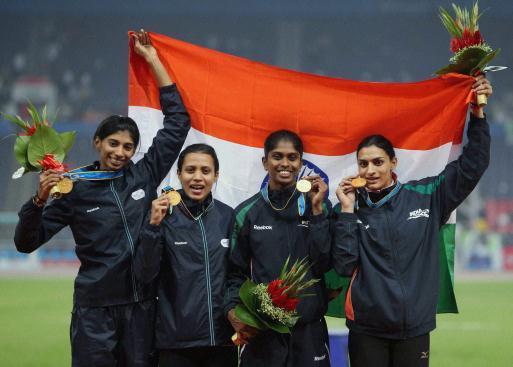
Mandeep Kaur (second from left), who ran an impressive third leg was part of that gold-winning quartet in the 2010 Guangzhou Games. File Photo / PTI

India continued their stranglehold in women’s 4x400m relay event in the Asian Games as its quartet ran a brilliant race to win the gold for the fourth time on the trot in Games record time in the 17th edition in Incheon on Thursday.

The quartet of Priyanka Panwar, Tintu Luka, Mandeep Kaur and M.R. Poovamma won an easy race in 3:28.68 to improve upon the earlier Games record of 3:29.02 which was also in the name of the gold-winning Indian team in 2010. This was the second gold for India from athletics after Seema Punia bagged the yellow metal in women’s discus throw.

Japan won the silver in 3:30.80 while China bagged the bronze in 3:32.02. The first lapper, Panwar was, however, lagging behind her Japanese counterpart but Luka, who won a silver in 800m race, ran a brilliant race to recover the loss ground for India.

India took a small lead after two laps before Mandeep widened the gap in the third lap after holding out a strong challenge from her Japanese counterpart. Poovamma, who won a bronze in 400m race, then anchored India to gold by blasting her way to the finishing line.

This was the fourth time India has bagged gold in women’s 4x400m relay in Asian Games as the country has been winning the event since the 2002 Busan Games.

Mandeep Kaur, who ran an impressive third leg was part of that gold-winning quartet in the 2010 Guangzhou Games.

source: http://www.thehindu.com / The Hindu / Home> Sport> Other Sports / PTI / Incheon – October 02nd, 2014

Expert panel gives go-ahead for power line; 50,000 trees in Kodagu forests will go

The figure is floated by green activists and is disputed by the authorities, though within the government agencies it varies from 2,247 to 21,000. The trees fall in the verdant forests of Kodagu and the activists could be close to the mark, admit official sources

KodaguTreeKF30sept2014

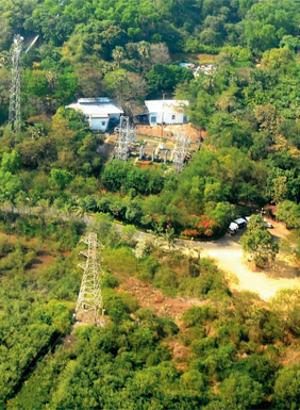
Protests and campaigns have come to a nought, and the axe is set to fall on over 50,000 trees in the evergreen deciduous forests of Kodagu with an expert panel giving its nod to the power line project meant to light up towns and villages in Kerala.

Terming the alternative routes proposed by the locals as technically and financially unfeasible, the three-member expert committee has given its go-ahead to the high power transmission line between Mysore and Kozhikode. Activists of the ‘Save Cauvery’ movement in Kodagu say the decision will ring the death knell for more than 50,000 trees.

While the Power Grid Corporation of India (PGCI) continued to maintain only 2,247 trees will be cut, deputy conservator of forests, Virajpet, has submitted an affidavit before the Green Tribunal in Chennai that a total of 21,000 trees will be felled along the alignment line proposed by PGCI. However, activists who have trekked the entire stretch using GPS coordinates argue that not less than 55,000 trees, both in private areas and on forest land, will face the axe.

Following widespread protests across Kodagu district over the large-scale clearance of forest and degradation to the fragile eco-system of the area, the state government had appointed a three-member expert committee to look into the issue and study the feasibility of possible alternative routes as proposed by the activists. The committee comprising noted elephant expert Prof Raman Sukumar of Indian Institute of Science (IISc) and Ajai Misra, Additional Principal Chief Conservator of Forests (APCCF) was headed by R S Shivakumara Aradhya of Central Power Research Institute (CPRI).

‘Other routes not feasible’

NGOs and activists had proposed alternative routes that would be less damaging to the eco-system, but the committee has stated in its report that these routes are not only detrimental to wildlife conservation, but require huge capital and are technically not feasible. According to the report, accessed by Bangalore Mirror, adopting other routes would require more forests to be cleared than what the present proposal will necessitate. Activists had suggested use of the D-line (District line dividing the two districts of Mysore and Wayanad in Kerala) passing via Nagarhole or the existing 220 KV line on the Kadakola-Kaniyampetta corridor for linking Karnataka with Kerala and Tamil Nadu in the South, besides upgrading the 110 KV corridor between Kasaragod and Mangalore.

“Alternative routes will destroy the Kodagu environment as a large number of trees will have to be cut, adversely affecting the Dubare-Devamachi reserve forest which has considerable presence of elephants and tigers. Using these routes will not only affect the tribal settlement inside forests, but also call for felling of trees in coffee estates which are part of Kodagu ‘s ecosystem. The paddy fields along the proposed line would become unfit for cultivation. The temperature of line conductors will affect coffee plants and affect the national forest policy, which envisages about 33 per cent forest and tree cover. Work in these areas would not only reduce inflow to Kaveri and its tributary Lakshmana Theertha, but also intensify the man-animal conflict,” the report said.

‘Existing lines are over-exploited’

On the prospects of using the existing corridors, the committee observed: “While the corridors are designed to carry a load of 130 MW to 140 MW, they have been used to transmit 180-200 MW of power regularly. Due to overloading, there already has been high sagging of conductors. Further, the ground clearance is low and there have been instances of elephants being subjected to fatal shocks. The Dasara elephant ‘Drona’ too had been a victim of this in the past. The existing 220 KV line runs North East-South West of Kabini for about 32 km of which 20 km is through Nagarhole forest; upgrading the line would only further disturb the ecology.”

‘Tunnelling will hit coffee estates’

Studying the feasibility of laying underground cables, the committee reported it would cost five to 20 times more than the cost of overhead transmission lines. “If the cable is laid, the ground above has to be cleared of vegetation and must be provided with access roads for maintenance. The cable has to be cooled by forced air or by way of circulating water. Further, the repair time is 25 times greater than that of overhead line repair,” the report states.

The experts clarified that laying a double circuit line along the D-line will require 130 hectares of dense tropical forest to be cleared. Besides, reactive power absorption devices have to be installed every eight to 10 km along the cable route; these sub-station-size structures requiring about 2,500 sq metres, the experts said.

‘Project crucial for Karnataka too’

Even though the line between Mysore and Kozhikode was planned under Kaiga Stage II for transferring the generated power from Kaiga to other places way back in 2007, work could not be taken up for several administrative and technical reasons. “Besides this project, there is absolutely no grid connectivity between Kerala and Karnataka. The proposed line, besides helping Kerala, will help us draw power from Koodankulam and other new stations planned along the Tamil Nadu coast. This Southern grid connectivity will help Karnataka harness more than 3,500 MW wind power generated in Tamil Nadu,” said a senior official from the energy department.

Referring to illegal clearance of forests in excess of what was permitted, the committee said, “The line route, proposed by the Power Grid Corporation, requires about 6,000 trees to be cut within a 12-km stretch of coffee plantations in Kodagu, in addition to the 2,247 trees (above 55 cm girth) already felled in that stretch.” Acknowledging clearance of forest for about 52 metres as against the permitted 46 metres along a four-km stretch, the experts suggested efforts to regenerate the natural vegetation in the stretch of land between the 46-52 metre width in Dubare and Devmachi reserved forests.” The committee has also directed the forest department to implement a conflict mitigation plan for preventing man-animal conflict in the area which will completely be funded by PGCI for a minimum of three years after completion of the project.

Reacting over the recommendations of the committee, power minister DK Shivakumar told BM, “The committee has given us a green signal to go ahead with the project. The activists, farmers have to understand this and must support the government by giving all the necessary help. There is tremendous pressure from the Centre to accomplish the project and it is more important from the energy security of the state in future. It helps us draw more and more power in a short duration time from the generating stations of Tamil Nadu. We are just waiting for the rains to stop and once the rains are officially ended, we will take up the work along the proposed corridor.”

source: http://www.bangaloremirror.com / Bangalore Mirror / Home> Bangalore> Cover Story / by Niranjan Kaggere, Bangalore Mirror Bureau / September 29th, 2014

Asian Games: M R Poovamma wins bronze in women’s 400m race

Silver medalist Vietnam's Quach Thi Lan, gold medalist Bahrain's Oluwakemi Adekoya and bronze medalist Poovamma Raju Machettira pose during the medal ceremony of women’s 400 m final at the 17th Asian Games in Incheon, South Korea.
Silver medalist Vietnam’s Quach Thi Lan, gold medalist Bahrain’s Oluwakemi Adekoya and bronze medalist Poovamma Raju Machettira pose during the medal ceremony of women’s 400 m final at the 17th Asian Games in Incheon, South Korea.

Incheon:

M R Poovamma bagged a bronze in women’s 400m race as India swelled their medal count from athletics competition to three at the Asian Games here on Sunday.

Poovamma clocked 52.36secs in the final race behind pre-match favourite Oluwakemi Adekoya (51.59secs) of Bahrain and Vietnam’s Thi Lan Quach (52.06secs) at the Inchon Asiad Main Stadium here.

24-year-old Poovamma, who was the second fastest off the block in the final today, could not touch her personal and season’s best of 51.73secs which she clocked at the National Inter-State Championships in Lucknow in June.

Thi Lan, the second worst off the block, overtook Poovamma to take the second place behind the Nigerian-born Bahrain runner, who is also the Asian season leader. The other Indian in the fray Mandeep Kaur finished sixth in the eight competitor field with a timing of 53.38 secs.

source: http://www.deccanchronicle.com / Deccan Chronicle / Home> Sports> Other Sports / PTI / September 28th, 2014

Hearth in heart

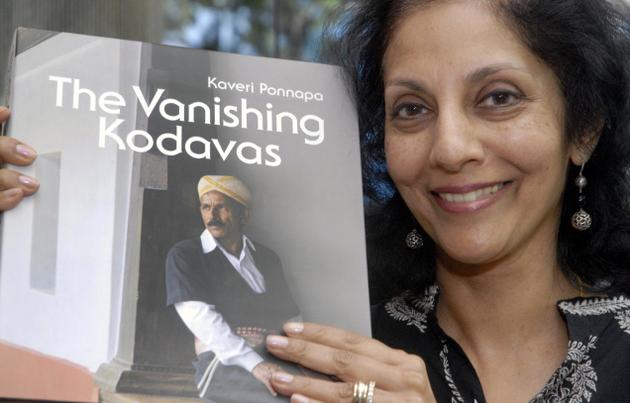
Author Kaveri Ponnapa stresses how we're all becoming a monoculture. Photo: V. Sreenivasa Murthy / The Hindu
Author Kaveri Ponnapa stresses how we’re all becoming a monoculture. Photo: V. Sreenivasa Murthy / The Hindu

Kaveri Ponnapa worries that her small community of Kodavas are slowly getting dissolved in the monoculture that the world is morphing into. She tells her book The Vanishing Kodavas could be the starting point to explore the people from the hills of Kodagu

So we sing.

Singing this song/ What do we gain?

If we sing with faith…

Planted vegetables will thrive/

And the baby in the cradle will live

This excerpt from a song of the Kodavas exemplifies the simplicity and beauty of the life of the Kodava community. It offers a whiff of the essence of the community — establishing its agrarian roots, its oral tradition, the questioning of what one gains in continuing a tradition, of the hope that its warrior people will flourish…

The song is one of the many lesser-known aspects of the Kodava people, that author Kaveri Ponnapa has recorded in her book, The Vanishing Kodavas. In popular culture, knowledge of the community is limited to facts such as they are good-looking people, valiant warriors with a phenomenal presence in the country’s armed forces and the place is home to beautiful hill stations, is where pandhi curry and bamboo-shoot pickle comes from.

Born and brought up outside Coorg, and having lived a large part of her life overseas, Kaveri was mesmerised by how “the presence of Coorg within me has been a constant part of my interior landscape”. That presence drew her back to her homeland, where right through childhood, she spent two months a year during summer vacation. “We all shift cities, countries, continents. We should look at ways to internalise culture and pass it on, carrying it within us,” is Kaveri’s hope for her people. Painstakingly researched over 15 years, the book goes deep into the community’s history, its grand houses, laws of the land, customs, worship, songs of the warriors, the forests and sacred landscapes, coffee, stories of its people.

Kaveri holds a masters in social anthropology from the School of Oriental and African Studies (SOAS) London. Even her thesis was on the culture of the Kodavas.

“After I shifted to Bangalore 16 years ago, I started visiting Coorg more often. It was a search to find what hold this place had on me. It became a quest for identity, exploring the unarticulated parts of you.” Slowly she started documenting festivals, ancestor propitiation ceremonies, whatever she witnessed in the villages of Coorg, and what came out of conversations with people on the rural areas. “I became conscious that the culture was vanishing and dwindling away.”

As she kept going back year after year, fewer people were attending annual celebrations with each passing year, older people in the community pointed out how youngsters weren’t learning their songs; how young men don’t know the ritual dances. “When I titled the book as ‘vanishing’, people from within the community too questioned me. It’s such irony that though numerically we are larger than we ever were, we are becoming like everybody else. Monoculture is a global problem. Just as there is a need for biodiversity for survival, so is it with people. Now with borders being porous, how are we going to continue looking at ourselves in new circumstances…that is the question,” she elaborates. The culture, which has been maintained in the living culture of the villages of Coorg, says Kaveri — “even there an erosion has taken place, with economics in play, and people moving away…”.

“Small cultures are well balanced with the environment. The link to land and agriculture anchored us to our culture. Now you have a dominance of the economy and tourism. While we were the prominent community in Coorg, we maintained equilibrium with other communities. There was great foresight among our forefathers to acknowledge that we can’t survive on our own,” says a passionate Kaveri.

The research that went into the book took Kaveri on a search for records. Official records, correspondence, colonial accounts, recorded history of the Rajahs of Kodagu… she sifted through them all. The book also has a detailed account of the Lingayat Rajahs and their council of Kodava chieftains and the role they played in the rise of the East India company in south India.

Finding archives was not easy, she admits. There were a few books from the early 20th century and gazetteers written by Missionaries from the then Britishadministered Coorg.

“The thing that really struck me is that the history of my people from manuals and gazetteers spans about the last 200 years, but we’ve been around 2,000 years. But the people had a definite sense of history that comes out in folk histories. I’ve interwoven these micro-histories into the book. Just because it wasn’t in a book doesn’t mean those events didn’t happen.”

She travelled alone into the villages, introduced herself, having the advantage of being an ‘insider’ to participate in ceremonies, got invited into ain manes (ancestral homes).

Some events, she went back to every year, sometimes seven years running! “It possessed me and sucked me in…I was no longer the writer,” observes Kaveri, who, incidentally chronicles oracles and spirit mediums in the Kodava community. At the end of it all, she had developed a great network.

Elders were forthcoming and gave permission to photograph intimate ceremonies related to everything from birth to death.

“Despite the photography being intrusive, I’m grateful to my community that they placed trust. Not one door was closed on me…so in that sense it’s not my book really.” So when the book was published in September this year, she launched it in Madikeri, Coorg, where 250 people from the villages turned up to look at the book they had made together. “What struck me was the great sense of dignity in their lives, the beauty of their lives and how they balanced between the hard times they have had. Despite being a warlike people, there was a tremendous sense of justice and fairness.”

“The book was a personal journey; despite both our families (hers and husband’s) being rooted in Coorg, we knew very few people in the villages…with education and going away, you tend to lose links,” she points out.

You definitely can’t dismiss it as a coffee table book laden with fantabulous pictures, though it can also be seen that way. “For the non-reader who would want to just look at the pictures, we put in detailed captions that should make you go back to the text. This is to bring in the younger generation, yet retain the depth of the work.”

You can find details on the book, of more than 350 pages and 300 images, and place orders from www.thevanishingkodavas. com or www.coorg.com.

Proceeds from the sale of the book, priced at Rs. 7,500 will be donated to the Coorg Education Fund.

source: http://www.thehindu.com / The Hindu / Home> Books> Authors / by Bhumika K / December 19th, 2014

2013 was a year of joy, sorrow for Kodagu

Kodagu district witnessed a series of incidents in the year 2013 that has bygone. The year brought joy and sorrow to the district, however a keen look into the year reveals that the district witnessed more negative events than the positive ones.

From the heavy rainfall that proved disasterous to the district, to the reports under the guise of conservation of environment creating ripple in the society, the district has seen it all. It was also a year of protest, as there were repeated protests opposing Madhav Gadgil report and Kasturirangan report on conservation of Western Ghats, demand for title deeds to tribal, demand for relaxing the law on possession of weapons, protest seeking autonomy status to Kodagu.

Of all the events, the rain fury leading to major damage across the district, occupies the first place in the list of events. Coffee growers and agriculturists incurred crores of rupees loss due to rain. Six persons and 30 cattle lost their lives. The district administration had submitted a report to a study team from the Central government estimating the rain loss at Rs 86 crore.

The district witnessed a success in the form of amendment to the Land Revenue Act, 1964, scrapping the tax imposed on Jumma Bane land. Unfortunately, despite the amendment, people complain that the revenue department officials have failed to implement the Act effectively.

The presence of Maoist activities which was felt in the end of 2012, continued even in 2013. Maoist activities were noticed in Madikeri, Virajpet and Somwarpet taluks. In this backdrop, the government has decided to set up an Anti Naxal Force camp in Kutta.

For the first time in the history, Talacauvery – Bhangadeshwara temple management committee offered ‘Annadana’ for a period of one month from October 17 to November 16 as a part of Tulasankramana.

Despite the disputes that prevailed in offering ‘Annadana’ right to private organisation, ‘Annadana’ was offered, thanks to the efforts by Deputy Commissioner Anurag Tiwari who strove hard to co-ordinate between the temple committee and Kodagu Ekikarana Ranga.

source: http://www.deccanherald.com / Deccan Herald / Home> District / by Shrikanth Kallammanavar / Madikeri, DHNS – December 31st, 2013

The Tamara Coorg wins ‘Best Luxury Honeymoon Resort in India’

TamaraCoorgKF22sept2014

The Tamara Coorg won the award for ‘Best Luxury Honeymoon Resort in India’ at the Service Excellence Awards 2014 organised by Brands Academy recently.

Established as a celebration of unmatched excellence, Service Excellence Awards honour the doers and pioneers of the service industry. World-renowned chess champion, Vishwanathan Anand, presented the awards at a gala ceremony held in Mumbai, India.

Senthil Kumar, CEO, The Tamara Coorg, attributed the resort’s successes to its dedicated staff and world-class standards. “We are honoured to win this award and be recognised for our services. We strive to not only maintain our standards but to continue to exceed our guest’s expectations in the wonderful journey that lies ahead of us,” he said.

source: http://www.hospitalitybizindia.com / HospitalityBizIndia.com / Home> Newstrack / by HBI Staff, Mumbai / Monday – June 09th, 2014

From berry to brew…

CoffeeKODAGU21sept2014
Coffee was once a closely guarded Arabian secret until Baba Budan, a Sufi mystic, smuggled seven beans from Yemen and scattered them on the hills of Chikmagalur, from where it spread to the rest of India…Anurag Mallick and Priya Ganapathy spill the beans on the story of coffee, the world’s most popular brew.

It was Napoleon Bonaparte who once grandly announced, “I would rather suffer with coffee than be senseless.” Sir James MacKintosh, 18th century philosopher, famously said, “The powers of a man’s mind are directly proportional to the quantity of coffee he drank.” In The Love Song of J Alfred Prufrock, when T S Eliot revealed, “I have measured out my life with coffee spoons,” he hinted at the monotony of socialising and the coffee mania of the 1900s. German musical genius J S Bach composed the ‘Coffee Cantata’ celebrating the delights of coffee at a time when the brew was prohibited for women.

“If I couldn’t, three times a day, be allowed to drink my little cup of coffee, in my anguish I will turn into a shriveled-up roast goat,” cried the female protagonist! French author Honoré de Balzac wrote the essay ‘The Pleasures and Pains of Coffee’ to explain his obsession, before dying of caffeine poisoning at 51. Like Voltaire, he supposedly drank 50 cups a day! So, what was it about coffee that inspired poets, musicians and statesmen alike?

Out of Africa

Long before coffee houses around the world resounded with intellectual debate, business deals and schmoozing, the ancestors of the nomadic Galla warrior tribes of Ethiopia had been gathering ripe coffee berries, grinding them into a pulp, mixing it with animal fat and rolling them into small balls that were stored in leather bags and consumed during war parties as a convenient solution to hunger and exhaustion! Wine merchant and scientific explorer James Bruce wrote in his book Travels to Discover the Source of the Nile that “One of these balls they (the Gallas) claim will support them for a whole day… better than a loaf of bread or a meal of meat, because it cheers their spirits as well as feeds them”. Other African tribes cooked the berries as porridge or drank a wine prepared from the fermented fruit and skin blended in cold water.

Historically, the origins of the coffee bean, though undated, lie in the indigenous trees that once grew wild in the Ethiopian highlands of East Africa. Stories of its invigorating qualities began to waft in the winds of trade towards Egypt, North Africa, the Middle East, Persia and Turkey by the 16th Century. The chronicles of Venetian traveller Gianfrancesco Morosini at the coffee houses of Constantinople in 1585 provided Europeans with one of the foremost written records of coffee drinking. He noted how the people ‘are in the habit of drinking in public in shops and in the streets — a black liquid, boiling as they can stand it, which is extracted from a seed they call Caveè… and is said to have the property of keeping a man awake.’

It was only a matter of time before the exotic flavours of this intoxicating beverage captured the imagination of Europe, prompting colonial powers like the Dutch, French and the British to spread its cultivation in the East Indies and the Americas. Enterprising Dutch traders explored coffee cultivation and trading way back in 1614 and two years later, a coffee plant was smuggled from Mocha to Holland. By 1658, the Dutch commenced coffee cultivation in Ceylon (Sri Lanka). The word ‘coffee’ is apparently derived from qahwah (or kahveh in Turkish), the Arabic term for wine. Both the terms bear uncanny similarity to present day expressions — French café, Italian caffè, English coffee, Dutch koffie or even our very own South Indian kaapi. A few scholars attribute ‘coffee’ to its African origins and the town of Kaffa in Ethiopia, formerly known as Abyssinia. However, the plant owes its name “Coffea Arabica” to Arabia, for it was the Arabs who introduced it to the rest of the world via trade.

As all stories of good brews go, coffee too was discovered by accident. Legends recount how sometime around the 6th or 7th century, Kaldi, an Ethiopian goatherd, observed that his goats became rather spirited and pranced after they chewed on some red berries growing in wild bushes. He tried a few berries and felt a similar euphoria. Excited by its effects, Kaldi clutched a handful of berries and ran to a nearby monastery to share his discovery with a monk. When the monk pooh-poohed its benefits and flung the berries into the fire, an irresistible intense aroma rose from the flames. The roasted beans were quickly salvaged from the embers, powdered and stirred in hot water to yield the first cup of pure coffee! This story finds mention in what is considered to be one of the earliest treatises on coffee, De Saluberrima Cahue seu Café nuncupata Discurscus, written by Antoine Faustus Nairon, a Roman professor of Oriental languages, published in 1671.

Flavours from Arabia

Coffee drinking has also been documented in the Sufi monasteries of Yemen in South Arabia. Arabic manuscripts dating back to the 10th Century mention the use of coffee. Mocha, the main port city of Yemen, was a major marketplace for coffee in the 15th century. Even today, the term ‘mocha’ is synonymous with good coffee. Like tea and cocoa, coffee was a precious commodity that brought in plenty of revenue. Hence, it remained a closely guarded secret in the Arab world. The berries were forbidden to leave the country unless they had been steeped in boiling water or scorched to prevent its germination on other lands.

In 1453, the Ottoman Turks brought coffee to Constantinople, and the world’s first coffee shop Kiva Han opened for business. As its popularity grew, coffee also faced other threats. The psychoactive and intoxicating effects of caffeine lured menfolk to spend hours at public coffee houses drinking the brew and smoking hookahs, which incited the wrath of orthodox imams of Mecca and Cairo. As per sharia law, a ban was imposed on coffee consumption in 1511. The Grand Mufti Mehmet Ebussuud el Imadi was hailed when he issued a fatwa allowing the consumption of coffee, by order of the Ottoman Turkish Sultan Selim I in 1524.

Though subsequent bans were re-imposed and lifted at various points of time according to the whims of religious politics and power, coffee pots managed to stay constantly on the boil in secret, or in the open, for those desirous of its potent influence. Given the fact that Sufi saints advocated its uses in night-time devotions and dervishes and Pope Clement VIII even baptised the bean to ward off the ill-effects of what was regarded by the Vatican as ‘Satan’s drink’ and the ‘Devil’s Mixture of the Islamic Infidels’ till the 1500s, it is easy to see why coffee is nothing short of a religion to some people.

Coffee enters India & beyond

Surprisingly, India’s saga with coffee began in 1670 when a Muslim mystic, Hazrat Dada Hyat Mir Qalandar, popularly known as Baba Budan, smuggled seven beans from Arabia and planted them on a hillock in the Chikmagalur district of Karnataka. The hills were later named Baba Budan Giri in his memory. From here, coffee spread like bushfire across the hilly tracts of South India.

In 1696, Adrian van Ommen, the Commander at Malabar, followed orders from Amsterdam and sent off a shipment of coffee plants from Kannur to the island of Java. The plants did not survive due to an earthquake and flood but the Dutch pursued their dream of growing coffee in the East Indies with another import from Malabar. In 1706, the Dutch succeeded and sent the first samples of Java coffee to Amsterdam’s botanical gardens from where it made further inroads into private conservatories across Europe. Not wishing to be left behind, the French began negotiating with Amsterdam to lay their hands on a coffee tree that could change their fortunes. In 1714, a plant was sent to Louis XIV who gave it promptly to the Jardin des Plantes at Paris for experimentation. The same tree became the propagator of most of the coffees in the French colonies, including those of South America, Central America and Mexico.

The importance of coffee in everyday life can be gauged by the fact that its yield forms the economic mainstay of several countries across the world; its monetary worth among natural commodities beaten only by oil! It was only in 1840 that the British got into coffee cultivation in India and spread it beyond the domain of the Baba Budan hills.

Arabica vs Robusta

Kodagu and Chikmagalur are undoubtedly the best places to know your Arabica from your Robusta and any planter worth his beans will trace coffee’s glorious history with pride. The strain that Baba Budan got was Coffea arabica and because of its arid origins, it thrived on late rainfall. Despite its rich taste and pleasing aroma, the effort required to cultivate it dented its popularity. The high-altitude shrub required a lot of tending, was susceptible to pests, and ripe Arabica cherries tended to fall off and rot. Careful monitoring at regular intervals affected production cost and profitability.

Till 1850, Arabica was the most sought-after coffee bean in the world and the discovery of Robusta in Belgian Congo did little to change that. Robusta (Coffea canephora), recognised as a species of coffee only as recently as 1897, lived up to its name. Its broad leaves handled heavy rainfall much better and the robust plant was more disease-resistant. The cherries required less care as they remained on the tree even after ripening. Its beans had twice the caffeine of Arabica, though less flavour, which was no match for the intense Arabica. It was perceived as so bland that the New York Coffee Exchange banned Robusta trade in 1912, calling it ‘a practically worthless bean’!

But in today’s new market economy, the inexpensive Robusta makes more commercial sense and is favoured for its good blending quality. Chicory, a root extract, was an additive that was introduced during the Great Depression to combat economic crisis that affected coffee. It added more body to the coffee grounds and enhanced the taste of coffee with a dash of bitterness. Though over 30 species of coffee are found in the world, Arabica and Robusta constitute the major chunk of commercial beans in the world. ‘Filter kaapi’ or coffee blended with chicory holds a huge chunk of the Indian market. Plantations started with Arabica, toyed with Liberica, experimented with monkey parchment and even Civet Cat coffee (like the Indonesian Luwak Kopi — the finest berries eaten by the civet cat that acquire a unique flavour after passing through its intestinal tract), but the bulk of India’s coffee is Robusta.

As the coffee beans found their way from the hilly slopes of the Western Ghats to the ports on India’s Western Coast to be shipped to Europe, a strange thing happened. While being transported by sea during the monsoon months, the humidity and winds caused the green coffee beans to ripen to a pale yellow. The beans would swell up and lose the original acidity, resulting in a smooth brew that was milder. This characteristic mellowing was called ‘monsooning’. And thus was born Monsooned Malabar Coffee.

Kodagu, India’s Coffee County

Currently, Coorg is the largest coffee-growing district in India, and contributes 80% of Karnataka’s coffee export. It was Captain Lehardy, first Superintendent of Kodagu, who was responsible for promoting coffee cultivation in Coorg. Jungles were cleared and coffee plantations were started. In 1854, Mr Fowler, the first European planter to set foot in Coorg, started the first estate in Madikeri, followed by Mr Fennel’s Wooligoly Estate near Sunticoppa. The next year, one more estate in Madikeri was set up by Mr Mann. In 1856, Mr Maxwell and Mcpherson followed, with the Balecadoo estate. Soon, 70,000 acres of land had been planted with coffee. A Planters Association came into existence as early as 1863, which even proposed starting a Tonga Dak Company for communication. By 1870, there were 134 British-owned estates in Kodagu.

Braving ghat roads, torrid monsoons, wild elephants, bloodthirsty leeches, hard plantation life and diseases like malaria, many English planters made Coorg their temporary home. Perhaps no account of Coorg can be complete without mentioning Ivor Bull. Along with District Magistrate Dewan Bahadur Ketolira Chengappa, the enterprising English planter helped set up the Indian Coffee Cess Committee in 1920s and enabled all British-run estates to form a private consortium called Consolidated Coffee. In 1936, the Indian Cess Committee aided the creation of the Indian Coffee Board and sparked the birth of the celebrated India Coffee House chain, later run by worker co-operatives. With its liveried staff and old world charm, it spawned a coffee revolution across the subcontinent that has lasted for decades.

Connoisseurs say Coorg’s shade grown coffee has the perfect aroma; others ascribe its unique taste to the climatic conditions and a phenomenon called Blossom Showers, the light rain in April that triggers the flowering of plants. The burst of snowy white coffee blossoms rends the air thick with a sensual jasmine-like fragrance. Soon, they sprout into green berries that turn ruby red and finally dark maroon when fully ripe. This is followed by the coffee-picking season where farm hands pluck the berries, sort them and measure the sacks at the end of the day under the watchful eye of the estate manager.

The berries are dried in the sun till their outer layers wither away; coffee in this form is called ‘native’ or parchment. The red berries are taken to a Pulp House, usually near a water source, where they are pulped. After the curing process, the coffee bean is roasted and ground and eventually makes its journey to its final destination — a steaming cup of bittersweet brew that you hold in your hands.

The ‘kaapi’ trail

In India, coffee cultivation is concentrated around the Western Ghats, which forms the lifeline for this shrub. The districts of Coorg, Chikmagalur and Hassan in Karnataka, the Malabar region of Kerala, and the hill slopes of Nilgiris, Yercaud, Valparai and Kodaikanal in Tamil Nadu account for the bulk of India’s coffee produce. With 3,20,000 MT each year, India is the 6th largest coffee producer in the world.

Recent initiatives to increase coffee consumption in the international and domestic market prompted the Coffee Board, the Bangalore International Airport and tour operator Thomas Cook to come together and organize coffee festivals and unique holiday packages like The Kaapi Trail to showcase premium coffees of South India. Coffee growing regions like Coorg, Chikmagalur, B R Hills, Araku Valley, Nilgiris, Shevaroy Hills, Travancore, Nelliyampathy and Palani Hills are involved in a tourism project that blends leisure, adventure, heritage and plantation life.

At the Coffee Museum in Chikmagalur, visitors can trace the entire lifecycle of coffee from berry to cup. In Coorg and Malnad, besides homestays, go on Coffee Estate holidays with Tata’s Plantation Trails at lovely bungalows like Arabidacool, Woshully and Thaneerhulla…
The perfect cuppa

Making a good cup of filter coffee traditionally involves loading freshly ground coffee in the upper perforated section of a coffee filter. About 2 tbs heaps can serve 6 cups. Hot water is poured over the stemmed disc and the lid is covered and left to stand. The decoction collected through a natural dripping process takes about 45 minutes and gradually releases the coffee oils and soluble coffee compounds. South Indian brews are stronger than the Western drip-style coffee because of the chicory content. Mix 2-3 tbs of decoction with sugar, add hot milk to the whole mixture and blend it by pouring it back and forth between two containers to aerate the brew.

Some places and brands of coffee have etched a name for themselves in the world of coffee for the manner in which coffee is made. The strength of South Indian Filter coffee or kaapi (traditionally served in a tumbler and bowl to cool it down), the purity of Kumbakonam Degree Coffee, the skill of local baristas in preparing Ribbon or Metre coffee by stretching the stream of coffee between two containers without spilling a drop… have all contributed to the evolution of coffee preparation into an art form.

With coffee bars and cafes flooding the market and big names like Starbucks, Costa, Barista, Gloria Jean’s, The Coffee Bean, Tim Horton’s and Café Coffee Day filling the lanes and malls in India along with local coffee joints like Hatti Kaapi jostling for space, it’s hard to escape the tantalising aroma of freshly brewed coffee. And to add more drama to the complexities of coffee, you can choose from a host of speciality coffees from your backyard — Indian Kathlekhan Superior and Mysore Nuggets Extra Bold, or faraway lands — Irish coffee and cappuccino (from the colour of the cloaks of the Capuchin monks in Italy) or Costa Rican Tarrazu, Colombian Supremo, Ethiopian Sidamo and Guatemala Antigua. And you can customise it as espresso, latte, mocha, mochachino, macchiato, decaf… Coffee is just not the same simple thing that the dancing goats of Ethiopia once enjoyed.

source: http://www.deccanherald.com / Deccan Herald / Home> Supplements> Sunday Herald / September 21st, 2014
Guest house in memory of State’s first IGP planned

It will come up at an estimated cost of Rs. 25 lakh

Kodagu District Retired Police Officers’ Association has mooted the idea

They want CMC to name a road after

Pemmanda K. Monnappa

Madikeri:

The president of the Kodagu District Retired Police Officers’ Welfare Association, M.A. Appaiah, said here on Tuesday that a guest house in memory of the State’s first Inspector-General of Police, Pemmanda K. Monnappa, would be built near the Maitri Police Community Hall here at an estimated cost of Rs. 25 lakh.

Pemmanda K. Monnappa had served as the Commissioner of Police of the old Madras province. Later, he became the first Inspector General of Police, Karnataka (the then Mysore State), under the S. Nijalingappa government.

Funds

Mr. Appaiah, a retired Superintendent of Police, told presspersons that the guest house would be called ‘Swabhimana’. While some amount was being contributed by the Police Department in the form of grants, the rest would be mobilised through donations, Mr. Appaiah said.

Other cities

Memorials have been built in Mr. Monnappa’s memory in Chennai and Hyderabad. In Karnataka, it was the retired police officers’ idea to construct a guest house, Mr. Appaiah said. The association proposes to urge the Madikeri City Municipal Council (CMC) to name the road branching off from the College Road, near the Maitri Police Community Hall, leading towards the Subramanyanagar area, after Mr. Monnappa.

Career details

Pemmanda S. Ganapathi, a senior member of the Pemmanda family, recalled the services of Mr. Monnappa, who belonged to the Indian Police (IP) cadre. He had served in the Malabar area in Kerala and as the Superintendent of Police in Kurnool and Guntur in Andhra Pradesh. Mr. Monnappa then became the Commissioner of Police in Madras.

Milestone

Mr. Monnappa was instrumental in suppressing the Razakars rebellion in Andhra Pradesh as the Inspector-General of Police, Mr. Ganapathi said. The then Union Home Minister, Sardar Vallabbhai Patel, had chosen Mr. Monnappa to quell the mutiny in Hyderabad.

Recognition

After the reorganisation of the States in the country in 1956, Mr. Monnappa came back to the State, which was then called the Mysore State, to become the first Inspector General of Police, during the reign of S. Nijalingappa.

The British government, in recognition of Mr. Monnappa’s meritorious service, conferred on him the titles: ‘Rao Saheb’ and ‘Rao Bahadur’. He retired from service in the year 1958.

Mr. Monnappa’s son retired from service as a senior IAS officer and has now settled in Chennai.

Members of the Association, B.D. Mandappa, B.A. Poonacha, Y.D. Keshavananda, A.A. Appanna, A.B. Devaiah, A.M. Balakrishna, K.B. Belliappa and M. Achutan Nair, were present.

source: http://www.thehindu.com / The Hindu / Home> National> Karnataka / by Staff Correspondent / October 01st, 2008

Rohan Bopanna to be honoured with Davis Cup Commitment Award

Indian tennis player Rohan Bopanna during a practice session ahead of Davis Cup 2014 in Bangalore on Sept 8, 2014. (Photo: IANS)

Bangalore :

Indian tennis player Rohan Bopanna will be presented the Davis Cup Commitment Award during the World Group play-off tie against Serbia which begins here tomorrow. The International Tennis Federation (ITF) will present the Awards through its national associations during the Davis Cup World Group and Zone Group matches on Saturday.

Former Grand Slam champions Lleyton Hewitt of Australia and Gustavo Kuerten of Brazil will also be awarded after their respective games. ”The Davis Cup Commitment Award reflects the dedication by players for more than a century to represent their country in this prestigious competition. These players have continued to rise to the unique challenge of competing in a team environment in front of their home fans, and we believe that it is fitting to recognise their efforts,” said ITF President Francesco Ricci Bitti.

List of players to be awarded: Australia: Lleyton Hewitt, Brazil: Carlos Kirmayr, Gustavo Kuerten, Luiz Mattar, Cassio Motta, Jaime Oncins, Canada: Frank Dancevic, Chinese Taipei: Ti Chen, France: Pierre Darmon, India: Rohan Bopanna Romania: Victor Hanescu, Russia: Andrei Chesnokov, Andrei Olhovskiy, Thailand: Sanchai Ratiwatana, Sonchat Ratiwatana, Danai Udomchoke, Ukraine: Sergiy Stakhovsky.

source:http://www.india.com / India.com / Home> Sports / by Press Trust of India / September 11th, 2014