Category Archives: Records, All

Joshna, Dipika honoured

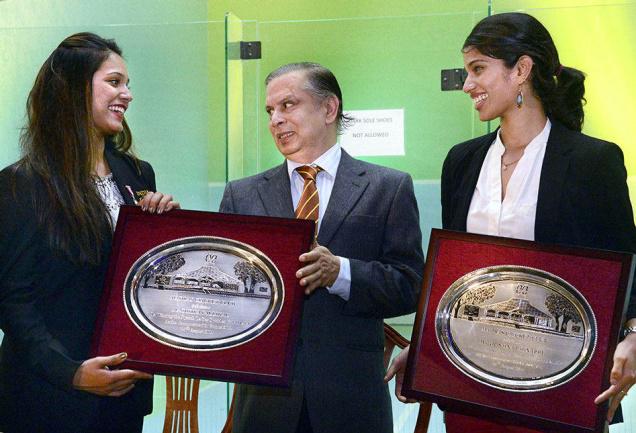
Dipika Pallikal and Joshna Chinappa being felicitated by MCC President Ajit Kumbhat. Photo : M.Vedhan

Madras Cricket Club (MCC) on Saturday honoured two of its “own children” — Joshna Chinappa and Dipika Pallikal — for having won the squash doubles gold at the Glasgow Commonwealth Games.

MCC president Ajit Kumbhat, hailed Joshna and Dipika as “role models for future generations.”

Tamil Nadu Squash Rackets Association founder member Dr. Ravi Santosham described the duo as “world champions”. Also, Joshna’s comeback from a grave knee surgery a few years ago was the stuff of legends, he said.

Former men’s National squash champion Ali Ispahani urged Joshna and Dipika “to stay out of the country for eight months (in a year)” if they wished to succeed. “If they stay out of India (and practice abroad) they can reach the top 5 (in the world),” he said. The day is not far off when the “girls from our club” will become world champions, he added.

The Hindu Sports Editor Nirmal Shekar said the growth of squash had a lot do with “N. Ramachandran (World Squash Federation president) and clubs like MCC.” He added: “they (Joshna & Dipika) will be right on top (in world rankings) in the next few years.”

Former World women’s champion Sarah Fitz-Gerald, now coach of Dipika, said both the players had “the ability to go higher.”

source: http://www.thehindu.com / The Hindu / Home> Sport> Other Sports / by Special Correspondent / Chennai – August 31st, 2014

Pages from history : Musings on Victoria Gowramma

By Prof. A.V. Narasimha Murthy, former Head, Department of Ancient History & Archaeology, University of Mysore

Victoria Gowramma is an enchanting but a perplexing name as it is a curious combination of western culture represented by Victoria and Hindu culture symbolised in Gowramma. In fact, an old fashioned and devoted Hindu woman with traditional virtues is referred to as Gowramma. Actually Gowri is Parvathy, the consort of Shiva. Slowly the name Gowramma is vanishing from Hindu household in preference to more modern names. However, that name still persists among the Kodavas.

I was re-reading D.N. Krishnayya’s book Kodagina Itihasa (History of Kodagu) in Kannada. It is a good book and reads like a novel but gives authentic history of Coorg. He has devoted many pages for sketching the life of Gowramma. In fact, C.P. Belliappa has made a special research on the charming lady and has written a book titled Victoria Gowramma: The Lost Princess of Coorg, which I have not been able to read unfortunately. Further he has taken the trouble in exploring and locating her cemetery at Brompton in South-West London. Thus Belliappa has given a new lease of life in history to this extraordinary Princess of Coorg and has added a new chapter to the history of Coorg. K.B. Ganapathy has also written about her in his book ‘The Cross and the Coorgs’ and its Kannada version Kodagina Mele Shilubeya Neralu. All these books are useful in understanding the personality of this Princess who passed away when she was just 23 years (1841-63).

Victoria Gowramma was the daughter of Kodagu King Chikka Veerarajendra Odeya, son and successor of King Lingarajendra. He was just 17 years when he became the king and due to bad company he became a cruel and autocratic king and people of Coorg cursed him to the maximum but were scared of him to raise their voice. Killing people when he did not like them or those who did not toe his line had become a daily affair without any mercy. A low class person by name Kunta Basava, who was looking after the Palace dogs rose to the position of a Dewan of the State and encouraged the King in all his atrocious acts. Added to it, he had a strong weakness for women and as soon as he saw a charming woman, he would get her into his harem. The British warned him but he ignored their advice. Finally he submitted himself to the British and became a prisoner in his Palace. He was first taken to Vellore and finally to Kashi where he was kept as a State prisoner. He requested the British government to permit him to take his dear daughter Gowramma with him to England and the British permitted him.

Thus Princess Gowramma went with her father and reached England in March 1852. The deposed King and Gowramma were given a rousing reception at London and Veerarajendra was actively participating in social life of London along with his daughter Gowramma. Suddenly he thought of her future after his own death and wrote a letter to Queen Victoria, requesting her to take Gowramma under her protection and convert her to Christianity and give proper education to her. The queen was very happy and Gowramma was converted to Christianity in Windsor Castle church by Canterbury Archbishop.

Queen Victoria became her guardian and gave her the name Victoria Gowramma. Chikka Veerarajendra was also present on that occasion and he expressed his gratefulness to the queen. The responsibility of her protection and education was entrusted to Major Drummond and his wife. As they did not look after her properly, she was sent to Lady Login and Sir John Login who were proficient in Hindustani. She was not encouraged to meet her father frequently and was allowed to meet him on special occasions only. Gowramma had forgotten Hindustani and Veerarajendra did not know English and hence the father and daughter talked to each other through a bilingual interpreter. Most of the time Veerarajendra was weeping whenever he met his daughter and thought that he was responsible for her plight under the British but it was too late. He became sick and when she came to meet him, he handed over a bag to her which contained a large number of precious stones and rich ornaments and asked her to wear them. Both of them cried.

Veerarajendra died in 1859 in London but Gowramma could not go to the funeral as she was living in White Island, far away from London.

His body was kept in Kansal Green Cemetery and after two years the body was brought to Calcutta through a ship. From there it was taken by road to Kashi and was buried there as per the rituals of Veerashaiva community and a tomb was built over it. The expenditure for all this was Rs. 2500 and the British government sanctioned this amount. When he died he had cash and valuables worth around rupees four lakhs and it was distributed among his relatives. Nothing was claimed by Gowramma as she was under the protection of the queen herself.

Gowramma was under the protection of Mrs. Drummond. The latter had two daughters who were active and were going to school. But Gowramma was always inactive and had no interest in learning. Hence she was being treated badly by the family. She felt that under the influence of Gowramma, her two daughters also may get spoilt and requested the queen to relieve her family from the responsibility of Gowramma. Then Gowramma was entrusted to another European woman by name Lady Login. She had a good knowledge of India, and also had the responsibility of looking after Dilip Singh. He was the first King to be converted to Christianity whereas Gowramma was the first woman to get converted.

As part of the ritual, the queen wanted her to go to Italy. The queen had sent an expensive diamond ear-ring and necklace of pearls and asked her to lead a life acceptable to God. Veerarajendra who was present on the occasion was happy at this gesture. Then Gowramma was taken to Italy (Vatican) by Lady Login and the new climate made her healthy and enthusiastic, regarding the royal life. Though some people tried to get her married to Dilip Singh, the latter did not agree as Gowramma did not come up to his expectations.

Then Gowramma came to England along with Lady Login. The latter wanted to be relieved of the responsibility of Gowramma and she was put under the care of Lady Katharine Harcourt. But the latter put Gowramma under a Junior Governess and Gowramma did not like that. Then she was put under the care of Sir James Wirhog. At that time Colonel Campbell used to visit her house. He was a young widower and showed great interest in Gowramma. They were married and they had a female child who was given the name Edith Victoria Gowramma. Campbell and Gowramma enjoyed fairly good life, visited many places and took part in royal festivals and parties. The queen was very happy and ordered that there should be no deficiency in providing funds and amenities to Campbell and Gowramma. Thus everything looked wonderful to the couple.

Gradually her tuberculosis was becoming severe. Queen Victoria made all arrangements to get her the best medical help. But the medicines did not help and finally she died in 1864 (March 30) when she was just 23 years. As per the desire of the queen her body was buried in Brampton Cemetery in London and an epitaph was carved on the marble stone as follows:

“Sacred to the memory of Princess Victoria Gowramma, daughter of ex-Raja of Coorg, the beloved wife of Lt. Colonel Campbell. Born in India, July 4th 1841, she was brought early in life to England, baptised into the Christian faith under the immediate care and protection of queen Victoria who stood sponsor to her. She died on 30th March 1864.”

After her death, her daughter married Captain Yardley and had a son who died in a road accident. Thus ended the family of Victoria Gowramma. Now she has entered the pages of history, the ultimate of everyone including kings, queens and princesses. But there is something melancholic in her life which makes us to have a soft corner for her. That is the greatness of Victoria Gowramma.

source: http://www.starofmysore.com / Star of Mysore / Home> Feature Articles / August 30th, 2014

Seeking to preserve Kodagu’s ainmanes

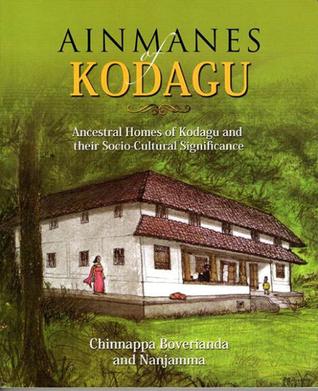
AinmanesKODAGU31aug2014

The much-awaited book on ‘Ainmanes of Kodagu’ (ancestral homes), authored by researcher-couple Boverianda Chinnappa and Nanjamma Chinnappa has hit the stands.

The book was written after extensive fieldwork in Kodagu district (Coorg) of Karnataka, to record for posterity the way of life that the culturally-rich ainmanes symbolise.

Speaking to The Hindu, P.T. Bopanna, journalist, who runs Kodagu’s first news portal www.coorgtourisminfo.com, said according to the researcher couple, the book is unique as it traces the origins and antiquity of the ancestral homes of all the native communities of Kodagu.

“It also describes the social and cultural significance of these ancestral homes, which are important elements of the rich heritage of the native communities of this area,” he said.

An ainmane has a verandah, with carved square wooden pillars tapering upwards and wooden seats between the pillars, ornately carved windows and door frames, and specific areas within the ainmane for the performance of rituals.

A ‘functional’ ainmane is where all the members of the okka (patrilineal clan) gather to celebrate important family rituals and ceremonies.

The book describes the ainmanes of the native communities in Kodagu (Coorg) and their socio-cultural significance.

Ainmanes are architectural symbols that bear testimony to the strength and vitality of the okkas of Kodagu.

According to the authors, the ainmanes that are still standing today account for only about 40 per cent of the original number that existed in Kodagu.

Many of them are dilapidated; others have been converted into simple homes. The Chinnappas expressed their apprehension that if this trend continues, these heritage buildings and the unique traditions, customs, festivals and rituals that are associated with them will probably vanish in the not too distant future. If they vanish, so will the heritage of the people, their way of life, they add.

The authors have said their aim is to raise awareness of the cultural significance of the ainmanes of Kodagu and encourage efforts to maintain and preserve these heritage buildings for generations to come.

The cover illustration for the book is by noted cartoonist, Nadikerianda Ponnappa.

The book has been published by Niyogi Books, Delhi. The work on the website www.ainmanes.com is in progress.

source: http://www.thehindu.com / The Hindu / Home> News> National> Karnataka / K. Jeevan Chinnappa / Bangalore – August 23rd, 2014

Kodagu Trees Are Source of Data for Researchers

Bangalore :

Three thousand trees in parts of Kodagu are helping forest ecology studies by providing experimental evidence for various research projects.

The trees are being studied to understand how they adapt to changes in rainfall, temperature and duration of the rainy season.

This data is part of a bigger project in which tree responses to changing climates are being measured to gauge how trees react to changing weather parameters.

The trees are on two 30-hectare sample plots set up by the Forest Department in collaboration with the French Institute of Pondicherry (FIP), in low-lying wet evergreen forests in Kadamakkal reserve forest.

“My colleagues and I have found that the amount of rainfall has decreased in the last 100 years and that is why there has been less growth of tree species,” said Dr B R Ramesh, faculty at French Institute of Pondicherry.

The researchers are measuring the girth of the trees using a stainless steel tape and a Vernier scale to record their growth patterns in different climatic conditions.

Their work also focuses on long-term ecological monitoring of forests, the use of new remote-sensing data and techniques to predict biomass and structure, modelling distribution of species and biodiversity and making databases with the available information.

“New research lines are also being developed that explore the effects of landscape change on ecosystem services and potential climate change impacts on forest vegetation,” Dr Ramesh added.

These experts have also explored the environmental and social impact of restitution of tree rights to coffee planters, the Western Ghats acting as a water sink and the loss of forest cover and the extent of biodiversity in the Ghats.

Dr Ramesh and his colleagues, Dr S Prasad and Dr Anupama K, have also developed an app called Biotik which can be used to identify 600 tree species in the Western Ghats.

source: http://www.newindianexpress.com / The New Indian Express / Home> States> Karnataka / by Papiya Bhattacharya / August 19th, 2014

Rohan Bopanna rises to Ice Bucket Challenge

Bangalore :

After Mark Zuckerberg, Bill Gates, Cristiano Ronaldo and Oprah Winfrey, I-League champions Bengaluru FC and doubles ace Rohan Bopanna have taken up the Ice Bucket Challenge, which has gone viral on social media.

The challenge involves participants dumping a bucket of ice water over their heads to raise awareness about Amyotrophic Lateral Sclerosis (ALS), commonly called Lou Gehrig’s disease.

Once completed, the individual posts the video on social networking sites and nominates three people to take up the challenge within 24 hours or donate $100 to any charity working to fight the neurodegenerative disorder.

Bopanna, who was nominated by Indian-American tennis player Amrit Narsimhan, took to Twitter on Sunday to post his icy video. A shivering Bopanna nominated Bengaluru FC and actor Rahul Bose for the challenge.

Bose chose to opt out, tweeting, “Been chosen by Rohan Bopanna for #IceBucketChallenge to raise money/awareness for ALS. Hv decided not to waste clean water, but will donate!” However, Bengaluru FC were happy to oblige.

“We accept Rohan’s challenge and nominate Ashwini Ponnappa, Sania Mirza and Yuvraj Singh. Good luck guys, let’s end ALS,” Club COO Mustafa Ghouse said.

source: http://www.timesofindia.indiatimes.com / The Times of India / Home> Sports / by Maxin Mathew, TNN / August 19th, 2014

New Chiefs Appointed to Academies

Bangalore :

The Department of Kannada and Culture has appointed heads and members to various academies.

M S Murthy (Bangalore) has been appointed the Chairman of Karnataka Lalithakala Academy, B A Mohammed Hanif (Dakshina Kannada) is the new chairman of Karnataka Beary Sahitya Academy while Kolkada Girish (Madikeri) has been appointed as the Chairman of Arebhashe Samskruthi Sahitya Academy and Biddatanda S Thammaiah has been appointed the Chairman of Kodava Sahitya Academy.

Members Named

For Karnataka Lalithakala Academy, B L Chauhan, Mahalingappa, Prabhu Urs, B K Badigera, Vishweshwari Tiwari, Devarishi, C Chikkanna, Krishna Devadiga, T H Shanmukappa, Khasim I Kansavi, Sharanappa B H, Wajid Sajid, Vedamurthy, Bargur Markandeya and C Rajashekar have been appointed the members.

source: http://www.newindianexpress.com / The New Indian Express / Home> States> Karnatkaka / by Express News Service / August 14th, 2014

The glass ceiling in diplomacy

WOMEN OF THE WORLD: THE RISE OF THE FEMALE DIPLOMAT
Helen McCarthy
Bloomsbury, London, 2014
404 plus xii pages; Rs 595

This book’s core message is how the male-dominated world of British diplomacy gradually – and grudgingly – let professional women in. As an academic, the author scores on objectivity, but the reader may miss an intimacy of personal experience that an insider might have provided. The author’s reliance on documentary material, and absence of interviews with working diplomats, produces a disproportionate emphasis on history; the book is weak on the contemporary scene.

This 400-page tome is fluffed up with an extended introduction on the evolution of the world of British diplomats from the late 19th century onwards, in which women were notable for their absence. But useful nuggets are thrown up. Who might imagine that as far back as 1893, most of the candidates recruited into the Foreign Office passed through a “crammer” called Coombes to prepare for entrance tests? It was the shortage of men during World War I that brought women into clerical-level diplomatic work in London, but few rose to executive positions. When in 1933 the Foreign Office asked embassies if women could handle diplomatic and consular work, most ambassadors were aghast. It was the Soviet Union that in 1924 appointed the world’s first female ambassador, Alexandra Kollontai, to Norway. The United States appointed its first female head of mission to Denmark in 1933 (that was a “legation”, headed by a “minister plenipotentiary”; such junior embassies, withered away after World War II, or WWII).

Two chapters (the fifth and the sixth) are devoted to the proceedings of a 1934 committee that examined and recommended against the entry of women in the diplomatic service. It took WWII to bring about real change in British mindsets. At the nine-week conference at San Francisco, five female delegates were among the participants, from Canada, China (KMT), Dominica, Uruguay and the United States; the United Nations Charter bears the signatures of four women.

The main narrative is sketched through the archival material that the historian author has tracked down after rigorous search through official papers, personal diaries, and letters and other sources. This produces fascinating pen portraits of strong characters, such as the Soviet ambassador Kollontai, fluent in 11 languages, who served in Norway, Sweden and Mexico; Dame Edith Lyttelton, the United Kingdom’s delegate to the League of Nations who argued in vain for women’s entry to the diplomatic service; and Freya Stark, a Briton who became an Arab affairs specialist in the 1930s, exploring little-known corners of Syria and the Arab peninsula, and during WWII worked with much verve in Cairo, Baghdad and Tehran. The few women that found diplomatic assignments, such as Nancy Lambton in Tehran, had to appear in academic gowns on formal occasions, since a diplomatic uniform – de rigueur in those days – did not exist for women.

It was as late as 1942 that Mary McGeachy became the first woman to be given diplomatic status, at the United Kingdom Embassy in Washington, D C. While other civil services had become accessible to women 20 years earlier, the ban on women in the service’s executive-level “A Branch” was lifted in 1946. This was preceded by a 1943 white paper that amalgamated the diplomatic and consular services, and a committee appointed in 1945 that recommended removal of the ban. But it came with two caveats: a marriage bar, and a “quota” of 10 per cent. Yet through the 1950s, women did not make up more than two per cent of the executive branch.

Presented through the eyes of female recruits, the final section of the book is fascinating, depicting the recruitment process (including the two-day “house party” where candidates that had passed the written tests were put through problem-solving and goal-achievement skills; how I wish such a process was used for the Indian Foreign Service, or the IFS). The Foreign Office was hugely behind the times in waiting till 1973 to remove the bar on marriage for female diplomats. Indian female diplomats confronted the same prejudice. They were required to resign on marriage; in the 1950s, we lost outstanding persons, such as Rama Mehta and Mira Sinha Bhattacharjea. This irrational rule was lifted in 1962 when Manorama and Hardev Bhalla, both in the IFS, married. In 1973, the United Kingdom appointed its first female high commissioner, but their first married female as ambassador emerged only in 1987. India appointed C B Muthamma (the first woman to join the IFS in 1949) as its professional female ambassador to Hungary in 1970.

The United Kingdom’s glass ceiling remains much worse for professional women than one may imagine. In 1995, the senior-most female diplomat, Pauline Neville-Jones, Foreign and Commonwealth Ofiice (FCO)’s political director, could not win the prize she sought – the Paris ambassadorship; that went to a male colleague six years her junior. She declined substitute assignments and joined a bank. Till date, a woman has not headed any of the United Kingdom’s top six missions, nor served as the FCO permanent under secretary. India has seen three female foreign secretaries since 2002, and ambassadors of both genders at virtually all its top posts.

The book evokes real issues that all foreign services face today: the old formula for wives of diplomats to immerse themselves in “housewifery and hospitality”, treating the embassy as an extended family, with roles assigned by status of their husbands, no longer works. The challenges faced by spouses taking up jobs while accompanying diplomats are all too common in all foreign ministries. One wishes the author had examined this further, looking also at practices in other countries.

The reviewer is a former diplomat, author and teacher
source: http://www.business-standard.com / Business Standard / Home> Beyond Business> Books / by Krishna S. Rana / August 10th, 2014
First woman SP of Kodagu takes charge

IPSofficerKODAGU12aug2014
Madikeri :

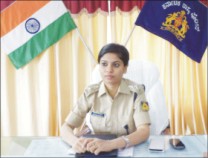
IPS officer Vartika Katiyar took charge as the new Superintendent of Police of Kodagu district yesterday.

Earlier, she was the Additional Superintendent of Police of Gokak for one year. She is the first woman to serve as the SP in Kodagu. She replaces M.N. Anuchet.

Speaking to presspersons at her office here, Katiyar said she was inspired to join the Indian Police Service to serve society and senior women Police officers were her role models.

She said that she had visited Kodagu several years ago, but as a tourist, adding that she was yet to get herself accustomed to the unique land and its people.

source: http://www.starofmysore.com / Star of Mysore / Home> General News / August 06th, 2014

Team Game a Concern Amid Individual Glory

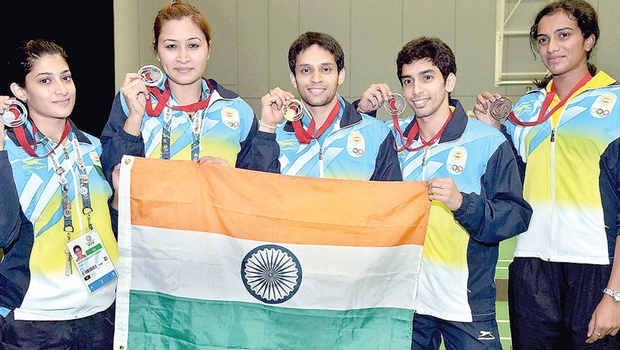
(From left) India’s Commonwealth Games 2014 badminton medallists Ashwini Ponnappa & Jwala Gutta (silver), Parupalli Kashyap (gold), RMV Gurusaidutt (bronze) and PV Sindhu (bronze) in Glasgow on Sunday | pti

Hyderabad :

The colour made the difference. Otherwise, the medals tally was the same. In the 2010 Delhi Games, India had won four medals. So too in Glasgow.

It was two gold, one silver and one bronze in Delhi. However, Indian shuttlers could bag only one gold, one silver and two bronze medals this time.

However, there will be ifs and buts on India’s show. Surely, the last-minute withdrawal of Saina Nehwal cost India a gold medal. But there were hopes that if Saina was not there, then young world championship bronze medallist PV Sindhu had the chance to retain the gold for the country instead.

But Sindhu fell to Canadian Michelle Li in the semifinals to finally end up with a bronze medal in her maiden venture. However, Parupalli Kashyap’s long wait for a championship medal was finally over. “I feel very happy for this Hyderabadi boy. He has a good game but somehow falters at crucial times. But this time there was no stopping him. He deserves the gold,” said former international Sanjay Sharma, adding, “it was not his fault if Lee Chong Wei (World No 1) pulled out like Saina.”

But Sharma was not happy with the overall performance, particularly with India failing to win a medal in the team event. “It was the biggest disappointment. We don’t have depth in doubles unlike in the singles where there is some bench strength. If India has done well in the team events in the recent past, it is surely because of Jwala Gutta, who has been a force to reckon with in the doubles for India. She has done yeomen service as far as doubles is concerned for India. But then we can’t depend too much on her every time,” he said.

Former national coach Vimal Kumar, too, agreed that doubles is surely going to be the Achilles’ heel in any team event. “The singles in the recent past was not an issue but it is the doubles that is the biggest problem for India. Jwala and Ashwini (Ponnappa) have won laurels in women’s doubles but where are the men’s and mixed doubles combinations. It hurt India and will continue to do so in future tournaments. India has to do a lot of catching up to improve their doubles combination. I think the Badminton Association of India (BAI) has to give more emphasis to doubles by grooming young talent for future tournaments,” he opined.

Sharma said if India have to think of any team medal, then BAI should make concerted efforts to groom a strong doubles combination. “When we could not win any medal in CWG, which has more of a depleted field, then India stand no chance in Asian Games and other big events. It should start planning in the right earnest for the 2016 Rio Olympics,” he added.

The former doubles specialist said the CWG gold could propel Kashyap to greater heights. “It is a huge boost to Kashyap’s confidence. We could see a pumped up Kashyap in World Championships and Asian Games where the field is much stronger.”

Vimal feels that Kashyap is always a better player in individual events. “In team events, he is under some sort of pressure. But in individual events he plays more freely. He was impressive in the individual event and I liked the way he handled the pressure, specially in the semifinals and final.

“Remember, in terms of standard of the game, CWG is not of high quality as there are no Chinese, Indonesians, Danes or Japanese players. But this win came at the right time. He will have a much tougher time at the Worlds and Asian Games,” said the former chief national coach.

Sindhu, according to Sharma and Vimal, faltered. “It is a good learning experience for Sindhu. But I thought she had a good chance to win a gold medal but then she failed to capitalize on the golden opportunity,’’ said Sharma, who is now a TV commentator on the game.

Vimal felt Sindhu has to improve her defence. “I think it is time she should depend on instructions. She should make the match analysis by herself and improve on her defence. She need to have more variations in her game,” said the present Prakash Padokone Badminton Academy coach.

source: http://www.newindianexpress.com / The New Indian Express / Home> Sport / by N. Jagannath Das / August 05th, 2014

Joshna and Dipika: India gets new racquet queens

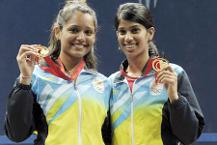
ipika Pallikal (left) and Joshna Chinappa pose with their medals after winning the gold in women's doubles squash event during the 2014 Commonwealth Games in Glasgow. (AFP Photo)
ipika Pallikal (left) and Joshna Chinappa pose with their medals after winning the gold in women’s doubles squash event during the 2014 Commonwealth Games in Glasgow. (AFP Photo)

Glasgow :

Forget the gold. Few gave them a chance to even finish on the podium in the Commonwealth Games, given that teams with pedigree like Australia, England, New Zealand and Malaysia were in the fray.

But two girls from Chennai – Joshna Chinappa and Dipika Pallikal – squashed all doubts and did the impossible on Saturday to claim the top prize in women’s squash doubles. This is India’s first ever medal in the sport in the Commonwealth Games.

It took the fifth seeded Indian duo just 28 minutes to tame the top seeds Jenny Duncalf and Laura Massaro of England in straight games: 11-6, 11-8.

The scoreline might suggest that the game was a little one sided but it was not. The British pair, after losing the first game, roared back for a 7-2 lead in the second. The Indians fought back to clinch a famous victory .

“We were down for a while, but we were confident. We were telling ourselves that we could do it. We were not here to settle for the silver. We had the belief and the confidence that we could win the gold medal,” 22-year-old Dipika told TOI.

It was a tough competition for the Indian girls as the field included quite a few former Commonwealth Games medallists. “Doubles was a tough competition. It was important for us to take one match at a time, not thinking about whom we were going to play if we advanced. I guess that paid off as it took away the pressure,” she said.

Dipika admitted that the feeling that she and her 27-year-old partner Joshna were the architects of India’s first medal winners in squash was yet to sink in. “I guess it will take a couple of days to sink in. We are delighted.”

Former national champion Bhuvaneshwari Kumari, here as a coach, said the medal would do a world of good to the game back home. “It will inspire people back home. The government and the federation have been very supportive but I think this gold will help us get more support.”

source: http://www.timesofindia.indiatimes.com / The Times of India / Home> Sports> Tournaments> Commonwealth Games 2014 / by Biswajyoti Brahma, TNN / August 03rd, 2014