Category Archives: Records, All

Record number of candidates in fray in Kodagu

With 23 candidates in fray, a record number of candidates are contesting in two constituencies for the first time in the history of Kodagu.

Along with the national parties and regional parties, equal number of Independents are trying their luck in the Assembly polls.

As many as seven Independents are contesting in Madikeri constituency. They are C V Nagesh, Santhosh Kumar, Rafeeq, M A Nizamuddin, B C Nanjappa, Guruprasad, Hareesh Poovaiah. Other candidates are K M Lokesh (Cong), Appachu Ranjan (BJP), S P Mahadevappa (BSP), Vanajakshi (CPIML), B A Jeevijaya (JDS), K M Basheer (JDU) and Shambhulingappa (KJP).

Three Independents

In Virajpet constituency, three Independent candidates are contesting. They are — David, Maranna Dilip Kumar and D Uday. The other candidates are — B T Pradeep (Cong), K G Bopaiah (BJP), D S Madappa (JDS), Chengappa (CPIML), Janith Ayyappa (BSR Cong) and Usman (SDPI).

Only three candidates had contested from Madikeri constituency in 1957. Five candidates had contested in 1962, 1972, 1978, and 1999, while six candidates had contested in 1967, 1983, and 2004. At least nine candidates had contested in 1985, 1994 and 1989, while eleven candidates had tried their luck in the 2008 elections.

Straight contest

Only two candidates had contested from Virajpet constituency in 1957 and 1967.
Five candidates were in the fray in 1962, 1989, 1994, and 2008. Three persons had contested in 1972, 1983, 1985 and 2004.

There are nine candidates in fray for May 5 Assembly polls.

source: http://www.deccanherald.com / Deccan Herald / Home> District / Madikeri, DHNS – April 23rd, 2013

What a martial race does when there’s no war

MaritalraceKF21apr2013
Few sporting events in Karnataka, in India, in the world, can hold a candle in motive, in spirit, in atmosphere, to the hockey festival organised each summer between Coorgi (Kodava) families.

Part sport, part mall, part fashion parade, part talent hunt, part social glue, the tournament is a beautiful salute to sport from a beautiful people of a beautiful part of the world.

The 12th edition, for the Alamengada Cup this year, concluded today, 12 May 2008, in Ponnampet in Virajpet taluk, with the finals played between the Koothanda family and the Anjaparavanda family.

View a portfolio of 82 pictures here: Coorg Hockey

View a short YouTube video here: Koothanda vs Anjaparavanda

Below read an essay by Sugata Srinivasaraju of Outlook magazine on the 2005 tournament.
————————————

By SUGATA SRINIVASARAJU

They charge towards the umpire when he blows the long whistle to declare a goal. For someone who is not entirely familiar with the Kodava (or Coorgi) hockey passion, it appears that the eleven hockey sticks will do the guy to death. But that does not happen. It turns out to be an incessant argument in incessant rain. Each time it happens the match-clock stops for a minimum of ten minutes. The longest break is for thirty-odd minutes when the Koothanda family team scores past the Nellamakkada family, 3-2, in the last fifteen minutes of the finals of the Kodava Families’ Hockey Festival. For the record, it is the world’s biggest hockey tournament.

We wonder why passions should run so high when this is just ‘festival’ hockey and no great championship? A neighbouring Mysorean who has been a regular at the festival since it began in 1997 explains the nuances involved: “The nation is too amorphous and even if you lose playing for it, it does not haunt you beyond a point. But it is completely different when you are defending your family pride, the shame is more immediate.”

Family pride and family identity is in fact at the core of this festival organised annually in the picturesque terraces of the coffee land. In the days of the coffee price depression, when this inward-looking community, almost clanish, started looking out to measure the vistas of the world, when it looked most distracted in centuries of its existence, a brilliant idea struck a man in his 60s, Padanda Kuttani Kuttappa, to re-fix the roving Kodava eyes and arrest the slipping ground. He invented the ethnic hockey festival. In the very first year, nearly 60 families registered themselves and the numbers swelled each year. In 2003 it touched 281, a world record of sorts which found its way into the Limca Book.

In 2004 the Maleyanda family which organised the fest expected the number of participating families to cross 300, but it did not happen due to certain ‘teething operational problems,’ only 236 families played the game and any given year there has been a guaranteed audience of 25,000 people.

The swelling numbers explain why corporates too have started taking interest in the fest. In 2001 Nike was involved and in 2004 a local tobacco company and Toyota supported the effort with a small grant. LG held a raffle draw with television and mobile phones as gifts.

The organising family needs around Rs 15 lakh to conduct the fest, which it raises by collecting donations from family members, anywhere between five and ten thousand. Participating families pool about 30,000 to meet expenses arising out of travel to the venue (which is generally the home-village of the organising family) uniforms for players, equipment costs etc.

The economics of the whole affair has been worked out to perfection.

Returning to pride, why did the Kodavas decide to play hockey to hold their ground? ‘Because that is what they know best,’ is how some would put it bluntly, but a more liberal interpretation would be, besides the pork curry and coffee, hockey is the only thing that is common to two per cent of the rich planters, eight per cent of medium to small planters and ninety per cent of poor Kodava farm labourers.

A good-humoured joke about the community that did the rounds some two decades back was: Kodava men joined the army or played hockey or joined the Bata Shoe Company as salesmen, because they were fair and dandy. Rum, of course, was another common element to all categories of Kodava men. The strong army connection comes from the fact that two top generals in the Indian Army were from Coorg: Field Marshal K M Cariappa and Gen Thimayya.

Surprisingly, both belonged to the Kodandera family, which also participated in the 2004 hockey fest. It may surprise outsiders, but Coorg has produced more than 40 hockey internationals and some of them like M.P. Ganesh and M.M. Somaiya have even captained the Indian team. Incidentally, the first international from Coorg, M.D. Muthappa, belongs to the Maleyanda family, 2004′s tournament organisers.

But strangely, Ganesh or Somaiya or the gifted goal-keeper A.B. Subbaiah become completely unfamiliar when they come to Coorg. Their first name familiarity with the outer world, gets drowned under the weight of their family names.

For instance, M P Ganesh, who is now the executive director of the Sports Authority of India, becomes Mollera Ganesh. A B Subbaiah turns Anjaparavanda Subbaiah. And the brilliant fullback and Olympian, C.S. Poonacha is Cheppudira Poonacha.

As if sucked back into their original community identity. “Into the womb of mother Cauvery,” as a lay Kodava emotionally put it bringing in the platitude personification of the river that has its origins in the coffee land.

At the finals of the Maleyanda Cup, it was not just the hockey greats present, there were also others who had made it big in other fields. South Indian actress Neravanda Prema, Davis Cupper Machanda Rohan Bopanna were among them. They had all left their cosmopolitan masks behind in Bangalore, Bombay or Delhi to be authentic local heroes. But their speeches in the Kodava language was a give away of their Anglicized transformation. If they did not come to this ethnic festival there was no threat of ex-communication, but there was always the fear of being excluded.

In many ways the story of the Kodavas is the familiar story of the New World. It is the same as the Irish tracking their family trees and their Gaelic roots. In fact the whole environment on May 23, 2005 was like the one in Dhaka on every February 21 (Ekushey February), the Mother Language Day, the day to which Bangladesh owes its existence.

“Part kermises, part festival of remembrance, both political statement and celebration,” writes British writer Jeremy Seabrook about Ekushey February.

Celebration and statement were both there at the hockey fest too, at Gargandur in Somwarpet: There was an ethnic food stall; men unabashedly consumed liquor before the final match began at 2 pm; a Kodava job agency had put up its banner; the 37 Medium Coorg Regiment, Madras Engineering Group and Border Scouts were there looking for talent; a woman cartoonist sold her “Still Hope Ammathi” T-shirts (a cheering Kodava phrase for the losing side); a clutch of planter-woman with their authentic coffee brew were there to zealously promote coffee as a ‘health drink’ and all amidst the din of nasal Kodava sounds. It was a shandy.

Amidst the celebration the statement was not forgotten, it was quietly tucked away in the souvenir that was circulated. It was a charter of demands before the Prime Minister by the Federation of Kodava Samajas: “The Fazal Ali Commission has observed in its report that Kodagu should be maintained as a separate identity. It also recommended the reservation of a Lok Sabha seat for Kodagu. Once the State of Kodagu was amalgamated with the State of Mysore the solemn assurance was ignored… culture and identity of the people undermined…,” it read. This should explain the separate statehood demand for Kodagu a decade ago.

The coffee land has been a RSS-BJP bastion. “No beef, only pork” is what a Kodava exclaimed at the food stall, energetically waving his family flag. Every participating family in the hockey fest have their own colours and flags. A common motif on these flags is a 1837 insignia given by the British to the Coorg people for “distinguished conduct and loyalty.”

Besides the political statement, there is also a cultural and social reasoning to the hockey festival.Consider these two voices: “When you have to build a family hockey team, the entire family will have to sit together, so in many ways it becomes a vehicle to sort out family and property disputes. It is also a time when the young scattered away in the cities come to meet the old,” says M.K. Ponnana.

In fact the Kodava family teams are unique in the sense that if the forwards are 16-year-olds, the fullbacks could be 60 years and the goal keeper could be a lady. The Koothanda family which reached the finals had 20-year-old Shilpa as its goalie.

Young and old, rich and poor, men and women, the binary distinctions are temporarily suspended for the families’ hockey season.

For Ponamma Muthappa the whole fest feigns war. It recreates the clash of tribal chieftains. “We are a martial race and we are very physical, when there is no war we express ourselves through hockey,” she explains.

Whatever may be the thick connotations of the hockey festival, for rank outsiders the single most interesting factor could be the pretty Kodava women. But the bugle sounds there too: “It is difficult to take home a wife,” a local girl adds blush to the statement, suggesting that they seldom marry outside their community!

[Excerpted from ‘Keeping Faith with the Mother Tongue – Anxieties of a Local Culture’ by Sugata Srinivasaraju. Published by Navakarnataka Publications. Price Rs. 200. Pages: 288]

source: http://www.churmuri.wordpress.com /
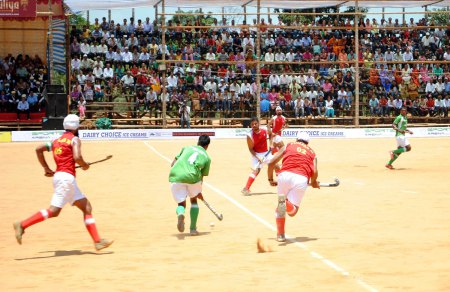
In Coorg, ‘jumping japak’ when there’s a goooal!

Photo Caption
E.R. RAMACHANDRAN writes: At a time when Hockey India (HI) and the Indian Hockey Federation (IHF) are at each other’s throats and dragging Indian hockey down the drain by filing cases against each other, in an idyllic part of the world 225 hockey-mad families are participating in the biggest tournament of its kind.

The idyll is Coorg.

In the cradle of Karnataka hockey nay Indian hockey, the 17th edition of the inter-family hockey tournament, which has entered the record book, quietly got underway near Virajpet on Sunday. And, despite IPL being on everybody’s lips, the passion for hockey remains high.

Some of the most popular names of Indian hockey, M.P. Ganesh, B.P. Govinda, M.M. Somaiya, Poonacha and Arjun Halappa have come from the hilly, coffee-country. If hockey has to have resurgence, is it time hockey is moved to Kodagu than be a part of Delhi where they play hooky with hockey and are mostly busy with court cases?

Photograph:
Members of a visiting Punjab team in a duel with a local Kodava team at the inter-family hockey tournament at Balugodu Kodava cultural centre, near Virajpet in Kodagu district on Sunday (Karnataka Photo News)

source: http://www.churmuri.wordpress.com

17th Kodava hockey fest begins

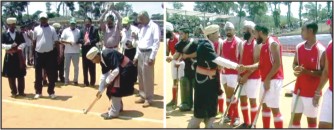
Kodava Hockey Academy President Pandanda Kuttappa is seen inaugurating the 17th Kodava Families’ Hockey Festival hosted by Madanda family by pushing the ball with a silver stick at Balugodu Kodava Cultural Centre near Virajpet town this morning. Picture right shows Kuttappa greeting the Punjab XI team members before the start of the inaugural match.

Virajpet :

The 17th edition of Kodava Families’ Hockey Namme (festival) began at the Balugodu Kodava Cultural, Heritage and Sports Centre near here today, under the aegis of Madanda family.

Kodava Hockey Academy President Pandanda Kuttappa, who founded the Kodava Families’ Hockey Tournament in 1997, inaugurated the fest by pushing the ball with a silver stick. The inaugural match was played between Kodagu XI and Punjab XI, with 1-1 goals tie when we went to Press.

The Madanda Hockey Namme has 225 Kodava family teams participating and the finals will be held on May 12.

Federation of Kodava Samajas President M.N. Belliappa, speaking as the chief guest, recalled that the Kodava Cultural Centre at Balugodu village was the result of a discussion with his friend K.B. Ganapathy, Editor-in-Chief of Star of Mysore, about 13 years ago. “I discussed with my friend Ganapathy about the need to set up a museum-like cultural centre in Kodagu and thanks to the then Chief Minister S.M. Krishna and former Minister M.C. Nanaiah, we could purchase the land in Balugodu,” said Belliappa and added that the government has granted Rs. 2 crore for the project.

Federation of Kodava Samajas Secretary C.K. Kashiyappa, sports person J. Appachu, Olympian Dr. A.B. Subbaiah, Madanda Sports Committee President M.S. Poovaiah, Akhila Kodava Samaja President Mathanda C. Monnappa and others were present.

The Kodava Cultural Centre at Balugodu is a picturesque land of 15 acres located 6 kms from Virajpet town. Various programmes showcasing Kodava culture and heritage will be held at this venue. Cost of the project is estimated at Rs. 12 crore. A huge auditoium-cum hall, with a capacity of 1500 people is under construction. It has a museum where traditional household articles and antiques are displayed.

source: http://www.starofmysore.com / Star of Mysore / Home> General News / April 14th, 2013

Cariappa library open only three days in a week!

K M Cariappa’s ancestral house which houses a public library is not much use to the public. How many of students and general public are benefited from it is a big question. Teachers and students have expressed displeasure as the library remain open only on a few days.

cariappaLibraryKF13apr2013
It was former Chief Minister J H Patel who inaugurated the library in 1999.

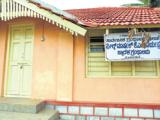
Prior to the library, the building was functioning as a Nada Kacheri. It was the ancestral house of first commander in chief of Indian army Field Marshal Cariappa.
The board which is hung outside the building reads as Field Marshal K M Cariappa Memorial building.

The board reminds us that the house was the place where Cariappa was born. A few wants the building to remain as a library. However, a few wants to install a bust in front of the house.

If the library continue to function, then it will help the public, said teachers.
There are over 10,000 books in the library. The library has 281 members. The membership fee is Rs 30. There is one librarian. The library purchases newspapers.
However, it remains closed throughout the day. It will be open only on three days in a week till 12.30 pm.

The public said it would be better if the library is kept open in the evening.
Rangubai Vittalrao, member of the library said “there are good books available in the library. However, many in the town do not have habit of reading. The timings of the library is not suitable for the general public. It should remain open on all the days in a week after 2 pm.”

R K Narayana, a member of K M Cariappa memorial library for the last 15 years said “the library has not been much use to the public. Out of 281 members, only 50 visit the library regularly.”

source: http://www.deccanherald.com / Deccan Herald / Home> District / Shanivarasanthe, DHNS – March 19th, 2013

Eagle eye on birds of prey

Kiran Pooncha.
Kiran Pooncha.

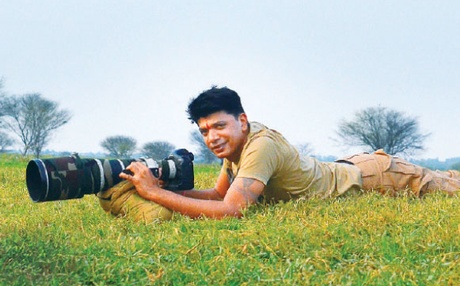
From sketching to photography could be considered a natural transition, but switching from land acquisition to bird photography and conservation is a paradigm shift. Kiran Poonacha from Bangalore has not only made that shift but also crowned it with international laurels and appreciation from the world’s best bird photographers.

Known as the raptor man of India, Pooncha is a born conservationist, rescuing and carrying out documentation work on raptors, especially eagles in various corners of India. It also gives him an opportunity to capture the majestic birds in action. Says Pooncha, “I love their temperament, their style, their enormous power and majesticity. I want to share my moments with these powerful yet graceful birds with everybody.”

Unlike visualisation by other photographers, his image of the winged wonders stands out because they are captured when in action and that is what gives life to the pictures. The birds taking off, flying, diving, swooping, hunting, feeding, nurturing, he has caught all these with the right background and foreground, surreal lighting, great precision and artistic imagery. “Capturing birds in flight is technically very challenging but it is such rare movements that interest people and also stays in their memory. I’m also pursuing my passion in my hometown Coorg. This is a tribute to what I have been exposed to during my early years while growing up in Madikeri. I sincerely hope my photographs will help influence people conserve birds by restoring their natural habitat,” says Pooncha with a smile.

Hailing from a family of nature lovers and born and bred in the hill district of Coorg, a place abounding with rare and beautiful species of birds, Pooncha was inspired to start birding at the tender age of seven. Chikkaballapur, where he did his schooling and a nearby place called Gudibande with rocky terrain and scrub forests that support a variety of avians, played an important role in igniting his interest. Midway for 15 years, he missed nurturing these winged wonders in their habitat as he was busy with his education and professional duties but now nothing seems to stop him in his pursuit.

“I patiently bided for the time when I could go back to the world of birds. In 2006, Neeta, my wife and birding partner, gifted me a camera and that is when my passion for capturing my love for birds began. Coinciding with this, I met a couple of people through a social networking website who shared similar interests. These incidents gave me a second chance to pursue my passion to visualise birds in a permanent frame,” says Pooncha.

Pooncha became a member of India Nature Watch that supports well-known photographers from across the country for sharing their work on their website. This exposure played an important role in helping him to improve his photographic skills. He purchased his first DSLR camera in 2007 and his dear friend and boss Kumar Babu gifted a zoom lens and that is when he started concentrating on his chosen hobby, bird photography.

“I have done extensive studies on birds since childhood. I have raised pigeons, kites, parakeets, and sparrows, looked after injured birds, tending to their broken wings and spoon-fed them. Not all survived, however, one injured black kite would not part from me even after two years,” says the raptor man. Pooncha proudly adds, “I can tell you the spots where ea gles can be found, where they hunt, breed and Bangalore is filled with raptors—tawny eagles, snake eagles, boneless eagles, Indian spotted eagles and many more species.”

Now, every holiday and weekend is taken up by trips to scrub forests and wetlands around Bangalore in search of eagles. His favourite haunts on the outskirts of the city include Hessarghatta, T G Halli, Bannerghatta forests, Gudibande and Hoskote.

Over the years, his portfolio on raptors has attracted international attention and awards as some of the images are pretty rare, hitherto never captured on camera. Dedicated to studying these birds, Pooncha says, “My social life is a big zero as all my time is taken up either following them through thorny jungles or standing in slimy wetlands for days together, hoping for the best shot.”

Recollecting his experiences, he says, “Once I was following a Bar Headed Geese near Talkad near Mysore when a snake wound up around my leg. My position was so treacherous that neither could I leave my subject nor ignore the reptile. But fortunately, after two hours, the snake slinked away. Another time, I had to sit in the water for hours together to get a Little Grebe in action. Some images like two snakes fighting for territory at Hessarghatta, a snake eagle hovering between death and new life and falcons at Kolar for whom I waited for three years are still fresh in my mind.”

Pooncha’s dream project, a birding resort on a 30-acre land surrounded by Pushpagiri Hills near Madikeri will soon be a reality. He is hoping to bring renowned experts like Arthur Morris, popularly called “father of bird photography”, Doug Brown and others for workshops on bird photography apart from giving an opportunity to youngsters to know more about birds.

Decrying the nation’s obsession with big mammals, Pooncha appeals, “Birds need our help. They play a very important role in the food chain, pollination and of course, they are the natural scavengers of the earth. We have to look beyond tigers and elephants as India has thousands of species that needs protection at all levels. If I can convince hundred people to conserve nature in and around Bangalore, it will be a small beginning to save these helpless avians.”

source: http://www.newindianexpress.com / The New Indian Express / Home> Magazine / by Meera Bhardwaj / March 31st, 2013

107th birth anniversary of Gen.K.S. Thimayya

ThimayyaKF02apr2013
Mysore :
The 107th birth anniversary of Gen. K.S. Thimayya will be celebrated under the aegis of Air Force Friends Association, Mysore (AFFAM) at Sqn. Ldr. A.B. Devayya Bhavan (which houses the office of Sainik Welfare and Resettlement Department) behind DC office in city on Mar. 31 at 10 am.

Air Cmde. O.P. Tiwari, Air Officer Commanding, No. 2 Air Force Selection Board, Mysore will be the chief guest while K.B.Ganapathy, Editor-in-Chief, Star of Mysore and Lt. Col. K.S. Iyappa, SM, Commanding Officer, 1 (KAR), Engineering Coy, Mysore, will be the guests of honour.

On the occasion, three senior most military veterans (one each from Army, Navy and Airforce) will be felicitated, according to AFFAM President M.N. Subramani.

source: http://www.StarofMysore.com / Home> General News / March 27th, 2013

Bangalore for Women: Ashwini Ponnappa

Bangalore :
Grace on and off the court; clear thought and a dedicated approach; a level head on capable shoulders. With qualities like these, it’s no surprise that Karnataka shuttler Ashwini Ponnappa has become one of the game’s leading lights and Indian badminton’s success story of the past few years.

The Kodava beauty, stunning looks and sharp mind to match, is best known as Hyderabadi Jwala Gutta’s partner. The duo that came together in 2009 with not many expectations to deliver, hit the big time shortly after their Commonwealth Games gold medal in New Delhi in 2010, when they bagged a priceless bronze in the 2011 Badminton World Federation World Championships in London.

The medal ended a 28-year-wait for the nation and the world No. 20 pair’s performance silenced critics. They also reached the quarterfinals of the China Open and Korea Open in 2011.

Soft-spoken and articulate, Ashwini is the yin to the effervescent Jwala’s yang. On the court too, she has become a balancing force with great adaptability. A former student of Bangalore’s St Francis Xavier’s Girl’s High School, the 22-year-old is a natural athlete with sport in her genes. Her father, MA Ponnappa, was a state hockey midfielder who took part in eight Nationals between 1974 and 1986 before turning out for Roman club Eur in a fruitful stint in Italian league hockey.

The banker, together with his wife Kaveri, instilled in their daughter’s mind the basics of success. Whether it was the long hours they devoted to the young Ashwini, helping with studies and homework, or picking her up after school and practice, efforts paid off. Never ones to pressure Ashwini to study harder, the Ponnappas gave their daughter a valuable gift early on – the choice to pursue her dreams. While veterinary sciences appealed to her, badminton was her passion. And the young woman hasn’t looked back since.

source: http://www.articles.timesofindia.indiatimes.com / Home> Sports> More Sports> Badminton / by Shrivatsha Sridhar, TNN / March 27th, 2013

Youth science awards presented

District-level youth science awards were presented to Virajpet Saint Annamma High School students K S Ajith (first) and Nelamakkada D Bopanna (second) and Gonikoppa’s Kalathmadu Lions High School student M C Manisha Utthappa (third prize) by Department of Science and Technology and Rajya Vijnana Parishat.

The awards carry cash prize of Rs 3,000, Rs 2,000 and Rs 1,000 respectively and were presented by ZP CEO K B Anjanappa and Additional DC Dr N Shivshankar.

K S Ajith has been selected to represent the district in the state level youth science competition.

source: http://www.DeccanHerald.com / Home> District / DHNS, Madikeri / March 27th, 2013

‘Need to check dwindling of tribal population’

TribalKF29mar2013Litterateur Devanoor Mahadeva said that with the dwindling of tribals population, tribals should not go for family planning.

Speaking at Kaadina Makkala Radio habba’ programme organised in Madikeri on Wednesday, he said the tribal population is on decline owing to health complications and attack of wild animals. There is a need to check dwindling of population among the tribals.

He called upon the tribals not to consume alcohol and become prey to the tactics of middlemen and also educate their children.

“The urban dwellers are engaged in harming nature. However, tribals live in harmony with the nature. Hence, they are the conservers of nature. The urban population should not consider tribals as uncivilised. They are also civilised individuals. Instead of branding them as ‘forest dwellers,’ it would be better to call them as tribals,” he said.

Madikeri AIR Deputy Director Indira Gajaraj said that tribals play a vital role in conserving nature.

Kodagu Jilla Budakattu Krishikara Sangha President Dobi said that tribals have not learnt their culture and tradition by attending schools and colleges.

They have learnt lessons while living amidst plants and animals.
Kodava Sahitya Academy former president Bacharaniyanada Appanna said that Kodagu is known for its culture and tradition.

Akashavani announcer Abdul Rasheed also spoke.

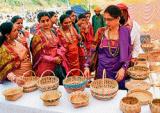
Members of Jenukuruba, Panjari Erava, Pani Erava, Deva Soliga, Poomalekudiya, Malekudiya, Kembatti, Meda, Kapala presented cultural programmes on the occasion. Antiques were exhibited at Gandhi Maidan on the occasion.

source: http://www.DeccanHerald.com / Home> District / Madikeri, DHNS / March 27th, 2013