Category Archives: Records, All

Champion for CLEAN sport

AshwiniKF25mar2013
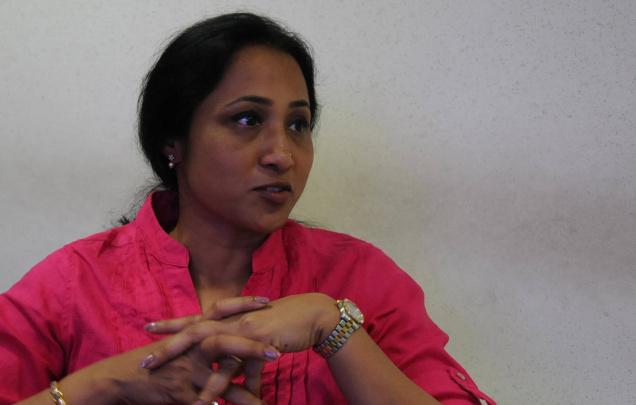
Athlete Ashwini Nachappa
Olympian athlete, actress, educationist, social worker… Ashwini Nachappa has donned many roles with élan. In a freewheeling chat with SOORAJ RAJMOHAN she touches on her career and the future of Indian athletics

Huge crowds turned out to watch Indian athletics some three decades ago. For the circuit not only had world-class runners like P.T. Usha and Shiny Wilson, there were also some very pretty girls on the track.

And Ashwini Nachappa was the most glamorous girl around. Hailed as India’s Flo-Jo, after the beautiful American Olympic champion Florence-Griffith Joyner, the girl from Kodagu became a sensation when she shocked P.T. Usha at the Open Nationals at New Delhi and the International Invitational Permit Meet in 1991. But Olympian and Asian star Ashwini Nachappa not only stood out on the track. She turned out to be a versatile woman, for she went on to become an actress and later settled into the role of an educationist and an advocate for clean sport.

Ashwini carries her many achievements with quiet pride and composure, rather than being weighed down by the recognition and fanfare that comes with it. Looking rather fashionably chic in a bright pink top and jeans, she answers questions with a smile, but with conviction.

THE BEGINNINGS

Ashwini grins mischievously as she recalls her beginnings as an athlete, “I started out when my family moved to Bangalore. There was a stadium opposite our house and my mother decided it would be safer for my sister and myself to play there than on the roads. It was there that I met Mohinder Singh Gill, who used to bribe me with nutrient sweets for every lap I completed. So you could say that it was nutrient sweets that started me off!”

A sweet start then (pun intended), but was it all smooth sailing? In a nation where a large section of women is yet to get their due, what was it like being a woman athlete in the 80s? Ashwini believes it was the outlook of her parents that paved the way for her smooth progress. “My parents were very supportive throughout my career. They never raised any issues whatsoever and my mother used to be in the stands to watch me, right till the day I retired,” she says with pride.

After bidding goodbye to professional athletics, she dabbled in acting, working on five Telugu movies including the hugely successful Ínspector Ashwini, which saw her don the role of a cop. Her college education also helped her build a successful corporate career, which she eventually left to take up greater causes, providing education and sports training, and propagating clean sport.

Despite being a part of the glory days of Indian athletics, she believes there is much to be done to improve the state of the sport today. “Nowadays the interest of parents and children has shifted more towards education and sport has suffered as a result. In fact, there are some schools opening now that do not even have a playground!”, she says with an appalled look, before continuing, “we need more facilities for athletes from the grassroots level, they require physical as well as mental training.”

SPORT AND EDUCATION

It is this desire to take education and sport forward hand-in-hand that has prompted Ashwini to start her own school. The institution, Karaumbiah’s Academy for Learning and Sports (KALS) is an ICSE school located in Coorg that houses on its premises ‘Áshwini’s Sports Foundation’, an academy that provides training in various sporting disciplines such as athletics, hockey and swimming, with golf and air pistol training facilities on the way. On the education front, KALS provides schooling from kindergarten to Class XII. Ashwini believes that encouraging community sports and building a following outside cities is important in encouraging youngsters to take up sports, a philosophy she is trying to employ with the Coorg hockey scene.

It would appear that her academic ventures are reaping benefits, with the best sportspersons from her school now being offered college seats by reputed institutions. “Though sport is what I have always been associated with, education is also necessary. I have been able to have a successful career outside sport because I was fortunate enough to have a college education. Many of the people I used to compete with and against have not been so fortunate, and that’s why I decided to start a combined school and sports academy,” she explains.

Now that the school is up and running, she has turned her attention to promoting clean sport. She is a founding member of Clean Sports India, an organisation that aims to facilitate better management of Olympic sports in India and discourage drug use among athletes. The initiative has seen her join hands with athletes like Mercy Kuttan and Vandana Rao to help uphold the integrity of sport in the country.

Between being a former Olympian and movie star as well as an educationist and full time mom, Ashwini Nachappa has her hands full. But her vision is as clear as ever as she focuses on nurturing talent and putting India on the sports and athletics map in a big way. If the poise with which she juggles all the facets of her life is anything to go by, the athletes of the next generation can relax a little in the knowledge that they are in safe hands.

For those interested to know more about KALS, contact: Asha Thomas Fenn, Corporate Consultant and Academic Advisor. Mob: +91 9446801600. Email: asha_1960@hotmail.com

source: http://www.TheHindu.com / Home> Features> Metroplus / by Sooraj Rajmohan / March 24th, 2013
B.G. Chengappa gets ‘Namma Bengaluru’ award

ChengappaKF24mar2013
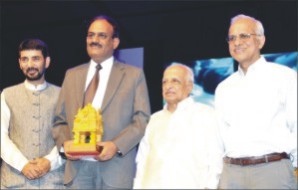
B. G. Chengappa, Director, Karnataka State Fire and Emergency Services, who received Namma Bengaluru award recently, is seen with Lexicographer Prof. G. Venkatasubbaiah and others.

Mysore, Mar. 18 :
Namma Bengaluru Prathishtana presented Namma Bengaluru Awards 2012 for 11 achievers in 9 divisions at a ceremony held in Bangalore recently.

The awards were presented by Lexicographer Prof. G. Venkatasubbaiah.

Bachettira Ganapathy Chengappa, Director, Karnataka State Fire and Emergency Services, is among the awardees.

Chengappa is a native of Kiggal village in Murnad, Kodagu.

Chengappa joined the Fire and Emergency as Fire Station Officer after graduating in Science from the Bangalore University.

Chengappa was conferred the Namma Bengaluru award in recognition of his services to the Department for modernising using latest technology and taking up several developmental activities.

Among the other awardees was P. Manivannan, Managing Director, Bescom, who previously served as Deputy Commissioner of Mysore and Bangalore City Police Division.

Namma Bengaluru is an initiative of MP Rajeev Chandrashekar which is working towards making Bangalore a model city.

Namma Bengaluru Prathishtana aims to be the voice of the people that needs to be heard in order for Bangalore to become a global city.

source: http://www.StarofMysore.com / Home> General News / March 18th, 2013

Account of an uprising

KodavasKF11mar2013The Kodavas put up a brave fight against the British in 1837, three years after the latter invaded Kodagu. Mookonda Kushalappa narrates the story of the resistance.

In 1834, the British East India Company had resolved to invade Kodagu and annex it. The Company sent in an army of 6,000 sepoys, divided into four columns, into Kodagu — one column was to enter from the east, one to enter from the north and two to enter from the west. They were to march into the capital Madikeri. The northern column marched towards Harangi (now famous for the dam) to meet the eastern column. A village in the woods at the base of a mountain pass lay in their path.

This village was the chief base of the resistance in Kodagu led by an official called Mathanda Appachu. He had secured the village with thick wooden palisades. Behind the wooden palisades through the arrow-slits of the palisades, the Kodavas aimed their guns at the British and shot at them. The column couldn’t hurt them. It was a fierce battle which raged on for four-and-a-half hours. Col. Mills tried to attack the village from the flank. But he was shot dead in the process. Forty eight soldiers, including three officers, were shot dead and 118 were left wounded on the East India Company’s side. There were no known casualties on the side of the natives. The East India Company was forced to retreat and take a different route.

The western column also met with some resistance. Its men marched towards Virajpet but came across several palisades. After some persistence, the palisades fell to the column’s attack one by one and the men marched on. But the column counted a dozen dead, including a lieutenant, and 36 wounded by the time they made their way through. Elsewhere as well, the Kodavas provided some resistance but were eventually forced to retreat. The eastern column which arrived through Kushalnagar brought in howitzers. Six Kodavas were killed on the banks of the Cauvery. The remaining retreated and the Company troops proceeded. The war ended when the last Raja of Kodagu sent his dewans to surrender to the east column and escort them into Madikeri. Within three days, the Raja emerged from hiding in his private palace at Nalknad, also known as Nalnad, and surrendered.

Amara Sulya

In the 18th century, Amara Sulya was given to the Raja of Kodagu by the Raja of Nagara. The Raja of Kodagu had aided the Nagara Raja in collecting tribute from another raja. As a symbol of their friendship, the Nagara Raja gave Amara Sulya to the Kodagu Raja. From this region, a regular supply of coconuts would arrive at the temple of the river goddess Cauvery. Immediately after Kodagu came under the East India Company in 1834, Amara Sulya was separated from it and made part of South Canara (now Dakshina Kannada) district of the then Madras province.

Cause for the insurgence

Under the Kodagu Rajas, the people of Sulya paid their revenues in kind. But now they came under the District Collector of Mangalore, who demanded that they pay their taxes in money. They were now placed under the mercy of those who gave them money in exchange for their produce. For three years, they paid their revenue in money but in 1837, they were unable to pay the money. The agriculturists expressed their inability to pay the revenue. Instead they had their agricultural produce which they could give.

The District Collector of Mangalore and his shrestidhar (clerk) arrived at Puttur in March. They were accompanied by a troop of over 150 soldiers and three officers. The Collector and his shresthidar tried to intimidate the people by warning them that only money would be accepted. They had nothing to do with agricultural produce. If the taxes weren’t paid on time then their cattle and lands would be confiscated.

Meanwhile two monks, Aparampara and Kalyanaswamy, claimed the thrones of Kodagu and Nagara respectively. They took advantage of the agriculturists’ grievances against the Company to start the insurgence.

On March 29, 1837, Atlur Rammappayya, a local officer, was killed by unknown people. This is seen as the start of the insurgence.

Capture of Mangalore

People were enraged with the Collector and gathered at a jungle clearing in Puttur. Some 500 of them go together, and took up sticks, oidekattis (Kodava war knives) and guns. That day the Bellare treasury was ransacked. The mob chased the Collector and his men who were resting at the travellers’ bungalow.

On seeing the irate mob, the Collector and his men left for Mangalore in the middle of the night. It was March 30, 1837.

Along the way government offices were attacked and treasuries captured. On April 2, the insurgents reached Bantwal. Here three local chieftains, Lakshmappa Banga of Nandavar, Manjappa Hegde of Dharmasthala and Chandrashekhara Chowta of Mudabidri, joined them with their men and resources.

Fifty-nine soldiers among the Collector’s men were killed in those few days. The Collector and his surviving men arrived at Mangalore on April 3. On April 4, the European military and civilians stationed at Mangalore resolved to leave the town’s port by boats to Cannanore (Kannur) port in Malabar (Kerala). As there were few boats, the women and the children were sent away first, while some of the men, especially the soldiers stayed back. The Judge of Mangalore and his assistant led the fleeing people to a ship called the Eamont.

The Eamont set sail towards Cannanore on April 5. The ammunition depot in Mangalore caught fire and blew up. That day in the afternoon Mangalore was occupied by the mob. The prisoners in Mangalore jail were released. The flag of the natives was flown at Mangalore.

When Eamont reached Cannanore, its passengers informed the authorities about the situation in Mangalore.

Troops were sent from Cannanore to Mangalore. They arrived in the evening of April 6 to reinforce the European garrison. On April 7, the native mob returned but were driven out and killed in large numbers. More European troops arrived in from Cannanore, Mumbai, Bangalore and Madikeri.

By April 16, the British had taken control of Mangalore. Troops were stationed at the place who remained there until December 12, 1837.

Leading lights

In Kodagu, the insurgence had three leaders: Guddera Appaiah (or Guddemane Appaiah/Appayya) of Kodagu Balamuri, Mandira Uthaiah of Nalnad and Mallaiah of Shantali. On April 14, proclamation letters seeking support for the movement had reached several parts of Kodagu. Plans were made to capture Madikeri fort. The Kodavas of Nalnad and Tavunad immediately rose and followed Subedar Guddera Appaiah and Subedar Mandira Uthaiah. Kodavas from Beppunad and other parts were unsure about what needed to be done so they consulted the dewans at Madikeri. One of the three dewans, Laxminarayana supported the revolutionaries. Laxminarayana was captured by the British and imprisoned.

Superintendent LeHardy was the British officer in charge of Kodagu. He instructed the two remaining dewans, Bopu and Ponnappa, to support him. LeHardy accompanied Bopu’s men to scout the parts of Kodagu towards Sulya. However they didn’t find any of the revolutionaries there. Only then that LeHardy came to know of the involvement of Uthu (Mandira Uthayya), Subedar of Nalnad. Some of dewan Bopu’s own relatives and friends supported the movements cause. LeHardy suspected Bopu, an old man, and charged him of treason because it was his sources who had misinformed them. Bopu wept before him and pleaded innocence. The native police was then mobilised to suppress the revolt.

Then Bopu and his police force went towards Sulya. The men had armed themselves with sticks and two of them proceeded before Bopu because Chetty-Kudiya, a revolutionary, had promised to shoot down Bopu on seeing him. They went a little beyond Madikeri when they met Muddayya and Appayya, one a former Subedar and the other a former Parpatyagara. They were two of Bopu’s friends who secretly supported the insurgence. They had been responsible for misinforming Bopu and thus embarrassing him before LeHardy.

The dewan’s men beat them up and left them for half dead. Further on the march, the force met insurgent Kodavas from Nalnad. They were beaten up severely and their leader Subedar Mandira Uthayya, who was among them, was made to surrender.
A regiment of Europeans and natives arrived under Col. Williamson to Madikeri. On April 16, the people of Yedavanad in Kodagu had planned to take over Madikeri as instructed by the proclamations. But LeHardy and Williamson had their troops stationed at Madikeri and they sent men towards Yedavanad to eventually thwart these plans. The Yedavanad people who were involved in the insurgence were made to surrender.

The battle at Sulya

Bopu marched into Sulya with his native policemen. There were skirmishes between his men and the revolutionaries. Dr. Palmer, an assistant surgeon, and his family had been made captives by the revolutionaries for 18 days.

When the revolutionaries were fleeing, Bopu caught up with them near Udoor and got Palmer and his family released. Later Bopu got Devappa of Mangalore, a minor government official who was held prisoner by the insurgents at Puttur, released as well.

While Bopu was already in Sulya, a Company officer, Col. Green, led his troops into the region. The revolutionaries were cornered and this culminated into the battle of Katkai Sulya. Subedar Guddera Appayya was captured and the treasury was recovered. Col. Willamson then entered Sulya from Madikeri. By April 26, the revolt had ended in Kodagu and Sulya.

source: http://www.DeccanHerald.com / Home> Supplements> Spectrum / March 05th, 2013

Karavalli at The Gateway Hotel, Bangalore Awarded one of the Top 50 Best Restaurants in Asia

The legendary Karavalli, the well-known South Western Coastal cuisine restaurant, at The Gateway Hotel, Bangalore has been voted 44th of the top 50 restaurants in the Eleventh annual listing of The S. Pellegrino World’s Best Restaurants.
KaravalliKF09mar2013
Karavalli at The Gateway Hotel, Residency Road

Bengaluru, Karnataka :
The legendary Karavalli, the well-known South Western Coastal cuisine restaurant, at The Gateway Hotel, Bangalore has been voted 44th of the top 50 restaurants in the Eleventh annual listing of The S. Pellegrino World’s Best Restaurants.

This list organized by William Reed media, a British trade publishing house celebrates the top 100 restaurants of the world annually, a credible indicator of the best places to eat in different parts of the world. The list of Asia’s best restaurants was voted for by The World’s 50 Best Restaurants Academy, made up of 936 voters from the hospitality industry.

Chef Natarajan Kulandai, Corporate Chef, The Gateway Hotels & Resorts, acknowledged the recognition and said, “Being 44th on the Asia’s 50 Best Restaurants list is a great honour for us as this is also the highest rank and recognition achieved by any restaurant from Bangalore. Critics, gourmets and celebrities across the world celebrate Karavalli. The chefs at this culinary destination continue to delight diners with exceptional meals, using the wealth of local spices, red chillies, coconut, pepper, fresh fish, meats and vegetables unique to these coastal regions. It reiterates our place among gourmands at the global platform, and is testament to the highest standard of an authentic culinary experience that we offer our guests”.

Chef Naren Thimmaiah, Executive Chef, The Gateway Hotel Residency Road Bangalore adds, “We are delighted and proud to be voted among the best in Asia. Karavalli captures the essence of 22 years of extensive research, reflecting the culinary legacy of the coastal regions of south west India We have been exploring the mystique of the region and have been fascinated by the bouquet of flavours of the south western coast It gives us immense joy to share these epicurean pleasures with you at Karavalli.”

Having embarked on a journey in 1990 to offer guests traditional and authentic cuisine of the South Western Coastal region, Karavalli promises to give connoisseurs and gourmands a rejuvenated epicurean experience. Authenticity is the hallmark at the iconic Karavalli, where well-researched home-food recipes come together to ensure an experience like never before – be it a refreshed blend of novel additions to the menu which includes a distinctive compilation of vegetarian and non-vegetarian delicacies with extensive culinary journeys ranging from the best of the Mangalorean Bunts and Konkani’s, Kodavas from Coorg, Malayalees, Calicut Muslims and Syrian Christians of Travancore, Havyaka Brahmins of Vitla and the Portuguese of Goa; innovative desserts or unique dining proficiencies. Another acclaimed highlight of the restaurant is its West Coast Seafood Grills section in the alfresco area, which gives guests the opportunity for an interactive session with the chef and co-creation in the cooking experience.

Asia’s 50 Best Restaurants list features the restaurants in Asia that have received the most votes from The World’s 50 Best Restaurants Academy. The S. Pellegrino World’s Best Restaurants List 2013 also included restaurants like Narisawa (Tokyo), Wasabi (Mumbai), Nahm (Bangkok), Ultra Violet (Shanghai), Varq (New Delhi) and others from the world over.

source: http://www.indiaprwire.com / Home> Restaurants, Awards / India PRWire / March 01st, 2013

Fate of the insurgents

The two monks who played a role in the Kodagu uprising were later captured, while they were trying to escape, and sent away for imprisonment. Kalyanaswamy was tried and hanged on June 19. Aparampara was imprisoned for thirty years in Bangalore.

Many other insurgents were imprisoned and tried by the courts.

Lakshmappa Bangarasu of Nandavar (in South Canara) was sentenced to death on May 23, 1837. Kumble Subbaraya Hegde of Kasaragod was hanged in Mangalore. Guddera Appaiah was hanged in Madikeri on October 31.

Manju of Uppinangady was also hanged in Mangalore. Kukanur Chennayya of Bellare, Subraya of Kayartody in Bantwal and Kedambadi Annaiah of Bantwal were awarded the death sentence. Kedambadi Rama Gowda, Chetty Kudiya, Kurta Kudiya and Peraje Krishnaiah were deported and imprisoned rigorously, probably for life.

Subedar Uthaiah of Nalknad, Shantaiah and Mallaiah were awarded imprisonment for fourteen years.

Much of these events were mentioned in the letters written by the Company government officers of South India.

The 1834 events that occurred in Kodagu are mentioned in Richter’s book, ‘The Gazetteer of Coorg’.

The events that occurred in Dakshina Kannada are narrated in B S Rao’s book ‘South Kanara, 1799-1860’.

source: http://www.DeccanHerald.com / Home> Supplements> Spectrum / March 05th, 2013

Was sure I wouldn’t be picked: Bopanna

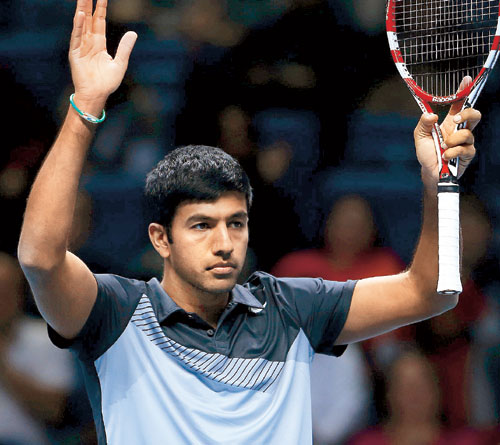
India’s doubles star Rohan Bopanna is undergoing mixed feelings right now. While on one hand, he is happy to clinch his first title of the year — the Marseille Open, with Brit partner Colin Fleming on Sunday, on the other, he is upset at being left out of India’s squad that takes on Indonesia in the Asia-Oceania Davis Cup tie in April. However, the All India Tennis Association’s (AITA) decision to not pick him and Mahesh Bhupathi in the squad that includes singles players Somdev Devvarman and Yuki Bhambri, and doubles players Leander Paes and Sanam Singh, hasn’t surprised the Bangalorean
BopannaKF28feb2013

In an interview with MiD DAY, Bopanna spoke of his joy and sorrow. Excerpts

The Marseille title being the first of the season for you, must be special.
It’s always special to win a title. At the highest level and with the current format for doubles on the ATP circuit, the outcome of matches hinges on three to four points. So, it’s great to string four matches in a row and win.

The timing of the win should be special too, given its come a day after the announcement of the Davis Cup squad. Was the selection on your mind?
Honestly, I never looked at getting the timing right while winning the tournament. I just tried to do my best. And speaking of the selection, while on court, I only try to focus on the match at hand, and not think of anything else. However, I was very sure I would not be picked for this Davis Cup tie anyway.

You must be upset at not being considered for the Davis Cup
.
Yes, of course! Not being selected to play for India is a big disappointment, especially since the tie is going to be held in my hometown.

Has this disappointment overshadowed your joy of winning in Marseille?

No… the Marseille win is a big achievement for me. It won’t be overshadowed by the disappointment over Davis Cup selections.

Do you think you’re paying the price (maybe like Mahesh too) for being one of the senior India players to be associated with the newly formed Indian Tennis Players Association?
Absolutely not! The ITPA has been formed for the betterment of tennis, and to improve things for the current as well as future players. We all are trying to be part of this movement so that India can produce more successful tennis players.

Your partnership with Colin is brand new, but you guys seems to have gelled perfectly.
Winning the title at Marseilles definitely means that Colin and I have gelled really well on court. I have known Colin for a couple of years now and we are friends off the court as well. The camaraderie we share has definitely helped us complement each other on court.

source: http://www.mid-day.com / Home> Sports> Mumbai / by Ashwin Ferro / February 26th, 2013

This school is 100 years old

Ponnampet Government Higher Model Primary School near Gonikoppa is completing 100 years of existence.

A programme to mark the celebrations will be held on April 7 and 8.

The school was started in 1861. It is one of the English Kannada Medium School started by the British in Kodagu.

The school has 1.28 acre land and was donated by Maneyapanda Monnappa.
Cheppudeera Madayya and his son Rao Bahaddur Thimmaiah Subedhar constructed the building in memory of his father and grand father Diwan Cheppudeera Ponnappa.

Acchiyanda Kalamayya was the first head master of the school. A health centre was constructed adjacent to the school in 1912. The land for the health centre was donated by Chetrumada family. The centre was constructed in the memory of King V George.

As the time rolled, a separate school was started for female children. The land for the school was donated by Sundar Singh. Later, the school was upgraded as composite high school in 1944.

A hall was constructed behind the school in 1936. The compound walls have been constructed utilising the funds available under MGNREGA. Retired head teacher M S Kushalappa has given drinking water facility to the school.

At present, 600 children are pursuing their education in the school. The school is getting decked up for the centenary celebrations. The students are getting ready to present cultural programmes.

Shathamanotsava Samithi president M S Kushalappa said that old students association has been constituted. In the memory of centenary celebrations, an open stage at a cost of Rs 12 lakh is being constructed.

source: http://www.DeccanHerald.com / Home> District / DHNS / /Gonikoppa, February 26th, 2013

Colin Fleming wins Marseille title with Rohan Bopanna


Britain’s Colin Fleming claimed his second ATP doubles title of the year as he teamed up with Rohan Bopanna of India to win the Open 13 in Marseille.
The pair beat Pakistan’s Aisam-Ul-Haq Qureshi and Dutchman Jean-Julien Rojer, the top seeds, 6-4 7-6 (7-3).

Fleming joined forces with Bopanna in the absence of regular partner Ross Hutchins, who is recovering after being diagnosed with cancer in December.
The Scot, 28, has now won seven ATP doubles titles, three with Hutchins.
“It’s a great day for us,” said Fleming. “We beat one of the best teams in the world. They played the Barclays ATP World Tour Finals last year and I’m sure they’ll end up there again this year.”

Bopanna added: “It’s always tough to play against friends. Then, I also want to thank my partner. He wasn’t feeling well this morning but he came out and played a great match.”

Fleming began the year playing alongside Jamie Murray in Brisbane and then won in Auckland with Brazil’s Bruno Soares, before a disappointing first-round exit with Murray at the Australian Open.

A burgeoning partnership with Wimbledon doubles champion Jonny Marray was then interrupted when the Englishman suffered a calf injury in Rotterdam earlier this month.

The singles title in Marseille went to Frenchman Jo-Wilfried Tsonga, who beat Czech top seed Tomas Berdych 3-6 7-6 (8-6) 6-4.

source: http://www.awaztoday.com / Home> Latest News / February 25th, 2013

Honoris Causa for Dr Kambara, Subbaiah, Kadri Gopalnath

Dr T Ramasami will deliver the convocation address
Former national coach of Indian men’s hockey team and social worker A B Subbaiah, Saxophone player Kadri Gopalnath and litterateur Dr Chandrashekhara Kambara will be conferred honorary doctorate degrees at the 31st annual convocation of Mangalore University, on February 23.

Speaking to presspersons here on Thursday, Mangalore University Vice-Chancellor Prof T C Shivashankaramurthy said that Secretary to Government of India, Department of Science and Technology Dr T Ramasami will deliver the convocation address. Minister for Higher Education C T Ravi will grace the occasion. Chancellor H R Bharadwaj will preside over the programme.

The VC said that Anjaparavanda Bopaiah Subbaiah is a hockey player who had represented Indian team for 11 years and is presently serving as Secretary of Hockey Karnataka and has been mentoring youth to perform at higher level at the international arena. He has been into hockey for the last 30 years. He had represented Indian team in Barcelona Olympic Games, Atlanta Olympic Games, 8th World Cup at Sydney, 11th Asian Games, Beijing, 12th Asian Games, South Asian Federation Games and so on.

Subbaiah was the national coach of the Indian Men’s Hockey team for two years in 2003-04.

Kadri Gopalnath is an Indian Saxophonist and one of the pioneers of Carnatic music on saxophone. He was awarded Padma Shri in 2004. He has the distinction of being the first Carnatic Musician to be invited to perform in the BBC promenade concert in 1994 at London. He has participated in the Jazz festival in Prague, Berlin. He has won ‘Saxophone Chakravarthy,’ ‘Saxophone Samrat,’ ‘Ganakala Shree,’ ‘Nadopasana Brahma’ ‘Kalaimamani’ and other awards.

Dr Chandrashekhara Kambara is one of the leading dramatists of the country and is a poet, folklorist, novelist and a researcher. After a brief stint in teaching in the University of Chicago, he has taught in Bangalore University for over two decades and was a Fulbright Scholar.

He was the founder Vice-Chancellor of Kannada University, Hampi. He has won prestigious Jnanpith award in 2011. Some of his work are ‘Anna tangi,’ ‘Karimaayi,’ Singarevva mattu aramane,’ ‘Shikhara Soorya,’ and others.

Degrees

The VC said that Mangalore University will award 84 Doctor of Philosophy degrees, which includes Arts—15, Science—59, Commerce—8, Education—2, seven Master of Philosophy degrees (science—6 and commerce—1).

There will be 36 gold medals and 55 cash prizes. About 60 ranks (PG—44, UG—16: Arts—12, science and technology—30, commerce—10, law—1, education—4 and PG diploma—3) will be given to the students.

A total of 1,406 students will receive the degree in person. The Syndicate of the University has decided to use university’s own funds to present gold medals to toppers in the university because the money deposited by donors of various gold medals is insufficient as the gold prices have skyrocketed in the past few years.

A sum of Rs 2,36,880 will be required for 36 gold medals. There was shortage of Rs 43,607, which will be borne by the university itself.

Years ago, donors instituted gold medals to encourage bright students. The interest from the fixed deposits was used to give the medals. Now, gold prices have shot up and the amount is not enough to finance the medals, said the VC.

The gold medal has 25 gram silver with 1.200 gram gold plated on it.

Degree for MCMS

The Mangalore University will award degree to students of 2009-10, 2010-11 and 2011-12 batch students of Master of Communication and Media Studies (MCMS) of St Aloysius College. Accordingly, 36 students will get the degree from the university.
Registrar Prof P S Yadapadithaya, Registrar (evaluation) Prof B Narayana was present.

source: http://www.DeccanHerald.com / Home> District / Mangalore, DHNS / February 21st, 2013

Nalknadu Aramane – Coorg’s Forgotten Palace

In the midst of blossoming coffee bushes in interior Coorg lies a forgotten temple, the erstwhile capital of the Haleri kings.

Lakshmi Sharath –
The Nalknadu Aramane, the palace of the erstwhile Haleri dynasty of Coorg, now wears a forlorn look.

If stone walls do not a prison make, they do not make a palace either. However, in Coorg, you can find one such monument. Shrouded by dense coffee plantations, it hides behind its walls the secrets of the Haleri Dynasty that ruled the coffee country for more than 200 years from the 17th to the 19th centuries. I am on my way to discover this lost piece of history. Our journey takes us through mists and mountains as we drive through interior Coorg, looking for this historic monument that traces the origins and the end of this dynasty.

The mist plays with the mountains. The hills come alive. As we drive up the Western Ghats, the slopes are carpeted by coffee and cardamom plantations. It had rained just then and the coffee plantations are brimming with snowy-white blossoms sparkling like gems – a blend of diamonds and emeralds in a jeweled setting.

We drive through Virajpet and enter the Nalknadu region at Kakkabe. After paying our respects to the powerful deity Iguthuppa, we walk around the plantations and learn that Coorg’s tryst with coffee started right here in Nalknadu more than a couple of centuries ago. It is believed that the coffee seeds were planted right here by the Mopla community from Kerala who traded with the Arabs. The local people cultivated “wild coffee” here as small holdings came up on the fertile slopes of the Western Ghats that were too steep to grow rice.

We are not in Nalknadu for coffee. We are in search of a small palace hidden somewhere in the hills that had been witness to some events in the lives of the Haleri kings. The origin of the Haleri dynasty is traced to Veeraraja, a nephew of Sadashiva Nayaka of the Ikkeri dynasty who overthrew the local Nayaks, including the chieftains of Bhagamandala and Talacauvery, and went on to become the king of Kodagu with Haleri as its capital. His grandson, Mudduraja, later changed the capital to Madikeri. But our interest is in king Doddaveerarajendra who ruled in the 18th century and was constantly engaged in wars with Tipu Sultan. And that is where our search leads us.

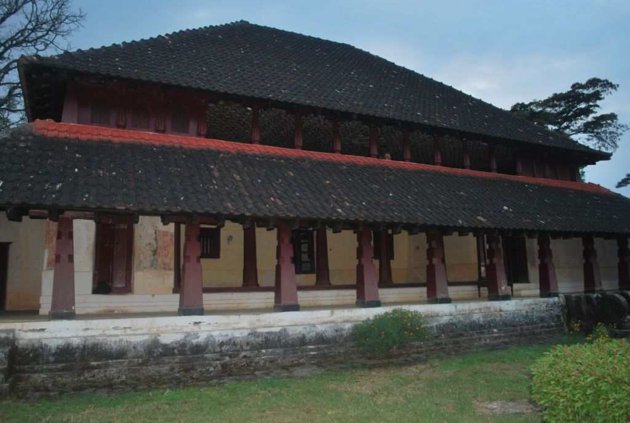
We enter a small hamlet called Yavakapadi in Kakkabe, where the Nalknad Aramane built by Dodda Veerarajendra in the 18th century awaits us. There are coffee plantations all around. A small mud road appears out of nowhere. A beautiful two-storey structure painted in red with a tiled roof, old wall paintings and pillars, gazes at us as we open the portals of the palace. A small mandapa in white is located close by. A drizzle starts as we hear a sound behind us. A caretaker silently opens the main door for us. We are the only visitors. As we soak in the moment, we are given a capsule of history.

Hyder Ali captured Coorg when Lingaraja I died in 1780 and took the young princes, Dodda Veerarajendra and Linga Rajendra, captive. They were sent to a fort in Gorur and a minister ruled over Coorg. While Hyder Ali fought the British, the locals rebelled and overthrew the minister. Tipu Sultan recaptured Coorg, but Dodda Veerrajendra escaped. He fought relentlessly against Tipu Sultan and during one of the wars he retreated into a dense forest in Nalknad. He built a palace here and made it into his operation base and also got married to Mahadevammaji.

The caretaker shows us around. We climb a small ladder and shows us to a hidden chamber in the roof. We are also taken to the torture room, the royal bedrooms, and the main durbar.
The palace, which had seen happier times, was also witness to the end of the dynasty. It was the final refuge of the last king, Chikkaveerarajendra, who spent his last few days hiding from the British who eventually deposed him. In many ways it is the only living symbol of the beginning and the end of the Haleri dynasty.

We head downstairs and sit by the pillars. A government school has now been built adjoining the palace. A bunch of schoolchildren are playing about. I wonder if they realize that their childhood playground was once a battlefield. As I sit there pondering, the rain tumbles down, refreshing the mood and the atmosphere.

source: http://www.in.lifestyle.yahoo.com / Home> Travels / by Lakshmi Sarath / Monday, February 18th, 2013