Category Archives: Records, All

Kodagu gets world heritage tag

The nomination process which started in 2002 during the NDA government and then followed since 2004, successfully ended India’s campaign of getting natural sites included in UNESCO’s World Heritage Site list.

As far as Kodagu is concerned, a total area of 652 square kilometres, covering Pushpagiri, Bramhagiri and Talacauvery Wildlife Sanctuaries and its clusters, namely Kerti Reserve Forest and Padinalknaad Reserve Forest, have been included in the coveted World Heritage Site list. This was announced in the high-level meeting of the World Heritage Committee held in St Petersburg, Russia, on Sunday, sources told Express.

10 sites from Karnataka and 39 in total from India have been included in the list. Kodagu falls in one of the bio-diversity hot spots of the world, known for its rich flora and fauna and dense forest cover. Sources revealed that the meeting was represented by 17 countries, which strongly supported India. The Indian delegation responded to a range of questions and clarifications asked by the high-level committee before announcing the status. Conveners of Wildlife First A A Thammo Poovaiah and Praveen Bharghav told Express that it is a rare recognition and honour for the people of Kodagu and Karnataka for their efforts to conserve their heritage and tradition.

Reacting to this development, MLA M P Appachu Ranjan said that it is unfortunate that in spite of opposition from the people and state, the Government of India has forwarded the proposal to UNESCO. He added: “We will discuss with the CM and look forpossibilities of questioning this decision in the court of law.

source: http://www.newindianexpress.com / Home> States> Karnataka / by B C Dinesh / Express News Service / July 03rd, 2012

Ashwini Ponnappa

KEY FACTS
Full Name: Ashwini Ponnappa
Height: 5’5″
Born: 18 September, 1989 (22 years)
Country: India
Sports: Badminton
___________________________________________________
About Ashwini Ponnappa

Ashwini Ponnappa is one of India’s leading badminton players in the women’s doubles category. She is known to represent India in the doubles’ category with Jwala Gutta. In 2010, she earned accolades and fame when she won the gold medal in the women’s doubles category partnering Gutta, in the Commonwealth Games.

Ashwini Ponnappa Medal Record

2006: Gold – South Asian Games
2009: Won – National Badminton Championships (Women’s Doubles)
2010: Gold – South Asian Games (Mixed Doubles)
2010: Gold – Commonwealth Games (Women’s Doubles)
2010: Silver – Commonwealth Games (Mixed Team Event)

Ponnappa won the National Badminton Championships title twice in doubles event in 2006 and 2007. She also won gold medal partnering India’s V Diju at the 2010 South Asian Games in the mixed doubles event.

Ponnappa again teamed up with Gutta to win the bronze medal at the World Badminton Championships in 2011. It was a significant event in Ponnappa’s life as it was her first semifinal of a key tournament.
__________________________________________________

source: http://www.timesofindia.indiatimes.com / TOI Home> Olympics 2012> Team India> Ashwini Ponnappa / June 29th, 2012

Akshay Rao topper in science stream for Kodagu

Akshay Rao secured the top place in the science stream scoring 582 marks followed by M.B. Pavan with 578 marks and N.D. Bopanna with 577 marks in Kodagu district.

All three were students of Vidyaniketan PU College in Gonicoppa in Virajpet taluk.

In the Commerce section, K.K. Anita of St. Michael’s PU College, Madikeri, came first scoring 575 marks. Second place was shared by C. Pooja Charmanna of Srimangala PU College (574 marks) and R.P. Sonali of St. Joseph’s PU College, Madikeri. Third place shared by P. Chaitra (573) of St. Joseph’s PU College, Madikeri and B.A. Suramya of the St. Michael’s PU College, Madikeri.

In the Arts section, K.V. Shobha of Nellihudikeri Government PU College emerged topper by scoring 532 marks. K.C. Balakrishna Nayak of Sampaje PU College and K.M. Jasmina of Kodlipet PU College shared the second place at 526 while K.J. Pavita (521) of Vigneshwara PU College in Shanivarasante, Somwarpet taluk, got the third place.

Kodagu district recorded 73.11 pass percentage in the second PU exams with girls outnumbering boys in terms of pass percentage securing 79.76 per cent passes against 66.09 per cent scored by the boys.

Kodagu stood fourth in the State last year.

A total of 5,433 students took the examinations in the district and 3,972 passed, an official press release said here.

There were 2,791 girls who wrote second PU exams of which 2,226 passed. Among 2,642 boys, as many as 1,746 passed.

source: http://www.TheHindu.com / National> Karnataka / by Hindu Staff Correspondent / Mysore, May 25th, 2012

Joshna Chinappa claims the Chennai Open International Squash Championship


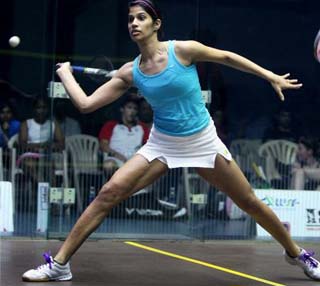
Joshna Chinappa claimed her maiden WISPA title at home, and sixth overall, as she rallied to beat third seed Sarah Jane Perry 3-1 in the final of the Chennai Open International Squash championship on Saturday 26th May.

The 2nd seeded Indian, ranked 71 in the world, recorded a 9-11, 11-4, 11-8, 12-10 win in the summit clash against her 3rd seeded British rival.

Joshna started off in a sluggish manner and lost the close opening game, in which score were 8-8 at one stage.

However, in the second game, Joshna build up a 6-3 advantage and was swift in her moves, covering the court well.

The Indian took five of the six points to draw the parity, pocketing the second game in just 10 minutes.

The third and the fourth games were closes affairs as Joshna trailed initially in both but showed tremendous fighting ability to come back and win.

Mukund Laddha
(Mukund Laddha GoforSports Special Contributor)

source: http://www.goforsports.org / by Mukund Laddha / Saturday, May 26th, 2012

Indian women lift Asian Squash title; men falter against Pak

In the women’s final, Joshna Chinnappa waged a grim battle against world number 16 Joey Chan and Dipika Pallikal, against world number seven Annie Au to seal the deal in India’s favour. File photo: V. Ganesan. / The Hindu
Indian women squash team today created history by winning its maiden Asian title by defeating top seed Hong Kong 2-0 in the final in Kuwait.

The men’s team, however, went down 0-2 against Pakistan in the summit clash in the 16th Asian Team Squash Championship.

In the women’s final, Joshna Chinnappa, ranked 71st in the world, waged a grim battle against world number 16 Joey Chan before winning 11-3 11-8 8-11 11-8 in 38 minutes to put India 1-0 ahead.

Dipika Pallikal, ranked 14th, then complemented the superb show by her compatriot, winning 11-8 12-10 11-8 against world number seven Annie Au in 32 minutes to seal the issue in India’s favour.

India’s best performance in the women’s team championship was a silver medal at the last championship held in 2010 in Chennai.

Unperturbed by the difference in rankings, Joshna stamped her class over Chan right from the beginning. She took advantage of the fact that the day before, her opponent had to endure five hard games against her Malaysian counterpart Delia Arnold.

Joshna’s aggressive play, laced with delicate drops and deception, was simply too much for Chan to handle as she dropped the first game 11-2 in less than 10 minutes.

Joshna kept her composure to keep at bay an aggressive Chan in the second game. The Hong Kong racqueter seemed to be warming up in the third game and her shots were more effective as she had the Indian scurrying around the court.

Unaffected by the loss of third game, Joshna came back with a vengeance and wrapped up the fourth game and match to give India the much needed first point.

Dipika went in next against world number six Annie.

Dipika had never beaten Annie earlier but that did not deter her determination.

Dipika’s aggression paid dividends against Annie, who is renowned for a steady lob and drop game. The Indian kept the pressure on her opponent throughout the match with her aggressive play and characteristic finishing shots.

Annie made a gallant fightback in the third game, but Dipika held her nerves to claw back from 4-7, winning six straight points to help India collect their first ever Asian senior women’s title.

The Indian men’s team, however, faltered at the last hurdle against arch rivals Pakistan.

National champion Saurav Ghosal squandered a 2-0 advantage and went down in five games to Pakistan’s number one Farhan Mehboob in the first singles.

The script did not change in the second singles as Siddharth Suchde lost to Farhan Zaman in five games.

The India’s men’s team equalled its silver-winning performance in the team championship in the inaugural edition of the tournament held in 1981 in Karachi.

The Results (finals):

Women: Joshna Chinnappa bt Joey Chan 11-3 11-8 8-11 11-5 (32 min)

Dipika Pallikal bt Annie Au 11-8 12-10 11-8 (37min).

Men: Farhan Mehboob bt Saurav Ghosal 10-12 6-11 11-7 11-6 11-9.

Farhan Zaman bt Siddharth Suchde 11-7 11-6 11-13 7-11 11-9.

source: http;//www.TheHindu.com / Sports> Other Sports / PTI / New Delhi, May 06ht, 2012

2012 top Asian hotels for families

SINGAPORE – 2012 Travellers’ Choice® award-winning Hotels for Families have been announced today. This year, 504 top family-friendly properties were recognised in 25 markets around the globe including Asia, Australia, the South Pacific, Africa, Caribbean, Europe and the U.S.

In Asia, Club Med Sahoro – Karikachi Kogen in Shintoku-cho, Japan came in first while Club Mahindra Kodagu Valley in Madikeri, India took the second place.

In Thailand, Phuket laid claim to 6 out of the 10 top hotels in Thailand while Hua Hin, Bangkok, Koh Samui and Mae Ai had 1 winner each. The Chava Resort in Phuket took the first place in Thailand and sixth place in Asia.

In Indonesia, Club Med Ria Bintan was crowned the top hotel. Bali secured 6 out of the 10 top winning hotels, Bintan gained 2 while Bandung and Pulau Sugi had a winner each.

In Malaysia, Casa del Rio Melaka made it to the top spot followed by Somerset Ampang Kuala Lumpur and Jonker Boutique Hotel in Melaka.

Award winners were determined based on the hotels most highly rated by those who travelled with family. Unlike any other honours, TripAdvisor Travellers’ Choice winners are based on millions of valuable reviews and opinions from travellers around the world.

“Travellers looking to plan their family trips need not look any further with these highly-rated family-friendly properties. They are great vacation and accommodation ideas by those who really matter — travellers themselves,” said Jean Ow-Yeong, TripAdvisor spokesperson.

Select Travellers’ Choice Hotels for Families Award Winners:

Top 10 Hotels in Asia

Club Med Sahoro – Karikachi Kogen, Shintoku-cho, Japan
Club Mahindra Kodagu Valley, Madikeri, India
Hong Kong Disneyland Hotel, Hong Kong, China
Radhika Beach Resort, Diu, India
Country Inn & Suites By Carlson, Vaishno Devi, Katra, Katra, India
The Chava Resort, Phuket, Thailand
The White Hotels, Katra, India
Lee Garden Service Apartment Beijing, Beijing, China
Club Med Ria Bintan, Bintan, Indonesia
Shervani Hilltop, Nainital, India

Top 10 Hotels in Thailand

The Chava Resort, Phuket
Marriott’s Phuket Beach Club, Phuket
Outrigger Laguna Phuket Resort & Villas, Phuket
Blue Lagoon Resort Hua Hin, Hua Hin
Marriott Mai Khao Beach, Phuket
Courtyard Phuket at Surin Beach, Phuket
Mayfair, Bangkok – Marriott Executive Apartments, Bangkok
Andara Resort and Villas, Phuket
ShaSa Resort & Residences, Koh Samui, Koh Samui
Maekok River Village Resort, Mae Ai

Top 10 Hotels in Indonesia

Club Med Ria Bintan, Bintan
The Westin Resort Nusa Dua, Bali, Bali
Villa Awang Awang, Bali
Club Med Bali, Bali
Telunas Beach Resort, Pulau Sugi
Nikoi Island, Bintan
The Villas Bali Hotel & Spa, Bali
Padma Resort Bali at Legian, Bali
Golden Flower, Bandung
Alam Indah, Bali

Top 10 Hotels in Malaysia

Casa del Rio Melaka, Melaka
Somerset Ampang Kuala Lumpur, Kuala Lumpur
Jonker Boutique Hotel, Melaka
Tanjong Jara Resort, Dungun
Courtyard @ Heeren Boutique Hotel, Melaka
The Andaman Langkawi, Langkawi
The Danna Langkawi, Malaysia, Langkawi
Shangri-La’s Rasa Ria Resort, Kota Kinabalu
Prince Hotel & Residence, Kuala Lumpur
Shangri-La’s Rasa Sayang Resort & Spa, Pulau Penang

source: http://www.eturbonews.com / eTN Global Travel & Industry News / April 11th, 2012

Vivek Madappa of ‘Humming Bird’ lectures at Harvard


Caption: Vivek Madappa with his twin brother Vinod Thimmaya.
Mysore, Apr. 11
P.B. Vivek Madappa, proprietor of Humming Bird Suites Pvt. Ltd, Bangalore, visited Harvard University in the US to give a lecture on ‘Entrepreneurship: Opportunities and Challenges’ on Mar. 24 and Mar. 25.

Perhaps Madappa is the first person from the Kodava community to give a lecture at Harvard.

Madappa obtained his MBA degree from Mumbai’s Jamnalal Bajaj Institute of Management Studies (JBIMS) after completing his engineering. He worked in several well-known companies and his last assignment was at Kolkata as General Manager TATA Tea (Marketing Dept).

He quit the job and along with his twin brother P.B. Vinod Thimmaya, who is also a B.Ed. MBA graduate, started their own innovative hospitality business called Humming Bird Suites Pvt. Ltd. in Nov. 2005 that offers corporate executives, affordable accommdation alternative to the expensive star hotels in major cities in India.

They won the prestigious Emerging India Award-2009 for travel and tourism, instituted by CNBC-TV18 and powered by CRISIL. Humming Bird is one among the seven winners out of the three lakh applications received by CNBC under seven business categories.

The company has tie-ups with 70 companies like IBM, CISCO, DELL, SAP, American Express, etc. It has 300 apartments across 22 properties in Bangalore, Chennai, Hyderabad, Mumbai, Pune and Gurgaon.

Madappa and Thimmaya are the sons of Puttichanda Belliappa and late Ponnu Belliappa.

Star of Mysore had published a report about the brothers and their innovative enterprise on Jan. 15, 2010.

source: http://www.StarofMysore.com / General News / April 11th, 2012

Storming the male bastion


Amidst 22 rugged, sweaty and volatile men, a lone woman stands tall, not much in height, but solid in stature.

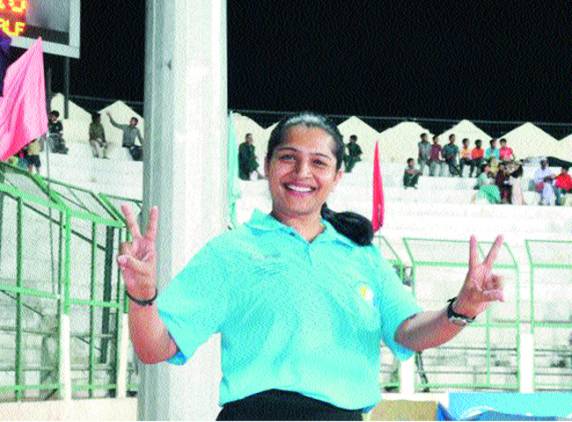
The soft-spoken and bubbly Pachimanda Shivappa Anupama is transformed into a tough, assertive ‘whistle blower’ when she dons the role of an umpire on the hockey turf.

Taking a path seldom travelled by women, some eight years ago, Anupama became the first woman hockey umpire from Karnataka and from then on she has carried on, without as much as a second thought.

Though fully realising that the job isn’t lucrative, Anupama has stuck to her task due to sheer passion and dedication.

Although she’s missed out on a London call for the Summer Olympics, she’s not disheartened. Even as she gears up for the four-nation women’s tournament in New Zealand next month, Anupama admitted officiating in the Olympics remains her long cherished dream, which she is confident of achieving sooner than later.

“The fact that I’m not going to be in London for the Olympics hurts, but that does not mean I’m sitting and sulking, instead I’m working harder to get to my dream destination, which is the quadrennial extravaganza,” asserted the 30-year-old Kodava lass.

Surviving in a stream, which is pre-dominantly a men’s arena, Anupama, over the years, has earned respect and appreciation from players and officials for her unstinted efforts.

Ask her if she is intimidated by male players while officiating, and the answer is a vehement, “No! Once I’m on the turf it does not matter to me whether I’m covering a men’s or a women’s match. I’m there to do my job and I do it sincerely.

Although men’s matches do tend to get violent, thankfully, I haven’t officiated such matches,” said Anupama who is also the only women’s hockey umpire from the country to have officiated in more than 50 international tournaments.

A couple of years ago, when Anupama, who was struggling to hold a job, settled down as a housewife, many thought she would bid adieu to her dreams. But the spunky woman proved such thoughts were ill-founded.

“I’m blessed to have a family which is very co-operative. Before marriage, my parents supported me, and now I have the unconditional backing of my husband Mandanna Mundanda, so there is no question of quitting. When I quit, I have to be an Olympian (umpire) and I won’t settle for anything less,” signed off Anupama.

Way to go girl!

source: http://www.DeccanChronicle.com / Home> Tabloid> Bengaluru/ Dc / March 22nd, 2012

Chennamma Awards for 16 women

Bangalore:

The state government honoured 16 women and six organisations with the annual Kittur Rani Chennamma Award on International Women’s Day.

Each year, the state government awards a cash prize along with a citation to women’s welfare and empowerment group across the state. The Stree Shakti groups at the taluk and district levels were honoured based on their last year’s achievements.

Chief Minister D V Sadananda Gowda along with other dignitaries handed over the awards for 2011-12 to women for their contribution to their respective fields..

Under the women empowerment organisations category, Cicopa from Bangalore, Paripoorna Grameena Abhivridhi Mahila Seva Samsthe from Dharwad, Yashaswini Mihila Mandali Kola, Basweshwara Vidya Samsthe from Chitradurga, Krishi Hagu Gramina Yuva Jana Abhivridhi from Haveri and Gramina Udhyoga Seva Samsthe from Doddabalapura won ` 25,000 each along with citations.

Under the individual women achievers category, Leela Krishnamurthi and KB Sarvamangala Shastri from Bangalore, Kodikandi Kaveramma Sommanna from Madikere, Dr Rekha B Patil from Bijapur, Pushpa Ramachandra from Gadag, Annapoorna Nivani from Belagaum and Nirmala Jhodappa Yetanati from Koppal won `10,000 with citations.Shilpa Nanjappa from Kodagu, A Rukmini from Chamarajnagar, Nagarathna Nagaraj from Dharwad, Naseem Bhanu Abdul from Bagalakote and Lakshmi Mahadev from Belagaum won `10,000 each for their contribution.

source: http://www.ibnlive.in.com / South> Southern News> Karnataka / The New Indian Express / Express News Service / March 09th, 2012

AINMANE: Preserve it for Posterity

Ainmane, the house of the elders in Kodagu, has given an opportunity for the families to live without any discrimination. Men and women were considered equal. If a girl whose married life was not happy and if she had a serious problem in her husband’s place, she had a right to leave her in-laws’ house and live at Ainmane as long as she lived. Obviously, Ainmane protected women by providing a shelter with affection.
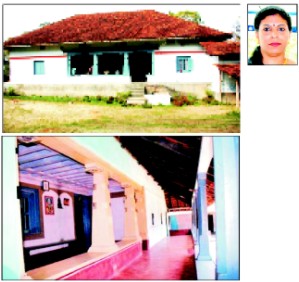
The pressures of 21st century’s globalisation and urbanisation has made people of Kodagu re-think about their cultural heritage and rich tradition. Today, one can see this healthy growth in their thoughts too with each ‘Vokka’ trying to protect their Ainmane — more as a prestige issue for every family to have their Ainmane renovated, re-built and protected. With some hope towards a prosperous life, let’s preserve our Ainmanes for posterity.

One finds Kodavas’lifestyle unique. Its recorded history dates back to 18th century. The people here live in a hilly region amidst heavy rain, cold and wild animals. Hence they have their own lifestyle and culture that is unique in its nature.

Kodagu people lead their lives in houses that stand apart in architecture. The house that is remarkable in its structure and a place of unique bonding, that ancestral house is called Ainmane. Ainmane has always stood as a mirror reflecting the Kodava culture, life, family practices, worships and festivals according to seasons.

Kodava culture enjoyed joint family system in the past. It is because of Ainmane that Kodava families have a family name. According to the names, the families of Vokka or Vamsha is identified. Under one Vokka, there are many family units. Many Vokkas have more than 500 units. All these families put together has one Ainmane. The family also has its own ornaments, weapons, implements used for agriculture, the gift from the kings who ruled Kodagu etc. These are treasured items that are collected and preserved.

Based on this, Ainmane is not only a living place for families but it acts like a museum of the community that helps to enhance the cultural heritage of Kodavas.

The relationship between Kodagu and Kerala seems to be closely knit since ages. Ainmane stands as a proof to it. Comparing to the house of Nayars of Kerala (that is called as Taravad) and the Ainmane, we can see many similarities. The influence of Malayalam on Kodava language cannot to be ignored. Similarities can be found between the two languages. The festivals, a few rituals, ceremonies performed and some celebrations have a strong Malayalam impact. It is clearly identified that Ainmane has played a significant role and has provided enough room to have a good relationship between Kodagu and Malayalam province. More important is the structure and architecture of Ainmane that is a living example to recognise the relationship from the past between Kodagu and Kerala.

The Kings who ruled Kodagu built their Palaces in the same style of Taravad houses. Towards the North of Kodagu in a place called ‘Yavakapadi,’ king Doddaveera Rajendra, who ruled Kodagu, built a Palace in Nalaknadu village in 1792. Architecture of this Palace resembles Ainmanes of Kodavas. This clearly shows that architecture of Ainmane has been influenced from Kerala and hence instilled the same kind of style to their Palaces.

Likewise, the Palaces that exhibit their majestic nature seem to be unique, like that of Ainmane that which is a link to depict the history of Kodavas of Kodagu. The pivot of joint families was the Ainmane where in the past era, people of different age groups lived together. The centre was always full of life. But today, because of modernisation, the Ainmane is only an epitome depicting Kodava cultural heritage.

Modern education and urbanisation has opened a new lifestyle for Kodavas. Herein they look down upon their own culture and hence the existence of Ainmane has become obsolete. Higher education has made many to take up urban residence. Therefore, elders of the family are the only people who are living in Ainmane; but after their death, Ainmane is sort of abandoned and edge towards dilapidated condition, without any family living there. In a few circumstances, there are modern style houses coming up. Members of the families live in these modern houses near to Ainmane, which is kept locked. They open it at dawn and at dusk to light the traditional lamp at the Nellakki Baade inside it.

As families become financially stable, they try to migrate to the cities either selling their property or asking somebody to look after it. Such families have abandoned Ainmane and hence, most of them are in a neglected state. Growth in economic conditions and the family planning followed by Kodava families has resulted in one or two children in a family. Moreover, the children are brought up in cities. Education is provided there and hence they get employed in the cities itself. The above reasons have led Kodava families to leave their native. All family members have a right on Ainmane, but their lack of interest and their dislike towards rural lifestyle have prevented them to give a serious thought on their ancestral house.

The house of elders has given an opportunity for the families to live without any discrimination. Men and women were considered equal. If a girl whose married life was not happy and if she had problem in her husband’s place, she had a right to live at her parents’ Ainmane. Obviously, Ainmane protected women by providing them shelter and respect.

The pressures of 21st century globalisation and urbanisation has made people of Kodagu re-think about their cultural heritage and rich tradition. Today, one can see this healthy growth in their thoughts too with each Vokka trying to protect their Ainmane — more as a prestige issue for every family to have their Ainmane renovated, rebuilt and protected. With some hope towards a prosperous life, let’s preserve our Ainmanes for posterity.

Significance of Ainmane

Ainmane is not only a part of the culture of Kodavas, but also of Kodava dialect speaking communities. Though Ainmanes of all sects are similar, they are also called Balyagattumane, gurukarana mane, gurumane etc.

Rev. G. Richter writes in the Gazetteer of Coorg (1870) that Ainmane usually is near paddy fields. Ainmane would be one-storied and square shaped, with an attic. Though east-facing houses are preferred, more emphasis was on houses facing paddy fields. A typical Ainmane will have two doors at the entrance. Entering inside, Nadu mane is found. Living rooms in this square-sha-ped house have small doors and usually no windows.

Ainmane has an open roof space in the middle, so that rain water is collected within and excess water is drained out. The house consists of two doors to go to backyard. Front portion of the house is a canopied open hall called as Kaiyale. It consists of a 2-feet high seater of thick wooden plank which is used as a bench, called Aimara. Daughters-in-law of the house are not allowed to sit on Aimara whereas married daughters of the house can sit on it. Elders of the family usually sit here to exchange cordialities, discuss various issues and take important decisions.

Two massive wooden poles adorn the entrance. The central Nadubaade would consist of three wooden poles. The first pole is called as Kannikamba — it supports the whole roof of Ainmane. The kannikamba is as significant as the thook bolcha (hanging lamp) lit everyday at the Nellakki Baade (prayer room).

During ceremonies, family members would seek blessings by touching the base of kannika-mba and then the feet of elders. Images of sun, moon, flowers etc. adorn Kannikamba and main doors, signifying that Kodavas were nature worshippers.

An integral part of Ainmane is Kaimada — an important structure built in memory of the founder of that family or Vokka. It is a prayer place which is used during happy or sad ceremonies.

At Ainmane, the prime position is given to karona, the head of that particular family. Unique feature about Kodava culture is that men and women share same kind of respect, status and position.

Earlier, families of a Vokka lived together at Ainmane. Later, a few families left Ainmane to live independently and improve their property. The result was joint families gave way to nuclear families. New houses are built in modern architecture. But during festivals and other occasions, Vokka members gather at Ainmane and partake in the ceremonies and feast, symbolising unity.

source: http://www.StarofMysore.com / Feature Articles / March 04th, 2012