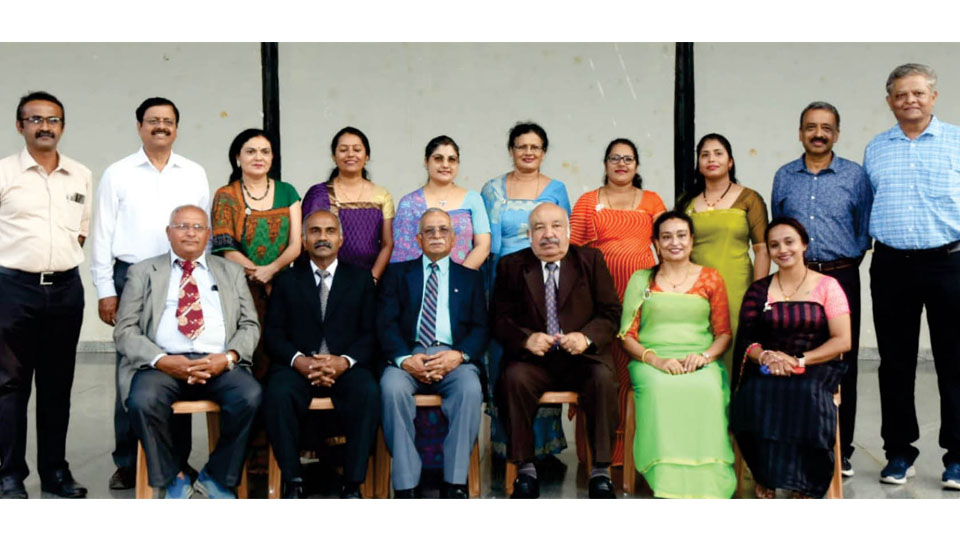
Sitting from left: Muckatira P. Mandanna (Joint Secretary); Dr. Bottengada G. Ponnappa (Vice-President); Wg. Cdr. Mundumada D. Aiyanna (special invitee); Ammatanda K.Chinnappa (President); Mrs. Chendanda Navin Aiyappa (Secretary) and Chenanda Aswini (Nancy) Kuttappa (Treasurer); Standing from left: Committee Members Bottengada G. Belliappa; Ulliyada Chidananda; Puliyanda Sujatha; Kodandera S. Pavithra; Iychettira S. Preethi; Kuttanda Myna Muddappa; Kavadichanda Devamma; Muckatira Sujatha; Dr. Devanira M. Nandakumar and Kollimada Daya Achaiah.
A group photo of new office-bearers of Gokulam Kodava Sangha for the period 2022-24 who were elected during its 16th AGM held recently.
Another special invitee Nayakanda U. Appaya not in pic.
source:http://www.starofmysore.com / Star of Mysore / Home> Gallery>Photo News / August 22nd, 2022
‘One for All, All for One’ is the motto driving Koothi, a settlement in Kodagu district, which has a lesson or two to teach in self-governance.
Madikeri :
In the sylvan vistas of Kodagu stands a village, small, yet tall and proud. As one approaches Koothi, as this village is known, it becomes certain that this self-sustaining microcosm of fraternity, self-reliance and equality, has stood the test of time to create a system of self-governance, keeping its residents in a state of well-being and independence.
“The soul of India lives in its villages,” observed Mahatma Gandhi. Living this thought, Koothi’s vision for self-governance, while maintaining its democratic and just values, is a unique study into the concept of decentralisation.
About 53 km from district headquarters Madikeri, one is welcomed into Koothi by a vast ground that hosts a community hall and the grama samithi (village committee) building. As one proceeds further, neatly laid-out estates and houses form the heart of this settlement. The village, primarily composed of Vokkaligas and members of Scheduled Castes, symbolises cohesion and belonging. What one finds even more extraordinary is that Koothi abides by its own set of administrative rules and regulations, untouched by modern policies and laws.
“Since ancient times, the grama samithi has been in existence to ensure development and well-being of the village. Any problem or dispute is resolved within the village and our unity is our strength,” explains Mohan MD, president of the Koothi Village Committee.
While Koothi does fall under Tolurushettalli Gram Panchayat, it nevertheless has its own village committee. The village has three sub-villages – Hosmane, Dinekere and Kerekoppa. Once every two years, four villagers are nominated from the sub-villages, who form the committee.
Further, the president and vice-president are elected by the nominated members and this non-political team ensures overall development, welfare and safety of the village. The committee meets at least once every month. “There are over 160 houses and over 600 residents in the village. At least one member from each household must attend the meeting. Anyone who fails to be present is fined,” Mohan adds.
(From left) Lakshmikantha, KT Joyappa and Mohan MD, in Koothi village | Express
Further, the committee holds the important responsibility of maintaining cordial relations between all the villagers, and any dispute is first heard by it. “There are less than a handful of instances when villagers have approached the court or police. Most of the disputes, including property or family rifts, are resolved within the village,” mentions KT Joyappa, former president and a consultant of the committee.
Dispute redressal is very systematic. An application is first forwarded to the committee, which is addressed during the meeting. After the hearings from the parties involved, the dispute is resolved amicably.
“In case of a property rift, committee members visit the spot for an inspection. The committee possesses detailed land survey documents of the entire village. Further, witnesses are heard in favour of both parties. Following this, the issue is heard during the meeting and a judgment passed after consulting and taking into account the facts fulfilled by a majority of the villagers. It is not just the committee members’ decision, but a collective judgment of the village,” states Mohan.
Rarely, there have been instances when a few villagers have moved court against the committee’s decision. “But in all these cases, they have returned to abide by the decision of the committee. While court hearings take years, a dispute addressed by the village committee finds closure in about two meetings,” shares Lakshmikantha, secretary of Someshwara Yuvaka Sangha.
Meanwhile, all proceedings are recorded in a ledger, safely preserved in a secure locker at the committee office. “No matter what, the proceedings recorded in the ledger are not shared with anyone – not even the police,” says Mohan.
The village committee has a separate bank account to collect fines. “The massive committee office and the community hall were built using funds collected by the committee. For the hall which was built over two years ago, each household contributed Rs 17,000. We aim to become self-reliant in all ways and the unity amongst us helps achieve the same,” shares Mohan.
Thanks to its novel, yet time-honoured approach to self-governance, the Koothi Grama Samithi has won accolades from the government too. While villagers from the interior have to frequent the taluk offices for paperworks, officials visit the village as and when summoned by the committee.
Koothi’s social milieu There is an interesting regulation that forbids marriage between residents of the same village. “All of us in the village are like siblings. We have grown up together as blood relatives and hence, from the times of our ancestors, marriage between men and women from the same village is forbidden. Anyone violating this norm is fined,” confirms Lakshmikantha.
Any death in the village is mourned by one and all. The victim’s family is spared the duties and expenses, as every household donates a log of wood to set the pyre and all arrangements at the village graveyard are made by villagers.
source: http://www.newindianexpress.com / The New Indian Express / Home> States> Karnataka / by Prajna GR / Express News Service / October 17th, 2022
It is no secret that India is a cricket-crazy nation and it won’t be an exaggeration to say that life comes to a standstill when the Men in Blue are out on the field.
Ankita with her coach Shihan Keerti.
Madikeri :
It is no secret that India is a cricket-crazy nation and it won’t be an exaggeration to say that life comes to a standstill when the Men in Blue are out on the field. But there are other sportspersons, too, who are trying to carve out a niche for themselves. India’s success in the recent Commonwealth Games at Birmingham when the Indian Tricolour was hoisted scores of times in less-popular sports is a testimony to this.
Opting for such sport is Ankita BT from Madikeri, who is kicking high with karate. Already a junior black belt holder, this 21-year-old has bigger dreams, not just for her, but for the entire nation. Her tryst with karate began as a nine-year-old. “Karate always seemed challenging and I started training,” she recalls. She says there were not many takers for karate among girls and felt the need to break the stereotype.
Ankita, who has been training at Phoenix Academy India in Bengaluru, made her debut at the national championship when she was in Class 8 and craved to achieve more. Since then, she has participated in the All-Indian Independence Cup in 2015, Bangalore Open Karate Championship in 2016, All-India Independence Cup in Goa in in 2016, All-Independence Cup, All-Indian Sports Extravaganza VIE in 2017, Intercollegiate Karate Championship in 2017, KAI Nationals, Indian Seiko Kai Karate Championship and more. She has won several gold and silver medals in many of these competitions.
“Karate is recognised by the International Olympic Committee, but not by the Indian Olympic Association. Though the Karate India Organisation supports athletes to take part in the World Championships and other Asian Championships that help us attain the World Karate Federation ranking, it does not fund the players. Expenses are covered only for the Olympics and Asian Games and we have to spend our own money to take part in other international events,” she adds. A South zone and a state medallist, she is also the vice-chairperson of Women’s Sports Commission of Akhila Karnataka Sports Karate Association.
She is now in Thailand participating in the Open Karate-Do Championship that started from August 19. “I have been training regularly and my ambition is to take part in more challenging championships. I also look forward to participating in the Karate 1 Series A at Kocaeli in Turkey and Karate 1 Series A Jakarta Indonesia Championships in September,” she says.
But sourcing funds has been the biggest challenge and seeks support from the state and sponsors to achieve her goal of representing India and Karnataka at these championships. She says she wants to educate girls on the need for self-defence and motivate more women to join the sport.
source: http://www.newindianexpress.com / The New Indian Express / Home> Good News / by Prajna GR, Express News Service / August 21st, 2022
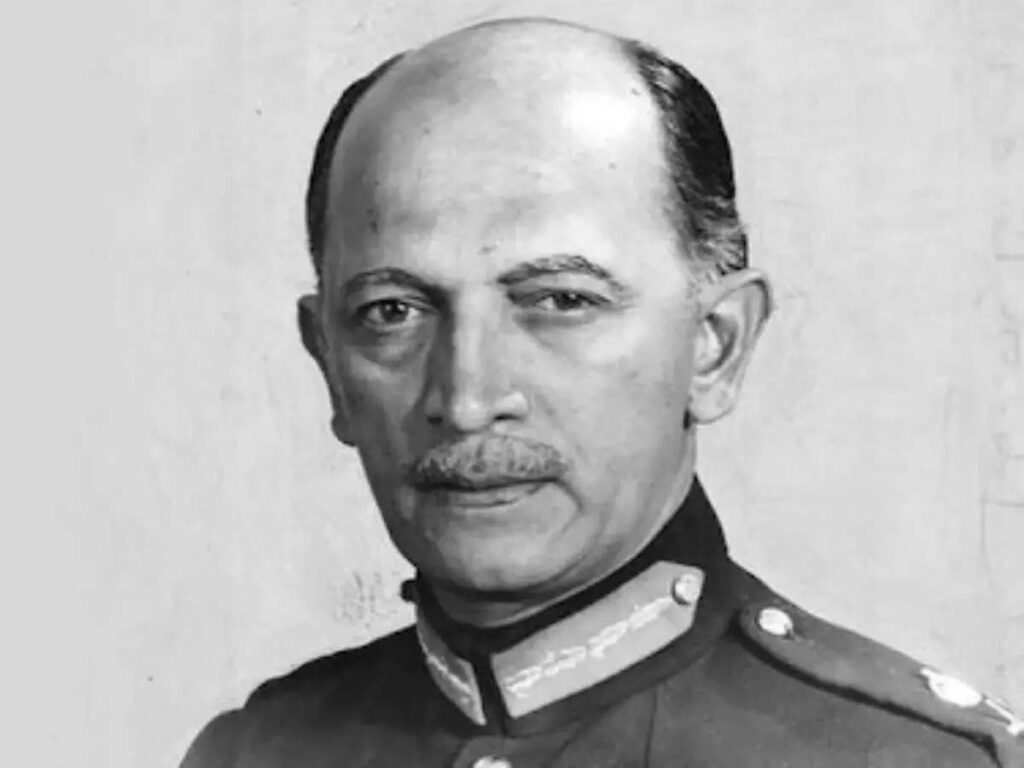
KM Cariappa was the first Field Marshal of the Indian Army in independent India who was made the Chief of Army Staff on 15 January 1949. He started his job with the appointment of a Second Lieutenant in the Rajput Regiment of the Indian-British Army. Along with being the first army chief, Cariappa was the first five star rank officer of the Indian Army. KM Cariappa served the country by serving in the army for 30 years and retired in 1953. But it was not at all that after retirement he stopped his service. Even after retiring, he continued to contribute to the army in one form or the other. On 15 May 1993, KM Cariappa merged with the Panchatattvas.
There is a very popular story about KM Cariappa when he told Pakistan not to release his son and treat him like other prisoners of war. But why did he say this, let us know. The talk is about the 1965 war when it was the last day of the Indo-Pak war. On this day Squadron Leaders KC Cariappa, AS Sehgal and Kukke Suresh were given orders to bomb Pakistani positions. But in the first round of bombing, Pakistani soldiers attacked the aircraft of AS Sehdal with anti-aircraft guns. Although AS Sehgal survived the attack, he had to go back to the base camp.
After his departure, KC Cariappa and Kukke remained in the field and were busy destroying the positions of their enemies. But in the meantime Cariappa’s plane became a victim of continuous Pakistani bullets. Cariappa’s plane got damaged and landed like a ball of fire in Indian territory but Cariappa’s body fell on Pakistan side. After falling, Pakistani soldiers surrounded him and took him into custody. When KC Cariappa was caught, he was asked if he was a relative of KM Cariappa, he told the Pakistanis only his name and rank.
As soon as the President of Pakistan Ayub Khan came to know that KM Cariappa’s son had been taken into custody by Pakistan, he immediately made an announcement over the radio that KM Cariappa’s son had been taken into custody. He conveyed information to KM Cariappa through the Pakistani High Commissioner in India that his son could be released if he wanted, but KM Cariappa, a firm believer in his principles, refused. He said that KC Cariappa is not only his son but the whole country, so he should also be treated like other prisoners of war, but if he wants to leave then other prisoners of war will also have to be released. Other prisoners of war are also like my sons. KC Cariappa remained in the custody of Pakistan for several days and was later released along with other prisoners.
source: http://www.newsdayexpress.com / Newsday Express / Home> Career / by Bhagyashree / August 17th, 2022
Stylist Prasad Bidapa and model Irene Augustin talk about what Independence Day means to them and how they plan to celebrate it.
From the chance to indulge in a long weekend to celebrating national pride – each of us has a different meaning for Independence Day. Taking a cue from this, we talked to two celebrities in Bengaluru about what Independence Day means to them and how they plan to celebrate it.
For city-based Fashion choreographer and stylist Prasad Bidapa, Independence Day is an occasion to honour our freedom fighters. He said, “What is Independence Day without remembering all the great men and women who have fought for our independence?” He extended his gratitude towards freedom fighters, from Mahatma Gandhi and Rani Laxmibai to Subhash Chandra Bose and many other unsung heroes, whose contributions have guaranteed the liberty with which we walk as free citizens of this nation.
In a similar spirit, Bengaluru-based model Irene Augustin expressed her gratitude towards the freedom fighters who had sacrificed their lives to safeguard our liberty. When asked about her plans for the day, she said, “I’m gonna be celebrating Independence Day by hoisting the flag in the morning and going to work and following my passion because I can do that. Thanks for the freedom fighters and thanks to being independent.”
source: http://www.indulgexpress.com / The Indulge Express – The New Indian Express / Home> Culture / by Prattusa Mallick / August 15th, 2022
The Annual General Body Meeting (AGM) of Kodava Samaja will be held on Sept.18 (Sunday) at 10.30 am at Gurumane Hall of Kodava Samaja, Vijayanagar 1st Stage in city.
Samaja President Mechanda M. Shashi Ponnappa will preside, according to a press release from Samaja Hon. Secretary Mukkatira B. Jeevan.
source: http://www.starofmysore.com / Star of Mysore / Home> In Briefs / August 18th, 2022
The 16th Annual General Body Meeting (AGM) and get-together of Gokulam Kodava Sangha was held on Aug. 7 at Kodava Samaja (Ground Floor), Gen. K.S. Thimayya Road, Vijayanagar 1st Stage, Mysuru.
Sangha President Nayakanda U. Appaya presided. On the occasion, Sangha members’ children who have excelled in the field of education and achievers were felicitated.
Sangha Secretary Mynda-panda A. Thimmanna read the annual report while Treasurer Chendanda Navin Aiyappa presented the financial report.
On the occasion, Ammatanda K. Chinnappa was unanimously elected as the new President of Gokulam Kodava Sangha.
Annarkanda Prathima Thimmaiah compered and conducted games along with Pulianda Narien Uthaiah.
Committee Member Bollachanda Jhansi Subbaiah rendered the invocation. The get-together concluded with a cultural programme by Prathima and troupe which enthralled the gathering.
source: http://www.starofmysore.com / Star of Mysore /Home> News / August 18th, 2022
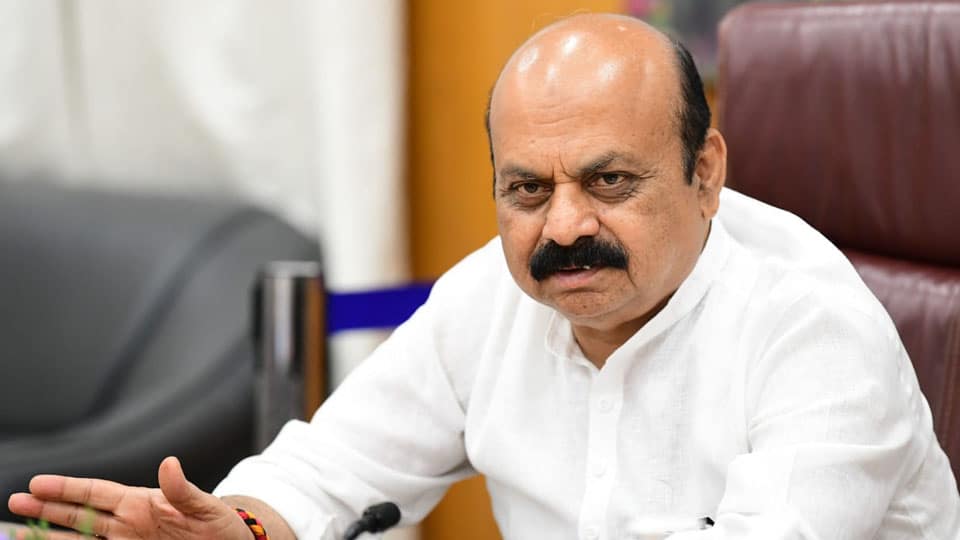
Chief Minister Basavaraj Bommai has released a grant of Rs. 1 crore towards the celebration of Madikeri Dasara.
MLA M.P. Appachu Ranjan had requested the Chief Minister to announce funds for Madikeri Dasara and the CM subsequently recommended the Finance Department to release the grants. The CM also released Rs. 50 lakh for Gonikoppa Dasara.
The Dasara Committee, which was facing a fund crunch as there was no significant contribution from people or corporates, is elated by the grants and is planning to celebrate the festival in a grand manner.
A delegation led by Virajpet MLA K.G. Bopaiah met the CM yesterday in Bengaluru and requested him to sanction funds which were agreed upon.
Gonikoppa Sri Cauvery Dasara Committee Honorary President and former ZP Member C.K. Bopanna, B.N. Prakash, Gonikoppa Sri Cauvery Dasara Committee President Ramakrishna and General Secretary Jimma Subbaiah were present.
source: http://www.starofmysore.com / Star of Mysore / Home> News / August 18th, 2022
The Annual Kail-Poldh Festival get-together will be held on Sept. 11 (Sunday) from 9 am to 5 pm at Kodava Samaja premises in Vijayanagar 1st Stage here.
The day-long programme comprises Ayudha Puja, Sports and Games, Lucky Dip, Honouring eminent Kodavas and distribution of Scholarship to meritorious children. In all, 42 scholarships will be awarded to Kodava students who have studied in Mysuru and passed the respective exams.
Details of Scholarship:
Highest scorers in final exam of 7th Std., SSLC (English), SSLC (CBSE), SSLC (Economically Weaker Section), PUC, BA, B.Com., B.Sc. (Computer Science/Maths), BBM, MBA, Law, MA, M.Com., M.Sc., (PCM/CBZ); BE, BE (Mech), BE (Arch), BE (Computer Science), BDS, MBBS, B.Sc./M.Sc. (Ag.), Diploma in Commercial (Secretarial) Practice, Best sports students in PUC; CBSE XI & XII and ICSE I & II; SSLC (CBSE)
Highest marks in Science; PG in Medicine, MD or MS;
Achievers in Sports at State-level, Graduation in Home Science or Hotel Management; Highest marks in SSLC for Kodava Police Family, Sportsperson in Kodava Police Family representing University of Mysore, must be Kodava Samaja Members.
Applications for the award of Scholarship and Honouring of eminent Kodava Members of Samaja for their achievements in various fields should be sent to Hon. Secretary, Kodava Samaja, Mysuru, to reach before Sept. 2 by 5 pm along with Xerox copies of relevant marks card, certificates, family name and contact phone/mobile number.
source: http://www.starofmysore.com / Star of Mysore / Home> News / August 17th, 2022
A new bilingual title of 21 poems deep-dives into the culture and literature of Coorg, hoping to become a tool to revive their language after UNESCO listed it as a Definitely Endangered Language.
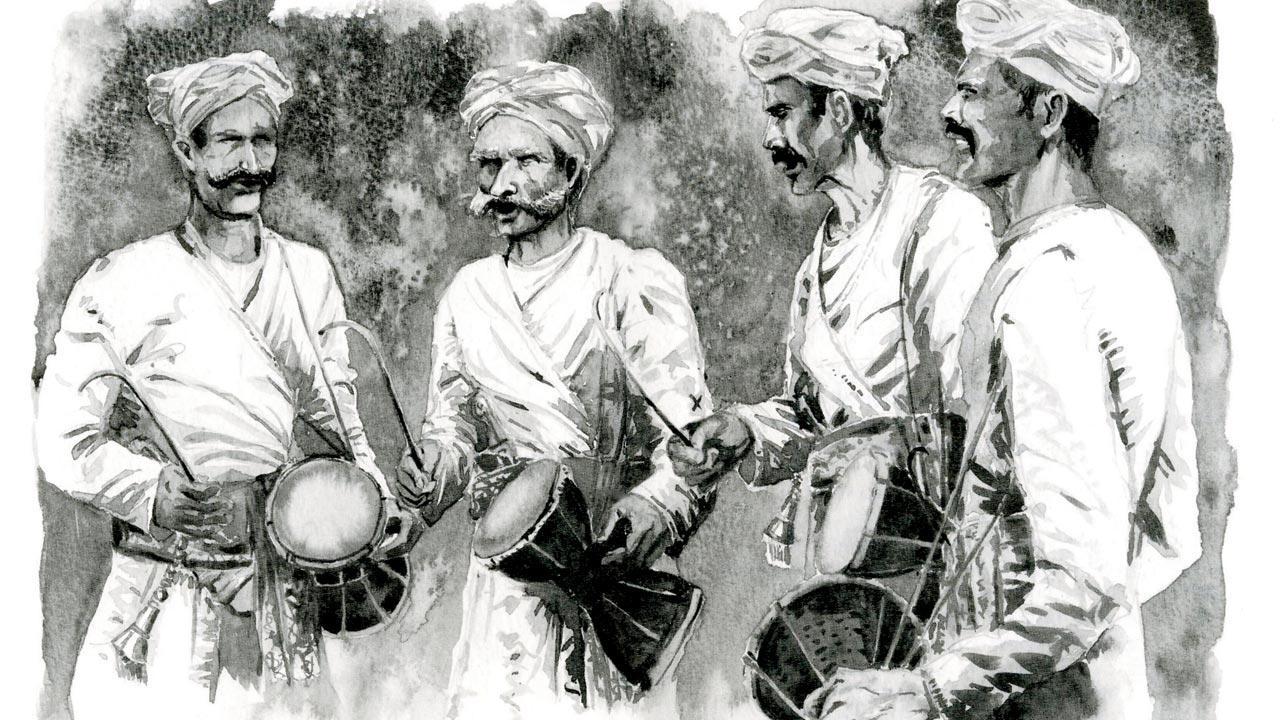
Duditaptkaras, bards of Kodagu, singing traditional songs of the land
“Come and see the ainmanes of old where our ancestors lived as one.”
This line is extracted from Ainmane, a poem in A Place Apart: Poems from Kodagu, by Bacharanianda P Appanna, is dedicated to one’s ancestral home and sums up the core of this seminal literary project. For the first time, poetry by this authority on Kodava takkë (language of the Kodavas) has been translated and transliterated into English by cultural researcher Kaveri Ponnnapa. Apart from home, family, culture and tradition, forest and prayer are the other subjects from everyday life that find their way here.
The language spoken by an estimated 1.25 lakh Kodavas, it was listed by UNESCO as a Definitely Endangered Language. With her studied knowledge, Ponnapa swung into action to resurrect the language of her community. She collaborated with Appanna and his wife Ranu, an educator and poet, and together they released this ode. In the transliterations that appear in the third section of the book, Ponnapa uses the Roman script to relay Appanna’s poetry and creates an exhaustive glossary, thereby paving the way to familiarise it to the larger audience. This was after she realised that it was easy to read for Kodava speakers like her and those with limited or no knowledge of the Kannada script. The accompanying illustrations by Rupesh Nanaiah act as cultural markers of identity and though they are not directly illustrative, the essence of what it means to be Kodava reflects through this seamless symphony of poetry and art, making each poem read like a love letter about the land and its people.
Edited excerpts from an interview with Ponnapa.
What led to Kodava takkë being identified as one of UNESCO’s listed Definitely Endangered Languages of the world? There are multiple, complex reasons why our language finds itself in this position today, including the lack of good educational facilities and economic opportunities for Kodagu [Coorg], its people. The young continue to migrate out of the district. When this happens, there are far greater pressures for them to learn and use a dominant language such as English to secure their place in a new environment. Historically, the Kodava population has been extremely small. This kind of migration for an already small population implies that ultimately, we have an even smaller number of speakers.
The second contributing factor is that ours was an oral tradition. The historical method of oral transmission broke down to be replaced with formal education using the Kannada script, which was then also used to write Kodava takkë. It has limited the expansion of the language to those with access to a Kannada education. The diaspora in particular, who do not have the opportunity to learn Kannada, have no access to written works in their language which would enrich and expand their knowledge of Kodava takkë and encourage them to keep up with their mother tongue.
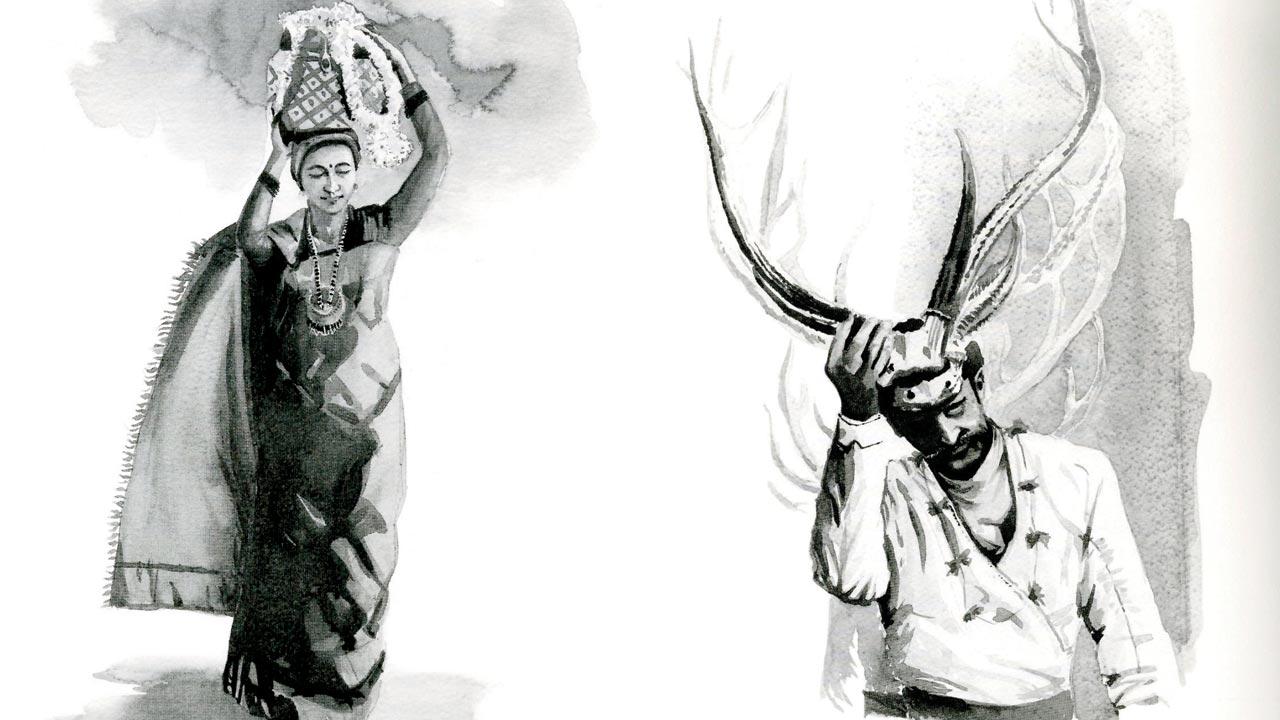
A woman carrying poliya, a basket of assorted food items which seals a new relationship between two clans at a marriage ceremony; (right) Stag horn dance of Kodagu. Hunting, a sacred activity, was once an integral part of life. These dances exist to this day. Pics courtesy/Kaveri Ponnapa
What did you discover while working on the project? I was deeply struck by how the language ideally expressed our specific experiences as a people, and like so many aspects of our culture, was embedded in the landscape, which we hold sacred. Appanna was born and lived in Kodagu when it was still an independent state, when our cultural identity was more strongly defined. His understanding and knowledge of the Kodava language, culture and landscape makes him an invaluable repository of our heritage, a great deal of which has passed into history, but needs to be documented for our future.
Since we were dealing with poetry and song—the traditional ways in which all our cultural knowledge was transmitted across generations—it was fascinating to explore the rhythms of unfamiliar poetic expressions spun out of familiar words, which, in the simplest of ways, became capable of expressing a great deal of meaning and emotion.
Ross Perlin of the Endangered Languages Alliance, had observed: “It’s hard to maintain the full richness, depth and complexity of a culture without its languages.” This depth and richness was revealed while writing the book.
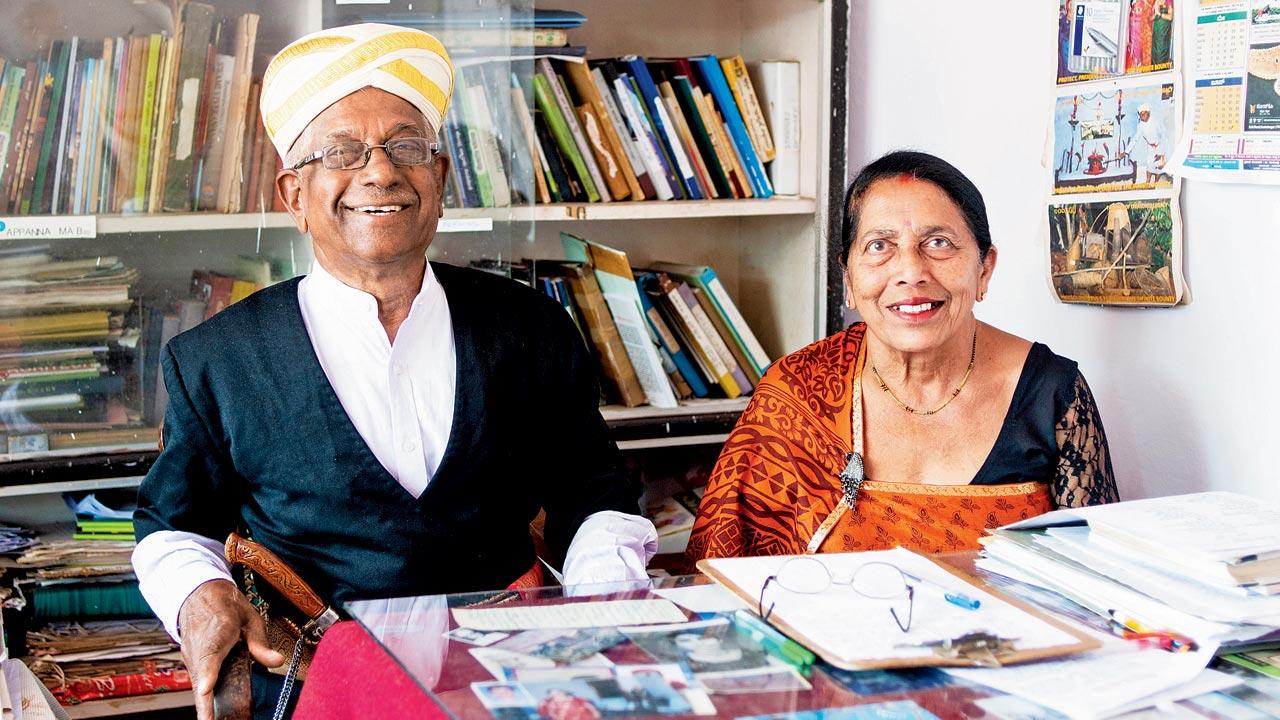
All of Bacharanianda P Appanna’s writing projects are collaborative efforts with his wife Ranu Appanna
How did you overcome challenges of translations and transliterations? The use of the Kannada script for Kodava takkë comes with a series of compromises and challenges, reflected in a loss of linguistic nuance, loss of vocabulary as well as distinct changes in pronunciation and speech for the Kodava language.
While transcribing the words of the poems, many of them sounded different from the original. People habituated to viewing Kodava takkë through the lens of Kannada find it difficult to make a shift, and are content to stay with inaccurate renderings, until the nature of the language itself changes. It took repeated readings, clarifications, and consultations with the Appannas, as well as other native speakers and elders before setting anything down on paper.
Creating audio recordings—which will soon be accessible on my website—was another important way to access the linguistic sounds and rhythms that are lost when written in a script that cannot encompass many of its sounds.
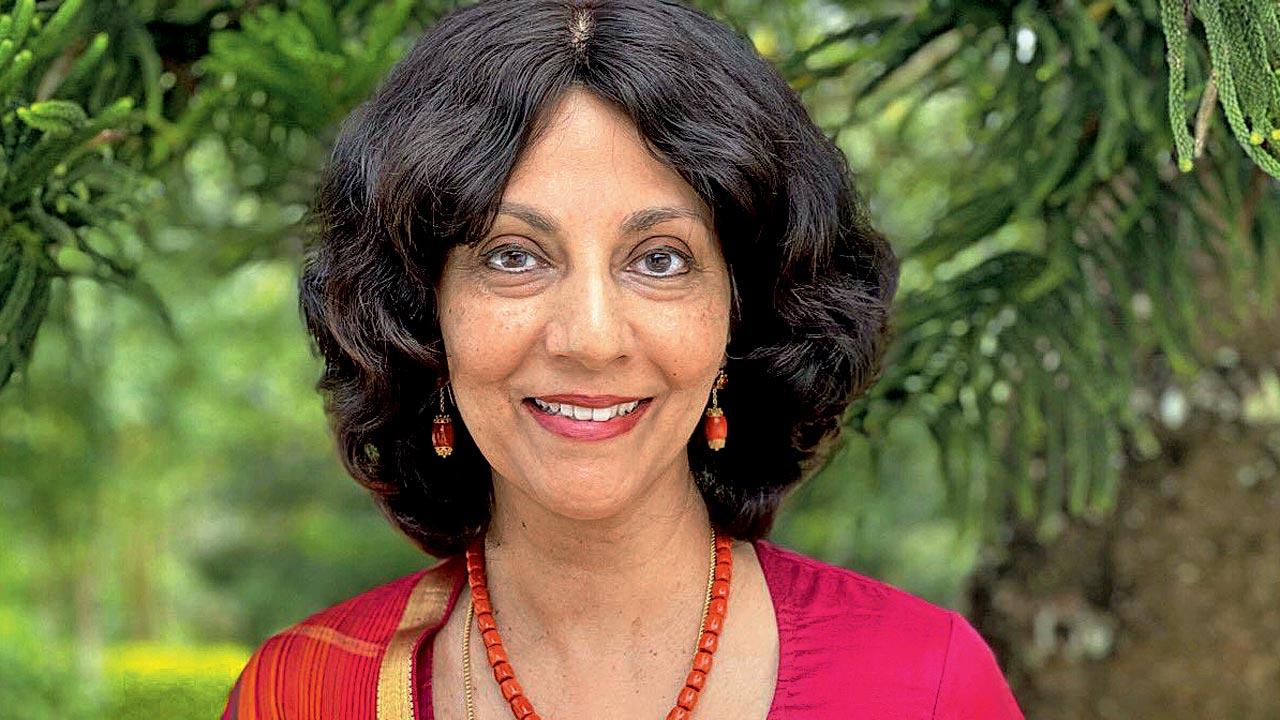
Kaveri Ponnapa
How can Kodava takkë stay alive? One of the ways is to provide a more universally accessible script that is available to the greatest number of speakers. This is where Romanisation comes in. The idea of the transliteration came from my personal experience of being part of the diaspora, and despite being a fluent speaker, having no means to enter into the written works in my language to be able to expand my cultural and linguistic knowledge.
To order a copy : www.coorg.com
source: http://www.mid-day.com / mid-day / Home> Sunday Mid-Day News / by Fiona Fernandez, Mumbai / May 22nd, 2022
WELCOME. If you like what you see "SUBSCRIBE via EMAIL" to receive FREE regular UPDATES.
Read More »