Category Archives: Science & Technology

5 Covid Care Centres opened in Kodagu, says DC

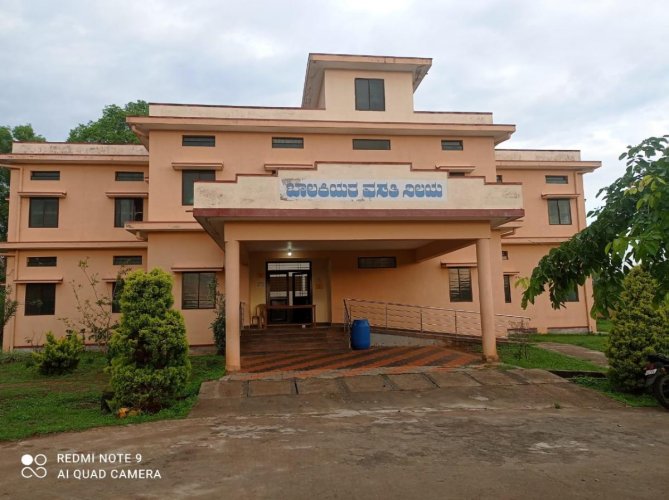
The Covid Care Centre set up at Morarji Desai Residential School in Koodige.

Deputy Commissioner Charulata Somal said that five Covid Care Centres have been opened in the district as the Covid-19 pandemic is spreading fast.

Chairing a meeting at her office on Monday, she said that nodal officers have been appointed for Covid Care Centres.

She directed the officials concerned to ensure proper food and other basic facilities for Covid-19 patients undergoing treatment at the Covid Care Centres.

Facilities of books, newspapers and indoor games should be provided. Cleanliness and hygiene should be maintained at the centres and the premises should be sanitised on a regular basis. There should be no room for any complaint, she said.

Stating that the management of containment zones is good, she felt there is a need to pay more attention to ensure adherence to guidelines.

The statistics related to the pandemic should be properly maintained and disseminated to the authority concerned, she added.

Charulata Somal also noted that posters are not displayed at several containment zones in the district and directed the officials concerned to do the needful.

Stressing on the tracking of primary contacts of Covid-19 patients, she said that the target set by the government towards the tests should be met without fail.

The deputy commissioner also sought from the nodal officials, the day-to-day information on the admission of Covid-19 patients in Covid Care Centres and the availability of vacant beds.

“Regular check-ups of people who are availing treatment at hospitals and Covid Care Centres should be carried out. The health condition of people in home isolation should be tracked regularly,” she added.

Charulata Somal also told officials to ensure the availability of medical oxygen in sufficient quantity.

The controller of drugs has been appointed as the nodal officer for the supply of medical oxygen, she added.

District Health and Family Welfare Officer Dr K Mohan said that medical students have been appointed at the Covid-19 helpline centres. The peoples queries on their health issues will be addressed through the resource persons.

There is a stock of Remdesivir and medical oxygen in the required quantities and 24 jumbo jet cylinders filled with oxygen have been provided to Somwarpet and Virajpet taluks.

Kodagu Institute of Medical Sciences (KoIMS) Director Dr Cariappa, Government Medical College Superintendent Dr Lokesh, Community Health Officer Dr Mahesh, local resident officer Dr Rupesh and Dr Anand provided necessary information during the meeting.

Zilla Panchayat CEO Bhanwar Singh Meena, Additional Deputy Commissioner Raju Mogavira and Assistant Commissioner Srinivas were present.

Covid Care Centre at Morarji Desai Residential School

In the wake of an increase in Covid-19 cases in various villages in Kushalnagar limits, an 80-bedded Covid Care Centre has been set up at Morarji Desai Residential School in Koodige.

People who are diagnosed with mild symptoms are being admitted to the Covid Care Centres. The same centre operated during the previous year as well.

After a health check-up, the inmates who are fit to be home isolated are discharged from the Covid Care Centre.

The patients are treated at the centre for 10 days. They will be admitted to the designated Covid hospital only if there is no improvement in their condition.

A total of 18 people have availed of treatment at the centre during the last three days. Around 600 people who visited the centre have been subjected to home isolation.

source: http://www.deccanherald.com / Deccan Herald / Home> State> Mangaluru / by DHNS, Madikeri / April 26th, 2021
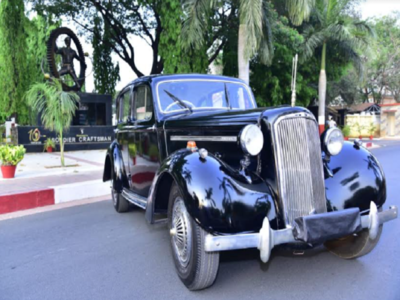
Hyderabad: A 1941 vintage car ‘Humber Super Snipe’ used by Gen Cariappa rehauled at MCEME

The Super Snipe was introduced in October, 1938, derived by combining the four-litre inline six-cylinder engine from the larger Humber Pullman with the chassis and body of the Humber Snipe which was normally powered by a three-litre engine

Hyderabad :

A 1941 vintage car which was once used by Gen Cariappa has become a thing to be proud of for the Military College of Electronics and Mechanical Engineering (MCEME) in Secunderabad which has completely overhauled it. The ‘Humber super snipe’ now stands out as one of the main attractions at the college.


The Super Snipe was introduced in October, 1938, derived by combining the four-litre inline six-cylinder engine from the larger Humber Pullman with the chassis and body of the Humber Snipe which was normally powered by a three-litre engine. The result was a car of enhanced performance and a top speed of 79 mph, fast for its day.

Within a year of introduction, World War II broke out in Europe but the car continued in production as a British military staff car, 4-seater, 4 x 2 , while the same chassis was used for an armoured reconnaissance vehicle and the Humber Light Reconnaissance Car.


The model with MCEME is of 1941 vintage, which was initially assigned with the number of AB-11, which was later changed to AP-10 F 4566 post its decommissioning from Military service.

The vintage car was packed by the British army and ferried to India in 1943 and ultimately assigned to ‘A’ Pl of Army HQ Transport Company.

After Independence, the car was used by the then serving General K M Cariappa, OBE who later became the Field Marshall. In 1958 the car got its marching order and was declared unserviceable and was sent to the Barracks of Equipment and Vehicle Depot in Avadi after its stock transfer inspection.


On December 29, 1964, the Vintage car was taken by 515 Army base Workshop, Bangalore which carried out extensive repairs. The car provided its services to various commandants of 515 Army Base Workshop, Bangalore and after serving for 12 years, on March 10, 1976, the car was once again declared unfit for employment in service.


But that was not the end of it. Since the car was a Vintage and Elite model, in 1977, it was brought to Secunderabad and kept in the Mechanical Engineering Department of MCEME. It remained as a show piece and young officers used to relish watching the old classic. However, the Mechanical as well as the physical condition of the car started deteriorating. Consequently an initiative was taken in 1994 to carry out its complete overhaul by the Mechanical Engineering Department, MCEME.


“When it comes to the maintenance of a vintage car, it can be difficult since replacement parts are often hard to come by, and can end up spending more time in maintaining it than actual utilisation., MCEME said. “With the diligent work of the skilled technicians of MCEME and soldier craftsman of Corps of Electronics and Mechanical Engineering, the Humber Super Snipe still roars and services the Commandant, MCEME,” it said.


With the great legacy behind and efforts of various officers in maintaining the Vintage car, the car was pitched for Competing in Vintage Car Competition on November 10, 1995 against the likes of Rolls, Royce of 1930, Buick Super of 1949 and Little Baby Austin of 1921 and was one of the winners.

source: http://www.eveningstandard.in / Evening Standard / Home> Hyderabad / April 24th, 2021

Lone Covid-19 hospital in Karnataka’s Madikeri functions efficiently despite staff crunch

According to sources, more number of patients are reportedly coming to the hospital from neighbouring district including places like Sulia.

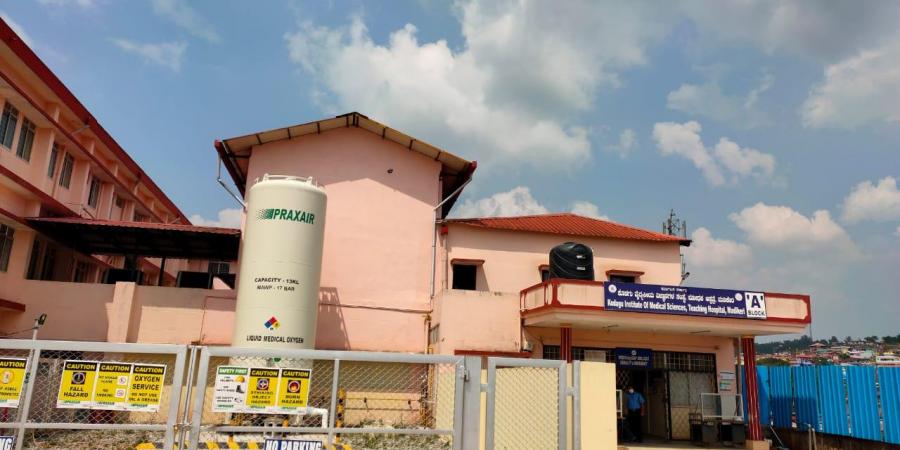
Oxygen supply unit at COVID-19 hospital in Madikeri. (Photo | Express)

Madikeri :

The Government Covid-19 Hospital in Kodagu, which is the only hospital treating coronavirus patients in the district, is efficiently handling the pandemic despite a spike in cases and shortage of staff. 

Nearly 2,000 swab samples are being collected daily at the lone Covid-19 testing lab of the district.

According to sources, more number of patients are reportedly coming to the hospital from neighbouring district including places like Sulia.

A video alleging mismanagement at the Covid Hospital went viral recently, causing fear among many residents. The person recording the video alleged that the Covid hospital in Madikeri did not have enough beds and four persons were made to share a single bed at the centre. 

Nevertheless, this allegation is far from the truth as one of the doctors working at the Hospital clarified, “once a patient tests positive, they will have to undergo many other tests including CT Scan. While the Hospital is equipped with a CT Scan facility, the center is not appointed with a radiologist. Hence, there is a minor delay in availing the CT Scan report as they are availed from a private hospital in Mysuru. Hence, patients are required to wait for nearly two hours at the hospital wards equipped with beds during the waiting period.”

However, this issue was wrongly publicised by a patient who alleged that three to four patients share a bed, while they were just waiting inside a ward for their CT Scan report. 

“The Covid Hospital is equipped with 150 beds attached with the oxygen supply facility. An additional 100 beds equipped with oxygen supply will be operational from Monday. A total of 13,000 liters of oxygen is available at the hospital and the same will be refilled once in 12 to 15 days,” confirmed Dr Kariappa, dean of Kodagu Institute of Medical Sciences. He, however, said that there is a shortage of staff at the hospital. 

The existing staff and doctors are working overtime to ensure efficient treatment and consultation to the patients. 

source: http://www.newindianexpress.com / The New Indian Express / Home> States> Karnataka / by Prajna G R, Express News Service / April 25th, 2021

Mother Teresa Medical Centre, RO Plant Inaugurated At Sainik School In Kodagu

Mysore/Mysuru:

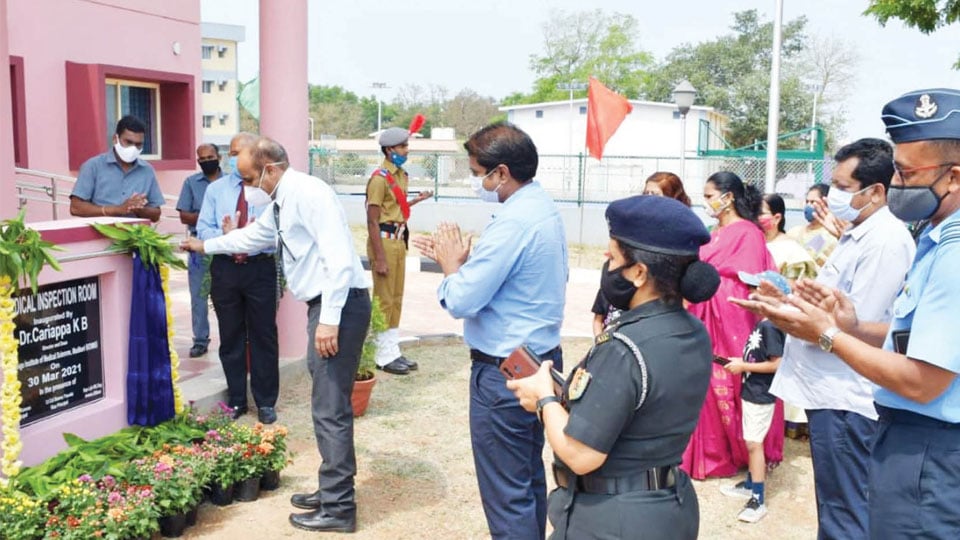
Dr. K.B. Cariappa, Director and Dean, Kodagu Institute of Medical Sciences, Madikeri, inaugurated Mother Teresa Medical Centre, school’s medical inspection room at Sainik School in Kodagu on Mar.30 in the presence of Dr. K. Mohan, District Health Officer, Kodagu and Dr. Rupesh, Resident Medical Officer.

Speaking on the occasion, the chief guest lauded the Sainik School set up and encouraged the cadets to imbibe leadership qualities to join Indian armed forces and strive to transform this vision into reality. 

He also recalled the legendary military leaders like Field Marshal K.M. Cariappa and Gen. K.S. Thimayya and their military achievements. 

The school medical inspection room with the presence of nursing assistants caters in ensuring health of the cadets. Detailed medical history charts are maintained for individual cadets and an accurate periodical record of height, weight and chest measurements is also maintained. 

CBSE’s latest initiative mandates Health and Physical Education (HPE) subject to all cadets. The school medical inspection room is a repository of cadets’ medical history and a learning centre too. It helps cadets to learn and maintain hygiene, educate the importance of nutritious food and significance of physical exercises. 

Dr. K. Mohan, District Health Officer (DHO), Kodagu, inaugurated Reverse Osmosis (RO) Plant at the school campus.  

Col. G. Kannan, Principal, Priya Kannan, the first lady of the school, Lt. Col. Seema Tripathi, Vice-Principal, Sqn. Ldr. R.K. Dey, Administrative Officer, Sangeeta Dey, Dr. H. Mahesh, School Medical Officer and S. Suryanarayana, Senior Master, staff and cadets were present on the occasion. All safety measures including wearing mask and social distancing were followed during the event. 

Cdt. M.G. Apoorv was the master of ceremony. Cdt. R.  Shashank and Cdt Harsharaj spoke on Mother Teresa’s contribution to humanity and Reverse Osmosis (RO) respectively.

source: http://www.starofmysore.com / Star of Mysore / Home> News / April 11th, 2021

‘Brain Glue’ repairs traumatic brain injuries

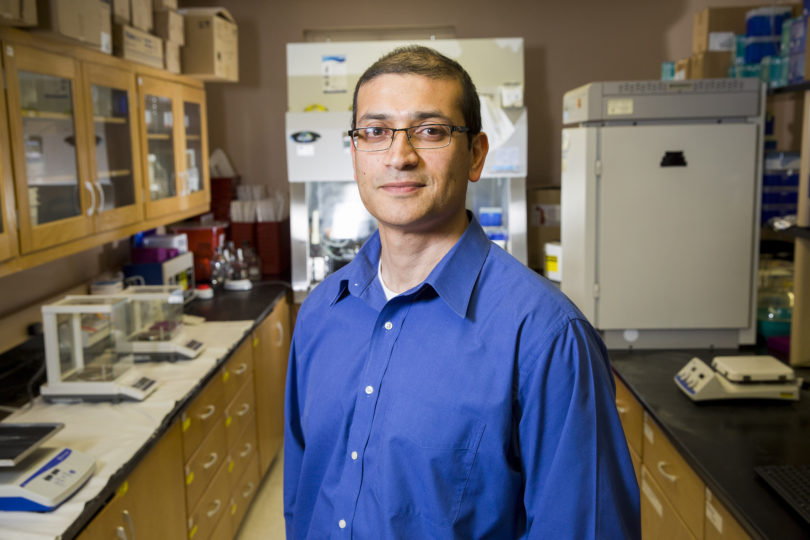
Lohitash Karumbaiah, assistant professor in UGA’s College of Agricultural and Environmental Sciences, led the team that designed and created Brain Glue.

Hydrogel mimics the composition and mechanics of the brain.

For an update to this story, visit Brain Glue, Part 2

Researchers at the University of Georgia’s Regenerative Bioscience Center have developed Brain Glue, a substance that could one day serve as a treatment for traumatic brain injuries, or TBIs.

The Brain Glue is a hydrogel matrix with a gelatin-like consistency that acts as a scaffolding for transplanted stem cells, which are capable of repairing damaged tissue. With the unique ability to take the shape of the void left in the brain after a severe trauma, the Brain Glue will enable a more natural healing environment for stem cells to colonize and regenerate.

Lohitash Karumbaiah, assistant professor in UGA’s College of Agricultural and Environmental Sciences, led the team that designed and created Brain Glue. The main difference between Brain Glue and other synthetic hydrogels, according to the team, is the variety of possibilities to trap neural stem cells, improve integration and reduce the likelihood of rejection.

“It’s very common with these invasive injuries that surgeons will actually remove the part of the dead brain leaving behind a cavity or hole,” said Karumbaiah. “The question is, then, can you replace that with something like our Brain Glue, loaded up with compounds native to the brain together with a mix of protective agents that can be incorporated for the best therapeutic outcome.

“The cool thing about this chemistry is that you can take our Brain Glue liquid formulation and then very briefly expose it to long-wave UV light and form a hydrogel in any shape you like,” he said.

Every day, 153 people in the U.S. die from injuries that include TBI, according to the Centers for Disease Control and Prevention. Those who survive a TBI may live with impaired thinking, memory, movement or sensation. TBIs can also lead to personality and emotional changes.

The new approach is described in the journal ACS Biomaterials Science and Engineering and a recently awarded abstract from the International Brain Injury Association.

For more than two years now, Karumbaiah has been awarded seed-funding for his collaborative TBI work with Maysam Ghovanloo, associate professor of electrical and computer engineering at the Georgia Institute of Technology. The TBI research was initially funded by the Center for Regenerative Engineering & Medicine, known as REM, a collaborative initiative launched in 2011 between the University of Georgia, Emory University and the Georgia Institute of Technology.

The REM collaboration is an extension of Karumbaiah’s work to further study neuroplasticity: the brain’s ability to self-renew, adapt and compensate for injury and disease. His future studies will focus on how neural networks form and change in response to traumatic insults, and he will investigate the therapeutic use of electrical stimulation to help return loss of function in any given region of the brain.

“Multiple methods are needed in these kinds of studies,” said Karumbaiah. “The Brain Glue is where we make the scaffold, and the neuro-network function is really this other arm — learning how neurons fire and wire together and what this really means in terms of function.”

Steven Stice, director of the Regenerative Bioscience Center, is working with Karumbaiah on a licensed technology for commercialization of the new Brain Glue, which was recently named best abstract at a meeting of the International Brain Injury Association.

Karumbaiah’s work recently attracted a four-year, $1.5 million research grant from the National Institutes of Health.

“Lohitash sets an example for other junior faculty to emulate,” said Stice, GRA Eminent Scholar and D.W. Brooks Professor in CAES. “To be recognized internationally at such an early stage takes great skill and dedication.”

A full version of ACS Biomaterials Science article is available online at http://pubs.acs.org/doi/pdf/10.1021/acsbiomaterials.6b00805

The Regenerative Bioscience Center at the University of Georgia links researchers and resources collaborating in a wide range of disciplines to develop new cures for devastating diseases that affect animals and people. With its potential restorative powers, regenerative medicine could offer new ways of treating diseases for which there are currently no treatments-including heart disease, Parkinson’s, Alzheimer’s and stroke. For more information, see www.rbc.uga.edu.

source: http://www.news.uga.edu / UGA Today / Home> Health & Wellness> Science & Technology / by Charlene Betourney / December 19th, 2017

MLA unhappy about work on Govt Ayurveda Hospital

Madikeri MLA Appachu Ranjan expressed his dissatisfaction over work on the newly constructed Government Ayurveda and Homeopathy Integrated Hospital, built at a cost of Rs 60 lakh, at B G S Circle in the new taluk centre, Kushalnagar.

He inaugurated the building during a programme organised by Kodagu Zilla Panchayat and the department of Ayush on Monday.

Inspecting the work on the building, Appachu Ranjan vented his ire against the contractor and said that the hospital was not constructed as per the proposed plan.

“The wheelchair ramp meant for specially-abled people and for patients, at the entrance of the hospital, is built unscientifically. The staircase, toilet and bathroom fittings are of poor quality,” the MLA noted and took ZP assistant engineer Fayaz and contractors Mahesh, Prakash and Manjunath to task.

The ramp and the staircases should be set right immediately, he added.

“There is no use of having old fashioned structures. The hospital should have modern facilities,” the MLA said and directed the engineer and contractors to incorporate the necessary changes in the building.

Zilla Panchayat member K P Chandrakala said that the building work was done in a hurry and is not according to the plan. She too pointed out that the ramp and the staircase are unscientific and urged those concerned to demolish the existing ramp and the staircase and build new ones.

The ZP member also demanded action against the engineer and the contractors.

Speaking to the reporters, Appachu Ranjan said that the new hospital building is constructed at a cost of Rs 60 lakh. But, the work is not carried out properly.

The official and the contractors have been taken to task. Directions have been issued in this regard. The hospital is built to cater to the needs of the people in the surrounding villages, he said.

Stating that the second wave of Covid-19 has crept in, he asked the people to be more cautious. Everyone should follow the norms such as wearing masks and following social distancing.

Somwarpet Taluk Panchayat president Pushpa Rajesh, vice president Abhimanyu Kumar, ZP member K R Manjula, Town Panchayat president B Jayavardhan and vice president Surayya Banu were present, among others.

source: http://www.deccanherald.com / Deccan Herald / Home> State> Mangaluru / by DHNS, Kushalnagar / April 05th, 2021

Delegation Seeks Super-Speciality Hospital At Madikeri

Madikeri:

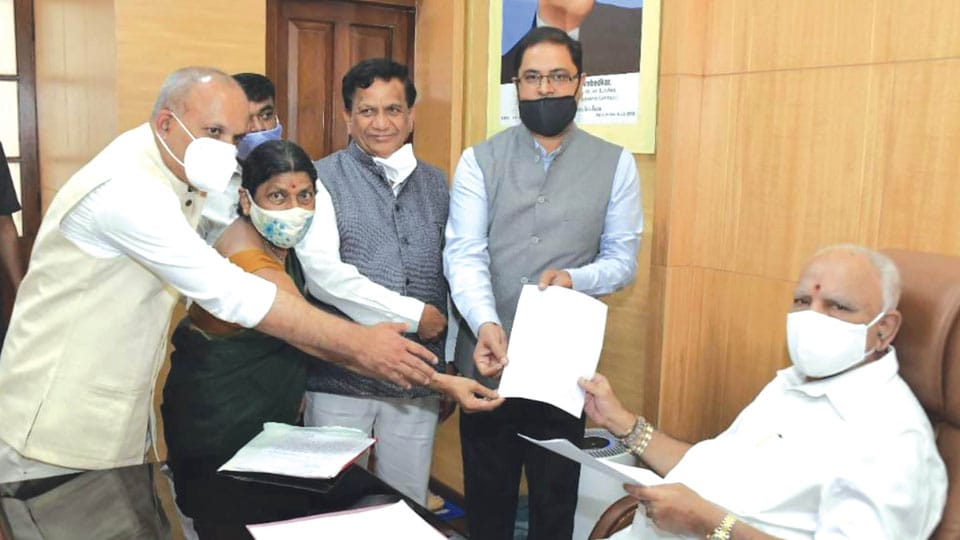
A delegation of Kodagu Institute of Medical Sciences Board Members recently met Chief Minister B.S. Yediyurappa and demanded the setting up of a super-speciality hospital in Madikeri.

Residents have been forced to travel more than a hundred kilometres, either to Mangaluru, Mysuru or Bengaluru, to avail benefits of advanced medicine, even in case of an emergency and most of the patients die before they reach their destination hospitals. 

The delegation told the CM that a super-speciality hospital would help provide emergency treatment with the latest facility for the accident victims. The delegation was led by Virajpet MLA K.G. Bopaiah and comprised Board Members of Kodagu Institute of Medical Sciences M.A. Niranjan, Dr. B.C. Naveen and Dr. Jayalakshmi Patkar. 

The delegation told the CM that whenever a major accident takes place in Kodagu, there are no facilities to provide emergency treatment and also accidents have increased over the years due to narrow roads. If a Trauma Centre is set up, it will help treat critically injured patients, the delegation told Yediyurappa. 

There are no cardiac treatment facilities and heart patients have to depend on visiting doctors from other districts like Mysuru and Mangaluru for treatment. 

Giving a patient ear, the CM told the delegation that he would discuss with officials and take measures to provide basic required facilities to Kodagu Institute of Medical Sciences.

source: http://www.starofmysore.com / Star of Mysore / Home> News / March 28th, 2021

A bid to stop jumbo march

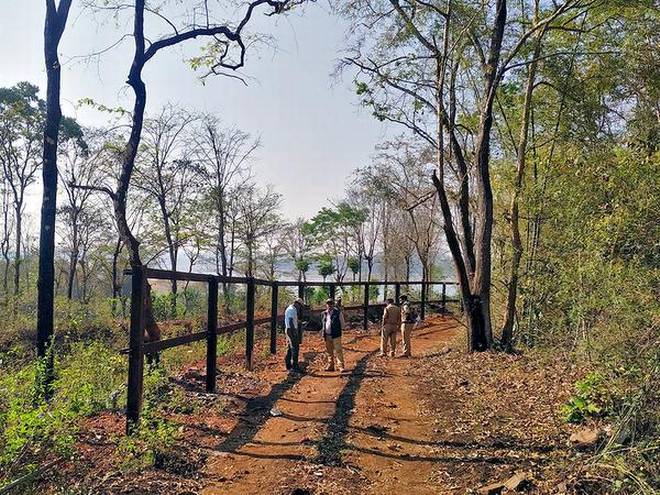
The Forest Department has installed railway barricades to stop entry of elephants in Alur range.  

Across 4.5 km in Alur range, these will restrict elephant movement

The Forest Department has put up railway barricades for about 4.5 km in Alur range of Hassan district to avoid the movement of elephants. The 2.1 m tall barricades, made of used railway tracks, have been installed between Nagavara Elephant Camp and Bharatur in Alur taluk. This is the area wherein elephants from Kattepura forest in Kodagu district move towards Alur range crossing the backwater of Hemavati Reservoir located at Gorur.

People of Hassan have been dealing with the elephant menace for decades. As many as 70 lost their lives in the conflict in the district since 1991. Similarly, 63 elephants have died so far. Besides solar fencing and elephant-proof trenches (EPT), the department has taken up the installation of railway barricades as a solution to avoid conflicts.

K.N. Basavaraj, Deputy Conservator of Forests, on Friday, took a team of journalists to Nagavara Elephant Camp to show them the barricades. “We keep learning how to avoid conflicts. Now, the installation of railway barricades is considered to be the effective system to minimise the conflicts,” he said. Chandrashekhar, a contractor from Mysuru, has bagged the contract to put up barricades for 4.5 kms at a cost of ₹4.65 crore. He procured 750 tonnes of the used tracks from the Ministry of Railways at an open auction. “The barricades are 2.1 m above ground level. They have been erected with the support of concrete 1.5 m below the ground. Two horizontal barricades are such that neither a cub nor adult elephant could cross them. We have learnt from the past experiences where elephants died while attempting to cross the barricades,” the officer said.

The purpose is to avoid the entry of elephants from Kodagu to Hassan. In 2014, the department captured 24 elephants and relocated them, resulting in a decrease in man-animal conflict for a brief period. “However, the number of elephants increased gradually, as many crossed the Hemavati backwaters. Now, we are plugging the hole so that elephants’ entry from Kodagu is restricted,” the officer said.

The department plans to extend the barricade for 40 km covering the boundary points. In Kodagu, the elephants that raid coffee estates could be driven back to forest areas easily, while in Hassan it was not possible. The herds keep moving from one estate to another damaging the crop, the officer said.

Opposition from farmers

Farmers of Nagavara and surrounding villages in Alur taluk have opposed the railway barricades alleging that these would force the elephants to camp in their estates for a long period.

Rangaswamy, a resident of Nagavara, said, “No doubt the barricades restrict elephants coming from Kodagu. What about those elephants already in the boundaries? Now, they cannot go back to Kodagu because of the barricades and continue to remain in the estates located close to the barricades.”

Mr. Basavaraj, DCF, reacting to the allegations, said the barricades had been put up just now. The officers would analyse the elephants’ movement and take appropriate action whenever necessary. “We have plans to extend the barricades for 40 km. As of now, we have a system to open the barricades at key points to let the elephants go back to their places,” he said.

He further clarified, “The path that we are blocking is not considered to be the natural path of the elephants. Only in the recent years, they have begun to tread this path.”

source: http://www.thehindu.com / The Hindu / Home> News> States> Karnataka / by Sathish G.T. / Hassan – March 27th, 2021

Appointed As Convenors, Co-Convenors

Mysore/Mysuru:

The following newly elected Directors of the Mysuru, Chamarajanagar and Kodagu District SC/ST Industrialists and Goods/ Equipment Supplies and Marketing Co-operative Society Ltd., Mysuru, have been appointed as the Convenors and Co-Convenors of the respective districts, according to a press release from the Society President Vijayashankar:

Chamarajanagar: Convenor – D. Eshwar; Co-Convenors – C.S. Akshay and M.S. Chandrashekar; Kodagu: Convenor –  Y.T.  Paramesh; Co-Convenors – M. Honnaiah and M. Chandra; Mysuru City: Convenor – P. Nanjundaswamy; Co-Convenors – M. Chandrashekar and Theinmozhi; Mysuru Rural: Convenor – Shivanna; Co-Convenors – Dr. P. Shobharani and B. Kalavathi.

source: http://www.starofmysore.com / Star of Mysore / Home> News / March 21st, 2021

Six-year-old in Karnataka hears for the first time on World Hearing Day

The young boy, who has been diagnosed with profound hearing loss since birth, was gifted with hearing aids with the efforts from Swastha Centre for Special Education and Rehabilitation, Suntikoppa.

Madikeri :

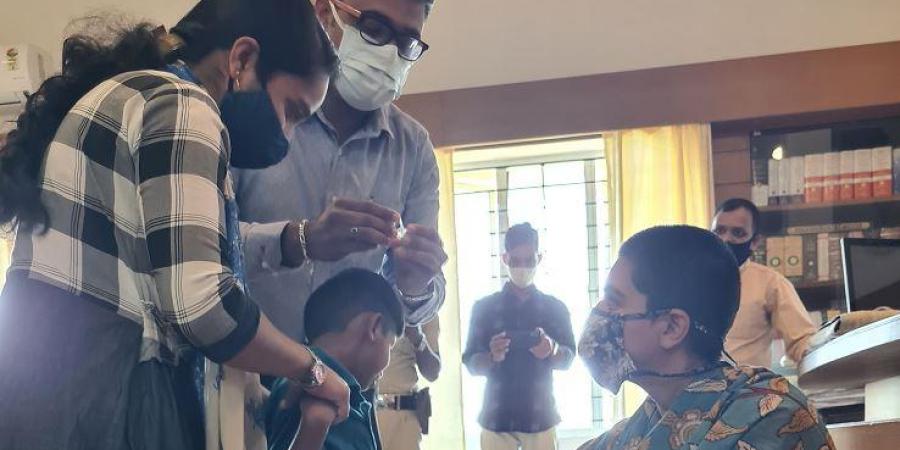
The silent world opened up with sounds to the six-year-old Dhruva, who heard for the first time on the World Hearing Day on Wednesday. 

The young boy, who has been diagnosed with profound hearing loss since birth, was gifted with hearing aids with the efforts from Swastha Centre for Special Education and Rehabilitation, Suntikoppa. The hearing aids were handed over to Dhruva by Kodagu DC Charulata Somal.

Son of Srijith and Rekha from Madapura in Kodagu, Dhurva was diagnosed with hearing loss at the age of three. While his parents looked forward to equipping their child with hearing aids, the equipment was out of reach for the parents. However, the Community Based Rehabilitation programme conducted by Swastha Institution introduced Dhruva’s parents to Aarthi Somaiah, the director of Swasta and the journey from here has been a sweet one.

Swastha Institution, a unit of Coorg Foundation, has over 100 specially-abled students. The centre provides vocational training to all the students even as many are placed across reputed private companies in the district. After the institution learnt about Dhruva, many donors were contacted.

SLN Group Vishwanath and his wife and Komal of Kanbail Estate, came forward to join hands with Swastha to help Dhruva who has now been equipped with Rs 62,500 worth of hearing aids. Dr Achaiah conducted the hearing test for Dhruva and the hearing aids were placed on Dhruva by DC on Wednesday.

“Dhurva has been born with severe to profound hearing loss and hearing aids play a major intervention. Once he starts responding to the hearing aids, he will be given speech therapy,” explained Dr Achaiah.

Director Aarti said that early intervention is required to identify differently-abled. “The centre has strategized the early intervention programme across the district and this enables identification, assessment and service delivery to differently-abled children aged six and below. The mainstreaming will be taken up by training the mothers of differently-abled at Anganawadis, which will be chosen as intervention centers.”  

source: http://www.newindianexpress.com / The New Indian Express / Home> Good News / by Prajna G R / Express News Service / March 03rd, 2021