Category Archives: Science & Technology

India’s coffee growers share history with Nobel winner Michael Kremer

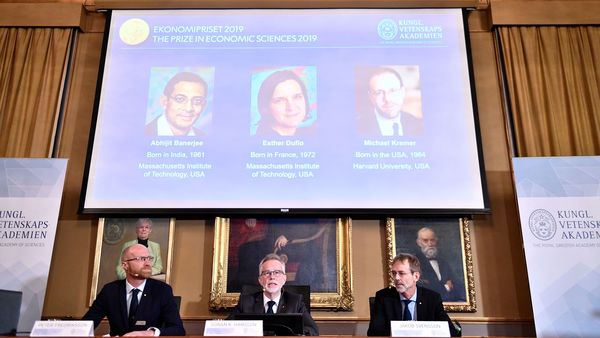
The winners of the 2019 Nobel Prize in Economics in the screen grab — Abhijit Banerjee, Esther Duflo and Michael Kremer (AP file)

– Michael Kremer, a Harvard University professor, was the co-Founder of ‘Precision Agriculture Development’ or PAD

– It advised the Coffee Board to pilot a missed-call enabled service to help coffee farmers in Karnataka
___________________________________

Bengaluru:

India’s Coffee Board, a state-run body that promotes coffee production and drinking, shares a slice of history with Michael Kremer, who won the Nobel Prize in Economics along with Esther Duflo and Abhijit Banerjee.

Kremer, a Harvard University professor, was the co-Founder of ‘Precision Agriculture Development’ or PAD, which advised the Coffee Board to pilot a missed-call enabled service to help coffee farmers in Karnataka. The IVR call service can give precise advise to the grower from scientists at Central Coffee Research Institute.

“Under his guidance and leadership, Team PAD have been working with Coffee Board of India and the coffee ecosystem for more than one year now. Thanks to the stellar efforts of Michael, Shawn, Madhur, Niriksha and Team Coffee Board, we have been able to have a positive impact on the lives of 15000 coffee farmers using a simple missed call service, free of cost to coffee farmers,” said Srivatsa Krishna, Chief Executive Officer of Coffee Board, in a statement to the media.

The service, Coffee Krishi Taranga, gives registered growers a weekly advisory on critical farm operations and daily market statistics through an automated push call when a farmer places a missed call on the helpline (080-37685000) run by the Board. It has helped growers improve productivity, profitability and environmental outlook, and will be expanded to cover 50000 growers shortly, according to the Coffee Board.

The PAD’s journey in India begun as an academic experiment in Gujarat with cotton farmers in 2011, when Narendra Modi, then chief minister of Gujarat, encouraged testing a similar service in his state called Krishi Tarang, said Srivatsa. “On behalf of the entire Indian coffee ecosystem, the finest shade-grown, hand-picked rainforest Coffees in the world, we congratulate Dr.Kremer and thank Team PAD for their contributions,” said Srivatsa Krishna.

source: http://www.livemint.com /Live Mint / Home> Explore / by Nidheesh M.K. / October 15th, 2019

Kodagu Disaster: GSI Must Be More Pragmatic And Purposeful

Kodagu01GSI17sept2019

Sir,

This is in response to the letter by Geologist Mrinmoy Chakraborty (SOM dated Aug.11, 2019) defending the views of the Geological Survey of India (GSI) published in SOM dated Apr.25. I write this to bring to light a few facts that go to show that Chakraborty has hastened to defend the warnings given by GSI a bit too early and to furnish some clarifications regarding the extreme events that wreaked havoc in Kodagu this August and perceptions arising out of them.

The series of landslides that devastated Kodagu in 2018 occurred mostly during the period 15th, 16th and 17th August. Some intriguing data on rainfall pertaining to this period tells the story. This data is from the rain gauge at Kudigana, a place near the border of the catchment of Harangi, which witnessed the worst kind of disasters in 2018.

Record rainfall

Till 6th August, the station had recorded about 5,500 mm of rain, and then on rainfall on the successive days read (in mm): 81, 250, 269, 90, 115, 121, 262, 295, 320, 461 (16th), 394, 197, 164, 95, the total for the fortnight amounting to 3,114 mm (Mysuru’s annual rainfall is 780 mm). Probably the 5-day extreme rainfall recorded then at Kudigana (1,686 mm) is the highest ever recorded in the rain gauging history of Kodagu (which extends for over 120 years now), the earlier highest being 1,462 mm in 1964 pertaining to the station of Bhagamandala.

On the other hand, the records at Kudigana for this year read thus: Total rainfall up to 1st August – 2,041 mm; then on – 30, 0, 16, 136, 183, 254, 312, 276, 298, 158, 90, 46, 35, 100 (15th), during the next 14 days – this is the period when the floods ravaged the district. The extremes here are just about 75% of last year’s and the total for season up to 20th Aug. is not even half of last year’s (nearly 4,090 and 8,614 mm respectively).

Kodagu02GSI17sept2019


Once in 10-12 years

The highest one-day rainfall recorded this year has been reported from Bhagamandala, places around which contribute to flow in Cauvery and stands at 400 mm. The seven-day extreme for this year here has been 1,142 mm. Strangely, these values have return periods of 12 years and 10 years respectively.

This means, the type of flood-causing rain that fell this year occurs, according to data available, nearly once in 10-12 years. Even the flood magnitudes in the four rivers of the basin that were reported this year have return periods of 15 – 20 years.

On the other hand, the rainfall of 2018 that caused havoc in areas around Madikeri and in the catchment of Harangi shows a return period of over 50 years! This is the reason why even though Kodagu experienced severe floods this August, only just a couple of incidents of severe landslides have occurred.

Technical data

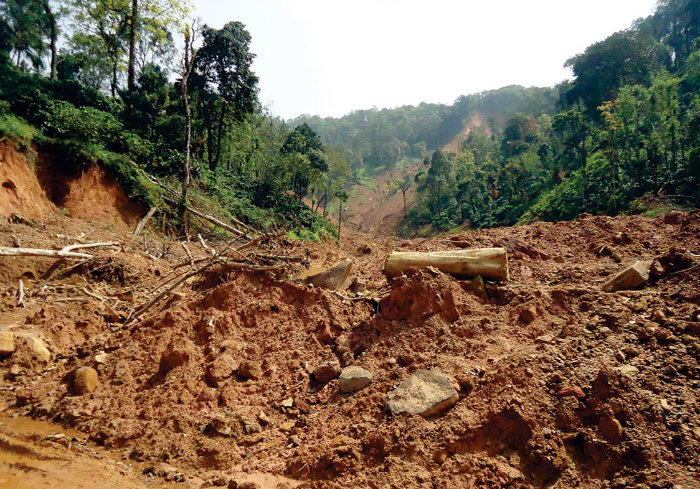
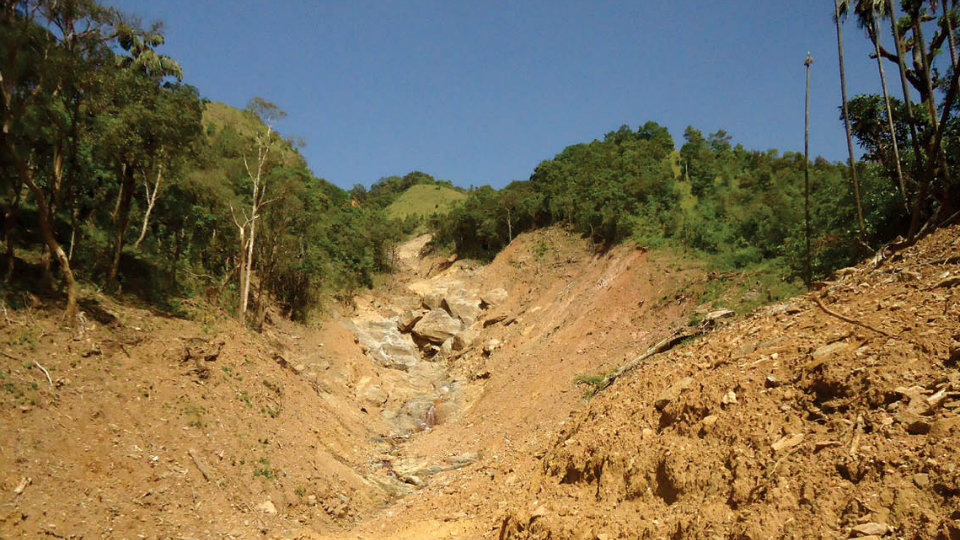
Very often, blockage of roads due to mud falls from tall and nearly vertical cuttings (Plate 1), many times triggered by uprooting of trees and washing away of the valley side road formations, are also termed as landslides, while the landslides of 2018 were removal of unimaginably large portions of hills, mostly in the valleys.

A large number of the over 150 landslides that occurred then got initiated far away from the highways and inhabitations (Plate 2), in total contrast to the common belief that tampering with nature and cutting land indiscreetly is the root-cause of landslides.

Many of these slides carried tens of thousands of cubic meters (like 200 m x 100 m x 2 m) of earth submerging hundreds of hectares of land downstream in mud (Plate 3 and 4). However, even earth falls of volume of a few hundred cubic meters (20 m x 10 m x 2 m) block roads and cause damage to houses — only one landslide of the former nature has been reported this year. It is not strange that extremes not quantified by measurements are blown out of proportion, painted colourfully and projected as catastrophes in this era of rampant use of mass and social media.

Predictions fail

Dr. H.S.M. Prakash, Director General of GSI, is reported to have explained (SOM, 25th April) thus: “There are indications of excessive downpour happening in five phases just like last year …”; “likewise, three to four more similar downpours are likely to be experienced… The rainfall in August is likely to result in floods”. Yes, one spell of rainfall has resulted in floods. But what about the rest? It is a common experience that any astrologer, once approached, would point out a number of cases in which his predictions have gone perfectly right, hiding others! The fact is that rainfall in Kodagu this year has been very poor except for that one spell — even after that week of deluge, the total seasonal rainfall for the year remains 25-40% lower than the normal (except in small pockets of Virajpet), while the last year it was about 25-50% higher than the normal.

Strong low pressure

It is claimed by Chakraborty (SOM, 11th Aug.) that the predictions for this year have been those based on “evidences”. Dr. Prakash had explained: “There is a possibility of heavy rain being caused due to volcanic eruptions in Hawaii and Mauritius. And, as if an indication, it has already started raining in Kodagu (in April)”.

It is utterly sad that an agency with a legacy of 200 years has fished out evidences for the floods in August, in the excessive rainfall of April! It is well established that the pre-monsoon rains of April and May are a phenomenon occurring due to local convections, while the monsoon rains in Kodagu are due to the global circulation, aided by strong low pressures in North/ Central India and the local orography (high rising mountains) of the Sahyadris.

It is now popularly known that the excessive rainfall of the ten days of August this year has been due to a strong low pressure that developed in the Odisha coast, and experts from GSI claim it to be due to excessive heat of magma in Mauritius!!

Better to err on safer side

Being half correct about events not known of is one hundred perfect in Statistics — probably the messengers, the people at the helm of affairs, believe that it is better to err on the safer side than on the other. Sweeping and arbitrary long-range predictions are not only unwarranted, but are also dangerous.

Rather, there shall be healthy introspection and debate on why even extreme events of smaller magnitude have been resulting in excessive damages in recent days. Further, very little of the Hydrology of this region has been understood, much remains to be done. It is hoped that the agencies concerned take a more pragmatic and purposeful look at the recent events and use them to learn about the region.

– Yadupathi Putty, Mysuru, 3.9.2019

You can also mail us your views, opinions, and stories to voice@starofmysore.com

source: http://www.starofmysore.com / Star of Mysore / Home> Voice of the Reader / September 16th, 2019

Develop research attitude, students told

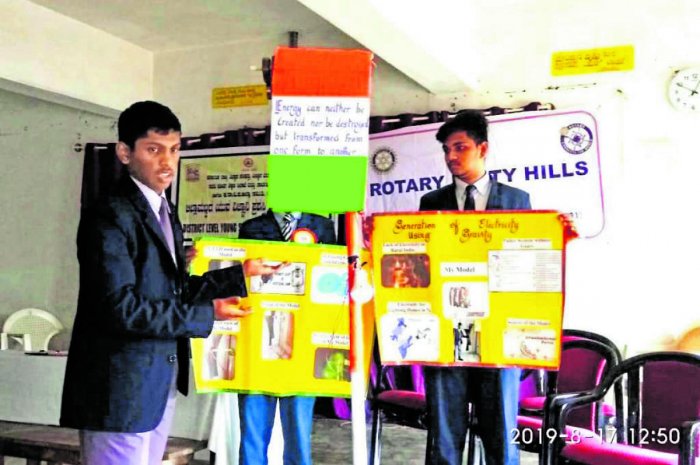
A student explains his model during the district-level young scientists’ selection competition organised by the Rajya Vijnana Parishat, and the Departments of Science and Technology and Education in Madikeri.

Students should develop an attitude for research, said PU Department Deputy Director G Kenchappa.

He was speaking at the district-level young scientists’ selection competition organised by Rajya Vijnana Parishat, Department of Science and Technology and Education Department, for high school and PU students.

‘Face challenges’

Students should develop in such competitions and become researchers in the future. Students should develop an interest in basic sciences and face the challenges of science and environment. More research should be carried out in the field of science and technology, he said.

State Pollution Control Board Kodagu regional office environment officer G R Ganeshan said, “Students should create awareness on judicious use of water, check the ill effects of plastic and take part in environment-friendly activities.”

District coordinator of the competition T G Premkumar said the competitions are organised to help the students to take up inventions in science and technology.

Field of Science and technology

Young scientist awardee of last year, Likhitha Muthakka from Bharathiya Vidya Bhavana Kodagu Vidyalaya, said, “Students should take a pledge to find a solution to the problems bothering the country by taking up research in the field of science and technology.”

As many as 17 students from various schools and colleges had presented a paper on the science model prepared by them.

source: http://www.deccanherald.com / Deccan Herald / Home> State> Mangaluru / by DH News Service, Madikeri / August 21st, 2019

Free Health Camp On Aug.11

Shree Kaveri Kodagu Mahila Sangha, Mysuru, has organised a free health camp at Rotary Midtown Academy in Hootagalli on Aug.11 from 10 am to 3 pm.

Neuro-Surgeon Dr. Kanjithanda Bopaiah will inaugurate the camp.

Sangha President Bollamma Kuttappa will preside.

Orthopaedician Dr. Devaiah, Physicians Dr. Latha Muthanna and Dr.Aiyappa, Gynaecologists Dr. Sonia Mandappa and Dr. Poovamma, Dermatologist Dr. P.A. Kushalappa, Urologists Dr. Madappa and Dr. Somanna, Paediatrician Dr. Rajeshwari Madappa, Neurologist Dr. K. Bopaiah, kidney surgeon Dr. Vipin Kaverappa, Ayurveda expert Dr. Aiyanna, Anaesthetist Dr. Padmini Kaverappa and Dentist Dr.Shruti Somaiah will be available for consultation.

source: http://www.starofmysore.com / Star of Mysore / Home> In Briefs / August 03rd, 2019

Telemetric Water Gauge At KRS, Harangi

HarangiDam01KF29jul2019

Provides sensor-based online real-time data on storage level to officials in New Delhi

Madikeri/Mysuru:

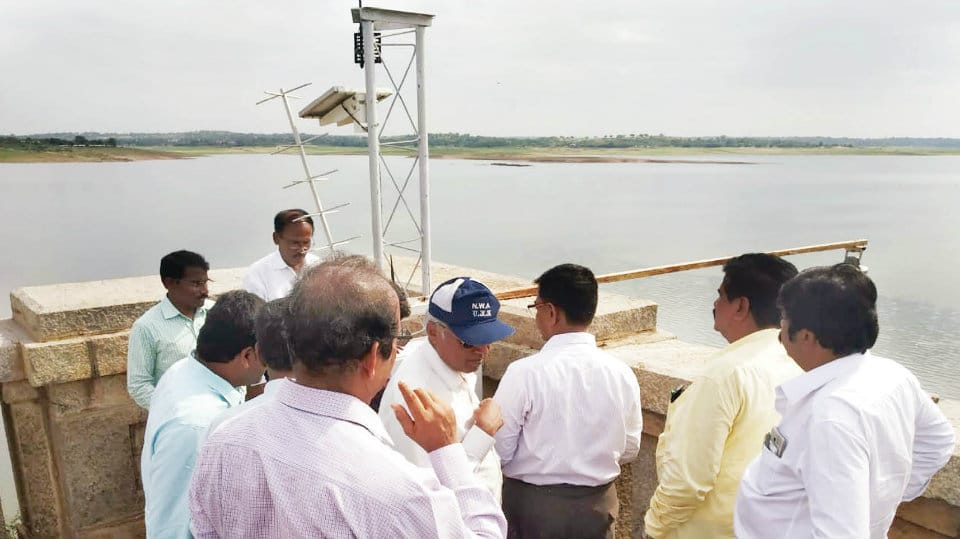
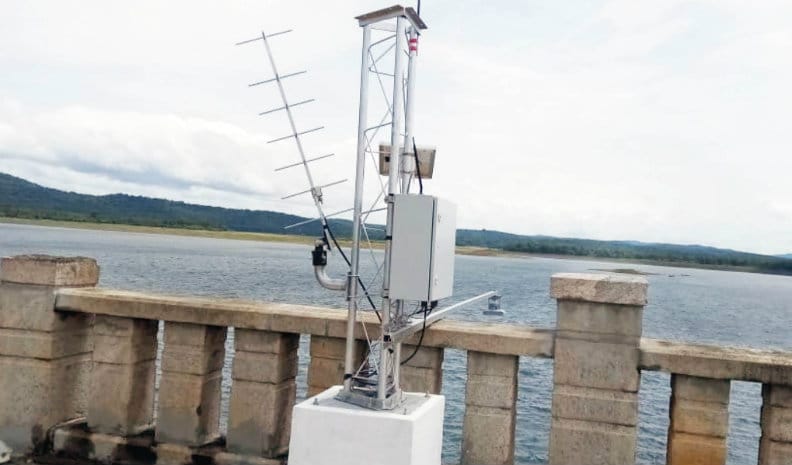
Telemetric Water Gauge has been installed at Krishna Raja Sagar (KRS) Dam in Mandya district and also at Harangi Dam in Kodagu for sensor-based real-time data on the storage level, inflow and outflow of the reservoirs.

The installation comes weeks after an Internal Committee of Cauvery Water Management Authority (CWMA) visited the two Dams in the first week of June this year. The team, after studying the water levels and reporting mechanisms, had decided to set up Online Monitoring System for all the reservoirs in Cauvery Basin through Telemetry-based Real-time Data Acquisition and Transmission.

The facility transmits data to CWMA Office in New Delhi and the authorities who decide on the water release as mandated by Supreme Court need not wait for the data from the Dams. They can easily access the data through the Telemetry Transmission system.

No room for errors: All these years, the authority sitting in New Delhi had to obtain data from each reservoir every day to determine the storage levels, inflow and outflow. This system was prone to errors as the people manning the Dams take physical measurements. Now with the new system, errors are eliminated and accurate real-time data can be accessed, making the decision-making process easy and accurate.

The Union Government has constituted the CWMA and and Cauvery Water Regulation Committee (CWRC) as directed by the Supreme Court and an Internal Committee comprising Irrigation experts from the Cauvery Basin States of Karnataka, Tamil Nadu, Kerala and Puducherry has been formed.

HarangiDam02KF29jul2019

Real-time data acquisition

During their visit, the CWMA team discussed real-time data acquisition and transmission, installation of water-level sensors, flow rate sensors at all canals / outlets taking off from all the eight Reservoirs coming under Cauvery Basin and technical issues such as capacity enhancement of Dams, safety of Dams, prevention of leakages, modernisation of canals for prevention of seepage, etc.

The new advanced telemetry system has been installed based on the directions from CWRC. Sources said that such a system has been installed at Reservoirs including Hemavathy, Harangi, Kabini and KRS in Karnataka and in Banasura Dam at Kerala and Lower Bhavani, Amaravathi and Mettur dams in Tamil Nadu.

On mobiles

Speaking to Star of Mysore this morning, Vasudev, Assistant Executive Engineer of Cauvery Neeravari Nigam Limited (CNNL) that manages KRS and Harangi, said that the Telemetric Water Gauge gives live data to CWMA and CWRC authorities and they can access the data at any given point of time on their mobile phones.

The system transmits live data from the Dams and an exclusive cell has been set up at CWMA Office in New Delhi to receive the data and send them real-time through mobile phones. “With this system, now no one can bluff the CWMA by constantly claiming more water, hiding the real storage level data at the Dams. Even the CNNL authorities can access the data,” he said.

The data will measure minute details about number of canals and their location, water levels inside the canals, their turbulence, number of sluice gates, size of gates and the amount of water discharged from the crest gates. It also records spill- over water.

source: http://www.starofmysore.com / Star of Mysore / Home> News / July 26th, 2019

Startups break new ground, use tech to help farmers

These firms are tapping governments, insurers, banks, farming co-operatives, development agencies and corporate social responsibility programs to create a business and help farmers.

Startups and technology firms are trying to break into India’s agricultural landscape using newer business models. These firms are tapping governments, insurers, banks, farming co-operatives, development agencies and even corporate social responsibility programs to create a viable business and help farmers. Most farmers have small holdings. Some even rent the land they farm on from others. Farmer distress is widespread.

Farming contributes around 15% to India’s gross domestic product. In short, India has few large farms that can pay for technology solutions. When CropIn Technologies first started out in 2010, the company tried selling its agri-tech solutions directly to farmers.

After investing lakhs of rupees, however, it managed to earn just Rs 6,000. Now, it tailors its solutions to specific needs. “Each customer segment that we deal with, we have a different value proposition for them,” said Jyoti , head of business development at CropIn Technologies. Large companies that depend on agricultural produce want information on sowing and pre-harvest activities up to harvest.

Development agencies are keen to develop sustainable farmer livelihoods, Vaddi said. CropIn is working with the World Bank in Bihar and Madhya Pradesh on a climate resilience project. It is also identifying a model where farming communities can adopt technology to create sustainable benefits — such as weather alerts on phone, best practices on farming, and advice on taking care of pest attacks. Agri-tech companies such as CropIn are also finding a market in banks and non-banking financial companies that give agricultural loans. The lenders are seeking CropIn’s expertise to help manage risk.

“If they have invested money in certain loans with farmers, the bankers want to know if it performing, how the crop is doing. Sometimes, a farmer takes a loan to sow one crop and then sows half his field with something else. There could be a genuine reason, but this is information a banker would want to know,” Vaddi said. CropIn is working with public and private sector banks as well as NBFCs. For banks and insurers, the company provides a platform that has data on the historical crop yields yields of a district. This helps in forecasting yields using machine learning.

The company also uses remote sensing satellites to determine what crops are sown in a region, using crop signatures it has collected over the past five years. Large technology companies, such as IBM and Microsoft, too are involved in the agri-tech space. The Weather Company, an IBM unit, provides hyperlocal weather information to farmers, along with data on soil moisture and temperature, which aids farmers in making informed decisions on how and when to irrigate. The company has tied up with agro-tech startup AgroStar to create crop disease prediction algorithms. “We are not expecting marginal farmers to pay for this.

We work with governments, banks, insurers, corporates who have business interests in agriculture and corporates that want to do meaningful CSR work,” said Himanshu Goyal, India Business Leader at The Weather Company. “It is not very expensive. It is cheaper than what a normal software costs and it is affordable,” he said. The company looks at delicately balancing value and cost, which even a company can appreciate, and one where people can build in affordability in business models, he said.

Microsoft is working with agrochemicals company United Phosphorus and the International Crop Research Institute for the Semi-Arid Tropics (ICRISAT) to provide agri-tech solutions to farmers. State governments and government-promoted organizations are also potential markets for agri-tech companies. The agriculture ministry signed a statement of intent earlier this month with IBM for a pilot study on using artificial intelligence and weather technology solutions in agriculture.

Tie-ups with governments also use sensors in agricultural fields to measure soil health and ground-level conditions. Pilots that require placing sensors on farms are also underway. Eka Software, which has built a digital commodity management platform that is used by the likes of Cargill and Rio Tinto, has built a blockchain platform for coffee farmers in a tie-up with the Coffee Board of India. The platform aims to help farmers get a good price for their product, while offering coffee roasters and exporters data on crop quality. “There is a lot of scope to use technology to digitise agriculture in India and curb waste,” Manav Garg, CEO of Eka Software, told ET in an interview earlier.

“We have built this platform for coffee, but we can also create similar platforms for other agricultural commodities.” State governments are also looking to invest in blockchain technology to help cashew and shrimp exports. “India is one of the largest exporters of shrimp to the European Union, and the EU has put in requirements to disclose the health of the shrimp. In Andhra Pradesh and Tamil Nadu, the governments are putting in place blockchain (technology) in which the manufacturers of the shrimp feed the content and that is made available to buyers. Kerala is doing the same thing for cashew nut,” said NG Subramaniam, chief operating officer of India’s largest IT services company Tata Consultancy Services. The blockchain technology is being launched by the state fisheries department, the Marine Product Export Development Authority and Tata Trusts, the Tata Group’s philanthropy arm. Business models are still evolving at at the farm level, experts say, whereas at the retail level — organic food or providing farm produce directly to homes — it is more established.

The government’s increased focus on improving farm incomes is also resulting in more pilot projects in the agri-tech space. “Future scale-up models will need farmers to have a stake, both to have ownership over and to demand accountability from the services. This is an emerging context,” said Amit Vatsyayan, Partner – Government and Public Sector Advisory Services, EY India. “A platform approach is very much needed for greater acceleration and adoption.”

Agritech Startups in India

CropIn
Offers farm management solutions for agricultural sectors. Works with farming companies, agri-input companies, crop insurance providers, seed production companies and government.
Total Funding: $16 million
Investors: Chiratae Ventures, Bill and Melinda Gates Foundation, Ankur Capital and 8 Other Investors

AgroStar
It provides agri-inputs including fertilizers, seeds, manures, farm equipment, etc. to farmers.
Total Funding: $15 million
Investors: Accel Partners, Aavishkaar, Chiratae Ventures and 3 Other Investors

FarmBee
Has an online platform providing data-driven agricultural solutions. It offers agricultural content, commodity prices, weather data, and contextual advice to the farmers. Enterprise customers include TAFE, RBL Bank, Pepsico etc.
Total Funding: $9 million
Investors: Sandeep Bhammer, Ravikant Banka, Shailaja Reddy and 23 Other Investors

NinjaCart
Has a B2B marketplace connecting farmers with retailers. Initially started out with a hyperlocal grocery marketplace but pivoted to B2B marketplace for sourcing fresh fruits and vegetables, staples and FMCG goods directly from farmers and brands after 6 months of launch. Currently works with about 120 retailers.
Total Funding: $48million
Investors: Accel Partners, Syngenta Ventures, Neoplux and 13 Other Investors

Stellapps Technologies
Uses IOT, mobility and data analytics to improve agri- supply chain parameters including milk production, milk procurement, cold chain, animal insurance and farmer payments. Offers a platform SmartMoo, which gathers data via sensors that are embedded in milking systems, animal wearable, milk chilling equipment & milk procurement peripherals and provides insights for management of cattle, organization of dairy farms and for logistics management.
Total Funding: $11 million
Investors: Bill and Melinda Gates Foundation, IndusAge Partners, Qualcomm Ventures and 8 Other Investors

source: http://www.economictimes.indiatimes.com / ET Rise / Home> Business News> RISE> Startups> News Buzz / by Jochelle Mendonca, ET Bureau / July 26th, 2019
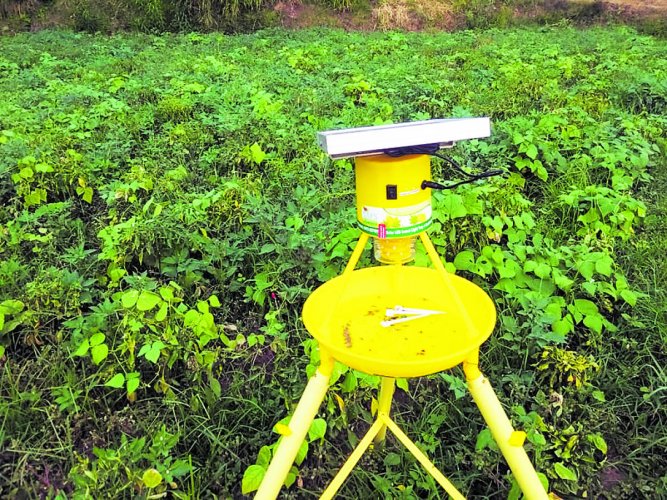
Costly solar-powered insect trap; farmers in shock

The expensive solar light-powered insect traps being sold to unsuspecting farmers under the centre-sponsored PMKSY by Agriculture department in Kodagu district.

A suspicion among farmers about subsidised farm equipment and accessories being overpriced due to unholy nexus between officials and private entities appears to be true.

The department of Agriculture in Kodagu district under Pradhan Mantri Krishi Sinchai Yojana (PMKSY), scheme to improve farm productivity, has procured 150 solar light-powered insect traps after placing an indent for 350 such insect traps from Kalaburagi-based Fortune Sales Corporation to be distributed among the farmers.

According to information obtained by RTI activist Sanjeeva Kabaka from Puttur, each unit, including GST, purchased from Fortune corporation had cost over Rs 11,800. The department of Agriculture in its reply to the queries under RTI had revealed paying Rs 17,38,373 for over 150 units.

Sanjeeva says the haste to purchase such expensive solar-powered insect traps despite the availability of low-cost solar-powered insect traps had raised eyebrows.

“A farmer-cum-inventor Karibasappa’s indigenous solar-powered insect trap is priced at Rs 4,800, including GST and door-delivery charges,” he points out.

Karibasappa, when contacted, said that he had sold his units, each priced at Rs 4,800, to the Department of Agriculture in nine districts, including Shivamogga under ATMA scheme.

“By selling units that are three times more expensive than my unit proves that officials are making money,’’ said Karibasappa, who is in New Delhi participating in an exhibition.

He said the insect traps purchased by the Agriculture department in Kodagu district cannot withstand high wind speed and is made of plastic. Its battery life lasts only about six months.

“My prototype is able to withstand high wind speed, is made up of metal and the lithium battery has a shelf life of four years and covers two acres,” he said.

Incidentally, Karibasappa’s prototype has the backing of officials in Agricultural universities and also had won Infosys Foundation’s Aarohan Innovation award.

Joint Director of Agricultural Department, Kodagu, Raju did not respond to calls.

Watershed development department Director Padmanabh Naik when contacted said the standards for procurement of insect traps were laid by the Agriculture Department under the directions of Minister for Agriculture.

Kodagu Deputy Commissioner Annies Kanmani Joy, when contacted, promised to look into the issue of Agriculture department selling expensive solar-powered insect traps to farmers.

source: http://www.deccanherald.com / Deccan Herald / Home> State> Mangaluru / by Harsha, DH News Service, Mangaluru / July 20th, 2019

‘Sinkholes to Stars’ Monday at GLMHC in Sanctuary Series

Professor Bopi Biddanda

On Monday from 7 to 8:30 p.m. is the next program in the Sanctuary Lecture Series, “Sinkholes to Stars: Diving into Lake Huron’s Sinkholes while Reaching for the Heavens.”

Doors open at 6:30 p.m. for this free program at Great Lakes Maritime Heritage Center, 500 West Fletcher St., Alpena.

Grand Valley State University Professor Bopi Biddanda will share the excitement of over a decade of exploration of life in Lake Huron’s sinkholes carried out in collaboration with Thunder Bay National Marine Sanctuary, and ponder the relevance of these findings to major issues of both scientific and societal interest such as Earth’s current biologic and physiologic diversity, oxygenation of early Earth in the distant past, and humanity’s ongoing search for extra-terrestrial life.

Biddanda is an aquatic microbial ecologist studying the movement of carbon driven by microbes at the Annis Water Resources Institute at GVSU. He grew up in the lush subtropical mountains of Southwest India, and came to the U.S. in the 1980s to obtain a Ph.D. in ecology from the University of Georgia. Subsequently, he went on research and teaching adventures at the Alfred Wegener Institute for Polar and Marine Research (Germany), National Institute of Oceanography (India), University of Texas Marine Science Institute, University of Rio Grande (Brazil) and University of Minnesota.

For the last decade and a half at GVSU, he has been studying the microbial cycling of elements in the Laurentian Great Lakes — exploring life in extreme environments such as Lake Huron’s sinkholes and operating a world-class time-series buoy observatory in Muskegon Lake.

Courtesy Photo A diver navigates a sink hole in Lake Huron.

He teaches classes in marine biology and aquatic ecology, and directs NASA’s Michigan Space Grant Consortium programs at GVSU. He hopes to continue to study Earth’s lakes — one of our most vital freshwater commons — as sentinels of change.

For more information, contact Stephanie Gandulla at steph.gandulla@noaa.gov or 989-884-6200.

source: http://www.thealpenanews.com / The Alpena News / Home> Life / June 06th, 2019

Coffee Board takes tech route to help growers boost yield

App-solutely smart: In the case of white stem borer, growers and the Board have validated 90% accuracy.   | Photo Credit: Reuters
App-solutely smart: In the case of white stem borer, growers and the Board have validated 90% accuracy. | Photo Credit: Reuters

Apps fed with data help forecast weather, predict leaf rust

For the 3.5 lakh coffee growers in India, 98% of whom are small-scale, challenges affecting production include labour shortage, climate change and pest attacks.

One way to manage these is by adopting technology, which the Coffee Board is trying to bring about for the growers.

Last year, Eka Software Solutions took up a pilot project for the Coffee Board of India on machine-learning based applications. According to Shuchi Nijhawan, vice president – agri business for Eka Software, the Board and the company took up three areas to try machine learning based apps. One was addressing the white stem borer problem, another was weather forecasting, and the third, predicting leaf rust.

Machine-learning

“Based on the data, photos provided, we created a machine learning algorithm to forecast each of these issues (for a grower). We worked with 20 liaison officers of the Board and they coordinated with the growers.

“The success of the app depends on the data fed in. In the case of white stem borer, the growers and the Board have validated 90% accuracy,” she says. Eka’s digital platform for agriculture aggregates data from different sources and applies the algorithm to provide insight to the coffee growers.

Srivatsa Krishna, chairman of the Coffee Board, adds that though there is no exact data, it is learnt that in the last 10 to 15 years white stem borer would have brought down Arabica production by 25-30%. “The growers do need solutions for such issues.”

“Despite the Coffee Act having been around for more than seven decades, farmers have zero technology. The only way to increase productivity is by bringing in technology,” he says. Even before smartphones became popular, coffee growers had checked prices on the London and New York exchanges almost on a daily basis.

Hence, adopting technology should not be difficult for them. The Board has plans to scale up the analytics technology for adoption by more farmers.

Currently, 90% of the estates depend on labourers for most of the work and there is not much technology adoption among coffee growers in cultivation or to increase production.

“If someone is ready to do it [technology] for us, we will adopt it. It will help increase yield,” says Sundar Subramanium, executive director of Mother Mirra Coffee Plantations. Ms. Nijhawan says the company is exploring partnerships for other crops too. “Indian farmers want such technology services. There are several agriculture institutes and cooperatives in the country that have a lot of data. I see a huge potential for these technologies.”

source: http://www.thehindu.com / The Hindu / Home> Business> Industry> Green Shoots / by M Soundariya Preetha / June 02nd, 2019

Project Radio Collar Launched To Track Elephants In Kodagu

ProjectCollarKF19may2019

Siddapura:

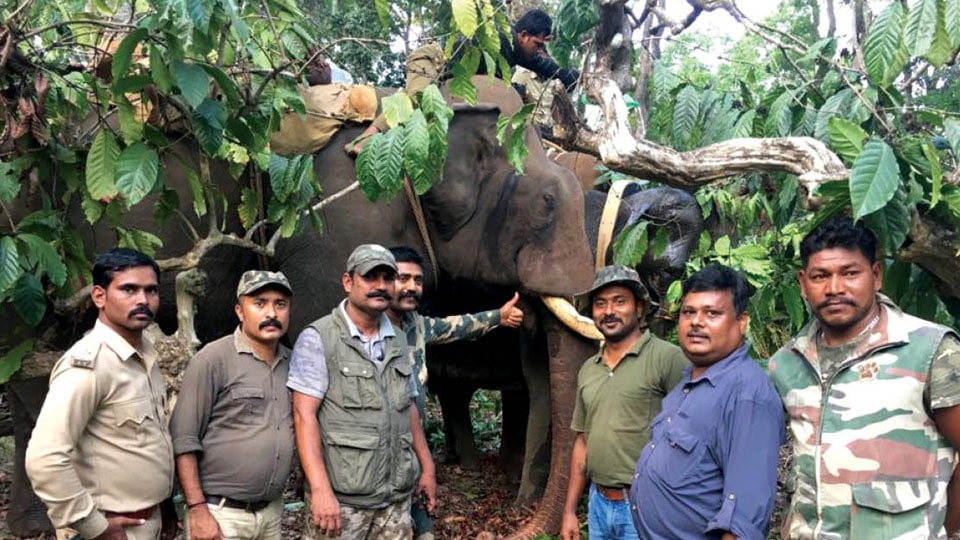
Concerned at the increasing instances of elephant-human conflict, the Forest Department, for the first time in Kodagu, has put radio collars on elephants to study their migration patterns.

The Department has decided to put radio collars on selected elephants so that their migration patterns can be studied. An analysis of their movements will help in avoiding human-elephant conflict that results in deaths of humans and damage to crops, said Department officials.

Accordingly, over six elephants that usually enter coffee estates and fields have been radio-collared in places including Virajpet, Madikeri, Kushalnagar, Maldare, Ammathi & Pollibetta. These areas have witnessed increased elephant attacks in the recent past.

The collars were fitted on the wild pachyderms with the help of tamed elephants including Bhima, Abhimanyu and Krishna. Last time, over four collars were fitted on the elephants and the Department staff was able to successfully track the elephant movements and prevented them from entering the human habitats.

Department officials said that radio collars could further strengthen the elephant corridor management strategy. It could also become an early warning system for villagers in order to avoid conflict with elephants as the collars could provide real-time information. Radio-collaring of animals is a tried and tested method of studying free-ranging wild animals that has been in practice for several decades. It is primarily used for tracking the movement and activity patterns of the tagged animal, with the signals being sent to a handheld device or to a computer via a satellite.

It is often the only method that is available for studying the movement and activity patterns of a secretive species like the tiger or a wide-ranging species like the elephant. Information obtained from the use of radio telemetry is of high scientific and conservation value. The GPS-enabled radio collars will provide updates in real-time about the location of a herd and help track them within the State as well as during migration. A tool embedded in the collar will send signals 24X7.

“Once we receive signals on the presence of the elephant herd near human habitation, the ground-level Rapid Response Team of the Dept. will be alerted on their mobile phones so that they can rush to the place and launch an operation to drive elephants back into the woods,” said District Forest Officer Maria Kristhu Raj.

The kumkis (tamed elephants) will infiltrate the herd and scatter the elephants. When the female leader is isolated, the experts perched on the nearest kumki will shoot her with a dart loaded with a tranquillising drug called xylazine. The dosage will be decided according to the size and strength of the matriarch. “After being hit, the elephant will walk like it is intoxicated for 10 minutes and then it will fall asleep. So, our men have a window of about 40 minutes to put the radio collar on the elephant,” he explained.

“In the 40 minutes the animal was under sedation, the team fixed the radio collar and activated it. Soon, veterinarians injected a drug to revive it. The entire operation was over in 50 minutes and the animal started heading back into the forests,” the DFO added.

source: http://www.starofmysore.com / Star of Mysore / Home> News / May 14th, 2019