The Kodagu district administration has taken various measures to cope with any exigencies arising out of natural disasters and has constituted committees to deal with the same.
It has also urged the public not to panic over speculations of fresh outbreak of any natural calamity.
A release said senior officials of the district administration and the district in-charge minister had reviewed the existing system to cope with emergencies some time ago and strengthened the response mechanism in case of a natural calamity.
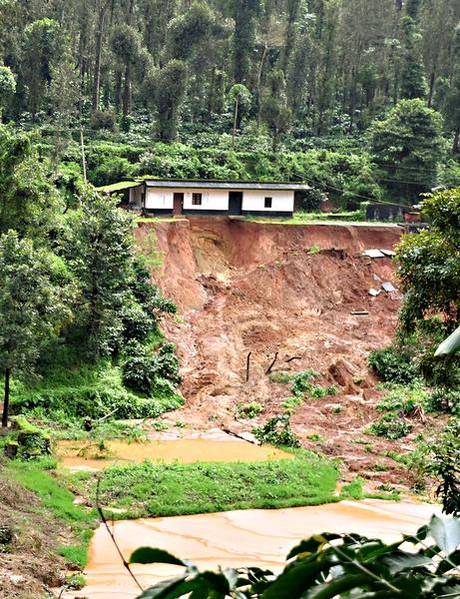
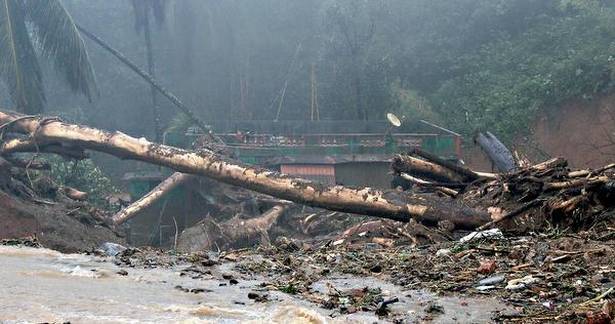
A file photograph of a landslide caused near Makkandoor in Kodagu district during the floods last year.
Consequent to last year’s disaster caused by incessant rains and landslips, the authorities have identified areas which are prone to such events and an Emergency Relief Response and Recovery Committee has been constituted.
In addition, there is an Early Warning and Evacuation Committee, Search and Rescue Committee, First Aid, Mass Casualty Management Committee, Shelter Management Committee etc.
This in addition to constitution of a specific groups to ensure nutrition in shelters, relief management, animal protection and carcass management, psychological first aid, damage assessment, reconstruction and rehabilitation among others. Such committees have been established at the taluk and gram panchayat levels as well, the release stated.
In addition, steps have been taken to put in place a Disaster Management Plan in consultation with the Geological Survey of India, Administrative Training Institute, District Training Institute, and other organisations.
The authorities said an awareness programme and a simulated exercise on response in case of any emergency, has been held in rural areas. In addition, a team of National Disaster Resonse Force (NDRF) has been allocated to the district and will be deployed by the end of May.
Besides, the final report of the GSI survey to identify sensitive and hypersensitive areas is expected in due course and all measures will be taken to minimise the impact of any calamity.
The district administration has also taken steps to ensure that there is no dearth of medical assistance in case of any emergency and hence the public has been asked to eschew fears over the issue.
source: http://www.thehindu.com / The Hindu / Home> News> States> Karnataka / by Special Correspondent / Mysuru – April 28th, 2019
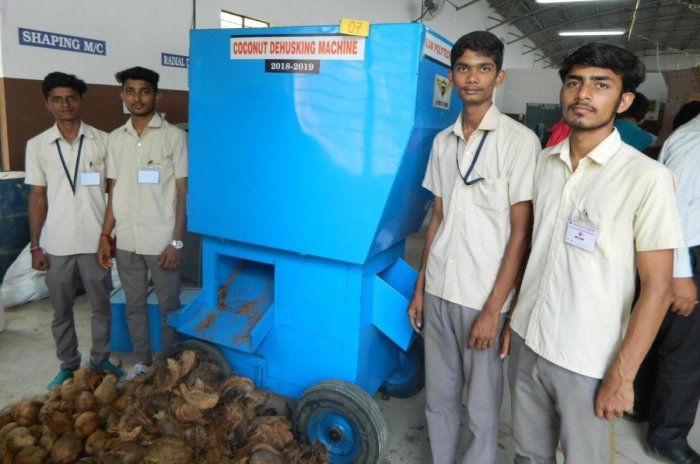
Students of the Mechanical Engineering Department of SDM College, Ujire, showcase their innovation – a coconut dehusking machine – during ‘Anveshane-19’, the state-level exhibition organised by Halligattu Coorg Institute of Technology in Gonikoppa.
Scientific technology was put to useful applications by the students of various technical institutes during ‘Anveshane-19’, the state-level exhibition organised by Halligattu Coorg Institute of Technology in Gonikoppa recently.
Around 400 students from the branches of civil, electronics and communication, computer science and mechanical engineering from various polytechnic colleges across the state took part in the event.
Several innovations displayed at the scientific expo featured devices which enable surveillance, remote access and management through mobile phones.
A machine capable of dehusking 260 coconuts in an hour was developed by the mechanical engineering team of SDM College, Ujire. Another team from the same college came up with a solution to plastic waste by designing interlocks out of plastic waste.
A milling machine made by Kaveri Polytechnic College, Gonikoppa, was developed to carve letters on hard substances. Kurunji Venkataramana Gowda College, Sullia, students designed an automatic jumper system, which makes use of mobile technology to easily identify the problems in electric lines.
source: http://www.deccanherald.com / Deccan Herald / Home> State> Districts / by DH News Service, Gonikoppa / March 22nd, 2019
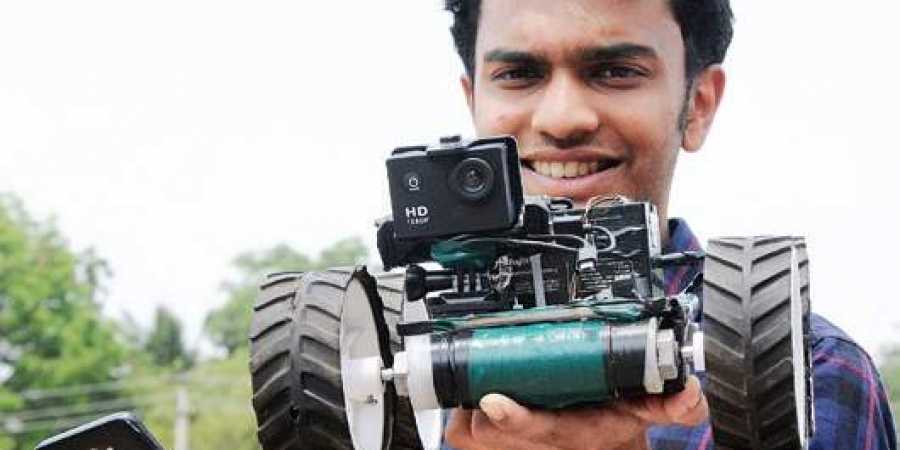
An unmanned ground vehicle, the size of a college bag, it sports four wheels to move around as well as a basic handset with a SIM and camera to record videos.
Sharan Poovaiah, a student of NIE, Mysuru, has designed the robot to help the farming community | udayashankar S
Bengaluru :
Twenty-year-old Shravan Poovaiah’s visit to his native Ammathi in Virajpet last year led him to design a machine which would help reduce his mother’s burden of not just monitoring several workers at their coffee estate on her own, but also receive alerts on wild animal movements and forest fires. Shravan, an engineering student studying BE (Mechanical) at National Institute of Engineering in Mysuru, comes from a family of farmers and designed the robot to help the community at large.
An unmanned ground vehicle, the size of a college bag, it sports four wheels to move around as well as a basic handset with a SIM and camera to record videos. Explaining how it works, Shravan said the prototype of the robot has a camera which can record all activities across the farm. The robot is designed to rotate 360 degrees to capture videos, and its owner can dial into the handset from anywhere in the world to connect to the robot.
Once connected, the owner can use the dial pad (numbers 2, 8, 4 and 6) to control the movement of the vehicle in four directions.“This is similar to games played on cell phones. The equipment hardly weighs 1kg and is very compact,” he said.
The robot prototype is designed in such a way it can move on any quality of surface. It is also suited to operate under any weather condition, including rains. It runs on solar power batteries.
“It is designed in a such a way that users can monitor the video recordings on their phones. The speed of the robot prototype is adjusted in such a way that recording can be watched with more clarity,’’ he said.
The cost of the equipment is Rs 3,000. Shravan, who worked on the prototype for six months, said it can also be used to check for wild animal movements and fires within the property and keep a track od workers.
Shravan recently demonstrated his prototype on National Science Day (February 28) at his college. His work, which was backed by his Physics professor Dr M V Deepa Urs, was met with applause.
Furthermore, former Director of the Karnataka State Open University, Prof B S Vishwanath, also assured Shravan to assist him further with the project.
source: http://www.newindianexpress.com / The New Indian Express / Home> Cities> Bengaluru / by Ashwin M. Sripad / Express News Service / March 04th, 2019
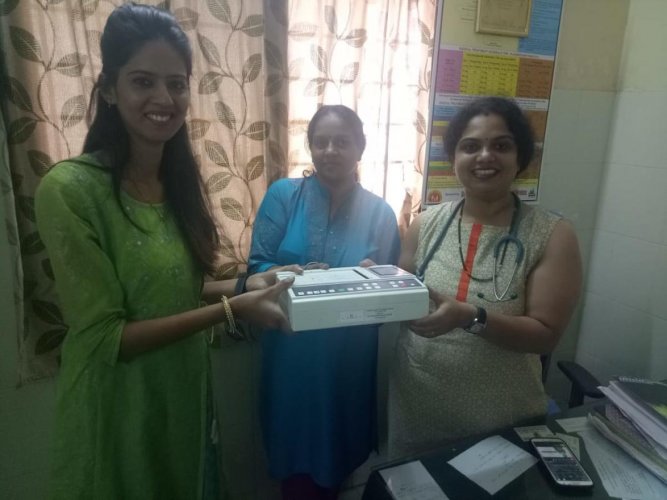
An ECG machine being handed over to a remote Primary Health Centre in Kodagu district.
The PHCs in Guthigar, Bellare and Aranthodu in Sullia taluk can now boast of well-equipped ECG machines thanks to the efforts of like-minded doctors led by Dr Padmanabh Kamath, HoD of Cardiology and professor at KMC, Mangaluru.
Dr Kamath, who started CAD (Cardiology at doorsteps), a crusade against coronary artery disease initiative— a WhatsApp network of over 450 like-minded doctors across eight doctors in Coastal Karnataka and Malnad region, is engaged in screening poor patients for cardiac problems in remote areas for free. The group was set up in February 2018 and has installed 100 ECG machines in the PHCs of interior villages with the help of donors. “When a patient visits with a symptom of a heart attack, an ECG is immediately carried out and the results are shared on WhatsApp. If it’s a heart attack, then the patient is referred to the nearest hospital for treatment,” Kamath told DH.
He said, “We want to instal 250 ECG machines by 2020 and cover three more districts including Hassan and Kasargod. The PHCs in Humcha, Koppa, Muniyala, Shikaripura, Sajipanadu will get ECG machines next week. In fact, one of the pilgrims who suffered a cardiac arrest, supported the CAD initiative to instal ECG machine at Humcha,” Kamath added.
ECG machines are already installed at PHCs in Gonikoppa, Suntikoppa and Siddapura in Kodagu. The CAD initiative wanted to instal it in 15 places in Kodagu. Owing to natural calamities that wreaked havoc in Kodagu district, the initiative saw a setback, he said.
So far, cardiac diagnosis was achieved in more than 1,000 patients and 985 cases of ischaemic heart disease and 345 of unstable angina have been detected. About 124 heart attack patients were picked up and 95 angioplasties have been conducted, said Dr Kamath.
Dr Kamath said 71-year-old Leelavathi, a resident of Sullia and a heart patient, responded to Kamath’s mission of installing ECG machines and donated money from her pension to instal the ECG machine at Guthigaru. Sri Veera Venkatesh Charitable Trust has paid for five ECGs to be installed in village PHCs recently.
source: http://www.deccanherald.com / Deccan Herald / Home> States> Mangaluru / by Naina J A / DH News Service / Mangaluru / June 05th, 2018
Three young scientists from two schools in Kodagu have been selected for National Children’s Science Congress (NCSC), to be organised by National Council for Science and Technology Communication (NCSTC), at Bhubaneswar from December 27 to 31.
Tejana
Bharatiya Vidya Bhavan Kodagu Vidyalaya students Lekhana Muthakka (Senior category) and N N Niruth (Junior category) and H S Tejana (Rural senior category) of Angela Vidyanikethana School, Koodige, have been selected to attend the National Children’s Science Congress. The three students from Kodagu will be a part of 30 young scientists who will represent Karnataka at the Science Congress.
The three students had presented their scientific papers on innovations in science and technology for healthy nation.
Lekhana had presented an essay on how the disappearance of small water bodies have affected nature in Kodagu.
Tejana had presented a paper on use of bio plastic.
Niruth has presented a paper on modern life style affecting the health of an individual.
source: http://www.deccanherald.com / Deccan Herald / Home> State> Mangaluru / by Naina J A / DH News Service / Mangaluru – December 22nd, 2018
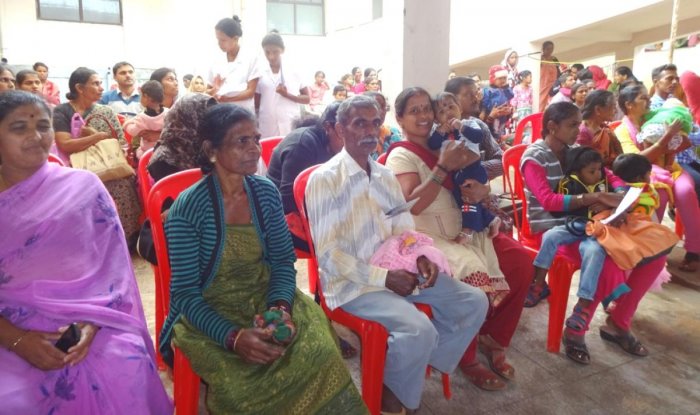
Parents and guardians take part in the inaugural function of Newborn Children’s Week at the district hospital in Madikeri.
District RCH Officer Dr Nilesh said parents should take special care of their children’s health because each and every child is an asset to the country.
He was speaking at the inaugural function of Newborn Children’s Week organised by Kodagu Institute of Medical Sciences at the maternity and children’s ward at the district hospital.
Healthy children are an integral part of a healthy society, said Dr Nilesh.
District surgeon Dr Jagadish said special care should be taken while feeding newborns. “It is important for the mothers to know the food requirement of children according to their age,” he advised.
District Hospital senior paediatrician Dr Krishnananda felt for a need to take necessary steps to bring down infant mortality rate.
Kodagu Institute of Medical Sciences Paediatrics Department Head Dr Purushottam, Dr Shivraj and Dr Kiran were present at the function.
source: http://www.deccanherald.com / Deccan Herald / Home> State> Districts / by Adithya KA, DH News Service, Madikeri / November 24th, 2018
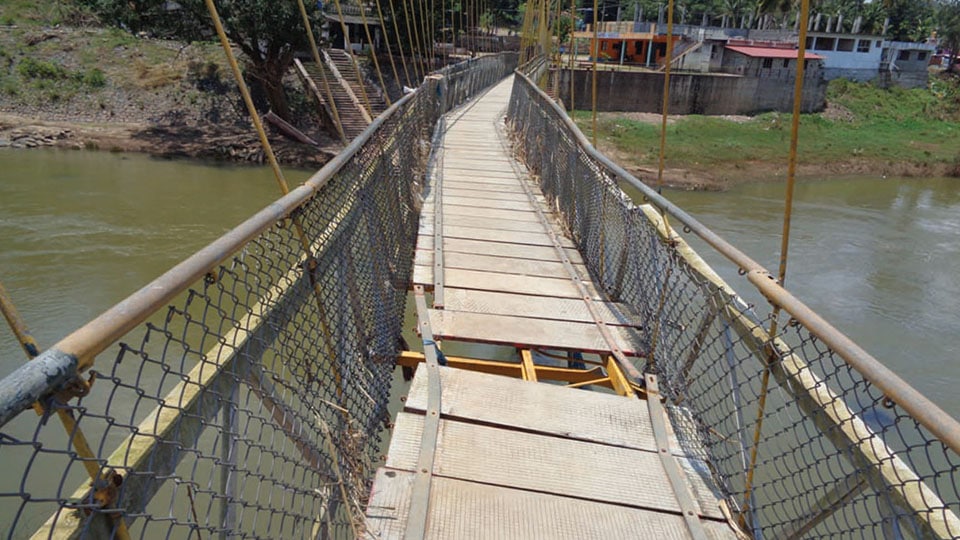
The hanging bride built across Cauvery River near Sri Ramalingeshwara Temple at Kanive close to Kushalnagar in Somwarpet taluk of Kodagu District has been severely damaged by recent floods that devastated Kodagu.
The hanging bridge connects villages along the border between Kodagu and Mysuru Districts. It also acted as a bond between villagers. The bridge with its unique nature, also attracted thousands of tourists. But heavy rains resulting in the flooding of Cauvery and Harangi Rivers, has caused huge damages to the bridge, which is on the verge of collapsing.
The Steel-Suspension Bridge supported by piers on both the banks of the river, has been so devastated by floods, that even pedestrians too are scared to walk on this bridge.
The steel rods that hold the bridge have broken and the wooden planks meant for pedestrian commute, have come apart. Thousands of people who depended on this bridge for their daily commute to work, are now scared about their future, with the bridge no longer safe for commuting.
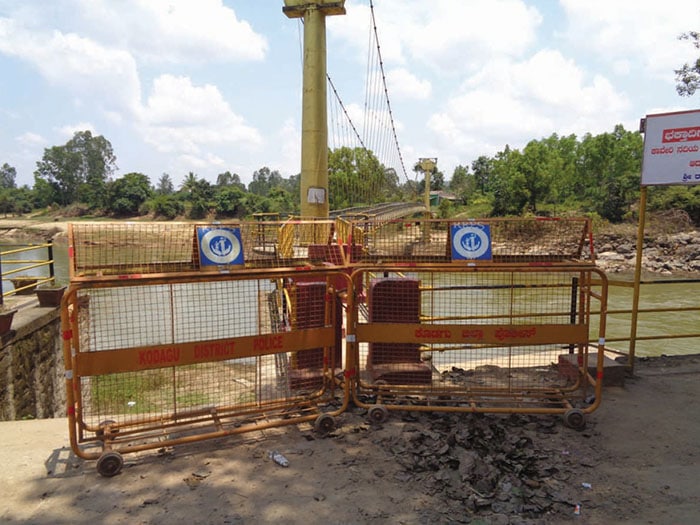
Entry to the bridge has been banned by the Police.
This hanging bridge was built eight years ago at a cost of Rs. 45 lakh, funded by Malnad Area Development Board (MADB), Shivamogga. Sullai’s renowned suspension bridge expert Girish and his team constructed the bridge using the latest technology. The bridge had been the dream of thousands of people living in villages along Kodagu’s border with Mysuru District. The bridge connects many villages of Periyapatna taluk in Mysuru District, including Dodda Kammanahalli, Shanubhoganahalli, Dindigadu, Muttina Mulluroge, Kanagalu, Hanumanthapura and Karadi Lakkanakere with Kodagu villages such as Kanive, Bhuvanagiri, Huluse, Hakke, Kudige, Mararu and Hebbale. Before the construction of this hanging bridges, the villagers had to cross the river on boats and on the dangerous bridge along the aqueduct built at a height of over 50ft. This dangerous and risky bridge was a bane to hundreds of students and labourers who used to commute daily. The authorities taking note of the daily hardship of the people, built this bridge at Kanive.
As flooding waters submerged this bridge and caused considerable damage to it, pedestrian movement on the bridge has been banned. The Police have erected barricades across the bridge. With the closure of his hanging bridge, villagers along the border are forced to take a detour of about 20kms via Avarti to reach Kushalnagar and other places.
With the recent floods weakening the bridge, the villagers have urged the Kodagu District Administration to repair this bridge at the earliest and throw it open once again for the benefit of villagers, who consider this bridge as a very important part of their life.
Unfortunately, for the people who depended on the bridge, the District Administration has not yet announced any funds to repair the bridge.
The bridge is crucial for the devotees to go to the historic Ramalingeshwara Temple and as the bridge is unsafe now, many people are robbed off the opportunity to go to the temple, said Bharadhwaj K. Anandatheertha, a writer from Kanive.
source: http://www.starofmysore.com / Star of Mysore / Home> News /
September 16th, 2018
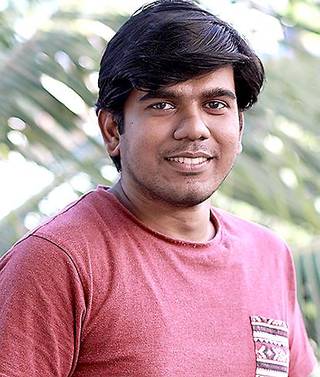
Raj Bhagat Palanichamy of WRI India is preparing open source free online tools and maps to deal with floods.
As Bengaluru and Chennai stare into a future which is likely to be dotted with more floods, Raj Bhagat Palanichamy is busy working on a defence strategy. He is preparing an online tool and maps for Chennai and Bengaluru. Raj works as a GIS and remote sensing analyst with WRI Ross Cities program at WRI (World Resources Institute) India. A not-for-profit global research organisation, WRI works on ideas to create sustainable cities.
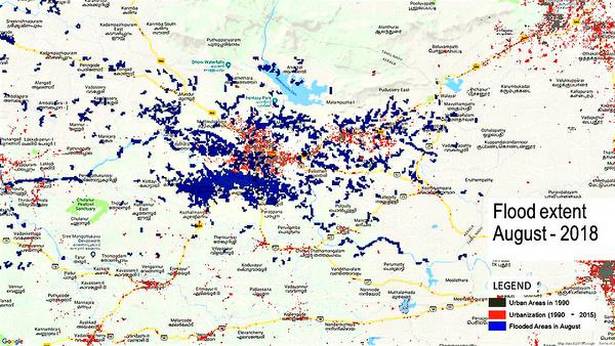
During the recent floods, he had released maps of Kodagu and Kerala that aimed at helping authorities and people involved in rescue work by sharing information. On whether his maps could achieve their objective, the young researcher says, “I got an SOS call from the disaster management wing of the Revenue Department of Karnataka, one morning asking for these maps. I shared with them an interactive website which gave them access to these maps. I think drone surveys were commissioned in Kodagu after consulting our maps. With Kerala, there was no direct channel of communication between us and its government. Also, the authorities in Kerala were right in the thick of action so we couldn’t really interact. The idea was to tell the governments that there are ways to seek information. Social media was interested. My tweets had 40,000 impressions.”
With high possibilities of flooding occurring in Bengaluru and Chennai in the coming months, Raj is now working on maps for both the cities and plans to release it five days before the meteorological department predict heavy downpours. Raj reveals that one can extract more accurate data closer to the date. An hour of observation is needed to generate maps. “Our mandate was never to deal with a crisis on a short-term basis. The 2015 Chennai floods made us realise that there is a need to have a structure for a short-term solution to save lives. We are now working on an open source online tool that will predict the areas to be most affected and also monitor those areas. The online tool will be ready sometime in 2019 as it is stuck right now due to paucity of funds but the maps will be there soon, though.”
Raj feels the conversations should be on handling the climate change. “Like how to diversify our cities so they don’t get overburdened. While the government looks at flooding with an engineering perspective — building and clearing canals, the main thing is rainwater harvesting. We could use parks to hold rainfall and avoid constructions on flood plains.”
He says the flood tool can send out a warning. The findings can be integrated into the planning to identify critical areas and avoid construction there. The tool will help in identifying critical buildings such as hospitals and schools to come up with a proper defence mechanism against floods.
Raj feels too much dependence on dams is not recommended. “Traditional ways of water conservation and improvement of water efficiency and productivity need to be the focus. The government shouldn’t focus on mega projects.” He also feels that the gap between analytics and planning should be bridged. “There are 100 of research projects about the flooding in Mahanadi river but these have not been integrated into planning because researchers probably don’t know how to reach out and publicise their work. The Amaravati floods very often not just because of the infrastructure but also due to lack of planning.”
source: http://www.thehindu.com / The Hindu / Home> Society / by Shailaja Tripathi / September 18th, 2018
The board has launched on pilot basis a number of tech measures to help the 3.66 lakh coffee growers in the country.
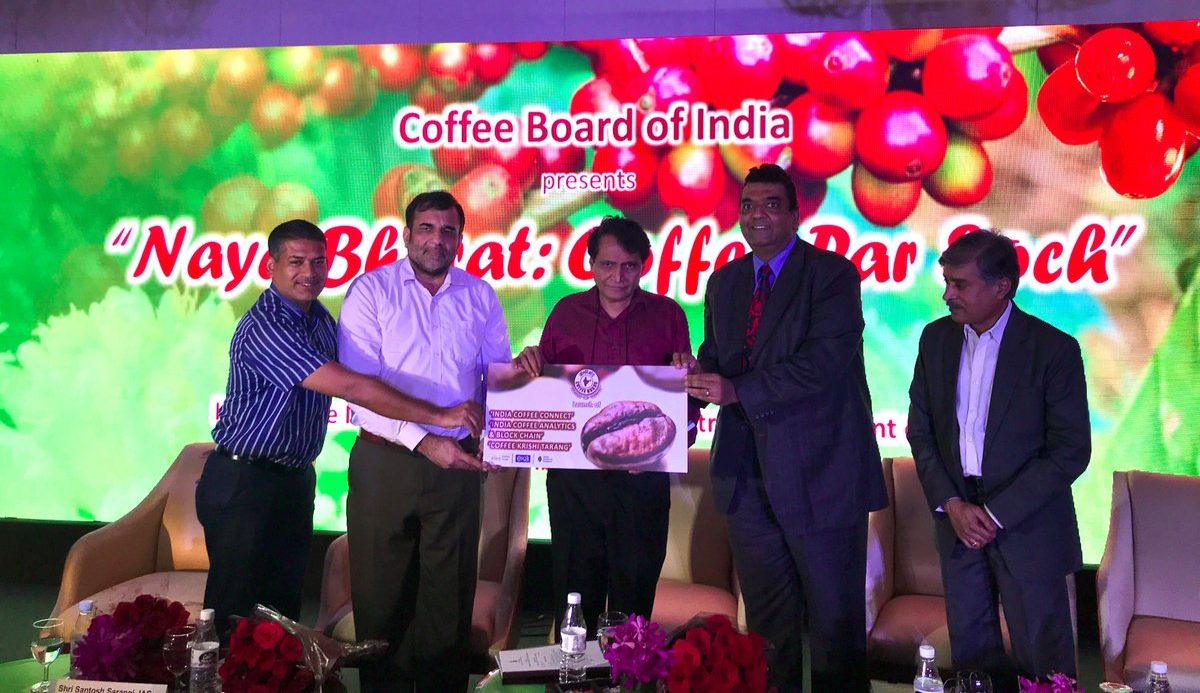
Suresh Prabhu (C) at the Naya Bharat event | @CoffeeboardI/Twitter
New Delhi:
Drones, geo-tagging and a number of mobile apps are among the technological measures the government-run Coffee Board is set to introduce to improve productivity and revenue.
The board, which is under the commerce ministry, set the process in motion last week, when Suresh Prabhu, the Commerce and Industries Minister, formally launched the ‘Coffee Connect’ app.
The app will collect data from coffee plantations in the country through inbuilt geo-tagging which will help generate information about plantation location, plant material and age.
“For the first time in the 75 years of India’s Coffee Act, 1942, we are trying to infuse new technologies that will enhance productivity and yield for farmers,” said Coffee Board Secretary and CEO, Srivasta Krishna.
Krishna emphasised on the need to grow “smart coffee”, using concepts such precision agriculture and smart agriculture to maximise yields from the existing coffee growing regions.
The board hopes that these technological measures will help increase profits of farmers, particularly in the export markets.
‘Way to hike profits’
According to Krishna, a cup of Indian coffee sells for $3 to $4 in the US, of which an Indian farmer gets only 5 cents. With technology, he said, this could rise to 10 cents.
The move comes amid fears that the next season could see the coffee output drop to its lowest in two decades due to the unprecedented rains in the two top crop producing regions in the country – Kodagu in Karnataka and Wayanad in Kerala.
According to a Bloomberg report, output in the year starting October 1 may be about 25 per cent lower than the 3,16,000 metric tons estimated by the Coffee Board for 2017-18.
Coffee is cultivated by 3.66 lakh coffee farmers in the country, 98 per cent of whom are small farmers. Typically, a small farmer is one who owns less than 25 acres.
Apps galore and a call centre
The ‘Coffee Connect’ app is among a number of apps that the board has already launched on a pilot basis.
The app allows users to get in touch with the coffee board’s extension officers, who provide services to coffee farmers.
At present, there are 170 Coffee Board extension personnel — or one extension officer per 2,153 farmers.
The app, officials hope, will enable better information exchange between Coffee Board personnel and those on the ground.
The board has also launched, on a pilot basis, a suite of apps to provide solutions to challenges in rainfall, pests and diseases.
Some of the app features are hyper-local weather forecasting, early detection of coffee crop pests such as the White Stem Borer and predicting the probability of Leaf Rust disease.
This app also has a blockchain-based market-place that allows coffee growers and farmers to directly deal with customers, including multinational firms.
“These are all wonderful efforts. These tech solutions, however, need more effort, and push from all stakeholders to make them really effective,” said Mohan Alwares, a coffee grower from Mudigere in Karnataka.
Alwares lauded the blockchain-based market but urged the board to increase awareness of it.
Rajeev Chaudhary, general manager and the chief risk officer, Agriculture Insurance Company of India, said such measures will hold the board in good stead.
“The Coffee Board’s various tech implementations including the pilot blockchain-based marketplace would make it a frontrunner among the other boards for crops in India. Other boards, however, will most likely follow suit”.
Drones Used
Another proposal that the board is exploring promoting is the use of drones in agriculture.
At the board’s event last Tuesday, several drone start-ups presented proposals, arguing that their use will improve the efficiency of pesticide use and spray.
“A farmer might take 2-3 hours to spray an acre with pesticide; a drone will do this in less than 10 minutes,” said Rahat Kulshreshtha, the CEO of the drone start-up Quidich Innovation Labs. “Using drones we found that 30 per cent less pesticide can be used and since it can be done remotely, farmers are saved from the harmful effects of direct contact with pesticides”.
Alwares, however, isn’t sure that drones will help in coffee plantations in India. “Unlike in Brazil where coffee is grown in open cultivation, in India coffee is largely a crop grown in shade,” he said. “If a coffee plant is 5 feet tall, there are trees as tall as 50 to 100 feet growing over it to provide shade. So I’m not entirely sure how drones can be used.”
Chaudhary of the Agriculture Insurance India foresees drones being increasingly used in other crops. He says drones for aerial surveillance will be especially helpful in monitoring high-value and high-risk crops such as cotton, groundnut, soybean and plantation crops like tea. Agri insurance companies will likely make more drone purchases he said, adding that Maharashtra leads the pack in this sector.
source: http://www.theprint.in / The Print / Home> Governance / by Regina Nihindukulasuriya / September 13th, 2018
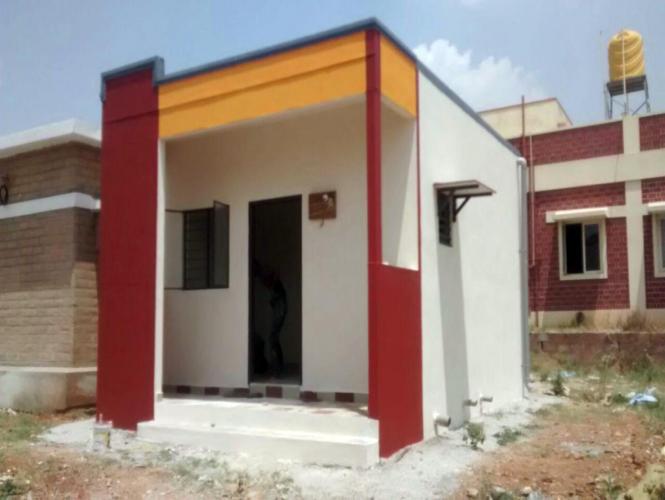
A house constructed using composite material near Chikkapetehalli near Yelahanka in Bengaluru
A former scientist from the National Aerospace Laboratories (NAL), Bengaluru, has come up with a proposal to construct light-weight, flood-resistant houses made of composite material in Kodagu district.
The material used in lightweight combat aircraft will be employed to build the houses, to replace brick and mortar as construction material.
Dr R Gopalan, the retired scientist from NAL, also the executive director and CEO of Society for Development of Composites, says structures constructed using brick and cement increases the load on the soil, which is not good for houses prone to natural disasters.
“Across the world, people are building houses using composite materials, which have high durability compared to traditional brick and cement. The weight of these houses is 1/100th of the traditional structures. Houses built using composite material can be constructed in just a few hours,” Gopalan said.
Referring to Home Minister G Parameshwara, who said pre-fabricated houses like Indira canteens will be promoted by the government, Gopalan said pre-cast cement slabs used in Indira canteens are very heavy and require use of cranes to construct homes. Knowing the soil condition of the flooded areas, it is advisable not to use heavy structures in Kodagu, the scientist said.
Light-weight material gives excellent thermal insulation unlike Indira canteens, which will be like a hot oven.
Gopalan, along with other scientists, travelled across the ravaged areas of Kodagu to assess the situation. The team met the incharge secretary and the incharge minister for Kodagu in this regard. The team has constructed 65 taluk hospitals in North Karnataka in a span of five months and has built houses in flood-affected areas of the region.
source: http://www.deccanherald.com / Deccan Herald / Home> State> Top Karnataka Stories / by Poornima Nataraj, DH News Services,Bengaluru / September 08th, 2018
WELCOME. If you like what you see "SUBSCRIBE via EMAIL" to receive FREE regular UPDATES.
Read More »