Category Archives: Science & Technology

Students to meet budding scientists

The Karnataka Rajya Vijnana Parishat has arranged an interaction of students from different schools in Kalaburagi district on Thursday with budding scientistsfrom different parts of the State who have qualified for the 23rd National Children’s Science Congress to be held in Chandigarh University at Mohali from December 27.

26 of them will participate in the interaction.

The following have qualified to participate in the national science congress:

Junior (Urban):

S.M. Vismaya (Davanagere), Prema Golasangi (Bagalkote), M.J. Akshay (Madikeri), D. Sankalpa (Bidar), Shrivalli A. Kulkarni (Bengaluru), Sahana (Chamarajanagar);

Junior (Rural):

Bharathikumar Patil (Davanagere), Nandita Gulbal (Bagalkote), Avanthi (Dakshina Kannada), Dixa Nayak (Uttara Kannada), T. Akash (Bidar), B.P. Tanushri (Tumakuru);

Senior (Urban):

Poornima M. Patil (Vijayapura), Vineeth (Kalaburagi), Sangamesh Sanromath (Uttara Kannada), Harishgowda (Madikeri), Mushrifa (Madikeri), Ibrahim (Kalaburagi), K.T. Gopika (Kolar), Sahana Patil (Dakshina Kannada), Kaya Bharadwaj (Tumakuru);

Senior (Rural):

Devaki (Kalaburagi), Beerappa Sheeparmatt (Bagalkote), K.S. Ruthu (Dakshina Kannada), B. Vidya (Tumakuru), Shashank Amblimath (Belagavi), Inchara (Dakshina Kannada), Vaibhavi Tikotkar (Vijayapura), K.V. Ramya (Davanagere), and Nagaratna Shikolli (Belagavi).

source: http://www.thehindu.com / The Hindu / Home> National> Karnataka / by T.V. Sivanandan / Kalaburagi – December 24th, 2016

Free eye testing camp from today

Ashwini Hospital will conduct a free eye testing camp till November 10, according to a press release. The camp will be held in various parts of the district on November 4 and 5.

An interaction with the participants will be held on November 6 at 1.30 pm and the inaugurating of the eye testing camp will be done on the occasion.

Schedule

On November 4, the testing will be done at Ponnappasante Primary School, Balele, Kanooru, Kutta, Srimangala, Hudikeri hospital, Ponnampet Sri Ramakrishna Sevashrama Hospital, Chettalli, Siddapur, Ammatti, Palibetta, Gonikoppa, Virajpet hospital, Titimati Primary school, Virajpet R I, H P Hospital, Bailukoppa Primary school, Bettadapura hospital, Chikkanerale, Halahanahalli, Kanagal, Attigoodu, Ravandoor, Sangara Chettalli, Hadya, Kittoor, Kellur hospitals, Chapparahalli Primary School, Kelaganahalli, N Shettalli anganwadi centres, Makodu Ayurveda hospitals, Koppa PHC, Maradooru gate, Tammadahalli and Avarti Primary School.

On November 5, the camps will be held at Madapur, Somvarpet, Shantalli, Alooru Siddapura, Shanivarasanthe, Kodlipet hospital, Bettageri Primary School, Napoklu, Bhagamandala, Cherambane Sampaje hospital, Made Co-op society, Koinadu Sri Ganapathy Kalamandira, Shirangala, Hebbale, Koodige, Suntikoppa, Moornadu hospital, Kushalnagar hospital and Rotary Hall, Basavanahalli Lamp Society and Haakattoor Charaka Chikitsalaya.

On November 6, the eye testing and surgery will be done between 9 am and 2 pm.

source: http://www.deccanherald.com / Deccan Herald / Home> District / Madikeri – DHNS, November 04th, 2015

BSNL to improve 3G network in Mysuru, Kodagu

Public sector undertaking BSNL is poised for to strengthen and expand its 3G coverage in the Mysuru-Kodagu region.

The plan is to strengthen the 3G data network in the district headquarters by adding new 3G nodes, providing 3G at all the existing towers in all the taluks and providing 3G nodes to all important hoblis, villages, tourist places, industrial areas and educational institutions.

This was communicated by BSNL Chief Manager P. Nagaraju to Pratap Simha, MP, consequent to his query on BSNL’s plans for improving 3G coverage in the region.

BSNL said that they would start receiving the equipment by December 2015 and complete the installation by December 2016. Of the proposed 95 3G sites in the region, as many as 85 sites are in Kodagu district while Mysuru which already has a good network and infrastructure and is served by 3G, will get only 10 new sites.

Out of 85 3G sites in Kodagu district , 20 sites will be in Madikeri taluk, 30 in Somwarpet taluk, and 35 sites will be located in Virajpet taluk. In Mysuru district, 3 sites will be located in Hunsur taluk, 1 in K.R.Nagar and 6 sites in Mysuru taluk.

However, the request for strengthening and expanding the 2G sites has not been approved by the BSNL Corporate office as emphasis is on strengthening the 3G coverage, according to the communique.

Welcoming the decision, Mr.Pratap Simha said the identification of new 3G sites by the BSNL indicates that a majority of them are in far-flung areas of the hilly or remote areas of Kodagu which augurs well for the development of the region.

source: http://www.thehindu.com / The Hindu / Home> National> Karnataka / by R. Krishna Kumar / Myrusu – August 08th, 2015

Call to use digital lockers to secure documents online

Deputy Commissioner Meer Anees Ahammed has said people should make use of digital locker system launched by the government to securely store documents online.

Speaking at a programme organised as a part of Digital India organised by the department Electronics and Information Technology, at Madikeri on Saturday, he said that with the advance in science and technology, facilities are available online.

With digital locker facility, paper-less system will be created in the future. There is a need to create awareness on the same.

The users can store their documents such as school certificate, passport and other documents in the digital format.

Zilla Panchayat Chief Executive Officer M Kurma Rao said one can avail postal, airlines, train, bus, banking services through online. This will help in checking the intervention of middlemen.

Additional DC M Sathish Kumar said efforts will be made for Aadhaar registration in schools, colleges and hostels in the future.

Lead Bank Manager K A Devaiah said Digital India depends on connectiovity.

The digital India will be a success with the effective connectivity system by the telecom operators. Banking system has been computerised.

Biometric system will be introduced in place of ATM to withdraw and deposit money in the future. Kushalnagar Engineering College lecturer Prof Vani also spoke.

Winners

Prizes were distributed to the winners of essay, elocution and painting competition held as a part of Digital India week in Kodagu district. The winners in painting Jeen Salong, St Michael School (I), Meghana, St Jospeh School (II) in Madikeri taluk; Brijesh of Fathima School (I), Tejaswini of Kanbail Government High SChool (II) in Somwarpet taluk; Dilip (I) of Heggala Government High School and Venisha (II) of St Annamma School in Virajpet taluk.

Essay contest winners are— Chaitanya of St Michael School (I), Rasheela Deeksha of St Jospeh School (II) in Madikeri taluk; Tejasri N R (I) of Hudikeri Janata School and Prajna P V of Gonikoppa High School (II) in Virajpet taluk and Hemanth Kumar (I) of Morarji School and Cinchana M D of St Joseph School (II) in Somwarpet taluk.

Elocution contest winners are —Sathish R S of Madikeri Junior College (I), Nireeksha of St Joseoh School (II) in Madikeri taluk; Leena K L of Srimangala Junior College (I) and Dhanya of St Anns High School (II) in Virajpet taluk and Chinmay of Aloor Siddapura School (I) and Akshatha Bhat of ST Joseph School (II) in Somwarpet taluk.

source: http://www.deccanherald.com / Deccan Herald / Home> District / DHNS, Madikeri – July 04th, 2015

Coffee pulp bacteria clears oil spills, finds Nitte college team

The bacteria extracted grows in a minimal medium supplemented with petroleum crude oil (PCO) in sea water indicating that this is a halophile (organisms that thrive in high salt concentrations) and can be used effectively to clear oil spills in seas.

Mangaluru :

Can bacteria extracted from coffee pulp waste help clear oil spills? It can, says the team from NMAM Institute of Technology, Nitte which has won the Best Project Award for ‘Microbial Bioremediation of Effluents’ at the Joy of Engineering, Design and Innovation (Jed-i) project challenge.

The bacteria extracted grows in a minimal medium supplemented with petroleum crude oil (PCO) in sea water indicating that this is a halophile (organisms that thrive in high salt concentrations) and can be used effectively to clear oil spills in seas.

The team – Aparna K Mohan, Sandhya Kamath, Sanjana Chiplunkar and Shiny Martis B, all BE Biotechnology students of the college- won the challenge beating 19 other finalists which included teams from IITs and NITs. The annual challenge, conducted by Jed-i in partnership with the Indian Institute of Science (IISc), Bengaluru, is designed to identify and showcase the best final year engineering project.

Sanjana, one of the participants, said: “Actually, this was our mini project in the second year. When we got good results we continued with it. The bacteria (Brevibacterium sp. MTCC10313) was previously isolated from coffee pulp ad our seniors had done work and found out that it had caffeine degradation ability. Since it had ability we thought it could tolerate other stressful conditions, then we thought of this.”

Can this be implemented at ground level? “We built a bio-reactor with some waste water and we inoculated the bacteria and got the same results as we got in our lab. This will work in the real world,” she said.

The second place was won by the team of Pradyumna S V, Prateek R, Kunal A Mehta, Mohit Kumar Basu from Reva Institute Of Technology & Management for their project ‘Design, fabrication and Analysis of A Remotely Piloted Vehicle’ while the project ‘Robotic Wrist’ by team of Harish Pawar, Raghuveer Sarma M S, Amit Inamdar, Pooja Ambannavar, Priya Burlabaddi from B V Bhoomaraddi College of Engineering and Technology won a special mention.

source: http://www.timesofindia.indiatimes.com / The Times of India / Home> City> Mangaluru / by Stanley Pinto, TNN / June 25th, 2015

Best App in Asia award to Hyderabad entrepreneur

The Best App In Asia category of the digital winners 2014, Raghu Kanchustambham, explains about his application in Hyderabad on Wednesday. Photo: G. Ramakrishna / The Hindu

The app helps coffee growers to get instant returns for their produce. Livelihood 360 is also capable of estimating quantity of the produce in the fields and sell the crop at fair price.

The coffee farmers of Araku valley these days get instant returns for their produce. Gone are the days when they had to wait for nearly a month till the buyers completed the weighing process of the produce and release money through co-operative society. Thanks to a mobile application developed by Hyderabad-based entrepreneur, Raghu Kanchustambham, there is no waiting period.

The app dubbed as ‘Livelihood 360 (L360)’ was adjudged the Best App of Asia in the Telenor Digital Winners Conference, a global competition held in Oslo, Norway this month. The award came with a cash prize of Rs. 9,79,000, which will be utilised by the developer to further “scale up” the concept.

It all started when Mr. Raghu, who has a start-up ‘Concept Wave’, met the officials of Naandi Foundation, which was already working with the coffee farmers of Araku valley. “The basic premise was to utilise technology and reach to those people not having access to technology and internet. I visited Araku valley and spent time with them and learnt a lot about their lifestyle and livelihood,” he said.

Mr. Raghu said the previous system of remittance to coffee growers in Araku was taking about a month. The coffee growers would take their produce to a prescribed ‘adda’ where the truck drivers would collect and transport coffee beans to another location for weighing and valuing. “We gave the truck drivers an application that would quantify the yield and also determine the quality instantly. The drivers will immediately remit the amount on the spot to farmers,” he explained.

Livelihood 360 is also capable of estimating quantity of the produce in the fields and sell the crop at fair price. “We have already adopted this application among 12,000 coffee farmers in 650 villages of Araku. Between 40 and 50 truck drivers from Araku were given training on using the application on a feature phone and not a smart phone,” he explained.

source: http://www.thehindu.com / The Hindu / Home> News> Cities> Hyderabad / by M. Sai Gopal / Hyderabad – November 12th, 2014

MoEF gives clearance for Kushalnagar-Madikeri railway line survey

The Mysore-Madikeri railway line project has inched a step forward with the Ministry of Environment and Forests (MoEF) issuing clearance for the survey work between Kushalanagar and Madikeri.

This was disclosed by the railway officials at the Divisional level Rail Users Consultative Committee meeting on Wednesday. The environmental clearance was received last week and the authorities plan to complete the survey and submit the report to the Railway Board by March 31st, 2015.

The preliminary engineering-cum-traffic survey for the proposed railway line was launched in December 2011 but was taken up only between Mysore to Kushalnagar and the partial survey report was submitted to the Railway Board. Though the project was shelved by the Railway Board on grounds of commercial unviability, the State Government has evinced interest in the project and has agreed to take it up on a cost-sharing basis apart from providing land to the railways.

The first phase of the project entails providing railway link between Mysore and Kushanlagar at a cost of Rs.660 crore and would also connect Hunsur and Periyapatana.

Interestingly, the project was included in the Railway Budget 2010-11 under the socially desirable rail connectivity and the first proposal for providing a rail link between Mysore and Madikeri was mooted in 1881-82, according to the Mysore Gazetteer.

Divisional Railway Manager Mr. Rajkumar Lal, Senior Divisional Commercial Manager Mr.Anil Kumar, senior officials of different departments from the Railways, stakeholders from various districts coming under Mysore Railway Division were present.

source: http://www.thehindu.com / The Hindu / Home> News> National> Karnataka / by R. Krishna Kumar / Mysuru – November 05th, 2014

A purposeless power-line via Kodagu to Kerala

‘A case of spending money to benefit contractor, bureaucracy and politicians’

The following is the text of a talk delivered by Maj. Gen. S.G. Vombatkere (Retd.) at a meeting held at Kodava Samaja, Ponnampet, South Kodagu, on Tuesday, 21st Oct. 2014.
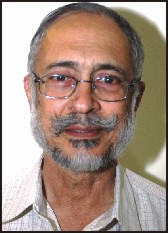
MajGenVombatkereKF02nov2014

by Maj. Gen. S.G. Vombatkere (Retd.)

Sri S. Gopal, dignitaries on the dais, Members of Kaveri Sene and Coorg Wildlife Society, and members of the august audience, I thank you for giving me this opportunity to say a few words about the 400 KV Double Circuit (D/C) HT line connecting Mysore with Kozhikode.

The 210-km 400 KV Double Circuit HT line connecting Mysore with Kozhikode is under construction by Power Grid Corporation of India Limited (PGCIL). It is said to be required to evacuate electric power generated by Kaiga Nuclear Power Station to supply North Kerala.

PGCIL claims that of 210-km, about 92-km in Kerala’s Wayanad District and about 63-km in Mysore District is completed, and 55-km through Kodagu District remains to be constructed. This “remaining” portion in Kodagu District is being opposed by the people of Kodagu, spearheaded by Kaveri Sene and Coorg Wildlife Society on grounds of environmental destruction that will adversely affect the Kaveri watershed which is the source of life-giving water to Karnataka and Tamil Nadu.

Also it will ruin coffee plantations due to tree-felling and intensify the human-animal conflict especially related to elephants, which is already claiming human lives in Kodagu. The objections of the Kodava people to this project are not new, but are several years old. I will speak on this issue and ask some questions concerning technical, environmental and governance matters.

Technical questions

Let us first examine whether this 400KV HT line is at all required. As on date, there are seven HT lines supplying power to Kerala, five from Tamil Nadu and two from Karnataka. These seven lines have a total capacity of 3,000 MW while the share of Kerala from the national grid is only 1,000 MW. Further, although the energy share of Kerala from the national grid is 9,350 Million Units (MU), Kerala is drawing about 11,350 MU from the existing seven HT lines. This shows that the existing seven HT lines are more than adequate for Kerala’s power needs from the national grid, and the proposed 400KV D/C HT line is not at all required.

Thus the question arises as to why PGCIL has constructed 155-km when the project is not necessary and also when the 55-km segment within Kodagu District is facing objections from the people of Kodagu. The environmental and social costs of the project have obviously not been taken into account.

Karnataka State officials have deposed before the National Green Tribunal (NGT), stating that the objections of Gram Sabhas are “belated,” “motivated” and are an “after-thought.” These statements are uncalled for, and show the dismissive attitude of officials towards simple people. The objections may be “belated” because village people did not get to know about the PGCIL project earlier. And if the village people are “motivated” in objecting to the project, their motivation is in preserving the environment which is a vital watershed for South India, saving their own coffee plantations which are their livelihood, and trying to mitigate the growing human-elephant conflicts. Thus, the question arises as to why our own officials have this attitude towards projects.

The 90-paise “disease”

The fact is that even though all officials are not corrupt, many officials are interested in getting large projects sanctioned and executed because a good portion of every rupee of public money spent does not go towards the project work but gets diverted into private pockets. When Rajiv Gandhi was the PM, he had estimated that 80-paise in the rupee went astray. Now, decades later 90-paise, possibly more, would be seen vanishing if an honest, transparent audit were to be made. When a project is estimated at Rs. X crores, X-crore 90-paise portions vanish. Some people indelicately refer to such standard practice as corruption. But if at least the project was a genuine requirement and was executed with quality and in time, one could still wink at the corrup… oops, sorry, the vanishing 90-paise. And this 400KV HT line is an unnecessary project as has been shown earlier.

Environment and Governance

The felling of trees in forest areas and in coffee plantations is harmful to the environment. PGCIL argues that felling a “mere” few thousand trees may not harm the environment. But this argument fails to address the cumulative effect of felling trees for different projects of roads, HT power lines, etc., in the Western Ghats which is an “eco-sensitive hot-spot” in India and even in the international context.

The Ministry of Environment, Forests and Wildlife (MoEFW) is busy giving clearances to any and every project and weakening the Environment Protection Act. When Article 48A of the Constitution reads, “The State shall endeavour to protect and improve the environment and to safeguard the forests and wildlife,” this attitude of MoEFW is condemnable.

The cumulative effect of this deforestation, especially in special regions like the Western Ghats and in particular Kodagu, is not at all a consideration for MoEFW, in the country’s mindless rush towards industrialisation at the cost of environmental destruction.

Kodagu District is special in two ways. One, its famed soldiers protect our country as a fundamental duty, in accordance with Article 51A(d), to defend the country. And two, its people are saving the source and vital watershed of Kaveri, and performing their fundamental constitutional duty “to protect and improve the natural environment including forests, lakes, rivers and wildlife” in accordance with Article 51A(g), doing what MoEFW should be doing but is actually doing the opposite. For all this, we all need to salute the people of Kodagu.

When the State, consisting of the Executive, the Legislative and the Judiciary, fails the People, the people have to resist and uphold the Constitution of India. In opposing this 400 KV Double Circuit HT line, we are performing our fundamental constitutional duty. Let us join together to do our duty!

Jai Hind!

source: http://www.starofmysore.com / Star of Mysore / Home> Feature Articles / Tuesday, October 28th, 2014
Rustic vignettes

Spot on in bringing characters alive.

A Town Like Ours; Kavery Nambisan, Aleph, Rs.395

In literature that delves into social miseries, there is a common feeling that those who have words don’t have the stories, and those who have stories don’t have the words. If you’re living on the pavement with your family, you probably don’t have the means to record the experience for posterity. On the other hand, if you sit at a desk of your own and compose literature, you don’t have access to the miseries you want to write about.

To reconcile that problem, writers set up a peculiar kind of narrator, the person steeped in the rough life who somehow has the vocabulary and wider perspective to tell the stories. It is the kind of construct we find in old fiction, like Nelly Dean from Wuthering Heights or the flamboyantly criminal Moll Flanders. Nowadays, it seems an unnecessarily elaborate way to get to the stories. Readers are primed to accept them without that explanatory frame.

In Kavery Nambisan’s A Town Like Ours, the peculiar narrator is Rajakumari, a retired prostitute who lives in a dark room somewhere in the temple of the village goddess. She knows everyone’s back story and is not ashamed to tell it all. In her early years, she was enterprising enough to trade sex for lessons in maths, language, anatomy and other subjects. With education comes some preachiness, but we are Indians and that’s how we spin a fiction. Rajakumari has plenty to say about the chief industry of the town, the way it has poisoned the wells, contaminated the soil and whitened the children’s hair. She opines on religion and knee joints. But mostly she studies human nature. Old acquaintances come to visit, women come to confide their sorrows, and young boys help her walk to the sanctum of the goddess. Through her tiny window, she reads the faces and gestures she sees on the basis of the many souls she has entertained in her working life, and she puts it all together.

At the centre of her stories is the family that lives out of an Ambassador taxi. Father drives it during the day, mother runs a tea-and-bajji stall out of the trunk after she comes home from her housecleaning jobs, the sister and brother go to school and spend the rest of their time on the streets. But there are in fact no brothers, sisters or fathers in the case. Saroja and Sampathu, each escaping a frightening past, have simply joined forces and are bringing up two children together. In spite of strong affections, the family is a fragile composite that holds together for some time and then fragments again. One child goes missing and then the other, and suddenly Sampathu is not to be seen.

Elsewhere in the town, Manohar and Kripa separate after a fight and come together again. This couple become enmeshed with Saroja and help to look for her family. Nambisan is spot on in drawing Saroja’s situation as the woman left behind. She cannot tell her neighbours she doesn’t know where the other three are. Every day she parries questions about when her husband is “coming back from the village”. She must keep up appearances, or she will be judged and found wanting.

Up to that point Nambisan’s novel is leisurely. We move back and forth through memories and conversations to find out what kind of person each character is. But the suddenly precipitous pace near the end throws us, as each member of the family comes wandering back and misunderstandings flower among them. The whore in the temple says a prayer for herself, and leaves us with unfinished stories.

source: http://www.thehindu.com / The Hindu / Home> Books> Literary Review / by Latha Anantharaman / October 04th, 2014

Genes decide if you will love coffee or not

Genes decide if you will love coffee or not (Thinkstock Photos/ Getty Images)

In a first, researchers have identified six new genetic variants associated with habitual coffee drinking, suggesting why some people love to have coffee while others hate to sip it.

The genome-wide large study, led by the Harvard School of Public Health and Brigham and Women’s Hospital, helps explain why a given amount of coffee or caffeine has varied effects on different people.

“Our findings identifies sub-groups of people most likely to benefit from increasing or decreasing coffee consumption for optimal health,” said Marilyn Cornelis, research associate in department of nutrition at Harvard School of Public Health.

To reach this conclusion, researchers, part of the Coffee and Caffeine Genetics Consortium, conducted a genome-wide meta-analysis of more than 120,000 regular coffee drinkers of European and African-American ancestry.

They identified six variants that mapped to genes in areas involved in caffeine metabolism, influencing the rewarding effects of caffeine and involved in glucose and lipid metabolism.

“The findings suggest that people naturally modulate their coffee intake to experience the optimal effects exerted by caffeine and that the strongest genetic factors linked to increased coffee intake likely work by directly increasing caffeine metabolism,” Cornelis explained.

Genetics have long been suspected of contributing to individual differences in response to coffee and caffeine.

“Like previous genetic analyses of smoking and alcohol consumption, this research serves as an example of how genetics can influence some types of habitual behaviour,” added Daniel Chasman, associate professor at the Brigham and Women’s Hospital.

The study appeared online in the journal Molecular Psychiatry.

source: http://www.timesofindia.indiatimes.com / The Times of India / Home> Life & Style> Health & Fitness / IANS / October 08th, 2014