Category Archives: Science & Technology

Expert panel gives go-ahead for power line; 50,000 trees in Kodagu forests will go

The figure is floated by green activists and is disputed by the authorities, though within the government agencies it varies from 2,247 to 21,000. The trees fall in the verdant forests of Kodagu and the activists could be close to the mark, admit official sources
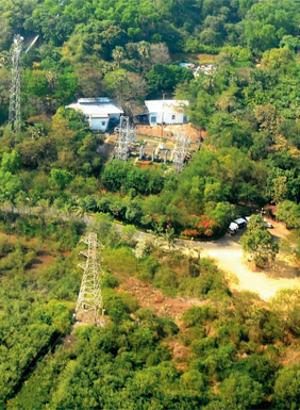
KodaguTreeKF30sept2014

Protests and campaigns have come to a nought, and the axe is set to fall on over 50,000 trees in the evergreen deciduous forests of Kodagu with an expert panel giving its nod to the power line project meant to light up towns and villages in Kerala.

Terming the alternative routes proposed by the locals as technically and financially unfeasible, the three-member expert committee has given its go-ahead to the high power transmission line between Mysore and Kozhikode. Activists of the ‘Save Cauvery’ movement in Kodagu say the decision will ring the death knell for more than 50,000 trees.

While the Power Grid Corporation of India (PGCI) continued to maintain only 2,247 trees will be cut, deputy conservator of forests, Virajpet, has submitted an affidavit before the Green Tribunal in Chennai that a total of 21,000 trees will be felled along the alignment line proposed by PGCI. However, activists who have trekked the entire stretch using GPS coordinates argue that not less than 55,000 trees, both in private areas and on forest land, will face the axe.

Following widespread protests across Kodagu district over the large-scale clearance of forest and degradation to the fragile eco-system of the area, the state government had appointed a three-member expert committee to look into the issue and study the feasibility of possible alternative routes as proposed by the activists. The committee comprising noted elephant expert Prof Raman Sukumar of Indian Institute of Science (IISc) and Ajai Misra, Additional Principal Chief Conservator of Forests (APCCF) was headed by R S Shivakumara Aradhya of Central Power Research Institute (CPRI).

‘Other routes not feasible’

NGOs and activists had proposed alternative routes that would be less damaging to the eco-system, but the committee has stated in its report that these routes are not only detrimental to wildlife conservation, but require huge capital and are technically not feasible. According to the report, accessed by Bangalore Mirror, adopting other routes would require more forests to be cleared than what the present proposal will necessitate. Activists had suggested use of the D-line (District line dividing the two districts of Mysore and Wayanad in Kerala) passing via Nagarhole or the existing 220 KV line on the Kadakola-Kaniyampetta corridor for linking Karnataka with Kerala and Tamil Nadu in the South, besides upgrading the 110 KV corridor between Kasaragod and Mangalore.

“Alternative routes will destroy the Kodagu environment as a large number of trees will have to be cut, adversely affecting the Dubare-Devamachi reserve forest which has considerable presence of elephants and tigers. Using these routes will not only affect the tribal settlement inside forests, but also call for felling of trees in coffee estates which are part of Kodagu ‘s ecosystem. The paddy fields along the proposed line would become unfit for cultivation. The temperature of line conductors will affect coffee plants and affect the national forest policy, which envisages about 33 per cent forest and tree cover. Work in these areas would not only reduce inflow to Kaveri and its tributary Lakshmana Theertha, but also intensify the man-animal conflict,” the report said.

‘Existing lines are over-exploited’

On the prospects of using the existing corridors, the committee observed: “While the corridors are designed to carry a load of 130 MW to 140 MW, they have been used to transmit 180-200 MW of power regularly. Due to overloading, there already has been high sagging of conductors. Further, the ground clearance is low and there have been instances of elephants being subjected to fatal shocks. The Dasara elephant ‘Drona’ too had been a victim of this in the past. The existing 220 KV line runs North East-South West of Kabini for about 32 km of which 20 km is through Nagarhole forest; upgrading the line would only further disturb the ecology.”

‘Tunnelling will hit coffee estates’

Studying the feasibility of laying underground cables, the committee reported it would cost five to 20 times more than the cost of overhead transmission lines. “If the cable is laid, the ground above has to be cleared of vegetation and must be provided with access roads for maintenance. The cable has to be cooled by forced air or by way of circulating water. Further, the repair time is 25 times greater than that of overhead line repair,” the report states.

The experts clarified that laying a double circuit line along the D-line will require 130 hectares of dense tropical forest to be cleared. Besides, reactive power absorption devices have to be installed every eight to 10 km along the cable route; these sub-station-size structures requiring about 2,500 sq metres, the experts said.

‘Project crucial for Karnataka too’

Even though the line between Mysore and Kozhikode was planned under Kaiga Stage II for transferring the generated power from Kaiga to other places way back in 2007, work could not be taken up for several administrative and technical reasons. “Besides this project, there is absolutely no grid connectivity between Kerala and Karnataka. The proposed line, besides helping Kerala, will help us draw power from Koodankulam and other new stations planned along the Tamil Nadu coast. This Southern grid connectivity will help Karnataka harness more than 3,500 MW wind power generated in Tamil Nadu,” said a senior official from the energy department.

Referring to illegal clearance of forests in excess of what was permitted, the committee said, “The line route, proposed by the Power Grid Corporation, requires about 6,000 trees to be cut within a 12-km stretch of coffee plantations in Kodagu, in addition to the 2,247 trees (above 55 cm girth) already felled in that stretch.” Acknowledging clearance of forest for about 52 metres as against the permitted 46 metres along a four-km stretch, the experts suggested efforts to regenerate the natural vegetation in the stretch of land between the 46-52 metre width in Dubare and Devmachi reserved forests.” The committee has also directed the forest department to implement a conflict mitigation plan for preventing man-animal conflict in the area which will completely be funded by PGCI for a minimum of three years after completion of the project.

Reacting over the recommendations of the committee, power minister DK Shivakumar told BM, “The committee has given us a green signal to go ahead with the project. The activists, farmers have to understand this and must support the government by giving all the necessary help. There is tremendous pressure from the Centre to accomplish the project and it is more important from the energy security of the state in future. It helps us draw more and more power in a short duration time from the generating stations of Tamil Nadu. We are just waiting for the rains to stop and once the rains are officially ended, we will take up the work along the proposed corridor.”

source: http://www.bangaloremirror.com / Bangalore Mirror / Home> Bangalore> Cover Story / by Niranjan Kaggere, Bangalore Mirror Bureau / September 29th, 2014
Surgeon’s write path

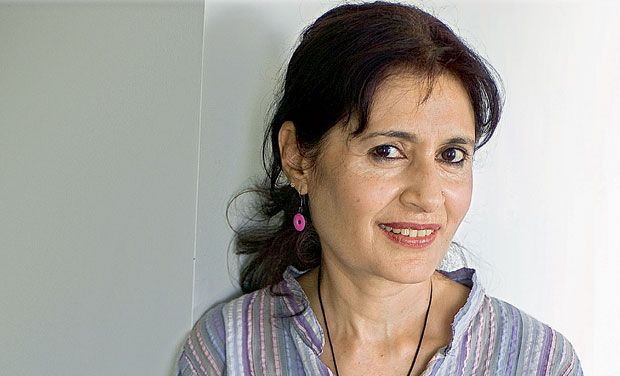
Kavery Nambisan. (Photo: DC)

Hyderabad:

While she was still studying surgery at the University of Liverpool in England, Kavery Nambisan was informed by her friend that a mission hospital in Bihar was in desperate need of a surgeon, and asked if she would be interested in the offer. She took it up as a challenge and landed in the town of Mokama, a dacoit infested area, where she went on to treat patients who had faced several degrees of violence.

After Mokama, she worked at rural hospitals in Uttar Pradesh, Tamil Nadu and Karnataka, where she presently works in the Coorg district. But in the meanwhile, Kavery found time to write seven novels in the last two decades.

Her last book, The Story That Must Not Be Told was shortlisted for the DSC Prize for South Asian Literature as well as the Man Asian Literary Prize. “I started writing once I had become a doctor; initially it was few flippant pieces here and there, and then I ended up writing two children’s novels. It was a revelation for me, because I don’t have a literary background,” she says.

Kavery soon ventured into writing adult novels because she felt there was more to her imagination that she could put down on paper. Her recently released seventh book A Town Like Ours, chronicles the growth of Pingakshipura, a village that has now become a town. It is a place where the water runs a poisonous black and the hair on every child’s head is white. And all of this is through the eyes of an ageing prostitute who resides at a temple premises.

The central character is borrowed from one of Kavery’s childhood memories. “When my father was transferred to Delhi, there was a temple we used to visit often. Right next to the temple, in a room, I found this scantily clad elderly lady who was smoking a hookah and had several men huddled around her. She had a loud voice, and as a young girl, I was mystified and yet disgusted by her appearance,” she adds. But do most of her memories, or her medical experience find place in her books?

“Not constantly, but since I am a writer, I do observe. I listen to my patients intently when they confide in me about their family problems. Any inclusion is not always intentional but I guess once you have the seed of something, you can always create,” she says.

Kavery, who writes early in the mornings and during weekends, says that she never had a problem juggling her professional expertise with her passion for writing. “Since I have always had it this way, I never have really seen it as a problem. Apart from medicine and writing, I don’t feel the need to socialise because I meet so many people anyway. However, I have discovered that I can write an awful lot in hotel rooms when I am travelling, because there I have no other responsibilities,” she adds.

In the present times, when bookstores are stocked with new authors writing about college romances and urban life, there are barely a handful of voices which document the rural facets of our country. The author adds, “It’s not their fault that most of these young authors did not have any rural experience to write about. On my part, I am deeply saddened by injustice which plagues our society. When I have the opportunity of education and upbringing, someone else is continuously being denied it. I constantly think of it, but I haven’t been able to come up with an answer. But instead of feeling helpless, we must realise that we can’t do everything to resolve the situation, but can continue to do what we do best.”

And Kavery’s decision to spend her life writing about and aiding the rural folk in villages, where healthcare is deemed a luxury, is a clear example of that. “It was partly the influence of my father and my teachers, who instilled in me the sense of purpose, of why you do something. And being born and brought up in a village, I realised this is what I should do, because this is what I do best,” she says.

source: http://www.deccanchronicle.com / Deccan Chronicle / Home> LifeStyle> Books/Art / DC / Amrita Paul / August 30th, 2014

Indian firm develops vaccine for Blue Tongue

Hyderabad :

Indian Immunologicals Limited (IIL) has launched a vaccine for Blue Tongue disease that affects domestic animals such as goats, sheep, cattle and camels. India is among the top victims of this disease. The mortality rate is quite high at 30 per cent.

The penta-valent vaccine Raksha-Blu protects all the five virus strains that cause the disease in India. It is priced at Rs. 5 a dose.

An arm of the National Dairy Development Board (NDDB), the IIL claims that it is the first vaccine developed indigenously for the disease.

“There are 24 viral strains prevalent in the world. In India, about five strains are predominant. Besides high level of mortality, it causes morbidity too. There has been no vaccine developed so far to protect the animals from the disease,” a company statement said here on Wednesday.

The Indian Council of Agricultural Research (ICAR) and Tamil Nadu University of Veterinary and Animal Sciences too have taken part in the development of the vaccine.

source: http://www.thehindubusinessline.com / Business Line / Home> Agri-Biz / by K. V. Kurmanath / Hyderabad – September 24th, 2014

440kV Power Line Gets Expert Panel Nod

Bangalore :

An expert committee has given the go-ahead for the proposed 400-kV Mysore-Kodagu-Kozhikode power line passing through eco-sensitive forest zones. It said the power line can follow the original alignment, despite serious apprehensions expressed by environmentalists in Kodagu district.

Speaking to reporters here on Wednesday, Power Minister D K Shivakumar said the state government had constituted a three-member expert committee headed by R S Shivakumara Aradhya to examine the issue. The committee has submitted its report and has recommended the construction of the line on the route originally proposed by the Power Grid Corporation of India Limited (PGCIL)

He said the work on the double-circuit transmission line, which had secured forest clearance, was halted following objections raised by environmentalists and a few elected representatives from the region.The committee, in its recommendations, also suggested certain remedial measures to deal with environmental issues. This included regeneration of vegetation along the 3.93-km stretch in Dubare and Devamachi reserve forests.

It recommended working out a plan to mitigate elephant-human conflicts in coffee plantations, paddy fields and settlements in Kodagu district during the cutting of trees and construction of tower lines.

The remedial plan should be prepared and implemented by the Forest Department in consultation with experts as well as local stakeholders, with funding from the PGCIL, it said and suggested better compensation to paddy growers than what was proposed by the PGCIL.

The committee felt that about 6,000 trees have to be cut in a 12-km stretch of coffee plantations in Kodagu and another 2,247 trees in the forest stretch to build the proposed line. It acknowledged that the line passes through 4.5 km of reserve forest in Virajpet, Madikeri and Hunsur forest divisions, which fall within the buffer zone of the tiger reserve.

Various environmentalist organisations, including Coorg Wildlife Society, had strongly protested against the project fearing large-scale damage to forests.

source: http://www.newindianexpress.com / The New Indian Express / Home> States> Karnataka / by Express News Service / August 28th, 2014

‘Madikeri to get water from Kundamestri shortly’

The work on a temporary project to supply water from Kundamestri is nearing completion. The water from Kundamestri is likely to be supplied to the citizens of Madikeri by the week end.

Sand bunds have been laid to store water. The collected water will be supplied to Kootuhole through pipes. After filtering the water at a Filter house at Stuart Hill, water will be supplied to the citizens.

Madikeri reels under water crisis every year during summer. The work on Kundamestri project was initiated to mitigate water crisis.

However, owing to delay in release of funds, the work could not be completed. Now the estimated cost of the project has been escalated.

The Kundamestri project is being implemented by Karnataka Water Supply and Sewage Board. It will take another one year to complete the work.

Board Executive Engineer Balachandra has expressed confidence of completing the work. The project has been taken up keeping in mind the development of Madikeri in the next 50 years.

When the water level declines in Kootuhole, water will be supplied from Kundamestri to Kootuhole.

source: http://www.deccanherald.com / Deccan Herald / Home> District / Srikanth Kallammanavar / Madikeri – DHNS, July 26th, 2014

Coffee waste may fuel your car now

Scientists have created a new biofuel to get the cars running using ground coffee. The study by University of Bath found that different varieties of coffee, including Robusta and Arabica, have reasonably standard composition and relevant physical properties of fuel, suggesting that all coffee waste could be a “viable” way of producing biodiesel.

Chris Chuck, a research fellow at the university, said that around eight million tonnes of coffee are produced globally each year, and ground waste coffee contains up to 20% oil per unit weight. This oil also has similar properties to current feedstocks used to make biofuels. Spent coffee grounds are waste and there’s a real potential to produce a truly sustainable biofuel using these, he added.

source: http://www.timesofindia.indiatimes.com / The Times of India / Home> Science / Agencies / June 18th, 2014

Keep power line project off Kodagu, urges Greens

On the one hand, greens have been demanding to explore alternative routes to lay 400 kv high tension line between Mysore-Kozhikode, and on the other hand, Power Grid Corporation of India (PGCI) says that the alternative routes were discussed way back in 2009 and they were rejected.

The Members of Kaveri Sene, Coorg Wildlife Society and Kaveri Bachao Andolan have said that felling of trees will have its impact on the bio-diversity and environment of the region. Hence, the project should be kept out of the purview of the Kodagu district.

Power Grid Corporation Chief Manager C D Kishor told Deccan Herald that all the three suggestions put forth by the protesters were discussed and rejected.

The route proposed by the protesters are as follows:

Route 1—Upgrading 220 kv line that provided connectivity between Karnataka and Kerala. Upgrading of the line falls under Bandipura National Park.

After the implementation of Forest Conservation Act 1980, no development work can be initiated inside National Park where tigers habitate.

Hence, the proposal was rejected.

Route 2—Laying electric wire on D-line of Nagarahole National Park.
However, the route was rejected as the width of the D-line is only 15 metre. The width required for laying high-tension wire is 45 metres.

Hence, it would require felling of trees on minimum of 30 meter after the D-line. On an average about 17,515 trees would have been felled if the route was approved.
Hence, both the State and Central governments had rejected the suggestion.
Route3—Underground cable.

The proposal was rejected as it was an uphill task to lay underground cable for 55 kms. To lay underground cable, a separate road will have to constructed to take up repair work in the underground cable.

Present route

At present, the high-tension line will pass through Hunsur, Piriyapattana-Devamacchi forest-Maldare-Hundi-Mayamudi-Bekkesodlur-Nalkeri-Kutta-Kerala.

Delay in work

The length of Mysore-Kozhikode line is 210 kms. The line will pass through 92 kms in Kerala.

The work in Kerala and Mysore has been completed. Owing to the protest by environmentalists, the work was stalled in Kodagu district.

Technical committee

Following the protest, the State government has constituted a technical committee to explore the possible alternative routes.

The committee has been directed to submit report within 15 days.

Kaveri Bachao Andolan Convenor B C Nanjappa said “our concern is environment of the district. We had suggested three alternative routes. If it was not acceptable, then let the technical committee constituted by the government explore an alternative.”

source: http://www.deccanherald.com / Deccan Herald / Home> District / by Srikanth Kallammanavar , Madikeri / DHNS – May 06th, 2014

PGCIL keen on completing Mysore-Kerala project

KodaguMapkf08mar2014
Power Grid Corporation of India Ltd., a Government of India enterprise, which is drawing the 400 KV D/C transmission line from Mysore to Kozhikode in Kerala via Kodagu district, has blamed certain non-governmental organisations of placing hurdles to the implementation of the project citing environmental reasons.

Of the 210-km transmission line, work has been completed in a stretch of 155-km (92 km in Kerala and 63 km in Karnataka). The balance 54.5-km line needs to be drawn in Kodagu, through 38 km of paddy fields and across 12 km of coffee plantations. Works covering a distance of 4.5 km in reserve forests in Kodagu has been completed. The Coorg Wildlife Society and Cauvery Sene have been opposing the project.

The apprehension created by the NGOs among the people over the project is unfounded, says S. Ravindar Kumar, Additional General Manager, PGCIL, who is in charge of the Karnataka projects. He told The Hindu that the project was entrusted to the PGCIL to evacuate power from Kaiga 3 and 4 nuclear plants, with the prior approval of the Union government. The Union Ministry of Environment and Forests had given clearance for the lines in Kodagu.

As many as 2,450 trees were cut in Kodagu to draw the line across a stretch of 4.5 km reserve forests. An estimated 6,000 trees would have to be cut in the 12-km stretch of coffee plantations and about 300 in the 38-km stretch of paddy fields. However, the contention of the NGOs that over 50,000 trees would be felled to draw the line via Kodagu was far from the truth, Mr. Kumar said.

The PGCIL had commenced the Mysore-Kozhikode line works in December 2005, which was to have been completed in 2007. But, the Kodagu stretch has remained a bone of contention. It has also planned to earmark Rs. 60 crore for payment of compensation to farmers and has already deposited Rs. 10 crore in the Kodagu district treasury. Farmers could be paid Rs. 15 to Rs.18 lakh per acre as compensation in coffee plantations and Rs. 2 lakh per acre of paddy field, Mr. Kumar said.

The alternative routes suggested by the NGOs: utilising the 220 kV Kadakola-Kaniyampetta corridor (through the Bandipur National Park) would not be possible as it is the only inter-State feeder and de-energising it cannot be done since it is critical to meet the demands of north Kerala. The second alternative, that the existing D-line could be made use of (via Nagarahole National Park) was rejected by the State and Union governments.

source: http://www.thehindu.com / The Hindu / Home> News> National> Karnataka / by K. Jeevan Chinnappa / Bangalore – March 05th, 2014

German technology for book stalls

GermanKF12jan2014
Madikeri :

More than 300 book stalls that have come up in a sprawling 1 1/2 acre area in the town, as part of the literary fest, is expected to be a hit among the participants and the general public.

The book stalls are set-up using German technology, adjacent to Field Marshal K.M. Cariappa College ground, with each stall measuring 10×15 ft.

A 16-member Committee is supervising the maintenance of these stalls, with one stall reserved exclusively for Kodagu writers.

Apart from the book stall, commercial stalls featuring fancy stores, food outlets, textiles etc., too have come up. Also several women self help groups (Sthree Shakthi Sanghas) have taken up some stalls in order to promote their products.

The Committee has fixed a rent of Rs. 2,500 to each stall for the 3-day literary fest, with book-sellers from different parts of the State including Bangalore, Dharwad, Udupi, Gadag, D.K. and Mysore districts having booked the stalls.

‘Kodagu-Bedagu’ handbook to be distributed at Kannada meet

Madikeri, Jan. 6 (KBM&DM)- A handbook on Kodagu district titled “Kodagu-Bedagu” is ready for free distribution among those arriving for the All India Kannada Literary Meet to be chaired by renowned writer Na. D’Souza tomorrow at Madikeri.

The 20-page handbook, contains information on the geographical features of Kodagu district, a former Princely State, and its magnificent scenic valleys and other spots. It contains vital information on all religious places, including the dress code to be observed while visiting some prominent temples and tourist spots across the district.

The handbook, brought out with an attractive cover page, contains detailed information on the famous tourist spots in Madikeri including the Fort, Raja’s Seat, Archaeology Museum, Omkareshwara Temple, St. Michael’s Church and other scenic spots like Abbey Falls, Makkalagudi Betta, Talacauvery-Bhagamandala, Padi Shri Igguthappa Temple, Thadiyandmol Hill, Yemme Madu, Sufi Shahid Dargah, Rajiv Gandhi National Park in Nagarahole, Irupu Falls, Cauvery Nisargadhama, Harangi Dam, Dubare camp, Virajpet’s St. Anne’s Church, etc.

Handbook Committee President H.T. Anil said that the Committee had earlier planned to bring out a more exhaustive 48-page handbook but it was later scaled down to 20 pages on account of cash crunch.

The handbook will be distributed free of cost amongst more than 8,000 representatives and journalists attending the meet.

source: http://www.starofmysore.com / Star of Mysore / Home> Feature Articles / January 06th, 2014

Farmers to get 50 per cent subsidy for solar fencing

The government will provide 50 per cent subsidy to farmers to put up solar fences on their farms, said Minister for Forests B. Ramanath Rai on Thursday, as an obstacle against entry of wild animals and to reduce man-animal conflict

During his visit to the Karnataka Pradesh Congress Committee (KPCC) office here, the Minister told presspersons that the department had put up elephant-proof trenches and installed solar-powered fences around some stretches of the reserve forests and national parks. “This is part of the Karnataka Sustainable Forest Management and Bio-diversity Conservation Programme. However, if farmers want to get solar fences installed by private companies, we will grant them 50 per cent subsidy,” he said.

The Minister said his department was not against development. However, only such projects that will directly benefit people will be permitted. People who submit applications for land in deemed and reserve forests should keep in mind the various rules governing forests in the State.

The Minister said the process of resolving the confusion over the C and D categories of land (degraded forest land) had commenced. “According to the law, there is no provision to regularise encroachments on forest land after April 27, 1978. However, we have received over one lakh applications seeking regularisation of land. A Cabinet subcommittee has been formed to study the issue and take a decision,” he said.

Posts to be filled

He said 700 posts in the department would be filled shortly. “The department is also encouraging farmers to grow sandalwood. We are giving away saplings at Re. 1 and Rs. 2 each to farmers. These farmers will also get an incentive of Rs. 10, Rs. 15 and Rs. 20 for each sapling annually, in the first, second and third year respectively, to ensure its growth,” the Minister said.

source: http://www.thehindu.com / The Hindu / Home> News> National> Karnataka / by Special Correspondent / Bangalore – January 03rd, 2014