There is need to create an awareness on HIV/Aids among people, said Zilla Panchayat Vice President Biddanda Usha Devamma.
She was speaking at a World Aids Day programme organised by the district administration, zilla panchayat, department of health and family welfare, District Aids Control unit, district Legal Services Authority, here on Monday. Zilla Panchayat standing committee (education and health) Mani Nanjappa, Zilla Panchayat Chief Executive Officer Srividya, District Health Officer Dr O R Srirangappa and others were present.
Protest
The contract workers of Karnataka State Aids Prevention Society staged a protest demanding the fulfillment of their demands, by wearing black badge.
The staff members of ICTC, ART, DSRC, Link ART and blood bank took part in the protest.
Addressing the protesters, Contract Workers district unit leader Sadananda said that Karnataka tops in controlling the spread of Aids. However, the workers who have been striving for the purpose are not given facilities.
The protesters urged to regularise the services of contract labourers and double the wages of the contract workers. The wages which were pending for the last few months should be released at the earliest.
Mudigere
Students who become victims of wrong selections, tend to miss a lot of opportunities in life, said JMFC Principal Civil Judge Padmaprasad.
He was speaking after inaugurating legal literacy programme jointly organised by the law department, NSS unit and health department, to observe World Aids Day at Government Boy’s PU College on Monday.
“Adolescence is a period which takes youth in wrong direction. Only those who aim high and are spirited throughout, achieve in their lives.”
“Life gives several opportunities, therefore students should come out of negative and unwanted thoughts that come to their mind. Even the parents should shower love on children so that they will not succumb to bad habits,” he said.
Taluk Health Officer Dr Yogesh called ‘awareness’ as the only medicine for Aids.
Students should educate themselves about Aids and also spread awareness in the society, he said.
source: http://www.deccanherald.com / Deccan Herald / Home> District / by DHNS – Madikeri / December 02nd, 2013
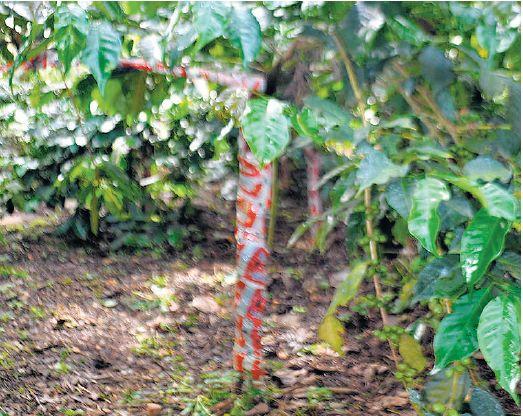
Better solution: An arabica plant stem wrapped with cellophane tapes to prevent it hosting the white stem borer on a coffee estate in Kodagu. / The Hindu Results are good, says Coffee Board; some planters raise environmental concerns
An ingenious method has been found to control the ruinous white stem borer in coffee estates where the arabica variety is grown. But coffee planters are split over the effect of the solution with some even questioning its impact on the environment.
According to A.K. Bhandari, coffee planter and former President of the United Planters Association of Southern India, wrapping the stem of the arabica plant with cellophane, called poly wrap, helps in containing the borer menace. The wrap prevents the female beetle from laying eggs in cracks and crevices of the plant.
“We came across this solution some two-and-a-half years ago when some planters used old plastic to wrap the stems. It prevented the borer from laying eggs and controlled the spread of the pest,” he said.
Coffee white stem borer, Xylotrechus quadripes, is a pest found in arabica coffee causing huge yield loss. A blackish brown coloured beetle, it can also be found on rosewood, sandalwood and teak.
Ten to 12 days after the female beetle lays the eggs on the stem, the larvae enter the woody tissue and burrow up to the roots. This leaves the plant impaired and the only known solution is uprooting the plant totally and burning it.
“Poly wrap physically stops the insect from laying eggs on the plant. Growers had, at one point of time, wrapped plants with old fertiliser bags. Now, they have begun to use strip wraps and the results have been good,” said Jawaid Akhtar, Coffee Board Chairman.
History traces the borer menace to 1837 and the first reference was made in 1838 by H. Stokes, Mysore Commissioner. In 1868, the Madras Commissioner had reported the ravages of the borer in Mysore and Coorg.
YIELD LOSS
“We have been suffering from the borer menace for over a decade now. It has affected arabica production. In some estates, nearly 50 per cent of plants had to be uprooted,” said Bose Mandanna, a grower in Kodagu and former vice-chairman of Coffee Board.
The borer menace has resulted in arabica production stagnating around one lakh tonnes annually for almost a decade after rising to a record 1.21 lakh tonnes in 2001-02 (October-September) season. Its share in total coffee production (robusta makes up the rest) has decreased from over 50 per cent in the 1980s to around 30 per cent now.
This year, out of the estimated 3.47 lakh tonnes production, arabica output has been pegged at 1.11 lakh tonnes. However, growers expect it to be lower than 90,000 tonnes.
“The poly wrap seems to be working very well. Most of the growers have reported 99 per cent success. About 10 estates can be taken and the experiment tried for 2-3 years,” said Bhandari.
The Coffee Board had sent an advisory on the poly wrap but not much progress seems to have been made.
“Labour shortage is the reason why poly wrap has not picked up. Also, there was short-supply of wraps. That has ended now as supply is ample. Results are encouraging and the wrap does not affect the plant’s growth,” said Akhtar.
But, there are voices of dissent too.
“The poly wrap was tried in small pockets and it has not been successful when tried on a large-scale. It prevents plants from growing. The bark growth is stunted and we feel this is not a scientific solution,” said the Karnataka Planters’ Association Chairman, Nishant Gurjer.
Some of the corporates involved in growing coffee have now begun to experiment the method. “We have begun the poly wrap on Coffee Board’s suggestion and are assessing the results,” said an official of Tata Coffee at its Margolly estate in Kodagu.
However, concerns are being raised over its effect on the environment.
“When the poly wrap gets old, it could lead to environment problems since it won’t disintegrate easily,” said Mandanna.
Gurjer agrees. “Plastic will add to the mechanical damage to the plants,” he said.
Other growers say that until a better solution is found, the poly wrap method should continue.
source: http://www.thehindubusinessline.com / Business Line / Home> Industry> Agri-Biz / by M. R. Subramani subramani.mancombu@thehindu.co.in / November 07th, 2013
Amidst opposition from the environmentalists, the State government has given green signal to the Kodagu district administration to re-start the work on Mysore-Kozhikode 400 KV high-tension electricity supply lines.
In a letter written to the the Kodagu DC, State Forest, Environment and Ecology Dept Principal Secretary S Sivashailam has said, “If the electricity wire, that passes through 55 km area in Kodagu is laid above 15 metres above the ground, it would not harm the elephants. Therefore, the electricity wire laying work can be re-started.” It can be noted that normally electricity wires are laid 9 metres above the ground.
The letter, has evoked opposition from the environmentalists. Recalling the recent High Court judgement which had directed the government to re-consider all the work that passes through elephant corridors, an environmentalist said that Lingapur, Maldare, Thithimathi, Kanur, Nalkeri, Kutta and surrounding areas where the proposed hi-tension wire passes through, are habitats of elephants. Several trees will have to be cut for laying the hi-tension wire, which will adversely affect the animal habitat, the environmentalist said.
Following the opposition from the environmentalists, Deputy Commissioner Anurag Tiwari had written to the government on October 21, requesting the government to re-consider the matter. In reply, forest department principal secretary has directed the DC to start the work.
Government’s letter
The letter by the forest department chief secretary, states further, “the State government while giving permission to the work on March 1, 2012, had imposed a condition to the Powergrid Corporation that the hi-tension wire which passes through reserved areas of elephants in Kodagu and Mysore, should be laid six metres above the normal height.
The elephants even if they raise their trunk, can not reach the wire at 15 metres height. Therefore, laying wire at this height, would not harm elephants.”
Further, the letter clarifies that the High Court in its judgment on October 8, too has imposed a condition that the electricity wire should be in such a height that elephants should not be able to reach it. Hence, laying wire at 15 metres height would abide by the HC directive too.
The 120 km long 400 KV hi-tension wire from Mysore to Kozhikode will pass through 55 km land in Kodagu. Of this, 4.45 km is forest land, while the remaining is private land and plantations.
The wire laying work has been completed from Mysore to Lingapur (Mysore-Kodagu border) on the one side, and from Kozhikode to Manandavadi (Kerala-Kodagu border) on another side. As the work faced severe opposition from environmentalists in Kodagu, the work was halted for sometime. If the project is implemented, it would provide 520 MW power to Karnataka and 260 MW to Kerala from Koodankulam nuclear power plant.
source: http://www.deccanherald.com / Deccan Herald / Home> District / by Srikanth Kallammanavar, Madikeri / DHNS / October 24th, 2013
Dr. Kannanda P. Aiyappa, Assistant Director, Animal Husbandry and Vet. Service, Veterinary Hospital, Virajpet, Kodagu, was recently promoted as Dy. Director of the Polyclinic in Madikeri.
Dr. Aiyappa, who passed out in 1976 from Veterinary College, University of Agricultural Sciences (UAS), Bangalore, joined government service on 8.4.1976.
He had been serving as Asst. Director since 1.6.1998.
source: http://www.starofmysore.com / Star of Mysore / Home> In Brief / October 21st, 2013
City-based International Crops Research Institute for the Semi-Arid Tropics (ICRISAT) has launched today EXPLOREit@ICRISAT (exploreit.icrisat.org), which makes large volumes of agricultural scientific knowledge and information easily accessible to the public.
“We are doubly excited — not only have we given easier access to all of ICRISAT’s 40 years of scientific research through EXPLOREit, but we have achieved this through the MultiProfiler concept, a revolutionary way of making information accessible,” ICRISAT Director General William D Dar said.
We found that typical websites are too restrictive in giving access to information, and do not present the information in ways that are easy for people to view the detail of the content.
ICRISAT’s new MultiProfiler concept provides information through multiple navigations and creates easy to view profiles on the subject areas,” explained Joanna Kane-Potaka, ICRISAT Director of Strategic Marketing and Communication.
“Sharing publicly-funded agricultural information in the most accessible way is critically important to achieve our agricultural development goals of reducing rural poverty, increasing food security, improving human health and nutrition, and ensuring more sustainable management of natural resources,” Dar said.
EXPLOREit is now to become the main source of ICRISAT’s scientific information with profiles of all topics, systems, crops, locations and resources where it works.
“It sets a new standard for sharing of information, and therefore promotes collaboration. To achieve this, ICRISAT has made a momentous leap in its use of technology with EXPLOREit-a dynamic site that feeds information from databases using tags and harvests information from other websites,” an ICRISAT release said.
source: http://www.thehindubusinessline.com / Business Line / Home> Industry> Agri-Biz / by PTI / September 26th, 2013
As a child M Jadeyegowda first saw Dr H Sudarshan dispense medicines to tribals at Biligiri Ranaga Hills near here. Initially, he stayed away from the doctor. Later, curiosity drew the tribal boy to the doctor. Dr Sudarshan and his Karuna Trust became the biggest influences on his life. (Other than providing medical…)
Other than providing medical help, Dr Sudarshan taught children in the tribal parts of Karnataka’s Chamarajnagar district. Jadeyegowda was a reluctant student. Today, he’s an assistant professor at Kodagu’s College of Forestry. “As a kid, I saw the doctor conduct surgeries with minimum facilities,” Jadeyegowda,43, says.
In October 2006, when the Vivekananda Girijana Kalyana Kendra (VGKK) — to which Karuna Trust is affiliated — celebrated silver jubilee, Jadeyegowda, MSc, shook hands with President Abdul Kalam. He was one of the six students who had attended the tribal school set up by the NGO 25 years back. Jadeye now heads VGKK and is a trustee of the Karuna Trust. “I’m more comfortable being recognised as a beneficiary,” he says. “Jadeye is a beneficiary of our health and education programmes. That helped him,” Dr Sudarshan says.
source: http://www.articles.timesofindia.indiatimes.com / The Times of India / Home> City> Mysore> Silver Jubilee / by H M Aravind, TNN / February 01st, 2013
Linking the world of hearing and talking, Radhika Poovayya / By Special Arrangement / The Hindu Speech and behaviour analyst Radhika Poovayya says people with communication disorders are often neglected because their problems aren’t obvious to the eye
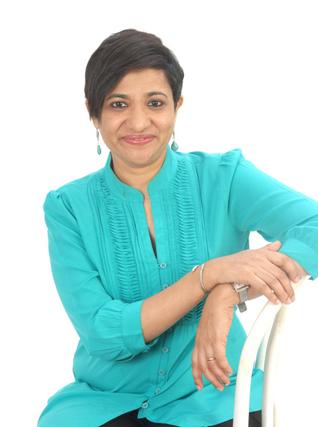
As Radhika Poovayya peeps into each little colourful nook, there’s Yogi, and there’s Nishita — one sitting diligently at a table with the sweetest smile on his face, the other running in abandon around colourful toys — but both trying to give voice to words that the speech therapist is enunciating with great care. Radhika knows what’s happening with each child, what needs to be done next for the smiling four-year-old , and what to do after the three-year-old learns to say her name.
“No one considers a person’s inability to communicate to be a serious problem. It can really harm that person,” says Radhika. It’s been the premise of her work for over 26 years. Radhika Poovayya is many people rolled into one comprehensive resource — a speech pathologist, a consultant specialising in autism, communication disorders, and behaviour analysis for children and adults. “All human beings are the same. Our behaviour has a law. And the behaviour of every child can be set right,” believes Radhika.
At her Samvaad Institute of Speech and Hearing in Hebbal, Radhika’s therapists work with children with hearing impairment, stuttering and stammering problems, cerebral palsy, voice and speech clarity problems, developmental disabilities, patients of head injuries in accidents and patients of stroke who’ve lost their cognitive and speaking abilities. “Because people can’t ‘see’ their disability they do not get empathy. Our approach is right-based, not sympathy-based. We provide organised and individual therapy. We want to give good therapy that is accountable. We set targets, record data regularly, and are goal driven,” explains Radhika. The role parents play in the training and therapy of such children is really huge, reiterates Radhika. So she allows parents to be part of the therapy sessions and trains parents too to help the child at home. “Parents need to have a different approach to raise such kids. Some come to us, having decided already that the child is incapable of doing anything or believing the child is incapable of speaking.”
What got her going in the field was her love for children and a desire to work with them. She completed her masters at the All India Institute of Speech and Hearing in Mysore, and then got married immediately. Her planter husband’s posting with Tata Tea in Munnar turned into a boon — she set up a speech and hearing rehabilitation unit at the estate’s hospital, helping children of estate workers. “It was the first-of-its-kind department in a plantation,” she beams. “I would drive 30 kilometres thrice a week to work in the hospital.” Once her husband moved to Bangalore, she started working at the Dr. SRC Institute for Speech and Hearing in Lingarajapuram, where she also did PR, and helped raise funds for the organisation. “But I missed my clinical work, so after seven years at the Institute, I moved to Hosmat hospital. It was here that I came across 21-year-old Sharath, who had a head injury from an accident. The left side of his brain that controls speech was completely damaged and neurologists had given up on him, but after working with him for one year, he started talking. He gave me the confidence that this field was worth it.”
She started her private practise in 2002 in Indiranagar. But there weren’t too many therapists in the field; her staff moved often. Her family set up a trust and she started the Samvaad Institute with the help of experienced colleagues she had worked with earlier, to offer B.Sc and M.Sc courses in speech pathology and audiology. The courses are affiliated to Bangalore University and recognised by the Rehabilitation Council of India.
During the course of her private practise, she felt her skills as a speech pathologist were inadequate, because children with communication disorders also had behaviour issuesShe came across the concept of ABA — Applied Behaviour Analysis — through some parents she was working with. So at 40, she set out to learn online from the University of Florida, with more than 1,500 hours of mentored practical classes. “It took me four years to save up for the course, but I knew it would be effective. ABA works towards achieving socially-acceptable behaviour,” says Radhika, who’s one of five ABA-certified behaviour analysts in the country.
Speaking of the kind of barriers she faces in helping people with disorders, Radhika says that in the upper middle class, accepting that their child has a problem is the hardest thing. “They live in denial, believing their child is ‘alright’. The middle class is more willing to accept the problem, but lack time and resources for training heir child.” Caregivers very rarely are persistent in bringing their child consistently for therapy. Being an NGO, at the Institute, she’s able to offer nominal and discounted rates to people, depending on their income group. Stroke and head injury patients are rehabilitated free of cost.
Radhika can be reached on 9845018302 or check www.samvaadinstitute.org for details.
source: http://www.thehindu.com / The Hindu / Home> Features> MetroPlus> Society / by Bhumika K / July 09th, 2013
Donating blood helps in the growth of an individal, said District surgeon Dr Muthappa.
Speaking at world blood donors day organised by the district health and family welfare department, Rotary Misti Hills, district Aids Control Society, Blood Bank held at Rotary Hall in Madikeri on Friday, he said there was no substitute for blood. Only blood can replace blood.
Madikeri district hospital blood bank officer Dr Shanthi Jyothi said any healthy individual between the age group of 18 and 60 can donate blood. Men can donate blood once in three months and women can donate blood once in four months. The donors should be above 45 kg. The donor’s body replenishes the fluid lost from donation within 24 hours.
Blood donation checks heart attacks and enhances production of red blood cells. District health and family welfare officer Dr H S Shivakumar, Rotary Misti Hills President D M Tilak spoke.
Blood donors N J Vinu and P L Ponnappa were felicitated. In an elocution competition on the need for blood donation, Pavan Kumar won first place, Kavya (II) and Nithya (III). About 25 volunteers donated their blood.
Chikmagalur
The district requires 4,000 to 5,000 units of blood per year, said district blood bank doctor Shivadath.
He was speaking to mediapersons on the sidelines of Blood Donation Day programme at the district hospital in Chikmagalur on Friday. About 3,000 units of blood has been given to the needy this year. Over 8,000 people have donated blood voluntarily and the collected blood has be utilised within 35 days of collection. If the blood collection in the district reaches 5,000 units, a proposal can be sent for setting up of a component separation cell for separating red blood, plasma and platelets.
Stressing on the need for blood donation, he said the health department has organised several awareness programmes in schools and colleges to motivate students to voluntarily come forward to donate blood.
The students too are showing enthusiasm for blood donation through formation of youth red cross and red ribbon clubs. 101 units of blood was collected in the blood donation camp organised by Aldur Lions Club.
Five blood donors who have donated blood highest number of times during last two years and five organisations were felicitated on the occasion. As many as 15 members donated blood on the occasion.
source: http://www.deccanherald.com / Deccan Herald / Home> District / Madikeri-Chikmagalur / DHNS / June 14th, 2013
Upgradation of district hospital in Madikeri is going on full swing. The state government has sanctioned Rs 3 crores for the various development works.
source: http://www.timesofindia.indiatimes.com / The Times of India / Home> Speed News / by Manu Aiyappa, Bangalore / June 12th, 2013
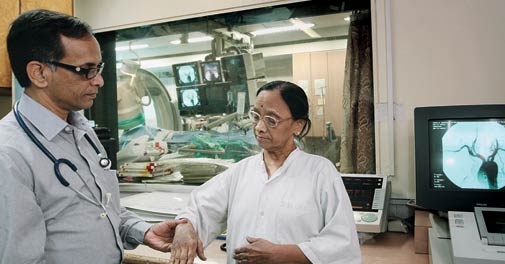
Dr Hemant Deshmukh with Jeevandayee scheme’s beneficiary Sadhna Dattaram Sawant at Mumbai’s King Edward Memorial (KEM) hospital / Photo: Bhaskar Paul
In October, Madrira Ganapathy, a rice and coffee grower in South Coorg, Karnataka, was told by doctors that he had four arterial blocks, all of them above 85 per cent, around his heart. He had to undergo surgery quickly. The following month, he got himself admitted at Fortis Cauvery Heart Hospital in Mysore and underwent surgery successfully.
The operation cost Rs 1.5 lakh but Ganapathy, who earns about Rs 60,000 a year from farming his four acres of land, did not have to pay. Why so? His bill was settled by Yeshasvini Trust, a non-profit organisation under the Karnataka government which runs a micro health insurance scheme for rural folk.
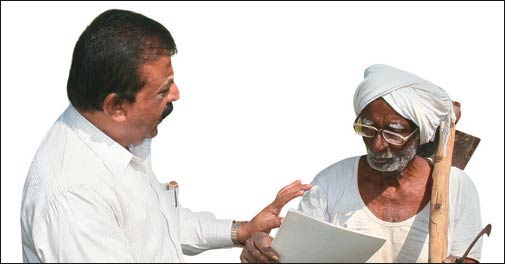
“I am not a BPL (below poverty line) card holder but, at the same time, I could not have afforded a surgery like this. The scheme is of big help to people like me,” says Ganapathy, 48, who has been part of Yeshasvini for five years. “I am now asking my friends also to enrol in the scheme.” Karnataka official P. Ramakrishne Gowda enrolling a farmer in the Yeshasvini scheme in Mandya district./ Photo: Deepak G. Pawar
Yeshasvini was launched in June 2003 and now covers about three million people in the state. It is open to all income groups in rural areas, provided the applicant has been a member of any cooperative society for at least six months. It costs Rs 210 a year per family member and covers 805 surgeries in 446 network hospitals.
The hospitals offer medical consultation for free and diagnostic facilities at a discount. In cases involving hospitalisation, the trust clears the bill via a third party administrator. In 2011/12, Yeshasvini Trust settled bills worth Rs 60.27 crore against 77,738 surgeries.
Besides, as many as 116,000 people were treated as outpatients. Since the scheme’s inception, the trust has paid Rs 412 crore for 469,000 surgeries. “We expect the outgo to hospitals to be around Rs 90 crore in 2012/13 because of the increase in hospital charges from April 1,” says Yeshasvini Trust CEO R.M. Nataraja. The trust is largely self-funded – it will mobilise about Rs 60 crore in premiums this year while the government pays Rs 40 crore.
“Yeshasvini is the first insurance programme in the world to coin the term micro health insurance, and its success is because poor people trust only the government,” says eminent heart surgeon Dr Devi Prasad Shetty, Chairman of Narayana Hrudayalaya, and a member of Yeshasvini Trust. “This is the greatest advantage the government enjoys as a large scale health insurance provider.”
The biggest success of Yeshasvini, however, is in proving that, with just about Rs 17 per person a month, it is possible to run a massive, sustainable health insurance programme. “Yeshasvini has demonstrated a model that works with the willing participation of the beneficiaries,” says G.V. Krishna Rau, Chairman of the trust, and Principal Secretary, Department of Cooperation, Karnataka. “The challenge now is to take this forward by enlarging its scope and making it a universal scheme.”
The model has inspired other states such as Tamil Nadu and Andhra Pradesh to start similar programmes. In April 2008, the Centre launched the Rashtriya Swasthya Bima Yojana, a health insurance scheme for BPL card holders which covers costs up to Rs 30,000. In late 2011, the Maharashtra government introduced the Rajiv Gandhi Jeevandayee Arogya Yojana covering about 490,000 people in eight districts.
According to programme officer Mukesh Mohode, the Maharashtra government paid a premium of Rs 180 crore to Kolkata-based National Insurance Company for coverage of these districts. The scheme provides a family floater cover of Rs 1.5 lakh a year covering 972 procedures, including cancer treatment. For kidney transplants the scheme provides up to Rs 2.5 lakh. The scheme, unlike the Yeshasvini plan, is fully funded by the state government and the beneficiaries do not have to pay any premium. Maharashtra aims to extend the scheme to all districts in two to three months.
While the Yeshasvini plan is for rural families, the Jeevandayee scheme benefits both BPL and above poverty line (APL) people (but only up to those with a maximum income of Rs 1 lakh a year) in urban areas as well. One of its recent beneficiaries is Sadhna Dattaram Sawant, a 71-year-old widow who lives in Mumbai’s Parel with her son who does not hold a regular job. She holds an orange ration card, given to people with annual income below Rs 1 lakh. Sawant had been suffering from kidney and cardiac ailments and needed a renal angioplasty to help increase blood supply to her left kidney. This would help solve her hypertension and reduce chances of a heart attack.
On November 26, doctors at the King Edward Memorial (KEM) hospital, run by the Brihanmumbai Municipal Corporation, conducted Sawant’s angioplasty. Sitting on her hospital bed the following day, wearing a hospital-issued white dress, Sawant looked happy. “I thought I would be lying in bed for a long time. I am so happy I am able to walk around a day after the procedure,” she said.
Sandhya Kamath, Dean at KEM, says the hospital has so far handled about 1,700 cases under this scheme. Hemant Deshmukh, the doctor who conducted Sawant’s procedure, says his department alone takes up at least seven or eight similar cases under the scheme every month. “The procedure would have cost Rs 50,000 at King Edward and Rs 1 lakh at a private hospital,” he says. “Under the scheme, the cost to the patient is zero.”
source: http://www.businesstoday.intoday.in / Business Today / Home> Archives> Business Today> Cover Today / by K.R. Balasubramanyam and Sumar Layak / January 06th, 2013
WELCOME. If you like what you see "SUBSCRIBE via EMAIL" to receive FREE regular UPDATES.
Read More »
 There is need to create an awareness on HIV/Aids among people, said Zilla Panchayat Vice President Biddanda Usha Devamma.