Category Archives: Science & Technology

Science convention from Nov 23

Deputy Commissioner Dr N V Prasad has said that three-day state-level children’s science convention will be held at St Joseph Girls Composite School, from November 23.

Assembly Speaker K G Bopaiah will inaugurate the convention. Minister Appachu Ranjan will preside. Karnataka Rajya Vijnana Parishat President Dr H S Niranjan will deliver key-note address on the occasion.
Hatti Gold Mines Company President H V Ramachandra will inaugurate the science exhibition.
The valedictory will be attended by District-in-Charge Minister M P Appachu Ranjan. Council Chairperson D H Shankaramurthy will distribute awards for the young scientist.

A souvenir ‘Vijnana Kaveri’ will be released by MLC Capt Ganesh Karnik.
Additional DC Dr N Shivashankar said that 1,300 students from 34 educational districts, 200 teachers, will take part in the convention.

source: http://www.DeccanHerald.com / Home> District / Madikeri, DHNS / November 21st, 2012

Karnataka explores cloud seeding to increase water in Cauvery

Bangalore, OCT. 2:

The State Government is exploring cloud seeding method to increase water inflow in the Cauvery basin.

“Cloud seeding has been planned in Cauvery catchment areas – Kodagu and Hassan,” Water Resources Minister Basavaraj Bommai told reporters.

“The government has already set aside Rs 5 crore for this and will shortly call for both technical and financial bids,” he added.

The State is taking the assistance of Indian Institute of Tropical Meteorology (IITM), Pune. The institute is to offer technical assistance. Water Resources Development Organisation (WRDO) has been roped in to be the nodal agency to coordinate the cloud seeding project. Earlier in July, the State government had decided in favour of cloud seeding in the Cauvery basin, but abandoned it as the catchment area experienced good rains.

“Since the State is in a precarious position now due to the Supreme Court and the Cauvery River Authority (CRA) orders, we have revived the cloud seeding project,” Bommai said.

Water inflow into Krishnaraja Sagar (KRS) is 10,000 cusecs and outflow is around 9,000 cusecs.

Current storage level at KRS is estimated at 68 TMCft. Bommai said, “For drinking water and irrigation needs in the Cauvery basin we need around 150 TMCft.”

anil.u@thehindu.co.in

source: http://www.TheHinduBusinessLine.com / Home> Industry & Economy> Government & Policy / The Hindu’s Bureau / Bangalore, October 02nd, 2012

Security: GPS fitted on two elephants in Kodagu

Tracking pachyderms

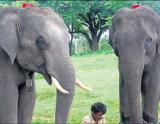
In an unique attempt, Global Positioning System (GPS) devices have been installed on the collars of two tamed elephants at Dubare elephant camp in Kushalnagar. It is for the first time that GPS has been installed on elephants.

Two elephants that have got the privilege of GPS are Ranjan (4) and Shivagange (11). With the installation of GPS on Saturday, the path on which the elephants walk could be traced through the internet enabled system.

The elephants at Dubare are left to roam around in the forest after bathing them in Cauvery river and providing them with food. These elephants roam around in the forest in search of food and return to the camp in the evening by 4.30 pm.

The elephants that are left to the forest are tied with iron chains with links. These chain links leave mark on the road on which the elephant walks, thus enabling mahouts to find the route on which the elephant has traveled.

However, mahouts find it challenging to trace elephants during heavy rain as the mark created by chain links are usually washed out. It is at this juncture, that the GPS comes to the rescue of mahouts. The radiation emerging out of the GPS will help to find the exact location of the elephant with the help of internet.

Inspired by Prajna

Animal lover and elephant expert Prajna Chowta is the inspiration behind introducing GPS devices in Dubare. Prajna Chowta, who is looking after four elephants in Dubare camp has installed GPS devices on two of her elephants.

Speaking to Deccan Herald, Dubare range forest officer Appaswamy said that Prajna had brought the matter of installing GPS devices on two of her elephants in the camp, to the notice of the higher officials. Hence, the department decided to install devices on the elephants, he said.

A GPS-enabled device normally records and stores location data at a pre-determined interval or on interruption by an environmental sensor.

source: http://www.DeccanHerald.com / Home> District / by Shrikanth Kallammanavara, Madikeri / September 03rd, 2012

Rs. 100 cr. for mechanising operations in coffee plantations

Centre to provide subsidy to growers to purchase machinery during the 12th Plan period

The Centre has approved an outlay of Rs. 100 crore in the 12th Five Year Plan for implementing the scheme “Support for mechanisation of farm operations” in coffee estates.

Officials in the Coffee Board told The Hindu that the Centre would soon issue an order for implementing the scheme from the current year. The amount would be utilised for providing subsidy to coffee growers to purchase machinery. A sum of Rs. 20 crore would be utilised each year in the Plan period between 2012 and 2017.

SUBSIDY FOR GROWERS

While small growers owning less than 25 acres of plantation are eligible to get 50 per cent subsidy (up to Rs. 2 lakh) for purchase of machinery, large farmers are eligible to obtain 25 subsidy (up to Rs. 4.5 lakh). Self-help groups are eligible to get 50 per cent subsidy (up to Rs. five lakh). Nearly 97 per cent of coffee planters own less than 25 acres of estates in Karnataka.

LABOUR SHORTAGE

Officials said acute shortage of labour and rise in wages in traditional coffee growing States such as Karnataka, Kerala and Tamil Nadu is impeding expansion of area under coffee. The Board has decided to push for more mechanisation of farm activities in plantations to address the problem of absence of skilled labour.

MACHINERY

Planters could utilise funds for purchase of machineries such as weed/brush cutter, pit digging machine, telescopic pruner, hand-held/battery operated coffee harvester, sprayers, mini-tractors, power tillers, mini-transporters/rubber track carriers.

The Board has submitted proposals to the Centre seeking Rs. 1,200 crore during the 12th Plan period. The outlay during the 11th Plan period was Rs. 600 crore.

The Planning Commission, Commerce and Finance Ministries would approve various proposals on research and development, area expansion, replanting etc. in the next couple of months, officials said.

RAIN BRINGS CHEER

Heavy rainfall in the last few weeks is likely to boost the crop prospects in coffee growing districts of Kodagu, Chikmagalur and Hassan. “The situation was alarming a few weeks ago due to deficient rainfall. Heavy rainfall in the last few days helped control spread of the white stem borer disease afflicting coffee plantations,” a top Board official said.

White stem borer is one of the deadly pests that infects Arabica coffee plantations. Its larvae bores into the plant’s stem causing death of young plants. The older plants may survive but their yield is reduced and susceptibility to diseases increases.

EXPECTED YIELD

The Coffee Board has estimated output at 3.25 lakh tonnes in 2012-13 (October-September), which includes 1.04 lakh tonnes of Arabica, and 2.21 lakh tonnes of Robusta. “We analyse the output by the end of the monsoon,” the official pointed out adding that “it is difficult to estimate the production decline at this juncture”.

Karnataka Planters’ Association predicted decline in output in 2012-13 on account of poor monsoon rain in traditional coffee growing States.

source: http://www.TheHindu.com / Home> News> States> Karnataka / by Nagesh Prabhu / Bangalore, August 15th, 2012

Kodagu Mahila Sanga holds free ‘Health Camp’


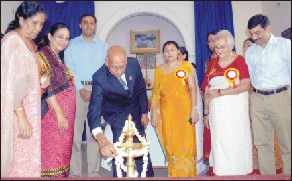
Well known dentist of the city Dr. A.A. Kuttappa inaugurating the free annual health camp for public, held under the aegis of Shree Kaveri Kodagu Mahila Sangha at Kodagu Sahakara Sangha premises in Jayalakshmipuram in city this morning.

Others seen are (from left) Ansoo Ganapathy, Dr. Padmini Kaveriappa, Dr. Somanna, Dr. Sonia Mandappa, Sangha President Parvathy Cariappa and Dr. Ramesh.

source: http://www.StarofMysore.com / General News / July 22nd, 2012

Madikeri: Helium Balloon Launched to Keep Tabs on Weather Pattern in Coffeeland

Madikeri:
The Kodagu Technology Users’ Association, in collaboration with the Indian Space Research Organization (ISRO) launched a ‘Sonda’ weather balloon into the open sky on Thursday, April 19 to monitor weather.

The balloon was released by IAS officer and Coffee Board chairman Jawaid Akhtar at Garagandur near Madapur in northern Kodagu. He said the coffee planters in Kodagu so far faced hardships because of changes in weather. With a view to avoid them, and with ISRO collaboration, this unit had been set up. Feedback received from this unit would be useful for the coffee-growers to keep track of the vagaries of weather and plan their agricultural activities, he said.

Akhtar further said that subsidies for coffee-growers had been announced under the 12th five-year plan and assured that the Coffee Board was committed to protecting the interest of the coffee planters.

Kodagu Technology Users’ Association (KTUA) secretary M B Bopanna said that weather information centres had been set up in 21 points in the district. Another 10 were being planned to be opened soon. Launching of each balloon would cost Rs 4,000, he said. Besides reporting the weather conditions at different points in the district, the balloon unit would record the rainfall, direction of the wind, temperature and humidity, water resources and the like.

The unit will rise to an altitude of 32 kms and will, every three minutes, transmit the information to the ISRO centre in Ahmedabad, said Bopanna.

KTUA president Kitty Devaiah, vice president Bose Mandanna and joint secretary Subbaiah provided a variety of information about the weather balloon. ISRO adviser Dr Das, another former IAS officer hailing from Kodagu Rathi Vinay Jha and others were present.

The 21 points of weather monitoring: D Chennamma PU College – Madapur, Coovercolly Estate – Belur, Kaukudi Estate, Durgadevi Estate – Hattihole, Lakshmi Estate – Kanchanakolli, Talacauvery, Ishwar temple – Napoklu, Kattimadu Estate – Margodu, Nakoor Estate – Sunticoppa, Coffee Research Centre – Chettalli, Elk Hill Estate – Siddapur, panchayat office – Maldare, Tata Coffee Estate – Pollibetta, Chennangolli Estate – Devarapura, Nittoor Estate – Nittoor, Sukalia Estate – Kutta, Forest College – Ponnampet, Government Primary School – V Badaga, Dental College – VIrajpet, Ram Prasad Estate – Palangala and Coffee Growers’ Association – Madikeri.

The balloon launching could have taken place a few days earlier, but the requisite permission was yet to be received from the Mangalore airport.

Vice president of KTUA Bose Mandanna, also a former vice president of the Coffee Board said,“It is mandatory for us to get permission from nearby airports to flow the balloon. We have got permission from the district administration and Airports Authority of India.”

Speaking to our Mangalore bureau, Mangalore airport director M R Vasudeva confirmed that the permission had since been given.

Bose Mandanna futher said that based on the data planters could decide if they could wait for the rain or could use the sprinklers. Irrigating an acre of land is estimated to require a lakh litre of water. Almost as a rule, all coffee-growing areas in the state have been facing power shortage, planters have to use diesel to use sprinklers.

source: http://www.mangalorean.com / by Team Mangalorean, Madikeri / by Ashwinin Appaiah with Vartha Pics / April 21st, 2012

Gene treatment may render fertilisers obsolete

Kodagu-origin US scientist works on path-breaking agriculture technology

Crops may soon overcome the need for fertilisers and pesticides. The research for this may be a long-drawn-out process, but will provide path-breaking results.

Dr B W Joe Poovaiah, the Kodagu-based agriculture scientist in Washington State University, is undertaking gene treatment research to eliminate the necessity of fertilisers and pesticides of crops. The research is in the advanced stages and field trials are pending.

He gave details of his research to reporters during a visit to the district. Poovaiah belongs to the Bachittira family of Kiggalu village in the district and settled in the US 40 years ago. His research – Calcium/calmodulin: The grand conductor of signal orchestration in plants – has attracted the attention of the international scientific community. He is working on calcium/calmodulin-mediated signaling to achieve the objectives.

The scientist says that while the CCamK gene – which is responsible for calcium/calmodulin-dependent protein phosphorylation – governs nitrogen fixation in crops, the DWF1 and AtSR1 genes are responsible for growth of plants and their resistance to the effects of pests on them respectively. Poovaiah’s team tasted its first success in identifying these genes. The later stage was the treatment of the genes (cloning) so as to suit their needs.

According to him, monocotyledons (for example, rice and wheat), cannot absorb nitrogen – a key nutrient – from the atmosphere, thus necessitating the use of fertilisers. However, the plants of legumes (dicotyledons – peas, beans) do not face this problem. The CCamK gene in these plants help them absorb nitrogen directly from the atmosphere.

This gene is being created in the lab and introduced into the rice and wheat plants to “teach” them to absorb nitrogen directly from the atmosphere (self-fertilising), thereby eliminating the need for fertilisers. Plants release salicylic acid into the atmosphere, whenever they are affected by diseases, as a means of fighting the diseases (defend themselves against pathogen attack).

The amount of acid release varies from plant to plant. Treating the AtSR1 gene can help increase the amount of acid release, thus increasing their immunity. A success in this task will end the dependence on pesticides for plants.

Similarly, controlling the DWF1 gene – responsible for the very tall growth in some plants – can make them grow less taller (altered growth habits) and give higher yield.

The results of the research document novel regulatory mechanisms where calcium acts as a ‘master switch’ in controlling various physiological processes in plants. The gene treatment will start yielding results in five to 10 years, he said.

His researches have been documented in science magazine Nature and the website of Washington State University.

source: http://www.DeccanHerald.com / Home> State / Madikeri, DHNS / April 10th, 2012

Novel way for coffee planters to check the weather


Many of us look online or rely on the weather reports to find out what the climate and temperature is going to be like.

However, the coffee plants in the Kodagu region of Karnataka have apparently come up with a rather different way of doing things.

According to reports, they have decided to use an unusual means of working out what is happening: by using a balloon.

How does this weather prediction method work?

Apparently, the balloon is filled with helium gas and is equipped with instruments which are able to study the weather systems.

For instance, it is said that the equipment would be able to determine whether rain was likely within a period of around 4 days.

Of course, this information is vitally important to the coffee farmers.

The information will help them work out whether to incur the costs of using sprinklers to irrigate the coffee crops, for example.

The information which is collected by the equipment in the weather balloon would be used alongside information which is collected from the other automatic weather stations (there are about 25 of them) in Kodagu.

Further calculations will then be made by the Madhapur station and sent on to the Indian Space Research Organisation’s research section.

Why go to all this trouble?

Apparently, this way of monitoring the changing weather patterns is an attempt to get predictions which are as accurate as they can be.

The coffee planters have contributed towards the cost of the operation and the Indian Space Research Organisation has agreed to help out too.

source: http://www.WorldCoffeeNews.com / by Clive / Thursday, April 05th, 2012

Energy: Madikeri CMC chooses unconventional path

Windmill installed to tackle power crisis

The government has been supporting the production of electricity through unconventional sources of energy like solar and wind power.

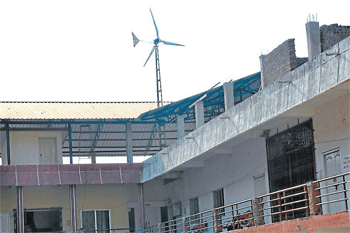
Madikeri CMC has found an unconventional way of overcoming erratic supply of power. A windmill has been installed on the CMC premises to generate electricity.

Madikeri town is 4,000 metre above the sea level. As a result the wind factor would be constant in Madikeri. With this, the CMC expects to slash down its electricity bills.

The idea of windmill originated two years ago and the 2.1 kv windmill started functioning from that time. It provided electricity to light up few bulbs in the CMC building.
As the demand for electricity increased, the CMC has decided to install three to four windmills at a cost of Rs 47.50 lakh under Chief Minister’s Small and Medium Town Development Scheme.

It has been planned to produce 5.1 kv electricity from each windmill. The CMC office requires 5 kv electricity daily. Two windmills have already been installed near the CMC office. The authorities have planned to install another windmill near water filter house at Stone Hill. The final decision has not been taken, said CMC commissioner N M Shashikumar.

CMC president H M Nandakumar said: “The CMC pays Rs 50 lakh as electricity bill annually. The windmill will help to reduce the electricity bill. At the same time, there is no question of disruption in power supply.”

The work on installing windmill will be taken up at the earliest, said the commissioner

source: http://www.DeccanHerald.com / Home> District / by Srikanth Kallammanavar / Madikeri, DHNS / March 14th, 2012

The healthy choice

Some simple steps that can help provide 
affordable, quality health care anywhere in India
By Dr Kavery Nambisan
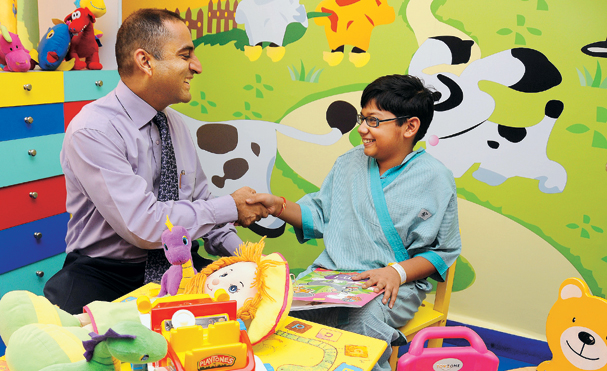
Healing bond: Dr Anupam Sibal with a patient at Indraprastha Apollo Hospitals, Delhi. Among the essential qualities of a doctor is the ability to empathise / Photo: Arvind Jain

Medical care in our country is like a patchwork quilt: a few small segments sewn with lovely silk while the rest are frayed and falling apart. Millions of Indians are deprived of basic medical facilities because they are too expensive. Well-to-do Indians have the right to be healthy. The rest simply suffer or die. We like to boast about the richness of our culture and about the billionaires who figure prominently in the news but when it comes to human development, we are paupers.
The imbalance in health care, the dreadful state of most government hospitals and the exorbitant fees charged by private doctors are common knowledge. How shall we redress these?

Like several of my colleagues, I have spent most of my surgical career working in rural areas, in south and north India. In many such places, being the only qualified surgeon, I had to handle all types of cases. Rural folk are hard-pressed for money and cannot spend too much on any illness. My experience and that of my colleagues shows that quality medical care that is affordable can be given anywhere in India (or any other country) by following a few essential steps.

As medical students we spend five and a half years learning the art and science of medicine. But we are not sensitised to the unique nature of a profession that has to deal with pain and suffering all the time. Mere moral lectures will not do. One way to sensitise young minds is by introducing humanities into the medical curriculum as is being done in many countries. It will help produce more rounded personalities, better equipped to take on the high-pressure job of a doctor while retaining human values.

For a young doctor, there are riches to be had from working with an experienced senior, especially in a hospital where the resources are not plentiful. He will learn to adapt and innovate, use his clinical judgment and will not be easily tempted to do too many investigative procedures like blood tests, X-rays and scans. He will be an all-round doctor rather than one with narrow experience. We certainly need specialists and super-specialists for the treatment of certain problems but for the majority of ailments, an efficient MBBS doctor is all you need. He can learn multiple skills by working with a senior who is willing to pass on his experience and knowledge.

A surgeon working in a small town or village should be able to do a hernia repair, mend a broken forearm, manage prostate trouble or do a caesarean section. He should be able to handle common medical problems like chest infections, skin allergies, diabetes, angina and high blood pressure. A multi-skilled doctor can handle 85-90 per cent of all patients walking in or wheeled into the hospital.
Doctors must have the ability to empathise. This quality can be developed by any doctor who is able to put herself in the patient’s place. She is then more likely to come up with the right mode of treatment.

A part of this process is telling the patient why he fell ill, explaining the disease and teaching ways of preventing future problems. This is an essential part of a doctor’s job but is totally neglected for two reasons: patients never ask questions like “What caused this illness?”, “What exactly is diabetes/blood pressure/eczema?” or “How do I protect myself in future?” Most of us prefer to fall sick and then be cured after suffering the pain and agony. This is silly, because learning how to prevent future problems is far better for health. Instead we are grateful when the doctor gives a few minutes of her precious time to prescribe medicines.

We doctors like to think that we have too much to do and little time to talk to patients. By readjusting our priorities and the way we work, it can be done. The rewards are tremendous, for both patient and doctor.
Small, well-run hospitals are much more efficient than large ones. It may make good business sense to have 1,000- and 2,000-bed mega-centres with hundreds of doctors and thousands of paramedics, and the main objective of making a profit. This usually results in diminished quality of care. The ideal in-patient capacity for a rural or a small-town hospital is 60 beds. In a city, it could go up to 100 or, because of multiple speciality departments, 200. In such hospitals, the doctors, nurses and other staff get to know each other. They meet and talk every day, not just as medical professionals but also as ordinary human beings. This makes it easier for them to work as a team and it boosts their morale. They are less stressed and more caring. For the patient, a well-managed small hospital with efficient doctors and staff is a real boon.

A good hospital will say ‘no’ to unnecessary gadgets. A hospital should have only those machines which are in regular use, with the exception of certain life-saving emergency equipment which are essential. Before any new purchase is made, its usefulness and running expenditure must be carefully looked into. Some hospitals buy equipment the way a fashion-crazy youngster blindly follows the latest style, without stopping to consider if it will suit her. The running expenses for rarely used equipment will be very high, and patients will be made to go through needless investigations in order to recover the money.
Most illnesses require fairly simple treatment and very little in the form of investigations and tests. An efficient doctor and nurse can do far more than any gadget. In many peripheral hospitals, seriously ill patients (like those who have suffered a heart attack or undergone major surgery) are being cared for perfectly well by giving intensive nursing care without the use of a multitude of gadgets. When more sophisticated methods are absolutely essential, such patients can be referred to a higher, multi-speciality centre. This will be psychologically better for the patient, and the medical bills will be a fraction of what one would pay in a fully-equipped ICU.

Choices such as these—of keeping the treatment simple and effective at all times—have to be made by those who run small hospitals. Any patient who cannot be treated without sophisticated gadgetry and/or by super-specialists should be referred to the appropriate centre at the earliest. In the vast majority of cases, this is not necessary.
For a doctor (or nurse or any hospital staff), there is no greater joy than that of seeing a patient cured and happy before going home. If more doctors can come together with this purpose in mind, we can do much more for the health of our nation than by blindly applying our knowledge. The knowledge is very important. But without genuine caring, it is at best cosmetic. And from experience, I know that a good living can be honestly made without chasing money.

Can doctors fulfil the real needs of patients? We need to make the right choices. The rest is simple.

Nambisan is a surgeon and novelist. Her most recent novel, The Story That Must Not Be Told, is shortlisted for the DSC South Asian Literary Prize.

source: http://www.week.manoramaonline.com / Cover Story / THE WEEK / Saturday, November 19th, 2011