Category Archives: Science & Technology

Kavery Nambisan’s account of healthcare in India reveals bitter truths but also beacons of hope

‘A Luxury Called Health’, written by a doctor who is also a novelist, needs to be not only read but also discussed.

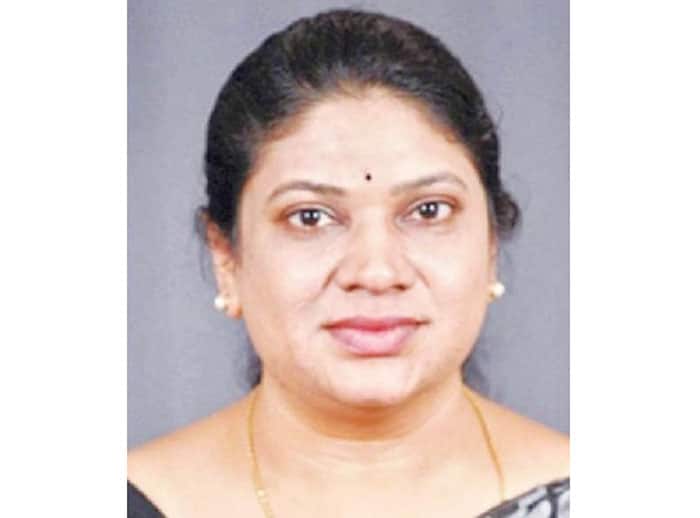
Kavery Nambisan. / Modified from screenshot via YouTube / Author TV

What do you get as a reader when a writer of fiction, and also a surgeon who has worked closely in both the public as well as private health sector, picks up her pen to write on the state of the health system in the country?

The answer is easy: you get a book that lays bare the fact that the health of the citizens of a nation is an investment, that the health system is a part of nation building and effective governance and that it is time to learn from mistakes that have been made and continue to be made.

You get a book that comes from years of working amidst the dust and the grime of government health care set-ups, from having observed the profit-oriented approach of the private sector. A book that offers quiet hope that things can, and must, improve.

What’s wrong…

Kavery Nambisan’s first work of non fiction, A Luxury Called Health: A Doctor’s Journey Through the Art, the Science and the Trickery of Medicine, is exactly what its title says, with little drama or exaggeration. It is an honest examination of this thing called healthcare, of the systems that are working and not working, of the people who are its faces and, at times, because of whom, healthcare turns into what it should be: effective, affordable and something that can be trusted by everyone.

A passage from Fyodor Dostoevsky’s The Brothers Karamazov, where a doctor examines a terminally ill patient in a very poor home, that features in the introduction is an apt reminder of what happens when the poor try to access healthcare: the hope and despair felt by the patient’s loved ones and the disdain that the doctor projects. It sets the tone for what follows in the subsequent chapters.

Later, Nambisan conveys how patients and their families often put doctors and healthcare staff on the pedestal of demigods and do not try to find out about the nitty gritty of how illnesses are treated. This makes them resort to threats and abuse when things do not go as they should.

From the early traditional medical practices to the first steps taken in India to institute a medical institution to train and educate health-workers and medical staff, the author puts the focus on how the poor health of individuals affects the overall well-being of a nation. She takes readers into the time the seeds of a new nation were being sown and, along with them, the hopes and aspirations that went to building the health care system. It was a task made more difficult by entrenched caste practices, such as those of not even touching corpses, leave alone dissecting them as medical students.

Nambisan’s note of appreciation for the first wave coming from Kerala when it was still a profession that had few takers soon after Independence is a reminder of how far the health care system has come. But, as she shows with anecdotes and analysis, with this has come disparities between the public and the private sphere when it comes to health.

… And what’s right

What works for this book is that it stays clear of rhetoric or the blame game. Instead, it injects humaneness through personal insights while making a point on how the health system is interconnected to nutrition, poverty, hygiene, water, and sanitation. Nambisan makes the point that urban development ends with more buildings but little attention to, among other things, waste and rainwater management and water resources, which in turn, affects the health system. She emphasises that treating medical situations on a case by case basis, without a holistic strategy for improving health, leads to little progress.

Thankfully, none of these heavy-duty issues weigh down the book and for that we have the quality of her writing to be thankful to. Perhaps only a writer of fiction used to the economy of words would have been able to cover such complex matters in a little over 300 pages. There are no appendices with tables and data, for the author speaks from her own long years of practice, with quiet, unwavering authority.

The use of anecdotes from the history of medical practices across the world and in India, peppered with the author’s own experiences, makes the book come alive in a way that is informative as well as thought-provoking. In one chapter that details the list of medical procedures in a health set-up, Nambisan admits how easy it is to treat patients as mere technicalities, and that it takes a lot to probe further or ask questions of a supervisor or senior colleague.

There is little of handwringing or giving into hopelessness, even when the book details corruption and political apathy, as well as greed. In a chapter titled “Doctoring Reality”, the author highlights rural initiatives started by medical practitioners who have given up lucrative placements to set up affordable and accessible services. It makes you wonder why we don’t see many of these inspiring stories in the mainstream media.

Towards the end the author takes readers into her personal space, as a spouse having to play part- bystander and caregiver when her husband, the acclaimed poet Vijay Nambisan, is diagnosed with cancer.

Kavery Nambisan’s voice is gentle but firm, with words of caution about how critical it is to listen to the voices on the ground, the doctors who work in remote areas with poor resources. For they are the ones whose intervention saves lives, instead of following protocols laid down by international organisations like the WHO, especially in the wake of the Covid-19 pandemic.

A Luxury Called Health is an important book, one that needs to be read and discussed. It exposes the failings of the medical system in the country over the years, but it also shines a light on the people who mend worn-out bodies and organs, bringing hope and succour.

Chitra Ahanthem is former editor of Imphal Free Press, a newspaper published in Manipur. She is also a Manipuri-to-English translator.
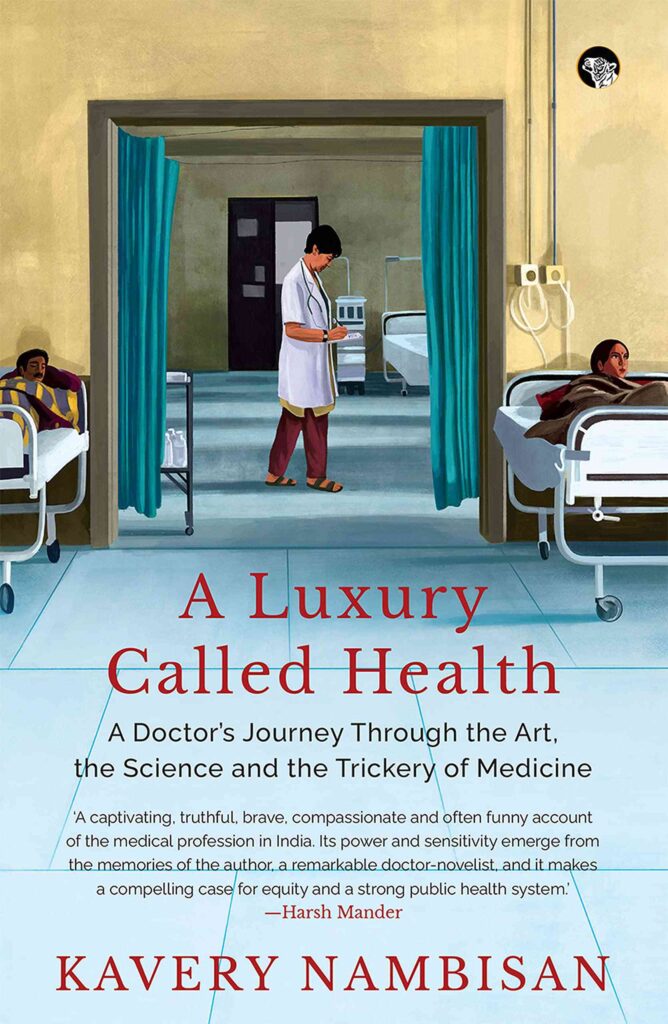
A Luxury Called Health: A Doctor’s Journey Through the Art, the Science and the Trickery of Medicine, Kavery Nambisan, Speaking Tiger Books.

source: http://www.scroll.in / Scroll.in / Home> Book Review / by Chitra Ahanthem / December 19th, 2021
A doctor speaks on the fundamental questions about health, sickness and medical treatment | The Hindu on Books Podcast

Kavery Nambisan speaks to us on her new book ” A Luxury Called Health: A Doctor’s Journey Through the Art, the Science and the Trickery of Medicine”

Kavery Nambisan belongs to a rare breed of writers – the doctor who writes fiction.

She is a general surgeon – a domain where women are uncommon. Another uncommon thing about her career is that she is a rural doctor, having practised for the most part of her career in rural India.

She has published seven critically acclaimed novels. “A Luxury Called Health: A Doctor’s Journey Through the Art, the Science and the Trickery of Medicine”. A Luxury Called Health is her first book-length foray into non-fiction.

This book is not easy to classify. At one level, it has strong elements of the memoir but it also contains social commentary, history, and feminist critique. She writes in moving detail about her late husband, the poet Vijay Nambisan’s battle with cancer and her unnerving experience with the hubris endemic in the medical profession.

She also talks about her experience in treating hundreds of patients with Ivermectin, the drug’s remarkable efficacy against COVID-19, and why it hasn’t been more front and centre in the battle against the pandemic.

A common thread running through the book is a desire to engage with fundamental questions about health, sickness and medical treatment. She speaks to The Hindu about her book, what prompted her to write it, and her concerns about the medical profession today.

Guest: Kavery Nambisan

Host: G. Sampath, Social Affairs Editor, The Hindu

Edited by: Reenu Cyriac

source: http://www.thehindu.com / The Hindu / Home> Multimedia> Podcast / by G. Sampath / December 15th, 2021

Tributes To Dr. A. A. Kuttappa: A People’s Dentist

Dr. Adengada A. Kuttappa, who passed away early this morning at his residence, was  one of the most jovial and exemplary Dentists of our city for the past over 40 years.

Past President of Mysore Kodava Samaja, Dr. Kuttappa  was a man genuinely concerned about Kodavas and very helpful too.  He led the Kodava Samaja during his tenure smoothly without controversies.

He  was a good listener to ideas and suggestions from others. 

I was blessed to work closely with him during his tenure as the President of Mysore Kodava Samaja, when I organised a mega Fund Raising event by Fashion Guru Prasad Bidappa during 2000 at Kaynes Resorts.

This was the largest ever fund raiser organised by Mysore Kodava Samaja to date which finally culminated in Mysore Kodava Samaja making a clear profit of approximately Rs. 20 lakh those days.  Dr. Kuttappa had total faith in me and had given the full responsibility of organising this event and completing it successfully.  He was a leader who had the ability to identify those with talent, nurture and encourage them for the common  good of the  community.   Dr. Kuttappa ensured that he was present in almost all functions of Kodavas both during celebrations or mourning. 

Dr. Kuttappa made his mark in Rotary Mysore too and was very popular in Rotary circles.

Dr. Kuttappa was a good speaker who added colour and poise  to any event he addressed.  His pun and humour was of a very trademark style.  He could carry the gathering very well by his impish sense of humour which Mysore and especially the Kodavas are going to miss immensely.

As for his professional side, he was a Doyen among the Dentists in Mysore who was probably among the first to establish his Dental Clinic at K.R. Circle  during late 60s. Of course, he was a highly sought after dentist and during his heydays, was a dentist of such fame and repute that it was not easy to get an appointment with him.

Dr. Kuttappa was very jovial and bore a pleasing personality and demeanour. The minute a patient sat on his dental chair he would make him or her forget the impending treatment in store by the power of his sheer humour and jokes that he would crack during the treatment.

He knew the art and style of ensuring his patients forgot the pain during the course of treatment. That was unique only to Dr. Kuttappa’s Dental Clinic. Now it is more than a decade since Dr. Kuttappa retired from being a practicing dentist but many of us, his regular clients, remember him and his dental chair. Above all, the great humour and conversation thrown in as a fringe benefit of visiting his clinic.

May his soul attain moksha is my prayers for him. The front chair which he used to occupy in almost all functions at Mysore Kodava Samaja shall forever remain empty will be a reminder to us about his eternal absence. RIP dear friend Shyam. Personally, it is a great loss to me that my dear friend Shyam is no longer with us.

source: http://www.starofmysore.com / Star of Mysore / Home> Feature Articles / December 03rd, 2021

With 141% progress, Kodagu tops State in vaccination

Mandya stands 4th and Mysuru, at 10 with 98% and 62% vaccination coverage respectively

Kodagu has topped the State in administering COVID-19 vaccines as it surpassed its vaccination target set for the mega drive conducted on Wednesday for improving vaccination coverage.

Hailed as one of the best performing districts in vaccination coverage, Kodagu on Wednesday administered vaccines to 11,281 persons as against the target of 8,000, registering 141 percent progress. The number of persons vaccinated was updated till 5.30 p.m. The total number vaccinated on this day was 7,78,660 persons (39%) as against the target of 20 lakh.

Mandya has achieved 98% progress as 59,034 persons got their vaccine in the drive. The target fixed for Mandya was 60,000. Mandya stands fourth in the State in terms of vaccination coverage achieved at Wednesday’s drive.

Though Mysuru is one of the largest vaccinated districts in the State, it could not achieve the target of vaccinating 65,000 persons as it could inoculate 4,0127 persons, achieving a 62% target. Mysuru stands 10th among the best performing districts.

Chamarajanagar is rated among the poor performing districts based on the achievement it made in the drive held on Wednesday as it could register 26% progress in coverage, vaccinating 13,004 persons as against the target of 50,000.

The target set for BBMP in Bengaluru was 3.5 lakh but it could achieve 40,710 coverage, registering 12% achievement.

Zero cases

Meanwhile, Kodagu has reported zero COVID-19 cases on Wednesday, after a gap of many months since the second wave.

It was categorised as one of the high-risk districts earlier this year because of its proximity to Kerala where the pandemic had caused havoc with unrelenting cases though infection rate dropped in other neighboring states. With tight vigil in areas bordering Kerala, the authorities could prevent spread cross-border transmission. Also, Kodagu is also among the top districts with highest vaccination coverage.

Kodagu has 57 active cases. No deaths were reported on Wednesday. “The district’s positivity rate is now 0%,” said Deputy Commissioner B.C. Satish.

source: http://www.thehindu.com / The Hindu / Home> News> States> Karnataka / by Special Correspondent / Mysuru – November 24th, 2021

CFTRI Scientist Develops New Beverage From Coffee Leaves

Mysore/Mysuru:

Here is a chance for coffee growers to get additional cash from their plants throughout the year apart from income from the sale of beans. Mysuru-based Central Food Technological Research Institute (CFTRI) has developed a technology to prepare a value-added product from coffee leaves that packs in health benefits too.

Coffee is only harvested for a few months every year, depending on the country’s harvest season. This can leave a number of producers and workers without work (and income) for a significant portion of the year.

Pushpa S. Murthy

However, some producers have decided to diversify the crops that they grow and sell. As coffee leaves are constantly being produced, growers can harvest them in the off-season if there is demand, according to Pushpa S. Murthy, Principal Scientist (Spice and Flavour Science Department) of CFTRI.

This technology follows a CFTRI project on the development of value-added products from coffee leaves taken up in 2019. The project was funded by the Union Ministry of Food Processing Industries.

If farmers can use the leaves which can be harvested during the off-season or during pruning, without interfering with coffee bean growth, it will have a great impact on the social elevation of coffee farmers, she said.

Around 70 percent of the coffee industry is unemployed or underemployed during nine months of the year due to the nature of the growth cycle of the coffee beans. The project aimed to provide a year-round sustainable process for the coffee farmers.

With CFTRI technology, the brew can be prepared with water, allowed for a few minutes to steep, filtered and consumed. The institute has initiated the transfer of this technology to the coffee industry, and a few industry participants have already extended their consent, she said.

The leaf brew does not really taste like coffee, according to Murthy. “The brew is subtle with less caffeine compared to coffee or tea,” she said. On the nutritional value of the beverage, she said coffee leaves are rich in phenolic acids with potential health benefits. A coffee leaf contains around 17 percent more antioxidants than green tea. The beverage should be consumed plain.

The beverage accords health-promoting polyphenols like chlorogenic acid and mangiferin which help in reducing blood glucose levels, inflammation and blood pressure, she said.

 Leaf drink ‘kuti’ and ‘kahwa daun’ popular in Sumatra, Ethiopia

Coffee leaf tea has been consumed in Sumatra, Ethiopia, Jamaica, Java and Sudan for centuries. From the 16th century to the 19th century, Ethiopian farmers set aside their harvested coffee for trade or consumption in special ceremonies. As a day-to-day drink, the Harari people in Ethiopia instead enjoyed ‘kuti’.

‘Kuti’ tea was made by boiling coffee leaves in hot water, sometimes with a pinch of salt or some sugar. It was generally boiled for at least 30 minutes, as it was believed that the longer the leaves were boiled for, the sweeter the resulting brew would be.

Coffee leaf tea bears some similarities to green tea, but it is more earthy and sweeter. It is lower in caffeine than green tea, and thanks to its high levels of antioxidants, it has historically been believed that it cures or relieves cold symptoms.

In the 19th century, Dutch colonists transported coffee plants to designated farming regions in Indonesia. Workers on the coffee plantations were forbidden from consuming the coffee they harvested, so they drank something called “kahwa daun” instead.

‘Kahwa daun’ was made by drying coffee leaves in the sun to reduce their bitterness. The leaves were then smoked and roasted for a few hours. Finally, they would be steeped in boiling water, and then served in a coconut shell.

source: http://www.starofmysore.com / Star of Mysore / Home> Top Stories / November 14th, 2021

Students selected for hockey team

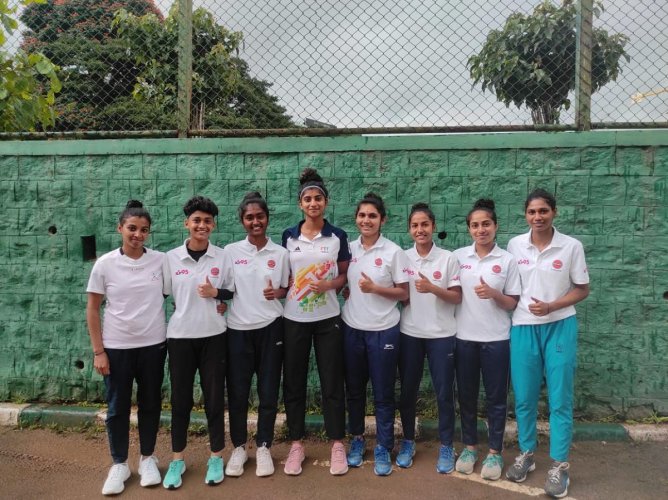
A team of eight girl students will be part of the state team in the Girls Junior Nationals hockey tournament to be held in Jharkhand from October 20.

Players Pandanda Dejamma, Badumanda Shaya Kaveramma, Ponnimada Shilpa, Kechettira Parvathi, S P Likhita, H P Dhanushree, S P Sinchana and B K Leelavathi are from Kodagu.

The players are trained at Sai Sports Hostel and have taken part in more than 10 national-level hockey tournaments.

Currently, they are preparing for a national tournament in Kantheerava Stadium, Bengaluru.

source: http://www.deccanherald.com / Deccan Herald / Home> State> Mangaluru / by DHNS, Madikeri / October 13th, 2021

Oxygen generation unit ready for inauguration in Somwarpet

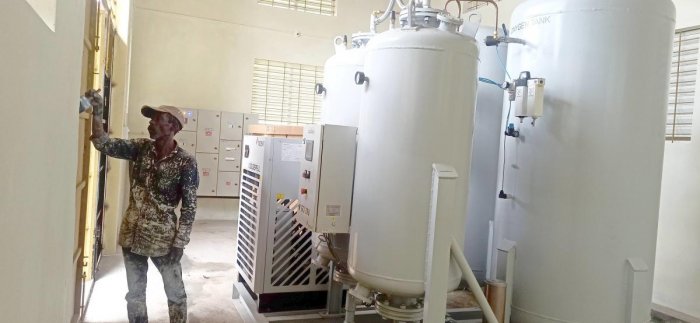
The work on an oxygen generation unit built at a cost of Rs 1 crore at Somwarpet government hospital has been completed. The required machines and generation unit have been installed.

The plant can generate 390 litres of oxygen per minute, which will be a boon for the patients.

After facing a shortage of oxygen during the second wave of Covid-19, the government had planned to set up oxygen plants in the government-run hospitals. 

Pipelines have been laid to supply oxygen to 50 beds for Covid infected and non-Covid infected patients in the government hospital.

Without the unit, the oxygen cylinders had to be refilled in Mysuru in the past.

With the unit capable of generating 390 litres of oxygen per minute, the need for oxygen from Mysuru will not arise, said officials. 

The compressor, ventilator and oxygen concentrators have already been procured, said Pushpak of the contracted firm. 

People from rural areas in Somwarpet taluk are dependent on the government hospital for treatment. In case of emergency oxygen requirements, the patients had to be rushed to Madikeri, Mysuru and Hassan for treatment in the past. 

Dr Shivaprasad, who works at the hospital said, “Compared to the first wave, more people had succumbed to Covid-19 during the second wave. The experts have already warned of a possible third wave. Already, 15 to 20 Covid infected people are undergoing treatment in the hospital. The plant will help in the use of oxygen as per the requirement.” 

MLA M P Appachu Ranjan said that the work on the generation plant has been completed. With the help of Rs 1 crore from Mobius Foundation, the work on an oxygen generation unit at Kushalanagr has also been completed.

Both the units will be inaugurated next week, he added. 

source: http://www.deccanherald.com / Deccan Herald / Home> State> Mangaluru / by DHNS, Somwarpet / October 05th, 2021

Drones spraying chemicals a hit among farmers at paddy fields, arecanut estates in Kodagu

“Usually it takes seven to eight days to complete chemical spraying across a 10 acre estate. However, the job was completed in four hours using the drone,” said an arecanut estate owner.

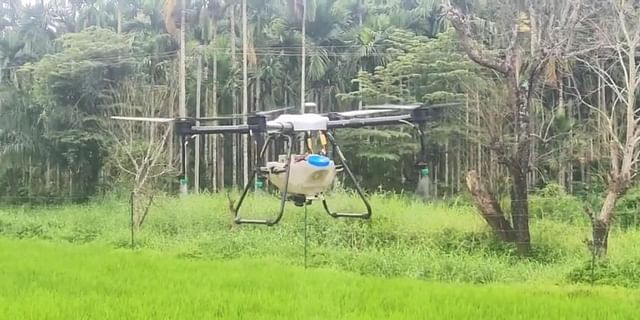
Drone facility used in a paddy field in the district (Photo | Special arrangement)

Madikeri :

Agriculture has taken a hit in several ways amid the pandemic and labour shortage and lack of maintenance are among the top struggles faced by farmers. However, this is now being addressed technologically with drones taking over jobs at many estates in Kodagu.

Vikram Appaiah, a arecanut estate owner in Karadigodu village, first heard of drones helping in agriculture activities in a social media group. He opted for the technology and the first drone experiment was done across his estate in May.

“I hired the drone to enable maintenance work at the estate. Fungicide spray was mounted on the drone and all the arecanut trees were uniformly sprayed with the chemical,” recalled Vikram. He added, “Usually it takes seven to eight days to complete chemical spraying across a 10 acre estate. However, the job was completed in four hours using the drone.” Following the success story, Vikram hired the drone for the second round of chemical spraying in September.

The drones are outsourced from the local agro company Omega in Gonikoppal. “Prior bookings have to be made and the drones help in systemic spray of chemicals or organic sprays. Many farmers are approaching us to opt for the facility as it is time-saving and convenient,” said Naj Chengappa, the proprietor of Omega.

He explained that Rs 2200 is charged for spraying chemicals with drones across one acre of arecanut estate and Rs 950 across one acre of paddy field.

He, however, confirmed that this facility cannot be used across coffee estates due to the uneven terrain alongside increased shade trees in the estates.

source: http://www.newindianexpress.com / The New Indian Express / Home> States> Karnataka / by Prajna GR, Express News Service / September 22nd, 2021

Kodagu district admin ready to tackle third Covid-19 wave

The experts in the state have warned that the third wave might reach its peak either in October or November.

The Designated Covid Hospital in Madikeri. Credit: DH photo

Though the Kodagu district administration has taken steps to check the outbreak of the third wave of Covid-19, the district sharing its border with Kerala has proved to be a hurdle.

The rise in Covid-19 cases in Kerala is a cause of concern for Kodagu district.

The district administration is implementing the advice of the technical expert committee.

The experts in the state have warned that the third wave might reach its peak either in October or November. The district administration is preparing itself to brace for the situation.

Deputy Commissioner Charulata Somal has directed officials to vaccinate all those who are above 18 years on a priority basis in the villages sharing its border with Kerala.

Further, the check posts have also been strengthened.

To tackle the third wave, steps have been taken in the taluk, said Somwarpet taluk medical officer Dr Srinivas.

Four to five beds have been reserved in all the government hospitals in the taluk. The health camp for children has already been conducted at hotspot areas of Nelyahudikeri, Valnoor-Tyagathoor, Suntikoppa, and other areas, he said.

A health check-up is organised for even pregnant and lactating women and they have been administered vaccination. The work on an oxygen generation plant is in progress at Somwarpet at a cost of Rs 1 crore. The work on installing machines is pending, he added. 

Further, the border area check posts in Shanivarasanthe, Kodlipet, Shanthapura and others have been strengthened in the district.

Circle Inspector S Parashivamurthy said that labourers who were hesitating for vaccination were convinced to take vaccines at Mullur Colony.

Dr Chandan in the Community Health Centre said that oxygen cylinders, swab tests, masks and sanitisers have been arranged at the centre.

Awareness of Covid-19 is created among the patients who arrive at the centre for treatment, he said.

Further, the health department has set up an 80-bedded Covid Care Centre at Morarji Desai Residential School in Koodige and Basavanahalli.

Taluk medical officer Dr Srinivas said that everyone should strictly adhere to the Covid appropriate behaviour.

source: http://www.deccanherald.com / Deccan Herald / Home> State> Mangaluru / by DHNS, Madikeri / August 29th, 2021

Cancer Survivors Support Group Meet At Cauvery Hospital Tomorrow

On the occasion of World Head and Neck Cancer Day, Cancer Survivors Support Group meet has been organised at Cauvery Heart and Multi-Speciality Hospital in Siddarthanagar tomorrow (July 28) at 11 am.

Dr. Sunil Muddaiah, Dean, Coorg Institute of Dental Sciences, Virajpet, Kodagu, will be the chief guest.

Dr.Javeed Nayeem, President, MAHAN- Mysuru, will be the guest of honour.

Dr. G.R. Chandrashekar, Chairman, Cauvery Heart and Multi-Speciality Hospital and Dr. Sarala Chandrashekar, Managing Director, Cauvery Heart and Multi-Speciality Hospital, will be present.

For details, contact Mob: 96636-33322.

source: http://www.starofmysore.com / Star of Mysore / Home> In Briefs /July 27th, 2021