Category Archives: World Opinion

Kodagu residents shower their passion for hockey by organizing open tournament

While the district annually hosted the record-breaking hockey tournament, the same has met with hurdles from the past three years.
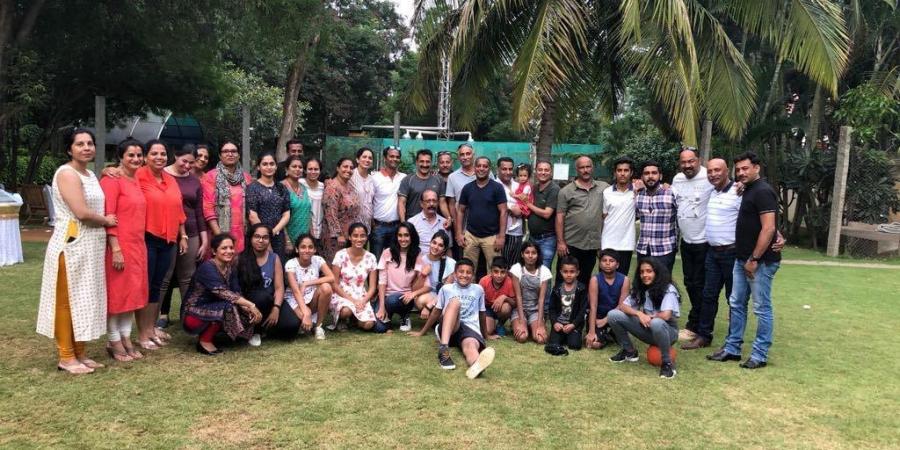
The Coorg Challengers Chickpet Association members. (Photo | Express)

Madikeri :

The passion for hockey in Kodagu is unmatchable and the district has contributed largely to the Indian Hockey team.

Nevertheless, the passionate hockey lovers have alternate platforms to showcase their enthusiasm and one such pompous hockey tournament will soon be launched at FMKM Cariappa Hockey Arena in Bengaluru.

CCCA 5 A side open Hockey tournament will unfurl from April 2 to April 4 and will witness participation from 24 teams across South India.

What is notable about this tournament is that it is being hosted by hockey enthusiasts from Kodagu – who call themselves the Coorg Challengers Chickpet Association (CCCA).

Further, this tournament will enable a close competition among hockey veterans even as NRIs from Kodagu who recently moved back to India following the pandemic, have formed a new team to take part in the tournament.

“CCCA is a group of hockey-loving people. The group consists of nearly 40 individuals from 14 different Kodava families. And we are all natives of Chickpet in Virajpet who are now settled in Bengaluru,” explained Mukkatira Somaiah, one of the core members of CCCA.

He stated that CCCA was formed with a vision to promote hockey while also providing support to the needy.

“Through CCCA 5A hockey tournament, we raise funds from hockey lovers and philanthropists. The money from the tournament is then donated to Cheshire Home Bangalore in Bengaluru,” he said. The association also promotes sports learning among youngsters as it has supported many sports aspirants financially.

“The tournament is organized under the aegis of Hockey India and Hockey Karnataka and will witness participation from many professional hockey players. We have chosen 5A Hockey tournament as this is a skillful game and it involves unique stick work. The cash prizes to winners are also elaborate,” he added.

The tournament has grabbed the attention of hockey players from across the country even as a new team from Kodagu – Team Coorg Gulf will take part this year.

A group of residents who are natives of Kodagu and who were settled in Muscat and UAE continued their passion for hockey aboard with the founding of Team Coorg Muscat and Team Coorg UAE a few years ago.

“Mekerira Bellu Kuttappa, a hockey enthusiast who was working in Muscat founded Team Coorg Muscat. Similarly, natives of Kodagu working in UAE formed the Team Coorg UAE. We used to often take part in hockey tournaments in Oman. However, all of us have returned to India following the pandemic and the two teams have been reformed as Team Coorg Gulf,” explained Vikram Uthappa, one of the core members of the team.

While the pandemic situation had put most of the sports activities to rest, the Team Coorg Gulf members are excited to launch themselves in India with the CCCA 5A hockey tournament.

While 24 teams have registered for the tournament, three teams in total will take part from Kodagu. Further, veteran hockey players VR Raghurathan, Nikhin Thimmaiah, and Arjun Halappa among others will be part of the event.

Somaiah also confirmed that hockey player Dhanraj Pilay is likely to be present during the final game of the tournament, which is likely to witness an exhibition match between former Olympians and international hockey players.

source: http://www.newindianexpress.com / The New Indian Express / Home> States> Karnataka / by Prajna GR, Express News Service / March 28th, 2021

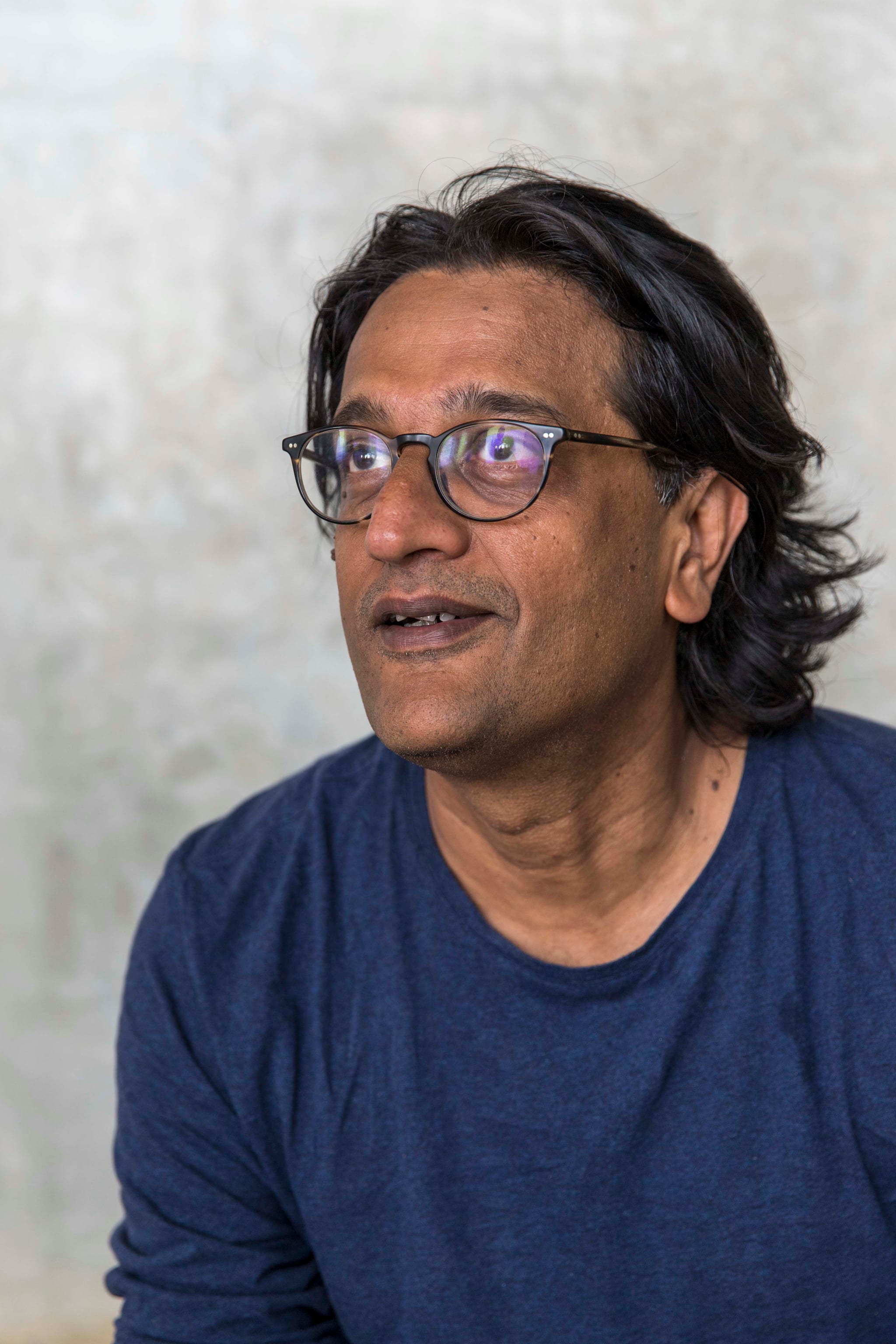
From kattan kaapi to Chameli Americano, Manoj Kumar’s inspirational Araku journey

Kumar worked with adivasis in Andhra’s Araku Valley for decades, grew coffee of the highest quality and took it to Paris in 2017. On March 19, Araku Coffee opened its first café in India in Bengaluru. Kumar wants to replicate the Araku model for other crops as well, he tells us how

Cafe L'Orange
Cafe L’Orange

In the late 1990s, the late Kallam Anji Reddy, founder-chairman of pharmaceutical company Dr Reddy’s Laboratories, appointed developmental economist Manoj Kumar as the head of his NGO, the Naandi Foundation. Kumar’s brief was to foster sustainable livelihoods in rural India.

One of the many projects Kumar embarked on in the early 2000s was to get adivasi farmers in Andhra Pradesh’s Araku Valley to grow specialty coffee, which, simply put, is organic and sustainably grown coffee of the highest quality. To many people, it appeared to a quixotic endeavour. Araku was not a traditional coffee-growing region. Kumar, who grew up in Kerala drinking kattan kaapi, the traditional home-brewed black coffee, had no real knowledge about coffee; and the Araku Valley had been riddled with Naxal insurgency for decades. Kumar worked with, and lived among, the tribals for over a decade and through biodynamic farming and the formation of an adivasi cooperative, one of the world’s largest fair-trade and organic certified cooperatives, he achieved the seemingly impossible.

In 2017, Kumar opened the first Araku Cafe and store in Paris and about a year later, Araku Coffee bagged top honours for the best coffee pod at the prestigious Prix Epicures OR awards in Paris. On March 19, Araku opened its first cafe in India. The 6000 sq ft, two-level flagship cafe in Indira Nagar in Bengaluru features, among others, an in-house roastery, the country’s first Specialty Coffee Association-certified Coffee Academy, a book store, and food that is sustainably procured.

In an interview to Moneycontrol, Kumar talks about the growing interest in specialty coffee in India, its transformative potential, and about replicating the Araku model in other parts of the country. Edited excerpts:

How do you see Araku’s flagship cafe take the specialty coffee story forward in India?

By and large, the production of specialty coffee in India has so far been almost nil, barring a few micro estates. We have been a notable exception. Our success has made coffee growers realise that it is possible to get much higher value and definitely profits if they can elevate their coffee to the level of a specialty coffee. I’m hoping that this desire to excel will be infectious to the community of coffee growers in India. They could learn to look at coffee as being more than just an average-to-poor-quality mass-produced commodity, which is neither financially rewarding nor sustainable. We are blessed to have the climate and topography to grow coffee. Europe and most of the coffee-drinking nations don’t grow coffee. I see our cafe in Bangalore as a place where people can interact and learn more about the power of specialty coffee. And we would want to take it beyond producers to policy makers and to everyone through a consumer movement to inculcate a certain pride in the opportunity we have to make coffee a profitable Indian-origin commodity and revive India’s agriculture to an extent. Araku is not a traditional coffee-growing region, and yet we have grown world-class coffee there. So, you can imagine the potential of places such as Chikmagalur and Coorg…

Tamagoyaki Toastie is on the menu of Araku’s café in Bengaluru.

Have you met people from the coffee-growing community who want to get into specialty coffee?

Absolutely. When we started the Araku journey, we had only between 10 percent to 20 percent of farmers whose coffee could be rated as specialty coffee. Today, I have 80 percent of my farmers all growing specialty coffee. I have requests from many small estate and large estate owners, and even people who are into wine now want to know if we can help them with the same regenerative agricultural practices that made our coffee world-class.

Araku Coffee co-founder Manoj Kumar

You’ve been to specialty coffee hotspots across the world. How have your experiences shaped the flagship store?

Scandinavia inspired me a lot. The quality of service there was based predominantly on knowledge. Every brewer, roaster, and barista I met had a completely different level of knowledge and that knowledge was shared with the customer. A relatable example would be going to an Apple store for the first time and discovering that every staffer has an in-depth knowledge about the products. So, one of the things I took away from there was that our team had to be knowledgeable about what they were selling, even if it meant setting up a coffee school at the cafe. Our team is not just selling a random service, they are selling coffeeology. And our prices are extremely competitive. Somebody even mentioned that a lot of the coffee we serve is, more or less, the same price as the coffee you get at Starbucks.

The Naandi Foundation has been at work replicating or adapting the Araku model in other parts of India. How has that worked out?

The Naandi Foundation is now massively expanding its agricultural footprint. We are now in a large way expanding into Wardha and the Vidarbha region, replicating the Araku model with other crops. We started off with pomegranate and that is very much on track but we are also exploring or expanding into other portfolios. Turmeric in that region is world-class, and it has a Geographical Indication tag. Then, we looked at red gram and other pulses. The idea is to have a bouquet of produce for the farmer to get it to be profitable and to identify one or two which become unique to that region. I think the winners here will be turmeric, pulses, and organic cotton. We are also looking closely at working in Meghalaya and Kerala and the Konkan belt.

You first went to the Araku Valley in 2001. Looking back, which was the turning point of your journey?

I’d think earning the trust and respect of the tribals was the turning point. I had started with just 1,000 farmers, and I would tell them that one day their land would produce a coffee that would be world-class. And they would always tell me that they wouldn’t let me down. That kind of love and trust from their end really made all the difference.

MURALI K MENON works on content strategy at HaymarketSAC.

source: http://www.moneycontrol.com / MoneyControl / Home> News> Trends> Features / by Murali K Menon / March 20th, 2021

New Assam plant species may aid anti-cancer battle

Members of this group have a secondary metabolite used in colon cancer: Expert

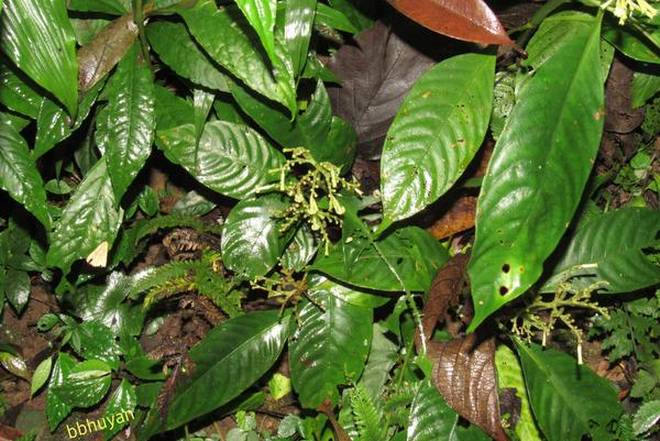
Researchers of western Assam’s Bodoland University have recorded a new plant species that may go a long way in fighting cancer.

The species, named Ophiorrhiza recurvipetala, has been found at 675 metres above mean sea level in central Assam’s Dima Hasao district. It has been classified under the Rubiaceae family of flowering plants, to which the plant yielding coffee belongs.

Recurvipetala means petals curved back.

The finding was published in the March 2021 issue of the Nordic Journal of Botany.

“This is a new species to plant science and may be a potential anticancer research candidate. All members of this group have a secondary metabolite called Camptothecin used in colon cancer,” Sanjib Baruah, assistant professor of Bodoland University’s Department of Botany said.

He co-authored the study with research scholars Birina Bhuyan of Bodoland University and Selim Mehmud of Guwahati’s Cotton University.

“It is now our turn to find the Camptothecin content occurring in this novel species. There is a possibility to cultivate this species as a promising medicinal plant for the northeast, but its agrotechnology is not known,” Dr. Baruah told The Hindu.

The researchers had spent a few months in the hilly areas of Jatinga and Haflong in Dima Hasao district to locate a few plants on a wooded mound. “The new species is restricted to this area where it grows in moist shady places,” he said.

Ophiorrhiza is a predominantly herbaceous genus distributed from eastern India to the West Pacific from South China to northern Australia. According to the World Checklist of Selected Plant Families, 2017, it is a notably species-rich and taxonomically complicated genus with about 318 species worldwide.

In India, 47 species and nine varieties have been recorded and among them 21 species and one variety are from the northeast.

The Ophiorrhiza recurvipetala is a perennial herb with a maximum height of 60 cm and is branched. It yields a creamy white flower.

source: http://www.thehindu.com / The Hindu / Home> News> National / by Rahul Kamakar / Guwahati – March 19th, 2021

The Tragic Life of Victoria Gowramma: How Victorian Monarchy Tried To Evangelise India Through An Unwilling Princess Of Coorg

The Tragic Life of Victoria Gowramma: How Victorian Monarchy Tried To Evangelise India Through An Unwilling Princess Of Coorg
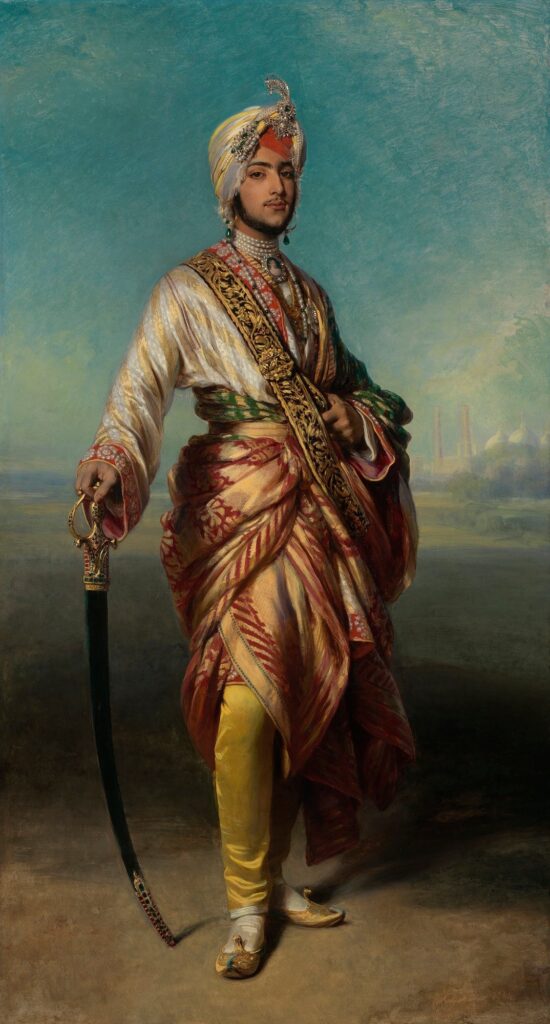
Princess Gouramma depicted in Indian dress and rich jewellery, leaning on an Indian table. She is holding a Bible, an allusion to her conversion to Christianity. (Franz Xaver Winterhalter)

______

Snapshot
  • The short life of princess Gowramma of Coorg serves as a reminder of the potential detachment and loss of identity a fiercely Western education can ensure.

_______

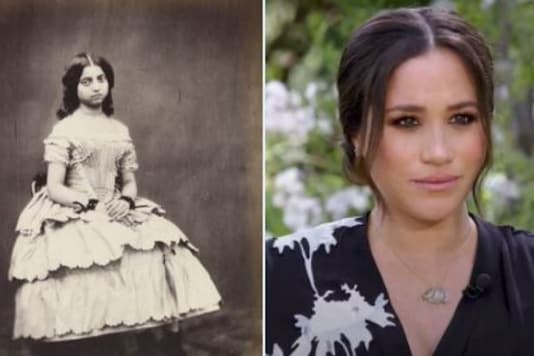
Meghan Markle and Prince Harry’s recent interview with Oprah Winfrey has brought to fore the tumultuous relationship the British monarchy has with all things concerning race. Markle alleged that a member of the royal family had expressed concerns over how dark their baby Archie’s skin would be.

Notably, the Duchess of Sussex is not the first person of colour to be subjected to royal racism.

The institution’s colonial past is filled with instances of the ‘firm’ ( as Markle calls it) taking upon itself the duty of civilising the ‘coloured’ citizens of the colonies it conquered.

In this regard, the remarkable life of Princess Gowramma, the Princess of Coorg and the goddaughter of Queen Victoria, provides interesting insights into the treatment of people of colour by the imperial echelons of the nineteenth century British society.

Princess Gowramma was born in Banaras, to the deposed king of Coorg — Chikka Veerarajendra Wodeyar, who had been exiled by the British in 1834.

She was the Raja’s favourite daughter and was thus his natural choice when it came to accompanying him on his journey to England, where he intended to demand in court the return of his wealth from the East India Company.

Some sources claim that Veerarajendra conveyed his intent of converting Gowramma to Christianity to gain the good graces of the company, so as to receive permission to travel to England.

Governor General Lord Dalhousie and other directors of the company found the idea of voluntary conversion by an Indian royal quite appealing, especially since it would help improve their sagging image in Britain.

Thus, in 1852, after Gowramma had received an education in Christian mannerisms and scripture, she and her father set sail to become the first Indian royals to ever set foot in England.

Gowramma and her father soon after they arrived in London. ( Credit: Illustrated London News)
Princess Gouramma depicted in Indian dress and rich jewellery, leaning on an Indian table. She is holding a Bible, an allusion to her conversion to Christianity. (Franz Xaver Winterhalter)

Upon reaching the island, the 11-year-old Gowramma was presented to Queen Victoria. The Queen, quite taken by the princess declared that she would become the godmother and even endowed Gowramma with her own name — ‘Victoria’.

The Princess of Coorg was then baptised by the Archbishop of Canterbury, at a private chapel in the Buckingham Palace, in the presence of Queen Victoria, her family, senior officials of the government and directors of the company.

Post the baptism, the Queen gifted Victoria Gowramma a bound and autographed Bible with gold embellishments. She then entrusted the princess to the care of Major and Mrs Drummond, who were to groom her with Western thought and education.

Queen Victoria took great initiative in expanding Gowramma’s social circles. She would invite Gowramma to regularly interact with her children and also bestowed upon her a title that made her equivalent to European princesses.

However, Gowramma, who was made to abandon her traditional Indian clothing for Western wear was depressed. She was cut off from all connection with her father and was instead forced to talk, dress and behave like a British aristocrat.

Unable to cope with the pressures of high society, Gowramma tried running away multiple times. She often expressed her desire for privacy and even stated that she rather live like a servant with the handmaidens than suffer the compulsions of regal life. Her troubles were dismissed by the Queen and her consort Prince Albert as ‘innate oriental weakness’ that seeks to escape civilisation.

Meanwhile, back home in India, the British had defeated Maharaja Ranjit Singh to annex Punjab. They then took his minor son, Duleep Singh, under their care.

Exiled to Fatehpur and kept away from Lahore so as to avoid chances of revolt, Duleep Singh was subjected to a Western education that eventually culminated with his acceptance of Christianity out of his own ‘free’will. He then set sail to Britain in order to formalise his conversion under the Church of England.

The Queen, to whom Duleep Singh presented the Kohinoor Diamond, took an instant liking of the Maharaja and became his godmother. She and Prince Albert in cahoots with the company plotted an alliance between Singh and Gowramma.

The hope was to use the influence generated by the marriage between two Christian Indian royals as a tool for proselytising the Indian population. This idea also had the endorsement of Singh’s English guardians — the Logins. They were firm believers in the European responsibility of spreading the word of the Bible amongst the pagan worshippers of India.

However, upon introduction, Singh was lukewarm in his response to Gowramma. He made it known to the Logins that he considered the princess more an honorary sister than a potential wife.

Gowramma, who had earlier been forgiven by the Queen for her torrid affair with a stable boy and her attempted elopement with an under-butler decided instead to marry a close friend of Singh — Lieutenant Colonel John Campbell, who had served in Bellary and was 30 years her senior.

Meanwhile, Chikka Veerajendra, who had lost a seven-year-long legal battle with the company had died.

Gowramma gave birth to a daughter named Edith Campbell on 2 July 1861. By the time Edith was three years old, Gowramma had developed signs of tuberculosis.

She died from the disease on 30 March 1864 just a few months short of her 23rd birthday.

Lieutenant Campbell, who in their short marriage had either neglected his wife or had persistently pestered her for money, disappeared after her death along with the crown jewels of Coorg that had been in her possession.

It is believed that he had only married the princess for her 1,000 pound allowance, the Queen’s favour and of course the jewels of Coorg.

The tragic life of Victoria Gowramma, a princess who had been alienated from her own land and language, was perhaps the paradigm the Britain had for the citizens of her colonies to follow.

Had Duleep Singh and Gowramma not fell short of the royal scheme envisioned by Queen Victoria, they might have had a significant role in shifting India’s religious history.

After all, colonial rulers did find religious conversion a greater instrument for the control of the colonised than plain force.

Gowramma today serves as a reminder of the potential detachment and loss of identity a fiercely Western education can ensure.

Victoria Gowramma was buried in the Brompton Cemetery, her tombstone bears the epithet composed by Queen Victoria, it contains the poignant words — “Other sheep I have, which are not of this fold” (John X,16).

source: http://www.swarajyamag.com / Swarajya / Home> Ideas / by Adithi Gurkar / March 17th, 2021

Meghan Markle’s Struggle as Non-White Royal Resembles Indian Princess Adopted by Queen Victoria

Dr Priya Atwal, a historian, took to Twitter and spoke about the little-known life of Princess Gouramma of Coorg who was adopted by Queen Victoria as one of her godchildren.

The history of Princess Gourumma of Coorg was shared on Twitter by Dr Priya Atwal.

While Meghan Markel’s revelations into the British Royal family has once again triggered the debate of race in UK, a historian from India has claimed that Meghan is probably not the first woman of colour to be a part of the monarch family. While there is mention of Queen Charlotte’s (1744-1818) black ancestry, Queen Voctoria had her imperial godchildren too, according to the Victorian historian. Dr Priya Atwal took to Twitter amid raging debate about Meghan’s acceptance in the Royal family and spoke about the little-known life of Princess Gouramma of Coorg.

“Princess Gouramma (1841-64) was brought to Britain in 1852 by her father, the deposed Rajah of Coorg. The Rajah campaigned to win back his family wealth from the East India Company, but also asked Victoria to adopt his daughter, believing the Queen would give her a good life (sic),” Atwal wrote. It was Princess Gouramma’s father, Rajah of Coorg, who offered her to the Queen after baptising her with the hope that she would be brought up with “aristocratic guardians and secure her a good marriage”. Victoria readily accepted the idea and adopted Princess Gouramma. But princess of Coorg wasn’t the only one. Queen Victoria had several ‘godchildren’ whom she adopted from royals from the empire.

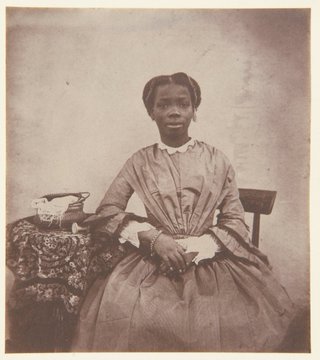
Duleep Singh and Sarah Bonetta Forbes were among these godchildren of the Queen.

_______


Dr Priya Atwal@priyaatwalAs a historian of Victorian royalty, I am fascinated by some of the parallels between #MeghanMarkle’s current situation and the little known story of Princess Gouramma of Coorg. A thread

1/12

_________-

But facing racial attacks never stopped for the Queen’s godchildren even after being adopted. Atwal says their lives weren’t easy. Duldeep and Sarah ‘were both feted and treated as racialised others in Victorian Britain’. “And their lives were pored over in a newly-emerging popular press,” Atwal writes. “As I’ve found in my research, for her it was a good way to learn about her new territories and project a benevolent image of her family.”

_______

Dr Priya Atwal@priyaatwal·The Hindu Rajah offered up Gouramma to be baptised as a Christian & hoped Victoria would bring her up as an adopted daughter with aristocratic guardians and secure her a good marriage. Incredibly, Victoria was keen about the idea & readily agreed. 4/12

Victoria took multiple young royals from around the empire as wards/godchildren – inc. Duleep Singh & Sarah Bonetta Forbes. As I’ve found in my research, for her it was a good way to learn about her new territories & project a benevolent image of her family. 5/12

_________

Gouramma faced a different struggle. She was pressured to become the model Anglicised princess. Even though the Queen had accepted her into the family, she had banned Gouramma from maintaining any contact with her family. The curtailment of ties again had racial undertones. According to Atwal, this was supposedly to prevent her from slipping into “native” or “heathen ways”. “She was moved from foster family to family as her caretakers struggled with the cost and demands of raising a royal ward.” The struggle of a new life was too much for the young princess who even tried to run away many times. It was the unwanted attention and being under scrutiny all the time that added to her woes. “In this I find her parallels with Meghan most intriguing: Gouramma often spoke of dearly wishing for more privacy & living independently – even to become a household maid – so she could be free of scrutiny. Yet her actions were attributed to her “innate Oriental weakness (sic),” Atwal writes.

Meghan too has spoken about the unwanted attention from media that has deprived her of any privacy in personal life. Meghan, who married Prince Harry in 2018, said she told the royal family she was struggling and needed professional help but was told “that I couldn’t, that it wouldn’t be good for the institution.” She even suggested that the Buckingham Palace was “perpetuating falsehoods” about her and Prince Harry. Asked by Winfrey how she felt about the Palace hearing her speak out, Markle replied: “I don’t know how they could expect that after all of this time we would still just be silent if there’s an active role that The Firm is playing in perpetuating falsehoods about us.”

source: http://www.news18.com / News18 / Home> News> Buzz / March 10th, 2021

India Visit Of Prince Charles

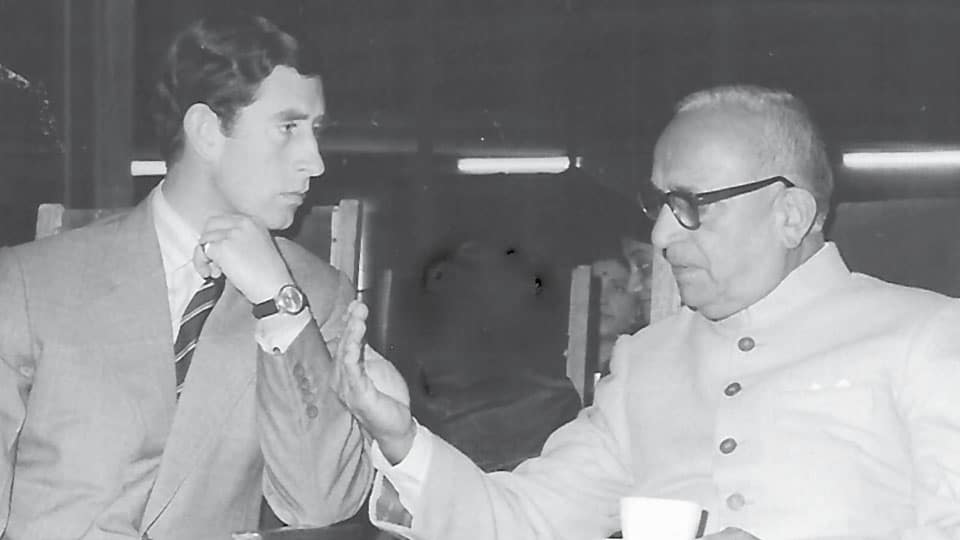
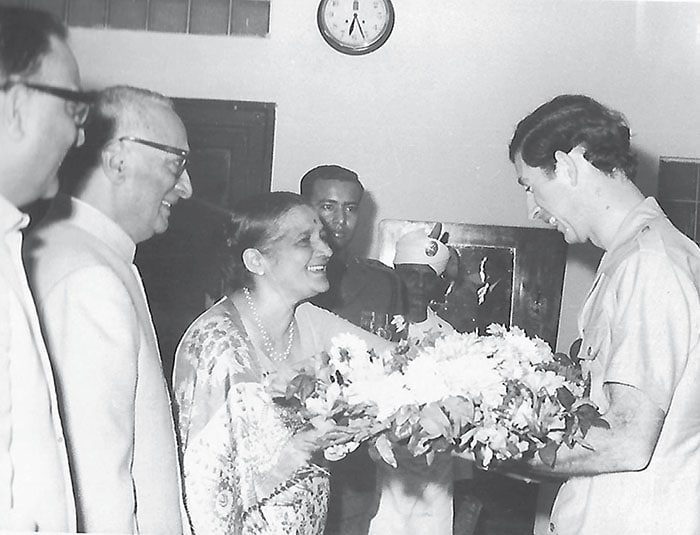
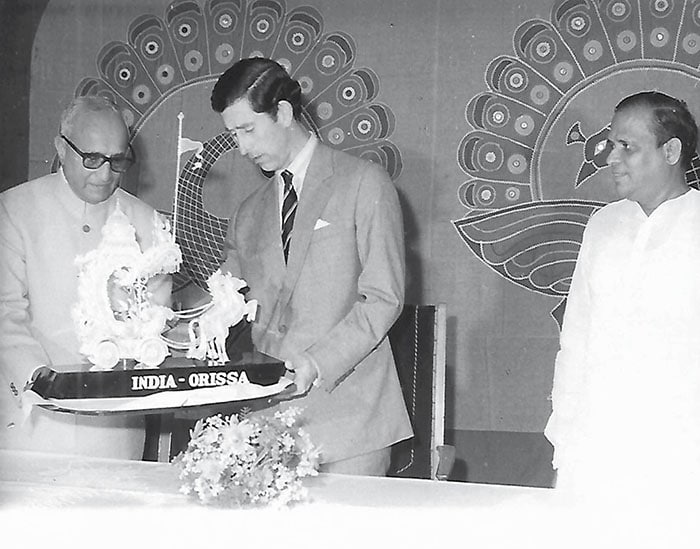
Charles, Prince of Wales, the heir to the throne of United Kingdom (UK), has visited India 10 times till date. One of his visits was in 1980, and one of the States where he was a State Guest was Orissa. My father, C.M. Poonacha, was the Governor of Orissa at the time. Prince Charles stayed in the Raj Bhavan for a couple of days and my parents interacted with him as his hosts. For my father, who was a freedom fighter, this was quite an experience to host the future King of the UK, whose ancestors were his adversaries. 

Prince Charles was a 32-year-old bachelor at the time. Those who have watched ‘The Crown’ on Netflix would recall that before his foreign tour in 1980, he had started dating Diana Spencer. He took her to Balmoral Castle to meet the Queen and other members of the family and was supposedly put through the ‘Balmoral Test’ to assess if she has the right qualities to be a Windsor and a potential Queen of UK. 

Months prior to her marriage, Diana moved to Buckingham Palace to familiarise herself with the protocols to be followed as the future Princess of Wales. My father found Prince Charles to be an amiable, intelligent, and well-read young man. It is commendable that India and UK continue to have cordial relationship despite the dark colonial era. I recently found some of the photographs taken during the 1980 visit.

Mr. & Mrs. C.M. Poonacha greeting Prince Charles.

Had I known as much as I do now about Queen Victoria and her Indian God-daughter Princess Victoria Gowramma of Coorg, I would have visited Bhubaneswar for a chat with Prince Charles! An opportunity missed.

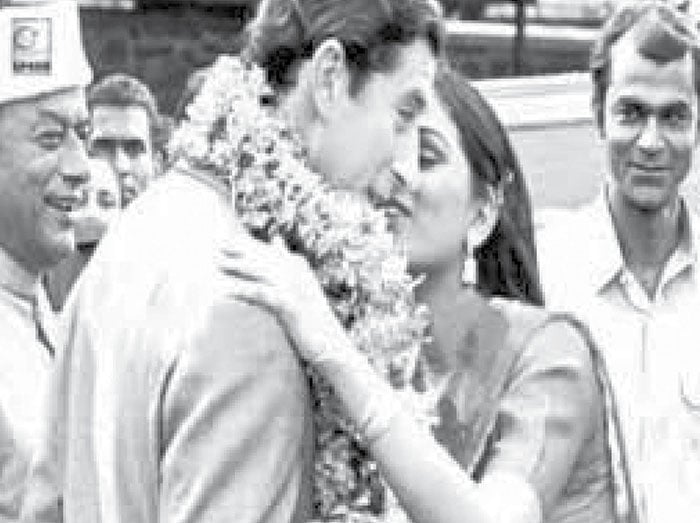
After his visit to Orissa, Prince Charles was the State Guest of Maharashtra. Wherever he went, girls were swooning over him! He was arguably the most eligible bachelor in the world at that point in time. I am sure many would remember the cheeky kiss the then 16-year-old Padmini Kolhapure of Satyam, Shivam, Sundaram-fame, stole from the Prince charming!

C.M. Poonacha and Prince Charles.

Prince Charles and Lady Diana Spencer were married in 1981. Their tumultuous life, divorce and the subsequent horrendous accident that took Diana’s life, are familiar to the world. The person who stole Charles’ heart was Camilla Parker Bowles (née Camilla Shand). There are several speculations about Charles becoming King and Camilla his Queen. One rumour is that Queen Elizabeth II will abdicate later this year after her 95th birthday celebrations and make way for Charles to be coronated. Another scenario is that the Queen will hold on to the crown and make Charles the Regent. Yet another speculation is that the Queen might bypass Charles and name his son Prince William her successor. If Queen Elizabeth II, after 69 years on the throne, continues as the Monarch till her demise, then by normal scheme of things UK will have King Charles and Queen Camilla. 

People in the UK are divided on the issue of continuation of the monarchy with a slight bias towards retaining the royal head of State. In any case, it is more than a couple of centuries since monarchy in the UK ‘reigns but does not rule’.

Padmini Kolhapure giving a peck on Prince Charles’ cheek.

When Padmini Kolhapure kissed Prince Charles!

Bollywood actress Padmini Kolhapure made a lot of headlines in 1980 when Prince Charles came to India and the teenage actress welcomed him with a warm kiss on his cheeks. The Prince was welcomed by Padmini during a visit to a Bollywood shooting spot and after putting the garland on his neck, she planted a kiss on his cheek. According to reports, Prince Charles was also surprised with the actress’ gesture. This became quite a topic of discussion at that time.

About the author: C.P. Belliappa is a Chemical Engineer. He is based in Coorg (Kodagu). He is known for his writings on issues pertaining to Coorg. He writes humour, history and human-interest stories. Four of his books — Tale of A Tiger’s Tail & other Yarns from Coorg, Nuggets from Coorg History, Victoria Gowramma: The Lost Princess of Coorg, and Tongue of the Slip — have been published by Rupa Publications. He presently serves as President, Coorg Institute of Technology (CIT), Ponnampet, South Kodagu.

source: http://www.starofmysore.com / Star of Mysore / Home> Feature Articles / by C.P. Belliappa / March 03rd, 2021

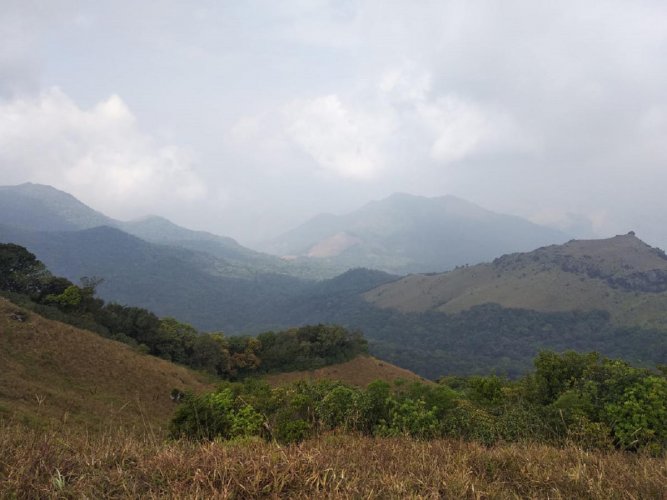
Tadiyandamol Hill beckons trekkers

A view from the top of Tadiyandamol Hill in Kodagu.

Tadiyandamol, the highest cliff of Kodagu, is known for nature’s bounty and attracts trekkers. Tadiyandamol roughly translates to ‘tall, broad hill’ in the local dialect.

It is the highest peak in the Kodagu district and the third highest in Karnataka after Mullayyanagiri and Kudremukh.

To embark on the trekking adventure, trekkers have to trail through lush green plantations and here and there water bodies cross the path. The path does not make one feel tired as one looks at the beauty of the surroundings. 

Owing to the Covid-19 pandemic, the trekking activities were suspended for a few months.

Trekking activities resumed

When the trekking activities resuming, people from all age groups have started their trekking adventure.

The number of people during the weekends and holidays is on the rise. 

Trekkers from not only Karnataka but also from outside the state and country visit Tadiyandamol.

With verdant valleys in all directions, the views all around from the top mesmerise the trekkers. 

The trekkers enjoy a whiff of cool breeze at the top with the clouds playing hide and seek. Trekkers visit the spot even during winter and summer. 

Distance and height

Tadiyandamol cliff is 48 km away from Madikeri. The height of the cliff is 1,717 metres and one has to cover 10 km to reach the cliff via Nalkunadu palace in Yavakapadi.

One can enjoy the beauty of nature while traversing the trekking trial via Kabbinakadu.

After reaching Kakkabbe via Napoklu, one must locate Yavakapadi village. Jeeps are also available for rent from Kakkabbe. After driving for six to seven kilometres, the rest of the way can be covered on foot.

Panoramic view

The panoramic view of Tadiyandamol during monsoon is totally different. One come across several waterfalls cascading down the hillock en route.

Several researchers also visit the cliff to study biodiversity.

To check the pollution, the forest department has laid down a few restrictions on the trekkers.

The trekkers have to pay Rs 100 and ensure that they do not dump plastic and other waste en route.

“Tadiyandamol is a paradise for the trekkers,” said Prof Pattabi of Mangalore University, who had trekked along with a team recently. 

source: http://www.deccanherald.com / Deccan Herald / Home> State> Mangaluru / by DHNS, Napoklu / February 27th, 2021

The biology of coffee, one of the world’s most popular drinks

Image by Myriams fotos via Pixabay

You’re reading this with a cup of coffee in your hand, aren’t you? Coffee is the most popular drink in many parts of the world. Americans drink more coffee than soda, juice and tea — combined.

How popular is coffee? When news first broke that Prince Harry and Meghan were considering Canada as their new home, Canadian coffee giant Tim Hortons offered free coffee for life as an extra enticement.

Given coffee’s popularity, it’s surprising how much confusion surrounds how this hot, dark, nectar of the gods affects our biology.

Coffee’s ingredients

The main biologically active ingredients in coffee are caffeine (a stimulant) and a suite of antioxidants. What do we know about how caffeine and antioxidants affect our bodies? The fundamentals are pretty simple, but the devil is in the details and the speculation around how coffee could either help or harm us runs a bit wild.

The stimulant properties of caffeine mean that you can count on a cup of coffee to wake you up. In fact, coffee, or at least the caffeine it contains, is the most  commonly used psychoactive drug in the world. It seems to work as a stimulant, at least in part, by blocking adenosine, which promotes sleep, from binding to its receptor.

Caffeine and adenosine have similar ring structures. Caffeine acts as a molecular mimic, filling and blocking the adenosine receptor, preventing the body’s natural ability to be able a rest when it’s tired.

This blocking is also the reason why too much coffee can leave you feeling jittery or sleepless. You can only postpone fatigue for so long before the body’s regulatory systems begin to fail, leading to simple things like the jitters, but also more serious effects like anxiety or insomnia. Complications may be common; a possible link between coffee drinking and insomnia was identified more than 100 years ago.

The National Film Board of Canada produced a documentary on the cultural history of coffee called ‘Black Coffee: Part One, The Irresistible Bean’

Unique responses

Different people respond to caffeine differently. At least some of this variation is from having different forms of that adenosine receptor , the molecule that caffeine binds to and blocks. There are likely other sites of genetic variation as well.

There are individuals who don’t process caffeine and to whom drinks like coffee could pose medical danger. Even away from those extremes, however, there is variation in how we respond to that cup of coffee. And, like much of biology, that variation is a function of environment, our past coffee consumption, genetics and, honestly, just random chance.

We may be interested in coffee because of the oh-so-joyous caffeine buzz, but that doesn’t mean that caffeine is the most biologically interesting aspect of a good cup of coffee.

In one study using rats, caffeine triggered smooth muscle contraction, so it is possible that caffeine directly promotes bowel activity. Other studies, though, have shown that decaffeinated coffee can have as strong an effect on bowel activity as regular coffee, suggesting a more complex mechanism involving some of the other molecules in coffee.

Antioxidant benefits

What about the antioxidants in coffee and the buzz that surrounds them? Things actually start out pretty straightforward. Metabolic processes produce the energy necessary for life, but they also create waste, often in the form of oxidized molecules that can be harmful in themselves or in damaging other molecules.

Antioxidants are a broad group of molecules that can scrub up dangerous waste; all organisms produce antioxidants as part of their metabolic balance. It is unclear if supplementing our diet with additional antioxidants can augment these natural defences, but that hasn’t stopped speculation.

Antioxidants have been linked to almost everything, including premature ejaculation.

Are any of the claims of positive effects substantiated? Surprisingly, the answer is again a resounding maybe.

Coffee and cancer

Coffee won’t cure cancer, but it may help to prevent it and possibly other diseases as well. Part of answering the question of coffee’s connection to cancer lies in asking another: what is cancer? At its simplest, cancer is uncontrolled cell growth, which is fundamentally about regulating when genes are, or are not, actively expressed.

My research group studies gene regulation and I can tell you that even a good cup of coffee, or boost of caffeine, won’t cause genes that are turned off or on at the wrong time to suddenly start playing by the rules.

The antioxidants in coffee may actually have a cancer-fighting effect. Remember that antioxidants fight cellular damage. One type of damage that they may help reduce is mutations to DNA, and cancer is caused by mutations that lead to the misregulation of genes.

Studies have shown that consuming coffee fights cancer in rats . Other studies in humans have shown that coffee consumption is associated with lower rates of some cancers.

Interestingly, coffee consumption has also been linked to reduced rates of other diseases as well. Higher coffee consumption is linked to lower rates of Parkinson’s disease and some other forms of dementia. Strikingly, at least one experimental study in mice and cell culture shows that protection is a function of a combination of caffeine and antioxidants in coffee.

Higher coffee consumption has also been linked to lower rates of Type 2 diabetes. Complexity, combined effects and variation between individuals seems to be the theme across all the diseases.

At the end of the day, where does all this leave us on the biology of coffee? Well, as I tell my students, it’s complicated. But as most reading this already know, coffee will definitely wake you up in the morning.

This is an updated version of a story originally published on Jan. 19, 2020. The original story called coffee the world’s most popular beverage. The term “most popular” can be defined differently. Retail sales of coffee outpace tea globally, but tea is the most consumed beverage after water.

Thomas Merritt , Professor and Canada Research Chair, Chemistry and Biochemistry, Laurentian University . This article is republished from The Conversation under a Creative Commons license. Read the original article.

source: http://www.interaksyon.com / InterAksyon / Home / by Thomas Meritt via The Conversation / February 15th, 2021

Barrow GP explains how to tell if a Covid-19 vaccine invite is genuine

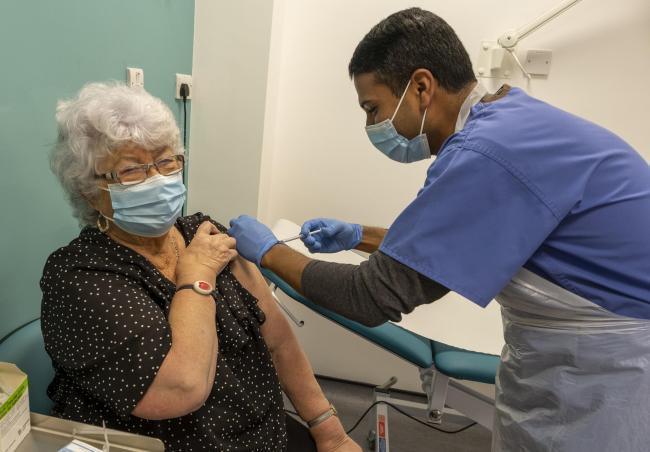
Dr Arun Mandepanda Thimmiah, a GP at the Abbey Road Surgery in Barrow, gives advice on health issues in his weekly column. This week, he addresses concerns people may have over whether their invite to receive a Covid-19 vaccine jab is genuine.

Unfortunately some people are using the Covid-19 vaccination programme in order to commit fraud.

The types of scams vary – some are trying to extract money, others are collecting personal information – so it’s really important to make sure you’re speaking to the right people.

In the UK, coronavirus  vaccines are only made available via the National Health Services of England, Northern Ireland, Wales and Scotland.

You can be contacted by the NHS, your employer, a GP surgery or a pharmacy local to you to receive your vaccine.

Remember, the vaccine is free of charge.

At no point will you be asked to pay.

n The NHS will never ask you for your bank account or card details.

n The NHS will never ask you for your PIN or banking password.

n The NHS will never arrive unannounced at your home to administer the vaccine.

n The NHS will never ask you to prove your identity by sending copies of personal documents such as your passport, driving licence, bills or pay slips.

n Occasionally your local vaccine centre may ring you from a list provided by your GP surgery if you are in the group being invited to receive the vaccine at the end of the session in order to avoid wastage of vaccines.

If you have any doubts as to the caller’s authenticity, ask which organisation they are calling from, then hang up the phone and dial the official number for that organisation.

You will not miss out on your vaccine by doing so.

Please be aware that fraudsters do ‘spoof’ numbers – the number you see on your screen may not be the number that is calling you – and NHS call handlers will NOT ask you to check the number that appears on your screen; this is a common way for fraudsters to appear as legitimate callers.

source: http://www.nwemail.co.uk / The Mail / Home> News / by Dan Taylor, Senior Reporter / February 20th, 2021

Meet Dubai’s Brazilian coffee queen

Maria Eduarda Becker Pavani establishes specialty roastery in the UAE

Eight years in the UAE are all that were required for Brazilian coffee specialist Maria Eduarda Becker Pavani to establish a thriving roastery and bean business, supplying this country and beyond with South America’s delicious aromas adding to the already vibrant café scene. Tres Marias is the latest gourmet coffee brand sweeping the nation.

Maria’s first encounter with specialty coffee was working at Café Cultura, a leading special coffee house in Brazil which sparked a quest to gather more knowledge on the industry. A graduate of marketing, she has since furthered her education to become a Specialty Coffee Association Trainer, a sensory judge for barista championships and a Q Arabica Grader: a certification that only 10,000 people in the world hold.

Maria moved to Dubai in 2013 to work as a barista in a local five-star hotel and within three months was offered a job at the very first specialty coffee roastery in the region where she was exposed to the growing market of specialty coffee in the Middle East. Following this opportunity, she was offered a partnership deal where she set up and developed Tres Marias from scratch. We caught up with Maria to find out more.

How discerning do you find the UAE market when it comes to coffee?

It’s amazing to see how people here are passionate about their coffee, and will go above and beyond to find the perfect cup. It did cross my mind to set up in Europe, but Dubai is such an amazing city to live in.

How easy/difficult was it to set up the importation of beans from South America?

It is always a challenge to trade goods with countries in South America but with the help of my amazing team and the fact that I speak the language, we’ve been able to streamline the process. The major challenges however are the time difference and how fast paced it gets.

Your roastery is based in Jebel Ali?

Tres Marias Coffee is based out of the DMCC Coffee Centre, a beautiful and professional coffee facility with the best coffee equipment available. We store our green coffee inside the centre and utilise the roasting facilities to roast our beans, and the training room to run our Authorized Speciality Coffee Trainings. All our products are freshly roasted in the UAE and distributed from Jebel Ali.

What made you come up with the name Tres Marias?

As a Latina, I wanted to include an element of my origin in the name. Tres Marias in Portuguese or Spanish is the translation of the ‘Three Kings Stars’ on the constellation of Orion. I used this methaphor to believe that Tres Marias Coffee would be like the three stars: easy to recognise and distinguish.

Do you think people are becoming far more professional in their appreciation of coffee? How far is sustainability a core value of your company?

Definitely yes! One of the reasons Tres Marias Coffee is very focused on education is because we believe that the more educated our industry is, the easier it is for us to communicate the importance of good coffee. People worldwide are not only paying more attention to the coffee they drink, but also to who they give their money to. That’s why there is bigger support for local businesses. Since our inception, we’ve been paying close attention to sustainability. We started by selecting CO2 Neutral Packaging for our beans as well as compostable and biodegradable materials to our capsules and instant coffee.

Did you have any worry about branching into the instant coffee market?

When we started developing the product, I was 100 per cent focused on how we would become more accessible to speciality coffee lovers and simplifying the coffee making process. We created the product to solve a problem and we’ve been able to do that and stay true to our brand.

What are your plans for 2021?

We managed to create a solid system for our e-commerce, grow our team, expand our portfolio, operate our first retail space during the Ripe Markey (every Friday and Saturday in the Dubai Police Academy) and of course, keep ourselves healthy and well. We’re considering retail options and creating a wider range of productions for our clients.

source: http://www.khaleejtimes.com / Khaleej Times – City Times / Home> City Times> In the city / by David Light (david@khaleejtimes.com) / February 17th, 2021