Category Archives: World Opinion

Jwala Gutta and Ashwini Ponnappa recall the time they made badminton doubles history for India

Confidence steered Jwala and Ashwini, and in turn India, towards their first-ever doubles World Championship medal for badminton in 2011 at Wembley and kicked off a decade in which singles stars PV Sindhu and Saina Nehwal would follow the trailblazing duo onto the Worlds podiums every single Championship year.
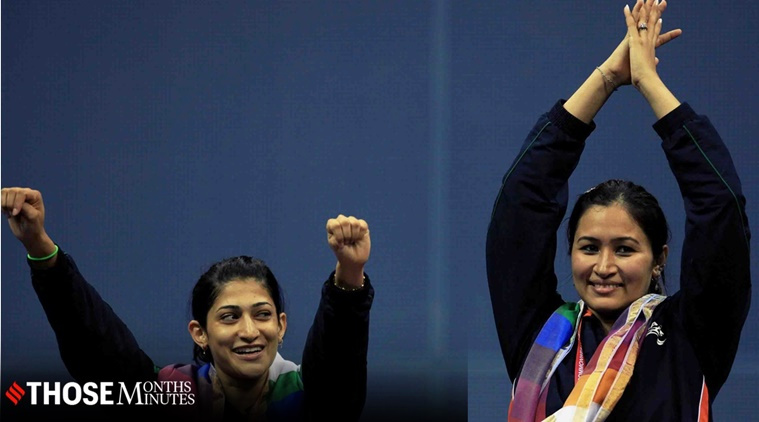
Jwala Gutta and Ashwini Ponnappa won their first-ever doubles World Championship medal for badminton in 2011 at Wembley (Source: PTI)

Everyone knows Jwala Gutta loves to fire the opening salvo. It comes entirely from her playing credo: “You can’t be a good doubles player if you can’t serve well.” The first shot sets the tone.

After she split with Shruthi Kurien at the start of 2009, Jwala was scouting around for potential partners to play with. Her mixed doubles career with V Diju was going swimmingly well as they’d beaten the Korean World No. 1s that year and entered the Top 10.

But before she zeroed in on Ashwini Ponnappa, she sprung a thunderbolt on her mother by almost sending the daughter-mother entry for the Nationals that year. Her mother ticked the only box that Jwala sniffed around for, when deciding partners: “I didn’t really have to think a lot. Mom’s serve was very good.” Jwala knew she could mop up the rest.

This confidence steered Jwala and Ashwini, and in turn India, towards their first-ever doubles World Championship medal for badminton in 2011 at Wembley in London, and kicked off a decade in which singles stars PV Sindhu and Saina Nehwal would follow the trailblazing duo onto the Worlds podiums every single Championship year. Jwala-Ashwini’s was the first medal since Prakash Padukone won in the 1980s.

“When I decided to play with Ashwini, she wasn’t even a Top 4 in India. I just saw in her that no fear of losing, and knew I could mentor her,” Jwala says.
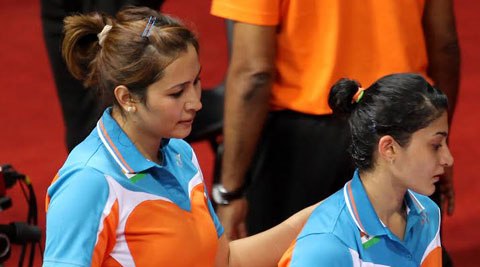
Ashwini wasn’t pickled in the ways of doubles, where plenty of mental disintegration gets induced. (Source: Express Photo by Ravi Kanojia)

Doubles was Jwala’s battlefield where she needed only an ally. “I really could combine well with anyone – Diju of course, Chetan, Vidyadhar, Gopi also, Shruthi,” she explains. “Only this – the partner should be able to serve properly.”

So when a friend and batchmate pointed out the whiplashing Ashwini to her at the nationals, Jwala wasn’t distracted by what was Ashwini’s very-noticeable big booming smash. “My friend told me – she smashes really hard. I immediately asked, but how’s her serve. I don’t care about the smash as long as it’s hit at the right time and right place. I’m not bothered by how hard she hits. I watched her at the start of the rally – her serve was fine. She was still young.” The pair was good to go.

More than callow, Ashwini – a fearless, formidable, free-spirited hitter – wasn’t pickled in the ways of doubles, where plenty of mental disintegration gets induced.

“At the start of the rally, that’s where you put pressure on the opponents. Top pairs understand the importance of a good serve that opponents struggle to return. I always got my points when I served well,” Jwala says.

Those incisive all-noticing eyes analysed the scene before her like a computer processor when Jwala served.

“I was observant even as a junior. Where is the receiver’s foot facing? How’s he holding the racquet? Which weakness must I attack….” there were a dozen cues that Jwala would factor in when she set out to serve.

Ashwini reckons they combined seamlessly and beyond the obvious advantage of being a left-right combo.

“She had a great serve. And I focused on what I had to do,” Ashwini says. A part of the reassurance that Ashwini brought to the court for Jwala came from Ashwini’s unalloyed conviction in her own smash. Polite and always soft-spoken, Ashwini though takes blazing pride in her smashing where the hissing thwack could well be pronounced as “but of course”.

The bite to the smash comes from Ashwini’s total rejection of breaking it down. The Ashwini smash is just one Macbethian uninterrupted striking down of the axe in one fell swoop.

At the start of this decade, the young and agile Ashwini could rain down 15-20 smashes one after another. She didn’t just eschew nuance in that shot – she chewed and spat out violently any notions of prettying up her whippy welt.

“I just know one smash – that’s my smash,” she says with rare curtness, if one asks her to dissect her favourite flogging action with a badminton racquet. “There’s very little touches there,” she says shredding all pretensions to artistry. “It’s like a hockey whack,” the proud Coorgi raises the violence meter, “it’s a lot about power and just doing it. No thinking. When I’m smashing well, I’m just flying on court.” It’s never not good – the Ashwini smash.

“I’m not apprehensive about what’ll happen after I smash. I’m not scared of losing.”

Out of this fiery pair of prides – Jwala: unquestionable of her serve and Ashwini: unrepentant of her smash – was forged India’s first and hitherto only doubles medal in the World Championship.

But first came the dazzling of Delhi.

***
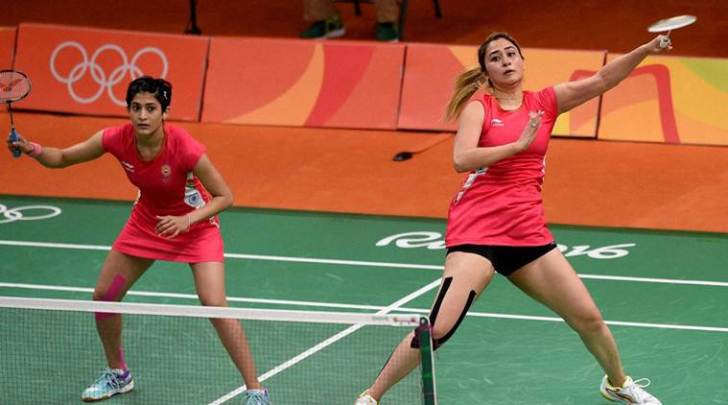
Jwala Gutta and Ashwini paired for the first time together in 2009. (Source: PTI)

When they got together in 2009, India was racing towards hosting of the 2010 Commonwealth Games, an event that singlehandedly provided the impetus to unearth and groom a bunch of medallists across sports.

The budgeting had changed immediately after the 2006 bronze at the Melbourne CWG, four years after India lost the team bronze in Manchester. “Melbourne was our first mixed team medal. It put us in the ‘A’ list of priority sports. Exposure trips increased from 2008-9 to prepare for the CWG. Dedicated doubles training started and I was on the court nearly 8-9 hours a day morning and evening,” Jwala recalls.

In came the Indonesian Master Shifu, Indonesian Atik Jauhari, who smiled compulsively and cracked the whip in training with even more gnashing teeth. “He brought in positivity and believed in me,” Jwala says.

Her frequent disagreements with coach Pullela Gopichand over how much to train and how much to compete (an intractable problem that persists with players to this day), had unsettled her from the task at hand though she and Diju emerged as the cleverest pairing on the circuit in 2009 when they made the year-end Super Series Finals. “We’d won Chinese Taipei and Bitburger. But the whole perception changed after CWG for badminton and I was happy to be part of it,” she says.

Though it started with a bout of sneezing and allergy as Delhi’s dust and heat got to her that October, and she was bed-ridden. But the Commonwealth Games had been a jet booster to many Indian athletes, who revelled in being prioritised and taken care of for the first time ever.

“For the first time, I’d play in front of my family because they couldn’t afford to travel. I really enjoyed playing on home turf in front of my parents,” Jwala remembers. The belief translated into India’s 33rd gold that helped the hosts level with England on the medal tally.

Jwala had played on all 12 days without a break in front of a packed Siri Fort. “You could hardly hear the shuttle, I told Ashwini ‘let’s just focus on the next point’.”

Like her serve, Jwala tends to look ahead only at Round 1 of any tournament. No muddling the head with conjectures of a semi-final. “That’s a stupid way of looking at tournaments. Always only focus on the next point,” she bosses. Jwala also always fronted the media even when she lost, never disappearing from the backdoor and remained aggressive and animated on and off the court.

The surge took the Indian pair past the Malaysian top team and then she combined with Diju to secure India’s first win over the top English pairing which had Nathan Robertson, till then unsurmountable.

She addresses a long-pending allegation over her questionable fitness – as combatively as ever. “If I wasn’t fit, I wouldn’t have dominated. Yes, I don’t have the athletic body type, but you don’t have to look muscular to be able to hit,” roars the southpaw. “People said I was a slow mover. But i was really tall. I didn’t need to scramble!” she says.

Accustomed to questions being thrown at her because both Diju and a yet inexperienced Ashwini remained soft-spoken, Jwala gleefully stabbed at questions while speaking her mind unfettered.

The gentleness and bottomless patience she reserved for the only one who she believed deserved it: her younger partner Ashwini.

“Not just on court, I decided to take her along through the whole media-training-competing routine. I never referred to any situation as ‘you’ or ‘me’. It was ;us’” always. I’d patiently correct her strokes by telling her not to take stress and be fearless always,” Jwala remembers.

Ashwini was soaking it all up like a sponge. “The programme was structured with coach Atik and specialised coaching. And the 2010 win was a miracle booster. It was our biggest win as a pair,” Ashwini says.
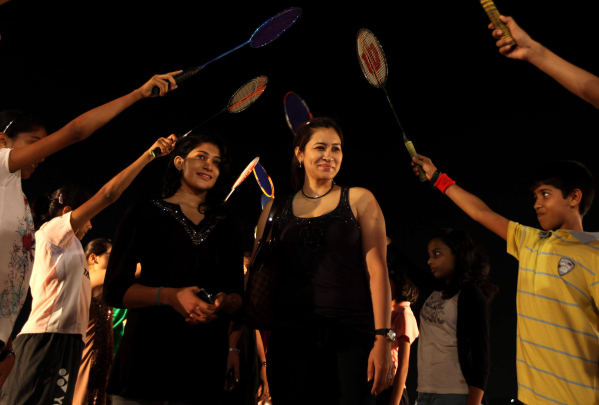
Jwala Gutta and Ashwini Ponnappa at a felicitation program of Badminton 45 Silver Jubilee at Bombay Gymkhana (Express photo by Prashant Nadkar)

It was the beginning of Ashwini learning a very important drill from Jwala, something that suited her own unhassled temperament. “I remember starting this at the Sudirman Cup where I could really switch on and switch off. We’d do well in a match and relax,” she recalls of the thriller against the Thais that the Indians won 21-19 in the third. Indian doubles was taking its infant steps and Ashwini remembers learning something as basic as where to stand on court and what worked and what didn’t. In the lead-up to the Korean Open that year, Jwala-Ashwini had eked out a 22-20 in the decider against Hong Kong and another confidence-enhancing three-game win against the Japanese.

London was only the pair’s second World Championship together and they’d strung up some good results at the French Open in the run-up. Her trainer Declan had travelled that year and Ashwini recalls a rare time when playing well coincided with having fun. “Sometimes you don’t enjoy the journey and the wins and losses don’t matter. But I remember being able to switch off the pressure and just having a lot of fun playing that one. I loved being in the stadium,” she says of a happier time.

Declan not only put her mind at ease about recovery but also pointed out something that the painfully shy woman shrugged off like a jumper.

“Declan told me I should not look down on the floor and always walk with chin up and head high. I remember doing it all consciously and how it helped my confidence and I walked tall,” Ashwini remembers.

The fidgety nervousness that comes with being impatient on court and in finishing points (botching them) was left behind at home, as Ashwini distinctly recalls walking slowly and calmly on court and not scurrying about cluelessly.

The Indians started against the Americans where Wembley’s unique atmosphere had to be internalised. “It’s a different atmosphere at Wembley because the crowd there is always blackened out so the spotlight is on the shuttle. Courts tend to appear brighter and you have to adjust to the visibility,” Jwala recalls. Indians would win 9, 18 against the Americans.

Unseeded and running into World No. 2 was familiar as was being pipped in the opener 21-19 – the result against Room Lok Yan and Tse Ying Suet, wasn’t. “We were prepared because their serves weren’t as good though they were good at defence,” Jwala sensed her opportunity to pounce. “Even after losing the first game, I was confident.” They won 19-21, 21-10, 21-17.
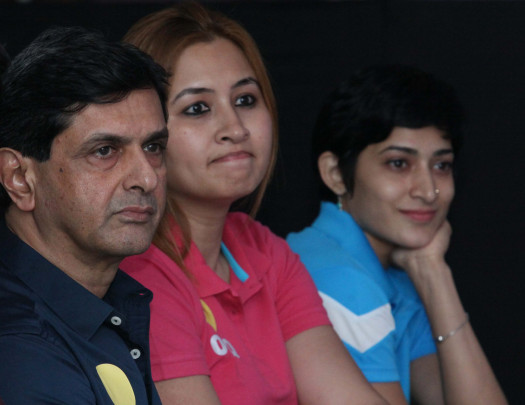
Jwala-Ashwini’s was the first medal since Prakash Padukone won in the 1980s. (Express Photo by Vasant Prabhu)

Up next were the Indonesians who seemed to have taken the Indians lightly and combined that with their own iffy confidence levels. Jwala is quick to acknowledge that Vita Marissa is a bit of a mixed doubles legend, but on the brink of her retirement and a reputation to guard, the Indonesian was under pressure.

It wouldn’t have helped her that Jwala had x-rayed her defence down: “On the brink of retirement, Vita wasn’t a great mover. She could smash hard but couldn’t hit as many times. Tiring her out was the plan.”

Feeding her drops bringing her to the net, the weakening limbs and the under-confidence saw Jwala preying on her tiredness. And while Ashwini peppered her from the back with smashes, Jwala would use the big boomer to soften her for a further bag of deceptions: her wicked serve.

The garden variety backhand serves in doubles don’t offer much variety for the Serve Queen. “Vita not being confident enough to return my serve made me even more adventurous.

“Even the low serves have variety. There are 5-6 variations even to that width so you keep opponents guessing,” Jwala says with glee of a web she weaves at the outset that eclipses the rest of the rally. Her antennae were buzzing even as Ashwini had to stay in front because the shuttle was coming back very fast.

Typically, Jwala takes 2-3 rallies to get a complete read on her opponent: “I focus on movements. I just remember how I lost my last point. If I win a point, I try to win on the same strategy. But you can’t think too much or brood over a lost point.”

Receiver’s styles got 3D imprinted on her mind, and her superior anticipation that afforded just 2-3 chances even when she played singles, helped her give clear succinct serving instructions to Ashwini. The Indian duo chipped away at the 17-21 first set reversal for a 17-21, 21-10, 21-17 win.

She remembers feeling a shiver of excitement on the podium thinking of her parents. “I showed emotion that day though after reaching semis, where we were assured of the medal, we did nothing unusual. Same things – though we might have eaten at a Chinese restaurant.” After the semis against the Chinese including the legend Zhao Yunlei was lost – 14, 16, it struck her that something historic had been achieved by the really unheralded pairing.

Ashwini remembers a happy time. “We dealt with pressure well against the Indonesians and knew we had created history because only Prakash Sir had a Worlds medal before us from India. Always being compared to singles used to be maddening,” she laughs.

She doesn’t remember any rancour associated with the Worlds medal. “We were in a good space. We had good meals, we laughed a lot,” she says.
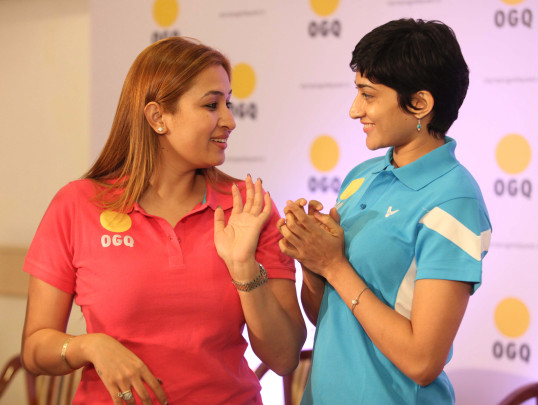
Reactions to Jwala-Ashwini’s World medal were underwhelming. (Express Photo by Vasant Prabhu)

Reactions in India were underwhelming – the duo reckon out of ignorance. “There was no reception and now I think that was strange. Later, the way Sindhu was received was wow. Ours was no big deal for anyone. There were no questions about why doubles wasn’t doing well, so no celebration of when we did well either,” she says.

Ashwini says the bronze ought to be put into perspective. “Maybe, doubles was not as decorated as singles. But ours was historic, right? The first one for women. Kids can look up to us. If you’re comparing, we had little support, no endorsements. But not being received when we came back hurt a little.”

Doubles itself changed a lot – faster and tougher to get points. “We worked hard, nobody can fault us on effort. We were smart on court. We played quite often to prove ourselves in what weren’t the easiest of times,” she says.

It was when her support system – parents, brother, then boyfriend-now husband huddled around her. “Getting into the zone was tough playing doubles back then. We would get bogged down with one loss. And people would be questioning us. I’m grateful my family understood what I was going through,” she says. One of the reasons the medal sits in her parents’ home.

Finding an oasis of good form, a good vibe and success amidst the storm became doubly challenging when London itself threw up one giant tantrum. “There were riots raging in London that time. It used to be an adventure just going to the stadium. They started after we landed. We would go under shuttered restaurants for our meals. We even got out once through the backdoor. Having never been in such a situation, it was erm… different,” Ashwini says. Young and adventurous, they even afforded themselves a tingling of excitement finding beauty in breakdown.

Jwala remembers an incident opposite Wembley. “We witnessed some rioting from across the street. It was quite disturbing. But you know what happens right in such situations – after every match, we would just forget about the match, look for food, enjoy every morsel and be grateful for the basics. So effectively, we didn’t let a win settle into our system. We hardly discussed the match. It was about playing – going to a nice place to eat – walking a lot and only ensuring we were safe.” In other words, living in the moment – with all its warts and all.

A year on, London would give Jwala-Ashwini another heartbreak at the Olympics. “It was unfair and disappointing that some teams tried to fix the draws and jeopardised our chances. We had gone there well prepared. But that Japan / India / Chinese Taipei situation – it was just sad.”

It’s a scab best reserved for dark moments. But London for Ashwini will always be about India’s least-known World Championship medal and finding her heroic moment of glory and pride amidst chaos of the famous city up in flames. They can almost remember it all in slow motion, such was the drama of the bronze that came out of fire.

source: http://www.indianexpress.com / The Indian Express / Home> Sports> Badminton / by Shivani Naik / June 25th, 2020
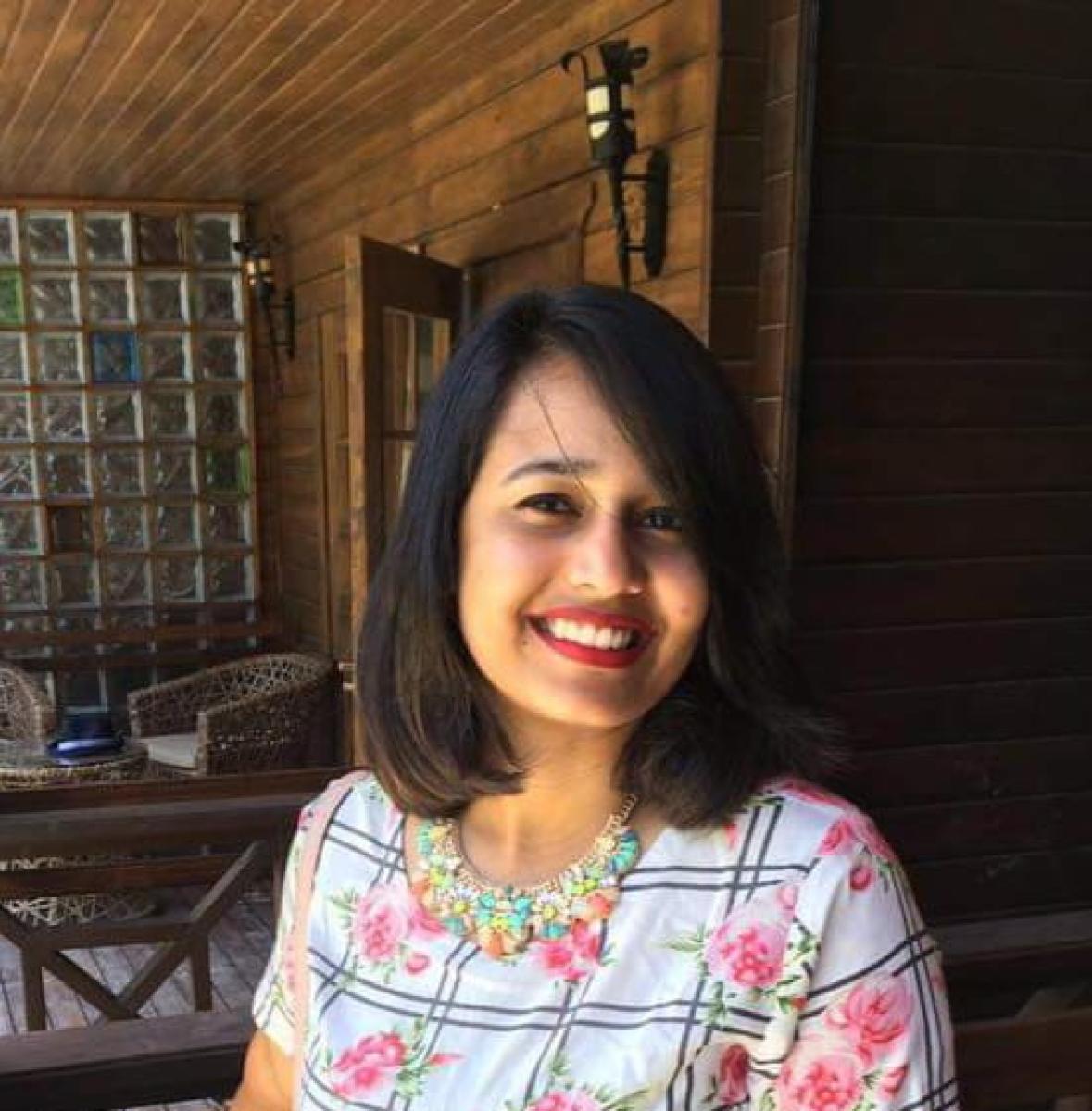

Kodagu-origin doc part of team doing research on Covid vaccine

DrAfreenMPOs19jun2020

Dr Afreen Amir, a native of Kodagu, is now part of a research team in London that is already working towards finding a vaccine for Covid-19 pandemic.The research team has been researching on ‘Dexamethasone’, a steroid, which has given a new hope by possibly being a potent vaccine against the Covid-19.

After completing her MBBS in Mangaluru, Dr Afreen pursued her higher education in London and has been working as a doctor there. Her husband Mushir too, is a doctor in London. Afreen’s father S I Amiruddin is currently based in Dubai. He is the elder brother of Kodagu Zilla Janapada Parishat General Secretary Munir Ahmed.

“Afreen completed her SSLC from St Joseph School in Madikeri. She had emerged as the second topper in the district, in the Class 10 board exams. Currently, she is one of the seven experts who are working on the Covid-19 vaccine in London. She always had an inclination towards research in medicine”, Munir Ahmed said.

‘Dexamethasone’, the possible vaccine for the Covid-19, has been subjected to laboratory experiments. The researchers are of the opinion that with the use of the Dexamethasone, about one third of the death rate of the Covid-19 patients can been reduced. A report in this regard is expected to be out soon.

source: http://www.deccanherald.com / Deccan Herald / Home> State> Mangaluru / by DHNS, Madikeri / June 19th, 2020

Rudresh Mahanthappa – ‘Hero Trio’ (2020)

When Rudresh Mahanthappa recorded Bird Calls, the alto saxophonist wanted to pay tribute to one of his heroes who was probably the greatest alto saxophonist of all time, but he didn’t want to make a straight-up Charlie Parker covers record. Instead, he re-cast Parker tunes to the extent that they became Mahanthappa originals. Five years later, he crosses completely over into playing covers of Parker and other sources for his inspiration.

Hero Trio is that ‘all-covers’ record, which is about the only thing this boundary-pushing composer, bandleader and ace reedman hadn’t yet attempted in one of the most creative jazz careers since the turn of the 21st century. And far from being just an exercise in his interpretive skills (which are unique and stimulating), here is a large window into what makes Rudresh Mahanthappa tick, what lights his fire, what shaped him into the artist he is today. It reaches across generations and genres, but ‘Bird’ still looms large.

The Hero Trio band is a pared down version of the quintet that made Bird Calls. Drummer Rudy Royston and Mahanthappa’s longtime acoustic bassist François Moutin are all who’s needed for Mahanthappa to flesh out these songs in meaningful ways because the saxophonist is so good at fully sketching out the melody and harmony of a song without chordal support and his rhythm section is so good at taking these songs into fresh new places.

“Red Cross” is what I’d call the track that perfectly bridges us from Bird Calls to Hero Trio, mainly because it’s a Charlie Parker song. The trio puts its own stamp on the tune, never fully playing out the head before diving into improv and there’s even a new bridge. “Barbados/26-2” has a funky interlude tacked on front and only after that is done we hear Parker’s 12-bar blues. Moutin gets first dibs on soloing, and when Rudresh Mahanthappa does his thing next, he stretches bebop out to its logical limits. From there, the trio transitions into John Coltrane’s “26-2”, where Trane did what Mahanthappa did on Bird Calls and built a song around the chord changes of Parker’s “Confirmation,” but that, too, is puckish and livelier than the original.

There are other vintage jazz standards on Hero Trio and none of these are treated in ways they’ve been treated ever before. For instance, Mahanthappa chose “I’ll Remember April” because he was thinking about Sonny Rollins’ performance of it on Live at the Village Vanguard from 1957 as well as Lee Konitz’s 1961 rendition. But it’s hard not to notice the crazy, contemporary rhythm Moutin and Royston keeps slipping underneath it and at one point they spill over into the leader’s space. It sounds like irresistible fun, and they do it again for yet one more Parker classic, “Dewey Square.” For an anguished take on “I Can’t Get Started,” Moutin devises a bass line that matches Mahanthappa’s sentiment instead of Vernon Duke’s melody and Royston plays to the mood as well.

A couple of jazz songs from the post-bop era show up in creative renderings. For Keith Jarrett’s 70s tune “The Windup,” Moutin undertakes Jarrett’s role in the song while Mahanthappa is playing Jan Garbarek. Moutin later is fast, dexterous and lyrical for his aside. Moutin saws with sorrow just as David Izenzon did on Ornette Coleman’s “Sadness”, and Mahanthappa wavers his notes perfectly just as Coleman did but still within his own language.

The Hero Trio finds ways to liven up old and familiar songs outside the realm of jazz, too. Rudresh Mahanthappa covers all the harmonic touch points of Stevie Wonder’s “Overjoyed” so that there’s no mistaken what song this is, but judiciously avoids adding unnecessary notes that would clutter it up. Mahanthappa exploits the phrasing irregularities in the Johnny Cash hit “Ring of Fire” as a springboard for freedom. Plus, it’s a great melody, a common trait of all of the songs chosen for this album.

Just because Rudresh Mahanthappa took a break from composing for this project doesn’t mean he took a break from creating. Hero Trio has just as many delightful surprises and audacious musicianship as any other Mahanthappa record.

Hero Trio will release on June 19, 2020 from Whirlwind Recordings.

source: http://www.somethingelsereview.com / Some Thing Else ‘ / by S Victor Aaron / June 11th, 2020

Kodava Koota Of North America To Award Scholarship To Meritorious Kodava Students Studying In India

Mysore/Mysuru:

The Kodava Koota of North America has instituted a scholarship for the year 2020 to recognise and reward meritorious Kodava students studying in India.

Kodava Koota is a non-profit organisation founded in 2017 by like-minded Kodavas living in North America under the leadership of Gina Konganda, an entrepreneur based out of Dallas, Texas. She constituted a Board of 8 members (Appachu Ballachanda, Phoenix, AZ – Vice-President, Appanna Chottera, New Jersey – Secretary, Avinash Chottangada, Atlanta, GA – Treasurer, Nithan Monnanda, Philadelphia, PA – Kodagu Initiatives, Nalini Kuliyakanda, Goldsboro, NC – Culture and Traditions, Priya Pattada, San Francisco, CA – Membership and Subbaiah Cherumandanda, Los Angeles, CA – Career and Entrepreneurship), who are undertaking several initiatives both in North America and Kodagu.

In the year 2020, Kodava Koota is institutionalising multiple scholarships amounting to $10,000 (about Rs.7.5 lakh) for Kodava students in India. Kodava Koota has allocated $3,000 (about Rs. 2.2 lakh) from its membership fund and one of its members Jyothi and Pavan Pattada have donated $7,000 (about Rs. 5.3 lakh) for this initiative.

The objective of this initiative is to encourage Kodava students and reward them with scholarships as a token of appreciation towards their accomplishments and encourage other students to follow suit.

CATEGORIES: Medicine Studies (2 students pursuing under-graduate or post-graduate); Ph.D (1 pursuing Ph.D in the area of Science, Engineering or Technology); Engineering (2 under-graduate or post-graduates); Dental Sciences (1 under-graduate or post-graduate); Agricultural Science (1 under-graduate or post-graduate) and 2 students pursuing Master’s in Science and Mathematics.

ELIGIBILITY: Kodava students studying anywhere in India are eligible to apply for these scholarships. Awards will be adjudicated by Kodava Koota Board or a Committee constituted by it. The scholarships will be administered through its partners Coorg Education Fund (coorgeducationfund.com).

LAST DATE TO APPLY: Applications should reach Kodava Koota before July 31, 2020. Signature and seal of the educational institution is mandatory on the supporting documents like marks cards and letter of recommendation.

Students who are going to start 1st year of the course in 2020 are eligible to apply but will have to attach documents that confirm admission in addition to Grade 12 (or 2nd PUC marks sheet); First year students of courses like MBBS, BDS, BE where CET/NEET are applicable, applicants should upload a copy of the CET/NEET allotment order.

Fill the application forms and upload the supporting documents via: https://forms.gle/jcxPQDJMBZiNhJrQA

For more details, reach out to: kodavakoota.na@gmail.com or coorgedufund@gmail.com, according to a press release from the Kodava Koota.

source: http://www.starofmysore.com / Star of Mysore / Home> News / June 12th, 2020

Corona Chronicles

LakshmiKF31may2020

I have a confession to make: secretly, I was kinda happy when India went into a total lockdown on March 25. Come on, I was feeling only what your average overworked, stressed out middle-class working woman felt. The disease was bad, but I was happy to take my staycation.

But I was not going to laze through 21 days. I had plans – house cleaning, writing, being the light of my family, getting lighter … all that good stuff.

Day 1: Woke up with a sense of awe. We were witnessing history! Realized that there was no newspaper. Worse, no housemaid. For 21 days. An icy hand clutches my internal organs. A week, I can get by, but three weeks?

Upside: Had a nice long nap in the afternoon. Felt really rested.

Day 2: My mother was absolutely right – housework never ends. No point in slaving, you have to do it all over again … in an hour’s time. New rule: no one allowed to walk on the floor or change clothes. And if anyone wants to eat the rice, sambhar, rasam, veg fry, and curds, they could use their fingers and palms only – no plates allowed.

Upside: Have started watching re-runs of re-runs old shows.

Day 3: A day of realizations.

My neighbor’s baby has colic. My neighbor has a baby. Really? Just exactly, who is this neighbor?
A family that stays at home eats too much. I have to cook often and in large quantities. Ergo, more dishes. Aaarrrrgggh!
Love my family. I just don’t want them around all the time.
Eating healthy when confined to the home – an oxymoron. Also, how long will my stash of snacks hold out
Upside: Discovering the joys of binge-watching.

Day 4: I hate housework. I-HATE-HOUSEWORK. Once this lockdown is over, I’ll burn the house down. Finding it hard to binge-watch Friends and Big Bang Theory while wondering – ‘Who the h**l is doing their dishes and cleaning their apartments when they are at that d***n coffee shop or the Cheesecake Factory?’ This thought sucks the fun out of watching the shows.

Upside: Begun reading a book … more than a page at a time!

Day 5: Going to commit murder. A man in the next building keeps singing off-key and loudly along with his stereo. Hoping his family will do him in themselves. If they can’t, I volunteer.

Hearing about immigrants in cities trying to go home. Terribly sad for them. Okay, I’ll admit – my suffering is small potatoes. By the way, do I have enough potatoes?

Upside: Gave myself the day off. Read a wonderful thriller.

Day 6: Dying of housework. Wiping all the torches, electric lamps and burned out bulbs, even gas stove – but no genie. I now know who I love the most – the maid. If anyone offers to bring my maid back in return for my family … well, I guess that’ll never happen (sob).

Sick of Friends. For just how long did this show run?

Upside: Today, a resident set things up so that we get veggies and milk packets every morning. Yay!

Day 7: Today, my husband went out, as a volunteer for shopping for our apartment complex. I suspect he was just itching to get out of the house. When my hunter-gatherer returned from the mythical land called Outside, I made him give a step-by-step account of the entire half-hour trip. It took 45 minutes. A highlight of today.

Huge Upside: Husband took over the dishwashing duties.

Day mmm-hmm: Missed a few days of journaling. Hell, missed a few days of life – got my dates wrong. I cheered when I found we had a couple fewer days to go of the lockdown. I have gone from being merely grouchy to being depressed as well.

Upside: ?????

Day something or the other: Today, my husband got another chance to escape … needed salt! Bit down hard on a pillow and stay that way to prevent myself from asking him to buy a ton of snacks.

Day sometime-during-week-two: Am all weirded out. Vocabulary stunted as we use only the words Corona Virus, Covid-19, lockdown, self-quarantine, shut up, and how the hell should I know. Still hate housework, but we now have a truce going. I’ll sweep, but the corners have to fend for themselves. If my boss can’t deal with it, she can do the work herself. Oh, wait, I’m the boss. Dang it.

Upside: All of us are healthy. We are all home, we are together. Watching TV footage of all the migrant laborers trying to get home – heartbreaking. Hunger and uncertainty in the camps – scary. And sick people in overflowing hospitals and the deaths … at least we aren’t going through that.

Day end-of-week two: Identified new syndrome – Lockdown-Induced Writer’s Block. Wonder if people will still be interested in the same things post-COVID. Still can’t get over the unreality of the situation. Is this lockdown a waste of time, or the best idea ever?

The mood around town is strange too. Most people are taking it as a time to relax. Some are going out anyway, once or twice a day. There is some seriousness but it’s not all gloom and doom.

Summer is in full swing. The heat is killing. It’s enforcing the lockdown better than the fear of Coronavirus.

Upside: Birds are singing like gangbusters. We’re seeing bulbuls and parrots far more than before.

Week 3 beginning day-(Name starts with M or something like that): Conflicting feelings:

Happy because I’ve Corona eyes – dark circles are completely gone.

Upset, because I’ve Corona hair – shaggy and roots are showing.

Day Wed/Thurs. Week 3: Yay, only one more week to freedom. I am feeling far more upbeat than before.

April 15: India’s lockdown extended until May 3.

Hell, I’m putting all activities on hold as I concentrate on saving my sanity.

Good luck to you too!

Lakshmi Palecanda moved from Montana, USA, to Mysore, India, and inhabits a strange land somewhere in between the two. Having discovered sixteen years ago that writing was a good excuse to get out of doing chores, she still uses it.

source: http://www.indiacurrents.com / India Currents / Home / by Lakshmi Palecanda / May 20th, 2020

Still hitting the right notes

Bangalore boy and Indipop pioneer Biddu Appaiah, at 75, continues to groove to the beat of his own drum.

Biddu
Biddu

A guitar as a present on his 13th birthday set the wheels in motion for the youngster to chase his dream of “making it as a musician in the West”.

Now, all of 75, Bangalore boy Biddu Appaiah, one of the pioneers of disco and Indipop, with millions of records sold worldwide, continues to be counted among the top Indian music producers on the international scene. In fact, he was ranked 34 on British magazine NME’s ‘The 50 Greatest Ever Producers list’.

Today, Biddu can afford to take life easy, dividing his time between homes in London, Spain and India, but his journey to the top was no cakewalk. The pop icon formed a band, The Trojans, at 16 and played at the 3 Aces and small private parties in Bangalore. From then on, there was no looking back. After the group split, Biddu trained his sights on London, the home of rock-n-roll, Beatles and The Rolling Stones. His arduous journey in 1967 on a Haj ship to Mecca and then hitchhiking through the Middle East deserts is now legendary. In London, with just his clothes, his trusty guitar and a dream to make good music, the struggle continued, juggling odd jobs to earn his bread and butter until 1974, when his most recognisable production ‘Kung Fu Fighting’ with Carl Douglas, became a chartbuster.

Towards the late 70s, he collaborated with Tina Charles and soul legend Jimmy James, producing hits such as ‘Dance Little Lady’, ‘I Love to Love’, ‘Now is the time’ and others. All this and the Biddu Orchestra that produced instrumental sensations won him awards, including the Ivor Novello award, the British equivalent of the Grammys.

‘Made in India’

Biddu is also credited with writing the music for two notable movies — The Stud and The Bitch. In 1979, Indian actor-director Feroz Khan got Biddu to compose a track for his movie ‘Qurbani’ and ‘Aap Jaisa Koi’ sung by Pakistani teenager Nazia Hassan happened, again a mega hit of the era. Next, Biddu produced a disco album ‘Disco Deewane’ for HMV featuring Nazia with her brother Zoheb that became the largest selling pop album in Asian history, topping the charts in 14 countries.

In 1987, he scored a top hit in Japan for ‘The Look that Kills’ produced for Japanese singer Akina Nakamori. In the 80s, Biddu pioneered a new genre of Hindi music called Indipop, producing ‘Made in India’ with the velvety-voiced singer Alisha Chinai as well as with Shweta Shetty, Shaan, Sagarika and Sonu Nigam.

As the disco boom began fading in the late 80s and 90s, Biddu donned his writer’s hat, churning out three books. The first, ‘Made in India’, his autobiography published in 2010, an eminently readable book with his characteristic humour and honesty, was a bestseller. Next came ‘Curse of the Godman’ and ‘The Abundance of Nothing’, both set in India.

Interestingly, fans can still look forward to more music from the septuagenarian who is currently composing some new songs.

Excerpts from an interview:

You’ve been there done that. Any dreams yet to be fulfilled?

Career-wise, I am happy. I am going through my catalogue of 583 songs and picking half-a-dozen with a view to sending them to new, young singers of today. I am also working on a few new songs. I won’t produce them, but will get someone younger to do so.

Anything special for your 75th? What does this milestone mean to you?

As I said, I am working on a few new compositions. As for the milestone, at 75 years of age, it is more like a millstone!

What’s life for Biddu these days?

Life today is all about breathing, which is one way of staying alive and spending time with the family.

You left India in your early 20s. Why were you so keen to leave India for the West?

I wanted to make it in the West. India in the 60s was a poor country; we were dancing with Russia instead of rocking with the West. I needed to get out of India as my interest was Western pop music; I was never into Bollywood. I left India and walked all the way to Beirut, singing there for six months until I saved enough moolah to get to England. However, I do come to India to see my sister and relatives. I spend a couple of months in Goa in the winter. But, to be brutally honest, I would never come back to live in India. The politics and corruption would kill me, if not the pollution and the chaotic traffic!

How do you see the music scene in India today?

Frankly, I do not know anything about the Indian music scene. I do know that making music in English has a narrow bandwidth (it always had) and from what people tell me regarding Indian film music, melody has given way to beats and rap. There’s not much noise about Indian music in the West. A R Rahman had a moment and Anoushka (Shankar) is fairly well-known, but only among world music aficionados.

Youtube, TikTok, Spotify, basically Internet has changed the game…

This is the way forward. It is the avenue from where young people get their music. We, of the older generation, may not like it or find downloading Apps too complicated, but this is modern life. You can’t stop the waves from hitting the shore.

Your message to young, budding artists who want to pursue a career in music?

Be prepared for a tough slog. The chances of you not making in the music business is considerably more than you making it. There’s so much talent around, but only a few lucky ones make it. It is a tough game.

Your stint as music director for a few Hollywood films was short. Why?

I prefer making records. Firstly, it’s on the go. It doesn’t take a year or years as the case may be. Also, in films, you are being told what to do by the script, the producer/director etc. When you make pop music, you are directed by your own desires; you are the master of your destiny.

Music has been a big part of your life. What has it taught you?

Music has been great for me. I was inspired by the Beatles and Elvis and I had this fire in the belly to make a name for myself in the West. It is this desire that drove me. Doing something you love is irreplaceable. It has shown me how lucky I am to have followed my dream and succeeded in it. Success is not just about talent, but luck and opportunity, although I believe sometimes you make your own luck.

What kind of music do you listen to?

I was never a voracious listener of music. In fact, it is well-known amongst my friends that I don’t have a music collection. I listen to the radio when driving; that keeps me up on the current trends in music. I am a big fan of Ed Sheeran — great voice and great songs.

source: http://www.deccanherald.com / Deccan Herald / Home> Sunday Herald> Sunday Herald Art & Culture / by Stanley Carvalho / May 31st, 2020

When Ian Selley Trains Kodagu’s Budding Footballers

IanSelley01KF22may2020

Kodagu is synonymous with hockey and the annual Kodava Hockey Festival is quite popular and a huge crowd-puller, providing a platform to budding players. In recent years, young sports enthusiasts from the district have also been showing interest in football too. As a result, many clubs have come up and have been organising tournaments to boost their interest in the game.

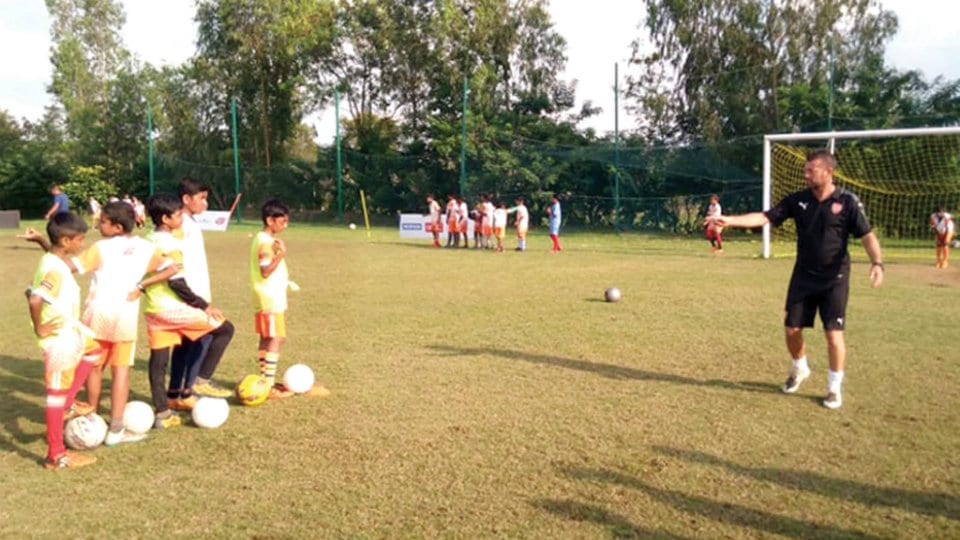
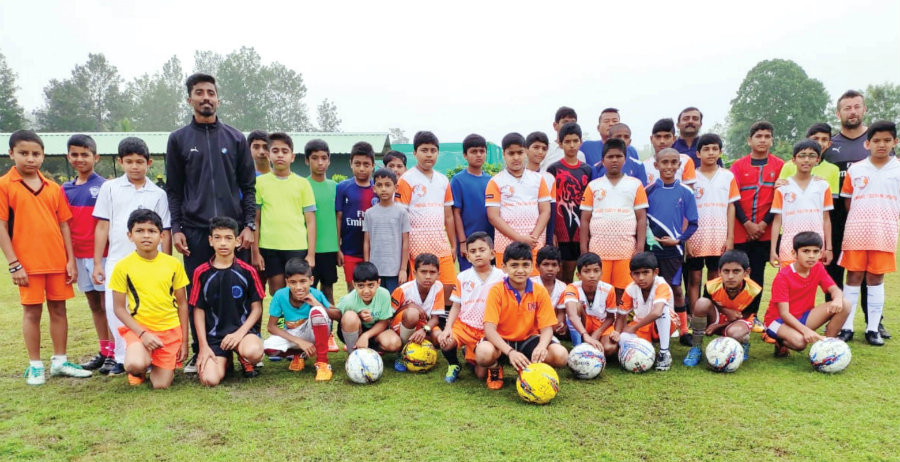
The INS (Ichettira Naren Subbaiah) Sports Centre at Kushalnagar that has now taken up the ambitious task of training young talents from the district, had recently organised a one-week coaching session with UK’s Arsenal football team coach and former England player Ian Selley.

Over 50 young football players from all over the district including Kushalnagar, Maragod, Suntikoppa, Murnad and Ammathi participated in the training session held at INS Centre at Guddehosur.

Free training

Even as the training session was conducted by Ian Selley, coaching classes too were provided free of cost to all students. INS Trustee Ponnappa said that Ian Selly’s remuneration and other expenses were incurred by the sponsors. The training, which was conducted up to 5 pm for six days, included special skill training and rules of the game.

IanSelley02KF22may2020

About Ian Selley

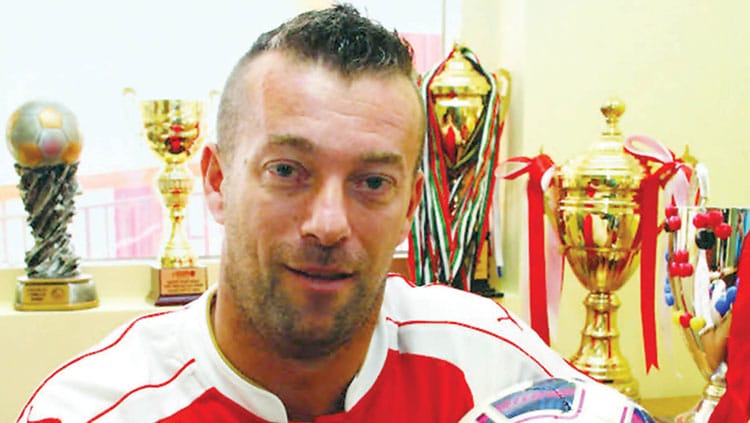
British footballer Ian Selley is an ex-player of Arsenal Football Club and has served as the head coach at the Arsenal Soccer School, Dubai. Ian was the youngest player to make it to the Arsenal senior team that won the FA Cup (Football Association Challenge Cup) and UEFA Cup (Union of European Football Associations Cup). He had just turned 18 years when he made it to the senior team.

This was Ian Selley’s first visit to India. The idea of bringing him here opened up opportunities for European clubs and also has given an indication to the European scouts about the potential available here. His visit also opens up avenues of invitation into prestigious youth football tournaments in Europe and football scholarship programmes for talented kids.

The INS Sports Centre is also working on identifying and grooming those players to be sent to UK. Organisers hope that such coaching programmes open up new avenues for young footballers. The entire camp was sponsored by INS Sports Centre, in association with sponsors.

Youngsters, who attended the training, appreciated the coaching style and discipline of Ian Selley. Ian’s eyes welled up before he left after he witnessed his life-size image on the walls of INS Sports Centre displayed as a thanksgiving gesture. He promised to visit Kodagu again and help train footballers of this province as it holds a special place in his heart.

In memory of their late son

Naren, son of Ichettira Subbaiah, was a good footballer and his parents had many dreams about their son’s future. But their dreams were shattered as Naren was killed in an accident a few years ago.

To keep his memory alive, his parents decided to take up some meaningful project in their hometown and thus INS Sports Centre was born. Subbaiah, along with their other son, Ponnappa started shuttle badminton, cricket and football coaching at the INS Centre.

IanSelley03KF22may2020

No difference between players: Ian Selley

Sharing his experience in Kodagu, Ian Selley said that there is no difference between Indian and foreign players. “Except for language barrier as a few students struggled to understand English, the training session was fruitful and all youngsters seemed to have learnt a lot,” he said. For April next year, Ian has invited five talented children to UK to participate in matches along with young European football counterparts.

source: http://www.starofmysore.com / Star of Mysore / Home> Sports / October 14th, 2019

Field Marshal KM Cariappa 27th Death Anniversary: Lesser-Known Facts About The First Commander-in-Chief of Indian Army

Field Marshal KM Cariappa (Photo Credits: indianarmy.nic.in)

It is the 27th death anniversary of Field Marshal KM Cariappa on May 15 this year. He was the first Indian Commander-in-Chief of the Indian Army in Independent India. KM Cariappa is widely regarded as one of the most-decorated Indian Army officers of all times. There’s a lot to know when it comes to his life and achievements of his illustrious military career. If you are looking for interesting facts about Lt Gen KM Cariappa, his life, career, etc., then you have to come to the right place. We, at LatestLY, bring you some of the lesser-known facts about General Cariappa as we observe his 27th death anniversary.

1. KM Cariappa was born in a family of farmers, on January 28, in 1899, in Coorg. Not many people know that his childhood pet name was ‘Chimma’.

2. During his college days around 1917, he came to know about the Indian Army’s recruitment exercise. KM Cariappa was one of the 42 applicants out of 70 who were selected. The rest, they say, is history.

3. In 1925, KM Cariappa was sent on a world tour, where he came across a lot of foreign cultures, soldiers, and public. He was nicknamed ‘Kipper’ by a wife of a British officer who couldn’t pronounce his name.

4. In 1942, when he was promoted as the acting lieutenant colonel and the commanding officer of 7th Rajput Machine Gun Battalion, KM Cariappa became the first Indian to do so, in the Indian Army.

5. In the same year, i.e. 1945, he was promoted to the post of Brigadier. This made KM Cariappa the first Indian officer to fully attain this rank.

6. Not many people know that KM Cariappa was the officer-in-charge of the division of Army and its assets during the time of India’s independence in 1947.

7. During the First Indo-Pakistani War 1947-48, when the Indian Army HQ had strictly instructed to not conduct any operation in the Kashmir Valley, KM Cariappa didn’t obey the orders and instead launched offensive strikes in the region. The result of it was that India was able to assert its control over Ladakh and nearby regions.

8. In 1949, when Indian Army had to appoint the first Indian Commander-in-Chief (C-in-C), there were two other contenders, i.e., Shringanesh and Nathu Singh, along with KM Cariappa, who was in contention too. However, it was KM Cariappa who eventually took over as the first Indian C-in-C of independent Indian Army.

9. It is a little-known fact that the phrase ‘Jai Hind’, which was the slogan of Subash Chandra Bose-led Indian National Army (INA), was adopted by KM Cariappa, and has since then been the formal phrase to greet each other in the armed forces.

10. KM Cariappa retired from the post of Commander-in-Chief in 1953, after serving the position for 4 years.

11. Not many people know that he has also served as the Indian High Commissioner to Australia, New Zealand, after his retirement, until 1956.

12. KM Cariappa was also honoured with the Legion of Merit by American President Harry S Truman – one of the rare feats.

13. After being persuaded a lot by his friends and family members, KM Cariappa also tried his luck in politics. In 1957 Lok Sabha Elections, he contested unsuccessfully from North-east Bombay seat, against Krishna Menon.

14. In 1986, the government conferred the rank of Field Marshal on KM Cariappa as a mark of honour and recognition of his illustrious career spanning over three decades. He, along with Field Marshal Sam Manekshaw, are the only people who have been accorded this honour, till date.

15. As per a legend, when his son, KC Cariappa was captured as a prisoner-of-war (POW) in the Indo-Pakistani War 1965, KM Cariappa was contacted by Pakistani General Ayub Khan informing him about his son’s safety, and even offered his release. However, KM Cariappa proudly replied, “He is my son no longer. He is the child of this country, a soldier fighting for his motherland like a true patriot. My many thanks for your kind gesture, but I request you to release all or release none. Give him no special treatment.”

KM Cariappa breathed his last on May 15, 1993. After suffering from arthritis and heart problems, he died in his sleep at Bangalore Command Hospital. As India observes the 27th death anniversary of the decorated soldier of the Indian Army, we at LatestLY, thank KM Cariappa enough for his selfless services, and wish his soul rests in peace!

source: http://www.latestly.com / LatestLY / Home> Lifestyle> Festivals and Events / May 17th, 2020

Brainchild of hockey festival no more

Pandanda Kuttappa was conferred with the Karnataka Rajyotsava Award in 2015

Pandanda Kuttappa, the brainchild of the popular Kodava Hockey Festival, passed away at his residence here on Thursday. He was 85 and is survived by two daughters and a son.

Kuttappa, a former first-division hockey referee, conducted the inaugural tournament in 1997 with the help of his brother Pandanda Kashi Ponnappa. Through the tournament, Kuttappa aimed to bring all the Kodavas together under one roof and preserve the rich hockey culture of the district.

Held annually during April-May, the festival has grown to become the most popular event of the Kodavas. Since the first edition, which saw 60 teams competing, the meet has got only bigger. In 2017, with 323 teams participating, the festival entered entered the Limca Book of Records.

After its initial editions, the meet became a platform to unearth young talent as well. To groom the gifted players recognised in the Festival, Kuttappa, a retired State Bank of India manager, established the Kodava Hockey Academy.

“It’s sad day for hockey lovers,” said AB Subbaiah, the former India hockey goalkeeper, on Kuttappa’s demise “He has done a lot to the Festival. When he started this, he didn’t think it would become as famous as it is today. Full credit to his hard work,” said the former Olympian and coach, who is now the secretary general of Hockey Karnataka.

Subbaiah said with Kuttappa’s passing, the tournament will not be the same. “Kuttappa had only hockey in mind. Now with others to deal with, organising the event will not be free of challenges,” he said.

The Festival was a starting point of careers of India internationals Pradhan Somanna, Nikkin Thimmaiah and SK Uthappa. “We in Kodagu are fascinated by hockey. When I represented the country I thanked him (Kuttappa) for helping me achieve my dream,” said Nikkin.

“In all my interactions with him, he always told me that he wanted young players from Kodagu to go on and play for India. I owe my career to the Festival,” he added.

Last year, the tournament was cancelled due to the floods that ravaged Kodagu. The coronavirus outbreak forced the organisers to call off the meet this year. The Kulletira Cup was the last meet held under Kuttappa’s supervision in 2018.

Fondly known as ‘Kuttani’, he was conferred with the Karnataka Rajyotsava Award in 2015.

source: http://www.deccanherald.com / Deccan Herald / Home> Sports> Other Sports / by Vivek MV / DHNS, Bengaluru / May 07th, 2020

This Kuttappa was the Baahubali of Coorg hockey

Pandanda Kuttappa, legendary co-founder of Kodava Hockey Festival, is mourned by hockey lovers everywhere.

Pandanda Kuttappa
Pandanda Kuttappa

Coorg:

The world of hockey on Friday mourned an amazing man who promoted the game in Coorg by tapping into ethnic pride and kept it alive in the face of inroads made by packaged cricket.

Pandanda Kuttappa, a legendary figure in Coorg and co-founder of the famous Kodava Hockey Festival, died of old age-related problems on Thursday. He is survived by his wife, two daughters and a son, and remembered by countless thousands who love hockey. He was 85.

Along with his brother Pandanda Kashi Ponnappa, Kuttappa designed the Kodava Hockey Festival as a family hockey tournament exclusively for Kodava families. When it started in 1997—with finances arranged by the brothers themselves–few thought it would be anything more than a vanity event for a few years before everybody packed up and went home. They were wrong. The tournament tapped into the Kodava identity and gave it an intensity money-funded tournaments cannot match – be it the derby frenzies of football in England or the Oxford v Cambridge boat race. The Kodava Hockey Festival not only struck a chord in the coffee plantations of Coorg, it made the region a nursery for the game, producing an entire sequence of star players who graced the Indian national team.

Paying rich tributes to Kuttappa, Hockey India on Friday recalled his contribution to the sport and his crucial role in popularising the game in the south and making Coorg the breeding ground for hockey in the country.

“We are truly saddened by the demise of Pandananda Kuttappa. We share his family’s grief and pray for his soul. Kuttappa’s contribution to hockey especially in the Kodava region will be remembered for generations,” HI president Mohd Mushtaque Ahmad said in a statement.

The Family Hockey Tournament not only sees intense competition but also draws thousands to the hockey pitch. Interestingly, it has no gender bar for the participating teams. Women could play in the same team as men.

On an average, 250 families send teams to the tournament which is usually played during April-May every year.

Despite there being no age or gender bar for participating in the matches, the tournament is highly competitive, involving high-caliber hockey. Some strict rules apply: such as that all members of a team must belong to the same clan and participate in full hockey attire. It is for a woman to decide whether she wants to represent her father’s family or husband’s.

source: http://www.deccanchronicle.com / Deccan Chronicle / Home> Sports, In Other News / by D C Web Desk / May 08th, 2020