Tata Coffee Limited, a subsidiary company of Tata Consumer Products Limited announced the launch of its e- commerce platform www.coffeesonnets.com.
The website debuts with three unique variants of luxury single origin specialty coffee named ‘The Sonnets – Voice of Our Estates.’ Through this online platform, Tata Coffee aims to make its finest estate coffees available to consumers across India. These single estate coffees are processed uniquely with great care, undergoing intense sensorial evaluations by expert tasters. Only the finest and the rarest coffees are carefully selected to be used in The Sonnets range of coffees, showcased this season.
The coffees are directly sourced from two of Tata Coffee’s 19 estates located in Coorg region of Karnataka. These estates- Goorghuly and Woshully are recognized for growing some of the best Arabica Coffees in the country.
Speaking on the occasion, Chacko Thomas, MD & CEO, Tata Coffee Limited, said, “The Sonnets-The voice of our estates’ aims to give coffee lovers across the country access to some of our finest estates’ coffees through our e-commerce platform. Each variant in these reserve single origin handpicked coffees belong to a single estate and are not a blend. Since they are grown in specific regions using unique processing techniques, this makes them special and truly limited-edition coffees. The Sonnets promise a once in a lifetime sensory experience in a cup.”
The Sonnets come in three different flavors and roast profiles (light roasted, medium roasted and medium-dark roasted) Gold Honey, Red Honey and Yellow Honey.
The e-commerce site www.coffeesonnets.com is designed to give customers a smooth buying experience of these luxury coffees in a few simple steps. The homepage introduces the customers to Tata Coffee and its 100 years of heritage, has comprehensive information on the products, links to latest blog posts and stories from the estates and other relevant information pertaining to online purchases.
source: http://www.indiaretailing.com / Progressive Grocer India/ Home> Food> Food & Grocery> Retail Hub / by India Retailing Bureau / March 05th, 2020
Lake Bridge Capital, Inc. (“Lake Bridge”) and Fengate Asset Management (“Fengate”) announced the sale today of NRStor C&I L.P. (“NRStor C&I”) to funds managed by Blackstone Energy Partners.
NRStor C&I is a leading Toronto-based developer of battery storage solutions, targeting scale storage deployment opportunities within the commercial and industrial sector in North America. A pioneer in the rapidly growing energy storage market, NRStor C&I provides solutions to customers across North America. A former subsidiary of NRStor Inc., it has over 200MWh of operational, in construction and contracted projects. Lake Bridge Capital was the seed investor in NRStor Inc. and the majority investor in NRStor C&I.
“It is gratifying to see the momentum that NRStor C&I has achieved,” said Sarita Mandanna, Managing Partner, Lake Bridge Capital. “The company’s growth underlines the need for innovative energy solutions. The scale and resources of its new partner will only escalate its progress, and I wish the team every success.” Joe Cashion, Managing Partner at Lake Bridge Capital, added “We’re thrilled that the NRStor C&I team has partnered with Blackstone for the next stage of delivering sustainable energy solutions across North America.”
Marathon Capital, LLC served as advisor to NRStor C&I, Fengate and Lake Bridge. McCarthy Tetrault LLP and Torys LLP served as legal counsel to NRStor C&I, Fengate and Lake Bridge.
About Lake Bridge Capital
Lake Bridge Capital is an investment management company focused on growth capital investments. Headquartered in Toronto, the company has a global portfolio, investing in entrepreneurs and technologies across a range of industries, and in both primary and secondary transactions
About NRstor C&I
Established in late 2016, NRStor C&I L.P.is a turn-key energy-as-a-service provider to commercial, industrial and institutional customers as well as utilities across North America. With energy storage being a focal point of its offering, NRStor C&I provides its services under a turn-key build, own, and operate business model where no-capital outlay or operational expertise is required from the customer. NRStor C&I offers stand-alone, renewable coupled energy storage systems, as well as microgrids which are centrally managed through its state-of-the-art operational platform.
source: http://www.finance.yahoo.com / Yahoo Finance / Home / Toronto / by PR Newswire / March 06th, 2020
Celebrated Restaurateur is on a culinary adventure featuring native chefs and dishes of Malabar, Kodagu regions
Madikeri:
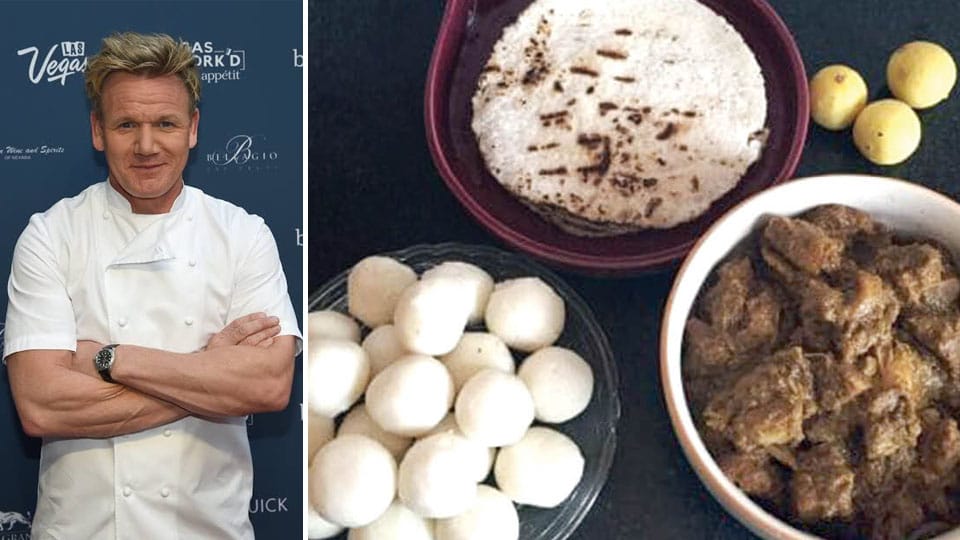
Imagine Kadumbutt Pandi Curry, Akki Otti, Baimbale Curry and other popular Kodava cuisines prominently figuring in the Michelin-starred restaurants in the dining capitals of New York, Dubai and London. Going by the looks of it, this will be a reality very soon, attested by none other than Gordon Ramsay, the International Chef, Restaurateur and Television Personality.
Ramsay is in Kodagu shooting for a documentary on Kodava cuisine, which is expected to feature native chefs from Kodagu. He is staying at the plush Tamara Resort, Kabbinakad Estate at Yavakapadi village near Kakkabe, North Kodagu.
Before arriving in Kodagu, the British chef, whose restaurants have been awarded 16 Michelin Stars in total, was spotted at Muzhappilangad Beach and The Malabar Beach Resort in Kannur on Monday where he was filming the making of Malabar cuisine including Ghee Rice, Ari Pathiri (rice roti), Kallummakaya (Mussels) Fry and Thalassery Biriyani. After the Malabar shoot, he came to Kodagu on Monday evening, reports said.
Gordon Ramsay owns two posh restaurants in Dubai and is touring select parts in South India including Malabar region and Kodagu to film a segment of his National Geographic show ‘Gordon Ramsay: Uncharted.’
Several native chefs and their dishes will feature in the documentary aimed at acquainting his fans with food from around the globe. Ramsay even posted an Instagram story about his culinary adventure in Kerala. The culinary adventure series shows Ramsay travelling to remote locations to engross himself in indigenous cuisine and learn more about the same through local chefs. The series is expected to provide a boost to Malabar and Kodava cuisine and native chefs.
“For me, ‘Uncharted’ was diving into those unknown secrets, away from the touristy parts and embedding myself in that community. I’ve spent the last two decades with the most amazing ingredients arriving on my doorstep, so to turn that in reverse and to go to the source is incredible,” he posted on social media.
‘Uncharted’ Season 1 which premiered on July 21, 2019, on the National Geographic Network saw Ramsay’s adventures in Peru, New Zealand, Morocco, Hawaii, Laos and Alaska. Previously, Ramsay had featured in the television series ‘Gordon’s Great Escape’ wherein he embarked on a culinary adventure in India and Asia.
source: http://www.starofmysore.com / Star of Mysore / Home> News / January 31st, 2020
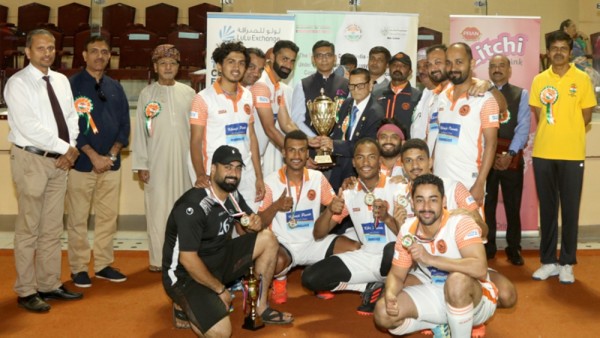
The organisers selected talented athletes from the Indian and Omani community who are contributing to the uplift of the society. – Supplied photo
Muscat:
To mark the 71st Republic Day of India, a hockey match was organised under the patronage of Munu Mahawar, the Ambassador Of India at the Sultan Qaboos Sports Complex on February 28.
Top sports and business personalities were also present on the occasion. It was a glittering hockey festival for the 14th year in a row under the patronage of Embassy of India in coordination with Oman Hockey Association. The event was organised by Team Coorg Muscat and Friends of Naqvi Group.
The chief patron Munu Mahawar presided over the function and distributed prizes along with B S Mehta, the Managing Director of Muscat Pharmacy and the Guest of Honour Captain Talib Al Wahaibi, Chairman of OHA, and Kishore Bhai Mehta was a special guest.
Team Coorg Muscat and Friends of Naqvi Group acknowledged excellent support given by the government through the Ministry of Foreign Affairs, the Ministry of Sports and Youth Affairs for the past 14 years by providing Sultan Qaboos Sports Complex for organising Indian national events.
The organisers selected talented athletes from the Indian and Omani community who are contributing to the uplift of the society.
In the pulsating final, the two teams were locked in a 3-3 draw. Subsequently, penalty strokes were taken to decide the winner. Team Coorg emerged the winner with a 5-3 margin and lifted the glittering Republic Day of India Hockey Trophy 2020.
The Indian ambassador presented the winner trophy while the runners-up trophy was presented by Captain Talib Al Wahaibi, OHA Chairman. The Best Player Award went to Ghassan Garib Al Hassani, Team Coorg Goalkeeper.
Munu Mahawar was presented a memento by veteran Olympian S AS Naqvi. B.S. Mehta, Captain Talib Khamis Al Wahaibi,
Kishore Mehta, Managing Director of Al Intisar Corporation, Kannan Nair, Second Secretary Embassy of India, Tarun Kumar, Second Secretary (Administration), Rakesh Adlakha, Deputy head of the mission and Aziz Hasan were honoured for their support. The organizers selected Indian School Muscat team for winning 4×100 Relay Race In India. The team is captained by Antonio Thomas Biju along with Naman Rao, Steve Lobo, Rishikesh Menon.
Munu Mahwar presented SAS Naqvi with two honours.
The 71st Republic Day Of India Hockey Festival had two senior teams participating in the Republic Day of India Hockey Trophy. The teams were Oman Veterans XI and Team Coorg Muscat.
The Ambassador Cup 2020 For Boys
The match was played between three teams, Indian School Al Seeb, Indian School Mabella and Indian School Wadi Kabir.
The final match was played between Indian School Seeb and Mabella, and Indian School Seeb won the Boys Republic Day Of India Hockey Trophy 2020 by a solitary goal 1-0.
The Ambassador Cup 2020 For Girls.
It was a great tussle between Indian School Mabella and Indian School Seeb. The Indian School Mabella won the Girls Republic Day of India Hockey Trophy 2020. The main highlight of the event was the participation of a marching band consisting of 80 members from Indian School Wadi Kabir.
source: http://www.timesofoman.com / Times of Oman / Home> Sports> Hockey / by Times News Service / March 09th, 2020
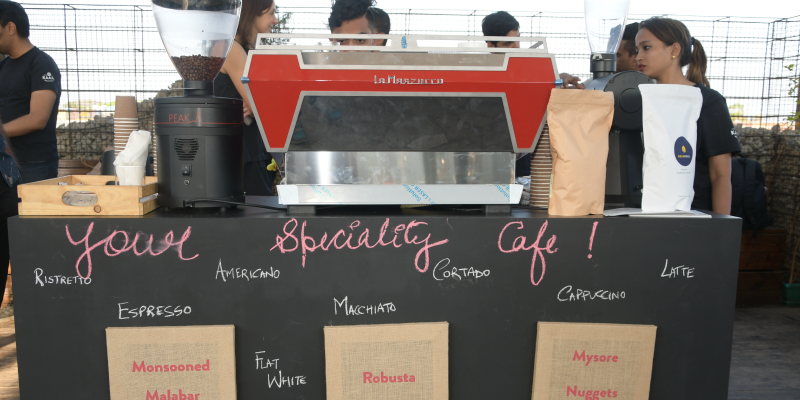
In a tea-loving nation, Abhinav Mathur of Kaapi Machines is bringing coffee to the homes of regular households, and to workplaces of the tech-savvy Gen Z.
In an interview, he shared his insights into the world of coffee.
Did you know that espresso has just one-third of the caffeine content of a cup of regular coffee? Or that the density of a filter paper can bring about a vast difference in the taste and flavour of your coffee? And that 40 percent of the world’s coffee is produced by Columbia and Brazil?
Abhinav Mathur, CEO, Kaapi Machines has over 15 years of work experience, working with organisations which include Stovekraft, Indulge Beverages, Stanley Black & Decker, and Philips Consumer Lifestyle. As the CEO of Kaapi Machines, Abhinav has been instrumental in bringing in several new-age coffee equipment into India, including the Ripple Maker, PuqPress, and Nitron, and his objective has been to equip consumers with technology that will help them raise the quality of coffee in India.
In an exclusive chat with YS Weekender, Abhinav says, “Coffee is the new romance story that Indians are indulging in, and it is definitely here to stay.”
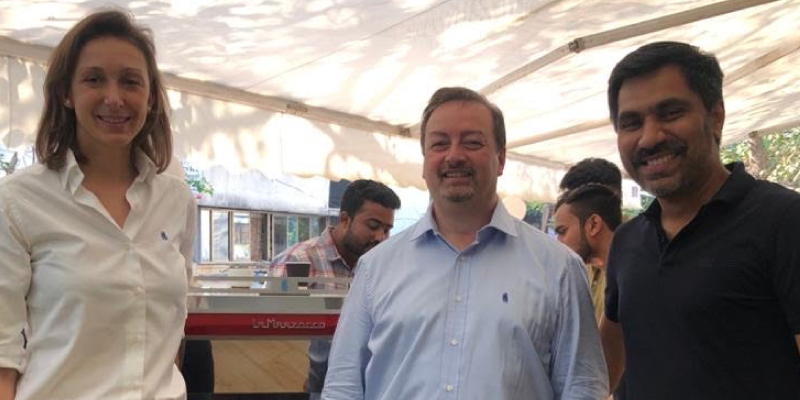
L- R: Julia, Modbar; Mike Khan, La Marzocco; Abhinav Mathur, Ceo, Kaapi Machines
Edited excerpts from the interview
YSWeekender: What do you think has changed for coffee over the years in India?
Abhinav Mathur: India is among the top 10 coffee-exporting countries in the world. As a nation that enjoys coffee, we have come a long way from exporting coffee outside India, to now having a modern generation of growers and roasters, creating artisanal speciality coffee for the local market.
Currently, we are in the third wave of coffee, where the quality of coffee is traced from the end beverage in the cup back to the actual coffee bean. Today, it has moved on from being merely filter kaapi or phenti hui coffee – to a scenario where consumers like to indulge in cold brews, nitro brews, and coffee cocktails.
With the increasing presence of local growers and passionate home-brewers taking interest in their morning cuppa, coffee has come a long way from simply being just another drink in a tea-loving nation. Further, the growing trend in consumption is a positive indicator of how India might become one of the largest coffee-producing countries in the world.
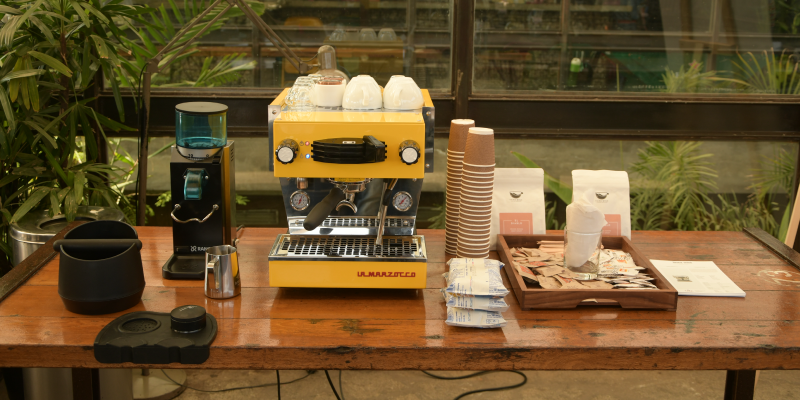
An espresso machine by La Marzocco which has partnered with Kaapi Machines.
YSW: How have the coffee flavours evolved in India?
AM: Coffee in India is no longer just a southern phenomenon or a market that is satisfied with instant coffee. With the advent of café-chains, an interesting new set of consumers emerged who were interested in tasting freshly brewed coffee and learning more about it. The new breed of coffee-entrepreneurs is bringing the joy of relishing coffee to the market. This coffee goes through different stages of roasting and grinding, where different flavours have been experimented with.
Coffee flavours can be distinguished, based on aroma and taste, besides acidity, bitterness, sweetness, and body. Many flavours are dependent on where the coffee is grown, how it is processed, and how it is roasted.
Roasters in India are trying to create interesting taste profiles to offer variety and raise the quality of coffee in India.
Currently, coffee flavours come in brilliant notes that showcase the conscientious zeal of the growers behind it. With coffee production not being restricted only to production, passionate artisanal coffee lovers are making it their playground to infuse innumerable flavours in the coffees.
This spectrum is huge – one can sip on flavours that boast of nutty-cherry flavour, notes of berries, or those with a sweet acidic taste and fruity notes. At Kaapi, we try and educate coffee-lovers and customers, not only on the basics of coffee tasting through our cupping sessions, but also helping them understand the entire coffee flavour wheel.
La Marzocco’s artisanal espresso machine on display, which has tied-up with Kaapi Machines.
YSW: What is your opinion on the niche micro-breweries? How are they faring?
AM: Micro-roasteries in India offers consumers a chance to see the entire coffee processing in one place. This was made famous internationally by Starbucks through its “Reserve Stores”, but now you can find roasteries in all major Indian cities, including smaller cities like Jaipur and Nagpur.
These roasteries are driving the consumption, awareness, and elevating the quality of coffee in India. They are also making coffee a preferred drink and not just a cool drink. While it’s early to comment on their commercial success, they are the torchbearers of quality coffee in the country.
Additionally, these places serve as vanguards of new experiments. They are pushing the café culture’s existence from a simple cappuccino to savouring black coffee.
Kaapi Machines has set up a number of such roasteries and our product range starts from coffee roasters and moves to coffee grinders, brewing equipment, and accessories.
We also engage with such roasteries for our coffee meet-ups to encourage the coming together of the coffee community.
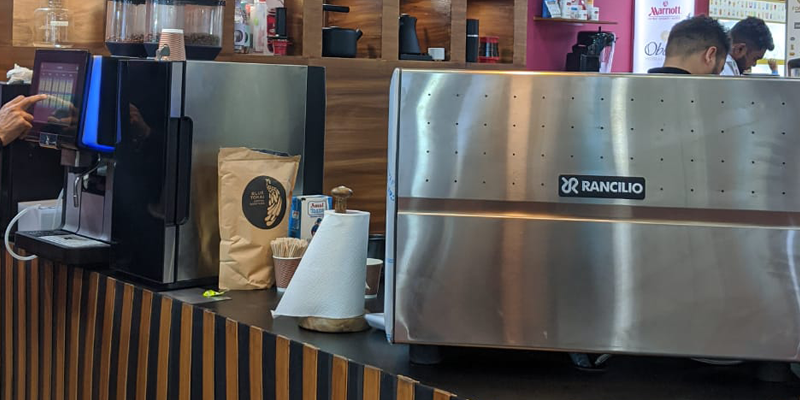
Kaapi Machines’ represents brands like Rancilio which provide equipment for coffee-making.
YSW: What is your opinion on artisanal coffee?
AM: At present, artisanal coffee is a celebration and rediscovery of regional flavours that are essentially Indian – from sourcing to packaging, or as often described as “from bean to the cup”.
The detailed attention on the right harvesting techniques or how the beans should finally be sourced – these have contributed to elevated coffee experiences.
Today, new-age artisanal brands like Blue Tokai, Third Wave Coffee Roasters, and Dope Coffee are making waves in this space in India, and we provide equipment to all of them
YSW: India is better known for its tea. Why do you think people have shifted to coffee?
AM: Coffee is not just a drink, but a ritual for many.
Undeniably, Karnataka and Tamil Nadu have been the key coffee production estates, but with the growing interest in coffee, many other regions in the country are producing coffee. The market is filled with appliances that homeowners can experiment with to enjoy their favourite cuppa in the morning.
One key reason for the growth of coffee is because of the inherent complexity of the beverage, as well as the varied methods for brewing.
YSW: A lot of health experts are divided on the health benefits of coffee. What is your opinion?
AM: There are mixed reviews on health and coffee, but we can only say good coffee should be enjoyed without milk and sugar, as this is definitely low on calories. I would say – have coffee, not because of health reasons, but because you enjoy it.
YSW: What are some of the varieties of coffees found in India and abroad?
AM: In India, mainly two types of coffees are found – Arabica and Robusta. The weather conditions are more apt for Robusta. However, we grow Arabica as well. India has three well-known specialty coffees – Kaapi Royal, Monsoon Malabar, and Mysore Nuggets.
Not a lot of international coffee makes its way to India due to high duties, and bigger markets like Europe, the US, and Australia which have a high consumption rate. However, several African, Asian, and South American countries are coffee growers.
YSW: Several Indian brands are offering speciality coffee which is priced very high. Are they really special and worth buying?
AM: Yes, we have several speciality coffee brands now in India. India’s tryst with speciality coffee began a few decades ago but has gained momentum only recently. Speciality coffee is distinguished based on its origin, cultivation, processing, handling, branding, and the final appearance.
Speciality coffee is not an easy feat for growers, roasters, and baristas, as all of them must follow standards defined by the Speciality Coffee Association (SCA) to maintain consistency and quality. The best of cherries to the best of beans are roasted and made by SCA certified roasters and baristas, so that the consumer can savour the best flavour profiles.
Most of the cafés serving specialty coffee prefer to procure and roast specialty coffee to maintain consistency and quality. Local coffee shops or the ones backed by artisanal coffee efforts are slowly introducing pour-over brewing devices and offering coffee as an experience and not merely another beverage.
The thirst for a great coffee or the inclination to try speciality coffee could be attributed to the thirst of the well-travelled consumer who is looking for local options across India.
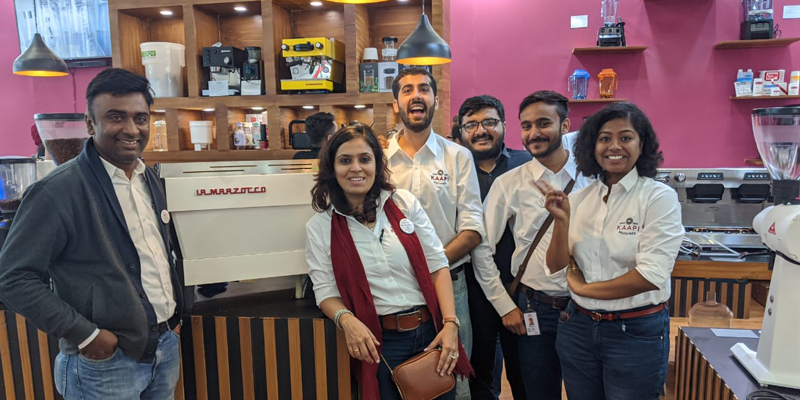
Kaapi Machine employees and baristas posing with La Marzocco’s espresso machine.
YSW: What kind of equipment does Kaapi Machines have in its store?
AM: Kaapi Machines product portfolio offers options for roasters, automatic coffee machines, semi-automatic coffee machines, ice blenders, grinders, as well as new-age equipment for cold brew, nitro, and more.
YSW: How did you come up with the idea of Kaapi Machines?
AM: We decided to launch Kaapi Machines in 2005 when we realised that while the café segment was starting to grow, there was no competence in training, machines, and after-sales service to help coffee entrepreneurs launch coffee brands and cafes in India.
We brought together market-leading companies from Germany, Italy, and the US to form this organisation, under the guidance of coffee experts from India and abroad.
As the speciality coffee culture continues to grow, the need for trained baristas, roaster, and producers has never been so important. Understanding this need-gap, we have been closely working on training programmes for new café owners, café staff, coffee aficionados, baristas, and anyone who wants to learn what it takes to make a good cup of coffee.
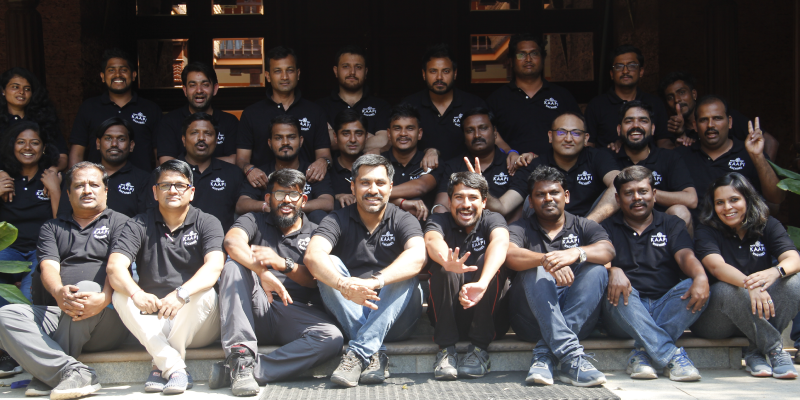
Team Kaapi Machines
YSW: What are your future plans?
AM: Today, the market gaps mainly include scattered coffee experience, multiple channels of information with no integrated credible expert voice. We want to create one destination for coffee and community, from training, events, machines, beans, and roasting, as well as access to industry coffee experts which the consumer can find under one umbrella.
We believe there is a lot of work to be done until each Indian consumer can truly experience a great cup of specialty coffee.
(Edited by Asha Chowdary)
source: http://www.youstory.com / YourStory.com / Home> YourWeekender> Food & Beverages / by Suman Singh / March 07th, 2020
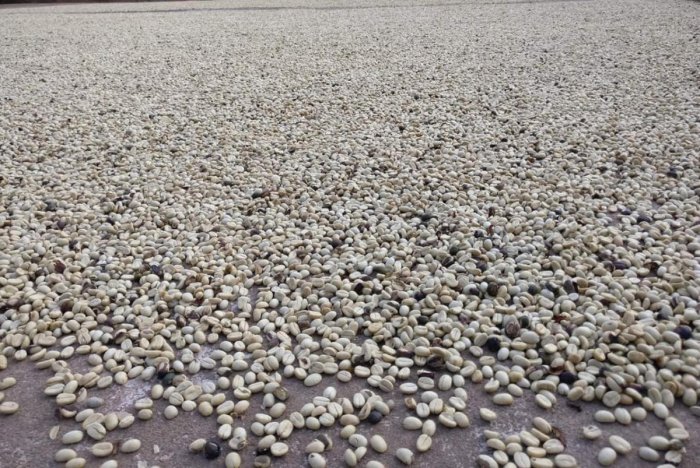
Coffee growers are happy as the market rate of Arabica parchment has reached a record rate of Rs 10,000 for a bag of 50kg. The rate has been the highest in the last eight years.
As on Wednesday, a 50kg bag of Arabica Parchment coffee was sold between Rs 10,400 to Rs 10,500, which according to the vendors, is the highest rate for Arabica parchment.
The cost of Robusta Parchment has increased to Rs 7,000 per bag. The last time when Arabica coffee reached the highest rate was in 2014. It was Rs 9,600 to Rs 9,800 per bag then. Later, the price moved downward and had touched Rs 6,000.
Arabica cherry costs Rs 4,000 per bag while the rate of Robusta cherry is Rs 3,200 to Rs 3,400 per bag.
Growers in Kodagu, Chikkamagaluru and Hassan have expressed their happiness on the improved market rate of coffee, despite problems of shortage of labourers and feasibility issue in the maintenance of the plantation.
The vendors said that the rates of Arabica parchment might increase further. Expecting the same, the growers who have stored coffee in ABC and other curing centres have decided to sell coffee after it hits an all-time high.
The increase in the rate of coffee was due to a significant decrease in production in Brazil and Columbia. There was a plunge in the production of coffee in Chikkamagaluru, Kodagu and Hassan districts as well, owing to floods. This has created an increase in demand.
Even though the market rates have increased, the quantity of coffee production is significantly less compared to previous years. The growers who grew 50 bags of coffee in the past have ended up producing only 10 bags of coffee.
“The coffee plants have been damaged due to the water-logging of the plantation. It might take another four years to restore the coffee plantations to its original condition,” said coffee grower Nanaiah.
Coffee vendor Abdul said that around 60% of coffee growers have sold their coffee. Those who had stored coffee have reaped benefits.
source: http://www.deccanherald.com / Deccan Herald / Home> States> Mangaluru / by Adithya K A / Madikeri – March 04th, 2020
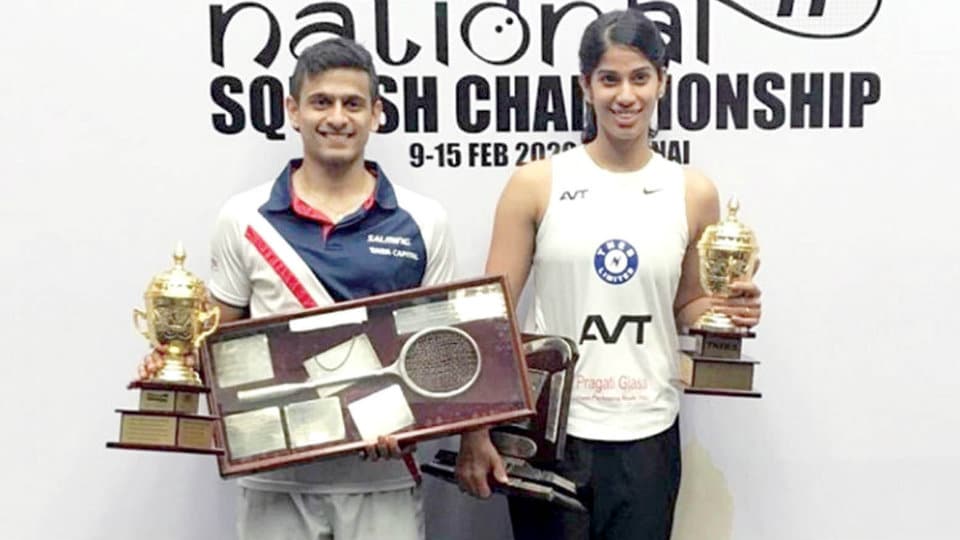
Joshna Chinappa and Saurav Ghosal, the country’s squash aces, reigned supreme in the 77th Senior National Championship at the ISA courts, claiming their 18th and 13th titles respectively.
Chinappa, the torch-bearer for Indian women’s squash for close to two decades now, showed why she was the one to beat as she put paid to the aspirations of Tanvi Khanna, (seeded 3/4) in four games to add yet another national title to her kitty.
The top-seeded Chennai player recovered brilliantly after losing the first game to post a 8-11, 11-6, 11-4, 11-7 win to underline her superiority in the finals on Saturday.
Chinappa had broken the record of 16 national titles held by Bhuvneshwari Kumari by winning in Pune last year.
She won her first national crown in 2000 and has since lost only two matches, both finals.
In the men’s final, Ghosal showed why he is still the man to beat, with a crushing 11-6, 11-5, 11-6 defeat of young Abhishek Pradhan (No. 2 seed) to win the title yet again.
source: http://www.starofmysore.com / Star of Mysore / Home> Sports / February 17th, 2020
Madikeri on Friday. DHO K. Mohan is seen. | Photo Credit: SPECIAL ARRANGEMENT
The Kodagu Health Department on Friday said it will keep information shared by visitors from China and other countries affected by 2019 Novel Coronavirus (nCoV) to the district about their health status and symptoms confidential.
District Health Officer K. Mohan said the department had takenprecautions for the prevention and control of the disease. The visitors can provide information, in case they are suffering from any of the symptoms in the wake of the virus scare, on their own in a prescribed format.
The District Surveillance Officer, Shivakumar, can be contacted on 94498 43263 besides the taluk health officers from Madikeri, Somwarpet and Virajpet. The health authorities from Kushalnagar and Gonikoppa can also be contacted. Other contact persons are Srinivas on 94498 43203 and Yathiraj on 94484 48481, the release added.
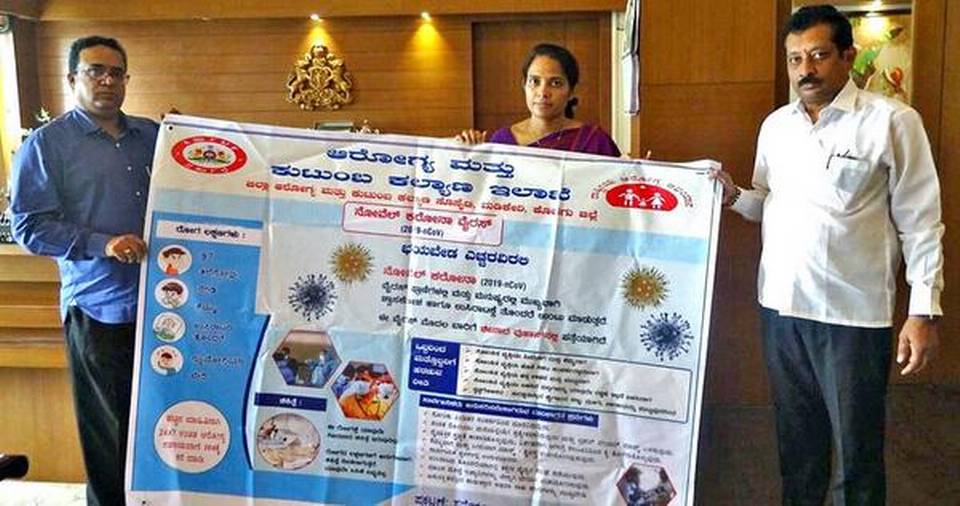
Meanwhile, posters for spreading awareness about the 2019 nCoV were released in Madikeri on Friday by Deputy Commissioner Annies Kanmani Joy. The DHO was present. Surveillance had been stepped up in the border towns of Karike, Kutta and Makutta with Kerala confirming three positive cases. The banners would be pasted in these towns for educating the public.
source: http://www.thehindu.com / The Hindu / Home> News> States> Karnataka / by Special Correspondent / Mysuru – February 07th, 2020
UCLA’s Center for the Art of Performance (CAP UCLA) presents Fly Higher: Charlie Parker At 100 on Thursday, March 26 at 8 p.m. at Royce Hall. Tickets starting at $28 are available now at cap.ucla.edu, 310-825-2101 and the Royce Hall box office.
Charlie “Bird” Parker was a legendary Grammy Award-winning jazz saxophonist who, with Dizzy Gillespie, invented bebop. This year marks the 100th year since the legend’s birth and therefore is cause for celebration. Acclaimed co-musical directors Rudresh Mahanthappa and Terri Lyne Carrington honor Charlie Parker’s centennial year by showcasing his uncompromising musical joy, humor and beauty, mining his deep repertoire and showcasing new, modern compositions.
Hailed by Pitchfork as “jaw-dropping” and saxophonist of the year for seven years running in Downbeat, Rudresh Mahanthappa is a 21st-century voice of jazz. Since his emergence in the late ’90s, Mahanthappa harnesses the power of the horn to create a rhythmic urgency and showcases an astonishing facility. In addition to creating Fly Higher with Carrington, Mahanthappa is the Director of Jazz at Princeton University.
Carrington returns to the Royce Hall stage for the second CAP UCLA season in a row. A three-time Grammy Award-winning drummer, Carrington has performed on over 100 recordings and just released Waiting Game this past November with her band Social Science. Last year, Carrington was acknowledged for her contributions to jazz with the Doris Duke Artist Award. Fly Higher is no exception as a significant contribution.
This performance concludes CAP UCLA’s Jazz series for the 2019-20 season. For more shows, please visit cap.ucla.edu/calendar.
CAP UCLA presents
Fly Higher: Charlie Parker at 100
Thursday, March 26 at 8 p.m.
Royce Hall, UCLA
10745 Dickson Court, Los Angeles, CA 90095
Program:
Fly Higher: Charlie Parker at 100 celebrates one of the most innovative and influential artists in modern musical history and examines his impact on pop, hip hop, rap, rock and jazz. Rather than imitating the original, Fly Higher strives to forward the art form by developing new perspectives on tradition.
Credits:
Fly Higher: Charlie Parker At 100 features:
The days of March 1841 spent at Chikka Veerarajendra’s modest haveli in Benares were glazed thick with warmth, summer mangoes, and the colored rice flour that danced in the air in celebration of Holi. And for the first time in a long time, the unseated Rajah of Coorg felt a semblance of pride, after a degrading conflict with the British, while observing his favorite daughter Gowramma gurgling in the courtyard. As the mansion’s entrance gates unexpectedly rusted open, interrupting festivities, Veerarajendra was reconnected with Alamanda Somayya, an old ally to his family, who came with word of anglicized Coorg. When introduced to six-month old Gowramma, Somayya studied her tiny paint-smudged palms, prophesizing that ‘this Rajkumari will one day cross the seas’.
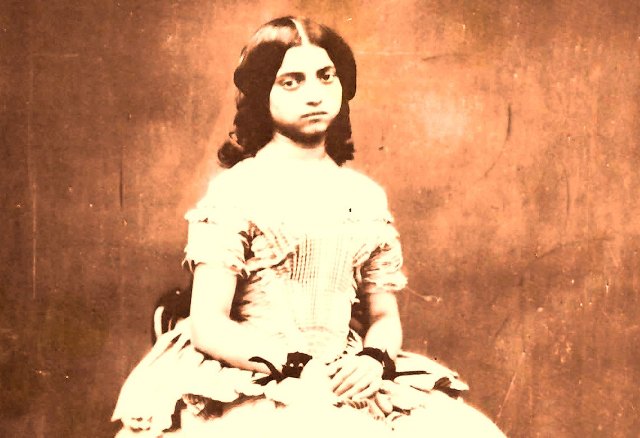
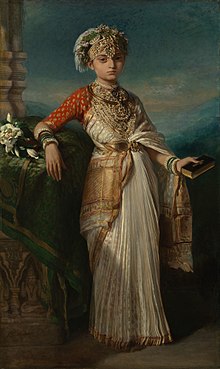
Although Princess Victoria Gowramma and her father were the first Indians to reach British turf in 1852, her somewhat diasporic narrative is little-known, forgotten within a bulky history of colonisation and foreign affairs. Perhaps the most articulate source on the royal is C.P. Belliapa’s novel Victoria Gowramma: The Lost Princess of Coorg, which constructs a meticulous timeline that draws on the prospective importance she held in Britain’s colonial system and the Indian religious landscape.
Being christened as the ‘lost princess’ seems fitting in respect to Gowramma’s position in contemporary Kodagu cultural dialogue – she bears our name, a rather ambiguous notability, and a beauty considered ‘exotic’ by outsiders, but upon closer exploration, was alienated from her people and heritage having been raised under the wing of Queen Victoria, and may even be considered a paradigm of what the British hoped for India.
From Benares To Britain
Gowramma’s journey begins with her father’s loss of Kodagu to the East India Company, leaving him bitter and distrusting of the ferenghis (foreigners). The pastoral simplicity of a kingdom fleshed out by generations of his ancestors now seemed fragile in the hands of the British. After being exiled to Benares, Veerarajendra began nurturing a pipe dream of his own, wherein he could restore himself to affluence by filing a legal suit against the East India Company, which would require his physical presence in London.
PERSISTENT COLOURISM SEALED GOWRAMMA’S FUTURE AS A BRITISH ROYAL – A FAIR COMPLEXION DISTINGUISHED HER FROM VEERARAJENDRA’S OTHER CHILDREN.
With the help of British doctor and close friend Dr. William Jeaffreson, Veerarajendra began crafting a trip to world’s most powerful social, economic, and technological center, under the desirable pretense of enabling a Christian education for his daughter. According to the Illustrated London News report in July 1852, persistent colourism sealed Gowramma’s future as a British royal – a fair complexion distinguished her from Veerarajendra’s other children, seeing as he’d dubbed her a “pigeon among crows”.
Image Source: Wikiwand
Grooming Of The Princess
Before their arrival, Dr. Jeaffreson offered a piece of advice to an anxious Veerarajendra saying, “Don’t be too hasty in taking up the legal issue on reaching London. Wait until Gowramma is well accepted by British society. A favorable public opinion is very important. I have received intelligence that the queen herself is eager to meet you and your daughter”. Governor-General at the time, Lord Dalhousie, also hoped for a publicised conversion of Princess Gowramma, which could possibly rescue the British regime’s stagnating reputation among its people.
Another motivating factor was young, recently-deposed Maharaja of Punjab Duleep Singh, who had expressed compliance in converting to Christianity after his state was annexed. The belief that a future marital alliance between Gowramma and Singh, two Christian Indian royals, could be a tool for proselytising the Indian population, had already begun gaining momentum within the monarchy. According to Belliappa, the Logins, guardians to Duleep Singh, were champions of this mentality, strongly believing in the European responsibility to spread the word of the Bible among pagan worshippers of India.
Queen Victoria, a spokeswoman for familial values, industrialisation, and social welfare herself, showed interest in Princess Gowramma’s story of passage from one of the humblest provinces of the British colony in India. Gowramma’s baptism on 30th June 1852 is remembered as an elegant occasion in which the young princess showed poise and grace.
On that day, Queen Victoria gifted Gowramma with her name, and a leather-bound bible with gold embellishments. She then entrusted the newly-christened Princess Victoria to the care of Major and Mrs. Drummond, who were to groom her in Western thought. From learning curtsying to using cutlery, Victoria grew into English ideals, and her consequent popularity in social circles and overall joie de vivre has been heavily-recorded.
Final Years
Overtime, the prospect of marriage between Duleep Singh and Victoria Gowramma began to fall out of the works, due to a lack of attraction, although they remained close friends. It was at this point in Gowramma’s timeline that royal disillusionment began to swell, as she realised her nights spent at royal balls with glasses of wine and attractive Englishmen weren’t the answer to what she wanted: a family and home to call her own.
SHE REALISED HER NIGHTS SPENT AT ROYAL BALLS WITH GLASSES OF WINE AND ATTRACTIVE ENGLISHMEN WEREN’T THE ANSWER TO WHAT SHE WANTED.
An obstacle that came in the way of Gowramma and eligible suitors was actually her father, who’d begun to earn himself the reputation of an ‘old reprobate’ in high society. It’s reasonable to conclude that Victoria’s consistent fear of upsetting the queen and consort contributed to her sad lack of autonomy, and also a naïve willingness. She ultimately married the nearly fifty-year-old Colonel Campbell, a charming friend of Duleep Singh, who was mostly attracted to her fine jewelry and 400-pound sterling allowance.
On 2nd July 1861, Gowramma gave birth to a baby girl, christened Edith Victoria Gowramma Campbell. However, this was only followed by a life of isolation in London, as Campbell was an indifferent husband, often only making contact to ask her for money – but Gowramma was not without great strength, and kept a brave face as a single mother.
In March 1864, Princess Victoria Gowramma succumbed to tuberculosis, just a few months before her 23rd birthday. Unsurprisingly, it’s suspected that Campbell disappeared shortly after her death, but not without her jewels.
Ultimately, Duleep Singh and Victoria Gowramma fell short of the grand scheme envisioned by the queen and British royalty. Perhaps India’s religious history would have shifted if a successful marriage between the Christian Indians had been fulfilled, as historians have realised the greater importance of religious propaganda as a tool of control for those colonised, rather than plain force. In respect to Gowramma herself, it’s impossible to trace her intricate lifetime of tragedy and romance without understanding the people and politics that governed her fate and sense of self.
References
1.Victoria Gowramma – The Lost Princess of Coorg by C.P. Belliappa
2. The Hindu
3. Coorg Jewellry
4. Evolve Back
5. Uk Asian
Featured Image Source: UK Asian
source: http://www.feminisminindia.com / Feminism In India – FII / Home> History / by Anoushka / December 12th, 2018
WELCOME. If you like what you see "SUBSCRIBE via EMAIL" to receive FREE regular UPDATES.
Read More »