The legend of Field Marshal KM Cariappa is well known as he was the first chief of the Indian Army after independence. But one anecdote from the life of the legend himself elevated him far above others who could rival his glory.
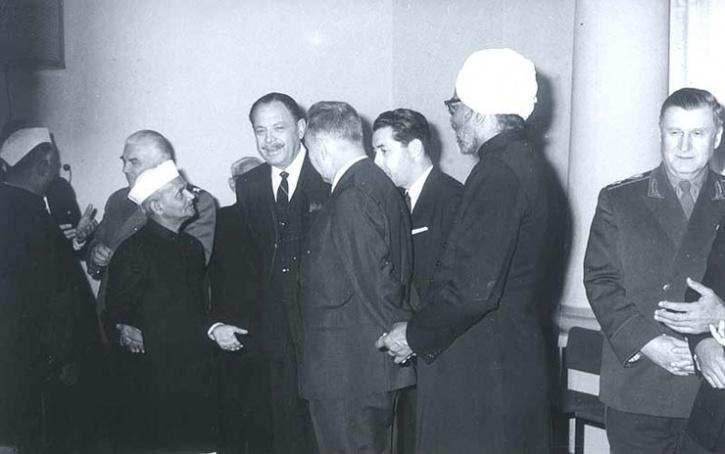
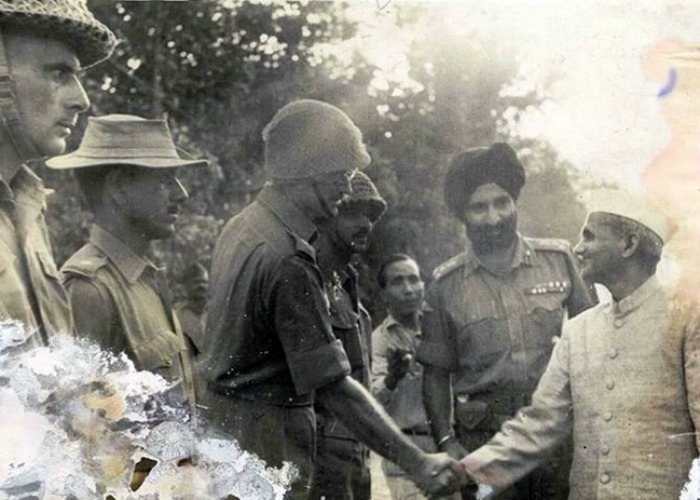
GENERAL AYUB KHAN AND FIELD MARSHAL KM CARIAAPPA, PIC COURTESY: AFP/WIKIPEDIA
Yes, the battle of 1965 where he refused the offer of Pakistan General Ayub Khan to release his son who was an IAF pilot and was captured and kept as Prisoner of War (PoW), the legend Field Marshal Cariappa not only refused General Ayub Khan’s offer but also asked to treat him at par with other PoWs.
Caught by Pak army when his plane was shot down
Sqn Ldr KC Cariappa was flying near the border and his plane was shot down. He had to eject and during the process of ejection and landing, the Sqn Ldr Cariappa ‘s spine was injured. Soon after the capture, like all other PoWs, the Sqn Ldr Cariappa told his name, rank and unit number. Like Wing Abhinandan, he also didn’t divulge any information.
News soon reached General Ayub Khan
REUTERS
Soon after his capture, the news reached General Ayub Khan that Pakistan army had captured son of India’s first army chief Field Marshal KM Cariappa, the General announced it on Radio Pakistan that his forces have captured Sq Ldr KC Cariappa, the son of legendary Indian Field Marshal.
When General offered Field Marshal to release his son
General Ayub Khan had served under Field Marshal Cariappa in the British Indian Army and always held him in high esteem. General Ayub Khan asked Pakistan High Commissioner in New Delhi to personally meet Field Marshall who in return politely refused General’s offer.
Field Marshal said other PoWs are also his sons
In his reply to the High Commissioner who had come on behalf of General Ayub Khan, Field Marshal Cariappa told him that he doesn’t want Pakistan to release his son but treat all PoWs well as all Indian soldiers are his sons.
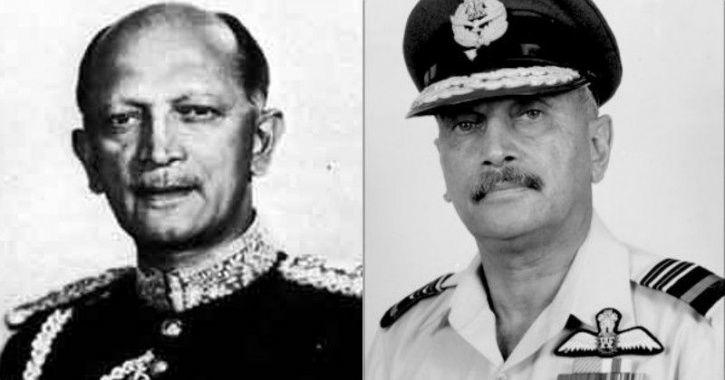
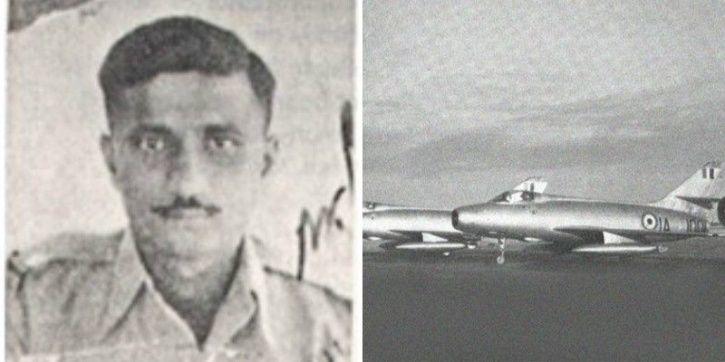
FIELD MARSHAL KM CARIAPPA AND HIS SON AIR MARSHAL KC CARIAPPA, PIC COURTESY: WIKIPEDIA/BHARAT RAKSHAK
Recently speaking to the media, Air Marshal KC “Nanda” Cariappa said “My dad was a man of high principles. For him, his son and all other soldiers were the same. Even though Ayub Khan was his junior and was close to him, he refused to get me released before the others. I was later released with all others”.
Air Marshal was quoted by the News18. Sq Ldr KC Cariappa was caught on last day of the war and when he came back, he commanded a helicopter unit of the IAF and retired as Air Marshal. He had also took part in 1971 war.
(With News18 inputs)
source: http://www.indiatimes.com / India Times / Home> News> India / by Maninder Dabas / March 06th, 2019
It’s not what you expect to see in the heart of the Western Ghats around the spot where the river Cauvery originates.
Mottana C. Ravi Kumar
Nestled in the Western Ghats, where the river Cauvery originates, is a little-known memorial. On it are inscribed the names of 49 soldiers from a village nearby, who lost their lives in World Wars 1 and 2. It’s a heroic and elaborate effort by Mottana C. Ravi Kumar, an advocate and the son of an army man. Over the years, officers like Kargil war veteran Major Rakesh Sharma have visited the memorial, much to Kumar’s pride, writes Aksheev Thakur
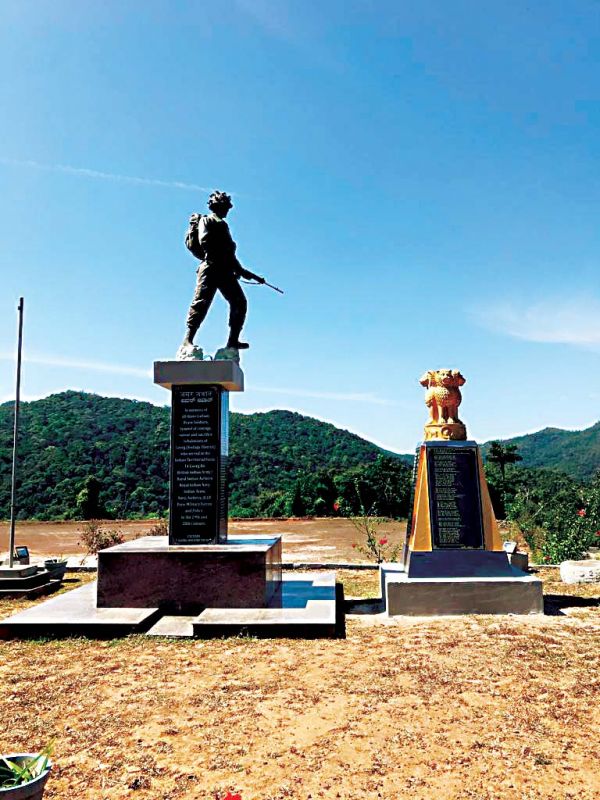
It’s not what you expect to see in the heart of the Western Ghats around the spot where the river Cauvery originates. But venture deep into the green canopy of the ghats and you come across a war memorial inscribed with the names of 49 soldiers from a village here, who lost their lives in World Wars I and II.
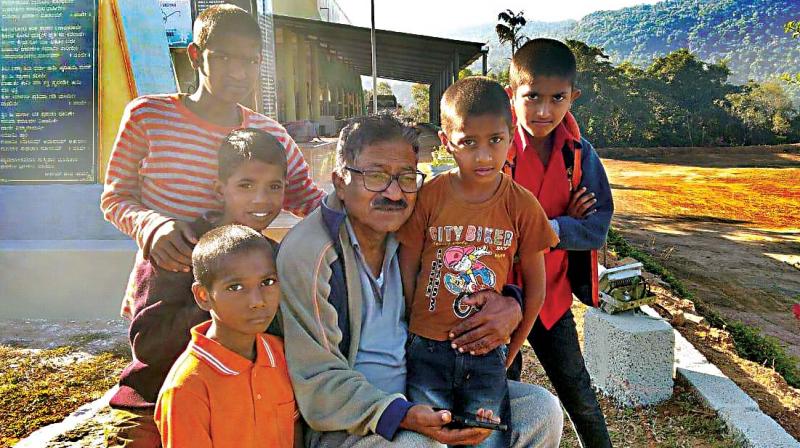
Cherangala village in Kodagu has an advocate, Mottana C Ravi Kumar, the son of an army man, to thank for the memorial that pays tribute to its patriotic sons killed in the two wars.
It’s an elaborate memorial, the statute having come from Mohali. It nearly got a T-55 tank too, but the bridge in the village was not strong enough to carry it, forcing that plan to be abandoned . Next to the statue stands an Ashok Stambh with each side inscribed with Kavi Pradeep’s famous “Aye Mere Watan Ke Logon” Iqbal’s “Sare Jahan se Accha,” Rabindranath Tagore’s “Where the Mind is Without Fear” and Bankim Chandra Chattopadhyay’s “Vande Mataram. “
The songs and the memorial are meant to inspire the young of the village , the advocate tells you. “Soldiers serve in inhospitable conditions and this is my little ode to them,” he says.
Distinguished officers of the the country’s armed forces like Field Marshal K M Cariappa’s son, Air Marshal (retd) KC Cariappa, Lt. Gen. (retd.), G S Nanda, and Kargil war veteran, Major Rakesh Sharma have visited the memorial over the years, much to the pride of the villagers, who continue to honour the memory of the men they sent off to war.
The army man that he was, Mr Ravi Kumar’s father wanted him to join the armed forces too, but he insisted on becoming a doctor. “Ultimately, I did not become either a doctor or a soldier, but an advocate and moved to Bengaluru to practice,” he smiles.
But he did flirt with the idea of joining the army, spending some time at the Dholpur Military School near Agra as a young man. “Father joined the army in 1941. When I joined the military school, the 1962 Indo-China war erupted. The principal often gave five and six-year-old children news of their fathers achieving martyrdom on the battlefield and I saw them crying. The scene was repeated in the 1965 war and this drew me emotionally close to the armed forces,” he recalls.
But the idea of the memorial in the village was born quite by chance. Being an advocate, he once filed a writ petition in court on the lack of road connectivity to his village and the resulting disadvantage this placed its families in when it came to getting brides for their sons as parents were reluctant to send their daughters away to such a remote spot in the ghats. “ Children had to travel five miles to go to school. So when I became an advocate I filed a writ petition in the high court and it was passed by Justice Gopal Gowda,” he adds .
During one of their meetings, Justice Gowda pointed out to him that he had not invited him to the village after the road was built to connect it to the rest of the state. “It was then that the idea of the war memorial came up as I could not have invited him for just the road,” he says. And he went on to build it at the spot where it still stands in memory of the village’s bravehearts.
A strong believer in the words of Swami Vivekananda that, “They only live who live for others, rest are more dead than alive, “ the advocate has fought several cases of defence personnel too over the years.
But he has not stopped there. Unlike many in Kodagu, who run homestays, Mr Ravi Kumar runs an orphanage as he feels someone has to take care of children with no one to turn to.
“There over 25 million orphans in India according to the United Nations and of them 10 lakh sleep on the streets of Kolkata, Mumbai and Delhi. We have not even done an independent census of orphans although countries like Pakistan and Sri Lanka have. But if we take the statistics of the UN into account, they form 2 per cent of the population and are not receiving any attention. The SCs, STs and OBCs have reservation, what about the orphans, who don’t know what their religion or caste is?” he asks pertinently.
Mr Ravi Kumar takes care of the children not only till they turn 18, but till they make their own way in life. “At least they can then go on to become soldiers in the Indian Army, if not officers,” he concludes.
source: http://www.deccanchronicle.com / Deccan Chronicle / Home> Lifestyle, viral and trending / by Aksheev Thakur, Deccan Chronicle / March 02nd, 2019
Whether you’re looking for a hot cup of tea, some authentic Indian food, or a hard cocktail, you’ll find it at Coorg Indian Café in Mt. Pleasant.
Owners Preethi and Darshan Ayandra are both full time employees of Boeing, but their coffee concept has been percolating for a long time.
They are from the coffee-growing region of Coorg in India. Indian Coffee is primarily distributed to Europe and Russia, but hasn’t been served up in the United States before now, the owners say.
Eventually they’d like to sell the coffee by the bag!
Coffee isn’t the only thing brewing at this café. Food is also a shining star. You won’t find the standard Indian fare. Curry Chicken and Coorg Ribs are traditional recipes from their region.
All entrees are served with a variety of chutneys with different levels of heat. Feeling bold? Try the mint!
Coorg is closed on Monday and Tuesday. The owners would like to expand their staff, so if you’re interested in working for them, stop in!
source: http://www.abcnews4.com / ABC4 NEWS / Home> News / by Emiley Gracey / March 01st, 2019
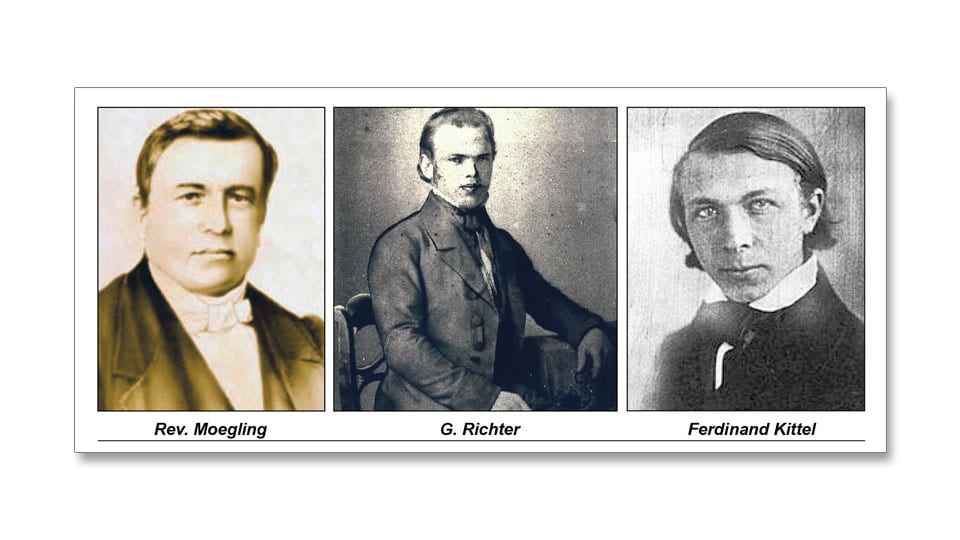
It was in 1836 that twenty-five-year-old Rev. Hermann Moegling, a German missionary from the Basel Mission, arrived in Mangalore. Christianity was already popular on the west coast of India. He founded the Basel Evangelical Mission Seminary, which became a hub of learning of not only religion but also Indian languages and culture.
Moegling, a linguist, was fluent in English, Sanskrit and Persian, besides his native German. He started learning Kannada and soon became proficient in the language. The credit for starting the first newspaper in Kannada “Mangaluru Samachara” goes to Rev. Moegling. The maiden issue of this newspaper was brought out on 1st July 1843. This eventful day is still being aptly celebrated as ‘Kannada Press Day.’ Rev. Moegling went on to translate several Kannada classics to German and vice-versa. Basel Evangelical Mission Seminary started by him in Mangalore continues under the new name Karnataka Theological College. Rev. Moegling laid the foundation for Mangalore becoming a centre for education.
In 1852, Rev. Moegling was preparing to leave for Germany for medical treatment when he had an unexpected visitor from Coorg — a man named Alamanda Somayya. The tall, impressive looking man was dressed as a sanyasi. He requested Rev. Moegling to accept him into the Christian fold. He offered his land in Coorg for construction of a church. Rev. Moegling was quite taken up with Somayya’s resolve.
Believing this to be a divine intervention, Rev. Moegling cancelled his trip. He moved to Coorg in 1853 along with his wife and adopted spiritual son Rev. Anandarao Kaundinya. Alamanda Somayya was baptised on 6th January 1853 and was christened Stephanas Somayya. Rev. Moegling built a house and a modest church on Somayya’s land in Armeri village.
Lt. Col. Mark Cubbon was the Chief Commissioner of Coorg at the time, and he encouraged Rev. Moegling to establish the first Protestant church and a school in Madikeri in 1855. Another notable personality in the field of education in Coorg was Rev. Georg Richter, also from the Basel Mission in Germany. He was brought to Coorg by Rev. Moegling in April 1856 and was given charge of running the school. Rev. Richter spent most of his life in promoting education in Coorg and was the first Principal of Central School in Madikeri, which was started in 1869. He later took charge as Inspector of Schools. His book, “Gazetteer of Coorg” published in 1870 is a comprehensive recording of social, cultural, historical and geographical aspects of Coorg. Rev. Richter’s wife, Armella, taught needlework to Coorg girls.
In a recent book by Albert Frenz (Stuttgart), titled “Georg Richter: His Work in Kodagu on the Basis of Official Reports” gives us an insight into Rev. Richter’s journey to India, and how he landed in Coorg and spent 38 years here except for an 18-month furlough in Germany.
The British administration granted 97 acres of land in Siddapur to Rev. Moegling to establish a church and to support a Christian settlement with a coffee estate. The work on this ambitious project started in 1857. Even though Rev. Moegling had his hands full with preaching the Gospel and opening the coffee plantation, he found time to author two books on Coorg. One in German, “Das Kurgland” details his evangelical work in Coorg. The other, written in English, titled “Coorg Memoirs” is one of the first in-depth study of history of Coorg.
Rev. Anandarao Kaundinya ably assisted his mentor. The new settlement was named Anandapura or ‘region of happiness.’ Rev. Moegling found Coorg to be an ideal place to live and called it his second country. In 1860, Rev. Moegling left for Germany to be with his ailing wife. He himself was in poor health. To his great disappointment, his illness did not permit him to return to Coorg. He died in 1881.
The work at Anandapura continued under Rev. Moegling’s disciple and another fellow German missionary Rev. Ferdinand Kittel. An Indologist and a polyglot, Rev. Kittel first came to India in 1853 and in time became a renowned scholar in Kannada. He too translated some of Kannada classics to German and wrote several books and poems in Kannada.
His most famous work is the first Kannada-English dictionary consisting of 70,000 words which he painstakingly compiled and published in 1894. It was while in Coorg that he started perfecting his proficiency in Kannada. He continued Rev. Moegling’s initiative in the field of education. Rev. Kittel also wrote a book on Kannada grammar. He was a regular contributor to Mangaluru Samachara. His work took him, besides Mangalore, to Dharwad as well. In recognition of his contribution to Kannada, an impressive statue of Rev. Kittel stands prominently on M.G. Road, Bangalore. Further, a Kittel Science College and a Kittel Arts College, have been established in Dharwad. There is talk of starting a University in Rev. Kittel’s name. That would be a fitting tribute to this great champion of Kannada.
One of the major hurdles faced at the Anandapura settlement was malaria, which the Europeans referred to as the ‘Coorg Fever.’ There were many deaths and gradually this scourge affected the project adversely. Anandapura coffee estate was subsequently taken-over by British planters who had shifted to Coorg from Sri Lanka. The coffee estate grew in extent and is now a part of Tata Coffee Limited. It still retains the name: Anandapura Estate.
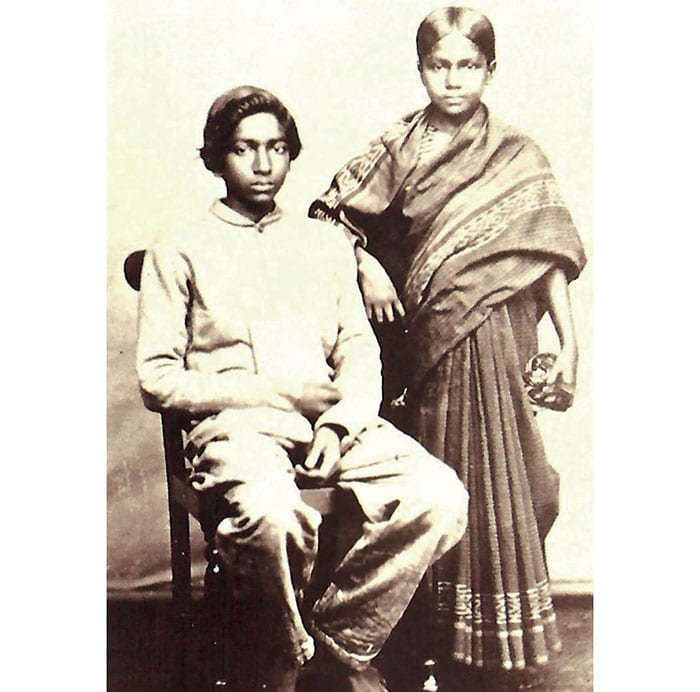
Gabriel and Hanna Alamanda
These three Germans were pioneers in promoting education in Coorg. However, their hope of making Kodavas embrace Christianity did not find favour beyond Somayya and his family. Reproduced is a rare photograph of Alamanda Somayya’s son Gabriel and daughter Hanna, taken by Rev. Richter in 1862.
About the author: C.P. Belliappa
C. P. Belliappa, born in 1946, is a Chemical Engineer. He is currently settled in Coorg. He is known for his writings on issues pertaining to Coorg. Four of his books — Tale of A Tiger’s Tail & other Yarns from Coorg, Nuggets from Coorg History, Victoria Gowramma: The Lost Princess of Coorg, and Tongue of the Slip, have been published by Rupa Publications.
He currently serves as President, Coorg Institute of Technology, Ponnampet, South Kodagu.
source: http://www.starofmysore.com / Star of Mysore / Home> Feature Articles / by C.P. Belliappa / February 24th, 2019
The event, which has even entered the Limca Book of Records, is being organised by Kodavas for 22 years.
Madikeri :
The highly anticipated annual Kodava Hockey Tournament, which was to be cancelled this year following the suffering caused to people due to the floods in Kodagu, will be held as usual, albeit in a modest manner.
The event, which has even entered the Limca Book of Records, is being organised by Kodavas for 22 years. It started with a handful of families, and attracted fame and popularity with a record-breaking participation of 334 families in last year’s Kulletira Hockey Cup.
Though the tournament was proposed to be cancelled, the tradition was sought to be kept alive. So, Kodava families approached the Coorg Hockey Association to continue the legacy though not in its usual glory.
“The cost of the tournament will be under `20 lakh,” said association secretary B Chengappa, ex-international player.
source: http://www.newindianexpress.com / The New Indian Express / Home> States> Karnataka / by Express News Service / February 19th, 2019
Most profound of tragedies are made when the valour of a soldier goes unnoticed and unawarded. While we have many heroes whose bravery encounters have gone down in the Indian armed forces’ annals of history, there must be some who remained unsung.
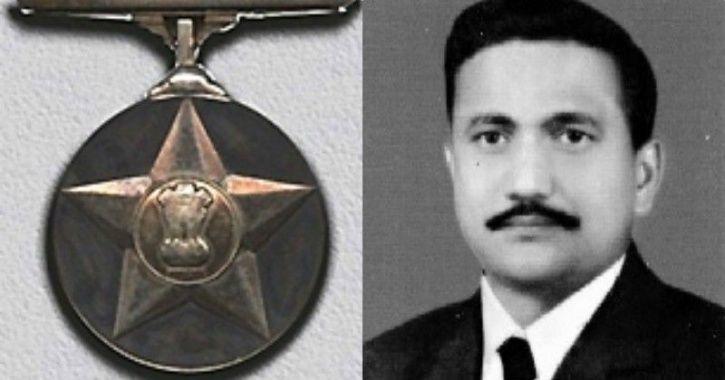
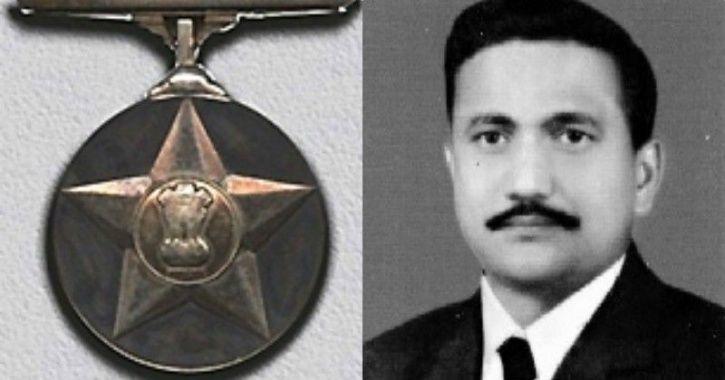
One such hero whose valour could have remained unsung was the Maha Vir Chakra (MVC) recipient Squadron Leader Ajjimada Bopayya Devayya who was awarded this honour 23 years after in 1988 for his sacrifice in an epic dog fight on September 7, 1965 war against Pakistan Air Force’s Supersonic F-104 Star-Fighter.
INDIA’S SECOND HIGHEST BATTLE HONOUR MAHA VIR CHAKRA/ SQN LDR AB DEVAYYA, PHOTO COURTESY: WIKIPEDIA
But whether it’s the destiny or the solace from the enemy that his valour and sacrifice was first recognised by Pakistan and then by Indian Air Force after which the second battle honour for him followed.
If it had not been Pakistani Flt Lt Amjad Hussain admission whose plane was destroyed by Sq Ldr Devayya and the book written by British writer John Flicker’s Book-Battle for Pakistan: The Air War of 1965, the valour of Sq Ldr Devayya would have gone unnoticed.
INDIAN ARMY FACEBOOK PAGE
Flt Lt Hussain survived the dog fight as he ejected in due time, but during one sortie in the same F-104 Star-Fighter to destroy Indian assets stationed at Amritsar air base in 1971 war, Flt Lt Hussain’s plane was hit and this time too, he ejected safety, only to be taken as Prisoner Of War (POW) by Indian forces.
A The Tribune report published in 2015 and a PIB documentary available on YouTube titled 1965 Indo-Pak Air War claims that Flt Lt Hussain told the story of a dog fight between his F-104 Star Fighter and Sq Ldr Devayya’s Mystere and how Sq Ldr Devayya despite being hit, destroyed Flt Lt Hussain’s plane before being martyred in the crash.
7th September 1965
The India-Pakistan war was in its thick and going gaga over the initial gains, Pakistan Air Force (PAF) was raiding Indian airbases on the western border. IAF was tasked to reply and attack the Pakistan airbases.
“Squadron Leader Ajjimada Bopayya Devayya flew in a Mystere Aircraft as a member of a strike formation that was assigned the task of attacking the heavily defended Sargodha airfield in Pakistan at 0555 hours on 7th September 1965. All members of the mission except Squadron Leader Devayya returned safely to base. As no other details were available at that time, Squadron Leader Devayya was listed as ‘Mission in Action,” reads the IAF Citation about Sq Ldr Devayya.
IAF/BHARAT RAKSHAK
The IAF had carried various strikes on Sargodha, Chota Sargodha and other bases of PAF and despite the difference having less advanced fighter jets- both in terms of speed and manoeuvrability, the IAF pilots gave their Pakistani counterparts befitting and scores of Pakistan highly advanced American F-86 Sabres and F-105 Star Fighter were destroyed.
When Sq Ldr Devayyas grit won over Flt Lt Hussain’s F-104
French Dassault Mystere was no match to F-104 Star Fighter as it was the first plane in the world which touched the Mach 2 Speed. Seeing the Mystere approaching the Sargoda airbase, F-104 intercepted Sq Ldr Devayya’s jet and dog fight which remained elusive and unsung resumed.
“The pilot of F-104 first fired an air-to-air Sidewinder missile, which Squadron Leader Devayya successfully evaded and the missile hit the ground. However, by virtue of its faster acceleration, the F-104 rapidly closed in on the Mystere and fired a burst of its 20 mm multibarrel cannon and succeeded in damaging Squadron Leader Devayya’s Mystere. The F-104 went ahead of the Mystere due to its higer speed,” reads the Citation.
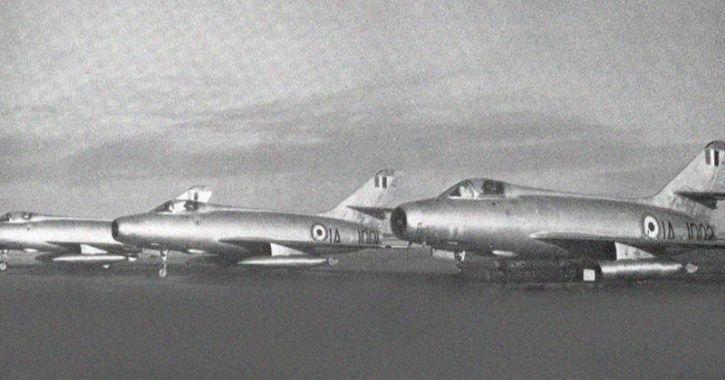
IAF MYSTERES, PHOTO COURTESY: BHARAT RAKSHAK
Flt Lt Devayya despite being hit, didn’t eject and decided to give a far superior plane, a fight for its life. He chased F-104 and rained the bullets on it from his Mystere’s power gun. The F-104 got hit and soon the flames enveloped it and Flt Lt Hussain had to eject.
“Undaunted and with utter disregard for his personal safety, Squadron Leadder Devayya flew his damaged Mystere in pursuit after the F-104. His decision was critical because the Mystere were operating at the extremity of their range and combat with an F-104 meant significantly lowering his chances of return to base.”
“Neither the Pakistani pilots flying skill nor the F-104 superior performance were apparently a match for Squadron Leader Devayya’s determination and single-minded purpose. Manoeuvring a damaged aircraft, he finally shot down the F-104. Thereafter, it is conjectured that Squadron Leader Devayya was unable to maintain control of his aircraft and was either killed in an unsuccessful low-level ejection or in a crash because of the damage that his aircraft had sustained.”
First taken as missing and then presumed dead
The then Wing Commander O.P. Taneja, who had led the first wave of attacks of which Sq Ldr Devayya was a part of, waited for him after returning to the base, but he didn’t come.
“I was told he must have gone to 32nd Squadron to return their aircraft and to change,” Taneja told IndiaToday years later during an interview published in 1988, “but when more than 40 minutes passed, I insisted on seeing him.”
As a customary, Flt Lt Devayya was presumed dead after a year.
The book
The PAF in later years commissioned a British writer, John Flicker to write about air war between two countries in 1965. Since he was commissioner by PAF, Flicker obviously painted PAF as superior air force which had caused harm to IAF in the air battle.
But the truth was a larger version of the dog fight between Sq Ldr Devayya’s Mystere and Flt Lt Hussain’s supersonic F-104 and the IAF had literally annihilated technically superior aircraft like F-84 Sabres with the relatively older and less advanced fleet of Mysteres, hunters and others.
VICTORY IN 1965 WAR. PHOTO COURTESY: INDIAN ARMY FACEBOOK PAGE
But the book had an anecdote about this dog fight where it was admitted that a Mystere had destroyed F-104 before crashing with its pilot.
PAF’s retired Air Commador, Kaeser Tuffail has also written about it on his blog-Mystery of the Downed Mystère where he also talks about how locals gave Sq Ldr Devayya burial.
The struggle
The book left many surprised, especially the then Wing Commander O.P. Taneja who led the attack at Sargodha who said approached higher authorities with this as quoted by IndiaToday. “I moved higher authorities and told them it had to be Devayya.” Wing Commander Taneja was sure because that day only two were lost-one Sq Ldr Devayya in the morning and another Flt Lt Bahul Guha in the evening.
But none paid heed to his appeals.
But in 1987, the War Studies Division of the Ministry of Defence saw Fricker’s book and one of its members, the then Air Commodore Pritam Singh paid attention to an important anecdote. Singh had also seen action in 1965 as a young pilot. He told IndiaToday in 1988. “I knew all the pilots in the Mystere formation and began to trace them,” Singh said when he commanding the airbase in Jodhpur.
SAINIKSAMACHAR.NIC.IN
Singh put all his efforts to connect the dots and talked to all people concerned including Wing Commander Taneja apart from collecting evidence from Pakistani broadcast acknowledging the loss of an F-104 on September 7 morning. In November 1987, Singh presented all his findings to the high command and the pieces of evidence were compelling and convincing.
And finally, the Mahavir Chakra for the great air warrior
Finally, 1988, Sq Ldr AB Devayya was posthumously awarded the Maha Vir Chakra (MVC) for an act of unparallel courage and bravery. His 51-year-old wife Sundari Devayya who received the news that husband was missing at the age of 29, had spent 23 long years without the country recognising her husband’s sacrifice.
INDIA
She spent those years in bringing up the couple’s two daughters, Smitha, 24, and Preetha, 23 (then in 1988) her gallant husband had left. Preetha was just eight months old her father sacrificed himself for the country.
(With inputs from IAF website, IndiaToday, The Tribune, blog of Air Commodore Kaiser Tuffail and PIB Documentary)
source: http://www.indiatimes.com / IndiaTimes.com / Home> News> India / by Maninder Dabas / February 14th, 2019
Coorg Indian Cafe, located in Mount Pleasant Square, features food and coffee from the region of Coorg in India.
Lavanya Sabin, left, and Preeti Machiah prepare dishes at Coorg Indian Cafe on Thursday, January 24th, 2019 / Lauren Petracca / Staff @ postandcourier.com
source: http://www.postandcourier.com / The Post and Courier / Home / February 06th, 2019
I had heard of people taking their pet dogs for walk in the parks, roads or footpaths for exercise. Also to prevent the animal from committing nuisance, easing itself, at the owner’s house with eyeful of its poop. I also see these dog-walkers daily in my area walking back with a wry smile once the dog does with its pooping, squatting on its hind legs. The poop would lie as a heap on the lawn of the park, walk-way or on the footpath for the unwary morning walkers like me to stamp on, grimace, curse the owners of the dog and move on…
It was in 1992 at the famous Central Park, New York, I was amused to see people armed with a bag and a scoop walk around with their dogs. It was around noon and I was surprised. I made a gentle enquiry with my friend M.P. Prabhakaran, a local resident. In his typical and critical way he said, “Americans are a different species and they often do things differently. You would not be surprised if you find them here at midnight with their pets, the dog, the bag to collect the poop and the scoop. By the way, did you find anywhere in the park any poop fresh or dried ? No. That’s America…”
Before he could denigrate India I interrupted, “That’s why you left India. But where is your dog?” I guffawed.
If the pet-dog’s poop is to be despised and discarded, there is another animal’s poop that is sought after specially in places where coffee plantations are found. My friend N. Raghavan of the pharmacy Raghulal & Co., who keeps sending medicines for my family regularly, last night sent me a packet with an amusing note, “For your use only.” With apologies to James Bond, ‘For your eyes only.’ It was not medicine. Rather a surprise packet. It was Wild Civet Coffee. Wonder, why the word ‘wild’? After all, civet cats are wild. Never domesticated. Let it be.
I have been reading about this super-special civet coffee quite for a few years now though not seen or tasted. Now thanks to Raghavan. Since a few years I have been looking for this animal or its shit with coffee seeds submerged in it in my own plantation at Kutta, Kodagu, without luck. This animal looks like a cat with a long fluffy tail (see pic.) and is both carnivorous and herbivorous found in Central Africa, Indonesia and also in other parts of the world and in Karnataka. In the coffee season they eat ripened coffee fruits (cherry or berries) and poop out the seeds that don’t digest. Civet coffee is the coffee seeds that civet cats excrete after consuming the fleshy berries. An enzyme present in the nocturnal animal’s gut and also in the anal glands produces a strong musky perfume.
Raghavan tells me that a Kodagu planter, Thamoo Poovaiah, is producing this Civet Coffee and marketing it through his partnership firm Coorg Consolidated Commodities (CCC).
There seems to be two issues being discussed about this unique coffee. One, its cost. As much as Rs. 25,000 per kg in foreign market. Real crazy. While it is Rs. 900 for 100 gms of Civet Coffee, it is Rs. 30 for 100 gms of regular coffee available in the market.
Two, cruelty to the animal. It seems civet cats are caught and caged so that they could be fed with coffee berries and collect the poops in plenty. The second allegation is being rubbished by Poovaiah as not true. Of course, NOT in Kodagu. It is obvious more the population of these civet cats, the more Civet Coffee for people like Poovaiah.
Many years ago, I had been to William Shakespeare’s birthplace, Stratford-upon-Avon in England and took a walk along the road in front of Shakespeare’s house. I was surprised to find many shops selling coffee seeds — raw and roasted — and, of course, powder. Each variety was branded, like ‘Mountain Grown Colombian Coffee’, ‘Kenya Special Coffee’, Vietnam etc. But I could not find India’s name anywhere.
In 1950s and 1960s I used to see a display publicity board kept in Coffee Houses at Bengaluru. The board had the image of an old man in typical North-Indian attire with a Hindu religious mark on the forehead and a long white beard along with a steaming hot cup of coffee. The text simply read: “Both are Indian.” Gone are those days of coffee and the way it was promoted…
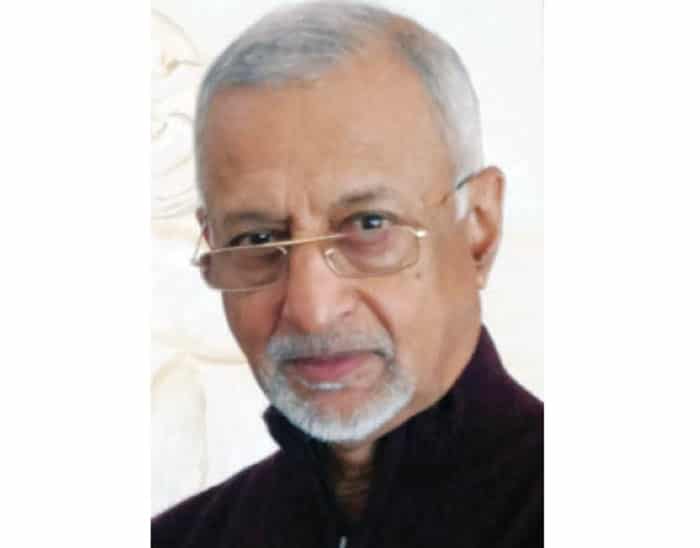
Thamoo Poovaiah
Now we have Civet Coffee. Good luck to Thamoo Poovaiah and dear Raghu. Enjoy this non-vegetarian coffee with the strong musky perfume hitting your nostrils !!
source: http://www.starofmysore.com / Star of Mysore / Home> Columns> Abracadabra / by K.B. Ganapathy / February 04th, 2019 /
Em: kbg@starofmysore.com
Starbucks is taking beverage innovation to new heights with the simultaneous launch of 134 new, crafted beverages. Delivering on the iconic ‘Third Place’ experience, while strengthening commitment to innovation and coffee passion, the global coffee chain has introduced a new initiative called Starbucks Barista Pride where baristas from each Starbucks store will feature a beverage unique to their store, conceptualized and created by themselves.
Till the end of February, all Starbucks stores across India will serve a specially curated beverage, enabling customers to ‘coffee hop’ and try 134 unique beverages across the 134 Starbucks stores in India.
Based on the idea of customization and personalization, while celebrating the heart and soul of the signature Starbucks Experience, Starbucks Barista Pride is here to showcase the talent and innovation the Starbucks baristas have to offer.
The wide range of unique beverages includes Turkish Espresso Praline available at the Chapel Road store in Mumbai, Chai White Chocolate Mocha available at the Vega Mall store in Bangalore and Winter Chocolate Cream available at the DLF Hub store in Delhi.
“Starbucks is committed to delivering an unparalleled, unique experience for every customer. We are delighted to introduce ‘Starbucks Barista Pride’- a new coffee forward initiative which highlights the exemplary coffee skills of our Starbucks baristas and brings to our customers a wide range of artisanal beverages. At Starbucks, we believe in celebrating each customer’s individual coffee preference and profile. For us each cup of coffee is unique and especially suited to the coffee palette of our customer. With a deep understanding of coffee, our Starbucks baristas personalize each cup to perfection,” said Ms. VeetikaDeoras, head – marketing, category, digital and loyalty at Tata Starbucks Pvt. Ltd. “We are humbled to lead specialty coffee in India and initiatives like Starbucks Barista Pride are a tribute to our customers and reflect the Starbucks 47-year legacy of sourcing, roasting and serving world’s top Arabica coffee.”
____
(Eds: Disclaimer: The following press release comes to you under an arrangement with Business Wire India. PTI takes no editorial responsibility for the same.)
134 Starbucks stores serve 134 unique beverages – offering customers 134 ways to celebrate handcrafted coffee
Mumbai, Maharashtra, India – Business Wire India
—-
source: http://www.theweek.in / The Week / Home> Live Updates> Business / by PTI / Mumbai – Business Wire India / January 22nd, 2019
Field Marshal KM Cariappa | Indian Defence Research Wing
Field Marshal K.M. Cariappa was instrumental in keeping the Indian Army away from politics and attempted to forge an all-inclusive army.
New Delhi:
Popular discourse on Field Marshal Kodandera Madappa Cariappa is often limited to placing him as the first ‘Indian’ commander-in-chief of the Indian Army who took over from Roy Butcher on 15 January, 1949, and the second person to have been conferred the rank of Field Marshal in 1986 after former Army chief Sam Manekshaw.
There are, however, countless other factors that make him a towering figure in the history of Indian military, all of which is still relevant and important on his 120th birth anniversary, which falls today, 28 January.
Field Marshal Cariappa was not only instrumental in drawing a strong dividing line between the Indian Army and politics but he also helped shape the Army into a highly professional force in its formative stage.
He attempted to do away with caste, creed and other barriers in the Indian Army by raising the Brigade of The Guards — a mechanised infantry regiment of the Indian Army — in 1949. Recruitment to it was open to all regions, castes, creeds and all sections of society.
Military historian and national security analyst Mandeep Singh Bajwa says that such was his stature, that Field Marshal Cariappa interacted directly with then Prime Minister Jawaharlal Nehru, not allowing anyone in the bureaucracy or others in the corridors of power to take liberties with him.
“But the crucial fact is that he kept the Indian Army away from any kind of political influence, in contrast to the political nature of the Pakistani Army,” Bajwa told ThePrint. “When Ayub Khan was appointed the commander in chief of the Pakistan Army in 1951, the Pakistan Army clearly had a role in shaping the foreign and domestic policies of the state.”
The military coup that followed in 1958 only testified to the political nature of the Pakistan Army.
“He wanted the Indian Army to be an apolitical entity and that’s the reason he decided against inducting former INA personnel into the Army as they had become political soldiers,” Bajwa adds.
A distinguished career and a run-in with a junior
Field Marshal Cariappa had a distinguished career as the Army chief but before that he led Indian forces on the Western Front during the India-Pakistan War of 1947.
He was instrumental in recapturing Zojila, Drass and Kargil and created a linkup with Leh before the then Indian government decided to abide by an UN-brokered ceasefire on 1 January, 1949.
An illustrative anecdote about his character relates to the 1965 Indo-Pak war. Field Marshal Ayub Khan had served under Cariappa in the British Indian Army. In 1965, Cariappa’s son, Flt. Lt. K.C. “Nanda” Cariappa, was taken prisoner of war by Pakistan after his aircraft was shot down. Khan had offered to release him, but Cariappa made it clear to Khan that his son was not to be given any special treatment.
Bajwa says that the interest of the nation was always first with Cariappa. “He accepted pay and ration cuts for the forces because he felt that it would help the cause of nation building,” he says.
The officer from Coorg
Cariappa was born in Coorg and was educated at the Central High School at Madikeri and the Presidency College in the then Madras state.
He began his Army career under the British and was among those in the first batch of King’s Commissioned Indian Officers at the Daly Cadet College in Indore.
His remarkable career had several firsts.
He was the first Indian officer to undergo the course at the Staff College, Quetta, in 1933. He also saw action in Iraq, Syria, Iran and Burma and became the first Indian officer to be given command of a unit in 1942.
In 1947, Cariappa became the first Indian to be selected to undergo a training course at Imperial Defence College, Camberley, UK.
He also oversaw the division of the British Indian Army between India and Pakistan during Partition.
He was chosen over General S.M. Shrinagesh and Lt General Nathu Singh Rathore to head the Indian Army.
After retirement, he served as the Indian high commissioner to Australia and New Zealand.
He died in Bengaluru in 1993 at the age of 94.
The current army chief General Bipin Rawat has said that Field Marshal Cariappa deserves the Bharat Ratna, the country’s highest civilian award.
source: http://www.theprint.in / The Print / Home> The Print Profile / by Amrita Nayak Dutta / January 28th, 2019
WELCOME. If you like what you see "SUBSCRIBE via EMAIL" to receive FREE regular UPDATES.
Read More »