Category Archives: World Opinion

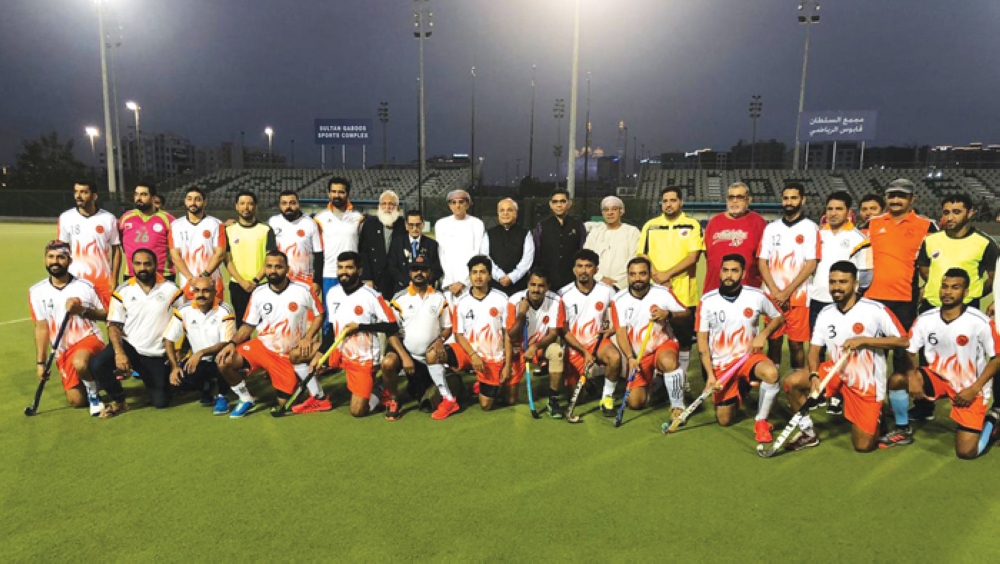
Hockey match organised to mark 70th Republic Day of India

Indian Ambassador Munu Mahawar presented a number of awards, including a special hockey stick to Naqvi for his contributions to promoting hockey in the Sultanate.

Muscat:

India’s 70th Republic celebrations kicked off in Muscat with a hockey festival held at the Sultan Qaboos Sports Complex in Bausher.

S.A.S Naqvi, former technical adviser of the Oman Olympic Committee and organiser of the event, said, “As it will be the 70th Republic Day of India, to commemorate this national event, we held two hockey cups: the Ambassador Cup, in which school teams competed, and the Republic Day of India Cup, where the Oman Veterans Team and expat Team Coorg competed.”

The Chief Guest of the tournament was Indian Ambassador Munu Mahawar, who was joined by Guests of Honour Kiran Asher, Group Managing Director of Al Ansari Group, and Captain Talib Al Wahaibi, Chairman of the Oman Hockey Association.

Team Coorg Muscat claimed victory in the Republic Day Cup, beating the Oman Veterans in a hotly contested match.

Naqvi said, “Team Coorg Muscat won the Republic Day Cup by edging out the Oman Veterans 3-1.” The Ambassador Cup was played in two categories: one for the boys’ teams and one for the girls. The winners of the cup this year were Indian School Al Seeb and Indian School Maabela, who both won their final matches on penalties.

Al Wahaibi said, “It was great and entertaining hockey and I am very grateful to Team Coorg and to the embassy for hosting these events for the youngsters every year. It was great and I really enjoyed it.” According to Naqvi, “The school teams of Al Seeb and Maabela won the Ambassador Cup. Another highlight was the Indian School Wadi Kabir Musical Band, which included 100 boys and girls.”

After the tournament, Mahawar presented a number of awards, including a special hockey stick to Naqvi for his contributions in promoting the game of hockey.

A number of events are being held across Oman in the run-up to Republic Day, culminating in a flag-hoisting event at the Indian Embassy in Muscat.

In an announcement published on Twitter, the embassy said, “Members of the Indian community in Oman are invited to join a flag hoisting ceremony at the embassy premises in celebration of the 70th Republic Day of India. Date & time: 26 January 2019 at 08.30 hrs. Please arrive by 08.15 hrs.”

“Please carry [a] resident card and a copy of the uploaded invitation,” the statement added.

source: http://www.timesofoman.com / Times of Oman / Home / by Times News Service / January 20th, 2019

After Darjeeling tea, can Darjeeling coffee be the next big thing?

Long famous for their teas, the hills of North East and West Bengal are embracing coffee.

Reuters
Reuters

The North East of India, with its rolling hills and verdant plantations, has long been synonymous with tea. Coffee – that dark, moody brew, lightened with milk, and frothed to perfection by rigorous pouring and mixing – largely remained a South Indian phenomenon, with most of the plantations located in Karnataka, Tamil Nadu and Kerala. But as the Indian economy opened up, global café chains such as Costa Coffee and Starbucks set up shop and took coffee to various parts of the country. They were followed by entrepreneurs who rode the artisanal wave and introduced Indians to pourovers and Chemex. And now, in the North East too, there is a silent coffee storm brewing, thanks to a handful of cafes, roasters, government-backed guilds and organic farmers, who are betting big on locally-grown coffee.

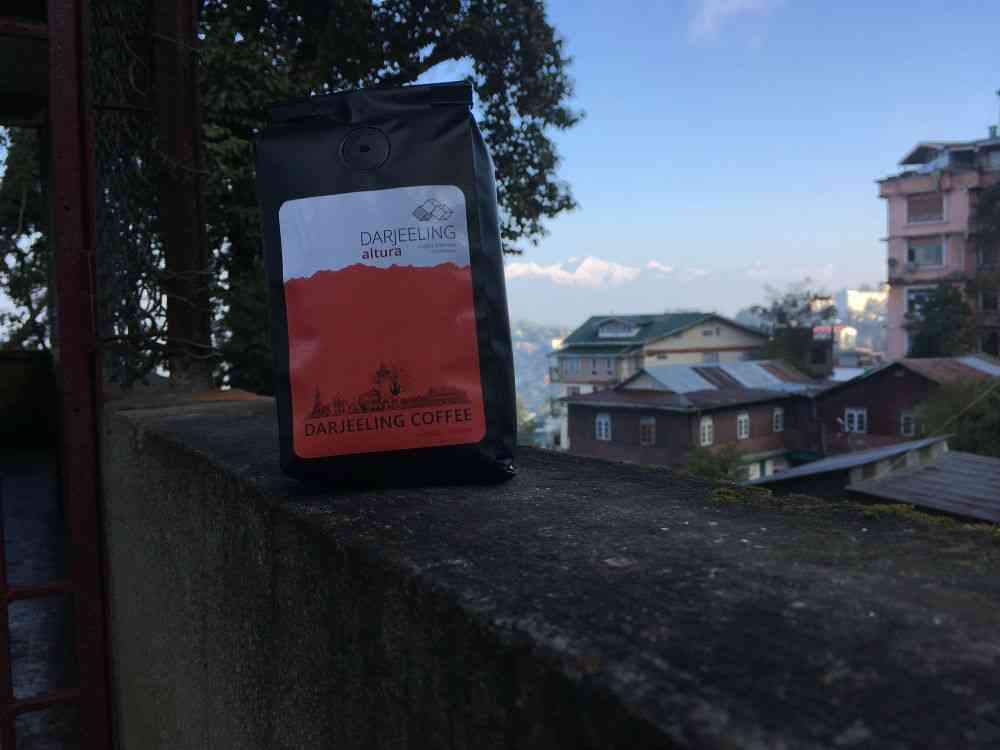
Beans grown by roasters such as Meghalaya’s Smoky Falls Tribe Coffee, Nagaland’s Été Coffee and Darjeeling Altura (an offshoot of the famous Beatles-inspired hotel Revolver in Darjeeling) are making their way to cafes and restaurants in the region and even being exported to countries like Singapore. Several artisanal coffee shops have mushroomed in towns and cities such as Kohima, Dimapur, Shillong, Gangtok, Darjeeling, Siliguri, Kalimpong, Guwahati, Imphal, Naharlagun, Tawang and Aizawl – all serving up delicious lattes and long blacks, complete with coffee art.

“Our hills are synonymous with tea, [but] we [Indians] know very little about it,” said Prayash Dewan, partner at Darjeeling Altura. “[We drink our] tea adulterated with milk, and the leaves used are mostly CTC [processed using the crush, tear, curl method]. We cannot afford to drink the real Darjeeling tea, nor do we know how to savour it. Coffee is something we can do better with and make it our own, from growing to processing to consumption.”

Photo credit: Darjeeling Altura

Local factors
In the late 1980s, the Coffee Board of India, the governmental organisation tasked with promotion of coffee in the country, began to develop coffee plantations in the North East, partnering with nodal agencies on the ground. But this was soon discontinued. The agencies became defunct and the board began to implement its coffee development scheme directly by offering subsidies and training to farmers. The main goal was to provide livelihood to tribal communities and detract them from pursuing jhum or swidden cultivation.

According to the latest statistics from the Coffee Board in May 2018, out of an 8,013-hectare planted area in the North East, about 3,000 hectares is yielding area, and the rest is in the pre-yielding stage – coffee cherries take three to four years to grow. The Board’s November 2017 report had placed the total planted area at 7,501 hectares, which indicates that 512 hectares were planted with fresh saplings in the region within a few months – a marker of how rapidly local farmers are embracing coffee cultivation. Only 200 metric tonnes are being produced annually – yield levels are still low because the climate and geography of the Himalayas are not as conducive to large-scale coffee cultivation as in the Western Ghats. Also, farmers in the Himalayas still continue to treat coffee as ancillary income as compared to growing pepper, says Y Raghuramulu, director of research, Coffee Board of India.

Photo credit: Pxhere [Creative Commons CC0]

So what has contributed to the growing popularity of coffee growing in the region?

“Regional entrepreneurs have set up roasteries and cafes that promote North East Indian coffee,” said Raghuramulu. “Since the region produces very small quantities for big retail players to make profits, local businesses are key. Earlier, the coffee board would buy the beans from farmers and auction them, bearing the cost of marketing, but now we’re all [for] encouraging local entrepreneurship.”

Another advantage is that coffee from the North East is more or less organic, which appeals to new-age consumers and artisanal roasters alike.

Photo credit: Été Coffee.

Stories of autonomy
In a region that depends heavily on the state for employment, most entrepreneurial stories are about becoming independent. “The philosophy of our company is based on one simple truth: every single person should stand on their own,” said Lichan Humtsoe, founder of Été Coffee. “In our state [Nagaland], nearly 95% of the population depends on the government directly or indirectly, which means if you are not part of the system, you are nowhere. And the number of graduates we are churning out every year is staggering.”

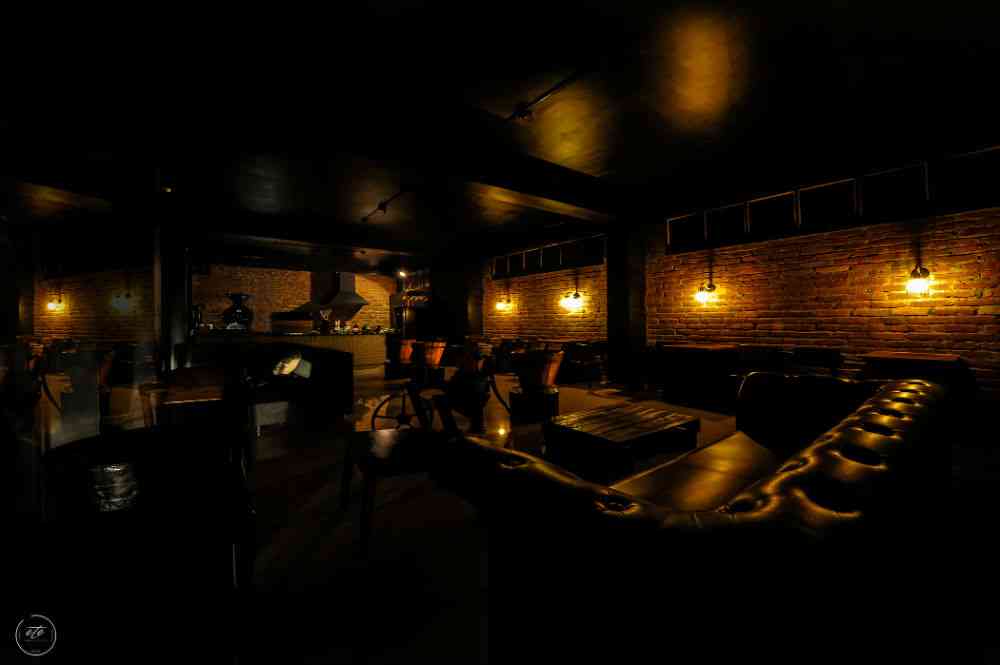
Eté consists of a 19-member team that runs a mobile coffee bar, a roastery, and a brick-and-mortar coffee bar. It has so far sold around 20,000 packs of coffee, provided consultancy services and powered up 13 cafes in Nagaland, Manipur, Delhi and Singapore. Quality control is strict – only 100% organic Arabica is used, sourced from six districts in Nagaland. When they started, an online shopping site was launched for pan-India retail. But as local demand superseded the produce, they were compelled to put it on hold.

Eté had humble beginnings. “I am a science graduate with a Master’s degree in social work, and I worked as a professional wedding photographer as well as with the government,” said the 32-year-old Humtsoe. “It was a self-taught venture when we started in 2016, driven by a passion and love for coffee, and the need to offer alternative employment opportunity. And with more growers coming up, and the government vigorously implementing coffee plantation projects in Nagaland, it is likely to influence the economy of the state.”

Photo credit: Été Coffee.

The Nagaland government has pledged to set up 50,000 hectares of coffee plantations by 2030. Local farmers are being encouraged to give up the traditional practice of Jhum farming, and embrace shade coffee cultivation instead. The two-year-old Nagaland Coffee, a subsidiary of a South African company with a memorandum of understanding for 30 years with the state, deals directly with coffee growers in rural Nagaland. It exports single origin organic coffee to the Persian Gulf and South Africa, and supplies to its coffee shop in Dimapur.

Most of these businesses are possessed by a conscientious zeal. Été Coffee’s tagline is Justice a Cup, while both Darjeeling Altura and the café and bookstore Nerdvana, also in Darjeeling, are champions of sustainable economy.

“Our philosophy is equity – we’d want to earn our share from our coffee while providing fair and equitable shares for the farmers from whom we purchase the cherries, and the few retailers and cafes that have been patronising Darjeeling Altura,” said Dewan. Été earmarks 10% of its earnings for its Employability of Youth Fund that sponsors local youths who are willing to undergo skills training to become employable.

Photo credit: Nerdvana.

Low awareness
One of the more interesting aspects of this trend is that none of the stakeholders held international certifications when they started, and most are driven by a passion for coffee. Darjeeling Altura, for example, started off with a few saplings that yielded good beans. These were processed and roasted in 2014 with a good deal of help from YouTube and a lot of reading.

Ditto for 30-year-old Yugal Sharma, who opened Nerdvana in 2015. “When I started, I didn’t even know how to make a cup of good tea,” said Sharma. “I got a kilo of raw beans from Bijanbari [a small town in Darjeeling], did some research on how it can be roasted in a frying pan, and posted pictures on Instagram. A month later, an entrepreneur came calling, who had just started roasting Darjeeling coffee. And I ended up dedicating a menu to that coffee. Coffee is becoming a niche market, and [Himalayan coffee] will make it special, exclusive and alive.”

The buzz around North Eastern coffee in the country is growing louder because of its unique flavour profile. “The roasting of this coffee is challenging in a good way,” said roast master Mithilesh Vazalwar, who is one of India’s few coffee-quality graders and its first AeroPress champion. “It’s well-rounded, has beautiful acidity and works very well for a smooth flat white or delicate pourover/iced AeroPress. Even cultivation and processing are incredibly methodical in the region. The North East has the potential to become a premier coffee-growing region – [it] just needs more recognition.”

But as with all small businesses, perseverance is key. “Very few people are aware of Darjeeling coffee, though the response has been positive,” said Dewan. “On the other hand, yield is so little that the economies of scale are yet to come into play. Raw costs are very high and most real coffee is sourced from South India at much cheaper rates. So, despite the encouragement, establishments choose to buy the other coffee.”

Photo credit: Été Coffee.

source: http://www.scroll.in / Scroll.in / Home> Magazine> Food / by Tania Bhattacharya / January 29th, 2019

Bopanna: ‘I faced Stefan Edberg when he was coaching Roger Federer’

Bopanna-FedererKF30jan2019

In an interview to GQ India the doubles player Rohan Bopanna revealed who has been his biggest idol in life. Bopanna picked the six-time Major winner Stefan Edberg not only for his on-court successes but behaviour as well.

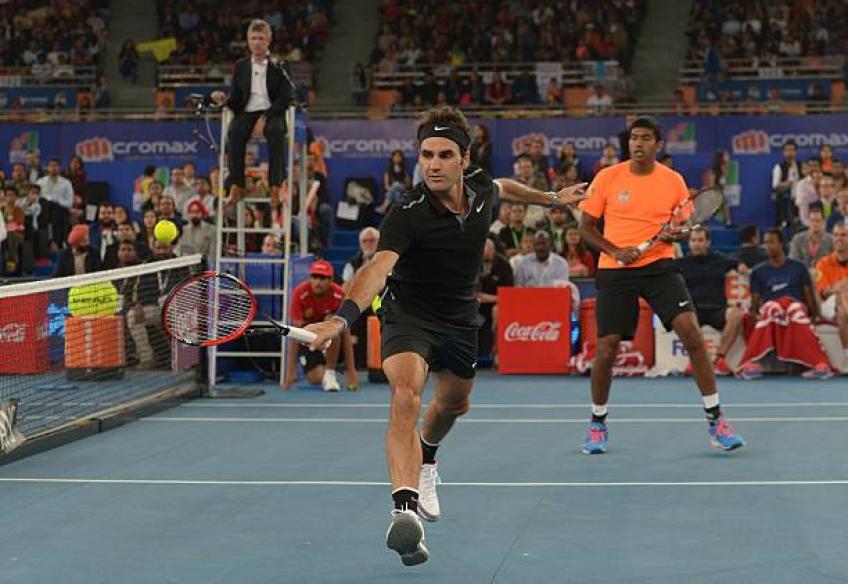
“I had the opportunity to meet him, and he was just as I’d imagined him to be”, confessed Bopanna. “Aisam-ul-Haq Qureshi and I we were playing against Roger Federer and Stanley Wawrinka [in 2014], and Stefan Edberg happened to be coaching Roger Federer.

He happened to be sitting in the box obviously, watching Federer. It was crazy – I couldn’t have imagined playing against some of the best tennis players in the world, and then having your idol watch the match.”

Bopanna also revealed he changed his eating regime in recent times: “I did a food intolerance test in India, which showed that my yeast intolerance was very high. So I’ve completely stopped having bread; it’s been about two years now.

Perhaps before a match, I’ll have fish and white rice, which gives me the energy I need. While playing, I’ll have a banana and you need electrolytes and water of course – especially when it’s hot. Otherwise, I keep things as simple as possible.

Fitness wise, I travel with my trainer, and that’s made a huge difference in terms of stretching at the right time, cooling down – especially as you get older and recovery becomes more important.”

source: http://www.tennisworldusa.org / Tennis World / Home> Tennis News> Roger Federer / by Luigi Gatto / January 28th, 2019

Few flavours of what sustained the British remain in Coorg

In Coorg, regional cuisines bear the imprint of a long-gone era.

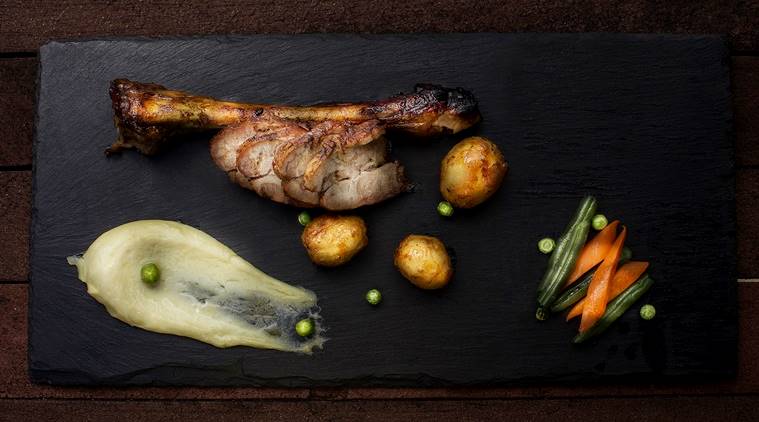
A whiff of the raj: Roast lamb.

I’m not a fan of Anglo-Indian cooking (nor of the omnipresent curry powder that got dunked into its gloopy, bland sauces). Yet, the diverse ways in which English tastes combined with regional ingredients and cooking styles across India during the Raj continue to fascinate me.

On a recent visit to Coorg, I found myself wondering what it must have been like for the British sahibs and memsahibs as they found themselves amidst the seclusion of its forested hills. Watching the mists drift across the plantations of Siddapur in south Coorg, Karnataka, I tried to imagine how these foreigners recreated a taste of British cities and shires in this isolated station, where estates were often 20 to 30 miles apart.

Gazatteer of Coorg, first published in 1870, notes that following the opening of Mercara Estate in 1854 by one Mr Fowler, the first European planter, dozens of extensive estates sprang up in Coorg within a short time. “Here seemed to have been discovered the Eldorado of honest industry in a delightful climate and home-like country,” it notes.

Yet “home-like country” it wasn’t. As the British initiated the planting of coffee in a big way in Coorg, Hassan and Chikmagalur, they were confronted by brutal heat, unfamiliar customs, frightening wild animals, blood-sucking leeches and a lengthy monsoon that could stretch up to six months.

Bread pudding at the Evolve Back Chikkana Halli Estate in Siddapur.

But the interplay between diverse people, larders and culinary traditions led to the development of a distinct culture on the plantations. A lively snapshot of the time appears in Cathleen Ballantyne’s account of plantation life, Plenty Salaams, first published in 1954. Ballantyne arrived in Coorg during the 1880s for a visit and stayed with her husband George, a planter, for 50 years.

Describing the thrum of daily life, Ballantyne writes, “On a coffee estate, the day began early. At 6.30, one was wakened by the clanging of the estate bell, which summoned coolies to muster-roll before starting their day’s work…Then at 7, out on the verandah, chhota hazri — a substantial meal of porridge, eggs and bacon, coffee and fruit. For the dorai (the master), there came the morning round of the estate. For the wife, the walk, or ride, before engaging in the usual household routine, such as the ordering of meals, the weighing out of all the commodities required for the day, and, by using a lactometer, finding out that the milk had not been watered…”

Celebrations served to break the monotony and hardship of plantation life, and Ballantyne’s droll account is replete with instances of tomfoolery and merry-making during parties and picnics. My favourite is a description of a slapstick food fight at a picnic on the banks of Cauvery, where “rolls, potatoes, curry puffs and other eatables were flung about with great dexterity.” The beloved foods of the foreigners came out during these outings. Ballantyne mentions “lobster salad, chicken in aspic, cold saddle of mutton, curry puffs (pastry enclosing curried mince), an assortment of cold sweets”. Milk punch and whiskey flowed, heightening the attractions of these riotous, unending rounds of feasting.

Evolve Back Chikkana Halli Estate in Siddapur, my perch during this visit, has devoted some time to researching this slice of life. Over a meal of pepper water, mutton-ball curry, delicate coconut rice, and pan-roasted roast chicken, chef Naveen Alvares talked about the months of research that led to the planter’s menu currently served at their restaurant Peppercorn. Disappointed with their initial recces of Anglo-Indian restaurants in Bengaluru, Alvares and his team took the help of late Ranee Vijaya Kuttaiah, the author of the highly regarded Cuisine from Coorg, to master colonial-era planters’ dishes. The roast chicken, for instance, is a simple recipe that requires chicken to be marinated with salt, pepper and vinegar, caramelised with a little sugar and then cooked in its own juices in the pan.

No Anglo-Indians remain in Coorg today. In the absence of first-hand testimonies and experiences, reminiscence and nostalgia play a vital role in forming a clearer picture of life in those times. Vivian Rodrigues, whose family has owned coffee and pepper plantations in Pollibetta in Coorg and Saklespur in Hassan district for over a century, painted a vivid picture of the clubs that sprung up during the 19th century as places for the planters and their wives to relax and socialise. “The bar was the most important fixture in the club and the choicest single malts and gin were stocked. The cuisine was obviously British. Local cooks became butlers and were rechristened with British names that were easy to pronounce. We had an Anthony from Ooty who used to be Arokiaswamy!” he recounts.

Bridget White-Kumar, author of several books on Anglo-Indian cooking, says, “The British and Europeans in Coorg ate largely what they ate back home. Yet, over time, some regional influences came into their cuisine and they began eating rice with a curry made with minimal spices.” Various blends of curry powder were concocted, including Bolst’s hot curry powder, which became an instant rage.

Though locals never quite took to curry powder, they inherited an abiding love for baking from the British, and recipes of cakes dating back to the colonial times continue to be religiously followed in homes, clubs and bakeries. “It’s typical in Coorg to come home to a freshly baked cake in the evening,” says Muthu Bopanna, the owner of coffee plantations and a heritage homestay in Madikeri.

Roasts and barbecues are just as beloved. Vancouver-based blogger Shalini Nagappa cherishes her childhood memory of a Christmas spent feasting on roast turkey at her uncle’s farm near Kushalnagar. “What a moment of high excitement it was! And while it was not the exaggeratedly plump, meltingly tender, cartoon bird of my dreams, my uncle’s penchant for adding ‘more butter’, a la Julia Child made it divine,” she writes in her blog, A Cookery Year in Coorg.

After India gained independence in 1947, British planters sold their estates to Kodavas and other south Indians. The food served on these estates today tends to be a mix of traditional Kodava, Mangalorean, Bunt, Lingayat and Chettiar cuisine — depending on the ownership — and their personal eclectic influences.

Former journalist David Housego, writing about the cooking of the Raj, observed that in contrast to the Portuguese, who left a strong culinary footprint on the cuisine of former colonies like Goa, the British largely ignored the rich regional cuisines of India. As a result, no truly great hybrid dishes came out of this East-West encounter. This is evident in Coorg, where the local cuisine remains largely unaffected by British influence. Yet, one still gets a whiff of the time when the intermingling of British, Irish, European and Indian culinary accents created a unique Anglo-Indian aroma across the coffee estates, planters’ clubs and dak bungalows of Coorg.

This article appeared in print withe headline ‘Curry Puff Days’

source: http://www.indianexpress.com / The Indian Express / Home> Eye / by Sona Bahadur / January 20th, 2019

Rohan Bopanna on his home away from home, the Australian Open and the future of Indian tennis

We caught up with tennis star and coffee connoisseur Rohan Bopanna at his swanky Airbnb pad in Melbourne, who told us why taking a power nap is the best thing to do before a match
RohanBopannaKF30jan2019

Tennis player Rohan Bopanna is in Melbourne to play doubles at the Australian Open, one of his favourite Majors, “because the weather is always incredible at this time of the year; and the hospitality is amazing.” For instance, players have access to an exclusive concierge desk that’ll organise everything from bookings at the hottest restaurants in town; or a seat at the cricket match.

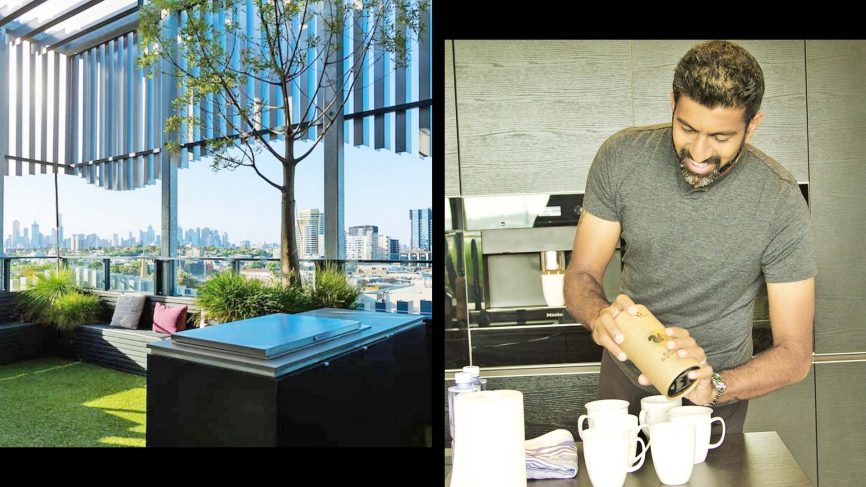
While they’re here, Bopanna and his crew are staying at a stunning four-bedroom penthouse at The Birdcage building in South Yarra, a 20-minute drive away from the iconic Rod Laver arena. When we visit, Bopanna brews us a cup of his master blend for Flying Squirrel, using beans sourced from his Coorg estate. “It’s quite popular on the circuit,” he says. “Some players have already complained that I haven’t replenished their supply from last year.”

It’s clear that Bopanna’s at home here. On the kitchen slab lies a packet of granola by The Muesli Guys, and a test tube of Rooftop Honey. In typically Aussie style, this is a hyper-local project run by urban bee-keepers, who harvest honey from beehives placed on the rooftops of some of Melbourne’s coolest bars and cafes.

The previous day, Bopanna and his doubles partner Divij Sharan lost to Spaniards P. Carreño Busta and G. García-López in an early round at the AO, but he appears to be in good spirits. “It’s still a new partnership, and we’re working to develop our rhythm.” It’s a combination that’s worked in the past, with the duo winning a gold at the Maharashtra Open earlier this month, and at the Asian Games in Indonesia last year. Before he heads out for a practice session, Bopanna chats about why he prefers living in an Airbnb to hotels and the best spots in his South Yarra hood.

This is a great neighbourhood. You have the Chapel Street Bazaar, Prahran market close by – all very indie and cool.

I love walking around, and I love that there are so many great restaurants within walking distance. If I want to go out for a cup of coffee, I’ll go down the road to The Pound Café. In terms of places to eat, I love Mr Miyagi for its Japanese. There is Chapelli’s for Italian, and Oriental Tea House, which has great dumplings. One of my favourite restaurants in the city is Neil Perry’s Spice Temple [at the Crown hotel].

You’ve been using Airbnb’s instead of hotels for a while now. Why?

The space really makes a big difference. When you’re travelling more than 30 weeks in a year, it can get tough to just live out of a room and a bathroom. For some years, I’ve been travelling with my coach and trainer, and it’s nice to be able to travel together and stay together. Tennis can be a lonely sport.

I have friends in Melbourne, and it’s nice to be able to call them over. The other advantage is having your own kitchen, which I use to make a little breakfast etc. I don’t cook a lot, but whenever I do, I can control the oil that goes into the food. This building has a gym, which is something I also look for when I’m looking at Airbnbs.

This feels more like living like a local, than say living in the CBD, which is always so busy. Not a lot of tennis players live here, which I like, because you get a bit of a break. Otherwise, it’s like going to office – tennis is office for me – and then coming back home and seeing the same people.

Who are some of your tennis icons?

Stefan Edberg – for the way he conducted himself off-court too. I had the opportunity to meet him, and he was just as I’d imagined him to be. Aisam-ul-Haq Qureshi and I we were playing against Roger Federer and Stanley Wawrinka [in 2014], and Stefan Edberg happened to be coaching Roger Federer. He happened to be sitting in the box obviously, watching Federer. It was crazy – I couldn’t have imagined playing against some of the best tennis players in the world, and then having your idol watch the match.

How do you get yourself in the zone before a game?

I sometimes take a 10-12 minute power nap before I get in the game, just to relax my body. I visualise the game, and then get into it. Otherwise, there’s so much going on on the tennis court, in the locker room… This is to just cut off and be prepared to focus on my game.

Props to you to be able to pass out before a match, despite the anticipation and the pressure.

Absolutely, once I lie down, I can knock out within a minute or two. And it really helps me get in the zone.

How has your fitness and diet changed over the years?

I did a food intolerance test in India, which showed that my yeast intolerance was very high. So I’ve completely stopped having bread; it’s been about two years now. Perhaps before a match, I’ll have fish and white rice, which gives me the energy I need. While playing, I’ll have banana and you need electrolytes and water of course – especially when it’s hot. Otherwise, I keep things as simple as possible. Fitness wise, I travel with my trainer, and that’s made a huge difference in terms of stretching at the right time, cooling down – especially as you get older and recovery becomes more important.

What makes the Australian Open Special for you?

The culture, the tournament, the way they treat us – it’s one of the best experiences for players. The tournament always goes out of the way to constantly make sure that players get the best possible facilities, and that’s why a lot of players love coming to the Australia Open. Melbourne is a great city, especially for someone like me who’s a huge foodie. There are fantastic restaurants across the city; and the weather is great this time of the year. Even if you just walk around the courts at Melbourne Park, irrespective of who is playing, there’s always a big crowd that’s very passionate about tennis. You see [people from] different cultures, and it’s a delight to see how they cheer and help their players get through those tough rounds. It’s a great opportunity for anyone to come and experience this atmosphere.

AustralianOpenRohanBopannaKF30jan2019

Which are some of your other favourite tournaments to play at?

Luckily for me, my tennis takes me to some wonderful cities, London for Wimbledon for example. And you get to see them at their best when you travel at the highest level. I love Palm Springs too [which hosts the Indian Wells Masters in March]. Indian Wells is a small place, but it’s really nice there, you can drive around and explore the town. It’s very quiet and has a lot of golf courses. I love golf, so I get in a game whenever I can. In terms of places I just love visiting, it would have to be New York. Manhattan for the buzz. But when I’m there it’s for 10-12 days, two weeks, I don’t know if I could live there.

What do you think of the current state of Indian tennis? Any younger players to watch out for?

I’d love to see more international tournaments – like ITF’s Futures, ATP’s Challengers – being played in India. And we need a more robust grass-root system. The former is important because it would help Indian players to play more in their own country. Because tennis is an expensive sport and to constantly travel to different countries to play becomes tough for many athletes. So if each state in India, could just bring in one or two tournaments, it would be great. Right now, we only have one ATP event in India [the Tata Open Maharashtra in Pune].

Do you see this happening in the near future?

No, but I think it depends on corporates, federations, players, everyone coming together and really building that system. In Bangalore, I have tied up with this gentleman who runs the Sports School. It’ll have boarding, lodging, and offer multiple sports. Every kid will have to play two hours of mandatory sport; and after they’re 11 or 12 they can specialise in the sport of their choosing. I already have the Rohan Bopanna Tennis Academy in Bangalore, and have a bunch of Serbian coaches who are constantly there. Now we will coach exclusively via the school, which has seven ITF-approved tennis courts. It’s a similar concept to the schools you have in the US – where sports is the priority, but you also get a well-rounded education.

Building a new system from the ground up will take time to bear fruit.

It will definitely take another 10-15 years, because it’s a process at the end of the day. Not everyone is going to become a world champion, but you have to do the right things to get the right results. And I’m fortunate to have access to some of the world’s top coaches, the latest developments in the field of sports science. So we’ll have a sports science centre too – and kids will have access to the correct diet, to nutritionists, psychologists, best practices in fitness, recovery…

Who are some of the most exciting young players on the circuit now?

There are a couple of youngsters who are doing well – Siddhant Banthia. Mahak Jain, who’s playing well and has a lot of potential. I think we have some great juniors in India, but sometimes the coaches need to understand that there’s a better facility, a better system for their students. Abroad, coaches will train a particular age group, say from six or seven, till 12 or 13. Then someone else takes over and takes their game to the next level. Here you may have a great talent, but coaches will coach kids till they’re 18, and that doesn’t always give you the best results.

Is the tennis community quite tight-knit in India?

It is everyone doing their own thing at the moment, but I think we all need to come together for the better of the sport. I think that’s what will make a difference at the end of the day.

source: http://www.gqindia.com / GQ / Home> Live Well> Travel / by Shika Sethi / airbnb.com / January 25th, 2019

‘Excellence is taking pride, being best in work’

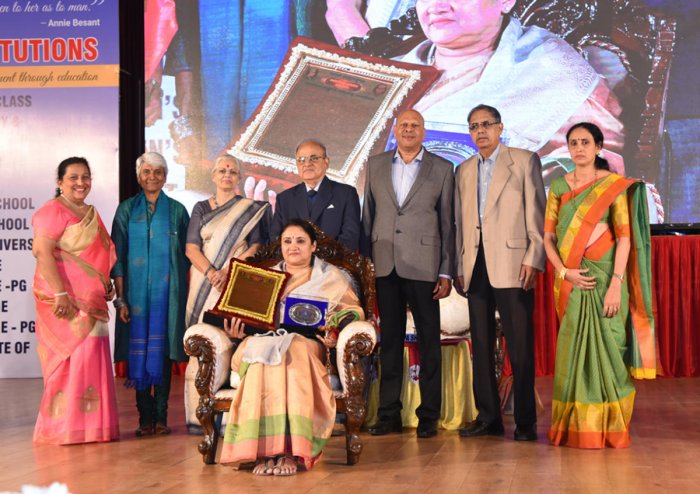
Athlete Vandana Rao was felicitated at the valedictory function of Besant centenary celebrations organised at Dr T M A Pai International Convention Centre in Mangaluru on Saturday.

Bengaluru-based Coffeelab Limited President Sunalini N Menon stressed on Saturday that excellence is taking pride in work and being the best at the work.

She was speaking at the valedictory function of the Besant centenary celebrations organised by Women’s National Education Society (WNES) at Dr T M A Pai International Convention Centre here.

She said, “Nobody remembers how fast the job was done, but how well the job was done. Whether be it washing utensils in the kitchen or sweeping the floor, being the best in your work is a self-portrait of what you are and the best insurance in the future for a job,” Sunalini said.

She said creativity and eye for detail are a must for the perfect execution of goals.

Sunalini, reflecting on her four decades of experience as a coffee taster, described the coffee tasting as a fascinating journey. “It is not a mere cup of coffee. There is so much of science and knowledge that you will learn humility,” the internationally recognised coffee-taster said.

She also invited the students present in the hall to learn more about the profession.

She said Indian Coffee Board offers ‘Kaapi Shastra’ on how to brew a perfect cup of coffee and there is a PG diploma course on coffee quality and another course on coffee entrepreneurship from Indian Institution of Plantation Management (IIPM).

She said her Coffeelab analyses samples from across the world.

“We are more as a facilitator, depending on what the market wants and what the grower can provide,” she said.

Presiding over the programme, former vice-chancellor of SNDT Women’s University Prof Rupa Shah urged women not to be fearful about the outcome. “I will compete and emerge successful should be the motto,” she stressed.

The Besant group of institutions felicitated alumni achievers including writer Kasturi, gynaecologist and well-known athlete Vandana Rao.

Kasturi and Devayani, who had emerged as toppers and declared as Vasantha Ranis while in school in 1959, were felicitated on the occasion.

Devayani thanked the management for remembering them after 50 years.

source: http://www.deccanherald.com / Deccan Herald / Home> State> Mangaluru / by Harsha, Mangaluru / January 19th, 2019

The woman who brewed change

Asia’s first woman coffee taster, Sunalini N. Menon, is now opening a museum for coffee

SusheelaNair01KF30jan2019

Susheela Nair

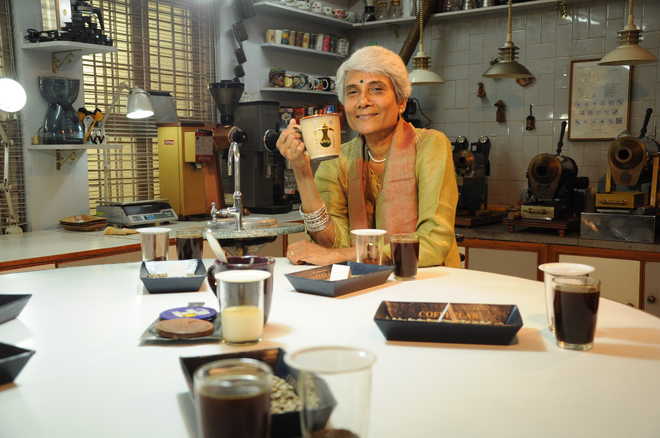
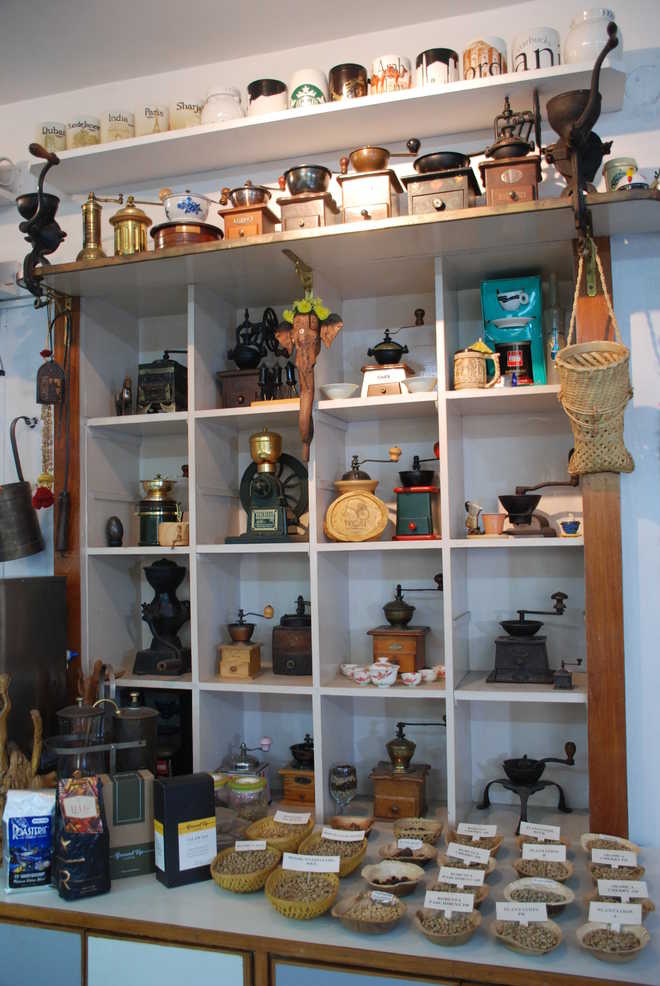
The aroma of coffee wafts through the air as one steps into the Coffee Lab in Sadhashiva Nagar, a posh locality in the heart of Bangalore. Every nook and corner of the lab is adorned with mugs, coasters, antique jugs, filters and other coffee paraphernalia collected from all over the world. The Coffee Lab bears the semblance of a mini museum with its walls lined with a variety of packaged coffee and curios from around the world — exquisite grinders, scented candles, filters, mugs, and a whole shelf of good old-fashioned tumblers, a stark contrast to a regular sparkling white laboratory filled with shiny apparatus used for coffee accreditation and testing.

SusheelaNair02KF30jan2019

It also houses memorabilia, including tribal products from coffee growing areas, areca nut pickers, ancient milk measurement units and coffee pots. Each equipment throws light on the culture of the country it comes from. For instance, Italian pots have ornate carvings; the ones in Iran are known for their silver and filigree work; Pakistan has a recurring crescent moon pattern while Egypt sports designed Cleopatra. The star attraction of the Coffee Lab is the painting of Mona Lisa in coffee powder.

In the middle of the lab, inhaling deeply from one of the deftly prepared samples of green and roasted beans, in front of her, is the first woman coffee taster in Asia and ‘quality-control expert’ Sunalini N. Menon. After acquiring a Master of Science in food technology, Sunalini’s first choice was to become a dietician, but destiny had something more fascinating in store for her. She had to choose between further studies at the New York Institute of Dietetics or a job with the Coffee Board. But she chose the latter which was a turning point in her life.
From an assistant taster at the Coffee Board of India to the head of the quality control department (at the age of 28), and director (quality control) until 1995, Sunalini has traversed a long way fighting a lone battle against all odds at every stage of her career. Steering her way through the male-dominated world of coffee tasters and growers, recognition and acceptance as an accredited international cupper came her way belatedly, almost two decades later. She is a walking encyclopaedia on coffee and knows the coffee bean inside out. This coffee veteran takes 100 sips of coffee — all in a day’s work. Known as Asia’s first woman of coffee, she moved on to set up her own lab, the Coffee Lab in Bangalore, in 1997 for evaluating the technical nuances of Indian coffee.

The advent of liberalisation in the Indian coffee market inspired Sunalini to set up her own lab in 1996. She established Coffee Lab Private Limited, the first private sector lab of its kind equipped with modern equipment and accredited by the Coffee Board of India, in Bangalore.
Explaining the main objective of her Coffee Lab, Sunalini says, “From the seed to the cup, we offer the entire gamut of services. We delve into the technical aspects of coffee-making, quality testing, advising growers on how and when to sell the beans, and preparing special coffee brands. Coffee Lab uses the time-tested techniques of visual and organoleptic evaluation for the quality analysis of Indian coffee. We conduct appreciation courses for homemakers and also classes for farmers.”

True to her social commitment of empowering women economically, Sunalini has employed women to handle the sensitive and critical steps of green coffee evaluation. Though there are innumerable problems plaguing the coffee industry, the coffee veteran believes that the burgeoning coffee culture in the country has the potential to impact the market.

Revealing her plans to start a Coffee Museum, Menon says, “A trust will be formed as it is a non-profit initiative. We will start the story of Baba Budan (who brought coffee to South India) and traverse through the cultural aspects of coffee, diversified cultivation pattern and types of seed material. We are planning a layout that is representative of a typical Indian coffee plantation. The exhibits will include antique coffee roasters, grinders, brewing equipment, mugs, cups and coffee powders from different parts of the world.”

source: http://www.tribuneindia.com / The Tribune / Home> Trends / January 26th, 2019

War Hero, Son Of Kodagu Lt. General B.C. Nanda Passes Away

LtGenNandaKF08jan2019

Madikeri:

Lieutenant General (Retd.) Biddanda Chengappa Nanda passed away last evening in Madikeri. He was 87. Family sources said that he was suffering from age-related ailments and died en-route to a private hospital in Mysuru. He is survived by his wife and four daughters and one of his daughters Shalini Nanda Nagappa is a well-known Canada-based food blogger.

The last rites were scheduled to be performed after 3 pm today at his residence on Abbey Falls Road, with full military honours. Senior officers of the Army are expected to pay their last respects to the decorated soldier.

One of the most loved military officers from Kodagu district who served in the Indian Defence, Nanda rose to eminence in the Army. He served as the Army Commander, Northern Command and settled down in Kodagu after his retirement and was involved in many social service activities.

He was born to Biddanda S. Chengappa and Bollavva couple on May 12, 1931. Bollavva was the sister of Field Marshal (first Commander-in-Chief of the Indian Army) Kodandera M. Cariappa. Nanda had served in the Army between 1951 and 1989.

Nanda’s father Chengappa was the Chief Conservator of Forests, Andaman and Nicobar Islands. Chengappa also served as a forest officer in Commonwealth Nations and had given priority to forest conservation.

A college in Coimbatore is named after Chengappa. Also, the biggest bridge in Andaman and Nicobar Islands (Austin Bridge) connecting Middle and North Andaman Islands is named as Chengappa Bridge as Chengappa, in the capacity of a forest officer, prepared a working plan for these islands.

After completing his primary schooling in Madikeri, Nanda moved to Madras and later to Dehradun for his higher education. He also did his higher education in Royal College of Defence in London.

Close associates of Nanda said that the Indian Military Academy was situated in front of his house while he was pursuing his post-graduation at Dehradun. He was inspired by military officials at the Academy. Though his family wanted him to be a doctor, Nanda was attracted to the military and subsequently joined the Indian Army.

When Nanda was the Army Commander, Siachen was occupied by Pakistan in June 1987. He ordered his troops to evict them from Siachen and for the first time Siachen, the world’s highest Army post, was occupied by the Indian Army. Subedar Bana Singh captured “Quaid Post” after defeating Pakistan and was awarded the Param Vir Chakra. Today, “Quaid Post” is named as “Bana Singh Post”.

For his contribution to India’s military might, Lt. Gen. Nanda was honoured with Param Visishist Seva Medal (PVSM) and Athi Visishist Seva Medal (AVSM). He was an ardent lover of sports and attended hockey, football and cricket tournaments in various parts of Kodagu, post his retirement. Nanda was a voice of ex-servicemen and pressed for various demands for the benefit of ex-servicemen.

General Nanda headed the Kodagu Natural Sciences Society which was set up to trace the origin of Kodavas by ascertaining the ancestry, customs, culture, language and a study of genealogy by the Kodagu Natural Sciences Research Society. He spent his autumn years in his residence at Abbey Falls Road.

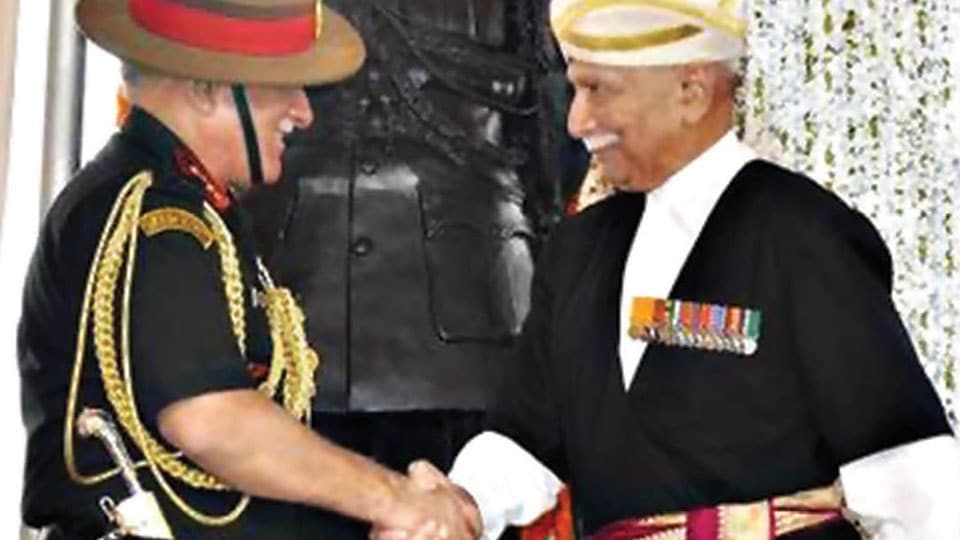
General Nanda had participated in the function held last year to unveil the statues of Field Marshal K.M. Cariappa and Gen K.S. Thimayya at Cauvery College, Gonikoppal. He was seen wearing traditional Kodava dress, greeting Indian Army Chief General Bipin Rawat.

source: http://www.starofmysore.com / Star of Mysore / Home> News / December 13th, 2018

Flood relief: America Kannada Koota gives Rs 5 lakh

America Kannada Koota and Havyaka Sangha donated a cheque for Rs 5 lakh to the Madikeri Rotary Club to be handed over to the Kodagu flood victims.

At a programme organised, doctor couple settled in Atlanta – Dr Subrahmanya Bhat and Dr Annapoorna Bhat – handed over the cheque to Rotary Club President O S Chingappa.

Speaking on the occasion, Dr Subrahmanya Bhat said that Kannadigas were saddened at the devastation caused following flood and landslides in Kodagu in August.

Dr Annapoorna Bhat said also spoke.

source: http://www.deccanherald.com / Deccan Herald / Home> State> Mangaluru / by Naina J A / DH News Service / Madikeri – December 23rd, 2018

The backstory: When I was moved by the kindness of strangers in flood-hit Kodagu

It was only the next morning that I saw the damage that the floods had inflicted on the family.

BackstoryKF26dec2018

It was dark and still drizzling when Thenira Kishore Ganesh pulled into his parents’ house in Mekeri in Kodagu. It was a modest but spacious building in the traditional style within a large compound, with an outhouse, a well and flowering plants of various kinds. When Kishore told his parents that I would be staying in the house for the night, they immediately showed me where to freshen up and asked me how hungry I was.

I had been on the road since the crack of dawn having set out from Bengaluru to cover the impact of the floods and landslides that had hit Kodagu a few days earlier. Heavy rains had lashed the district through July and the first half of August making planters worry about their coffee and pepper crops. But the consistent heavy rain took a far bigger toll when on August 16, it brought entire hillsides and villages down in a series of landslides.

Since the condition of the roads and public transport services was uncertain, I had hitched a ride from Bengaluru with Kishore and his brother-in-law Darshan Thimmaiah. They were travelling back home to check on their families and help with relief work. I met Darshan just the previous day at the relief collection centre in Bengaluru. He works at the Ministry of Human Resources Development while Kishore works with the computer manufacturing company Lenovo in Bengaluru. His parents look after the family’s agricultural lands in Mekeri.

The 250-kilometer drive from Bengaluru to Kodagu took longer than it usually did. The Kushalnagar-Madikeri road bore signs of damage from the landslides. There was heavy traffic as relief from across the state poured into the district. We stopped in Suntikoppa where Kishore and Darshan made their own enquiries of the people displaced and living in shelters, while I gathered information for the reports I had set out to write. We stopped again at a petrol bunk in Madikeri where we met two ambulance drivers who had run out of fuel and cash. Kishore and Darshan paid for the two vehicles to be fuelled up.

While Kishore and Darshan dropped off their bags at the family house in Mekeri, Kishore’s mother offered me – an unexpected and ravenous guest – lunch. I happily wolfed down the otti (rice chapati), mutton curry, dal, rice and pickle.

That afternoon, Kishore and Darshan drove me to a relief centre 20 km away. It was already beginning to get dark when we left and they advised me not to try to get to my hotel in Madikeri since it was still raining, the roads were bad and landslides were still being reported across the area.

With no other place to stay, I went back to Kishore’s parents house. And so, having already shared their lunch, the family shared their dinner with me and readjusted their sleeping arrangements to make room for me.

Journalists often rely on the kindness of strangers and, reporting from the location of a natural disaster, I found myself profoundly thankful for the hospitality of Kishore’s elderly parents that evening.

It was only the next morning that I saw the damage that the floods had inflicted on the family.

Across the narrow road in front of their house, Kishore’s family has five acres of land on which they grow paddy. Kishore’s father, who manages the fields for his relatives living outside Kodagu, had supervised sowing in early July. Now, in mid-August, the rice saplings were lying on their sides, flattened by the water that had come rushing down from the hills in the previous day. A 200-metre long field that belongs to Kishore’s uncle had a large chasm in the middle. A stream that used to run around the field and into an irrigation canal now ran through that chasm, the water muddy with silt washed down from fields upstream.

“We don’t know what kind of losses we will have from this,” said Kishore. He estimated that his family will need to spend at least Rs 1 lakh just to restore the field by filling it in with mud.

And yet, when I offered to split the fuel bill with the brothers-in-law who drove me around for a day and a half, they only asked that I donate that amount to flood relief.

source: http://www.scroll.in / Scroll.in / Home> BackStory 2018 / by Nayantara Narayanan / December 25th, 2018