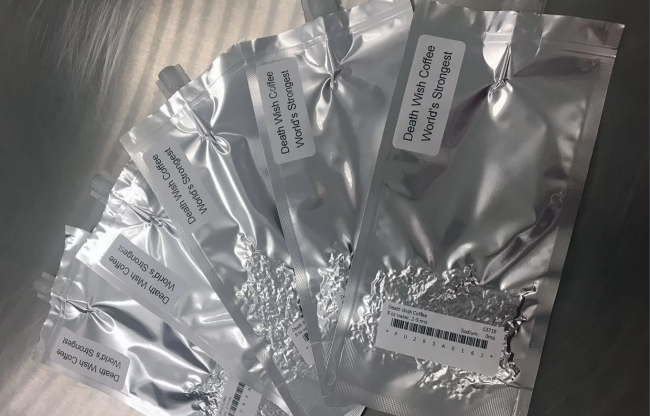
Death Wish Coffee is sending what is hailed as the world’s strongest coffee to astronauts at the ISS. The blend contains 200 percent more caffeine than standard coffee. ( Death Wish Coffee )
The world’s strongest coffee is headed to the International Space Station. It will launch into space on June 28 aboard SpaceX CRS-15.
Contains 200 Percent More Caffeine Than Regular Coffee
Death Wish Coffee is billed by its producer as the strongest coffee in the world for its high caffeine content and intense flavor.
The coffee company said that the blend contains 200 percent more caffeine compared with standard coffee, which could give astronauts the added punch that they need while working at the space station.
“Death Wish Coffee is the world’s strongest coffee with the highest-caffeine content available, resulting in a buzz that blows other coffees out of the water,” Death Wish Coffee described the product.
“And because we’ve taken the time to source fair-trade, USDA-certified organic coffee beans and refined our roasting techniques, we’ve created a high-caffeine coffee with low acidity that tastes good, too.”
Specially Packaged Death Wish Coffee For Astronauts Aboard The Space Station
The company is sending crew members of Expedition 56 a special freeze-dried version of the coffee packaged in the same foil packets used by astronauts for other beverages including normal-strength coffee.
Death Wish coffee is normally sold in 1-pound bags of whole and ground beans as well as in K-Cups, but the space-bound coffee is specially packaged by NASA in astronaut drink pouches.
Death Wish said that the coffee is designed to caffeinate astronauts aboard the ISS sans sacrificing the texture, flavor, and potency of the coffee.
Mike Brown, the founder of Death Wish Coffee, revealed about the plan to provide the world’s strongest coffee to astronauts aboard the orbiting laboratory in a statement dated June 6.
“We couldn’t think of a better way to showcase the smoothness and strength of our coffee than by providing the crew aboard the International Space Station with an easy-to-make blend that will keep them on their feet,” Brown said in a statement.
Coffee And Coffee Machine For Astronauts Working In Microgravity
Coffee is a staple aboard the ISS as early as 2000, the year the first batch of crews arrived at the orbiting lab.
Astronauts and cosmonauts can choose from caffeinated or decaf instant coffee. Kona blend with just sugar or powdered cream or both already mixed in are also available.
The space station received its first coffee machine in May 2015 with the arrival of the Lavazza and Argotec ISSpresso.
source: http://www.techtimes.com / Tech Times / Home> Science> Space / by Allan Adamson Tech Times / June 27th, 2018
The Cauvery River Gallery, which was proposed to be established in the city, five years back, may finally be a reality with Chairman of the Karnataka Knowledge Commission and former chairman of ISRO K Kasturirangan announcing that he has spoken about the project with Chief Minister H D Kumaraswamy, in Bengaluru, recently.
The formation of the Cauvery Tourism Development Authority was mooted in March 2015 and the idea of the Cauvery River Gallery was discussed in the first meeting of the authority, chaired by then Tourism minister R V Deshpande, in June 2015. Neither of them materialised so far, even though the previous chief minister was a native of Mysuru district, the nucleus of the Cauvery River basin.
According to the annual report (April 2016 – March 2017) of the National Academy of Sciences of India (NASI), River Cauvery is among the most sacred rivers in the southern region of India and is thought to be the Dakshina Ganga, on account of its diverse characteristics and attributes.
“Originating from the Brahmagiri Hill in the Western Ghats and flowing towards the Bay of Bengal, the river travels along Karnataka and Tamil Nadu in the southeastern direction. River Cauvery is well inscribed in Tamil and Kannada literature because of its sacredness. Bathing in waters of Cauvery is a traditional belief. The striking Shivanasamudram falls of Cauvery River is the second biggest waterfalls in the country.
At the request of Minister for Higher Education and Tourism, Government of Karnataka, K Kasturirangan, Chairman of Karnataka Knowledge Commission, requested Manju Sharma, former president of NASI, to establish a Cauvery Gallery on the lines of Ganga Gallery and Brahmaputra Gallery.
Manju Sharma, with the consent of the NASI Council, sent a preliminary intent proposal to establish a high-quality gallery that captures the etymological, ecological, cultural, heritage and social characters of River Cauvery,” the report states.
The Cauvery Gallery can be established with the help of the National Council of Science Museums (NCSM), Kolkata, and the financial support of the department of Tourism, Government of Karnataka. Interactive multimedia with diorama, animation, graphics and the 3-D display will be used to make the gallery interactive and interesting for visitors, the report states. At present, there is a gallery for River Brahmaputra in Guwahati, in Assam, and a gallery for River Ganga at Allahabad, in Uttar Pradesh .
The gallery is expected to showcase the life, culture and biodiversity along the Cauvery River from its birth in Talacauvery of Kodagu district till it reaches the Bay of Bengal at Poompuhar (now Pombuhar) in Nagapattinam district of Tamil Nadu. It splits into two, twice, and forms the islands of Srirangapatna and Sivanasamudra in Karnataka.
Kasturirangan has said that he held talks with Chief Minister Kumaraswamy on setting up of the gallery on the Karnataka Exhibition Authority Grounds (Dasara Exhibition Grounds) in Mysuru and a detailed project report would be prepared soon.
In 2016 itself, Karnataka’s Tourism department and the NASI had signed a memorandum of understanding to set up the gallery at Mysuru. Then, the Tourism department officials and NASI experts had decided to establish the gallery on the premises of the Karnataka Exhibition Authority (KEA) complex. The project was scheduled to be completed in six to nine months and was expected to be a major tourist attraction in the city. The KEA complex is also yet to be constructed.
For Indian hockey team the opening encounter in the Champions Trophy is vital as it will set the tone for …
For Indian hockey team the opening encounter in the Champions Trophy is vital as it will set the tone for the rest of the tournament, believes Indian veteran SV Sunil, speaking to NNIS exclusively in Breda, ahead of the big clash against Pakistan.
Sunil speaks on arch-rival Pakistan and whether it is an advantage for Pakistan Coach Roelant Oltmans, a former India coach of knowing the boys in and out.
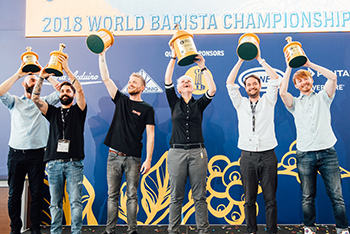
Image credit: World Coffee Events, SCA and Jeff Hann.
Agnieszka Rojewska of Poland has won the 2018 World Barista Championship (WBC). Agnieszka, a veteran of multiple coffee competitions across the globe, triumphed over 55 other baristas to become the first woman ever to win the title.
Lex Wenneker of The Netherlands was runner up, Mathieu Theis of Switzerland was third place, Michalis Katsiavos of Greece was fourth, Cole Torode of Canada was fifth place, John Gordon of New Zealand was sixth place, and Craig Simon of Australia finished in seventh place.
“I never thought I’d be in the final so the fact I [was] is the best experience,” Rojewska said post-performance. “This is like the craziest day of my life.”
Rojewska of Full Pro Coffee has been making coffee for more than 10 years. She started working in a coffee chain before starting her own cafe. Agnieszka now works mostly as a coffee trainer, but has spent the past four years competing in various coffee competitions, tackling almost every category of competition there is to win.
Rojewska is a three-time Polish Barista Champion and four-time Polish Latte Art Champion with a career high ranking of third in the world in 2017. Rojewska will compete in Poland’s Brewers Cup Championship on Sunday 1 July, and will attempt another world title when she competes in the World Latte Art Championship in Brazil from 7 to 9 November.
Last year, Rojewska placed Runner-Up in the Polish Brewers Cup competition and New York Coffee Masters, but this year has been one of first places, winning the London Coffee Masters competition in April, and now the WBC in Amsterdam.
For her 15-minute routine, Rojewska used a coffee sourced from Project Origin Coffee’s CM Selections lot in Mesina, Ethiopia, a new coffee growing area. Because of the fresh soil and young 10-year-old trees planted at 2300 metres above sea level, Agnieszka said the result in the cup would have “more intense yellow fruit characteristics” and “extraordinary sweetness”.
The Heirloom cultivar underwent washed carbonic masceration processing, a concept Ona Coffee Founder Sasa Sestic first presented to the WBC in 2015, the same year he won the event. With this process, the coffee is depulped, put into tanks and pressurised with carbon dioxide to remove all oxygen and encourage lactic bacteria. The coffee was roasted by 2017 Brewers Cup Runner Up Sam Corra of Ona Coffee.
Rojewska says she chose to use Ethiopian coffee because of how expressive it is, with flavours of yellow and red fruit that are easy to recognise. “It was the first coffee I have fallen in love with,” Rojewska told the judges.
To make her milk beverage exude strawberry notes, Rojewska prepared a more intense espresso using 23 grams in the basket and 36 grams out via the Victoria Arduino Black Eagle machine. She added three-and-a-half ounces of milk to help achieve notes of milk chocolate and warm strawberry jam. The full cream milk had a high fat content for a creamy texture and combined with a lower temperature, reminded Rojewska of slow-melted chocolate ice cream.
Despite her accomplished latte art skills, Rojewska poured a simple small heart in the centre of each cup to help stretch the milk, give more aromatics, and more intense strawberry flavours.
For her signature beverage, Rojewska used Ona Coffee’s O.C.D and Stem devices to produce her shots and made a passionfruit infusion. This was made adding 100 grams of passionfruit to 30 grams of coconut sugar, 50 millilitres of water, and cooked for three hours at 60°C for more natural tropical fruit notes. To replicate the same lactic acid bacteria used in washed carbonic masceration, Rojewska used 100 grams of warm milk and seven grams of citric acid in the form of lime juice, which she then let sit and separate for three hours before straining three times. The end result was 20 grams of ‘washed milk’ and a creamy mouthfeel in her signature beverage. She added 4 grams of this liquid to 100 grams of water infused for 20 hours at 120°C, and blended it together with her espresso shots at 20 grams in the basket, 35 grams out.
Lastly, Rojewska prepared her espressos using the same Ethiopian coffee. Despite her coach Sasa Sestic pointing out that she was 20 seconds behind in his Livestream commentary, Rojewska pushed on, using 20 grams in the basket and 45 grams out to achieve medium sweetness, medium bitterness, and flavours of orange, plum, and low intensity of peach. She used visual aids to describe the body and texture of the body and concluded with a simple message.
“It’s my greatest pleasure to bring this world stage coffee to you as my customers, and most importantly, my friends,” Rojewska said with one seconds remaining on the clock.
In the past week, thousands of coffee professionals gathered in Amsterdam for World of Coffee (WOC), one of Europe’s largest coffee trade show, and the host of the 2018 WBC. Just under 11,000 professionals from across Europe and around the globe registered to attend, breaking records for the event.
Next year, WOC heads to the German capital of Berlin from 6 to 8 June, 2019 at the Messe Convention Center.
source: http://www.gcrmag.com / Global Coffee Report / June 25th, 2018
The badminton ace had a whale of a time watching the FIFA World Cup in Russia.
Indian badminton ace Ashwini Ponnappa had an exhilarating time in living the football dream by catching the FIFA World Cup from close quarters in Russia.
Soaking in the football frenzy Ashwini said the experience was unforgettable. “I had a fantastic experience. I have never felt the kind of atmosphere and buzz that I felt at the World Cup anywhere else. Of course the Olympics and the multi-sport events have an amazing vibe, but that I can say as being a player and getting to live at the village. In Russia, being a spectator, the vibe at the host cities was just electric,” she said.
The Indian player said fellow fans made the experience more special.
“A sport like football is definitely made up by the fans. Everyone who were there were for football alone. It was amazing to see people from different parts of the world come in numbers to cheer either for their home countries or the countries they support along with also representing there own countries which haven’t qualified.
It was like a gigantic sports carnival. Everywhere we went we’d see fans chanting and singing. I had goosebumps every time we came a cross huge gatherings of fans chanting and singing in unison. It was electric!” she explained.
The fanfare also presented Ashwini an opportunity for a learning.
“There was so much to learn watching these players. It is amazing to see how they deal with pressure. It is not easy when you have an entire nation depending on you to do well for them (fans,country). Star players have more pressure cause they are expected to perform their best in every match from the everyone. To watch a player like Ronaldo stepping up and playing the way he did against Spain was just amazing.”
Simply ‘Inspiring’
The trip was also inspirational to the badminton star. “Thanks to being there and the football craze, I’ve also been reading a lot of stories of different players and it’s just been very very inspiring. How you’ve got to believe in yourself when no one else does.
How determination and belief can work miracles. I loved reading Romelu Lukaku’s story which was sent by a friend. I had tears reading it. Or that of Aron Gunnarsson. I definitely want Iceland to do well after reading his story (laughs). It takes years and years of hard work and sheer determination to get to where they are like any other sport.
I think one of the nicest things about football is that it is easily accessible to everyone from all walks of life. It gives hope to so so many people, it gives people confidence and brings countries up when their players do well,” the 28-year-old player added.
Memorable Moment
Ashwini said the stand out moment was watching Cristiano Ronaldo and Lionel Messi ply their trade and watching the Spain vs Portugal match.
“The best part apart from just being present at the World Cup was getting to watch Ronaldo and Messi play live. The kind of expectations they have from their fans is crazy. It was more like they are expected to win and perform as a one man army. Watching Spain vs Portugal was definitely a highlight for me. Ronaldo played well and led the team like a boss and delivered despite the crazy pressure,” she said.
“Watching Argentina vs Croatia was sad. I did expect to watch incredible Messi work his magic as did the large number of Argentina fans. It isn’t possible if the team on the whole isn’t feeling confident and aren’t into the game. With all that’s going on with their team, I hope it gets better and they get the win and performance they need.
Ashwini said visiting the fan fests were also a highlight.
“They are just amazing. Especially if you do have a ticket for a match and want to still get a feeling of being apart of it. It was well organised with a great vibe. The entire event from the minute you get there to going into the stadium is organised perfectly for the fans to have the best experience possible while they are there. I am lucky to have had the opportunity to experience the World Cup and watch the stars play,” she concluded.
source: http://www.sportstaralive.com / Sportstar Alive / Home> Badminton / by Hari Kishore M / Chennai – June 25th, 2018
Sreeraksha Poornesh loves the product of his plantations over all other coffees from around the world. But this is neither boast nor an arrogant statement in the wake of serious success. It is simply his truth, born out of the sheer love for farming and the coffee at Baarbara Estate. “At the end of the day, I’m a farmer and my heart and soul always say that my coffee is the best.”
The 30-year-old is a fourth-generation coffee grower of the illustrious MG Plantations of Chikmagalur, owned and run by the Indavara family for over 120 years. Baarbara Estate gets its name from the Anglo-Indian lady who sold the plantation to Poornesh’s great-grandfather eons ago. And Poornesh attributes his success, first and foremost, to its location. “I’m very lucky to have been handed down an estate on Baba Budan Giri,” he says.
For those who don’t know, the mountain is named after the 17th-century Sufi saint Baba Budan, who is said to have introduced coffee to India when he brought seven beans from Mocha, Yemen, to the country and planted them across the range. In January, the Coffee Board of India submitted an application for the Geographical Indication (GI) tagging of Babu Budan Giri arabica. The GI tag is meant to protect the heritage and quality status of a particular product; according to the World Intellectual Property Organization, it’s a “sign used on products that have a specific geographical origin and possess qualities or a reputation that are due to that origin.”
However, that isn’t enough to stay relevant, and Poornesh, armed with an MBA from Alliance Business School in Bengaluru, has introduced several new measures to keep up the business. Apart from getting high cup scores every year, he is now inviting roasters to the plantation to process the beans as they like and take them back to their establishments. In light of the changing coffee scene in India and the wave of speciality roasters cropping up across the country, this move is bold and certain to pay off.
“A cup is a team show,” says Poornesh. “As farmers, we do 60 percent of the work to ensure that the coffee you drink is amazing. The process starts with us and ends with roasters.”
Last season, the first roaster Poornesh brought over was Mithilesh Vazalwar, India’s first AeroPress champion and one of the country’s only 25 coffee Q-graders. Their mutual interest in the best-quality beans and obsession with everything coffee lead to a high-grade product that discerning customers can’t wait to get their hands on.
“A certain trend has been set by traditional roasters in India over centuries,” says Poornesh. “I realised that so much of the beans wasn’t processed and handled well. Now, we’ve taken things to a decent level and most third-wave roasters in India get our beans.”
Sreeraksha Poornesh
Remarkably, having grown up with coffee, Poornesh wasn’t interested in joining the family business. After his MBA, he spent a couple of years working in Bengaluru before returning to Chikmagalur five years ago. He then began to study coffee in-depth, participating in workshops by the likes of Sunalini Menon (Asia’s first female coffee taster and expert) and attending lectures for coffee entrepreneurs at the Indian Institute of Plantation Management. He also did Kaapi Shastra, a coffee training programme by the Coffee Board of India.
“My goal is to dilute everything we grow into speciality coffee,” says Poornesh. Baarbara produces single-origin arabica at present. But he has no plans of expanding internationally, he adds. He has his sights firmly set on the Indian scene. “There’s a lot of potential here, a lot to do. I entered the business at just the right time.”
The brand Baarbara Berry’s status as one of India’s top-ranking coffees is also owed to Poornesh’s driven spirit. In the face of many challenges, including stiff competition, he is focused on getting higher cup scores every year. “You can’t be lax,” he says. “It’s not like you achieve a certain level and then let go. The crop is different every year, and it’s imperative that our cup quality is on the mark. Every year, in the beginning of the season, roasters test the quality, so consistency is very important.”
Now that Baarbara Berry has reached a certain level, Poornesh believes that the farmer-roaster interaction should progress too. Because harvesting and processing are intricate processes and significantly impact brew quality – flavour, texture, acidity, body – roasters can choose their methods for the kind of coffees they want.
Baarbara Berry offers green coffee as well as a range of roasted and ground beans. Owing to high elevation, around 5,000 feet, the ethically sourced and handpicked beans produce rich, full-bodied brews with balanced flavours and finish. MG Plantations is Rainforest Alliance Certified and UTZ Certified, for sustainable farming and better opportunities for farmers.
source: http://www.firstpost.com / FirstPost. / Home> Latest News> Living News> Living / by Tania Bhattacharya / June 25th, 2018
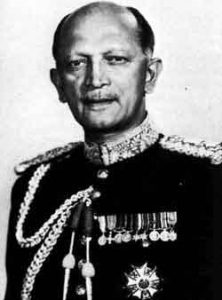
Whoever goes through the military history of India, will never forget Field Marshal K M Cariappa.
Only two officers of the Indian Army have got the rank of a Field Marshal: one of them being Cariappa and the other being Field Marshal Sam Manekshaw.
But that isn’t the only thing that won him recognition – his achievements are no less worthy. While the alumni of Officers Training Academy unveil the statue of the noted Army officer who held five-star rank, News Today journeyed through his life and achievements.
His distinguished military career spanned almost three decades. He was the first Indian military officer to attend the Staff College, Quetta, the first Indian to command a battalion, and was also one of the first two Indians selected to undergo training at the Imperial Defence College, Camberley, UK.
Field Marshal Cariappa made his voice clear when Skeen Committee was set up in 1939 to examine the options of Indianisation of Indian Army’s ranks.
As Cariappa was one of the senior most Indian officers with about 19 years of service, the committee held several discussions with him. He expressed his displeasure at the treatment of Indian officers in the Army.
He decried the discrimination shown towards Indian officers in terms of appointments, promotions, benefits and allowances British officers were entitled to.
He is known for ‘Operation Kipper’, ‘Operation Easy’ and ‘Operation Bision’ done to capture Naushera, Jhangar, Poonch, Zoji la, Dras and Kargil areas in Kashmir during 1947 and 1948.
The operations aimed to drive out Pakistanis from Kashmir, but they were stopped by the intervention of the United States. While Army headquarters asked not to launch any operations, Cariappa protested against it and launched several strikes in the Ladakh region allowing India to assert control over the region.
Cariappa took over the reins of the Indian Army 15 January 1949, that was marked as official Army Day and celebrated annually.
As chief of the Army, Cariappa was instrumental in the formation of the Territorial Army in 1949. He extended support to the National Cadet Corps (NCC) during its formative years. These two complimentary branches of the Army later proved to be very helpful in the wars India fought in later years.
He also adopted the Indian National Army slogan ‘Jai Hind’: it became a phrase for the personnel to greet each other in the Army.
He turned down the proposal to reserve vacancies in the Army for Scheduled Castes and Scheduled Tribes as had been done in other government services. He stated that the proposal would degrade the Army’s standards and increase the risk of it being defeated if right talent was not recognised.
Cariappa took part in the reorganisation of the armed forces in many foreign countries. He was awarded the Legion of Merit in the degree of Chief Commander by American President Harry S. Truman.
As a mark of recognition for the commendable service rendered by him to the nation, the Government of India conferred the rank of Field Marshal on Cariappa 28 April 1986, at a special investiture ceremony at Rashtrapati Bhavan.
source: http://www.newstoday.net / News Today / Home> Chennai / by S. Vishnu Sharmaa / June 23rd, 2018
With hard work, it took only 18 months to get the money back.
CREDIT: Courtesy company
Imagine you’ve just had twins. You need to support your family and work. You’re exhausted constantly. (And from experience, I can tell you baby exhaustion really does feel somewhere between death and stupid.) What do you do to keep going?
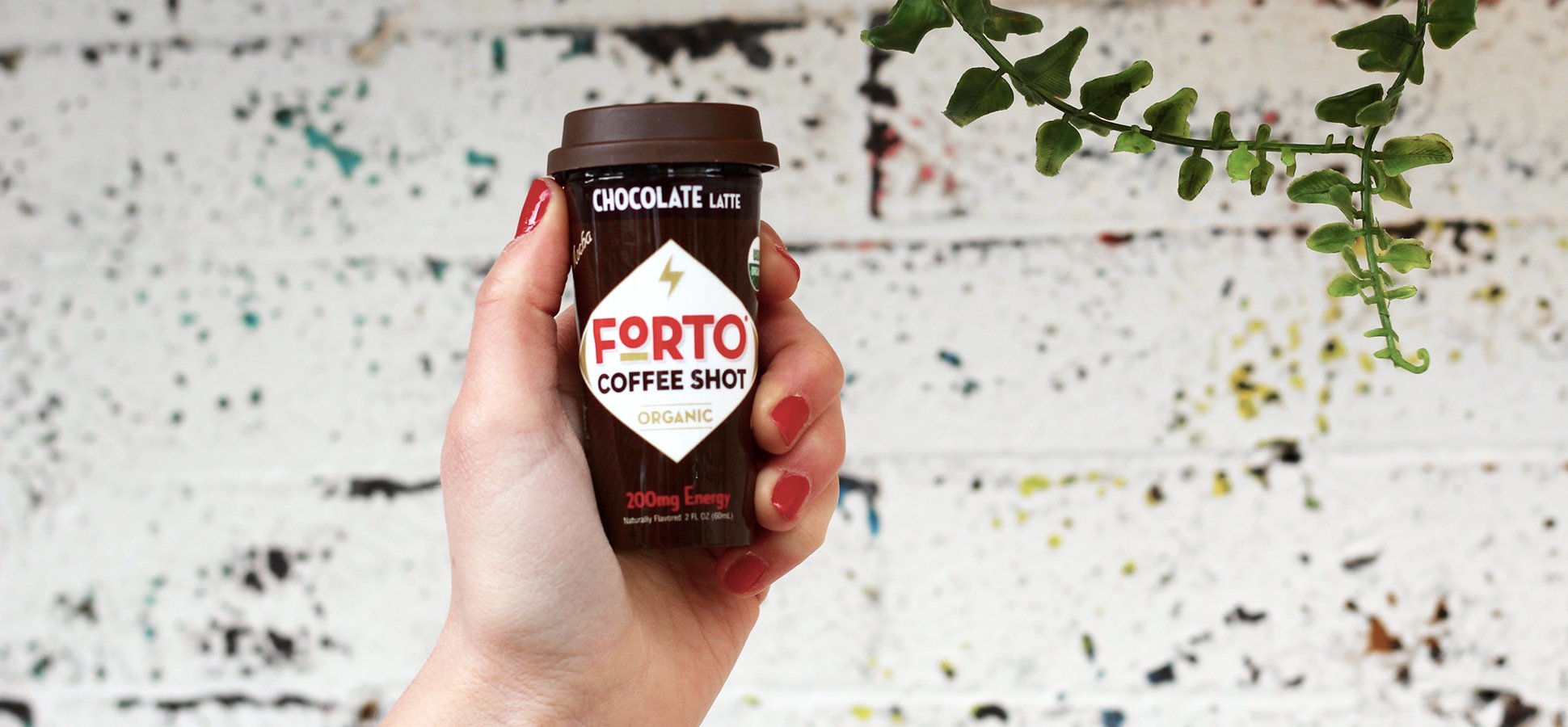
If you’re Neel Premkumar, you start concocting coffee shots in your kitchen, playing around with organic coffee beans and cold brewing. While the mad scientist behavior might have been born out of necessity (what innovation isn’t?), in a few months, Premkumar had found the ingredient and technique combination that worked. In fact, his creation worked so well, business bells started blaring in his brain.
The only problem? No money. (Cue the sad violins here.)
An option from inside the family
Fortunately for Premkumar, his father-in-law, Venkat Nemani, had some money–his life savings of $50,000. If Nemani would agree to give that and everything worked out, he wouldn’t lose anything and could even gain. But if things didn’t work out …
It was a huge risk. But Nemani had faith. The money–all of it–went to Premkumar. And what’s more, Nemani didn’t even haggle over details the way other investors or bankers would have.
“I never formally outlined a plan to pay him back,” Premkumar says, “past my good word that he’d be repaid!”
Premkumar recognized the trust. And, in return, he committed to the business full throttle.
“Failure was just not an option,” he says. “I named my company Dyla, which is a combination of my twin girls’ names. When I started, I thought to myself, ‘If I name this startup after my kids, there is no way I could let it fail.’ I think that as an entrepreneur, you just have to have a singular focus on success. What you’re trying to accomplish is hard enough in taking on industry giants. Self-belief is paramount to success.”
And so Forto was born. Premkumar started selling his coffee online, answering every customer email himself. He managed to find a base with the U.S. military, where the need for focus and energy is extraordinarily high.
“When Forto was selling well in every U.S. base, I realized this was going to be a big business,” Premkumar notes. “I also saw signs of big changes in both the energy drink and retail coffee markets, with buying patterns shifting and a new generation of consumers demanding great coffee, in a convenient format that saves them time. That is where Forto fits in and why it has such a loyal audience.”
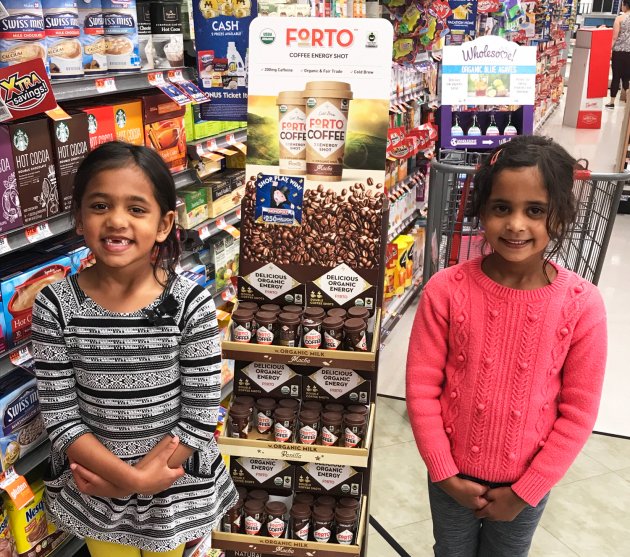
Neel Premkumar’s twin daughters who inspired the Forto coffee shot.CREDIT: Courtesy company
From family loan to national brand
Even though having the money come from his father-in-law added personal stress, Premkumar’s initial product success and market observation told him that asking for the loan had been the right choice. And, by staying laser focused, he managed to pay the $50,000 back in just 18 months.
Forto has skyrocketed, earning 400 percent year-over-year growth. It was named the Inc. 500’s No 1 fastest-growing beverage brand in America for 2017. And while the shots are available in more than 50,000 retail stores, the company announced today that the product will also be on the regular coffee shelves at 3,700 Walmart locations. It’s a massive win for Premkumar, as the entire point of the business has been to help customers boost their energy in a more convenient and inexpensive way.
Should you take the same risk to innovate?
Premkumar says he has zero regrets about the experience. But he points out that much of what made Forto work was just being in the right place at the right time. He came up with the shots right when people were changing the rituals they had around coffee, putting him in the ideal position to meet an emerging demand. And he and his team were serious about examining early adopters to understand why and when they downed the coffee. That allowed Premkumar to find and connect with more individuals for whom Forto was a great fit. Lastly, he didn’t hire and scale until that consumer understanding–and the product message built on it–was solid.
“Everyone’s tolerance for risk is different,” Premkumar says. “For me, bringing Forto’s two-ounce coffee shots to market was worth the risk, because I thought it provided a necessary solution to an everyday problem–a convenient coffee energy boost. I think fundamentally an entrepreneur’s job is about risk mitigation. A startup begins with maximum risk, but every step you take building the company reduces your risk ever so slightly. I was never worried about the competition, more about my own ability to figure out how to meet the consumer need and communicate that correctly to them before the money would run out!”
As for specific money tips, Premkumar says you should borrow only from people you trust. Ideally, those people should be OK with losing the loan. You also shouldn’t aim too high. Raising too much money can be a huge temptation to overspend, waste money, and hire more than or before you need to.
“If you do raise your first round from family or friends,” Premkumar advises, “make sure they have nerves of steel like my father-in-law did. They might need it!”
source: http://www.inc.com / Inc. / Home / by Wanda Thibodeux, copywriter, TakingDictation.com / June 19th, 2018
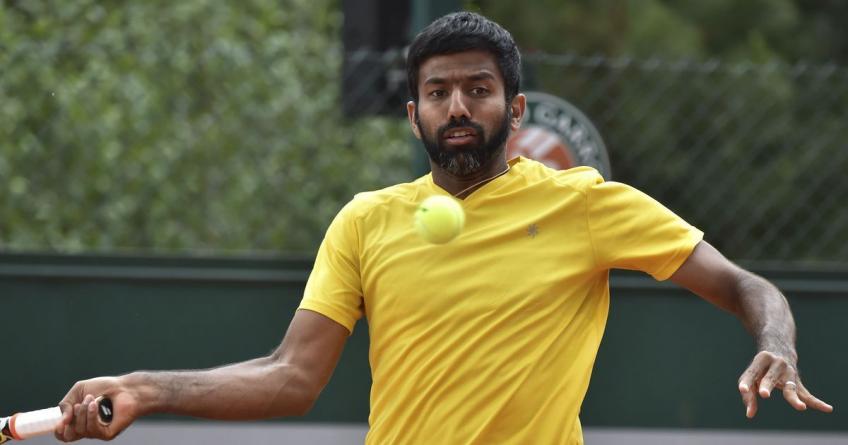
Tennis – Indian tennis ace Rohan Bopanna has received the ‘Sports Icon of the Year’ award at the Indian Oil Sports Conclave on Friday, according to The Hindu. The 38-year-old flew down from Paris where he was beaten in the quarter-finals of the French Open doubles event alongside partner Eduardo Roger-Vasselin.
Several other sports personalities were gathered to cheer on the tennis star receiving the award, including table tennis stars Sharath Kamal, Manika Batra, badminton coach P. Gopi Chand, shuttlers P. Kashyap, N. Sikki Reddy. Although disappointed at not winning his quarter-final match in Paris, Bopanna commented that his loss enabled him to receive the award in person.
Indian Oil also announced plans to provide financial assistance to budding champions and recruit more athletes in six new disciplines – volleyball, basketball, shooting, archery, wrestling, kabaddi and boxing – besides the ten existing games that they have been supporting.
source: http://www.tennisworldusa.org / Tennis World / Home> News / by Prakash / June 10th, 2018
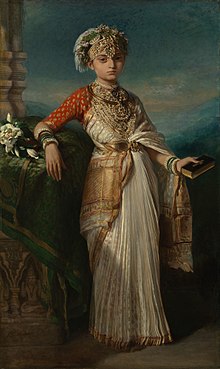
Princess Gouramma (1841-1864) Signed and dated 1852
Oil on canvas | 153.2 x 91.8 cm (support, canvas/panel/str external) | RCIN 403841
Durbar Corridor, Osborne House
Description
Winterhalter was born in the Black Forest where he was encouraged to draw at school. In 1818 he went to Freiburg to study under Karl Ludwig Sch?ler and then moved to Munich in 1823, where he attended the Academy and studied under Josef Stieler, a fashionable portrait painter. Winterhalter was first brought to the attention of Queen Victoria by the Queen of the Belgians and subsequently painted numerous portraits at the English court from 1842 till his death.
Princess Gouramma (1841-64) was the daughter of the ex-Raja of Coorg. She was baptised in the Chapel at Buckingham Palace on 1 July 1852 and took the name ‘Victoria’, with Queen Victoria as her Sponsor. She had been considered a suitable bride for the Maharaja Duleep Singh whose portrait is also in the Royal Collection (RCIN 403843), but he declined to marry her. In 1860 she married Colonel John Campbell.
Here the Princess is depicted in Indian dress and rich jewellery, leaning on an Indian table. She is holding a Bible, an allusion to her conversion to Christianity.
Signed and dated: F Winterhalter / 1852.
Provenance
Painted for Queen Victoria
source: http://www.royalcollection.org.uk / Royal Collection Trust / Home> Collection> Explore The Collection
WELCOME. If you like what you see "SUBSCRIBE via EMAIL" to receive FREE regular UPDATES.
Read More »