Category Archives: World Opinion

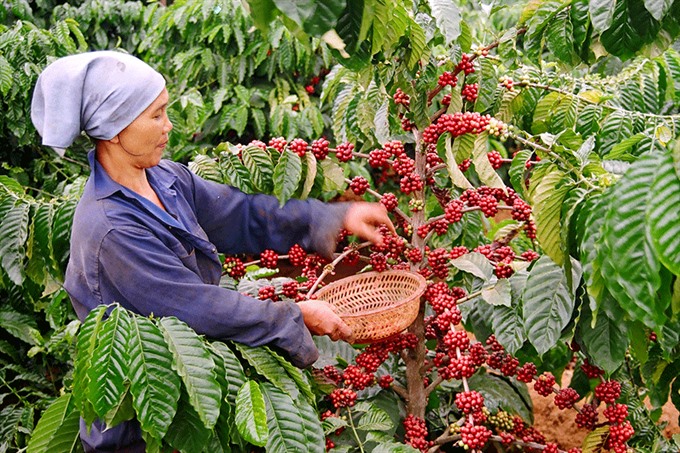
Bengaluru start-up to launch Araku Aroma brand coffee in US

The company is also planning for a domestic foray in January at the India International Coffee Festival.

ArakuKF23dec2017

Krish Food and Fun India, a Bengaluru-based start-up, plans to globally launch Araku Aroma Brand of coffees in the United States. “The company is launching Araku Aroma Coffees in Edison, New Jersey in the US. We are helping marketing coffees grown in the tribal belt of Andhra Pradesh. The Araku is tribal valley near Vishakhapatnam,” said Krishna Chaitanya, Managing Director, Krish Food and Fun India.

The company is also planning for a domestic foray in January at the India International Coffee Festival. According to Chaitanya, “As per the agreement, we are to buy coffees harvested by tribal farmers in around 250 acres. The company plans to market around 500 tonnes of coffee annually.”

“For this we have invested Rs 2.5 crore to set up roasting facility and for marketing tribal grown coffees,” he added.

Chaitanya was in Bengaluru recently to make final arrangements to release Araku Aroma brand of coffees. “As part of the agreement with tribal community, we want to spend 10 per cent of our profits from selling Araku Aroma to procure anti-venom drugs and for providing general medical facilities to the tribal community,” revealed Chaitanya.

source: http://www.thehindubusinessline.com / Business Line / Home> Companies / by Anil Urs / Bengaluru – December 23rd, 2017

Growers hope MIP on pepper will block dumping of Vietnam variety

PepperKF11dec2017
Mangaluru :

Karnataka, one of two major black pepper producers in the country, has wholeheartedly welcomed the Union Commerce Ministry’s decision to fix Minimum Import Price of `500 per kg on pepper on CIF (Cost, Insurance and Freight) basis.

India produces about 65,000 tonnes of pepper of which state’s contribution is about 30,000 tonnes. Kodagu, Chikkakamagaluru and Hassan districts are the major pepper growing areas in the state apart from the coastal districts of Dakshina Kannada and Udupi.

Konkodi Padmanabha, convenor, Consortium of Pepper Growers Association, told reporters here on Thursday that the decision will automatically block the import of poor quality pepper especially from Vietnam and as a result the demand for Indian pepper will increase. At present, farmers are getting a minimum of `380 per kg and experts believe that the prices may jump by `50-60 per kg in a fortnight and growers may get at least `700 a kg for the next season’s pepper.

CAMPCO MD Suresh Bhandary M said it may take another 2-3 months for the new prices to stabilise after the old stock is cleared.“The MIP will not be applicable for the licences already issued for import for Vietnam pepper. It will apply only for fresh licences.” Further, he said the fixing of uniform MIP for all grades of pepper and even crushed and ground pepper will avoid chances of adulteration.

Organisation’s co-ordinator K K Vishwanath urged the Centre to ban the import of black pepper into the country, impose dumping duty on imported pepper, hike the import duty from present 64 percent to 108 percent, allow the import of pepper only through any two ports for better monitoring, take strict measures to certify the quality of imported pepper and bring in laws to issue ‘Fake country of origin’ for imported pepper. He said they want ban in pepper import as traders may now use the Nepal route.

“Since there is no port in Nepal, foreign countries import to Nepal through ports in Kolkatta. Then it become easy for them to push it inside India as there is free trade agreement between the two countries.” Padmanabha thanked commerce minister Suresh Prabhu for his positive response to their petition in just 13 days and union minister Ananth Kumar Hegde and MPs Nalin Kumar Kateel, Prathap Simha and the state government for taking up their cause.

source: http://www.newindianexpress.com / The New Indian Express / Home> States> Karnataka / by Express News Services / December 08th, 2017

Coffee exports rise 8% in January-November

Coffee exports from India, Asia’s third-largest producer and exporter, rose by 8.08 per cent to 3.61 lakh tonnes in January-November 2017 compared to 3.34 lakh tonnes in the same period of last year, according to the Coffee Board.

Italy, Germany and Russia were the major export destinations for Indian coffee during the period. India ships both robusta and Arabica varieties, besides instant coffee.

Robusta coffee exports rose by 10.80 per cent to 2,11,442 tonnes in January-November 2017 from 1,90,828 tonnes in the year-ago, the board dats showed.

Export of Arabica coffee however declined by 10.81 per cent to 44,084 tonnes from 49,431 tonnes in the said period.

The outbound shipment of instant coffee increased sharply by 86 per cent to 47,734 tonnes in January-November this year from 22,966 tonnes in the same period last year, the data showed.

Of the total exports, India exported 73,705 tonnes to Italy, 38,671 tonnes to Germany and 26,319 tonnes to Russia during the period under review.

Some of the major exporting companies include CCL Products IndiaBSE 0.94 %, Tata CoffeeBSE -0.92 %, Olam Agro and Coffee Day Global Ltd.

Some of the major exporting companies include CCL Products IndiaBSE 0.94 %, Tata CoffeeBSE -0.92 %, Olam Agro and Coffee Day Global Ltd.

source: http://www.economictimes.indiatimes.com / The Economic Times / ET Home> News> Economy> Foreign Trade / PTI / December 04th, 2017

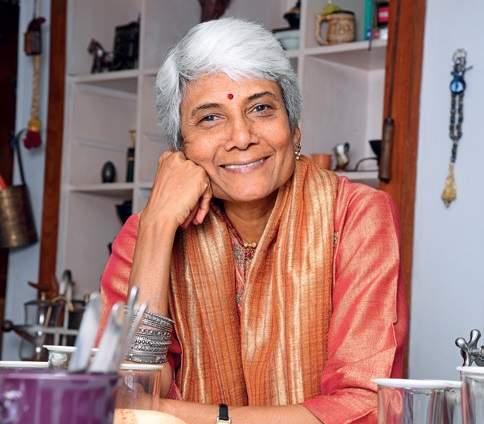
Asia’s first woman coffee taster was nearly ‘brewed’ out

SunaliniKF10dec2017
Bengaluru :

Asia’s first lady of coffee Sunalini Menon says she never planned on being a coffee-taster. She says that she decided on a course in Dietetics or a Phd. in Foods, when she chanced upon an advertisement calling for Assistant Cup tasters at the Coffee Board of India. “I had tried tea tasting as a child at an uncle’s tea estate in Munnar and the ad brought back happy memories of sipping, slurping, spitting and looking wise. I applied for the post and was called for the interview.”

She had to compete with eight men with more experience and qualifications, and that was her first job interview. Sunalini came first in the written and oral tests.

Sunalini, Asia’s first woman coffee taster, says, that the internal panel of examiners were not too keen to appoint her because she was young, had no knowledge about coffee and was a woman who could get married and give up the assignment. “But the then chairman of the Coffee Board was insistent that gender should not come in the way of a job and that as I had topped the interview, that I should rightfully be given the assignment.” Sunalini then joined the Coffee Board of India in 1972.

It wasn’t easy working at the Coffee Board of India, she says. She was the only woman at the officer’s cadre level in the Board then. “The staff working under me refused to accept my instructions or the schedule I had set for work, they were not used to taking instructions from a woman,” she says. “Fortunately, I had a chief who took me under his wing and advised me to first learn the subject and give them time to accept me. His parting words were ‘Tread slowly, but firmly’.”

The in-house training she was given was intense. Every day, she would taste washed arabicas, unwashed arabicas, washed robustas and unwashed robustas, to understand the various nuances in a cup.
Also, a founder trustee of the Women’s Coffee Alliance – India Chapter, Sunalini was present at the Coffee Santhe held recently at Karnataka Chitrakala Parishat. She says, “This is our annual fund raiser to help empower women coffee-plantation workers and their girl children.”

Coffee tasting is both a science and an art

While carrying out coffee tasting, there is a protocol that one needs to follow. The attributes that are evaluated in the cup are fragrance, which is the smell of the coffee powder in the dry state, and aroma, which is the smell in the wet state, when water is added to the powder. During the aroma evaluation, the crust (floating particles on the surface of liquor or the brew prepared for tasting and all the aromatic volatiles) is broken. With“Breaking of Crust”, fragrance, aroma and the other attributes are evaluated for flavour, aftertaste, acidity, mouthfeel, uniformity, balance, cleanliness, sweetness and, finally, the overall rating of the cup.

source: http://www.newindianexpress.com / The New Indian Express / Home> Cities> Bengaluru / by Akhila Damodaran / Express News Service / December 08th, 2017

In misty Madikeri

We recently decided to travel to Madikeri and surrounding areas with our relatives Uday Kumar and Bharathi.

They had arranged our stay in a resort surrounded by thick forest.

How did we go?
We left Bengaluru on Friday morning by car. Our main destination was Madikeri and Kodagu but we touched other places along the way.

What did we do?
We took the NH 275 and our first halt was at Kokkare Bellur. We observed some pelicans perched on a few trees. Our next halt was Balmuri waters, the manmade bund over Kaveri river. The water and scenery were good but the surrounding was spoilt by the heavy flow of tourists. It was a brief stopover and we soon left Balmuri.

We entered Nagarahole National Park and headed towards Virajpete. Virajpet is a small town tucked inside forested area, hills and coffee plantations. We stopped for tea and headed to Club Mahindra Virajpet, located inside a forest at a distance of 13 km from Virajpet. The road passed through coffee plantations and entered a forested area, wherein the resort is built.

On looking through the window of our cottage, I found that the flower and fruits of a wild banana growing in reverse direction! The flower and fruits were growing upwards, which was interesting. I also took a photograph of a wild orchid flower growing on an old arecanut tree trunk just outside the cottage.

Next morning we headed to Nalknad Palace, which was a hiding place for Chikkaveerajendra, the last king of Kodagu who was arrested by British East India Company in 1834. To reach the place, we had to manoeuvre several steep curves through coffee plantations and forests and after passing Kakkabe, we reached Nalknad Palace. The renovated building is a Mangalore tiled structure with four secret dark rooms where the Raja used to keep fugitives and his opponents. The wall paintings on Nalkand Palace are also interesting. After his arrest, he was deported to Vellore at first, then to Varanasi by the British and ‘Coorg Nest’ was the building where he was kept along with his wives and assistants. Nalknad palace was the last hideout for Chikkaveerarajendra, who was arrested by the British on the charges of atrocity he committed in his kingdom.

Located high in the mountains, the Nalknad Palace is a very interesting place to see. There are several homestays and resorts near Nalknad Palace, all tucked inside several forest nooks. On returning from Nalknad, we went to Iguthappa Temple, which is nearby. The recently-renovated temple is located on a small hillock and is frequently visited by the Kodava people.

After spending about thirty minutes there, we headed to Abbey Falls. The view of the falls is a sight to behold. We returned to Madikeri and the first thing we did was to find a good place for lunch. After lunch, we roamed in Madikeri Fort which is still in good condition. It is interesting to observe that the Palace of Madikeri Raja is still being used as offices of Government of Karnataka. The old church at the entrance of the fort is converted to an archaeological museum.

At 5 pm we visited Onkareshwara Temple, which looks good with its reflection in the temple pond located just in front of the temple. At around 6 pm, we went to see Raja Seat. The sunset from Raja Seat is a colourful affair with the evening rays filling up the entire valley below, as the spot is located on the edge of a mountain.

Next morning, we headed towards Dubare Elephant camp. Dubare is located on the banks of Kaveri river and Government of Karnataka is managing an elephant training camp. River rafting is something one should experience.

After spending an hour in Dubare, we went towards Bylakuppe, which is near Kushalnagar and Bylakuppe is a well-known Tibetan settlement. The settlers were hardworking and earned livelihood by cultivating forest lands and woollen business. They built a colourful Golden Temple as per Tibetan architecture. The mythological drawings depict the stories as per Tibetan tradition and makes a interesting sight. After spending some time in this Buddhist temple complex, we had lunch at Kushalanagar and headed towards Bengaluru.

source: http://www.deccanherald.com / Deccan Herald / Home> Supplements> MetroLife / by Shashidharan Halady / November 29th, 2017

Bopanna: Indian players will benefit from more Challengers

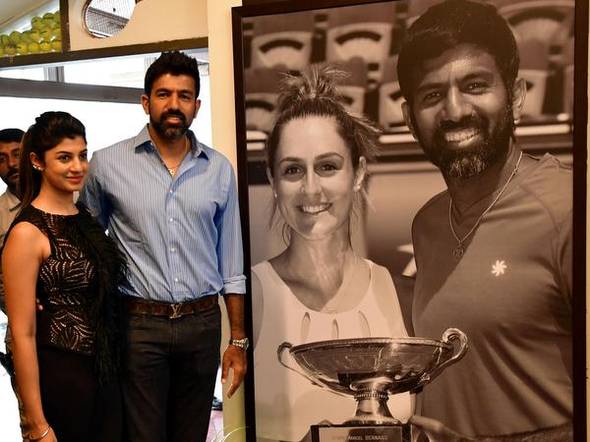
Speaking after an unveiling of his portrait at the KSLTA in honour of his French Open mixed doubles victory, Bopanna said last week’s tournament in Pune and the ongoing one here proved that Indian players can step up if they get to play more Challenger events.

Rohan Bopanna and his wife Supriya Annaiah at the unveiling of life size photograph of the doubles player in honour of his mixed doubles Grand Slam victory at the French Open 2017.   -  V. SREENIVASA MURTHY
Rohan Bopanna and his wife Supriya Annaiah at the unveiling of life size photograph of the doubles player in honour of his mixed doubles Grand Slam victory at the French Open 2017. – V. SREENIVASA MURTHY

India’s No.1 doubles player Rohan Bopanna believes nothing can prevent Indian players from stepping things up if they have access to more Challenger events. Speaking after an unveiling of his portrait at the KSLTA in honour of his French Open mixed doubles victory, Bopanna said last week’s tournament in Pune and the ongoing one here proved that.

“At Pune there were two Indians in the final and here we are seeing Sumit Nagal and Yuki Bhambri play so well. Yuki has a great chance to be in the top 100 again. So the more Challengers we have in India, the better. If each State can have a Challenger and a Future then definitely we will produce a lot more players.”

Reflecting on his own season during which he won four titles and finished runner-up thrice even while playing with multiple partners, Bopanna said: “The key thing I learned especially with the partner changes was to completely focus on my game and not really worry about who I was partnering…to focus on my strengths and the way I play.”

In spite of forging a successful partnership with Uruguay’s Pablo Cuevas, he will pair up with Frenchman Edouard Roger-Vasselin for the upcoming season.

“The challenge that I had with Cuevas this year was that we didn’t really practice much. He played singles so we only played matches. So I decided to find someone who was focused on doubles.”

Bopanna has played before with Roger-Vasselin before – most recently at Wimbledon 2017 – and with a fair amount of success.

“I always like to choose someone who gives me the chance to play my game freely. He doesn’t have any major weapons but he is a solid returner. And he helps me a lot at the net. He gives me the freedom to be aggressive.”

source: http://www.sportstarlive.com / SportStar Live / Home> Tennis / by N. Sudarshan / Bengaluru – November 24th, 2017

Full of beans: Coffee grounds to help power London’s buses

A new biofuel, which contains part coffee oil, is being added to the London bus fuel supply chain where it can be used without the need for modification.

Transport for London has been turning to biofuels to curb carbon emissions, trialling a fuel made with used cooking oil from the catering industry.(Shutterstock)

Waste coffee grounds will be used to help fuel some of London’s buses, Royal Dutch Shell and clean technology company bio-bean said on Monday.

A new biofuel, which contains part coffee oil, is being added to the London bus fuel supply chain where it can be used without the need for modification, the companies said in a statement.

Bio-bean and partner Argent Energy have so far produced enough coffee oil to power one bus for a year, if used as a pure-blend for the 20 percent bio component and mixed with mineral diesel to form a B20 fuel, they said.

Transport for London has been turning to biofuels to curb carbon emissions, trialling a fuel made with used cooking oil from the catering industry, the transport operator said on its website.

Bio-bean said the average Londoner drinks 2.3 cups of coffee a day, producing over 200,000 tonnes of waste a year. It collects waste grounds from high street chains and factories, which are dried and processed to extract coffee oil.

“It’s a great example of what can be done when we start to reimagine waste as an untapped resource,” bio-bean founder Arthur Kay said.

The coffee fuel technology has been supported by Shell.

source: http://www.hindustantimes.com / Hindustan Times / Home> World / by Reuters, London / November 20th, 2017

Coffee sector strives for US$6 billion export turnover

The coffee industry needed a big capital and comprehensive solutions to increase output and product quality. — Photo lehoicaphe.com

Hanoi :

The coffee industry should improve output, quality and added value for an export turnover target of US$6 billion by 2030, said Lương Văn Tự, chairman of Việt Nam Coffee and Cocoa Association.

Tự told the press meeting to introduce the first Việt Nam Coffee Day held in Hà Nội on Tuesday that the coffee industry has been growing impressively over the past three decades. Việt Nam’s coffee output made up just 1 per cent of world market shares in 1991, but that figure rose to nearly 20 per cent in the 2015-16 crop year.

However, the industry has been affected by climate changes. Last year, the sector suffered the most severe drought in the past 30 years. Meanwhile, the areas of old coffee trees, which need to re-plant in the next five years, was up to 160,000 ha. The re-farming progress has been slow in the Central Highlands region.

He said the industry should make great efforts to fulfil two main targets including maintaining its place as the second biggest producer and exporter of coffee beans in the world and stepping up the processing of instant and roasted coffee. These aim to increase export value from the current $3 billion to $6 billion by 2030.

The chairman added that the coffee industry needed a big capital and comprehensive solutions to increase output and product quality.

“If the investment speed in instant and roasted coffees is faster, time to meet the $6 billion target would be shortened. Currently, many foreign groups have been investing in Việt Nam’s coffee industry due to its abundant material areas and preferential tax,” he said.

For example, Indian Tata Coffee Limited invested in an instant coffee processing plant with a total investment of $60 million in the southern province of Bình Dương.

The organiser of Việt Nam Coffee Day said the first event is scheduled to take place in Đà Lạt City in the Central Highlands province of Lâm Đồng from December 9-11.

The event, featuring many products of Việt Nam’s famous coffee localities nationwide, is described as an opportunity to promote products to domestic and international consumers, raising the value of Vietnamese goods in the international market.

An international conference on the development of the coffee sector is scheduled to be held on the sidelines of the event, with the participation of representatives from coffee-producing countries and the International Coffee Organisation (ICO). — VNS

source: http://www.vietnamnews.vn / Vietnam News / Home> Vietnam News> Economy / November 15th, 2017

Board of Tata Coffee approves change in directorate

With effect from 07 November 2017

The board of Tata Coffee at its meeting held on 07 November 2017 considered the following –

T. Radhakrishnan, currently Executive Director would relocate to Vietnam as Managing Director of Tata Coffee Vietnam Co, WOS of the Company from 1 April 2018.

TCVCL is in the process of setting up a 5000 MT Freeze Dried Coffee Plant in Vietnam.

Consequent to the above, the Board has accepted the resignation of T. Radhakrishnan as Executive Director, with effect from 7th November 2017.

The Board of Directors approved the appointment of L. Krishnakumar as an Additional (Non-Executive) Director of the Company, with immediate effect.

Powered by Capital Market – Live News

(This story has not been edited by Business Standard staff and is auto-generated from a syndicated feed.)

source: http://www.business-standard.com / Business Standard / Home> News-CM> Companies> News / Capital Markets / November 07th, 2017

Titles for Rohan Bopanna and Myneni-Prashanth pair

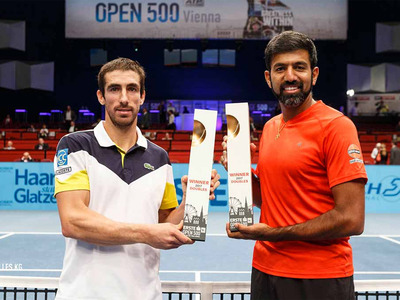
(Picture Courtesy: ATP World Tour Twitter handle)

New Delhi :

In a memorable day for Indian tennis, Rohan Bopanna won the Erste Bank Open title in Vienna with Pablo Cuevas while the team of Saketh Myneni and Vijay Sundar Prashanth clinched the Vietnam Open trophy at the Ho Chi Minh City.

However, Divij Sharan and his partner Scott Clayton ended runners-up at the Brest Challenger event in France, preventing what could have been an incredible as well as unique culmination to the week for the Indian players on the circuit.

In Vienna, unseeded Bopanna and Cuevas saved two match points before prevailing 7-6(7), 6-7(4), 11-9 over Sam Querrey and Marcelo Demoliner.

Bopanna and Cuevas were down 7-9 in the deciding super tie-breaker but saved both the match points to win the title.

It was third title of the season for Bopanna, having won Chennai Open (with Jeevan Nedunchezhiyan) and Monte Carlo Masters (with Cuevas).

In Vietnam, the unseeded Indian pair of Myneni and Vijay Prashanth quelled the challenge of the Japanese combination of Go Soeda and Ben Mclachlan 7-6(3), 7-6(5) in the summit clash of the $50,000 event.

It was first title of the season for Myneni and maiden Challenger level trophy for Prashanth.

“It was a great week. We combined well and enjoyed ourselves. I still feel I have something left in singles but definitely I will focus on doubles too,” Prashanth said.

Myneni, who has missed most part of the season due to injuries and has slipped to 724 in singles, was also asked if he would shift focus on doubles but he responded with a cryptic reply.

“Still the same plan as before, nothing has changed with me,” he said, indicating that he still have singles in mind.

Divij Sharan and his British partner Scott Clayton ended runners-up at the Brest Challenger following a 4-6, 5-7 defeat against Sander Arends and Antonio Sancic.

After losing the opening set, Sharan and Clayton led the second set 5-3 but lost four games in a row to lose the title clash.

It was second consecutive final for Sharan, having won the European Open (ATP 250 event) with Scott Lipsky last week in Antwerp, Belgium.

source: http://www.timesofindia.indiatimes.com / The Times of India / News> Sports News> Tennis News / PTI / October 29th, 2017