Joshna Chinappa cruised to her 15th women’s singles title while Saurav Ghosal secured his 12 men’s singles crown at the HCL National Squash Championship that concluded on Saturday.
Chinappa and Ghosal, the flagbearers of Indian squash for the past decade, were stretched in the finals by Lakshya Ravendran and Mahesh Mangaonkar respectively before getting home in four games.
Top seed Chinappa, who had lost to Dipika Pallikal in the final last year, regained the trophy with a 11-6, 8-11, 11-2, 11-4 victory over Ravendran.
The World No 14 is now one shy of equalling Bhuvneshwari Kumari’s record of 16 national titles.
Chinappa’s main rival and longtime teammate, Pallikal, had pulled out of the tournament at last minute due to an ankle strain.
Later in the day, Ghosal got the better of Mangaonkar in a closely-contested final with the final scoreline reading 11 -8, 11-13, 11-9, 11-6 in favour of the Kolkata man.
It was the second year in a row that squash nationals offered equal prize money with eventual winners receiving Rs 1.5 lakh each.
The total prize money of the tournament was a little over Rs 11 lakh.
source: http://www.timesofindia.indiatimes.com / The Times of India / News / by PTI / August 26th, 2017
Ahead of the 8th edition of the Mountain Echoes literary festival that begins tomorrow, an exhibition showcasing the traditional designs of Rajasthan was inaugurated here today.
Curated by Indian fashion designer Prasad Bidapa, the show titled “Handmade in Rajasthan” is being hosted at the Nehru Wangchuk Cultural Centre here.
With collections inspired by traditional ‘kota doria’ and handloom cotton saris, the exhibition celebrates the indigenous craft forms that give Rajasthan its distinctive identity and aims to present a 360-degree view of the state’s textiles.
“Mountain Echoes presents a carefully curated segment of beautiful clothes which are handmade in Rajasthan. Each garment reflects the heritage aspect of Indian textiles and craftsmanship, creating a resonance that is luxurious and extremely collectible.
“From the finesse of the kota doria sari to the robust hand-woven khadi… from the exquisite precision of our hand- blocked printing to the finesse of our embroidery, this collection is an emphatic tribute to the spinners, weavers, dyers, printers and embellishers of the beautiful state of Rajasthan,” Bidapa said.
The show sets the stage for the literary festival that will witness literary discussions with speakers from across the globe including Shashi Tharoor, Markus Zusak, Karma Gelay, Pema Abrahams among others.
Set against the stunning backdrop of the eastern Himalayas, Mountain Echoes literary festival is an initiative of the India-Bhutan Foundation, in association with the Indian literary consultancy, Siyahi.
The festival will come to a close on August 27.
source: http://www.ptinews.com / Press Trust of India / Home> Nation / Thimpu – August 23rd, 2017
Sustainability leaders and advocates from across the coffee supply chain will gather in Guatemala City to participate in the first sustainability conference hosted by the Specialty Coffee Association.
The inaugural event, called Avance, will be held Oct. 11-12 at the headquarters of Anacafé, Guatemala’s national coffee association. It will consist of lectures, workshops, panel discussions and dialogue on topics like climate change and coffee production economics, with a focus on Central America.
Avance is designed to be inclusive of roles and experience levels across the coffee industry, as well as of English and Spanish speakers. Business representatives from coffee-consuming countries, as well as farmers, development practitioners, and public officials from coffee-producing countries, will be present to learn from experts and from one another about sustainability topics in the coffee sector.
Avance is the result of years of advocacy by members of the coffee community to include the voice of coffee farmers and representatives from coffee-producing countries in discussions around sustainability issues. The conference also builds on years of work by the SCA’s Sustainability Council and conversations within the specialty coffee community on how the industry can work together to make coffee better.
The Specialty Coffee Association was formed last year after members of the Specialty Coffee Association of America and the Specialty Coffee Association of Europe voted to unify the two groups. They are continuing to operate as separate organizations while the unified structure is put into place.
source: http://www.vendingtimes.com / Vending Times / Home / by Emily Jed / Gautemala City – August, 24th, 2017
‘India and Cambridge university have had an enduring relationship’
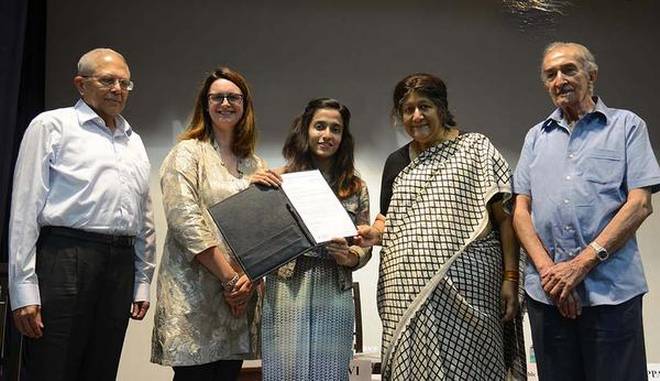
The Pemanda Monappa Scholarship was presented to Rupsa Banerjee, a student of English literature, by the Chief Justice of the Madras High Court Indira Banerjee at a function on Wednesday. Ms. Banerjee will study at the University of Cambridge, U.K.
Speaking on the occasion, the Chief Justice said studying in an institution like Cambridge broadened the outlook of students.
Congratulating the student, Chief Justice Banerjee hoped she would imbibe the qualities of Pemanda Monappa.
She recalled that in 1948, the officer was hand-picked by Sardar Vallabhai Patel to be the Inspector of Police of Hyderabad State despite the fact that they had never met.
P.M. Belliappa, former IAS officer and managing trustee of the Pemanda Monappa Trust, said the event was a celebration of the values that his late father followed till the very end.
Helen Pennant, director, Cambridge Trust, said it has been in existence for 30 years. It supports 500 scholars annually, she said. “One in three students at the university comes from outside the U.K.,” she said.
N. Ravi, Director, Kasturi and Sons Ltd., said the relationship between India and Cambridge had been an enduring one and several Indians, including mathematician Srinivasa Ramanujam, statistician P.C. Mahalanobis, Nobel Prize winner Venky Ramakrishnan and three former Prime Ministers were alumni of Cambridge.
source: http://www.thehindu.com / The Hindu / Home> News> Cities> Chennai / by Special Correspondent / Chennai – August 03rd, 2017
PARIS, FRANCE – NOVEMBER 05: Rohan Bopanna of India plays a forehand against Pierre-Hughes Herbert and Nicolas Mahut of France during the Mens Doubles semi final match on day six of the BNP Paribas Masters at Palais Omnisports de Bercy on November 5, 2016 in Paris, France. (Photo by Dan Mullan/Getty Images)
FRESH from ending a 14-year wait for his maiden Grand Slam title, Rohan Bopanna is eyeing up more major success at Wimbledon next week.
The Indian ace fulfilled a lifetime ambition when he won the mixed doubles title with Gabriela Dabrwoski at the French Open this month and hopes the momentum will continue into SW19.
“Never give up on your dreams. That is something which stands out (from this win),” the 37-year-old said on the eve of the event.
“Age is only a number. You can’t set a timeline (for achievements). As long as you believe in yourself and keep working hard, nothing can stop you.
“I worked towards my goal every single day. I am grateful that my team also put in the effort. Although tennis is an individual sport, everyone has contributed.
“Huge congratulations to Gabriela for becoming the first Canadian woman to win a Grand Slam. It helps to share a sense of camaraderie with your partner. I will partner her at Wimbledon also.”
With that triumph in Paris, Bopanna became only the fourth Indian in history – after Leander Paes, Mahesh Bhupathi and Sania Mirza – to win a slam.
The 16-time ATP tour winner’s previous best finish at Wimbledon has been two semi-final finishes in the men’s doubles (2013 and 2015). In the mixed event, Bopanna has only reached the last eight once, and that was four years ago.
Bopanna, for so long a national stalwart on the Davis Cup stage, reckons a change in self-belief is one of the main reason for him pl-aying “the best tennis of his career”.
He explained: “At the start of the year, Jeevan Nedunchezhiyan and I won the Chennai Open. Th-en, Marcin (Matkowski) and I reached the Dubai Open final. In April, Pablo Cuevas and I took the Monte Carlo Masters title. So I’ve played with three different players this year.
“I’ve had to adapt to their styles and figure out a way to use our combined strengths to get good results. This is the main reason why I feel that I’m now playing the best tennis of my career. Every time I step on to the court, I feel like I can win.
“This level of confidence is something new. I have never given up on anything – this is my strength. I constantly keep doing the right things, irrespective of the result. When I was a junior, I lost a lot of tournaments in the early rounds. I wasn’t discouraged, I just continued to work hard. Rohan Bopanna and Pablo Cuevas of Uruguay hold their winners trophies after their victory in the doubles final of the Monte Carlo Rolex Masters in April 2017. (Photo by Clive Brunskill/Getty Images)
“I carried this same attitude into my professional career. I don’t have any regrets about not winning a Grand Slam title for the first 14 years of my career. The things I’ve learnt has made me a better player.
“I played Queens with Ivan Dodig, as Pablo was not available. Pablo and I will team up for Eastbourne and Wimbledon. Our goal is to try and qualify for the year-end London Masters.”
Bopanna and Croatian team mate Dodig reached the last four of the Aegon Championships last weekend, losing to French duo Julien Benneteau and Edouard Roger-Vasseli 4-6, 5-7.
As well as focusing on his own goals, Bopanna is also doing his bit to help the next generation of talent come through an often maligned tennis system in India.
“To get singles champions, we need to have a system in place at the grassroots level. We have very limited support from the Federation (AITA) or corporates. We need that system to compete with European standards. We still have a long way to go,” he said.
“I am also bringing a couple of coaches (Britain’s Aubrey Barrett and Serbia’s Dragan Bukumirovic) to my academy in Bangalore from outside. They will be here for a year and help these kids. I tell the players if they go, go for a year not for a month or so.
“In a month it does not really help improve much. That’s why I am bringing these coaches; let’s hope the kids make good use of this opportunity”.
Rohan Bopanna along with Serbian coach Dragan Bukumirovic at his tennis academy in Bengaluru. (Image: Instagram/rohanbopanna0403)
The French Open mixed-doubles champ Rohan Bopanna, who made it to the Wimbledon quarter-final, is back in Bengaluru. Taking no time off after his long month of play, the tennis star was back in action, not for his game, but to train children at his tennis academy.
Bopanna shared this picture on social media of him with his students. “Always a great feeling to be back in Bangalore at the tennis academy.” And looks like the kids are getting tips not just from one pro but Serbian coach Dragan Bukumirovic too.
source: http://www.economictimes.indiatimes.com / The Economic Times / ET Home> Magazines> Panache / by Maleeva Rebello , ET Bureau / June 25th, 2017
The controversy surrounding naming of Light House Hill Road took a historical turn with Sullia Amara Kranti Utsava Samiti too laying their claim to name the road. Turning back pages of history to shed light on role played by Vokkaliga community prior to India’s first War of Independence, the Samiti demanded that the road be named Bavuta Gudde Road and the hillock which also has St Aloysius College continue to be referred to as Bavuta Gudde.
Gopal Peraje, convener of the Samiti said the 1837 revolt against the British, a good two-decades before the first War of Independence of 1857 was the offshoot of dethroning of the Kodava ruler in 1834 by imperial rulers. The revolt engulfed Kodagu, Sampaje, Sullia, Bellare, Puttur, Kumble, Manjeshwar and even Mangaluru which saw thousands of people rally round the leadership of Ramayya Gowda of Kedambadi. Ramayya was ably assisted by many leaders, he said.
The dethroning of the Kodava ruler and change in taxation system from material to monetary terms were the main reasons for sparking the revolt, he said. The rebels that marched from Kedambadi took control of government treasuries in Sullia, Bellare, Puttur and Kumble and also went on to wrest control of Mangaluru from the British, he said. The rebels lowered the British flag that was erected on Bavuta Gudde and hoisted the flag of Haleri dynasty of Kodagu there.
Noting that the rebels wilted under the East India Company’s counter-offensive and many rebels were captured and prominent leaders hanged in public at Bikarnakatte and another leader publicly hanged in Madikeri Fort, Gopal said the rebels ruled Mangaluru for 13-days from April 5, 1837. The Mangaluru City Corporation and state government must take this historic fact in to account and name the road as Bavuta Gudde Road to commemorate this freedom struggle, he noted.
source: http://www.timesofindia.indiatimes.com / The Times of India / News> City News> Mangalore News / by Jaideep Shenoy, TNN / July 25th, 2017
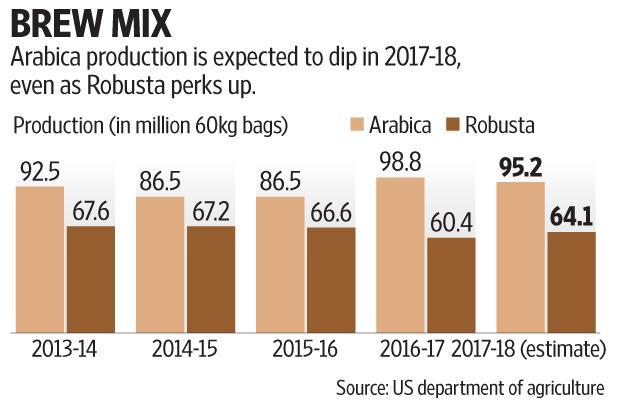
India’s output by volume tilts towards Robusta, at 70% of the estimated coffee output in 2016-17, according to Coffee Board data
Graphic by Subrata Jana/Mint
The headline forecast for coffee in 2017-18 indicates consumption is growing, while output could be flat. Coffee output is expected at 159 million bags—a bag is 60kg—the same as the previous year, according to the US department of agriculture’s (USDA’s) forecast. Domestic consumption is pegged to increase by 1.3% and along with higher exports, is expected to lower closing stocks of coffee in 2017-18. That is ordinarily a good situation for prices.
The trend looks somewhat different when you consider the two varieties, Arabica and Robusta. In 2016-17, the Arabica crop had risen by 14% but is now expected to fall by 3.6% mainly due to a decline in Brazil, which has an off year for the crop.
The Robusta variety, on the other hand, is expected to increase by 6.7%, as output in countries such as Vietnam, Brazil, Indonesia and even India is projected to increase. These countries saw output decline in 2016-17 due to bad weather conditions. Vietnam is the largest grower of Robusta and its output is expected to benefit from good rains between January and March, said the USDA report.
India’s output by volume tilts towards Robusta, at 70% of the estimated coffee output in 2016-17, according to Coffee Board data. Although output fell that year, prices of Robusta had risen sharply. The Robusta benchmark of the International Coffee Organization on 15 June was up by 24% over a year ago, but the Brazilian Arabica benchmark was down by 10.6%. Recent months have seen Robusta prices turn flattish-to-lower.
Predictions of a better monsoon in 2017-18 are expected to see India’s coffee output recover after falling by 9.8%, based on post-monsoon estimates. That is good news even if prices stay flat but not if prices decline as that can affect margins. However, lower prices should benefit instant coffee makers such as Hindustan Unilever Ltd and Nestlé India Ltd, as also the instant coffee operations of companies such as Tata Coffee Ltd, which also runs coffee plantations.
The one imponderable here is that the goods and services tax on instant coffee has been set at 28% compared to 5% on other coffee (such as roast and ground). This can be a dampener for the instant coffee business and one will have to see if companies hike prices post-1 July. That can potentially upset demand.
source: http://www.livemint.com / Live Mint / Home> Money / by Ravi Ananthanarayanan / Tuesday – June 20th, 2017
Tyag Uthappa from Kodagu is planning to gift a 3-bedroom house covering 2,400sqft, built in 24 hours flat
A Bengaluru-based company is out to prove a point, and also set a world record with this dream home
The Limca Book of World Records has acknowledged this claim and will send a team to document the execution
__________________________________________________________
Bengaluru :
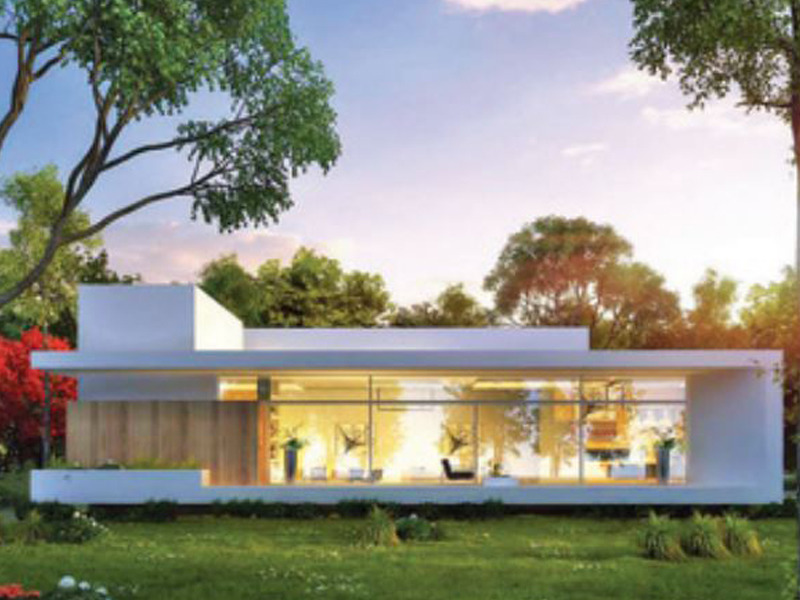
A three-bedroom house covering 2,400sqft, built in 24 hours flat. At Rs 48 lakh, plus tax. That’s some fast and furious work, and cheap too.
A Bengaluru-based company, specializing in rapid construction and building innovation technology , is out to prove a point, and also set a world record with its dream home for a city businessman.Tyag Uthappa, coffee planter and businessman from Kodagu, is planning to gift the marvel to his wife on her birthday .
Using the precast method of construction, the project is tentatively scheduled for July 15 at T Agrahara, close to Stonehill International School in North Bengaluru. The Limca Book of World Records has acknowledged this claim and will send a team to document the execution.
The construction will cost Uthappa about Rs 48 lakh, plus tax, compared to Rs 70-80 lakh for a normal construction of this size.
“The delay in the project handover, quality of construction and exorbitant prices are making people think twice before investing in real estate projects. Precast technology could be the answer. It reduces construction timelines and improves sustainability and quality . Most important, precast buildings can last a lifetime,” said Paddy Menon, chief disruptor, REBEL Disruptive Building Technologies, who’s taken the lead in attempting a record.
According to the 2015 Survey of Construction from the Census Bureau, the average completion time of a singlefamily home is around seven months. “The amount of time it takes to build your home depends on the type of home you’re building and various other factors, like labour, raw material supply and weather.But this is amazing, considering that these factors become irrelevant. The new technology can give a fillip to affordable housing and the Modi government’s ambitious project to provide houses to all by 2022,” said a builder.
How is the construction done in such quick time?
Menon explained: “We use moulds using precast to create structural elements which are standardized.” A house could have 15 to 25 large elements. These are transported to the site, using trailers. We use standard strip foundations we normally see at construction sites, and with the help of cranes we assemble these walls (elements) and construct the whole house. We ensure that the elements are assembled with great care and precision, with appropriate joints.This technology helps us skip a lot of procedures which we follow in the conventional method of construction, and makes work easier and faster,” Menon explained.
Construction trend: In 2016, a 10 storey structure was built in 48 hours in Mohali, using precast technology , and entered the Limca Book of Records.
A builder said there have been instances of houses being built in 48 hours, a week or month, but this is the first time someone is attempting to set a record by building a 2,400 sqft house, which could change the way the construction industry is going about its work.
Saves time, improves quality: Paddy Menon, chief disruptor, REBEL Disruptive Building Technologies, said precast technology has proved its worth by saving a lot of construction time in Europe and West Asian countries. The best part of the technology is that it not only speeds up construction work but also enhances quality of the final output.
This technology is still nascent in India, though a few large projects are happening in a few metros, and need a lot more awareness among common people.
source: http://www.timesofindia.indiatimes.com / The Times of India / News> City News> Bangalore News / by Manu Aiyappa Kanathanda / July 03rd, 2017
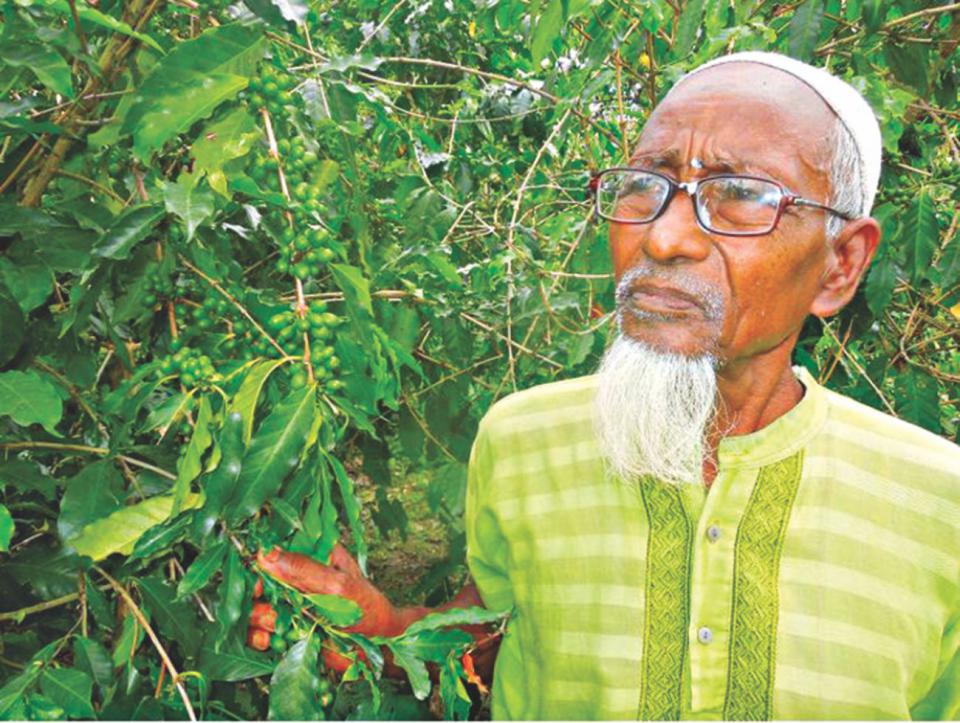
Nilphamari farmer defies odds to produce the beans
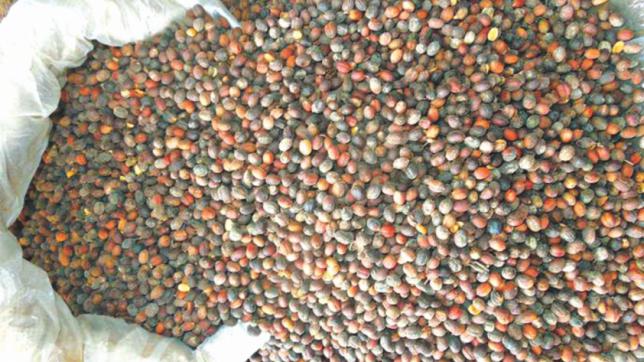
Beans harvested from the coffee plants of Abdul Kuddus in Munsipara village of Nilphamari’s Kishoreganj upazila. Photo: Star
by EAM Asaduzzaman and Andrew Eagle
Bangladesh has a long, established history as a producer of quality tea. As for that other hot beverage, coffee, despite rising popularity among Bangladeshi consumers over the past few decades, there is no such agricultural tradition. Nursery owner Abdul Kuddus, from Munsipara village in Nilphamari’s Kishoreganj upazila, however, has taken the first steps to change that. He decided to grow coffee, driven by nothing more than unstoppable curiosity.
“I first heard about coffee in 2009 at a conference run by the Nursery Owners Association,” says Abdul, an energetic septuagenarian who yet walks with a spring in his step. “For a long time I wanted to grow it but I couldn’t procure any saplings.”
“For about the whole of his life Abdul has been inquisitive on the subject of rare plants,” explains his neighbour Fazal Kadir, a primary school headmaster.
“Finally in 2014, I managed to purchase 254 coffee saplings from Cox’s Bazar,” Abdul continues.
Abdul Kuddus
“I contacted the agriculture extension department for advice on how to grow it, but they were uninterested.” Thus Abdul relied on common sense, planting the saplings on his fifteen decimals with a reasonable distance between each one.
The plants seemed to appreciate Abdul’s efforts. With organic fertiliser they grew quickly. He decided to prune them, cutting their tops such that they didn’t grow any higher than five feet. In 2016 Abdul held his breath. The two-year-old crop for the first time began to grow fruit, which blackened as they ripened.
Abdul’s family was unimpressed. Who’d ever heard of coffee being grown in Nilphamari?
“We forbade father to proceed,” recalls his son Md Akram. “We told him all his efforts would be in vain but he didn’t listen. He collected the mature fruit and used a wooden tool, a “dheki” to break them open and bring out the beans.”
“Of course there is no specialised machine to crush coffee here,” says Abdul. “So I took the beans to a flour mill and ask them to grind it. I got 67 kilograms of coffee powder.”
Despite the innovative refining process involved, Abdul’s groundbreaking coffee is proving popular.
“The coffee produced in Kishoreganj upazila tastes really good and has a nice aroma,” says Siddiqur Rahman, who used to be the upazila nirbahi officer of Kishorganj and now works as an additional deputy commissioner in Narail district.
“I tasted Abdul’s coffee and found it better than the imported brands available in the market,” says Sayed Hossain Shabul, president of a local citizens’ committee.
Based on the favourable reviews of consumers, Abdul went to the Bangladesh Standards and Testing Institution in Rajshahi some months ago to apply for a licence for his coffee.
“They said it was not on their list, so I failed,” he says. “However I did get recognition from the district civil surgeon’s office which issued a licence under the Food Safety Act 2013 under the name “The Bismillah Coffee”.
Eight ounces of coffee contains 135 milligrams of caffeine, explains Prof Abdul Latif, head of the botany department at Nilphamari Government College.
“It’s a popular drink that serves as an energy source. The plant is bushy, of medium height and evergreen. It yields bunches of small, marble-like green fruit which is then crushed to extract the coffee powder.”
Abdul earned Tk 1.3 lakh from this year’s coffee crop, selling it for Tk 2,000 per kilogram in Dhaka.
Now he wants to extend his plantation to cover thirty decimals. “If the government and private entrepreneurs get on board,” Abdul says, “then coffee cultivation can be a profitable segment of our agricultural future.”
In the meantime, the local community is already convinced. Several locals have decided to follow Abdul’s lead, buying coffee saplings from his nursery at Tk 250 per piece.
source: http://www.thedailystar.net / The Daily Star / Home> Back Page / by EAM Asaduzzaman & Andrew Eagle / July 09th, 2017
WELCOME. If you like what you see "SUBSCRIBE via EMAIL" to receive FREE regular UPDATES.
Read More »