The vision of World Tea Coffee Expo Mumbai India is to expand the Indian Beverage business by providing all sourcing requirements under one roof
Growing in size and stature every year, the 5th edition of World Tea Coffee Expo comes back to Mumbai from 16th Nov – 18th Nov 2017 with a host of enhanced features and activities covering the entire gamut of the Hot Beverage sector.
Globally recognized at a complete trade show for Tea, Coffee and allied sectors, the three day annual event shall witness about 90+ exhibitors from 8 countries showcasing latest innovative products, machineries, equipment, packaging, technologies, vending solutions, flavours, Retail Chains, certifications, Premixes, government boards etc.
The 5th edition shall have additional features like an upscale Display showcase, wider range of networking events, a special section for e-commerce companies, more educational content and speakers at Conference and interactive workshops – including tasting sessions – by some of the best Baristas/Trainers, Tea Sommeliers and Chefs. 5th World Tea Coffee Expo Mumbai India is supported by Sri Lanka Tea Board and leading associations and chambers from across the world have pledged their support to this important industry initiative.
Since its launch in 2013, the expo has brought global industry players closer, enabled mega deals in addition to being the definite launch pad for new products and technologies especially for start-ups and SMEs who aspire for national / international expansion but have low budgets.
The 2016 edition hosted 67 companies – including Pavilions from Tea Board of India and Sri Lanka Tea Board – which showcased their best to a business visitor base of 3400+ which included senior level decision makers comprising of Retailers, Wholesalers, Distributors, hypermarkets/multi-product retail chains, Tea/Coffee Estate owners, potential franchisees, purchase managers of medium-to-large offices, HoReCa sector professionals many of whom placed large orders with exhibitors. The 2-day hi level conference discussed issues facing the sector and workshops on last day imparted technical skills. Experts from across India were a part of the conference and workshops.
“This niche Expo provides the perfect environment for the hot beverage industry to meet face-to-face and develop real business opportunities. WTCE facilitates participants to strike bulk deals, joint ventures/alliances, franchise deals, appoint marketing agents, knowledge-sharing, meeting government officials and generate large number of business leads.” said Ms Priti Kapadia, Director, Sentinel Exhibitions Asia Pvt. Ltd, the organizers of this unique trade show.
The global market for RTD (Ready-to-Drink) Tea and Coffee is expected to reach $150 billion by 2021 with an annual growth rate of 7%. The Asia-Pacific region is the largest market and also showing maximum growth. The Indian tea and coffee market is one of the largest in world in terms of production, consumption and growth prospects. However, future success depends largely on use of latest technology, seamless upgradation of existing facilities, adapting to ecommerce and cost effective processing – something WTCE strives for. For further information please log onto www.worldteacoffeeexpo.com or call on +912228625131 or email to info@worldteacoffeeexpo.com
source: SentinelPR priti@publicrelationindia.com / Press Release / February 21st, 2017
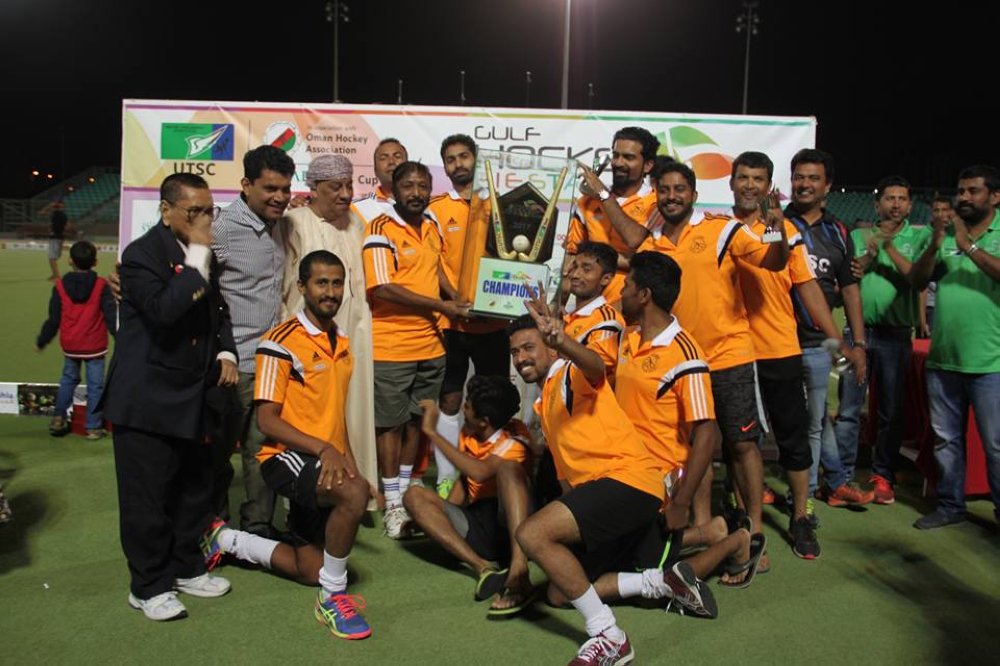
Team Coorg celebrate with their trophy after defeating UTSC in the final of the Starcare Cup Gulf Hockey Fiesta on Saturday. Photo – Supplied
Muscat:
Team Coorg defeated United Thalassery Sports Club (UTSC) to retain the title at the Starcare Cup Gulf Hockey Fiesta at the Sultan Qaboos Sports Complex on Saturday.
In an exciting final, Team Coorg defeated UTSC by a 2-0 margin.
The Asian Hockey Federation (AHF) sanctioned event was organised with the support from Oman Hockey Association (OHA).
Earlier in the semifinals, Team Coorg defeated KSA Dammam 3-2 while UTSC defeated One Thousand Hockey Legs (OTHL) team from India 3-0.
The young boys of OTHL, run by noted hockey journalist K.Arumugam, were the star attraction of the tournament.
Talib Al Wahaibi, Chairman of Oman Hockey Association, and Dr. Mohammed Naseem, CEO of Starcare Hospitals, presented the prizes.
Speaking on the occasion, OHA chief Talib Al Wahaibi said: “I congratulate UTSC for this wonderful event and all teams had performed really well. On behalf of OHA, I extend my greetings and support to all of you.”
Veteran hockey personality S.A.S. Naqvi also graced the occasion.
The teams which took part in the event are Oman Veterans, Saham Sports Club junior team, Ahli-Sidab junior team, KSA Dammam, Al Naqi Strikers, Muscat Foxes, Pak Falcons, Team Coorg, OTHL, Young Stars Bahrain and UTSC.
“We are so pleased to support the Gulf Hockey Cup conducted by UTSC. It was a great event and it looked like a festival here rather than a hockey tournament,” Dr. Mohammed Naseem of Starcare Hospitals, said.
Pradhan Somanna of Team Coorg was adjudged the player of the tournament. The other individual awards went to OTHL’s Deepasau (best goalkeeper), Team Coorg’s Nani (top scorer), KSA Dammam’s Ismak (best defender) and Saham Club’s Ilyas (most prmosing youngster). Saham Club Juniors won the fairplay award.
While Starcare Hospitals were the main sponsor for the event, the other sponsors were Malabar Gold, Home Mart International, Modern Exchange, United Projects, Al Rahwan, Badar Shipping, Air India, Al Sarooj, Al Omaniya
Finance, FRiENDi Mobile, Al Nahla Solutions, FAP, Air Arabia, Lynz, Pocari Sweat, Oasis Water, Al Ain Water, Haffa House Hotel and Fairtrade.
source: http://www.timesofoman.com / Times of Oman / Home> Sports> Hockey / by Times News Service / February 19th, 2017
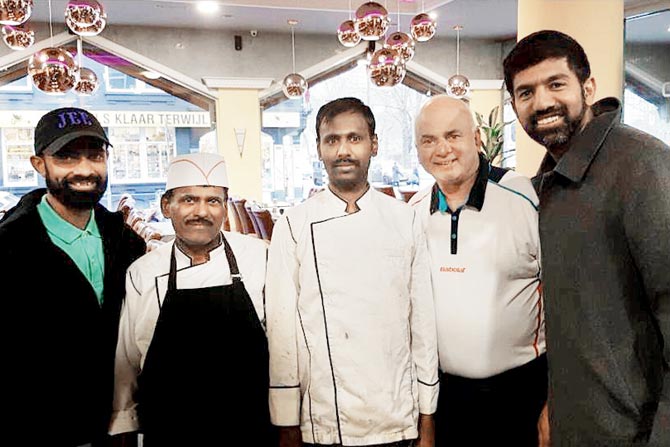
India’s doubles tennis player Rohan Bopanna couldn’t have asked for a better way to start his day in Amsterdam yesterday.
Far away from home, the Bangalorean enjoyed some authentic South Indian breakfast in the Dutch capital, where he participated in the Rotterdam Open.
The south Indian posted the above picture on his Instagram account yesterday with the caption: “Best kinda breakfast just before flying out to Marseille (France).
Thanks to our friend Kris and all the wonderful chefs for opening the restaurant early just for us to have some great south Indian breakfast at Saravanaa Bhavan here in Amsterdam. @jntennis #saravanaabhavan #Amsterdam #lifeontheroad #idly #filtercoffee.”
source: http://www.mid-day.com / mid-day.com / Home> Sports News> Tennis News / by A Correspondent / February 18th, 2017
The International Coffee Organization flagged the potential for “pressure on” coffee prices from supplies, even amid a fierce debate in Brazil, the top producer and shipper, over the extent of bean inventories.
The ICO, while noting that month-average coffee prices as measured by its benchmark index had “significantly improved” last month, recovering more than half the 9.7% lost in December, they remained well below November highs reached on concerns over dryness in Brazil and Vietnam.
“In view of the steady level of exports, and news of more favourable weather conditions in Brazil, the positive [price] trend reversed towards the end of January,” the organisation said.
World coffee exports for the October-to-December period, the first three months of 2016-17, totalled 29.8m bags, a rise of 8.3% year on year, led by a 23% surge in shipments of the “other milds” beans shipped from the likes of Honduras and Peru, but with increases in the other major segments too.
Shipments of robusta beans rose 7.9% to 10.5m bags, defying worries over poor weather feared to have hit production in major growing countries, concerns which helped London robusta futures hit a five-year high of $2,282 a tonne on January 19.
‘Pressure on price levels’
The export data – combined with ideas of stockpiling in importing countries such as the US, where December inventories, at 6.26m bags, were the largest for the month in 23 years – boded ill for prices, the ICO said.
“Large export volumes and high levels of stocks in consuming countries seem likely to put pressure on price levels,” the organization said.
The comments chime with those of some other commentators, such as Judith Ganes-Chase, who raised questions to the market premise “that supplies would run low following a multitude of production issues the past three seasons”.
Noting continued strength in coffee exports, Ms Ganes-Chase said that “the “key indicator of supplies starting to be exhausted has not been flashing.
“In fact, the opposite has happened,” with data showing that shipments for the first three months of 2016-17 “are up sharply from all types of coffee and this is keeping consumer warehouses well stocked”.
Robusta stocks dispute
However, the comments also come amid enhanced uncertainty over supplies in Brazil, which has suffered successive under-par robusta coffee harvests, even as arabica output last year hit a record high.
While robusta stocks were reported by the Conab bureau to have dwindled to some 2.1m bags – prompting Blairo Maggi, Brazilian agriculture minister, last week to flag the likelihood of the country opening up to unprecedented imports of the variety – a decision on buy-ins was postponed on claims of far biggest inventories.
Producers in Espirito Santo, Brazil’s top robusta-growing state, claimed stocks of some 4m bags, saying that the survey by Conab bean-counters had been incomplete, and not included all warehouses.
Arabica tightness too?
Meanwhile, Brazil’s Cooxupe, the world’s largest coffee co-operative, on Thursday undermined ideas of ample arabica stocks, saying that tightness in robusta supplies was prompting many buyers to switch beans.
Supply tightness will reach the arabica market around May, Cooxupe said, just ahead of the next harvest.
“Almost all Brazilian coffee exporters sold a lot of [arabica] beans to local industries lately,” Cooxupe chief trader Lucio Dias said.
“Domestic consumption is reducing the amount of arabica available for exports.”
Brazil data uncertainty
While respected data on Brazil’s coffee exports are readily available, including from exporters’ group Cecafe, statistics on production are viewed by many investors as less thorough, with Conab viewed as tending to underestimate output.
Conab’s initial forecast for 2017-18 foresees an 8-15% decline in domestic output, to 43.65m-47.50m bags.
“However, some independent sources indicate much higher figures for the total production of Brazil,” the ICO said.
Best-traded arabica futures for May stood at 148.00 cents a pound in morning deals in New York, a rise of 0.3% on the day.
In London, robusta futures for March, the best-traded lot, stood down 0.1% at $2,123 a tonne.
source: http://www.agrimoney.com / Agrimoney.com / Home / by Mike Verdin, UK / February 10th, 2017
Ashwini Ponnappa opens up to Sportskeeda about her career, struggles, achievements, doubles getting ignored and much more.
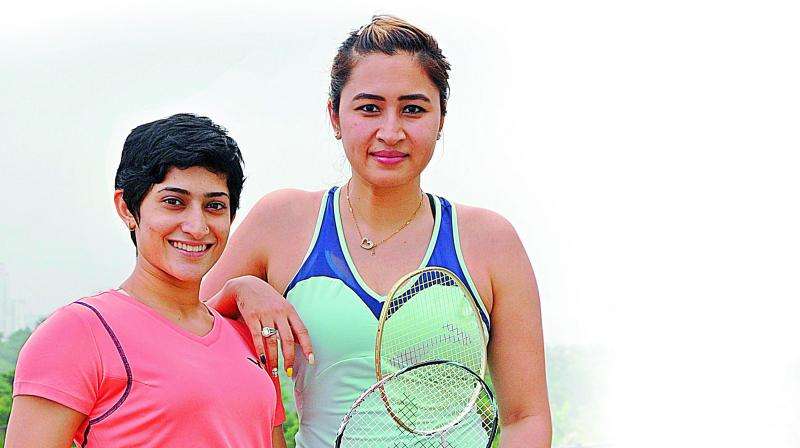
Ashwini Ponnappa. [Image Courtesy: Red Bull]
“India, as a country, is reactive rather than pro-active.
”Having won tournaments ever since joining the international circuit and still not getting enough support, Ashwini Ponnappa hits the nail on the head with this statement.
The Gold at the 2010 Commonwealth Games in women’s doubles was supported with a mixed team silver while she and Jwala Gutta became the only Indian pair, and second Indians after Prakash Padukone in 1983, to win a medal at the World Championships when they won the bronze at London in 2011. The 2015 Canada Open triumph came on the back of yet another successful CWG campaign in Glasgow and a bronze at the 2014 Asian Games.
Despite all these achievements, it wasn’t until September 2015 – less than a year before the Rio Olympics – that Jwala and Ashwini were included in the Target Olympic Podium (TOP) scheme. And that, too, came after a war of words and multiple requests and demands to the Sports Ministry.
“Not just the TOP scheme, a lot could have been handled way better, to be honest. I think when Jwala and I did well at the World Championships in 2011, things should have changed then,” the 27-year-old claimed. “When we did well in 2010 at the CWG, we should have had support, which would have eventually led to us, probably, doing well at the 2016 Olympics, not in 2012, where we lost out by just 1 point.”
“So when you see a pair having potential, who have done well, are doing well and have the potential to do even better, support them! Did anyone come forward to do that?,” questioned Ashwini. “They didn’t. And that’s why I think the delay in us being involved in the TOP scheme cost us a little bit (at the 2016 Olympics).The support we got was not enough to guarantee a medal.”
Looking at the likes of HS Prannoy, Guru Saidutt part of the list already, it is natural that the country’s most successful doubles pairing would be hurting from being overlooked time and again.
Doubles ignored by the badminton fraternity
This inadvertently prompted the question if doubles badminton gets step brotherly treatment as compared to singles. And like she plays on the court, Ashwini didn’t hold back from this either, bluntly admitting that it is foolhardy to harbour expectations of a medal from the Olympics without significant backing.
“You see the companies that are supporting the junior players – all of them are supporting singles players while nobody supports doubles players. Nobody wants to gamble on a doubles pairing and pick a pair and back them to win a medal, the way they would do for a singles player.”
“If you look at Saina and Sindhu, they have been given consistent support since the age of 13-14 and that’s what has helped them achieve everything at the international level. There’s not one doubles player who is given that backing. But, you expect so much out of us when we are struggling, as it is. You can’t expect miracles at the Olympics as it is simply not going to happen with this backing,” she continued.
Rewinding the clock and remembering the unrealistic expectation the nation had on the pair during the London and Rio Olympics, I had to agree with her. Just when my mind began to wander about how they kept their motivation up, she explained:
“Everything that Jwala and I achieved. Everything that Jwala-Diju achieved, what the other doubles players have achieved – is amazing. I think that’s remarkable. It’s an outstanding effort put by all of us because without having support, to just go there and play because you want to play and work hard for yourself, for your country. Of course, it stings when you don’t get any support, but it hasn’t stopped us from working and fighting and trying to do really well,” she answered as if she could read my mind and anticipate the next question.
“But, to push us to the next level, we need more – a lot more – to make us do that and that isn’t happening. We still believe that despite all that we are going to do well, but how far can belief just take you alone. We need a lot of support. But, hopefully things change. It hasn’t happened in the past, though despite Jwala and I performing well,” the anguish was quite palpable on her face as she talked about the obvious lack of support.
Jwala Gutta’s and Ashwini Ponnappa’s success has come despite the obvious lack of support
By this time it was clear that having already competed with the top nations and coming out on top on quite a few occasions was despite the negligible funds and backing given to doubles badminton in India rather than because of it.
No Indian pair goes into any Superseries, Olympics or Asian Games as one of the favourites. Any achievement by any Indian pair, not just Jwala and Ashwini, is considered as a bonus. From parents not encouraging kids to take up doubles to lack of media coverage, it is not just the lack of funds or support that has resulted in Indian players merely making up the numbers at every tournament and playing second fiddle to the Far East and European countries when it comes to doubles. The problems are deep-rooted and many, which have resulted in India’s current standing in doubles badminton.
“When we look at other countries, I feel, we are definitely capable of beating them. But, at the same time, there’s a massive difference in the kind of facilities they are provided in terms of training and encouragement – which is most important at the grassroots level.“The fans, as awesome as they are, can only feed what’s given to them and that’s where the media plays a huge role. Unfortunately, there’s not a lot mentioned about doubles as opposed to singles. The same performance between a singles player and a doubles player, the singles player would get definitely more. In terms of that, I feel doubles is not given any importance, whatsoever. And that makes parents question whether they want to put their kid into doubles or let them continue there if he/she is put in doubles,” a realistic Ashwini confessed.“As a parent, you are looking out for the well-being of the child. So, you see how much a singles player gets and at the same time you see that a doubles player doesn’t get anything, it makes you question if you should let them continue doubles. I feel in that sense, India’s got a HUGE way to go to ensure the doubles players get the respect, acknowledgement, and encouragement – which is there in the other Asian as well as European countries,” said Ashwini, for whom being pragmatic about the whole ordeal seemed to come naturally. To be honest, if I was a doubles player like her, I would be seething at the system we’ve created.
“There are plenty of problems, but it all starts from the backing you have. You go to a tournament, we send 5-6 singles player, but just 1 doubles pair – that’s it. So, how can we expect India to catch up because there’s a vast difference between that one pair and everyone else?”
Playing singles with Carolina Marin
After listening to the Cinderella-esque challenges that doubles badminton faces in India, I begin to ponder when they would get the Fairy Godmother it so badly requires. After an awkward silence, I look down at my list of questions as I seek to change the mood in the reception of the Karnataka State Badminton Association facility – the venue of the interview.
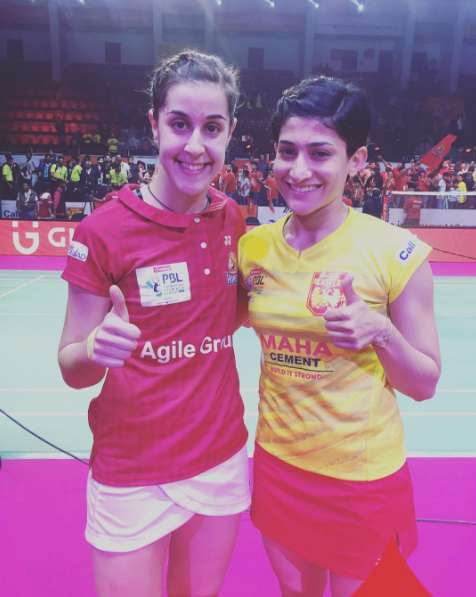
Suddenly my thoughts began to move towards the Premier Badminton League (PBL) where the ‘interviewee’ played an unexpected, yet delightful singles match against the reigning Olympic champion Carolina Marin. Ashwini displayed an array of shots to surprise the Spaniard, and everyone else, and take the first game 11-9. Although she went down 5-11 and 8-11 in the other two games, it was refreshing to see her step away from her comfort zone and give an excellent account of herself.
“Thank you so much,” she uttered mustering a smile when I mentioned that it was my favourite match of the 2017 PBL. “It (playing with Marin) was amazing, to be honest. That’s the best part about PBL – it gives you opportunities. In life you have things thrown at you and you have to grab them. And as I love playing singles despite being better at doubles and not having played that format for a long time, I put my hand up to play against the Olympic gold medallist.”
Ashwini Ponnappa gave the Olympic champion a scare at the PBL
Talking about the match, she explained how well she prepared herself that led to winning the opening game against the then World No. 1. “I wanted to make sure that I play really well. Getting on the court, I just wanted to put up a fight and make sure I didn’t lose 11-0, 11-0. (grins as she recalls her mentality at the time). I just wanted to prepare well and I think it is part of being a professional badminton player that you don’t get into a match, irrespective of whether you’re training for it or not, without being prepared. So, I decided I was going to prepare myself, watch how she plays, and it actually paid off,” she recalled.
The PBL has thrown up such challenges at players time and again while giving them the opportunity to share the dressing room with the who’s who of the badminton world. Although she never had an idol growing up, she had always been a keen observer, trying to pick things from each and every player and that is precisely what she has been doing at the PBL as well. Asked about how the league has helped her and other youngsters, the Bangalore-born shuttler was unequivocal in her praise of the tournament.
“The PBL has helped me a lot, personally and I am sure it has helped the others too. When I played the first edition of the IBL (the IBL was rechristened as the PBL after the first edition), I partnered Victor Fischer who had won bronze in the Olympics and the World Championships. So I learnt A LOT! Being somebody who isn’t primarily a net player, and playing with someone like Fischer helped me immensely and I partnered him in the second season too,” she fondly recalled.
“Like I have learned a lot, I am sure the other Indians would have also learned by just watching them play, get ready, their preparations. These top players are very forthcoming with their opinions. They are happy to share and give you advice as well.”
Partnering with Sikki Reddy
In the 2017 edition of the PBL, Ashwini Ponnappa partnered Sikki Reddy for the Bengaluru Blasters and had the former World No. 2 Korean pairing of Ko Sung-Hyun and Yoo Yeon-Seong to learn from – something she believes helped her massively as it was one of the biggest learning curves in her illustrious career.
“In the last PBL, when Sikki and I partnered, the Koreans in our team were like coaches to us and it was amazing how well we got to interact with them. They would guide us how to move and also give us drills. I learned a lot, and I am sure Sikki did as well as they would point out the nitty-gritties tell us what we were doing right and wrong, that nobody generally tells you. But, the fact that they did, was really helpful as we’re constantly learning,” uttered Bengaluru Blasters’ star doubles player.
Post the PBL, the unseeded pair of Ashwini and Sikki got another feather in their cap by reaching the final of the Syed Modi International. Despite leading in both games at one point, they ended up on the losing side against the Danes, something which Ashwini believes would not happen if they were to get more consistent.“I feel, we still have to get more consistent. At the Syed Modi International, I feel we improved on the consistency bit. But, as a pair, we haven’t had that many matches, so I think it would still take time,” confessed the 27-year-old. “I am quite disappointed that we lost, irrespective of it being just our fourth tournament, because as a player you go to every tournament to win. And, I truly believed we could have won and pull it off. But, we do tend to lose a couple of points in cases when we’re leading. So, we’ll have to work on that and maintain a consistent lead.
”Unlike with Jwala where Ashwini did most of the running, we have seen Sikki and her share the running and be a more fluid unit, exchanging positions effortlessly. Their debut tournament was a second round exit before a final in Wales, a semi-final appearance at Ireland and reaching the final at the Syed Modi Int’l. Asked if the team dynamic was the reason behind the upward curve ever since they teamed up, Ashwini said that could be one of the reasons along with the fact that the two of them are “go-getters” while playing down all their achievements so far.
She explained, “We’ve started with tournaments that we thought we could handle well as a pair. But, as you go on to the bigger tournaments like the Superseries, it’s not going to be so easy. It’s good to start on a positive note and that’s why we started off in the smaller tournaments and the results in the first 3 tournaments gave us confidence. And now reaching the final at the Syed Modi, which is a big tournament, is a big deal for us. So, that motivates us a lot.”
With the All England Championships up in March the next major challenge for the pair, Ashwini said that the duo would be ready for their first Superseries despite the stiff challenge posed by the presence of the Chinese and the Koreans.
The difference between Sikki and Jwala
A hyperactive child growing up and one who loved running out and playing till the sun went down, Ashwini didn’t envisage herself as a professional badminton player when she was ‘forced to pick up the sport’ as her parents thought it was a good way to keep her busy. However, once she got into the junior category, it was then that the bustling little girl began taking badminton seriously.
After spending a few years in the junior category, she was thrown into the deep end when she, just 20 years old was asked to partner a then 26-year-old Jwala Gutta. Their partnership lasted for 6 glorious years – a period she looks back on fondly, calling her former teammate a great mentor and partner.
“When I partnered with Jwala, I had zero experience. I started playing in the junior category and then moved to the seniors for a year and the next thing I know, I was partnering Jwala. So, I believe Jwala had a lot of responsibility because we played in big tournaments. However, the good thing is that when I started playing with Jwala, we clicked instantly! She guided me a lot, was very supportive and was there for me every step of the way. She was always the one with experience and I was picking things up,” Ash gave a glowing tribute to her former partner.
Drawing parallels to Jwala in 2010 and Ashwini now, I asked her if she felt any added pressure to guide 23-year-old Sikki Reddy similar to how Jwala mentored her? “Not at all,” came the instant reply from her. “Sikki and I are, more or less, on the same page considering she already has a few years of experience under her belt, unlike me when I started out with Jwala.”When quizzed about the future of the partnership, Ashwini is taking a pragmatic approach while looking forward to a great partnership in the meantime.
“We are two ambitious individuals who have gotten together. We are going to see how it goes. If it works, that’s great. If it doesn’t, well, that’s how life is,” admitted Ashwini.
Saina or Sindhu
Moving on to the biggest debate in Indian badminton was a no-brainer, but Ashwini, diplomatically, refused to pick one out of Saina Nehwal or PV Sindhu, saying they both have a long way to go.
Answering the debate in the same clever manner she deals with a tricky drop shot on the court, she said, “I feel the one that is more mentally tough and lasts there the longest will be considered the greater player. Sindhu is still young while Saina also has a few years ahead of her. Saina is very strong mentally and is extremely hard working while Sindhu has age on her side. When they both hang their boots, we may have Saina and Sindhu as 1-2, or it could be the other way around, you never know. Either way, it doesn’t matter as both of them are Indians at the end of the day.
”Going nowhere with the Saina-Sindhu debate despite repeated probing, I moved on to ask her about her fitness mantra, which has helped her stay at the top of her game for so long.
“Currently, my fitness mantra is being smart. I’ve always been on the stronger side physically. When I started working on my fitness in December after a spell out, I took on a routine that was ‘my body specific’. Being a sportsperson, it is very important you only do stuff which helps your body and not everything which ends up breaking your body.
”She talked about having to keep herself motivated to work out and keep her fitness levels up, specifically highlighting the effort of fitness trainer Deckline Leitao and Red Bull, who have let her enjoy her fitness sessions once more with their unique ‘best fitness friend’ campaign.
“It’s nice I’ve found this new found love to enter the gym and go and work out. It’s been good,” said the Red Bull athlete.
Using social media as a motivating tool
Ashwini is one of the most accessible Indian sportspersons, regularly using social media as a tool to communicate with her fans and loved ones – something she thinks the European players do extremely well. However, she has made her share of mistakes by being over-indulgent and says that she has been learning over the years.
“In the past, I had put out my email address on social media, and I got a lot of mails. I was overwhelmed with all the love and replied to each of them. But, I would get more replies and it became an endless cycle,” laughed Ashwini recalling her young, naïve self.
“Twitter helps that way. When I have time, I go there and answer questions of fans who I feel are genuine and want to know about me. So, I feel like social media like Twitter and Facebook is a good way to let your fans know what you’re up to. It’s amazing the kind of support you get, especially when you’re down and things aren’t going your way. They give you messages like ‘It’s okay. We’re with you, etc. So, it’s very motivating.’” she claimed.
“Being a public figure, it’s important you stand up for a cause”
Anyone who knows Ashwini Ponnappa is well aware of her love for animals. She has been an active PETA campaigner while constantly lending her voice and face for causes supporting animal rights. Being a public figure, she feels it is imperative that one supports a cause.
“For me, personally, I do it because I love animals. Being in the limelight, a celebrity, sportsperson or a public figure, it’s important you stand up for some cause – need not be animal rights, it could be the environment, supporting the girl child, old age homes, etc. I think that when you are in a place where you can make a difference and you can help out, I think you should do that,” professed the animal-lover, who herself has 4 adorable dogs at her parents’ house in Coorg.
Biggest achievement
The coveted gold at the 2010 CWG made a massive impact as it was won in front of the home crowd.
A quick glance at my watch made me realize that I had overshot my time by over 20 minutes – a period which had flown by as she patiently answered each of my questions, keeping me entranced all the time. Trying to quench my never-ending thirst, I put forth a final question in front of her: ‘Which achievement would you classify as your best so far in your career?’
“The best would definitely be the 2010 Gold at the CWG. The next would be followed by the bronze at the World Championships because it is, after all, the World Championships! Also because we were the first Indian pair to win it and the second after Prakash sir to win a medal there was a huge deal,” she revealed. “However, the CWG is close to my heart as it was the first win for us (Ashwini and Jwala) and it was massive because it was in front of our own fans with everyone watching.”
“It made a huge difference that we won it in India. If we had won it in 2014 in Glasgow and not in 2010, the impact wouldn’t have been the same and people probably wouldn’t have known who Jwala and I were. If it was somewhere else other than India, the newspapers would have carried it as (uses her hands to indicate a small heading at the bottom of the page) ‘Jwala and Ashwini won CWG gold’. While the same paper would have printed ‘Saina won CWG gold’ (gestures it to be a front page headline).
With the kind of treatment meted out to doubles players despite all the achievements, I shuddered as I thought of the impact, or lack of, it would have made had the 2010 CWG been held outside India. The repercussions would have been unimaginable and despite going through it all, Ashwini continued with her charming smile as I thanked her for her time before she humbly bowed out of the room to continue working ‘smart’ on her fitness in her quest to bring further laurels to the country.
source: http://www.sportskeeda.com / Home> Badminton / by Saransh Gehlot @saransh2703 / Editors Pick / February 13th, 2017
Ashwini Ponnappa said though Kim Tan Her has played a huge role in improving her game, there are many other coaches as well.
Indian women’s doubles shuttler Ashwini Ponnappa on Wednesday said former coaches Tom John and Indonesian Yusuf Jauhari believed in her capability and played a major role in improving her net play.
“There are two coaches who have influenced me a lot to improve my net play over the years. Initially it was Tom sir and then Yusuf sir played huge roles in this regard. The best thing about them was they believed in my capability as a net player,” she told PTI.
The 27-year-old from Bangalore, who won a gold and a silver at the 2010 and 2014 Commonwealth Games respectively beside clinching a bronze at the 2011 World Championship along with Jwala Gutta, had a good outing at the Syed Modi Grand Prix Gold.
Ashwini, who decided to split with Jwala and pair up with Sikki Reddy in women’s doubles, reached the finals at the Lucknow event and also stunned World No. 4 Denmark pair of Joachim Fischer Nielsen and Christinna Pedersen in the semifinals of mixed doubles event along with her partner B Sumeeth Reddy.
Ashwini said though the Malaysian doubles coach Kim Tan Her has played a huge role in improving her game, but there are many other coaches who have done the same.
“Of course, Tan has played a huge role, but there are other coaches who have also played their roles. In fact, a lot of people has a role in developing a player,” she said.
Ashwini said a lot of junior players are going to benefit from Tan because he has the experience and his training is doubles specific.
“A lot of junior players are definitely going to benefit a lot from Tan. He has got the experience and his training is doubles’ specific,” he added.
Talking about Sikki Reddy, Ashwini said both of them were still trying to figure out their style of playing.
“We are still in the process of figuring out, for we have played just four tournaments so far, and playing with left-handed player like Sikki is a different experience. We are still figuring out whether to rotate a lot or play at the nets vice versa,” she said.
“We have a good understanding at the court and it is only going to get better in the future,” she added.
Talking about her encounter against Carolina Marin in singles match in Premier Badminton League, Ashwini said: She could have been stumped as she did not expect I would give a good fight to her,” she said.
Ashwini also said it could have been difficult for Carolina to prepare for the match against her as she did not have any knowledge of her singles capability.
source: http://www.indianexpress.com / The Indian Express / Express Sports> Home> Sports> Badminton / by PTI / Bengaluru – February 08th, 2017
Joshna Chinappa, at rank 14, was the highest-ranked current Indian squash player in the latest Professional Squash Association rankings released.
Joshna Chinappa dropped a spot to be placed at 14th. – R. RAGU
Joshna Chinappa remains the highest-ranked Indian squash player in the latest Professional Squash Association (PSA) rankings released. Chinappa is positioned 14th, eight spots ahead of second-placed Indian Dipika Pallikal Karthik.
Sachika Ingale was at 79, and Janet Vidhi at 96, in the women’s section.
Among men, Saurav Ghosal remains the highest-ranked Indian, at 24. Vikram Malhotra is at 67, and Mahesh Mangaonkar at 70. Harinder Pal Singh Sandhu is positioned at 99.
source: http://www.sportstarlive.com / Sport Star / Home> More Sports> Squash / by Team Sportstar / February 03rd, 2017
Coffee growers in Karnataka, who went through a rough patch recently, are happy, thanks to a huge drop in production and supply from major coffee-growing countries in the global market.
Growers in Kodagu, Chikkamagaluru and parts of Hassan are upbeat after coffee prices hit a five-year high despite the state registering a low yield this time due to severe drought and demonetization.
According to a senior official in the coffee board, Bengaluru, severe drought in major coffee-producing countries like Brazil, Vietnam and Indonesia has resulted in poor yield and quality issues. As a result, there’s a great demand for Indian coffee, 70% of which is produced in Karnataka.
According to Kabir, a leading coffee dealer in Madikeri, Kodagu, coffee prices are rising for the past fortnight and the trend is expected to continue till April. A 50-kg bag of Robusta variety, produced mostly in the state, costs Rs 4,000 while Arabica costs Rs 9,600. Last year, the average price of Robusta was Rs 3,000 and Arabica Rs 4,600.
The prices have picked up in the retail market too after remaining at a low for the past five years. The prices range between Rs 150 and Rs 200 a kg.
Coffee board former vice-chairman Sannuvanda M. Kaverappa added that a shortfall of 2.08 million bag of 60 kgs each in the international market this year will lead to a rise in coffee prices in India.
“About 70% of Indian coffee will be exported and the rest will meet the domestic demand,” he added.
B S Jairam, president, Karnataka Grower’s Federation (KGF), said the Robusta yield has been good this season in the state compared to Arabica.
“Most growers are in distress owing to poor yield. The drought, labour crisis and demonetization have virtually pushed growers to the wall. The marginal current price rise will definitely not compensate for losses over the years,” said Karnataka Planters’ Association chairman M M Chengappa.
(With inputs from G Rajendra in Madikeri)
source: http://www.timesofindia.indiatimes.com / The Times of India / News> City News> Bangalore News / by Manu Aiyappa Kanathanda, TNN / January 26th, 2017
Nyamasheke seeks to create more jobs along the coffee value chain.
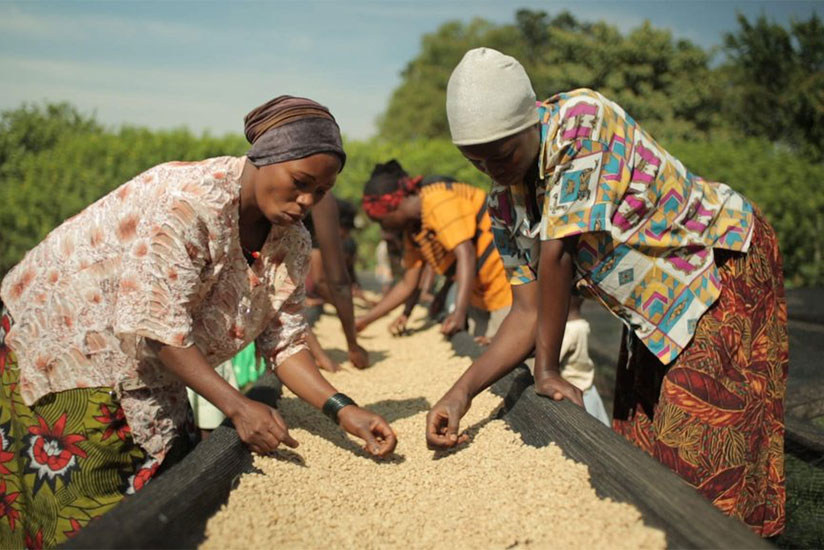
The quality of coffee is critical in the marketing of the beans locally and on the global arena. This fact is not lost on one of the major coffee producing areas in Rwanda, Nyamasheke District.
The district has been attracting investors to setup more coffee washing stations to help increase the quality and quantity of coffee production. The initiative also aims at job-creation as part of efforts to support realisation of the second Economic Development and Poverty Reduction Strategy (EDPRS II) objectives.
Coffee production in Nyamasheke contributes at least Rwf3 billion of the farmers’ income per year, according to district officials. The officials said seven new washing coffee stations will be commissioned this year, increasing the number of stations from 50 to 57 stations across the district, Polyphile Harerimana, the district cash crops officer, said. He added that besides boosting quality, the growing number of stations will increase farmers’ revenue and support economic growth.
Besides, doubling the proportion of coffee exported as fully-washed, Rwanda could increase coffee exports by 10-20 per cent, according to a study done in 2015. Only 30 per cent of Rwanda’s coffee is characterised as fully-washed at export and, yet coffee washing stations operate at little more than 50 per cent capacity.
Nyamasheke District has been attracting more investors in coffee production since 2013 when one of coffee washing stations in the district scooped the best coffee producer during the fourth edition of Rwanda Cup of Excellence competition. The annual contest rewards the best local coffee and is the most esteemed international award given to farmers with quality coffee. “Before the introduction of washing stations, coffee had less value and one kilogramme would cost about one dollar. But since washing stations were created the cost of the crop increased up to four dollars,” Harerimana said.
Karambi, Macuba and Nyabitekeri sectors located near the shores of Lake Kivu are some of the areas in the district that are favourable for coffee growing. Rwanda mainly grows Arabica coffee given its mountainous nature.
Harerimana said the district targets to produce 16,000 tonnes of coffee this year. Last year, the production was more than 11,000 tonnes while in 2015, the district produced 14,000 tonnes. He said this year farmers have increased use of fertilisers to 821 tonnes, adding that trees are also sprayed to guard against pests and diseases.
A 2015 survey showed that the number of coffee trees in Nyamasheke has increased to 13 million, up from eight millions of trees in 2009.
During the 2015 edition of Cup of Excellence competition, eight coffee washing stations from Nyamasheke were among the top 20 finishers. Therefore, it is no surprise that more investors are putting their money in the district’s coffee sector. Harerimana said the district works closely with farmers to ensure quality along the value chain to guarantee better returns. Annonciata Mukandanga, a farmer, said the increasing number of washing stations will boost morale as farmers will be assured of ready market, adding that it will also ensure quality of the crop.
Andre Iyakaramye, another farmer, said the setting up of more washing stations in the district has helped increase farmers’ income and welfare, adding that he is now classified in the third category in Ubudehe classification, thanks to coffee farming.
Rwanda’s coffee exports grew by 10.9 per cent in volume over the first half of last year, with 5,956.9 tonnes shipped out compared to 5,141 tonnes of coffee that were exported over the same period in 2015, according to figures from the central bank.
source: http://www.newtimes.co.rw / The New Times, Rwanda / Home> Business / by Frederic Byumvuhore / January 24th, 2017
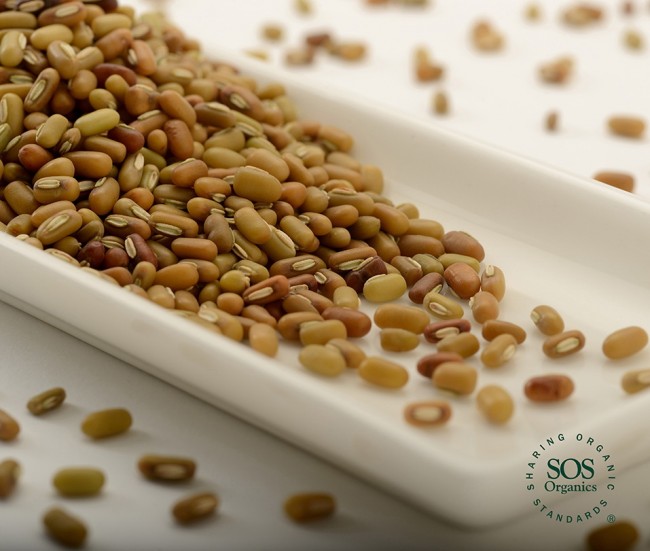
All SOS organics products are made from crops that are completely rain fed, chemical free and using natural farming and sustainable agricultural techniques.
A quick look at SOS Organics website and you will realize that there is something more than natural and organic in their varied products. Gur Shakkar, Khandsari sugar as alternatives to white sugar and sweeteners, soapnuts as natural cleansers, environmentally sound beeswax candles devoid of soot/smoke, home care products made of native plant oils, herbs and natural essential oils – these catch your immediate attention. All these products are made from crops that are completely rain fed, chemical free and using natural farming and sustainable agricultural techniques.
The Alternative spoke to its founder, Amrita Chengappa about her venture in Uttarakhand.
A little bit of everything to nourish and heal
Pulses, flour, millet, spices, herbs, pickles, jams, marmalades and honey, tea, as well as beeswax candles – there is a little bit of everything needed to lead a healthy life. Amrita says, “Our line of natural cosmetics is based on apricot kernel oil, and includes soaps, hand creams, face creams, body and foot scrubs, lip balms, and body oil. All items are made with beeswax and precious essential oils and are free of chemicals and hormones.”
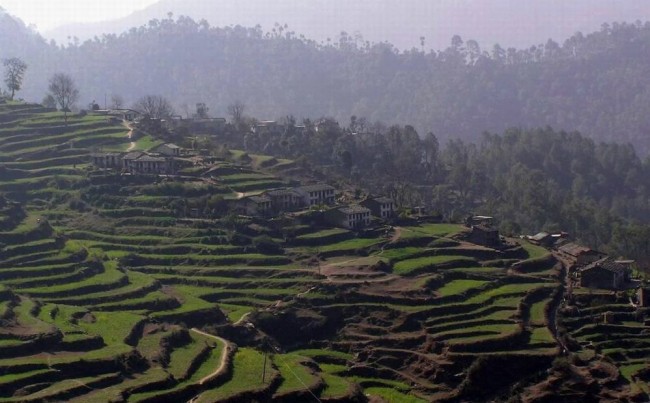
Himalayan terrace farms are the source of SOS organic products Courtesy: SOS organics Facebook page
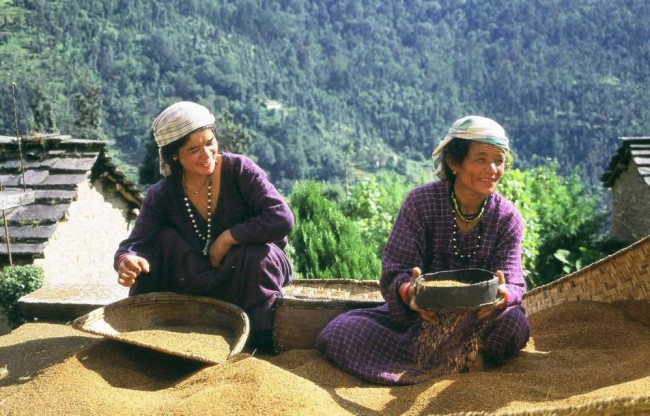
In Uttarakhand, farmers have very small land holdings that are completely dependent on rain. So instead of asking the farmers to grow one particular type of crops, say only rice or millet, Amrita has encouraged mixed farming. “We are targeting indigenous low input crops that they have been growing over the last hundred years. We encourage them to grow a little bit of everything so that it all adds up to become a basket full of goodness to nourish and heal the body,” says Amrita.
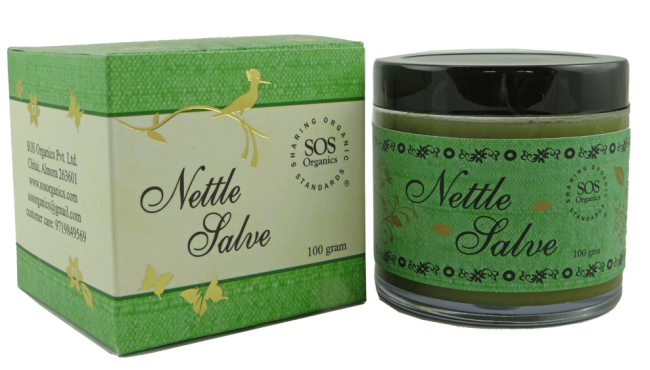
Their latest products are based on the humble nettle which has an abundance of health benefits. “One day we became aware of just how much nettle was growing all around us in the wild and nobody was using it. After some in-depth research that took us all the way back to Milarepa, who lived on nettle soup for years while meditating in a Himalayan cave, we began experimenting and created nettle tea and nettle flakes,” says Amrita.
The Inspiration
Amrita and her husband who have set up a village unit in Uttarakhand have been closely working with locals there.
“We had the inspiration to move to the Himalayan foothills in 2002, with only an idea to work in a village and bring meaningful employment in the area,” says Amrita. She adds, “We have found that the specific environmental conditions of the Himalaya produces incredible crops. The mineral content in the soil adds to the quality of the crop and it has many medicinal properties as well.”
One of the main issues in the state has been a lack of employment opportunities. So they decided to set up a self-sufficient unit at Kumaon. “My main concern was employment of the local ladies as I believe that all over India it has always been women who run the show and they deserve to be empowered,” adds Amrita.
Happiness that comes with healthy living is the only true happiness! Courtesy: SOS Organics Facebook page ita at this point also mentions,“We did not want to take something or destroy anything from the environment, rather our emphasis has always been on the preservation of biodiversity and environment, and the providing of holistic technologies to ensure highest quality.”
Every village needs to be self-sufficient
The company strongly believes in Mahatma Gandhi’s saying that every village needs to be self-sufficient. Their entire unit runs on rain water harvesting. And they work with local small scale farmers from over 70 villages in the Himalayan region.
Amrita further adds, “SOS Organics is an ongoing experiment dedicated as a model for holistic sustainable living in the villages of the Himalaya.”
In addition to the farming techniques, natural processing and product development have also been undertaken. The Foundation is presently deeply involved in special holistic milling techniques, sun drying and sun-UV-radiation, ventilation drying, dehydrator development for low temperature drying, vacuum packing and systematic moisture proof storing of raw material. An extensive initial product line of natural farming produce has been developed and tested in the market and is now available online and in select holistic outlets.
Engaging community and being in tune with rural life
“The problem in the hills is that you cannot do anything that has a lot of volume because the lifestyle is different. We have six hour working days for the ladies as on most days they have to go home, collect water, cut wood etc. Plus in the winter it gets darker soon and the area where we live there are leopards and other wild animals,” she says.
So they had to modify their business model, making it in tune with the local life and with less stringent deadlines. They also make sure to celebrate local holidays and to stay connected with the community in all possible ways. “Our aim has always been to make the business model sustainable for everyone from the consumer to the person actually engaged in making these products. We make the people working here comfortable and the orders are worked around this,” says Amrita.
Challenges
Amrita says, “So much of the incredible knowledge of the Himalayan people is in danger of getting lost. The older living generations have often not been able to pass on their wisdom to the younger people as they have set out to live everywhere else than in their own village, embracing modern life and technology.”
She adds,“The scary thing is that we do not have a proper understanding of traditional knowledge system and what we are replacing it with does not seem to make the grade. People here feed millet to animals as they have been told the white rice is aspirational. We are striving to work against this kind of a mindset.”
Future Plans
“We very much live in the here and now, which is full of experiencing, learning, and understanding. New insights and inspirations happen on their own and we are always ready to say yes! – and embrace yet another venture,” concludes Amrita.
source: http://www.thealternative.in / The Alternative.in / Home> Magazine> Lifestyle / by Usha Hariprasad / Juine 18th, 2015
WELCOME. If you like what you see "SUBSCRIBE via EMAIL" to receive FREE regular UPDATES.
Read More »
![Ashwini Ponnappa. [Image Courtesy: Red Bull]](http://www.kodagufirst.in/wp-content/uploads/2017/02/AshwiniPonnappa01feb152017.jpg)
![Ashwini Ponnappa with Sikki Reddy (L) [Image courtesy: Ashwini Ponnappa’s Facebook]](http://www.kodagufirst.in/wp-content/uploads/2017/02/AshwiniPonnappa04feb152017.jpg)