Dipika Pallikal Karthik upset the top-seeded Anni Au while Joshna Chinappa made light work of the sixth-seeded Tong Tsz Wing.
It will be an all-India final for the first time ever in the Asian Squash championship when Joshna Chinappa and Dipika Pallikal Karthik clash in the women’s singles event.
The two Indian women made the final of the tournament with contrasting wins.
While Pallikal, seeded fourth, upset top seed Annie Au of Hong Kong 11-9 7-11 11-7 11-9, the second seeded Chinappa made short work of Hong Kong’s sixth-seed Tong Tsz Wing 11-6 11-4 11-8 to storm into the final.
In the first semifinal, Pallikal stunned Au in 50 minutes.
Starting brilliantly against the pre-tournament favourite, Pallikal took the opening game to lay down the marker. However, Au came back strongly to claim the second game with a series of impressive stroke-making.
Pallikal seized the initiative from thereon and kept Au off balance by staying aggressive.
The Chennai-based Pallikal closed out the match for a memorable win.
With this victory, Pallikal has posted only her third win over the Hong Kong player, ranked 11th in the world, in 10 meetings.
Chinappa, meanwhile, completely dominated her rival as she took the first two games easily before Wing posed a challenge in the third.
But the Indian shut her rival out to win in front of a cheering crowd at the Express Avenue mall here.
Earlier, men’s top-seed Max Lee of Hong Kong ousted third seeded Malaysian Nafiizwan Adnan 12-10 11-6 11-5 in 51 minutes to book his spot in the final.
source: http://www.indianexpress.com / Indian Express / Home> IE Sports / by PTI / Chennai – April 29th, 2017
India’s Rohan Bopanna and his Uruguayan partner Pablo Cuevas lifted their first ATP World Tour title together when they downed seventh-seeds Feliciano Lopez and Marc Lopez in a three-set battle in the final of the Monte-Carlo Rolex Masters on Sunday.
The unseeded Indo-Uruguayan pair outwitted the Spanish team in the Match tie breaker for a 6-3 3-6 10-4 win in 74 minutes.
Rohan Bopanna and his partner Pablo Cuevas with the men’s doubles trophy. Getty
It was the second title of the season for Bopanna having won the the season-opening Chennai Open crown with compatriot Jeevan Nedunchezhiyan.
“I’m really happy to win our first title together. I have come to Monte-Carlo so many years, it’s such a historic tournament. We had a tough start to the season, but it s great to have won. We came through some close Match tie-breaks this week and it s a good start to the clay season. I m looking forward to the rest of the tournaments,” said Bopanna.
Cuevas said, “I am really happy, as I didn t started the season well. I’m happy to win with my partner in the first tournament on European clay and I hope for a good run through to Paris.”
Bopanna is now 16-24 in doubles finals and 4-4 in Masters’ summit clashes. It was Cuves’ second Masters trophy, adding to the 2015 Rome Masters triumph with David Marrero.
Marc Lopez, one-half of the Rio Olympic champion team, came under pressure in his first service game at 1-2, 30-40, when Bopanna feinted a switch at the net off a long rally to strike a forehand volley winner into space.
Bopanna and Cuevas held onto the break and wrapped up a 28-minute set when Feliciano Lopez mistimed a forehand wide on Bopanna’s serve at 40-15.
In the first game of the second set, Feliciano did well to hold as he recovered from 30-40, including two break points. At 1-2, 30-40, Cuevas over-hit a lob long to gift the Spaniards their first service break and it proved to be enough for Feliciano, serving at 5-3, to strike two straight aces for a hold to 30.
The greater weight of groundstroke by Bopanna and Cuevas was felt in the Match tie-break as the pair took a 6-0 lead, largely targeting the volleys of Marc.
Although Team Lopez recovered to 4-8, Cuevas sealed the first match point opportunity with a forehand down the line that Feliciano could not return cleanly.
They were trying to become the third Spanish team to win the Monte-Carlo title in the Open Era (since April 1968), joining Sergio Casal and Emilio Sanchez in 1988 and Rafael Nadal and Tommy Robredo in 2008.
source: http://www.firstpost.com / Firstpost.com / Home> Latest News> Sports News / by PTI / April 24th, 2017
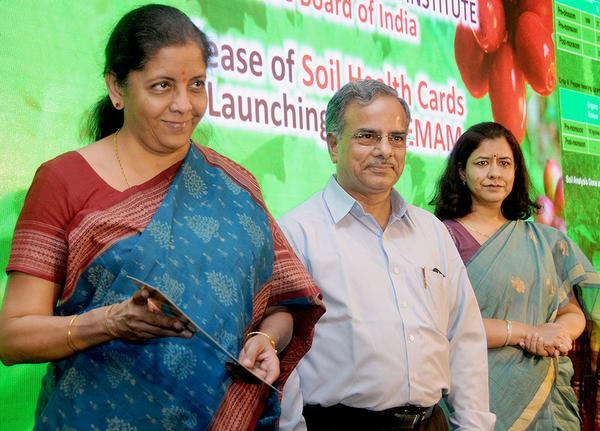
Fresh brew Union Commerce Minister Nirmala Sitharaman at the launch of the Coffee Board’s soil health cards and web portal, in Bengaluru on Friday. To her right are GV Krishna Rau, Advisor -Agricultural Marketing & Tribal Welfare, Government of Andhra Pradesh, and Arati Dewan Gupta, Director of Finance, Coffee Board
Bengaluru :
Union Minister of State for Commerce and Industry Nirmala Sitharaman exhorted the Coffee Board on Friday to take up aggressive branding and promotion of Indian coffees.
“It’s the age of branding. You need to brand everything. You need to have high profile marketing for everything to reach even the lower end of the pyramid,” she said.
The Minister was speaking at an event where she distributed soil health cards to growers and launched a web portal — a Coffee Board initiative towards soil fertility appraisal and soil health monitoring in traditional growing regions.
Citing the recent example of Araku Valley coffee making its presence felt in Paris with the support of industry, Sitharaman called upon the Board to “break the usual trodden path” in branding and marketing of Indian coffee. “If Araku on its own can go to Paris, Coffee Board should have pushed itself and said — I will market Coorg coffee. We should brand it,” she said. Branding ensures the market is sustained, she added.
Noting that countries such as Cambodia, Vietnam, Laos and even Myanmar have made long strides in packaging, value addition, presenting and marketing of coffee, the Commerce Minister said: “The Coffee Board obviously is now going to have to be on its toes.”
Sitharaman further said newer areas such as Uttarakhand and Himachal are attempting to grow arabica coffee. “The new growing areas have a great deal of enthusiasm and the energy they have is fantastic,” she remarked while expressing confidence that there will be expansion in area under coffee.
The Commerce Minister also indicated that the ambit of the Pradhan Mantri Krishi Sinchayee Yojana will be expanded to even small coffee growers, who have been facing the brunt of erratic rainfall pattern in recent years.
About 98 per cent of India’s coffee holdings are less than 10 hectares and held by small growers.
The Central Coffee Research Institute (CCRI), in collaboration with the National Bureau of Soil Survey and Land Use Policy, has started creating a database on the soil health in major growing regions and rendering site specific nutrient recommendations through soil health cards.
“The card is designed to present information on soil health indicators like pH, electrical conductivity, organic carbon and micro nutrient content, among others. It will enable judicious use of fertilisers and correct nutrient deficiencies,” said Y Raghuramulu, Director, CCRI.
Coffee flavoured stamp
After coming out with sandalwood, rose and jasmine flavoured stamps, the Postal Department will launch a stamp that will have coffee flavour.
Telecom Minister Manoj Sinha will be releasing the stamp in Bengaluru on Sunday that will be a collector’s version, Sitharaman said. The coffee flavoured stamp will be priced at ₹100. “There is a lot of interest in Government of India in promotion of coffee. The coffee flavoured stamp is going to induce a lot of people to taste coffee,” she added.
source: http://www.thehindubusinessline.com / Business Line / Home> Markets> Commodities / by The Hindu Bureau / April 21st, 2017
As many as 306 teams have enrolled for the prestigious Kodava family hockey tournament scheduled to begin here on Monday. With Biddatanda family hosting this edition of the annual tournament, the event is named Biddatanda Hockey Namme-2017.
The hockey festival, in its 21st year, promises to a treat for hockey buffs with a record number of teams are vying for the top prize. The tournament has produced fine talents over the years some of whom have made the cut into state and national teams. The matches will be played at three grounds – two at Gen Thimayya Stadium at Cheriyaparambu, and at Govt PU College ground.
Grounds Committee chairman B B Belyappa said, “Final touches are being given to the grounds to make them match-ready at a cost of Rs 16 lakh. The 27-day tournament is being organised at a cost of Rs 1.6 crore.”
Thunder showers, in the recent past, in the run up to the competition have delayed the preparations. With rain taking a break on Saturday, the groundsmen took up the last-minute preparations to make the grounds ready for the matches, starting on Monday.
For the first time in the history of the tournament, a metal gallery has been erected for the benefit of the spectators. The organisers have also made necessary arrangements like mats, sound system, lighting, media gallery at a cost of Rs 33.50 lakh.
As many as waterproof make-shift food stalls have been set up at the grounds. Safety measures are also in place with shade nets covering the banks of Cauvery river to prevent people from venturing into water and contaminating the same.
Mysuru-Kodagu MP Pratap Simha had promised Rs 30 lakh from his MPLAD funds for the tournament but released only Rs 20 lakh. Zilla Panchayat is also expected to chip in with Rs 4 lakh for building a check wall.
MLC Shantheyanda Veena Achaiah has sanctioned Rs 5 lakh. Legislators K G Bopaiah and MLC Suneel Subramani too have promised funds.
Hockey India, Hockey Karnataka, Hockey Kodagu and Umpire Association have extended their support to the event. President of Umpire Association Katumaniyanda Umesh has taken over the mantle of supervising the matches.
According to technical director of Biddatanda Hockey Namme B S Thammaiah, seating facilities have been made for 20,000 people. It includes 4,000 seats for VIPs. Parking facilities have been made on 15 acres of land.
Hockey Olympian Anjaparavanda B Subbaiah will inaugurate the tournament on April 17 at 10.30 am. Founder of Hockey Namme, Pandanda M Kuttappa, will be the chief guest, while Prof B C Ponnappa of Biddatanda clan will preside over the inaugural function.
Revenue Minister Kagodu Thimmappa, Forest Minister B Ramanath Rai, former minister M C Nanaiah, MP Prathap Simha, MLAs K G Bopaiah and Appachu Ranjan, MLCs Shantheyanda Veena Achaiah and Suneel Subramani, SP P Rajendra Prasad, president of Kodagu Hockey Association Pykera Kalaiah and Muliya Prasad from Muliya Foundation are also expected to attend the inaugural session.
source: http://www.deccanherald.com / Deccan Herald / Home> District / DH News Service / Napoklu – April 16th, 2017
Famous for its coffee plantations, South India didn’t grow the crop naturally. Now a major producer with several hill tracts growing unique flavours of coffee, it is where the story begins… well, not exactly.
The southern Indian state of Karnataka is strewn with coffee plantations. The state is, in fact, one of the major producers of coffee in India. ‘Arabica’ and ‘Robusta’ are the kinds of coffee that are grown here under methods which are unique to this part of the country, rather, to the world.
The coffee here is grown under the shade of tress and is often inter-cropped with spices like cardamom, cinnamon, nutmeg and clove, giving it a unique flavour and aroma.
Interestingly, growth of coffee here is so dense that it might come across as shocking when someone tells you that it all started with the seeding of mere seven coffee beans, which were smuggled to the hills of Karnataka.
The story that goes around in the coffee plantations down south is that an Indian saint, named Baba Budan, once went on a pilgrimage to Mecca and from there to Mocha – a port city in Yemen and a major coffee hub.
It was here, in the 18th century, that Baba Budan first discovered coffee, when he tasted it in form of a dark and sweet liquid called Qahwa. It is said that he found the drink so refreshing that despite it being a protected Arabic beverage and industry, he sneaked out seven coffee beans by strapping them to his chest and brought them to India.
The Baba Budan Hills in Karnataka
These seven beans, Baba Budan planted in the courtyard of his home, in Chikmagalur, Karnataka – the place now synonymous to the origins of coffee in India. It is from this small patch of land that coffee began to spread over an entire hill – now called the Baba Budan hill – and then gradually to rest of Karnataka and South India.
Coffee cultivation further boosted in India under various colonies. First, the Dutch began to grow coffee in the Malabar region of south India and then the British steered its movement all over the peninsula, where they found the conditions to be apt for the growth of the crop.
In fact, coffee plantations in India were made commercial under the management of JH Jolly of Parry & Co, a trading company. Jolly saw the potential of coffee beans growing in the plantations of Chandragiri in Andhra Pradesh and had a petition sent to the Mysore government in the adjoining state of Karnataka, for 40 acres of land to grow coffee.
This not just boosted the growth of coffee but, post this, the plantations flourished with their production turning into the sole business of many from the region and coffee becoming a major commercial product. Eventually, a coffee board was also set up, which took care of the marketing of Indian coffee. It is this board that we know as the Coffee Board of India, the Indian government’s body taking care of coffee commerce in India.
Today, the coffee industry in India continues to be a flourishing one with the hill tracts of South Indian states dominating its production and the states of Kerala and Tamil Nadu following Karnataka in the list of traditional coffee growing regions. Coffee routes have further elongated to non-traditional areas, including Andhra Pradesh and Odisha on the eastern coast of the country and Assam, Manipur, Meghalaya, Mizoram, Tripura, Nagaland and Arunachal Pradesh of North-Eastern India.
The production of the crop that started on an ambiguous note has prospered into a full fledged industry, supporting the livelihood of many, especially, in the remote hilly areas of South India.
source: http://www.mediaindia.eu / Media India Group (MIG) / Home / posted in Freestyle / by Surbhi Kapila / New Delhi – March 30th, 2017
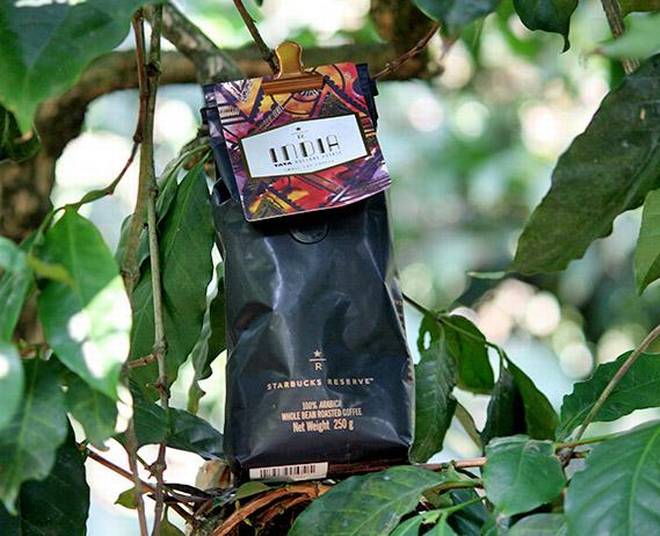
Coffee grown in the hills of Karnataka is making its way to the Starbucks Reserve store in Seattle
Coffee is undergoing something of a transformation in India. Local beans, grown in the country, are finally making it onto store shelves, where provenance and growing techniques are emphasised. Meanwhile, a certain section of savvy consumers trawls the Internet, searching for new ways to brew their daily cuppa using a range of different home-grown beans, each of which comes packaged with tasting notes that emphasise subtle flavours.
Meanwhile, an ocean away, India’s coffee prowess was given a different stamp of approval, when last October, Starbucks sold Indian coffee for the first time at its flagship Starbucks Reserve store in Seattle, the city in which the brand was founded. The coffee came from Tata’s Nullore estate in Kodagu, Karnataka, and was the company’s first microlot coffee. While Tata has 19 plantations in Kodagu (spread over 7,300 hectares), this was the first time that the company’s arabica beans made it to international shelves.
Microlot coffee refers to beans that are generally the best of the estate, and are those that imbibe flavours of the terroir. Arabica is one of two types of coffee beans, and is prized for its flavour, lower caffeine content and almost twice the concentration of sugar than is found in robusta. As a result, arabica is more expensive, and harder to grow.
Place of origin
Walking around the Nullore plantation’s block 19 (where the beans grew), what strikes you is the sense of calm that comes with standing in the midst of a 505-acre estate.
The microlot that was ultimately produced got its flavours from plants and trees that fruit bats propagate, while they make their homes in the silver oak trees above that provide shade to the arabica plants below. This two-tier system allows the coffee to grow under a canopy of trees, which includes jackfruit, pepper vines and fruits such as orange and lychee. On a tour of the block, Mandana, plantation manager, says, “We collected the coffee berries separately from eight hectares of this [block], where the fruit bat population is high.”
Changing trends
The story of the coffee though, goes beyond its growth, and rather is the story of how Tata Coffee is responding to changing customer demands, especially at the high-end, where international coffee drinkers are willing to spend between $10-30 to buy beans with unique tasting notes. Sunalini Menon, a well-known coffee cupper, who is also an independent member of the Tata Coffee board, has been instrumental in galvanising the plantation managers to experiment with microlot coffee. Chacko Thomas, the deputy CEO and executive director, says, “As a result of Nullore, we have 150 [microlot] experiments in progress.” Processing aside, the recognition has showed employees, that the beans grown in Kodagu can be cupped alongside the best in the world.
source: http://www.thehindu.com / The Hindu / Home> Life & Style> Food / by Aatish Nath / March 30th, 2017
The attention of the coffee world will be focused on the Melbourne International Coffee Expo (MICE), which is being held at the Melbourne Showgrounds from 30 March to 1 April.
All of the Australian Coffee Championships will be back at MICE for 2017
With the Australia Barista Championship, PURA Latte Art Championship, Cup Tasters Championship and Coffee in Good Spirits all taking place on the ASCA Main Stage, and Brewers Cup being held in the all-new Brewing Lounge, there truly is something for everyone over all three days at MICE2017.
All winners will be announced in a ceremony on Saturday 1 April.
And for the first time ever, MICE2017 will feature a brand new Brewing Lounge that will showcase the ASCA Australian Brewers Cup, where visitors will get the chance to taste all the competition coffee.
A range of SCAE (SCA) certified courses are also being offered to coffee aficionados and beginners alike throughout MICE2017. In partnership with MICE, reduced course fees are being offered to MICE attendees.
The show is part of a wider schedule of events that make up Melbourne Coffee Week.
On Thursday, 30 March, Ona Coffee and Dr Morse Bar and Eatery are invite coffee and beer lovers alike to join them for a BrewParty – a celebration of filter coffees, beer and good times. Special guests will include WBC 2015 Sasa Sestic and current Australian Barista Champion, Hugh Kelly.
And on Saturday, 1 April, Axil Coffee Roasters will host the MICE2017 and ASCA after party.
source: http://www.gcrmag.com / Global Coffee Report / Tuesday – March 28th, 2017
Kona Historical Society (KHS) will open the award-winning exhibit “The Kona coffee Story: Along the Hawaiʻi Belt Road,” on Monday, March 27 at H.N. Greenwell Store Museum.
KHS Board Member Alfreida Fujita gets a sneak peak at the KHS exhibit on March 23, 2017. Photo courtesy of Kona Historical Society.
This journey back in time to 20th century coffee farm life features never-before-seen photos and artifacts from the organization’s collection and archives. They have travelled to museums worldwide.
This Kona Coffee Story will be open Mondays, Tuesdays, Thursdays and the first Saturday of every month from 10 a.m. to 2 p.m. Admission is $5 and free to students of all ages, KHS members and active and retired military persons with identification.
The coffee industry emerged in Kona in 1828, and like any other industry, it experienced its highs and lows. Personal written accounts in the exhibit reveal the voices of hard working farmers and community leaders. Black and white photos preserve family portraits and images of the industry farm lands, in addition to a miniature model of a coffee mill.
KHS hosted a special preview of the exhibit to a limited audience on Thursday, March 23, featuring refreshed content. Attendees included descendants of Kona’s coffee industry pioneers who shared their memories of life on the farm, reflected in the exhibit’s photos, artifacts and written accounts.
The exhibit will be on display through the end of 2017.
source: http://www.bigislandnow.com / BigIslandNow.com / Home / by Big Island Now Staff / Hawaii – March 27th, 2017
As the divisions of Coffee Day – the B2C service Cafe Coffee Day, in B2B the Coffee Day Beverages, Coffee Day Exports and Coffee Beans is sold to customers
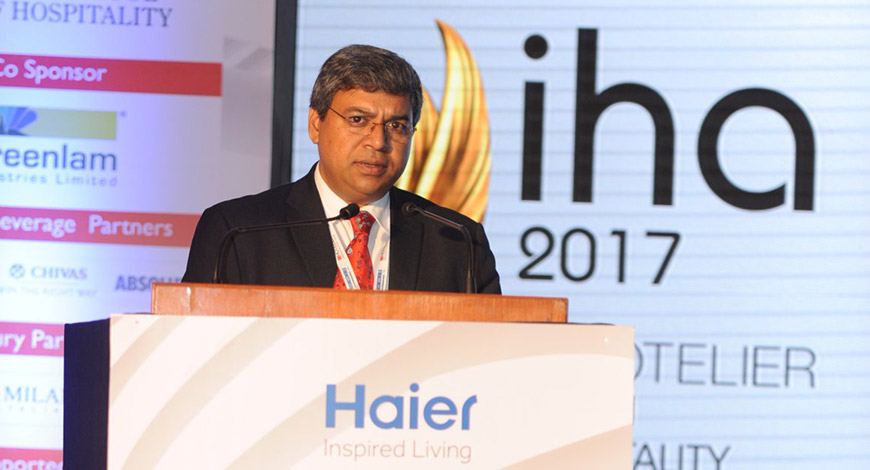
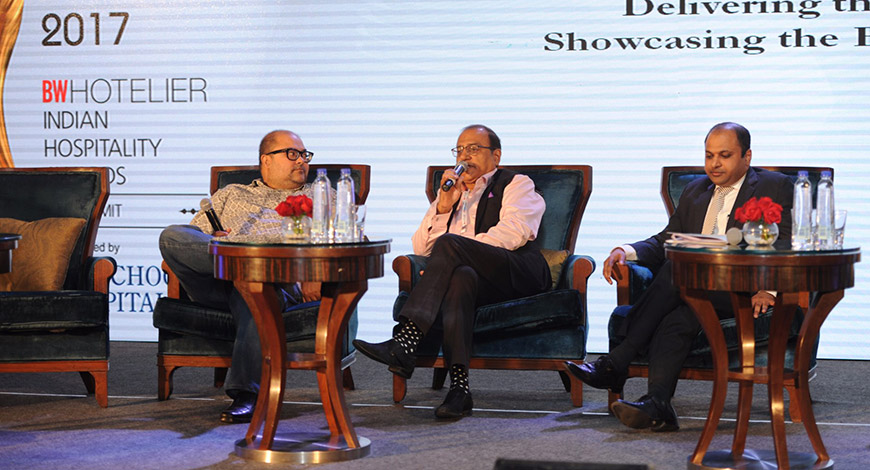
The caffeine buzz has caught up in all cities in India closing the generation gap which once drank tea and coffee. At the BW Hotelier Indian Hospitality Awards & Summit 2017 at The Leela Ambience Hotel, Gurugram, a session on “Showcasing the Best of Indian Coffee” moderated by Bikramjit Ray, Executive Editor of BW Hotelier, the panelists spoke about the growing importance of coffee in the contemporary times.
The session was opened by Abhrajyoti Chatterjee, from Coffee Day who mentioned how their brand intends to serve coffee with passion. Coffee Day is a brand which exports coffee to Europe, Middle East, EU and many other places. They even have 1500+ acres of area for the production of coffee.
As the divisions of Coffee Day – the B2C service Cafe Coffee Day, in B2B the Coffee Day Beverages, Coffee Day Exports and Coffee Beans is sold to customers. Their brand has 41000 coffee machines in India with presence in over 1000 cities. Every year Coffee Day expands in nearly 100 cities. The machines like BMF, Indus, Sienna, Orion are the several machines which produce coffee. It also has divisions such as Coffee Day Lounges and Express Outlets in India.
The national coffee brand has a presence in 28 states, 127 cities and 665 technicians. Their huge setup which is only a backup and then we have our various outlets across India. The variations of coffee are like morning java, classic roast, filta fresh, arabica and robusta blend.
During the session it was discussed how the idea of coffee and tea could be interchanged in the earlier days. However, India is the fifth largest producer of coffee in the present times.
The session covered by Vishrut Gupta, Director Food & Beverages, Pullman New Delhi Aerocity Delhi and Sanjiv Mediratta, Group Advisor, F&B Soution and New Business Strategy, Coffee Day discussed how they are bringing a new experience for millennial in coffee. The idea of an expresso was mixing coffee with chocolate powder. More people are educated about coffee at present.
The QSR has had an impact on the purchase of coffee on people. The taste for coffee being lighter or stronger is understood by people. People liking to click more pictures with coffee is also gaining more customers for this beverage. The automatic machines also gives people the right experience of coffee.
Innovation was always present in food; but was lesser for beverages. Whether expresso, americano or latte, the youth being more exposed to the world is aware of the global trends of coffee.
source: http://www.businessworld.com . BW – Business World / Home / by Anisha Aditya / March 24th, 2017
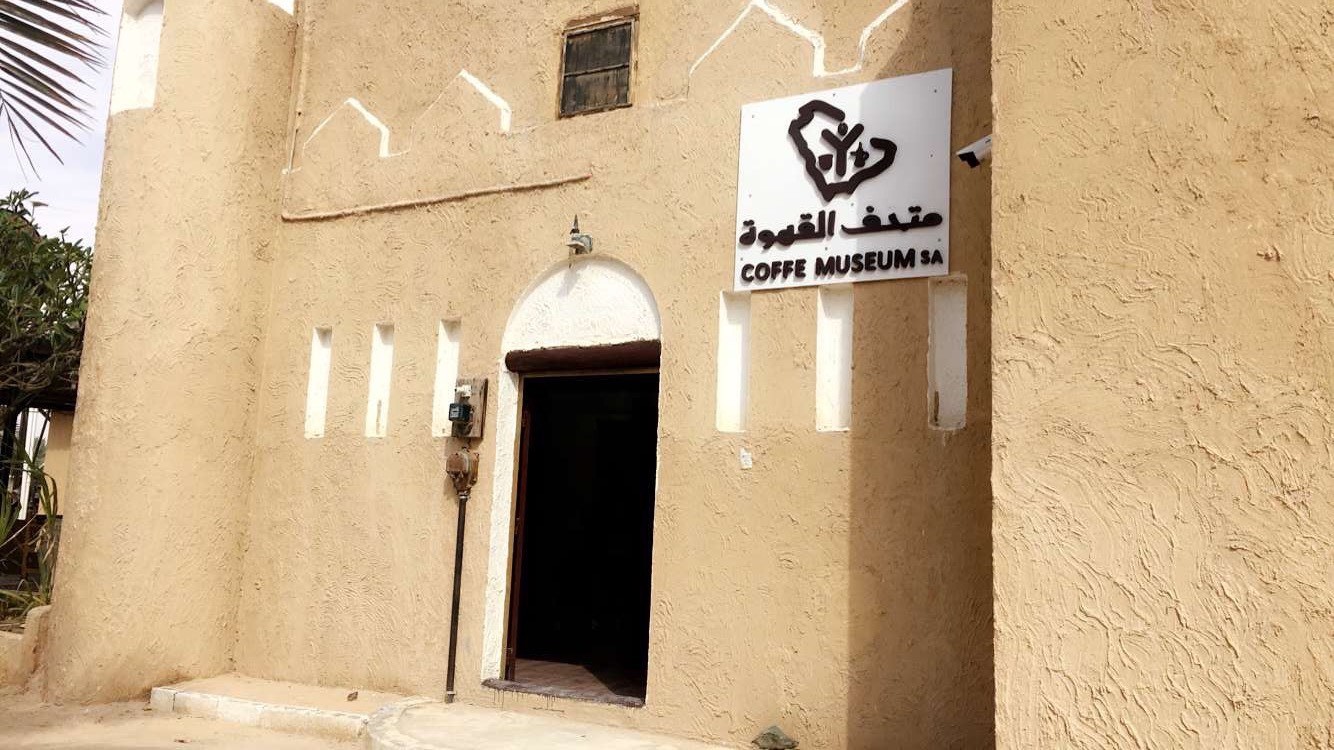
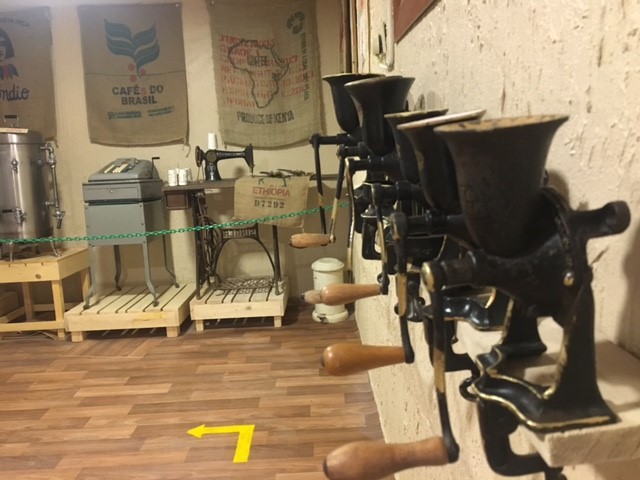
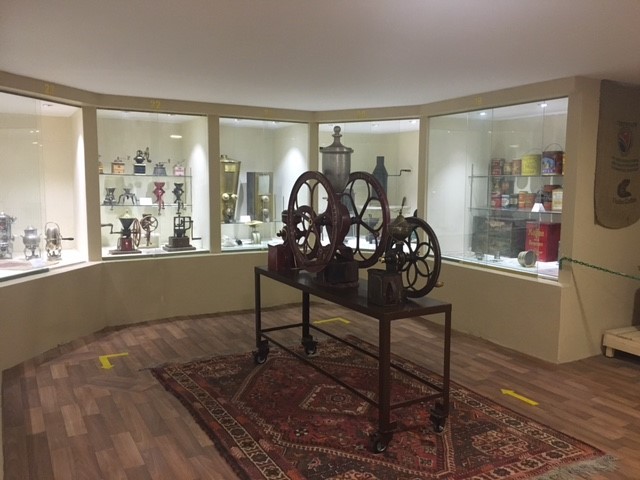
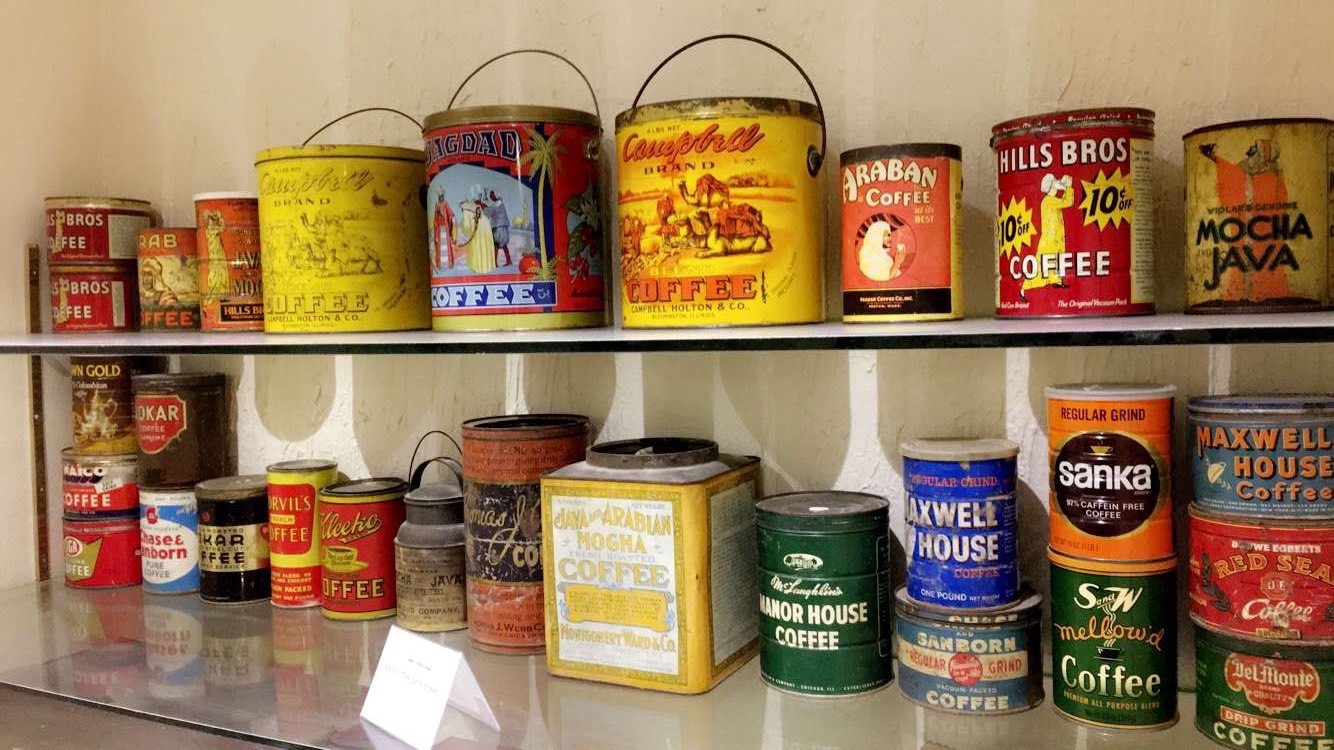
At a museum in Al-Ahsa, in eastern Saudi Arabia, researcher Abdullah Al-Hijris told Al Arabiya about the history of the bean that originated in the fifth-century, explaining the secret methods of roasting and grinding one of the world’s most favorite drinks.
Al-Hijris said that the coffee museum, which was adopted by the National Authority for Tourism and National Heritage (CNTA) and is in line with the Kingdom’s 2030 vision, includes a collection of historical coffee items and tools up to more than 100 years old.
The researcher explained that the museum includes a laboratory to conduct scientific research on all types of coffee.
The museum also has an external building used to host visitors and offer them Arabic coffee.
source: http://www.english.alarabiya.net / Al Arabiya / Home> Lifestyle> Art & Culture / by Staff Writer, Al Arabiya Net / Sunday – March 26th, 2017
Video: source: http://www.youtube.com
WELCOME. If you like what you see "SUBSCRIBE via EMAIL" to receive FREE regular UPDATES.
Read More »