Category Archives: World Opinion

Bangalore Based Startup – Aromas of Coorg, Brewing Business with Coffee

When Friedrich Durrenmatt once said “It is surely easier to confess a murder over a cup of coffee than in front of a jury.” he quite simply put across the magic of a good cup of brewing coffee!

AromasofCoorgKODAGU29apr2016

Fresh, strong, steaming hot and hassle-free service are some of the words which come to your mind when you think of coffee and vending serivces, and these very words are the part of Aromas of Coorg’s philosophy.

In conversation with Abhilasha Dafria for YourStory, A.Chithra Uthappa, co-founder of Aromas of Coorg, tells us how they, at AOC, are full of fresh ideas, believe strongly in quality and customer satisfaction and have the best designed products for their customers so that they get the maximum value for their money.

Afterall, science may never come up with a better office communication system than the coffee break!

Hi Chitra, tell us about yourself and an introduction to Aromas of Coorg

Aromas of Coorg has been in business of Beverage solutions since 2009 & coffee cultivation for more than 3 decades. Our passion is to provide the most technology driven, innovative beverage solutions to both businesses and consumers.

I, A.Chithra Uthappa, am the founder & Managing Director of Aromas of Coorg and I’m an MBA from MIT MAHE University, Manipal and B.B.M From Mysore University. I have worked with large corporates like Kotak Mahindra Bank, Aditya Birla Minacs and iSeva/e4e. All my corporate roles have been with fast growing sunrise industries and have played significant roles in building the businesses and growing the companies to the next level. In my last assignment with the start-up open2save, I was a key team member and was instrumental in setting up new business channels ground-up.

Radhakrishnan M, my co-founder & Head of Operations is a seasoned professional with over a decade’s experience in large corporate before he set-up his own company, Aromas of Coorg. He has worked with large corporate like Dell, Infosys, Manpower Inc. etc and has extensive experience in building and managing businesses including sales, building teams and organizations. He is an MBA from Loyola College, Chennai and B.Sc. from Madras University.

So what triggered this idea?

There are four important factors that made our idea into a company, ie, My husband’s passion and support for my entrepreneurship, my son, our roots from Coorg and the corporate exposure.

First and foremost, to become an entrepreneur was always the dream of my husband and me … this is what we wanted to be. I was on sabbatical for my child and during the break; I conceived the business idea too! We decided that this would be the right opportunity to start something on our own sitting at home. This is where it all started.
We are basically from Coorg and we have been into coffee cultivation for more than three decades. This was the primary driver why we chose to build something unique in this space and we thought out of the box. Having worked with corporate for more than a decade we understand this world well and we were able to quickly identify the opportunity.

Thus the birth of “Aromas of Coorg”, as we wanted our company to bear the name “Coorg” in some part and also wanted a name where our targeted customers can easily relate to it. Quite naturally the first thing that attracts anybody to any form of food is the “Aroma”. That is how we finalized on the name “Aromas of Coorg” and this also marked our entry into the beverage solutions for corporate, institutions, etc.

Since when are you operational? How big is your team? Are you looking at hiring?

We are fully operational since August 2009. We are currently a 40 member team. Yes, definitely, we are looking to strengthen our sales force and simultaneously our operational support staff will have to go hand in hand with every new client that gets added.

What is your clientele like?

We service range of clients like large corporate across multiple cities to a one location company as well. We have a well spread out client base across industries and geographies.

Where are you based and where are your clients from?

We are based in Bangalore and are currently supporting clients in Bangalore, Mysore, Tumkur, Nelamangala, Hosur and Chennai. However, we are not present in retail segment at this point of time.

Where do you have your manufacturing units? Which cities do you provide the home-delivery services?

Our manufacturing unit is also in Bangalore; currently we provide home delivery service only within Bangalore city limits.

How does the supply chain work?

We are currently able to manage the supply chain internally, our raw materials are procured from different locations and the respective vendors manage the supply chain of the respective products. All these products come to our processing units in Bangalore from where the supply of finished products to the respective clients is managed by full time employees of AOC. Machines are manufactured under our complete supervision.

Did you fund-raise to start up? If not, are you looking at getting funded now?

We used our personal money and angel money. We are looking to get funding for our future expansions.

How does the revenue module work?

We work both on variable and a fixed pricing model where clients can pay based on usage or based on usage+ a fixed monthly costs. The pricing model is designed with the motive of win-win for us and clients.

So what were the challenges you faced while starting up? Tell me about your initial hurdles.

First and foremost challenge was how to differentiate ourselves from the others; there were several big brands and more than enough small vendors. We really had to come up with a differentiator from the existing. This is the stage were we re-invented our traditional filter coffee. The wave of western form of coffee was so popular that everybody is racing towards the Cappuccino, Espresso, latte, etc.

Timing was tough; given it was the time of deep recession, all around you there were companies going under losses, almost all the corporate were planning for major cost cutting, and so on. It was also very difficult for us to penetrate the companies with our new concept and service offerings.

Of course our innovative thinking helped us make good inroads. We took this to our advantage and came up with our very own filter coffee which is truly Indian, especially south Indian, and presented to the corporate the first of its kind fully-automated Vending machines which serves authentic filter Coffee and freshly brewed Tea. In our very first Demo we knew that we hit the nail on the head with our concept.

Are there other players in the market doing similar things? What are your key differentiators?

Yes there are several big names in the market providing beverage service, Coffee day, Fresh & Honest, Tata Cafe, Hindustan lever, etc. Our USP is our focus on technology, our zeal to innovate and our relentless passion for quality. Our Vending machine is the first its kind which is fully automated to serve freshly brewed authentic filter Coffee & freshly brewed Tea on a single press of the button. We are the first company in India to build coffee vending machine with both HOT & COLD option in the same machine. We are looking at adding more features around quality assurance here.

Our Coffee is a blend of six varieties of finest coffees beans hand picked from our own cultivation and we apply expert science, combined with traditional artistry, in order to maximize the flavor attributes of each roast. Our coffee roasting process is tuned to develop coffee flavors to the fullest for flavor profile, aroma and overall character in the cup. These factors make us the pioneers and front runners in providing the most hygienic and finest Coffee but at the same time affordable vending service provider in the market today.

Can you share with us some interesting trends about the market that you are trying to capture?

The market is looking for continuous innovation and personalization as much as possible.

An interesting trend is enhanced customer awareness and focus on health drinks like badam milk, green tea, milk shakes, horlicks etc. In some clients these new drinks are consumed lot more than traditional tea and coffee.

What are the challenges of scale in this business and how do you prepare to cope with them?

The biggest challenge in scaling is to maintain the same levels of service and quality. This is B2B2C market and end consumers decide what they finally like to drink. Having a continuous feedback loop and connection with end consumers is another critical aspect of this business.

Where and how do you see yourself going ‘bout this?

We aim to build our company to PAN India multi format Beverage Company. To serve 1 lacs cups a day is our immediate 12 months target.

For more information, please visit their website: http://aromasofcoorg.com/

– Abhilasha Dafria

source: http://www.yourstory.com / Your Story.com / Home> Entrepreneur / Team YS / by Abhilasha Dafria / December 30th, 2011

The New Brew Strategy

NewBrewKODAGU26apr2016

Coffee is cool, and Indian coffee is cooler still. That’s the message a brave new breed of young coffee growers are taking to the world.

Youngsters with a family background in coffee, they are taking their products to the next level – incorporating quality produce with sustainable agriculture and state-of-theart production techniques and marketing. To them, the customer is king – and they are pleased to customise their coffees, reach out to educate and grow their customer base. Their final desired outcome is to make Indian coffee a thing of beauty at home and abroad. Meet some of the players.

Rishwin Devaya | 26
Riverside Coffee, Coorg

“A planter’s approach is usually to just maximise yield, but I am experimenting to control the end quality. I want to add value to Coorg coffee;I’m in it for the long run”

It was while Rishwin Devaya was working for a wine company that he realised he wanted to return to his roots to create a brand of world-class coffee from Riverside, his own 80-acre coffee estate in Siddapur, Coorg, along the Cauvery river. As he watched his employers go through the process of cultivating grapes, producing and selling wines, he realised he could do the same.

“My family has been growing coffee in Coorg since 1898, but we’ve always sold the beans to large-scale producers. In fact as I thought about it, I realised that very few coffee drinkers truly understand much about their preferred types of coffee (Arabica, Robusta) or different types of roasts.” He quit his job and started processing the 60 tonnes of coffee grown in his estate.

“I started sending out samples on a small scale to restaurants in Bangalore last year. I want my own strong brand, and to focus on customising coffee, so different restaurants get their own individual blends.” Devaya’s single origin coffee is UTZ and Wood certified, and has been launched in custom- designed tins in three variants – a 100 per cent Arabica, a 50/50 Arabica/ Robusta and the popular filter coffee blend which incorporates chicory.

“From April onwards, my coffee will be available on my website, besides gourmet stores. For my next phase I plan to offer blends and grinds according to customer requests — the ultimate customised coffee. What I love about coffee is that each person has his own way of enjoying it. I want people to understand how simple it is to make a really good cup.” Devaya recently launched Riverside Coffee with a tasting event at Red Fork, where he demonstrated different coffee-drinking styles for guests, a kind of show-and-tell on coffee.

This covered the entire production process, from picking the ripe ‘cherry’, to the pulping and washing stage, to getting the ‘parchment’, followed by hulling and polishing to get the green bean and finally grading (AA, A, B or peaberry, while BBB – blacks, browns and bits – are usually sold in bulk to make instant coffee.) “A planter’s approach is usually to just maximise yield, but I’m experimenting to control the end quality. I want to add value to Coorg coffee; I’m in it for the long run.”www.riversidecoffee.in

Tejini Kariappa | 28
Halli Berri Coffee, Chikmagalur

“We sold our coffee in handwritten aluminium foil packets to start with. Then the name was suggested by my sister and my mother liked it, saying, ‘We should be proudly Coorg.”

Tejini Kariappa’s idea of creating her coffee brand Halli Berri happened because “we were giving away too much free coffee,” she says. Her family-run coffee enterprise is based in Chikmagalur and is headed by her mother and herself — India’s first all-women run coffee business.

Her estate, Kambihalli, in the foothills of Chikmagalur’s Bababudan hills, has been in the family for generations, with Kariappa also running a PR firm, Estrada, in Mumbai. Halli means village in Kannada, and when juxtaposed with ‘berry’ makes the name sound ethnic, meaning ‘the village berry.’ Halli Berri grew almost organically, as visitors at the estate café run by her mother started asking for fresh-ground coffee powder to buy and take home.

Kariappa explains, “We sold our coffee in handwritten aluminium foil packets to start with. Then the name was suggested by my sister and my mother liked it. ‘We should be proudly Coorg,’ she said.” So Halli Berri was born and now remains a frontrunner in India’s single-origin coffee story. Today Kariappa sells a single variant full-bodied 100 per cent Arabica coffee made from premium graded beans under the Halli Berri brand. She prices it affordably, “in fact not much more than instant coffee,” she points out.

The brand is Rainforest Alliance certified, one of the highest certifications worldwide. She also runs a CSR initiative, ‘Be Berri Conscious’ tied in with her coffee business – it is mandatory for all her workers to send their children to school, and families are given free meals. Halli Berri also supports wildlife initiatives — tiger conservation and 296 species of migratory birds in the estate. “I want this to be a legacy for my children and their children,” she says. The estate also offers a responsible luxury’ homestay experience.

Juggling two different lifestyles has been tough, more so given the innumerable subsidies, certification and licences a business needs for survival.But Kariappa finds the journey “interesting… Indian coffee must get its due recognition. And the youth in India should realise that Indian coffee is cool. This (coffee) has really been my life from the start – so you could say I’m trying to start a revolution.” halliberri.com
________________________________________________________________

EXPERT SPEAK

“Indian single estate coffee is an idea whose time has come. The growth of India’s coffee story has been generational. Earlier generations saw coffee as a commodity, pooled to sell so there was no individual identity. For today’s new generation, whom I call ‘marketpreneurs’, marketing is important. They are more passionate in their approach.

It’s not about production alone now — there are value adds, customised blends, quality packaging, niche brands with back stories happening along with the additional benefit of e-commerce. This is excellent.

However, the new generation must be aware of a few factors. They must not ape the biggies — the Tata Coffees or Unilevers — but focus on the ‘small is beautiful’ dictum. They must also concentrate on physical distribution of their product, not only the virtual via e-commerce. And they need to focus on quality, not get overwhelmed by only branding.

Finally, customisation divides markets into choice segments: do this with scale in mind, don’t create nano-niches which are unsustainable by themselves. This is the way ahead to lift Indian coffee to world recognition”

-Harish Bijoor, coffee expert & brand consultant
_________________________________________________________________

Abhijit Shetty | 30, & Advith Shetty | 33
Seven Beans Coffee Company, Chikmagalur

“India is the sixth largest coffee producer in the world, but two-thirds of our coffee is exported to Europe, where the beans are roasted and sold; no one knows that’s Indian coffee”

Civil engineers by profession, the Shetty brothers, joint managing directors at Seven Beans Coffee Company, realised early on that their heart lay in producing the best coffees sourced from their five estates in Chikmagalur (their premium estate Woddaegudda is 450 acres and Rainforest Alliance certified). “We grew up spending summers on the estate — here coffee was grown but sold to coffee houses to process and sell,” says Advith, who handles sales.

They decided to leverage their engineering skills to develop their business, raising the bar through research and export. “India is the sixth largest coffee producer in the world, but two thirds of our coffee is exported to Europe, where the beans are roasted and sold under different international brand names. There, they command exorbitant prices, except no one knows that’s Indian coffee,” says Abhijit, who looks after production and operations, adding that they wanted to create a globally recognised brand. They incorporated Seven Beans Coffee in 2013, a complete bean-to-cup enterprise, and started the search for a global partner.

They zeroed in on Dr Dante Cagliari, a noted Italian master roaster, and the association recognises Seven Beans for a unique USP in the custom- made single estate coffee market. Seven Beans pre-blends and then roasts their coffee at their own customised Chikmagalur roastery, grinding and packaging both whole coffee beans, powder and capsules. They have begun exporting three variants under their own brand names — Mishta (70/30 Arabica/Robusta), Urja (60/40), and Eka (50/50) — and the packaging is deliberately very Indian. They also import signature Italian blends by Cagliari. Abhijit explains the historical growth of coffee, “The early 1900s saw the patenting of technology forinstant coffee. It was followed by consumers, especially those in the US, seeking better quality and asking about origin; terms like ‘fair trade’ became important. The most recent trend saw the term ‘artisanal coffee’ coined. Artisanal producers control every step of coffee production, from bean to cup.”

Seven Beans started production in 2015 and now sells its custom coffees to corporate offices and restaurants, as well as online and in gourmet stores. They offer end to end services, including renting and sale of imported Italian coffee machines. Aiming to bring the perfect cup to consumers, they offer barista training, from grinding coffee to frothing milk. “Indian consumers learn quick, want quality and are aspirational, therefore they are aware of artisanal Indian coffee,” adds Abhijit. sevenbeans.co

Meet the others

Specialised coffee brands like Flying Squirrel (flyingsquirrel.in) and Blue Tokai (bluetokaicoffee. com) have been making their presence felt among coffee lovers in India with customised coffee straight from estates in Chikmagalur and Coorg, sold online and instore. Other players include the Indian Bean Company (theindianbean. com) and Bengaluru’s Estatecraft coffee (estatecraft.in).

source: http://www.newindianexpress.com / The New Indian Express / Home> Business> News / by Ruma Singh / April 25th, 2016

Famous faeces: the story behind the civet-poo coffee craze

There’s a scene in the movie The Bucket List where Jack Nicholson’s billionaire character realises kopi luwak – the “fancy” coffee he insists on drinking – is made from the faeces of a cat-like creature.

“You’re shitting me?” he says. “Cats beat me to it,” his terminally ill mate replies. Both men laugh until tears stream down their faces and then his friend ticks: “laugh until I cry” off his bucket list.

Scatological jokes aside, there is a well-documented dark side to kopi luwak, which is also known as civet coffee.

In February, civet coffee plantation tours were ranked among the world’s top 10 cruel animal attractions by World Animal Protection.

“There is now a growing civet coffee plantation tourism industry in Indonesia where tourists visit caged civet cats and sample the coffee,” says a report by the University of Oxford’s Wildlife Conservation Research. “This is causing more and more civets to be caged and abused.”

Kopi luwak is made from coffee cherries that have passed through the intestines of a common palm civet (known as a luwak in Indonesia); a small, nocturnal carnivore. The enzymes break down the beans, which when roasted, create a smooth, less bitter brew, according to some coffee connoisseurs.

(Not everyone is a fan. The Washington Post’s food critic Tim Carman wrote of his experience: “Stale. Lifeless. Petrified dinosaur droppings steeped in bathtub water. I couldn’t finish it.)

World Animal Protection says that when civet droppings are collected from the wild, no cruelty is involved. Indeed the history of kopi luwak is purported to date back to the Dutch colonial era, when native coffee plantation workers were forbidden to pick coffee for their own use. They discovered undigested beans in civet droppings and created their own aromatic brew.

However in recent decades the coffee – with its irresistibly weird back story – has become a global sensation, with wild-sourced beans fetching prices of up to £2000 ($3700) a kilo.

The massive international demand and exorbitant prices led to civets being caged to increase productivity and create commercially viable quantities of civet poo.

“Caged civets are encouraged to gorge on an unbalanced diet of coffee cherries,” the World Animal Protection report says. The process has been compared to fattening geese to create foie gras but with a lot more caffeine. “Many show signs of great stress, including pacing and self-mutilation. This unnatural captivity and forced feeding results in injuries, disease and poor nutrition.”

But despite their famous faeces, little is known about the common palm civet itself, according to PhD student Peter Roberts, a lecturer in animal care in Britain. “How can we look after the species in captivity without knowing how they will behave in the wild?”

Roberts aims to collect data on the habitat use, behaviour and estimated population of civets around the village of Cipaganti in Java for the PhD he is doing at Oxford Brookes University. He hopes his research will add vital information to what is known about the ecology of the species and contribute to better animal husbandry and management policies.

However, because funding invariably goes to rare species – the civet is listed by the International Union for Conservation of Nature as a species of “least concern” – his PhD is largely self-funded. It’s been a painstaking process. A recent attempt to crowd-source 10 camera traps raised a paltry £15 in 56 days.

Meanwhile, the trade in civets is increasing dramatically in Indonesia. Civets have become a popular exotic pet in Indonesia and there has been a rise in the popularity of kopi luwak and civet coffee farms in Java and Bali.

The problem, Roberts says, is that no-one has been able to quantify what damage this trade is doing to wild populations. “More wild research is desperately needed.”

Although common palm civets are not protected in Indonesia, trade is regulated through an annual quota system. In 2016, a total of 250 common palm civets can be captured for domestic use and 225 for export from just four provinces in Indonesia.

Eko Arifyanto from the Biodiversity Conservation Agency says this is to keep the balance of the number of animals in the wild. There has not been a request for one permit this year.

However the sheer numbers of civets for sale in Javan and Balinese animal markets alone suggest this quota system is simply not being enforced. “It is difficult to know because we have very limited human resources while our coverage area is quite big,” Eko says.

When Fairfax Media visited Pasar Satria, a market in Denpasar, young civets were available for 450,000 Rupiah (about $45) each.

Author and former coffee trader Tony Wild believes he spawned a monster. Wild claims to be the first person to bring a kilogram of kopi luwak to the west in 1991, while working as a coffee director for Taylors of Harrogate. The product, with its “certain repulsive charm”, became a media sensation beyond his wildest dreams.

However two decades later, while researching his book Coffee: A Dark History, Wild learnt civets were being poached and caged all over south-east Asia and force-fed coffee cherries.

In 2013 he started the Facebook campaign Kopi Luwak: Cut the Crap. He also played a key role in a BBC investigation of animal cruelty on civet farms in Sumatra.

“I don’t think a large number of consumers have been put off by the life of the animal – kopi luwak is pretty much everywhere in Indonesia, and I think you will find probably the same in south-east Asia,” he says.

Wild does believe there is a sustainable business model in genuine wild kopi luwak.

In Gayo, for example, a famous coffee producing region at the tip of Sumatra, Anasryta has been gathering civet faeces foraged by collectors for more than 20 years. Gabah (the cleaned coffee beans) are worth 80,000 rupiah ($8) a kilogram. “You can tell the difference, which kopi luwak is from the wild and from the farm,” Anasryta says.

“The wild has a richer taste, luwak in the wild eats all kinds of stuff, skins of trees, fruits.”

However many kopi luwak producers are now savvy to the controversy around caged civets. “You will find most kopi luwak is now marketed as “genuine wild” kopi luwak,” Wild says. “There’s really only one way of telling and that is having a personal relationship with the producers and going to the plantation and even then it’s difficult to prove.”

Coffee certifiers Rainforest Alliance and UTZ Certified – the world’s leading label for sustainable coffee production – no longer certify coffee producers that use caged civets or other animals.

And in June 2015, Indonesia introduced standards for luwak coffee production, that emphasised the civets were not to be starved, harmed, scared or depressed.

“We welcome the Indonesian government recognising there is an issue, however if they truly wish to stop the suffering then all caged production of kopi luwak must be prohibited,” says World Animal Protection’s Joanna Toole. “There is no justification to take these animals from the wild and keep them in confinement for years on end to produce a luxury coffee for tourists.”

Bali Geo is a kopi luwak cafe in Ubud that opened several weeks ago.

The cafe has three civets on site, but the owners say they are for display only, and will eventually be released. “We buy our supplies from a luwak farm up in Kintamani,” says co-owner I. Nyoman Lanus.

“I understand they have about 70 luwak in cages. I know they keep them in good condition. One luwak per cage, so they won’t fight each other. They would only be fed coffee beans around three times a week. Luwak will die if they are only fed with coffee.”

Nyoman says the coffee cherries are placed in a bowl and the civet is allowed to pick the best. The rest are sold back to the coffee farmers.

“For anybody to claim they have a steady flow of wild luwak coffee is impossible,” Nyoman says. “A mixture of wild and luwak farm, that’s more likely. Like what we sell here.”

The story Famous faeces: the story behind the civet-poo coffee craze first appeared on The Sydney Morning Herald.

source: http://www.esperanceexpress.com / The Esperance Express / Home> News> Latest News / April 15th, 2016

This for Mom

SKUthappaKF07apr2016

Back in the national fold for the Sultan Azlan Shah Cup, forward SK Uthappa hopes to make it count not only for a berth for Rio, but also to please his mother.

Over the next 10 days, the only significant television activity at the Kushalappa household in Gonikoppal will be the telecast of the Sultan Azlan Shah Cup hockey tournament from Ipoh, Malaysia. The younger of the two children, SK Uthappa, finally returns to the national fold after an on-off period of four years of injury and dip in form. The forward had always assured his mother, Neelamma, that he would be back. He hopes to make it with a bang.

“That period was bad,” Uthappa said. “I was dropped because of injury and many people in Coorg would ask my mother whether I will be the same again. But my mom always supported and believed in me throughout. Still, I asked her not to share any news about me — good or bad. If I am disappointed about the bad things said about me, then I don’t want to hear to the good things either. My seniors also told me that bad press will do nothing to help me improve my game. It’s best to ignore it and concentrate on the game.”

The Azlan Shah Cup, the premier eight-team tournament which begins on Wednesday, provides Uthappa, who was part of the 2012 Olympics team, with a fine opportunity to impress coach Roelant Oltmans and silence his critics once and for all. “Good teams play in that (tournament) and the expectations are high,” he said. “When I was picked, I was obviously happy. I knew I would get in because I was playing well. I want to focus on the task given to me and do it well. We are trying something new in this tournament after the long national camp.”

Bangalore days

Adversity is no strange bedfellow for Uthappa. When he was 13 years, he was admitted to the hostel at St Joseph’s Indian High School. Uthappa was immediately homesick and he cried for six months straight. “In my batch, there were two others from Coorg – Rathan and Chandappa — but hostel was bad for me,” Uthappa said. “I joined the St Joseph’s Indian High School only for hockey. Manohar Katigge, the coach there spotted me when I was playing state junior hockey in Davangere. We had defeated his team (from Bengaluru) and he wanted me here. My mother initially said no, but he kept calling for three months. Till then I was happy at home, doing nothing. But he managed to convince my mother.

SKUthappa02KF07apr2016

“When I came here, I was fussy even about the little things. I cried because I had to bathe in cold water and I wasn’t used to it. Then, I had to wash my own clothes. I wanted to chuck it all and go back home. It was tough, but it taught me everything. Had I gone back, who knows what I would be doing now.”

What helped was the empathy of the school authorities. “I am thankful to Father Henry Saldanha, the principal, and hostel warden, Vincent Paul. I often got special permission and they treated me kindly. There’s a limit for the phone call I can make from the landline. Whenever I was on call, nobody else would get a chance. But the warden used to say ‘It’s okay. Let him do it’. Parent visits was also limited to once a month. But my mother, father and brother visited me almost every week. The warden and principal were patient with me. They assured me I would adjust very soon.”

Fighting fear

Uthappa took up hockey seriously after watching his brother play for Bangalore University. Chinnappa, who played with VR Raghunath (India drag-flicker) in the nationals, is now in the merchant navy and Uthappa, who was a ‘jack of all sports’, became an international. When he finally made his debut under coach Michael Nobbs during the India-South Africa Test series in 2012, Uthappa admitted to nervousness. “Ignace Turkey, senior player of the team, told me it was evident from my face that I was nervous,” Uthappa said. “He only asked me to play the first pass confidently. He said receive the ball neatly and roll it to the midfielder next to you. I still remember that I had passed it to the current assistant coach, Tushar Khandekar. I even managed to score on debut and received an award for it. Shivendra Singh, a forward in the team, teased me saying that he should receive half the money for providing the assist.”

The open jeep parade back home followed. Recognition by fans and requests for selfies became a norm. A good performance for his team Sannuvanda in the Kodagu Hockey Festival even took the side to the pre-quarterfinals for the first time since the tournament’s inception in 1997. But Uthappa is not content with just that. For him, a good show in Malaysia will complete his fight with himself and also see his rise as a mature player. However, the Rio Olympics isn’t his only incentive to do well. Mom too will be watching.

source: http://www.bangaloremirror.com / Bangalore Mirror / Home> Sports> Others / by Aravind Suchindran, Bangalore Mirror Bureau / April 05th, 2016

O! Success So Sweet!

When things around you are falling apart, there are only a few who not only rise to the occasion, but also create opportunities for themselves and others. Having been able to support the tribals, rural folk, and small farmers with her brand Nectar Fresh, Chayaa Nanjappa is one such example.

Chayaa’s single-minded efforts have established her honey brand – Nectar Fresh – in a highly quality-conscious premium segment. While serving high-end hotels and resorts, she (her brand) has created employment and better earning opportunities for tribals and marginal farmers. In fact, she has come a long way since the launch of the brand in 2007, and now she receives orders from importers from different parts of the world who want to buy honey from her company. She is also hopeful that Nectar Fresh products will soon be decked up at Walmart stores.

The honey market is a crowded space with big brands at play, so what made a small Khadi & Village Industries Board-backed rural enterprise from Mandya (in Karnataka) to earn a name for itself in both domestic and international markets? According to her, it is their obsession for quality that has made the brand stand out. The global exports of natural honey is about $2.3 billion (CY2014), of which India’s share is just $77 million, which is a minuscule 3.5%. Nanjappa saw the potential for growth. When she started in 2007, total honey production by her company was just 20 tonne per month. That has now increased to 200 tonne per month. And the company has plans to further increase the production to 400 tonne per month in the near months.

Earlier, she would export through agents, but presently, the company has started exporting under its own brand name. That most of her new orders are accounted for by referrals from existing, happy clients is a sign of her company’s product quality.

In the domestic market too the company has positioned itself strategically at few select outlets like Himalaya Drugs and Kerala Ayurveda, and serves brands like Kitchens of India, etc., to stay away from the clutter.

Though the company has expanded its product portfolio with jams, sauces, and coffee, honey still remains the mainstay. Her efforts in the field of rural empowerment and giving tribals and marginal farmers opportunities to sell their produce in the global market has earned her many state and national-level accolades, including the Priyadarshini Award by Federation of Indian Women Entrepreneurs (FIWE). She proudly says that Nectar Fresh has become the first brand in India to use women-owned logo of WEConnect International, a US-based women entrepreneurs’ body which supports brands that stand for quality. Chayaa is a social capitalist who deserves much praise.

TDB: What was life like before you started Nectar Fresh, and what made you take up entrepreneurship as a profession?

Chayaa Nanjappa (CN): I started this business at a point in time when I was going through a tough phase in my life due to personal reasons. I got into the business because I wanted to do something to keep myself busy and be independent, and create employment to help other needy people. And that’s how Nectar Fresh Foods came into existence. Initially, I started it as a small scale unit in Bangalore, but later, I moved to Mysore.

TDB: How did you manage the initial funding? Why honey and food products only?

CN: As my place of origin is Coorg, I looked at products which can be related to the region. Long ago, Coorg was known for its honey but, gradually, the honey production fell to shockingly low levels. So, I decided to source best quality honey from different parts of the country and market it under the brand name Nectar Fresh in small quantities. I underwent a week-long training on honey production at the Central Bee Research and Training Institute in Pune and learnt technicalities involved in the production and storage of honey.

I had lost my father and had no one to look up to for guidance. I took some financial help from my mother. I prepared a project report based on which I got a loan of Rs.10 lakh from a bank. I also got a lot of support from the Khadi and Village Industries Board.

TDB: Having started with just a corpus of Rs.10 lakh is very interesting and inspiring. What was your initial approach?

CN: I market my products on my own across India; I have no budget for advertisements. My approach was to do something new and give a unique positioning to my product. There was a monopoly of honey brands from Germany and France in the high-end segment of the hospitality industry in India. No Indian brand was catering to the segment that includes high-end hotels and resorts. I maintained product quality from the very beginning. Quality and world-class packaging helped us to break the monopoly of foreign brands. To counter MNCs, we expanded our product line, and now supply an entire basket of products including honey, jam, sauce and coffee.

TDB: Tell us something about your export markets. And how exactly did you foray into them?

CN: Until recently, we were exporting through agents but are now exporting directly across the globe. We are enhancing production capacity of honey from 200 tonne per month to 400 tonne per month to meet demand from export markets. We also have plans to produce 50 tonne of jam per month. Well, ITC was the first organisation that recognised us for our quality, and thus, I got my first order from them. The association with ITC gave me the confidence to approach other premium hotels. My export orders started coming when people started noticing our products in some of the premium hotels in India. The positioning of our products in these hotels helped in image building. Two months ago, we started exporting directly under our brand name.

TDB: You have ventured into a highly competitive segment, both in the domestic as well as overseas markets. How do you deal with competition?

CN: Our products stand for quality, and it’s an integral part of our brand. Nectar Fresh has grown due to our ethics in business. Because of positive word of mouth, farmers have remained loyal to us, and for the last five to six years we have held on to the same group of suppliers. We source directly from farmers and with the growth of the company, farmers have also benefitted. We may be a small-scale unit, but from the batch code, we can trace a product from the level of procurement to final despatch. That’s how we maintain consistency in quality in the entire process. It’s because of the quality of our products that even people from US and Germany come to our small unit and buy from us.

TDB: What role has your family played in your success? Were there initial apprehensions?

CN: As I have already mentioned, I started my business when I was going through a rough phase in life, and due to that my mother had her apprehensions. But still, she encouraged me. My close friends supported me a lot too. Rajappa, my business partner, has been a big, big, big support.

TDB: What would be your advice to all, especially women, who want to take a plunge into entrepreneurship in general, and exports and imports in particular?

CN: Work hard. If you are really focused, you can achieve the impossible. My new unit in Mandya in Karnataka is a 100% rural enterprise, but I haven’t availed any subsidy for it. The system is such that it will take its own time. Instead of wasting time and energy on it, if you focus it on your work, you will get better results. My past experience made me realise this, and this time I applied for a loan from a bank and set up my unit without taking any subsidy. There are many opportunities for those living in urban areas, but the necessities of rural women need to be addressed. They can make a big difference to exports. They have world class products around them, but they don’t know how to take them to market.

source: http://www.thedollarbusiness.com / The Dollar Business / Home> Cover Story> March 2016> Power Woman> O Success, So Sweet / by Sisir Pradhan / March 20th, 2016

Prasad Bidapa in Pakistan fashion week

PrasadBidappaKF24mar2016

Prasad Bidapa is doing a fashion show. What’s new, you might ask. Well this one is in Pakistan.

And naturally, Bidapa is thrilled.`Shaan-e-Pakistan: Kya Dilli Kya Lahore’, organised by Huma Nassr, is an annual three-day event in Lahore intended as a plat form for the singers, dancers and designers of both nations.

And Bidapa has company not just from the fashion industry but from the music industry as well, such as popular singer Atif Aslam.

Now this is a cross-border collaboration worth strutting his stuff for.

source: http://www.timesofindia.indiatimes.com / The Times of India / News Home> Entertainment> Kannada / Bangalore Mirror Bureau / March 23rd, 2016

Rwanda: How Agro-Tourism is Marketing Rwanda’s Coffee

Need is the mother of all innovations, goes an old adage. It is also true that solutions to most of our problems are always around us. So, when a Huye-based farmer sought sustainable ways to market local coffee and promote Rwanda’s unique tourism attractions to the outside world, the resources at hand came in handy.

The farmer created a ‘coffee experience tour’ hiking trail across the Huye Mountain Coffee plantation and the historically important Nyirankoko hill just above the plantation. Where does the coffee you drink at Ban Café or any other coffee houses come from? Or why would one visit a coffee or tea farm, or a cattle ranch? These questions are expounded on during the hike and, by the time one descends the hill, they are ready to roast and brew their first coffee as the hike takes you through all the stages of the coffee production process, right from planting to roasting and coffee brewing. The ‘coffee tour experience’ trail is unique in that it has created a synergy, promoting agriculture and tourism as one product.

This agro-tourism initiative is essential as the country seeks more products to market to the world and boost tourism receipts. It is even more important as it creates awareness about the two sectors, helping expand their markets and add value to clients’ experience in the process.

The approach has made it possible for farmers working with Huye Mountain Coffee to get a ready market abroad and better prices for their coffee. Besides, it strengthens efforts by the government and other stakeholders to create 200,000 off-farm jobs per annum under the second Economic Development and Poverty Reduction Strategy (EDPRS II). Innovative approaches like this one will play an instrumental role in helping the country realise this objective.

Agro-tourism, in simple terms, involves any agriculturally based operation or activity that brings visitors to a farm or ranch, according to Farm Concern international (FCI), an Africa- wide market development agency focusing on commercialisation of smallholder farmers and agro- pastoral communities.

Huye Mountain Coffee tour experience trail

When I visited the recent Made-in-Rwanda expo at Gikondo Show Grounds in Kicukiro, Huye Mountain Coffee was one of the exhibitors. A closer look at the brochures from the attendants at the stall indicated that the firm was more than just a coffee processor. I learnt from the brochures that they had recently introduced a new product targeting coffee lovers and buyers – the ‘coffee tour experience’. This was intriguing… so I was curious to go check it out.

About 10 days later, I hit the trail in company of other 10 visitors from the US. Our guide for the day was Aloys, or Mr Coffee, as he is fondly called, who took us through the trail on paper at the reception centre at Gako trading centre, explaining the various 12 stages of the coffee tour in preparation for the hike. After the briefing we boarded our vehicles for a two-kilometre ride on a rather bumpy and steep gravel road to the starting point. The trail begins at about 1,689 metres above sea level, with an introduction about coffee planting and the initial growing stages of the crop.

We went through other stages, and I learnt that the coffee tree life cycle is over 50 years. We also learnt of some of the enemies of coffee, like the berry bola disease, leaf rust disease, coffee bug that gives unpleasant potato taste. Mr Coffee says the firm mostly uses organic means to fight these enemies, including tobacco and pyrethrum organic pesticides. The harvesting stage comes next (during my visit it was off-season) that prepares visitors for the exciting coffee roasting (using Rwandan traditional means) at 1,870 metres above sea level. This is done under an acacia tree that provides much-needed shade (on day hot day like when I visited). It’s here that we introduced to the coffee roasting process using the Rwandan traditional technology.

One gets that sense of satisfaction roasting green coffee beans to a rich dark brown (colour) that makes for aromatic coffee distinct to Rwanda. And the aroma… Nothing beats the aroma of freshly roasted Rwanda coffee!

‘Tour of Rwandan culture and history’

The icing on the hike is when visitors embark on the second segment of the trail, which marks the ‘tour of Rwanda culture and history’ as visitors explore the breathe-taking Nyirankoko rock, just about a 100 metres from the coffee plantation.

Mr Coffee takes you through the history of Rwanda particularly during the era of the kingdom and inter-kingdom conflicts. He tells us that the hill’s name originate from an incident in 1348 following a confrontation with the then Burundi kingdom army. The name was given to Nyirarutenge by king Kigele I for her heroic acts in helping them defeat the Burundian army, according to legend.

Nyirarutenge was buried at the foot of the rock after she was killed by the Burundi kingdom soldiers. The rock and hill were to later be renamed Nyirankoko by the king in honour of Nyirarutenge.

“From then onwards, all Rwanda kings would hold planning meetings with their military advisors at the rock before any military operations with neighbouring kingdoms and communities to ensure victory,” Mr Coffee concludes the legend.

He notes that the rock, shaped like a meeting place at the top, is complete with a chairman’s chair, and ‘stairs’ leading up from the bottom of the rock’s upper side. Standing on top of the rock, one can see all the surrounding villages, terraced hill bellies, meandering roads and pathways in the lower valley and shinny tin roofed houses of communities surrounding the ‘holy’ mountain.

The final lap of the hike leads you to the hilltop. When here, you cannot ask more; this is the highest peak at 1,986 metres above sea level, but it’s almost flat. It hosts the ‘coffee tour experience’ trail monument and gardens, complete with tents and chairs. Those too tired can grab much-needed rest, relax, and stretch their aching muscles and bones.

Atop Nyirankoko mountain, one is able to see all the surrounding communities, Huye Mountain on the eastern side, Huye town, Nyanza town, Rugwogwe, Mount Simbi, as well as Sovu town and Gako trading centre.

The monument that tells of the history of the enterprise; the pedestal that has a pot and a coffee tree growing therein, also documents the humble beginnings of the leading coffee washing station in Huye District, from the time they were using wooden ‘bicycles’ to ferry red coffee cherries to their small washing station way back in the late 2000s.

The enterprise now operates a fully-automated washing station at the foothill. Mr Coffee says the coffee tree in the pot signifies the firm’s resolve to promote coffee drinking among Rwandans as part of the local culture.

He argues that since the country grows the beans, Rwandans should partake of the beverage as part of the daily menu besides earning foreign exchange from the beans. Mr Coffee believes the ‘coffee tour experience’ will greatly impact the competitiveness of Rwanda’s coffee, noting that most visitors write blogs about the hike when they return to their home countries.

“This is a plus for Rwandan coffee and for us; we are currently expanding potential and giving opportunity for others to join the sector,” adds David Rubanzangabo, the brain behind the venture and the Huye Mountain Coffee chief executive.

He told me later, that the ‘coffee tour experience’ was introduced partly to demystify the coffee production value chain because many coffee lovers, including Rwandans, don’t know much about the beverage, especially how it is made.

He adds that though the firm opened shop around 2011, “it was like something was always missing to make the enterprise more beneficial.” Rubanzangabo says the tour is also strategic marketing, noting that visitors who participate in the hike “will always remember Rwanda’s unique coffee and recommend it to others”.

“It (tour) is a big marketing tool for us… the agriculture-tourism mix helps hit multiple birds with one stone – we teach visitors about our coffee and its importance to Rwanda’s economy, they get to understand why it’s costly on shelves in their home countries, and we also showcase Huye and Rwanda tourism attractions to the outside world,” he explains. He argues that creating a synergy between the two sectors benefits every stakeholder, and gives more value to visitors and local products (tourist attractions and coffee).

Tourists narrate experience

Randall Diericks US citizen resident in Kigali, says the coffee tour opened his eyes to the realities about coffee farming, noting that he now understands ‘where my coffee comes from’.

He says the hike of the Nyirankoko hilltop after initial coffee processing tour gives a rich historical perspective of Rwanda, and adds value to trail, enriching the visitors’ experience. He says the Nyirankoko rock atop the hill is like that in the legendary “Lion King” kids’ cartoons. Przemek Praszcalek from the US, says it was fun learning about coffee and hiking. He says the traditional coffee roasting at the third stop on the hike was insightful, and the “roasted beans were aromatic and delicious”.

Advisory

The hike will take you under three hours, especially as Mr Coffee puts his charm to use explaining the making of Rwandan coffee, detailing all the processes from the garden to the cup. After hiking, tourists are taken through the coffee pulping process at the plant’s modern coffee washing station downhill.

From the reception centre in Gako town, one can use a bike or car to the starting point that’s about 2km away.

You are advised to carry fresh drinking water, sports shoes or jungle boots can suffice for the hike, and you need not carry warm clothing, especially during the dry season. Don’t forget that camera to capture the moments.

The hike is suitable for most people, including kids of five years of age, and grannies. The day I was there, there were about four kids (and they made it to the top effortlessly), and a granny who could be close to 80 years of age.

Challenge that birthed Huye Mountain Coffee

Rubanzangabo worked with two USAID-sponsored projects (PEARL and SPREAD) that were promoting coffee growing in the area in early 2000s.

He says when President Paul Kagame was launching one them in 2002[3], he challenged him, asking what would become of the initiative at the end of the projects. He said, “After these white men have left, will you be able to continue on your own.” That put the entrepreneur in him (Rubanzabagabo) to test, and vowed to carry on similar work as was being done by the two projects, giving birth to Huye Mountain Coffee brand operated by David and Family Company Limited, years later. The brand name derives from the fact that most of the coffee (70 per cent) processed by the firm is provided by farmers around Mount Huye. He says the firm works with over 600 farmers organised in 24 savings groups.

PPP model

The venture is a perfect example of how the country can use the private-public partnerships (PPP) model to promote investment and spur development initiatives across the country. Rubanzangabo says the firm is working with the local and central governments to promote the ‘coffee experience tour’ trail, especially among Rwandans.

Only about 10 local people have so far participated in the hike almost a year (nine month to be exact) since the trail and agro-tourism venture were initiated, according to Mr Coffee.

Mr Coffee says the majority of the tourists are from the US, Europe, Japan, Australia and China. Rubanzabagabo says Nyirankoko mountain belongs to the district but was given to the firm by the local authority for tourism and projects that benefit the community. As a result, people from the surrounding communities are not charged hiking fees, and 5 per cent of the tour earnings support community projects. Ironically, this incentive has not excited them to go hiking already! Both the local authority and central government provide security along the trail and on the plantation, and help promote the trail as a tourism product.

Rubanzangabo says that they are working with local leaders to promote the trail among the community and surrounding districts, and the general Rwandan population.

The firm sells most of its coffee to global brand; Stumptown Coffee Roasters of USA, Falcon Coffee Roasters (England), L Coffee of South Korea, UCC from Japan and Single Origin Coffee Roasters of Australia. The coffee is marketed under the Huye Mountain Coffee brand name, according to Rubanzabagabo.

source: http://www.allafrica.com / allAfrica / Home> The New Times / Opinion by Stephen Nuwagira / March 22nd, 2016

Oman Hockey: Team Coorg clinch top honours at Gulf Hockey Fiesta for Starcare Cup

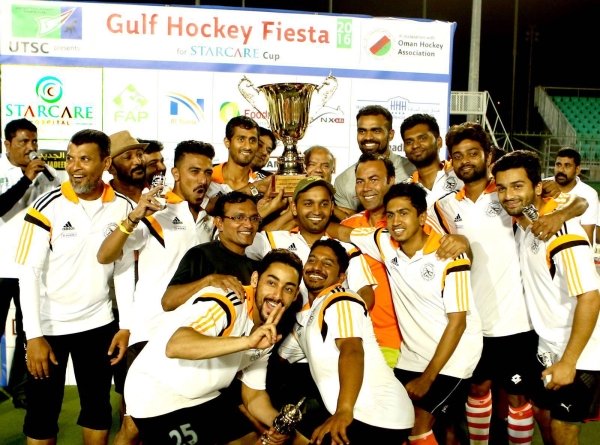
Team Coorg celebrate with the trophy. Photo - Supplied
Team Coorg celebrate with the trophy. Photo – Supplied

Muscat :

Team Coorg Oman clinched the top honours at the Gulf Hockey Fiesta for Starcare Cup organised by United Thalessery Sports Club (UTSC) in association with Oman Hockey Association (OHA) at the Sultan Qaboos Sports Complex in Bausher on Friday.

In an exciting final of the Asian Hockey Federation-recognised event, Team Coorg defeated Qatar Wanderers 4-1. The eventual champions scored two quick goals through Kavan and Pradhan Somanna to take 2-0 lead just five minutes into the match.

Pradhan struck his second and team’s third goal in the 14th minute and a minute later Omani player Ali Salim made it 4-0.

Qatar Wanderers managed to pull one back in the 16th minute.

Earlier in the semifinals, Qatar Wanderers edged King Khan Hockey Club of Dubai for a 1-0 win while Team Coorg defeated UTSC 4-2.

A total 12 teams, including seven from outside Oman, took part in the event, which was officially inaugurated by Indian Ambassador Indramani Pandey by hitting the ball to PR. Sreejesh, the Indian hockey team vice-captain and goalkeeper, who flew in from India to preside over the event as the chief guest.

Later, the prize-distribution ceremony was graced by OHA’s former chief Dawood Al Raisi, present general secretary Mohammed Redha Taqi Al Lawati, popular hockey personality SAS Naqvi, Starcare Hospital vice-chairman C.M. Najeeb, CEO Dr Mohammed Naseem, ISD President Abdul Rahim, Indian School Muladha Principal SI Sheriff, Mohammed Riaz LLC Chairman Mohammed Riaz, Aziz of Al Jadeed Exchange, Oman hockey veterans Mohammed Shambeh Al Raisi and Abdulrahman.

The best goalkeeper award went to Ahmad Alam, a former Pakistan goalkeeper and Olympian. Best defender award was claimed by Ali Salim of Team Coorg. Future player award went to Geroge Extel of Bahrain Hungry Humoours while Juniad of Qatar Wanderers was adjusted the man of the tournament award.

During the ceremony, a raffle draw was conducted which saw several gifts presented includng two gold coins of eight grammes each, return air ticket to Sharjah and two return tickets to Mumbai.

Starcare Hospital was the main sponsor for the event and the other sponsors were Mohammed Riaz LLC, Al Jadeed Exchange, Majan Distrubters, Foodlands Restaurant, Lynx, FAP, Al Nahla Solutions, Times of Oman and Gulf Madhyamam.

source: http://www.timesofoman.com / Times of Oman / Home> Sports> Hockey / by Times News Service / February 28th, 2016

“Yoga helped me cope during my Teenage through Motherhood ”

Says dancer & yoga exponent Yamini Muthanna

Niranjan Nikam in conversation with Yamini Muthanna.

Mysuru is the Ashtanga Yoga capital of the world, a sobriquet which is music to the ears of Mysureans, after the cleanest city tag for the second time. The city has also produced two of the finest yoga exponents in the world, B.K.S. Iyengar and Pattabhi Jois. However, there is one more Guru, who is quietly doing his bit on whom many discerning yoga practitioners swear — it is B.N.S. Iyengar.

Bengaluru-based Yamini Muthanna, dancer and yoga exponent, is one such. She was in city recently to participate in the launch function of her book “The Power of Yoga” at Dhvanyaloka Open Air Theatre.

After the book launch, organised by the Mysore Book Club, a first-of-its-kind experiment in Mysuru, Yamini, who gave a breath-taking yoga demonstration, shared her views on how the book shaped, the power of yoga, the undue importance for competitions and why everybody should practice yoga, with Senior Journalist N. Niranjan Nikam. Excerpts. — Ed

by N. Niranjan Nikam

SOM: We just saw your demonstration of yoga. I was thinking all the time, aren’t children the best yogis because their body is so flexible. How is it that we lose all that and only when we see people like you, we say to ourselves, “I wish I was like her — flexible, elastic and graceful.”

Yamini Muthanna: Children are natural Yogis. They are so free in their mind and body so the Asanas are easy for them. They do not have points of resistance either in their body and mind due to stress or tension that an adult might have. Therefore, I personally feel that flexibility in a Yoga Asana practice is a product of freeing the body and mind rather than putting in a lot of imposed effort. Anybody can train to be flexible with proper training of the body and freedom in mind. Yoga Asanas are patterned so beautifully that the body can be slowly animated into an Asana with proper judgement and care.

SOM: Yamini, you started yoga at a young age and you have come a long way. What made you write “The Power of Yoga?”

Yamini: My practice of Yoga has been extremely beneficial for me in all circumstances of my life. It helped me cope during my teenage through motherhood. I have been in constant touch with my body and mind and Yoga has helped me to be always aware. Once I started teaching from 2001 onwards, I noticed it was helping my students also to deal with situations better than how they used to handle things before they started practice. I started documenting their progress and started prescribing need-based specific practice sessions. It was helping my students and, therefore, I decided to share it for a larger group of yoga enthusiasts. My message in the book is you can choose your daily practice according to your day’s needs and have tried to explain how it works.

SOM: I learnt a little bit of yoga about 25 years ago from a Guru here. Later, I practiced for quite some time with the book, “Light on Yoga,” by B.K.S. Iyengar. Your book is equally interesting as you make it look very simple, how far have you come?

Yamini: Guru B.K.S Iyengar’s book is my Bible for my personal Asana study. He has set the benchmark of perfection in the Asanas and I am yet to come across another book equal to that of “Light on Yoga.” The book has been my Guru ever since I started personal practice. I did personal practice from 1996 to 2001 before I started to teach. I did a thorough study of the book, summarised by Guru B.N.S. Iyengar’s teachings and built up my practice, experimented my understanding and documented them in a way which would be easy for a Yoga Practitioner to comprehend. My book is not about loads of information but it is a guide to delve deeper in the practice by triggering a curiosity.

SOM: Yamini, you were talking to me about angles and Trikonasana which is the cover page that has caught you in action is such a perfect pose. Share a little about angles and sequences with our audience.

Yamini: I have a strong understanding that Yoga Asanas are geometric patterns from the Sri Chakra Yantra. I do not want to go to the details of it as I do not have proof and specific information about it. Just as Guru B.N.S.Iyengar mentioned in his speech earlier that the body will get chiselled into a fine cut diamond with perfect glitter in the body with the practice of Asanas and Pranayama. I would like to add that perfect geometry exists in pyramids and prisms also creating certain beneficial energy source forming specific benefits in the universe. It is in the same lines I personally feel that Asanas are also patterned to generate specific benefit to the body. Therefore, it is very important to maintain perfect lines in an Asana construction.

SOM: You have talked at length about asanas, chakras, mudras, pranayama and their benefits, all with photographs and you yourself doing each one of them. However, you have not mentioned time needed for each asana, or have I missed it?

Yamini: No I have not gone too much into the details of these deeper practices of Hatha Yoga as I do not want practitioners to try them on their own with the help of a book as they could be dangerous. It is very important that their first instruction comes from a Guru. I have just mentioned them as an information guide into the future practice.

SOM: You said that you do not believe in giving certificates. I would like to share my experience — I had written a story about yoga talking to a teacher about four years ago titled “Posturing ‘Olympics’ (op)position.” I had read an article in Deccan Herald about a move to include yoga performance in Olympics. The yoga teacher had opposed this idea and I had even quoted that B.K.S. Iyengar was also not in its favour. You yourself and a few noted yoga exponents including Sharath Jois, grandson of Pattabhi Jois, whom I met the other day does not favour it. When I sourced this article of mine which I had promptly forgotten, after four years, I was pleasantly surprised to see that there were 39 comments on it but all blasting me away to glory.

Yamini: I do not agree that Yoga Asana be treated as sports. Yoga is all about a personal well-being routine rather than challenge or competition. Your practice is your personal journey and you don’t need to get a medal or stand on a victory stand to announce your success. You silently practice yoga and reap the glory of the practice by using it in life and your routine mundane activities. It’s not sports.

SOM: But you yourself had participated in competitions earlier. In fact that is how you started your tryst with yoga.

Yamini: I did go for two competitions in 1986 and 1987, won the championships and understood it was a mistake. Master was also not too pleased by it. I did not inform him before entering the contest, because I knew he would not let me. I was sorry for a long time for that mistake.

SOM: What is the difference between a Nadia Comãneci’s perfect ten and yoga postures is the question many ask? Can you highlight the difference?

Yamini: Well, I am going to answer this in brief. Gymnasts use a lot of kinetic energy in their postures and expel a lot of force and energy to get into their perfect positions. Yoga uses potential energy with holds and binds in the asanas conserving energy. So some of the postures look the same but the benefits and the source of construction are different in both Yoga and Gymnastics.

SOM: Yamini you are a Kodava — and Kodavas are slim, tall, elegant, beautiful, handsome, rugged and with wiry bodies. The trouble sometimes is, we stereotype people. Did you turn a vegetarian when you started practicing yoga?

Yamini: I am a proud Kodavathi rooted in my Kodava culture and tradition. I have not given up anything at all. But my personal development has adopted various principles from my study of the two classical disciplines. They are my personal principles that do not interfere with my home culture, which is Kodava. [Daughter of Chendrimada Raja (late) and Sundari, Yamini is married to Kotera C. Muthanna].

No I did not turn vegetarian when I started practicing Yoga, though I changed a lot of principles to suit my practice. However, I am not a great fan of non-vegetarian food. You can call me a “No-fussytarian.” I eat whatever is healthy.

SOM: How much of your yoga has influenced your dance?

Yamini: A lot, in terms of energy and health. Breathing especially gets regulated when we do rigorous dancing. It has helped me keep my body agile and supple and less injury-prone.

SOM: What are your future plans and why the word ‘Power’ in the title of the book?

Yamini: Future plans — I shall keep doing what I am doing with more passion and conviction. I shall keep replenishing my knowledge in these two subjects. With the blessings of my Gurus, I have no doubt in accomplishing this; I will need their support and guidance always. I have already started my next book on Yoga, which would be exclusively for women from 18 to 80. The contents are just shaping up. I feel it will give an interesting perspective on woman’s body and how Yoga could benefit maintenance.

“Power,” I can’t think of a better term for Yoga. Yoga is a source of Power to better your life. As one adapts Yoga into his/her lifestyle, it becomes more and more obvious. I am using the term to emphasise this fact… It’s been my personal Power.

source: http://www.starofmysore.com / Star of Mysore / Home> Feature Articles / by Niranjan Nikam / February 24th, 2016

Kodava takes Cricket to Dubai

Chettalli (Madikeri) :

It is a known fact that cricket is a popular sport in many countries including India, Sri Lanka, Pakistan, England, Australia and others. But, the sport slowly is steadily gaining popularity in countries such as Namibia, Nepal, Netherlands, Afghanistan, UAE and others. The common factor among the countries where cricket is gaining popularity is the Indian factor.

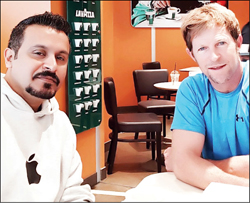
Chillavanda Darshan Chinnappa (left) with former South African cricketer Jonty Rhodes.

There are many Indians who have been promoting cricket worldwide. One such person who has been popularising the sport in United Arab Emirates (UAE) is Chillavanda Darshan Chinnappa, a native of Bilugunda village in Kodagu district who has joined hands with legendary cricketers like Ramiz Raja, Aravinda De Silva and Naveed Nawaz to start Future Legends Cricket Academy (FLCA) in Dubai.

Darshan Chinnappa, who is currently residing in Bengaluru, is the son of Chillavanda Chinnappa, a retired official of Survey of India and Chillavanda Parvathi, a retired employee of Co-operation Department. He is married to Chillavanda Nirmala and the couple is blessed with a daughter Raha Darshan.

FLCA was started two months back with former Sri Lankan skipper Aravinda De Silva, former Pakistani cricketer Ramiz Raja, Imran Zafar, Shahid Rafique Sheikh and former Sri Lankan cricketer Naveed Nawaz.

The academy has been providing world class facilities to children and also conducts master classes by inviting top cricketers from India, Sri Lanka, Pakistan and others countries. Legendary cricketers like Kumara Sangakara and Jhonty Rodes have already conducted master classes.

Darshan believes that the academy would be recognised at an international level and gain more popularity. Details on the academy are available at futurelegendsca.com and in the facebook page.

source: http://www.starofmysore.com / Star of Mysore / Home> Sports News / February 22nd, 2016