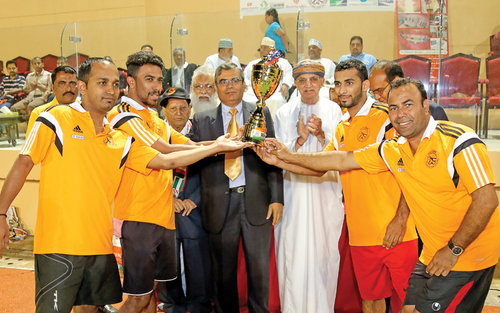
Team Coorg receives the winner’s trophy from H E Indra Mani Pandey
Team Coorg edged past United Thalasserry Sports Club (UTSC) Oman 2-1 to lift the Republic Day Cup at the 67th Republic Day of India Hockey Festival, which was held at the Sultan Qaboos Sports Complex recently.
It was the ninth successive year of the festival, organised by Team Coorg and Friends of Naqvi Group.
Three teams took part in the Republic Day Cup.
In the opening clash, UTSC Oman edged past Beatrice XI by a solitary goal to set up summit clash with Team Coorg, which received a first-round bye.
Earlier in the clash for the Ambassador Cup, Ambassador XI beat Indian School al Seeb 1-0. Later, H E Indra Mani Pandey, the Indian Ambassador to Oman, gave away the prizes in the presence of H E Sheikh Mahfoodh al Juma, the Oman Hockey Association (OHA) chairman and also a Majlis A’Shura member, and Kanak Khimji, the Oman Cricket chairman.
On this occasion, H E Pandey honoured veteran hockey coach and sports administrator S A S Naqvi for his contribution to the game.
Source: http://www.muscatdaily.com/ MuscatDaily.com / Home> Sports / January 27th, 2016
Coffee growers in Kodagu, Chikkamagaluru and Hassan districts are, however, apprehensive.Many want to know the measures taken to protect small and marginal farmers, who constitute 90% of growers in Karnataka.
Bengaluru :
When coffee growers in Karnataka were going through a rough patch due to labour shortage, elephant menace and unprecedented fall in prices, the Centre in November last year allowed 100 % FDI in five plantation crops: Coffee, rubber, cardamom, palm oil and olive oil. The decision, meant to rejuvenate the sector, is expected to have a huge impact on Karnataka, which accounts for 70% of India’s coffee production.
As of now, 100% FDI is allowed only in tea plantation. “Relaxed FDI norms will help coffee and cardamom growers since it is expected to bring in big overseas investors and retail giants besides enhanced technology utilization, automation, research, management and production of value-added products. Permitting foreign investment will also boost India’s coffee exports offering better prices for growers here, ” says Coffee Board chairperson Leena Nair.
Coffee growers in Kodagu, Chikkamagaluru and Hassan districts are, however, apprehensive. Many want to know the measures taken to protect small and marginal farmers, who constitute 90% of growers in Karnataka. Some coffee growers’ associations are holding talks to oppose the move as they fear small growers would be forced to sell their estates to foreign investors. Their entry may prove detrimental for small coffee planters, who may not be able to match the wages and technology of foreign players.
“The Centre should have held consultations and allayed fears before allowing FDI. But they have done in it in a hush-hush manner and kept us in the dark, making us believe that there is a hidden agenda,” says NK Pradeep, a Coffee Board member from Chikkamagaluru. Former Coffee Board vice-chairman Sannuvanda Kaverappa says a parliamentary committee that visited Chikkamagaluru last year to interact with coffee growers left in a huff. Nair allays all fears of growers saying: “The small-grower segment need not worry as enough safeguards have been provided and the Centre and the state government can always reject any FDI proposal in their segment.”
A Coffee Board executive says FDI will benefit coffee growers. The measure is expected to make the coffee industry vibrant like the tea sector, which opened gates for foreign investments in 2002. “Rather than starting a new venture, foreign investors may partner with existing plantations or trading companies. FDI will help boost developmental activities such as replanting, rejuvenation and R&D that need huge funding. It may also help in upgradation, modernization and automation of coffee-processing, curing, marketing,” he adds.
source: http//:www.retail.economictimes.indiatimes.com / ETRetail.com / Home> Industry / February 12th, 2016
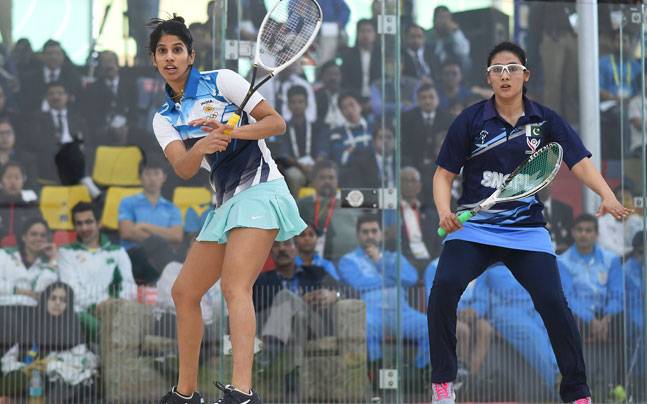
Top seed Joshna Chinappa came back from behind to beat second seeded Toorpaki Wazir of Pakistan to clinch gold at the South Asian Games on Monday.
Star player Joshna Chinappa clinched the gold in women’s individual squash after beating Maria Toorpaki Wazir of Pakistan in a tense and ill-tempered summit clash to make up for India’s disappointment in the men’s event on Monday.
Top seed Chinappa, ranked 14th in the world, recovered from one set down to beat second seeded Wazir 10-12 11-7 11-9 11-7 at the brand new squash facility at the R G Baruah Sports Complex here.(Wrestlers make India proud at SAG)
With Chinappa’s gold, India has so far won three medals in squash with Sourav Ghosal and Harinder Pal Singh Sandhu having grabbed a bronze each after losing to their Pakistani opponents yesterday.
Chinappa, one of the few top Indian players to have opted to play in the SAG, thus gave some solace to the team management after men’s players failed to reach the final.
The women’s final match had all the drama which was witnessed during the men’s semifinals with Chinappa expressing unhappiness to the match officials with the “aggressive” play of Wazir who was seen as trying to be a bit physical with the top-ranked Indian.
Wazir, ranked 50th in the world, won the first set 12-10 after a neck-and-neck contest but she got injured midway in the second set at 7-7 as blood came out of her left eyebrow region after contact with Chinappa and play was stopped for a while to get her treated.
The Pakistani was immediately given first aid and she resumed play after a few minutes. It looked like the break gave Chinappa time to ponder on her game and the glamorous Indian started dominating the match from there on.
Wazir looked tentative just after coming from her injury break and Chinappa did not take much time to take the second set 11-7 and level scores at 1-1.
The third set saw Chinappa taking a 5-2 lead but Wazir came back with some superb shots to make it 6-6 and then 8-6. By then there was tension among the crowd at the stands, but a calm Chinappa just went about her job and brought the score to 9-9 and then 10-9 before taking the set.
In the fourth and final set, Wazir gave some fight initially but later frittered away as Chinappa won it 11-7 to give India the first gold in squash in this edition.
Chinappa later made it known that she was not happy with the way the referees handled the match and that she did not enjoy playing the match as her opponent was “very aggressive” and “not playing fair”.
“Wazir is a good player but she was very aggressive. Fortunately, I won the gold but I did not enjoy playing the final. I play in the professional circuit and there, these kind of things, likes lot of interference and blocking (by rival player) does not happen,” she said after the match.
“I tried to keep myself calm but I had to let them (match officials) know what was happening on the court. I cannot let things happening all the time,” said Chinappa, who argued with the referee on a couple of occasions.
“I am a kind of player who plays fair, without these interfering and blocking etc. Doing all these is not nice for the spectators and also for the game,” she added.
Asked if the referees should have handled the situation better, she said, “I don’t want to be in trouble again but I feel it is their job to control the match and stop all those things. They should have done better.”
source: http://www.indiatoday.intoday.in / IndiaToday.in / Home> News> Sports> Other Sports / PTI / Guwahati – February 08th, 2016
Ace quartermiler MR Poovamma and Asian champion shot putter Inderjeet Singh will spearhead a 68-member Indian athletics team at the 12th SAF Games to be held in Guwahati from February 5-16, Athletics Federation of India (AFI) said today.
Poovamma, who won gold in the women’s 4x400m relay at the 2014 Asian Games, and Inderjeet, a gold medallist at the Asian Athletics Championships in 2015, will be part of the Indian squad which also includes Olympian shot putter Omprakash Singh Karhana.
The Indian athletics team, comprising 36 men and 32 women, will compete in the track and field tournament of the SAF Games which is scheduled be held from February 9-12.
India topped the medal tally in athletics in the previous edition held at Dhaka in 2010, winning 29 medals overall, including 10 gold medals, 11 silver and 8 bronze. The Indian team is expected to face competition from Sri Lanka, which finished second in the medal tally in track and field in the 2010 Games.
This time, the athletics competition will witness 20 events in men and 17 in women respectively at the Indira Gandhi Athletics Stadium, Sarusajai Sports Complex, Guwahati.
AFI President and Olympian, Adille J Sumariwalla said: “The 12th SAF Games is special because it’s being hosted in Guwahati and we hope to notch up maximum number of medals at home.
Though the competition is being held at a time when our elite athletes are in the midst of their training for 2016 Olympics, we’ve tried to select the best possible team under the situation. The team is a good mix of experience and youth and we hope they will return with a rich haul of medals from the 2016 SAF Games.”
Meanwhile, the preparations are in full swing at the various National camps and a number of elite athletes who have qualified for Rio, are also expected to be part of the action at the SAF Games.
The National campers for quarter miles, 400m hurdles and 4x400m relays for both men and women under coach Yuri Ogorodnik returned from a 69-day training stint in Turkey and will reach Guwahati from their present camp in Thiruvananthapuram.
The leading long and triple jumpers in the country who are currently training under Romanian coach Bedros Bedrosian in Thiruvananthapuram are scheduled to participate first in the SAF Games and next at the Asian Indoor Championships to be held at Doha from February 19.
Asian champion Inderjeet Singh is scheduled to reach Guwahati directly from his training centre in the US. However, the organisers have not received enough entries to conduct the men’s hammer throw event, and therefore the event is uncertain till now.
source: http://www.thehindu.com / The Hindu / Home> Sport> Other Sports / PTI / New Delhi – February 01st, 2016
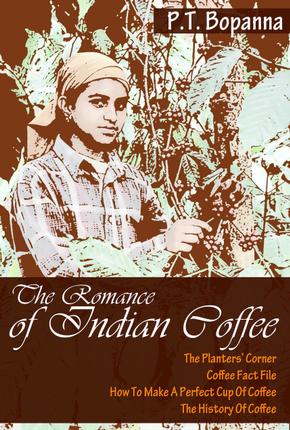
‘The Romance of Indian Coffee’ is the Indian entry to the Gourmand International (Book) Award this time
The jacket of the book ‘The Romance of Indian Coffee’ written by journalist P.T. Bopanna.
The Indian entry to the Gourmand International (Book) Award this time is on what until recently was a south Indian addiction: coffee.
With the coffee culture proliferating across India, thanks to chains like Starbucks, Barista and Café Coffee Day, the routine act of consuming the black decoction stirred in milk, as most people do, and with or without sugar – which again is a personal choice – has acquired an uber-cool image among the Gen Y.
Bengaluru-based journalist P.T. Bopanna has brought alive this unique trait in his book The Romance of Indian Coffee , now shortlisted for the Gourmand International Award, where it will vie for the top honours among coffee books from Brazil, France, China, Thailand, and the U.S., to name a few.
Hailing from Kodagu, which is the home of coffee in India, it was natural for Mr. Bopanna to feel inspired to write on the brew which has a universal appeal.
“My earlier works were Kodagu-centric, but I found a wider canvas in coffee which is also related to Kodagu,” said Mr. Bopanna.
“The book traces the history of coffee in India with interesting titbits about the brew and how its cultivation in the shade lends it a unique flavour, unlike coffee grown in the open in most other countries,” explained Mr. Bopanna, who believes that making coffee is an art. Notwithstanding the proliferation of coffee bars, the best filter coffee, he said, was still prepared in the bylanes of Chennai and elsewhere in Tamil Nadu.
The contribution of Ivor Bull, a British planter, who introduced intercropping and is a legend among the locals, has been highlighted in the book as also recipes for making coffee liqueur.
But ironically, he notes that Kodavas, who market home-grown coffee to the rest of the world and have spanned a coffee culture in India, have taken after the British and prefer tea!
There are entries from as many as 64 countries for the Gourmand awards, started in 1995 as a celebration of global cookbook and wine book publishing. The final results will be announced on May 28 at Yantai, China.
source: http://www.thehindu.com / The Hindu / Home> National> Karnataka / by R. Krishna Kumar / Mysuru – January 31st, 2016
The biggest producer in the world of mild washed arabica coffee had record production of 14.2 million 60kg. bags in 2015, the highest in the past 23 years. In December 2015, Colombia’s coffee crop grew 34% to 1.4 million bags, the highest in that month in the past 20 years. Colombian coffee production grew 83% in the past four years, from 7.7 million in 2012 to 14.2 million 60kg. bags in 2015.
“This is excellent news for all Colombian coffee growers and the result of the joint efforts of the coffee growers and the government, who were able to renew the national coffee growing industry and reposition Colombia as a main player in the international market,” said National Federation of Coffee Growers of Colombia chief executive Robert Velez Vallejo.
In line with production, the export of Colombian Coffee sustained high levels of growth. During 2015, external sales surpassed 12.7 million bags of 60 kilos, 16% more that 10.9 million 60kg. bags exported the previous year. In Decevenmber, 1.2 million of Colombian coffee bags were exported, representing 13% more than the 1.1 million bags a year earlier.
So far this crop year, 3.5 million 60kg. bags were exported, 14% above the 3 million 60kg. bags that were sold during the same period the previous year.
source: http://www.vendingtimes.net / Vending Times / Home / Issue Date. Vol. 6, No.2,February 2016 / posted January 29th, 2016 / Emily Jed – Emily@vendingtimes.net
Chennai-based actress, model and ex-VJ Pooja Gallyot graduated from green tea to coffee last year and now is so hung up on the beverage that she is fast becoming an addict. On the other hand, Kolkata-based fashion designer Kiran Uttam Ghosh, a bona fide coffee lover, zeroes in on new cafes in the places she visits. For naturalist and wildlife conservationist Shrilekha, coffee shops present the ideal rendezvous to conduct business. It is these little tell-tale signs that have had coffee majors scent a business opportunity, even cleverly imparting magical qualities to the brew in that anything can happen over a cuppa. Truth be said, it’s a dramatic cultural switch that’s got the entire nation swaddled in its intoxicating embrace. According to the latest Technopak report, the chain café market, currently at Rs 1,820 crore, is growing at 20 per cent in value and commanding 27 per cent of the Rs 6,750 crore overall cafe market.
Were it not for pilgrim Baba Budan’s temerity in smuggling a few coffee beans into Chickmagalur, Karnataka, we might never have got introduced to this refreshing drink. This history aside, coffee seems to be edging out tea in the social circuit with cafes being the perfect place to hang out, chat or simply relax. That certainly augurs well for business, with Café Coffee Day, popularly called CCD, the biggest player in the Indian market, competing with international brands such as Starbucks, Barista and Costa Coffee, not to mention the popular local hangouts.
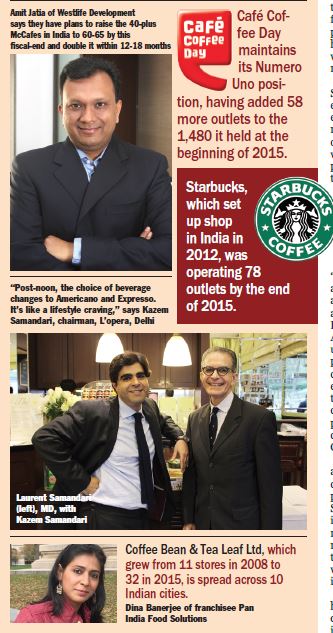
To date, CCD maintains its Numero Uno position having added 58 more outlets to the 1,480 it held at the beginning of 2015. CCD’s principal Coffee Day Enterprises set the stock market abuzz with the largest Initial Public Offering last year. It had fixed its public offer price at Rs 328 per share, taking the total proceeds to Rs 1,150 crore. But when the IPO closed on October 16, it was over-subscribed 1.81 times with a demand worth Rs 2,000 crore.
“Customers today are looking at a differentiated food experience along with their coffees at cafes. Which is why we have introduced a special food menu called the ‘SuperMenu’—a range of soups, sandwiches, burgers and desserts,” says a CCD spokesperson. “We have also started a home delivery service in Bengaluru as a pilot project.”
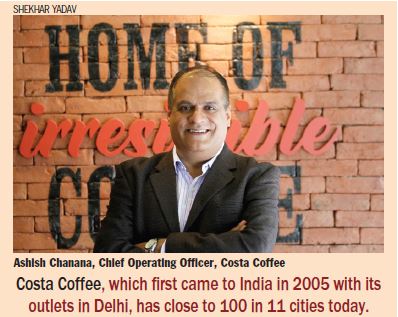
Costa Coffee entered India in 2005 when it opened outlets at Connaught Place in Delhi. Today, it has close to 100 in 11 cities across India. While a good number is present in metro cities such as Delhi, Mumbai, Chennai and Bengaluru, they’re spreading out in tier II cities such as Agra, Jaipur, Pune, Kochi, Ludhiana, Chandigarh and others. “While southern states have always had a strong culture of drinking coffee, over the past decade or so, the drink has penetrated to other parts too,” says Ashish Chanana, Chief Operating Officer, Costa Coffee.
Another chain that is fast expanding is the US-based Coffee Bean & Tea Leaf Ltd, which tied up with Pan India Solutions to start a single outlet at Select Citywalk mall in Delhi. It has grown to 32 stores in 10 cities from 11 in 2008. “We source our coffee from seven different countries,” says Dina Banerjee, CMO, Pan India Food Solutions Pvt Ltd, Mumbai.
Though all eyes are on the newest entrant, US giant Starbucks, which joined hands with Tata Coffee Ltd to set up shop in India in 2012. By 2014, it had more than 60 outlets and the end of 2015 saw it operating 78. It had also managed to clock in Rs 171.2 crore, an 80 per cent jump from previous year’s Rs 95 crore.
Coffee shops have so much become revenue models that another giant has jumped on the bandwagon.
The most telling of entries is American fastfood chain McDonald’s McCafe in the country with its first cafe being launched in Mumbai. “The concept fits in well with what the Indian customer needs. Our plan is to increase the 40-plus McCafes to 60-65 by this fiscal-end and double it within 12-18 months,” says Amit Jatia, Vice Chairman, Westlife Development, franchisee of McDonald’s in South and West India.
There’s a good reason behind the dramatic rise of coffee cafes in India. Fashion designer Ghosh spends her holidays finding new cafes and spending her time reading, sketching and dreaming there. “Cafes across the world reflect the essence of its people and place,” she says, adding that the habit of going to cafes late at night with friends has earned them the moniker, ‘the owls’.
Chanana is in agreement too. Says he: “Coffee shops have given people across all age groups—especially the young—a legitimate, safe and cool place to hang out. Youngsters can go on a date without burning a hole in their pocket. Friends can spend time together at a conveniently located place. We’re also seeing a lot of older couples taking time out to catch up with each other over a cup of coffee. At Costa, we have lots of customers who are by themselves.”
Gallyot is a big fan of Starbucks. “I have gotten used to their coffee as wherever I travelled, I came across an outlet. It’s become like a comfort drink for me,” she says. For 24-year-old MBBS student Anjali Reddy, Starbucks doubles up as a place for study. In fact, people have come to associate coffee concoctions with different times of the day. “Post-noon, the choice of beverage quickly changes to Americano and Expresso. It’s become like a lifestyle craving,” says Kazem Samandari, Chairman of L’opera, Delhi.
Besides cultivating friendships and fun, these places have become the haunt of many working people. Wildlife conservationist Shrilekha often frequents Chamiers, an upmarket café in Chennai. “As I work from home, I often meet business associates at cafeterias and I love Chamiers which while elegant has a lot of breathing space,” shares Shrilekha.
Visiting cafes has widened the horizon of Delhi-based interior designer Parull Mahajan’s social interactions. The caffeine rush helps her mind to stimulate her creativity. “I visit the two of my favourite cafes—Choko La and Starbucks—at least three-four times a week and cannot do without my standard two or three cups a day. It’s an addiction I have no intention of wearing off,” she says.
In keeping with the global trend, coffee shops have become de facto offices for consultants, entrepreneurs, and writers. “Some of our Costa outlets in Delhi, Bengaluru and Mumbai have had the privilege of hosting many start-ups, where the founders polished their business idea over several cups of coffee,” says Chanana. Work is also what takes Anitha KS, National Corporate Sales Manager at Vodafone, to Costa Coffee at the Lulu Mall in Kochi. “After meeting clients in the morning, I come here and carry on my work sipping on a cold coffee or cappuccino,” says Anitha. For his part, the outlet’s manager Anup Anand is delighted with the increased bottom line. “We have plans to open more outlets in Kochi and other cities of Kerala.” That’s significant given that Kerala is predominantly a tea-drinking state.
Coffee reigns with an aromatic fist even as south India leads in the production of coffee, with the drink dominating social interactions. Apart from the big players, there are a host of small and medium joints that gets people over for coffee and chitchat. In Bengaluru, which is the hub for rich traditional filter coffee, local brands such as Maiyas, Adigas, Shanthi Sagars, the SLVs, Hatti Kapi, Katte Kapi, Brahmin’s Coffee Bar and Coffee Board outlets are still going strong. Small joints rule the roost in Chennai too, courtesy Madras Coffee House, Leo coffee outlets (under brand Mylapore Mocha) and Kumbakonam degree coffee outlets.
Unique to the Bengaluru-Mysuru region is the ‘by-two’ coffee culture, a mini dose of coffee whose origins can be traced to some 100 years back during the literary and Independence movements. Then literary figures, freedom fighters and political leaders, with hardly any money in their pockets, gave impetus to this culture of having multiple servings of half a cup of coffee over endless discussions.
For many in the garden city, the small joints are the place to be. Marketing professional R N Prasad feels that the prominent coffee cafes are good only to conduct business with coffee being incidental. Each day, he drives some seven kilometres to have a cup of coffee at the Brahmin’s Coffee Bar. According to city historian Arun Prasad, tourists prefer the traditional filter coffee served at small joints.
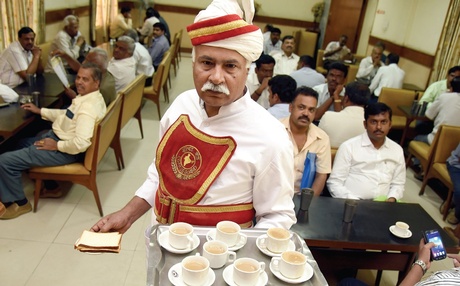
In the grand theatre of coffee culture, there are the veterans—India Coffee House and Coffee Board outlets. K S Achyuthan, Kannada author and media professional, has been visiting the Coffee Board outlet near Vidhana Soudha in Bengaluru for more than 50 years. “This is a meeting point for many journalists and lawyers as well as musicians and guests who come to All India Radio. I have also seen many legislators, MPs and even celebrities in this place which has hardly changed all these years.” Kannada filmmaker and environmentalist Suresh Heblikar makes it a point to visit India Coffee House whenever he passes by the place.
The India Coffee House in Puducherry, a heritage structure, came close to being torn down in 2008 until INTACH and concerned citizens appealed against the move. With CM N Rangaswamy’s support and renovations later, it opened in mid-2014 and has begun to attract crowds. This outlet also finds a mention in Yann Martel’s Life of Pi.
Looks like the old and the new will exist side by side even as coffee aficionados seek out their happy place.
with Meera Bhardwaj, Ayesha Singh, Shevlin Sebastian, Jonathan Ananda and Suhas Yellapuntala
source: http://www.newindianexpress.com / The New Indian Express / Home> Magazine / by Sunita Raghu / January 23rd, 2016
The sixth edition of India international coffee festival 2016, programmed for three days, concluded this Saturday.
More than 60 companies are exhibited at the Coffee Expo, drawing visitors from across the globe (Photo: Pixabay)
Mumbai:
In order to boost tourism industry with the coffee sector, the central government has allowed the coffee board of India to promote coffee-tourism under flagship of Incredible India programme.
The coffee board chairman Leela Nair said that, following the Karnataka module of Coffee tourism, Ministry of tourism from the current financial year has allowed board to promote tourism with coffee industry. However, due to the delay in request from our side, government couldn’t fund us but has asked to kick-start it under incredible India programme, she added.
In this regard, the Ministry of Commerce and Industry, Chief Secretary, Rita Teaotia, who was the guest speaker, said “When you talk about coffee tourism, you provide great experience for the tourists which is also environmentally beautiful”.
Teaotia added that this would also boost the start-up in the country to partner with the existing plantations and take an advantage of this open market. She urged the young entrepreneurs of India to see coffee as the emerging markets for start-up, which has enormous opportunities.
Further speaking on the coffee tourism, President of India coffee trust, Anil Kumar Bhandari pointed out that more than international tourists, there has been steep increase in the domestic tourists from last five years.
Quoting about the start-up opportunities in coffee sector, Chief Secretary Rita Teaoita said, “If you look at the coffee industry which has number of small plantation sectors could be turned has an opportunity because you make niche product, niche branding and target and a niche market.”
Secondly, India being traditionally south states coffee-drinking area has started looking into the branding and also spreading it into the north India market the Barista and Starbucks, with this chain, somebody with well-placed product can also turned into great opportunity for start-ups, Teaoita mentioned.
“Third is, we do have specific coffee varieties coming in from different region and branding and marketing of those could turn great opportunities for the start-ups to spread”, she added.
The sixth edition of India international coffee festival 2016 that was programmed for three days, concluded on Saturday with guest speaker Ministry of Commerce and Industry, Chief Secretary, Rita Teaotia’s address on start up India campaign in coffee industry.
The festival comprises of an International Conference Exhibition for all things coffee, skill-building workshops, product launches, coffee quiz, coffee awards, and a host of other exciting activities.
The festival also served as a platform for many coffee growers, roasters, retailers, equipment suppliers, researchers and entrepreneurs. This year the festival saw as many as 500 delegates for the conference and skill building workshops.
More than 60 companies are exhibited at the Coffee Expo, drawing visitors from across the globe.
Leading brands like Hindustan UniLever, Tata Coffee, Nestle, Leo Coffee, Buhler, Kaapi Machines MK Associates, Swiss Pack, Bunn-O-Matic, Diedrich, CMA, Probat, YARA India, Rabo Bank, Eltex marketing Services, Controlmatic, etc., are exhibiting at the event.
Start-ups have completely transformed the way India consumes their Coffee be it Coffee delivery or E-commerce or Cafés or Roast & Ground Coffee sellers. IICF also played a large focus on these Start-ups.
source: http://www.deccanchronicle.com / Deccan Chronicle / Home> Business, In other news / by Vaibhav G. Bhansode, Deccan Chronicle / January 24th, 2016
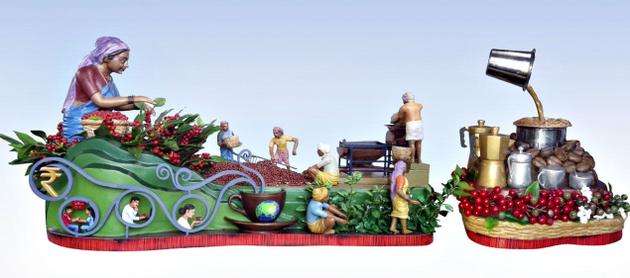
A miniature of the State’s tableau on the theme ‘Kodagu: the coffee heaven of Karnataka’ for the Republic Day parade. The French President, Francois Hollande, will be the chief guest at this year’s parade.
The French President will be the chief guest at this year’s R-Day parade
French President Francois Hollande, who will be the chief guest at the Republic Day parade in New Delhi, will witness the various stages of coffee making in Karnataka’s tableau.
The State’s tableau this year is on the theme: Kodagu: the coffee heaven of Karnataka. It will depict various stages in the making of coffee, starting from women plucking the beans to processing them and the processed powder being finally turned into the aromatic brew. The tableau depicts Kodava women, wearing their distinctive dress, performing their traditional dance.
Folklorist H.L. Nage Gowda’s book Bettadinda Battalige (From the hills to the cup), on the coffee’s origin, is the basis for the tableau.
Shashidhara Adapa, who designed the tableau, said the work on it has commenced both in Bengaluru and New Delhi. Two sets of artists are working on creating sculptures and fabricating the tableau. “Steam emanating from a cup of coffee will be visible to the audience,” he said. The signature music will be by Praveen D. Rao.
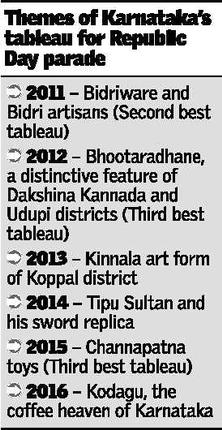
It is for the sixth consecutive time that Karnataka is participating in the parade. Back in 2005, its tableau on the theme of Gomateshwara had bagged the first prize. In the subsequent years, the State showcased Mysuru Dasara, followed by Hoysala and Pattadkal architecture.
According to N. Vishu Kumar, Director of the Department of Information, the selection process is rigorous. “Only the best are chosen,” he said. Getting an opportunity to represent the State at the parade is an achievement in itself, he added.
source: http://www.thehindu.com / The Hindu / Home> Cities> Bengaluru / Muralidhara Khajane / Bengaluru – January 09th, 2016
Coffee production in the country this year could reach close to three lakh metric tonnes. Production in Karnataka, the country’s largest coffee producer, would also be better compared to the last few years, said former Coffee Board Chairman Javed Akhtar.
Speaking at the India Coffee Awards Ceremony, organised by Coffee Board on Thursday, he said that the scheme to expand Indian coffee internationally was extremely successful and Indian exporters are hugely respected. The export of this bean has also registered a marked increase, consistently touching three metric tonnes annually in the last few years, he added. Coffee Board Chairman Leena Nair said that 128 entities were actively exporting coffee in 2013-2014 to more than 100 countries with earnings close to Rs. 4,594 crore.
Andhra Pradesh is also gearing up to become a serious coffee producing State, another former Chairman G.V. Krishna Rau pointed out.
source: http://www.thehindu.com / The Hindu / Home> News> Cities> Bengaluru / Staff Reporter / Bengaluru – January 08th, 2016
WELCOME. If you like what you see "SUBSCRIBE via EMAIL" to receive FREE regular UPDATES.
Read More »