Category Archives: World Opinion

She sips, swirls and spits: Meet Asia’s only woman coffee taster

What would life be without spicy food, ice-creams, perfumes, fragrant flowers, late-night parties and alcohol? Ask Sunalini Menon, who swears by this regimen.

No, she’s not a health freak or someone prone to allergies. She’s been practising abstinence for the sake of her passion, which is also her profession.

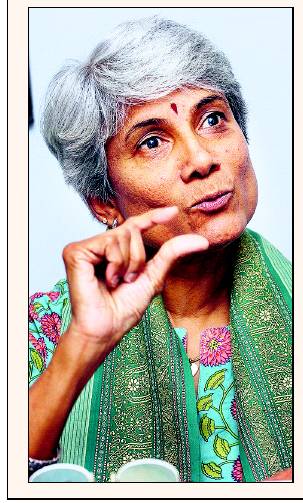
Asia’s first and only woman professional in the field of coffee cupping (tasting), Sunalini has experienced the aroma of several thousands of coffee types and spent a considerable time in the fields. “I love ice-creams and soft drinks but they affect my taste buds. My profession requires them to be extremely sensitive. So, I steer clear of cold food items or beverages,” she said. The chief executive of Coffeelab, one of India’s largest coffee exporters, Sunalini spoke to TOI on the ocassion of Coffee Santhe, a three-day carnival hosted by Karnataka Chitrakala Parishath.

Restraint and discipline are core attributes of a good coffee cupper. “It is essential to preserve the palate, the instrument vital for coffee tasting. We’re advised to avoid spicy food. Alcohol and smoking are a strict no no. Late nights and poor health can be a hindrance to the job,” she explained.

Coffee cuppers have to perform regular tongue exercises not only to keep their taste buds active but also to pick up foreign flavours. “Cupping with experts from other parts of the world helps calibrate one’s potential and understand the coffee produce of other countries. One also needs to perceive through the eyes, nose and palate of other cuppers,” she said.
SunaliniMenonKF26sept2015

Habituated to taking a sip and playfully swirling the liquid in her mouth before spitting, Sunalini said her job doesn’t allow her to swallow the coffee, however aromatic and delicious it be. “Coffee can have the distinct enzymatic flavours of apples, apricots, peaches and berries; sugar-browning flavours of chocolate, caramel, honey or those of spices like clove and pepper. It is an inborn acuity of taste, knowledge, experience, memory and good communication skills which help the cupper differentiate one flavour from another,” she said.

Sunalini, who entered the male bastion decades ago, said her journey hasn’t been easy. “I wasn’t lucky enough to be handheld when learning the tricks of the trade. I had to learn on my own, especially the chemistry of the coffee bean. It took a long time for me to be accepted into the fold, but once there, you are in,” she said.

Cupping as a Career

There are certifications for coffee tasters issued by the Specialty Coffee Association of America (SCAA) and Specialty Coffee Association of Europe (SCAE). The SCAA issues two types of certificates. One is called the Licensed ‘Q’ grader and the other, the Licensed ‘R’ grader. The ‘Q’ grader licence is a certificate for proficiency in evaluating arabica coffees and the ‘R’ grader for proficiency in evaluating robusta coffees,” said Sunalini.

She admitted that coffee tasting as a career could have some limitations.

“To overcome them, one needs to perhaps complement tasting with other jobs such growing, roasting or marketing coffee,” she said.Coffee tasting is more of a passion; it may not help you financially, especially in the first 10 or 12 years. Credibility comes only through knowledge and experience,” Sunalini signed off.

source: http://www.timesofindia.indiatimes.com / The Times of India / News Home> City> Bengaluru / by Sreemoyee Chatterjee, TNN / September 26th, 2015
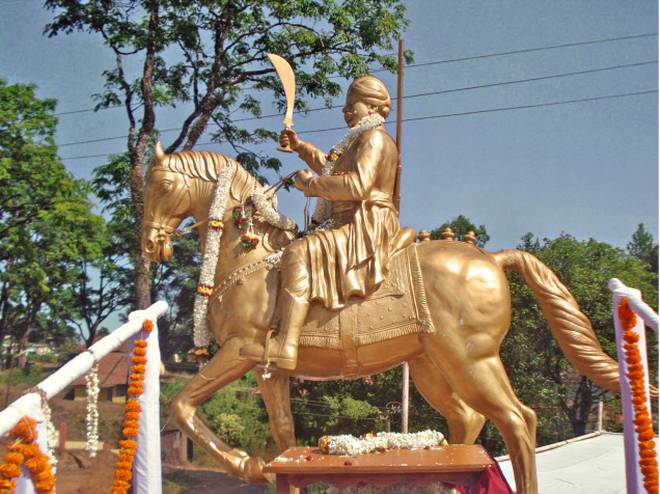

A memorial in honour of Appaiah Gowda

The bronze statue of freedom fighter Guddemane Appaiah Gowda, which was unveiled in Madikeri on Monday.

He was hanged by the British in Madikeri on October 31, 1837

Chief Minister D.V. Sadananda Gowda said on Monday that his government would take steps to initiate the process of development in Kodagu, a land known for its warriors, freedom fighters and natural landscape.

He was addressing a gathering at the Gandhi Maidan here after unveiling a bronze statue of Guddemane Appaiah Gowda at Field Marshal K.M. Cariappa Circle.

Appaiah Gowda was a freedom fighter, who was hanged by the British on charges of sedition on the fort premises here on October 31, 1837.

Mr. Sadananda Gowda’s wife Dotty hailed from Guddemane family. She was also present.

The Chief Minister said that he had taken nearly six months to visit Kodagu as he was being pressured by Madikeri MLA M.P. Appachu Ranjan and Speaker of the Legislative Assembly K.G. Bopaiah to take steps to solve the vexed Jamma Bane issue in Kodagu before the visit.

Responding to the demands made by Mr. Ranjan and M.C. Nanaiah, MLC, Mr. Gowda said that he would take steps to include a proposal to set up a medical college in Kodagu in the next budget.

A sum of Rs. 322 crore had been spent on various development projects such as roads, bridges, and buildings in Kodagu in the past few years. A sum of Rs. 115 crore would be sanctioned to the district in 2011-12, he said.

On considering Mr. Ranjan for inclusion in the next Cabinet expansion, Mr. Gowda said how could he deny it when he himself was the Chief Minister and he was versed with the requirements of Kodagu. All 122 MLAs from the BJP were capable of becoming Ministers, but it was not possible owing to restrictions.

Mr. Gowda, who conducted a progress review meeting involving officers of various departments at the Sudarshan Guesthouse, took exception to the tardy progress in the execution of projects under the Mahatma Gandhi National Rural Employment Guarantee Act (MGNREGA) in Kodagu. He instructed the officials to speed up work on the projects.

Of the 3,850 projects planned under the scheme in Kodagu, only 508 had been completed, according to officials.

Expressing dissatisfaction over the implementation of drinking water projects in the district, Mr. Gowda directed the officials to complete them in a month.

Of the 235 projects, only 22 had been completed in the current year, the officials stated.

Of the Rs. 8.5 crore earmarked for drinking water schemes in Kodagu in the current year, only Rs. 3.75 crore had been spent. Mr. Gowda announced that he would take the issue of lack of progress in the execution of projects in six departments seriously.

Mr. Gowda and Air Marshal K.C. Cariappa (retd.), son of Field Marshal K.M. Cariappa, paid respects to Field Marshal Cariappa’s statue.

source: http://www.thehindu.com / The Hindu / Home> National> Karnataka / by Jeevan Chinnappa / Madikeri – January 03rd, 2012 (updated July 25th, 2016)

Local talent will take the stage at the MACArts Festival

MISSISSAUGA Arts Council is putting Mississauga’s talent on the world’s stage with the MACArts Festival.

“We’re bringing the world together through art, and we want to make sure the great talent in this city is there,” Ken Jones, president of the Mississauga Arts Council said. “We want to make sure that this world-class talent has an audiences here at home, and abroad.”

This inaugural event will feature homegrown talent on the main stage Glenn Chipkar and the Big Swing Shift Band. Chipkar grew up in Mississauga and began singing the songs of the big band era 10 years ago. The show was created as a tribute to his father, and Chipkar’s been entertaining the GTA ever since.

The Mississauga Pops are has been a part of the city’s music scene for the past 30 years, and their brining their expertise to the stage in a Broadway medley that features the vocal talents of City Centre Musical Productions. This is a local collaboration not to be missed.

Sampradaya Dance Creations will also create a piece that is exclusive to the festival, the piece will feature talented dancers trained in this city by the amazing Lata Pada, C.M. Founder, Artistic Director of Sampradaya Dance. Pada has contributed extensively to the South Asian Dance community here in mississauga and internationally, and received the Order of Canada for her efforts.

Children’s group Sonshine and Broccoli, will also take the stage! The pair met at Sheridan College, and have been making children smile ever since! The pair have created two albums and a show, titled “I Want to Be” and they will perform Saturdayafternoon in the Square.
The amphitheater will also feature multiple emerging local acts including blues artist Donna King, local vocal trio 3 Mezzos, and singer songwriter Jason James.

The MACArts Festival is in its inaugural year, and we’re bringing the world together through art!

MACArtsFestival
Saturday September 19
Celebration Square in Mississauga
11 a.m. – 10 p.m.

Featuring a medley of arts vendor booths, visual artist exhibitions, storytelling and lectures, craftwork, and live performing arts – showcasing emerging, established and multicultural talent. The festival will feature top talent such as Glenn Chipkar and the Big Shift Swing Band, Sampradaya Dance Creations, the Mississauga Chinese Arts Organization, Marie Ann Longlade School of Dance, and more.

Short URL: http://www.voiceonline.com/?p=46407

source: http://www.voiceonline.com / The Indo Canadian Voice / Home / by Rattan Mall / Monday – September 14th, 2015

Primm lecture to feature coffee historian Steven Topik

“Why Americans drink coffee: the story of an unlikely romance” is the title of this year’s James Neal Primm Lecture in History, set for 7 p.m. Sept. 14 at the Missouri History Museum. (Coffee image from the Missouri History Museum. Design by Wendy Allison.)

Like many people, Steven Topik’s coffee habit was formed in college. But it’s become a lot more than a caffeine fix to the historian in the years since.

“I experienced coffee as a site of sociability, a drug, an academic subject and a commodity,” says Topik, a professor of history at the University of California, Irvine, who is writing a world history of the popular beverage.

Steven Topik, a professor of history at the University of California, Irvine, is currently working on a world history of coffee.

He will discuss it in St. Louis Sept. 14 as a guest of the University of Missouri–St. Louis. Titled “Why Americans drink coffee: the story of an unlikely romance,” his address is this year’s James Neal Primm Lecture in History. Free and open to the public, the event begins at 7 p.m. at the Missouri History Museum (5700 Lindell Blvd).

Leading up to his visit, which is sponsored by UMSL’s Department of History and the Missouri History Museum, UMSL Daily caught up with Topik on all things coffee, history and St. Louis.

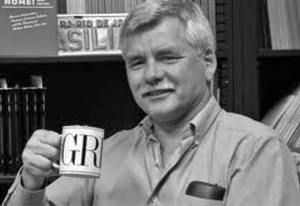
Your interest in coffee is obvious given the topic of your upcoming lecture, and the picture of you on the event flier suggests you enjoy drinking coffee as well as writing about it. Is that the case? And if so, how many cups a day do you drink on average?

I drink about two cups of coffee a day. Sometimes a little more.

How did you arrive at this intellectual exploration of coffee and its history?

My interaction with coffee started at home since my father, from Germany, and my mother, from Austria, drank coffee. Then when I was 12 years old my younger brother and I went with my mother to visit her mother in Vienna and lived for six months in her coffeehouse, so I experienced coffee as a site of sociability. But I only started drinking coffee in college when the stuff coming out of our percolator was more a drug to help us study than a tasty beverage.

In graduate school I decided to study the history of Brazil to understand its development. Since my area was political economy and Brazil has been the world’s leading exporter of coffee for over 150 years, it was a natural subject to study.

I also experienced coffee in its three most historically important geographic areas: the United States, Europe and Brazil. Since I became interested in issues of economic development and underdevelopment which led me to world history, coffee emerged as a wonderful vehicle to examine issues of exchange, development, colonialism, imperialism, the Cold War, national identity, public spaces, ecological issues and many more.

Without giving away too much of what you’ll discuss Monday evening, why is it that the story of America’s enthusiasm for coffee is “an unlikely romance” in your view?

I called it an “unlikely romance” because many coffee aficionados discuss coffee’s “romance” and tell stories of dancing goats, spies and military heroes to explain coffee’s global spread. Coffee’s global reach is often treated as something obvious that needs no explanation: people on every continent drink coffee because it tastes good. In fact, there were many barriers to coffee’s diffusion.

In the U.S. we have various stories about coffee’s ties to our national identity linking it to John Smith, colonial coffee houses, the Boston Tea Party, the westward movement and values like liberty, sovereignty, industriousness, battlefields and innovation. Some of that is historically true. Much of it, however, is more sales pitch than historically accurate portrayals.

The “romance” is unlikely also because coffee was not native to the U.S., it does not grow in the U.S., we had no important coffee colonies and most ex-British colonies favor tea over coffee. But I will explain that the U.S. becoming the world’s leading coffee importer does make sense in light of many other historical currents like trade in the Atlantic, immigration from Europe, anti-tax sentiment and coffee’s pharmacological effects.

What role has St. Louis played in the history of coffee?

While St. Louis is not as closely linked to the history of coffee in the U.S. as it is to the history of beer, or tea (British tea publicists claimed the first time iced tea was introduced was at the 1904 World’s Fair [though this is dubious]), it does have a significant role. Missouri was important in disseminating coffee in the U.S. because Independence, Mo., was the starting point of the Santa Fe Trail, and coffee for the Oregon Trail or the wagon trains to California set out from Missouri.

The coffee was imported from South America in New Orleans and then brought up the Mississippi River. By the 1860s-70s, St. Louis had seven coffee roasting companies, which made it a center of coffee roasting in the Midwest. The first commercial coffee roasting machine in the Midwest was worked by James H. Forbes in 1854. In 1911 the National Coffee Roasters’ Traffic and Pure Food Association was founded in St. Louis – a forerunner of first the National Coffee Roasters Association and then the Associated Coffee Industries of America. Coffee traders from St. Louis played significant roles in it. I’m afraid that’s as much as I know about the role of St. Louis in the coffee trade, though I’m hoping to learn more on my visit.

Looking at the history of commodities and the world economy, what lessons do you find for today?

The study of commodities and commodity chains are excellent means of understanding the Janus-headed relationship of coffee growing areas (and other agricultural ones) and coffee importing areas. It allows one to examine not just the economic dimensions of the spread of a global commodity and the international linkages it creates, but also the evolving and sometimes contradictory importance of natural endowment, religion, culture, technology, gender and racial relations to shaping history. It is a means of understanding why the export of commodities has historically created both development in importing countries and sometimes underdevelopment in exporting countries.

Short URL: http://blogs.umsl.edu/news/?p=58726

source: http://www.blogs.umsl.edu / UMSL Daily / by Evie Hemphill / September 09th, 2015

Joshna battles past Habiba for title

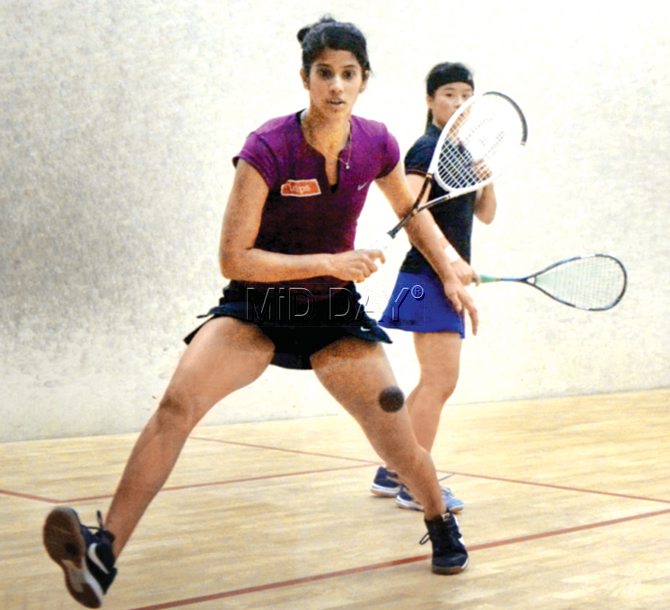
FIGHTING TITLE: Joshna Chinappa faced down a physically aggressive Habiba Mohammed to clinch the women's crown.
FIGHTING TITLE: Joshna Chinappa faced down a physically aggressive Habiba Mohammed to clinch the women’s crown.

England’s Adrian Waller makes it a no-contest against Mahesh Mangaonkar

Joshna Chinappa smashed her way past Habiba Mohammed 11-8, 11-9, 11-6 to lift the women’s title while England’s Adrian Waller backed his reputation as the men’s top seed at the NSCI Open, a $15,000 PSA event here on Sunday. Waller’s controlled play carved out a 3-1 victory over Mumbai lad Mahesh Mangaonkar.

Joshna, seeded third and facing the top-seeded Egyptian, kept her composure even after she got hurt in bizarre circumstances. With the first game in her pocket and up 3-1 in the second, Joshna’s face come in contact with Habiba’s racquet hand on the latter’s follow-through. The Indian crumpled on court holding the side of her face, went out for medical assistance and returned to the court more alert and determined to slog for victory.

The contest between the aggressive Egyptian, ranked 19th, against the experienced Indian, ranked 28th and working the angles, kept the chair umpire busy due to frequent body checks. Habiba was warned twice, first after the follow-through into the face, then for coaching assistance in game three.

Joshna, relieved to have pulled through in the face of ferocity, said: “On the circuit, she is known to be aggressive. The trick is to play your game without thinking too much about it. I went for my shots and left it to the umpire to take charge of the match.”

Wincing from memory of that blow, she added: “Habiba has a powerful follow-through and I almost walked into it. I almost felt like getting punched in the face, luckily I could return to the court after treatment. My victory had to do with experience. I have been on the tour more than her.”

Talking about squash rivalry getting physical on court, the champion said: “I have been involved in physical finals before, but girls play clean and fair. I enjoy those contests, matches are hard but you know rivals play fair. Unlike her they do not try to block so much. I tried not to get in her way.”

In the men’s final Mahesh clawed back in the third game, 14-12, after being kept at bay in the first two by his left-handed opponent. Waller then cut out the errors in the fourth to pick up the title.

“I could not convert openings into points, he did not allow me to fight back. Adrian showed what a huge talent he is,” said the third-seeded Indian later.

The results: Final: Women: Joshana Chinappa bt Habiba Mohammed (Egy) 11-8, 11-9, 11-6.

Men: Adrian Waller (Eng) bt Mahesh Mangaonkar (Ind) 11-9, 11-2, 12-14, 11-6.

source: http://www.thehindu.com / The Hindu / Home> Sport> Other Sports / by Special Correspondent / Mumbai – September 07th, 2015

Want to be part of a Guinness World Records attempt for the largest street dance?

Pavan Thimmaiah & PMT Dance Company have been asked to choreograph the world’s largest street dance to be performed live on national TV. They need dancers to help them to make Guinness World Records history. Here is all the information you need to participate:

Performance Date: Wednesday, September 9th, 2015

Time: 5:00-9:00 a.m.

Location: 30 Rockefeller Plaza

Requirements: Be able to learn and perform a 5 minute Hip Hop/Street Dance choreography.

Commit to one 4-hour rehearsal day; it is required. The various options available are between September 3-September 6.

Participants can NOT be minors.

Participants can NOT be in a guild or union.

To sign up or for more info, email: pmthouseofdance@aol.com by September 2nd.

source: http://www.today.com / Today / Home> Today Pop Culture / September 03rd, 2015

Funding remains a problem: Joshna Chinappa

Reigning CWG champ says life hasn’t changed much despite historic gold in Glasgow

Despite creating history by winning India’s first Commonwealth Games gold medal in women’s doubles squash last year, struggles still continue to be a part of Joshna Chinappa’s life.

India’s Joshna Chinappa returns to Hong Kong’s Lee Ka in the women’s singles quarter-finals of the JSW Indian Squash Circuit at NSCI, Worli yesterday. Pic/ Pradeep Dhivar

In the CWG final, the fifth-seed pair of Chinappa and Dipika Pallikal had beaten the top-seeded English pair of Jenny Duncalf and Laura Massaro 11-6, 11-8 in Glasgow.

Yesterday, Chinappa spoke to mid-day on the sidelines of the JSW Indian Squash Circuit event at the National Sports Club of India, Worli.

“I don’t think my life has changed after winning the CWG gold as my struggles still continue. Despite being the No 2 player in the country, funding remains a problem. If you look at a sport like badminton, for example, the system helps players travel abroad for tournaments alongwith their coaches. In squash though we have to pay for everything. The only change that has come post the Asiad and CWG medals is that the government has started providing top squash players some funding.

In our country funding comes easily only if an athlete plays an Olympic sport. But there are players from sporting disciplines like squash and cue sports, who have represented India and achieved a lot, but it’s not good enough to merit funding equal to those who represent play Olympic sports,” said the 28-year-old, who entered the semis of the JSW meet yesterday with a 11-5, 11-7, 9-11, 11-2 win over Hong Kong’s Lee Ka.

source: http://www.mid-day.com / Mid-Day / Home> Mumbai News> National> Columnist / Sports News> Other Sports News / by Sundari Iyer / September 05th, 2015

Instant coffee demand seen boosting exports

Shipments rise for first time this year; drop in Arabicas offset by robusta and soluble varieties

Bengaluru :

The Indian coffee exports, for the current calendar year, have registered a marginal growth for the first time, on increase in shipments of robustas and the soluble or instant variety.

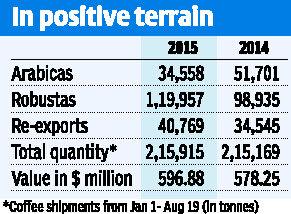
According to provisional numbers, total export permits issued by the State-run Coffee Board have exceeded the last year’s levels for the first time and were pegged at 2.159 lakh tonnes (lt) for the January 1 to August 19 period against 2.151 lt in the corresponding period last year.

However, the green bean coffee exports continue to trail the last year’s levels largely on account of a 33 per cent drop in Arabica shipments, despite the robustas registering a 21 per cent growth.

CoffeeChartKF21aug2015

Green coffee trails
Also, the soluble coffee shipments measured in green bean equivalent stood at 60,842 tonnes, including the re-exports that grew 18 per cent for the period.

“We expect the shipments to maintain a small growth for the rest of the year,” said Ramesh Rajah, President of Coffee Exporters Association.

“The coffee held back by the growers anticipating better prices, would come out into the market over the next couple of months before the arrival of new crop,” he added.

Currency volatility

Rajah attributed the trailing trend in green coffee shipments to the declining production of the Arabicas.

Also, the Indian exporters are facing challenge from the devaluation of currencies by the top two coffee producing nations – Brazil and Vietnam, which has made their exports competitive.

The Brazilian Real and Vietnamese Dong have weakened by around 15 per cent against the dollar over the past year, while the Rupee has fallen by over 8 per cent.

Crop estimates

The Arabica harvest this year is likely to be advanced by a couple of weeks to September as the early rains have boosted the prospects for coffee.

The Board, in its initial estimates, pegged the crop size for 2015-16 crop year starting October at 3.55 lt – a growth of 8.75 per cent over previous year’s 3.27 lt.

Arabica crop size for 2015-16 is pegged at 1.10 lt – up 12.55 per cent over 2014-15’s final estimate of 97,700 tonnes.

Robusta crop size is estimated to expand to 2.45 lt, a growth of 7 per cent over previous year.

Export markets
C Rajendra Prasad, Chairman and Managing Director of CCL Products Ltd, the country’s largest instant coffee exporter said demand continues to be strong both from traditional markets such as Russia and Europe and even from the new geographies such as the United States.

CCL Products, which exports to about 56 countries, has so far shipped about 24,741 tonnes of instant coffees in the current calendar year. Tata Coffee has exported about 10,207 tonnes, while Nestle with 8895 tonnes were the other large instant coffee exporters.

Italy has been the largest buyer of Indian coffee at 55,378 tonnes, so far, followed by Germany at 20,537 tonnes and Russian Federation at 14,526 tonnes.

source: http://www.thehindubusinessline.com / Business Line / Home> Agri-Biz / by Vishwanath Kulkarni / August 20th, 2015

World Elephants Day at Dubare

ElephantKF19AUG2015
Kushalnagar (Kodagu):
The Forest Department celebrated World Elephants Day at Dubare Elephant Camp near here yesterday in a meaningful manner by creating awareness amongst the public on wildlife.

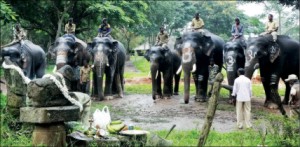
The day was celebrated by performing puja to the camp elephants at Sri Basaveshwara Temple premises in the presence of hundreds of tourists, who were excited to see 25 elephants including 3 calves together.

Kodagu Conservator of Forests Yelukondala spoke about the significance of World Elephants Day.

CFO B.B. Mallesh, ACF Bhaskar Rao, RFO M.S. Chinnappa, ARFO Ranjan, Senior mahout Dobi and others were present on the occasion.

source: http://www.starofmysore.com / Star of Mysore / Home> General News / Thursday – August 13th, 2015

Owner brews success with Kind Coffee

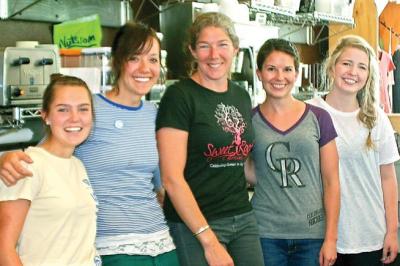
Kind Coffee's staff includes, from left, Lily Tomasula-Martin, Lea Rodderick, owner Amy Hamerick, Megan Davis and Margery Dunkle. (Debbie Holmes / Estes Park Trail-Gazette)
Kind Coffee’s staff includes, from left, Lily Tomasula-Martin, Lea Rodderick, owner Amy Hamerick, Megan Davis and Margery Dunkle. (Debbie Holmes / Estes Park Trail-Gazette)

by Debbie Holmes / Trail-Gazette

One of Estes Park’s best kept secrets is Kind Coffee, which is independently owned by Amy Hamrick. She started her coffee house journey 17 years ago.

“I like to think that many of the worlds problems are being solved right here in Kind Coffee,” said Amy. “It’s so wonderful to see friends, and even high school kids, here supporting my business. I’m proud to have established a place where locals want to come.”

Amy’s journey started in 1998 as the Estes Park Coffee Company, which was located in Ed’s Cantina. Amy was instrumental in starting, running and building the roasting business in that location before Ed’s went through ownership and remodeling changes, which opened up the opportunity for Amy to move into the current location where Kind Coffee has stood since 2004.

Even though Kind Coffee doesn’t roast its own coffee beans anymore, the recipes are the shop’s own, and it continues to use only organic, fair trade coffee beans.

“We continue to live up to our name. It’s important to me that my business is environmentally and socially responsible,” Amy said.

Kind Coffee’s philosophies also have morphed into being community-oriented and supportive. Amy enjoys developing various flavors of coffee for organizations and community needs. Following the 2013 flood, Kind coffee produced “Flood Mud” coffee which continues to raise money for flood recovery.

“Being able to do things for the community is so important to me,” Amy added.

She says that building her business hasn’t been as hard as she had thought, “when it’s from the heart, decisions are easy. It’s been fantastic to have opportunities. All opportunities, good and bad.”

Amy mentioned that she has always had the most amazing staff to help her along this journey.

“I was so thankful for the support of her staff, friends and community members during those tough months after the 2013 flood. There were probably 100 people here helping us during the flood and for months after,” Amy said. “It really touched me when I saw people out in the community and they’d ask me when we were going to open, because they missed us so much.”

Being an independent coffee shop has its draw backs at times.

“It’s important that all independent coffee shops continue to provide and be the best so that our industry stays strong and visitors don’t walk past us to visit one of the big-chain coffee shops,” explained Amy. “It makes us have to step up, work hard and always do the best that we can.”

Amy is proud of what Kind Coffee has become and enjoys going to work every day. Kind Coffee, 470 Elkhorn E. Ave., is open every day at 6:30 a.m. During the summer it closes around 8 p.m. The shop will close at 6 p.m. in the winter and spring.

Along with their delicious coffee and full menu of drinks and food items, Kind also has other fair trade items for sale. Check out the shop’s website at www.kindcoffee.com for more information.

source: http://www.eptrail.com / Estee Park Trail Gazette / Home> Story / by Debbie Homes, Trial-Gazette / July 29th, 2015