Category Archives: World Opinion

Squash player Joshna Chinappa settles for bronze; India campaign ends

Kuwait City:

Indian squash player Joshna Chinappa settled for a bronze medal after losing to current world champion and top seed Nicol David of Malaysia at the semifinals of the Asian Championships here on Monday.

Joshna Chinappa
Joshna Chinappa

28-year-old Chinappa, seeded fourth, went down 6-11 9-11 7-11 in the women’s singles semifinals to become the only Indian to win a semi-final berth.

“Joshna possibly played one of best squash today. Some of her drives and volleyed drops were wonderful and took her famed opponent by surprise. On several occasions she was in front of Nicol,” said national coach Cyrus Poncha.

Yesterday, Saurav Ghosal and Dipika Pallikal suffered surprise losses in the quarterfinals to crash out of the tournament.

source: http://www.post.jagran.com / Jagran Post / Home> Sports News> Other Sports News / Jagran Post News Desk, Jagran Post Editorial / May 04th, 2015

Israel’s Strauss Group plans long-awaited IPO of coffee joint venture

Company says it filed confidential prospectus for share sale on Wall Street.

Strauss Coffee accounts for about half the group's total sales. Photo by Bloomberg
Strauss Coffee accounts for about half the group’s total sales. Photo by Bloomberg

A long-awaited initial public offering on Wall Street of Strauss Coffee, a multinational joint venture controlled by Israel’s Strauss Group and the Texas-based private equity fund TPG Capital, is finally moving forward, Strauss Group said on Monday.

Strauss, a maker of snacks, fresh foods and coffee, said it had submitted a draft confidential prospectus to the U.S. Securities and Exchange Commission. “There is no certainty that the IPO will indeed be finalized, and if it is, on which date,” Strauss said in a statement. There were no other details.

Shares of Strauss Group closed up 5.6% at 61.90 shekels ($15.61) on the Tel Aviv Stock Exchange on Monday.

The IPO comes seven years after TPG bought a 25% stake in Strauss Coffee for $293 million. Although Strauss Coffee grew through acquisitions to become the world’s fifth largest maker of ground and roasted coffee and No. 4 in instant coffee, the partnership has been stormy.

Strauss and TPG went to court after the U.S. fund sought to block Strauss’ ouster of Todd Morgan, the joint venture’s CEO and a former TPG employee. It lost the fight and Morgan was ousted early last year. The two also squabbled over fees that Strauss was charging the joint venture and disagreements over failed deals.

On Monday, Strauss Coffee reported 2014 net profit had fallen 13.6% to 265 million shekels ($66.756 million) as sales declined 3% to 3.8 billion shekels. The company paid out a huge dividend of 175 million shekels for the year, apparently in anticipation of the IPO.

A string of acquisitions and partnerships transformed Strauss Coffee into the No. 1 coffee seller in Brazil and the fourth-largest in the global retail coffee market and a market leader in Russia and in Central and Eastern European countries. In 2014, it accounted for almost half of Strauss Group’s total sales.

Nevertheless, Strauss Coffee didn’t develop as the two sides hoped it would when TPG bought its stake in 2008. That was just as world financial markets seized up and the world slipped into a deep recession, bringing merger and acquisition deals to a near halt.

Three years ago, TPG and Strauss tried to sell the coffee company’s Russian and Eastern European businesses in order to buy out TPG’s stake with the proceeds. After abortive talks with India’s Tata Coffee and Master Blenders, TPG urged an IPO.

That set off a dispute that ended up in court, along with the dispute over Morgan. Strauss contended that TPG sought to inflate Strauss Coffee’s value while TPG accused Strauss of deflating its value in order to block any chance of an IPO and buy out the private equity fund cheaply. The court dismissed TPG’s allegations.

Nevertheless, an IPO would enable TPG to reduce, if not divest, its Strauss Coffee stake. But The Wall Street Journal report a year ago said TPG valued its Strauss Coffee holding at just 10% more than it paid after holding it for nearly six years.

Meanwhile, Strauss Group, Israel’s second-largest food and beverage maker, reported Monday that it earned an adjusted 84 million shekels in the fourth quarter, up from 70 million shekels a year earlier, thanks to currency hedging transactions as well as lower tax expenses.

Sales edged up 0.3% to 2.08 billion shekels. Excluding the impact of changes in exchange rates, sales grew 2.8%. Coffee sales rose 2.4% to 1.03 billion shekels, led by a 4.8% increase in overseas coffee sales. Excluding currency effects, total coffee sales grew 9.4%.

source: http://www.haaretz.com / Haaretz / Home> Business> Israel News / by The Marker – March 24th, 2015

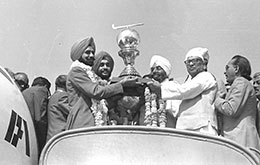
1975 Men’s Hockey World Cup winning team completes 40 years

MensHockeyKF22mar2015

New Delhi:

40 years back, on 15 March 1975, the Indian men hockey team accomplished a historic feat against Pakistan in the finals of the 1975 Hockey World Cup wherein they beat the opponents 2-1 to earn the title of ‘Champions’. It was a moment of pride that day and it is a moment of pride for every Indian today. Remembering the occasion and the achievement, Hockey India congratulates the team who made this possible.

Led by Captain Ajit Pal Singh, the team left no stone unturned to ensure that they got the Cup home. The team was placed in Group B of the tournament where they played against West Germany, Australia, England, Argentina and Ghana. Winning 3 matches, losing 1 and drawing 1 in the pool phase, India advanced to the semi-finals to play against Malaysia wherein they beat them 3-2. They had a close contest against Pakistan in the finals and it was Ashok Kumar the all important winning goal helping India win the title that year.

Speaking on the proud occasion Dr. Narinder Batra, President, Hockey India said “After 40 years I still feel proud of the moment when we earned the title of Champions. I would like to congratulate each member of the winning squad and would like thank them that they made this day possible for every Indian. It is this feat 40 years back, which gives us the motivation that we can repeat history and win the title again.”

Ajit Pal Singh captained and led the team to victory during the 1975 World Cup. He even has to his credit of representing the prestigious tournament on three occasions where he represented the team for 1971 World Cup, Barcelona wherein the team bagged the Bronze and in 1973 World Cup, Amsterdam where they bought back the Silver. He even was part of two Olympics Games in Mexico 1968 (Bronze) and 1972 (Bronze). He won the Arjuna Award in 1970 and Padamshree in 1992 for his contribution to the sport from the Government of India.

Ashok Kumar, son of legendary Late Major Dhyan Chand is the first of two Indians who represented India for 4 World Cup tournaments which included Barcelona 1971 (Bronze), 1973 Amsterdam (Silver), Kuala Lumpur 1975 (Gold) and Buenos Aires 1978. He was also instrumental in scoring the winning goal for India against Pakistan in the finale of the 1975 World Cup. Mr. Ashok Kumar also participated in the two Olympic Games in Munich 1972 (Bronze) and Montreal 1976.

Mohd. Aslam Sher Khan, defender and his contribution during the 1975 World Cup cannot be forgotten. He even represented India during the Olympic Games in Munich 1972 (Bronze), Brig.

Harcharan Singh VSM also represented India at three World Cups in Barcelona 1971 (Bronze), Amsterdam 1973 (Silver) and Kuala Lumpur 1975 (Gold) alongwith one Olympic bronze medal in Munich 1972.

Leslie Fernandez whose goalkeeping is still talked about after so many years was also part of the World Cup winning squad.

Dhyan Chand Life Time Achievement Awardee Varinder Singh was also part of the Indian Team that won Silver Medal at the World Cup in Amsterdam 1973 and represented India at two Olympic Teams in 1972 (Bronze) and 1976.

Ashok Diwan a Dhyan Chand Life Time Achievement Awardee in 2002.

Michael Kindo who played at the full back position and was honored with the Arjuna Award for his achievements. He represented India at 3 World Cups which also included Barcelona 1971 (Bronze) and Amsterdam 1973 (Silver) alongwith one Olympic Games in Munich 1972 (Bronze).

BP Govinda, current Chairman of the Selection Committee of Hockey India apart from being a part of the winning team in 1975 was also in the team of World Cup in Amsterdam 1973 (Silver) alogwith two Olympic Games in Munich 1972 (Bronze) and Montreal 1976, Brig.

HJS Chimni who played at the centre forward position during the World Cup and whose contribution was vital for the win.

V J Phillips who captained India at the Buenos Aires World Cup in 1978 was crucial member of 1975 World Cup winning team and also represented India at the two Olympic Games in Munich 1972 (Bronze) and Montreal 1978.

Onkar Singh, youngest member of the World Cup 1975 winning team, later participated in the 1981 World Cup held at Mumbai.

Kaliah P.E. the talented inside forward was also a part of the winning squad.

Late Surjit Singh who played three World Cups in Amsterdam 1973 (Silver), Kuala- Lumpur 1975 and Mumbai 1982 finally has to his credit of ensuring that the team won the tournament in 1975. He also played two Olympic Games in Munich 1972 (Bronze) and Montreal 1976, he was one of those players who scored 4 Olympic goals and which a player will be proud of on any given day. He even was part of the 1978 Asian Games and where the team bagged the Silver medal.

Late Shivaji Pawar the great center forward was also instrumental in the win of the 1975 World Cup. Late Mohinder Singh was also one of the key player of the 1975 winning squad.

source: http://www.indiansportsnews.com / Indian Sports News / Home> Hockey / March 15th, 2015

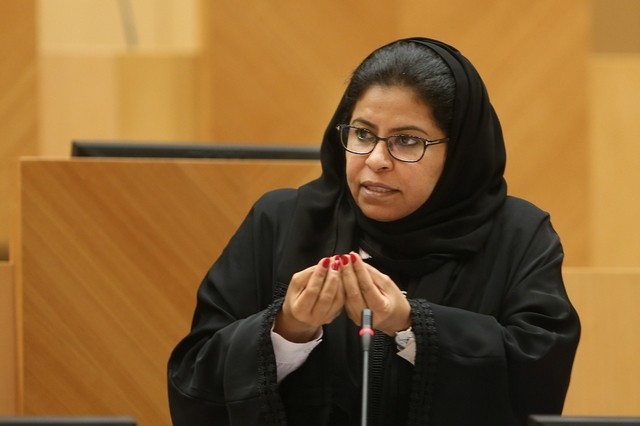
Women of the UAE: Dr Mona Al Bahar, the champion of the vulnerable

Dr Mona Al Bahar speaks passionately at an FNC session in Abu Dhabi. Delores Johnson / The National

Abu Dhabi :

Determination has been a major drive in Dr Mona Al Bahar’s career.

As a freshman at UAE University in the 1980s, she was keen to join the social services sector to help revive a profession where there was little or no enrolment of Emirati women.

And at age 18 established a society to assist Emiratis with special needs in Sharjah. Later she became the first Emirati social worker with a doctorate from a US university.

“There is a very negative view in the western world of Arab and Gulf women,” she said.

“They view women as opinionless and weak. I first felt this [while studying for her doctorate] at Ohio State University at the social service college.

“I felt they were all questioning if I could compete with other students as an Arab and a Gulf woman. Some asked me ‘Do you feel you can compete and continue?’ That was a big challenge and I took a decision to be an example and to prove not only myself, but the Arabic, Emirati women.”

In 1997, Dr Al Bahar obtained her doctoral degree and was awarded the Morris Cornell Distinguished Researcher Award. Her name was engraved at the university’s entrance alongside those of other winners.

Once back in the UAE, Dr Al Bahar returned to UAE University, where she worked as an assistant professor for several years.

Later, she returned to her home emirate of Dubai, where she joined the Dubai Foundation for Women and Children, which provides refuge and support to the most vulnerable.

In 2011, Dr Al Bahar then received an unexpected phone call. Sheikh Mohammed bin Rashid, Vice President and Ruler of Dubai, chose her as a Federal National Council member.

She is now one of the most vocal women on the council.

“Entering the FNC was a turning point in my career,” she said.

“It widened horizons and provided experience I would not have gained in any other entity or job.

“Working in the FNC carries its own challenges. And I, in all honesty, am thrilled with this experience because it helped me to discover sides of myself and my abilities I would not have been introduced to without this experience.”

She was one of the first to ask to join the council’s education, media and youth committee, where she was later elected chairwoman.

She also supported the country’s first children’s rights legislation and pushed the council to pass a controversial clause in the law allowing specialists unprecedented power to remove children from their homes if found to be in imminent danger. With the public, she has repeatedly tried to keep herself available to those who need her, even taking part in a public majlis to allow as many Emiratis to approach her as possible. As much as her profession has helped her in the FNC, her former students’ words serve as a testament to how important her decision to join her field was all those years ago.

“When a student comes to me and says ‘Thank you doctor, you changed a lot in my life’, I consider that a crown,” she said. “It is a drive and reassures me that my profession was the right choice.

“When I see a positive change in these students, either in their thinking or their personal life, that makes me love my profession more.” With her four-year term of office near its end, she is unsure of what life post-FNC will bring, but is confident it will involve academia and coffee.

“My passion for coffee drove me to establish a coffee museum with a few friends in Dubai,” she said.

“This project was an idea and a dream. With work, the dream became a reality.”

The museum is the first of its kind in the UAE and the second in the Middle East, in Al Fahidi, Bur Dubai, where visitors can learn about the origins of coffee.

source: http://www.thenational.ae / The National / Home> UAE> Arts & Lifestyle / by Ola Salem / March 07th, 2015

Ragamala Dance Company and Saxophonist Rudresh Mahanthappa to Perform ‘Song of Jasmine’ at the Museum of Contemporary Art Chicago

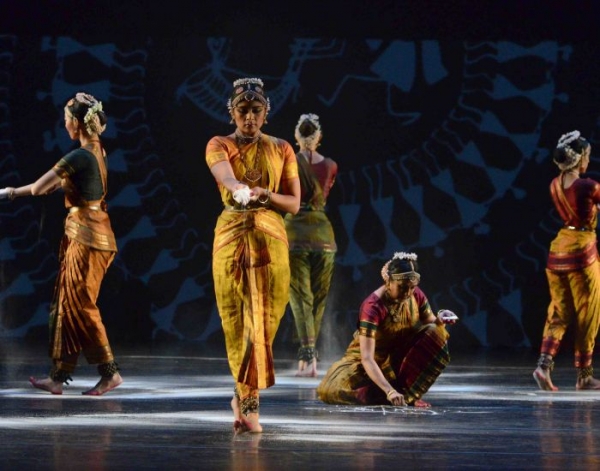
Ragamala Dance Company will be performing at the Museum of Contemporary Art Chicago. (Photo : Courtesy Grant Halverson)

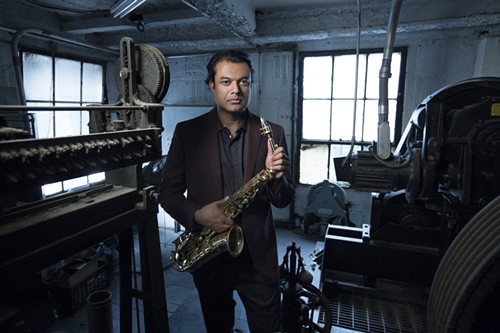
The Museum of Contemporary Art Chicago will present Song of Jasmine, an experiment across the forms of Western jazz and South Indian music by the dance and music ensemble Ragamala Dance Company and saxophonist and composer Rudresh Mahanthappa.

Together, Mahanthappa and Ragamala are united and inspired by their shared bicultural identities as Indian-Americans. Song of Jasmine will explore the interconnectedness of three central themes in Indian culture: the spiritual, the sensual and the natural.

Co-directors of the show, mother-daughter team Ranee and Aparna Ramaswamy, look at important texts and interpret them through dance and music. The duo was guided by the writings of the 9th century Tamil mystic poet Andal’s Sacred Saying of the Goddess. Mahanthappa’s sound merges South Indian and Western forms with an emphasis on improvisation. The staging of the show is completed by a striking canopy of brand bells and costumes created in India.

This performance marks first-time collaborations for all involved. Ranee and Aparna Ramaswamy will perform with three dancers from their company alongside Mahanthappa, who plays with an assembled quintet of versatile jazz and South Indian musicians: Rez Abbasi (electric guitar), Raman Kalyan (South Indian flute), Rajna Swaminathan (mridangam/South Indian percussion), and Anjna Swaminathan (South Indian violin). Currently, the piece is touring nationally.

Based in Minneapolis, Ragamala Dance Company is recognized as one of the Indian diaspora’s leading dance ensembles in the traditional genre of Bharatanatyam and have toured extensively internationally. Mahanthappa is a leading jazz saxophonist and composer who creates hybrid sounds bridging progressive jazz with South Indian classical music.

http://www.classicalite.com/articles/18397/20150305/ragamala-dance-rudresh-mahanthappa-song-jasmine-museum-contemporary-art-chicago.htm

The performance at MCA will take place from April 10 to 12 in the Edlis Neeson Theater at the Museum of Contemporary Art Chicago. Click here to learn more about Song of Jasmine or to purchase tickets to the show.

source: http://www.classicalite.com / Classicalite / Home / by Jaime Prisco (j.prisco@classicalite.com) / March 05th, 2015

The Call of Coffee

Serving Indian and international clients its latest beverage equipment solutions, Vikram Khurana, CEO, Kaapi Machines, speaks about the company’s strength and brands it offers

KaapiMachinesKF07mar2015

Kaapi Machines, India’s first integrated beverage equipment solutions company, was started in 2007 as a joint venture between Mahlkonig GMBH, the master in grinding technology from Germany and McKinnon India, based in Coimbatore; an Indian manufacturer of green coffee processing equipment company to offer one stop solutions for coffee business. “We have earned a reputation for quality, reliability and professionalism,”says Vikram Khurana, CEO, Kaapi machines. He further adds, “Making a good coffee is a combination between good technology, quality coffee blend and the skilled hands of a Barista and we support our customers in achieving this combination right to serve a good cup of cappuccino at their cafes/ restaurants/ hotels.”

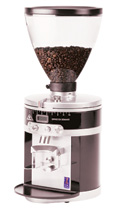
Serving our customers that include international and Indian hotel chains, café’s and QSR’s operating in Indian subcontinent, Kaapi Machines distributes and supports one of the largest range of coffee equipment brands available in India and the neighbouring countries. “Our portfolio includes traditional and automatic coffee machines, espresso grinders, retail and industrial coffee grinders, shop and industrial coffee roasters, coffee brewers, ice blenders and barista tools. Our company’s strength is its ability to offer a complete coffee solution and at the same time provide the highest level of customer service and equipment. the company has company sales offices/ demonstration centres in Bengaluru, Mumbai and New Delhi.

The company supports its customers with an effective after sales service that includes operational training and a one year warranty support followed by an AMC programme to ensure that the machines are always taken care by the right people. The company also supports customers in the following:

Blend development for Italian coffees (House blend)
Italian menu for hot coffees
Barista training on the following:
Understanding the grinder and your grind size
Brewing the perfect shot of espresso
Art of texturing the milk
Art of pouring the milk
Latte art techniques for making heart/ rosetta/ leaf on a cup of coffee.

Kaapi machines since inception has been actively engaged in coffee promotional activities including India international coffee festival, organising coffee programmes in different parts of India with coffee board of India to spread education on coffee cup quality using various brewing options.

Kaapi Shastra- a five day coffee education programme driven by coffee board of India in Bengaluru, organising and sponsoring the Indian Barista Championship under patronage of Coffee Board of India and recent achievement has been to set up India’s first dedicated Barista training academy for coffee lovers to learn professionally as how to make Italian espresso and cappuccino in 16 hours.

Kaapi Machines is the India exclusive distributor and/or service provider for the following brands: Probat, Astoria, WMF, Mahlkonig, Ditting, Anfim, Vita Mix, Bunn and Urnex.

Astoria

Since 1969, Astoria is a historic brand in the Italian tradition of professional Espresso machines. It offers different technologies from single boiler to multiple boiler machines for precision on espresso temperature stability, eco-friendly options and the recently introduced hybrid machines that suits customers’ requirements differing in capacity and price. Astoria has earned a reputation for delivering the machines with best performance to price ratio and the oldest Astoria machine installed in India is 24 years old and still operating well at an Italian restaurant in New Delhi.

Mahlkonig

For over 80 years MAHLKÖNIG is the world’s leading brand of quality professional grinders. The MAHLKÖNIG logo stands for quality leadership and innovation. Just under 90 per cent of MAHLKÖNIG products are used in the field of coffee grinding. The aim is to grind the coffee gently without loss of flavour and homogeneous with the outstanding quality to achieve a long life.

WMF Coffee Machines

WMF is the leading international manufacturer of professional coffee machines. This is due not least to the fact that even today they are only manufactured at the Geislingen site and thus can justifiably bear the ‘Made in Germany’ seal of quality. Certification of the WMF quality management system in accordance with DIN ISO 9001-2000 provides further proof of quality, efficiency and precision.

Vita Mix ice blenders

Built by hand in Cleveland Ohio, US, the ice blenders produced are well accepted by all the leading F&B retail chains due to its reliability, product engineering, total cost of ownership and extended warranty. Kaapi machines offers different Vitamix models that includes blenders with sound proofing, auto programming suitable for both beverage and food applications powered by 2 HP and 3 HP motors.

source: http://www.financialexpress.com / Financial Express / Food & Hospitality World / Home> Cover Story / March 05th, 2015

Coffee? Mr. President

OBAMA MENU: Jammu and Kashmir’s ‘Nadru Ke Goolar’; West Bengal’s ‘Mahi Sarson’; ‘Shatwar (Asparagus) Ka Shorba’; Sweet dishes ‘Gulab Jamun’, ‘Gajar ka Halwa’ and assorted fruits; ‘Shrimp Karavalli’ from coastal Karnataka; ‘Murg Neeza Kebab’ of the Mughlai cuisine; ‘Anannas Aur Paneer ka Soola’ — char-grilled cottage cheese with pineapple; ‘Nadru Ke Goolar’ (lotus stem kababs); ‘Kela Methi Nu Shaak,’ a Gujarati dish; Mixed Vegetable Kalonji; Gujarati ‘Kadhi’; ‘Matar Pulao’ and assorted breads; Bengali dish ‘Mahi Sarson’ and ‘Bhuna Gosht Boti’ — tender pieces of lamb cooked in tomato and onion masala; South Indian Coffee and herbal tea.
BallalKF0mar2015
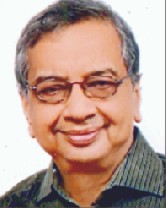
by N.K.A. Ballal, Retd. Sr. Vice-President, ITDC

A look at the menu served to Barack Obama, the US President, on the eve of the official lunch hosted by Modi, our Prime Minister, at the Hyderabad House, made an interesting reading. If you glance at the last item on the menu, our own South Indian coffee was served to the President. Those of you, who are not aware, Hyderabad House is a palatial heritage building near India Gate where all the official sit-down banquets of visiting heads of States is held. The catering is always exclusively handled by ITDC through its Ashok hotel outlet from ages. The service is normally handled by junior executives and not regular waiters since it is imperative that the service should be soundless.

Talking about these State banquets, the invitations are co-vetted by all. The menu is designed keeping the preferences of the host and the guest. For example, if one has a look at the recent banquets after Modi has taken over, most of the times it will have a Gujarati flavour. These menus are planned at Ashok hotel and then sent for approval to the pmo. Some PMs like Indira Gandhi and Rajiv Gandhi were very particular about the menu. Rajiv Gandhi used to come to the venue half-an-hour in advance and check small details of seating etc. Even Vajpayee, who was fond of good food, used to scrutinise the menu to ensure that his choice of food was put up without fail. Otherwise it was left to some official in the pmo.

Most often the food is served once on the plate and refills are rarely asked for. On an average, two waiters serve five persons. Sometimes the meal is also served pre-plated and the entire service is strictly designed keeping in mind the preferences of the visiting head of the State. If he or she indicates that they have finished the meal, the plates of all others guests would also be removed, even if they were midway on their meal. These banquets are definitely not for foodies who relish and enjoy their food leisurely. The seating order is decided by the mea much in advance. Hence, a couple may find themselves sitting diametrically across.

Coming back to the story of coffee, it is said that coffee bean was brought to India by a Sufi mystic, Baba Budan, who smuggled seven beans from Yemen and scattered them on the hills of Chikkamagalur in around 1670 and the rest is history. The hills were later named after the saint as Bababudangiri. The history of coffee goes at least as far as the 13th century and it is said to have originated in East Africa, specifically Ethiopia. Some scriptures have indicated that the Arabs cultivated coffee in the 14th century but the earliest authenticated evidence of cultivation and drinking of coffee has originated from the Monasteries of Yemen. By 16th century, it had reached the rest of the Middle East, Persia, Turkey Balkans, Italy and the rest of Europe and finally to the Americas.

The word coffee is said to be borrowed from the Turkish “kahve,” which in turn is a derivative of the Arabic “qahwa,” which means “wine of the bean.” There are several legendary accounts of the origin of the brew itself which may or may not be true. But the story of one Omar, who was once exiled from the City of Mocha to a desert cave near Qusab, strikes a chord. Starving, Omar chewed some berries from a nearby shrub and found them to be very bitter. He then tried roasting the beans to improve their flavour and then boiled them and the resultant brew was consumed. This revitalised him so much that this brew became a miracle drug. Subsequently, it is said that he was made a saint for this discovery.

Anyway coming back to India, though there are about 30 strains of coffee all over the world, the two main varieties cultivated are arabica and robusta. As the word itself denotes, robusta is a very hardy plant and disease-resistant unlike arabica which requires a lot of attention. The robusta bean has much more caffeine but very less flavour and hence not preferred. 75 percent of the world’s production is arabica and only about 25 percent of the production is robusta. But more and more people are now cultivating robusta since it is economical, good for blending and used mainly by instant coffee producers. On an average, the productivity of arabica is about 810 kg per hectare and robusta about 1100 kg per hectare.

Why is there such a demand for Indian coffee? The reason is the monsoon-effect. Most of the crops in South India are dependent on monsoons and the beans develop a separate flavour, which is attributed to this. The bean would turn pale yellow and swell up and lose the original acidity resulting in a smoother brew, which is milder. This mellowing is called “monsooning.” Surprisingly, coffee cultivation at present is the main economic activity of many a country in the world, next to oil. Surprised?

Currently, Coorg is the largest coffee-growing district of India, an impressive 53 percent. The distinction for being the first British to start coffee cultivation at Coorg would go to Capt. Le Hardy. Many others followed him and by 1870, there were 134 British-owned estates in Kodagu. But the man who brought all the coffee estate planters together to form a consortium called Consolidated Coffee was none other than Ivor Bull.

Coffee growing is not restricted to Coorg alone. It is grown in two other regions of India, that is Kerala and Tamil Nadu too. The Coffee Board, located in Chikkamagalur town, oversees the production and marketing of all the beans cultivated in the country. But the biggest coffee grower of the world is still Brazil followed by Vietnam.

I do not want to bore my readers with much more stats but suffice to say that I felt very proud that our own South India kaapee was served to the US Prez. Many a connoisseurs swear by different combinations of beans for making of this kaapee. But the one taught by my father was 80 percent of arabica, 15 percent of robusta and 5 percent chicory, a root additive that gives an additional bitterness, which is liked by many a consumer. And one cardinal rule, never reheat the brew and the second rule, use cow’s milk. Do you agree?

[email:ananthballal@yahoo.com]
source: http://www.starofmysore.com / Star of Mysore / Home> Feature Articles / Thursday – February 26th, 2015

Rohan Bopanna, Daniel Nestor win Dubai ATP title

Dubai:

India’s Rohan Bopanna and his partner Daniel Nestor grabbed their second ATP title of the season by subduing Aisam-ul-haq Qureshi and Nenad Zimonjic in the summit clash of the Dubai Duty Free championships on Saturday.

The fourth-seeded Indo-Canadian combine raced to a 6-4 6-1 win in just 50 minutes against the unseeded Serbian-Pakistani team. It was Bopanna’s 12th career ATP doubles title and second with Nestor.

Bopanna and Nestor saved an early break chance in the opening set and never looked back after that.

They broke the rivals at the first available opportunity to pocket the first set and just ran away with the second to wrap up the match in a jiffy.

Bopanna and Nestor had won their first title in Sydney, early in the season.

The winners split USD 149,170 as prize money and earned 500 ranking points each.

source: http://www.ibnlive.in.com / IBN Live / Home> IBN Live> Tennis / Press Trust of India / February 28th, 2015

After a Storm Comes a Coffee

CappucinoKF28feb2015

Chennai :

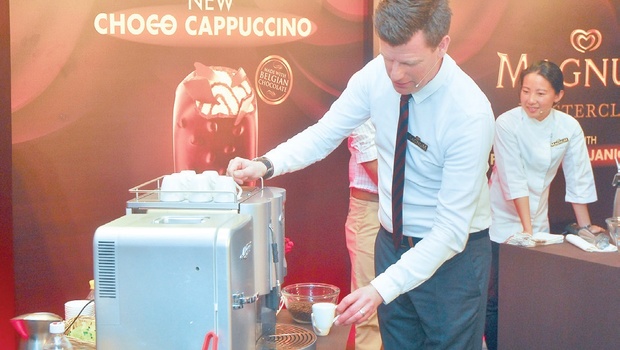
Complimenting what World Barista Champion Fritz Storm stands for, his hotel room almost seems perfumed with coffee. On the bed, while the rest of the suitcase sits unpacked, a giant packet of coffee powder sits neatly opened. “This coffee powder is from Guatemala, and freshly roasted. I wanted to de-gas it a bit before I can use it,” says the coffee expert and barista trainer, who was in the city for the launch of the new Magnum Ice Cream flavour that blends coffee with chocolate. Fritz, along with pastry chef Janice Wong, demonstrated creative ways of pairing the two ingredients for desserts and drinks, as part of the launch on Tuesday evening.

“I chose the coffee from Guatemala for the demo because it has a lot of chocolate flavour in it during the finish, besides the fruity taste. There is some acidity in the beginning, which leaves an interesting taste in the mouth,” says Fritz, who has travelled around the world, studying the coffee flavours of different countries. According to him, South African coffee tastes fruity and sweet, and in Brazil, which is the largest producer of coffee, the drink though doesn’t taste very special, has a wonderful base.

What about the local filter coffee? “I haven’t had the time to try it in Chennai, but I tried filter coffee from a street side shop in Hyderabad, and I found it nice. But it was extremely sweet, sweeter than ice cream,” he says with a laugh. “However, I don’t think there is anything like the best coffee in the world. It is a combination of the beverage — how it tastes and how it looks — and how the barista is serving it. He or she needs to have the personality, and say the right things while serving the drink,” he adds.

It’s likely those are the exact points that earned him the title of World Barista Champion in 2002. “It was all coincidence. I am an accountant by profession and I didn’t even drink coffee till my 20s. I guess as a young guy I just wanted to do something fun, so I started as a bartender. That’s when I drank Cappuccino for the first time in 1994,” recalls Fritz, who, today, cannot start his morning without a Cappuccino, or carry on with the rest of the day without his share of Expressos. “In a few years, I started hearing about various competitions of making coffee. In the first World Barista Championship held in 2000, my colleague competed, I tried in 2002 and won,” he adds with a smile.

Ever since then, Fritz has been training baristas for the Championship, and experimenting with coffee as an ingredient. He tells us about his invention — Almond Cappuccino, reminiscent of the lazy mornings he spent back home in Denmark dipping almond biscottis in coffee. “I thought, why not make a new flavour with it? So we soaked the biscuits for six to 12 hours and then made a Cappuccino,” says Fritz. Recently, he, along with Janice, made what they named Mocha Margarita. “We added chocolate, cinnamon, expresso, milk and caramel sauce with mocha to create something unique. And since we found only a Margarita glass to pour it, we named it Mocha Margarita!” he shares, with evident enthusiasm.

According to him, though the coffee industry is much older than wine industry, it is only now that we are slowly beginning to understand coffee. “People can differentiate the taste of different wines, and they know the basics, like white wine does not go with fish and so on. But it is only now that people are able to recognise the flavours of different coffees. Soon, they should be able to make a preference, in the sense of what brewing they like to have with a dessert, what would suit an ice cream, chocolate or cake. We haven’t reached there yet, but we are catching up really fast,” he says.

source: http://www.newindianexpress.com / The New Indian Express / Home> Cities> Chennai / by Naveena Vijayan / February 26th, 2015

Saxophonist Rudresh Mahanthappa pays homage to Charlie Parker his way

Rudresh Mahanthappa / Jimmy Katz

Like so many of today’s most interesting jazz musicians, the saxophonist Rudresh Mahanthappa regularly creates disparate contexts, hybrids, and concepts to develop new music. The son of Indian immigrants, he’s explored the music of the subcontinent in multiple environments: some have been explicit, such as the remarkable 2008 album Kinsmen (Pi), where he collaborated with the Indian classical-music saxophonist Kadri Gopalnath; others have been more subtle and integrated, such as the 2006 duets collection Raw Materials (Savoy) he made with pianist and fellow Indian-American Vijay Iyer. On other records he’s developed his compositions around cryptology and number theory (Codebook [Pi]), while yet another celebrated one of his mentors and musical heroes—the saxophonist Bunky Green.

His latest album is an homage to another key influence—Charlie Parker—but it’s also a rigorous compositional exercise wherein Mahanthappa isolates specific DNA from some of Bird’s most important compositions and solos to create new tunes that are, in most cases, utterly unrecognizable. Bird Calls (Act) is clever and consistently entertaining—it’s fun to tease out his conceptual acrobatics. His piece “Maybe Later” retains the rhythmic patterns of Parker’s definitive solo on “Now’s the Time” but totally changes the notes, while “Both Hands” rejiggers the melody line of Bird’s “Dexterity” by removing all of its rests, which transforms the tune into a breakneck tangle. Jazz has a long tradition of musicians writing new tunes based on the chord changes of standards, and Mahanthappa indulges in this practice only once: the lovely ballad “Sure Why Not?,” which is derived from both “Confirmation” and “Barbados,” songs that moved at much swifter tempos. The most explicit Parker quote comes on “Talin is Thinking,” which nabs a seven-note phrase from the melody of “Parker’s Mood.”

In his liner notes Mahanthappa explains his desire to pay tribute to Parker with predictable readings of his repertoire. “Imitating Parker is of no consequence to forwarding this form, but developing new perspectives upon tradition is the substance of contemporary expression,” he writes. Instead, the Mahanthappa demonstrates the lessons of the bebop patriarch through a transformation of ideas into something modern.

Ultimately, however, Mahanthappa’s exercises probably benefit him and his excellent bandmates more than the average listener, because Bird Calls stands easily on its own, without any knowledge of its conceptual underpinnings. He’s joined by his longtime bassist François Moutin, the pianist Matt Mitchell (a valuable collaborator of Tim Berne’s and Dave Douglas’s), drummer Rudy Royston (Bill Frisell, Dave Douglas), and the dazzling 20-year-old trumpeter Adam O’Farrill (son of pianist Arturo O’Farrill), and they engage fully with the compositions by matching the leader’s fire at every turn. Both on a series of five short pieces (“Bird Calls”) and the brainy reinventions, the band seizes on the opportunities offered by Mahanthappa’s flinty, jagged, multivalent writing. “Bird Calls #5,” for example, is a beautifully lyric, wandering solo from Mitchell, while “Bird Calls #3” is a fiercely slaloming alto solo by the leader.

Below you can hear the track “Chillin'”—a piece based on “Relaxin’ at Camarillo”—where fragments of the original are woven into the new piece (with a request from the composer to intersperse ideas from the Parker tune into individual improvisations as well).

Saxophonist Rudresh Mahanthappa pays homage to Charlie Parker his way

source:http://www.chicagoreader.com / The Chicago Reader – The Bleeder / Home> – Music – Post No Bills / by Peter Margasak / February 13th, 2015