Category Archives: World Opinion

Sarajevo art museum gets boost from Italian coffeemaker

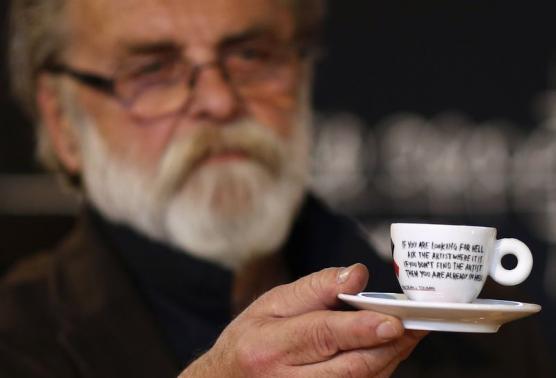
Sarajevo-born artist Dean Jokanovic Toumin, designer of a special edition illy coffee cup, holds up one of the cups, in the ARS AEVI museum of contemporary art in Sarajevo, June 4, 2014.  CREDIT: REUTERS/DADO RUVIC
Sarajevo-born artist Dean Jokanovic Toumin, designer of a special edition illy coffee cup, holds up one of the cups, in the ARS AEVI museum of contemporary art in Sarajevo, June 4, 2014.
CREDIT: REUTERS/DADO RUVIC

( Reuters) – It is hard finding a bright side to the museum scene in the Bosnian capital Sarajevo, where the Olympic Museum burned down during a 1992-95 siege by Serbian forces and the main national museum closed in 2012 for lack of funds.

But thanks to a grant from the Italian government and a plan by Italian coffeemaker illycaffe to sell designer coffee cups to support the project, there is hope for one man’s vision of creating a modern art museum for a city still suffering the aftershocks of the ethnic conflict of the 1990s.

“That night when the museum was burned down, a spontaneous idea emerged as a reaction to all those religious and ethnic divisions,” said Enver Hadziomerspahic, who directed the 1984 Sarajevo Winter Olympics opening and closing ceremonies.

The idea was “to invite world artists to form a collection of their own future museum of contemporary art which would become a symbol of a new Europe and an expression of international collective will”, he told Reuters in an interview.

Hadziomerspahic lobbied European museums and galleries to take part in the project even while the war, pitting Muslim Bosniaks against Orthodox Christian Serbs and marked by the longest siege in modern history, still raged in Bosnia.

Museums in Milan, Prato, Venice – all in Italy – and Ljubljana and Vienna became partners of his ARS AEVI collection. That helped persuade world-renowned artists such as Michelangelo Pistoletto, Marina Abramovic, Joseph Beuys and Janis Kounelis to donate works for a collection estimated to be worth around 20 million euros ($27 million).

Twenty-two years on, the collection of around 150 works is still homeless because of political bickering in the Balkan country, where rival ethnic elites cannot agree on any nation-wide cultural project.

But a temporary ARS AEVI exhibition depot was opened in Sarajevo in February after the Italian government contributed $1 million through UNESCO.
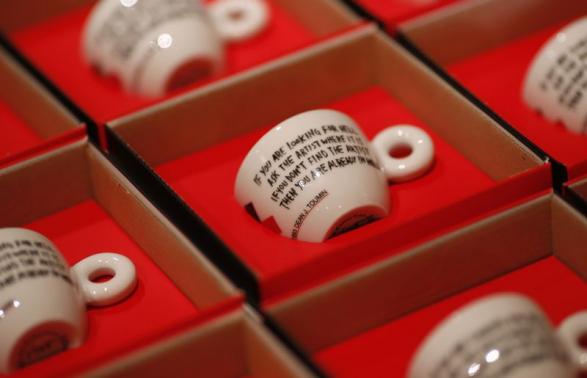
Special edition illy coffee cups are pictured in the ARS AEVI museum of contemporary art in Sarajevo June 4, 2014.  CREDIT: REUTERS/DADO RUVIC
Special edition illy coffee cups are pictured in the ARS AEVI museum of contemporary art in Sarajevo June 4, 2014.
CREDIT: REUTERS/DADO RUVIC

LIMITED EDITION CUPS

Last Thursday, Trieste-based illycaffe launched a limited edition of its art cups designed for ARS AEVI by Sarajevo-born artist Dean Jokanovic Toumin. The unique lines of cups, designed by top contemporary artists, have been sold around the world.

“The idea is magical, we think we can be the catalyst to bring other people,” Giacomo Biviano, illycaffe’s deputy general manager, told Reuters. “Through this cup we can let other countries know there is this museum in Sarajevo.”

A quotation written on the cups from an 18th century writer, Avigdor Pawsner, could very well apply to artists and cultural institutions in modern-day Sarajevo: “If you are looking for hell, ask the artist where it is. If you don’t find the artist, then you are already in hell.”

The arrival of the first private partner has raised hopes that the collection can find a permanent home in a museum building already designed – but not yet built – by prize-winning Italian architect Renzo Piano.

“We hope and we are working to get more private partners,” said Ruggero Corrias, the Italian ambassador to Bosnia who lured the Italian roaster into the ARS AEVI museum project.

“Our final goal remains to have a sustainable ARS AEVI so we can land into the Renzo Piano museum,” Corrias told Reuters.

With museums in Sarajevo barely surviving, Hadziomerspahic knows he is lucky. The National Museum closed in 2012 because of lack of support from any government institutions. It had survived two world wars and the Bosnian war in the 1990s.

“I am happy and sad at the same time, happy that we are moving forward but sad that Italy, and not our own politicians, should be behind the drive for promoting the project,” Hadziomerspahic said.

($1 = 0.7345 Euros)

(Reporting by Daria Sito-Sucic; Editing by Zoran Radosavljevic, Michael Roddy and Gareth Jones)

source: http://www.reuters.com / Reuters.com / Home / by Dario Sito-Sucic / Sarajevo, Monday – June 09th, 2014
“Coffee: The World in Your Cup” Pours into Bradenton

by Lucielle Salomon

Have you ever been interested on what goes into that morning cup coffee? You can find out tonight at the South Florida Museum in Bradenton.

Coffee has been at the center of our lives for centuries.The South Florida Museum presents “Coffee: The World In Your Cup,” revealing that there is much more in your cup of coffee than you think. Tiffany Birakis, the museum’s curator, shares how one of the world’s most traded products became the American national drink.

“Coffee has impacted the American culture since the Revoution,” she says. “The Boston Tea Party, after that happened, the tax on tea, Americans switched to coffee and we’ve really never looked back.”

She says coffee is often described as work of art. Whether you drink it for a morning energy boost, or simply like the flavor, Birakis says coffee will always be associated with sparking good conversation.

“And especially with coffee, there’s always that aspect of getting together, at a place like a coffee house,” she says. “That’s a social aspect with coffee that I think we’ll never lose.”

The reception starts tonight at 5:30 p.m.

South Florida Museum presents Coffee: The World in Your Cup, an exhibit that tells the story of one of the world’s most widely traded commodities and how it has affected cultures, economies, and environments across the globe. Learn about the impacts of caffeine, the world’s most commonly-used drug, on your body, discover coffee’s early controversial reputation as a “revolutionary drink,” and consider the culture that surrounds coffee in the twenty-first century.

source: http://www.wusfnews.wusf.usf.edu / Wusf News / Home> Culture / by Lucielle Salomon / Thursday – May 29th, 2014

Doha: Ashwini Nachappa attends Tipu Sultan cricket tourney final

Doha :

The very first cricket tournament ‘Tipu Sultan Cricket Cup 2014’ organized by Karnataka Muslim Cultural Association (KMCA) at old Ideal Indian School playground was won by Coorg Charges Cricket team with a thrilling finish.

The colourful closing ceremony which was held on Thursday May 22 was witnessed by a huge enthusiastic crowd. The special guest was Indian athlete and Arjuna Awardee Ashwini Nachappa who came all the way from India.

The function started with the recitation of the verses of the Quran by Ahmad Shakir, followed by the rendition of the Qatar and Indian national anthems. KMCA which focuses more on special needs donated funds to a charity, which was handed over by the guest of honour Ashwini Nachappa to the special needs head of KMCA M Iqbal Manna.

President of KMCA Niyaz Ahmed welcomed the gathering. Chief guest of the finals Azim Abbas addressed the gathering and appreciated KMCA for organizing the first-of-its-kind cricket tournament in Qatar. Ashfaq introduced Ashwini Nachappa, who was then felicitated by KMCA and later jointly by Karnataka Sangha Qatar, Tulu Koota Qatar, Bunts Qatar, MCC, SKMWA and Qatar Billawas. Ravi Shetty, president of Bunts Qatar also spoke on this occasion.

Addressing the gathering the Arjuna Award winner Ashwini Nachappa congratulated KMCA on a well-organized sports event and said it has brought all communities and Karnataka-based organizations on one platform. She thanked KMCA for giving her an opportunity to attend such a remarkable event.

The prizes for runners-up KMCA and champions Coorg Charges were then distributed by chief guest Azim Abbas, guest of honour Ashwini Nachappa, presidents of Karnataka-based forums and KMCA former committee members. M Iqbal Manna proposed the vote of thanks.

The MCs of the event were Munjunath, Saquib Raza Khan and Saeed Assadi. The event was co-ordinated by Milan Arun and Arun Kumar. The commentators Habibul Nabi and Ijaz entertained the crowd with live updates. Match umpires were Dr Sanjay and Imthiyaz, and scorers were Amjad and Anand. The music was managed by Anil and Krish.

The crowd was thrilled to witness the grand procession welcoming the replica of Tipu Sultan along with the guests in an open motorcade to the playing arena in a unique style.

Earlier in the opening ceremony on Tuesday May 20, the blind athlete from Karnataka Shaavad was the guest of honour. M I Farid was the chief guest. President Niyaz Ahmed welcomed the gathering. Saquib Raza Khan and Manjunath were the MCs. KMCA and all Karnataka-based forums felicitated the athlete while Ibraz Khan, the general secretary proposed the vote of thanks.

Imran of Coorg Charges won the man of the match award, Rauf, best batsman of the tournament, while Imran was adjudged best bowler and man of the tournament.

Champions Coorg Charges team: Khader (captain) Anil, Parvez, Rauf, Nasir, Nazeer, Zamir, Imran, Zahir, Shakeel and Jaleel.

Runners-up KMCA team: Shahid (captain) Mubin, Sandeep, Sameer, Mehfooz, Waheed, Farooq, Arif, Nisar, Anis, Irfan.

Coorg Charges scored 130 runs losing 6 wickets in 12 overs while KMCA lost early wickets and ended up with just 69 runs, losing all wickets in 11.3 overs.

source: http://www.daijiworld.com / DaijiWorld.com / Home> Top Stories / Report by Iqbal Manna / Doha (Qatar) – Friday, May 3rd, 2014

Tata Global Beverages acquires Australian coffee firm Bronski Eleven

The company, which owns majority stake in public-listed Tata Coffee, has been looking to boost its presence in the coffee business and joined hands with Starbucks to help it launch in India.

Tata Global Beverages Ltd (TGBL), formerly known as Tata Tea, through its UK-based subsidiary, has acquired Australian firm Bronski Eleven Pty Ltd, for an undisclosed amount, as per a stock market disclosure.

“The investment is in line with the company’s strategic vision to become a leader in the good-for-you beverage segment in Australia and it also helps Tata Global Beverages to expand its portfolio to include high growth contemporary single serve business,” the company said in the filing.

Bronski Eleven is engaged in coffee business under the MAP brand, with presence in the roast and ground or R&G coffee and coffee in Pods (single service portions) segments in Australia.

We have contacted the company spokesperson for more details on the Australian firm and will update the copy as we hear from the firm.

Tata Global Beverages, the second-largest player in tea in the world, serves the consumers with its flagship brand, Tata Tea Premium and other brands like Tetley, Good Earth Teas and JEMČA. The firm originates over 65 per cent of the consolidated revenue from markets outside of India.

The company, which already owns majority stake in Tata Group’s public listed coffee company Tata Coffee, has been looking to boost its presence in the coffee business.

It had sealed a deal to bring Starbucks, the world’s largest coffee chain to India. The venture had rolled out outlets swiftly and has quickly emerged as one of the key players in the coffee chain business in the country. It competes with the likes of market leader Café Coffee Day, Barista Lavazza and Costa Coffee among others.

In another development, last November, Tata Global Beverages merged its packaged drinking water subsidiary Mount Everest Mineral Water Ltd, which operates through its premium brand Himalayan, with itself for increasing operational efficiency and better synergy between both businesses.

(Edited by Joby Puthuparampil Johnson)

source: http://www.vccircle.com / VC Circle / Home> M & A / by Bhawna Gupta / Monday – May 19th, 2014

Cat lovers, make sure you visit America’s first ever feline coffee shop!

Photo credit: www.visualphotos.com

New York:

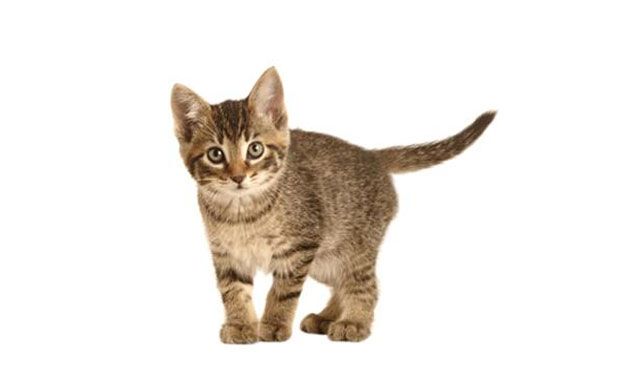
Cat lovers in New York city will soon have the perfect place to grab their coffee, as pet food maker Purina is opening a pop-up cat cafe at 168 Bowery on Thursday, and billing it as America’s first feline coffee shop.

Cat cafes are big in Japan where feline fanatics often have barriers to pet ownership because of building rules or just the small space where they live.

So instead of owning a feline of their own, animal lovers often go to cat cafes to sip their favorite beverage while rubbing paws with cats.

Purina’s cat cafe is set to open on Thursday and run through Sunday, the New York Post reported.wandering freely around the store.

The store will be stocked with cats, all available for adoption through the North Shore Animal League.

The company said it’ll also staff the store with cat experts to answer questions about feline health needs.

source: http://www.deccanchronicle.com / Deccan Chronicle / Home> Lifestyle? Pets-Environment / ANI / April 23rd, 2014

On William Bentinck’s trail

OotyKF28apr2014
Governor-General William Bentinck’s trip to Bangalore, Mysore and Ooty in 1834 when he coordinated the attack on the ‘problematic’ raja of Coorg, Chikka Veerarajendra is well-documented in the book titled ‘Ootacamund-A History’, written by Sir Frederick Price in 1908.

Chikka Veerarajendra and the East India Company were at loggerheads since 1830.

Governor General William Bentinck who was more interested in reforming India than in annexing new territories, had to deal with the Raja of Coorg who had dared the British by keeping in custody one of their emissaries, Kullapalli Karunakaran Menon.

A long sojourn

Lord William Bentinck set out from Calcutta on 3 February 1834, on board the Curacoa to Madras.

He wanted a first-hand assessment of the situation in Coorg and for this purpose, the commander-in-chief Sir Robert O’Callaghan was in attendance.

The Governor General also had to deal with administrative issues concerning Mysore. The reason for him to visit Ooty for an extended stay was to improve his rather poor health.

Bentinck reached Madras on 15 February 1834 and set out for Bangalore via Vellore.

In Bangalore ,strategies on Coorg were finalised in consultations with Sir Robert O’Callaghan.

Lord Bentinck halted in Mysore and was put up at the precursor to Rajendra Vilas Palace atop Chamundi Hill, which was originally built by Robert H Cole, the earlier British resident at Mysore.

Bentinck set out for Ooty via Gundlepet, and it was while they were travelling on 15 March 1834, that war was declared on Coorg.

Lord Bentinck’s entourage reached Ooty on 22 March. At Ooty, the only suitable accommodation for the staff of the Governor-General and that of the Commander-in-Chief was “Sir William Rambold’s Large House”, which was a grand hotel built in 1832 by an influential British entrepreneur named William Rambold.

However, Rambold soon ran into financial difficulties. The hotel was rented frequently by senior officers of the East India Company.

It was in 1842 that Rambold’s Large House became the Ootacamund Club, or the Ooty Club.

During Lord Bentinck’s sojourn in Ooty, Lord Babington Macaulay arrived at the hill station on 25 June, 1834.

The Governor-General and Macaulay met each other for the first time at Rambold’s Large House.

Macaulay chose a small cottage nearby where he lived for several months to write the Indian Penal Code.

Governor-General Bentinck stayed in Ooty till end of September 1834.

On his return journey, he again passed through Mysore and reached Bangalore on 9 October.

He sailed aboard the Curacao on 26 October from Madras and reached Calcutta on 14 November 1834.

Wild rumours

There are also records of Lord Dalhousie’s sojourn in Ooty from 7 March 1855 to 29 October 1855.

Dalhousie’s visit was primarily for health reasons. However, he was not too comfortable in Ooty and soon shifted to Kotagiri.

During Dalhousie’s stay in Nilgiris, one of his ADCs took permission to visit Coorg, where his brother was a coffee planter.

It was in 1852, that Dalhousie reluctantly gave permission to the Raja of Coorg to travel to England along with his daughter Gowramma.

The Aide-de-camp (ADC), on his return, narrated an amusing incident to his boss. Coorg being a rather remote province, news from the outside world took time to percolate.

Very often, wild rumours floated amongst the small but growing community of British planters. One such rumour was that the British and their allies had lost the Crimean War and that Queen Victoria and her family had fled to India!

However, Dalhousie who had a temporary telegraph line installed at Nilgiris had already received the news that the British and their allies had taken Sevastopol from the Russians.

On his journey back to Calcutta, Dalhousie stopped in Bangalore during early November 1855, and was the guest of Sir Mark Cubbon. Dalhousie narrated the Coorg rumour to the British officers and after inspecting the troops, he formally announced the fall of Sevastopol.

source: http://www.deccanherald.com / Deccan Herald / Home> Supplements> Spectrum / by CP Belliappa / April 2014 (28th)

Artist Creates First “Coffee Print” With Image of Seattle Space Needle

Vero Beach, Florida:

Vero Beach artist Robert Ottesen has created the world’s first serigraph using a repeatable printing process and coffee-based ink. What began as a simple artistic statement led to several innovations that allowed an image of the Seattle Space Needle to be printed in a photo-realistic manner.

According to Ottesen, “I just wanted to make a simple artistic statement – by printing with coffee, I wanted to show its importance to our daily lives. I had no idea, when I started the project, how difficult it would be to create a photo-realistic image from coffee pigment alone.”

The print is already attracting attention from experts in the field.

“This is amazing. Rob has pushed the envelope and developed a new and creative print-making technique,” said Frank Romano, RIT Professor Emeritus and President of the Museum of Printing.

In order to print with coffee, Ottesen needed a coffee-based ink. So he turned to Bob Peterson, a consultant with over 30 years of experience in the ink business. Peterson, after numerous attempts, was finally able to get coffee to mix with a special blend of printing oils.

According to Peterson, “When Mr. Ottesen approached me and explained that he wanted to make an ink from coffee, I told him that it couldn’t be done. However, after listening to what he had planned to use the ink for, I decided to take on the challenge. Creating an ink from coffee grounds has never been attempted, to the best of my knowledge. It was extremely difficult to identify an ink varnish that would allow the coffee grounds to blend with the varnish. Additionally, the time and mechanical force required to blend the coffee with the varnish was ten times more than that of a regular ink. The process definitely required “thinking outside the box”!

Interested parties will soon be able to view a copy of this historic print at the Museum of Printing in North Andover, Massachusetts.

source: http://www.digitaljournal.com / Digital Journal / Home> Press Release / PRWEB.com Newswire / Vero Beach, Florida – April 02nd, 2014

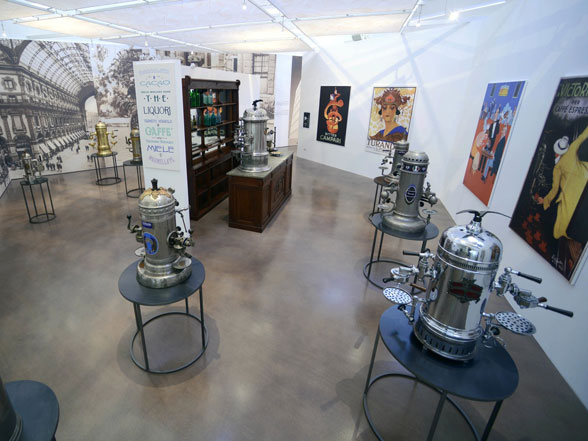
Now There is a Museum of Coffee Machines

coffee-museumKF16apr2014

It used to be that museums were exclusively the purview of dinosaur bones and paintings of old rich dudes. Things have changed, however. Nowadays, there are museums for bad art, tap water and even dog collars. Well, you can add coffee machines to that list.

Introducing the Museum of Coffee Machines, located in Milan, Italy. The whole thing is run by Italian coffee machine manufacturer Gruppo Cimbali and features recreations of the kinds of coffee bars that existed through various decades of the 20th century. For caffeine junkies, this could really hit the spot.

So if you ever find yourself in Italy, forget all of those boring cathedrals and sumptuous meals. Go look at some espresso machines instead!

source: http://www.blog.cookingchanneltv.com / Cooking Chanel / Home> Devours the Blog / by Lawrence Bonk / March 29th, 2014

‘Country Store’ Celebrated

New exhibit displays artifacts and reproductions of a bygone era.

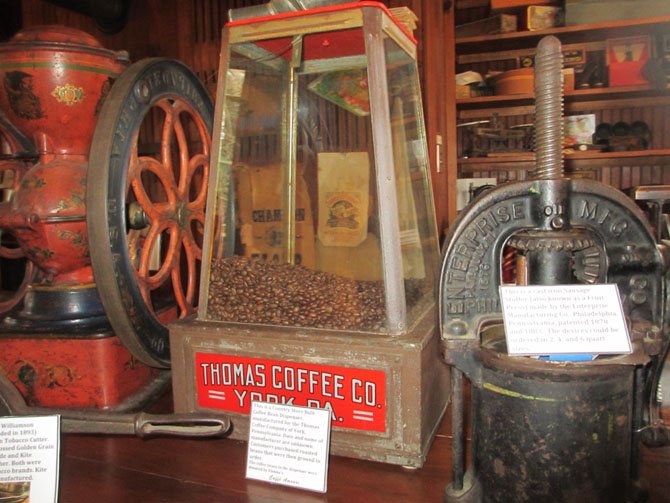
Coffee beans were scooped from this cast iron and glass storage container into a manual coffee grinder.

Although Freeman Store and Museum’s new exhibit, History of the Country Store, opened in early March, Historic Vienna Inc. chose a sunny and warm spring day for its opening reception on April 6. A steady stream of guests filtered through the store and museum examining the artifacts and reproductions on display in the store and upstairs in the museum and parlor. The Freeman Store is listed on the Virginia Landmarks Register and the National Register of Historic Places.

Abram Lydecker himself, who lives as an HVI historian and reenactor in his alternate ego, greeted guests and shared recollections of the birth of his store just before the Civil War broke out, during the war, and post-war business.

Abram and Susan Lydecker moved from New Jersey with their nine children in 1859, founding the community’s first general store. The store was used as a secession vote polling place on May 23, 1861. Vienna was one of the few precincts in Virginia to vote against secession.

“We just moved here from New Jersey and the village is very small,” said “Lydecker, referring to 1859. ”We don’t have many people living here yet but a lot of new agricultural technology was introduced here in Fairfax County.

“It’s nice for me and my family to have store next to the railroad so we can get goods and ship to people.”

Fairfax County welcomed Northerners as long as they didn’t take Abolitionist stands publicly, Lydecker said.

Ken Liu and his 11-year-old son Jason visited the Freeman Store and Museum during the reception. Jason is earning his Boy Scout Citizenship in the Nation badge and the Vienna family recognized Freeman Store’s historic designation. “We’re losing a lot of the original concepts,” said Jason. “Modern technology can help us do things faster but we shouldn’t forget the original ideas.”

Ken Liu said he was particularly struck by “Lydecker’s” conversations, especially when learning that the federal government suspended the Constitution when they took over the store during the war.

The exhibit, History of the Country Store, runs through the year. Counted among the displays are artifacts from the mid-19th century to the turn of the 20th century and reproductions that replicate goods, from feed and food to dry goods. The checkbook and satchel used by Leon Freeman, whose father Andersen Freeman married Abram Lydecker’s daughter, is displayed. Leon Freeman was the first president of the Vienna Bucket Brigade, the precursor to the Vienna Volunteer Fire Department.

“It’s fun to share the Freeman House as an open house,” said HVI Board member, Dave Shelby, who commented that HVI was pleased with the turnout. “It’s nice to show people what the building originally served as and how the world here used to be.”

Freeman Store and Museum is open Wednesday through Sunday, noon to 4p.m. There is no admission charge for exhibition. For information on the exhibit or to enquire about Historic Vienna, Inc., go to historicviennainc.org.

–Donna Manz

source: http://www.connectionnewspapers.com / The Connection / Home / Wednesday – April 09th, 2014

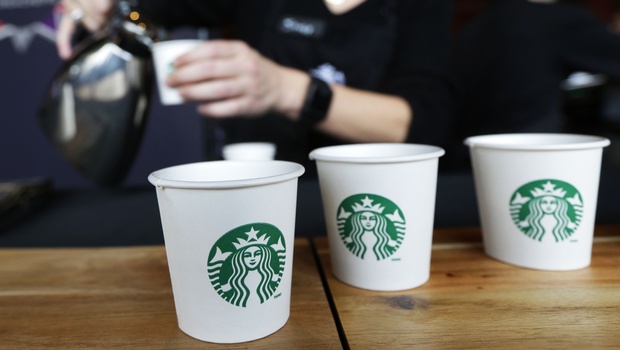
Starbucks Says India Operations Fastest Growing in its History

Tata Starbucks currently has presence in Mumbai, Delhi, Pune and Bangalore and has its coffee plantations in the Coorg area of Karnataka. | AP

With 40 stores in 17 months of its operations, India is the fastest growing market in the history of the Seattle-based iconic American coffee chain Starbucks, according to a company statement.

The US-based coffee chain, which had sewed up an equal joint venture with Tata Global Beverages, opened its first outlet in Mumbai in October 2012.

“With 40 stores in four cities (in 17 months) and nearly 1,000 partners, India is the fastest growing market in Starbucks history,” Tata-Starbucks chief executive Avani Davda was quoted as telling Starbucks annual shareholders meet.

Tata Starbucks currently has presence in Mumbai, Delhi, Pune and Bangalore and has its coffee plantations in the Coorg area of Karnataka.

Starbucks globally operates over 20,000 stores across 64 countries, serving over 70 million customers per week.

Starbucks chairman, president and chief executive Howard Schultz told shareholders that the company would continue to reinforce the ongoing investments in 200,000 Starbucks partners (employees), including USD 250 million in their healthcare benefits and USD 234 million in bean stock in fiscal 2013.

He said the company recorded record revenue of USD 14.9 billion, up 12 per cent and record earnings per share of USD 2.261, up 26 per cent, taking its net profit to USD 2.5 billion, a rise of 23 per cent in fiscal 2013.

source: http://www.newindianexpress.com / The New Indian Express / Home> Business> News / by PTI – Mumbai / March 20th, 2014