Category Archives: World Opinion

Brazilian drought may make your cuppa costlier

India effect On Thursday, prices of key grades of coffee were up by ₹30-40 a kg, almost 20 per cent over the previous week.

Dry weather sets off price rally; global rates increase 45% in a month

New Delhi :

Your cup of coffee is set to cost more, courtesy, the drought in Brazil.

Reports of severe dry weather impacting this year’s Brazilian crop have sparked a sharp rally in coffee prices over the past few days and domestic raw coffee prices have moved up in tandem. Global prices — mainly of the Arabica variety — have risen by 45 per cent in the last one month.

As a result, small and mid-sized domestic roasters, who sell roast and ground filter coffee powder, are thinking of passing on the burden to consumers by increasing prices. This is because of export demand for Arabicas driving up farm-gate prices. India exports two-thirds of nearly three lakh tonnes of coffee it produces every year.

At the weekly auction on Thursday, prices of key grades of raw coffee were up by ₹30-40 a kg, an increase of almost 20 per cent over the previous week.

No option

“Roasters have to increase prices by 20-30 per cent, else quality will take a hit,” said BS Suryaprakash, CEO of Coorg Coffee Supplies, a Bangalore-based roaster and exporter.

“It’s a tricky situation. If we increase the price, there is a chance of losing customers. If we don’t, we’ll have to incur losses as the rise in raw coffee prices has been pretty steep,” he said. Coorg Coffee, which retails powder and speciality blends under the same brand, has already effected a price hike of 20 per cent, he added.

A little over a third of the 300,000 tonnes of coffee produced in India is consumed domestically. The annual growth in consumption is around six per cent, with coffee drinking becoming fashionable among the younger generation through the spread of the café culture.

“This price rise is unprecedented. If the market stays at the current level, we don’t have any option but to increase prices. We will take a call on revising the prices over the next couple of days,” said Shrikant Rao, Director at Bayar’s Coffee.


Watching developments

However, large companies such as Tata Coffee are cautious in reacting to the price rally. “The market has gone up in the past four days. We have to study the market before taking a call on prices,” said Hameed Huq, MD of Tata Coffee Ltd, the country’s largest coffee grower.

Moreover, the lower-than-expected crop size back home is seen supporting prices. The Coffee Board has lowered its estimates by about 10 per cent, pegging the current crop size at 3.1 lakh tonnes as untimely rains in Karnataka, the main producing state, has shrunk the crop. However, growers harvesting their produce said the crop is much lower than the Coffee Board’s estimates.

source: http://www.thehindubusinessline.com / Business Line / Home> Markets> Commodities/ by Vishwanath Kulkarni / New Delhi – February 21st, 2014
India uncovered: hiking in Coorg

The Coorg highlands
The Coorg highlands

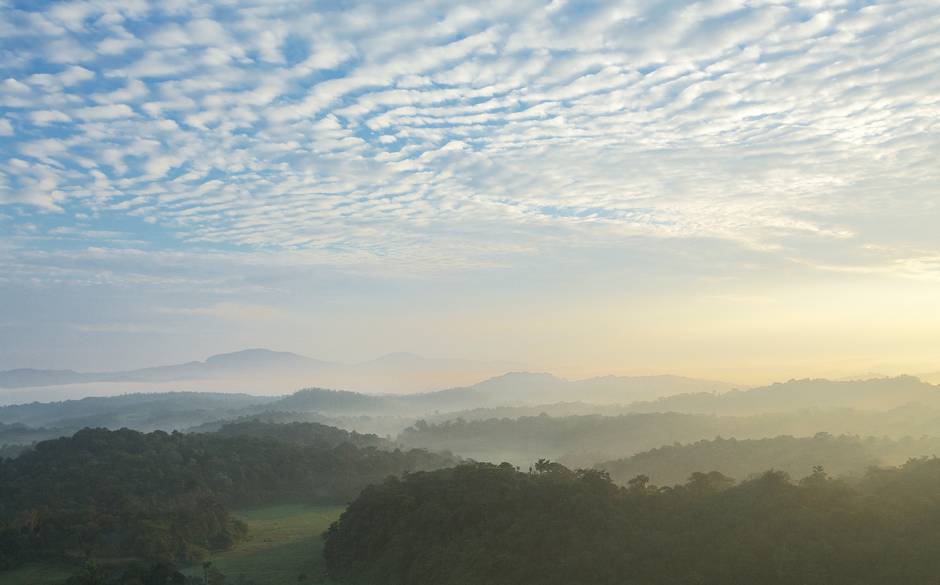
I‘m on a craggy ledge in the hills of Karnataka, and although it has been a tough four-hour hike to get up here, the views are extraordinary. At an altitude of just over 5,000ft, I can see all the way to the Arabian Sea coast and the jungles of Nagarhole.

Coorg (also known as Kodagu) is one of the wildest mountainous regions in India, covered in dense forests inhabited by wild boar, elephant, sloth bears and tropical birds. But there is little sign of man. On my way up, I have walked through rainforest, climbed over stiles, hiked through paddy fields, pastures and plantations of coffee and cardamom into misty thickets of teak and rosewood. And I have passed just 10 people.

The reasons for this are historical. Until the 19th century, the area was ruled by a clan of Kodagu rajas who deliberately kept the hill country devoid of roads, and relied on narrow jungle trails between settlements to discourage invasion. That, for a while, kept foreigners out. Even a few years ago, Coorg was little visited, and anyone adventurous enough to come here stayed in small traditional hotels, temple rooms or the private homes of the local Kodava people. There was very little on offer for travellers.

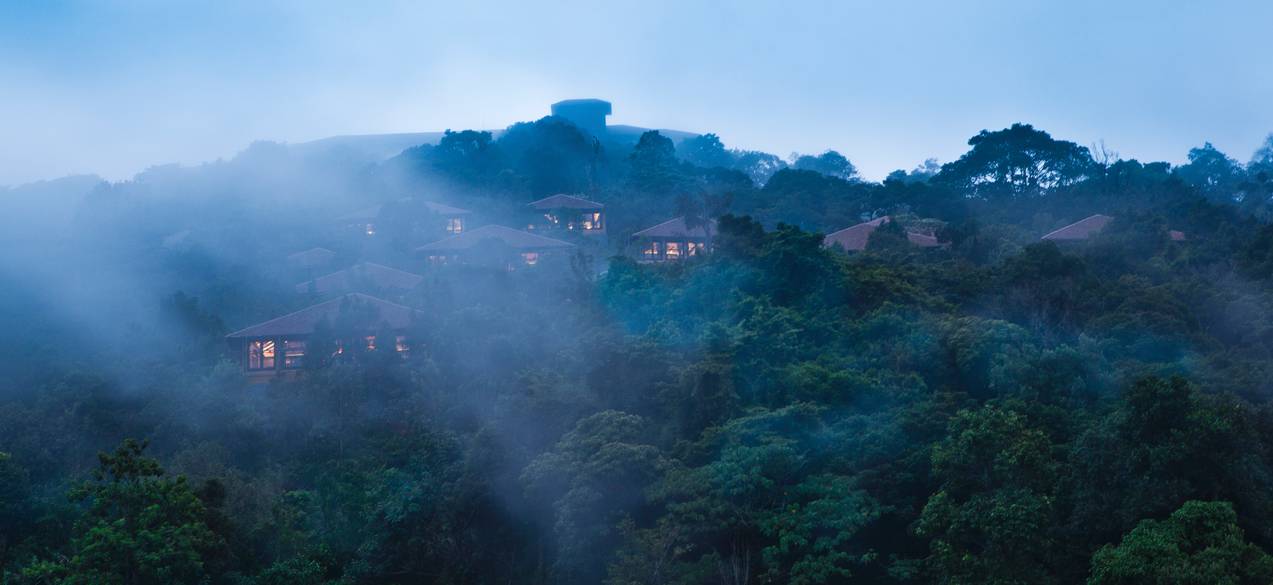
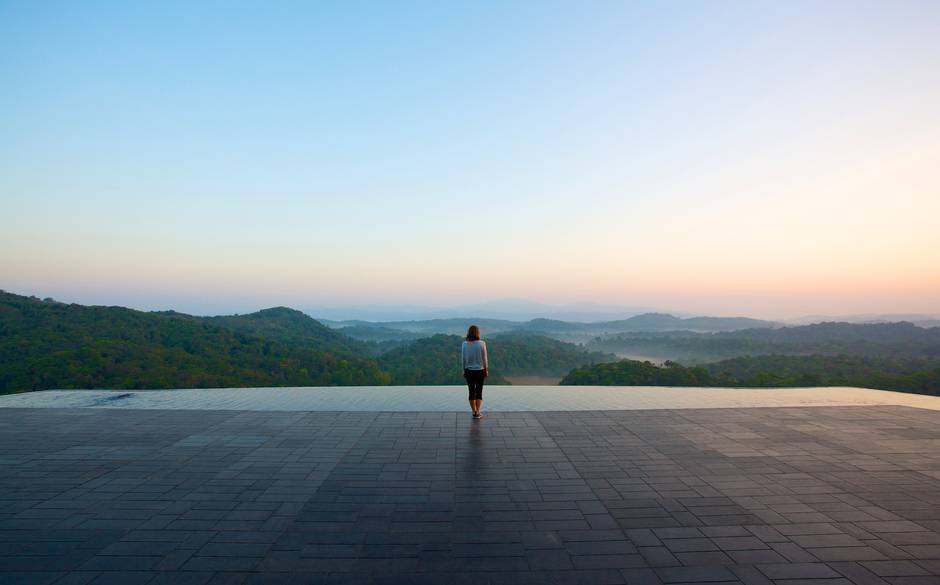
The highlands of Coorg as seen from Vivanta by Taj Picture: Chris Caldicott
The highlands of Coorg as seen from Vivanta by Taj
Picture: Chris Caldicott

That all changed last year with the opening of Vivanta by Taj Madikeri Coorg in Madikeri, the region’s beautiful hill station capital. Now, visitors not only have a contemporary hotel in which to relax (it has glass walls to show off the spectacular views) but also a new range of activities to enjoy, based on the natural surroundings and the culture of the Kodava people (who have their own tribal dress and cuisine – and a fondness for extremely strong liquor).
VivantaCoorgexternalviewKF12mar2014
Easy day treks can be organised from Madikeri, including one to the impressive, domed Indo-Saracenic tombs of the rajas at Gaddige and the spectacular Abbi Falls. Other options for guests at the Taj property include overnight guided treks into the misty peaks, past streams and forest temples, and courses in zip-wire and high-rope skills. For the less adventurous traveller, there are botanical walks in the 180-acre forest and trips to villages to learn about pottery and other crafts. Not least of the attractions is a 30,000ft spa, for those who prefer to eschew adventure and just take up a supine position and be pummelled.
The hotel's Jiva Grande spa
The hotel’s Jiva Grande spa

The accommodation: Perched high on a forested ridge, the 63 villas are discreetly hidden in the rainforest canopy. Features include wraparound glass walls, huge marble tubs and warming fires. The architecture takes inspiration from local houses, with entrances and courtyards open to the sky and, at the spa, wood-fired Gudda baths (where guests are scrubbed and massaged). Dishes on offer range from Coorg specialities and health food to international cuisine. Doubles from £80, b&b.

Getting there: Greaves Travel is offering six nights at Vivanta by Taj and one night at Taj West End Bangalore from £1,880 per person. The price includes breakfasts, return flight with British Airways, private transfers and guides.

source: http://www.telegraph.co.uk / The Telegraph / Home> Luxury> Travel / by Chris Caldicott / March 07th, 2014

Pigeon drops dead in Kodagu, 4,500km away from home

Madikeri :

No one made much of it when a pigeon was found dead recently in Kakkabbe village near Madikeri. But it was no ordinary bird: there was a ring on its claw which aroused the interest of KM Chinnappa, environmentalist and director of Wildlife First Trust. It bore the inscription ‘SRPC 1110 Selam-7’.

Chinnappa immediately got around to tracing the bird’s origins. Turns out, the pigeon was a visitor from the Philippines and belonged to the Santolan Racing Pigeon Club there. It was a racing pigeon and was capable of flying continuously for 1,000 miles, as per records about such birds in America.

“It’s a wonder the pigeon flew 4,500km from the Philippines to Kodagu,” says Chinnappa.

Pigeons have a special ability to return to their place of origin even after flying for days on end. But it’s possible the pigeon from the Philippines got confused and lost its bearings due to interference from cell phone towers, claims Chinnappa.

Sometimes, pigeons also fly off track while trying to escape eagles, he adds.

The ring found on the pigeon was sent for analysis to the Bombay Natural History Society through bird expert Kripakara of Mysore.

source: http://www.timesofindia.indiatimes.com / The Times of India / Home> City> Bangalore> Namma Metro / TNN / February 14th, 2014

No Taipei-errors in India’s Perfect Winning Script

Saketh Myneni and Rohan Bopanna celebrate their victory | PTI

“Where’s the party tonight Saketh?” yelled Zeeshan Ali from across the room, leaving everyone in splits. Such was the occasion that it made even the ever-composed India coach shed his inhibitions and be vocal about his emotions.

A tub of ice was emptied on Saketh Myneni’s head, sending shivers down his spine, quite literally. The youngster had just smashed a winner and stood rooted to the ground as the crowd erupted in joy while the tricolour was unfurled and waved relentlessly at the ITC Tennis Stadium. Myneni and veteran Rohan Bopanna had just won their doubles rubber and sealed India’s 3-0 victory over the Chinese Taipei in the Davis Cup Asia/Oceania Group I tie on Saturday.

The audience were treated to a victory lap with the players carrying non-playing captain Anand Amritraj on their shoulders. Pomp and patriotic fervour marked the celebrations as the hosts set up a second round clash with Korea Republic, vying for a place in the World Group play-offs.

It was a dream debut for the 26-year-old Myneni as the hosts completed the formalities in just two days, making the reverse singles matches on Sunday inconsequential. “When I hit the shot, it took a while for the victory to sink in and then I was like ‘Oh we just won’,” said Myneni. “Rohan asked me to be aggressive and I did just that.”

With Lee Hsin-Han injured, their No 1 player in the squad Tsung-Hua Yang partnered Hsien-Yin Peng for the doubles match. After being served a bagel in the first set, the duo fought back to win the second through tie-breaker. But they had no answer to Bopanna’s serve as he dished out 18 aces and dominated the net play to take India home with a 6-0, 6-7(3/7), 6-3, 7-6(7/2) win.

The Bangalorean was all praise for his partner, who left no stone unturned to provide as much support as possible. “Saketh plays fantastic doubles, I have played against him before. All I had to do was keep him motivated. We combined really well and it is easy to play with someone who serves 25-30kms faster than me. So all credit to him,” said Bopanna. “He has all the tools to be a top level player. And if he continues this way, there’s no stopping him whatsoever,” he added.

In the absence of seasoned players like Leander Paes and Mahesh Bhupathi, the duo’s performance comes as a breath of fresh air and could churn out more such wins for India in the future. It’s just one match down but this pair have certainly made the job of the selectors a tad easier.

Earlier in the day, marathon man Somdev Devvarman looked rejuvenated as he took to court to complete his five-setter against Ti Chen. And the Indian took just eight minutes to give India a 2-0 lead, not letting the previous day’s anxious moments haunt him. He set aside his defensive mindset and attacked from the word go to win 6-7(4/7), 7-6 (7/3), 1-6, 6-2, 9-7.

“A player cannot pull off a marathon five-setter on his own and it takes contribution from the entire team to eke out such a win,” Somdev said. “I am so relieved that I won. This morning, Yuki sent a message with a picture saying ‘keep calm boys’. They all kept me incredibly calm,” he added. Coach Zeeshan said the team functioned as a unit and it was their bonding that saw them through. “It’s been years since we saw all players assemble on the same day ahead of the Davis Cup. All of us were here on Sunday and ever since there hasn’t been a single meal we haven’t had together,” Zeeshan said.

source: http://www.newindianexpress.com / The New Indian Express / Home> Sport / by Krithika Gopalkrishnan / ENS – Indore / February 02nd, 2014

Team Coorg gearing up for Gulf Cup hockey in Dubai

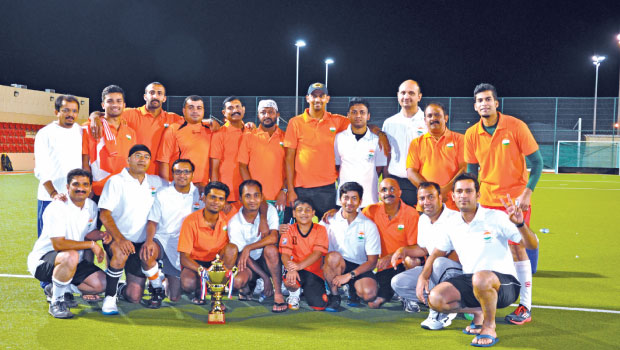
A file photo of Team Coorg Oman. Photo – Supplied

Muscat:

Team Coorg Oman is all set to participate in the UTSC-organised 5th Gulf Cup Hockey Tournament in Dubai later this week, according to a press release issued by the team on 27 January, 2014.

The six-a-side hockey tournament will have teams from various clubs in and around the UAE. Team Coorg Oman, having been the winners in 2012 and runners-up in the 2011 and 2013, will be looking forward to bring back the Gulf Cup.

Keen to be part of the growing popularity of this tournament, many local Omani players have come forward to be part of the team for Dubai.

The recently organised tournament, the Republic Day Cup in Muscat, has given the players the much needed match practice and they are looking forward to the fast six-a-side format of the game.

The UTSC which too has been hosting this tournament in Oman as well as in Dubai are keen that teams from Oman continue to participate and help make this tournament more popular.

Along with Team Coorg Oman, UTSC too has been in the forefront of promoting hockey in Oman.

With more schools introducing hockey as part of their team sports curriculum, it is heartening to see the gradual progress the game is making.

Corporate bodies too are now stepping in to promote the game in Oman. This year’s team sponsors are Al Qurum Complex (CCC), Al Rawahi International Co.LLC and Services & Trade Company LLC.

The above companies have been sponsoring the game continuously for the last few years and continue to extend their support to the teams.

The hockey fraternity in Oman wishes the team the very best in this tournament. All supporters of Team Coorg in Dubai are keenly awaiting the teams’ arrival to extend their warm welcome and support during the matches.

source: http://www.timesofoman.com / Times of Oman / Home / by Times News Service / January 27th, 2014

Teams for Indian Republic Day hockey festival announced

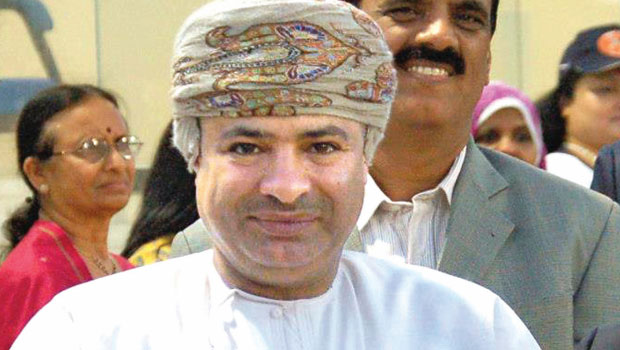
OHA chief Sheikh Mahfood Ali Juma.

Muscat:

The lists of teams participating in the Republic Day of India hockey events, to be organised by Team Coorg and Friends of Naqvi Group, were announced on 22 January, 2014.

The annual event, being organised under the patronage of Indian Embassy and the Oman Hockey Associaiton (OHA), will take place at the Sultan Qaboos Sports Complex on Friday.

And this year’s event includes two matches, one between Team Coorg and Oman Veterans Combined XI and the other between Ambassador’s XI and Indian School Al Seeb.

Team Coorg Muscat will be respresented by Achaiah, Muddappa, Kavan, Kuttappa, Dinal, Nanaiah, Dumnic, Thamaiah, Jacob, Subash, Pacha and Lavin.

The Combined XI will comprise Devaiah, Chenav, Ganpathy, Bopanna, Kushalappa, Hiten, Thimmaiah, Jalal, L. Erappa, Shakeel, Venkatesh and Rag Popiah. Ambassador’s XI will be represented by Indian Ambassador J.S. Mukul, Head of Chancery A.P.S. Chauhan, Ramesh Chander, S.K. Bhattacharya, Neej Kumar Saini, Daram Pal, R.K. Joshi, C.S. Chaubey, Saifuddin, Sardar Alam and Nipun Dangwal.

The Indian School Al Seeb XI will have Sarath P, Abdul Salam, Amir Suhail, Mohammed Talib, Adil Abbas Ali, Sheikh Mohammed Zahid, Mussar H., Sohail M. Qureshi, Hari S., Mohammed Shakir, Ambaresh C., Balraj Singh and A Bose.

Indian Ambassador J.S. Mukul will preside over the proceedings while OHA chairman Sheikh Mahfoodh Ali Juma and Al Omaniya Financial Services CEO Aftab Patel, who is also supporting the event, will be the guests of honour. British General and Pocari Sweat (Muscat Pharmacy) are the sponsors. The proceedings will begin at 3.50 p.m.

source: http://www.timesofoman.com / Times of Oman / Home> Muscat / by Times News Service / January 22nd, 2014

Former Intl. badminton player no more

PulleraChengappaKF04feb2014
Mysore :

Former international shuttle badminton player Pullera G. Chengappa (67), a resident of Mysore, passed away in Bangalore this morning after a brief illness. He is survived by his wife Vanitha and a son.

Last rites will be held at his native village Kedakal in Suntikoppa, Kodagu, later this evening, according to family sources.

source:http://www.starofmysore.com / Star of Mysore / Home> General News / January 29th, 2014

Coffee Festival back after four years

INDIA COFFEEKF04feb2014
Bangalore:

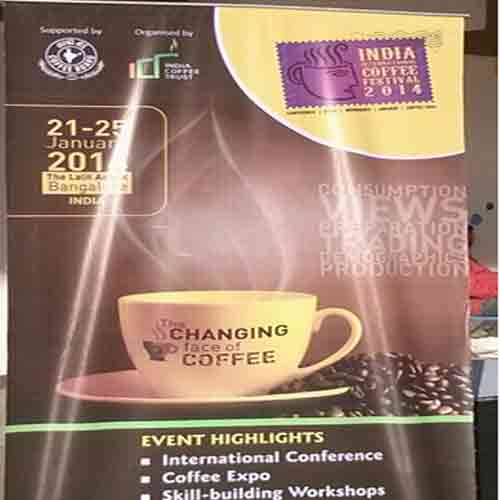
The fifth edition of the India International Coffee Festival (IICF 2014) is back in Bangalore after a hiatus of four years, after making its mark felt in New Delhi, a non-traditional coffee market in 2012.

Organised by the India Coffee Trust with the support of the Coffee Board of India, the theme of this biennial conference “The changing face of coffee” will be held at The Lalit Ashok from January 21-25 is reflective of the increasing popularity of the retail coffee culture spreading across the country.

Visitors to IICF 2014 will be treated to an exposition of the latest technologies and products by 60 leading coffee companies both national and international, including instant coffee makers of India, café chains and leading product/farm equipment companies.

“Per capita (per person, per annum) coffee consumption in India is just 90 gm compared to 4-5 kg in developed markets like the US and Europe, and is the highest, at 12 kg in Finland. While the coffee industry in India is doing very well with exports going up by 33 per cent in the last quarter of 2013 compared to the previous year, we are also focused on promoting coffee consumption within the country, which is currently at 1.2 lakh tonnes per annum. I hope the IICF attracts more investments in the Indian Coffee Industry,” said Jawaid Akhtar, Chairman Coffee Board of India.

Forty-one global experts from the industry, including Roberio Oliveira Silva, former Director, International Coffee Organisation, Deverl Maserang, Ex-Vice President, Starbucks, Prof Jaakko Tuomilehto, University of Helsinki, and some 900 delegates are expected to attend.

The five-day event will host workshops on the first two days on themes like brewing coffee by espresso method, advanced roasting skills, brewing filter coffee etc. Conference sessions on marketing and production trends, a workshop on coffee entrepreneurship, coffee awards to recognise best exporters, roasters, curers, best coffees and best Baristas will also be presented. For the first time, a national Coffee Quiz, which attracted over one lakh participants from across the country, will have the six finalists competing for the award.

source: http://www.deccanchronicle.com / Deccan Chronicle / Home> News> Current Affairs / DC / January 21st, 2014

India to celebrate international coffee festival at Bangalore

India is known to be one of the top coffee bean producing country and it is exported to Italy, Russia and Germany. With the prices for arabica bean falling, Indian indigenous arabica coffee which constitute 1/3 of the total coffee production face stiff competition.

RNA Research & Archives

India is known to be one of the top coffee bean producing country and exports to Italy, Russia and Germany. With the prices for Arabica bean falling, Indian indigenous arabica coffee which constitute 1/3 of the total coffee production face stiff competition in terms of revenues.

One way to beat this would be taking popularity of Indian beans to an international platform and the Indian Coffee board plans to exactly achieve this by announcing a coffee festival in Bangalore.

One can expect an array of events to promote the coffee bean. From the basic strong scented ‘Kaapi’ to the extravagant Cappuchino, India will promote its diverse beverage at the platform.

This will be held between 21st to 25th January and around 12,000 visitors are expected to participate in the event.

“Indian coffee, grown under tree shade, is very popular in the international markets,” said Jawaid Akhtar, chairman of the government-run Coffee Board of India as quoted in a BBC report.

In 2013, India’s coffee exports rose marginally by nearly 3% to 3.14 lakh tonnes in 2013 on the back of sharp jump in re-export of instant coffee, despite sluggish global prices, according to the Coffee Board report presented to the media.

The country had exported 3.05 lakh tonnes of coffee in the previous calender year and this opportunity will help India improve its standing in the global market.

The oldest coffee chain in India is Cafe Coffee day while the latest entrant is Starbucks-Tata alliance and Indian coffee-mongers are definitely lapping up the options and variety.
CoffeeFestivalKF04fen2014
What to expect at the event:

The event will focus on issues of health aspects of coffee and innovative and alternate channels of coffee delivery to consumers.

There will be workshops on processing, brewing, roasting, espresso making, cooking with coffee, art on silk and coffee entrepreneurship.

A trip to Coorg, called ‘Coffee Trail to Coorg,’ will be conducted at the end of the festival as per the Coffee board website.

The first three editions of the festival were held in Bangalore, the traditional coffee capital of the country, whereas the fourth edition was organised in Delhi.

So, book your entries and head to Bangalore for some hot cup of coffee.

source: http://www.dnaindia.com / DNA / Home> Money / by Vishal Manve / Sunday – January 19th, 2014

Coffee: The Tie That Binds Two Great Countries

The world coffee tree map, shows Yemen the first country of coffee tree

by Fakhri al-Arashi

Through out the international coffee conference all over the world , Japanese coffee traders classified Yemen as the homeland of coffee and the first source of the coffee tree in the world. The Japanese adore coffee, much akin to westerners’ passion for wine. Despite its small quantities, the quality and price of Yemeni coffee have earned it a special category in the Japanese coffee market. The sole coffee store in Tokyo that serves Yemeni coffee offers cups from $15-$19.

Ibrahim Moka is an organization in Japan consisting of 22 members. It is also a coffee brand, whose name derives from a Yemeni entrepreneur who found himself in a position to respond to Japan’s interest in Yemeni coffee.

Over the past five years, the 22 members of the Ibrahim Moka association visited Yemen in order to learn more about the reality of the coffee farms and growing regions in Yemen. “Driving to Bani Ismael far atop the Haraz mountains, the group crossed 9km in 7 hours, pushing off-road through hard, mountainous terrain,” said Ibrahim, one of the group’s hosts. “We were traveling in an old Toyota Land Cruiser, and we eventually reached a point 5500 feet above sea level. Once we safely concluded our journey, the head of the Japanese team said, ‘we do not have these cars in Japan, but they were made for Yemen’s mountains.’”

While the trade volume of Yemen coffee to Japan does not reach levels of commercial profitability, Japan is still the major importer of Yemeni coffee. Three business companies in Yemen find the Japanese market very attractive to develop their business with Japan. Al-Kabous reported that their company exports between 150,000 – 160,000 tons of Yemeni coffee quarterly. Recently, al-Kabous shipped 142,000 tons of coffee to Japan.

In 2005, Ibrahim Moka paid a visit to Japan, where he visited a 200 year-old coffee shop in Tokyo. He also visited the affiliated museum. “I am a coffee businessman, but during my visit to the coffee museum, I was impressed by the layout, design, courtesy and presentation in the museum” said Ibrahim. The visit included a coffee-tasting session in which each person is entitled for 2 small cups of coffee.”

Ibrahim had the chance to visit the Japanese coffee association, which consist of 270 members. At the meeting, he presented Japan with a map of the history of coffee growth in Yemen, including its rises, falls, and challenges. Ibrahim came to know the good reputation of Yemen’s coffee in the roadmap of the coffee business in Japan. The Coffee museum even contains Yemeni post stamps reflecting coffee trees as a promotional tribute to Yemeni coffee.

“The price of coffee increased because of packaging and product selection. Buyers were looking to Yemen as the source of coffee, and for the love of coffee the Japanese designed specific pricing categories,” said Ibrahim. Yemeni coffee ranked first in terms of quality, though Jamaican coffee wins in terms of packaging. Yemeni coffee lacks certain final touches, but despite this it is still the most expensive coffee in Japan.

Over the past years, the Japanese coffee association has sought opportunities to help Yemeni farmers to increase coffee yields. “There were many Japanese associations working in Yemen on this task, and they tried to offer Yemeni farmers special tools to improve the quality and quantity of coffee they could produce. This even included offering training courses to the farmers and vendors,“ said Ibrahim. Recently, Yemen has had even more problems with its coffee production due to the political turmoil.

When we look to the past, we see a Japan very much involved in Yemen. They would spend days in tours of the old city, and some diplomatic missions would visit Sana’a’s hot baths (also known as the Turkish baths).

Japanese investors and visitors continued supporting Yemeni women in rural areas and they provided Yemen with equipment to support farmers in the rural areas as well. Ibrahim concluded, “I like Japan very much, and I have seen that each thing in the world has a place in Japan. I like the politeness and humility of the Japanese community.” We hope that Yemen can enjoy more of this country and its wonderful people in the future.

source: http://www.nationalyemen.com / National Yemen / Home> Business & Economics / December 08th, 2013