It was a pairing made for the headlines, a young Indian and a young Pakistani playing together and, quite apart from the novelty value, doing well. ‘Stop War, Start Tennis’ – their campaign – even earned them the Arthur Ashe Humanitarian Award for 2011, but that same year, the duo- Rohan Bopanna and Aisam-ul-Haq Qureshi – split up.
It was a pity. More so because they had no problem with each other; other people had problems with other. The issue was the 2012 London Olympics and at its core, the problem was between Leander Paes and Mahesh Bhupathi.
Bopanna joined hands with Bhupathi in his preparations for the Olympics. Qureshi stepped back; what choice did he have anyway? But now Bopanna is back with Qureshi. And that’s awesome news. For how long though, and to what end?
Both men are 33 now. Bopanna is ranked No. 13 in the doubles world, and Qureshi is at No. 15in the last update. They were both late bloomers and came into their own only in each other’s company -in 2007.
And just before they separated, they had reached the 2010 US Open final, and in 2011, won the ATP World Tour Masters 1000 title in Paris and made the ATP World Tour finals in London. They were, clearly, at their best, or getting there.
Seeing that they haven’t slipped much in the rankings, it would only be fair to assume that they can still do some good things together. But the question is whether the 2011 split might repeat itself come 2015.
Bhupathi is still there and thereabouts , but not the force he once was. But Paes is still up there, ranked No. 10 in the world, and has confirmed that he is aiming sharp for the 2016 Rio de Janeiro Olympics.
Keeping that in mind, and keeping in mind the fact that a pair should play together for at least a year before taking part in a major competition, the life of the New Indo-Pak Express looks set to be just a year and a half, destined to last only till the middle of 2015.
That would be terrible, both for the pairing and for ‘Stop War, Start Tennis.’ But then again, considering the value of an Olympic Games medal, forget Paes, can Bopanna chuck up the opportunity either if it comes calling, at Qureshi’s expense if necessary?
Shamya Dasgupta is Senior Editor, Wisden India
source: http://www.timesofindia.indiatimes.com / The Times of India / Home> Sports> Tennis> Top Stories / by Shamya Dasgupta / December 27th, 2013
Nimdroling Monstery./ Photo: Ajay Ghatage / The Hindu Nikhil Varma finds peace at the Nimdroling Monastery set against hills and gardens at Bylakuppe
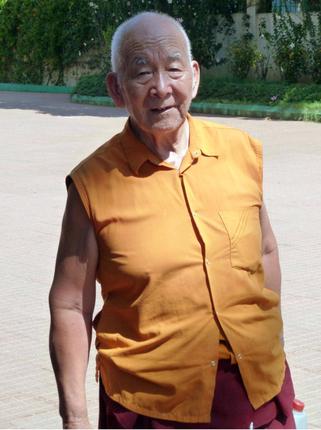
Take a turn off the dusty highway that connects Mysore to the hills of Coorg and you will find yourself on a small pathway leading to the Tibetan settlement of Bylakuppe. The two km trek to the Nimdroling Monastery and the monastic college makes you feel like you are in Tibet. Buddhist monks clad in saffron robes and tourists zip past in autorickshaws and cars. A monk. / Photo: Ajay Ghatage / The Hindu
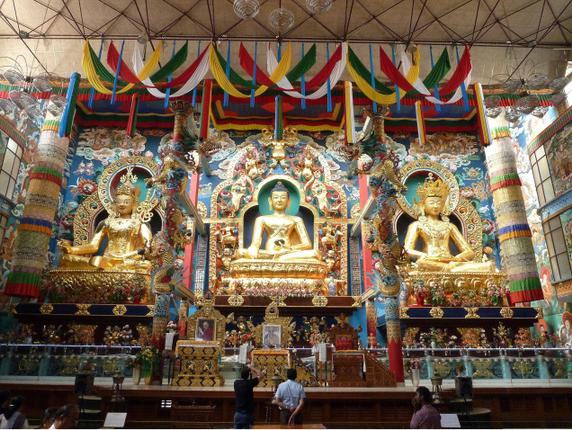
The massive monastery was established by Pema Norbu Rinpoche on land that was granted to Tibetan exiles by the Indian Government. Locals say it was consecrated and bequeathed the name by the Dalai Lama. Apart from the monastery, the settlement boasts of monastic colleges, a small recreational facility and a guesthouse.
The story of this settlement began in 1959, when the Dalai Lama fled to India seeking political asylum. Jawaharlal Nehru, the then Prime Minister agreed to provide assistance to the refugees. Lugsung Samdupling, one of the oldest Tibetan settlements was created in 1961 at Bylakuppe. The massive rainbow arch-like structure and the golden spires of the monastery are imposing and visible from a distance. The monastery houses nearly 5,000 monks and nuns and is renowned as an important centre for Buddhism. The path to the monastery leads one through a beautiful garden, surrounded by the living quarters of the monks. Inside the monastery, are beautiful statues of the Buddha Padmasambhava, Buddha Amitayus and Buddha Shakyamuni. The Padmasambhava is also known as the Second Buddha and is believed to have played a vital role in the spread of Buddhism to Tibet and Bhutan. The Amitayus are celestial buddhas known for longevity. Beautiful murals depicting the life of the Buddha are seen on the walls. Another standout feature of is the prayer wheels situated on one end of the monastery that borders paddy fields. It is believed that rotating the prayer wheels brings good luck and prosperity. A souvenir shop./ Photo: Ajay Ghatage / The Hindu
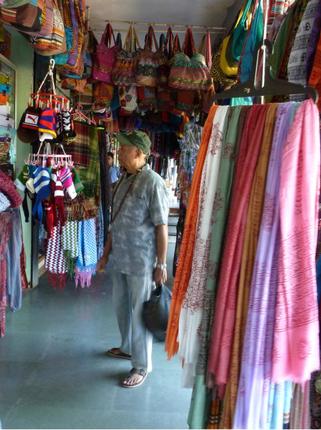
On the other side of the monastery, small stores sell Tibetan memorabilia. There are also stalls that sell piping hot momos, which taste delightful with a range of Tibetan homemade sauces. You could also sample some hot Tibetan breads called thupkas. Surrounded by the misty hills of Coorg, meditating in these monasteries could transports one to the land of snow-peaked mountains.
Getting there
Bylakuppe is a five hour bus ride from Bangalore and is located near the town of Kushalnagar. Taking an auto rickshaw to the settlement from Kushalnagar is the easiest way to reach the settlements.
Where to stay
The settlement is fairly small and most tourists stay in Kushalnagar. You could stay in the monastery guesthouse for a small fee.
source: http://www.thehindu.com / The Hindu / Home> Features> Metroplus> Travel> Hidden 100 / by Nikhil Varma / June 06th, 2013
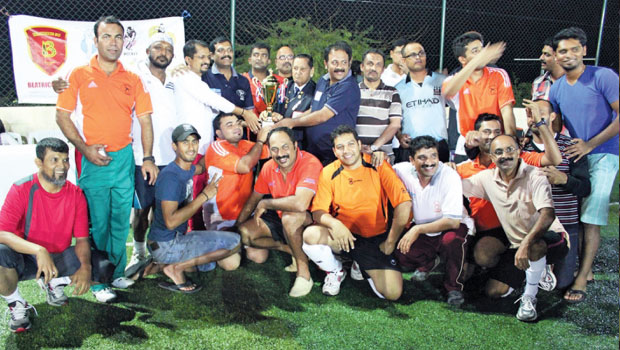
Winners Team Coorg pose for group photo after winning the final against Beatrice Dubai. – Supplied photo Muscat:
Team Coorg lifted the Balan Master Memorial Trophy beating Beatrice Dubai 4-1 in the final. Organised by Beatrice Sports Club Muscat, the six-a-side hockey tournament was held at The Wave Stadium in the presence of former Indian hockey veteran S.A.S. Naqvi.
In an exciting final, Team Coorg showed their complete supremacy over Beatrice Dubai. Children’s football and family fun games were the sidelights of the final day.
Dr Mujeeb (Amana Polyclinic) delivered the keynote address. The tournament was organised in association with Team Coorg Muscat.
Former Oman national hockey coach K.K. Ponnacha and B. Kuttapa played an instrumental role in helping the Beatrice Sports Club Muscat to host the tournament with much fanfare.
During the concluding ceremony, the organisers of the tournament also honoured S.A.S. Naqvi, Mohammed Osama Rawat, K.K. Ponnacha and B. Kuttapa for their outstanding achievements in the field of sports.
Beatrice executive committee members Shahir, Dr Mujeeb, O.V. Feros, Feros. M, Said, Rasheed, Habib A.P.M and Zaheer thanked the audience for coming in large numbers to support the tournament.
Badr Shipping Company and Sixar Group were the sponsors.
source: http://www.timesofoman.com / Times of Oman / Home / by Times News Service / December 05th, 2013
The meeting with the gorgeous Malaysian-Chinese actress Michelle Yeoh turned out to be a complete pleasure for Bollywood actor Gulshan Devaiah, who marked his Bollywood debut with ‘That Girl in Yellow Boots’, as she has always been on top of the list of his favourite actresses.
They met each other at the closing ceremony of a film festival in Goa.
They not only talked about the ceremony and the amount of fun they enjoyed being there but also talked about films and had food together.
Michelle Yeoh has worked in several outstanding films such as Crouching Tiger, Hidden Dragon, Moonlight Express etc. She has also played the role of a Bond girl in Tomorrow Never Dies. Now the actress is geared up to produce a film in India.
So, it can prove a great chance for Gulshan as he is riding high with the success of his recent release Goliyon Ki Rasleela Ram-Leela.
source: http://www.pardaphash.com / Parda Phash / Homepage> Bollywood / by Shubhanshu Sharma / Wednesday – December 04th, 2013
Born into a family, that owns coffee plantations in Coorg, city boy Vikram Dasappa, had a natural affinity to Coorg coffee and felt that it is one of the oldest and the best coffees in India. Eligible bachelor boy who chose to become a restaurateur, instead of running the family coffee business, shares, “Our family has been in the business since past three generations and we have the oldest and best kept coffee estates in Coorg. On my various travels around the world, I explored a lot of night clubs, lounge bars and pubs and always wanted to own one of my own. But owing to Bengaluru’s early nightlife deadline, opening a night club didn’t seem like a very clever proposition. Food has been growing steadily in the city and that’s why I decided to bring an International food chain here.”
Recognising the city as a social melting pot, a brand like Nando’s seemed to pique the foodies interest. “I was always very passionate about the hospitality industry. I also love travelling and have been to many cities around the world with a group of friends and family. This year we went to explore Europe and went to Croatia, Greece, Italy, Hungary, London and Montenegro. It was also my mom Gayathri’s 60th birthday, so 25 of us from my family went onboard the Royal Caribbean cruise. We also took out time and tried some rock climbing in Montenegro. Last year we went to Bangkok, Dubai, Malaysia and Singapore with friends. On one of my trips to Budapest, I went cycling across the country, which is the best way to explore new places. Highlight of my trips is trying out new cuisines, especially Italian and meeting new people,” says Vikram, who runs two Nando’s restaurants in the city, adding, “The first time I tried the Peri-peri chicken at Nando’s in London, I was hooked onto it and one of my cousins mentioned about the franchise. I have taken the franchise licence for Karnataka state.”
Recalling a recent trip to London, Vikram adds, “I love Nobu for its interesting Japanese cuisine. Whenever I like a dish, I always try and have a word with the chefs to get an idea on whatever goes into making it. I’m always exploring more options of world cuisine, with plans to bringing in more international chains to India. I also love Prosecco and have also tried a lot of exotic range of cognacs from Venezuela. Another of my favourites is Frangelico. I take my golf breaks whenever I can. We had gone to take part in the golf tournament at the 107 year old Belur golf club. I have also taken golf holidays in Colombo and South Africa.”
source: http://www.deccanchronicle.com / Deccan Chronicle / Home> Lifestyle> Offbeat / DC / by Namita Gupta / November 28th, 2013
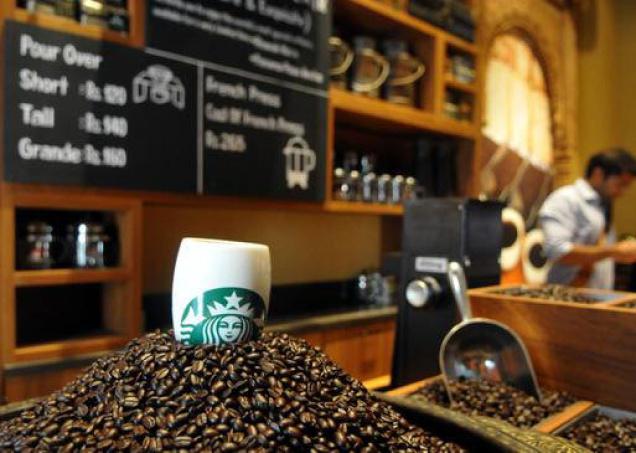
Local flavour: Tata Starbucks recently launched the Indian Estates blend./ Photo by Janak Bhat
Innovation has been the watchword for coffee brand Barista Lavazza, and this is highlighted in Amore, an art-themed menu for India. The menu pairs food and coffee, and the selections are presented using pop art. The company regularly does thematic menu launches. Last year it tied up with fashion designer Rina Dhaka to launch Milano Collezioni, a fashion-inspired menu. The art work for Amore was done by Arrested by Art, a Delhi-based art boutique. And, Barista Lavazza is not the only coffee outlet that is introducing new concepts and innovation to woo Indian customers, particularly the youth.
Tata Starbucks recently launched the India Estates blend, an addition to its Indian Espresso Roast blend. Sourced and roasted in India, this blend is part of the company’s strategy to deliver locally relevant experiences to its customers. The company recently introduced Pumpkin Spice Latte, a Starbucks classic. And, to complete the experience, it is offering a wide range of merchandise, including a mug designed specifically for India. Internationally, Starbucks’s country and city mug series is quite popular.
Cafe Coffee Day (CCD) introduced Friends of Frappe, a new menu comprising beverage and bite-sized snacks focused on the Indian market. The special menu offers Bestie Combos, which pairs a snack and beverage like Amore does.
With coffee culture becoming popular in the country, the number of cafes has been growing fast. At least 200 outlets have been opening every year, for the past five years. The market is estimated to be worth Rs.1,000 crore, and growing at around 15-20 per cent annually. It is said that India can take another 2,000 cafes in the near future.
Santhosh Unni, CEO, Costa Coffee India, said coffee shops “have become the favoured hang-out zone for the youth and the preferred meeting place for a wide profile of people”. “It highlights not just a shift in taste, but a cultural shift as well, where young, affluent Indians are more interested in global trends than ever before,” he said. “The increase in disposable income and shifting lifestyle preferences are the key drivers of the growth being witnessed in the Indian coffee market.”
Traditionally, India is tea-drinking, with the coffee to tea ratio being 1:7. India consumes only 80gm of coffee per capita, as against six kilo per capita in Italy. The current boom in India is coming from two distinct trends—middle-class consumption and out-of-home consumption.
“Consumer acceptance is actually driving the growth in consumption, as well as the café culture,” said Nilanjan Bhattacharya, COO (India and SAARC), Barista Lavazza. “Globalisation, expanding base of the middle class, rising disposable incomes, changing lifestyle patterns, coupled with exposure to international trends through films, advertising, youth community sites and personal blogs are all factors which are driving this trend and the shift in consumption patterns.”
Tata Starbucks sees a huge opportunity in sourcing and roasting local premium Arabica coffees for international consumption. Tata Coffee ensures that the coffee supplied to Tata Starbucks is 100 per cent locally sourced and roasted. Tata Starbucks is a joint venture of Starbucks Corporation and Tata Global Beverages.
All the major players in the Indian cafe market are trying to maximise the customer’s experience in the cafe. CCD has around 30 outlets uniquely designed to hook the youth. The company is active on social media, using the platform to gather feedback from customers. It also holds coffee-tasting sessions for customers.
Avani Davda, CEO, Tata Starbucks, said the “Starbucks Experience” is built on three basics: “our products, our places and our people”. “Our offerings, in-store experience, and store design reflect the community gathering place that Starbucks is known for,” she said. “Customers come for coffee, stay for the inviting warmth and return for the very human connection.”
K. Ramakrishnan, president (marketing), CCD, said the company had coffee plantation trails at its resort—The Serai in Chikmagalur, Karnataka. Tata Coffee, too, is popularising coffee plantation trails at some of its exquisite estate bungalows in Karnataka.
Costa Coffee launched Costa Laughaccino, a stand-up comedy series by leading artists from India and the US. They also organised Costa Rhythm and Brew, where the likes of Leslie Lewis, Rabbi Shergill, Indus Creed and Indian Idols performed at Costa cafes.
Barista Lavazza reached out to the customer with its Click-a-Coffee photography contest. The best 100 photographs chosen by ace photographer Pradeep Dasgupta will be brought out as a coffee table book. The company also has Friendship Jam, an event for music lovers and amateur bands. The company has been hosting Penguin book launches. The first book to be released was Shobhaa De’s Sethji. Barista Lavazza also brought out a new coffee, named after the book’s title character, for the launch. During the launch De tweeted: “Sethji coffee—go for it guys. It’s seriously yummmmm. Even the book reads better after a mug or two of the brew….”
Visibility, too, is top on the list for the cafe chains. “We have established our outlets at different locations such as places of tourist interest and hill stations to catch the attention of the customers,” said Ramakrishnan. “CCD has outlets all over, from religious places such as Vaishno Devi, Haridwar and Rishikesh to places near Metro stations in Delhi. We also have outlets in Austria and the Czech Republic.”
And, the coffee boom is good news not just for the well-heeled. Costa Coffee’s special HR initiative provides employment to the physically challenged, including the hearing-impaired. The company invests in special training for these employees. Store managers, shift managers and many in the senior management are schooled in sign language to ensure better coordination with the special employees. Currently, 15 per cent of Costa Coffee employees are special, and the company plans to raise it to 25 per cent by the end of next year.
EXPANSION PLANS
Cafe Coffee Day: First cafe at Brigade Road, Bangalore, in 1996. More than 1,500 cafes today. Target: 2,000 cafes by 2015.
Tata Starbucks: Born in October 2012. Has 25 cafes across Mumbai, Delhi and Pune. Probable next stop: Bangalore. Also looking at Tier-II cities.
Costa Coffee: Came to India in 2005. 100th store opened at Carter Road, Mumbai. Target: 300 cafes by 2015. Recent cafes: Chandigarh, Ludhiana, Agra and Jaipur. Coming soon: Hyderabad. Looking closely at Tier-II & Tier-III cities.
Barista Lavazza: First store at Basant Lok, New Delhi, in February 2000. Aiming at Tier-II and Tier-III cities. Recent cafes: Patiala, Surat, Visakhapatnam, Jaipur and Nagpur.
source: http://www.week.manoramaonline.com / The Week / Home> Business / by Abhinav Singh / Monday – November 25th, 2013
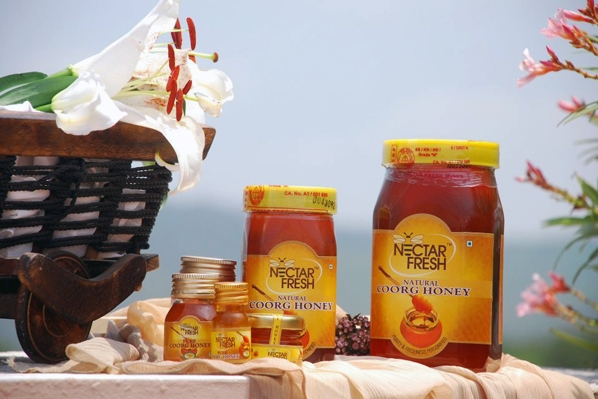
Nectar Fresh honey. Credit: Chayaa Nanjappa
Coorg (Kodagu) is a picturesque hill district along the verdant western Ghats Mountains in the state of Karnataka, South India, which is well known for its aromatic coffee, luscious oranges and fragrant spices. This landscape with steep hills, valleys and ravines with countless streams is home to forests of rosewood, teakwood, sandalwood and silver oak. In this setting, one entrepreneur is turning the region’s traditions of beekeeping and honey collecting into a global operation called Nectar Fresh honey.
Honey is an important part of the culture in Coorg, where bees are kept and honey is cultivated throughout the dense forests and on the many coffee plantations. At “A Cookery Year in Coorg,” Shalini Nanda Nagappa writes “at a Coorg child’s naming ceremony, a gold coin is dipped in honey, and touched to the infant’s lips, a symbolic wish and blessing for the child to live a life of sweetness and prosperity.”
Humble beginnings with a dream
In 2007, Chayaa Nanjappa, a young woman from Coorg, decided to leave her job in the hospitality industry to follow her dream of starting her own honey business. Her initial plan was to supply the purest quality honey from her hometown to the local markets in Bangalore.
To learn the ropes of the new business, she trained at the central Bee Research and Training Institute in Pune, Maharashtra. With a small loan from her mother and with the support of Khadi and Village Industries. she started her business Nectar Fresh honey in Bangalore.
Honey is collected directly from the source and filtered. It later undergoes moisture reduction and then again more filtration. It is then cooled and sent to settling tanks. Processed honey is meticulously tested for quality at the in-house laboratory. Initially the honey was processed and packaged for the pharmaceutical, ayurveda, and hospitality sectors. After serving solely as a supplier to other brands, Nectar Fresh began marketing honey and related products under its own label across India in 2007.
Three years later, Nanjappa relocated the flourishing business to Mysore. Kuppanda Rajappa, a well-known businessman of Coorg origin, with considerable experience in management of plantations and retail sector joined the company as partner. Nectar Fresh was initially sourcing honey only from Coorg. Today the company selectively sources raw honey from various honey-rich regions of India. The honey is collected from forests, certified apiaries, tribal societies and small farmers.
Growing Nectar Fresh honey’s export operation
Pure unadulterated Coorg honey is unique in flavor, aroma and color. These qualities vary depending on the nectar source, age and storage conditions of the honey. Honey extracted during different seasons and from various parts of Coorg carries the flavor of seasonal and regional flowers. Color ranges from dark to light amber: Pale honeys have a mild flavor, while the darker ones have more robust flavor.
Honey made primarily from the nectar of one type of flower is called mono-floral. They have high value in the market due to distinctive flavor. Darker honeys are used for large-scale commercial purposes while lighter honeys are marketed for direct consumption and demand a premium price over the darker counterparts. Most of Nectar Fresh honey is organic and the company also specializes in mono-floral honeys, including Coorg honey, eucalyptus honey, acacia honey, clover honey, mustard honey, sunflower honey, jamun honey, lychee honey and forest honey, which is sourced from dense forests where herbal plants known for their medicinal properties grow.
From the new processing plants in Mysore the company started marketing single-portion packs and 30-gram bottles under Nectar Fresh brand for sale in the hospitality industry. Soon Nectar fresh launched retail-portion package of jams and sauces. Nectar Fresh is one of the largest suppliers of bulk honey from south India, and today its products are exported through middlemen to United Arab Emirates, Malaysia and European Union markets. Recently Nectar Fresh met the stringent standards necessary for approval to export honey to Germany.
The company is awaiting the completion of a new processing plant with a much larger capacity, which would enable Nectar Fresh to produce even more honey. Another plant for processing fruit jams and tomato sauces and purées is expected to be operational by June. The company is in the process of introducing Nectar Fresh Coorg coffee. Plans are also in the works for marketing Coorg-grown pepper, cardamom and kokum.
Nanjappa is a member of the National Bee Board of India. From humble beginning of supplying quality honey to the local market, the company has evolved into one of the top five suppliers and exporter of bulk, raw honey as well as processed honey and the only one manufacturing different varieties of mono-floral honey.
source: http://www.zesterdaily.com / Zester Daily / Home> World / contributor Ammini Ramachandran, Texas based contributor / June 06th, 2013
A team of scientists from four research institutions have reported the discovery of an ancient microcontinent in India.
Based on extensive investigations in the Coorg block comprising parts of Kerala and Karnataka, the scientists have confirmed the existence of a 3.1 billion-year-old exotic microcontinent that could have broken off from Madagascar or Africa and drifted across the ocean to get wedged into the Indian landmass.
Based on the geological formations that characterise the block, the researchers assume that it could have been part of the earliest ‘Ur’ supercontinent formed through microcontinent amalgamation.
The age data of the rock samples collected by the researchers showed that the peak of continental building in the exotic Coorg block occurred around 3.1 billion years ago. The studies indicated that the crust building might have also involved partial recycling of basement rocks as old as 3.8 billion years.
The team comprising M. Santosh from India, now working at the China University of Geosciences, Beijing, Q.Y. Yang from the same university, E. Shaji from the Department of Geology, University of Kerala, T. Tsunogae from Tsukuba University, Japan, and Ram Mohan and M. Satyanarayanan from the National Geophysical Research Institute, Hyderabad, has published the discovery in Gondwana Research, an international journal on earth science with particular focus on the origin and evolution of continents.
According to the paper, the Coorg block, a continental fragment sandwiched between the Dharwar craton (a craton is a piece of a continent that has been stable for over a billion years) in the North and several younger crustal blocks to the South, is composed dominantly of a suite of arc magmatic rocks.
“Considering the age of the rocks from the periphery of the Coorg block, the microcontinent could have got wedged with peninsular India around 1.2 billion years back in time,” says Dr. Santosh, the lead author.
“This exotic microcontinent could have come from any of the cores of the earliest supercontinent Ur. The possible sources are Madagascar or Africa.”
The study revealed that the Coorg block was unaffected by major tectonothermal (geological episodes that shape rock formations) events in the rest of southern India.
The team relied on Uranium-Lead dating and Lutetium-Hafnium analyses of zircons separated from the different rock types. They also carried out petrological and mineralogical studies and geochemical analyses of the rocks.
The study is significant in understanding the supercontinent cycle, the amalgamation of continents into large land masses and their disruption.
“The Early Earth was dominated by island arcs in an oceanic realm analogous to the modern Pacific region. The formation and collision of arcs gave rise to the birth of microcontinents,” explains Dr. Shaji.
The landmass arrangement on earth today is the culmination of a long history of continental movement. The Indian subcontinent is believed to be one among the several landmasses that emerged from the break up of the Gondwana supercontinent about 180 million years ago. The Coorg block covers an area of over 3,000 sq km and includes the whole of Kasaragod district in Kerala and parts of Kodagu district in Karnataka.
source: http://www.thehindu.com / The Hindu / Home> News> National> Kerala / by T. Nandakumar / Thiruvanathapuram – November 12th, 2013
Blending well: India Estates Blend, Tata Starbucks’ latest product for the Indian market. Mumbai :
Tata Starbucks has launched a coffee blend exclusively for the Indian market, on the occasion of the first anniversary of the opening of its first store in Mumbai. Called India Estates Blend, the coffee is sourced from the finest arabica beans produced at Tata Coffee’s four estates in Chickmagalur.
Tata Starbucks, a 50:50 venture between Tata Global Beverage and US-based Starbucks Corporation, has also set up a coffee roasting and packaging plant at Kushalnagar in Karnataka’s Kodagu district with a capacity to produce 375 tonnes.
The company chose India Estate Blend after testing various coffees across Tata’s estates in Kodagu and Chickmagalur. It will be sold at Tata Starbucks outlets for blending or consumption at home, according to the company’s Chief Executive Officer, Avani Saglani Davda. “Home bean consumption is catching up and India Estates Blend has been lined up for this,” she said. To be sold in packs of 250 g, the coffee will be available with six other varieties such as Home Blend, Italian and Addis Ababa.
It’s a long journey for the blend. The coffee beans are picked up from shady canopies in Kodagu and Chickmagalur estates and sent to Starbucks’ sourcing department in Seattle. This is the second blend brought out by the firm after the India Espresso Roast, sourced and roasted locally. The espresso is a popular product at Tata Starbucks stores across the country.
“The Starbucks sourcing department analysed the coffees and finalised the blend. The feedback is encouraging,” said Davda. The new blend is the first step Starbucks and Tata Coffee are taking to develop and improve the profile of Indian-grown arabica coffees in the global market. India Estates Blend is a medium roast coffee with a herbal juiciness and a chocolate finish. Tata Starbucks currently operates 24 stores across Mumbai, Delhi and Pune. “We will soon open an outlet in Bangalore,” a company official said.
(The writer visited Tata Starbucks’ Kushalnagar plant at the invitation of the joint venture firm).
source: http://www.thehindubusinessline.com / Business Line / Home> Companies / by M.R. Subramani / Mumbai – October 21st, 2013
The international band Naguale has chosen Karnataka to provide the backdrop for its music video. The band from Romania has zeroed in on Coorg and Mangalore to shoot its brand new video, which is a collaboration with Punjabi rap artiste Sukhbir. (Naguale band member Ovidiu…)
“India and its colourful culture is hot on the international circuit right now. Since the song also features Sukhbir, they wanted an Indian touch to the video. I suggested that they come and shoot in Karnataka since such a varied choice of locations are available here,” says Akshat Mudbidri, who’s managing the band’s India operations.
Naguale will begin shooting in Coorg shortly, with the coffee plantations and Coorg culture receiving prominence. “We will then proceed to Mangalore and capture its scenic beaches. Local art forms like Yakshagana and tiger dance will also feature on the video,” explains Akshat.
Ovidiu Baciu, one of the members of the band, confirms that they have been getting glowing reviews about Karnataka and were looking to shoot amid nature and lots of culture, “So we’re here,” he says. The three member band will also have Bangalorean models grooving in the background to the song that’s titled Killa.
WELCOME. If you like what you see "SUBSCRIBE via EMAIL" to receive FREE regular UPDATES.
Read More »