Even though coffee and pepper are the prominent commercial crops in Kodagu, several farmers have been growing both agricultural and horticultural crops in integrated farming method, thereby, contributing to food security.
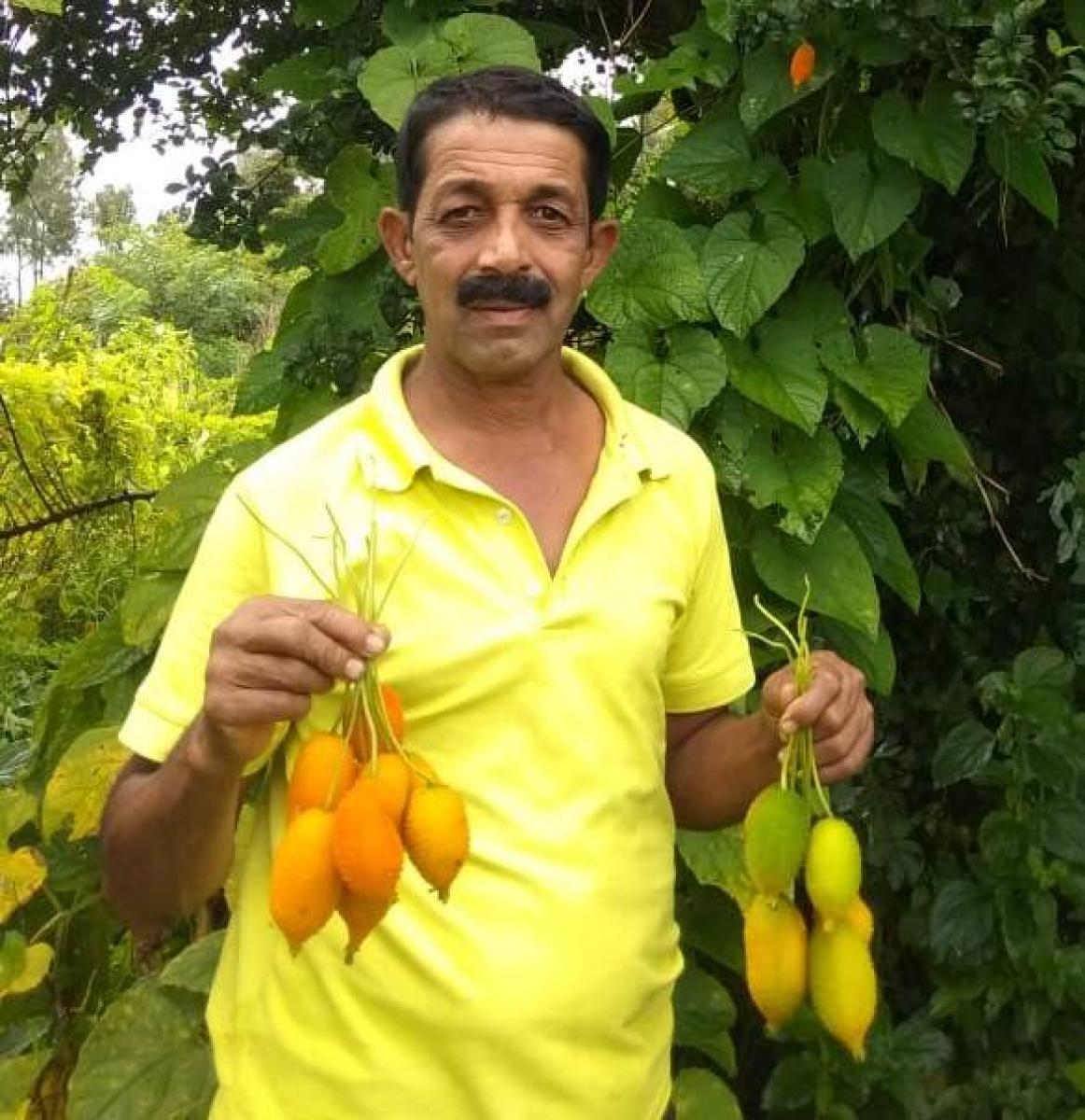
Somengada Ganesh Thimmaiah from Nallur village of Ponnampet in Virajpet is one such agriculturist who has scripted success through his innovative methods in farming.
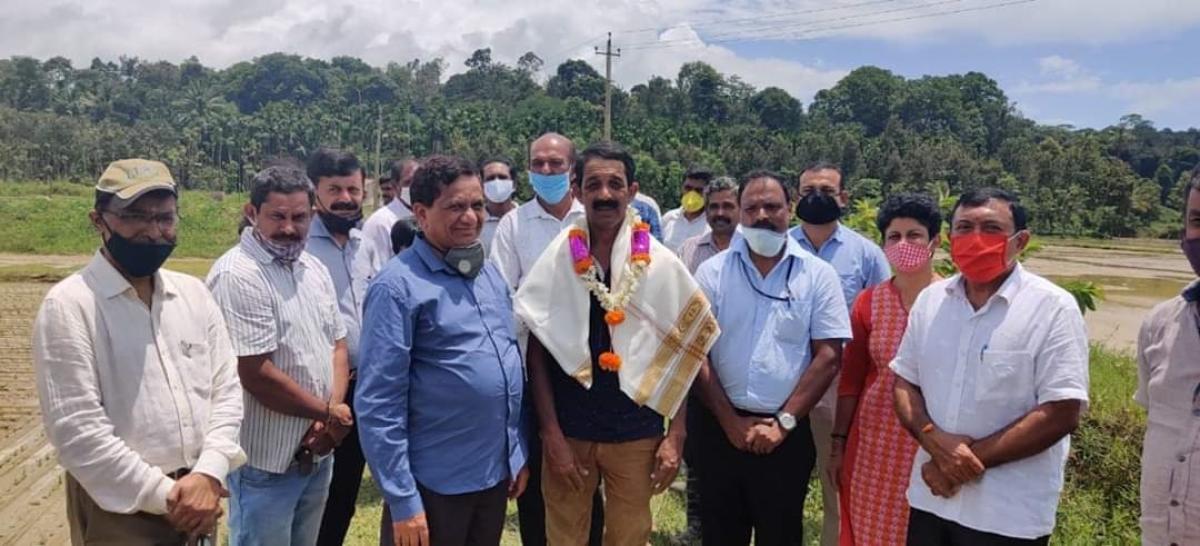
Somengada Ganesh Thimmaiah was felicitated by Virajpet MLA K G Bopaiah. DH Photos
He is the winner of the National-level Babu Jagjivan Ram Krishi Samman award this year. Indian Council of Agricultural Research (ICAR), New Delhi, conferred the prestigious award on Thimmaiah during a function held recently on the occasion of its 92nd Foundation Day.
Thimmaiah has been following the integrated method in agriculture where he grows areca, coffee and paddy as main crops and a variety of vegetables and fruits and sub-crops.
Along with agriculture, he is also into apiculture, poultry and pisciculture, which gives him additional income. Thimmaiah has also been growing the ‘Beth’ plants required for honey bees.
He has successfully experimented with more than 60 paddy varieties and has implemented a mechanised system in agriculture and his paddy field is tech-savvy.
The annual produce of paddy on his farm is 350 to 400 quintal while that of coffee is about 200 bags. He said that pepper also is one of his main sources of income. He has also been cultivating butter fruit, sapota, mango, jackfruit, orange, egg fruit and rambutan as well.
A lot of youth have been visiting Thimmaiah’s farm and seeking his guidance in farming to which he says youth showing interest in agriculture and horticulture is a good sign.
Virajpet MLA K G Bopaiah visited Thimmaiah’s farm and felicitated him for winning the much-coveted award.
Forestry College, Ponnampet, too, honoured Thimmaiah. College Dean Dr Cheppudira G Kushalappa, Extension Unit Head Dr R N Kenchareddy, Agricultural Officer Teetamada Meera were present on the occasion.
source: http://www.deccanherald.com / Deccan Herald / Home> State> Karnataka Districts / by Aditya K A, DHNS, Madikeri / July 22nd, 2020
In Nov 1948, Thimayya moved Stuart tanks in utmost secrecy by dismantling their turrets and used them in direct firing role that led to the capture of Zoji-la which had evaded capture on previous instances. It was because Zoji-la was in our hands that liberation of Kargil was possible in 1999.
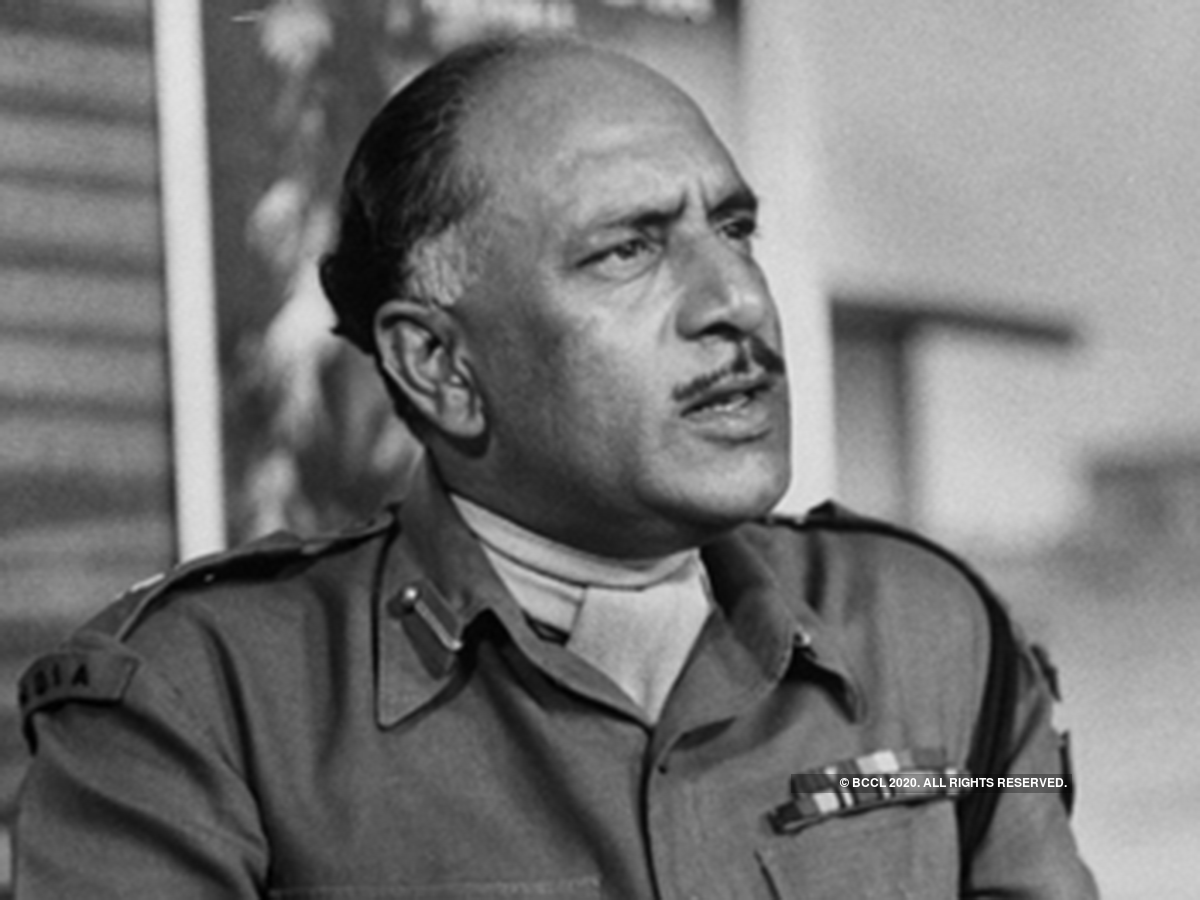
General KS Thimayya
There were three elements to India’s largely unknown role in the Korean War 1950-1953. This is the second in a continuing series on that conflict. For the earlier story on the 60th Para, click here (https://bit.ly/2DW0PHS)
India became a member of the United Nations when the organization was founded on October 24th, 1945. Established to ensure world peace—among other goals— after a ruinous World War, the UN has had a mixed track record. One of its successes, however, was the bringing of the Korean War to a close. India played a unique role in bringing the conflict to a speedy conclusion by advocating against a policy being debated at the UN which could have led to the war’s prolongation or escalation. That war was also the first commitment to a UN assignment by an independent India and the Indian Army. This contribution and the men who made it a success are still celebrated as heroes for their commitment and courage.
The Korean War began on 25th June 1950 and would rage for three long years between the Western alliance—led by the USA under a UN resolution called the UN Command—and a Socialist alliance of North Korea and China (known as the Korean People’s Army (KPA) and the Chinese People’s Volunteers (CPV)) supported by the Soviet Union. The two sides reached a military stalemate by the middle of 1953 and had agreed on the terms of a ceasefire. In truth, the war would have come to an end in 1952 if the peace talks held at Panmunjom on October 25, 1951 could have reached a decision on the question of prisoner swaps. This was a contentious topic, and one where India finally found the solution—a solution accepted nearly unanimously by the UN, allowing for the signing of the Korean Armistice Agreement on July 27, 1953. India’s efforts to find a compromise failed more often than not, increasing tensions between India and the United States, and even South Korea. The US had reasons to suspect Indian neutrality as we were among the first countries to recognize China diplomatically, even advocating for their seat at the UN in 1950.
A major issue that defied agreement was how to deal with a large number of Korean and Chinese prisoners—about two hundred thousand of them—held by the UN Command. Many prisoners refused to return to their original countries. There were also a few similar UN prisoners, mostly Americans, held by the Korean People’s Army (KPA) and the Chinese People’s Volunteers (CPV))
The Armistice agreement stipulated that a Neutral Nations Repatriation Commission (the NNRC) would be established with two countries from each bloc, and headed by India—underscoring our nation’s reputation as a neutral country. Thus the NNRC had Czechoslovakia and Poland from the Eastern Bloc, and Sweden and Switzerland from the West. India was also tasked with providing a brigade of soldiers to provide security for the prisoner exchange.
The NNRC decided the fate of the remaining 20,000 POWs —and their repatriation—also called the Big Switch. It followed Operation Little Switch in April-May of 1952, which saw the exchange of wounded and sick soldiers held by both sides. The solution included handing over these prisoners to the NNRC headed by India. A full Indian contingent of nearly 6000 called Custodian Force of India (CFI) were to take over physical custody of these prisoners; this was our nation’s initiation into peacemaking and conflict resolution.
Led by General Thimayya as Chairman, and Ambassador B.N. Chakravarty, IFS, as the Alternate Chairman, the Neutral Nations Repatriation Commission (NNRC) was a task that many did not think Indians would be able to handle or deliver, because of its layered complexities and intrigue.
The Indian government had made sure to send their best medical unit 6oth Para Field Ambulance earlier ( https://bit.ly/2CrHWfn) and now, in sending General KS Thimayya—later to be the COAS— they displayed the same intent.
The force behind the NNRC
Kodandera Subayya Thimayya was one of three brothers born to a rich coffee planter of Cheppudira clan in Madikeri in the district of Kodagu. He joined Bishop Cotton School in Bangalore before enrolling at the Prince of Wales Royal Indian Military College (RIMC) in Dehradun; he was one of six Indian cadets later chosen to attend the Royal Military Academy at Sandhurst along with Gen PN Thapar who would later succeed him as the Chief in 1961 and be made a scapegoat for failures in 1962. Gen Thimayya’s brothers too joined the Army and his elder brother Ponnappa later joined the INA inspired by Subhas Chandra Bose and his younger brother died in the first war in Kashmir.
Thimayya graduated from Sandhurst in 1926 and received a commission into the British Indian Army, going on to become the first Indian to command an Infantry brigade: the 268th Indian Infantry Brigade—part of the post-World War II British Commonwealth Occupation Force in Japan. He received the British Distinguished Service Order for his service for the British military during World War II.
General Thimayya was also chosen to lead the counter offensive in Kashmir and headed the Jammu Kashmir force from April 1948 . The J&K force was split as Srinagar and Jammu Division, Gen Thimayya headed the Srinagar Div in May 1948 . Immediately he set about recapturing territories lost to the marauders with his daring and dynamic brigade commanders – Brig LP Sen of 161 brigade in Uri Sector, Brig Atal of Para Brigade tasked to recapture Zojila and Harbaksh Singh in command of 163 in Handwara – Kupwara . They were on a recapturing spree when Nehru decided to unilaterally declare suspension of operations as the case was referred to the UN much to the protestations of the army brass. Fortunately Pakistan didn’t comply with the UN resolution allowing the re – commencement of operations. This window of opportunity saw the consolidation of Ladakh with the capture of Zojila Dras and Kargil. Leh a weakly held garrison was saved by the sheer audacity and courage of Thimayya and Air Cmde Mehar Singh who landed in a Dakota together for the first time in Leh paving the way for beefing up troops that saved Leh from enemy hands . In another audacious move for capture of Zojila tanks of 7 Cavalry was used in a direct firing role which completely destroyed the enemy morale leading to its capture . Thus Ladakh was saved in the nick of time by November 1948 before winter set in . Seeing the change in pace and tempo of operations Pakistan quickly agreed to the terms of the UN resolution calling for a ceasefire before it lost all other territories held by them. The rest is history but what stood out is the sheer character and audacity which made him a national hero for saving Kashmir .
Another anecdote that revolves around him is the detention of a senior politician’s son after he and some goons passed lewd remarks and even tried to molest the wife of an Army officer of 5 JAT in Amritsar in 1959 . With the personal involvement of none less than that of the CM Of Punjab the ripples of this action went up to Parliament. General Thimayya was summoned for an explanation and his response that silenced the opposition was “If we cannot defend the honour of our women, how can you expect us to defend the honour of our country?”
His ability to project India’s honor was on full display during his handling of the NNRC in Korea.
The NNRC through CFI was responsible for gathering non-repatriated prisoners into camps; that included nearly 170,000 prisoners held by UN forces who didn’t want to return to either China or North Korea.
In the face of Chinese demands for the forceful repatriation of their soldiers, the UN and the CFI worked hard to explain to each prisoner their rights and privileges; they could then choose to go home or remain with the side that captured them.
This called for compassion, fairness, and neutrality on the part of the Indian Custodian Force, who rendered yeoman service during the entire span of their mission from September 1953 to March 1954. On several occasions, intricate situations were resolved only because of the patience and tact of General KS Thimayya and Major General SPP Thorat. They proved their mettle, earning well-deserved praise for their command and for India.
It was an unenviable task; in the end only less than 100 who wished not be repatriated to either country came back to India once the NNRC and CFO concluded their operations. A few Koreans chose to resettle in India, while others were repatriated to Brazil.
General Thimayya is not only an Indian military hero he is also a hero of the Korean War . It has been 66 years since the end of the Korean war but even till day he is remembered by Koreans with gratitude and affection. He was awarded a Padma Bhushan in 1954 for his service in Korea.
General Thimayya went on to become the COAS from 1957-1961. After his retirement the UN again requested for his service in 1964 to command UN troops operating on Cyprus in keeping with his reputation of impartiality displayed in Korea . He would however die of a massive heart attack on December 18, 1965 at the age of 59.
————–
Col ( Dr) Divakaran Padma Kumar Pillay, Shaurya Chakra, PhD is a Research Fellow, with the Manohar Parrikar Institute for Defence Studies and Analyses. His twitter id is @dpkpillay12.
—————
source: http://www.economictimes.indiatimes.com / The Economic Times / Home> National> Business News> News> Defence / by ET Contributor – Col.(Dr)Divakaran Padma Kumar Pillay / July 21st, 2020
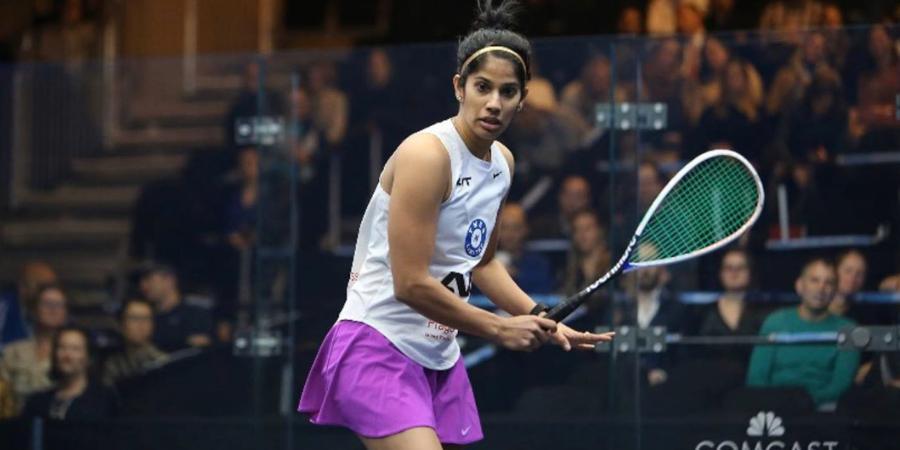
India’s ace squash player Joshna Chinappa (left) recently broke into the top-10 of the women’s world ranking. FILE PHOTO
Joshna Chinappa has experienced a hankering to return to the squash court once before. It was when she tore her ACL (anterior crucial ligament) in 2012. She was out of action for 10 months then.
This time, by admission, the 18-time national champion is at her fittest – reflective in her jump to No.10 in the latest issue of world rankings – and yet, all she can do is attach therapeutic significance to household chores while hoping for the Covid-19 pandemic to subside.
“Initially, it was fine because as an athlete you console yourself, saying it’s the break you deserve, and that it’s all going to return to normal soon,” Joshna tells DH. “…but after the first few weeks, it became very hard because of all the uncertainity.Trying to stay fit in a small space isn’t easy. More importantly, you don’t even know what you’re training for. Usually, you have a tournament, a goal you’re working towards. This time, there isn’t one, but you do it because you don’t want to start from scratch when the sport returns.”
Going by Professional Squash Association’s announcement from a few of weeks ago, the tour should restart mid-August. By that, Joshna, who last played in Egypt in March before hurrying back to India upon news of the virus outbreak, will have not have played in five months. She, however, reckoned it’s going to be a lot longer before resumption.
“It will take some time to get back, especially a sport like squash because there is quite a bit of contact with the opponent. There are so many guidelines which need to be followed if we’re back to competing again,” says the 33-year-old.
“I don’t see us returning to the court till October or November, and even then it will be vastly different from what it used to be.” she adds.
While the PSA has remained tight-lipped about its SOPs, Joshna offered glimpses, saying the tour is likely to enforce stringent testing measures and play without crowds.
“I also think they will host several tournaments in one location. What that does is keep all the players and support staff in one area. This way we can be monitored better,” she says. “Even then there will be a fear among athletes to compete. It’s going to be difficult to break away from that but I think we should just get on with it.
“I don’t think we’re properly safe until they come up with a vaccine, but we can’t endlessly wait for that to start living once again,” she opined.
source: http://www.deccanherald.com / Deccan Herald / Home> Sports> Other Sports / by Roshan Thyagarajan, DHNS-Bengaluru / July 13th, 2020
Joshna Chinappa, who has not played since March due to the COVID-19 pandemic, moved up a spot to be in 10th position.
Indian squash star Joshna Chinappa (Photo | Joshna Chinappa Instagram)
New Delhi :
India’s squash star Joshna Chinappa has broken back into the top-10 of the PSA world rankings following the shock retirement of Egyptian world number one Raneem El Welily.
Joshna, who has not played since March due to the COVID-19 pandemic, moved up a spot to be in 10th position.
The 33-year-old had entered the top-10 for the first time in 2016.
Dipika Pallikal is the other Indian female player who has achieved the feat.
Egypt’s Nouran Gohar is the new world number one following Raneem’s retirement.
Raneem had held the top spot for 19 months before announcing a sudden retirement last month.
India’s top male player Saurav Ghosal remains 13th in the latest rankings.
The PSA tour is suspended until at least mid-August due to the coronavirus outbreak.
source: http://www.newindianexpress.com / The New Indian Express / Home> Sport> Other / by PTI / July 08th, 2020
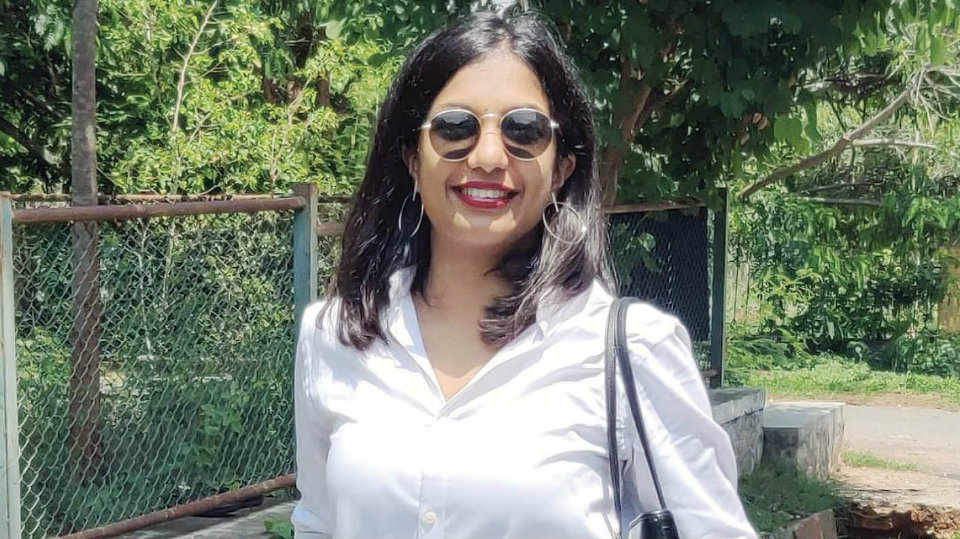
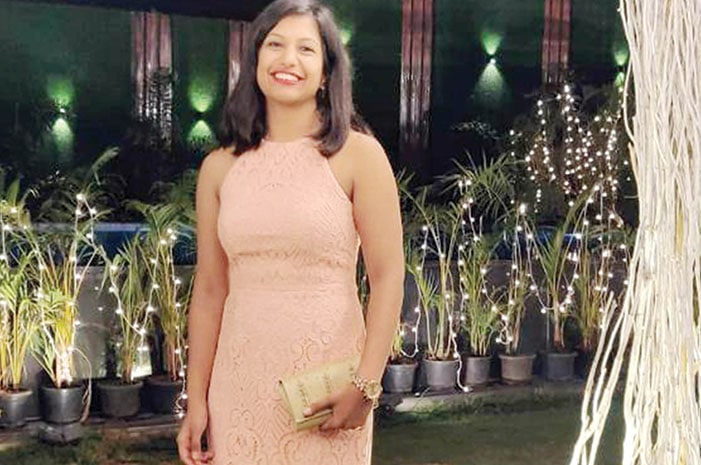
Everyone has some or the other ambition or dream to achieve when they are in college but very few of them live their dreams or choose the career they wished. Mysuru-based Coluvanda Punya Nanjappa has achieved her childhood dream or call it passion to be a fighter jet pilot.
She has been selected for the training and once she completes it, she will be a fighter pilot, a rare distinction for a woman who has her roots in Kodagu, a land of defence personnel. Though the district has achieved the fame of producing a Field Marshal, a General and innumerable Lieutenant Generals, Brigadiers and Majors in the Indian Army and their equal ranks in the Navy and the Air Force, it is for the first time a woman fighter pilot is emerging from the tiny district.
In fact, she will be the only second woman from Karnataka to be a fighter jet pilot after Meghana Shanbough from Chikkamagalur and is the lone woman in her ongoing training course where there are 40 future fighter pilots.
Last year, Punya became the only women cadet from Karnataka to be selected for the flying branch training at the Indian Air Force Academy. The training for cadets who are selected for the flying branch is divided into three stages. Punya has already completed the Stage-1 of her training at the Academy in Dundigal in Telangana and has been selected to join the fighter stream where she will undergo Stage-II training at Hakimpet, again in Telangana.
The training stages are vivid and is a combination of adventure, skill and deft manoeuvring. They will be trained to engage in air-to-air combat, air-to-ground combat and sometimes electronic warfare while in the cockpit of a fighter aircraft. Fighter pilots undergo specialised training in aerial warfare and dogfighting (close range aerial combat).
After Stage-II, Punya will be commissioned as an officer to undergo Stage-III training. She is likely to be commissioned as an officer in the next passing out parade in December. Punya has always wanted to join the fighter pilot stream and her childhood dream has been realised. A resident of Vijayanagar in city, Punya was selected as a Trainee Pilot of IAF Flying Branch last year.
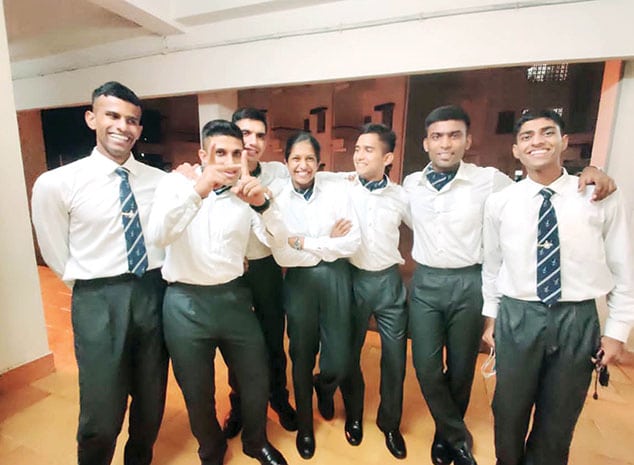
Punya with her batch-mates at the Training Academy in Telangana.
She is the daughter of Anuradha Nanjappa (a teacher at St. Joseph’s Central School) and late Coluvanda P. Bala Nanjappa (he was serving as the Manager of Prabha Theatre), native of Chambebellur in Virajpet taluk of Kodagu district.
Punya completed her schooling at St. Joseph’s Central School in Vijayanagar, pursued her PUC at Vijaya Vittala PU College in Saraswathipuram and Engineering at NIE, Mysuru. Punya then took up Air Force Common Admission Test (AFCAT) — an officer recruitment gateway in three branches of Air Force — Flying Branch (Short Service Commission only), Technical branch (Permanent and Short Service Commission) and Ground Duty Branch (Permanent and Short Service Commission).
source: http://www.starofmysore.com / Star of Mysore / Home> News / July 03rd, 2020
Congress leaders and workers watched the installation ceremony of D K Shivakumar as Karnataka Pradesh Congress Committee (KPCC) president, through a live session on zoom application, at Coorg Community Hall in Madikeri and various other places in the district on Thursday.
The programme was aired live at the gram panchayat levels as well.
Congress leaders and workers took oath on the occasion, towards strengthening the party further.
In the leadership of Congress leader Nandakumar, ration kits were distributed to 200 families on the occasion. Senior leader Chandramouli said that everyone should lend a helping hand to the needy.
The programme at the Coorg Community Hall was inaugurated by Kodagu District Congress Committee President K K Manjunath Kumar. MLC Veena Acchaiah, leaders Appu Ravindra, Kolyada Girish and K P Chandrakala were present.
source: http://www.deccanherald.com / Deccan Herald / Home> State> Top Karnataka Stories / DHNS, July 03rd, 2020
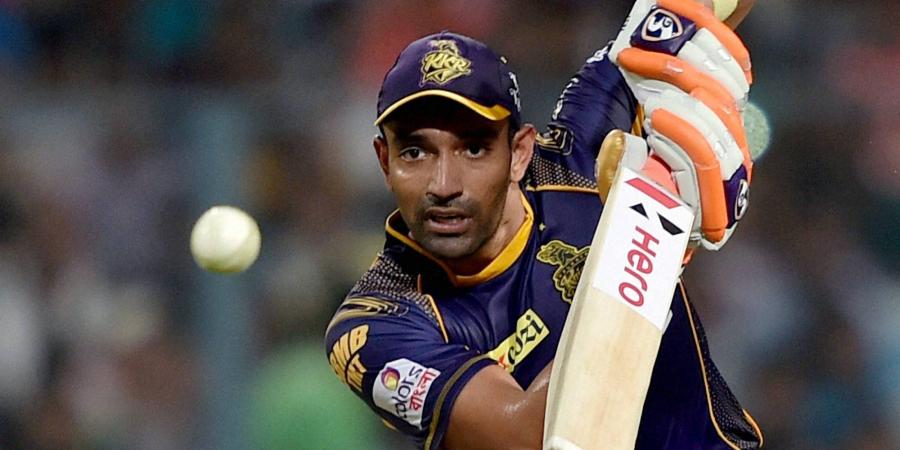
Having overcome suicidal thoughts, Uthappa says it’s important to remove the stigma attached to mental illness and has been using his experiences to spread awareness over the last few years.
Robin Uthappa. (File photo | PTI)
Kochi :
“Before I realised what I was going through, things got really bad and I started considering suicide as an option. For a whole year, the idea of suicide was a very real option for me. I had thoughts of jumping out of the balcony.” Chilling words, of Robin Uthappa.
The 34-year-old batsman is talking about what he went through between 2009-2012 when he experienced severe mental struggle. His disclosure takes added significance in the light of Bollywood actor Sushant Singh Rajput’s alleged suicide which caused nationwide shock.
The T20 World Cup winner cites his own example to explain that mental illness does not distinguish between the rich and poor or other divisions.
“At the point when I was depressed, I was earning the most amount of money in my career. I was the captain of Karnataka’s Ranji Trophy team and playing for RCB. But you can’t notice when this thing secretly climbs up on you,” he adds.
Uthappa chose to confide in a close relative who helped him get the necessary assistance. He also admitted that cricket was a good distraction, but added that there was no support system within the sport when he was grappling these thoughts.
“There wasn’t necessarily a support system within the cricketing set-up. I never spoke about this with my teammates. The sport can make you feel mentally tired because you are travelling and living out of a suitcase for 250-300 days a year. That can get to you mentally, but the trigger could be anything. It is important to recognise it and seek help,” he says.
Pacer Mohammed Shami had also recently opened up on having suicidal thoughts, while Australian cricketer Glen Maxwell took a break from cricket to address mental health issues.
Uthappa believes teams having sports psychologists and mental conditioning coaches will go a long way in helping avoid such dangerous thoughts.
“Having a mental health expert on board will be great for sportspersons because they will know there is somebody to talk to. If they can smoothly integrate that into the team chemistry, it would be wonderful,” he adds.
Sushant’s death has sparked a dialogue on mental health and Uthappa hopes his experience makes people wait before taking their lives.
“I decided to reveal my struggles to raise awareness. When I was considering jumping off the balcony or ending my life, something within me kept telling me to wait. The voice didn’t tell me to stop. The voice just said ‘wait’ and I listened.
“I want people to know that you can actually come back from such a state and live a happy life. That’s why I talk about it because everybody deserves a good and happy life. It is important to break the stigma attached to mental health and depression or going to a psychiatrist. There is no shame in seeking help,” says Uthappa.
source: http://www.newindianexpress.com / The New Indian Express / Home> Sport> Cricket / by Martin Joseph / Express News Service / June 21st, 2020
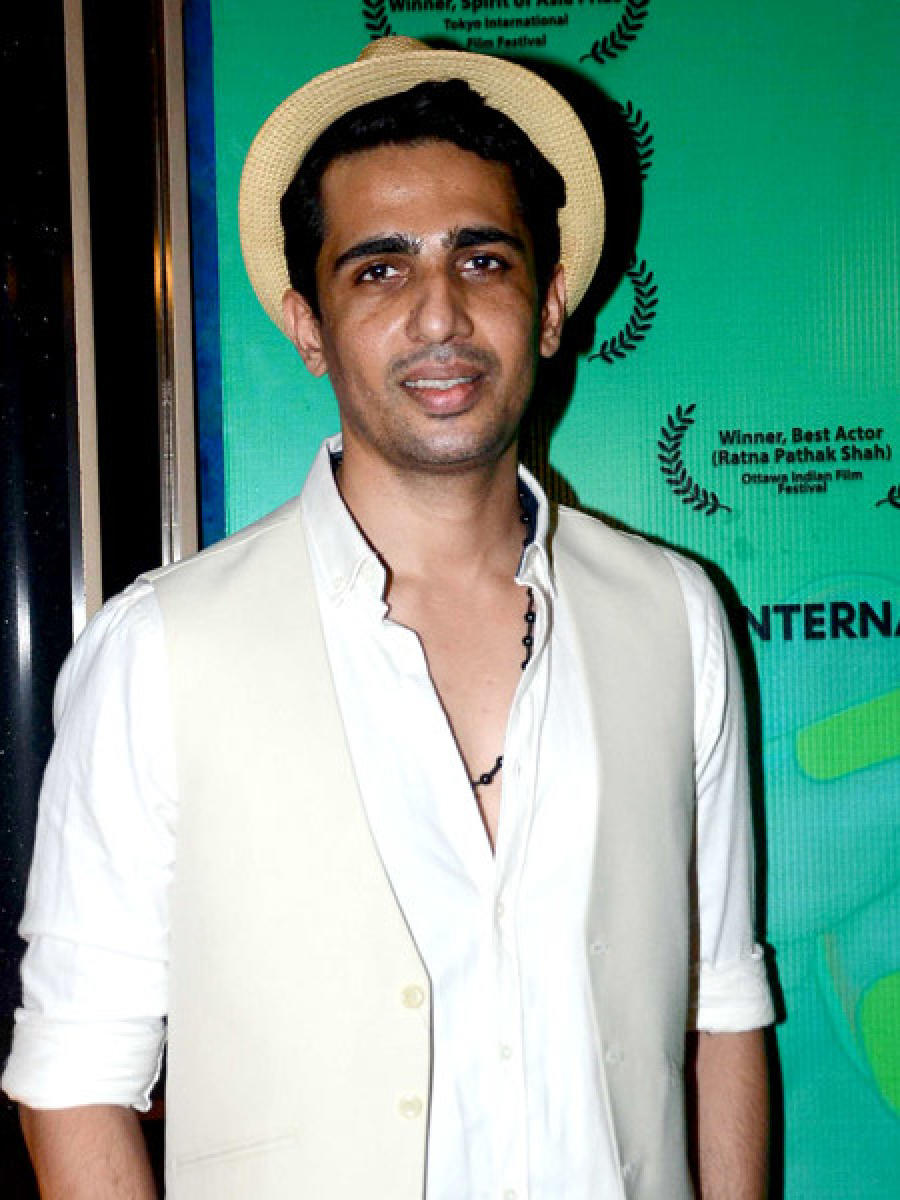
Actor Gulshan Devaiah says the untimely demise of Sushant Singh Rajput has served as a wake-up call for the Hindi film industry, which otherwise functions on the basis of popular opinion.
The 42-year-old actor, who moved to Mumbai from Bengaluru almost a decade ago to pursue a career in cinema, believes Rajput’s death has pushed many people in the showbiz to assess their ambition and reason for joining the profession.
“There are certain approaches that I need to reassess after this terrible tragedy. I am in the process of figuring it out, I am introspecting, self-reflecting, understanding the work we do, why we do and whether it is okay to fail,” Devaiah told PTI in an interview.
Best known for his performance in films “Shaitan”, “Goliyon Ki Raasleela Ram-Leela”, “A Death in the Gunj” and “Mard Ko Dard Nahin Hota”, the actor said now when he looks back at his journey in movies, there is both a “sense of pride and disappointment”.
Devaiah said in this business-driven industry, merit doesn’t count and success is measured on the basis of box office or popularity.
“It is a tough business and everyone comes here with a lot of ambition and aspirations. Some people achieve it, some don’t… All we want is more and more people to like us and want to work with us.
“But the way success is perceived popularly is by films making money (at box office) and having ‘x’ number of followers or likes on social media. It is not based on merit. The entire entertainment business is a game of perception.”
Rajput, 34, was found dead at his Mumbai residence on June 14. His death has reignited discussions around the struggle of survival for outsiders.
Devaiah said while there is a lot of “toxicity” in the showbiz because of the power structure, actors need to safeguard themselves from getting into a position where they can “lose control”.
“People try to wield a certain power from casting companies to producers. There is abuse of power. If we can rein it a little bit and be less judgmental and be more responsible, we all can be nice.
“For actors like me, who have ambition and expectations, it is ok to have it but you have to prepare yourself to fail. If it doesn’t matter to you then no matter what people say and look and snigger at, it won’t affect you.”
He believes Rajput was in a pretty sound position professionally, and rather than putting out theories on the reasons for his decision, the need of the hour is to do some self-analysis.
“Sushant was doing incredibly well for himself, his death is unfathomable. He worked in TV for 10 years, he came into films that made money. In reality, only he knows why he did it or maybe he didn’t…
“I don’t have a popular opinion. I take this tragedy to self-reflect and assess and understand the world we live in,” he said.
Devaiah said going forward he plans to be more accepting of the nature of the film business and manage his expectations.
“A lot of people come here with dreams and aspirations and dreams are shattered everyday one can see that. A lot of this pain can be avoided if we look inwards and set our perceptions.”
source: http://www.deccanherald.com / Deccan Herald / Home> Entertainment / by PTI, Mumbai / June 21st, 2020
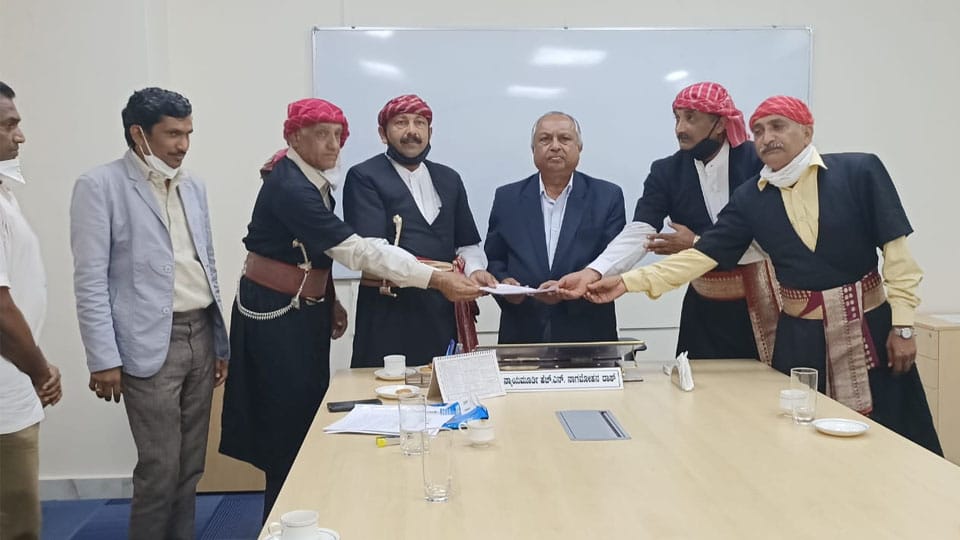
Delegation meets Justice H.N. Nagamohan Das One-man Commission
Madikeri:
Members of Codava National Council (CNC) led by its President Nandineravanda U. Nachappa recently met Scheduled Caste Welfare Department and Justice H.N. Nagamohan Das Commission in Bengaluru urging him to include Kodava tribe in the ST list of the Constitution.
The meeting took place at Yavanika, the One-man Commission’s office on Nrupathunga Road in Bengaluru. Nachappa presented a memorandum explaining the need for the inclusion of Kodavas in the ST list of the Constitution and apprised him about the tribal ancestry and indigenous tribal traits.
Justice Nagamohan Das was told about the need and necessity of statutory protection to preserve the Kodava culture, language, folkloric identity, their age-old hereditary piece of untitled lands, besides their historical continuity.
Also the Commission’s attention was drawn regarding ‘sabotaging’ the genealogical studies being carried out to include Kodavas in the list of ST communities. The studies are being carried out by KSTRI (Karnataka State Tribal Research Institute), Mysuru.
“The ongoing ethnography study of Kodava tribalism is in a diabolic ‘Etic’ approach. We have requested the Commission to direct the KSTRI Mysuru to apply ‘Emic’ approach. We further urged that on the basis of the parameters laid down by Justice Lokur Committee Report, the ethnographic study should be carried out. In this regard the title of the schedule should be “Kulashashtra Adhyayana” or “Ethnographic” study but KSTRI has titled it ‘Kodagu Jilleyallina Kodava Samudayada Arthika-Saamaajika Adhyayana’ (a socio-economic study of Kodavas),” Nachappa said.
There is a clear cut order issued by the Government to conduct an exclusive Ethnographic study. KSTRI has carried out a major portion of socio-economic study and created fake economic status. “The KSTRI neither collected authentic documents nor produced proper income and expenditure sources but collected only verbal statements, marginalising the real ethnographic issue,” Nachappa claimed.
“The KSTRI created a fake exaggerated version with prejudiced mindset which is not acceptable to us. We want the real ethnographic study to explore and establish true tribal ethnicity,” Nachappa told Justice Nagamohan Das.
Almanda Jai, Pattamada Kusha, Pattamada Ashok and others were present.
source: http://www.starofmysore.com / Star of Mysore / Home> News / June 26th, 2020
Rashmika Mandanna has surprised Mahesh Babu and family by sending them a special gift hamper. Rashmika has sent a basket full of delicious goodies including Avocados, Mango pickle and other organically grown foods. Along with the gift hamper, Rashmika has sent a hand-written note to the Superstar couple. This act of Rashmika is winning praise from Superstar’s fans.
None other than Mahesh Babu’s wife and former actress Namrata Shirodkar took to social media and revealed Rashmika’s gift hamper to Mahesh. Namrata has thanked Rashmika for sending such a beautiful gift all the way from Coorg where Rashmika is staying with her family. Namrata said this is the first gift hamper Mahesh Babu has received in Covid times. She also said she got such a lovely gift in this monsoon. Acknowledging the gift received, Namrata Shirodkar wrote, “Thankyou for all the delicious goodies rashmika !! all the way from Coorg #monsoonseason #mangopickle our first gift hamper in covid times happy monsoons !! #stayhomestaysafe”
It can be noted that Mahesh Babu is the first big star hero with whom Rashmika has acted. Rashmika got a big break after working with Mahesh Babu in Sarileru Neekevvaru. Rashmika is now paired up with Allu Arjun in Sukumar’s directorial Pushpa.Rashmika is pinning high hopes on Tollywood and is expecting to pair up with all the big stars in Telugu. Recently, she has turned down a movie alongside Nani as she didn’t want to play second fiddle to Sai Pallavi. Looks like Rashmika is making her moves well.
source: http://www.gulte.com / Gulte.com / Home> Movie News / by Gulte Desk / June 29th, 2020
WELCOME. If you like what you see "SUBSCRIBE via EMAIL" to receive FREE regular UPDATES.
Read More »