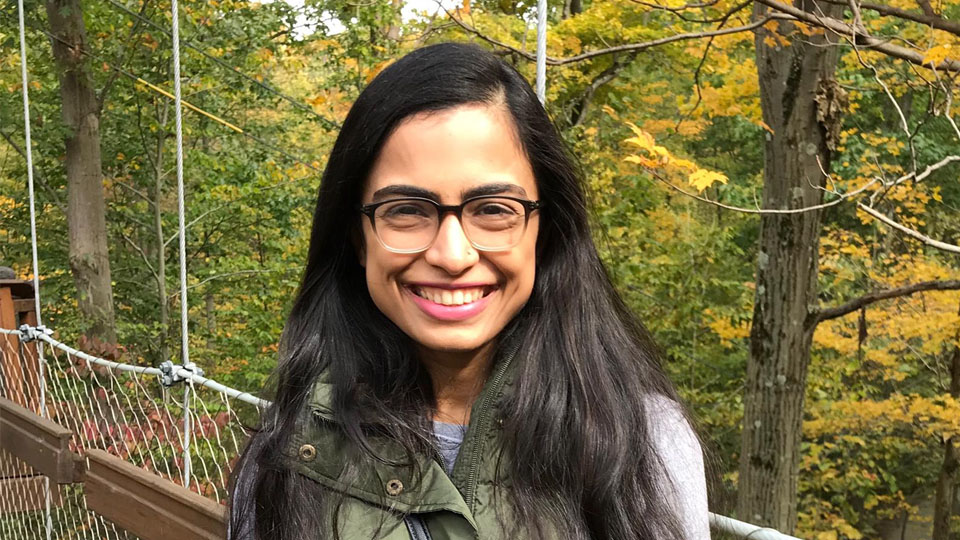
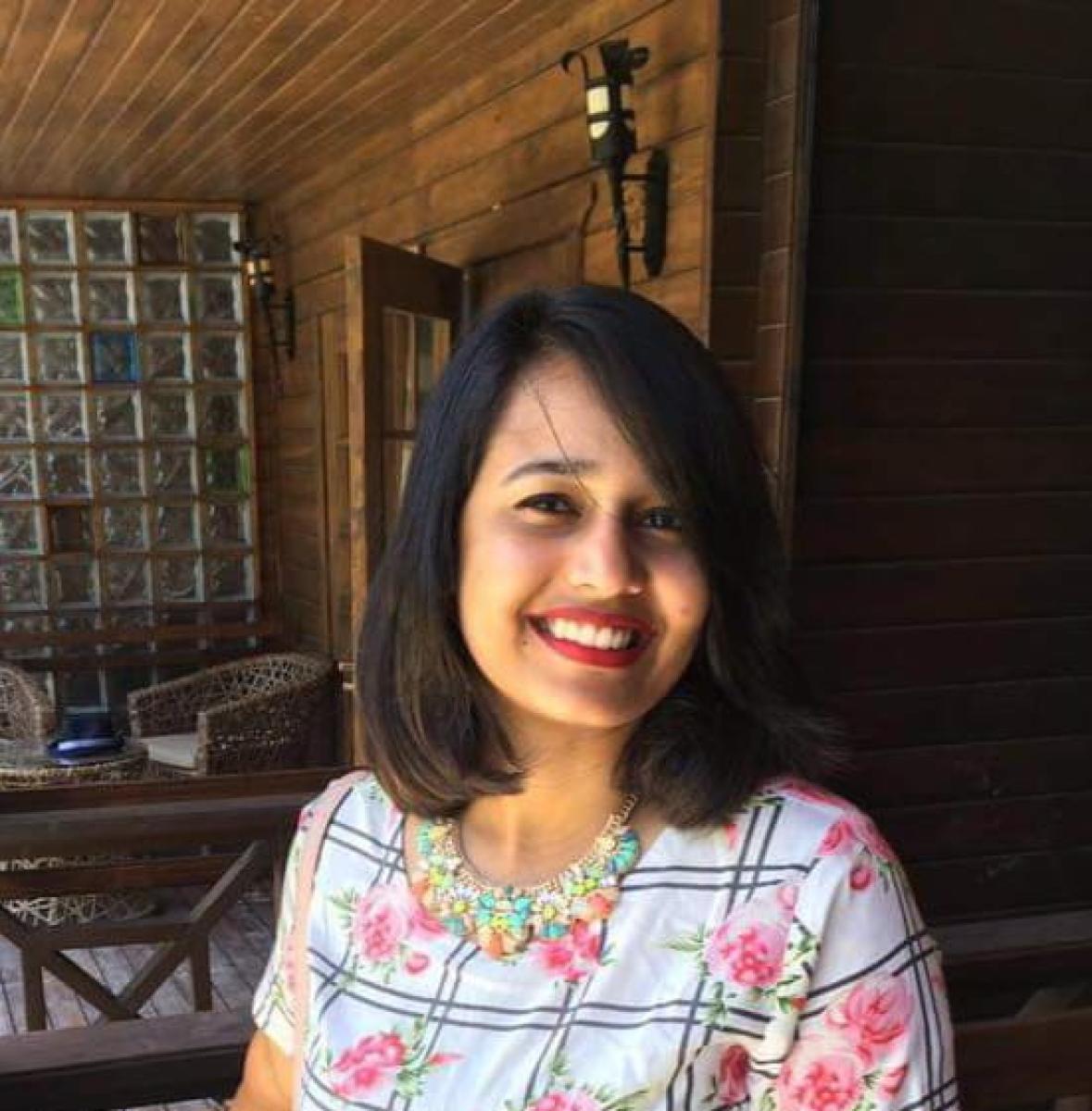
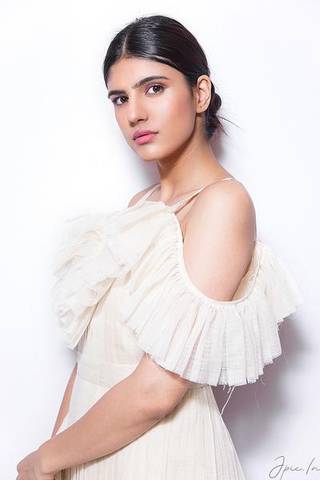
Kodagu-born Mathanda Reema Ramesh has completed her Fellowship in Paediatric Haematology and Oncology from Cleveland Clinic, USA.
The Fellowship programme provides an outstanding opportunity for the future Paediatric Haematologist-Oncologists to learn to diagnose and treat a broad range of common and rare blood disorders and cancer.
Located at Cleveland Clinic main campus, the Paediatric Haematology-Oncology & BMT Department plays a significant role in promoting the outstanding recognition of this world-renowned tertiary referral centre.
Reema Ramesh is the daughter of Mathanda A. Ramesh and Beena, residents of Virajpet, Kodagu. She is the sister of Dr. M.R. Aiyappa who works as a General Physician and Diabetologist at Brindavan Hospital, Mysuru. Mathanda Ramesh has been the President of Kodagu District Central Cooperative Bank.
Reema studied in Vijaya School, Kadanga, Cauvery School, Virajpet and Coorg Public School, Gonikoppal. She completed her MBBS at Kasturba Medical College, Manipal and MD in Paediatrics from University of Southern Illinois, USA.
source: http://www.starofmysore.com / Star of Mysore / Home> News / June 26th, 2020
Confidence steered Jwala and Ashwini, and in turn India, towards their first-ever doubles World Championship medal for badminton in 2011 at Wembley and kicked off a decade in which singles stars PV Sindhu and Saina Nehwal would follow the trailblazing duo onto the Worlds podiums every single Championship year.
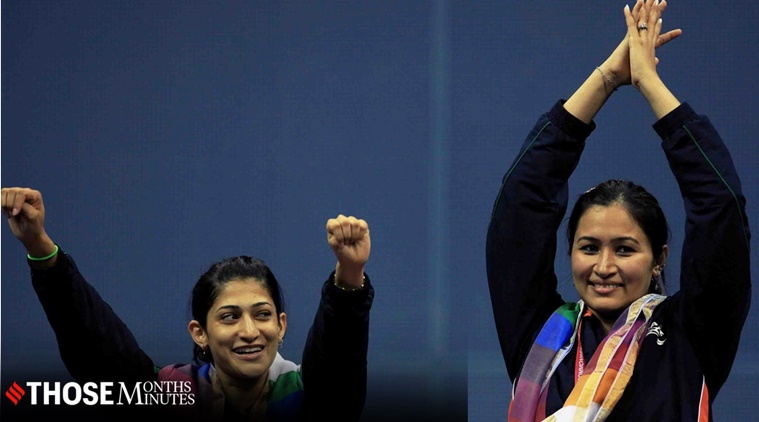
Jwala Gutta and Ashwini Ponnappa won their first-ever doubles World Championship medal for badminton in 2011 at Wembley (Source: PTI)
Everyone knows Jwala Gutta loves to fire the opening salvo. It comes entirely from her playing credo: “You can’t be a good doubles player if you can’t serve well.” The first shot sets the tone.
After she split with Shruthi Kurien at the start of 2009, Jwala was scouting around for potential partners to play with. Her mixed doubles career with V Diju was going swimmingly well as they’d beaten the Korean World No. 1s that year and entered the Top 10.
But before she zeroed in on Ashwini Ponnappa, she sprung a thunderbolt on her mother by almost sending the daughter-mother entry for the Nationals that year. Her mother ticked the only box that Jwala sniffed around for, when deciding partners: “I didn’t really have to think a lot. Mom’s serve was very good.” Jwala knew she could mop up the rest.
This confidence steered Jwala and Ashwini, and in turn India, towards their first-ever doubles World Championship medal for badminton in 2011 at Wembley in London, and kicked off a decade in which singles stars PV Sindhu and Saina Nehwal would follow the trailblazing duo onto the Worlds podiums every single Championship year. Jwala-Ashwini’s was the first medal since Prakash Padukone won in the 1980s.
“When I decided to play with Ashwini, she wasn’t even a Top 4 in India. I just saw in her that no fear of losing, and knew I could mentor her,” Jwala says.
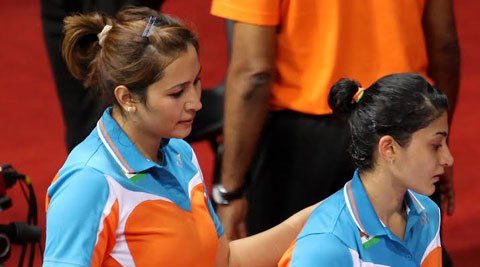
Ashwini wasn’t pickled in the ways of doubles, where plenty of mental disintegration gets induced. (Source: Express Photo by Ravi Kanojia)
Doubles was Jwala’s battlefield where she needed only an ally. “I really could combine well with anyone – Diju of course, Chetan, Vidyadhar, Gopi also, Shruthi,” she explains. “Only this – the partner should be able to serve properly.”
So when a friend and batchmate pointed out the whiplashing Ashwini to her at the nationals, Jwala wasn’t distracted by what was Ashwini’s very-noticeable big booming smash. “My friend told me – she smashes really hard. I immediately asked, but how’s her serve. I don’t care about the smash as long as it’s hit at the right time and right place. I’m not bothered by how hard she hits. I watched her at the start of the rally – her serve was fine. She was still young.” The pair was good to go.
More than callow, Ashwini – a fearless, formidable, free-spirited hitter – wasn’t pickled in the ways of doubles, where plenty of mental disintegration gets induced.
“At the start of the rally, that’s where you put pressure on the opponents. Top pairs understand the importance of a good serve that opponents struggle to return. I always got my points when I served well,” Jwala says.
Those incisive all-noticing eyes analysed the scene before her like a computer processor when Jwala served.
“I was observant even as a junior. Where is the receiver’s foot facing? How’s he holding the racquet? Which weakness must I attack….” there were a dozen cues that Jwala would factor in when she set out to serve.
Ashwini reckons they combined seamlessly and beyond the obvious advantage of being a left-right combo.
“She had a great serve. And I focused on what I had to do,” Ashwini says. A part of the reassurance that Ashwini brought to the court for Jwala came from Ashwini’s unalloyed conviction in her own smash. Polite and always soft-spoken, Ashwini though takes blazing pride in her smashing where the hissing thwack could well be pronounced as “but of course”.
The bite to the smash comes from Ashwini’s total rejection of breaking it down. The Ashwini smash is just one Macbethian uninterrupted striking down of the axe in one fell swoop.
At the start of this decade, the young and agile Ashwini could rain down 15-20 smashes one after another. She didn’t just eschew nuance in that shot – she chewed and spat out violently any notions of prettying up her whippy welt.
“I just know one smash – that’s my smash,” she says with rare curtness, if one asks her to dissect her favourite flogging action with a badminton racquet. “There’s very little touches there,” she says shredding all pretensions to artistry. “It’s like a hockey whack,” the proud Coorgi raises the violence meter, “it’s a lot about power and just doing it. No thinking. When I’m smashing well, I’m just flying on court.” It’s never not good – the Ashwini smash.
“I’m not apprehensive about what’ll happen after I smash. I’m not scared of losing.”
Out of this fiery pair of prides – Jwala: unquestionable of her serve and Ashwini: unrepentant of her smash – was forged India’s first and hitherto only doubles medal in the World Championship.
But first came the dazzling of Delhi.
***
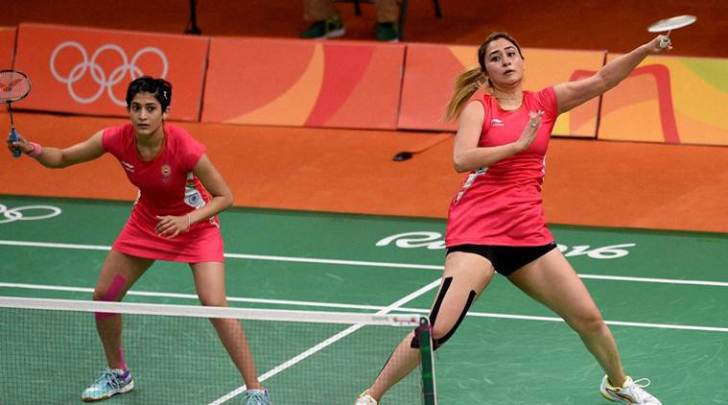
Jwala Gutta and Ashwini paired for the first time together in 2009. (Source: PTI)
When they got together in 2009, India was racing towards hosting of the 2010 Commonwealth Games, an event that singlehandedly provided the impetus to unearth and groom a bunch of medallists across sports.
The budgeting had changed immediately after the 2006 bronze at the Melbourne CWG, four years after India lost the team bronze in Manchester. “Melbourne was our first mixed team medal. It put us in the ‘A’ list of priority sports. Exposure trips increased from 2008-9 to prepare for the CWG. Dedicated doubles training started and I was on the court nearly 8-9 hours a day morning and evening,” Jwala recalls.
In came the Indonesian Master Shifu, Indonesian Atik Jauhari, who smiled compulsively and cracked the whip in training with even more gnashing teeth. “He brought in positivity and believed in me,” Jwala says.
Her frequent disagreements with coach Pullela Gopichand over how much to train and how much to compete (an intractable problem that persists with players to this day), had unsettled her from the task at hand though she and Diju emerged as the cleverest pairing on the circuit in 2009 when they made the year-end Super Series Finals. “We’d won Chinese Taipei and Bitburger. But the whole perception changed after CWG for badminton and I was happy to be part of it,” she says.
Though it started with a bout of sneezing and allergy as Delhi’s dust and heat got to her that October, and she was bed-ridden. But the Commonwealth Games had been a jet booster to many Indian athletes, who revelled in being prioritised and taken care of for the first time ever.
“For the first time, I’d play in front of my family because they couldn’t afford to travel. I really enjoyed playing on home turf in front of my parents,” Jwala remembers. The belief translated into India’s 33rd gold that helped the hosts level with England on the medal tally.
Jwala had played on all 12 days without a break in front of a packed Siri Fort. “You could hardly hear the shuttle, I told Ashwini ‘let’s just focus on the next point’.”
Like her serve, Jwala tends to look ahead only at Round 1 of any tournament. No muddling the head with conjectures of a semi-final. “That’s a stupid way of looking at tournaments. Always only focus on the next point,” she bosses. Jwala also always fronted the media even when she lost, never disappearing from the backdoor and remained aggressive and animated on and off the court.
The surge took the Indian pair past the Malaysian top team and then she combined with Diju to secure India’s first win over the top English pairing which had Nathan Robertson, till then unsurmountable.
She addresses a long-pending allegation over her questionable fitness – as combatively as ever. “If I wasn’t fit, I wouldn’t have dominated. Yes, I don’t have the athletic body type, but you don’t have to look muscular to be able to hit,” roars the southpaw. “People said I was a slow mover. But i was really tall. I didn’t need to scramble!” she says.
Accustomed to questions being thrown at her because both Diju and a yet inexperienced Ashwini remained soft-spoken, Jwala gleefully stabbed at questions while speaking her mind unfettered.
The gentleness and bottomless patience she reserved for the only one who she believed deserved it: her younger partner Ashwini.
“Not just on court, I decided to take her along through the whole media-training-competing routine. I never referred to any situation as ‘you’ or ‘me’. It was ;us’” always. I’d patiently correct her strokes by telling her not to take stress and be fearless always,” Jwala remembers.
Ashwini was soaking it all up like a sponge. “The programme was structured with coach Atik and specialised coaching. And the 2010 win was a miracle booster. It was our biggest win as a pair,” Ashwini says.
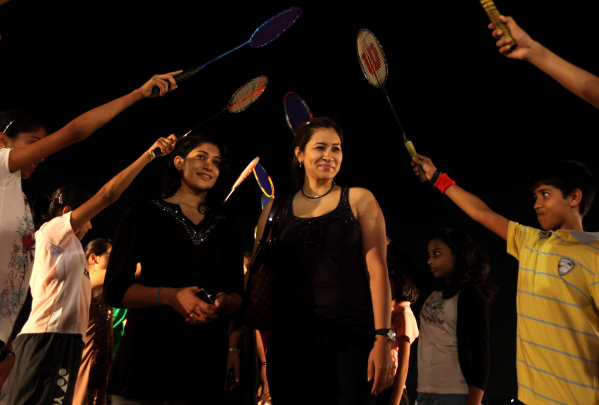
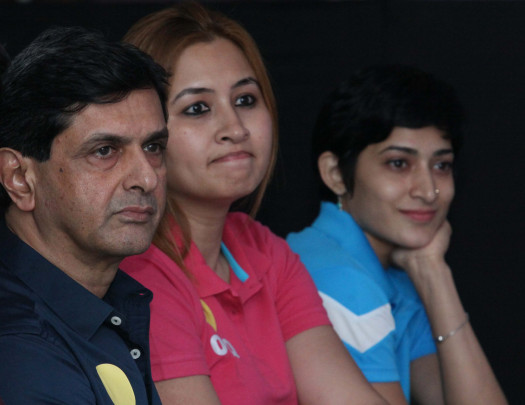
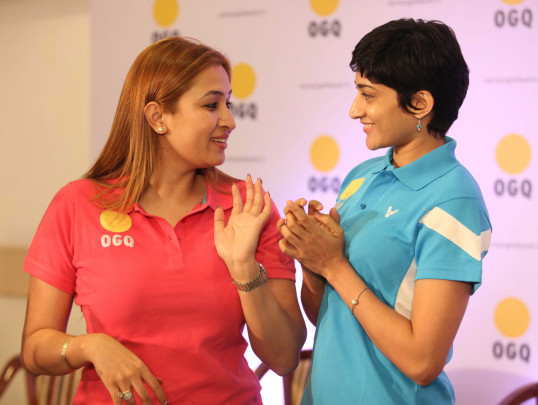
Jwala Gutta and Ashwini Ponnappa at a felicitation program of Badminton 45 Silver Jubilee at Bombay Gymkhana (Express photo by Prashant Nadkar)
It was the beginning of Ashwini learning a very important drill from Jwala, something that suited her own unhassled temperament. “I remember starting this at the Sudirman Cup where I could really switch on and switch off. We’d do well in a match and relax,” she recalls of the thriller against the Thais that the Indians won 21-19 in the third. Indian doubles was taking its infant steps and Ashwini remembers learning something as basic as where to stand on court and what worked and what didn’t. In the lead-up to the Korean Open that year, Jwala-Ashwini had eked out a 22-20 in the decider against Hong Kong and another confidence-enhancing three-game win against the Japanese.
London was only the pair’s second World Championship together and they’d strung up some good results at the French Open in the run-up. Her trainer Declan had travelled that year and Ashwini recalls a rare time when playing well coincided with having fun. “Sometimes you don’t enjoy the journey and the wins and losses don’t matter. But I remember being able to switch off the pressure and just having a lot of fun playing that one. I loved being in the stadium,” she says of a happier time.
Declan not only put her mind at ease about recovery but also pointed out something that the painfully shy woman shrugged off like a jumper.
“Declan told me I should not look down on the floor and always walk with chin up and head high. I remember doing it all consciously and how it helped my confidence and I walked tall,” Ashwini remembers.
The fidgety nervousness that comes with being impatient on court and in finishing points (botching them) was left behind at home, as Ashwini distinctly recalls walking slowly and calmly on court and not scurrying about cluelessly.
The Indians started against the Americans where Wembley’s unique atmosphere had to be internalised. “It’s a different atmosphere at Wembley because the crowd there is always blackened out so the spotlight is on the shuttle. Courts tend to appear brighter and you have to adjust to the visibility,” Jwala recalls. Indians would win 9, 18 against the Americans.
Unseeded and running into World No. 2 was familiar as was being pipped in the opener 21-19 – the result against Room Lok Yan and Tse Ying Suet, wasn’t. “We were prepared because their serves weren’t as good though they were good at defence,” Jwala sensed her opportunity to pounce. “Even after losing the first game, I was confident.” They won 19-21, 21-10, 21-17.
Jwala-Ashwini’s was the first medal since Prakash Padukone won in the 1980s. (Express Photo by Vasant Prabhu)
Up next were the Indonesians who seemed to have taken the Indians lightly and combined that with their own iffy confidence levels. Jwala is quick to acknowledge that Vita Marissa is a bit of a mixed doubles legend, but on the brink of her retirement and a reputation to guard, the Indonesian was under pressure.
It wouldn’t have helped her that Jwala had x-rayed her defence down: “On the brink of retirement, Vita wasn’t a great mover. She could smash hard but couldn’t hit as many times. Tiring her out was the plan.”
Feeding her drops bringing her to the net, the weakening limbs and the under-confidence saw Jwala preying on her tiredness. And while Ashwini peppered her from the back with smashes, Jwala would use the big boomer to soften her for a further bag of deceptions: her wicked serve.
The garden variety backhand serves in doubles don’t offer much variety for the Serve Queen. “Vita not being confident enough to return my serve made me even more adventurous.
“Even the low serves have variety. There are 5-6 variations even to that width so you keep opponents guessing,” Jwala says with glee of a web she weaves at the outset that eclipses the rest of the rally. Her antennae were buzzing even as Ashwini had to stay in front because the shuttle was coming back very fast.
Typically, Jwala takes 2-3 rallies to get a complete read on her opponent: “I focus on movements. I just remember how I lost my last point. If I win a point, I try to win on the same strategy. But you can’t think too much or brood over a lost point.”
Receiver’s styles got 3D imprinted on her mind, and her superior anticipation that afforded just 2-3 chances even when she played singles, helped her give clear succinct serving instructions to Ashwini. The Indian duo chipped away at the 17-21 first set reversal for a 17-21, 21-10, 21-17 win.
She remembers feeling a shiver of excitement on the podium thinking of her parents. “I showed emotion that day though after reaching semis, where we were assured of the medal, we did nothing unusual. Same things – though we might have eaten at a Chinese restaurant.” After the semis against the Chinese including the legend Zhao Yunlei was lost – 14, 16, it struck her that something historic had been achieved by the really unheralded pairing.
Ashwini remembers a happy time. “We dealt with pressure well against the Indonesians and knew we had created history because only Prakash Sir had a Worlds medal before us from India. Always being compared to singles used to be maddening,” she laughs.
She doesn’t remember any rancour associated with the Worlds medal. “We were in a good space. We had good meals, we laughed a lot,” she says.
Reactions to Jwala-Ashwini’s World medal were underwhelming. (Express Photo by Vasant Prabhu)
Reactions in India were underwhelming – the duo reckon out of ignorance. “There was no reception and now I think that was strange. Later, the way Sindhu was received was wow. Ours was no big deal for anyone. There were no questions about why doubles wasn’t doing well, so no celebration of when we did well either,” she says.
Ashwini says the bronze ought to be put into perspective. “Maybe, doubles was not as decorated as singles. But ours was historic, right? The first one for women. Kids can look up to us. If you’re comparing, we had little support, no endorsements. But not being received when we came back hurt a little.”
Doubles itself changed a lot – faster and tougher to get points. “We worked hard, nobody can fault us on effort. We were smart on court. We played quite often to prove ourselves in what weren’t the easiest of times,” she says.
It was when her support system – parents, brother, then boyfriend-now husband huddled around her. “Getting into the zone was tough playing doubles back then. We would get bogged down with one loss. And people would be questioning us. I’m grateful my family understood what I was going through,” she says. One of the reasons the medal sits in her parents’ home.
Finding an oasis of good form, a good vibe and success amidst the storm became doubly challenging when London itself threw up one giant tantrum. “There were riots raging in London that time. It used to be an adventure just going to the stadium. They started after we landed. We would go under shuttered restaurants for our meals. We even got out once through the backdoor. Having never been in such a situation, it was erm… different,” Ashwini says. Young and adventurous, they even afforded themselves a tingling of excitement finding beauty in breakdown.
Jwala remembers an incident opposite Wembley. “We witnessed some rioting from across the street. It was quite disturbing. But you know what happens right in such situations – after every match, we would just forget about the match, look for food, enjoy every morsel and be grateful for the basics. So effectively, we didn’t let a win settle into our system. We hardly discussed the match. It was about playing – going to a nice place to eat – walking a lot and only ensuring we were safe.” In other words, living in the moment – with all its warts and all.
A year on, London would give Jwala-Ashwini another heartbreak at the Olympics. “It was unfair and disappointing that some teams tried to fix the draws and jeopardised our chances. We had gone there well prepared. But that Japan / India / Chinese Taipei situation – it was just sad.”
It’s a scab best reserved for dark moments. But London for Ashwini will always be about India’s least-known World Championship medal and finding her heroic moment of glory and pride amidst chaos of the famous city up in flames. They can almost remember it all in slow motion, such was the drama of the bronze that came out of fire.
source: http://www.indianexpress.com / The Indian Express / Home> Sports> Badminton / by Shivani Naik / June 25th, 2020
Having overcome suicidal thoughts, Uthappa says it’s important to remove the stigma attached to mental illness and has been using his experiences to spread awareness over the last few years. Robin Uthappa. (File photo | PTI)
Kochi :
“Before I realised what I was going through, things got really bad and I started considering suicide as an option. For a whole year, the idea of suicide was a very real option for me. I had thoughts of jumping out of the balcony.” Chilling words, of Robin Uthappa.
The 34-year-old batsman is talking about what he went through between 2009-2012 when he experienced severe mental struggle. His disclosure takes added significance in the light of Bollywood actor Sushant Singh Rajput’s alleged suicide which caused nationwide shock.
The T20 World Cup winner cites his own example to explain that mental illness does not distinguish between the rich and poor or other divisions.
“At the point when I was depressed, I was earning the most amount of money in my career. I was the captain of Karnataka’s Ranji Trophy team and playing for RCB. But you can’t notice when this thing secretly climbs up on you,” he adds.
Uthappa chose to confide in a close relative who helped him get the necessary assistance. He also admitted that cricket was a good distraction, but added that there was no support system within the sport when he was grappling these thoughts.
“There wasn’t necessarily a support system within the cricketing set-up. I never spoke about this with my teammates. The sport can make you feel mentally tired because you are travelling and living out of a suitcase for 250-300 days a year. That can get to you mentally, but the trigger could be anything. It is important to recognise it and seek help,” he says.
Pacer Mohammed Shami had also recently opened up on having suicidal thoughts, while Australian cricketer Glen Maxwell took a break from cricket to address mental health issues.
Uthappa believes teams having sports psychologists and mental conditioning coaches will go a long way in helping avoid such dangerous thoughts.
“Having a mental health expert on board will be great for sportspersons because they will know there is somebody to talk to. If they can smoothly integrate that into the team chemistry, it would be wonderful,” he adds.
Sushant’s death has sparked a dialogue on mental health and Uthappa hopes his experience makes people wait before taking their lives.
“I decided to reveal my struggles to raise awareness. When I was considering jumping off the balcony or ending my life, something within me kept telling me to wait. The voice didn’t tell me to stop. The voice just said ‘wait’ and I listened.
“I want people to know that you can actually come back from such a state and live a happy life. That’s why I talk about it because everybody deserves a good and happy life. It is important to break the stigma attached to mental health and depression or going to a psychiatrist. There is no shame in seeking help,” says Uthappa.
source: http://www.newindianexpress.com / The New Indian Express / Home> Sport> Cricket / by Martin Joseph / Express News Service / June 21st, 2020
Dr Afreen Amir, a native of Kodagu, is now part of a research team in London that is already working towards finding a vaccine for Covid-19 pandemic.The research team has been researching on ‘Dexamethasone’, a steroid, which has given a new hope by possibly being a potent vaccine against the Covid-19.
After completing her MBBS in Mangaluru, Dr Afreen pursued her higher education in London and has been working as a doctor there. Her husband Mushir too, is a doctor in London. Afreen’s father S I Amiruddin is currently based in Dubai. He is the elder brother of Kodagu Zilla Janapada Parishat General Secretary Munir Ahmed.
“Afreen completed her SSLC from St Joseph School in Madikeri. She had emerged as the second topper in the district, in the Class 10 board exams. Currently, she is one of the seven experts who are working on the Covid-19 vaccine in London. She always had an inclination towards research in medicine”, Munir Ahmed said.
‘Dexamethasone’, the possible vaccine for the Covid-19, has been subjected to laboratory experiments. The researchers are of the opinion that with the use of the Dexamethasone, about one third of the death rate of the Covid-19 patients can been reduced. A report in this regard is expected to be out soon.
source: http://www.deccanherald.com / Deccan Herald / Home> State> Mangaluru / by DHNS, Madikeri / June 19th, 2020
Despite not being able to train normally for two months, India hockey star SV Sunil has stated they were ”fortunate” to be stuck at the Sports Authority of India (SAI) centre in Bengaluru. The lockdown measures put forward in the wake of coronavirus pandemic meant players couldn”t have gone ahead with their normal training sessions, however, Sunil gave an insight into how they took up special methods to keep themselves engaged.
“Being physically fit really helps anybody to stay mentally fit. It was the entire team”s goal to maintain our fitness and do whatever we can during these unprecedented times,” Sunil told IANS.
“Our Scientific Advisor Robin Arkell has devised some excellent training schedules over the last few months, which we have been able to carry out in our rooms along with following the social distancing guidelines.
“The fitness drills played a huge role in helping me cope with the lockdown,” he added.
Keeping themselves fit wasn”t the only aspect players focused upon as according to Sunil, they engaged in various other activities as well at trhe SAI facility.
“We have been very fortunate to be staying at the Sports Authority of India campus in Bengaluru. We have been able to use all the facilities and also go for individual runs around the campus,” he said.
“Apart from focussing on our fitness, we are doing many other activities as well. Our team”s Analytical Coach Chris Ciriello”s wife has taken English classes over video conference for us and she suggested a few books for us to read which kept us busy during the lockdown.
“The Hockey India Level ”Basic” Coaching Course online was amazing as well. Knowing about the history and the rules of hockey thoroughly will help us add context to our game on the pitch.”
Now the long road towards full fitness has begun but Sunil feels it”s tough to say currently when players can return to their optimum levels despite resumption of normal training earlier this month.
“It”s difficult to predict at the moment. Our coaches have a definite plan and they will train us accordingly,” Sunil said.
“We are fortunate that we were able to carry out exercises during the lockdown, that will definitely help us to attain peak form quickly,” he added.
Sunil also agreed with coach Graham Reid”s words, who had earlier told IANS that they have pushed the reset button as far as Olympics is concerned. Tokyo 2020 was postponed to 2021 in the wake of the coronavirus crisis and Sunil stated that he knows the areas which needs improvement and he now has enough time to work upon those things.
“We will definitely need to start from scratch as far as preparation is concerned. Our Chief Coach Graham Reid has told us that we have to push the reset button” Sunil said.
“However, we have watched a lot of footage of our previous matches during the lockdown. I have noted down some key aspects that I need to work on. Hopefully, we will have a lot of match practice before the Olympics.
“I think we can practice as much as we want, but performing well in match situations will boost our confidence tremendously. Therefore, matches against top teams will be a key factor in our preparations.”
–IANS /
pks/aak/bbh/
source: http://www.outlookindia.com / Outlook / Home> The News Scroll / by IANS / June 15th, 2020
Models sporting a collection by Aviva Swimwear | Photo Credit: SPECIAL ARRANGEMENT
The Virtual Runway will have everything, right from sets/beautiful location to hair and makeup, stylists and models
The models are ready. The runway is set. So slip into those stilettos, dab on some lipstick and take your seat. It’s show time… in front of the computer. With everything going virtual, fashion shows too have followed suit. And fashion choreographer, consultant and stylist Prasad Bidapa is pleased with the development. It’s all about adapting and reinventing, he believes.
“With COVID-19 ensuring there are no shows, gathering or audience, it was imperative to move to an online platform,” says Prasad. Normally fashion shows have an audience of 250 to 300. But with an online show we can get 50,000 hits. So, it was a no-brainer, really,” he says. That is why, he is currently setting up The Virtual Runway, a project that aims to stream fashion shows “at a device near you.” It is set to launch later this month but the ground work is underway.
The show will have everything, right from a complete set/beautiful location to hair and makeup, stylists and models. The only aspect missing is the live audience. “At the end of each segment, you can directly connect to the online portal of whichever brand’s show you just watched,” explains Prasad. Virtual runways are a great way to start moving stock, he says.
To give viewers an idea of what to expect from The Virtual Runway, Prasad, along with daughter Aviva (designer and founder of Aviva Swimwear), has created a template that will go live on Thursday. “The whole video will be produced fresh. Right now, for the teaser we are using stock images from previous fashion shows. But when we start the shows, we will have fresh productions, shot from scratch”, says Aviva.
Each show can be customised depending on what the designer wants to do. For example, Aviva, who will be one of the first on the show, showcasing her line of swimwear, says, she likes to introduce her collections and talk the viewers through the process. “Since it’s a filmed process, a mistake can be re-shot,” adds Prasad, who has been part of the industry for four decades now.
A collection by Samanth Chauhan | Photo Credit: JPIC.IN
A flagbearer for slow fashion, Prasad believes in the present scenario, it will come into its own. “It will be more appreciated and the culture of buying, using and throwing garments will go,” he says. The Virtual Runway will also highlight other aspects of fashion such as sustainability and upcycling. It is perfectly fine to repeat garments, Prasad reiterates, adding, “I have been proudly posting pictures of my repeated garments styled with maybe a different pair of shoes or kurta inside a jacket. You can wear a garment 10 times in a row and make it look different each time,” he says.
source: http://www.thehindu.com / The Hindu / Home> Life & Style> Fashion / by Priyadarshinin Partandy / June 16th, 2020
When Rudresh Mahanthappa recorded Bird Calls, the alto saxophonist wanted to pay tribute to one of his heroes who was probably the greatest alto saxophonist of all time, but he didn’t want to make a straight-up Charlie Parker covers record. Instead, he re-cast Parker tunes to the extent that they became Mahanthappa originals. Five years later, he crosses completely over into playing covers of Parker and other sources for his inspiration.
Hero Trio is that ‘all-covers’ record, which is about the only thing this boundary-pushing composer, bandleader and ace reedman hadn’t yet attempted in one of the most creative jazz careers since the turn of the 21st century. And far from being just an exercise in his interpretive skills (which are unique and stimulating), here is a large window into what makes Rudresh Mahanthappa tick, what lights his fire, what shaped him into the artist he is today. It reaches across generations and genres, but ‘Bird’ still looms large.
The Hero Trio band is a pared down version of the quintet that made Bird Calls. Drummer Rudy Royston and Mahanthappa’s longtime acoustic bassist François Moutin are all who’s needed for Mahanthappa to flesh out these songs in meaningful ways because the saxophonist is so good at fully sketching out the melody and harmony of a song without chordal support and his rhythm section is so good at taking these songs into fresh new places.
“Red Cross” is what I’d call the track that perfectly bridges us from Bird Calls to Hero Trio, mainly because it’s a Charlie Parker song. The trio puts its own stamp on the tune, never fully playing out the head before diving into improv and there’s even a new bridge. “Barbados/26-2” has a funky interlude tacked on front and only after that is done we hear Parker’s 12-bar blues. Moutin gets first dibs on soloing, and when Rudresh Mahanthappa does his thing next, he stretches bebop out to its logical limits. From there, the trio transitions into John Coltrane’s “26-2”, where Trane did what Mahanthappa did on Bird Calls and built a song around the chord changes of Parker’s “Confirmation,” but that, too, is puckish and livelier than the original.
There are other vintage jazz standards on Hero Trio and none of these are treated in ways they’ve been treated ever before. For instance, Mahanthappa chose “I’ll Remember April” because he was thinking about Sonny Rollins’ performance of it on Live at the Village Vanguard from 1957 as well as Lee Konitz’s 1961 rendition. But it’s hard not to notice the crazy, contemporary rhythm Moutin and Royston keeps slipping underneath it and at one point they spill over into the leader’s space. It sounds like irresistible fun, and they do it again for yet one more Parker classic, “Dewey Square.” For an anguished take on “I Can’t Get Started,” Moutin devises a bass line that matches Mahanthappa’s sentiment instead of Vernon Duke’s melody and Royston plays to the mood as well.
A couple of jazz songs from the post-bop era show up in creative renderings. For Keith Jarrett’s 70s tune “The Windup,” Moutin undertakes Jarrett’s role in the song while Mahanthappa is playing Jan Garbarek. Moutin later is fast, dexterous and lyrical for his aside. Moutin saws with sorrow just as David Izenzon did on Ornette Coleman’s “Sadness”, and Mahanthappa wavers his notes perfectly just as Coleman did but still within his own language.
The Hero Trio finds ways to liven up old and familiar songs outside the realm of jazz, too. Rudresh Mahanthappa covers all the harmonic touch points of Stevie Wonder’s “Overjoyed” so that there’s no mistaken what song this is, but judiciously avoids adding unnecessary notes that would clutter it up. Mahanthappa exploits the phrasing irregularities in the Johnny Cash hit “Ring of Fire” as a springboard for freedom. Plus, it’s a great melody, a common trait of all of the songs chosen for this album.
Just because Rudresh Mahanthappa took a break from composing for this project doesn’t mean he took a break from creating. Hero Trio has just as many delightful surprises and audacious musicianship as any other Mahanthappa record.
Hero Trio will release on June 19, 2020 from Whirlwind Recordings.
source: http://www.somethingelsereview.com / Some Thing Else ‘ / by S Victor Aaron / June 11th, 2020
Friends is undoubtedly one of the most popular sitcoms with fans globally watching it multiple times and referencing in their daily lives. Meanwhile, the much-anticipated Friends reunion special, which had been suspended indefinitely due to the coronavirus-led production shutdown, is expected to be completed by the end of the summer.
But did you know, the iconic show was once adapted in Hindi and aired on Zee TV as Hello Friends. It starred former MTV VJ’s Cyrus Broacha, Maria Goretti, Nikhil Chinapa alongside Simone Singh, Anil Dimri, and Aparna Bannerjee. However, Hello Friends failed at recreating the magic of the original show and was pulled off the air by the network after only 26 episodes.
The show premiered on September 6, 1999, and concluded on February 20, 2000, while the original show went on to rule hearts and the rating charts for many more years to come. In an old interview, Hello Friends creator Ajit Pal had stated, “They are the idols of the youth who are a readymade audience for the show. The jokes are very Indian.” For the unversed, the Hindi show ended up being a poor attempt at emulating the success of its American counterpart and was also a scene-to-scene replica of the original.
Hello Friends had Cyrus play Chandler Bing, Maria as Phoebe Buffay, Nikhil as Ross Geller, Simone as Monica Geller, Anil as Joey Tribbiani, and Aparna as Rachel Green who would all hang out at a café named Uncle Sam’s similar to Central Perk. The episodes of the Hindi show are now available to view on YouTube.
source: http://www.filmibeat.com / FilmiBeat / Home> Television> News / by Waiz Ahmed / June 11th, 2020
Lieutenant General (retd) Codanda N Somanna (93) was laid to rest in Panjarpet in Virajpet on Sunday, with state honours.
He had breathed his last at his residence on Saturday.
The final rites were held, as per Kodava tradition, on Sunday at around 12.15 pm, at the coffee plantation belonging to his family, in the presence of his relatives and retired army officials.
Codanda N Somanna’s wife Renu, daughter Sharun Pemmaiah and grandchildren were present on the occasion. His son Dr Nived, who is currently based in the US, could not take part in the funeral as the flights have been cancelled following the Covid-19 pandemic.
Lt Gen C N Somanna’s friends and well-wishers paid their respects to his mortal remains, on Saturday evening as well.
source: http://www.deccanherald.com / Deccan Herald / Home> State> Mangaluru / by DHNS, Virajpet / June 14th, 2020
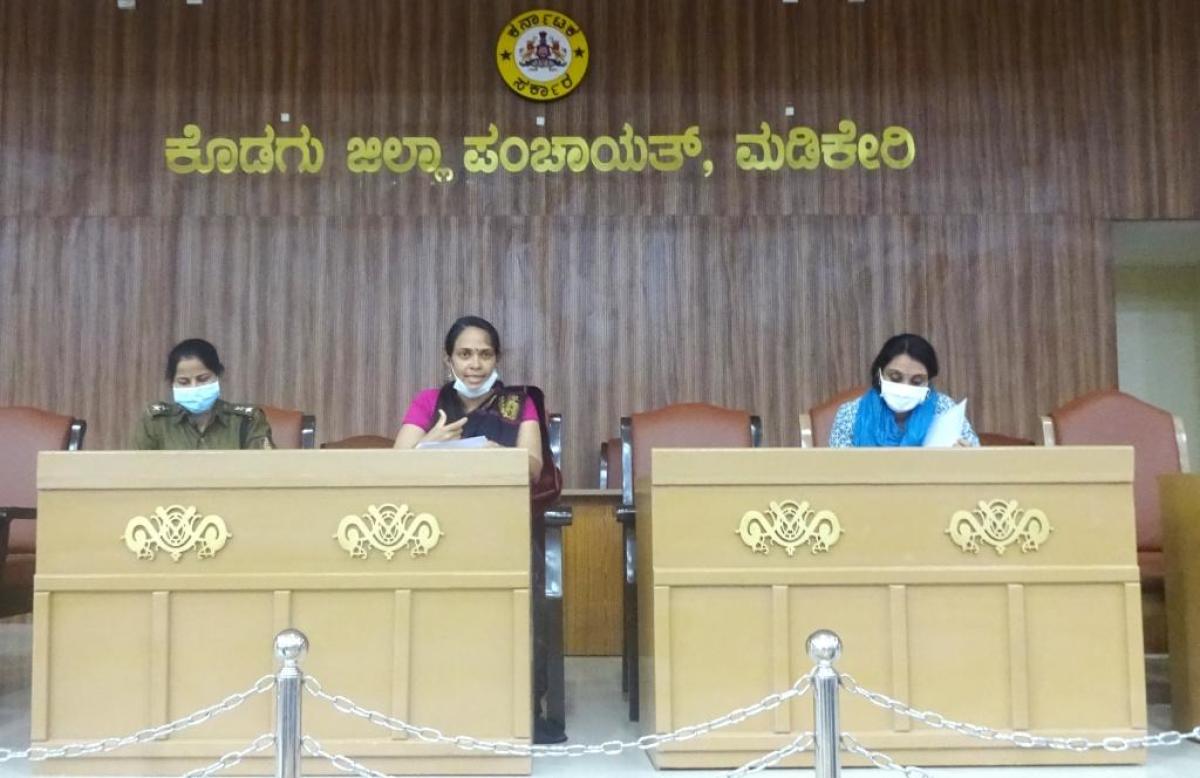
Deputy Commissioner Annies Kanmani Joy holds a meeting with the stakeholders of the tourism department in Madikeri on Tuesday.
Permission has been given to reopen 800 homestays in Kodagu district, said Deputy Commissioner Annies Kanmani Joy.
Chairing a meeting with the stakeholders of the tourism department in Madikeri on Tuesday, she said that homestays should follow all safety guidelines issued by the government with regard to the control of Covid-19 without fail and the complete details of visitors should be registered.
“However, there is no permission to conduct meetings, functions and parties,” she added.
She also said that currently, there are no containment areas in the district. However, it cannot be predicted that there will not be any in future. If any person arriving at a homestay is tested positive for Covid-19, then the entire premises will be declared as the containment area.
Therefore, the role of visitors and the owners of hotels and homestays is crucial, she said.
Any issues in this regard can be addressed to the DC office control room number 1077 or WhatsApp number 85500 01077.
District Superintendent of Police Dr Suman D Pennekar, Additional Deputy Commissioner Dr Sneha, Assistant Commissioner T Javaregowda, Health and Family Welfare officer Dr K Mohan, Homestay Association President B G Anantashayana, Resort Association President B R Nagendra Prasad and Tours and Travels Association President Cheyyanda Satya were present in the meeting.