Category Archives: Famous Personalities of Kodagu / Coorg

Portable Memorials: Portrait Miniatures

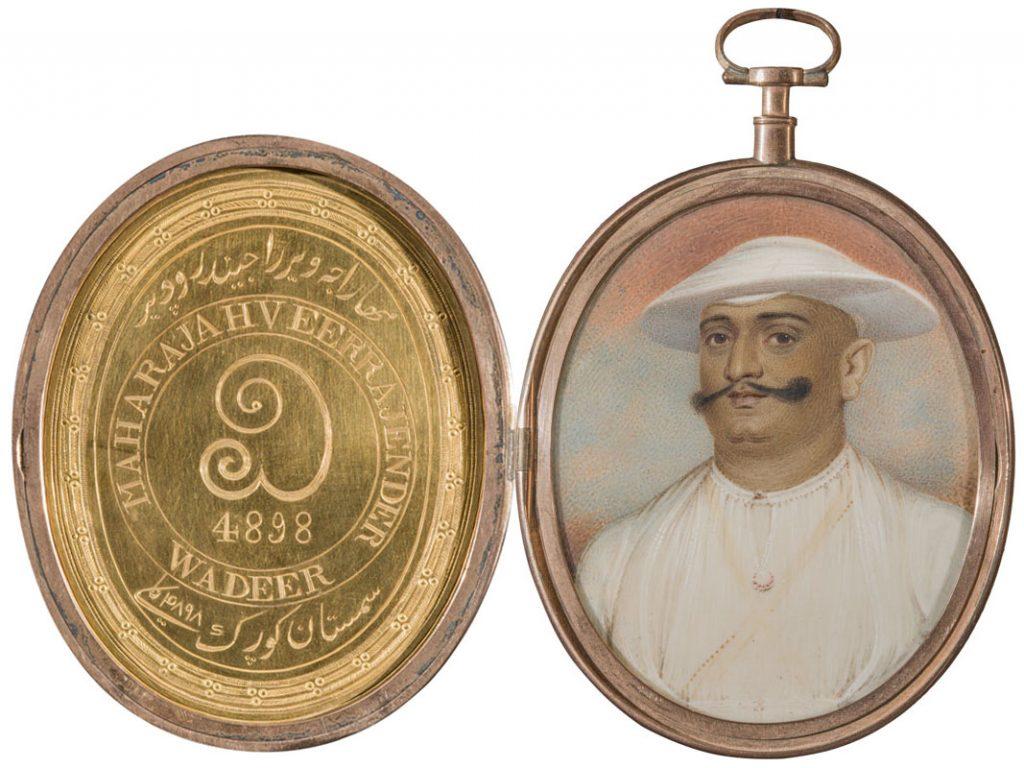
Attributed to Ozias Humphry (British, 1742–1810), Dodda Vira Raja (or, Vira Rajendra Wodeyar), Ruler of Coorg 1780-1809, c. 1787. Watercolor on ivory. Gift of Shirley Latter Kaufmann in memory of Harry and Anna Latter, 74.649.

New Orleans, LA :

The New Orleans Museum of Art (NOMA) presents the museum’s Latter-Schlesinger Collection of Portrait Miniatures. Cradled in the palm of the hand or worn close to the heart, portrait miniatures were never intended for public consumption, but rather, functioned as personal tokens of affection, love, or memorial. Drawing from NOMA’s permanent collection, the installation of more than 100 portrait miniatures is now on view in the Lupin Foundation Decorative Arts Galleries on the museum’s second floor.

“NOMA’s Latter-Schlesinger Collection of Portrait Miniatures, given in 1974 by Shirley Latter Kaufmann in honor of her parents, Harry and Anna Latter, is one of the singularly important collections at this museum,” said Susan Taylor, NOMA’s Montine McDaniel Freeman Director. “Ranging from the court of Henry VIII to Napoleonic France, the collection includes masterful examples of the important artists and techniques used in the art of miniature portraits.”

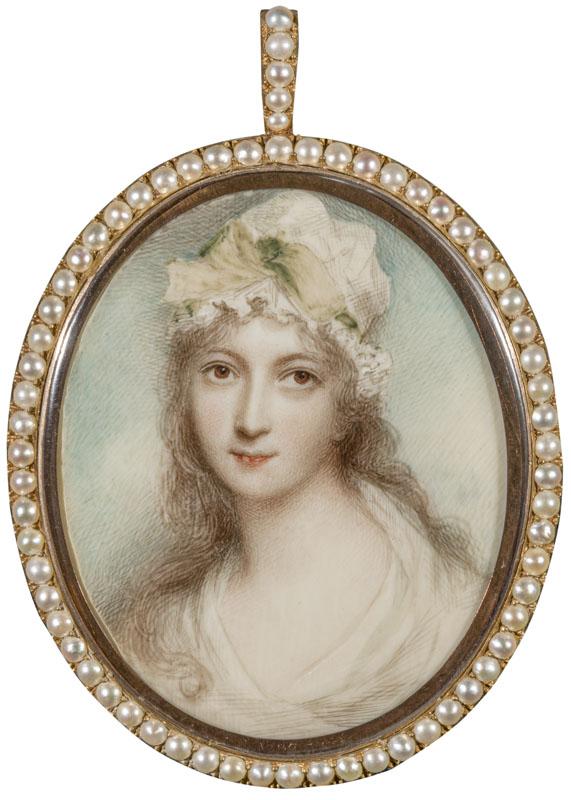
Andrew Plimer (British, 1763–1837), Henrietta Ponsonby, Countess of Bessborough, c. 1795. Watercolor on ivory, frame with pearls. Gift of Shirley Latter Kaufmann in memory of Harry and Anna Latter, 74.654.

Portrait miniatures were the passion of New Orleans collectors Harry and Anna Latter. In 1957, the Latters traveled to London to oversee a government project and dedicated the trip to the pursuit of English portrait miniatures. After her parent’s passing, Kaufmann gifted the comprehensive collection to NOMA, where she was a trustee for more than twenty years and board president in 1978. The family continues Kaufmann’s tradition of supporting the museum through the Milton H. Latter Educational and Charitable Foundation, which sponsored the design and fabrication of a custom cabinet for the magnificent collection.

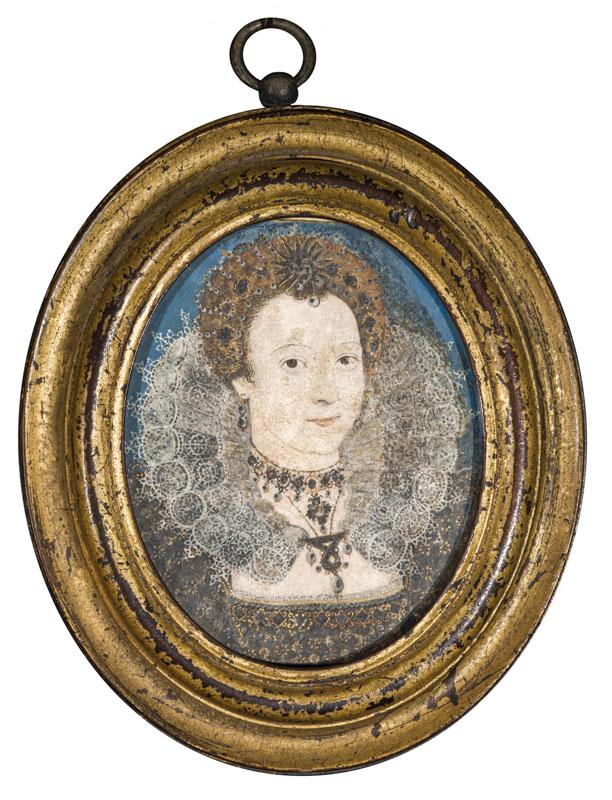
Nicholas Hilliard (English, 1547–1619), Portrait of an Elizabethan Court Lady, c. 1590. Watercolor on parchment. Gift of Shirley Latter Kaufmann in memory of Harry and Anna Latter, 74.337.

Portrait miniatures feature details of historic lace, jewelry, ornate hairstyles, royal adornments and military regalia, all executed by the artist sometimes using a single hair as a brush. The earliest 16th-century miniatures were painted with watercolor onto vellum (animal skin) or cardstock, but by the 18th-century heyday of portrait miniatures, artists painted on thin sheets of ivory for a natural luminescence to the watercolor portraits. NOMA’s collection includes master miniature artists Nicholas Hilliard (English, 1547-1619), John Hoskins the Elder (English, c.1590-1665), Samuel Cooper (English, 1609-1672), Richard Cosway (British, 1742-1821), and George Engleheart (British, 1752-1829). On view are examples of portraits framed with the sitter’s hair, intricately arranged and braided, and two “lover’s eye” miniatures, capturing just an intimate close-up of the sitter’s eye, recognizable only to her dearest confidants.

A tablet produced by NOMA details the stories behind these portrait miniatures, with the stories of royalty and historic celebrities, the highly-skilled craft of miniature painting, and the Latter family collection.

NOMA’s installation was made possible with the support of the Milton H. Latter Educational and Charitable Foundation.

source: http://www.artandobject.com / Art & Object / Home> Museum / December 11th, 2019

Running closer to nature

This year, the marathon was completely eco-friendly and trash-free, with water being served in coconut shells, food in banana leaves and plates made out of areca leaves.

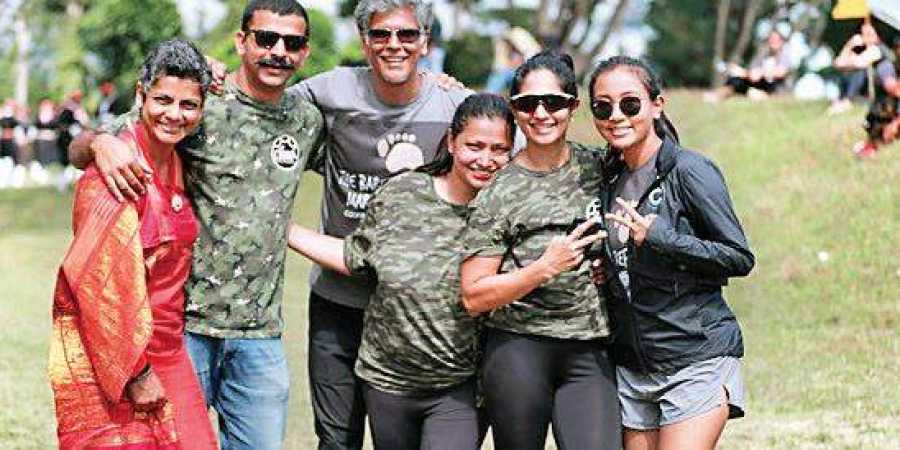
Nikki Ponnappa (left) along with Milind Soman (in grey) and members of The Coorg Wellness Foundation

Bengaluru :

Bengaluru-based golfer Cheppudira Nikki Ponnappa can never decide what she is passionate about more – her love for sports or working towards saving the ecology of her hometown, Kodagu. The international-level golfer recently arranged the fifth edition of Barefoot Marathon, which happened on Sunday in Kodagu. The marathon was an initiative by her organisation, The Coorg Wellness Foundation, in association with avid marathon runner and her friend, Milind Soman.

This year, the marathon was completely eco-friendly and trash-free, with water being served in coconut shells, food in banana leaves and plates made out of areca leaves. The warm-up exercise before most marathons is usually Zumba, but keeping up with local traditions, Valaga music, which is traditional Kodava music, pumped up the participants. The highest prize being `42,000 for 42 km, the marathon had some interesting rules for the prizes that were distributed.

The cash prize went to runners from the neighbourhood area, while the non-local runners got to bring home produce by local farmers, which included rice, coffee, spices etc. All the funds collected from this event will go towards betterment of the families who lost everything in the landslide that hit Coorg in 2018.

More than 400 people participated in this marathon. Ponnappa says the main objective of the run was to bring people closer to nature. “When you run barefoot and feel the soil, it makes you feel closer to Mother Nature. Barefoot is a symbolic way to do something auspicious, plus it has lot of scientific benefits too. We have many nerve points in our feet and these runs work wonders for them.

It was great to see so many people travelling to Coorg, especially from Bengaluru, to participate in this marathon,” says Ponnappa, who was first introduced to golf at the age of 14-15 by her father, who was then serving in the Indian Army. She is also a certified coach and a social activist. Ponnappa’s organisation, the Coorg Wellness Foundation, which was set up in 2014, works towards the development of the people of Kodagu and its eco-system. Along with free education and boarding, they also provide training to join the Army.

source: http://www.newindianexpress.com / The New Indian Express / Home> Cities> Bengaluru / by Monika Monalisa / Express News Service / December 10th, 2019

Merging border with dance

New Delhi, (IANS) :

Rasaja Foundation, in collaboration with Business & Community Foundation (BCF) will organise a discussion ”Merging Border” with artists Lata Pada (Sampradaya Dance Creations, Canada), Dr I Wayan Dibia (scholar, author and dance choreographer, Indonesia), Shila Mehta (Nupur Zankar Academy of Performing Arts, New Jersey, Belgium and Mumbai) and Hema Rajagopalan (Natya Dance Theatre, Chicago) followed by ”Nimitta” a solo kathak performance by Shila Mehta, portraying “Shikhandi” from Mahabharat on December 12 at Sri Aurobindo Society in New Delhi.

”PRALAYA”, a collaboration in Bharatanatyam and Baliness dance by Sampradaya Dance Creations, Canada, a modern retelling of the Mahabharata with special focus on the game of dice between the Pandavas and the Kauravas will be staged on December 13 at Kamani Auditorium in the capital.

The presentation, conceptulised and directed by Lata Pada, includes choreography by Lata Pada & I Wayan Dibia, music by Praveen D. Rao, costume Design by Sandhya Raman, visual Design by Jacques Collin and lighting design by Deepa Dharmadhikari.

Their Indo–Balinese collaboration that premiered in Toronto in November 2016 and went on to do an eight-city tour in Canada, has now begun its international tour across seven cities in India and a stint in South East Asia-Indonesia.

–IANS / Sukant/prs
source: http://www.outlookindia.com / Outlook / Home> The News Scroll / December 10th, 2019

Classrooms, computer lab inaugurated at Govt PU College

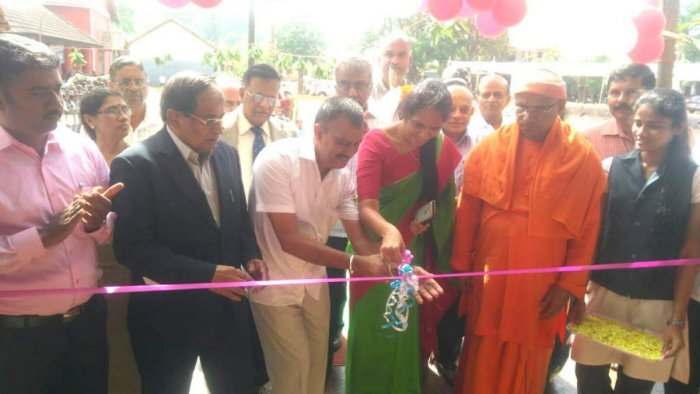
MLC Sunil Subramani and Deputy Commissioner Annies Kanmani Joy inaugurate classrooms and computer laboratory of Government PU College in Madikeri.

Acharya Patashala Shikshana Datthi Samsthe has constructed classrooms and computer laboratory at Government PU College in Madikeri. The classrooms and lab were inaugurated by MLC M P Sunil Subramani.

Speaking on the occasion, he said, “Members of organisations play a vital role in the growth of government schools.

He lauded Acharya Patashala Shikshana Datthi Samsthe for contributing to the construction of classrooms at a time when the district faced floods.

Deputy Commissioner Annies Kanmani Joy appealed to the members of various organisations in joining hands with the district administration to rebuild Kodagu.

Acharya Patashala Shikshana Datthi Samsthe President T V Maruthi said, “The organisation decided to contribute to Kodagu district when the district was affected by natural calamities in 2018. Two classrooms, a computer lab and a hi-tech toilet have been constructed at the college at a cost of Rs 52 lakh.”

Bodha Swarupananda Swami of Ponnampet Ramakrishna Sharadashrama called upon the students to inculcate the teachings of Swami Vivekananda.

source: http://www.deccanherald.com / Deccan Herald / Home> State> Mangaluru / by Adithya K A / DHNS, Madikeri / December 07th, 2019

Ashwini Ponnappa on Mission Women’s Doubles

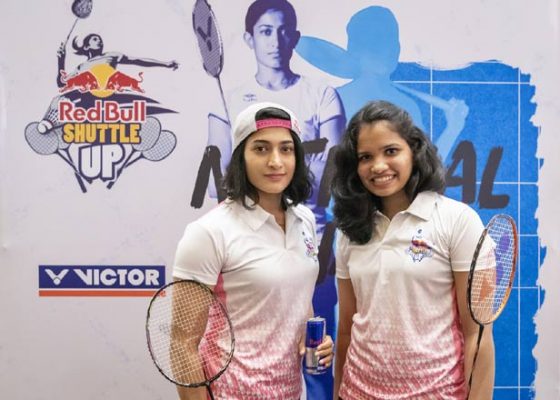
Ashwini Ponnappa (left) and Sikki Reddy, India's top women's doubles players
Ashwini Ponnappa (left) and Sikki Reddy, India’s top women’s doubles players

The Red Bulls Shuttle Up is a start up to encourage girls to take up doubles

Hyderabad:

Seasoned Ashwini Ponnappa, who combined beautifully with the indomitable Jwala Gutta by winning the Commonwealth Games gold and World Championship bronze, is on a mission. She is making an earnest attempt, through Red Bull’s Shuttle Up, to promote women’s doubles in a big way in the country.

The 30-year-old doesn’t mince words by saying that the women’s doubles is not getting the due in the country although it is a lot better than what it was a couple of years ago.

“There is exposure, better training facilities and a lot of youngsters are taking to doubles now. There are also a couple of coaches for doubles. However, I feel the women’s doubles is not getting the due. We don’t have women’s doubles in Premier Badminton League (PBL). It is quite sad and disappointing. Something needs to be done as regards to women’s doubles. The Red Bulls Shuttle Up is a start up to encourage girls to take up doubles. It is giving them a platform to play and hopefully it will help the growth of women’s doubles in the future. I would have loved to play with the youngsters but I got injured and I can’t play. When you have this kind of tournaments, one can see the rise of women’s doubles in the country,’’ said Ashwini at the Shuttle Up tournament finals.

She said she was very fortunate to have someone like Jwala as her doubles partner. “My style and Jwala’s game worked. It clicked from the word go. I became Jwala’s partner when I was young and I was very keen on putting up a good show. She was an experienced player and had done well in the senior circuit. Jwala and I had the advantage of experience and youth. My power from the back and Jwala’s net play proved successful. It was a wonderful combination. Now a lot of girls have taken up the doubles but they need to be guided. We have to work hard to bring out successful doubles players.’’

According to Ashwini, women’s doubles in international competition has grown phenomenally. “It is lot different now. Like when I played with Jwala, I could smash from the back and Jwala used to do brilliant job at the net. Right now, most of the Japanese have a very good attack as well a strong defence. They play at an incredible speed. We need to do a lot of work in this aspect. It is not about tossing and tapping. We can get away here but not in international circuit. There is a mixture of attack and defence. Women’s doubles has one of the longest matches in the world. Fitness has gone to another level. That is the critical point in women’s doubles. We need to work in right direction and that is important.’’

She added that she and Sikki Reddy had had some good matches this year. “But unfortunately these matches were not converted into wins. We had some tough first round matches. It is sad we lost to some close matches. Our choice of tournaments could have been better in this Olympic year. Hopefully next year, we will have better planning. Most importantly, we should be injury free.’’

The doubles expert was all praise for Satwiksairaj Rankireddy and Chirag Shetty. “It is one pair that has clicked beautifully. They understand each other perfectly. Satwik is a stronger player and Chirag is very good in creating openings for him. Their game style and goals are very good. The self-belief has helped them a lot. They have challenged and beaten most of the top players. We need more and more Satwiks and Chirags for the good of doubles in the country.’’

source: http://www.telanganatoday.com / Telangana Today / Home> Sport> Badminton / by N Jagannath Das / December 09th, 2019

How her sporting family helped Ashwini Ponnappa become a consistent force in badminton

An excerpt from She Dared: Women in Indian sport, a book on the stories of leading women in Indian sport by Abhishek Dubey and Sanjeeb Mukherjea.
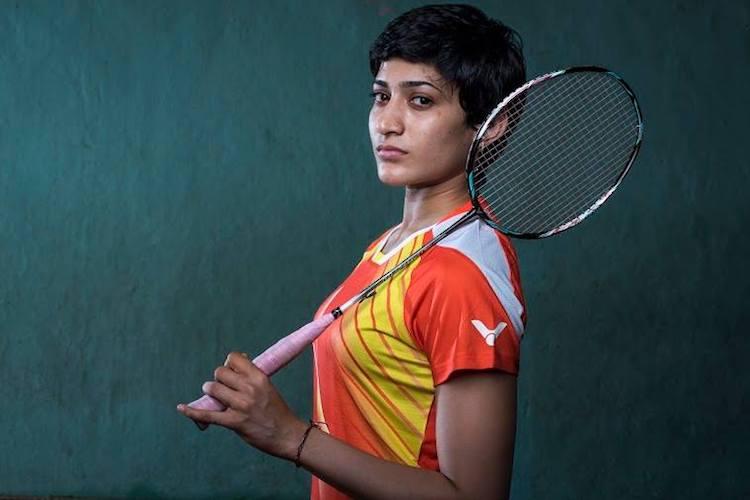
AshwininKF28nov2019

The women of the family and society form the fulcrum of many of the rituals related to the weddings in Kodagu (Coorg).The conducive ecosystem for the growth and development of the girl child manifests itself in the personas of the two Ashwinis who hail from this region – Ashwini Nachappa, in the closing decades of twentieth century India, and Ashwini Ponnappa in the opening decades of twenty-first century India.

As Ashwini Nachappa says, ‘The name “Ashwini” means “a female horse”.’ The two mares from Coorg have been brand ambassadors of Indian sports in terms of talent, strength, articulation and finesse. If Ashwini Nachappa galloped to success in athletics, Ashwini Ponnappa has been the stable and consistent force in the Indian badminton story. The two Ashwinis spread across generations give us the trailer of what the daughters of the country can achieve if they get a congenial environment for their growth. We have been through the pages of the sporting journey of India’s Florence Griffith Joyner or Flo-Jo, i.e. Ashwini Nachappa. It’s the turn of Ashwini Ponnappa now.

Born on 18 September 1989 in Coorg, Karnataka, Ashwini Ponnappa has sports flowing in her genes. ‘My dad M.A. Ponnappa was a hockey player. We have uncles who were hockey players and relatives who were into athletics and cricket. So, yes, we do belong to a sporty family. This has helped in my career as well. Dad was pretty fit and helped me with my physical fitness during tournaments, and in the off season when we didn’t have any training. Mum helped me with my diet and made sure that I ate right. More importantly, she helped me in keeping calm. The most important aspect is that they were with me always, irrespective of what happened in the match, and encouraged me to follow my dream of playing badminton and doing really well,’ says Ashwini.

Sports teaches us many things in life. And this is what one expects from parents who understand the meaning of sports. But did she take up sports as she happened to be from a sports family? ‘More than the sports family itself, I was a hyperactive child, and to keep me busy, my parents put me into sports. One thing followed another. Both my parents were working, and to keep me engaged, they put me in badminton. As is common amongst many of the players, I began with enjoying the game and playing with my parents. Thus, it all started as fun with badminton. Then I started attending coaching sessions. Actually, right next to Dad’s bank, there was a single badminton court which also had a coach. So it was convenient, as Dad used to drop me off there and then pick me up. After this, as this became part of my routine, Dad and mom started taking turns to pick me up and drop me off.’ Ashwini takes us down memory lane. This picking up and dropping off continued in the coming years with a new set ofchallenges. Professional sports demands frequent travel. In the case of a girl child, this becomes critical. For Ashwini Ponnappa, it was more challenging than usual—especially with both of her parents working. Her father used to travel with her for most of the tournaments, as her mother was at home looking after her younger brother who had asthma.

Among other things, what sports teaches us in life is the ability to take both victory and defeat in stride and move ahead. This lesson of sports, if learnt well, helps the best of the sportspersons not to take or put undue pressure. When a sportsperson is able to reach this zone, they perform their best.

Ashwini Ponnappa says, ‘There was no pressure as such from my parents to take up badminton. Most of us start as singles players and it was the same in my case. Gradually, I started moving up through the different age categories. I was runners- up in under-10, but the champion in under-13. Actually, it was from there that things started picking up for me. The state championships was followed by the nationals. I still remember that when I actually beat my partner, there was a change in the way I approached my game.’

Professional sports demand that one peaks as one starts entering the prime of one’s youth. This means forgoing many things that look like a sacrifice in the eyes of others. But for those who take up sports as their passion and a way of life, these are not sacrifices, but the means to achieve their end. Ashwini Ponnappa says, ‘I saw the best of both the worlds—school life and badminton. I was fortunate to have very good teachers in school. It was in the later stages i.e., when studies started getting serious in class VIII, that I started paying all my attention to badminton. And the fact that I was just an average student and more inclined towards badminton made my decision of taking up sports easier.’ And then she goes on to elaborate this further when she says, ‘I do remember my prelims happened when I was busy with my nationals. I fared badly in my prelims, but my teachers were very confident that I would do well in my board exams. They would say, “Don’t worry, you will do well.” My parents also did not put any pressure on me. It was during this time that I put in a lot of effort in my studies and I felt really happy when I did well.’ Ashwini does understand the significance of easing off the pressure during this crucial phase.

She says, ‘I had no pressure. I have seen my peers struggling to get permission to go for tournaments. But contrary to this, I easily used to get my leaves and had the liberty to leave the class early for my training sessions. For instance, my school closed at 3:30 pm, but I was allowed to leave at 2:30 pm. so that I could get an hour extra for my practice.’ Sports teaches us to be multitaskers in the formative years of our life. ‘At a young age, you learn how to juggle between your studies and sports, and I think this toughens you,’ she says. What was the regimen that gave her the initial rigorous training in multitasking?

‘My daily routine then was quite different because I had to manage both, my school, and then my college, along with training. Luckily, I had wonderful principals both in school and college. I was given permission to take off early from college to train. So my daily routine was waking up and starting my day with physical fitness exercises at the ground at around 6 am, then rush home to get ready for school which started at 8:30 am ‘Then I would leave school at around 2:30 pm for practice, even though school got over at 3:30 pm. I would finish practice and head back home at around 6:30 pm. So my entire day was filled with training sessions and practice, along with resting and eating,’ says Ashwini. If youngsters try multitasking as a routine early in life, it helps them in so many other aspects later on in life. One aspect follows another and eventually a beautifully-crafted success story emerges.

Excerpted with permission from She Dared: Women in Indian Sport published by Rupa Publications India. The book is available on Amazon for Rs 242 only.

source: http://www.thenewsminute.com / The News Minute / Home> Book Excerpt / by Abhishek Dubey and Sanjeeb Mukherjea / November 26th, 2019
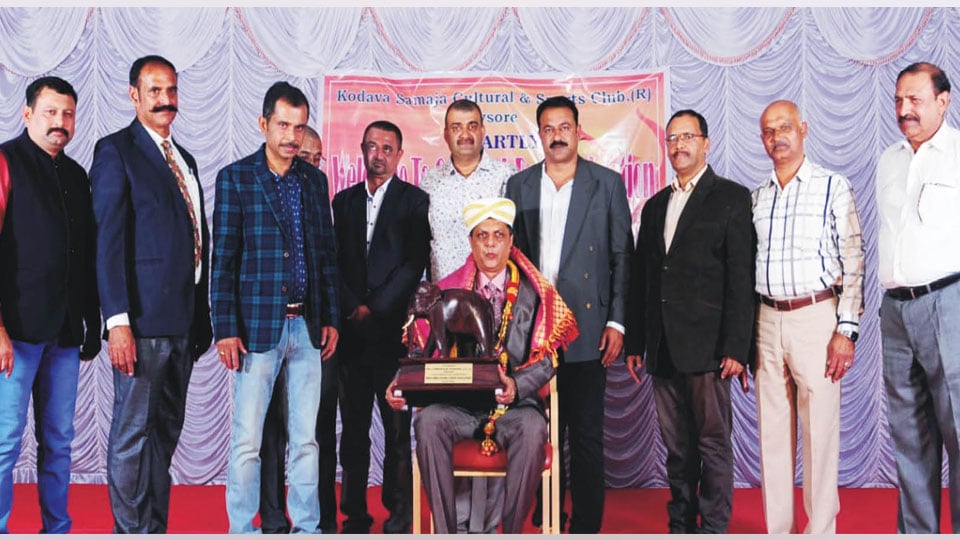
Kodava Samaja Sports Club fetes city advocate

Kodava Samaja Cultural and Sports Club, Vijayanagar, felicitated city advocate Jammada M. Aiyanna recently during the Cultural Day function of the Club.

AdvocateJammadaKF28nov2019

He is seen with (from left) Nagachettira S. Uthappa – Committee Member, Machimada P. Nanaiah – President, Kuttimada D. Muthappa – Vice-President, Mechanda S. Bopanna – Committee Member (partially seen), Aramanamada M. Ponnanna – Committee Member, Kannambira N. Kushalappa – Hon. Secretary, Iychanda Ashwath Chengappa – Treasurer, Meederira K. Prakash – Joint Secretary, Alemada K. Nanjappa – Committee Member and Chemira B. Chengappa – Committee Member.

source: http://www.starofmysore.com / Star of Mysore / Home> PhotoNews / November 27th, 2019

Get-Together Of Kavery Kodava Association

Sri Kavery Kodava Association, Mysore East, has organised its annual get-together function on Nov. 24 at 10 am in the premises of Kodagu Model School in Vidyashankar Layout, Sathagalli here.

Mukkatira T. Nanaiah, President of Kodava Samaja, Bengaluru, will be the chief guest. Kekada M. Belliappa, President of Kodava Samaja, Mysuru, will be the special invitee.

Koppira Ponnappa, President of the Association, will preside.

Sports and cultural programmes will be the highlight of the programme.

Scholarships will be distributed to children of Association members who are achievers in their respective field.

source: http://www.starofmysore.com / Star of Mysore / Home> In Briefs / November 21st, 2019

Kodavas want autonomy: CNC chief

Codava National Council (CNC), the apex body of the Kodava tribe (original residents of Kodagu) has intensified their demand for a separate Kodava land having jurisdiction of two taluks Madikeri and Virajpet and parts of Somwarpet.

“We are being socially, economically and politically exterminated systematically by well connected political parties. The names of our villages and our festivals are being wiped off, distorted and forgotten. Our contribution to the country’s armed forces is being deliberately wiped under the mat by the people in power,” Codava National Council (CNC) President N U Nachappa Codava told reporters in Mangaluru on Thursday.

“We want our own administration on the lines of the hill council in the North East. An autonomous administrative unit. After the abrogation of Article 370 and subsequent rearrangement of Jammu and Kashmir state by the central government, our hopes of getting administrative autonomy has brightened, Nachappa said, adding the CNC will release a charter of 12 demands on the Kodava National Day planned on November 24 in Madikeri.

“The main objective behind the celebrations of the annual Codava National Day programme by CNC is to rejuvenate our geo-political aspirations in the quest for autonomy,” he added.

source: http://www.deccanherald.com / Deccan Herald / Home> State> Mangaluru / by DHNS, Mangaluru / November 21st, 2019

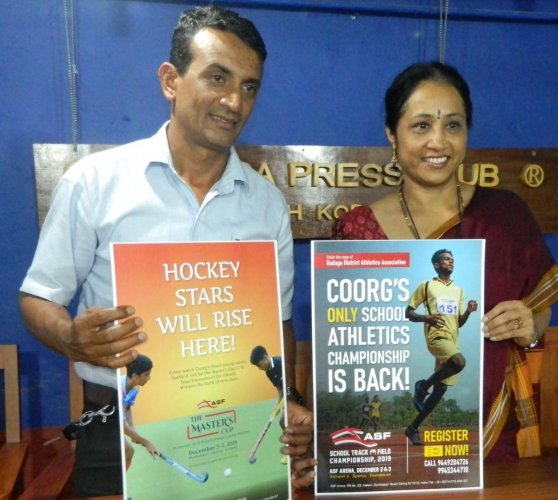
Track and field championship to be held in December

Former athlete and Ashwini Sports Foundation Director Ashwini Nachappa (right) releases the banner of the district-level track and field championship and Karumbaiah Memorial Masters’ Cup in Madikeri on Tuesday.

Ashwini Sports Foundation, Karumbaiah Academy for Learning and Sports (KALS) and Kodagu Athletic Association will jointly organise a district-level track and field championship event for boys and girls at KALS ground in Kaikeri on December 2 and 3, said Ashwini Sports Foundation Director Ashwini Nachappa.

Launching the banner of the Championship and Masters’ Cup, she said that boys and girls between 12 and 18 can take part. Race, shotput, long jump, discus throw, high jump and relay events will be held under various age categories.

Stressing on the need for the budding sportspersons to have an experience on tracks in the primary level, she said that Ashwini Sports Foundation will encourage budding talents by providing training.

DDPI P S Machado has been supporting the foundation, added Ashwini Nachappa.

She further said that Karumbaiah Memorial Masters’ Cup will be held for hockey, in the grounds of Karnataka Public School in Ponnampet, on December 5 and 7.

Eight invited teams will take part in the school level tournament, she added.

Trainer Chethan was present. For more details, contact: 08274 279456-57.

source: http://www.deccanherald.com / Deccan Herald / Home> State> Mangaluru / by DHNS, Ponnampet / November 21st, 2019