Category Archives: Famous Personalities of Kodagu / Coorg

Bofors Gun At ‘Sunny Side’

SunnySide01KF13mar2019

Host of Indian Army weapons to be displayed at Gen. K.S. Thimayya Memorial Museum in Madikeri

First it was an Army Tank that arrived at ‘Sunny Side’, Gen. Kodandera Subayya Thimayya’s house in Madikeri that is being converted into a museum. Next is the turn of weapons used by the soldiers of Indian Army to arrive at the house. And all these have arrived as per the directions of Chief of Army Staff Gen. Bipin Rawat.

During his visit to Kodagu on Nov. 4, 2017 to unveil the bronze statues of Field Marshal Kodandera M. Cariappa and General Kodandera S. Thimayya at Cauvery College in Gonikoppal, South Kodagu, Gen. Rawat had promised to deliver vintage weapons to increase the value of ‘Sunny Side’ so that it can be a major military attraction.

With works to convert ‘Sunny Side’ on G.T. Road in Madikeri into a memorial museum, weapons have started arriving as promised by Gen. Rawat. First it was an Army Tank that was transported by road from Kirkee War Cemetery at Khadki, a town near Pune in Maharashtra, to the General Thimayya Museum.

The weapons that were used by the soldiers of Indian Army in the past during many operations have been donated to the museum. The weapons include Light Machine Guns that are over 60 years old, Medium Machine guns, Self-Loading Rifles, 7.62 and 303 Bore rifles, rocket launchers, 32 mm rifle and 38 mm rifles, among others.

SunnySide02KF13mar2019

With the shipment of weapons reaching the museum, preparations are underway to assemble the spare parts of the weapons, according to Army Officials. Field Marshal K.M. Cariappa-General K.S. Thimayya Forum Convenor Major Biddanda A. Nanjappa said that visitors will get to see a cannon used by the Indian Army which is being transported from Madras Regiment of the Indian Army.

“Army Chief Gen. Rawat had provided a list of 1,400 guns and the Forum members were asked to choose any 45 guns from the list. Accordingly we prepared the list of the arms that we wanted for the museum and sent it to the Army Chief,” Maj. Nanjappa told Star of Mysore.

SunnySide03KF13mar2019

But as the arms and their spares were deposited at different arms depots across the country, there was delay in the shipment of arms to the museum at Madikeri. Later, the Forum presented a memorandum to Major General Kodanda P. Cariappa, who is working in the Military regiment of the President of India, who in turn formed a six member team headed by Hawaldar Sarjit Singh to despatch the arms.

The Medium Machine Gun that will be displayed at the museum has the capacity to easily kill an enemy soldier who is at a distance of two miles. The Light Machine Guns were used by a platoon to rain bullets on the enemy while Bazooka Rocket Launchers blew enemy posts and bunkers at the border to smithereens. Even some of the personal arms used by the soldiers in one-on-one combat will be displayed.

Maj. Nanjappa further said that Gen. Rawat has agreed to provide a Bofors gun in the museum premises. As the Bofors gun is a huge one, the Madras Regiment has been entrusted with the responsibility of transportation and installation. The Bofors gun will be among the main attractions at the ‘Sunny Side’.

The arms and ammunition will provide a galaxy of information to the younger generation on old-time war guns and machinery and the Museum will also inspire the youths to join the Armed Forces, he said. “Visitors can actually feel the guns to understand the battle-line difficulties and how modern weaponry has made India to fight the enemy effectively,” he added.

‘Sunny Side’ is being renovated and artworks featuring the valour of Indian soldiers on the battlefield will occupy the centre stage. Other main attractions of the museum will be the articles used by Gen. K.S. Thimayya, military uniforms, books and information on Indian Army, Navy and Air Force.

SunnySide04KF13mar2019

Besides, there are plans to design a park and install a statue of K.S. Thimayya on the two- acre plot. It may be mentioned here that the State Government had announced the opening of Gen. K.S. Thimayya Memorial Museum.

Subsequently, the Kodagu district administration had submitted a Rs. 5.5 crore proposal to the State Government for approval. So far, Rs. 3.5 crore out of the total estimate of Rs. 6 crore has been utilised for renovation and other expenses related to the museum, according to officials, who also said that the Museum will become one of the major tourist attractions of Kodagu.

source: http://www.starofmysore.com / Star of Mysore / Home> Feature Articles / March 2019
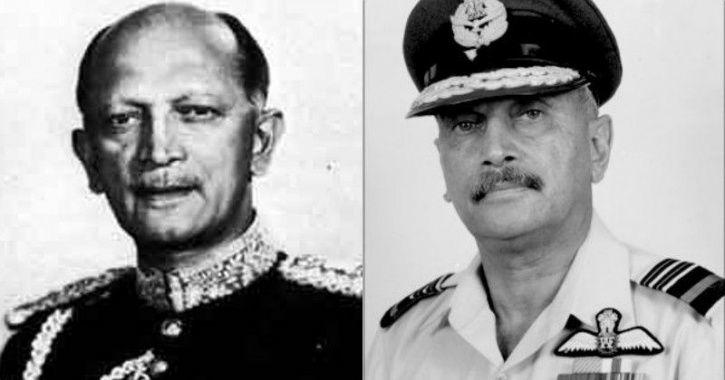
Air Marshal K.C. Cariappa recounts his days as a prisoner of war in Pakistan

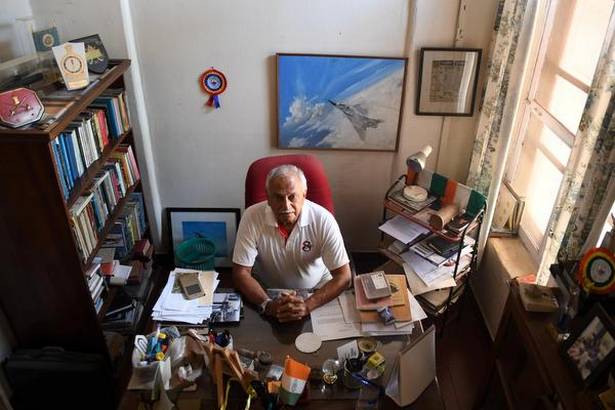
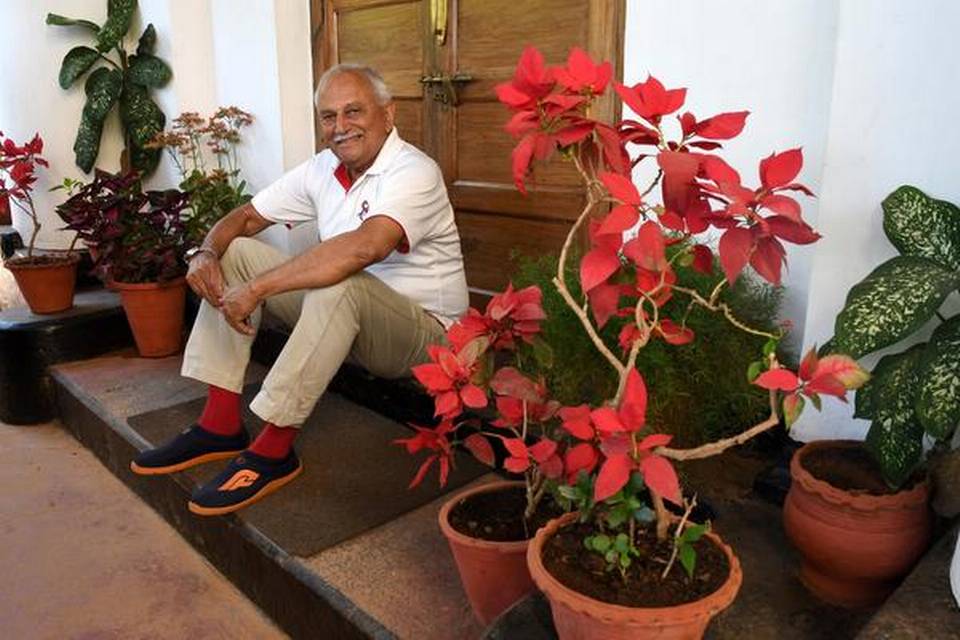
Retired Air Marshal K C Nanda Cariappa in Kodagu at Madikeri on 10 March 2019.   | Photo Credit: SUDHAKARA JAIN
Retired Air Marshal K C Nanda Cariappa in Kodagu at Madikeri on 10 March 2019. | Photo Credit: SUDHAKARA JAIN

Much before Abhinandan, there was Cariappa, taken PoW by Pakistan.

The fighter aircraft blew up in a ball of flame and crashed. The pilot ejected safely, but when he landed with his parachute, he was immediately surrounded by Pakistani troops. It was September 22, 1965, and the officer was 27-year-old Flight Lieutenant K.C. Cariappa.

“I wasn’t sure whether I was in India or Pakistan. When our artillery opened up, one of the Pakistani soldiers said that your guns are firing at us. That’s when I realised that I had been taken as a prisoner of war (PoW),” recounts Air Marshal Cariappa (retd) in a telephonic interview from his home in Madikeri in Karnataka. He landed in Punjab’s Khem Karan sector, 5 km from the International Border, which had been occupied by the Pakistani Army.

The pilot spent the next few weeks being moved from one hospital to another because of a spinal injury and a damaged arm from shelling. As news of him being the son of then General K.M. Cariappa (who had retired as the Chief of the Army Staff and would be later conferred the rank of Field Marshal) spread, he was visited by Pakistan’s Army Chief General Muhammad Musa and one of Pakistan President General Ayub Khan’s son, who gave him a P.G. Wodehouse book and cigarettes.

Retired Air Marshal K C Nanda Cariappa in Kodagu at Madikeri on 10 March 2019.   | Photo Credit: SUDHAKARA JAIN
Retired Air Marshal K C Nanda Cariappa in Kodagu at Madikeri on 10 March 2019. | Photo Credit: SUDHAKARA JAIN

Ayub Khan, who had served under Cariappa Senior in the North West Frontier Province, offered to return the young captive. But that offer was politely rejected by General Cariappa, who said that all Indian PoWs were his sons. The young officer was shifted to the main prison camp at Fort Dargai, where all the other Indian PoWs were detained. As a captive, life was far from comfortable.

“Food was terrible. We had pooris and a mug of tea for breakfast, and rice, two chapattis, lacey bhindi (lady’s finger) and a soupy preparation of turnip for lunch, which was repeated for dinner.”

The officers were given a pair of hawaai slippers, a dungaree and a blanket which were far from enough to keep warm. But, in the company of six other Indian Air Force officers at the prison camp life became somewhat cheerful.

“(Sqdn Ldr) Piloo Kakkar would read out chapters from Mahabharata and Ramayana and Sikky (Sqdn Ldr B P Sikand) had us in splits of laughter recalling his youth.”

A particularly memorable occasion was the New Year’s eve.

“We used to get a terrible fruit called mittha, which was a kind of a grapefruit but far from sweet. We asked for an earthen pot, put this fruit and our chapatis into the pot and added some methylated spirit stolen from the nursing orderly who would come to dress up our wounds. We then wrapped up the pot with a blanket and place it near a fire to prepare our brew, snake juice. For dessert, we had Marie biscuits and chocolates that we melted so we had almost the original Oreo sandwich!”

The 81-year-old says that while there was no ill-treatment or third-degree torture during his captivity, there was always “the fear of the unknown” haunting the prisoners.

Talking about Wg Cdr Abhinandan Varthaman’s capture by the Pakistani military, he says that “the rules of the game have changed due to social media”, but there is a need to adhere to a “code of conduct”. “While there were horrible videos of his bloodied face circulating, these were also an acknowledgment of the fact that he was in Pakistani custody.” His were “kinder and benign years”.

source: http://www.thehindu.com / The Hindu / Home> News> National / by Jagriti Chandra / New Delhi – March 11th, 2019

Down the royal memory lane

The Kodagu principality was ruled by the Haleri dynasty between 1600 and 1834.

During this time, a Havyaka family moved from Adamane in Shimoga to Palathadaka near Subrahmanya in Dakshina Kannada. Hence, they identify themselves as the Adamane Palathadaka (AP) family. Many AP family members were related to the officials who served under the Kodagu rulers.

A member of this generation, Dr A P Lalit Mohan, has their family tree.

The AP family claims their descent from Subbarasaya, who served as a karnika (treasurer) in Kodagu, as well as his brother Thimmarasaya. A number of Subbarasayas and Thimmarasayas can be found in the family tree.

Dr Mohan claims that two female members Mahadevamma, the wife of Dodda Vira Rajendra, and Gowramma, one of Chikka Vira Rajendra’s 13 queens, were born in the AP family.

Two missionaries, Hermann Friedrich Mögling in his Coorg Memoirs and Georg Richter in his Gazetteer Coorg narrated the story of the Rajas.

Linga Raja I died in 1780 while his three sons, Vira Raja, Appaji Raja and Linga Raja II, were still young. Hyder Ali became their guardian of the princes and took up the direct administration of Kodagu. He maintained that when they would come of age, the throne of Kodagu would be restored to them. In the meantime, he appointed Subbarasaya, from the AP family, as the amaldar of Kodagu.

In 1782, Kodagu rose in rebellion. The princes and their family members were moved to Gorur Fort in Hassan. After the death of Hyder Ali, his son, Tipu Sultan, succeeded as the ruler of Mysore. The Kodagu princely family was again moved to Periyapatna Fort. They were being held in confinement and were prevented from reaching their capital, Madikeri. Tipu marched through Kodagu in 1784. When Kodagu rebelled again, he returned.

Subbarasaya was succeeded as amaldar by his nephew Nagappayya. Nagappayya was charged with treason by Tipu Sultan and was condemned to death. He then fled to Wayanad and took asylum under Kote Raja in Kotangadi.

During 1788, two Kodagu leaders, Appaneravanda Achayya and Pattacheravanda Boluka, helped Vira Raja and his family escape. Most of the family members settled in Kurchi in Kodagu. From there, Vira Raja with Achayya, Boluka and his other men led a guerrilla war against Tipu Sultan.

Nostalgia

The Kote Raja sent bandits to Kurchi where they killed the family members, including Vira Raja’s first wife, looted the place and burnt it down. Despite this setback, by 1791, Vira Raja reclaimed Madikeri. In 1795, a new palace was built in Nalknad. Vira Raja had a daughter, Rajammaji, from his first marriage.

He desired to have a son. Hence, the following year, a mantapa (pavilion) was built in front of this palace where Vira Raja married Maha Devamma in a grand ceremony. Maha Devamma later came to be called as ‘Maha Deva Rani’. Vira Raja and Maha Deva Rani had four daughters: Devammaji, Muddammaji, Rajammaji and Mahadevammaji.

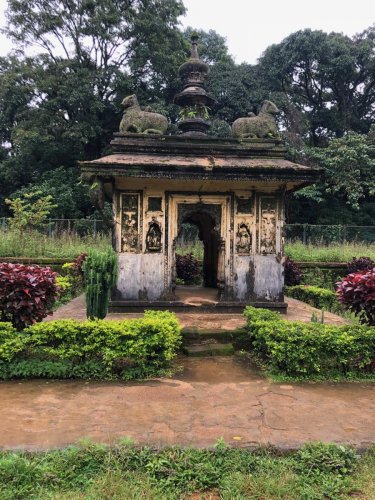
Remnant Kalyana Mantapa in front of Nalknad palace in Kodagu. Photo by author

Vira Raja had his will made before he died in 1809. Accordingly, Devammaji succeeded him to the throne. But two years later, her uncle Linga Raja forced her to abdicate the throne in his favour.

Linga Raja ruled from 1811 until his death in 1820. He got his four nieces married. Linga Raja’s son Chikka Vira Raja succeeded him. By 1826, Chikka Vira Raja got Muddammaji and her family members killed.

During the 1834 war between Kodagu and the British East India Company, Chikka Vira Raja surrendered to the British. After his exile, he went to London where he died in 1864. Karnika Thimmappayya, who was his brother-in-law, died in 1868.

source: http://www.deccanherald.com / Deccan Herald / Home> Spectrum> Spectrum Statesman / by Mookonda Kushalappa / March 10th, 2019

Soldier who saw action in World War II passes away at 102

Biddanda M Chengappa  THEN AND NOW: Second Lt Col Biddanda M Chengappa
Biddanda M Chengappa THEN AND NOW: Second Lt Col Biddanda M Chengappa

Col. Biddanda M Chengappa, 102, a soldier who saw action during WWII in Burma against the Japanese, passed away at his son’s home in Ahmedabad. His son BC Mandappa told DNA that the centenarian was not ailing. “He was very lucid in the morning and went on with his routine of having breakfast, reading newspapers, and tracking post-Pulwama attack etc. He had his lunch and went for an afternoon siesta.”

He further recounts how his father fondly recalled his time in Burma. “He was only 24 when he joined the Army in 1941, soon after being commissioned as a Second Lieutenant and packed off to battlefront during World War II. The war was at India’s doorsteps in Burma as the Japanese were advancing. Second Lt Chengappa was in the Indian brigade deployed to stop the Japanese.” Along with a dozen newly commissioned officers, he was sent with a shipload of soldiers to Rangoon where they lacked both equipment and experience to take on the fierce enemy, recalls the family.

“While the British superiors on the Eastern Front were a bunch of inefficient lot preoccupied with own comforts, Second Lt Chengappa and the other Indians were sent to the enemy line where before his own eyes he watched two fellow Coorgs fall to the Japanese followed in quick succession by Indians,” says Mandappa.

Within a week, only 20 survivors remained and were sent orders to retreat from the thick forests in northern Burma where they were stationed. “My father and 19 others somehow managed to hitch a ride on to a truck carrying kerosene supplies for some distance. As bullets flew around everybody prayed and hung on for dear life as even one small spark would have turned the truck into a flaming death trap,” he recalls.

Later the group began walking through the forest for Kohima in Nagaland. The lone Burmese army officer guided them through the forest, where away from the enemy at night the tired men fell asleep under the trees. “But Second Lt Chengappa’s troubles were far from over. He woke to a searing pain in his leg to find a snake had bitten him. All the men had was some first-aid and he thought he would breathe his last there,” recounts Mandappa.

Meanwhile, back in Palangala, Coorg (in today’s K’taka) his parents had been told their son was missing in action. “With no news for more than a month, they feared the worst.”

Soon promoted as Major, he served in Gaza during late 1950s as part of UN Peacekeeping Force. Married to Sheila from the Codanda family, he has three sons and retired as a Colonel and settled in Coorg.

A passionate golfer, he played well into his late 90s and was happy to drive his car till a few years later, they recall.

source: http://www.dnaindia.com / DNA / Home> India / by Yogesh Pawar / March 08th, 2019

When India’s First Army Chief Refused Pakistan’s Offer To Release His Son Captured As A PoW In 1965 War

The legend of Field Marshal KM Cariappa is well known as he was the first chief of the Indian Army after independence. But one anecdote from the life of the legend himself elevated him far above others who could rival his glory.

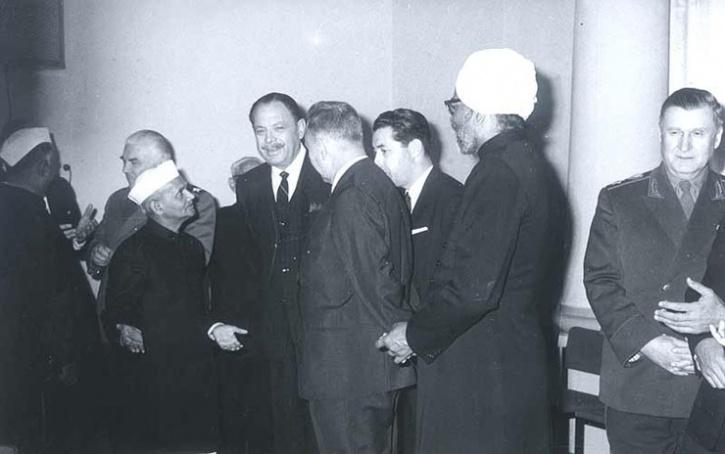
GENERAL AYUB KHAN AND FIELD MARSHAL KM CARIAAPPA, PIC COURTESY: AFP/WIKIPEDIA

Yes, the battle of 1965 where he refused the offer of Pakistan General Ayub Khan to release his son who was an IAF pilot and was captured and kept as Prisoner of War (PoW), the legend Field Marshal Cariappa not only refused General Ayub Khan’s offer but also asked to treat him at par with other PoWs.

Caught by Pak army when his plane was shot down
Sqn Ldr KC Cariappa was flying near the border and his plane was shot down. He had to eject and during the process of ejection and landing, the Sqn Ldr Cariappa ‘s spine was injured. Soon after the capture, like all other PoWs, the Sqn Ldr Cariappa told his name, rank and unit number. Like Wing Abhinandan, he also didn’t divulge any information.

News soon reached General Ayub Khan

REUTERS
REUTERS

Soon after his capture, the news reached General Ayub Khan that Pakistan army had captured son of India’s first army chief Field Marshal KM Cariappa, the General announced it on Radio Pakistan that his forces have captured Sq Ldr KC Cariappa, the son of legendary Indian Field Marshal.

When General offered Field Marshal to release his son
General Ayub Khan had served under Field Marshal Cariappa in the British Indian Army and always held him in high esteem. General Ayub Khan asked Pakistan High Commissioner in New Delhi to personally meet Field Marshall who in return politely refused General’s offer.

Field Marshal said other PoWs are also his sons

In his reply to the High Commissioner who had come on behalf of General Ayub Khan, Field Marshal Cariappa told him that he doesn’t want Pakistan to release his son but treat all PoWs well as all Indian soldiers are his sons.

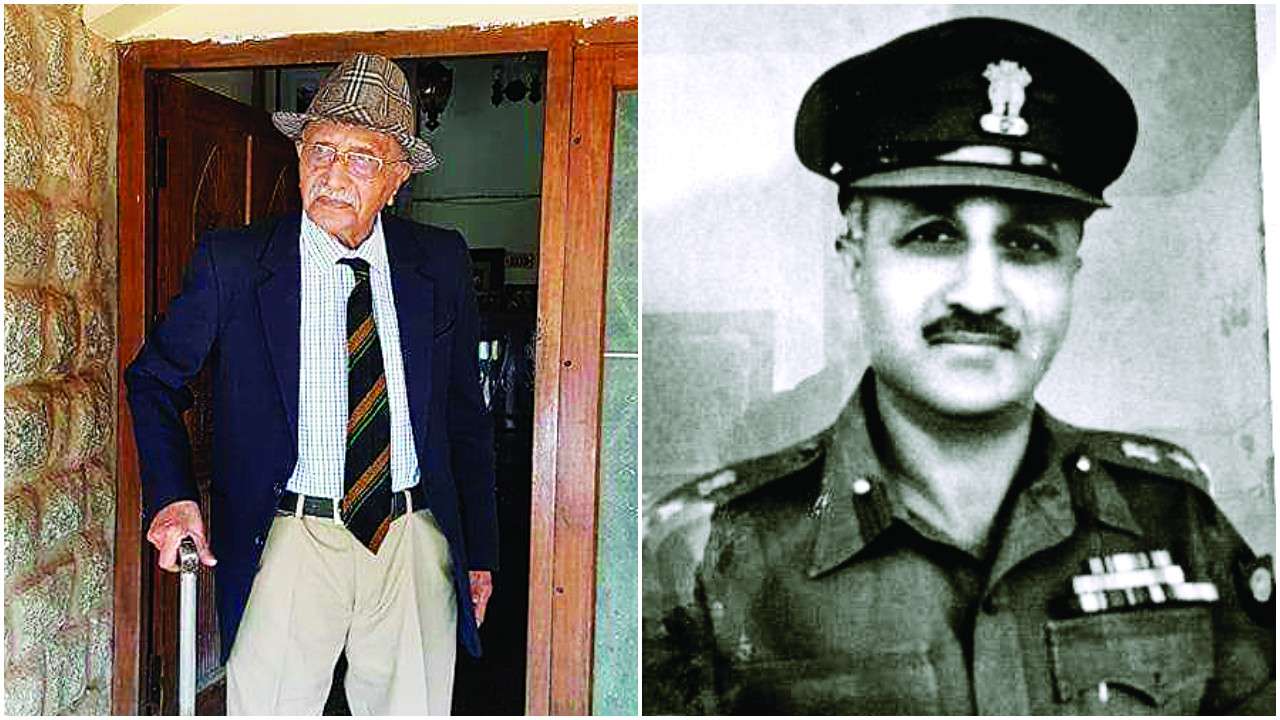
FIELD MARSHAL KM CARIAPPA AND HIS SON AIR MARSHAL KC CARIAPPA, PIC COURTESY: WIKIPEDIA/BHARAT RAKSHAK

Recently speaking to the media, Air Marshal KC “Nanda” Cariappa said “My dad was a man of high principles. For him, his son and all other soldiers were the same. Even though Ayub Khan was his junior and was close to him, he refused to get me released before the others. I was later released with all others”.

Air Marshal was quoted by the News18. Sq Ldr KC Cariappa was caught on last day of the war and when he came back, he commanded a helicopter unit of the IAF and retired as Air Marshal. He had also took part in 1971 war.

(With News18 inputs)

source: http://www.indiatimes.com / India Times / Home> News> India / by Maninder Dabas / March 06th, 2019

Time’s Shub for this beauty

The gorgeous and tall model-turned-actress is hoping to go from glam to character roles with ease.

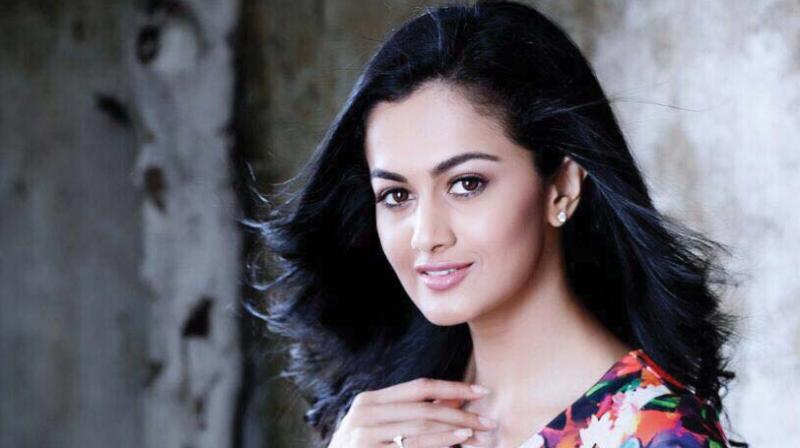
Shubra Aiyappa
Shubra Aiyappa

After making her presence felt in Telugu and Tamil, she faced “no problem” in her debut venture in Kannada — Vajrakaya as well. She walked her way into success, featuring in one of the most popular songs of 2015, No Problem sung by Tamil actor Dhanush featuring alongside Century Star Shivarajkumar. A peppy number which celebrates the beauty and height of a pretty girl, the song has garnered more than 10 million views on various social media sites till now. The actress’s next film was John Seena directed by Simple Suni. Now, the model-turned-actress Shubra Aiyappa has signed her latest Kannada venture titled Ramana Avatara for which she will soon start shooting. She speaks to Bengaluru Chronicle on her new avatar and the ‘heights’ of opportunity coming her way, and more.

“Though I featured in just a song, and a couple of scenes in Vajrakaya, it has brought me immense fame and recognition. It was as good as a full-fledged debut in Kannada. Later, I kept getting similar opportunities to portray similar ‘glam doll’ roles where I was expected to just look glamorous. This is why I did not sign many of them. Eventually, John Seena directed by Simple Suni happened. It is ready, and for some reason, the release has been delayed. It has a great role that explores my full potential as an actress. I have also signed my next in Kannada film titled Ramana Avatara, and am thrilled about it,” says Shubra Aiyappa.

The actress does not want to take up movies just to add to her project list as it makes no sense to her. “For me, the film and role has to be relevant and exciting. What I look for, is quality of a script, the team and other crucial factors like casting before taking up a project. Thus, despite several opportunities, I have worked in only one movie after Vajrakaya. In John Seena, I play a girl’s character which has dual shades, similar to playing a dual role. It has an interesting plot and the change in appearance of my character along with its personality is the reel deal for me as an artist,” she shares, adding that unfortunately it is yet to release and once it does, the actress is confident that it will pave the way for more good roles rather than just being a glamour quotient on the silver screen.

In Ramana Avatara, she shares the screen space with Rishi, Raj B Shetty, Danish Sait, Pranitha Subhash and another actress. Directed by Vikas and Vinay Pampapathi, (brothers), it is going to be a fun filled venture.

She is also busy modelling, and recently shot for a prestigious annual calendar event. Shubra feel that modelling and films are two completely different worlds. “As a model, the focus is on looking good and to make sure I can add value to my endorsements. However, movies are about adding value to a character with emotions. I am no more walking the ramp for shows, and if I do, it is when I get the invites as a show stopper,” she says.

Shubra’s height has sometimes become an issue but that does not stop her in any way. “Yes, sometimes it is an issue. In fact, in Vajrakaya Shivanna who is way shorter than me celebrated my height in the song. I am different and it is the perspective on how one looks at it. However, if one looked at Deepika Padukone, and many more actresses who are taller, they have achieved success and that is the best way to look at their life, and not look at height as an issue.”

source: http://www.deccanchronicle.com / Deccan Chronicle / Home> Entertainment> Sandalwood / by Shashiprasad, Deccan Chronicle / March 06th, 2019

Urban Legend: O Captain! my Captain! ode to India’s war heroes

It’s not what you expect to see in the heart of the Western Ghats around the spot where the river Cauvery originates.

Mottana C. Ravi Kumar

Nestled in the Western Ghats, where the river Cauvery originates, is a little-known memorial. On it are inscribed the names of 49 soldiers from a village nearby, who lost their lives in World Wars 1 and 2. It’s a heroic and elaborate effort by Mottana C. Ravi Kumar, an advocate and the son of an army man. Over the years, officers like Kargil war veteran Major Rakesh Sharma have visited the memorial, much to Kumar’s pride, writes Aksheev Thakur

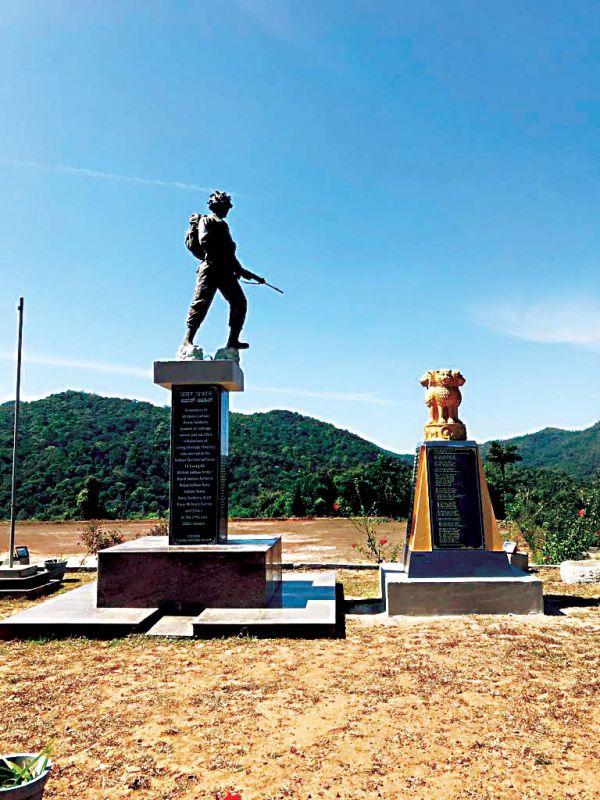
It’s not what you expect to see in the heart of the Western Ghats around the spot where the river Cauvery originates. But venture deep into the green canopy of the ghats and you come across a war memorial inscribed with the names of 49 soldiers from a village here, who lost their lives in World Wars I and II.

MemorialKF04mar2019

Cherangala village in Kodagu has an advocate, Mottana C Ravi Kumar, the son of an army man, to thank for the memorial that pays tribute to its patriotic sons killed in the two wars.

It’s an elaborate memorial, the statute having come from Mohali. It nearly got a T-55 tank too, but the bridge in the village was not strong enough to carry it, forcing that plan to be abandoned . Next to the statue stands an Ashok Stambh with each side inscribed with Kavi Pradeep’s famous “Aye Mere Watan Ke Logon” Iqbal’s “Sare Jahan se Accha,” Rabindranath Tagore’s “Where the Mind is Without Fear” and Bankim Chandra Chattopadhyay’s “Vande Mataram. “

The songs and the memorial are meant to inspire the young of the village , the advocate tells you. “Soldiers serve in inhospitable conditions and this is my little ode to them,” he says.

Distinguished officers of the the country’s armed forces like Field Marshal K M Cariappa’s son, Air Marshal (retd) KC Cariappa, Lt. Gen. (retd.), G S Nanda, and Kargil war veteran, Major Rakesh Sharma have visited the memorial over the years, much to the pride of the villagers, who continue to honour the memory of the men they sent off to war.

The army man that he was, Mr Ravi Kumar’s father wanted him to join the armed forces too, but he insisted on becoming a doctor. “Ultimately, I did not become either a doctor or a soldier, but an advocate and moved to Bengaluru to practice,” he smiles.

But he did flirt with the idea of joining the army, spending some time at the Dholpur Military School near Agra as a young man. “Father joined the army in 1941. When I joined the military school, the 1962 Indo-China war erupted. The principal often gave five and six-year-old children news of their fathers achieving martyrdom on the battlefield and I saw them crying. The scene was repeated in the 1965 war and this drew me emotionally close to the armed forces,” he recalls.

But the idea of the memorial in the village was born quite by chance. Being an advocate, he once filed a writ petition in court on the lack of road connectivity to his village and the resulting disadvantage this placed its families in when it came to getting brides for their sons as parents were reluctant to send their daughters away to such a remote spot in the ghats. “ Children had to travel five miles to go to school. So when I became an advocate I filed a writ petition in the high court and it was passed by Justice Gopal Gowda,” he adds .

During one of their meetings, Justice Gowda pointed out to him that he had not invited him to the village after the road was built to connect it to the rest of the state. “It was then that the idea of the war memorial came up as I could not have invited him for just the road,” he says. And he went on to build it at the spot where it still stands in memory of the village’s bravehearts.

A strong believer in the words of Swami Vivekananda that, “They only live who live for others, rest are more dead than alive, “ the advocate has fought several cases of defence personnel too over the years.

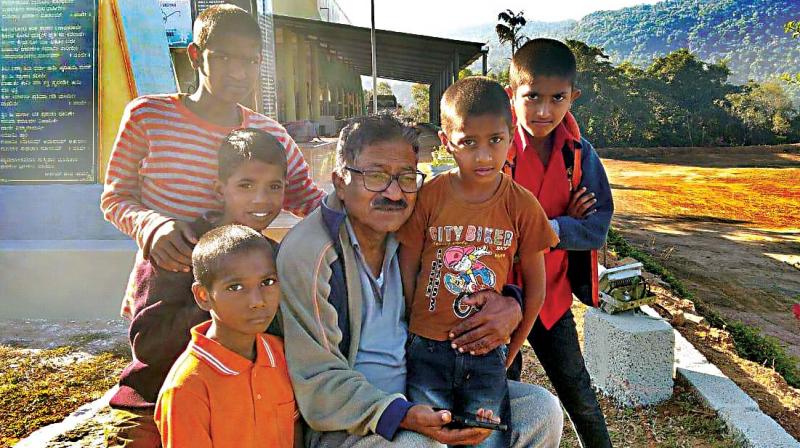
But he has not stopped there. Unlike many in Kodagu, who run homestays, Mr Ravi Kumar runs an orphanage as he feels someone has to take care of children with no one to turn to.

“There over 25 million orphans in India according to the United Nations and of them 10 lakh sleep on the streets of Kolkata, Mumbai and Delhi. We have not even done an independent census of orphans although countries like Pakistan and Sri Lanka have. But if we take the statistics of the UN into account, they form 2 per cent of the population and are not receiving any attention. The SCs, STs and OBCs have reservation, what about the orphans, who don’t know what their religion or caste is?” he asks pertinently.

Mr Ravi Kumar takes care of the children not only till they turn 18, but till they make their own way in life. “At least they can then go on to become soldiers in the Indian Army, if not officers,” he concludes.

source: http://www.deccanchronicle.com / Deccan Chronicle / Home> Lifestyle, viral and trending / by Aksheev Thakur, Deccan Chronicle / March 02nd, 2019

The tale of a much-loved hero

KathivanoorVeeranKF01mar2019

Professor Lissie Mathew’s book, Kathivanoor Veeran: Malakayariya Manushyan, Churamirangiya Daivam, traces the evolution of an ordinary man to God

Mannappan and Chemmarathy were not exactly a model couple, they fought as intensely as they loved. When he dies in war, after a domestic squabble, Chemmarathy is heartbroken, the last words she uttered to him were the unkindest. She jumps into his pyre and the two attain godly status. This is an extraordinary tale of Mannappan, a man who goes up to Coorg in Karnataka from his village, Mangad in Kannur, dies a war hero, and returns as Kathivanoor Veeran. To this date, few can listen to the tragic hero’s tale without a lump in the throat.

Professor Lissie Mathew’s book, Kathivanoor Veeran: Malakayariya Manushyan, Churamirangiya Daivam, retraces Mannappan’s journey to Kodagu (Coorg). Having grown up in Vayattuparambu in Kannur, Lissie’s childhood was full of the stories and colours of Theyyam. And she had always wanted to explore the story of Kathivanoor Veeran. A professor of Malayalam at the Sankaracharya College, Kalady, working on its Payyannur campus, she has to her credit 12 books.

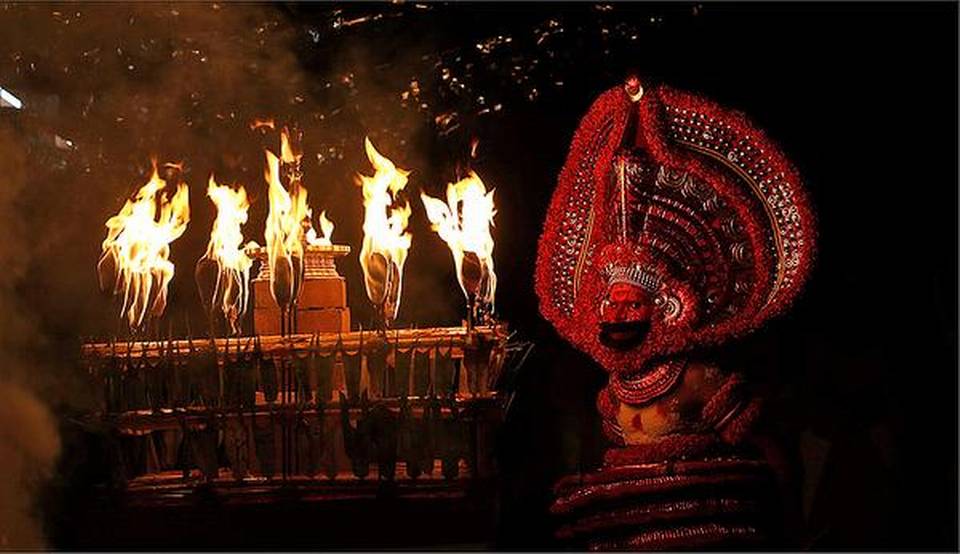
Kathivanoor Veeran is one among the most popular Theyyams, for it is a visual spectacle where the performer indulges in acrobatics and comes in close contact with fire. “It is an experience to watch Kathivanoor Veeran in action. I wanted to bring out the hero’s story through this book,” Lissie says.

The book delves into the micro-histories of Northern Malabar, where folktales, fiction, fact and history mingle in curious ways. It also explains the Theyyam, its rituals and practices in a detailed manner.

Excerpts from an interview with Lissie Mathew

Can you describe your relationship with the work.

I should say the book came out straight out of my mind, though it took four years of research, travel and interaction with people, to complete. It was hard work, but I wanted to trace Kathivanoor Veeran’s route from Mangad in Kannur to Kodagu (modern day Coorg). Through the thottam (the song sung before the ritualistic practice), which describes Mannappan’s life and death in great detail, one can get an insight into the geography, culture, mores and history of North Malabar. I followed the thottam to retrace Mannappan’s journey.

The thottam would have been difficult to interpret as it is in archaic Malayalam, often in the local dialect.

Yes. I could not understand it, the first time I heard it. I got the thottam singers to sing it for me, recorded it and I listened to it over and over again, until it began to make sense. It is fascinating, how these songs combine legend, history, reality and imagination. Most of the places mentioned in the thottams remain, though in different names. These thottams speak of a culture that is over a 1,000 years old.

What is the relevance of Theyyam today?

Theyyam talks about people and their problems, their relationship with Nature and fellow creatures. A rural-agricultural lifestyle makes up its very foundation. For instance, a Kathivanoor Veeran Theyyam performance is always followed by an annadanam (feast), which everyone partakes of. In this day and age, when we, as a people are becoming more self-centred, this is an example of how we are a part of our community and how we need to share our resources.

Performed most often in sacred groves (kaavus), it is important to understand the relevance of preserving these pockets of biodiversity intact. It is heartening to see that even the younger generation respects the rituals associated with Theyyam. By wanting to preserve the sanctity of Theyyam’s rituals, they are also contributing towards preserving the ecosystem.

Theyyam is performed by people in the subaltern communities. The Chirakkal Kolathiris, the rulers of the land, gave certain subaltern communities the right to perform Theyyam and it is continued to this day. Once they become Gods, even the upper castes, pray to them.

In that sense, Theyyam is undoubtedly, extremely relevant today.

source: http://www.thehindu.com / The Hindu / Home> Books / by Anasuya Menon / February 28th, 2019

It’s ‘RASH’ hour for the Kodava lass

The doe-eyed beauty who has wowed the audience in two South Indian industries, Rashmika Mandanna is now getting set for a Tamil debut…

Rashmika Mandanna
Rashmika Mandanna

In a little more than two years, she has had six movies to her credit — three in Kannada and Telugu (each). All have been declared box office hits. She also has four more projects in her kitty among them is Yajamana, starring with Challenging Star Darshan which releases this Friday. There are also reports about her Tamil debut opposite Karthi in a yet-untitled project to be directed by Bakkiyaraj Kannan.

A rare feat for an actress, she is ‘reely’ living a wonderful dream, which she says has been a “roller coaster” ride. Now, she is set on a fast forward MO to fame. True to a tattoo on one of her arms that reads “irreplaceable,” Rashmika Mandanna has achieved what many would need atleast a decade to achieve. What makes it more special, is that this pretty Coorg lass has done it in not one but two big South Indian film industries. That too simultaneously!

The beautiful actress who hails from Coorg, Rashmika speaks exclusively to Bengaluru Chronicle about her impressive two year career, her star-studded filmi journey, her most expected movie Yajamana, her die-hard fans, social causes and her little sister Shiman Mandanna and more.

“I have been living my dream for the past two years. All I ever wanted was to keep busy and do work which made me proud. And meet new people, and travel. I am glad I am doing what I wanted to. Kirik Party will always remain my most special moment,” is what Rashmika had penned when she completed her two year journey in films, ending it with a special note, thanking her huge fan following who made it even more special.

“Yes, it has been a roller coaster life on fast forward mode. I had the greatest opportunity to learn and work with some of the best and most humble personalities. About my latest Kannada film Yajamana, it is certainly not my return to Kannada after some time, because I have been busy with the film for more than a year, and due to some delays in the post production stage, the film is releasing now,” says Rashmika Mandanna.

While she has been successful in both Kannada and Telugu films, there are reports about her Kollywood (Tamil) debut which she cannot reveal more about. According to reports, it was announced on Sunday that Rashmika has been signed on for a role opposite Karthi in a yet to be titled project directed by Bakkiyaraj Kannan of the Remo fame.

The film by Dream Warrior Pictures is set to go on the floors in a month or two. Currently dubbed as K19, the film will mark the first time collaboration between Karthi and Bakkiyaraj Kannan, and it’s tipped to be a film high on action and comedy.

After Kirik Party in Kannada, she was paired opposite both the Golden Star and the Power Star, and now she takes another challenging role in her stride, alongside Challenging Star Darshan in Yajamana, which is directed by composer-turned-director V Harikrishna, and is produced by the popular Shylaja Nag.

“The character of Kaveri, I portray in Yajamana is loud with a lot of energy. During the shooting of the film, I would feel so exhausted at the end of the day, but all that hard work reflects onscreen as well. Moreover, with such a chilled co-star like Darshan Sir, who cares for others along with a dedicated team, it was all worth it. Yajamana is one movie which I am pinning great hopes on. I essay a completely different character from my previous roles,” she adds. Juggling between Kannada and Telugu, the actress feels that travelling is the only downside in her dual industry stint though, she adds, “For an artist who is doing three movies a year in one language, it cannot be hard to do it in two different languages. Though I had some grasp of Malayalam growing up with friends who spoke the language, I had no clue about Telugu,” she reveals. She adds, “I could not even say how are you in Telugu. Now, I can converse in Telugu very easily.”

Rashmika is very active on social media and has been very vocal in support of her huge fan following. “If I could meet every fan, and invite them my home for dinner, I would do so. It is their love and support which makes my journey so special and if anybody talks bad about them, I get annoyed, hence my straight replies to those who speak negatively about my fans,” she explains.

The actress has also been standing up for social causes. “Now that I have the access to do my bit, I am more than happy to extend support. So much of negativity has been around lately. We all can understand if it is a natural calamity but when innocent lives are lost, what is the purpose of all this when we cannot stand in solidarity for such brave hearts who make supreme sacrifices,” Rashmika says of the tragic Pulwama attack.

An important critic in her life is her little sister Shiman Mandanna. “Yes, she gauges all my work. I can easily guess when she doesn’t like it. She has been my biggest critic, which I miss a lot at times. She takes my case and keeps a close watch on what I am up to. She is more like my ‘elder sister.’ A don and a cute rowdy,” she wraps up.

source: http://www.deccanchronicle.com / Deccan Chronicle / Home> Entertainment> Sandalwood / by Shashi Prasad SM / Deccan Chronicle / February 27th, 2019

We have started working on Vh1 Supersonic 2020: Nikhil Chinappa

NikhilChinnappaKF27feb2019

Mumbai :

Vh1 Supersonic 2019 wrapped up with a bang and has left the audience with immense memories. The makers had truly put in a lot of efforts, which were shown in the festival as it was absolutely lit and organized. Well, we at Radioandmusic spoke to Nikhil Chinappa who has been associated with Vh1 Supersonic since its launch in 2013. His company Submerge has been known to bring several DJ’s across the world to festivals in India. Nikhil Chinappa has played a major role in curating and creating the festival.

Vh1 Supersonic 2019, held in Pune enthralled visitors, while we spoke to Nikhil Chinappa on how the festival has been treating him. He expressed, “It is exhausting, but it has been a lot of fun. It is really good to see the hard work the super crew has put into the festival as to see it come to life and to see the artists come here and fans come here and enjoy the festival and the vibe around it, this is why we do it.”

On being asked about Vh1 Supersonic’s area of focus, Chinappa replies, “Focus has always been the same i.e. to create a festival, which when over will have people walk away, but thinking, when next Vh1 Supersonic would come around. So, this is exactly the focus and the end goal.”

When asked about Vh1 Supersonic 2020, he reveals, “We have started working on Vh1 Supersonic 2020 a month ago. We are already talking about the artists, we are planning to have. We will be trying something new thing next year to actually see how people respond to it and will expand on it and would do those on a larger scale next year. Next year the line-up will be new. We always try and bring new artists. So, we are always thinking about future projects and festivals that’s really exciting for us. I feel as a team it does motivate us to do better.”

source: http://www.radioandmusic.com / R and M / Home> Editorial> News / February 25th, 2019