Category Archives: Famous Personalities of Kodagu / Coorg

Here’s The Story Of IAF Pilot Ajjimada Devayya Who Got Maha Vir Chakra After Being Praised By A Pakistani Pilot

Most profound of tragedies are made when the valour of a soldier goes unnoticed and unawarded. While we have many heroes whose bravery encounters have gone down in the Indian armed forces’ annals of history, there must be some who remained unsung.

One such hero whose valour could have remained unsung was the Maha Vir Chakra (MVC) recipient Squadron Leader Ajjimada Bopayya Devayya who was awarded this honour 23 years after in 1988 for his sacrifice in an epic dog fight on September 7, 1965 war against Pakistan Air Force’s Supersonic F-104 Star-Fighter.
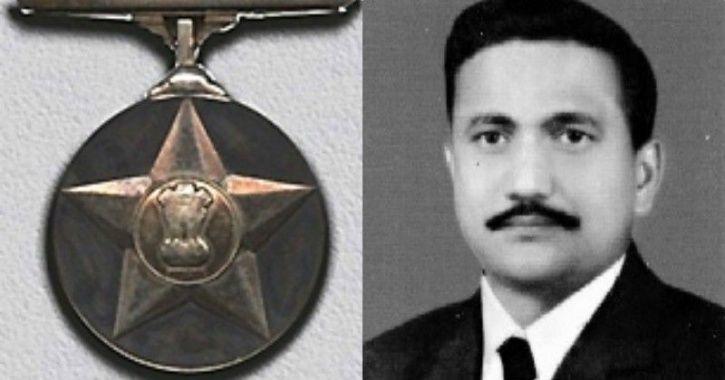
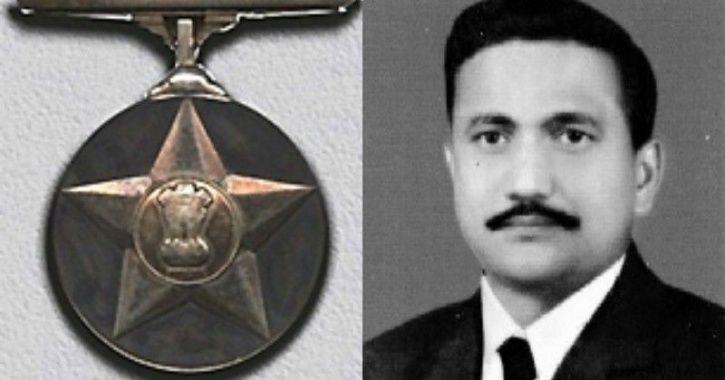
INDIA'S SECOND HIGHEST BATTLE HONOUR MAHA VIR CHAKRA/ SQN LDR AB DEVAYYA, PHOTO COURTESY: WIKIPEDIA
INDIA’S SECOND HIGHEST BATTLE HONOUR MAHA VIR CHAKRA/ SQN LDR AB DEVAYYA, PHOTO COURTESY: WIKIPEDIA

But whether it’s the destiny or the solace from the enemy that his valour and sacrifice was first recognised by Pakistan and then by Indian Air Force after which the second battle honour for him followed.

If it had not been Pakistani Flt Lt Amjad Hussain admission whose plane was destroyed by Sq Ldr Devayya and the book written by British writer John Flicker’s Book-Battle for Pakistan: The Air War of 1965, the valour of Sq Ldr Devayya would have gone unnoticed.
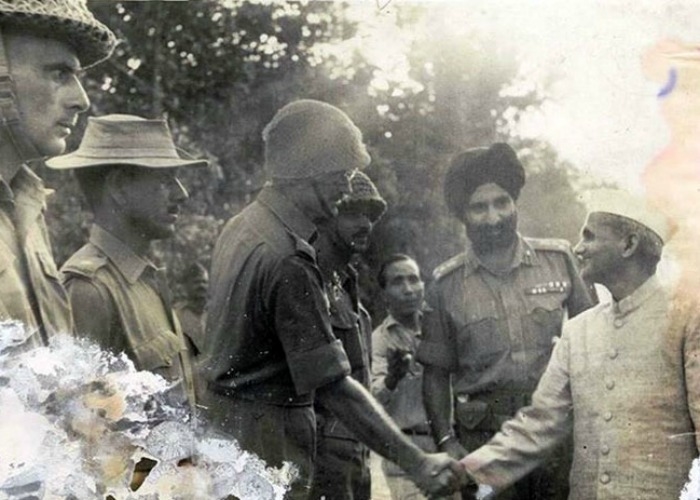
INDIAN ARMY FACEBOOK PAGE

Flt Lt Hussain survived the dog fight as he ejected in due time, but during one sortie in the same F-104 Star-Fighter to destroy Indian assets stationed at Amritsar air base in 1971 war, Flt Lt Hussain’s plane was hit and this time too, he ejected safety, only to be taken as Prisoner Of War (POW) by Indian forces.

A The Tribune report published in 2015 and a PIB documentary available on YouTube titled 1965 Indo-Pak Air War claims that Flt Lt Hussain told the story of a dog fight between his F-104 Star Fighter and Sq Ldr Devayya’s Mystere and how Sq Ldr Devayya despite being hit, destroyed Flt Lt Hussain’s plane before being martyred in the crash.

7th September 1965

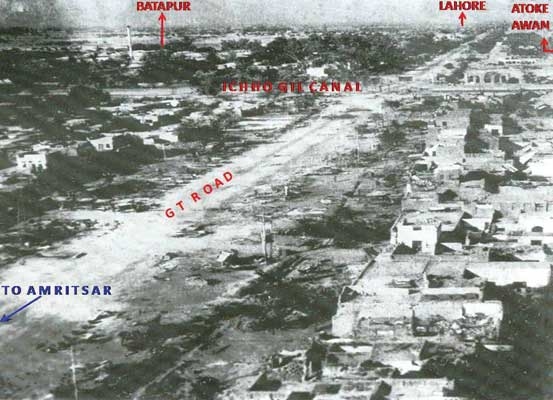
The India-Pakistan war was in its thick and going gaga over the initial gains, Pakistan Air Force (PAF) was raiding Indian airbases on the western border. IAF was tasked to reply and attack the Pakistan airbases.

“Squadron Leader Ajjimada Bopayya Devayya flew in a Mystere Aircraft as a member of a strike formation that was assigned the task of attacking the heavily defended Sargodha airfield in Pakistan at 0555 hours on 7th September 1965. All members of the mission except Squadron Leader Devayya returned safely to base. As no other details were available at that time, Squadron Leader Devayya was listed as ‘Mission in Action,” reads the IAF Citation about Sq Ldr Devayya.
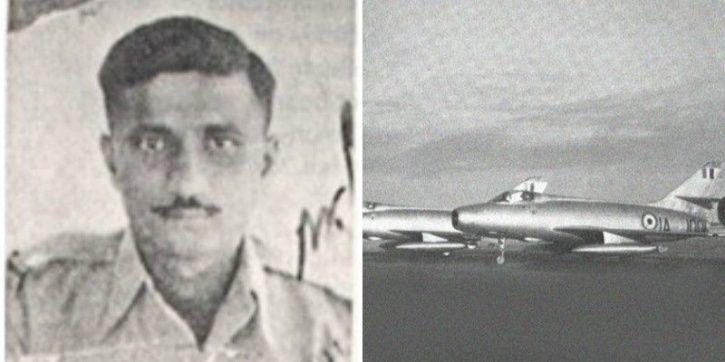
IAF/BHARAT RAKSHAK
IAF/BHARAT RAKSHAK

The IAF had carried various strikes on Sargodha, Chota Sargodha and other bases of PAF and despite the difference having less advanced fighter jets- both in terms of speed and manoeuvrability, the IAF pilots gave their Pakistani counterparts befitting and scores of Pakistan highly advanced American F-86 Sabres and F-105 Star Fighter were destroyed.

When Sq Ldr Devayyas grit won over Flt Lt Hussain’s F-104
French Dassault Mystere was no match to F-104 Star Fighter as it was the first plane in the world which touched the Mach 2 Speed. Seeing the Mystere approaching the Sargoda airbase, F-104 intercepted Sq Ldr Devayya’s jet and dog fight which remained elusive and unsung resumed.

“The pilot of F-104 first fired an air-to-air Sidewinder missile, which Squadron Leader Devayya successfully evaded and the missile hit the ground. However, by virtue of its faster acceleration, the F-104 rapidly closed in on the Mystere and fired a burst of its 20 mm multibarrel cannon and succeeded in damaging Squadron Leader Devayya’s Mystere. The F-104 went ahead of the Mystere due to its higer speed,” reads the Citation.
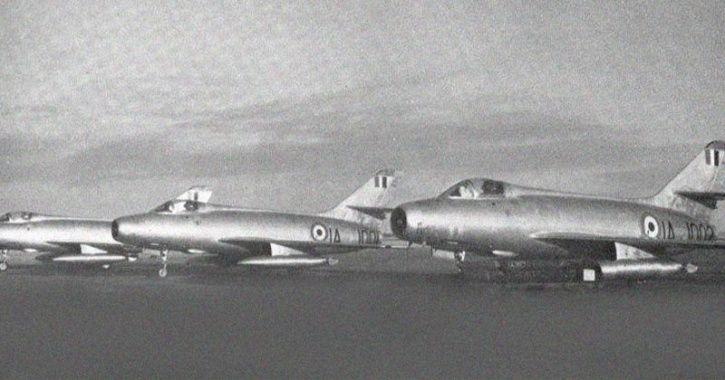
IAF MYSTERES, PHOTO COURTESY: BHARAT RAKSHAK

Flt Lt Devayya despite being hit, didn’t eject and decided to give a far superior plane, a fight for its life. He chased F-104 and rained the bullets on it from his Mystere’s power gun. The F-104 got hit and soon the flames enveloped it and Flt Lt Hussain had to eject.

“Undaunted and with utter disregard for his personal safety, Squadron Leadder Devayya flew his damaged Mystere in pursuit after the F-104. His decision was critical because the Mystere were operating at the extremity of their range and combat with an F-104 meant significantly lowering his chances of return to base.”

“Neither the Pakistani pilots flying skill nor the F-104 superior performance were apparently a match for Squadron Leader Devayya’s determination and single-minded purpose. Manoeuvring a damaged aircraft, he finally shot down the F-104. Thereafter, it is conjectured that Squadron Leader Devayya was unable to maintain control of his aircraft and was either killed in an unsuccessful low-level ejection or in a crash because of the damage that his aircraft had sustained.”

First taken as missing and then presumed dead

The then Wing Commander O.P. Taneja, who had led the first wave of attacks of which Sq Ldr Devayya was a part of, waited for him after returning to the base, but he didn’t come.

“I was told he must have gone to 32nd Squadron to return their aircraft and to change,” Taneja told IndiaToday years later during an interview published in 1988, “but when more than 40 minutes passed, I insisted on seeing him.”

As a customary, Flt Lt Devayya was presumed dead after a year.

The book
The PAF in later years commissioned a British writer, John Flicker to write about air war between two countries in 1965. Since he was commissioner by PAF, Flicker obviously painted PAF as superior air force which had caused harm to IAF in the air battle.

But the truth was a larger version of the dog fight between Sq Ldr Devayya’s Mystere and Flt Lt Hussain’s supersonic F-104 and the IAF had literally annihilated technically superior aircraft like F-84 Sabres with the relatively older and less advanced fleet of Mysteres, hunters and others.
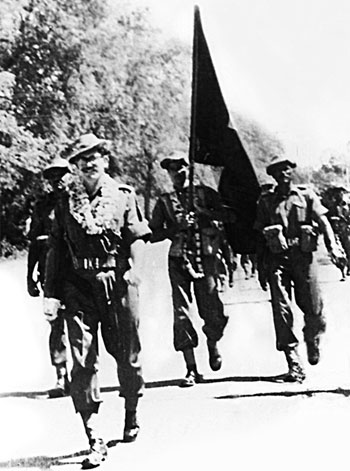
VICTORY IN 1965 WAR. PHOTO COURTESY: INDIAN ARMY FACEBOOK PAGE

But the book had an anecdote about this dog fight where it was admitted that a Mystere had destroyed F-104 before crashing with its pilot.

PAF’s retired Air Commador, Kaeser Tuffail has also written about it on his blog-Mystery of the Downed Mystère where he also talks about how locals gave Sq Ldr Devayya burial.

The struggle
The book left many surprised, especially the then Wing Commander O.P. Taneja who led the attack at Sargodha who said approached higher authorities with this as quoted by IndiaToday. “I moved higher authorities and told them it had to be Devayya.” Wing Commander Taneja was sure because that day only two were lost-one Sq Ldr Devayya in the morning and another Flt Lt Bahul Guha in the evening.

But none paid heed to his appeals.
But in 1987, the War Studies Division of the Ministry of Defence saw Fricker’s book and one of its members, the then Air Commodore Pritam Singh paid attention to an important anecdote. Singh had also seen action in 1965 as a young pilot. He told IndiaToday in 1988. “I knew all the pilots in the Mystere formation and began to trace them,” Singh said when he commanding the airbase in Jodhpur.
SAINIKSAMACHAR.NIC.IN

Singh put all his efforts to connect the dots and talked to all people concerned including Wing Commander Taneja apart from collecting evidence from Pakistani broadcast acknowledging the loss of an F-104 on September 7 morning. In November 1987, Singh presented all his findings to the high command and the pieces of evidence were compelling and convincing.

And finally, the Mahavir Chakra for the great air warrior
Finally, 1988, Sq Ldr AB Devayya was posthumously awarded the Maha Vir Chakra (MVC) for an act of unparallel courage and bravery. His 51-year-old wife Sundari Devayya who received the news that husband was missing at the age of 29, had spent 23 long years without the country recognising her husband’s sacrifice.
INDIA
INDIA

She spent those years in bringing up the couple’s two daughters, Smitha, 24, and Preetha, 23 (then in 1988) her gallant husband had left. Preetha was just eight months old her father sacrificed himself for the country.

(With inputs from IAF website, IndiaToday, The Tribune, blog of Air Commodore Kaiser Tuffail and PIB Documentary)

source: http://www.indiatimes.com / IndiaTimes.com / Home> News> India / by Maninder Dabas / February 14th, 2019
India lack system to generate quality tennis players: Bopanna ( Interview)

Melbourne :

Indian tennis star Rohan Bopanna has blamed the system for not producing quality players and demanded more tournaments in the country itself.

Bopanna, who had bad outings in the both the categories (men’s and mixed doubles) in the ongoing Australia Open here, also said the country needs to have more academies and strong grassroots programmes to produce more tennis players.

“We dont have system in place to generate that many of players. And not only the system but we need to have tournaments in India. We have only one ATP tournament and two challengers in India which is not enough. If you look at Europe or USA, they have 25 to 30 weeks of just tournaments alone which makes a difference,” Bopanna told IANS.

“Tennis is an expensive sport so to travel constantly week and week out is tough. If each state in India has a one challenger tournament then you can travel only in india and make international points and that way we build constantly nUmber of athletes travelling and getting the sport and rankings high,” he added.

“First we have to start with the system then with tournaments then obviously to have good academies in place. So that entire system once that comes into play we will have more player coming out of it.”

Bopanna, who had paired up with Zhaoxuan Yang, went down 6-3, 3-6, 6-10 to Robert Farah and Anna-Lena Groenefeld in the opening match of the mixed doubles category at the Australian Open recently.

In the men’s doubles category, Bopanna has paired up with fellow Indian Divij Sharan and lost his opening round match to the Spanish pair of Pablo Carreño Busta and Guillermo Garcoa-Lupez.

Divij is a left handed player and Bopanna has paired up with him for he first time. The had won the Maharashtra Open but could not continue the momentum in the first Grand Slam of the year.

“Nothing went wrong in this tournament. I have to give credit to the opponents who is playing in this circuit for such a long time so they are more experienced than us,” Bopanna said.

“Yes we were seeded higher but if you look at the experience in the grand Slams our opponents were more experienced than us.

For me playing with the left-hander is something new this time and it takes time to build a partnership and that what we are working on as a team,” he added.

India will host Italy on grass court in the qualifiers for the Davis Cup in Kolkata next month. Taking bout the tie, Bopanna said the tie against Italy will be tough but the new format might help India.

According to the new rules, the tie have been cut from three days to two and each rubber will be decided over three sets, down from the earlier five.

“The Davis cup tie is very very tough tie because the Italians have four or five players in the top 100 which makes a big difference which we don’t have anyone currently. Yes after this week Prajnesh(Gunneswaran) might come into the top 100 but apart from this they still have a lot more top players,” he said.

“So we will surely going to have a tough tie against them but having new format of best of three sets I think we do have a chance.”

(Gaurav Sharma can be contacted at gaurav.sharma@ians.in)

source: http://www.newkerala.com / NewKerala.com / Home> News> World Sports News / IANS / January 22nd, 2019

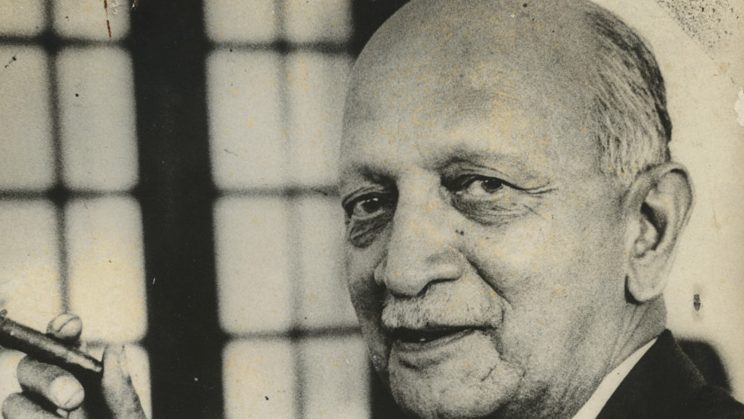
Field Marshal KM Cariappa, so much more than just the first Indian Army chief

Field Marshal KM Cariappa | Indian Defence Research Wing

Field Marshal K.M. Cariappa was instrumental in keeping the Indian Army away from politics and attempted to forge an all-inclusive army.

New Delhi:
Popular discourse on Field Marshal Kodandera Madappa Cariappa is often limited to placing him as the first ‘Indian’ commander-in-chief of the Indian Army who took over from Roy Butcher on 15 January, 1949, and the second person to have been conferred the rank of Field Marshal in 1986 after former Army chief Sam Manekshaw.

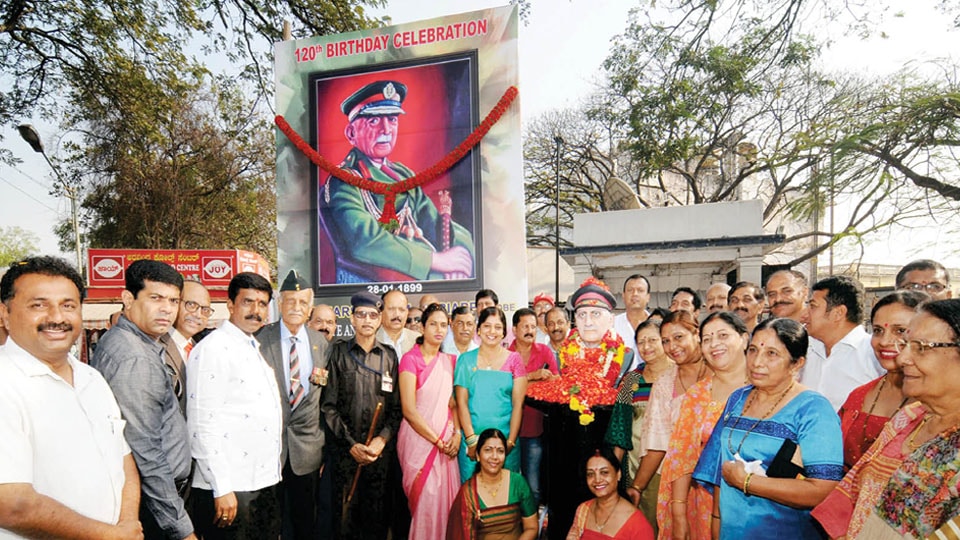
There are, however, countless other factors that make him a towering figure in the history of Indian military, all of which is still relevant and important on his 120th birth anniversary, which falls today, 28 January.

Field Marshal Cariappa was not only instrumental in drawing a strong dividing line between the Indian Army and politics but he also helped shape the Army into a highly professional force in its formative stage.

He attempted to do away with caste, creed and other barriers in the Indian Army by raising the Brigade of The Guards — a mechanised infantry regiment of the Indian Army — in 1949. Recruitment to it was open to all regions, castes, creeds and all sections of society.

Military historian and national security analyst Mandeep Singh Bajwa says that such was his stature, that Field Marshal Cariappa interacted directly with then Prime Minister Jawaharlal Nehru, not allowing anyone in the bureaucracy or others in the corridors of power to take liberties with him.

“But the crucial fact is that he kept the Indian Army away from any kind of political influence, in contrast to the political nature of the Pakistani Army,” Bajwa told ThePrint. “When Ayub Khan was appointed the commander in chief of the Pakistan Army in 1951, the Pakistan Army clearly had a role in shaping the foreign and domestic policies of the state.”

The military coup that followed in 1958 only testified to the political nature of the Pakistan Army.

“He wanted the Indian Army to be an apolitical entity and that’s the reason he decided against inducting former INA personnel into the Army as they had become political soldiers,” Bajwa adds.

A distinguished career and a run-in with a junior
Field Marshal Cariappa had a distinguished career as the Army chief but before that he led Indian forces on the Western Front during the India-Pakistan War of 1947.

He was instrumental in recapturing Zojila, Drass and Kargil and created a linkup with Leh before the then Indian government decided to abide by an UN-brokered ceasefire on 1 January, 1949.

An illustrative anecdote about his character relates to the 1965 Indo-Pak war. Field Marshal Ayub Khan had served under Cariappa in the British Indian Army. In 1965, Cariappa’s son, Flt. Lt. K.C. “Nanda” Cariappa, was taken prisoner of war by Pakistan after his aircraft was shot down. Khan had offered to release him, but Cariappa made it clear to Khan that his son was not to be given any special treatment.

Bajwa says that the interest of the nation was always first with Cariappa. “He accepted pay and ration cuts for the forces because he felt that it would help the cause of nation building,” he says.

The officer from Coorg
Cariappa was born in Coorg and was educated at the Central High School at Madikeri and the Presidency College in the then Madras state.

He began his Army career under the British and was among those in the first batch of King’s Commissioned Indian Officers at the Daly Cadet College in Indore.

His remarkable career had several firsts.

He was the first Indian officer to undergo the course at the Staff College, Quetta, in 1933. He also saw action in Iraq, Syria, Iran and Burma and became the first Indian officer to be given command of a unit in 1942.

In 1947, Cariappa became the first Indian to be selected to undergo a training course at Imperial Defence College, Camberley, UK.

He also oversaw the division of the British Indian Army between India and Pakistan during Partition.

He was chosen over General S.M. Shrinagesh and Lt General Nathu Singh Rathore to head the Indian Army.

After retirement, he served as the Indian high commissioner to Australia and New Zealand.

He died in Bengaluru in 1993 at the age of 94.

The current army chief General Bipin Rawat has said that Field Marshal Cariappa deserves the Bharat Ratna, the country’s highest civilian award.

source: http://www.theprint.in / The Print / Home> The Print Profile / by Amrita Nayak Dutta / January 28th, 2019

‘Use money for welfare of poor’

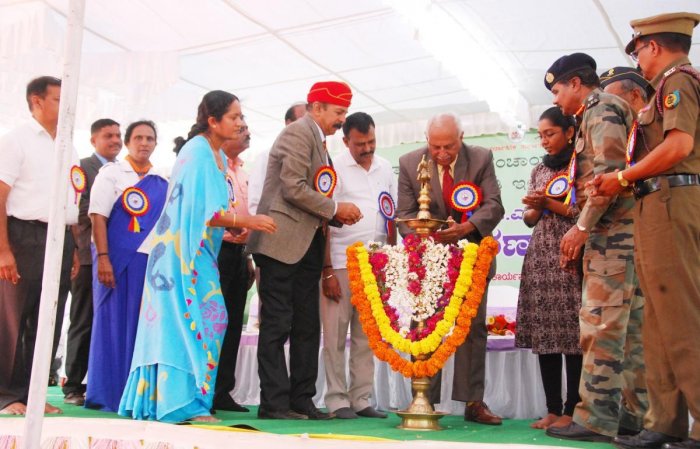
Retired Air Marshal K C Cariappa inaugurates the 120th birth anniversary celebrations of Field Marshal K M Cariappa, organised by the district administration, Zilla Panchayat and Kannada and Culture Department, on Old Fort premises in Madikeri on Mon...
Retired Air Marshal K C Cariappa inaugurates the 120th birth anniversary celebrations of Field Marshal K M Cariappa, organised by the district administration, Zilla Panchayat and Kannada and Culture Department, on Old Fort premises in Madikeri on Mon…

The money used for the celebrations of birth anniversary can be used for the welfare of the poor, suggested retired Air Marshal K C Cariappa.

Speaking at the 120th birth anniversary celebrations of Field Marshal K M Cariappa, organised by the district administration, Zilla Panchayat, Kannada and Culture Department at the Old Fort in Madikeri on Monday, he said, “Funds are wasted in the name of garlanding the statue and procession. The only thing that people will remember is the food that was served. My father (K M Cariappa) would not have liked it. Instead, the money can be used for the welfare of the people from next year.”

“For my father, the country came first,” he said.

“Lots of discussions are held in connection with the grant sanctioned by the government for observing birth anniversaries. The deputy commissioner, district in charge minister and MLA can think of utilising the amount for the welfare of the poor,” he added.

K C Cariappa said hundreds of people have lost their houses in the natural calamity. There is a need to take up rehabilitation work at the earliest.

MLC Sunil Subramani said, “The birth anniversary should be organised to create awareness among the youth on the achievements of Field Marshal K M Cariappa.”

“Cariappa could have spent his last days in Paris or London. However, he did not forget his native and came back to Madikeri and spent his last days here,” he said.

Field Marshal K M Cariappa and General Thimayya Forum President K C Subbaiah said, “The government has been observing the birth anniversary for the last several years. In spite of announcing the grant in the budget, the officials had failed to get the amount for the same.”

Retired Major B A Nanjappa said, “We should instil the patriotic fervour and time sense of K M Cariappa. He had contributed to the growth of the Indian Army.”

Kannada Sahitya Parishat President Lokesh Sagar said, “We should not forget farmers and soldiers of the country.”

In-charge Deputy Commissioner K Lakshmi Priya, Kannada and Culture Department Assistant Director K T Darshan and others were present.

MLAs K G Bopaiah, M P Appacchu Ranjan, MLC Veena Acchaiah, ZP President B A Harish did not take part in the stage programme. They had only garlanded the statue of Field Marshal Cariappa. Even District In-charge Minister Sa Ra Mahesh and MP Prathap Simha remained absent.

A procession was held from Cariappa Circle to Old Fort premises. Military band, folk art troupes, NCC, Seva Dal, Scouts and Guides were part of the procession.

source: http://www.deccanherald.com / Deccan Herald / Home> States> Mangaluru / by Adithya K A / DH News Service, Madikeri / January 28th, 2019

Hockey match organised to mark 70th Republic Day of India

Indian Ambassador Munu Mahawar presented a number of awards, including a special hockey stick to Naqvi for his contributions to promoting hockey in the Sultanate.

Muscat:

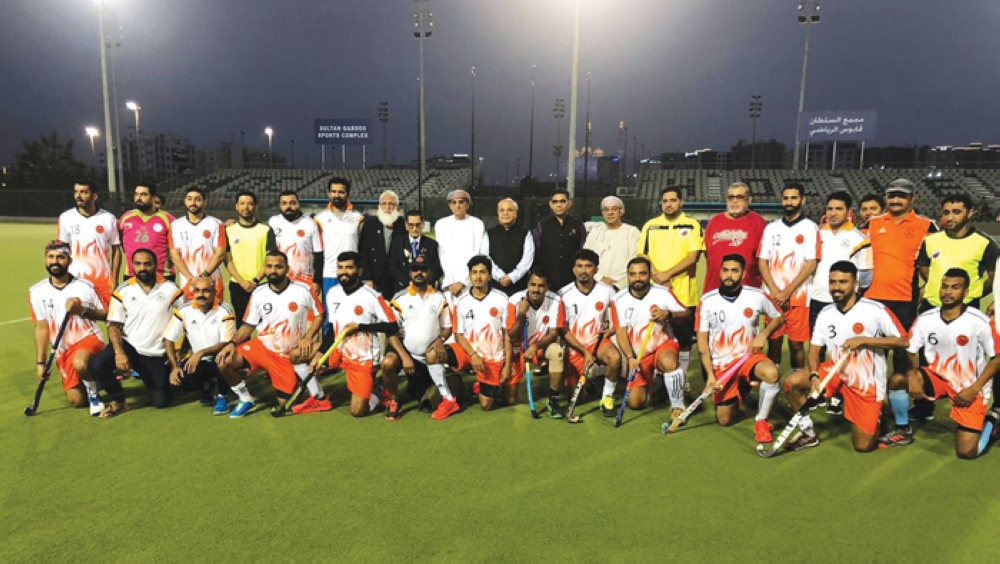
India’s 70th Republic celebrations kicked off in Muscat with a hockey festival held at the Sultan Qaboos Sports Complex in Bausher.

S.A.S Naqvi, former technical adviser of the Oman Olympic Committee and organiser of the event, said, “As it will be the 70th Republic Day of India, to commemorate this national event, we held two hockey cups: the Ambassador Cup, in which school teams competed, and the Republic Day of India Cup, where the Oman Veterans Team and expat Team Coorg competed.”

The Chief Guest of the tournament was Indian Ambassador Munu Mahawar, who was joined by Guests of Honour Kiran Asher, Group Managing Director of Al Ansari Group, and Captain Talib Al Wahaibi, Chairman of the Oman Hockey Association.

Team Coorg Muscat claimed victory in the Republic Day Cup, beating the Oman Veterans in a hotly contested match.

Naqvi said, “Team Coorg Muscat won the Republic Day Cup by edging out the Oman Veterans 3-1.” The Ambassador Cup was played in two categories: one for the boys’ teams and one for the girls. The winners of the cup this year were Indian School Al Seeb and Indian School Maabela, who both won their final matches on penalties.

Al Wahaibi said, “It was great and entertaining hockey and I am very grateful to Team Coorg and to the embassy for hosting these events for the youngsters every year. It was great and I really enjoyed it.” According to Naqvi, “The school teams of Al Seeb and Maabela won the Ambassador Cup. Another highlight was the Indian School Wadi Kabir Musical Band, which included 100 boys and girls.”

After the tournament, Mahawar presented a number of awards, including a special hockey stick to Naqvi for his contributions in promoting the game of hockey.

A number of events are being held across Oman in the run-up to Republic Day, culminating in a flag-hoisting event at the Indian Embassy in Muscat.

In an announcement published on Twitter, the embassy said, “Members of the Indian community in Oman are invited to join a flag hoisting ceremony at the embassy premises in celebration of the 70th Republic Day of India. Date & time: 26 January 2019 at 08.30 hrs. Please arrive by 08.15 hrs.”

“Please carry [a] resident card and a copy of the uploaded invitation,” the statement added.

source: http://www.timesofoman.com / Times of Oman / Home / by Times News Service / January 20th, 2019

Cricketer N.C. Aiyappa Ties Knot With Actress Anusha Poovamma

CricketerAiyappaKF30jan2019

Virajpet:

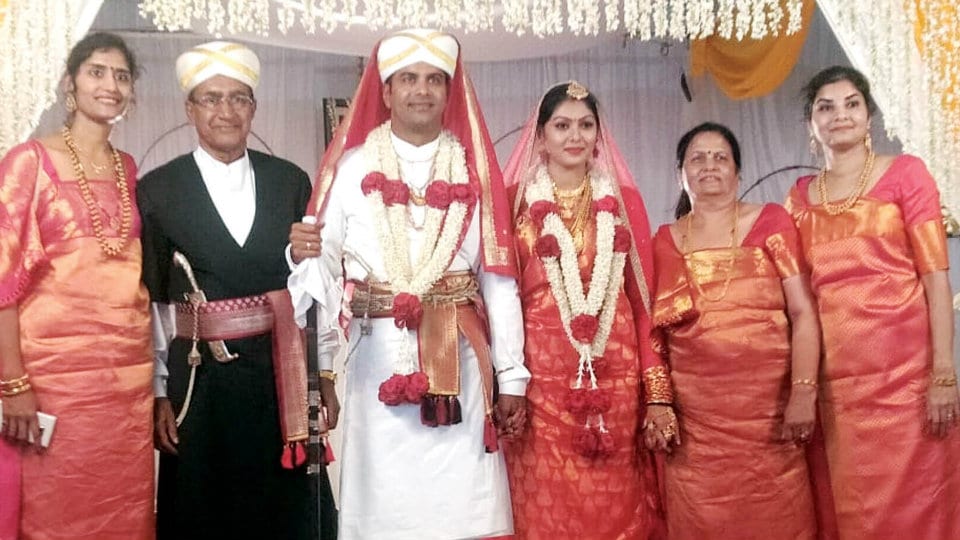
Karnataka cricketer and Bigg Boss Kannada Season-3 contestant Neravanda Chetticha Aiyappa, aka N.C. Aiyappa, got hitched to actress Anusha (Anu) Poovamma yesterday. The couple had a typical ‘Kodava’ wedding at Kodava Samaja in the town.

Anusha Poovamma is a well- known actress, who has acted in some Kannada movies. She is currently seen playing the role of ‘Aishwarya’ in the popular Kannada serial ‘Muddulakshmi’. Aiyappa, on the other hand, is the younger brother of popular South Indian actress Prema.

Aiyappa is the son of Neravanda Chetticha and Cauvery of Kumbaladalu village while Anusha is the daughter of Maletira late Chinnappa and Pushpa of Kedamullur village.

source: http://www.starofmysore.com / Star of Mysore / Home> News / January 21st, 2019

Bopanna: ‘I faced Stefan Edberg when he was coaching Roger Federer’

Bopanna-FedererKF30jan2019

In an interview to GQ India the doubles player Rohan Bopanna revealed who has been his biggest idol in life. Bopanna picked the six-time Major winner Stefan Edberg not only for his on-court successes but behaviour as well.

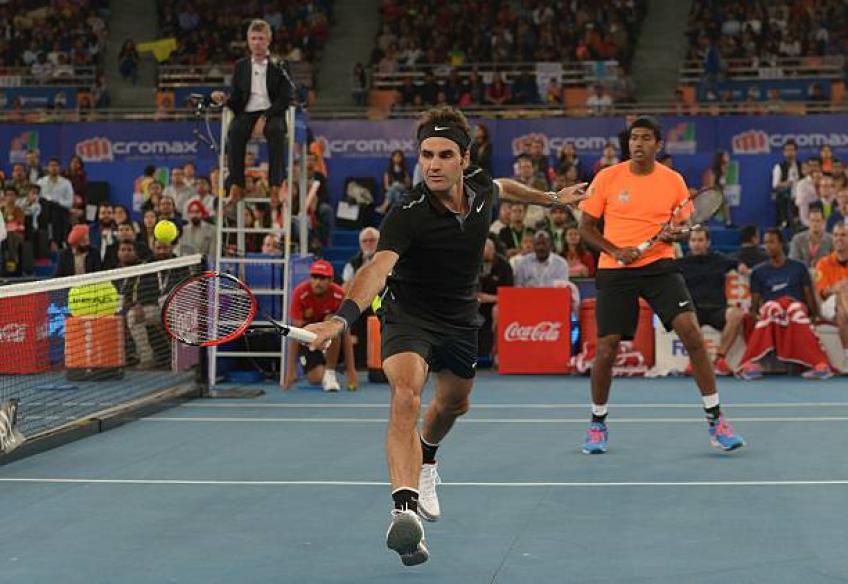
“I had the opportunity to meet him, and he was just as I’d imagined him to be”, confessed Bopanna. “Aisam-ul-Haq Qureshi and I we were playing against Roger Federer and Stanley Wawrinka [in 2014], and Stefan Edberg happened to be coaching Roger Federer.

He happened to be sitting in the box obviously, watching Federer. It was crazy – I couldn’t have imagined playing against some of the best tennis players in the world, and then having your idol watch the match.”

Bopanna also revealed he changed his eating regime in recent times: “I did a food intolerance test in India, which showed that my yeast intolerance was very high. So I’ve completely stopped having bread; it’s been about two years now.

Perhaps before a match, I’ll have fish and white rice, which gives me the energy I need. While playing, I’ll have a banana and you need electrolytes and water of course – especially when it’s hot. Otherwise, I keep things as simple as possible.

Fitness wise, I travel with my trainer, and that’s made a huge difference in terms of stretching at the right time, cooling down – especially as you get older and recovery becomes more important.”

source: http://www.tennisworldusa.org / Tennis World / Home> Tennis News> Roger Federer / by Luigi Gatto / January 28th, 2019

Kodagu Mahila Sangha Holds Contests

KodagaMahilaSanghaKF30jan2019

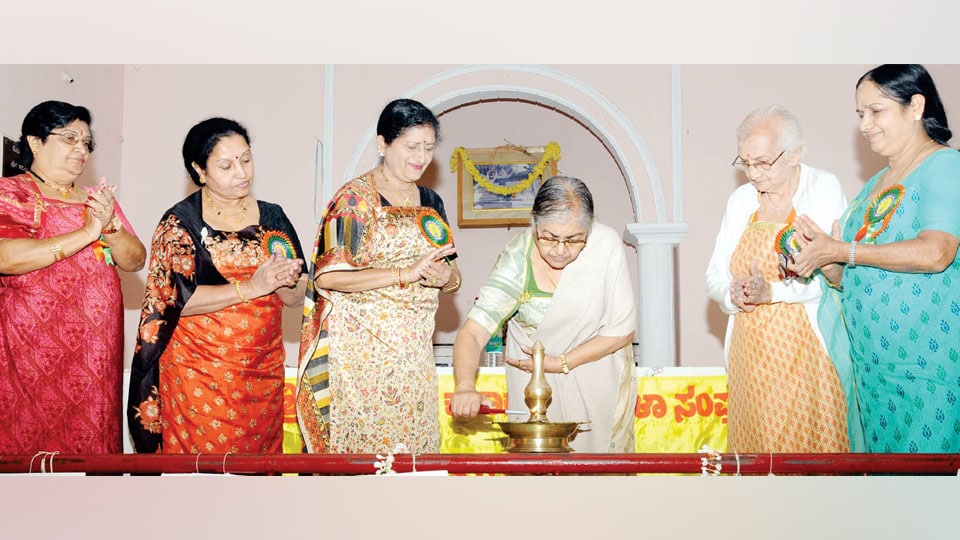
Chendrimada Sushila Subramani seen lighting the lamp to inaugurate the cultural competitions organised by Shree Kaveri Kodagu Mahila Sangha at Kodagu Sahakara Sangha in Jayalakshmipuram here yesterday as Chendanda Nirmala Subramani, Mahila Sangha Secretary; Ponjanda Lovely Appaiah, Vice-President; Moovera Bollamma Kuttappa, President; Ittira Dotti Cariappa, Advisor-cum-Founder-President and Machanda Jaya Muthappa, Treasurer, look on.

Sangha members and their children took part in various cultural competitions like Dance, Drawing, Singing, Kodava Paat and Pick-and-Speak.

source: http://www.starofmysore.com / Star of Mysore / Home> Photo News / January 21st, 2019

Mysureans Seek ‘Bharat Ratna’ For Field Marshal K.M. Cariappa

Cariappa02KF30jan2019

Mysuru:

Kodandera Madappa Cariappa is a man known for many firsts, but he is best remembered as the legend who made the Indian Army truly Indian. Perhaps this is why people feel the time has come to honour the late Field Marshal with the ‘Bharat Ratna.’

This morning too, the demand for ‘Bharat Ratna’ was raised by Mysureans on the occasion of 120th birth anniversary celebrations of Field Marshal K.M. Cariappa. The event was marked by showering of flower petals on the bust and garlanding of a huge portrait of the late Commander-in-Chief of the Armed Forces at Field Marshal K.M. Cariappa Circle (Hotel Metropole Circle) on JLB Road.

Speaking on the occasion, former Mayor M.J. Ravikumar said that when he was the Mayor a few years ago, he took measures for installation of Cariappa’s bust at the Circle following a demand from Kodava Samaja.

Stating that both Field Marshal K.M. Cariappa and Siddaganga Seer late Dr. Sri Shivakumara Swamiji very much deserved ‘Bharat Ratna,’ he said that the Union Government must consider this demand of the people.

Former Vice-President of Mysuru Kodava Samaja Cultural and Sports Club N.M. Thimmaiah said that he had written to the MCC and the Government demanding the installation of a life-size statue of the great warrior at the Circle in city. Recalling the achievements of Cariappa as Army Chief, he said Cariappa deserved ‘Bharat Ratna’ for his courage, bravery and valour.

Maj. Gen. C.K. Karumbaya (retd.), Corporators Prameela and M.U. Subbaiah, former Mayor H.N. Srikantaiah, Kodava Samaja Vice-President Prof. K.C. Belliappa, Secretary M.M Ponnappa, Cultural and Sports Club President M.P. Nanaiah and others were present.

source: http://www.starofmysore.com / Star of Mysore / Home> News / January 28th, 2019

Rohan Bopanna on his home away from home, the Australian Open and the future of Indian tennis

We caught up with tennis star and coffee connoisseur Rohan Bopanna at his swanky Airbnb pad in Melbourne, who told us why taking a power nap is the best thing to do before a match

RohanBopannaKF30jan2019

Tennis player Rohan Bopanna is in Melbourne to play doubles at the Australian Open, one of his favourite Majors, “because the weather is always incredible at this time of the year; and the hospitality is amazing.” For instance, players have access to an exclusive concierge desk that’ll organise everything from bookings at the hottest restaurants in town; or a seat at the cricket match.

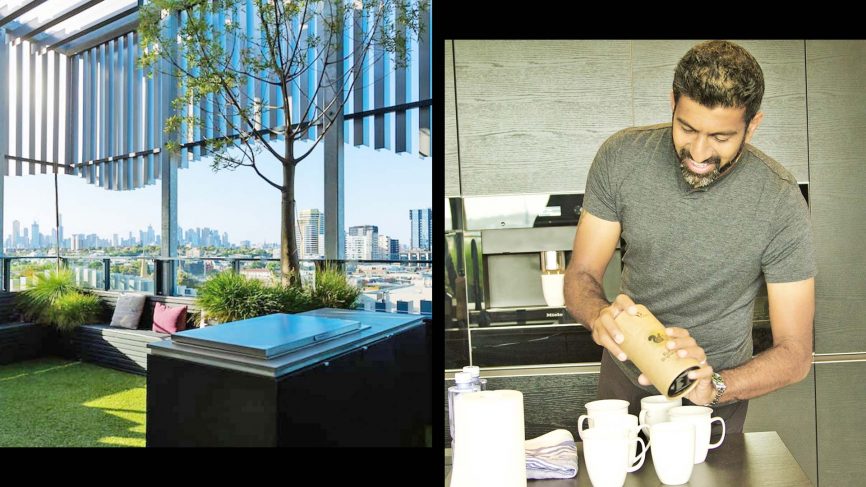
While they’re here, Bopanna and his crew are staying at a stunning four-bedroom penthouse at The Birdcage building in South Yarra, a 20-minute drive away from the iconic Rod Laver arena. When we visit, Bopanna brews us a cup of his master blend for Flying Squirrel, using beans sourced from his Coorg estate. “It’s quite popular on the circuit,” he says. “Some players have already complained that I haven’t replenished their supply from last year.”

It’s clear that Bopanna’s at home here. On the kitchen slab lies a packet of granola by The Muesli Guys, and a test tube of Rooftop Honey. In typically Aussie style, this is a hyper-local project run by urban bee-keepers, who harvest honey from beehives placed on the rooftops of some of Melbourne’s coolest bars and cafes.

The previous day, Bopanna and his doubles partner Divij Sharan lost to Spaniards P. Carreño Busta and G. García-López in an early round at the AO, but he appears to be in good spirits. “It’s still a new partnership, and we’re working to develop our rhythm.” It’s a combination that’s worked in the past, with the duo winning a gold at the Maharashtra Open earlier this month, and at the Asian Games in Indonesia last year. Before he heads out for a practice session, Bopanna chats about why he prefers living in an Airbnb to hotels and the best spots in his South Yarra hood.

This is a great neighbourhood. You have the Chapel Street Bazaar, Prahran market close by – all very indie and cool.

I love walking around, and I love that there are so many great restaurants within walking distance. If I want to go out for a cup of coffee, I’ll go down the road to The Pound Café. In terms of places to eat, I love Mr Miyagi for its Japanese. There is Chapelli’s for Italian, and Oriental Tea House, which has great dumplings. One of my favourite restaurants in the city is Neil Perry’s Spice Temple [at the Crown hotel].

You’ve been using Airbnb’s instead of hotels for a while now. Why?

The space really makes a big difference. When you’re travelling more than 30 weeks in a year, it can get tough to just live out of a room and a bathroom. For some years, I’ve been travelling with my coach and trainer, and it’s nice to be able to travel together and stay together. Tennis can be a lonely sport.

I have friends in Melbourne, and it’s nice to be able to call them over. The other advantage is having your own kitchen, which I use to make a little breakfast etc. I don’t cook a lot, but whenever I do, I can control the oil that goes into the food. This building has a gym, which is something I also look for when I’m looking at Airbnbs.

This feels more like living like a local, than say living in the CBD, which is always so busy. Not a lot of tennis players live here, which I like, because you get a bit of a break. Otherwise, it’s like going to office – tennis is office for me – and then coming back home and seeing the same people.

Who are some of your tennis icons?

Stefan Edberg – for the way he conducted himself off-court too. I had the opportunity to meet him, and he was just as I’d imagined him to be. Aisam-ul-Haq Qureshi and I we were playing against Roger Federer and Stanley Wawrinka [in 2014], and Stefan Edberg happened to be coaching Roger Federer. He happened to be sitting in the box obviously, watching Federer. It was crazy – I couldn’t have imagined playing against some of the best tennis players in the world, and then having your idol watch the match.

How do you get yourself in the zone before a game?

I sometimes take a 10-12 minute power nap before I get in the game, just to relax my body. I visualise the game, and then get into it. Otherwise, there’s so much going on on the tennis court, in the locker room… This is to just cut off and be prepared to focus on my game.

Props to you to be able to pass out before a match, despite the anticipation and the pressure.

Absolutely, once I lie down, I can knock out within a minute or two. And it really helps me get in the zone.

How has your fitness and diet changed over the years?

I did a food intolerance test in India, which showed that my yeast intolerance was very high. So I’ve completely stopped having bread; it’s been about two years now. Perhaps before a match, I’ll have fish and white rice, which gives me the energy I need. While playing, I’ll have banana and you need electrolytes and water of course – especially when it’s hot. Otherwise, I keep things as simple as possible. Fitness wise, I travel with my trainer, and that’s made a huge difference in terms of stretching at the right time, cooling down – especially as you get older and recovery becomes more important.

What makes the Australian Open Special for you?

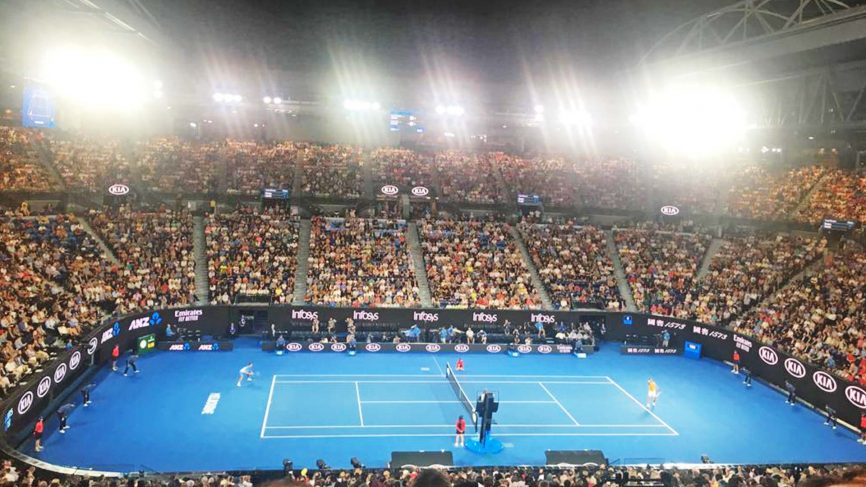
The culture, the tournament, the way they treat us – it’s one of the best experiences for players. The tournament always goes out of the way to constantly make sure that players get the best possible facilities, and that’s why a lot of players love coming to the Australia Open. Melbourne is a great city, especially for someone like me who’s a huge foodie. There are fantastic restaurants across the city; and the weather is great this time of the year. Even if you just walk around the courts at Melbourne Park, irrespective of who is playing, there’s always a big crowd that’s very passionate about tennis. You see [people from] different cultures, and it’s a delight to see how they cheer and help their players get through those tough rounds. It’s a great opportunity for anyone to come and experience this atmosphere.

AustralianOpenRohanBopannaKF30jan2019

Which are some of your other favourite tournaments to play at?

Luckily for me, my tennis takes me to some wonderful cities, London for Wimbledon for example. And you get to see them at their best when you travel at the highest level. I love Palm Springs too [which hosts the Indian Wells Masters in March]. Indian Wells is a small place, but it’s really nice there, you can drive around and explore the town. It’s very quiet and has a lot of golf courses. I love golf, so I get in a game whenever I can. In terms of places I just love visiting, it would have to be New York. Manhattan for the buzz. But when I’m there it’s for 10-12 days, two weeks, I don’t know if I could live there.

What do you think of the current state of Indian tennis? Any younger players to watch out for?

I’d love to see more international tournaments – like ITF’s Futures, ATP’s Challengers – being played in India. And we need a more robust grass-root system. The former is important because it would help Indian players to play more in their own country. Because tennis is an expensive sport and to constantly travel to different countries to play becomes tough for many athletes. So if each state in India, could just bring in one or two tournaments, it would be great. Right now, we only have one ATP event in India [the Tata Open Maharashtra in Pune].

Do you see this happening in the near future?

No, but I think it depends on corporates, federations, players, everyone coming together and really building that system. In Bangalore, I have tied up with this gentleman who runs the Sports School. It’ll have boarding, lodging, and offer multiple sports. Every kid will have to play two hours of mandatory sport; and after they’re 11 or 12 they can specialise in the sport of their choosing. I already have the Rohan Bopanna Tennis Academy in Bangalore, and have a bunch of Serbian coaches who are constantly there. Now we will coach exclusively via the school, which has seven ITF-approved tennis courts. It’s a similar concept to the schools you have in the US – where sports is the priority, but you also get a well-rounded education.

Building a new system from the ground up will take time to bear fruit.

It will definitely take another 10-15 years, because it’s a process at the end of the day. Not everyone is going to become a world champion, but you have to do the right things to get the right results. And I’m fortunate to have access to some of the world’s top coaches, the latest developments in the field of sports science. So we’ll have a sports science centre too – and kids will have access to the correct diet, to nutritionists, psychologists, best practices in fitness, recovery…

Who are some of the most exciting young players on the circuit now?

There are a couple of youngsters who are doing well – Siddhant Banthia. Mahak Jain, who’s playing well and has a lot of potential. I think we have some great juniors in India, but sometimes the coaches need to understand that there’s a better facility, a better system for their students. Abroad, coaches will train a particular age group, say from six or seven, till 12 or 13. Then someone else takes over and takes their game to the next level. Here you may have a great talent, but coaches will coach kids till they’re 18, and that doesn’t always give you the best results.

Is the tennis community quite tight-knit in India?

It is everyone doing their own thing at the moment, but I think we all need to come together for the better of the sport. I think that’s what will make a difference at the end of the day.

source: http://www.gqindia.com / GQ / Home> Live Well> Travel / by Shika Sethi / airbnb.com / January 25th, 2019