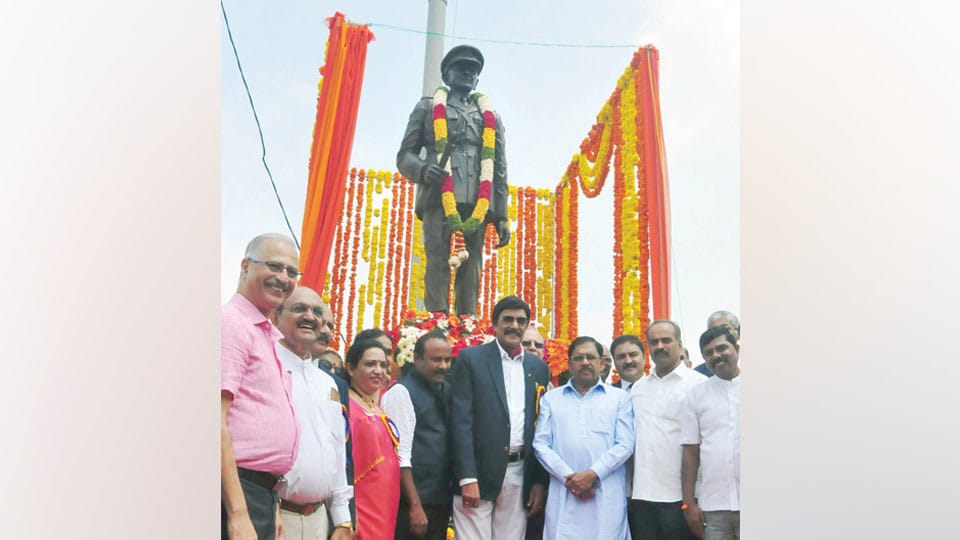
Deputy Chief Minister Dr. G. Parameshwara, who unveiled the statue of Field Marshal K.M.Cariappa at Miller’s Road Junction near Kodava Samaja in Vasanthnagar, Bengaluru, this morning, is seen with Bengaluru Mayor Sampath Raj, Samaja President Ravi Uthappa, Advocate M.T. Nanaiah, former Karnataka Media Academy Chairman M.A. Ponnappa and others.
It may be recalled, a life-size bronze statue of Field Marshal K.M. Cariappa, the first Commander-in-Chief of the Indian Army, was unveiled at the Officers Training Academy (OTA) in Chennai during June 2018 by his son, retired Air Marshal K. C. Cariappa.
Also, Chief of the Army Staff, General Bipin Rawat had unveiled the bronze statues of Field Marshal K.M. Cariappa and General K.S. Thimayya at Cauvery College in Gonikoppal, Kodagu district, in November 2017.
source: http://www.starofmysore.com / Star of Mysore / Home> Gallery> Photo News / September 26th, 2018
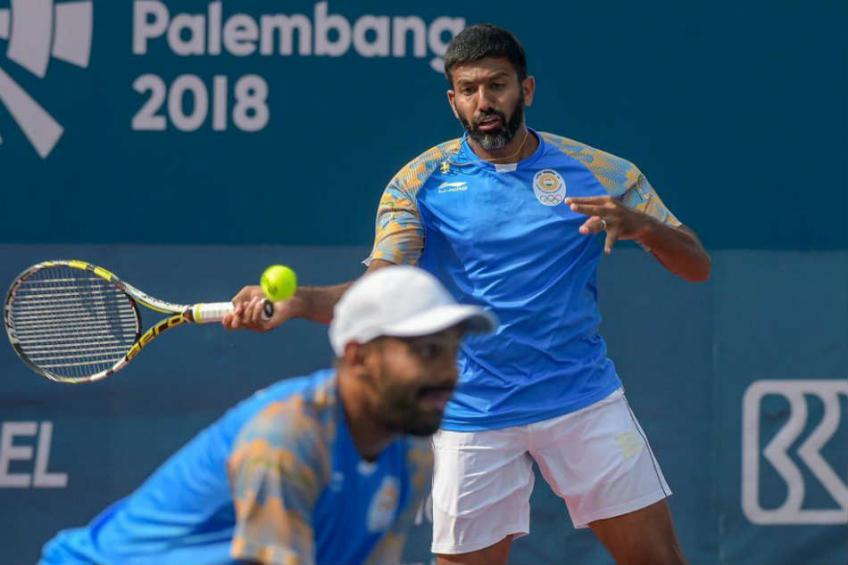
Indian doubles star Rohan Bopanna was recently awarded the Arjuna Award and the Asian Games Gold Medalist could not have been happier. The 38-year old won the French Open Mixed Doubles title last year and the Asian Games this year would have loved to be present for the Award distribution ceremony but had to travel for the China Tournament.
“The Asian Games gold was more special, especially because of the fact that I had a tear on my Latissimus Dorsi (shoulder muscle) and was out for six weeks. To come straight back to competitions like the Asian Games and the US Open, I was extremely happy with my performance,” said Bopanna, who also reached the US Open Doubles Quarter-Finals.
Bopanna was hoping that he was in contention for India’s highest sporting honour – the Rajiv Gandhi Khel Ratna Award. “It has been a long wait for me to get the Arjuna award. It truly means a lot. I was heart-broken last year when I did not get it.
I can surely keep trying in the future for the Khel Ratna,” Bopanna added. With four big events lined up in the season, Bopanna stays focussed to play his best. “Edourad (Roger-Vasselin) and [I] have an outside shot for the London Masters.
With two ATP 500 and two ATP 1000 Masters left, I still believe that we have a great chance to qualify for the year-end championship,” said Bopanna.
source: http://www.tennisworldusa.org / Tennis World / Home / by Philip Anderson / September 23rd, 2018
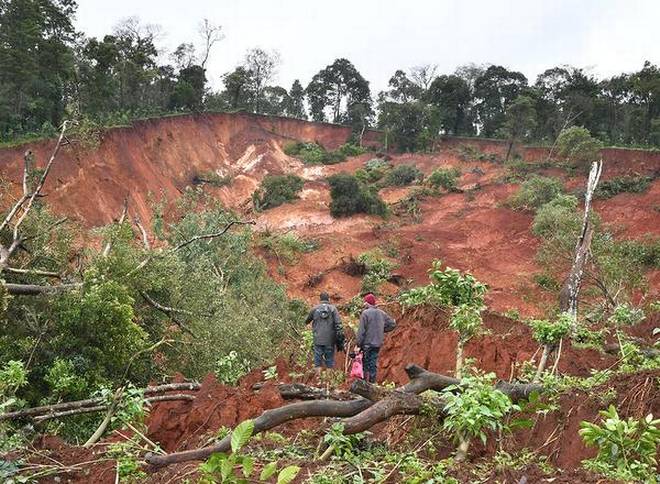
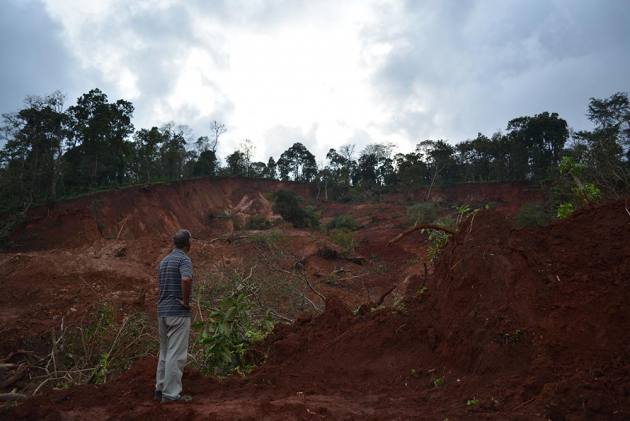
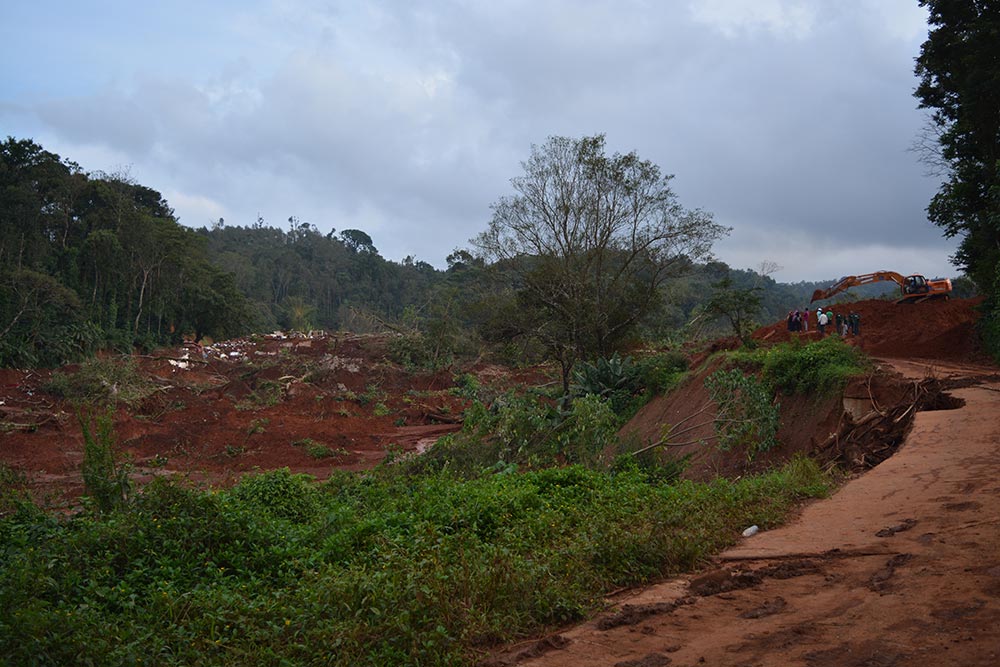
“A forestdepleted Kodagu basin will have reduced capacity to capture and store rainwater.” It is a picture of destruction in Hattihole near Somwarpet, Kodagu, after the floods. | Photo Credit: Sampath Kumar G.P.
Protecting the Kodagu watershed is essential to ensure the water security of three States
We require water for everything: drinking, growing crops, producing electricity and industrial production. With the world population projected to grow to about 10 billion by 2050, according to the United Nations, and with climate change discernible, both the quantity and quality of freshwater will become critical, affecting health, food security, and economic well-being. A 2015 UN report, Water for a Sustainable World, pointed out that the gap between the availability of water and our need for water is only going to increase.
Projects in the river basin
The growing demand on freshwater resources demonstrates the need for sustainable management of water. In this context, projects that are being contemplated, such as the laying of multiple railway tracks in the critical Cauvery river basin in Kodagu district, Karnataka, are not only economically unviable but also ecologically damaging. Mega projects pose a clear threat to the long-term water security of the three States that depend on the Cauvery (Karnataka, Kerala and Tamil Nadu), and exacerbate the threat posed by seasonal droughts and floods.
The Cauvery basin drains an area of about 81,000 sq. km. Originating in Talakaveri, Kodagu, the river irrigates agricultural fields, generates electricity, and provides drinking water to downstream communities across south India. The Cauvery and its tributaries contribute the bulk of water to the Krishna Raja Sagara dam near Mysuru, the primary water source for Bengaluru. However, increasing development pressure from the transportation and construction sectors poses a severe threat to the forests, riverbeds, wildlife and agricultural lands. This March, for the first time in decades, towns such as Virajpet in Kodagu faced a severe shortage of drinking water. The continuing loss of forest cover and illegal sand mining from river beds endanger water and food security for all the downstream communities in the Cauvery basin.
The three proposed railway plans have major implications. One, all the tracks will cut through large swaths of agricultural farms and fields as well as Protected and Reserve Forests that are spread across Kodagu and Mangaluru districts of Karnataka, and Wayanad and Kannur districts of Kerala. Along this sparsely populated area, transportation needs can be met by simply improving existing roads at a fraction of the monetary and ecological cost of the proposed railways. In fact, in its feasibility report of the Mysuru-Thalassery line, the Delhi Metro Rail Corporation stated that the project would not be beneficial to the State. In response to protests by the people of Kodagu in February, the plan to build the Mysuru-Thalassery line was scrapped in March. However, if history is any guide, plans to build the tracks will reemerge in time.
Two, they will affect the Western Ghats, one of the most biodiverse regions on earth. Kodagu has about 45% forest cover and about 30% agroforestry systems (coffee plantations and paddy fields). Between 2013 and 2015, a high-tension power line linking Mysuru and Kozhikode resulted in the loss of about 50,000 trees in Kodagu alone. If the proposed railway lines are constructed, they would conservatively result in tree loss that is 10 times more than this. Forests help capture rainfall, reduce run-off and soil erosion, recharge groundwater aquifers, mitigate flooding, support local communities, and provide refuge for native flora and fauna. Raised railway tracks will also impede wildlife and could result in the deaths of endangered animals such as elephants. Most importantly, a forest-depleted Kodagu basin will have reduced capacity to capture and store rainwater. Even without the railway tracks, a satellite-based report titled India State of Forests 2017 noted that Kodagu lost 102 sq. km. of tree cover in just two years.
Variable monsoon
The Kodagu basin receives heavy rainfall, mainly during the southwest monsoon (June-September), that feeds the Cauvery. However, studies by the Indian Institute of Tropical Meteorology and others, published in the journal Nature, have found evidence for increasingly variable monsoon rainfall. Thus, we can expect to experience more extreme floods as well as droughts in the future. These are scenarios that make preserving forest cover more vital in order to mitigate the collateral effects of these extreme events.
During this year’s southwest monsoon season, Kodagu received twice as much annual rainfall as usual and with greater intensity. This resulted in landslides and floods. A recent study of nearly 5,000 landslides around the world, published in Earth and Space Science News (Eos), has revealed that activities like construction, illegal mining and hill cutting are increasingly responsible for the uptick in fatal landslides, particularly in Asia. It will be hard to claim that the uncontrolled development and forest clearance in the steep slopes of the Western Ghats in recent years has not been a factor in the tragedy that just unfolded in Kodagu, and in the coastal districts of Kerala. With 100-year storms likely to become more frequent as the climate becomes warmer, business as usual is sure to increasingly endanger lives and property.
Erratic monsoon rains can cause flooding, droughts, water and food security. Preserving existing forests in the watershed provides an effective ‘insurance policy’ for reducing the effect of floods and droughts while recharging groundwater across the Cauvery river basin. Nature has reported that diminished access to water resources increases the risk of social unrest, political instability, intensified refugee flows and armed conflicts, even within borders. The variable nature of monsoons makes India one of the most vulnerable regions to water-related disasters associated with climate change and extreme weather events. According to a BBC report, Bengaluru is likely to run out of drinking water in the next decade. Economists should estimate the monetary and human cost of cities like Bengaluru becoming dry, and implement policies focused on achieving and maintaining sustainable water resources.
We are at the start of the UN Decade for Water, which emphasises water security for all. Everyone lives in a watershed, yet water remains a remote concept for those who consume it the most — people, industries and farmers. There are no substitutes for water as the very basis for life. Protecting the Cauvery’s source is essential for the sustained well-being of the entire basin and of the three States that the river nourishes. In fact, good water governance of the nation’s watersheds will be key to its sustainable future. We can begin by saving Cauvery’s cradle.
Bopaiah Biddanda is Professor of Water Resources at the Robert B. Annis Water Resources Institute, U.S.
source: http://www.thehindu.com / The Hindu / Home> Opinion> Comment / by Bopaiah Biddanda / September 24th, 2018
The birth anniversary of ancient poet of Kodagu Haradasa Appaneravanda Appacha (Sept.21) will henceforth be celebrated as ‘Kodava Sahitya Dina’ in recognition of the poet’s immense contribution to Kodava literature.
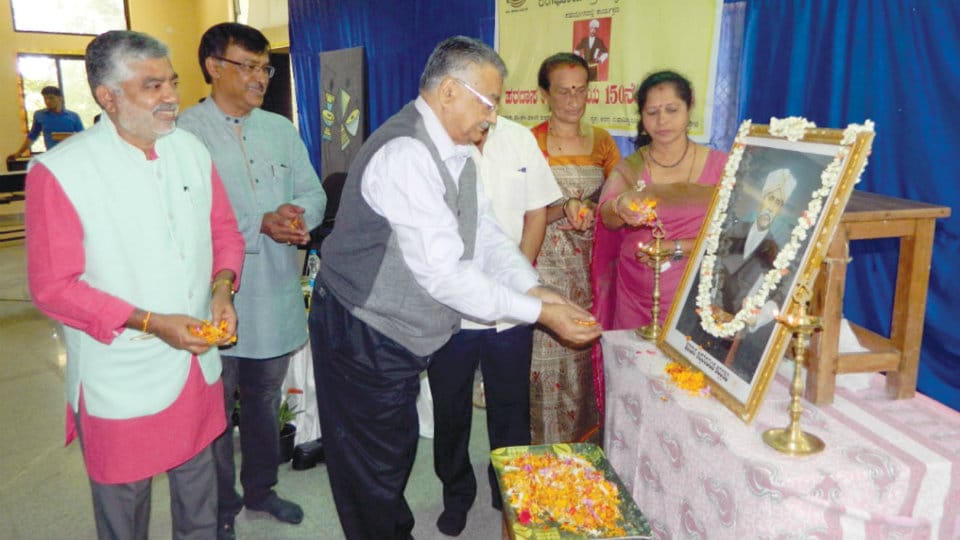
A decision to that effect was taken at a function organised jointly by Shivamogga Agriculture and Horticulture University, Ponnampet College and Kodagu Rangabhoomi Pratisthana to mark the 150th birth anniversary of Haradasa Appacha Kavi at Forest College auditorium in Ponnampet on Friday.
A declaration to that effect was released by M. Asha Mandanna, Chairperson, Appacha Kavi College Management Council, Ponnampet.
Inaugurating the programme after offering floral tributes to a portrait of poet Appacha, Star of Mysore Editor-in-Chief K.B. Ganapathy recalled that Appacha had come out with many poems on spirituality and wished that the poet could have written a few poems on reformation of the social system for which the poet had enough knowledge and strength. He contended that theatre and poetry were powerful tools to correct society.
Releasing a book of Appacha, Akhila Kodava Samaja Working President I.K. Biddappa expressed happiness that Kodava literature had gained importance and popularity despite a thin population of Kodavas.
Speaking on the occasion, Kendra Sahitya Academy Member A. Cariappa recalled that the then Chief Minister of Kodagu ‘C’ State C.M. Poonacha had conferred the title of ‘Varakavi’ on poet Appacha who popularised Kodava literature using Kannada script.
Kodagu Rangabhoomi Prathistana Chief Convenor Anitha Cariappa welcomed the gathering. Former College Dean Dr. C. Kushalappa and others were present. Cariappa and other artistes presented a programme ‘Amarakavya’ featuring poems of Appacha Kavi.
source: http://www.starofmysore.com / Star of Mysore / Home> News / September 23rd, 2018
When you’ve successfully built a modelling career, what do you do when you get a call from Mani Ratnam’s production house?
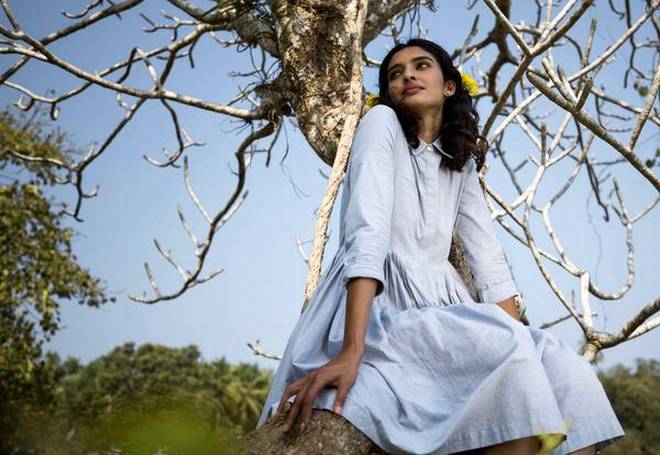
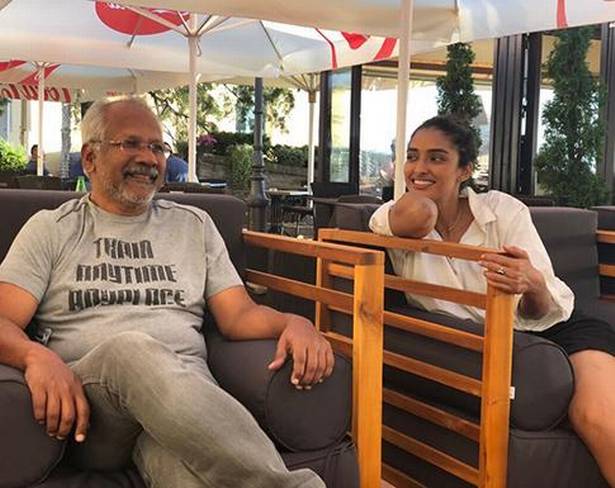
When you’ve successfully built a modelling career, walking for the biggest designers and working with international brands, what do you do when you get a call from Mani Ratnam’s production house? “I thought I was being pranked! I really didn’t think it was real,” says Dayana Erappa, one of the leading ladies in Mani Ratnam’s multi-starrer Chekka Chivantha Vaanam. But it really was Madras Talkies reaching out to her, asking if she knew Tamil and Telugu.
Dayana, who’s from Coorg, said she was fluent in Tamil and Kannada, and sent over her portfolio and forgot all about it. Two months later, she was called for an audition in Mumbai, for a project with Mani Ratnam. When it was time for her to meet the man himself, Dayana had no idea what to expect. Describing the meeting, her voice still has a starstruck quiver, “On the entire flight to Chennai, I was thinking about what I would do when I finally faced him. I grew up watching and falling in love with his movies, how could I be anything but excited?”
The meeting went well. A chat, a script reading with him, and a few weeks later, she got the call confirming her part. “I knew nothing about the role or the character, but I had zero worries. Women have been depicted beautifully in all of Mani sir’s movies, so I knew I was in good hands.” In fact, she says she had no idea she was one of the leading ladies in the movie until the film’s cast poster was released.
With no previous training or experience in acting, Dayana attended a few acting workshops to prepare herself. “When I found out I’d be acting opposite Simbu, I was quite nervous because I’d heard how talented he is. I’d also seen his movies and I wasn’t sure if I could match up to him.” And the first day on set she told Simbu exactly that. But he was supportive, telling her not to worry even if she needed 10 takes to get it right. “Sometimes it did take 10 takes,” she says laughing, but it was the encouragement she received on set that gave her the confidence to pull through. “From the actors to the ADs and stylists, it felt as though the entire crew was rooting for me.”
The transition from a successful model to an actor could not have been easy, but she says, “Even modelling is not something that you learn in a day or two; you work at it every day. So I was prepared to put in the hard work necessary to act from the get-go.” It also helped that she was surrounded by veteran actors. “I got to learn from just being around all that experience. Everyone was easy to talk to. No one treated me like a newcomer.”
Get her talking about her director and she switches to fangirl mode, “Mani sir is a patient craftsman and definitely a man with a vision. He works with you in a way that puts you at ease; so he gets the best performance out of his actors. His movies like Kannathil Muthamittaal and Thalapathi are my favourites. Now I see where the magic comes from.”
Ask her about Chaaya, the character she’s playing, and she won’t say anything more than that she’s a fun and adventurous girl, quite like herself. With a dream début in her hands, Dayana says she will continue modelling while she works on her acting skills, in case an interesting script comes knocking.
source: http://www.thehindu.com / The Hindu / Home> Entertainment> Movies / by Anugraha Sundaravelu / September 24th, 2018
With a view to empower and encourage young women achievers, St Agnes College (autonomous) organized a felicitation programme for Poovamma, an Indian spinster who hails from the district.
The programme was held on September 14 at St Agnes College.
Sr Dr M Jeswina AC principal St Agnes College, Sr Dr Venisssa AC, vice principal St Agnes College, Malavika, dean administration and Vasudha, physical education directress were present for the programme.
Vasudha, the physical education directress of the college welcomed the gathering.
Ladleen Monteiro introduced Poovamma to the gathering who was then felicitated by the dignitaries on the dais. Poovamma addressed the gathering and said that with hard work and determination, one can surely achieve great heights.
This was followed by a short message by the principal Sr Dr M Jeswina AC wherein she encouraged the students to take inspiration from Poovamma’s life.
Vijayashree, the sports secretary proposed the vote of thanks.
The programme concluded by singing the college anthem.
source: http://www.daijiworld.com / DaijiWorld.com / Home> CampusBeat / by Media Release / Mangaluru – September 18th, 2018
Robin Uthappa will continue to represent Saurashtra during the upcoming domestic cricket season.
The 32-year-old had recently expressed an interest in returning to Karnataka, for whom he played for nearly 15 years before moving up north.
His inclusion in the KPL, where he led Bengaluru Blasters to the final, was seen as a step in that direction.
Little choice
But with the State selectors providing him with no assurance, and at the same time looking to build a team for the future, Uthappa had little choice.
“I spoke to them and they said they will get back to me. But there was no communication,” he said.
“I have no issues with the administrators but in the end, it was up to the selectors. I wished to play in front of our crowd but now it’s time to move on.
“I am preparing well for the season and am eager to do well for Saurashtra,” Uthappa said.
I wished to play in front of our crowd but now it’s time to move on
source: http://www.thehindu.com / The Hindu / Home> Sports / by Sports Reporter / Bengaluru – September 12th, 2018
Before the rains started, coffee planters in Coorg were talking of a good crop —the plants were well rested after a lean year and went through the process of blossoming and forming fruits. That settled, seasonal certainty is gone with the wind and merciless lashings of torrential rain.
HELPLESS / A planter contemplates nature’s carnage where once existed a fecund patch / PHOTOGRAPH BY AJAY SUKUMARAN
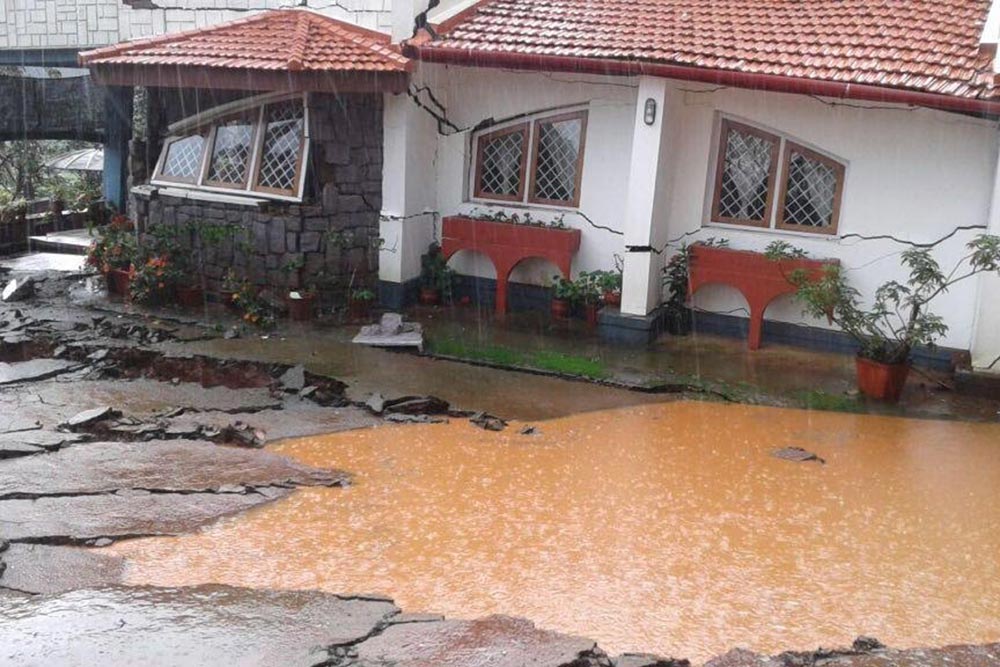
A fully-done crossword puzzle is on the table next to Chitra Subbaiah who confesses that she could forego reading the newspaper, but not the crossword. We are in the cottage of a home-stay in Madapura, north Coorg, resplendent in the evening sun—the first day in two months that the rain has let up. It brings some relief from fear. Chitra, nearing eighty, recounts a painful experience with great fortitude. “You have to do some mental jugglery, you know. You can’t curse your fate.” She’s staying in a friend’s cottage because her home, in the neighbouring village of Hattihole, now lies beneath a pile of earth which slid down the hillside, burying everything she owned.
“Wiped out, totally. I don’t have one pin. There is nothing to say there was a house,” she tells Outlook. All she could reach out for in time were her spectacles, medicines and some gold the workers from her coffee estate had entrusted her with safekeeping. The workers’ quarters on her coffee estate too went down. Fortunately, they had time to move out. She points to others in the same situation. “At least I can rent a house and stay. What about so many others, who have nothing,” she asks.
Before the rains started this year, coffee planters in Coorg were talking of a good crop—the plants were well rested after a lean year and went through the process of blossoming and forming fruits.
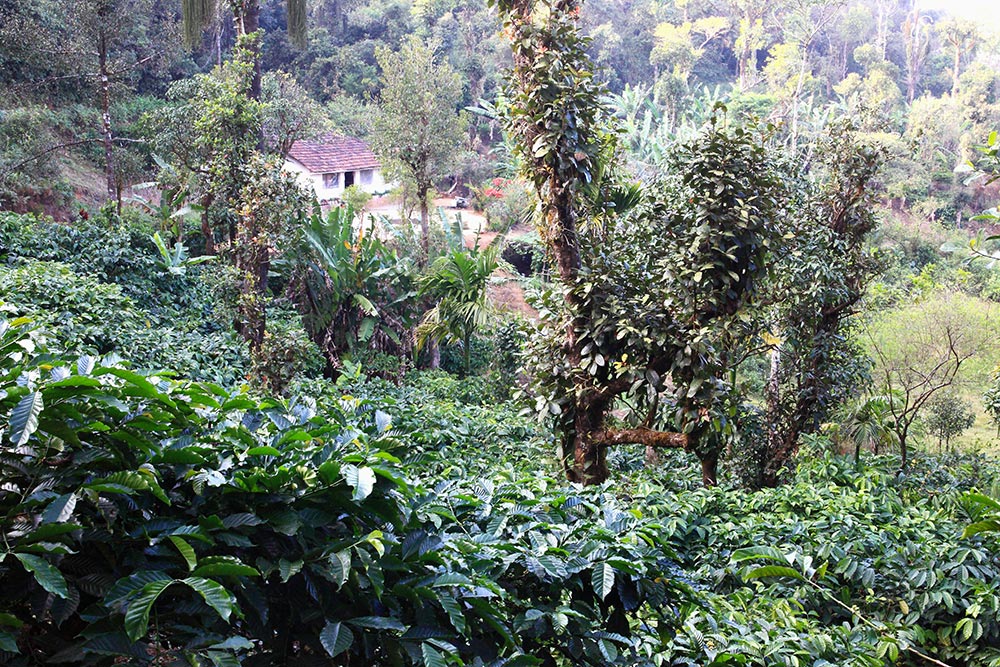
The scene at a typical Coorg coffee estate / PHOTOGRAPH BY GETTY IMAGES
That settled, seasonal certainty is gone with the wind and merciless lashings of torrential rain. It rained heavily through July and August in this region of south Karnataka bordering Kerala. Then, in late August, came a series of punishing cascades of sodden earth. Now, there’s a trail of ruin in these charming hills, where landslides have swept off whole villages, re-arranged estates and shattered its economy. With immediate rescue measures tapering off, one question hangs limply in the air: where do you start picking up the pieces?
“I can’t plant anything now on my land, that’s for sure,” says K.U. Erappa, standing in his camouflage gumboots in a relief camp inside Madikeri’s old fort where, grouped with several families, he has been staying for days now. “All that’s left of my coffee plants are just stalks,” Erappa says. His ageing mother walks up to say, “We had a small house, but it was pretty.” Their grief is palpable. Erappa owned a few acres of coffee and paddy in Mukkodlu, one of the hardest-hit places in north Coorg, in the vicinity of district capital Madikeri. Much of Coorg is remote, away from the main-travelled roads. Like others, Erappa has been going back to salvage what he could. His three children, like most kids from his village, have been sent away to a temporary residential facility in a school in Ponnampet town at the southern end of the district. “We never dreamt Coorg would come to this,” says N. Bose Mandanna, a planter from Suntikoppa.
Right now, a full picture of the damage isn’t available, though it is being estimated. Planters like Mandanna reckon that at least 5,000-7,000 acres have been wiped off in the landslides. For the plants still standing, there’s the danger of wet feet and black rot—water-logging at the base of the plant that strangulates it, causing leaves to fall off. “When leaves are lost, next year’s crop is also lost,” says Mandanna. Coorg, with about one lakh hectares in cultivation, accounts for close to 40 per cent of India’s coffee production. The 2017-18 post-blossom estimate was 1,33,500 metric tonnes, most of which is exported, Italy being a top destination. To make matters worse, prices, say market watchers, have been at historic lows. Brazil is harvesting a good crop this year and so will Columbia and Vietnam.
The desolation on the spot after the landslide / PHOTOGRAPH BY AJAY SUKUMARAN
“International prices have gone (down) to levels last seen in 2006. We are getting a lot less now, if you factor in the inflation,” says Ramesh Rajah, president of the Coffee Exporters Association. Prices depend on the big three producers—Brazil, Columbia and Vietnam—which account for over 70 per cent of the global production. “Only if there are supply shocks in the big three will there be impact in international prices. India can lose one third or even half its production and the international market is not going to blink,” says Rajah.
In the mid-nineties, Coorg coffee saw a boom when prices rose because of a supply shortage in Brazil whose production, apart from being vulnerable to frost, was considered inefficient then. The boom years lasted a decade until trends began to reverse. Owing to hilly terrain, Coorg can’t mechanise the way Brazil did. So, it has been grappling with high labour costs. Nor can other crops be sown, as coffee plants need trees for shade. Many Kodavas, as Coorg’s natives are called, concede the difficulty in maintaining plantations. The symptoms, many say, have been showing—an ageing population, a younger generation that has been migrating to cities and bits of land being sold to meet expenses, the latter contributing to a social churn in the highlands. This devastating blow came on top of all this.
The future, many say, is bleak. First, the question of land lost, by no means an easy task, given the complexities that involve verifying claims, boundaries and so on. “Let the government acquire the property. See the record, settle them,” says planter Mittu Chengappa, who’s also a Karnataka Congress general secretary. His suggestion, that the government acquire private land ravaged by landslides for afforestation so that owners can begin afresh elsewhere, has been voiced by many. Unlike neighbouring Chikmagalur—where coffee was first grown in India—there are more small growers in Coorg, many owning only a few acres.
Chitra Subbaiah’s house in her estate in Hattihole village
Even for those who didn’t lose land, replanting will be a big financial burden, says Rajah. Besides the upfront cost, it would mean a five-year wait for yields. “So, how will they sustain themselves for five years? What does he do about infrastructure within the farm, workers’ houses, his house?” asks Rajah. Coffee planters have always weathered difficult years, but the destruction this year is unprecedented. “Some years, the crop yield is sharply lower because of lack of rain or excess rain. But this is the first time we have actually seen this sort of damage where infrastructure is damaged. It’s going to be very difficult in the short term,” reckons Rajah. In the long term, he says, every producing country is bleeding, so things can be pulled back to a degree by increasing efficiency. Of course, primary rehabilitation remains a priority; the process of replanting will take place slowly.
“The other thing is the labourers are not coming back. We are still in a state of flux, a dilemma as to what’s going to happen. There are a lot of issues, it’s very fluid,” says Nanda Belliappa, a coffee grower from Hattihole who has to now walk half a kilometre inside his property to reach his house, as the road leading to it is blocked. The Hatti, a stream outside his gate—where once a Malayalam film was shot—has beached fallen tree trunks ashore. “The neighbours’ coffee plants and trees are on our road…it’s unbelievable,” says his wife Anitha. In villages in these parts, the conversations go from rain to earthquake—many planters say they heard loud booms and felt tremors, but officials say no seismic event was captured.
Bose Mandanna too says he won’t be so pessimistic as to say that the coffee industry won’t claw back. But he’s doubtful about the prospects of a full recovery in North Coorg. “This area cannot come back in a hurry,” he says. Last weekend, as the evening drew on, Madikeri wore a deserted look—tourism has stalled and hotels are ordered not to take in travellers for some time. “Every night, there’s fear that the hill will come down on your head,” says Mandanna. The Kodava harvest festival Kailpodh, when they worship their guns, went by this week. Says Mandanna, “Nobody was interested in the festival. Coorg has become like a funeral parlour.”
source: http://www.outlook.com / Outlook / Home> The Magazine> Business / by Ajay Sukumaran / September 17th, 2018
The actor who is a Miss India finalist is all gung-ho about her debut film Chekka Chivantha Vaanam
Acting and films were never on the to-do list of Dayana Erappa. But, when the team of Madras Talkies called and told her that she had been chosen to play one of the lead roles in Mani Ratnam’s next film, she was confused, excited and nervous in equal measure.
Looking at the trailer of Chekka Chivantha Vaanam now, it’s hard to imagine anyone else playing the girl Chaaya.
“I just entered modelling to give it a shot. Later, I took part in the Miss India beauty pageant and was judged the runner up. I was busy with my projects when I received a call from Mani Ratnam’s team. I went to give my first audition in Mumbai and the second one in Chennai. They called me after two months and said that I had gotten it,” says Dayana.
Born and brought up in Coorg, Dayana’s father owns a tea estate and her mother is a homemaker. She also has an elder sister who has completed her Masters in Criminology.
“My parents have always supported me and my sister. When I told my father that I was going to be part of a modelling project, he asked me whether I was sure? Since it was something I was trying out, he was okay with my decision.
Later, when I told him that I’m going to be part of Chekka…, he was like ‘Wow! Really?’All of them were happy with the news,” adds the model.
For a newbie to get a big launch with director Mani Ratnam is a dream come true. “Acting was not my priority at all. I was just a theatre artiste, I feel lucky that people think that apart from good looks, I can also act. I didn’t want to lose the chance. Especially, when it was a Mani Ratnam directorial,” she says.
Chekka Chivantha Vaanam is a Tamil film which is being dubbed in Telugu as Nawab. The trailer unveiled recently has garnered a huge number of views on YouTube.
Dayana feels very happy to have worked in a star-studded film which has Prakash Raj, Jayasudha, Arvind Swami, Jyothika, Arun Vijay, Aishwarya Rajesh, Aditi Rao Hydari, Silambarasan and others in lead roles. The DOP of the film is Santosh Sivan and music is composed by AR Rahman.
“Working with so many stars was an amazing experience. They never treated me like a newcomer, but have given me all the support to do my best,” said the Tamil ponnu who is yet to sign her next project after Chekka Chivantha Vaanam.
source: http://www.telanganatoday.com / Telangana Today / Home> Tabloid> Cinema & TV / by Bhawana Tanmayi / September 02nd, 2018
WELCOME. If you like what you see "SUBSCRIBE via EMAIL" to receive FREE regular UPDATES.
Read More »