Ashwini Ponnappa said that although they are looking forward to the next tournament, their focus will be on winning a medal at the Commonwealth Games next year, which will remain as one of the important targets.
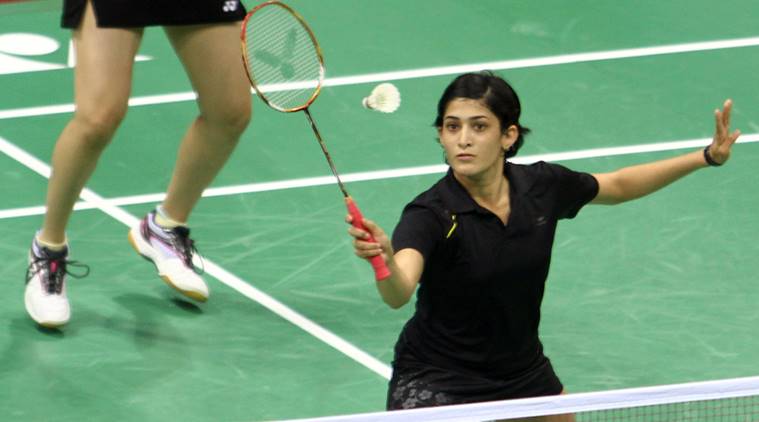
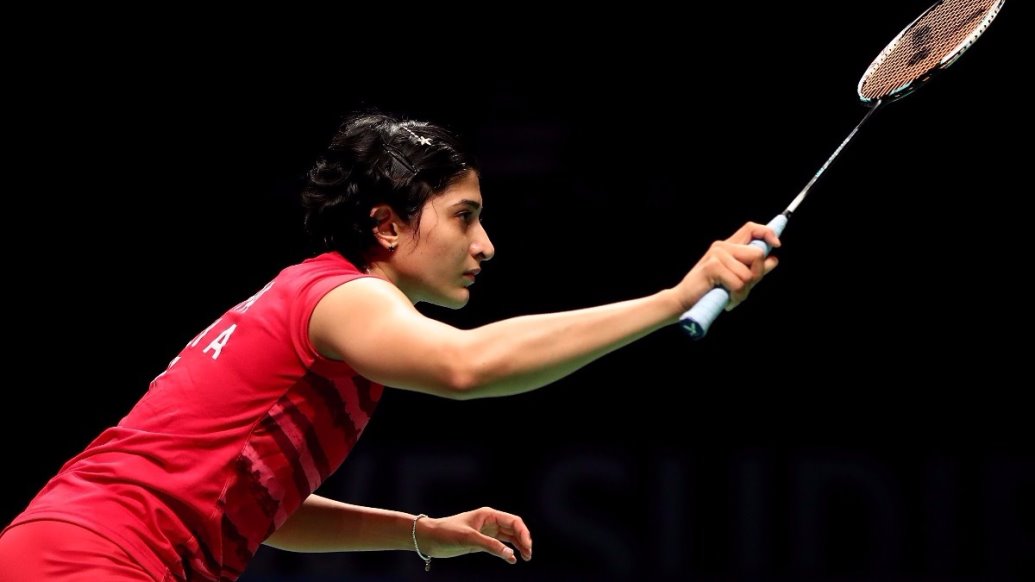
Ashwini Ponnappa won medals at the Commonwealth Games in 2010 and 2014. (Source: File photo)
Ashwini Ponnappa, who led India to the knockout stages of the Sudirman Cup last week, said that her target remains the Commonwealth Games, scheduled to take place next year.
In an interview to PTI, Ponnappa said that she was confident that their side would do well as soon as they found out the draw. “Ever since we came to know about the draw, I was confident we were good enough to beat them. Most of the players in the opposition team had top 5 players and when I knew I will have to play two matches, I had the belief that we could do well,” she said.
“Me and Satwik (Satwiksairaj Rankireddy) were training together just a few weeks ahead of the event as we had sent our entry for the Australian Open. So when we got a chance to play at the Sudirman Cup, we were excited as it was our first tournament together.”
The 27-year-old asserted that it was her coaches who decided her partners in various competitions and that she is looking forward to a new one. “Coaches have been the ones who have been deciding my partners after the Olympics and it is about trusting them. Me and Sumeeth had a good partnership. We are both similar players, we have played women’s doubles and men’s doubles respectively and now we are venturing into mixed doubles,” Ashwini said.
“So I am looking forward to the new partnership. Interestingly, I will be playing with Sumeeth at Indonesia and Satwik at Australia, so let’s see how it goes. After playing at the Sudirman Cup, I feel we can achieve much better results together,” she added.
Ponnappa said that winning a medal at the Commonwealth Games will be an important target. She said, “We are looking forward to the next tournament, doing better than what we have done. If we can reach a final of super series this year, that will be good and definitely winning a medal at the Commonwealth Games will be one of the important targets.”
The shuttler also said that she is enjoying the extra responsibility as a senior member.
source: http://www.indianexpress.com / The Indian Express / Home> Sports> Badminton / by Express Web Desk / June 01st, 2017
Fresh off his latest film, Gulshan Devaiah recalls working with the late Om Puri, and how actors respond to a ‘real’ location as opposed to a set
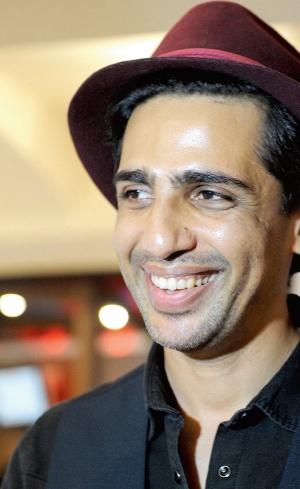
Wearing a knee brace and hobbling along on a crutch, Gulshan Devaiah still looks dapper in his hat and shorts when we meet at a at a screening of A Death in The Gunj, in the city. Politely obliging selfie requests, Devaiah tells us how he likes to challenge himself. In this film, (Konkona Sen Sharma’s directorial debut) that would have meant playing the part of Vikram – played by Ranvir Shorey. The rough and tumble alpha male who gets drunk and rides his bike, makes fun of everyone around him and talks with a cigarette in his mouth is nothing like Devaiah in real life. “That’s why, if I’d had the freedom to choose, I would have loved to play him,” he says, half-chuckling, half-regretfully.
He has no regrets, however, over his final turn in the film, what he calls, “the best movie I’ve been a part of”. A lot of it has to do with the stellar ensemble cast – from actors such as Kalki Koechlin, Vikrant Massey, Tillottama Shome and Shorey, to stalwarts such as Tanuja and the late Om Puri. But Devaiah admits that the biggest draw was the chance to be directed by Konkona. Turns out, she was a “sensitive director and a capable writer”.
Much of that comes from her years of experience in front of the camera, Devaiah believes. He recounts how she added little details – nuances and colour – to sequences that make a world of difference to the film and its characters. Such as when a friend lights two cigarettes at a time and offers one to his friend, who is driving the car they are in. “He doesn’t give him a cigarette and offer to light it for him – he lights it and gives it to him. These are things only actors will think of; they may not make sense in isolation. But visually, it makes such a difference – it gives you an insight into the nature of the friendship between the two,” Devaiah explains. It’s the sort of detail that he believes pervades the film, to the point that while watching it, he even “forgot” he was in it. “I’ve had more important roles; longer roles in films where I’ve been the protagonist. But I’ve never been as happy with a film as I am with this one.”
It’s high praise from someone who has worked with the likes of Sanjay Leela Bhansali in Ram Leela. Bhansali, Devaiah lets on, is “everything people say he is, but a whole lot more”. Fun, passionate, sensitive and supportive, Bhansali taught him a lot, he says. “He gave me the freedom to experiment. He takes a long time to shoot, and that can be testing for some people, but once you get going it’s fine. I always felt like I wanted to work more with him; I didn’t want the break that came after 10 days of shooting. He lives for his movies – unfortunately, he doesn’t always find people who share the same level of dedication and commitment.”
It’s been an interesting experience going from that kind of grandeur and opulence, to the realism and small budget of A Death In The Gunj. SLB’s sets can be overwhelming, he admits, so the more time you spend on them, the better it is for you, as you cease to be intimidated and become more comfortable. Plus, working on a set is very different from working in a real location, in that actors have to “tailor their process”, he explains. “Each experience is different. I had to make adjustments in the way I approached my craft. SLB’s movies – the visuals, the melodrama, the music – is all larger than life. You have to submit
yourself to that, and it can be difficult.” Calling filmmaking an “unnatural process”, he explains that shooting in real locations is a little easier. Everything from the way the wind blows to the “reality around you” influences you and subtlely enhances the way you play your character. “On a set you have to use your imagination. Here, you can use more impulse. That’s the basic difference.”
The film is also special to him because it marked one of the last projects for Om Puri, who tragically passed away before he could see the film, Devaiah rues. Still, he has fond memories of working with the thespian, who despite not feeling very well on the set, would light up the atmosphere like “a 5,000-watt bulb”. His craft, Devaiah says, has the ease of a hot knife through butter. As it is with Tanuja. He uses a football metaphor to explain: “When a striker hits a goal, he has people running around him and the goalie running at him, but he still scores. He can do that because there’s a calmness in his mind.” Watching Tanuja and Om Puri do their thing was just like that. “They approach a scene with such steadiness and composure. When the mind is calm it’s active, and when it’s active, it’s creative.” That, he feels, has been the biggest lesson from working with the stalwarts.
There are other lessons here too – like the film’s take on machismo and masculinity. It’s a conversation Devaiah agrees is important to have, given the charged atmosphere in the country regarding gender. He recounts how people in the film industry too submit to these unspoken prejudices, questioning everything from why a man is sitting cross legged to how he is holding his glass. The period film both establishes and questions these
concepts through the protagonist’s (played by Massey) struggle with machismo. In all, it’s been a fruitful experience for Devaiah, who is confident the film will communicate what it wanted to, beautifully.
source: http://www.bangaloremirror.indiatimes.com / Bangalore Mirror / Home> Columns> Sunday Read / by Sowmya Rajaram, Bangalore Mirror Bureau / June 03rd, 2017
We would like to inform you that the Board of Directors of the Company at their meeting held today, the 18th May 2017 and appointment of Dr. P.G. Chengappa as an Additional Director with effect from 18th May, 2017.
We would like to inform you that the Board of Directors of the Company at their meeting held today, the 18th May 2017, have considered and approved the following: a.Appointment of Dr. P.G. Chengappa as an Additional Director (Non-executive, Independent) with effect from 18th May, 2017.
A brief profile of Dr. Chengappa is enclosed herewith. Dr. Chengappa is not related to any of the Directors of the Company. b.Re-appointment of Mr. K. Venkataramanan as an Executive Director – Finance and CFO of the Company for a period of 3 years with effect from 25th October, 2017.
This disclosure is made in terms of the requirements of Regulation 30 of SEBI (Listing Obligations & Disclosure Requirements) Regulations, 2015.Source : BSE
Ashwini Ponnappa needs no introduction. With an extra spring in her step and an extra sting in her smashes, Ashwini had been a stand-out shuttler right through her teens and continued to make waves on the Indian circuit, winning everything that came along her way and never shying away from a challenge. From being a child prodigy who won National Championships consistently to winning a gold medal at the Commonwealth Games, Ashwini has walked down a long road…..and continues to do so unflinchingly….
Records have come and gone for Ashwini as fast as her smash. The fastest smash in Women’s badminton history recorded so far at 260 km/hr belongs to Ashwini. Also, became the first Indian along with Jwala Gutta to win a gold medal at the Commonwealth Games in 2010 but nothing stops Ashwini Ponnappa from moving to the next court, her next challenge. From being the child prodigy who gave it all in her sport, she sometimes dons the mentorship role in guiding upcoming young prodigies. One of them happens to be 16-year old Satwiksairaj Rankireddy, who Ashwini Ponnappa played mixed doubles with.
In the recently concluded Sudirman Cup in Gold Coast, Australia, the mixed doubles team of Ashwini Ponnappa and Satwiksairaj Rankireddy put up a fantastic show against Indonesia before eventually losing to 10-time World Champion, China. Sportswallah caught up with Ashwini Ponnappa after a tough fight against China and how does she find them mentor role.
Tarun Raman: Hi Ashwini. Firstly, commiserations for the loss against 10-time champions, China at the Sudirman Cup. After winning the first set emphatically, must have been difficult to come out on the losing side?
Ashwini Ponnappa – It was disappointing, but I am glad we gave them a good fight. Players at that level know how to bounce back after losing a set. They don’t give you a chance, you have to take it.
TR: To be frank, nobody gave India a chance against China who are the top seeds and 10-time champions. How would you rate yours and Satwik’s performance?
Ashwini – I would rate out performance quite good, especially considering the fact that this was a first tournament partnering each other.I am happy with the way we played and I know we are capable of playing and performing even better.
TR: Anything strategy you would have wanted to employ differently against the world No. 2 pair of Lu Kai and Huang Yaqiong?
Ashwini – Strategy-wise I think we did have a good plan.But towards the end, it’s about holding your nerves and hanging in there.Which I sure we will get with more match practice and experience.
TR: On a slightly different note, when did you realise you had to pick hockey over Badminton, given that your father was a national hockey player?
Ashwini – I never really had to choose. Though my dad was a hockey player I was not put into hockey.It was badminton from the beginning.
TR: You were one-half of India’s most successful women’s doubles badminton team. How difficult was it, ending a successful partnership with Jwala Gutta?
Ashwini – It’s always tough to end a partnership, never easy. But the nice part is that wonderful memories and performances together and a lot of positives to take forward. I’ve learnt a lot and I’m thankful to Jwala for that.
TR: There has been a steady rise of talented female athletes in Badminton. What do you think is the reason for that?
Ashwini – Not too sure really. Probably cause a lot of us are fighters and want to prove ourselves at the biggest stage.
TR: Apart from dogs and music, any hobby of Ashwini the world doesn’t know about?
Ashwini – Not really. Music and books are my go to the source to unwind and relax.I love dogs and being around them always makes me happy.
TR: What next for Ashwini Ponnappa after this tournament?
Ashwini – Next up is the Indonesian Open in two weeks time, followed by the Australian Open.
source: http://www.sportswall.com / Sportswallah / Home / by Tarun Raman / May 29th, 2017
On Tuesday, Ashwini Ponnappa smiled all the way to securing for India one of its most memorable wins at the Sudirman Cup.Ashwini teamed up with Sikki Reddy to win the women’s doubles and with Satwiksairaj Rankireddy to clinch the mixed doubles against Indonesia. File
In her early years on the international circuit, a coach had once taken umbrage at Ashwini Ponnappa’s smiling countenance on court, and told her she lacked seriousness to compete. It had made the ace doubles player, with a Commonwealth Games gold and a World Championship bronze already, furious, that her naturally joyous ways on court could be miscontrued as lack of commitment to winning.
Not that she changed how she went about things — Why couldn’t one smile and still hit the hardest smash in women’s badminton, she wondered. On Tuesday, Ashwini Ponnappa smiled all the way to securing for India one of its most memorable wins at shuttle’s team championship — the Sudirman Cup.
Opening with a sensational mixed doubles win alongside Satwiksairaj Rankireddy against Indonesian mixed doubles Olympic champ Tontowi Ahmad (in a scratch pairing with junior world champ Gloria Widjaja), Ashwini bookended the famous 4-1 tie win against Sudirman giants Indonesia, sealing a straight sets women’s doubles win with Sikki Reddy against Della Haris-Rosyita Eka Putri Sari.
It’s badminton’s jolly luck that women’s singles player Tai Tzu Ying brings a refreshing, goofy persona to the court even while she works her deceptive magic on opponents with a disarming charm as she sits atop World No 1.
There’s little of the screwed-eyed intensity or scowling fist pumping in Ashwini Ponnappa, that’s so common to this predominantly Asian sport where players can appear as highly strung as their racquet tensions. She goes about the mighty difficult task of winning, while looking like she might actually be enjoying the game.
Not that her game is diminished when she affords herself a wry smile or two, after missing a shot, or even grins mid-rally as she brightens up gleefully in anticipation of a winner she’s setting up for her partner to finish. Against Tontowi-Gloria — a thrilling 66 minute joust against doubles mammoths Indonesia, a country with a proud tradition in the paired event — the 27-year-old Indian doubles ace had eclectic options in her serves, showed an improving low defense that’s so crucial to doubles, and a rhythmic game sense where the duo playing their first match ever at this big a stage, combined to win 20-22, 21-17, 19-21 in a shock upset.
Ashwini is known for her doubles partnership with Jwala Gutta and has metamorphosed into an equally deft player as her former senior partner, revelling in the responsibility of being the senior to Sikki Reddy and Satwiksairaj now. It was her reassured, relaxed stance on the court though — that rubbed off on teenaged Satwiksairaj, who too settled into the brutal pace of the rallies, making it look like two cool cats enjoying a breezy bout though.
“We didn’t think too much about opponent being Olympic champ or anything. We just wanted to play to our strategy. Neither of us took any pressure and we played freely. I enjoyed a lot in fact playing against the Olympic winner, and we were not afraid to play him,” he would say a couple of hours after his cross drive winner ended the Indonesian misery that had been building up for a while.
Rare sight
It was a rare sight in international badminton — an Indonesian bonafide champ reduced to nervousness, after the Indians peppered them with some hard hits but importantly refused to blink or be commanded in a rally throughout the encounter. Tontowi would botch his serves, miss his returns, smash into the net and fall under the heap of immense pressure that he seemed to have brought upon himself as the reputed player of the pairing.
It didn’t help that Ashwini was moving like a dream on the court, Satwiksairaj in lyrical tandem, working angles to breach defenses and thwack into empty spaces the Indians were creating galore. India’s foreign coaches Malaysian Tan and Indonesian Mulyo Handoyo, sat back and watched with admiration as the inexperienced Indian pairing went about their decimation, flying free as birds. There’s a little secret to Ashwini’s smashes — when she is truly relaxed on court (not tight, as the shuttle speak goes), her muscles tend to relax as well, and that invariably makes her smashes shoot faster than when she’s subdued and circumspect.
When she’s smiling, the rocketing smashes usually follow. It’s taken Ashwini Ponnappa almost 9 months to own that smile. She was felled by a nasty diagnosis of dengue before the Rio Olympics, which not only ruined her quadrennial but also creaked her bones like never before.
A Coorgi who prided herself in her fitness and strength, she would spend months after the Games staring at uncertainty — after her body remained weak as residual after-effects of Dengue lingered. “My body just wildly fell apart and I struggled to perform basic tasks. For an athlete you can imagine what that must feel like! For me, I doubted even that I would be able to even smash again. I had the will power, but the body just wouldn’t cooperate,” she says, recalling the physical anguish. It would be a long recovery, demanding patience and meticulousness that are hallmarks of her personality. She’d slowly regain strength, and three weeks ago when she was paired with Indian badminton’s most exciting doubles talent, there was renewed purpose. Against Denmark on Monday, India had bungled a tad.
“Today I just told Satwik we can beat them. We really wanted to win and played our heart out. We both hit hard, and we enjoyed ourselves I think,” she says. Ashwini Ponappa, chatty, talking lively eyes on court, serving up shuttles that whizzed. She kept smiling through the pressure points, and Olympic champ Tontowi Ahmad just didn’t know what hit him.
source: http://www.indianexpress.com / The Indian Express / Home> Sports> Badminton / by Shivani Naik / Mumbai – May 25th, 2017
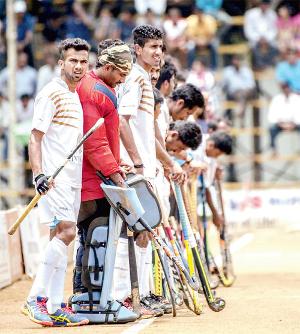
Hotbed for hockey. Nikkin Thimmaiah with his Chendanda team at the Kodava Hockey Festival final.
The Kodava Hockey Festival is testimony that the game is still thriving in Kodagu, feels internationals Nikkin Thimmaiah and SK Uthappa
A crowd of 30,000 people turned out to watch the Kodava Hockey Festival final between Chendanda and Pardanda on May 14, an eye brow-raising statistic to the uninitiated. This wasn’t an international event, not even a national championship. The average spectator turnout for an Indian Premier League game at the M Chinnaswamy Stadium was 25,000 but this hockey contest — played between families in Kodagu district — beat even the IPL. Cricket, they say is religion in the country. In Kodagu district, it’s hockey that gets the adrenaline pumping.
“Every player from Kodagu begins his career in this tournament, including me,” Nikkin Thimmaiah, India forward and a member of the Chendanda winning team, said.
“I watched my father play in this tournament as a six-year-old. That was one of the catalysts that spurred me to take up the sport.”
The tournament is unique in many ways. A team comprises members of a family and there is no distinction between either age or gender. The festival itself has been conducted annually since 1996. The game, though, goes on through the year as youngsters are encouraged to make it a career. “It’s the most talked about sport in Kodagu and even now, kids are still enthusiastic about the game,” Thimmaiah added. “Kids generally place hockey on a priority.”
Over the years though, the number of players from Kodagu making it to the international level has fallen. Currently, there are only three — Thimmaiah, SK Uthappa and SV Sunil — in the Indian squad. There’s no player from Karnataka in the junior team, but Uthappa insists hockey is not dead. The sport is now alive, more than ever, and tournaments like the Kodava Hockey Festival keep it ticking. “I began playing hockey seriously after watching my brother play,” Uthappa said. “I played badminton first, but in Coorg, everything is about hockey. Hockey is in our blood and that’s why we start playing. The next influential factor is your family. It depends on how they support and encourage you to play hockey as a child. Thanks to that tournament, it’s a tradition that everyone participates in it.
“Even now, that culture of developing the sport remains. You often hear that gadgets have taken the fun out of outdoor games. There are kids who use iPads in Coorg but they know how to balance it with the game. I think that love for the sport is influential in getting everyone to play it. Imagine you have to play this sport in every school. You will naturally be inclined to it.”
But it’s not just this tournament which gets Kodavas hooked to the sport. Uthappa says everyone is interested in playing some sport, but what cricket is to the entire country, hockey is to a Kodava. “We Kodavas follow, discuss and dissect hockey just as other people in the country do with cricket,” Uthappa said. “Families here are aware of everything that we do. Over the years, they have become more educated about hockey, thanks to the promotion and media exposure hockey is getting. Now, everyone’s involved in an educated discussion. For example, they tell me I played well in the first quarter, but my dribbling went awry in the third quarter and so on. Earlier, it was only the basic question of whether you won or lost and by what score.”
source: http://www.bangaloremirror.indiatimes.com / Bangalore Mirror / Home> Sports> Others / by Aravind Suchindran / Bangalore Mirror Bureau / May 23rd, 2017
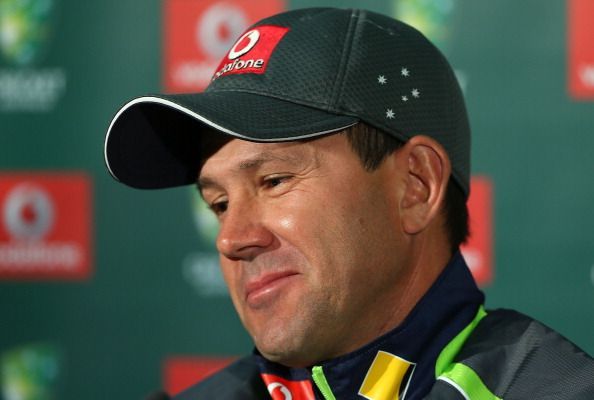
Ricky Ponting has picked Kolkata wicketkeeper Robin Uthappa over MS Dhoni in his team of the year, citing the former’s ability to score from the get-go as the reason for his choice. The former Aussie captain, unsurprisingly, opted to go for two Indian pacers in his best XI for this season’s IPL.
In a position that has been dominated by MS Dhoni for a few years now, Ricky Ponting decided to give Uthappa the nod ahead of his compatriot. While Dhoni finished with just 290 runs in the season compared to Uthappa’s 388, Ponting explained that the approach to the game had changed and it was important for the players to start making an impact from the very first ball their face.
“He’s (Uthappa) a guy whose strike-rate is incredible this year, 165 for the entire tournament. You need those guys in the middle-order to be able to score quickly right from the start. You don’t have that luxury anymore in the T20 game to be able to play yourself in and work the ball around. You have to go in and dominate right from the start and I think that’s what he’s been able to do really well,” Ponting told Cricket Australia.
For the opening slots Ponting decided to use two of his overseas’ players with David Warner and Hashim Amla making the cut. The Aussie opener was the easy choice for his compatriot considering he was the leading run scorer of the tournament with 641 runs at an astonishing average of 58.27 and a strike rate of 141.81. While Amla has not been seen as a traditional T20 player in the past, this season the South African shocked everyone by putting the numbers up on the board at an average of 60 and a strike rate of 145.83.
“He’s (Warner) just been in complete control of his game for a number of years now in the IPL. He thrives on extra responsibility and leadership. Davey’s led the side really well. I’ll actually name him captain as well on the back of what he’s done the last couple of seasons,” Ponting added.
“He (Amla) got a chance as a replacement player at the back-end of last season with the Kings XI, but this year played the best that I think anyone has ever seen him play, whether it be in an international T20 game or in the IPL. He’s the only man in the tournament to score two hundreds (in IPL10) and has got them pretty quickly.”
Following the openers are two Indian stars whose consistency was on show yet again. While Gautam Gambhir led his side to the second qualifier, Suresh Raina was let down by a weak bowling attack as they finished seventh on the table. The duo scored a combined 940 runs this year with Ponting reserving special praise for Gambhir for managing to put up the numbers in spite of changing his batting positions.
“I said before the finals started that I’m a bit surprised that he’s (Gambhir)batting in that number three position considering what he’s done at the top of the order for Kolkata for a long time. He’s ended up with nearly 500 runs … that’s a reasonable tournament. I’ve said for a long time that the number three position in T20 cricket is the hardest spot to bat because you’ll generally go in at the loss of a very early wicket and be expected to hit boundaries straight away,” Punter explained.
“He’s (Raina) just a class T20 player (and) a classy short-form player. He’s got a great one-day record for India as well. (While) he’s got the ability to really dominate spin-bowling. In that role in the middle-order is generally when most of the spinners are bowling, and he’s got the ability to really dominate there.”
The 3-time World Cup winning cricketer had no problem in naming Ben Stokes, who was named the MVP for the entire tournament, as one of his all-rounders due to the Englishman’s 12 wickets in 12 games and 316 runs with the bat which included a century. The second option, however, is a slightly dodgy one with Ponting showing confidence in Hardik Pandya over his brother Krunal Pandya. Pandya Sr. scored 243 runs while claiming 10 wickets while Hardik scored 250 runs and took 6 wickets.
“The MVP for the entire tournament (and) the guy that was most talked about before the tournament started was Ben Stokes. (He’s) on a huge deal with the Supergiants and has probably earned every cent of it to be fair. Twelve wickets in 12 games, made that big hundred as well. The thing about him is he does bring that real X-factor to their line-up and he’s someone you can rely on to bowl four overs. He can also make a hundred in the middle-order. I know they paid a lot of money for him but I’m sure they’re pretty happy that they did. Unfortunately for them he wasn’t around for the finals. When it comes down to what it came down to on that last ball of the game, not having your X-factor player there, they sadly missed him,” Ponting said.
“One guy I’m happy to name in the side is Hardik Pandya, the young allrounder from the Mumbai Indians. I’ve had a chance to work a lot with him the last couple of years. He had a dream-start two seasons ago, (but) found things a bit tougher last year. The thing that I liked was when it was his turn to step up and bowl a couple of overs, either with the new ball or towards the back-end of the innings, he was able to do it and do it well. He closed out a couple of games (with the ball) as well. He’s a pretty complete package now.”
Bhuvneshwar Kumar(26 wickets) and Jaydev Unadkat(24 wickets) make an interesting pair of specialist bowlers. While Bhuvneshwar has had the advantage of bowling in Hyderabad more often, considering it was a slightly bowler-friendly pitch, Unadkat impressed Ponting with his flexibility in varying conditions and particularly his variations.
While one was the leading wicket taker of the season of the season, the other was not far behind, having played a lower number of games.
“If you wind the clock back five or six years, this guy (Unadkat) was touted as the next Indian opening bowler in Test cricket, one-day cricket and T20 cricket. He’s got the ability to swing the ball around as we saw through this tournament and he’s got very good slower ball skills as well. He did a terrific job for his team in varying conditions with new ball and old ball, that’s the sort of flexibility you need in your team as far as your fast bowlers are concerned,” the Aussie said of Unadkat.
His bowling contingent consisted of two leggies, Imran Tahir and Rashid Khan. Ponting pointed out the difference in their economy rate, with Rashid being miserly in his runs while Tahir was slightly expensive, as the difference between the two players. However, both players showed their effectiveness with Rashid ending up with 17 wickets in 14 matches while Tahir claimed 18 in 12 games that he played.
“I’ve actually named two leg-spinners in the side, one that started the tournament really well (was) Rashid Khan. One thing you see with the spinners – and certainly the good spinners in T20 cricket – is even if they don’t take a lot of wickets, their economy-rate is always quite low,” Ponting said while explaining the selection of Rashid Khan.
“(Tahir’s) runs-per-over is slightly higher – 7.85 – which is a little on the high side for a top-class spinner in the IPL but … 12 games, 18 wickets (speaks for itself). You know when you bring these leg-spinners on through those middle-overs that they are going to create some opportunities for you and Imran Tahir has been around for a long, long time.”
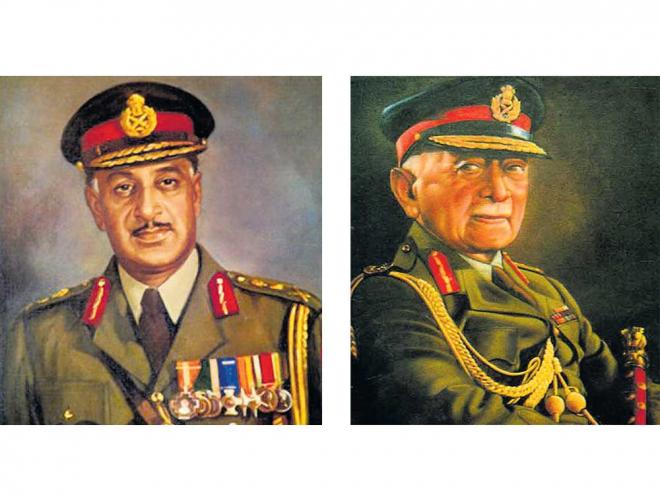
Role Models: Paintings of General K S Thimayya, Field Marshal K M Cariappa.
Kodagu is not just known for its serene landscape and picturesque surroundings, but also for the valour of its people. Rightly, the district boasts of several military heroes. The statues of such brave men can be seen in Madikeri. The Sudarshan Circle in Madikeri is flanked by the statue of Field Marshal K M Cariappa and the equestrian statue of Subedar Guddemane Appayya Gowda.
One of the earliest revolutionaries from Kodagu, Appayya Gowda, was hanged by the British in 1837. His contemporary revolutionaries from Kodagu included Subedar Naalnaad Mandira Uthayya, Chetty Kudiya and Shanthalli Mallayya who were imprisoned for many years by the British. Further along the main road, you can see a circle with the statue of General K S Thimayya. If you take the deviation to the right, you will find Major M C Muthanna Circle near the town hall and Squadron Leader A B Devaiah Circle near the private bus stand.
The first family
In Kunda, near Gonikoppal, lived the Kodandera family, hereditary chieftains of a group of villages. I M Muthanna’s Coorg Memoirs mentions that Naad Parupatyagar (native village official) Kodandera Kuttayya was the grandson of Diwan Mandepanda Thimmaiah. Between 1901 and 1909, he was the assistant commissioner and highest ranked native official in the then Coorg province. When his wife Dechy, or Dechamma, passed away, a locality in Madikeri was named as Dechur in her memory.
Two members of this family, Field Marshal Kodandera Madappa Cariappa and General Kodandera Subayya Thimayya, rose to become the chiefs of the Indian Army. Hence, the Kodandera family came to be considered as the first family of Kodagu’s military heroes. Field Marshal Cariappa was the son of Kuttayya’s younger brother Madappa, who worked in the revenue department. General Thimayya was the grandson of Kuttayya.
Born in 1899, Field Marshal Cariappa, ‘the Grand Old Man of the Indian Army’, studied in the Madikeri Government Central High School and then in the Madras Presidency College. He gained admission at Daly Cadet College, Indore, in 1919 and was commissioned as a second lieutenant in Bombay’s 88th Carnatic Infantry, during World War I. The following year, he served in Mesopotamia (Iraq) and was promoted as a lieutenant.
He became the first Indian army officer to attend the Staff College in Quetta. He married Muthu Machia, a forest officer’s daughter, had a son K C Nanda Cariappa, who later rose to the rank of air marshal, and a daughter, Nalini. During World War II, Cariappa was awarded the Officer of the Most Excellent Order of the British Empire (OBE). He became the first Indian to become a brigadier.
Cariappa also served as India’s first commander-in-chief (C-in-C) between 1949 and 1953. Now this position rests with the President of India. He represented India as its high commissioner in Australia and New Zealand from 1953 to 1956. In 1986, he was made a field marshal. Thus, he became one of the two Indian army officers to hold this rank. He died in 1993.
General Thimayya’s actual name was Subayya, while Thimayya was his father’s name. He was born in Madikeri in 1906. Admitted to the then Prince of Wales Military College in Dehradun, he was one of the six Indian cadets who underwent training in Royal Military College, Sandhurst, England. In 1926, he was commissioned into the Indian army. In 1935, he married Codanda Nina and the couple went to Quetta. During the Quetta earthquake that year the couple rendered outstanding humanitarian service.
During World War II, Thimayya was awarded Distinguished Service Order (DSO). He represented India during the Japanese surrender. Between 1953 and 1955, Thimayya was the chairman of the Neutral Nations Repatriation Commission. He gained international fame for the way he handled the exchange of the prisoners of war (POWs) held during the Korean War. In 1954, he was awarded the Padma Bhushan. Between 1957 and 1961, he was the chief of the Indian army.
In 1964, he was appointed Commander of the United Nations Forces in Cyprus, where he passed away. Cyprus released a stamp in his memory, and later, his wax statue was displayed in Singapore. Both Cariappa and Thimayya are iconic figures in India.
Fond memories
According to Major General Arjun Muthanna, a great grandson of Kuttayya, Cariappa and Thimayya belonged to a generation of Indian officers who stormed the bastion of India’s colonial masters and deftly navigated unchartered situations. Both had huge responsibilities thrust upon them at a relatively young age and rose to the challenge. Cariappa, commissioned as a lieutenant when Indians were just being permitted to become British Indian Army officers, would ‘Outbritish the British’, probably to be accepted and treated as an equal by the British officers.
A strict disciplinarian, he demanded punctuality and proper dress code. He was fiercely nationalistic and moulded the Indian Army into its current apolitical position.
In 1948, the Kashmir situation grew tense and war was imminent. Lieutenant General Cariappa became the head of the Western Command and led Lieutenant General S M Shrinagesh and Major General Thimayya. It was during this war that Thimayya helped India secure Ladakh.
Cariappa’s contemporary and friend, Lieutenant General Nathu Singh, was first offered the post of C-in-C but he declined and stated that his senior Cariappa, who won the 1948 war for India, was more eligible for the post. It was on January 15, 1949 that the three centuries old colonial army became a national army. That was the first time an Indian, General Cariappa, was made chief of the Indian armed forces.
Every morning, Cariappa paid his respects to the portrait of his parents and the statue of a jawan. He was ever thankful to the soldiers for protecting the country. Hence, he was called the soldiers’ general. Cariappa would go to the war front, even after retirement, in order to motivate the troops.
Muthanna narrates a personal anecdote about the Field Marshal, “When I called on him at his residence, in Madikeri, in May 1986, to invite him for my wedding, I was wearing a half sleeve shirt and trousers as appropriate for the hot summer day. After accepting the invitation, he commented on my attire saying ‘You’re an officer in the army aren’t you? In which case, you should be wearing a coat and tie.’ I had no response and thought in my mind I’m calling on my family elder. Pat came his next comment, as if he’d read my mind, ‘In case you’re calling on me as a relative you should be wearing our traditional dress of kupya.’ He walked the talk. He was always dressed formally as a respect to the person who was visiting him.”
Thimayya was charismatic, approachable and had great interpersonal skills. When Thimayya visited his Dehradun alma mater as an alumni, one of the cadets there wanted to know how to address the general. Thimayya simply replied ‘Call me Timmy’, referring to his nickname!
Some of the other military heroes of Kodagu are: Major Mangerira Chinnappa Muthanna, who was awarded the Shaurya Chakra posthumously, and Squadron Leader Ajjamada Bopayya Devaiah, nicknamed ‘Wings of Fire’, the only Air Force personnel to be awarded the Maha Vir Chakra posthumously so far.
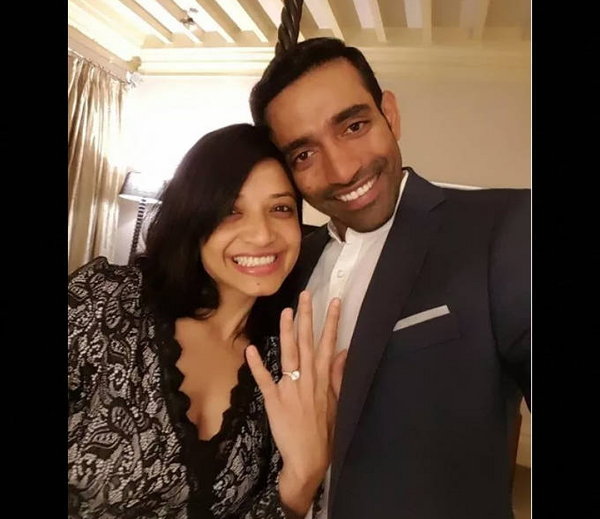
Following the many team’s of the T20 League celebrating their 10-year anniversary, Kolkata soon followed suit and threw a lavish bash for its players. Team’s co-owner Shah Rukh Khan was seen attending the event with his youngest son, AbRam.Robin Uthappa and Sheethal Gautham
While the party was attended by all the players of the Kolkata team, several took to attending the event with their better halves. Indian cricketer Robin Uthappa was seen alongside talented tennis star wife, Sheethal Gautham.
Sporting short hair, unlike her previous look, Sheethal was also spotted wearing the same attire that she wore on the day of the duos engagement in 2015. While Robin and Sheethal had a gala time at the event, cricket Umesh Yadav was also seen alongside his wife Tanya Wadhwa and SRK posing for the cameras.
Having finished in the top 4, Kolkata will be battling against the Hyderabad team on the 17th of May followed by a match with the first qualifier. Considering the team has proven its stand in the 10th season of the T20 league, their 10-year bash seemed well deserved.
source: http://www.daily.bhaskar.com / Daily Bhaskar / Home> News / by Jasmine Philip / May 17th, 2017
Rashmika Mandanna is a Kannada heroine out to conquer the south Indian film industry. This model-turned-actress was roped in for the runaway hit Kirik Party, a college drama, after her photos caught the eye of producer and hero of the movie Rakshit Shetty and director Rishab Shetty. She played the teacher, Anannya.
Following the success of her first film, Rashmika became one of the most sought after actresses in the Kannada movie industry, and started getting offers from other film industries, including Telugu and Tamil. The actress, who is taking her first steps in Tollywood, has been offered movies with some of the top heroes of the Telugu film industry such as Prabhas, Allu Arjun and Nani.
The actress has picked a Naga Shourya-starrer for her Telugu debut, and is shooting for it. This will be followed with another Telugu project with hero Ram under Kishore Tirumala’s direction. Rashmika was also approached for Prabhas’ next film, Saaho, but she refused as it clashed with dates of her other movies. She is now busy shooting for Chamak with Ganesh, and is also working on Anjaniputra, directed by A Harsha, starring Puneeth Rajkumar in the lead.
Rashmika says acting was always on her mind, even when she started her career on the ramp. She learns the language before signing any movie. Her language classes come handy on the sets of her first film, a yet-to-be-titled one, with Naga Shourya.
“I have been offered movies from other industries. Most are from the Telugu industry. I have been going through a few scripts and I thought the best among them was the one with Naga Shourya. It should be great for a debut, and I will follow that up with a project with Ram, for which the shooting will start in September,” she says.
Although the young actress is excited to try other regional languages, she says Kannada movies will remain her priority. “I will never forget the overwhelming response I got for my first film in Sandalwood. Movies don’t have a language barrier, and good ones are remade for other regions. I will try to do good films in all languages,” she gushes.
Rashmika, who always scored a distinction percentage in academics, has to ensure that she completes her graduation and has just written her final year exams for BA in journalism. The Virajpet beauty credits her mother for helping with her career. “She makes sure that I devote all my energy to acting, which helps a lot. I can make a career in another field, besides acting simply by showing my marksheet,” she smiles.
source: http://www.newindianexpress.com / The New Indian Express / Home> Entertainment> Kannada / by A Shardhaa / May 22nd, 2017
WELCOME. If you like what you see "SUBSCRIBE via EMAIL" to receive FREE regular UPDATES.
Read More »