Category Archives: About Kodagu / Coorg

Coffee, critters and climate change

With temperatures rising and pests proliferating, Indian coffee growers are fighting challenges beyond their control.

Unpredictable rise in temperatures followed by an uncertain monsoon cycle has gradually started taking a toll on coffee yields. (Chevanon Photography, Pexels)

Coffee is the first thing I see, smell and taste in the day. But as caffeine-junkies like you or me ride the wave of premium specialty brews, we need to pay attention to growers across major regions in India, such as Karnataka, Kerala and Tamil Nadu, who are battling a host of challenges due to a changing climate.

As spring transitions to summer, the pattern of unpredictable rise in temperatures followed by an uncertain monsoon cycle has gradually started taking a toll on yields and impacting the livelihood of coffee farmers.

Bengaluru based Tej Thammaiah, a co-founder of Maverick & Farmer Coffee Roasters and third-generation coffee farmer, says his team of growers on the 150-acre estate have meticulously documented the cultivation process to pinpoint the impact of increasing temperatures over the last decade. The mild, aromatic Arabica plant with its nuanced flavours, second only to Robusta in production volume in India, is highly susceptible to even the slightest change in climate. As temperatures increase, it hastens fruit ripening, leading to a loss in the overall quality of beans.

To fight this temperature change at estates such as Pollibetta in Coorg, his growers strive to find plots at higher, cooler elevations. But in this new environment, the finicky coffee fruit typically takes longer to mature. Moreover, changing plot locations is not a sustainable solution since coffee fruits in India are grown primarily in “shady” conditions, under a canopy of trees. And deforestation and logging is taking a toll everywhere.

It gets worse: When plants aren’t grown in ideal conditions, it leaves them more vulnerable to pests and diseases. Sunalini Menon, president of a coffee grading and training institute called Coffeelab in Bengaluru, mentions that a beetle known as white stem borer has been particularly harmful, spreading through India and Sri Lanka. It prefers plants exposed to sunlight and after burrowing in hard wood and roots as a larva, it hatches and feeds off the plant, destroying the woody tissue, leading to stems wilting and leaves yellowing. The beetle seems to have a particular liking for Arabica.

Not all hope is lost, though. Menon says India was one of the first countries to battle another infamous dweller, a fungus known as leaf rust, at the Mysore Coffee Experimental Station established by the British in 1925 at Chikmagalur, Karnataka. Known as the Central Coffee Research Institute, this research centre now run by the Coffee Board of India is researching and guiding growers on pest control, as well as initiatives such as diversifying shade patterns with local balsa and cedar trees and introducing new varietals of Arabica and Robust suited for tropical growth.

But she does believe it’s important to let go of the hesitancy to uproot plants. Farmers, perhaps for cultural reasons, have typically been hesitant to replant their land though research suggests that shorter plant life-cycles increase quantity, improve bean quality and even give growers some reprieve from emerging pests and diseases.

Ultimately, however, no practice can replace the tedious, time-consuming process of screening crops regularly. A task which falls squarely on growers.

Some shift to growing other crops. Those who stick it out, especially in smaller estates, need more support–in the form of agritourism, research on new techniques, investment in weather stations or, simply, from consumers.

If that doesn’t happen, we may in time find it increasingly difficult to get that morning fix.

For those new to coffee: Thammaiah suggests Selection 795 or Cauvery to taste domestic Arabicas (while we still can).

Nightcap is a column on beverages by Varud Gupta, author of Bhagwaan Ke Pakwaan and Chhotu. @varudgupta

source: http://www.lifestyle.livemint.com / Live Mint / Home> Mint Lounge> Food / by Varun Gupta / April 26th, 2021
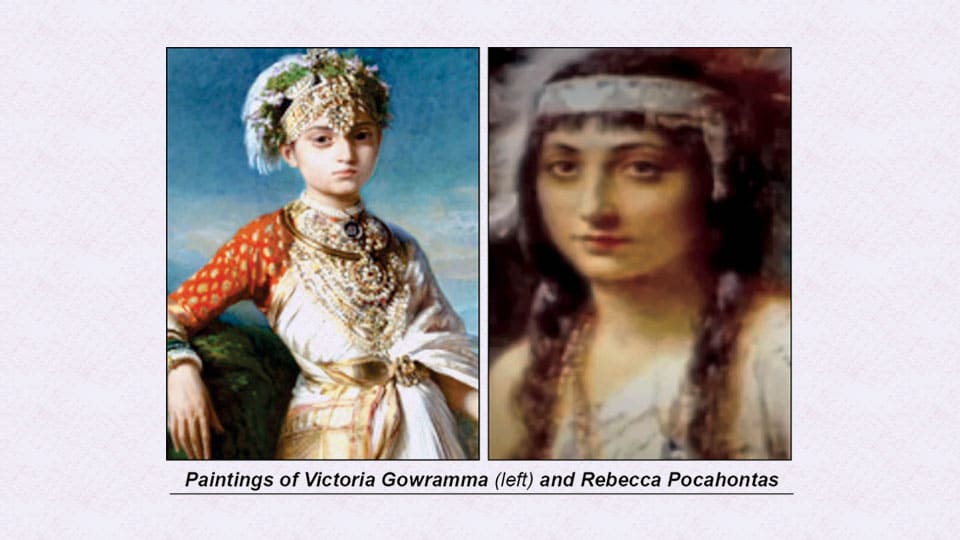
Rebecca And Victoria

Pocahontas, the beau-tiful daughter of the American Indian chief of the Powhatan Confederacy, was born in 1596 in what is now known as Jamestown, Virginia, in the USA.  Her rank was that of a Princess. 16th and 17th century saw rapid colonisation of the Americas by the European nations.  History is replete with the brave fights the native Americans put-up against the white man who came with superior weapons and technology, and ultimately subdued the original inhabitants.

Chief Powhatan was a formidable opponent of the alien settlers.  One of the British colonisers who encountered chief Powhatan was John Smith.  In a skirmish, the British were outnumbered, and John Smith was taken prisoner.  When Smith was about to be executed, the then 11-year-old Pocahontas intervened and saved his life. John Smith was held captive for a while by the Powhatan chief. The young and impressionable Pocahontas was intrigued by the white man.  She used to visit the prisoner frequently and in time learnt a smattering of English from him.  John Smith subtly introduced Pocahontas to Christianity.

Years later, during the first Anglo-Powhatan war in 1613, Pocahontas was taken hostage by the British.  During this period, she was taught English and the scriptures in more detail. Soon her indoctrination was complete. In  1614 Pocahontas was baptised and was given the name Rebecca.

Fast forward to 1852.  The 11-year-old Gowramma, the favourite daughter of the last Raja of Coorg, was taught English and the scriptures by the British during their exile in Benares. The Raja and Princess Gowramma land in Victorian England in 1852.  Presented at Queen Victoria’s court, the queen took the vulnerable Gowramma under her wing as her God-daughter and encouraged her baptism.  Gowramma was given the name Victoria.  Queen Victoria bestowed Gowramma with a rank equivalent to that of an European Princess. 

During her captivity, Rebecca Pocahontas fell in love with John Rolfe, a British tobacco trader and grower. John  Rolfe was a widower. 18-year-old Rebecca married the much older John Rolfe in  1614.

When Victoria Gowramma was 19 years old, she got romantically involved with a British army officer: Lieutenant Colonel John Campbell, who had served in India.  He was a widower, and 30 years her senior.  They were married in 1860. 

John Rolfe and Rebecca Pocahontas had a son named Thomas Rolfe.  In 1616, John Rolfe brought his wife and infant son to England. Pocahontas was presented at the court of King James I, where she was given a reception with protocol normally extended to a daughter of a king.  

In March 1617 John Rolfe and his family boarded a ship to sail back to America.  Rebecca Pocahontas suddenly took ill and had to be taken  ashore.  Within days Rebecca died, and it is suspected that the cause of her death was either pneumonia or tuberculosis.  She was 21 years old.

Victoria Gowramma and John Campbell had a daughter named Edith Victoria.  Gowramma suffered from tuberculosis and succumbed to the disease in 1864 at the age of 23. 

Rebecca and Victoria, separated by nearly 250 years, had uncanny similarities in their lives.

source: http://www.starofmysore.com / Star of Mysore / Home> Feature Articles / by C.P. Belliappa / April 30th, 2021

HC directs govt. to transfer 11,722 hectares to Forest Department

This was decided four decades ago when Harangi reservoir was built

The High Court of Karnataka has directed the State government to transfer within one month the entries in respect of 11,722.29 hectares of identified lands of C and D categories in Kodagu district to the Forest Department as was decided four decades ago to compensate forest area utilised for Harangi reservoir project.

A Division Bench comprising Justice B.V. Nagarathna and Justice J.M. Khazi issued the direction while allowing a PIL petition filed by K.A. Ravi Chengappa, President of Cauvery Sene, Madikeri, and C.C. Devaiah of Virajpet of Kodagu district.

The petitioners had pointed out that the reservoir was built during 1970s near Hudgur village in Somwarpet taluk and the government had on May 12, 1972, ordered release of 900 acres of land from the Yadavanadu forest area and 3,000 acres from the Atturu forest area to rehabilitate the persons who had lost their lands on account of the reservoir project.

Also, the government in 1972 and 1994 had directed that 18,000 acres of land from the Revenue Department should be handed over to the Forest Department to re-compensate the forest land utilised for the reservoir project, the petitioners said.

Though orders were passed in 1972 and 1994 for transferring 11,722.29 hectares of land to the Forest Department, the revenue authorities, including the Deputy Commissioner of Kodagu, till today had not transferred the records of these lands in favour of the Forest Department, the petitioners contended.

During the hearing of the petition, the government counsel told the Court that only formal handing over of lands to Forest Department was not done while clarifying that the Forest Department is at liberty to take charge of the 11,722.29 hectares of lands and the court issue such a direction.

The Bench, while referring to apex court’s judgements in T.N. Godavarman Thirupulkpad case on protection of environment and forest lands, said that the Government was required to transfer these lands to Forest Department as the 11,722.29 hectares of lands were mean to re-compensate the forest area used for the reservoir project.

source: http://www.thehindu.com / The Hindu / Home> News> States> Karnataka / Bengaluru – April 28th, 2021

HC Orders Tahsildar To Survey Madikeri Gaddige Land

Bengaluru/ Madikeri:

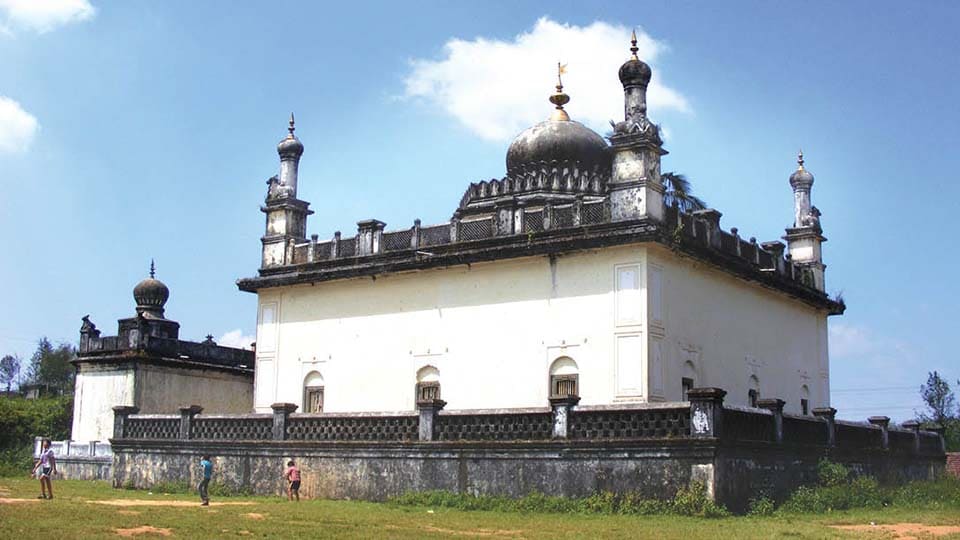
The Karnataka High Court has directed Madikeri Tahsildar to conduct a survey of 19.86 acres of the area where Raja’s Tomb (Gaddige) is situated at Mahadevpet near Madikeri.

A Division Bench, headed by Chief Justice Abhay Shreeniwas Oka, was hearing the Public Interest Litigation (PIL) filed by J.S. Virupakshaiah, a former State Information Commissioner. It might be mentioned here that Virupakshaiah had even filed a PIL regarding the pathetic state of Madikeri Fort and had drawn the attention of the High Court contending that the Fort and Palace premises are heritage sites, dating back to more than three centuries and have been grossly neglected. 

In his PIL on Gaddige, Virupakshaiah alleged that there are several encroachments in the historical tomb area. Rajara Gaddige is one of the tourist attractions in Kodagu and tourists who visit Abbey falls will pass Rajara Gaddige en route to it. However, it is in deplorable condition owing to the negligence of the Government and encroachment of land by local residents and vested interests. 

Encroachments galore

Initially, the Gaddige had 19.86 acres of land. However, the land has been encroached. Some have even built houses on the encroached land. Even a Government building has come up on the Gaddige land. The Gaddige area has become land for immoral activities in the evening.

Hearing the petitioner, the High Court directed the Tahsildar to visit the Gaddige with a view to ascertain the present condition of the tomb. The Bench said the Tahsildar has to ascertain in the report whether there are any encroachments. The Bench has also directed the Tahsildar to prepare a sketch of the entire land and point out encroachments, if any. The Tahsildar has been directed to submit the survey report within six weeks.

Also, the High Court has directed the Archaeological Survey of India (ASI) and the Centre to file affidavits stating whether the Raja’s tomb is an ancient monument and is of national importance. It asked the State Government to consider whether powers, under Section 19 of the Karnataka Ancient and Historical Monuments and Archaeological Sites and Remains Act 1961, should be exercised for the declaration of the protected area.

Deep-rooted history

The Rajara Gaddige situated in a hilly region at Mahadevpet has been built in such a way that it can be seen from all the four directions. They have been built in Mohammedan style with tombs at the centre and turrets at the corners. Nandi figures are carved on top of the corners.

The entrance of the tombs has carvings too. Lord Shiva is placed and worshipped inside the tomb since the king was Hindu. There are three tombs built for the royal dynasty. The central tomb which is the largest among the three is of Kodava king Doddaveerarajendra and his wife Mahadeviamma. The right tomb is built by Chikkaveerarajendra for his father Lingarajendra in 1820. 

The left tomb belongs to Veerarajendra’s guru Rudrappa built in 1834. Closer to the tombs is the burial place of the two brave royal officials Biddanda Bopu — Bopu Dandanayaka — and his son Biddanda Somaiah who sacrificed their life fighting with Tipu Sultan. In fact, Doddaveerarajendra had erected a plaque in the memory his soldiers in 1779.

source: http://www.starofmysore.com / Star of Mysore / Home> News / March 29th, 2021

The Tragic Life of Victoria Gowramma: How Victorian Monarchy Tried To Evangelise India Through An Unwilling Princess Of Coorg

The Tragic Life of Victoria Gowramma: How Victorian Monarchy Tried To Evangelise India Through An Unwilling Princess Of Coorg
Princess Gouramma depicted in Indian dress and rich jewellery, leaning on an Indian table. She is holding a Bible, an allusion to her conversion to Christianity. (Franz Xaver Winterhalter)

______

Snapshot
  • The short life of princess Gowramma of Coorg serves as a reminder of the potential detachment and loss of identity a fiercely Western education can ensure.

_______

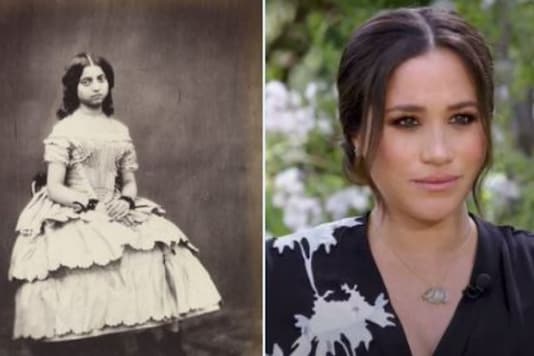
Meghan Markle and Prince Harry’s recent interview with Oprah Winfrey has brought to fore the tumultuous relationship the British monarchy has with all things concerning race. Markle alleged that a member of the royal family had expressed concerns over how dark their baby Archie’s skin would be.

Notably, the Duchess of Sussex is not the first person of colour to be subjected to royal racism.

The institution’s colonial past is filled with instances of the ‘firm’ ( as Markle calls it) taking upon itself the duty of civilising the ‘coloured’ citizens of the colonies it conquered.

In this regard, the remarkable life of Princess Gowramma, the Princess of Coorg and the goddaughter of Queen Victoria, provides interesting insights into the treatment of people of colour by the imperial echelons of the nineteenth century British society.

Princess Gowramma was born in Banaras, to the deposed king of Coorg — Chikka Veerarajendra Wodeyar, who had been exiled by the British in 1834.

She was the Raja’s favourite daughter and was thus his natural choice when it came to accompanying him on his journey to England, where he intended to demand in court the return of his wealth from the East India Company.

Some sources claim that Veerarajendra conveyed his intent of converting Gowramma to Christianity to gain the good graces of the company, so as to receive permission to travel to England.

Governor General Lord Dalhousie and other directors of the company found the idea of voluntary conversion by an Indian royal quite appealing, especially since it would help improve their sagging image in Britain.

Thus, in 1852, after Gowramma had received an education in Christian mannerisms and scripture, she and her father set sail to become the first Indian royals to ever set foot in England.

Gowramma and her father soon after they arrived in London. ( Credit: Illustrated London News)
Princess Gouramma depicted in Indian dress and rich jewellery, leaning on an Indian table. She is holding a Bible, an allusion to her conversion to Christianity. (Franz Xaver Winterhalter)

Upon reaching the island, the 11-year-old Gowramma was presented to Queen Victoria. The Queen, quite taken by the princess declared that she would become the godmother and even endowed Gowramma with her own name — ‘Victoria’.

The Princess of Coorg was then baptised by the Archbishop of Canterbury, at a private chapel in the Buckingham Palace, in the presence of Queen Victoria, her family, senior officials of the government and directors of the company.

Post the baptism, the Queen gifted Victoria Gowramma a bound and autographed Bible with gold embellishments. She then entrusted the princess to the care of Major and Mrs Drummond, who were to groom her with Western thought and education.

Queen Victoria took great initiative in expanding Gowramma’s social circles. She would invite Gowramma to regularly interact with her children and also bestowed upon her a title that made her equivalent to European princesses.

However, Gowramma, who was made to abandon her traditional Indian clothing for Western wear was depressed. She was cut off from all connection with her father and was instead forced to talk, dress and behave like a British aristocrat.

Unable to cope with the pressures of high society, Gowramma tried running away multiple times. She often expressed her desire for privacy and even stated that she rather live like a servant with the handmaidens than suffer the compulsions of regal life. Her troubles were dismissed by the Queen and her consort Prince Albert as ‘innate oriental weakness’ that seeks to escape civilisation.

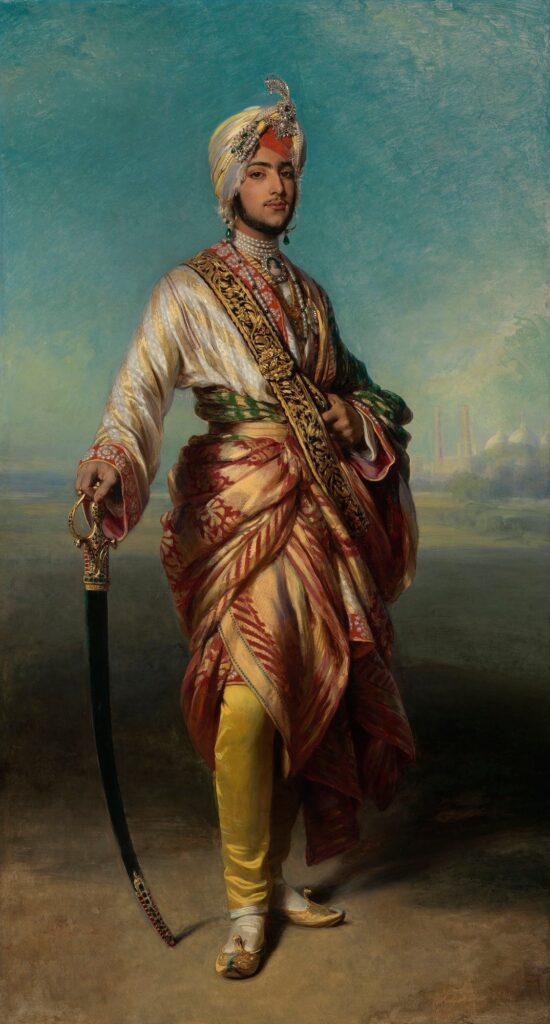
Meanwhile, back home in India, the British had defeated Maharaja Ranjit Singh to annex Punjab. They then took his minor son, Duleep Singh, under their care.

Exiled to Fatehpur and kept away from Lahore so as to avoid chances of revolt, Duleep Singh was subjected to a Western education that eventually culminated with his acceptance of Christianity out of his own ‘free’will. He then set sail to Britain in order to formalise his conversion under the Church of England.

The Queen, to whom Duleep Singh presented the Kohinoor Diamond, took an instant liking of the Maharaja and became his godmother. She and Prince Albert in cahoots with the company plotted an alliance between Singh and Gowramma.

The hope was to use the influence generated by the marriage between two Christian Indian royals as a tool for proselytising the Indian population. This idea also had the endorsement of Singh’s English guardians — the Logins. They were firm believers in the European responsibility of spreading the word of the Bible amongst the pagan worshippers of India.

However, upon introduction, Singh was lukewarm in his response to Gowramma. He made it known to the Logins that he considered the princess more an honorary sister than a potential wife.

Gowramma, who had earlier been forgiven by the Queen for her torrid affair with a stable boy and her attempted elopement with an under-butler decided instead to marry a close friend of Singh — Lieutenant Colonel John Campbell, who had served in Bellary and was 30 years her senior.

Meanwhile, Chikka Veerajendra, who had lost a seven-year-long legal battle with the company had died.

Gowramma gave birth to a daughter named Edith Campbell on 2 July 1861. By the time Edith was three years old, Gowramma had developed signs of tuberculosis.

She died from the disease on 30 March 1864 just a few months short of her 23rd birthday.

Lieutenant Campbell, who in their short marriage had either neglected his wife or had persistently pestered her for money, disappeared after her death along with the crown jewels of Coorg that had been in her possession.

It is believed that he had only married the princess for her 1,000 pound allowance, the Queen’s favour and of course the jewels of Coorg.

The tragic life of Victoria Gowramma, a princess who had been alienated from her own land and language, was perhaps the paradigm the Britain had for the citizens of her colonies to follow.

Had Duleep Singh and Gowramma not fell short of the royal scheme envisioned by Queen Victoria, they might have had a significant role in shifting India’s religious history.

After all, colonial rulers did find religious conversion a greater instrument for the control of the colonised than plain force.

Gowramma today serves as a reminder of the potential detachment and loss of identity a fiercely Western education can ensure.

Victoria Gowramma was buried in the Brompton Cemetery, her tombstone bears the epithet composed by Queen Victoria, it contains the poignant words — “Other sheep I have, which are not of this fold” (John X,16).

source: http://www.swarajyamag.com / Swarajya / Home> Ideas / by Adithi Gurkar / March 17th, 2021

Meghan Markle’s Struggle as Non-White Royal Resembles Indian Princess Adopted by Queen Victoria

Dr Priya Atwal, a historian, took to Twitter and spoke about the little-known life of Princess Gouramma of Coorg who was adopted by Queen Victoria as one of her godchildren.

The history of Princess Gourumma of Coorg was shared on Twitter by Dr Priya Atwal.

While Meghan Markel’s revelations into the British Royal family has once again triggered the debate of race in UK, a historian from India has claimed that Meghan is probably not the first woman of colour to be a part of the monarch family. While there is mention of Queen Charlotte’s (1744-1818) black ancestry, Queen Voctoria had her imperial godchildren too, according to the Victorian historian. Dr Priya Atwal took to Twitter amid raging debate about Meghan’s acceptance in the Royal family and spoke about the little-known life of Princess Gouramma of Coorg.

“Princess Gouramma (1841-64) was brought to Britain in 1852 by her father, the deposed Rajah of Coorg. The Rajah campaigned to win back his family wealth from the East India Company, but also asked Victoria to adopt his daughter, believing the Queen would give her a good life (sic),” Atwal wrote. It was Princess Gouramma’s father, Rajah of Coorg, who offered her to the Queen after baptising her with the hope that she would be brought up with “aristocratic guardians and secure her a good marriage”. Victoria readily accepted the idea and adopted Princess Gouramma. But princess of Coorg wasn’t the only one. Queen Victoria had several ‘godchildren’ whom she adopted from royals from the empire.

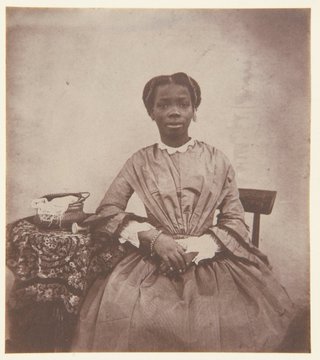
Duleep Singh and Sarah Bonetta Forbes were among these godchildren of the Queen.

_______


Dr Priya Atwal@priyaatwalAs a historian of Victorian royalty, I am fascinated by some of the parallels between #MeghanMarkle’s current situation and the little known story of Princess Gouramma of Coorg. A thread

1/12

_________-

But facing racial attacks never stopped for the Queen’s godchildren even after being adopted. Atwal says their lives weren’t easy. Duldeep and Sarah ‘were both feted and treated as racialised others in Victorian Britain’. “And their lives were pored over in a newly-emerging popular press,” Atwal writes. “As I’ve found in my research, for her it was a good way to learn about her new territories and project a benevolent image of her family.”

_______

Dr Priya Atwal@priyaatwal·The Hindu Rajah offered up Gouramma to be baptised as a Christian & hoped Victoria would bring her up as an adopted daughter with aristocratic guardians and secure her a good marriage. Incredibly, Victoria was keen about the idea & readily agreed. 4/12

Victoria took multiple young royals from around the empire as wards/godchildren – inc. Duleep Singh & Sarah Bonetta Forbes. As I’ve found in my research, for her it was a good way to learn about her new territories & project a benevolent image of her family. 5/12

_________

Gouramma faced a different struggle. She was pressured to become the model Anglicised princess. Even though the Queen had accepted her into the family, she had banned Gouramma from maintaining any contact with her family. The curtailment of ties again had racial undertones. According to Atwal, this was supposedly to prevent her from slipping into “native” or “heathen ways”. “She was moved from foster family to family as her caretakers struggled with the cost and demands of raising a royal ward.” The struggle of a new life was too much for the young princess who even tried to run away many times. It was the unwanted attention and being under scrutiny all the time that added to her woes. “In this I find her parallels with Meghan most intriguing: Gouramma often spoke of dearly wishing for more privacy & living independently – even to become a household maid – so she could be free of scrutiny. Yet her actions were attributed to her “innate Oriental weakness (sic),” Atwal writes.

Meghan too has spoken about the unwanted attention from media that has deprived her of any privacy in personal life. Meghan, who married Prince Harry in 2018, said she told the royal family she was struggling and needed professional help but was told “that I couldn’t, that it wouldn’t be good for the institution.” She even suggested that the Buckingham Palace was “perpetuating falsehoods” about her and Prince Harry. Asked by Winfrey how she felt about the Palace hearing her speak out, Markle replied: “I don’t know how they could expect that after all of this time we would still just be silent if there’s an active role that The Firm is playing in perpetuating falsehoods about us.”

source: http://www.news18.com / News18 / Home> News> Buzz / March 10th, 2021

State Election Commission Starts Process For Delimitation Of ZP, TP Constituencies

Bengaluru:

With the Zilla Panchayat (ZP) and Taluk Panchayat (TP) polls scheduled to take place this year, the State Election Commission (SEC) has set in motion the process of delimitation of ZP and TP Constituencies in all districts of the State. The SEC, which has fixed the number of ZP and TP Constituencies in all districts, has directed the Deputy Commissioners to depute election Tahsildars and other concerned staff in their respective district to appear before the Commission on specified dates, along with maps of Constituencies and other corresponding  details. 

Accordingly, the election Tahsildars of Mysuru, Kodagu, Hassan, Mandya, Chamarajanagar, Chikkaballapur, Kolar, Chitradurga, Ramanagara and Bengaluru Rural districts are required to appear before the SEC at Bengaluru on Feb. 22.

After delimitation, Mysuru ZP will have 53 Constituencies from eight taluks and the district will have 144 TP Constituencies collectively. Of the 53 ZP seats, Mysuru, T. Narasipur, Hunsur, K.R. Nagar and Periyapatna taluks will have seven seats each, while Nanjangud taluk will have 10, H.D. Kote 5 and Saragur 3 seats.

As far as the Taluk Panchayat is concerned, Mysuru, T. Narasipur and Hunsur Taluks will have 19 seats each, K.R. Nagar and Periyapatna 18 seats each, Nanjangud 27, H.D. Kote 13 and Saragur 11.

Kodagu District with 5 taluks, will have 29 ZP seats and 52 TP seats collectively.

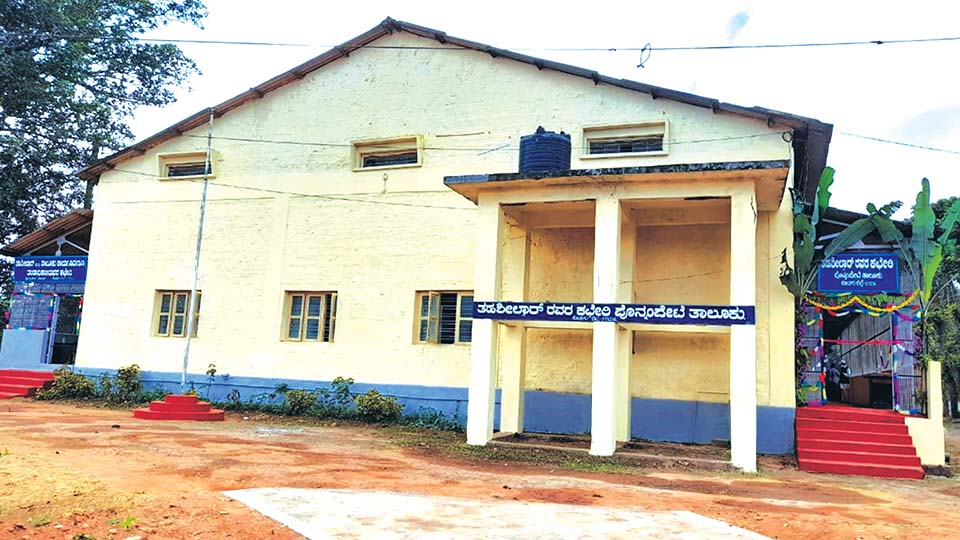
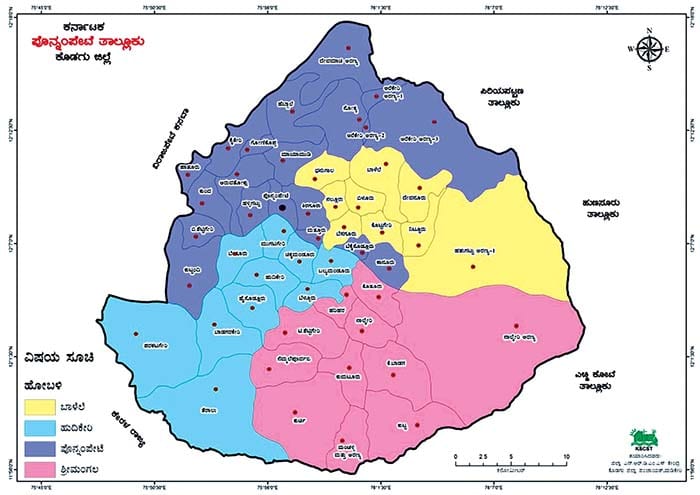
Regarding ZP seats, Madikeri  taluk will have 7 seats, Kushalnagar and Virajpet five seats each and Somwarpet and Ponnampet six seats each.

In respect of Taluk Panchayat, Somwarpet, Kushalnagar and Virajpet taluks will have 11 seats each, while Madikeri taluk will have 10 and Ponnampet 9 seats.

Mandya ZP will have 46 ZP Constituencies from seven taluks and 124 TP Constituencies collectively.

Regarding ZP seats, Mandya, Maddur and Malavalli taluks will have 8 seats each, while Pandavapura, Srirangapatna and Nagamangala will have 5 seats each and K.R. Pet taluk 7 seats.

In respect of Taluk Panchayat, Mandya Taluk will have 23 seats, Maddur 22, Malavalli 20, Pandavapura 14, Srirangapatna  and Nagamangala 13 seats each  and K.R. Pet 19 seats.

Chamarajanagar ZP will have 27 seats from five taluks and 75 TP Constituencies collectively .

Regarding ZP seats, Chamarajanagar taluk will have 9 seats, while Kollegal will have 4, Hanur 5, Gundlupet 6 and Yelandur 3.

In respect of Taluk Panchayat, Chamarajanagar taluk will have 24 seats, Kollegal 10, Hanur 14, Gundlupet 16 and Yelandur 11.

source: http://www.starofmysore.com / Star of Mysore / Home> News / February 14th, 2021

It’s Official. Ponnampet Taluk Comes Into Existence

  • Kushalnagar taluk to be inaugurated in a month: Minister
  • MLAs urge Govt. to release more funds for new taluks

Ponnampet:

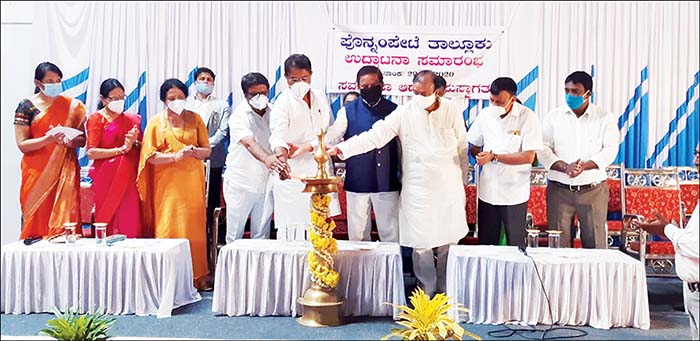
The long-standing demand for the creation of Ponnampet taluk in Kodagu district was fulfilled today with Revenue Minister R. Ashok inaugurating the new taluk at a simple programme held at Ponnampet Taluk Office this morning. With the inauguration, Ponnampet taluk, which has been carved out of Virajpet taluk, has come into official existence, months after the Gazette notification in this regard was made on July 3, 2020. 

Ponnampet Taluk Action Committee, Citizens Action Committee and a host of other organisations had been demanding the formation of the new taluk ever since it was conceptualised 18 years ago in 2002.

Speaking after inauguration, Ashok said that he was virtuous to have got the opportunity to inaugurate the new taluk as Revenue Minister. 

Maintaining that he has a lot of affection, trust and respect for Kodagu district, he said that his Department has been working to expedite all pending initiatives. 

Revenue Minister R. Ashok, Horticulture Minister K.C. Narayana Gowda and MLA K.G. Bopaiah are seen lighting the lamp to mark the inauguration of new Ponnampet Taluk Office at Ponnampet this morning as MLC Veena Achaiah, MLA M.P. Appachu Ranjan and others look on.

Pointing out that the 18-year wait of the people has ended with the inauguration of the new taluk, Ashok declared that the Gazette notification on the formation of new Kushalnagar taluk, which has been carved out of Somwarpet taluk, will be issued shortly and all other official procedures will be completed in a month. He asserted that he was sure of inaugurating the new Kushalnagar taluk as well in a month.

The Minister further said that the formation of two new taluks (Ponnampet in South Kodagu and Kushalnagar in North Kodagu) in the district will geographically help the residents in their daily work and activities.

Highlighting the initiatives taken by the Revenue Department after he took charge of the Ministry 16 months ago, Ashok said that old age pension will now be credited directly to Aadhaar-linked Bank account of the beneficiaries, which he claimed was a revolutionary step in maintaining transparency in the delivery mechanism of Government benefits.

Virajpet MLA K.G. Bopaiah, in his address, wanted the Government to appoint a permanent Tahsildar for the new taluk and also sanction more funds to provide necessary infrastructure.

Madikeri MLA M.P. Appachu Ranjan urged the Govt. to release Rs. 10 crore for infrastructure development in the new taluks of Ponnampet and Kushalnagar.

MLCs Sunil Subramani and Veena Achaiah, Kodagu Deputy Commissioner Annies Kanmani Joy, ZP CEO Banwar Singh Meena, Assistant Commissioner Eshwar Kumar Khandu, Tahsildar Kusuma and a host of other officials were present.

However, Kodagu District Minister V. Somanna and Mysuru-Kodagu MP Pratap Simha were conspicuous by  their absence.

source: http://www.starofmysore.com / Star of Mysore / Home> News / November 20th, 2020

CNC Demands Inclusion Of Codava Tribe In ST List

Mysore/Mysuru:

The Codava National Council (CNC) has urged the Government to include Codava tribe in the list of Scheduled Tribes (ST) of the Indian Constitution.

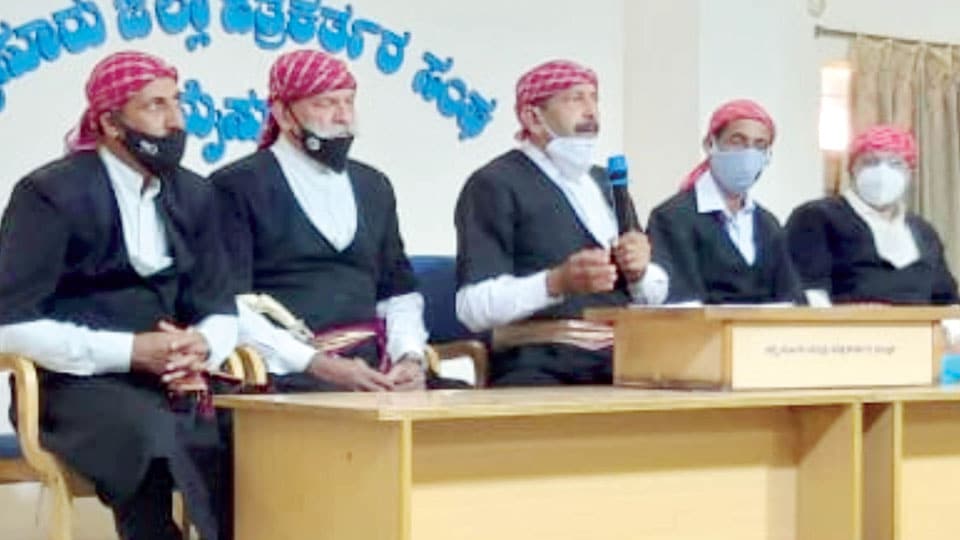
 Addressing a press meet at Patrakarthara Bhavan here this morning, CNC President N.U. Nachappa maintained that ST tag for Codava tribe and Geo-political autonomy are synonymous for Codavas. Urging the Government to declare Codava tribe as a primitive tribe, he said that Codava tribalism must be measured through the ‘Emic approach’, an ethnographic study of Codava tribe.

Pointing out that one of the seven fundamental rights enshrined in our Constitution clearly upholds Constitutional remedy for the aspirations of the people, Nachappa argued that the Union and Karnataka Governments should concede Codava aspirations of ST tag as a Constitutional remedy.

Noting that as a result of CNC’s relentless efforts and innumerable petitions to the Union Government, the Central Government directed the State Government to conduct an ethnographic study on Codava tribalism, he said that subsequently, the Karnataka Government entrusted this responsibility to Mysuru based Karnataka State Tribal Research Institute (KSTRI).

Stating that Codava tribe has its own extraordinary tribal characteristics, he maintained that ST tag is a must for their historical continuity and for protection of Codava land, language, cultural heritage, folkloric identity and traditional habitation. Also, the tag was important for their economic and political empowerment, he said.

Accusing KSTRI Director T.T. Basavanagouda of attempting to derail Codavas demand for ST tag through dubious means, Nachappa said that a representation has been given against the actions of Basavanagouda, which are detrimental to the interests of Codavas, to Mysuru DC.

Pointing out that the then MPs B.K. Hariprasad and Kupendra Reddy had raised the issue during the Parliamentary session in Dec. 2019, which attracted the attention of the whole country, Nachappa asserted that the ST tag will also ensure protection of Codava hereditary untitled lands and traditionally defined Codava homeland.

CNC office-bearers Areyada Girish, Kaliyanda Prakash, Chambanda Janath Kumar and Appaneravanda Manoj Mandappa were present at the   press meet.

source: http://www.starofmysore.com / Star of Mysore /Home> News / October 13th, 2020

The princess and the sharpshooter

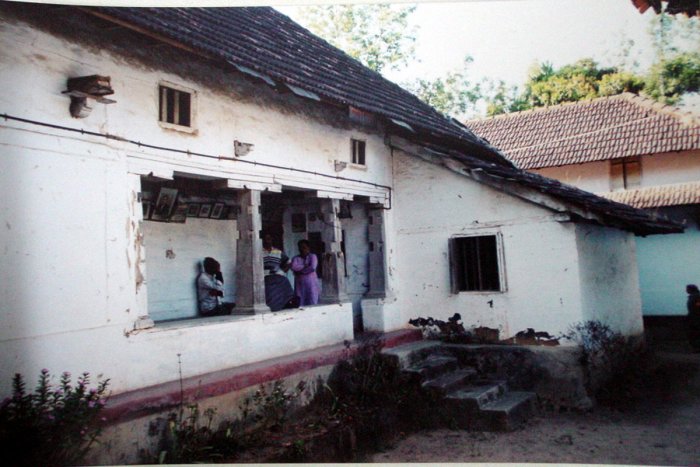
Ancient abode: The ancestral house of Mukkatira Ipanna, the sharpshooter, in Nalvathoklu village in Kodagu. Photo by Boverianda Chinnappa

Mukkatira Aiyappa of Bonda village in Kodagu had three sons: Muddayya, Ipanna and Bopayya. Muddayya became a Munshi (clerk) in the Diwan Kacheri (minister’s office). Linga Raja II was the ruler of Kodagu at that time. With his first queen, a lady from the Chowrira family, he had a son Chikka Vira Raja. His second queen, Palanganda Devaki, was his Pattada Rani (chief queen). They had two daughters Muddammaji and Devammaji.

In 1816, Linga Raja was on a hunt in Murnad, Kodagu. He was accompanied by Muddayya when they came across Ipanna. Linga Raja challenged him to shoot a bird off a bison’s back as he was a famed sharpshooter. The bison was at a long distance and a gunhad to be used. Ipanna shot it and impressed the Raja who summoned him to the court the next day. 

The next day, Ipanna went to the court dressed in a white Kuppya (traditional coat). The Raja asked him the significance of the colour of his costume. Without any hesitation, he replied that a Kodava normally wore a white Kuppya on two occasions — in his wedding and then during his funeral. Those days, rarely one spoke boldly in front of the Raja. But the Raja was not displeased. Instead he surprised all by saying that he would get his elder daughter Muddammaji married to Ipanna. 

Ipanna was converted into a Lingayat, since the Raja was one. Ipanna was given a new name, Chenna Basavappa. Muddammaji and Chenna Basavappa were married and gifted a farm. But Muddammaji fell sick frequently. So, this farm was exchanged with another farm which belonged to the Raja’s relatives in Appangala. However, Muddammaji died within two years after her marriage. The Raja then got his younger daughter Devammaji married to Chenna Basavappa in 1819.

In 1820, Linga Raja died. His queen Devaki committed suicide by consuming diamond dust. Chikka Vira Raja became the Raja. Chenna Basavappa and a few others were discontent with his rule. So they schemed to have him ousted. They failed in their in their endeavour and Chikka Vira Raja came to know of it. Chenna Basavappa and Devammaji were kept under house arrest.

In 1832, Chikka Vira Raja planned to have Chenna Basavappa executed. Devammaji and Chenna Basavappa learnt of this. On Shivarathri, they drugged the guards and escaped from Appangala on horseback. They crossed the borders of Kodagu and reached Mysore , where they headed to the house of the British Resident Casamajor and sought refuge. Meanwhile, the couple’s one-and-a-half-year-old son fell into the hands of the Raja’s men and was handed over to the Raja whose queen took care of him.

Muddayya was an intelligent and respected man. He had been promoted to become the Raja’s Khas Munshi (chief accountant). A favourite of the Raja, he was deemed to be a future Diwan. When Chikka Vira Raja first heard of Chenna Basavappa’s escape he got angry with Muddayya who was his elder brother. He then beat him up. His Diwan, Kunta Basava, got Muddayya executed. But, in truth, Muddayya was not aware of his brother’s plans.

Chikka Vira Raja demanded that the two fugitives should be handed over to him. But Casamajor forwarded this matter to the British East India Company Government. In 1833, the Government declared that the couple should not be surrendered to the Raja. Chenna Basavappa and Devammaji were moved to Bangalore and were given a pension. Chikka Vira Raja schemed with Nanda Lal Bharthi, a merchant from Mysore, to have Chenna Basavappa murdered. But these attempts failed.

In 1834, the Company invaded Kodagu. The Raja surrendered to the British and was exiled. Chenna Basavappa and Devammaji returned to Kodagu. Their Appangala farm was returned to them. Chenna Basavappa assumed the title of ‘Arasu’ (king). He petitioned the Company to provide him with one of the other palaces of the Raja. He also wanted the former Raja’s farm at Nanjarajapatna and be placed in charge of the Gaddige (the Rajas’ mausoleum). But the Company didn’t agree to this. Chenna Basavappa died in 1868.

source: http://www.deccanherald.com / Deccan Herald / Home> Spectrum> Spectrum Statescan / b y Mookonda Kushalappa / July 06th, 2019