Category Archives: Business & Economy

Slow pace of an older India

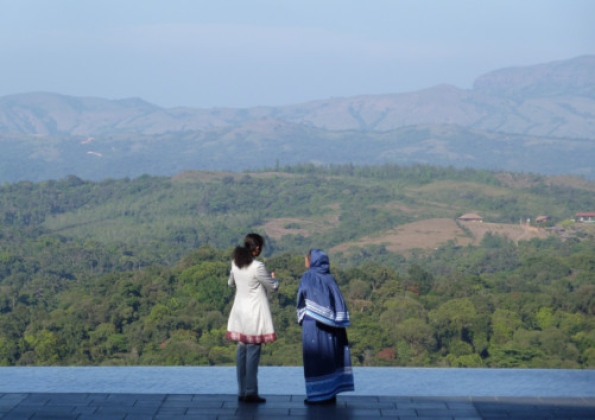
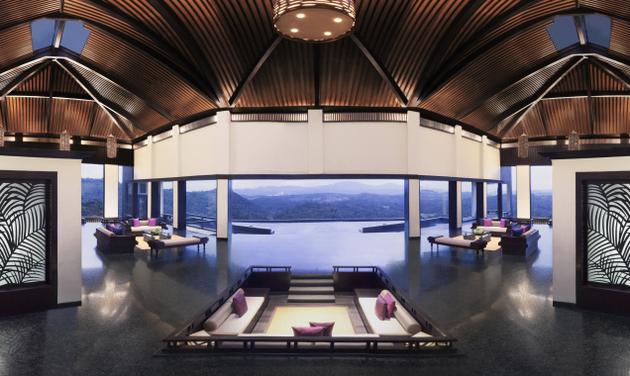
Panorama from reception area of Vivanta by Taj - Madikeri
Panorama from reception area of Vivanta by Taj – Madikeri

Forget the big cities, Stephen McClarence discovers the charm of small-town India in the Coorg district.

You’ve almost certainly had a phone conversation – however brief – with someone in Bangalore, the boom city of South India.

Fifteen years ago, it was a sleepy old-worldly place, green and gracious. So many people went to retire there that it was called the Pensioners’ Paradise. Now, thanks to its burgeoning call centres, it’s the most dazzlingly modern of India’s cities, full of high-rise office blocks, shopping malls, and aspirational, high-spending young people.

The greenness is in shorter supply these days. “What used to be here?” I once asked a man showing me round a techno-park boasting IBM and Microsoft. “Nothing was here,” he said. “Only forest.”

In just such a forest, four hours’ drive to the west, naturalist Sanjeev Kumar is taking a wry view of Bangalore’s headlong development. “When I was a boy there, we used to have to wait an hour for a bus,” he says. “Now a bus comes every five minutes, and we have to wait an hour in the traffic.”
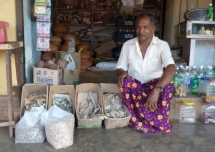
Kunihit Aya, grocer in Bekal

Butterflies flutter past like floating tissue paper as Sanjeev leads my wife and I on a forest walk. “Maybe we will see a Malabar whistling thrush,” he whispers. “I was once playing the flute and as soon as I stopped, it carried on with the same tune.” A bird starts singing high in a nearby tree. “No, no, that’s a barbet.”

We’re a few miles outside the small town of Madikeri, far from the main tourist routes. Goa, to the north, is a familiar destination for Brits; so is Kerala, to the south. But Madikeri, capital of a district called Coorg, is unknown to many Indians, never mind foreigners.

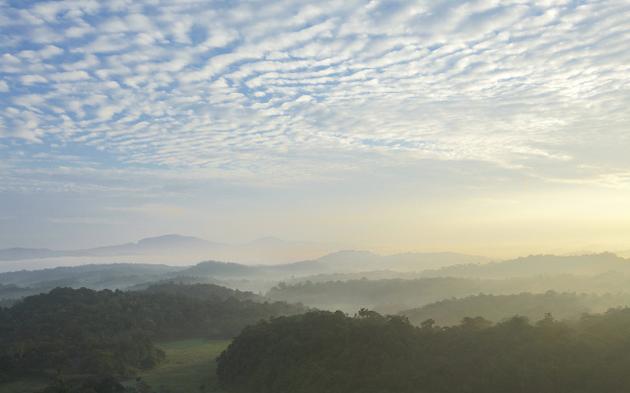
That’s likely to change. High in the hills at nearly 3,500ft, and surrounded by rubber and coffee plantations, it has a new luxury resort: Vivanta by Taj, Madikeri. More than 60 cottages and villas are dotted down a hillside, with electric buggies ferrying guests from one spectacular viewpoint to another. Vast panoramas of rainforest and misty blue mountains stretch all around.

As a retreat, a scenic eyrie, it could hardly be bettered, but for us Madikeri itself turns out to be as great a lure. It’s a perfectly ordinary small Indian town, and that’s its charm. The wheel of life turns considerably slower than in the cities; people have time to talk to each other and to strangers; we have a delightful couple of days exploring it.

Some 40 years ago, the great travel writer Dervla Murphy chronicled her two-month stay here in the engaging On a Shoestring to Coorg. She likened the area, once British India’s smallest province, to the Garden of Eden, a place where “a civilised harmony still exists between landscape and people.”

She explored Madikeri’s library, where “earnest-looking young men were sitting around large tables studying fat tomes, or consulting yellowed newspaper files.” Similar young men – perhaps the originals’ grandsons – are still here, still studying and consulting. The dusty shelves behind them buckle under the weight of the fat tomes. Upstairs, string-tied bundles of monsoon-ravaged documents are stacked high, like slag heaps of bureaucracy.

Next door, a yellow-distempered British church has become a museum. Religious sculptures from the 12th-century share space with a portrait of George V, a watchful stuffed leopard and a Victorian portable typewriter. Also a rusty trunk, labelled “Trunk”. The walls are still lined with colonial monuments: “Molly, for over 30 years the dearly loved and loyal, faithful and devoted wife and pal of Lt Col Sir Richard Burke, late Resident of Mysore”.

We’ve caught the town’s Friday market. The streets are full of traders selling garlic, honey, trainers, chillies, wall clocks, dried fish by the barrelful, sachets of rat poison. The traders are courteous, and curious about us. Many have the characteristic caramel-coloured complexions and aquiline noses of Coorg people, said to be descended from Greeks who got lost.

We buy coffee and aniseed from Mr Shoukath Ali’s spice stall, piled high but neat with cardamom, cinnamon, cashew nuts, cloves. “Dates from Iran,” says Mr Ali. “Figs from Afghanistan.” A tiny old man joins us, his face lined like runes: Mr Yusoof, Mr Ali’s landlord, still working at 85. He sits watching, shrewdly, and, as I take a photograph he darts forward to be in the picture, giggling.

We need to change money. “Be seated,” says the bank clerk, and a zen-like hour of paperwork stretches ahead. Ledgers are entered, forms are filled in, and I take them to another clerk who gives me a metal token, numbered 87, to keep until the cashier calls me over.

Raju Shah, a businessman clutching Token No 86, sighs about the laboriousness of it all, but it gives us a chance to talk. He recommends a restaurant and guides us to it. His wife, Dimple, invites us to call round.

The whole town feels pleasantly suspended in a gentler time, nowhere more so than at the 130-year-old North Coorg Club, where retired coffee planters and army and air force officers gather in the evening to play bridge and billiards. Little seems to have changed since Indian independence in 1947, when decades of club presidents called Mr Frazer, Mr Pritchard and Mr Humphries made way for Mr Chengappa.

Madikeri is how Bangalore used to be, we reflect as we drive to the call-centre city to catch a train north. On the way we have lunch at a pleasant roadside cafe called Prashanti. “‘Prashant’ means ‘place of peace’,” the owner explains. A Bollywood soap opera blasts at full volume from a TV in the corner. We’re suddenly back in the 21st- century.

Getting there

Cox & Kings (0845 154 8941, www.coxandkings.co.uk) has seven-night breaks from £1,695pp, including three nights at Vivanta by Taj, Coorg and four at Vivanta by Taj, Bekal, a wonderfully relaxing garden-village resort 50 miles away in Kerala. The price includes breakfasts, private transfers and international flights with Emirates.

Visit www.tajhotels.com for more information on the hotels.

Stephen McClarence travelled to London (for his flight) with East Midlands Trains. 0845 712 5678, www.eastmidlandstrains.co.uk

source: http://www.yorkshirepost.com / Yorkshire Post / Home> Lifestyle> Outdoors> Travel / by Stephen McClarence / April 29th, 2013
Vivanta by Taj – Madikeri: review

Breathtaking view of the valley below at Vivanta by Taj - Madikeri, Coorg / Business Line
Breathtaking view of the valley below at Vivanta by Taj – Madikeri, Coorg / Business Line

Nothing like a holiday in the hills to breathe in some fresh mountain air and get rid of your summer blues. And the Vivanta by Taj – Madikeri, at Coorg, provides the perfect escape.

Nestled in the Western Ghats in the south of Karnataka, close to the Kerala border, is the little mountain town of Coorg, formerly known as Kodagu. Other than being one of the main coffee plantations in south India, the hill town has been a favourite getaway thanks to its proximity to Bangalore and Mysore being one of the factors in its favour.

Describing Coorg would be like stringing together a bunch of clichés –from ‘rolling hills and misty mountains’, a view ‘to die for’ to ‘right in the lap of nature’ – and every one of these would hold true. The little town has been a great getaway option for ages and with the Taj property opening there, it’s a new luxury option for the discerning traveller.

Amazing view across the valley at Vivanta by Taj - Madikeri, Coorg / Business Line
Amazing view across the valley at Vivanta by Taj – Madikeri, Coorg / Business Line

ROOMS WITH A VIEW

The property, spread over a 180 acres, is about 4,000 feet above sea level and takes full advantage of the breathtaking views offered by its location. Three types of accommodation – the regular villas, the luxury bliss villas and the 9,000 square foot presidential villas – are on offer and each of them provide stunning views through full length French windows.

While the luxury villas and the presidential suite come with extra perks like a heated indoor pool with skylights, a separate dining room and living area, every villa has its own fireplace. It is pointless in summer, but I am told that it gets quite cold during the rainy season and the fireplace can be lit on request then. If you have ever had visions of warming yourself in front of a cosy fireplace, the stone and cement hearth here is right out of a story book.

The décor throughout the hotel is kept basic with dark, wood tones contrasted with white and other light earthy colours, creating a colour scheme that’s soothing and relaxing. Contrast this with the bright green from the rainforests surrounding the villas, and it is clear that the focus is completely on nature. Large clear glass windows run the length of the room, letting the amazing view take centre stage. If you’re lucky enough to get a valley view room, then you will wake up feeling like you’re (quite literally) on top of the world!

For dining options, there are a number of restaurants to choose from. If you’re feeling all healthy, Dew, the hotel’s wellness restaurant, is a must try. Tucked into a small corner of the lobby, a floor above the spa, the restaurant has a limited menu but each of the dishes has been designed to ensure a balance between health and flavour. If you’re looking for some indulgence a visit to Nellaki – the restaurant that serves traditional Coorgi cuisine is a must. Guests can indulge in some delicious pork curry (called Pandi curry) made in the traditional style with a spicy, peppery gravy, or even try out the Kodagu-style chicken biryani, which is quite unique. Mushrooms are a staple in Coorgi cuisine and the mushroom soup, with the unusual spice and dominant pepper, is a great option for vegetarians.

TO-DO LIST!

The best part of the property is probably the fact that you can never run out of things to do here. If you get bored of relaxing in your villa, there are a number of options ranging from nature walks and ziplining for the adventurous, to the well-equipped spa and pottery classes for those who want less strenuous activity.

Early birds can set out at 6:30 am for a walk through the Nishanibetta hills, which runs through the rainforests that cover most of Coorg. Early mornings are extremely pleasant in this area, even in summers, but the heat sets in quite harshly around midday, so the best time to go exploring would be early mornings and in the evenings around four, when another session of cycling and trekking is usually organised. Another fun thing to do is to try out the zip-lining through a small section of the rainforest, for a slightly elevated view (and some cheap thrills). The nature walk is a great way to experience nature first hand, and it’s a great place to dust off that camera and try out some photography skills. However, I would also recommend leaving your camera and phone behind and just getting the feel of what it’s like to live a simpler, tech-free life. My guide pointed out some exotic flora and fauna including rudraksh trees, cardamom and coffee plants, and I even got a whiff of some wild jasmine and eucalyptus. Make sure to carry some good walking shoes though, since it is hilly terrain and walking around requires some extra care.

For those less inclined to physical exertion – it is a holiday resort after all – there is still a lot to do. I tried my hand at pottery and while it was fun, it’s nowhere as effortless as Demi Moore made it look! Set aside some quality time to spend at the Jiva Spa, a must visit. Everything from their delicious detox tea to the jasmine-infused oil they use seemed to have an extremely relaxing effect that’s sure to stay with you throughout your stay. You can even head down to the conservatory where the friendly colonel will give you a quick lesson on the Kodava community and what makes them unique – a fascinating account for those who are curious about the history of the place. Other options include chilling at the pool with a gorgeous view of the valley, playing a game of virtual golf or trying your hand at cooking some Coorgi delicacies along with the resident chef.

Take a walk around, indulge at the spa, try out some delicious traditional Coorgi fare, get a good look at the beauty of the rainforests and generally breathe in some of the fresh mountain air and relax in your own luxurious villa – a trip to the Taj Madikeri is the perfect getaway from the city this summer.

source: http://www.thehindubusinessline.com / Business Line / Home> Smartbuy> Luxury & Fashion / by Elizabeth Mathew elizabeth. mathew@thehindu. co. in / April 24th, 2013

Dak Adalat tomorrow

The Postmaster General South Karnataka Region, Bangalore, will hold a Dak Adalat on postal complaints at 3 pm on Thursday.

The adalat will hear grievances from Chikmagalur, Chitradurga, Hassan, Kolar, Kodagu, Mandya, Mangalore, Mysore, Nanjangud, Puttur, Shimoga, Tumkur and Udupi postal divisions.

It will be held at the conference hall of the office of the post master general, south Karnataka region, II Floor, GPO building, Bangalore.

source: http://www.articles.timesofindia.indiatimes.com / The Times of India / Home> City> Bangalore / April 17th, 2013

ASHWINI PONNAPPA becomes a VICTOR-sponsored player

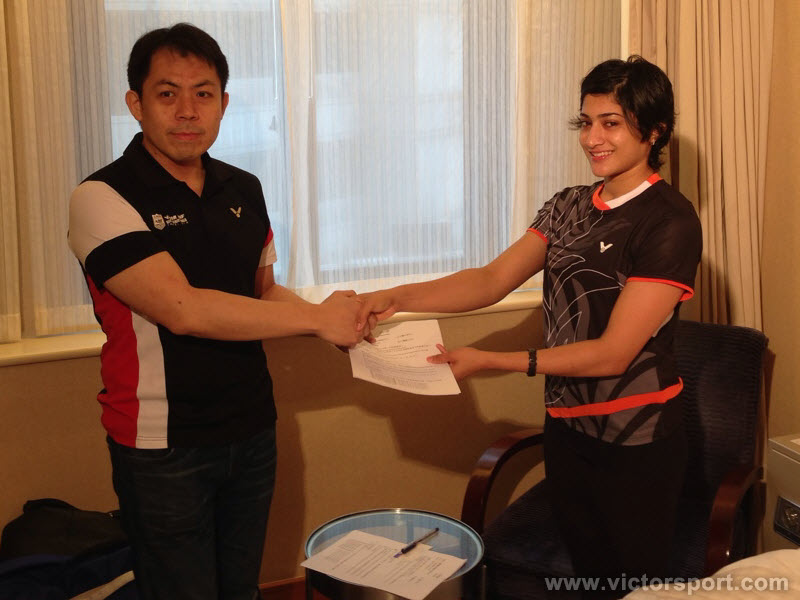
After signing Indonesia’s AHMAD/NATSIR, last week VICTOR signed a sponsorship deal with one of India’s top doubles players ASHWINI PONNAPPA; it is expected that she will play at the India Open later this week in VICTOR colors.

The head of VICTOR marketing division Martin Lu & Ponnappa / Pic www.victorsport.com

She is the first Indian player to be sponsored by VICTOR and, by sponsoring her, VICTOR once again has shown its determination to expand its presence in international badminton.

ASHWINI PONNAPPA said that she is really happy to be sponsored by VICTOR. In recent years VICTOR has improved markedly in terms of brand image and product quality so she has no worries at all about being closely associated with the brand, she said. She hopes that she will play better wearing VICTOR rackets and wearing VICTOR clothes to help raise the profile of badminton in India. PONNAPPA said that in India badminton is a new sport that is attracting more and more players and she hopes that in future, with the help of VICTOR, she will achieve better results and will encourage more young people in India to take up the sport.

ASHWINI PONNAPPA is attractive and has achieved some good results. Playing in the women’s doubles at the 2012 London Olympics her and her partner beat Chinese Taipei’s “golden women’s doubles pair” Cheng Wen Hsin/Chien Yu Chin in the qualifying round. Also, she is still only 23 so still has a lot of potential. This is a new star that aficionados of the game will not fail to notice.

source: http://www.victorsport.com / Victor / Home> News> Latest News / April 25th, 2013

Record number of candidates in fray in Kodagu

With 23 candidates in fray, a record number of candidates are contesting in two constituencies for the first time in the history of Kodagu.

Along with the national parties and regional parties, equal number of Independents are trying their luck in the Assembly polls.

As many as seven Independents are contesting in Madikeri constituency. They are C V Nagesh, Santhosh Kumar, Rafeeq, M A Nizamuddin, B C Nanjappa, Guruprasad, Hareesh Poovaiah. Other candidates are K M Lokesh (Cong), Appachu Ranjan (BJP), S P Mahadevappa (BSP), Vanajakshi (CPIML), B A Jeevijaya (JDS), K M Basheer (JDU) and Shambhulingappa (KJP).

Three Independents

In Virajpet constituency, three Independent candidates are contesting. They are — David, Maranna Dilip Kumar and D Uday. The other candidates are — B T Pradeep (Cong), K G Bopaiah (BJP), D S Madappa (JDS), Chengappa (CPIML), Janith Ayyappa (BSR Cong) and Usman (SDPI).

Only three candidates had contested from Madikeri constituency in 1957. Five candidates had contested in 1962, 1972, 1978, and 1999, while six candidates had contested in 1967, 1983, and 2004. At least nine candidates had contested in 1985, 1994 and 1989, while eleven candidates had tried their luck in the 2008 elections.

Straight contest

Only two candidates had contested from Virajpet constituency in 1957 and 1967.
Five candidates were in the fray in 1962, 1989, 1994, and 2008. Three persons had contested in 1972, 1983, 1985 and 2004.

There are nine candidates in fray for May 5 Assembly polls.

source: http://www.deccanherald.com / Deccan Herald / Home> District / Madikeri, DHNS – April 23rd, 2013

Women voters outnumber men in Kodagu

There has been an increase of 8.4 per cent in the number of voters in the district, compared to last elections.

The total number of voters in Kodagu is 4,02,333. It was 3,71,056 during 2008 Assembly polls. As many as 31,277 voters have enrolled their names in the last five years.

There are 2,00,523 men voters and 2,01,795 women voters. Men voters have increased by 7.3 per cent (13,796). The total number of women voters has been increased by 17,466 (9.4 per cent).

The total number of voters in Madikeri constituency is 2,02,074. It was 1,81,375 during the 2008 Assembly polls. There has been an increase by 20,699 voters in the last five years (11.41 per cent). The total number of men voters in the constituency is 1,00,235.

Last year enrolment

As many as 9,257 men voters have enrolled in the last five years. The number of women voters during the last election was 90,397 and it has been increased to 1,01,832.

The total number of voters in Virajpet constituency has been increased by 5.5 per cent since 2008. The total voters in the constituency is 2,00,259 — 1,00,288 men and 99,963 women.

source: http://www.deccanherald.com / Deccan Herald / Home> District / Madikeri, DHNS – April 21st, 2013

Because it’s worth it

Buying a house in the hills is a daunting yet worthwhile task. Aditi Phadnis lists some properties worth investing in and the challenges of owning them.
HillsHouseKF09apr2013

How many times have you, at the end of a long and weary day, shut down your computer and thought to yourself: “That’s it. I’m going to find a cottage in the hills”? Or dreamt of long and winding roads that lead to your home through pine or deodar forests?

These are not just dreams. If you walk from Barlowgunj to Mussoorie, there is a turn in the road where you will spot a blazing ‘Guraas’ tree, an orange beacon on the velvet green hillside. There are places in Coorg where the scent of orange blossom can intoxicate you. And toasting bread on a log fire after a six km walk through the Nilgiris …what more can one say?

However, there is a practical side to all this. Research suggests that while there is pent-up demand for a second home in the hills (and this is growing), you would typically spend just 13 days in a year there: because children get bored easily, the wife doesn’t want to cook every day, and e-mail works only sporadically. Even before you get to that point, there are multiple challenges: buying land in the hills is mired in legal tangles, building on that land is even more difficult because rain and snow leave only six months in a year free for construction; everything, from labour to building materials is twice as expensive; and the quality of construction especially at the lower end of the market cannot be guaranteed.

But put those problems aside for a moment. Assuming that you’re a double-income family which wants to invest in a second home in the hills, where should you go, what should you buy and what should you watch out for?

* * * * *

Real estate experts say more and more families where the husband and wife are in ages ranging from 25 to 40 years now want a hill getaway. This is a new trend; earlier, it was the retirees who represented the market. The new Home in the Hills project belongs to young working professionals who want, on their holiday, to be in touch with the working world on their terms; so the getaway should be within easy reach of an airport or railway station, with easy access to amenities (there is nothing worse than giving the final touches to the chicken curry only to find that you’ve run out of gas and delivery of a fresh cylinder will take ten days!), and reasonably close to restaurants and hotels.

Himachal Pradesh and Uttarakhand in the north and Coorg and the Nilgiris in the south have emerged as the most sought after destinations. Himachal Pradesh and Uttarakhand have fairly strict restrictions about letting outsiders (those not domiciled in the state) buy land. In Uttarakhand you can only buy 250 sq m and, in Himachal Pradesh, you can’t buy land at all except on a 99-year lease or a built-up structure from the owner but not the land. Coorg and Nilgiris have land ownership rules that restrict the sale and purchase of land owned by tribal communities. So you can still buy a three-acre rubber estate in Coorg for around Rs 60 lakh and build a small dwelling there. But remember, Coorg is five hours driving time from Bangalore and though an airport is going to come up in Kunnoor, Kerala in the neighbourhood, that could take several years. The upside is: how many places in India can you think of that might have a small brook warbling its way through your property?

* * * * *

Manav Singh, an entrepreneur, agriculturist and developer is creating a resort-style fully serviced complex, Auramah Valley, just off the Naldehra Golf Course, about 30 km from Shimla. These are apartments but are designed for the luxury and comfort of a hotel. Still under construction, he has created the concierge first: Subhash, who has been appointed to take care of every wish of a customer. Domestics are discouraged: simply because Auramah has its own fleet of domestic help which will come in and clean, dust and wash up every two days.

Starting at Rs 92 lakh for a 1700 sqft two-bedroom flat (basic selling price), this is not cheap. And you are invited to buy a place. But just outside your door is the legendary 18-hole golf course, the sharp mountain air and every mod con you can conceive of.

If you want something more homely, there’s Chamfi in Uttarakhand. As you go towards Mukhteshwar from Bhimtal, you encounter an iron bridge about 8 km down the road. This road is also a bird watchers’ trail. At the end of the road, there is a group of nine cottages, created by developer-architect Sameer Jain.”The breeze is perfect here and vistas very fine”, says Jain about his project. He has designed the cottages using local materials and local labour. “The cottages are on the banks of a major stream in village Chamfi near Bhimtal in Nainital. Mountains and water is a remarkable combination and the area is famous for its mountains and lakes”, he says. The construction is such that you need minimal electricity. Water, a scarce resource in the hills, is easily available, though it needs to be purified for drinking. These cottages are comfortable rather than luxurious. They start at about Rs 40 lakh.

Kiran Rao of Cloud9Assets deals with property in South India, Coorg, and the Nilgiris especially. He says that Coorg is a destination still in the process of being discovered. But prices have gone up 250 per cent in the last four years. He says some real gems can be found in the Nilgiris which really qualify to the hill station appellation in south India at 7,500-8,000 feet above sea level.

So which will it be? Dhanachuli in Uttarakhand? The banks of the Ganges in Rishikesh? Or on the banks of the Talacauvery in Coorg? Take your pick.

LIVING ATOP A HILL
The pros and cons of owning a fanciful hill home

Upside
* You can get away from it all. The air is clean, the food is fresh
Downside
* Life in the hills is unpredictable and sometimes, not comfortable. You need to be flexible
Upside:
* No one knows you. No one knows where you are
Downside
* No one knows you. So you can’t call Dominos Pizza, or your favourite minister/broker/cablewallah. There’s no one to call
Upside:
* A cozy cottage, all your own
Downside
* You’re going to use it just 13 days in a year. Is it really worth it ? Houses last a lifetime — only if they’re cared for. Who’s going to look after it ? A caretaker? What if he takes care of it so much that he considers it as his property ?
Upside
* Life in the hills is uncomplicated and uncluttered, good for the soul
Downside
* There is politics in all relationships, especially if you’re going to be absentee landlord. And villages are not as romantic as they seem. Haven’t you read Agatha Christie?
Upside
* Roughing it out is good for you. Sharpens your reflexes, awakens your wits
Downside
* Rural life is not what it used to be. Nor is your system. Rural folk are used to impure water. You will need either bottled water or a water purification system. Otherwise an idyllic holiday may turn into a bout of jaundice or worse.
Upside
* A change of scene always revitalises you
Downside
* If you have a home in the hills, the tendency will be to go there rather than anywhere else for a holiday. Can you live with that?
Upside
* All real estate is an investment
Downside
* Holiday homes is the most illiquid real estate there is. It is a buyer’s (and developer’s) market.

source: http://www.business-standard.com /Business Standard / Home> Beyond Business> Features> Features / by Aditi Phadnis / New Delhi, March 15th, 2013

RCI awards Gold Crowns to 12 Club Mahindra Resorts

Mahindra Holidays & Resorts India Ltd has received several coveted distinctions further endorsing its commitment towards its members.

RCI has awarded 12 Club Mahindra Resorts the prestigious RCI Gold Crowns & also awarded Mahindra Holidays & Resorts India Ltd the prestigious ‘President’s Club’ award.

Mahindra Holidays & Resorts India Ltd’s resort at Coorg was listed as No.1 in the ‘Top 25 Hotels for Families in India’ and as No.2 in the ‘Top 25 Hotels for Families in Asia’ by Trip Advisor as part of the ‘Travellers’ Choice Awards 2012′. In addition, its resort at Coorg was also included in the ‘Top 25 All Inclusive Resorts in Asia’.

Club Mahindra was voted as the ‘Product of the Year 2012’ in the ‘Holidays and Hospitality’ category by ‘Product of the Year India’ based on a consumer survey across 30,000 respondents.

Shares of Mahindra Holidays & Resorts India Ltd last traded in BSE at Rs.262.30, down by Rs.1.65 or 0.63%. The stock hit an intraday high of Rs.266 and low of Rs.259.

The total traded quantity was 1145 compared to 2 week average of 3597.

source: http://www.equitybulls.com / Home> Stock Report / April 06th, 2013

Honey is not ‘sweet’ for farmers

Kodagu, which was once famous for honey, now produces just a few tonnes from what it used to produce annually nearly two decades ago. However, the apiculturists are facing several problems in the district.

There is ample opportunity for beekeeping in Bhagamandala. A few farmers are engaged in apiculture. However, in the recent years, farmers from Kerala keep the beehives in the coffee estates and collect honey and take it to their hometown for sale. This has become a headache from the local farmers.

Apiculture was taken on a large scale in Bhagamandala during 1990. The farmers started rearing malliferous bee brought from Kerala. The drastic decline in the production of honey was due to sacbrood disease affecting the honeybees.

Now, apiculture has started reviving in the district. Farmers from Kerala have started keeping beehives in the coffee plantations after taking permission from the owners. A few plantations have 100 to 150 beehives.

In Kerala, honey is produced only from rubber tree flowers. As there was no great demand for such honey, natural flowers are available in plenty in Bhagamandala region. Hence, growers from Kerala have started keeping their beehives in Kodagu.
A honeybee starts the honey making process by visiting a flower and gathering some of its nectar.

In the process of gathering nectar, the insect transfers pollen grains from one flower to another and pollinates the flower.

There is a great demand for ‘Coorg honey.’ The beehives from Kerala is kept in the plantations at Cherangala, Thannimani, Thavoor and others areas. In the past, the apiculturists were getting 25 kg honey from one beehive. However, now its has been reduced to three kg, said apiculturist.

At a time when apiculturists in Kodagu are getting ready to revive apiculture by availing loan from the banks and financial assistance from the government, honeybees and beehives from Kerala entering the district has become a headache. Gram panchayats should initiate suitable measures in this regard, said the farmers.

source: http://www.DeccanHerald.com / Home> District / Napoklu, DH News Service / April 04th, 2013

‘Agri budget aimed at attracting youth to farming’

somwarpetKF04apr2013With more number of farmers drifting away from agriculture due to the lack of basic facilities, the government has presented a separate agriculture budget to retain farmers in the farming sector, said District-in-Charge Minister Appachu Ranjan.

He was delivering presidential address at Krishi Utsav jointly organised by Krishi Utsava Management Committee, Taluk Panchayat, Pragathi Bandhu SHG, at Balagunda village near Somwarpet on Monday. He gave a call to the farmers to have knowledge of various government schemes that are exclusively designed for the welfare of farmers. The new generation youth lack interest in farming and are turning their faces towards the urban life. But the situation will change and the same youth will return to villages to take up agriculture, Appachu Ranjan hoped.

He said “the small farmers should cultivate crops that are suitable for the local climate. The crops should be grown and supplied based on the public demand.”

Inaugurating the Krishi Utsav, national award winning progressive farmer Nirmala Prakash expressed concern over the increased use of chemical fertilisers and pesticides in agriculture.

Understanding the impact of these harmful chemicals, the farmers should come forward to adopt organic farming, she said.

Zilla Panchayat President B Shivappa, Taluk Panchayat President G B Somaiah, Sri Kshetra Dharmastala Rural Development Project Director Radhakrishna Rao and others were present.

source: http://www.DeccanHerald.com / Home> District / Somwarpet, DHNS / March 18th, 2013