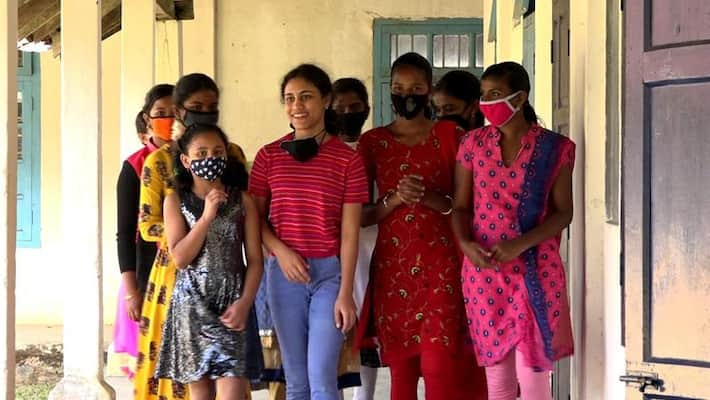
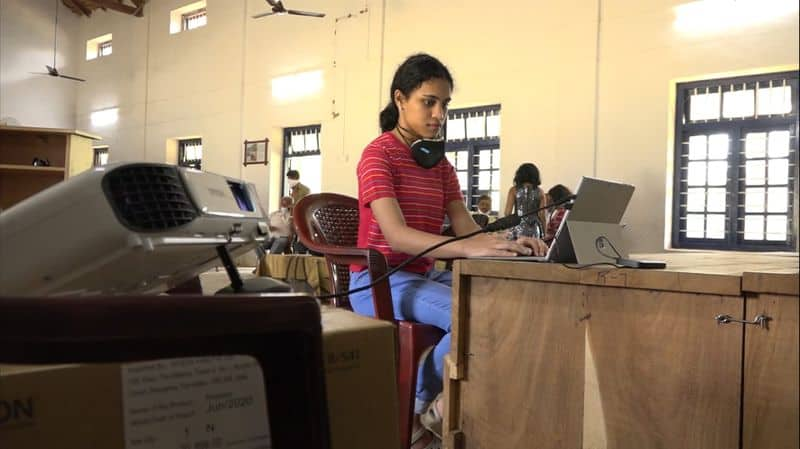
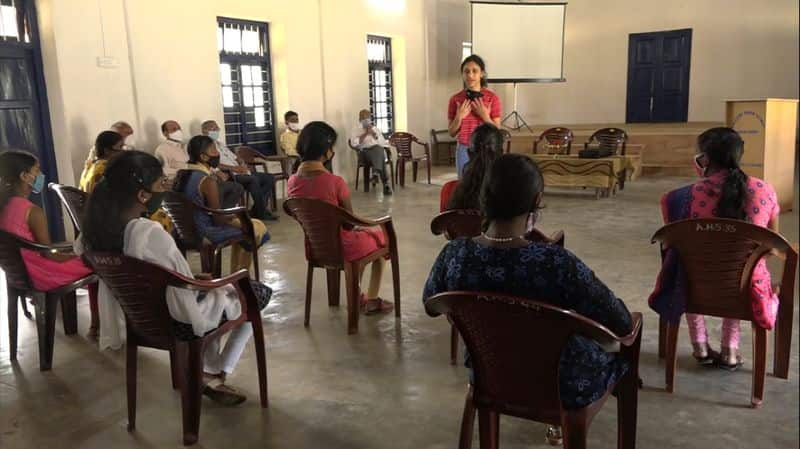
A Bengaluru based 14-year-old girl named Kaveri Poovanna, has raised funds to donate a laptop and a projector to a government school at her hometown in Kodagu. From saving Rs 5,000 from her very own birthday gift to raising funds up to Rs 2 lakhs, this young girl is inspiring many teenagers to make the world a better place.
Kodagu:
With the outbreak of COVID-19 across the world, everyday activities have been disturbed including education.
Most schools and colleges had turned to online classes over the last few months to maintain social distance and avoid the spread of COVID-19.
As schools and colleges started teaching online, not everyone had the access to online education due to lack of infrastructure such as laptops or desktops or internet facilities at home.
The same was the situation of many students at a government school in Ammathi, Kodagu. However, a 14-year-old girl from Bengaluru came to their rescue.
14-year-old Kaveri Poovanna who is studying in the 9th grade realised that not many children of her age had the privilege or access to laptops or mobile phones and this way they would lack education.
Kaveri came forward to raise funds to donate a laptop and a projector to the government school in Ammathi, which is also her mother’s hometown.
Speaking to Asianet Newsable the teenager said “I chose to do this after realising that children could not go to school at these times. Education is very important to me and we all need to realise that it is the only way to move forward. If there is anything you can do to help the society, you just need to do it. Even if it is hard, even if it will take up a lot of your time, at the end of the day it will make the world a better place”
Kaveri was the first donator in her own fundraiser. The 14-year-old had saved up to Rs 5,000, which she had received as a gift on her birthday from her family.
With just Rs 5,000 Kaveri’s fundraiser went up to Rs 1,90,000 after her friends, family and relatives pitched in more money.
Kaveri bought the laptop and projector for close to Rs 1,00,00, and donated the rest of the money in the form of a cheque to the government school.
From saving Rs 5,000 from her very own birthday gift to raising funds up to Rs 2 lakhs, this young girl is indeed inspiring many teenagers to make the world a better place.
source: http//www.newsable.asianetnews.com / AsiaNet Newsable / Home> English News> India News / by Yemen Syed / November 18th, 2020
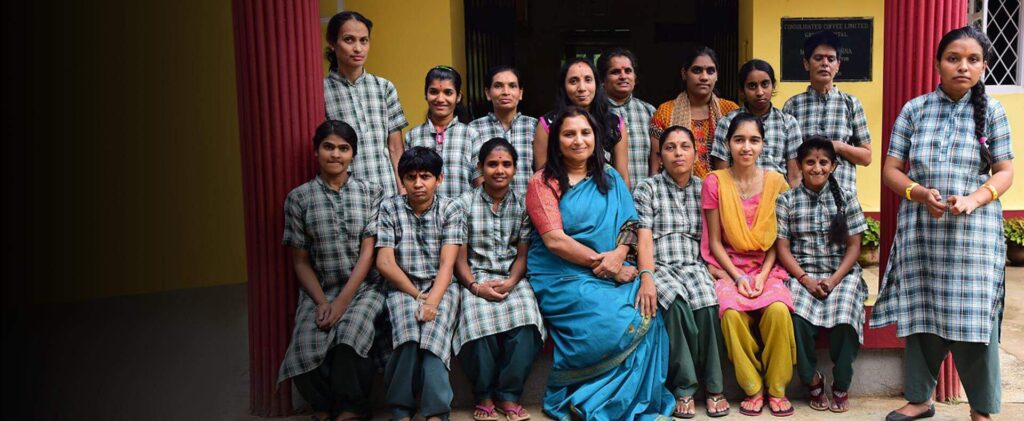
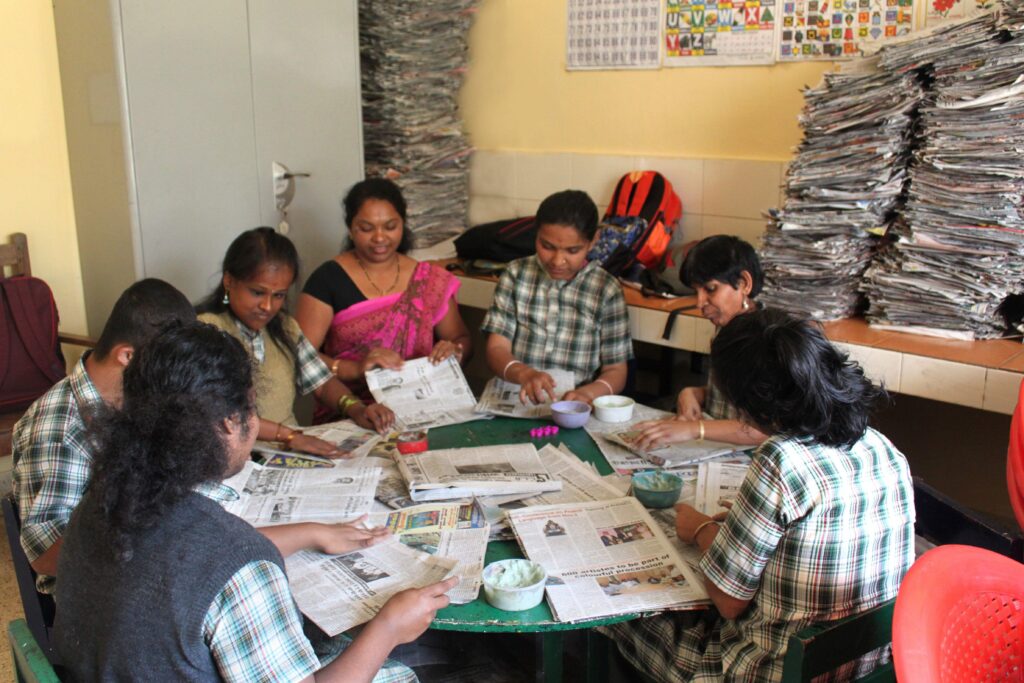
Arathy Somaiah, Director of Swastha Center for Special Education and Rehabilitation speaks about their way of educating and training children with special needs in the rural areas of Coorg .
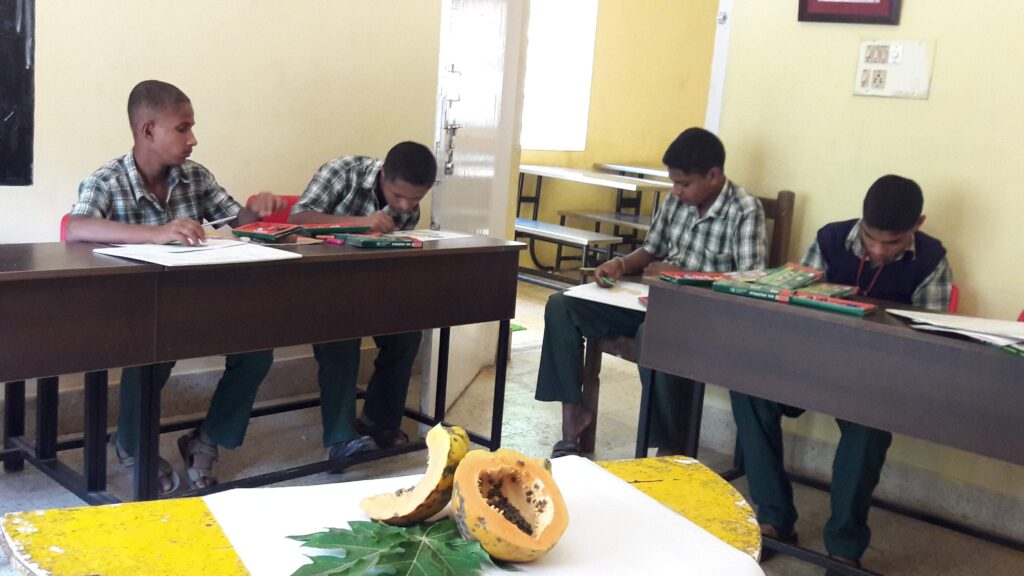
Arathy Somaiah, Director of the centre along with the students at Swastha Center for Special Education and Rehabilitation (Pictures: The Coorg Foundation)
A few years ago, when Rekha was diagnosed with cerebral palsy, her parents had no clue about how to deal with this condition or help their daughter. Living in rural Coorg, they were at a disadvantage as there were only a few organisations that could train children with special needs. But Swastha Center for Special Education and Rehabilitation came to Rekha’s rescue. They not only educated her but also trained her in soft skills and empowered her with a job at their own institution. Like Rekha, there are several other special needs children in Coorg who come to this centre for education and soft skills training.
Started in 2003, the Swastha Center for Special Education and Rehabilitation is a project by the Coorg Foundation. The Coorg Foundation is a non-profit organisation that works for the education, health and well-being of people living in Coorg. Arathy Somaiah, Director of the centre, says, “When a child with special needs is born in a rural area, the family doesn’t understand how to deal with these conditions or how to educate them. In such cases, our centre plays an important role. We take such children under our umbrella. Any child with special needs from the age group of 6 to 18 years stays with us, gets trained and is later placed in government offices, Panchayat development offices and even the hospitality sector.”
So, what exactly are these children trained in? Arathy explains, “At Swastha, we have an Individual Education Programme (IEP). This is a tailored programme for each individual because the disabilities or needs of children vary from each other. For instance, a child with locomotor disability has a good IQ level when compared to a child with mental disability. In such instances, we check if they are interested in regular academics and we have a special educator along with a teacher who can teach the regular syllabus. We also counsel their parents about the child’s interests, learning skills and showcase how well they can do. Currently, we have 115 children at our institution.”
Swastha also provides vocational training for these children, says Arathy, “Our vocational programmes include tailoring, art and craft, book binding, nursery development and so on. These programmes are designed keeping the present market needs of customers in mind. All the products made by our students at the centre go to the market for sale. Be it the art and craft product or a stitched uniform, every product will match the competition. We take orders from factories and industries who love to use the quality products made by our children with patience.” What makes Swastha more unique is the fact that they pay the students for their efforts. “We ensure to incentivise our students for the products they make and sell in the market. Every student has their own bank account and we ensure to pay them for the work they do even during the training process. Once the training is completed, these children are placed in different companies. In case they want to start their own business, then we support them by providing them with the orders received at our centre. While skills, training and incentives help these children, we instill confidence in them to lead their lives at their own capability, ” explains Arathy.
So far, around 450 children have been trained at this centre. Out of this, at least 14 children have attempted and passed the SSLC exams. Currently, two children are preparing for the upcoming SSLC exams. “We had to send all the children back to their homes in April 2020 due to the pandemic. Since then, we have been conducting online classes. The main challenges, of course, are that some of these children have low internet connectivity or they lack smartphones. In such cases, we take the help of their neighbours who provide them with a phone for an hour of online classes. Besides this, we send them worksheets on WhatsApp. Once these kids solve the worksheets and send photographs, we convert them into PDFs and document them. Last September, we evaluated these worksheets and called children and their parents to show them their performance. We wanted to show the parents the seriousness of education for their children,” explains Arathy.
During the pandemic, the centre and the children trained in stitching clothes have been making masks. These masks are being sold to people and various factories who in turn provide them to their workers. Even now, the children are being incentivised for the masks that have been sold.
source: http://www.edexlive.com / Edex Live, The New Indian Express / Home> Special Education / by Rashmi Patil, Edex Live / June 30th, 2021
A new engineering course in Artificial Intelligence and Machine Learning (AI & ML), an allied branch of Computer Science and Engineering, is being introduced at Coorg Institute of Technology (CIT), Ponnampet, South Kodagu, from the academic year 2021-22.
Artificial Intelligence (AI) is an emerging technology that enables creating intelligent systems that can simulate human intelligence.
AI and ML opens the door to highly skilled engineers to propel humans to the 5th Industrial Revolution, said C.P. Belliappa, President, CIT and called upon the student fraternity to take advantage of the new course that is set to begin in CIT in the academic year 2021-22.
Artificial Intelligence has various applications in today’s society. AI can solve complex problems efficiently in multiple disciplines, such as robotics, space exploration, healthcare, entertainment, finance, edu-cation, social media, driverless automobiles, precision agri-culture, drone deliveries etc. Drones and robots are another example of this technology being increasingly used in modern warfare.
Machine Learning (ML) is a subfield of artificial intelligence, which enables machines or computer-controlled systems to learn and improve automatically through experience and by using data.
Some examples of ML are online recommender systems, Google search algorithms, Facebook/Twitter auto-friend tagging suggestions, accurate predictions based on big data, medical diagnosis, detecting credit card frauds and Alexa, the voice controlled virtual assistant that uses AI technology.
These trends in technologies have been impacting humanity like never before and offer highly challenging and rewarding opportunities.
CIT has established a Robotic Laboratory where students and faculty from all the disciplines come together to develop innovative ideas and products.
source: http://www.starofmysore.com / Star of Mysore / Home> July 20th, 2021
Hockey India has announced the 16-member Indian women’s hockey squad for the upcoming Tokyo Olympics, which starts from July 23. After the 1980 and 2016 Olympics, the Women’s Team will be playing their third Olympics in Tokyo.
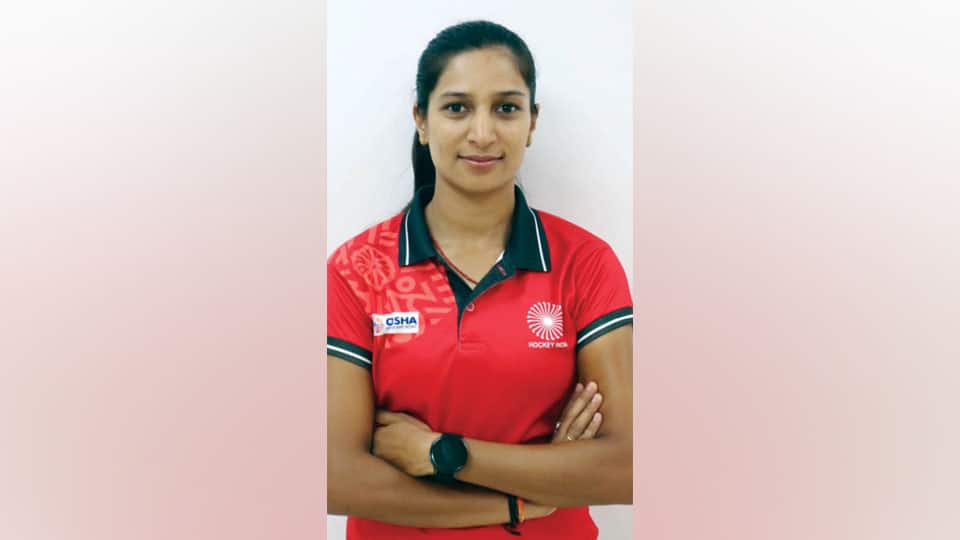
Ankitha Suresh, a Hockey Coach from Kodagu, who has made a mark in national and international-level hockey, has left for Tokyo Olympics along with the Indian Men’s and Women’s Hockey teams. She has been selected as Assistant National Coach by Hockey India for the Indian Senior Women’s Hockey Team.
She will be a part of the coach team comprising Graham Reid, Sjoerd Marijne, Shivendra Singh, Gregg Clark, Johanna Schopman and Piyush Dubey of both Men’s and Women’s teams. Along with the team, 19 players from each side including four alternative players and two reserve goalkeepers have also left India.
Scientific advisors for the teams are Robin Arkell and Wayne Lombard, masseur/masseuse are Arup Naskar, Radhika Chaudhari, physiotherapists are Kannan Bose and Nivedita Chopra and video analysts who have been selected are Ashok Kumar and A. Perumal.
Ankitha Suresh is the daughter of B.A. Suresh and B.S. Dharmavathi, residents of Madikeri. She is married to Honnampadi Suresh. Ankitha started her sports career as an athlete and had won medals in 3,000-mts and 5,000-mts running races in national levels. While studying in Junior College in Madikeri, she stumbled upon hockey and her passion for the sport grew after she joined SAI Hockey Hostel in Madikeri for training.
Ankitha also has the distinction of being the one among the five women from Karnataka who have been selected for the Level-3 coaching course offered by Hockey India as well as only Level-2 Technical Official to be selected from India and from Karnataka for the FédérationInternationale de Hockey (FIH) World Cup Women’s Hockey.
She has completed Hockey India Level-1, Level-2 and FIH Level-1 and 2 and also FIH Level-3 conducted by Hockey India and FIH Hockey Academy. A post-graduate diploma holder in e-Finance and Gym Instruction, she holds Masters in Commerce and has a Diploma in Sports Coaching (National Institute of Sports).
source: http://www.starofmysore.com / Star of Mysore / Home> Sports / July 18th, 2021
Air Vice Marshal P.J. Walia, Senior Officer-in-Charge – Administration, Training Command, Indian Air Force, Bengaluru and Chairman, Local Board of Administration, Sainik School, Kodagu, chaired the 22nd meeting of the Local Board of Administration of Sainik School in Kodagu on July 9.
He also inaugurated Kuvempu Multipurpose Hall and Public Information LED Display Board (8ft x12ft., a one of its kind in the region). A cultural event ‘Vandana Prayer Dance’ was presented by Day Scholar Cadets. On the occasion, the Chairman and Col. G. Kannan, Principal, Sainik School, Kodagu, exchanged mementoes. The Chairman and all members also planted a sapling each in the school campus after their meeting.
Gp. Capt. R.R. Lall, Command Education Officer, Bengaluru, the representative of District Commissioner, Kodagu, Madikeri, Sqn. Ldr. R.K. Dey, School Administrative Officer, Prof. Y. Sreekanth, Principal, Regional Institute of Education, Mysuru, Prof. R. Shivappa, Registrar, University of Mysore, Vijay Kumar Swarnkar, Executive Engineer, CPWD, Mysuru Central Division and Prakash Krishnabhatta Joshi, Parent Member were present in the Local Board of Administration Meeting.
Col. G. Kannan, Principal and Member-Secretary, briefed all the training and administrative aspects of the school and the progress made in the past nine months. The members deliberated and arrived at various policy decisions for future development of the school.
source: http://www.starofmysore.com / Star of Mysore / Home> News / July 14th, 2021
The online platform may be the only way to reach students during lockdown, but the digital medium comes with its own challenges. Students living in remote areas in Kodagu are facing trouble due to slow internet and connectivity issues. Lessons cannot be downloaded and they cannot attend online classes as videos and audios do not play.
Kodagu is one of the high-altitude districts in Karnataka and most of the areas have green cover and undulating terrain. However, this very feature poses a great challenge to the students in attending online classes due to poor internet connectivity.
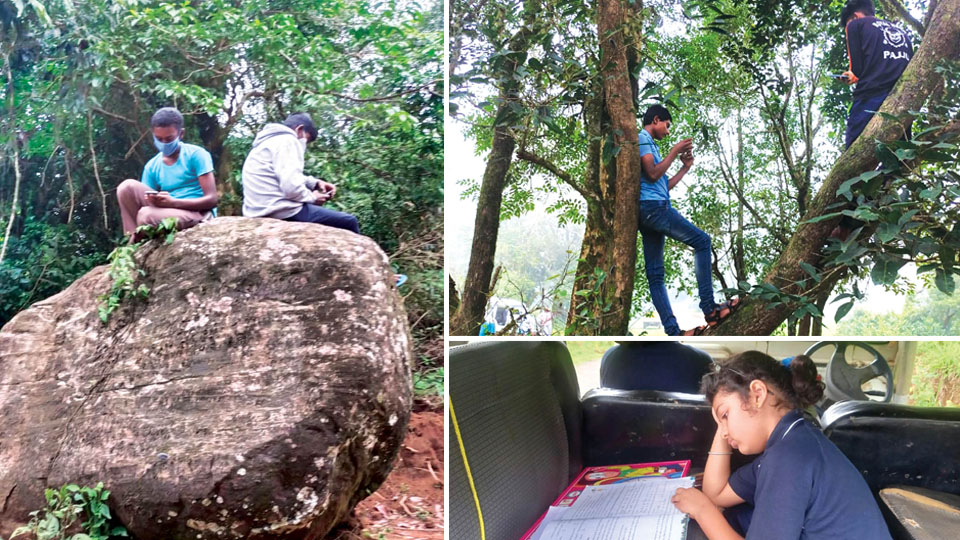
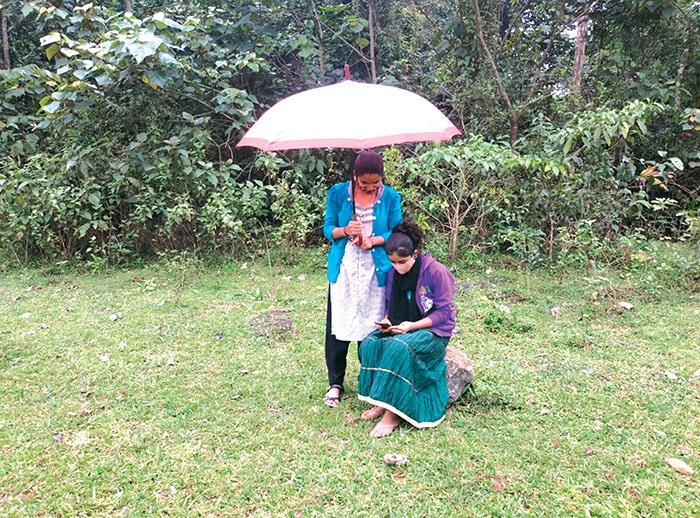
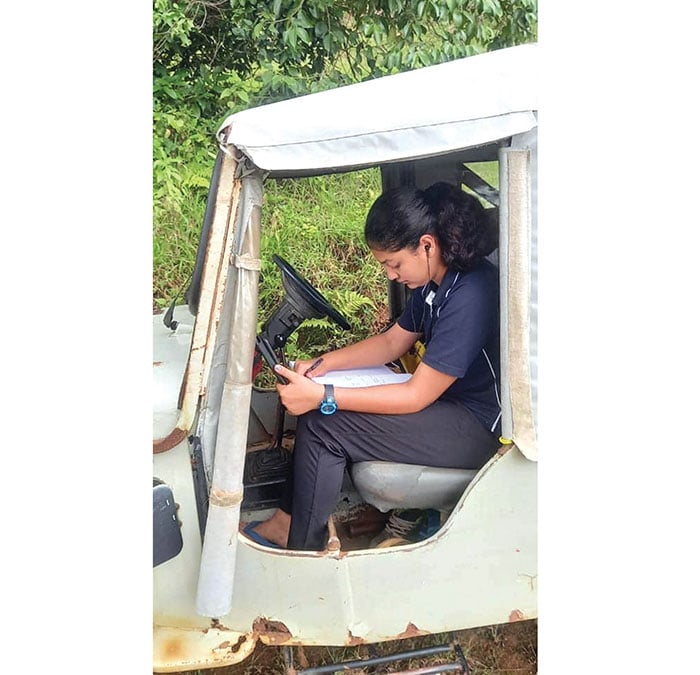
Students are commonly seen sitting on the roadside on top of bridges and on the rocks where they attend online classes. Some of them climb trees risking their lives and limbs. While the internet may not be available inside some houses, faint signals are somewhat available at a distance. So parents have the task of taking the children to the area where connectivity is available and bringing them back home after classes.
Rain trouble too
Now it is raining across the district and students can’t even sit in the open outside. They sit inside jeeps and other vehicles to protect themselves from rain. There is hardly any mobile network in remote villages in Virajpet Taluk like Kedamullur, Birunani, Badagarakeri, Hysodlur, Nittoor, Karmad, Kunda and also Hathur.
To attend the online classes, these students have no option but to find a spot where they get proper connectivity. And there are very few places where they get an internet connection on the phone. Added to the connectivity issues, many areas are in the dark due to frequent tree falls. Villages like Kedamullur, Badaga, Thermemotte, Baarikaadu, Kottooli, Thomara and Koorthikaadu do not get power restored for weeks together in case wires snap.
“Due to the lack of a mobile network in my village, I have to walk into the forests where I can get faint signals. Our village is one of the places where basic communication facilities are missing and villagers have to walk towards the forests at the time where they get signal on their phones. Sometimes it rains when we are outside and we are not able to study,” said M.C. Nireeksha, a 10th Standard student at Heggala Ramanagara School.
Students are the ones who are suffering the most as they have to travel 3-4 km at times during the lockdown to attend online classes, she added. At remote villages where there is undulating terrain, mobile network is not balanced across the village and they get signal only in the upper reaches. A majority of students in the Kedamullur region have been studying in the schools and colleges in Virajpeṭ and 70 percent are the children of labourers.
“My house is in the lower part of Kedamullur village while good signal can be reached only in the upper reaches of the village, so my children are forced to trek till a particular point to study. This is a wooded area and there is a threat of wild animals. Along with my daughter I too walk 4 km to get connectivity and we only return in the evening,” said Vishwanath, a parent.
Authorities nonchalant
While this is the predicament faced by the students, those in positions of power sit tight saying that they have written many letters to higher-ups and there is no response. “BSNL provides connectivity to many areas in Kodagu and the offices of engineers, technicians and other staff are empty as there are hardly any employees. I have even written many letters to higher-ups for a mobile tower but there is no response,” said Kedamullur Gram Panchayat President N. Sheela.
“There is a 2G BSNL tower in Virajpet-Kedamullur and it is a genuine problem. Letters have been written a month back to upgrade the tower to 4G network. The problem will be solved if a new tower is installed,” said BSNL Virajpet Sub-Division Engineer Narayana. The officer was, however, silent on when the new tower will be installed or the existing tower would be upgraded to 4G.
source: http://www.starofmysore.com / Star of Mysore / Home> News / July 14th, 2021
Film stunt director Fayaz Khan wants to set up institute in Kodagu
HIGHLIGHTS
Fayaz Khan who has directed stunts and acted in 1,560 films in various languages wants to set up an institute to train youths in the art in his native Kodagu district.
Madikeri:
Fayaz Khan who has directed stunts and acted in 1,560 films in various languages wants to set up an institute to train youths in the art in his native Kodagu district. As small boy in 1980s, he sold peanuts in cinema halls to support his family in Gonicoppa, a small town in Kodagu district. Sounds like a film story? But it’s true. Fayaz Khan who directed stunts for 1,560 films till now once sold peanuts in cinema halls and never studied beyond class III.
Born in a poor family and fond of films, Fayaz Khan left home in 1985 and landed in Bengaluru in search of his dream. He came to Gandhinagara and begged film directors for a chance and got a small role in Tamil film Idiyadagam. After seeing his performance, many directors gave him a chance. However, his passion lay in stunts. Later he became a stunt artiste and worked for 1,560 films in various languages including Kannada, Hindi, Tamil, Telugu and Malayalam.
Fayaz started his own stunt artists association and trained more than 1100 artists since the outbreak of Covid-19.
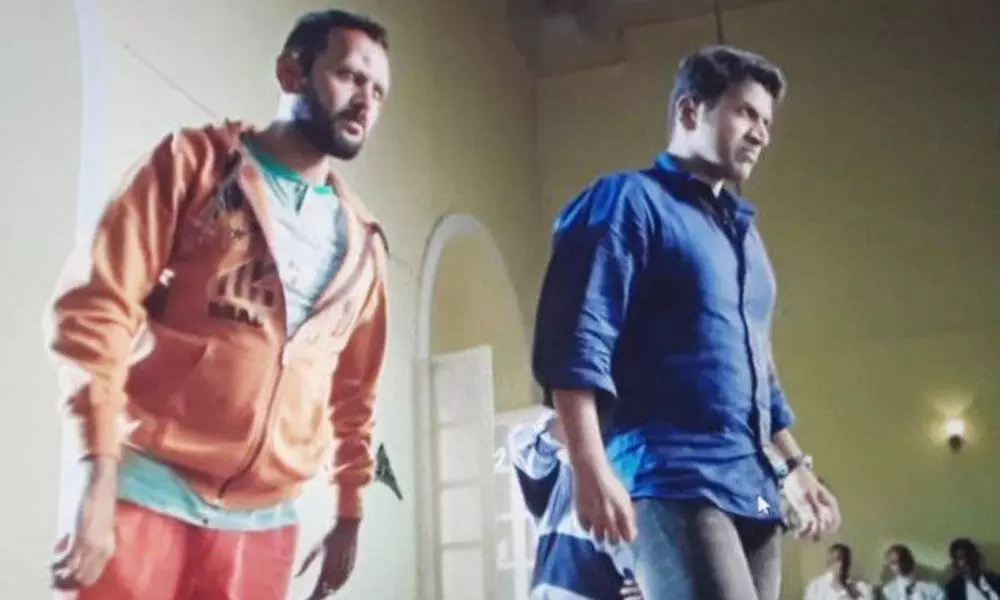
Apart from being a stunt master, he acted with such stalwarts like Dr Raj kumar, Vishnuvardhan, Rajanikanth, Salman Khan, Akshaya Kumar, Mammootti, Mohan Lal, Chiranjeevi, Punit Raj Kumar. Speaking to this reporter, Fayaz said that there is a good environment for films in Kodagu. “There is a lot of employment potential in film industry for youths from the tourism district if we train them properly,” he said and expressed his wish to open a film training institute in Kodagu to tap hidden talent.
source: http://www.thehansindia.com / The Hans India / Home> News> State> Karnataka / by Coovercolly Indresh / Hans News Service / July 09th, 2021
Krishi Thapanda, who was involved in organising COVID relief through the pandemic, has taken on a new responsibility now.
Along with four other like-minded friends, Krishi is part of a core group that is working on teaching homeless children at government-run childrens’ shelters in Coorg. “While children in cities have access to the best teaching methods, those in rural areas often don’t have access to laptops or phones to enable online learning. So, they haven’t had any kind of learning in the past year and a half owing to the pandemic,” points out Krishi.
The actress and her friends identified three government-run shelters that were in need of help and set up a programme that will look into their educational needs. “The idea is to give them basic knowledge. The age group of children is from six to 18, who have been divided into three categories. Volunteers have signed up for it and they will teach the kids various subjects.
We have got permission from the authorities to hold two hours of class on week days and we want to make the most of it. As of now, we are in the process of gathering pre-loved laptops and phones to give these children and teach them basic English, so that they find it easier when they step into the real world to earn a livelihood in their later years,” shares Krishi, who will be teaching them acting, dancing and some other art forms too.
source: http://www.timesofindia.indiatimes.com / The Times of India / Home> News> Entertainment> Kannada> Movies / by TNN / July 01st. 2021
C.S. Satheesha keeps children from Ist to 5th standard engaged with a slew of exercises in English, Kannada and mathematics, going beyond the syllabus.
Facilitates learning via online mode in remote village in Kodagu district
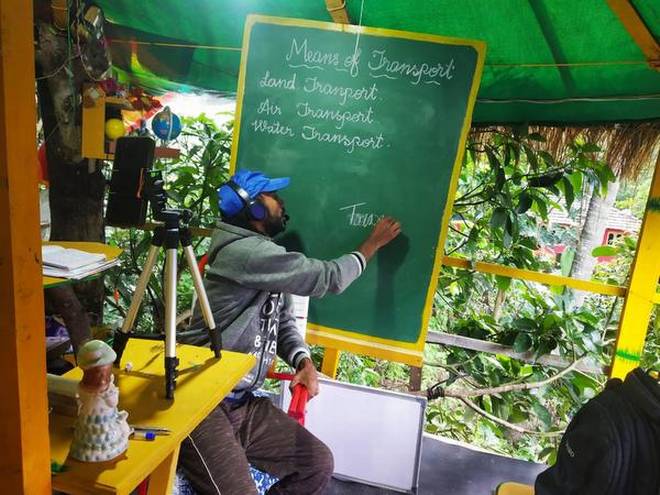
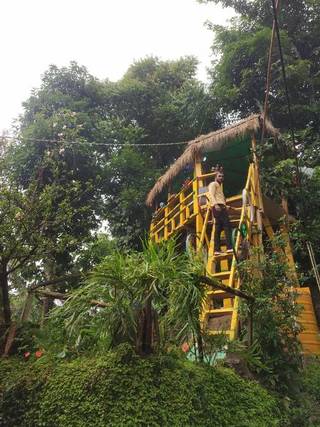
A school teacher in Mullur village in Kodagu district has hit upon a tree-top solution to digitally connect with his students and ensure continuity of their education during the COVID-19 pandemic.
He has fabricated a make-shift room atop a mango tree using locally available materials, including bamboo and grass, besides waste materials.
Constructed at a height of 20 feet from the ground, this has helped overcome the problem of weak reception and signal of service providers in this remote village, located about 20 km from Somwarpet, which is the nearest town.
The tree-top classroom built by C.S. Satheesha, a school teacher, in Mullur village in Kodagu district.
C.S. Satheesha is a teacher at the Government Lower Primary School in Mullur. He handles classes for students from Ist to 5th standard. But the COVID-19 pandemic and the consequent lockdown resulted in disruption of education of children. The impact is more in rural areas, among tribals and first-generation learners as they lack facilities or parental backup, which their urban counterparts have, to ensure continuity in learning.
Hence, Satheesha thought of keeping them engaged during the lockdown with a slew of exercises in English, Kannada and mathematics, going beyond the syllabus.
But connectivity issues forced Satheesha to do some out-of-the-box thinking. He decided to work from a tree top. It took him two months to build a classroom atop a tree.
A conventional RCC roof may have made things easier but Satheesha’s house is tiled and sloped – a building practice that is common in the coastal belt where rains are heavy – and hence he thought of this ingenious solution.
Atop the tree, the teacher not only feels safe, but a double layer of tarpaulin ensures that the make-shift office, where he imparts online classes, remains water-proof. He invested in a mobile stand and also procured a focus light, which ensures better visibility to children at the other end.
“In case of students who do not have a smartphone, I personally distribute exercise sheets during my rounds in the village as part of my COVID-19 duty with an instruction that the answer sheets would be collected by evening,” said Mr. Satheesha.
The online classes also focus on the immediate surroundings of the children. They are asked to identify a bulb, a mirror, a furniture or anything around them and describe their function in full sentences in English. Not only has this endeavour ensured continuity in learning, but children are learning how to make short videos and upload them, using the internet, for evaluation.
The day starts with a ‘WhatsApp Challenge’ comprising a set of questions tailor-made for each student, and sent out by the teacher. By evening, the challenge is accepted!
source: http://www.thehindu.com / The Hindu / Home> News> States> Karnataka / by R Krishna Kumar /Mysuru – January 28th, 2021
M.B. Gappanna of Kavadi village in Ammathi, Virajpet taluk, Kodagu, has been nominated as Syndicate Member of University of Mysore by the Chancellor, who is also the Governor of Karnataka.
As per the notification issued from the Office of the Governor, the term of office shall be for a period of three years with effect from Oct. 3, 2020.
A MBA graduate from Mangalore University, Machimanda Gappanna has been an activist working for progressive causes and was the President of All College Students Union of Mangalore University.
He has the experience of working in the corporate world in various capacities and has been associated with several service organisations like Rotary, where he has been the Director of Youth Service. He is passionate about helping people at the grassroot level and interested in finding innovative solutions to support rural employment.
Gappanna is involved with several NGOs motivating youth for self employment and skill development.
source: http://www.starofmysore.com / Star of Mysore / Home> News / October 06th, 2021
WELCOME. If you like what you see "SUBSCRIBE via EMAIL" to receive FREE regular UPDATES.
Read More »