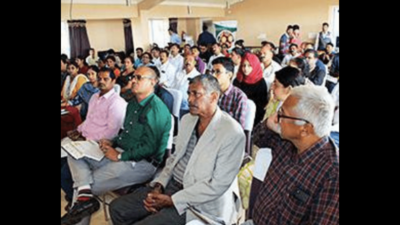
A capacity building programme for Kodagu coffee growers was organised by the Federation of Indian Export organisation in Madikeri.
A capacity building programme for Kodagu coffee growers was organised by the Federation of Indian Export organisation in Madikeri.
The initiative was hosted under the flagship of the ministry of commerce with support from the state agriculture department.
Experienced coffee growers of the district attended the event.
The need for the promotion of international coffee trade was highlighted during the programme. The facilitators sensitised the entrepreneurs, farmers and exporters on the potential of exporting coffee and spices from the district.
The various trade opportunities in the international market, the role of various agencies, the role of free trade agreements and various other schemes under the Directorate General of Foreign Trade were explained to the growers in detail.
A total of 75 participants comprising farmers, farmer produce organisations and entrepreneurs took part in the session.
Lokesh HD, ITS, Jt. DGFT Bengaluru was the chief guest of the event. Babu Reddy DR, DD of Coffee Board spoke on coffee exports and GI Coffee. The role of banking, industrial policy, Indian trade portal and schemes under spices board were highlighted during the session.
Shabhana M Sheikh, JD of district agriculture department was also present .
source: http://www.timesofindia.indiatimes.com / The Times of India / Home> News> City News> Mysuru News / by TNN / September 08th, 2022
In today’s Finshots we talk about the main issues coffee farmers face in this country
The Story
Coffee!
Each day, over 1 billion people gulp down 2.5 billion cups of this steaming hot beverage. What was called the Devil’s Drink in the 1600s has now become a staple concoction across the world. And there’s one country that produces and exports most of this coffee — Brazil. In fact, it produces a staggering 40% of the world’s coffee and they are the undisputed leader.
But all’s not well with Brazil. The world’s biggest producer has been going through a bit of a rough patch. It has been hit by freakish weather — cold snaps and frost, combined with a lack of rain. Which in turn has led to a fairly lacklustre crop this year.
Now India is seeing a silver lining here. It thinks this could be an opportunity to export more of its own stuff. After all, the Coffee Board expects India to deliver a higher coffee output this year. And maybe Brazil’s loss could be India’s gain?
Well, not so fast. India really hasn’t been doing well on the export front of late. In fact, from FY12 to FY21, coffee exports have fallenby 3% annually. And that’s because Indian coffee farmers are dealing with their own problems.
For starters, there’s climate change.
You see, nearly 80% of India’s coffee production comes from the two southern states of Karnataka and Kerala. But the past few years have been a damp squib. The rains have been erratic. Some years, the monsoon came early and other times it came with vengeance. When the rains came early, the coffee fruit ripened too soon and the output was no good. When it poured heavily, flooding and landslides wiped out the crops. Farmers simply couldn’t catch a break. And with crops destroyed, yields have dropped from 500 kg to 250 kg per acre for the arabica variant of coffee bean.
Then there’s the bit about prices.
In 2019, coffee prices in real terms (i.e after adjusting for inflation) were a whopping 45% below their 2011 level. In some sense, if you were a coffee farmer, you’d have to cut costs and raise output to maintain the same standard of living. In fact, in most cases, there were no improvements. Farmers lost money hand over fist. This was further exacerbated by the excess supply of coffee beans coming in from Brazil and Vietnam. Prices took a real beating.
But the costs weren’t following the same trends. It was becoming increasingly expensive to plant and harvest coffee. For instance, according to the Karnataka Planters Association, the cost per acre of producing the arabica coffee bean variant has soared from ₹50,000 to ₹85,000 per acre. This is just in the past 3 years. Fertilizer prices have shot up. Labour costs have also ballooned. And consequently, the coffee-growing business just isn’t that financially viable anymore. Many small farmers have sold their plantations. Or even begun cultivating other crops instead.
And finally, there’s the policy-related matter.
Even though coffee is a very important crop for India, it doesn’t come under the purview of the Ministry of Agriculture. That’s right! It’s actually a part of the Ministry of Commerce. And that classification creates its own issues. For instance, coffee growers may not get the same subsidies and benefits that are extended to India’s farmers. And that’s not us saying that. Even a senior liaison officer of the Coffee Board, Yercaud and Kolli Hills, said, “Currently, we do not provide any subsidy to farmers.” And unlike many other crops, there isn’t a minimum support price (MSP) scheme pan India that can help alleviate the stress.
Now even if we were to ignore all these problems, India still wouldn’t be able to ramp up coffee production quickly. Simply because growing coffee is not an overnight affair. It takes 3–5 years for coffee trees to mature and yield bright red coffee cherries.
And what’s the government doing about all this?
Well, they are attempting to amend the decades-old Coffee Act of 1942 and replace it with the Coffee (Promotion and Development Bill) of 2022. While it’s too soon to spell out the specifics of the new Act, hopefully, it’ll have measures that’ll bring some respite to India’s struggling coffee farmers.
But wait…there still exists a long-term issue that no one’s paying attention to.
See, coffee is quite a sensitive crop. It needs the perfect temperature to bring out the best aroma and taste in the beans. Even if things get a little hotter, that can have an adverse impact on the quality of the beans. And temperatures in the coffee-growing regions of southern India are expected to rise by around 2 degrees Celsius by the mid-2030s. How are we going to combat this? No one knows yet.
So yeah, it doesn’t seem like India’s coffee farmers are going to be able to sit back on their porch with a cup of joe and relish the tough times in Brazil.
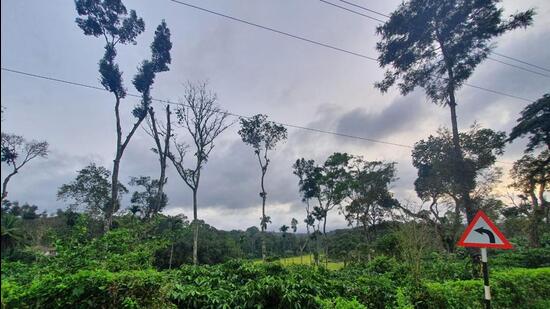
Heavy and unseasonal rains since July have led to most of the coffee dropping off the plants, which planters estimate has led to a 30-35% decline in production in the state.
Since 2018, problems for Karnataka coffee growers have only compounded, making it harder to survive on a product whose prices have seen violent fluctuations as it is connected to global markets while internally few factors have changed to help their cause.
Heavy and unseasonal rains since July have led to most of the coffee dropping off the plants, which planters estimate has led to a 30-35% decline in production in the state.
Ground reality
Coffee growers have multiple challenges such as increasing labour costs due to dire shortage, crop damage, landslides, human-animal conflict, unseasonal rainfall, price fluctuations and the recent proposal on eco-sensitive zones in the western ghats among others.
“The rains have been very heavy and prolonged downpour this time and especially high in the Western Ghats region has led to wet-foot conditions and dropping of coffee. The coffee, which is supposed to be harvested by December, is largely damaged and we estimate a 30% loss in crop,” said Bose Mandanna, a coffee planter and former member of the coffee board.
Hassan, Chikmagalur and Kodagu are the biggest growing coffee regions in the country, accounting for 241,650 tonne production out of total 342,000 tonne produced in India.
With at least 70-80% of the total produce exported globally, coffee was among the biggest foreign exchange earning sectors. However, the importance of this sector has declined over the years, especially the booming information technology and related industries which overshadow plantation revenues now.
“Coffee is a commodity where prices are determined at a global level. But having a strong domestic market is an insulation whenever there is a price variation. So, we don’t want to increase domestic consumption because our coffee is regarded as very high quality and has good demand in the international market. But if there is a bumper production in Brazil and Vietnam, the prices will collapse. At that time, the farmers should not feel that they have suffered a huge loss. That time having a strong domestic market is very important and the coffee board is balancing both,” said KG Jagadeesha, CEO & secretary of the Coffee Board of India.
Nature’s fury
In 2018, 39 villages near Madikeri and Somwarpet experienced several landslides as the downpour wreaked havoc in several parts of Karnataka, especially Kodagu, that resulted in permanent plantation land loss to over 8,000 people, according to Nanda Belliappa, a coffee planter in Huttihole Post, Madapur village near Madikeri.
Several planters have since gone to court seeking relief for permanent land loss due to landslides which they claim was “not an act of god but certainly was a manmade disaster”.
“The incessant heavy rainfall and the huge amount of water released from the reservoirs causing fluctuations resulted in hydrostatic pressure due to which landslides occurred at various places, more particularly in the 39 villages. The river water had entered the plantation zones that were quite far away from the river bed,” according to a petition filed in (Karnataka High court) in 2020.
Located near Harangi Dam, this belt saw the most amount of devastation, in which over 100 people in the state lost their lives.
Belliappa lost nine acres permanently and received ₹35,000 per acre compensation, which was capped at a maximum of 2 ha (1 ha=2.47 acres) or around ₹1.75 lakh as per the National Disaster Relief Fund (NDRF) norms.
“Around 8,000 planters have been displaced. Totally if you see around 900 ha are lost. We are demanding that we be given the same compensation when the government acquires land for roads or other developmental works. On that basis, if we have lost land, the government has to compensate on that level which is normally three or four times the guidance value,” Belliappa said.
Jagadeesha said: “NDRF norms are the same for all farmers as it does not differentiate between coffee or arecanut or anyone else. The compensation is paid at ₹36,000 per hectare for crop loss. For land loss it is a bit more. But the compensation which is paid to a paddy or agricultural farmer or ragi or jowar or coffee is the same. The demand by coffee growers is that plantation crops are different. Even in the (coffee) act, a small coffee grower is classified as 10 hectares whereas it is only 2 hectares. So, they are asking if compensation can be done up to 10 ha.”
He said post the 2018 landslides, a committee under the Karnataka chief secretary did send recommendations to the union government at least three times but are yet to hear back from the Centre.
“The committee unanimously recommended that the compensation be increased from ₹36,000 to ₹72,000 and the 2ha limit be increased to 10 ha. That recommendation has gone, but we have not heard anything. We have written three to four times from the coffee board. We are in favour of giving more compensation to coffee growers because the investment is more,” he said.
Proposed new coffee act
The union government has proposed to replace the 80-year-old Coffee Act with the Coffee (Promotion and Development Bill) 2022 that is expected to come up in the next session of Parliament. “These are very old laws and the idea is only to simplify them, make it easier to do business, ensure that the small people in the different areas like coffee growing, tea growing do not have to suffer from high levels of compliance burden,” Piyush Goyal, the minister for commerce and industry, had said, PTI reported in July.
Among the changes proposed in the new act is the shifting of coffee from the commerce and industries department to agriculture, which, it believes, would give the planters all the benefits from significantly large agricultural schemes.
But, how does this impact coffee growers?
Planters, who spoke to HT, said there was definitely more money and funds in the agriculture department, but fear that coffee would not be treated as a priority when compared to other crops such as paddy, wheat and others. They also said coffee requires officials with expertise in the subject.
“The situation today is that even after cultivating coffee under shade for about 170 years, we are still not globally recognised as shade-grown coffee. These are the things that the coffee board needs to do. The moment the shade is more, our yield productivity will come down to the tune of one-third of what Brazilians do. They have open field cultivation. Coffee boards need to promote, they should certify and see to it that sustainable activity which is practised in the coffee industry gets recognised globally,” said Vishwanath KK, an executive member of the Codagu Planters Association.
Vishwanath said the Indian council of agricultural research must do the research and the commerce ministry should focus on trading, promotion and other commercial activities. “The coffee board served its purpose. The last 20 years there is a clear disconnect between the farmers and the board and the research. Now, there has to be an opportunity for the commodity to take it to the next level,” he said.
Jagadeesha said the proposed coffee act is scheduled to come up in the next session of Parliament, but added that the proposal to change from commerce and industry department to agriculture will make no difference on the ground.
“One of the reasons is since the agricultural department has a bigger budget, the farmers may benefit from this. That too is only an expectation,” he said. However, he said this proposal has not moved on paper and since coffee was export heavy, it will remain with the commerce and industries ministry.
source: http://www.hindustantimes.com / Hindustan Times / Home> Cities> Bengaluru News / by Sharan Poovanna, Bengaluru / August 22nd, 2022
It is said that we can achieve anything if we have determination and nothing can hinder our growth. You don’t have to go somewhere, you don’t have to study a degree to achieve such an achievement. No need for money. Even so, the women of Makkandur village of Kodagu district have shown that success story can be done! Not only that. The CEO of Kodagu Zilla Panchayat has also made a fuss. This is the story of rural women who never dreamed of promotion (Kodagu Success Story) who suddenly became famous!
Holy Women Shakti Sangh
Yes, the women who were home, doing their house work, garden work had formed the Holy Women Shakti Sangh a few years ago. Leelavati, who was a member of the same association, was selected as the agricultural sakhi of Makkandur Sanjeevini Union.
In-workshop training
Under the Mahatma Gandhi National Employment Guarantee Scheme, a training workshop was given to the selected G.P. Sanjeevini Unions in Watekadu Ilakha Planta Kshetra Social Forest Zone of Hoddur G.P. in collaboration with Horticulture and Forestry Department. Makkandur Sanjeevini Union’s Krishi Sakhi Leelavati also participated in the workshop. Practically got information about making nursery.
Nursery Planning
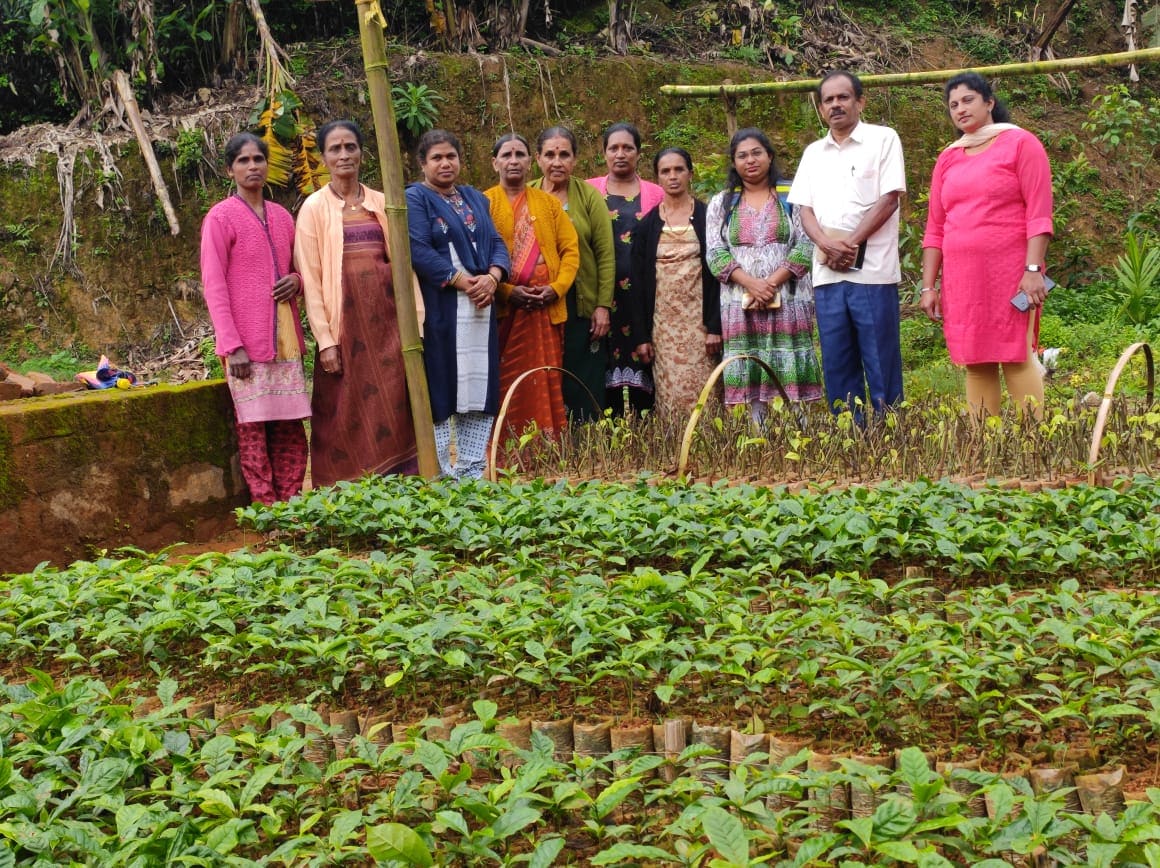
Later, a group of nature producers was formed by Makkandur Gram Panchayat. A total of 12 members, including 8 members from Pavitra Stri Shakti Sangha and 4 members from other Sangha, proceeded to the nursery work.
Appreciation for women’s achievements
Thus the central government’s NRML scheme to promote women’s empowerment and economic empowerment is progressing successfully in Kodagu. G.P.M.CEO Bhamwar Singh Meena, who personally visited the place, expressed his appreciation for the women’s achievements. He promised to provide all kinds of cooperation and stood in support of the development of the first nursery in the district.
Lilavati of Pavitra Streeshakti Sangh contact number: 9483242533
Variety Plant Nursery Nut, 3 types of coffee, kachampuli, lemon, butter fruit and black pepper plants have been planted in the nursery. There are already about 15 thousand plants and in the near future there is a plan to make a nursery for cardamom and various fruit plants.
A good plant
In addition, Leelavati’s half acre land was taken on lease through a group of producers and a nursery was made in that place. Plant nutrition is done by mixing good quality soil, sand, organic manure, sowing seeds of good variety, planting vines, providing water, spraying medicine.
70 thousand spent so far
In the beginning, the women paid for the facilities of the nursery at their own expense, and recently an installment of money has come. 70 thousand has been spent so far including salary.
Everyone has cooperated in this work of women and they are eager to develop the nursery further. Soon Makkandur Gram Panchayat is ready to sell plants at a discount price. The women in the group will also be paid by the government.
The road to self-reliance
All the members are actively involved in the work activities and contribute to the achievement of the association. The Sanjeevini Union was started in order to show the path of self-reliance to the women of the village, and the women of Makkandur village have benefited from it.
Necessary loan facility is also available from the association. Rural women have shown that if you put your mind to it, you can achieve anything. This is the first nursery in Kodagu district and recognized at the state level as well. Apart from benefiting from the central government scheme, she is also a role model for other women.
Report: Stanley. D. give
source: http://www.irishivideo.com / I V News / Home> Latest News & Updates>Technology / by Stanley D / August 25th, 2022
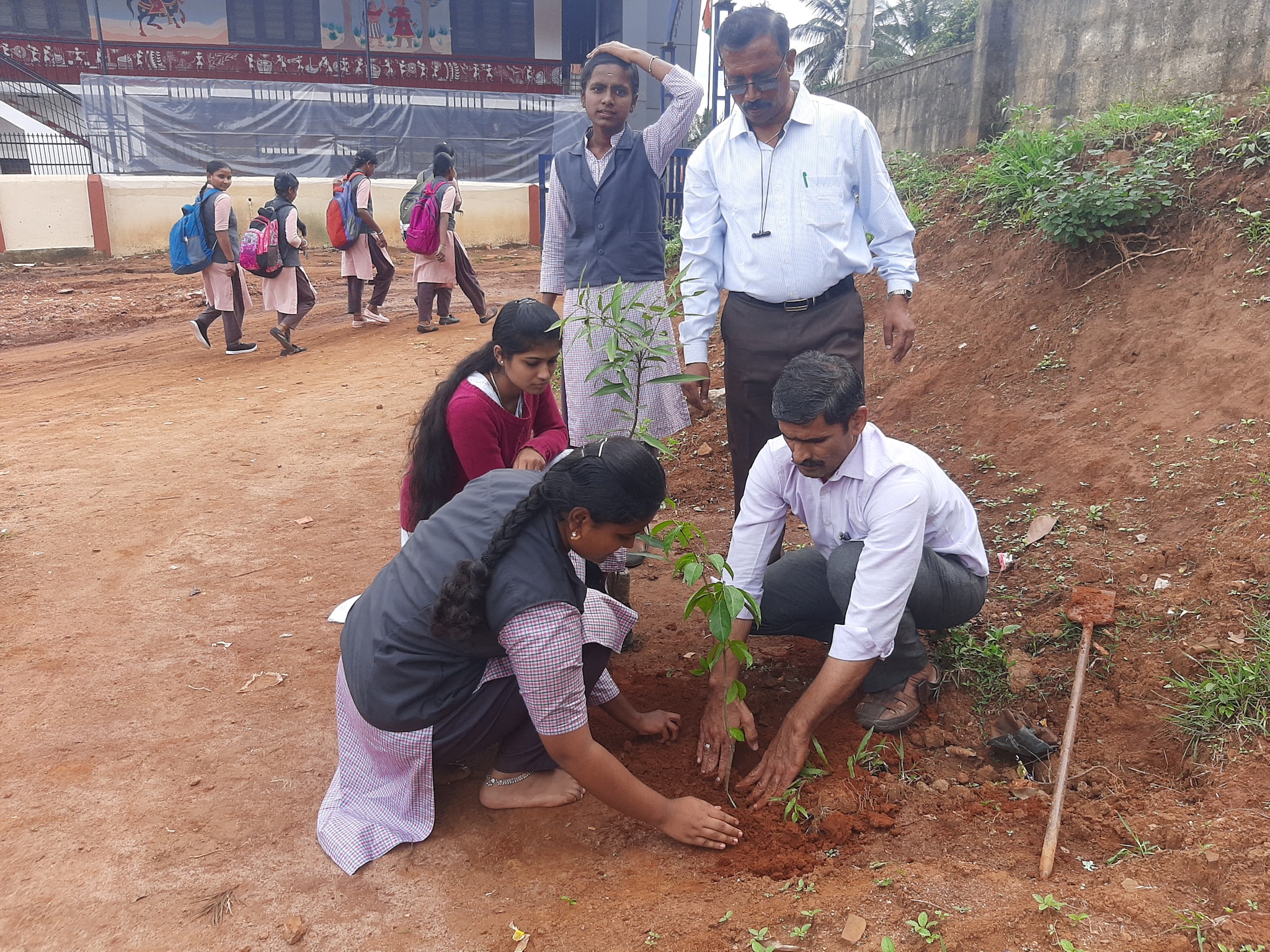
In today’s situation where there are many people who think that I can get rich by acquiring property and money, this goldsmith has some love for the environment. Therefore, there is a great desire to earn money by trading gold and silver and to preserve the environment for the next generation. Trader Rajendra Singh has been continuously planting and nurturing plants for the past many years without any publicity. Rajendra Singh is originally from Rajasthan, residing in Siddapur, Virajapete taluk of Kodagu district. He settled in Kodagu 20 years ago.
Rajendrasingh, who was concerned about the environment from a young age, has a great love and concern for the environment. The reason for that is that Rajendra Singh, who was born and brought up in the desert of Rajasthan, felt that if there were no trees, he would face such difficulties.
Planting and nurturing work
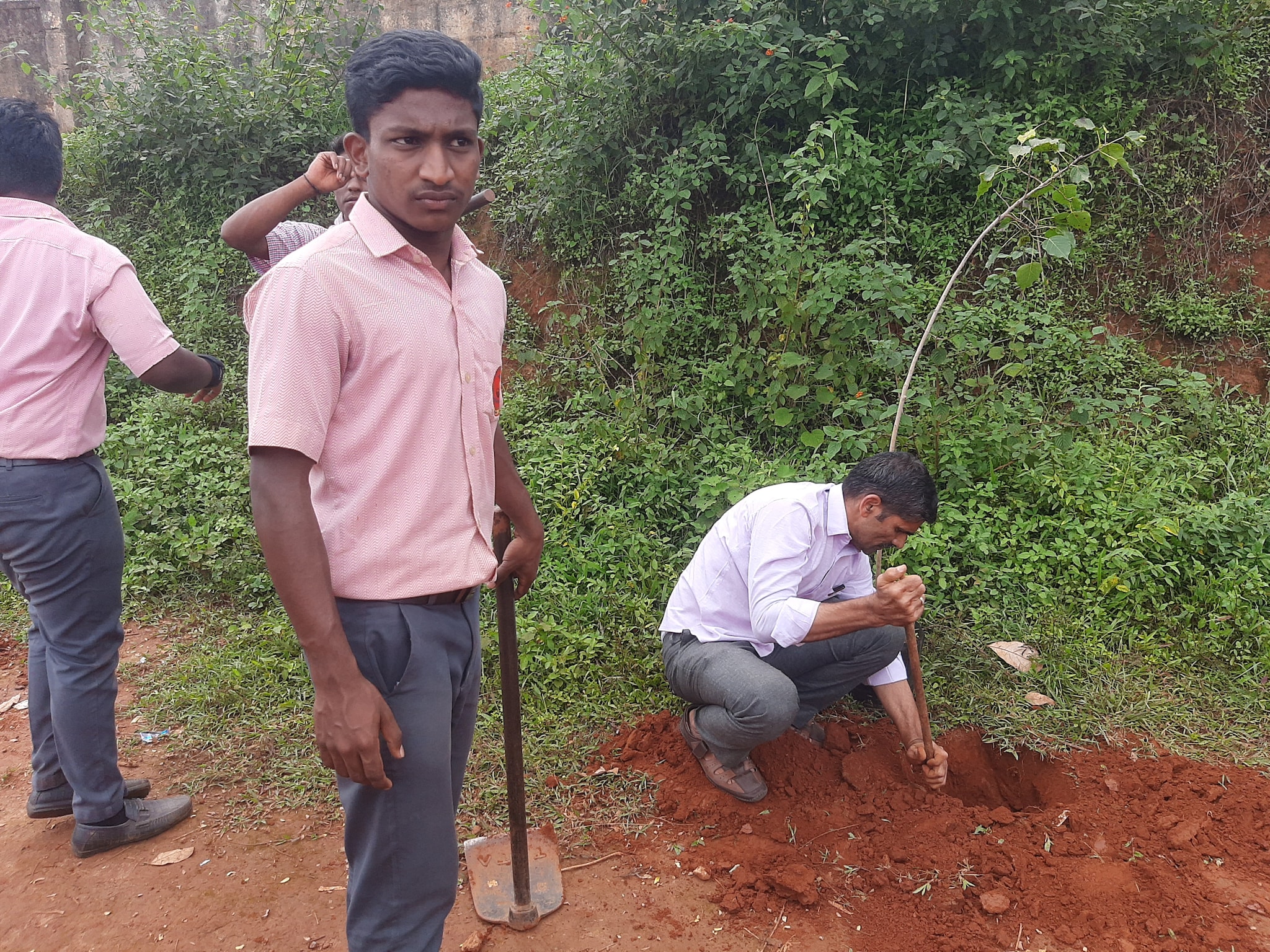
Thus, even after coming to Kodagu, his concern for the environment did not diminish. They are constantly doing the work of planting and nurturing plants in school college premises, bank police station and government office premises.
Planting
What does Rajendra Singh say?
Especially in 2014, thousands of trees were cut down while the high tension line was being laid in Kodagu to Kerala. As a result, there was a lot of ups and downs in Kodagu without rain as before. Such a situation was created that if it came, it would pour down immediately, otherwise it would not rain at all. Rajendra Singh says that he was very bored by this and started planting a lot of plants.
Rajendra Singh who planted 1.80 lakh saplings
So far, approximately 1.80 lakh saplings have been planted and nurtured in school and college premises of various taluks of Kodagu, government offices, schools and colleges of Priyapatnam, Mysore taluk and Hunsur taluk. Besides, they are planting plants on roadsides and in forest areas.
Students are aware of the environment
They are watering the plants they have planted themselves during summer. Realizing that the work of planting and growing plants is not possible on his own due to the environmental degradation, Rajendrasingh is making students aware of the need to plant and grow plants before going to schools and colleges.
Planting
A businessman is also very concerned about the environment
Besides, they are working to encourage students to plant and grow plants by conducting various competitions and giving prizes. On the whole, the locals are appreciating his concern to save the environment even though he is a gold and silver trader.
Rainfall has decreased in Kodagu region since last one week. Two weeks ago there were scattered landslides along with rain in Kodagu environment.
source: http://www.irshivideos.com / IV News / Home> Latest News & Updates / August 01st, 2022
Call to help preserve memories of a vanishing people
While modernisation has opened many opportunities for the well-qualified, it has also distanced the young from their heritage and culture. This is even more accentuated amongst Kodavas living outside Kodagu. There is a need to establish a platform where young Kodavas could learn and keep in touch with the community’s heritage, cultural practices, folklore, music, dance, festivals and history, says Mrs. Codanda Rathi Vinay Jha, IAS (Retd.) and Chair, India Foundation for the Arts (IFA), who has initiated establishing a Virtual Museum of Kodava Heritage & Culture named ‘Sandooka,’ a treasure trove of information. —Ed
Kodavas are a micro-minority community in India, who live in Kodagu (Coorg) in Karnataka State. It is estimated that there are about 1,50,000 ethnic Kodavas within and outside Kodagu.
Kodavas, by virtue of living quite isolated in a densely wooded hilly terrain on the Western Ghats of India since time immemorial, have developed their own unique culture, physical attributes, cuisine, language, attire, religious rituals and practices.
Over the centuries, Kodavas adapted themselves to the harsh weather conditions, dangers from wild animals and the inhospitable terrain of Kodagu and transformed the land to an idyllic haven it is today. With the passage of time, they toiled literally with bare hands to cultivate paddy in the valleys.
With the forests providing bountiful supply of wild game, they became expert hunters initially with bows and arrows, and later with firearms which enabled them to emerge as a warrior race. They transformed the fertile land and were able to grow enough paddy that they could export to neighbouring areas.
The interactions with immediate neighbours in present day Kerala, Mysuru and Mangaluru, influenced the Kodava language, places of worship, construction of their dwellings and some of the religious practices as well. However, Kodavas still retain their fundamental philosophy of ancestor and nature worship. They come under the broad umbrella of Hinduism.
Kodagu was ruled by Kodava Nayakas or Palegars who were basically warlords. The Haleri dynasty established their rule in Kodagu after cleverly replacing the hopelessly divided Nayakas during the early part of the 17th century. The Haleri Rajas ruled for over two centuries until the British takeover of the administration in 1834 after deposing the last Raja. During the rule of the Haleri Rajas and later the British, Kodavas remained the prominent community very much involved in the administration.
During the British rule, education was introduced and this brought about quantum changes in the lifestyle of the Kodavas. Kodavas found several employment opportunities. Introduction and scientific cultivation of coffee and spices vastly improved the economy of the region. Kodava culture and ethos found expression in the writings by the British, European and Kodava authors.
By the time India got her independence, many Kodavas held important and high-level offices in sectors such as the Defence Forces, Administration, Revenue Department, Forest Department, Police, in the field of Education, Engineering and Medicine.
Kodavas have several distinctive elements in their social, cultural and religious practices. One of them is the deferential status given to women. There is no dowry system in the community. Centuries ago, widow remarriage was permitted. This enlightened attitude is now reflected in well-educated Kodava women shining in a variety of fields.
After India’s independence many Kodavas ventured out of Kodagu seeking better opportunities in education, employment, business and sports. Kodavas are now spread all over the globe. The last three decades has seen a large number of Kodavas migrating outside the country. There is now a sizable number of Kodava diaspora in the US, Canada, UK and Australia. In many cases, there are a couple of generation of Kodavas born and brought up outside Kodagu and outside India as well.
While modernisation has opened many opportunities for the well-qualified, it has also distanced the young from their heritage and culture. This is even more accentuated amongst Kodavas living outside Kodagu. There is a need to establish a platform where young Kodavas could learn and keep in touch with the community’s heritage, cultural practices, folklore, music, dance, festivals and history.
It is with this aim in mind that Mrs. Codanda Rathi Vinay Jha, IAS (Retd.), as Chair, India Foundation for the Arts (IFA), initiated establishing a Virtual Museum of Kodava Heritage & Culture (VMKHC). This project is evocatively named — Sandooka — a treasure trove of information. IFA has successfully supported several path-breaking projects in the field of art and culture.
Sandooka will be a living museum that will be interactive and open to receiving relevant new materials from the public. People, especially the future generations of Kodavas, will have an easily accessible platform to gather details of their heritage. Weblinks will also be given to some of the websites dealing with Kodava culture. It is hoped that this treasure trove of information will be of immense help to those who wish to carry out further research on Kodavas. VMKHC will cover the following aspects of Kodagu and Kodavas:
1. Customs and Rituals
2. Cuisine
3. Architecture
4. Clothes and Jewellery
5. Art & Craft
6. Landscape
7. Literature and Folklore
8. Community Histories
9. Festivals
The project is generously funded with a Corporate Social Responsibility (CSR) grant from Recaero India Pvt. Ltd., which is a pioneer in the field of aerospace engineering and is headed by Vinay Jha, IAS (Retd). A highly professional team has been forged to deal with every aspect of the project. The team comprises:
Lina Vincent – Project Head; Upasana Nattoji Roy – Designer (Switch Studio); Saurav Roy – Designer (Switch Studio) and Mookanda Nitin Kushalappa – Researcher.
IFA office-bearers are: Arundhati Ghosh (Executive Director) and Darshana Davé (Project Co-ordinator); Advisory Group: Rathi Vinay Jha, C.P. Belliappa and Hemanth Sathyanarayana.
Sandooka invites submission of Kodava artefacts, rare photographs, antiques including jewellery (photos) and anecdotes of yore. All accepted materials will be given due recognition and credits. Sharing your valuable knowledge and collections will enrich the contents of Sandooka.
For details of submission of materials, please visit: www.sandookamuseum.org
source: http://www.starofmysore.com / Star of Mysore / Home> Feature Articles / by C.P. Belliappa / August 01st, 2022
When the monsoon turns farmlands into sludge tracts, Kodagu girds up for some thrilling rural sports.
Madikeri :
Monsoons in Kodagu are beautiful. The lushness of nature and play of the fog during the season is poetic — that’s apart from the recent calamities. And to add some thrill to the chilly wet weather, the ancestors of the land followed a unique pursuit — the ‘Kesaru Gaddhe Oota’ event or Sludge Sports. Races, football, tug-of-war… the sports are varied and taken up in slushy farmlands. Enthusiasts plunge into mud pools, unmindful of the rain and slippery earth, at one with nature. Young and old, girls and boys participate.
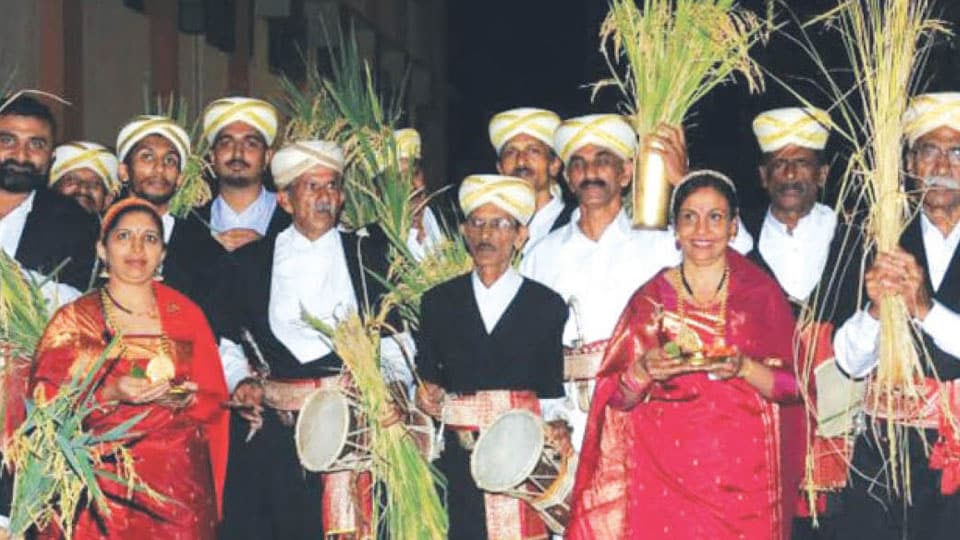
Kodagu is primarily an agricultural district, and the culture of the people is often intertwined with their farmlands. The important festivals of the district revolve around nature and farms — be it ‘Puthari’, ‘Kailpodh’ or ‘Tula Sankramana’. Similarly, the district is also active in sports, and what’s interesting is that the ancestors connected sports activities with farmlands, and took the entertainment level up by a notch.
Every year, between June and August, several farmlands, especially in rural areas of the district, host unique sports events. Sludgy farmlands become running tracks and hundreds take part in the event amid pouring rain and chilly weather.“All our festivals are linked to farmlands, and our ancestors also linked sports activities with the farms. Once the fields were sowed with paddy seeds, the traditional sports ‘Naati Oota’ (translating to harvest run) would be held in every village,” explained Apattira Tatu Monnappa, former president of the District Youth Club, and winner of the State Youth Award. In ancestral times, races were hosted in sludgy farmlands ploughed for paddy.
As soon as the monsoon sets in, various organisations and associations come forward to host sports events at private farmlands. Though sludge sports in farmlands formed a part of the culture, the activities witnessed a gradual decline. “Earlier, every village hosted this activity during the cultivation season. Locally grown produce, including banana bunches, coconuts and arecanuts, were handed over as prizes to the winners. This slowly vanished as youngsters moved to cities and showed less interest in their farms,” recalled Kannikanda Subbaiah, a native of Surlabbi village.
Nevertheless, the traditions are now being revived. While the villagers themselves hosted sports activities in farmlands as a part of farming customs, they are now being organised by various organisations and associations. “While there were several sports activities during summer, events were few during the monsoon. With an aim to revive the rural sports tradition and involve youngsters in sports activities during the monsoon, we started organising ‘Kesaru Gaddhe’ annually,” explained Rafeque Tuchamakeri, founder-president of Junior Chamber International (JCI) Ponnampet Nisarga. The organisation has been hosting the event for the past six years at a private farmland in Bittangala.
“During ancestral times, sporting events on farmlands were part of agriculture activity. Rural sports brought together the entire village, and it was a means of relaxation before the tedious work began. With farmlands now being abandoned and the interest in agriculture vanishing, rural sports have become a means of reviving both agriculture and sports. The associations and organisations now aim to introduce agricultural activities through these sports events,” opined Tatu.
Sports activities now draw a large number of youngsters into the farmlands and have become events that residents look forward to. “Not many youngsters are interested in agriculture. To introduce agriculture and invoke interest in farmlands, sports activities in the farmlands were being held from ancestral times. While sports is a means of entertainment, it has also become a medium to introduce farming among kids. Interest in sports is, in turn, helping develop interest in agriculture,” concluded Shashi Somaiah, a sports journalist and resident of Madikeri.
source: http://www.newindianexpress.com / The New Indian Express / Home> States> Karnataka / by Prajna GR, Express News Service / July 31st, 2022
Coffee (Promotion and Development) Bill is expected to be tabled in the ongoing session of Parliament
Planters’ unions in Karnataka are hopeful that the new legislation on coffee, expected to be tabled in the ongoing session of the Parliament, will usher in much-needed changes in the 80-year-old Coffee Act guiding the industry now. Karnataka is the biggest producer of coffee in India.
The Coffee (Promotion and Development) Bill, 2022, is aimed at promoting holistic development of the country’s coffee industry. It is expected to do away with the existing 80-year-old set of regulations on the commodity, focus on coffee research, domestic marketing of the commodity, creation of drought-tolerant, disease-resistant and better yielding varieties of coffee, among other things.
Special varieties
Planters’ unions told The Hindu that the new law should help focus on development of special and specialty coffee brands and blends and pay attention to a premium variety of coffee, Arabica.
Bose Mandanna, former Vice-Chairman, Coffee Board, and also the owner of Subramanya Estate at Sunticoppa, said that the old set of regulations have been around for too long while the industry has transformed.
All leading coffee associations, including Karnataka Planters’ Association, Coorg Coffee Association, Karnataka Growers’ Federation, United Planters’ Association of Southern India (Upasi), the apex body for plantations and other industry stakeholders, have already submitted their recommendations to the Coffee Board and Ministry of Commerce.
Value chain
“A revised regulation with its holistic provisions aimed at promotion and development of the entire value chain of coffee and enabling ease of doing business is beneficial to all stakeholders and to the general public,’‘ said Shirish Vijayendra, former chairman, Karnataka Planters’ Association.
According to H.T. Pramod, former chairman KPA and Managing Director of Malnad Planters’ Coffee Curing Works, and also a planter from Chikkamagaluru, said, “We want to see more new varieties coming into plantations and expect better interaction and working together with planters and researchers.”
On the backburner
Another planter who does not want to be identified said, “Coffee Board, way back in the 1990s, under the leadership of the then chairman Lakshmi Venkatachalam, had prepared the draft of a replacement of the existing Coffee Act. It was a comprehensive draft done in three years. We submitted it to the Ministry of Commerce, but sadly, several governments sat over it in the last several decades.’‘
source: http://www.thehindu.com / The Hindu / Home> News> India> Karnataka / by Mini Tejaswi / Bengaluru – July 26th, 2022
Chikkamagalur received 132% more rainfall from June 1 to 17, while Hassan received 124% more and Kodagu, the largest coffee-producing district, received 109% more. This is causing crop losses, putting an end to growers’ hopes for a bumper crop.
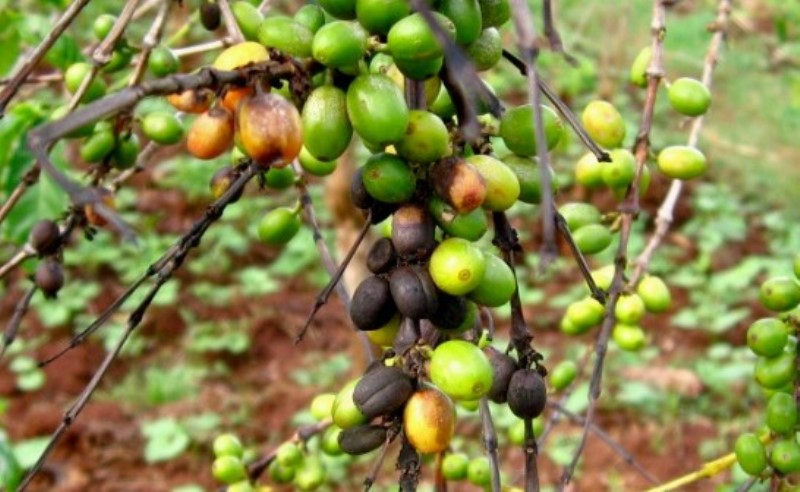
Excessive and continuous rains in the first two weeks of July triggered diseases such as root rot, leaf rot, and wet feet conditions, causing the leaves and berries on coffee plants to turn black and drop, according to growers. This is causing crop losses, putting an end to growers’ hopes for a bumper crop.
To date, the ongoing monsoon season has brought heavy rains to key coffee-growing regions in Karnataka, which account for 70% of the country’s coffee output. Chikkamagalur received 132% more rainfall from June 1 to 17, while Hassan received 124% more and Kodagu, the largest coffee-producing district, received 109% more.
The average rainfall in the South Kodagu region during the July 9-15 week was 272 percent higher this year than the previous 10-year average. Some areas, such as Balele, received 349 percent more rainfall than the 10-year average, while Gonikoppal and Virajpet received 310 and 288 percent more, respectively.
“Not only have the heavy and continuous rains harmed the standing crop due to black rot, stalk rot, and wet feed conditions, but planters have also suffered collateral damage from shade tree falls caused by the strong winds.” Flooding has occurred in some areas, and planters have suffered losses as a result of water logging. While it is too early to estimate crop losses, they could be around 25% in Chikamagalur and 20% in Kodagu,” according to N Ramanathan, Chairman of the KPA.
The percentage of dropping is higher in several villages that have historically received more precipitation. Coffee Board officials stated that they are assessing the impact of the excessive rains and have been advising growers on how to manage premature berry drop and black rot/stalk rot diseases in the root zones of the plants.
According to Jeffry Rebello, vice-president of UPASI, the situation is fluid because it is still the first half of the monsoon season and too early to assess crop losses. “If there are more bouts of heavy rains, there could be more impact,” Rebello said, estimating current losses at around 15%.
Other plantation crops, such as cardamom and pepper, have suffered losses, according to B S Jayaram, a coffee grower in Mudigere. “We have requested that the district authorities survey crop losses in order to quantify the impact,” said Jayaram, former president of the Karnataka Growers Federation.
In its recent post-blossom or early estimates, the State-run Coffee Board put the crop size for the year 2022-23, which begins in October, at a record 3.93 lakh tonnes, 15% more than the previous year’s 3.42 lakh tonnes.
source: http://www.krishijagran.com / Krishi Jagran / Home> Agriculture World / by Shivam Dwivedi / July 23rd, 2022
In 2021, he had safeguarded 17 eggs of a snake found in the coffee estate of Panyada Ananda Basappa.
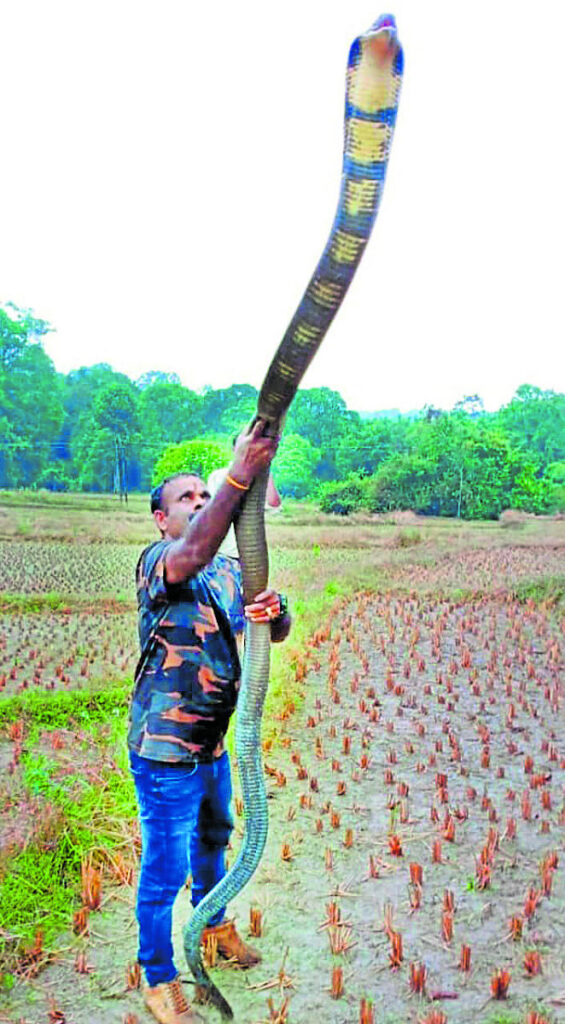
Many people cause harm to snakes but only a few rescue and release them into the forest. Snake expert Pushpadhara is one among them.
A resident of 7th Hosakote in Suntikoppa, he is popularly called ‘Snake Shaji.’ On getting information on snakes entering houses or shops or other places, he rushes to the spot, rescues and releases them into the forest.
He has been engaged in rescuing snakes for the last 20 years. He has rescued around 4,000 snakes (both venomous and non-venomous).
A majority of the rescued snakes are cobras. More than 30 pythons were caught and released into the forest.
“I am also trying to create awareness among people on snakes. Many have a notion that touching snakes will decay a part of their body. I am trying to create awareness on the superstitious beliefs on snakes,” he said.
In 2021, he had safeguarded 17 eggs of a snake found in the coffee estate of Panyada Ananda Basappa. After the hatchlings came out of the eggs, they were released into the forest.
“People should not panic on noticing snakes inside the house or farmland or inside the vehicles. Nobody should hurt the reptiles. If they dial me, I will rescue the snakes,” said Pushpadhara.
“Snakes play a pivotal role in maintaining balance in nature,” he said.
The snakes eat rats and rodents that damage crops in the field and help in saving the crops. These creatures are helpful to farmers, he added.
He has caught snakes not only in the district but also in Sringeri, Mysuru, Sullia, Kushalnagar, Suntikoppa, Madikeri and Periyapattana. “I don’t ask money for rescuing a snake but some people give money for the fuel expenses of the vehicle,” he said.
For details, people can contact Shaji at 94487 92261.
source: http://www.deccanherald.com / Deccan Herald / Home> State> Karnataka Districts / by DHNS, Suntikoppa / July 16th, 2022
WELCOME. If you like what you see "SUBSCRIBE via EMAIL" to receive FREE regular UPDATES.
Read More »