Category Archives: Agriculture

Tourism Minister To Open Cauvery Gallery In Mysuru

  • After Ganga, Brahmaputra Galleries, first such Gallery in South India
  • Gallery timings: 10 am – 6 pm
  • Entry ticket: Adults – Rs. 20, children – Rs. 10

Mysore/Mysuru:

The Cauvery Gallery that has been set up at Karnataka Exhibition Authority (KEA) Grounds showcasing the life, culture and biodiversity of the River from its birth at Talacauvery in Kodagu till it reaches the Bay of Bengal at Poompuhar in Tamil Nadu will be open to the public on July 13.

The visually appealing Gallery with many 3-D presentations has been built jointly by Karnataka Knowledge Commission and Tourism Department. It has been modelled as per the design, specifications and imagination of the National Academy of Sciences, India (NASI) and has been built at a cost of Rs. 3.5 crore.

KEA Chairman Hemanth Kumar Gowda told Star of Mysore that Tourism Minister Anand Singh will inaugurate the Gallery on July 13 at 11 am in the presence of Mysuru District Minister S.T. Somashekar. In-Charge Mayor Sunanda Palanetra, MPs V. Sreenivasa Prasad, Pratap Simha and Sumalatha Ambarish, MLAs G.T. Devegowda, Tanveer Sait, S.A. Ramdas and L. Nagendra will be the guests.

NASI-NCSM project conceptualisation

The project is based on research conducted by the National Council of Science Museums (NCSM), an autonomous society under the Ministry of Culture. Officials of the NASI and the State Tourism Department had signed an agreement to establish the gallery in the KEA complex (at Kannada Karanji). It is the first river gallery in South India.

The Gallery highlights the geological and ecological characteristics of the Cauvery River apart from projecting the social and cultural characteristic features of civilisation that have evolved along the river bank.

NASI is the implementing agency and would train the authorities from Mysuru on how to maintain and administer the gallery. The NASI and NCSM have completed the establishment of the Brahmaputra River gallery project in Guwahati, Assam, and the Ganga River gallery project in Allahabad.
15,000 sq.ft. area covered

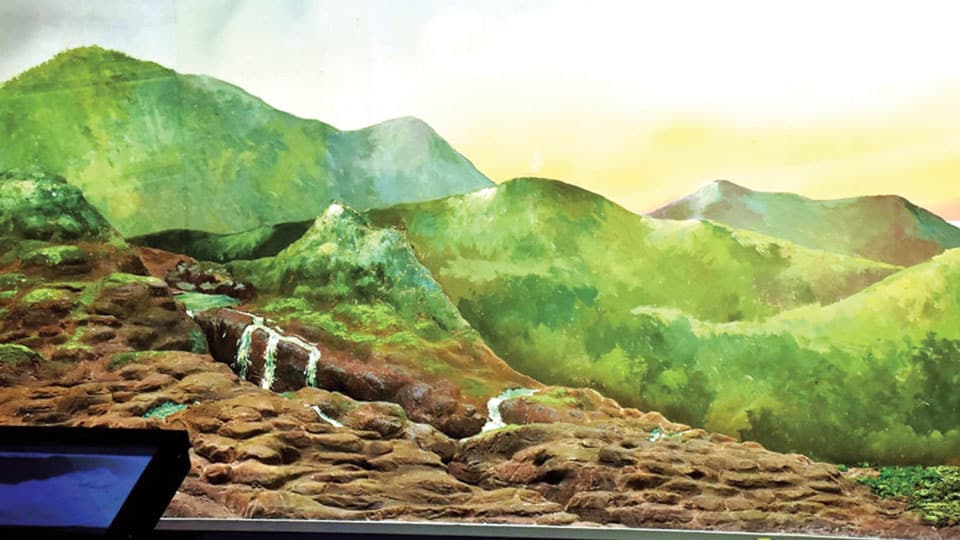
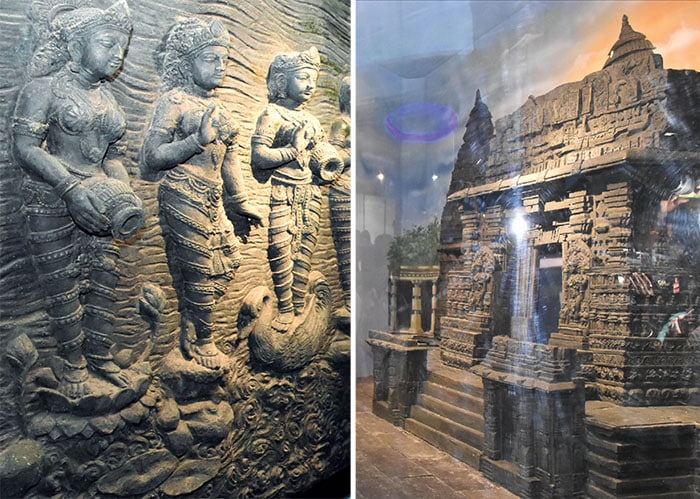
The Cauvery Gallery has been built on an area of 15,000 sq.ft. and highlights the geological and ecological characteristics of the Cauvery apart from projecting the social and cultural characteristic features of civilisations that have evolved along the banks of the river.

Artefacts and dolls tell the story of the Cauvery River from Talacauvery (birthplace in Kodagu) to Poompuhar. Pictures, live visuals and models of the river flowing from one part to another criss-crossing the hills and plains narrate the story giving an audio-visual and also pictorial presentation to the viewer.

Ticket pricing

The mega project includes multimedia features and an electronic display to provide visitors with an immersive experience of life and culture along the Cauvery. After the viewers see the gallery, there will be a 20-minute short film on Cauvery.

Adults will have to pay Rs. 20 for an entry ticket while children have to pay Rs. 10. The Gallery will be open from 10 am to 6 pm and the timings will be extended based on the tourist response and tourist seasons.

source: http://www.starofmysore.com / Star of Mysore / Home> News / July 09th, 2022
Coffee Board to collaborate with ISRO to develop climate-resistant varieties

India exports about two-thirds of the three lakh tonnes of coffee produced in the country K_R_DEEPAK

To assess carbon sequestration potential of the crop, which can help growers command premium in markets like Europe

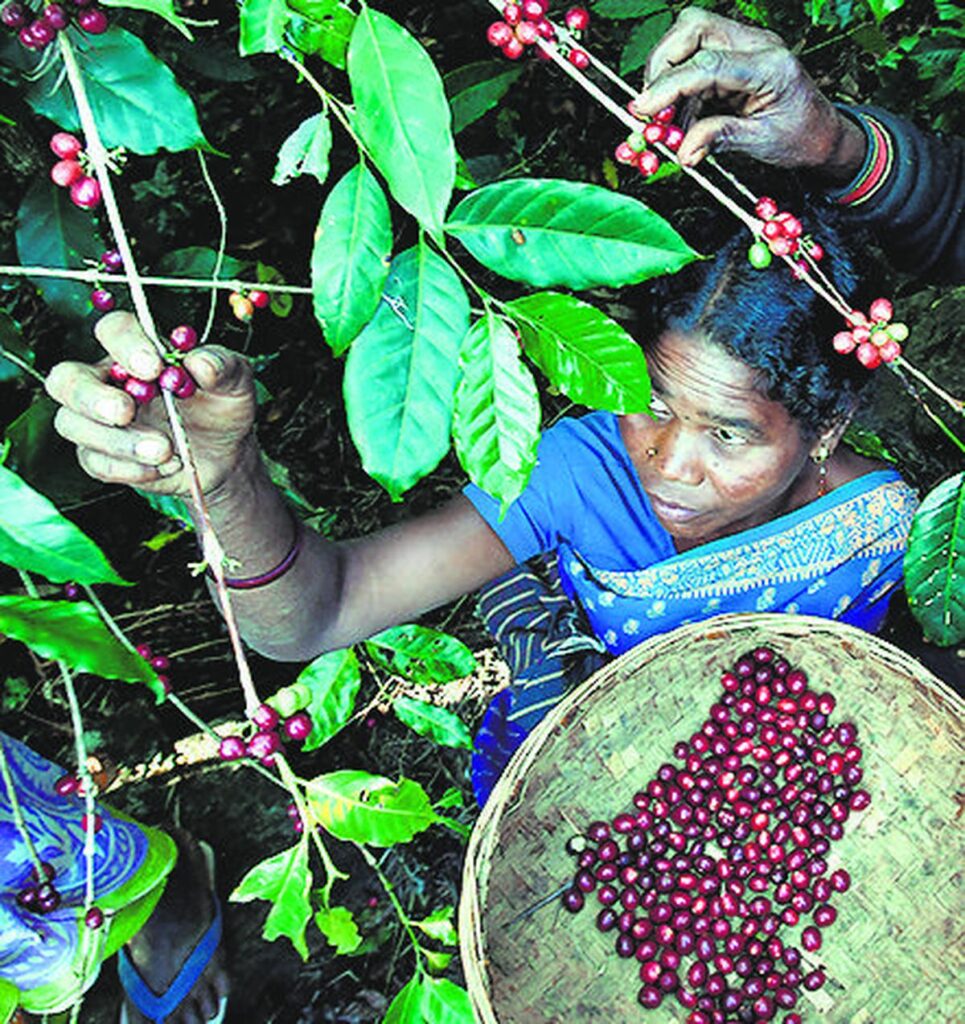
In what could provide a fresh impetus to the research activities in the country’s coffee sector, State-run Coffee Board is planning to focus on developing new varieties that will be resistant to the changing climatic patterns.

Coffee growers in the country have been facing the brunt of changing climatic patterns in kodagu.

source: http://www.thehindubusinessline.com / Business Line / Home> Agri Business / by Vishwanath Kulkarni / Bengaluru – July 07th, 2022

Caravela Cafe & Bistro expands in Goa, opens third outlet in Panjim

Caravela Cafe & Bistro, Goa’s best known coffee shop, has opened a new outlet in the heart of Panjim, the third from the homegrown brand in an expansion move. The brand has also partnered with AinMané, a specialty grocery store in Coorg, to retail organic produce at all three outlets in Panjim and Candolim.

Started by Goan businessman Carlos Noronha in 2015 with a single outlet in São Tomé (Old Quarter) Panjim, Caravela Cafe & Bistro has garnered appreciation from locals and tourists alike with its quality bakes and excellent single origin estate coffee, sourced from Coorg.

The new outlet will cater to the increased need for seating capacity in Panjim and address booming footfall due to the cafe’s reputation for outstanding food and coffee.

All day breakfasts aside, Caravela Cafe offers a wide selection of authentic Goan snacks and food, pastas, sandwiches, burgers, pizzas and fresh bakes – both sweet and savoury. Menu highlights include Goan bakes and savouries such as ross omelette, rissois, roulades and croquettes. There is delight in indulging in good food and Caravela offers an all day walk in bistro, with just one unique rule, laptops are not allowed on tables.

Commenting on the launch, Carlos Noronha Jr, executive director, Caravela Cafe & Bistro, says, “Our third outlet is our commitment to serve great food with great ambiance to visitors in Goa. I believe in conversations over food as the best way to bond with people. In a traditional Goan home, food is the centerpiece for family gatherings where everyone comes together and share. Our ‘No Work Cafe’ policy is not always loved by everyone but we have limited seating and continue to have a very loyal user base who love coming to our outlets for the coffee, food and conversations and not work.”

Cyrus Noronha, executive director, Caravela Cafe & Bistro, adds, “We aim to open two more outlets before next year to take Caravela to the next level of cafe business. While Goa caters to the typical demand for alcohol quite well, great coffee often takes tourists out of their locations to far away and crowded cafes.

source: http://www.fnbnews.com / FnBnews.com / Home> Top News / by FnB Bureau, Mumbai / July 08th, 2022

Take up apiculture scientifically: College of Forestry head

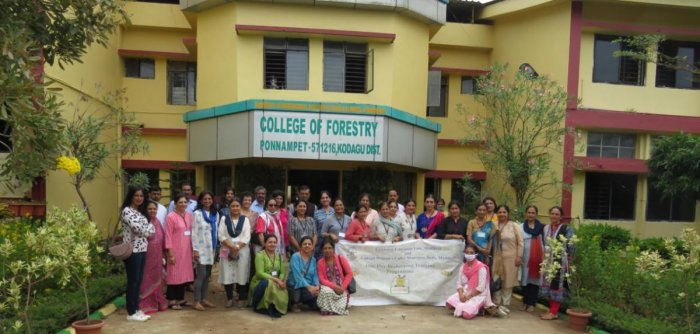
Participants at the training programme on apiculture at the College of Forestry in Ponnampet.

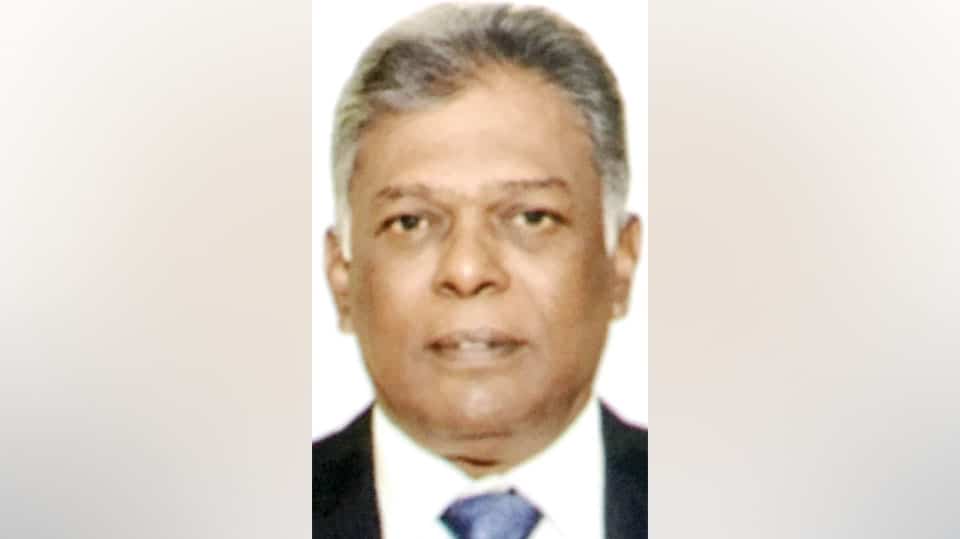
Apiculture helps in increasing the production of coffee and other crops, said College of Forestry head Dr Cheppudira G Kushalappa. 

He was speaking during apiculture training organised by the University Of Agricultural and Horticultural Sciences and Kodagu Women’s Coffee Awareness.

There are ample opportunities for apiculture in Kodagu. The beekeeping should be taken up scientifically, he added.

Stating that honey production has declined in the district, he said there is a need to create awareness on apiculture. 

Kodagu Women’s Coffee Awareness secretary Anitha Nanda said there is a need to concentrate on apiculture along with coffee plantation. 

Dr R N Kenchareddy, the college extension wing head, said, “Those interested in apiculture will be given three months training. They will be given Rs 7,500 as allowance.” 

source: http://www.deccanherald.com / Deccan Herald / Home> State> Mangaluru / by DHNS, Ponnampet / January 17th, 2021

Nagappan Takes Over As UPASI President

Coonoor:  

Al Rm. Nagappan has been elected as the President of United Planters Association of Southern India (UPASI) for the year 2019-20.

A coffee planter by profession, he manages the family business of Karrie Kollie Estate at Suntikoppa in Kodagu. Nagappan was elected at the 126th Annual Conference of the Association held in Coonoor in Nilgiris district.

Nagappan has been in the coffee industry from 1982 and has rich experience in planting industry. His involvement with the planting association has been longstanding. He is an avid sportsman, with Golf being one of his passions.

Nagappan was associated with the Mercara Downs Golf Club for many years as Hon Secretary. He served in Karnataka Golf Association in various capacities and went on to become the President of the Karnataka Golf Association

Prashant Bhansali, CEO of Kairbetta Estates, a family-run tea plantation and an orthodox tea manufacturer, was elected as the Vice-President.

source: http://www.starofmysore.com / Star of Mysore / Home> News / September 15th, 2019

‘Wrong weather forecast’ puts coffee crop in Karnataka at risk

Expecting monsoon on June 1, farmers chopped off branches of shade trees exposing tender berries to summer-like sunlight

An ‘unfortunately’ incorrect weather forecast by India Meteorological Department (IMD) has put coffee farmers in Karnataka in jeopardy.

On the basis of the Met department’s prediction of an early monsoon, coffee growers in Karnataka prepared for rains on June 1. However, the coffee estates in Kodagu, Chikkamagaluru, Hassan districts are yet to see any sign of rain as on June 17.

Expecting monsoon in the first week of June 1, towards the end of May, most coffee farmers carried out shade regulation through chopping the branches of secondary shade trees on their plantations to ensure maximum sunlight on the plants during the monsoon. In the absence of rain, coffee plants are being exposed to excessive heat and summer-like sunlight.

Shade lopping (called dadap lopping, with dadaps being fast growing trees of the genus Erythrina) is undertaken just before or at the onset of monsoon as retaining thick shade during monsoon could lead to disruption of free flow of oxygen in the orchard, which may lead to berry dropping, wet foot condition and rotting of stalk.

Mandanna of Subramhanya Estate at Suntikoppa in Kodagu district says, “The entire coffee belt was set for the monsoon on June 1. But unfortunately, Met department’s weather prediction has gone haywire. A delayed monsoon has brought additional concerns to the coffee-growing community.”

According to him, coffee plantations should have ideally received 5 to 6 inches of rain in June, but, as of now, they have not received any rain so far.

“More than half of June has passed and monsoon is yet to set in. Rains are very critical for the development of berries, and also to keep white stem borer away from coffee plants,” said Mr. Mandanna, who is a member of the Coffee Board.

Shirish Vijayendra, a planter from Mudigere and former chairman of Karnataka Planters’ Association, said, “A delayed monsoon would adversely affect the coffee crop this year. Not only coffee, it has also impacted pepper flowering and corn formation, and also paddy cultivation in most parts of Karnataka. Most days are very sunny, as if we are still in summer. It is not a good sign for most crops, including coffee.”

Anil Kumar Bhandari, President of India Coffee Trust (ICT) and a large planter from Suntikoppa, said, “The delayed monsoon has added to our problems. If the rains are going to be further delayed by another 4 to 6 days, there will be a significant impact on production due to poor crop formation.’’

Coffee growers say they purchased manure in bulk to fertilise and nourish their plantations, but the task can be carried out only if the soil has enough moisture to dissolve and absorb the fertiliser.

“We are yet to apply fertilisers in our plantations, owing to the lack of moisture on the ground,” lamented Sindhu Jagdish, a small farmer from Ponnampet in Kodagu district.

source: http://www.thehindu.com / The Hindu / Home> News> National> Karnataka / by Mini Tejaswi / Bengaluru – June 17th, 2022

Bopaiah meets Gadkari, seeks highway expansion in Kodagu

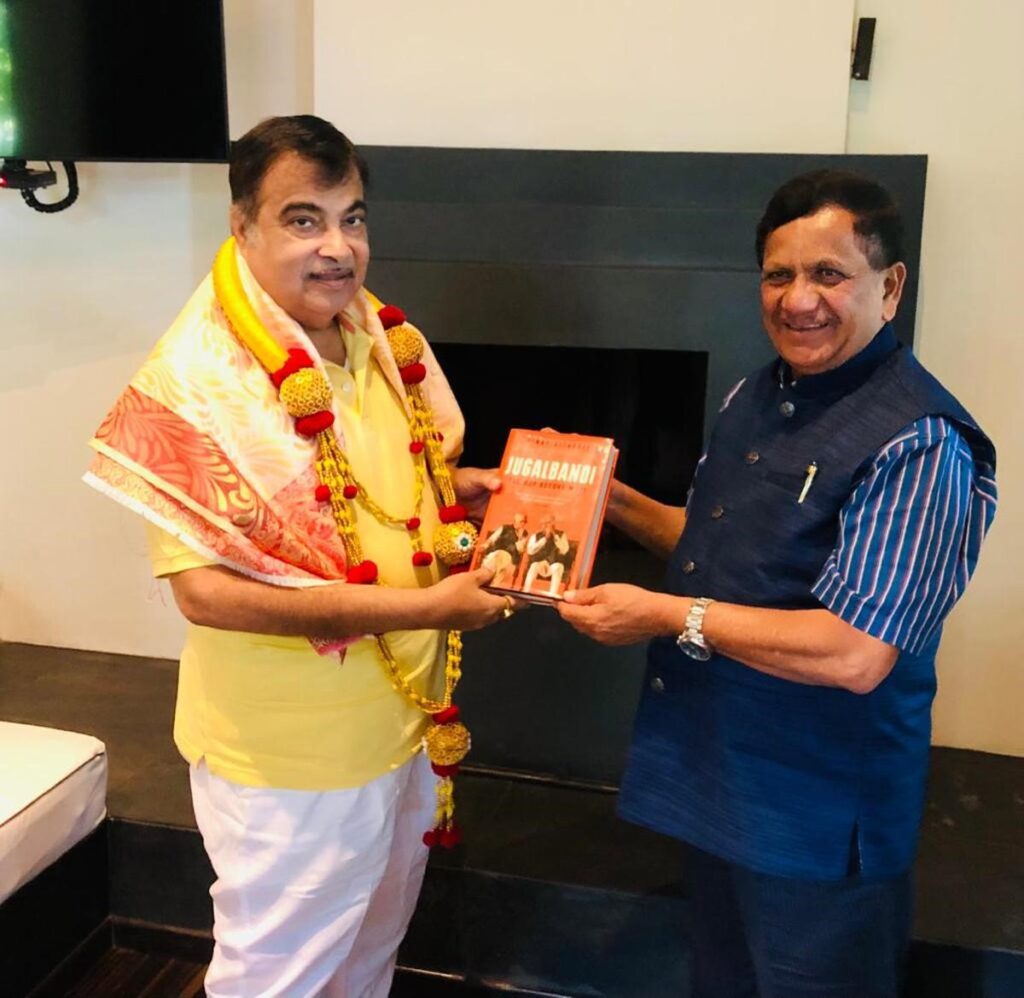
Former Speaker K.G. Bopaiah felicitating Union Minister for Road Transport and Highways Nitin Gadkari in Madikeri on Monday. | Photo Credit: SPECIAL ARRANGEMENT

Union Minister tells MLA to adopt ‘Nagpur model’ to improve yield of Kodagu oranges whose production is on the wane        

Union Minister for Road Transport and Highways Nitin Gadkari has promised to look into the demand for highway improvement and expansion in Kodagu if a proposal in this regard came to his office from the State government.

Mr. Gadkari gave this assurance when former Speaker and MLA K.G. Bopaiah met him in Madikeri. Mr. Gadkari is on a private visit to Kodagu with his family members and was staying in a resort in Madikeri.

Mr. Bopaiah shared details on the highways and the steps to be taken for tourism development in the district. “The works will be considered on priority if the Centre gets the proposal on the list of works to be taken up for highway development,” the Minister told the MLA, at the meeting.

Mr. Gadkari spoke about Kodagu’s tourism potential and employment it brings to locals.

Mr. Bopaiah felicitated Mr. Gadkari and presented him with a book besides honey, spices and coffee for which Kodagu is famous. Mr. Gadkari complimented the purity and freshness of the honey.

Expressing concern over the drop in the yield of Kodagu oranges, the Union Minister told the MLA to take steps in this regard, creating an environment for rejuvenating the yield on the model developed in Nagpur which is also known for oranges, besides taking steps for improving the variety.

source: http://www.thehindu.com / The Hindu / Home> News> National / by Special Correspondent / Mysuru – June 13th, 2022

Forests of the gods

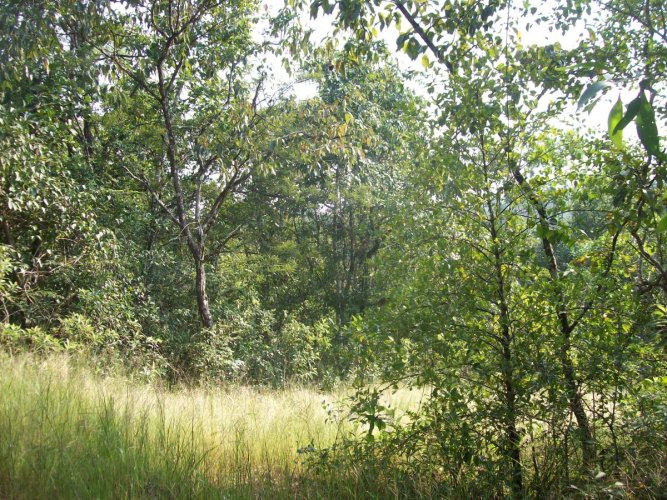
A few thick forests have been left untouched for ages. Though close to human habitation, these forests have withstood the test of time for religious and ecological reasons. Here, the air is cool and sunlight streams in through miniscule gaps in the gaps in the canopy.

Karnataka, Maharashtra and Kerala have thousands of such sacred spaces. 

These woods that range from a few acres to a few hundred have many names.

They are called kaan in Malnad (Karnataka’s Western Ghats), devakaad in Kodagu, and devarakaadu in other parts of Karnataka. In Kerala, they are called kaavu where theyyam (ritual dances) is performed. 

These groves are rich in biodiversity and are known for the ecological services they offer. 

Like these regions, many countries and civilisations across the world have maintained ancient groves. The lore associated with these forests are many. In India, it is said that ancient sages would meditate in forests known as tapovan (woods of penance).

The scrub forests of the Thar desert have been protected by the Bishnois, followers of Guru Jambha. In fact, they are known for putting their lives on the line while protesting the cutting down of trees in these groves.

Glimpses from sacred groves in Uttara Kannada / DH photo

Devakaads of Kodagu

In Kodagu, there are dedicated forests beside every village settlement to Aiyappa, the god of forests and hunting. Kodavas held the belief that the spirits of their deceased ancestors would be led on hunts in these sacred forests by Botekara Aiyappa (Aiyappa, the hunter). No living Kodava would venture out to hunt animals or even cut down the trees in these devakaads.

There are also a few devakaads that are dedicated to other gods and goddesses. One of them is the Mahalaxmi devakaad in Ammathi-Vontiangadi in Kodagu. Located behind the bus stop, the site displays a board issued by the Government of Karnataka, declaring the grove as a devara kadu (forest of the gods).

According to  Cheppudira G Kushalappa, Dean of the Ponnampet Forestry College and Kodira A Kushalappa, a retired IFS officer, there were 1,214 devakaads of a total size of 2,550 hectares in 1996 in Kodagu.

Apart from their religious and cultural significance, sacred groves help conserve our forest wealth, says Kodira Kushalappa. “Forests cool temperatures and bring rainfall. They help in retaining the topsoil and help sustain streams, which water neighbouring farms. Forests also serve as home to birds which feed on insects that are found in the fields,” he adds. 

According to a 2002 study, there were 215 tree, 86 bird, 163 mushroom and an uncounted number of butterfly species found in the sacred groves and coffee plantations of Kodagu. Forty-nine out of 163 species of mushrooms were unique to these groves. 

Another paper noted that there were 25 medicinal tree species (rare, endangered and threatened) found in the devakaads. A 2003 research study noted that the larger sacred groves had higher diversity than in natural reserved forests. There was a high level of endemic and globally threatened species present in these forests. 

Butterfly species such as the Travancore evening brown (Parantirrhoea marshalli) or the Malabar banded swallowtail (Papilio liomedon Moore) are restricted to low elevation evergreen forests in the southern Western Ghats that are excluded from protected area network. Tree species like the Actinodaphne lawsonii, Hopea ponga, Madhuca neriifolia, and Syzygium zeylanicum, which are on IUCN threat list, are found in the sacred groves.  

The swampy areas in kaans have been found to have the large-sized, threatened tree species Syzygium travancoricum, which grow close to water bodies and is classified in the IUCN Red List as “critically endangered”. 

These sacred groves help in watershed protection, protect against fire, maintain a favourable microclimate and protect against soil erosion.  

Kaans of Malnad

There are many rules for the Malnad kaans. The trees cannot be cut in the groves but adjoining villagers could cultivate wild pepper.

Francis Buchanan, a British officer, who travelled through Malnad in 1801 wrote that permission to cut a tree in a kaan was to be sought from a village headman, who also served as the priest of the village temple. Otherwise, the tree feller would face the wrath of the forest deity.

The main difference between a kaan and a devakaad is that no cultivation was allowed in the devakaads, while the cultivation of wild pepper and sago palm was allowed in the kaans.

The crop grown in the kaans initially came under forest produce. Later cultivation by clearing by fire was permitted. Even industries were allowed to venture into the kaans, leading to widespread destruction in central western Karnataka.

Now, various individuals have been fighting cases in courts to preserve the sacred groves.

Temple committees and villagers aid the forest department in conserving these sacred groves. Mookonda Arun Ganapathy, the secretary of the Bhadra Kaali temple in Bilugunda village, Kodagu explains that researchers and students often come to the nearby Aiyappa devakaad.

Arun states, “There are encroachments happening in these sacred groves despite government efforts. Many of the well-preserved ones are by the road side. The villagers take measures to protect them. Regular rituals in the forest temples help protect these sacred groves. Trees should not be cut inside these holy forests. Sacred groves are essential for preserving the environment and our culture.” 

source: http://www.deccanherald.com / Deccan Herald / Home> Spectrum> Spectrum Top Stories / by Mookonda Kushalappa / May 26th, 2022

Take action to clear encroachments of forest areas, says Ravi Kushalappa

Ravi Kushalappa, chairman of Karnataka State Western Ghats Task Force, has suggested the State Government follow the court’s direction with regard to encroachment of forest areas in Shivamogga district.

In a meeting with officers at the Deputy Commissioner’s office in Shivamogga on Monday, Mr. Kushalappa said that the task force was committed to clearing encroachments of the forest areas and illegal activities within the forest limits. The court orders with regard to clearing encroachments should be acted upon.

Regarding the plantation activities, the chairman said the village-forest committees had to be active in protecting and conserving forests. The Forest Department had to spread awareness among the public in this regard. The Forest Department had to take up plantation activities with the active participation of rural people. The tribal communities, who had been residing in the forest areas, should be provided with basic amenities, he said.

Additional DC Dr. Nagendra Honnallli, Shivamogga DCF Shankar and others were present in the meeting.

source: http://www.thehindu.com / The Hindu / Home> News> National> Karnataka / by Special Correspondent / Hassan – May 16th, 2022

CFTRI serves a ‘healthy’ drink from coffee leaf

A file photo of workers in a coffee estate near Rayarakoppalu in Hassan district, Karnataka.

CSIR-CFTRI, Mysuru has developed the drink from coffee leaf and claims the brew can be an alternative to green tea or herbal tea

How about a coffee leaf brew? Sounds interesting. Coffee leaves can be used to prepare a health drink which can be an alternative to green tea.

CSIR-CFTRI, Mysuru has developed the drink from coffee leaf which it claims can be used as an alternative to green tea or herbal tea. “It is an ideal health drink to consume at any time of the day. The brew can be prepared with water which can be filtered and consumed,” the institute said.

Phytochemicals like phenolics, alkaloids, flavonoids, and anthocyanins in coffee leaves contribute to its health benefits. The coffee leaf brew mix that the institute has developed can be produced from the leaves that are pruned at the time of maintenance of the plants. They can be a good source of raw material for the drink, the scientists at the CFTRI said here on Wednesday.

Selection of coffee leaf is key as the quality of the brew mix depends on the raw material, according to the Technology Transfer Department.

CFTRI said the plant for producing coffee leaf brew mix can be set up at a cost of ₹70 lakh and the total project cost would be around ₹1.40 crore. A Kushalnagar-based coffee powder manufacturing unit has taken the licence of the product for mass production.

source: http://www.thehindu.com / The Hindu / Home> News> National> Karnataka / by Special Correspondent / Mysuru – May 11th, 2022