Category Archives: Agriculture

Kodagu farmer wins award for conservation of native pepper crop

While ‘Adi Pepper’ was locally known as forest pepper and was used only for domestic purposes by the locals, it has now attained a brand value of Rs 3500 per kilo.

Left, N Poonacha receiving the award at the ceremony in New Delhi. Right, Snapshot of the  indigenous 'Adi Pepper' spikes.
Left, N Poonacha receiving the award at the ceremony in New Delhi. Right, Snapshot of the indigenous ‘Adi Pepper’ spikes.

Madikeri :

A progressive farmer, Napanda Poonacha of Kodagu district looks forward to being known as a pro-nature farmer. He is extensively working towards identifying commercial crops that have little or no ill impact on biodiversity and he was recently awarded the Plant Genome Saviour Farmer Reward (2019-20) for his contribution towards the conservation of indigenous crops of ‘Adi Pepper’.

The award has been conferred by the Union Agriculture Ministry’s Protection of Plant Varieties and Farmers’ Rights Authority and Poonacha received the award from union agriculture minister Narendra Singh Tomar at a ceremony in New Delhi on November 11.

“This award has been granted to farmers who recognize, conserve and promote crops that are useful to biodiversity. Similarly, I won the award for my research, conservation and promotion of ‘Adi Pepper’ – an indigenous variety of pepper that is extensively found growing across natural habitat of Garvale village limits in Kodagu,” explained Poonacha.

He is the proprietor of Adi Pepper Demo Farm and Research Center in Garvale and is extensively involved in identifying native crops in the district that have great potential of becoming a commercial crop without causing damage to the ecosystem.

“Adi Pepper crops are extensively found in the natural habitat across the Garvale area. At the research center, we took the initiative of getting this species of pepper registered under PPFRI and this quality pepper was recognized as farmer’s variety pepper in 2015. This is the only species of pepper that has undergone biochemical analysis and is considered the best among the seven species of pepper that are grown across Kodagu,” he detailed.

While this variety of pepper was locally known as forest pepper and was used only for domestic purposes by the locals, it has now attained a brand value of Rs 3500 per kilo – earning over six times more returns than the other species of black pepper marketed in the district.

“Adi pepper is a native crop and has no harmful impact on biodiversity. This is high-quality pepper and its processing is different from the other species. The ripening of the pepper seeds takes place in November and it is harvested during the same month. However, the pepper seeds are handpicked, treated with hot water and then dried and processed. This ensures top quality of the pepper, earning high returns,” he explained.

source: http://www.newindianexpress.com / The New Indian Express / Home> States> Karnataka / by Pragna GR, Express News Service / November 18th, 2021
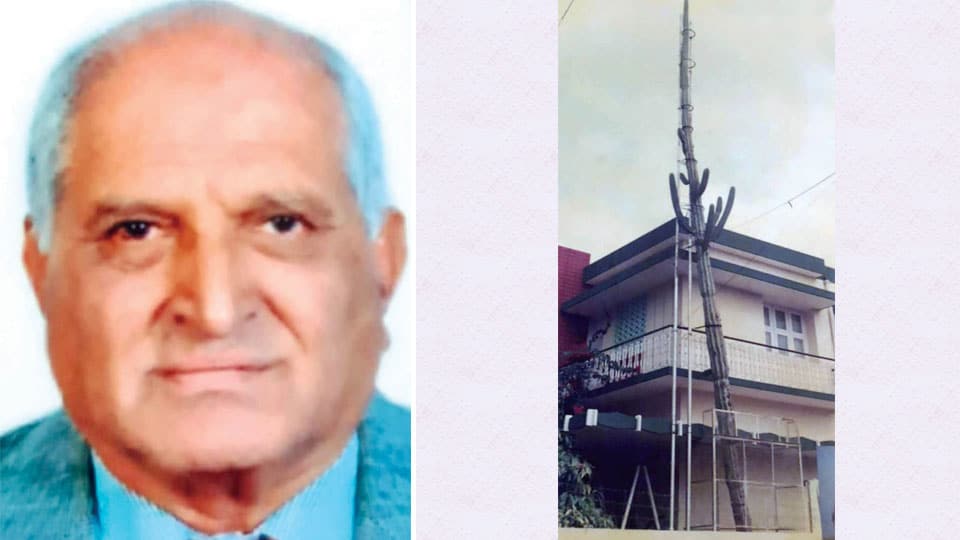
Mysuru’s Guinness Record Holder For Tallest Cactus Kashi Kuttappa Passes Away

Mysore/Mysuru:

Accapanda Kashi Kuttappa (76), former Assistant Director in the Agriculture Department and a Guinness Record holder for tallest home-grown cactus, passed away at his residence in Siddarthanagar this morning.

He leaves behind his wife Jyothi, daughters Smitha and Neetha, sons-in-law and a host of relatives and friends. Last rites were performed at the foot of Chamundi Hill this noon, according to family sources.

The cactus Kashi Kuttappa

and his family members had grown reached a record height of 45.8 feet and had fetched him the Guinness Record. Kashi himself had said that it took him and his family 22 years to grow the cactus that towered above his home. It is of Cactus-Cereus Grandflora that belongs to the family of ‘cactaceae’. This cactus is widely grown in the tropics of dry tracts and suits the desert climate.

Several tourists and nature lovers used to frequent Kashi’s house at Siddarthanagar to see the wonder plant. In fact, the road to Kashi’s house was arbitrarily named ‘Cactus Road’ and he was famous as ‘Cactus Kashi’.

The plant was grown and nourished since 1978 when it was 2.5 ft. tall. The Guinness Book of Records authorities accepted the cactus as the tallest and issued a certificate for the first time on Jan. 20, 1993 when the cactus was 35 feet 1 inch. The Guinness Records authorities awarded the longest cactus certificate for the second time in 1998, when the cactus had grown to the height of 44 feet and 9 inches.

source: http://www.starofmysore.com / Star of Mysore / Home> News / June 27th, 2021

Coffee Board warns of pesticide residue in coffee

Kattappana:

Pesticides residues were found in a huge amount in the coffee powder exported to European countries. Following this, the Coffee Board has directed the farmers to control the use of pesticides on crops.

The European countries have informed that the pesticides are detected in the coffee powder and advised not to export similar products again. In this context, the Coffee Board has warned the farmers that the European countries and other importers will ban the import of Indian coffee if a similar quantity of chemical components were detected again in the products.

The pesticide Chlorpyrifos has been detected in an excess amount in the coffee powder exported from the country. Instead of Chlorpyrifos, another pesticide Phenthoate 50 EC can be used by mixing 400 millilitres of it in 200 litres of water with 200 millilitres of glue.

The Coffee Board had recommended the use of “Chlorpyrifos 20 EC at the dosage of 600 ml in 200 litres of water along with 200 ml of any wetting agent may be used just prior to the flight periods or during the early part of the flight period,” as a “last resort.”

source: http://www.english.mathrubhumi.com / Mathrubhumi.com / Home> English> Features> Agriculture / April 15th, 2022

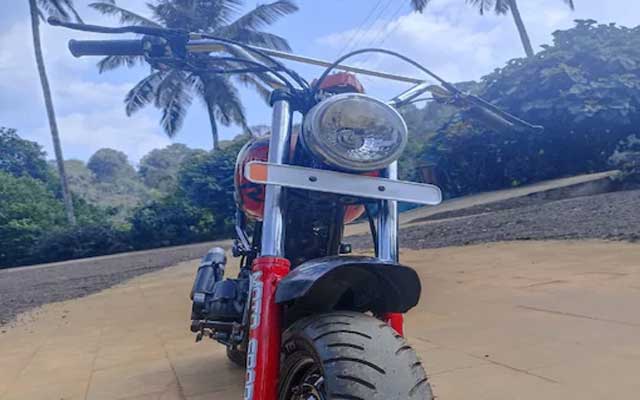
Madikeri: Behold, this imported looking bike is by our Desi Frankenstein

Madikeri :

It is quite natural for small children to develop an affinity towards their toys or toy vehicles. Unlike other children of his age, this boy never thought of buying toy vehicles from shops. He created his own toy vehicles and had fun. At that young age itself, he would wish if he could manufacture his own vehicles. 

By the time he finished school and entered college, his desire to manufacture vehicles grew by leaps and bounds.His ITI education supported his aspirations. He has made several vehicles and sold them. His vehicles have a uniqueness or fingerprint of his own.

The prodigious boy is Akash, a resident of Biligeri village near Madikeri. After completing MMV in the ITI, he started to work for some vehicle manufacturers. As the urge to manufacture his own vehicles catapulted into a passion, he left his job and returned home. 

Initially he began with bikes and also cars which could be pedaled. He then fixed engines to them and succeeded in making indigenuous vehicles. In the past few years, he has forayed into manufacture of bikes, agricultural machinery, various equipment and also other vehicles.

Another unique skill he has is custom making the vehicles as per the client’s desire by procuring spare parts of different makes and assembling them at home. He has also sold bikes without gears and scooters with gear. So he could rightfully be called the Frankenstien of automobiles. 

Akash has now made a unique bike that also grabs eyeballs. .So far he was making fuel driven vehicles. Now he has manufactured vehicles which run on a battery. The bikes and small cars made by him ideally suit the requirements of resorts and homestays in Kodagu district. Therefore, owners of some resorts have purchased their custom made vehicles from him.

He has immense interest in making agricultural machinery. Machines which dry cardamoms and pepper, those which separate chilli from their stalks etc. He has also made four trolleys that can carry different weights, and sold them. Some organizations which have noticed his achievements, have come forward to help him. They are thinking of providing him with a showroom so that this rural talent gets recognition in the outside world.

source: http://www.daijiworld.com / Daijiworld.com / Home> Karnataka / by Daijiworld Media Network – Madikeri (SP) / February 23rd, 2022

Honeycomb comes home all the way from Kodagu

NGO Swastha Centre is training people with disabilities in beekeeping, giving them a source of income & sense of independence.

The establishment of the beekeeping society will ensure sustainable and inclusive living, says Arathy Somaiah, director, Swastha Institution | EXPRESS

Madikeri : 

In the misty hill country of Kodagu, the bee offers hope. Apiculture has been one of the main economic activities of the region, known for its coffee, pepper and tourism, while Coorg honey is said to be rich in medicinal properties.

Tapping into the ancient activity of bee-rearing, the Swastha Centre for Special Education and Rehabilitation in Kodagu is striving to establish a sustainable society for persons with disabilities, especially in the rural areas of the district. Started in the year 2003, Swastha Institution is managed by The Coorg Foundation Trust.

While educating students with special abilities has been the focus of the institution, it is also involved in providing vocational training to enable the rehabilitation of children. In a country where a day is observed each year to promote the wellness and rights of persons with disabilities, it can be challenging to create an inclusive environment for them, and keep it going too.

The community-based rehabilitation initiative of the institution is empowering many persons with disabilities (PwD) in the rural parts of Kodagu. What is unique is that the institution has introduced beekeeping and is training them in the vocation, said to be the first-of-its-kind initiative in the country.

“Receiving support from the Horticulture department, the institution first trained 25 students in beekeeping in 2017,” explained Arathy Somaiah, director of the institution. Though the students were trained in the vocation, opportunities to earn from it were bleak. Hence, the institution looked to establish an agrarian system to create opportunities for self-employment, which also promotes economic growth.

“The institution sought help from NABARD, and the 25 students were further trained for three years. Beehive boxes were handed over to them, and the first bee harvest was sold last year. The students earned incentives and have now set up beehive boxes in their homes,” said Arathy. To ensure that the students don’t face any challenges in beekeeping at home, the institution extended training to their parents too. Persons with disabilities were identified across Karike, Bhagamandala, Sampaje and Madenadu villages, trained in beekeeping and given beehive boxes.

“There is a government scheme where beehive boxes are provided at subsidised rates if residents provide RTC documents of the land. Through this scheme, beehive boxes were given to them, and they were trained by the horticulture department,” explained Arathy. The harvest from the community rearing in the district was collected by the institution; it was processed, purified and bottled at the Research and Development sector of Tata Coffee.

“The honey extracted and processed is free of adulteration, and marketed under the Swastha label. The profits are paid to the bee rearers. A trained staffer from the institution visits the rural areas once a month to help them handle the work of beekeeping, and helps them in the cleaning process. Once the harvest is ready, they help them extract and collect the honey. They have the option to market the harvest through Swastha or any other means,” she shared.

While the beekeeping initiative is running successfully, the institution is looking at providing them with holistic training. It aims to identify persons with disabilities in all the taluks, and establish a ‘Beekeeping Society of Persons with Disabilities’ soon in the district. The institution also plans to train them to plant bee-friendly trees and shrubs in rural areas. Kodagu has a large number of massive bee-nesting trees.

“The establishment of the beekeeping society will ensure sustainable and inclusive living. It will help generate self-employment, rural employment and economic growth,” concluded Arathy.

source: http://www.newindianexpress.com / The New Indian Express / Home> Good News / by Pragna GR, Express News Service / April 10th, 2022

Karnataka CM announces power subsidy for coffee cultivation

The Kodagu coffee growers have been demanding free electricity supply to up to 10 HP pump sets installed in coffee estates across the district.

Basavaraj Bommai
Karnataka CM Basavaraj Bommai (Photo | Special arrangement)

Madikeri :

The state government has announced a subsidized power supply to up to 10 HP pump sets installed in coffee estates in Kodagu. The decision was announced by chief minister Basavaraj Bommai during the Zero Hour of the state Legislative Assembly. The request for the same was raised by Kodagu MLA Appachu Ranjan.

The Kodagu coffee growers have been demanding free electricity supply to up to 10 HP pump sets installed in coffee estates across the district. While assurances had been extended by the state, the same had not been sanctioned. On Tuesday, MLA Appachu Ranjan raised the issue during the Zero Hour of the legislative session and he was supported by MLA KG Bopaiah, MLA CT Ravi and MLA Kumarswamy.

The legislators argued that the district supplied Cauvery water to the state, but it has been neglected. They argued that while tobacco and areca nut estates are eligible for power subsidy, coffee has been neglected and ignored.

Following these discussions, CM Basavaraj Bomai said, “Power subsidies extended by the state are increasing every year and it adds up to Rs 12,000 to Rs 14,000 crore. However, we understand the problems of the coffee growers, and following the discussion with the power minister and other ministers, the state will grant a subsidy to the power supply to up to 10 HP pump sets installed in coffee estates. However, terms and conditions will be released to control misuse of the same.”

source: http://www.newindianexpress.com / The New Indian Express / Home> States> Karnataka / by Express News Service / March 22nd, 2022

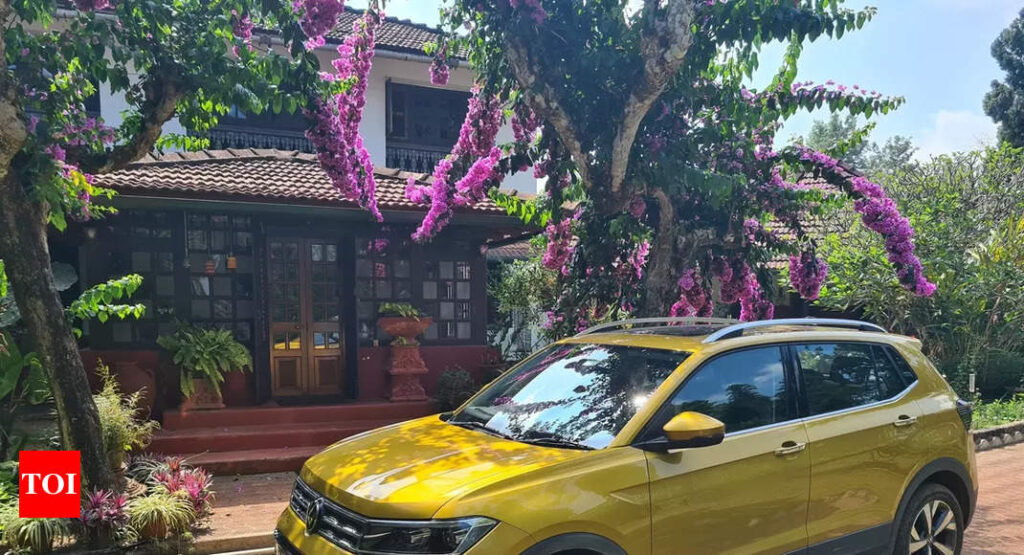
Back to ‘school’ in Coorg to learn about the German connect – An unforgettable drive in Volkswagen Taigun

The board that greeted us at the end of our 200km-odd journey from the heart of Bengaluru said School Estate. But that wasn’t our final destination, is what we realised soon. That would be School Thota, a division of School Estate, and a few hundred metres into the estate, we saw a smaller board directing us to it.

Thota roughly translates to garden in the local Kannada language. Of course, like many other places around India, there is a local language (not dialect) just for Coorg too. There are many further distinctions and groups within locals here, such as Kodavas, to which the family that owns School Thota belongs. Surely, there are many equally beautiful plantations and homestays in Coorg. But what caught our fancy on this particular drive of Volkswagen’s impressive new Taigun is the story of a German reverend who is associated with the early history of this place, including the reason why it ended up being called School Estate.

Georg Richter was the principal of a local Mercara High School. He was instrumental in mobilising local leaders in the field of education. Under his guidance, they came together and collected money to purchase around 350 acres of land for Rs 3000 back – a princely sum back in the 1860s. The aim was to fund the school with yield from the coffee and other plantations, hence the name School Estate. Since Richter was in charge, the house on the property also was built to his liking. While earlier it was only a makeshift place for the occasional visitors, the subsequent owners kept the core structure intact and built a seemingly European-style Indian home first for themselves and now extended to guests interested in soaking in nature and School Thota’s heritage.

Coorg is one of the places that still rely on roads for its connections. The drive from Bengaluru to its centre, Madikeri, is a mix of choc-o-bloc metropolitan roads followed by a busy but reasonably fast Mysore highway that you leave after Srirangapatna for a more picturesque country road interspersed with short stretches of busy towns. It was a mix that helped the versatility of the Taigun shine through. Volkswagen offers this made-for-India SUV in two engine and three gearbox options. While we took what was on paper, the smaller 1.0-litre TSI (114bhp/178Nm) coupled with a six-speed torque converter gearbox revealed the variety of traffic and road conditions. One of the biggest clichés busted was it doesn’t tire under relentless highway driving. A frugal fuel consumption figure meant we could do the entire stretch without a fuel stop en route.

Coorg roads are typically narrow and twisty, and the agile Taigun seemed up for some confident driving. Patches of bad roads were dealt with ease, as the Taigun feels planted on the move, just like its bigger stablemates. The solid German connection is there to see.

Inside School Thota, we had many glimpses of the European connection too. Its current owners – the Aiyappa family, is led by 81-year-old Saraswathi, who runs the show along with her son Kushalappa. Together not only do they manage half of the School Estate (the other half bought by another local family a few generations ago) but also keep the homestay’s heritage intact.

“The doors of this homestay are the original ones,” said Saraswathi Amma. She also pointed out that they were much larger than the entrance door, which was an extension added to the School Thota structure after the Indian family took over. “Typically, Germans are taller, which explains the bigger doors. Moreover, for us, we bend or hunch a bit and enter the house. This is also about showing respect to the house, which is a temple of sorts for us,” she pointed out. Keeping tradition alive is one of the motives of such homestays around Coorg so that you can see many old artefacts and even furniture tastefully retained here. At School Thota, even a European-style fireplace reminds you of the kind of the early occupants of this structure.

Coorg is an extremely ecologically sensitive area, and its locals try hard to maintain the balance between earning from the soil and keeping it sustainable. Plantations are not only home to various kinds of flora and fauna but also the livelihood for many locals. Agriculture in today’s times can be challenging, but families running the show have tried to improvise and keep the fire going in their Indianised versions of the colonial way of life. A few have even managed to hold on to the original way of life, just like a Taigun does by keeping a Volkswagen badge’s core values intact in an SUV that’s completely at home in India. Its Volkswagen genes are unmistakably apparent despite being born and brought up in India.

It took a visit to this place to reiterate and experience this first hand. Lesson learnt by going back to school… auf wiedersehen.

Contributed by Girish Karkera,
Consulting Editor – Times Auto · Bennett Coleman and Co. Ltd.

Disclaimer: The article has been produced on behalf of Volkswagen by the Times Internet’s Spotlight team.

source: http://www.timesofindia.indiatimes.com / The Times of India / Home> Spotlight / by Girish Karkera / March 10th, 2022

Worried father of Kodagu girl appeals to govt

He hopes govt. will help her continue her medical education in India after return

Akshita Akkamma, a medical student from Kudlur village near Kushalnagar in Kodagu, is safe and about to cross the Ukrainian border to get evacuated from the war-hit country. However, her parents back home in Kodagu are still nervous until she reaches her home.

Her father I.P. Ramesh, an agriculturist, said, “I don’t want to send my daughter back to Ukraine after her return. We had a tough time worried about her safety after the war broke out. Hearing about shelling and explosions in Kharkiv, we had sleepless nights. We were slightly relieved after she rang up to tell us she had reached Livv and boarded a bus to reach the border to fly back to India.”

Akshita is a second-year student at Kharkiv National Medical University. “I don’t want my daughter to go back as her safety is important for us. Therefore, I urge the Government of India to make arrangements for her study in the country in whichever college it is possible as my daughter has put in two years of her study in Ukraine,” Mr. Ramesh suggested.

The coffee grower added, “In an exceptional case, a provision can be made for students wishing to stay in India, to continue medical education. I don’t think this is unachievable.”

Mr. Ramesh said “Fellow student Naveen’s tragic death shocked us and our apprehensions went up further since my daughter was also in Kharkiv which was witnessing heavy bombardment. Ukrainians are said to be getting first priority and then the girl students for boarding trains,” said the girl’s father.

source: http://www.thehindu.com / TheHindu / Home> News> National> Karnataka / by Special Correspondent / Mysuru – March 03rd, 2022

Nature at its best in Coorg’s coffee plantations

A typical plantation walk in one of Coorg’s large coffee estates, in fact, is nothing short of a treat to all five senses.

New Delhi: 

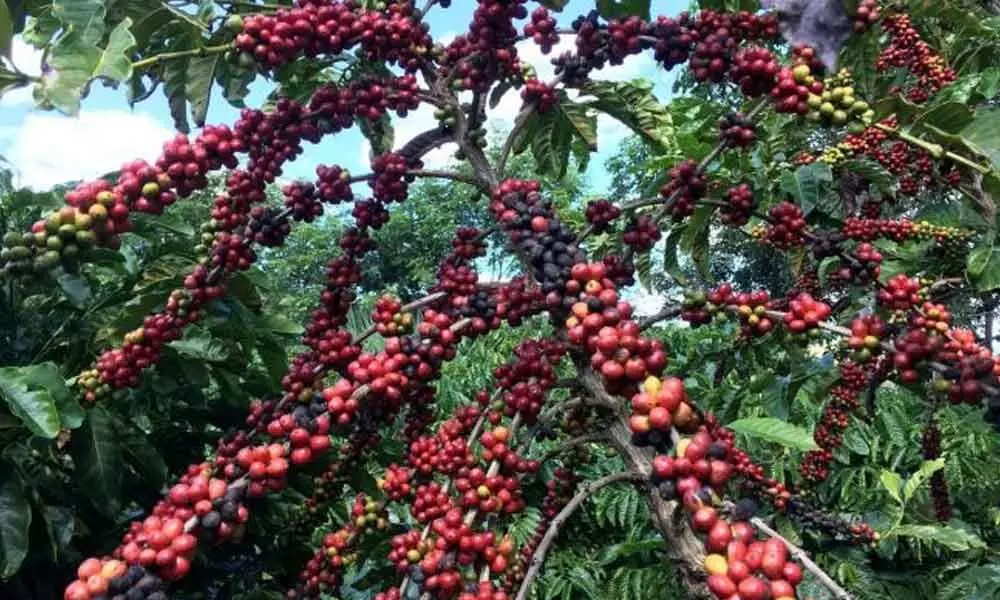
In India’s coffee heartland Coorg, which is at a driving distance from the city of Bengaluru and nestled in the densely forested Western Ghats, February is the season to find abundant coffee trees laden with small crimson and green berries that hold inside them two green beans each. It is in these Karnataka-based coffee plantations, that many of the flavourful and aromatic coffee beans originate, before they are dried, roasted and ground into the perfect cup of coffee in your hands.

Coorg, locally known as Kodagu, can often be found on the bucket lists of seasoned travellers for its tranquil setting, biodiversity, delicious Kodava cuisine and large-scale cultivation of Indian coffee. A forthcoming luxury destination, the southern hill station has unmatched experiences that go beyond tourism-as-usual.

For those interested in experiencing first-hand, the crop-to-cup process of coffee in India, the local hospitality options do offer plantation walks and trails that have you immersed in the native experience.

In an ecologically diverse and sensitive region like Coorg, threats to the forest ecosystem are aplenty, and are prone to multiplication with additional construction to support the consumerist traveller’s lifestyle.

The homestay experience, then, comes as the perfect fit for the region and is growing by the year. Allowing one to lodge up in close proximity to the natural environment and coffee crops within the estates themselves, while observing all Covid-19 precautions, options on Airbnb in Coorg are something new-age travellers must check before heading to the beautiful southern coffee county.

A typical plantation walk in one of Coorg’s large coffee estates, in fact, is nothing short of a treat to all five senses.

As one walks along a narrow network of tracks lined by trees of Robusta and Arabica coffee species, along with cultivations of arecanut, pepper and cardamom, the calls of Coorg’s diverse bird species are unmistakable in the background. According to Ganesh H R, a local bird expert popularly termed the Bird Man of Coorg, over half of India’s overall bird species can be found in the region, along with birds like White-cheeked barbet, Malabar barbet and Malabar grey hornbill that are endemic to the region. The place is also a great spot for serious bird-watching.

Surrounded by a tall canopy and clear blue skies difficult to find in urban jungles, walkers are greeted with the smell of flowering coffee shrub and ripened coffee berries along the way. In some trail experiences, enthusiasts may be invited to participate in coffee berry harvest — picking bunches of red and green berries off the branches onto a wide-based container below.

In experiences bookable on Airbnb, such as the farm-to-cup experience on FiveFarms Coffee, one can step into the shoes of a coffee grower and help with jobs like transplanting young plants from the nursery, checking for fragrant coffee blossoms or picking ripe red berries. The beans are then dried in the sun before processing it mechanically into the final product. Visitors can also experience roasting and take back roasted batches of beans.

source: http://www.telanganatoday.com / Telangana Today / Home / by IANS / February 27th, 2022

Arabica coffee price touches all-time high

Arabica coffee price touches all-time high
Arabica coffee price touches all-time high 

HIGHLIGHTS

The Arabica Parchment coffee price has soared to an all-time high of Rs 16,200 per 50-kg bag on Thursday, in Somwarpet and Chikamagalur markets.

Madikeri:

The Arabica Parchment coffee price has soared to an all-time high of Rs 16,200 per 50-kg bag on Thursday, in Somwarpet and Chikamagalur markets. A large-scale destruction caused by snowfall to the similar coffee variety in Brazil, the largest producer of the crop, has come as a blessing in disguise for the growers here.

According to traders, normally, this coffee variety commands a price of Rs 10,500 to 11,500. Similarly, the cost of Robusta Parchment has touched Rs 7,600 per bag. The last time when Arabica coffee reached the highest price was in 2014 when it sold at Rs 9,600-Rs 9,800 per bag. The price saw a downward trend and touched Rs 6,000.

The prices of Arabica Cherry and Robusta Cherry have seen a marginal rise in price. They command a price of Rs 7,500-7,600 and Rs 3,800-Rs 4,100 per bag respectively. Growers in Kodagu, Chikkamagaluru and Hassan are elated over rise in the prices of coffee, despite problems of shortage.

Coffee was bought and exported by the government through the Coffee Board before growers were allowed to sell their produce directly in the open market since 1992, following protests by them.

December to April is the time for coffee harvesting and 90 percent of growers sell the produce before the beginning of the rainy season due to the price fluctuations and lack of warehousing facilities. The total annual coffee production in the country is approximately 3.6 lakh tonnes. Most of the Arabica growers have already sold their produce.

Speaking to The Hans India, a coffee exporter and promoter of AWIT Innovations (P) Ltd in Kushalnagar, Rajiv Kushalappa said that the price fluctuations are likely to increase in the near future due to prevailing international market conditions. According to him, the rise in the price was fallout of crop loss in Brazil following heavy snowfall. Ratan Machaiah, a coffee grower in Gonicoppa, said that the cost of production of coffee has increased significantly in recent years and growers are in a distress.

The wages of labourers, cost of fertilisers, pesticides, etc., have doubled over the past decade, but the price remains the same. The growers are gambling on unpredictable climatic conditions year after year. He has urged the government to support the growers by announcing a special package.

source: http://www.thehansindia.com / The Hans India / Home> News> State> Karnataka / byCoovercolly Indresh / Hans News Service / February 10th, 2022